Donald Trump Turns Himself In At New York Court

Former US president Donald Trump has surrendered at a New York courthouse following his indictment on criminal charges after a probe into hush money paid to a porn star.

Trump, 76, was formally charged on Tuesday in a watershed moment for the country as his supporters and detractors noisily rallied outside.

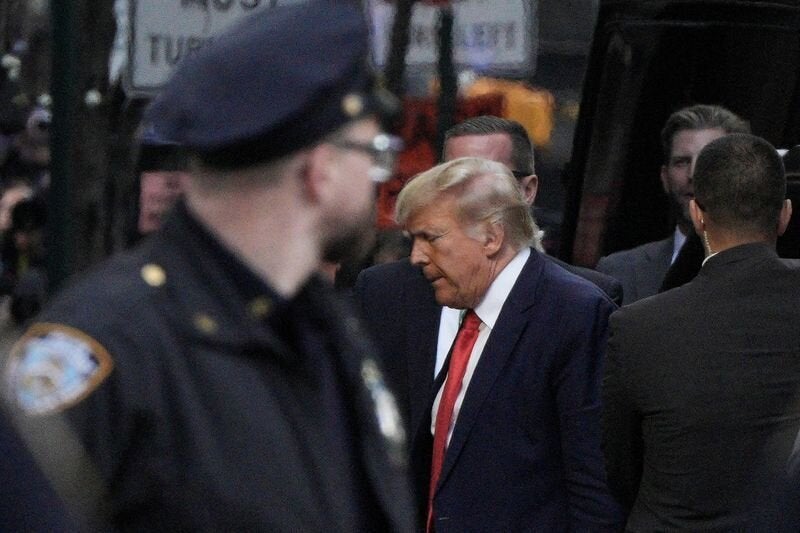
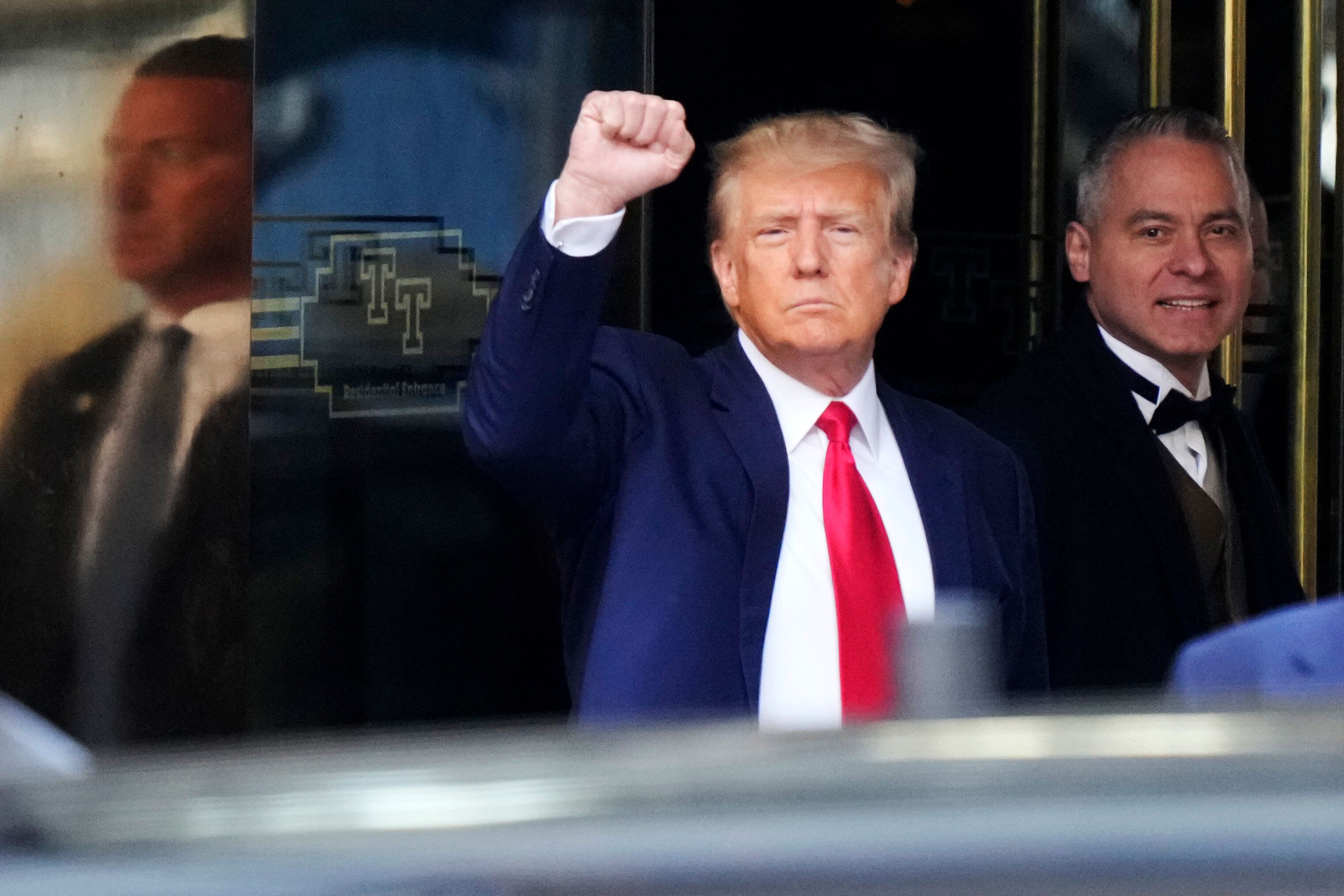
Wearing a dark blue suit and red tie, he exhibited little emotion on his face as he waved to a crowd assembled outside the courthouse after he was driven in a motorcade from his New York residence at Trump Tower. Trump held his fist in the air in a gesture to reporters as he departed his New York residence.

From his motorcade, Trump posted on social media: “Heading to Lower Manhattan, the Courthouse. Seems so SURREAL – WOW, they are going to ARREST ME. Can’t believe this is happening in America.”

Manhattan district attorney Alvin Bragg has charged Trump with crimes related to a $130,000 payment made to Stormy Daniels in the final days of his 2016 run for the presidency.

Daniels claims these alleged payments, made by Trump’s then lawyer Michael Cohen, were meant to stop her from talking about her affair with Trump prior to the presidential election.

The hush money in itself is not a crime, but Trump recorded his reimbursement to Cohen as legal fees. If prosecutors prove this was a falsification of records, it could count as a misdemeanour in New York.

It could also mean Trump violated campaign finance laws because it happened just before the 2016 election, and so it could indicate that he didn’t want his voters to know about her – that would be a class E felony.

US media has reported that there are more than 30 counts related to business fraud, although the details of the charges have not been made public yet.

Trump has repeatedly denied any wrongdoing, claims the affair did not happen and has alleged that the indictment is “political persecution” from the Democrats to impact the election.

He also alleged that the Democrats have “done the unthinkable” and indicted a “completely innocent person”.

In a statement, his lawyer said: “He did not commit any crime. We will vigorously fight this political prosecution in court.”

Trump’s indictment involved him travelling to the district attorney’s office in downtown New York to surrender.

Trump will have his fingerprints taken and is to appear for the charges to be read before him in court. It’s unclear whether a mugshot will be taken. He is likely to be released and allowed to head home.

It marks the first instance in American history of a former president facing criminal charges, and comes after years of investigations into the 76-year-old’s business, political and personal dealings.

Any trial of the former US president would still be more than a year away, legal experts say, and could coincide with the final months of the 2024 presidential campaign as Trump seeks a return to the White House.

The Manhattan case is the least serious of the potential criminal cases targetting Trump. A federal special prosecutor, Jack Smith, is investigating both Trump’s handling of classified documents and his role in the January 6 Capitol riot. And a grand jury in Georgia could soon hand up charges related to Trump’s efforts to change election results there.

Share Button

Grandmother with Alzheimer’s faces deportation from Sweden

Bedridden Kathleen Poole faces a “disgraceful” attempt to deport her to the UK, her family say.

Share Button

The Iconic New Barbie Movie Posters Have Become The Internet’s Favourite New Meme

As promotional film rollouts go, the Barbie movie’s marketing campaign has to be up there with the best of them.

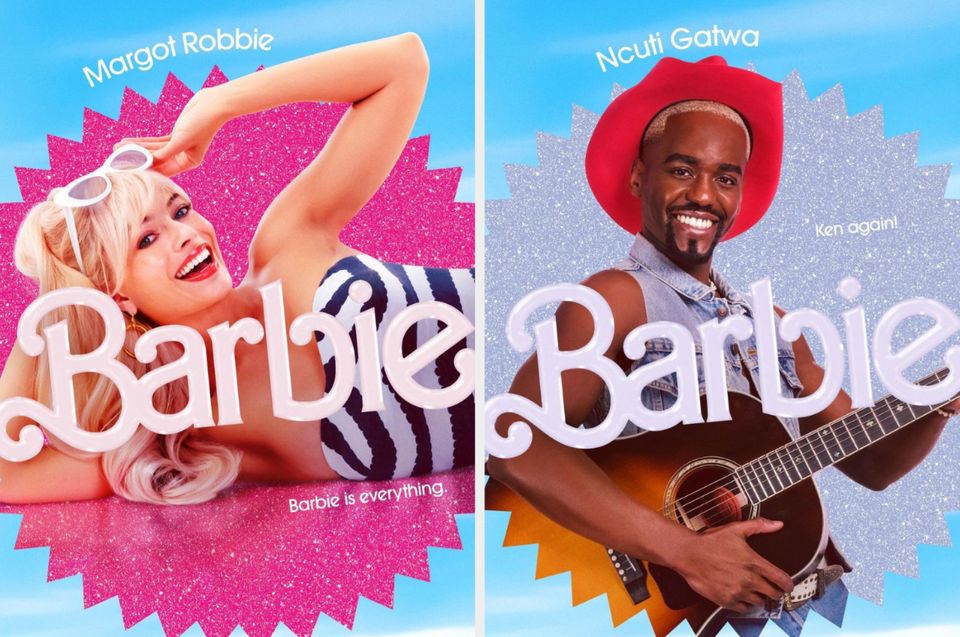
Not only do they confirm long-standing rumours that lead stars Margot Robbie and Ryan Gosling are not the only Barbie and Kens in the film, but they see the star-studded cast posing for a selection of iconic shots revealing the ‘alternative’ versions of the dolls and other additional characters.

Previously announced stars including Sex Education actors Emma Mackey and Ncuti Gatwa, Emerald Fennell, Issa Rae, Hari Nef, America Ferrera, Simu Liu and Kate McKinnon all appear alongside a fresh-batch of famous faces.

They include the likes of Helen Mirren, Will Ferrell, Dua Lipa, Bridgerton’s Nicola Coughlan, Sex Education’s Connor Swindells and Stath Let’s Flats creator Jamie Demetriou, who will all appear in the film.

The new casting announcements has basically got everyone wondering who isn’t going to be in the film when it is released in July.

So naturally, the internet has been having some fun coming up with ideas of who else should be in it…

Alongside the new movie posters, a second more detailed trailer also debuted – which you can watch at the top of this post.

Barbie is written and directed by Greta Gerwig, known for helming Little Women and Lady Bird, as well as acting in films like Frances Ha and 20th Century Women.

Barbie is released in cinemas worldwide on 21 July 2023.

Share Button

All The Other Legal Headaches Facing Donald Trump

In extraordinary moment in US history, former president Donald Trump is to turn himself in at a New York courthouse on Tuesday following his indictment on criminal charges after a probe into hush money paid to a porn star.

Manhattan district attorney Alvin Bragg has charged Trump with crimes related to a $130,000 payment made to Stormy Daniels in the final days of his 2016 run for the presidency.

Trump, who was impeached twice but was never convicted, is the first former president to face criminal charges. But the case is just one of the many probes facing the Republican as he makes another run at the White House in 2024.

Georgia election tampering probe

A prosecutor in the state of Georgia is investigating Trump’s alleged efforts to overturn his 2020 election defeat in that state.

The investigation focuses in part on a phone call Trump made to Georgia secretary of state Brad Raffensperger, a Republican, on January 2, 2021. Trump asked Raffensperger to “find” enough votes needed to overturn Trump’s election loss in Georgia.

Fani Willis, the Fulton County district attorney and a Democrat who will ultimately decide whether to pursue charges against Trump or anyone else, told a judge on January 24 that a special grand jury had completed its investigation task and that decisions were “imminent”.

Legal experts said Trump may have violated at least three Georgia criminal election laws: conspiracy to commit election fraud, criminal solicitation to commit election fraud and intentional interference with performance of election duties.

Trump could argue that his discussions were constitutionally protected free speech.

US Capitol attack

The US justice department has investigations under way into both Trump’s actions in the 2020 election and his retention of highly classified documents after departing the White House in 2021.

Both investigations are being overseen by Jack Smith, a war crimes prosecutor and political independent. Trump has accused the FBI, without evidence, of launching the probes as political retribution.

A special House of Representatives committee investigating the deadly January 6, 2021, assault by Trump supporters on the US Capitol urged the justice department to charge Trump with corruption of an official proceeding, conspiracy to defraud the United States, conspiracy to make a false statement and inciting or aiding an insurrection.

Only the justice department can decide whether to charge Trump, who has called the Democratic-led panel’s investigation a politically motivated sham.

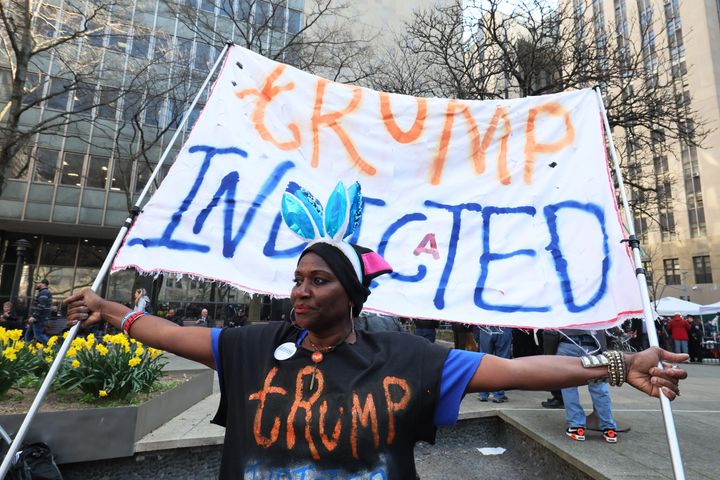
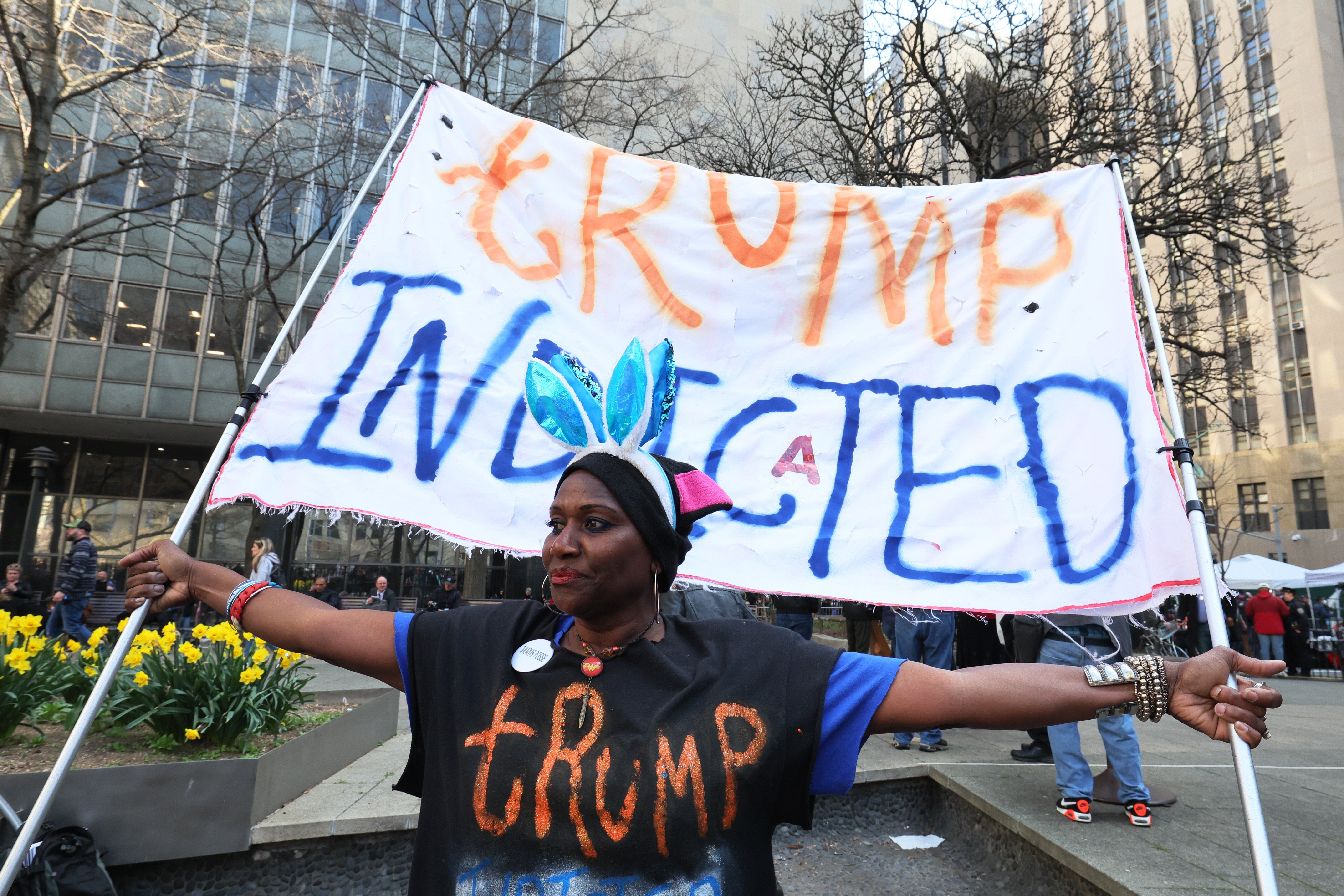
Demonstrators protest against former president Donald Trump at Collect Pond Park near the courthouse ahead of his arraignment hearing in New York city.

Michael M. Santiago via Getty Images

Missing government records

US attorney general Merrick Garland also appointed Smith to investigate whether Trump improperly retained classified records at his Mar-a-Lago Florida estate after he left office in 2021 and then tried to obstruct a federal investigation.

Garland also appointed former US attorney Robert Hur to investigate the removal of classified records in president Joe Biden’s possession dating to his time as vice president.

It is unlawful to willfully remove or retain classified material.

In Trump’s case, the FBI seized 13,000 documents from Mar-a-Lago in an August 8 search. About 100 documents were marked classified; some were designated top secret, the highest level of classification.

Trump has accused the justice department of engaging in a partisan witch hunt.

New York attorney general civil lawsuit

New York attorney general Letitia James sued Trump and his Trump Organisation last September for fraud.

James said her office found more than 200 examples of misleading asset valuations between 2011 and 2021, and that Trump inflated his net worth by billions of dollars.

The attorney general said the scheme was intended to help Trump obtain lower interest rates on loans and better insurance coverage.

She also said her probe uncovered evidence of criminal wrongdoing, and referred it to federal prosecutors and the Internal Revenue Service.

The civil lawsuit seeks to permanently bar Trump and three of his adult children from running companies in New York state, and recoup at least $250 million obtained through fraud.

Trump, a Republican, has called James’ lawsuit a witch hunt, and the defendants have called the claims meritless. James is a Democrat.

A New York judge ordered an independent monitor to oversee the Trump Organisation before the scheduled October 2023 trial.

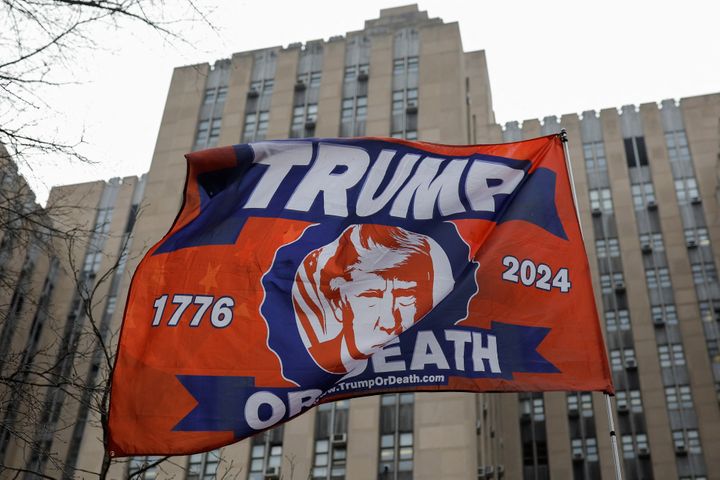
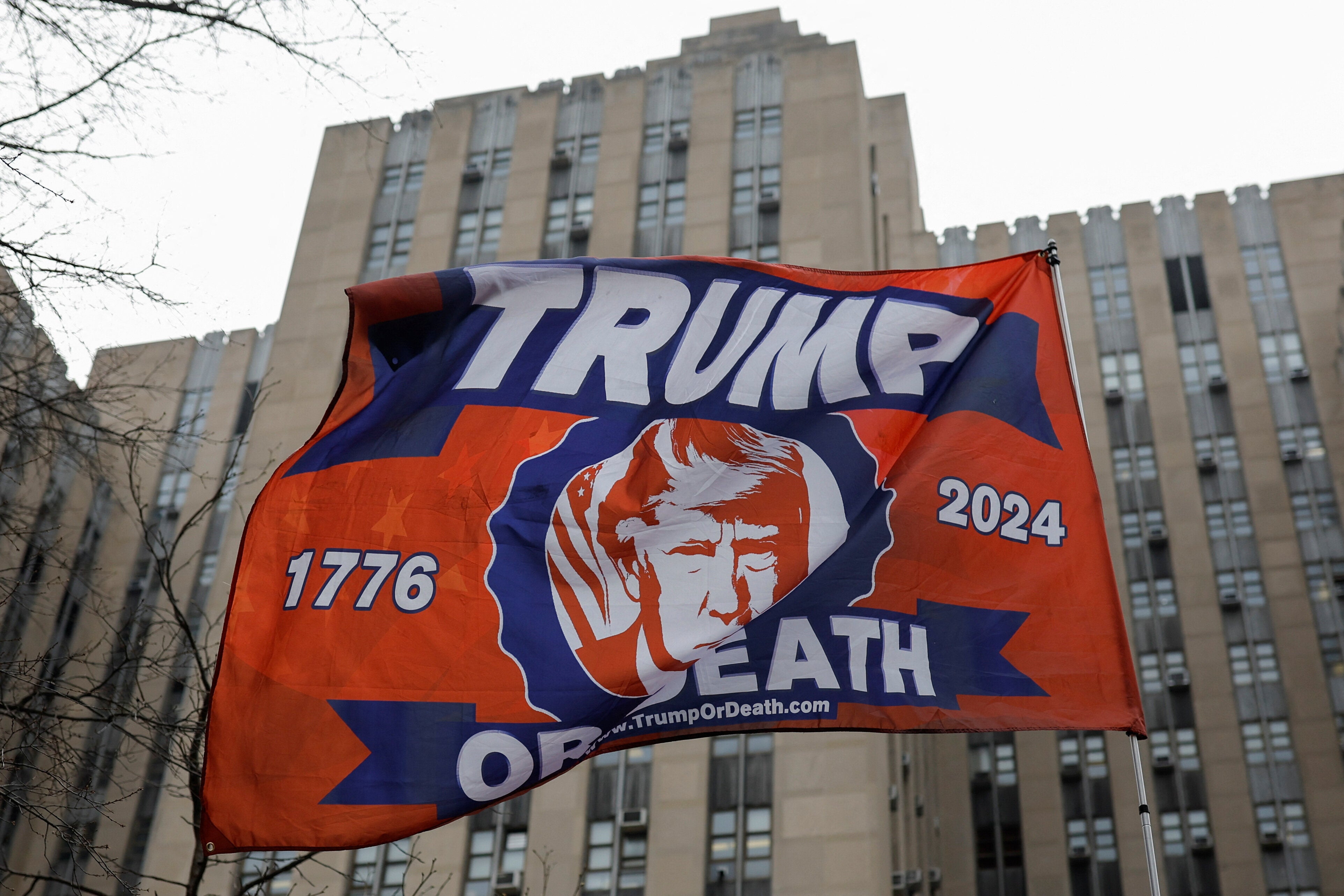
A flag in support of former US president Donald Trump is waved outside Manhattan Criminal Courthouse on the day of his planned court appearance after his indictment by a Manhattan grand jury following a probe into hush money paid to porn star Stormy Daniels, in New York city.

AMANDA PEROBELLI via Reuters

Defamation lawsuits

E Jean Carroll, a former Elle magazine columnist, has filed two lawsuits accusing Trump of defaming her by denying he raped her in New York’s Bergdorf Goodman department store dressing room in late 1995 or early 1996.

Carroll first sued Trump after he told a reporter at the White House in 2019 that he did not know Carroll, that “she’s not my type”, and that she lied to drum up sales for her memoir.

The second lawsuit arose from an October 2022 social media post where Trump called the rape claim a “hoax”, “lie”, “con job” and “complete scam”.

That lawsuit includes a battery claim under New York’s adult survivors act, which gave adults a one-year window to sue their alleged attackers even if statutes of limitations have expired.

Trump and Carroll are awaiting a decision from a Washington, DC, appeals court on whether, under local law, Trump should be immune from Carroll’s first lawsuit.

The second lawsuit could go to trial on April 25, after a US judge in January called Trump’s bid to dismiss it “absurd”.

With reporting by Reuters.

Share Button

A detailed map of the microverse: Microbial niches

Whether in hot springs, in the human intestine or in the deep sea — microorganisms colonise almost every place on earth, sometimes under extreme conditions. Depending on how these organisms have adapted to the particular environmental conditions in such ecological niches, ecologists classify them as “generalists” or “specialists.” While generalists can cope with a wide range of environmental conditions, specialists grow only under very specific circumstances.

“A key question for the study of such different microbial strategies is how to define microbial ecological niches in the first place,” says Prof. Dr Bas E. Dutilh. Until now, this has mainly been done based on subjective environmental parameters, which hardly allow unbiased quantification of the niche. The bioinformatician from the Cluster of Excellence “Balance of the Microverse” at the University of Jena, together with researchers from Utrecht University, has therefore used a novel — data-driven — method to describe microbial niches, in which the species community itself is considered the decisive environmental factor instead of external habitat conditions. This works because microbial communities adapt rapidly to their environment, so their composition reflects the sum of all environmental factors.

Most microbial habitats dominated by generalists

For their study, the researchers analysed and quantified thousands of metagenomic data sets from different microbial samples from all over the world. “We found that in most habitats, generalists are dominant,” says Dutilh. The researchers were initially surprised by this finding, as they had assumed that in local niches, specialists might prevail because they are better adapted to the particular conditions. But they found that competing generalists could grow much faster and thus gain dominance in the niche. “For the generalists it’s hit-or-miss, though; either they make it or they don’t. This makes them quite variable in their presence. Specialists are more stable in their niche, albeit at low abundance.”

And there was another result that the researchers had not expected: The genomes of the generalists are not particularly large. “This was previously assumed because metabolic flexibility was thought to generally require a larger genome,” reports Dutilh. But as it turns out, the correlation between niche range and genome size is more complex. “We discovered two contrasting evolutionary strategies: In habitats with relatively low local biodiversity, such as animal-associated microbiomes, the specialists have a relatively small genome. In highly biodiverse habitats such as soils, the genome of the specialists is significantly larger.”

The genomes of generalists are more variable than those of specialists, with genes coming and going during evolution. This allows them to integrate genetic information from other organisms through horizontal gene transfer and thus to adapt rapidly to the local niche. “We also see specific functions that are associated with horizontal gene transfer in generalists’ genomes,” according to Dutilh. The functions associated with specialists are much more diverse, often related to very specific metabolic processes. The genomes of specialists are evolutionarily stable, unlike those of generalists.

“In conclusion, our analysis sheds new and unexpected light on microbial niche range strategies throughout the microbial tree of life,” Bas E. Dutilh is convinced.

Share Button

Absolute zero in the quantum computer

The absolute lowest temperature possible is -273.15 degrees Celsius. It is never possible to cool any object exactly to this temperature — one can only approach absolute zero. This is the third law of thermodynamics.

A research team at TU Wien (Vienna) has now investigated the question: How can this law be reconciled with the rules of quantum physics? They succeeded in developing a “quantum version” of the third law of thermodynamics: Theoretically, absolute zero is attainable. But for any conceivable recipe for it, you need three ingredients: Energy, time and complexity. And only if you have an infinite amount of one of these ingredients can you reach absolute zero.

Information and thermodynamics: an apparent contradiction

When quantum particles reach absolute zero, their state is precisely known: They are guaranteed to be in the state with the lowest energy. The particles then no longer contain any information about what state they were in before. Everything that may have happened to the particle before is perfectly erased. From a quantum physics point of view, cooling and deleting information are thus closely related.

At this point, two important physical theories meet: Information theory and thermodynamics. But the two seem to contradict each other: “From information theory, we know the so-called Landauer principle. It says that a very specific minimum amount of energy is required to delete one bit of information,” explains Prof. Marcus Huber from the Atomic Institute of TU Wien. Thermodynamics, however, says that you need an infinite amount of energy to cool anything down exactly to absolute zero. But if deleting information and cooling to absolute zero are the same thing — how does that fit together?

Energy, time and complexity

The roots of the problem lie in the fact that thermodynamics was formulated in the 19th century for classical objects — for steam engines, refrigerators or glowing pieces of coal. At that time, people had no idea about quantum theory. If we want to understand the thermodynamics of individual particles, we first have to analyse how thermodynamics and quantum physics interact — and that is exactly what Marcus Huber and his team did.

“We quickly realised that you don’t necessarily have to use infinite energy to reach absolute zero,” says Marcus Huber. “It is also possible with finite energy — but then you need an infinitely long time to do it.” Up to this point, the considerations are still compatible with classical thermodynamics as we know it from textbooks. But then the team came across an additional detail of crucial importance:

“We found that quantum systems can be defined that allow the absolute ground state to be reached even at finite energy and in finite time — none of us had expected that,” says Marcus Huber. “But these special quantum systems have another important property: they are infinitely complex.” So you would need infinitely precise control over infinitely many details of the quantum system — then you could cool a quantum object to absolute zero in finite time with finite energy. In practice, of course, this is just as unattainable as infinitely high energy or infinitely long time.

Erasing data in the quantum computer

“So if you want to perfectly erase quantum information in a quantum computer, and in the process transfer a qubit to a perfectly pure ground state, then theoretically you would need an infinitely complex quantum computer that can perfectly control an infinite number of particles,” says Marcus Huber. In practice, however, perfection is not necessary — no machine is ever perfect. It is enough for a quantum computer to do its job fairly well. So the new results are not an obstacle in principle to the development of quantum computers.

In practical applications of quantum technologies, temperature plays a key role today — the higher the temperature, the easier it is for quantum states to break and become unusable for any technical use. “This is precisely why it is so important to better understand the connection between quantum theory and thermodynamics,” says Marcus Huber. “There is a lot of interesting progress in this area at the moment. It is slowly becoming possible to see how these two important parts of physics intertwine.”

Share Button

Legacy industrial contamination in the Arctic permafrost

Many of us picture the Arctic as largely untouched wilderness. But that has long-since ceased to be true for all of the continent. It is also home to oilfields and pipelines, mines and various other industrial activities. The corresponding facilities were built on a foundation once considered to be particularly stable and reliable: permafrost. This unique type of soil, which can be found in large expanses of the Northern Hemisphere, only thaws at the surface in summer. The remainder, extending up to hundreds of metres down, remains frozen year-round.

Accordingly, permafrost has not only been viewed as a solid platform for buildings and infrastructure. “Traditionally, it’s also been considered a natural barrier that prevents the spread of pollutants,” explains Moritz Langer from the Alfred Wegener Institute, Helmholtz Centre for Polar and Marine Research (AWI). “Consequently, industrial waste from defunct or active facilities was often simply left on-site, instead of investing the considerable effort and expense needed to remove it.” As a result of the industrial expansion during the cold war, over the decades this led to micro-dumps full of toxic sludge from oil and gas exploration, stockpiles of mining debris, abandoned military installations, and lakes in which pollutants were intentionally poured. “In many cases, the assumption was that the permafrost would reliably and permanently seal off these toxic substances, which meant there was no need for costly disposal efforts,” says Guido Grosse, who heads the AWI’s Permafrost Research Section. “Today, this industrial legacy still lies buried in the permafrost or on its surface. The substances involved range from toxic diesel fuel to heavy metals and even radioactive waste.”

But as climate change progresses, this “sleeping giant” could soon become an acute threat: since the permafrost regions are warming between twice as fast and four times as fast as the rest of the world, the frozen soil is increasingly thawing. When this happens, it changes the hydrology of the region in question, and the permafrost no longer provides an effective barrier. As a result, contaminants that have accumulated in the Arctic over decades can be released, spreading across larger regions.

In addition, thawing permafrost becomes more and more unstable, which can lead to further contamination. When the ground collapses, it can damage pipelines, chemical stockpiles and depots. Just how real this risk already is can be seen in a major incident from May 2020 near the industrial city Norilsk in northern Siberia: a destabilized storage tank released 17,000 metric tons of diesel, which polluted the surrounding rivers, lakes and tundra. According to Langer: “Incidents like this could easily become more frequent in the future.”

In order to more accurately assess such risks, he and an international team of experts from Germany, the Netherlands and Norway took a closer look at industrial activities in the High North. To do so, they first analysed freely available data from the portal OpenStreetMap and from the Atlas of Population, Society and Economy in the Arctic. According to these sources, the Arctic permafrost regions contain ca. 4,500 industrial sites that either store or use potentially hazardous substances.

“But this alone didn’t tell us what types of facilities they were, or how badly they could potentially pollute the environment,” says Langer. More detailed information on contaminated sites is currently only available for North America, where roughly 40 percent of the global permafrost lies. The data from Canada and Alaska showed that, using the location and type of facility, it should be possible to accurately estimate where hazardous substances were most likely to be found.

For Alaska, the Contaminated Sites Program also offers insights into the respective types of contaminants. For example, roughly half of the contaminations listed can be attributed to fuels like diesel, kerosene and petrol. Mercury, lead and arsenic are also in the top 20 documented environmental pollutants. And the problem isn’t limited to the legacy of past decades: although the number of newly registered contaminated sites in the northernmost state of the USA declined from ca. 90 in 1992 to 38 in 2019, the number of affected sites continues to rise.

There are no comparable databases for Siberia’s extensive permafrost regions. “As such, our only option there was to analyse reports on environmental problems that were published in the Russian media or other freely accessible sources between 2000 and 2020,” says Langer. “But the somewhat sparse information available indicates that industrial facilities and contaminated sites are also closely linked in Russia’s permafrost regions.”

Using computer models, the team calculated the occurrence of contaminated sites for the Arctic as a whole. According to the results, the 4,500 industrial facilities in the permafrost regions have most likely produced between 13,000 and 20,000 contaminated sites. 3,500 to 5,200 of them are located in regions where the permafrost is still stable, but will start to thaw before the end of the century. “But without more extensive data, these findings should be considered a rather conservative estimate,” Langer emphasises. “The true scale of the problem could be even greater.”

Making matters worse, the interest in pursuing commercial activities in the Arctic continues to grow. As a result, more and more industrial facilities are being constructed, which could also release toxic substances into nearby ecosystems. Further, this is happening at a time when removing such environmental hazards is getting harder and harder — after all, doing so often requires vehicles and heavy gear, which can hardly be used on vulnerable tundra soils that are increasingly affected by thaw.

“In a nutshell, what we’re seeing here is a serious environmental problem that is sure to get worse,” summarises Guido Grosse. What is urgently called for, according to the experts: more data, and a monitoring system for hazardous substances in connection with industrial activities in the Arctic. “These pollutants can, via rivers and the ocean, ultimately find their way back to people living in the Arctic, or to us.” Other important aspects are intensified efforts to prevent the release of pollutants and undo the damage in those areas that are already contaminated. And lastly, the experts no longer consider it appropriate to leave industrial waste behind in the Arctic without secure disposal options. After all, the permafrost can no longer be relied upon to counter the associated risks.

Share Button

London NHS trust criticised after warning to striking staff on visas

A post warned striking doctors with a sponsored visa they would be reported “to the Border Force”.

Share Button

‘Major moment in MS research’ as new Octopus trial starts

Ailsa explains what it is like facing progressive MS and hopes the new Octopus trial can help her.

Share Button

Vulnerable to lose out as care funding held back – council chiefs

Councils criticise move to hold back £600m of investment, saying government commitment is in tatters.

Share Button