The British Medical Association is refusing to provide any exemptions for life and limb cover next week.


The British Medical Association is refusing to provide any exemptions for life and limb cover next week.
Olaparib specifically targets cancers caused by faulty genes, like BRCA, and could be life-saving.
Kathleen Poole, a British 74-year-old care home resident, was facing deportation from Sweden.

Jacinda Ardern has described herself as a “hugger and a crier” as the former New Zealand prime minister said she wanted her career to inspire others to take political office in an emotional farewell address to New Zealand’s parliament.
Ardern – who burst onto the global scene in 2017 when she became the world’s youngest female head of government at age 37 – had stepped down in January saying she had “no more in the tank” to lead the country.
Advertisement
In her departing address, wearing a traditional Māori cloak called a korowai, she described how she’d navigated a pandemic and a mass-shooting during her tumultuous five-year tenure as prime minister.
When Ardern finished speaking after about 35 minutes, she was greeted with a standing ovation by politicians from across the political spectrum and rousing renditions of several indigenous Māori songs.
The daughter of a policeman and school canteen operator, Ardern described how she never thought she was meant to have the role of prime minister.
While she couldn’t control how her tenure would be defined by others, Ardern said, she hoped it had demonstrated something else.
Advertisement
“That you can be anxious, sensitive, kind and wear your heart on your sleeve,” she said. “You can be a mother, or not, you can be an ex-Mormon, or not, you can be a nerd, a crier, a hugger, you can be all of these things, and not only can you be here, you can lead, just like me.”
As head of the centre-left Labour party for five years, Ardern steered New Zealand through a volcanic eruption, a 2019 attack by a gunman in Christchurch that killed 51 Muslim worshippers and the Covid-19 pandemic.
Ardern said she had found herself involved in people’s lives “during their most grief-stricken or traumatic moments” in that series of events.
She also described how she and fiancé Clarke Gayford thought they couldn’t have children after a failed round of IVF.
Advertisement
“Rather than process that, I campaigned to become prime minister,” she joked. “A rather good distraction as far as they go. Imagine my surprise when a couple of months later, I discovered I was pregnant.”
Ardern became just the second elected world leader to give birth while holding office after she and Gayford had daughter Neve in 2018.
Ardern described how she’d approached the Covid-19 pandemic on a scientific basis and how New Zealand had fared best among developed nations when measuring excess mortality.
She said she once tried to argue with a lone protestor about a false conspiracy theory.
“But after many of these same experiences, and seeing the rage that often sat behind these conspiracies, I had to accept I was wrong,” she said. “I could not single-handedly pull someone out of a rabbit hole.”
Advertisement
Later this month, Ardern will begin an unpaid role combating online extremism as special envoy for the Christchurch Call. It’s an initiative she started with French president Emmanuel Macron two months after the Christchurch shooting.
She has also announced she’s joining the board of trustees for The Earthshot Prize, an environmental charity started by Prince William.

One of the toughest ― and often most traumatic ― experiences in life is grief, a part of our journey that impacts everyone and doesn’t get any easier the more times you go through it.
“Grief is a universal and human experience,” said Christina Zampitella, the founder of the Center for Grief and Trauma Therapy in Delaware who also has a grief-focused podcast called “Phoenix Rising With Dr. Z.” But, unlike many other universal experiences, grief is not anticipated or straightforward.
Advertisement
“It’s your natural response to loss. That’s a simple answer, but, of course, it’s not a simple experience,” said Dr. M. Katherine Shear, director of the Center for Prolonged Grief at Columbia University in New York.
Grief shows up differently for everyone and changes depending on what activates it, who’s around and a person’s state of mind, Shear added. Its complexity means there is no grief road map — it looks different for everyone, which means there is no way of knowing how it’ll impact you until it does.
But while grief is different for everyone, there are commonalities, Shear added. One of those commonalities is that there are things you can do to move through your grief and help yourself feel even just a little bit better. Here, experts share the things you can do to take care of yourself as you’re grieving.
“The first thing is to be sure not to second-guess grief,” Shear said. “We want to kind of let it be and not worry about whether we’re grieving in the right way or not.”
Advertisement
In other words, you are never grieving “wrong” — however you’re feeling is right for you. So, if you’re worried your grief isn’t normal, put that thought out of your head. (One exception is if you’re doing something dangerous to grieve — like drinking too much or driving recklessly. That is an unhealthy way to cope.)
She added that grief is not something we can control, either, so any thoughts or feelings you’re having are valid. “Maybe get interested in [the thoughts] or maybe not take [them] too seriously, but don’t try to control it because grief is not really all that controllable, honestly,” she said.
Taking care of yourself by sleeping, eating, drinking water, exercising, resting and practicing proper hygiene are all necessary parts of self-care, according to Zampitella. Your body won’t feel any better if you aren’t eating three meals a day or if you’re skipping crucial aspects of your routine.
There’s no doubt that some of these so-called basic things may feel like a challenge for you in the early phases of grief, but it’s important to try to prioritise yourself ― even if that means missing a step in your regular skin care routine (that’s OK) or skipping breakfast to get some extra sleep.
“We need to have periods of being with our grief, even though it’s painful, because pain doesn’t necessarily mean it’s bad … and we also need respite,” Shear said.
Advertisement
It’s necessary to both feel the pain of grief and allow yourself to take breaks because that pain is a lot to cope with, she added.
“Try to commit to taking some time every day, even just five minutes … just some time every day to do something a little bit pleasant,” Shear said.
And this means doing something as pleasant as you can manage — it doesn’t have to be going to happy hour with friends or treating yourself to a spa day. It can mean watching a funny YouTube video or making yourself your favourite tea.
“Do it and make it almost like a ritual … you can think of it almost as a way of honouring the love the person who died had for you because you know that’s what they would want for you,” she said.
While you’re in the early stages of grief, you can’t expect yourself to show up as you always have for friends and family, Zampitella said.
Advertisement
“[Make] sure that you’re very intentional with what you’re saying no and what you’re saying yes to,” she added. While you still have to do necessary things like getting your kids to school or paying your electric bill, you shouldn’t take on things that aren’t essential.
Instead of saying yes to things that feel like too much, let yourself lean into your grief, Zampitella said. Oscillating back and forth between grief and the day’s necessities can help you move through your grief in a healthier manner, she said.
Additionally, Shear said, you should avoid anything new for the most part — “unless it’s something you really want to do and that fits into having some pleasant time.”
Things that are not rewarding or that are stressful should be put on the back burner, she said. When you’re actively grieving, “it’s not the best time to take on new tasks or do anything challenging,” she said.
According to Zampitella, it can be helpful to find outlets to express how you’re feeling. This could include listening to music, doing crafts or journaling.
Advertisement
She noted that when it comes to journaling for grief, there are time parameters that can help you effectively cope. Zampitella recommends journaling for four days a week for 20 minutes. (More than 20 minutes can cause you to get flooded with emotion while less than that amount of time won’t allow you to get into the practice, she said.)
Vladimir Vladimirov via Getty Images
“Learning mindfulness and meditation techniques are a really nice way of being able to hold your feelings without getting swallowed up by them,” Zampitella said. And when it comes to meditation, you don’t have to commit to long periods of time ― even just five minutes of meditation is a good way to practice mindfulness, she said.
Zampitella added that another good mindfulness practice is yoga, which impacts people’s well-being in a different way than other forms of exercise. Spending time in nature is another option.
“When you’re in nature, you’re away from man-made objects — that gives you a sense of getting away,” she said. Also, you have things to hold your attention, like streams or trees or birds, but these things also don’t completely divert your attention, which allows you to think about the loss in your life, Zampitella noted.
Advertisement
“An important one is to be able to narrate a story of the death, to be able to tell a story of what happened,” Shear said.
This will help you be prepared to talk about it and be ready to answer one of the biggest questions you’ll hear.
“People usually do this very naturally. Their friends and family will say, ‘Oh, what happened?’ and they’ll tell the story, and that’s a part of what you need to do is be able to tell yourself and other people what happened,” she said.
Death is one of the most salient moments in someone’s life, Shear added. Being able to tell the story of your loved one’s passing is a way to honour them and also won’t allow you to block out this important moment.
“You’ll notice that often there’s a lot of support, especially in those first three months, but it will wane because things change,” Zampitella said.
Advertisement
When you find that support is dwindling, don’t be afraid to tell your friends and family that you need them.
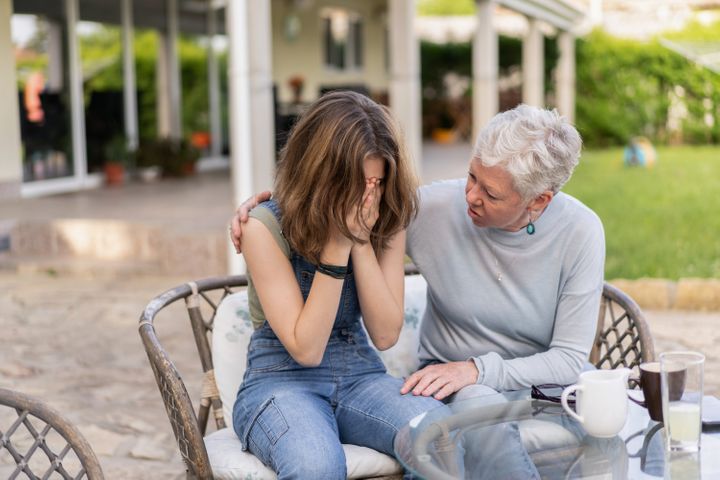
Additionally, Zampitella noted, if a loved one says something that bothers you — for example, if they say “your loved one is in a better place” and you don’t want to hear that — don’t be afraid to let them know that thought isn’t helpful. At that moment, try sharing the things that would be helpful, whether that’s telling stories about your loved one or just letting you cry.
Death and grief are some of the most stressful things we experience in life, Shear said.
While coping with grief is possible, some folks will require more support. Zampitella said some signs that you may need additional help include not being able to accept the loss, not engaging in any future goals and not reconfiguring the relationship with the person who died.
Also, if you find that you’re unable to meet your basic needs (like if you aren’t eating, sleeping or bathing), you may want to reach out for professional help. There are grief therapists who can help you feel better.
You can search for one via Psychology Today’s therapist database or Google therapy groups in your area that specialise in grief. “There’s no shame in getting help. There’s help available,” Shear said.
Advertisement
“Death is permanent, and so grief is also permanent,” Shear said. “We don’t stop having some response to that loss — in other words, we still feel it.”
As time goes on, your grief will change, she said. In the long run, it usually quiets down and moves into the background, but it’s still there.
You may feel your grief pop up around your loved one’s birthday, around the holidays or when visiting their favourite restaurant. Know that if it’s been years and years since you lost a loved one and you wake up feeling down one day, that is perfectly normal.


Gareth Eve says he has “no alternative” but to sue AstraZeneca over BBC presenter Lisa Shaw’s death.

Hundreds of asylum seekers will be housed on a barge docked on the Dorset coast, it has been confirmed.
The Bibby Stockholm vessel will be docked at Portland Port and house more than 500 migrants in its 222 bedrooms.
Advertisement
It is estimated it will cost the public purse around £20,000 a day.
The Home Office is in discussions with other ports, and more barges will be used to house asylum seekers.
But home secretary Suella Braverman faces a potential legal action from Conservative-run Dorset Council, supported by the Tory MP for the area, Richard Drax.
The controversial move is part of Rishi Sunak’s plan to stop asylum seekers crossing the English Channel on small boats, while also cutting the £6m a day bill for housing migrants in hotels while their claims are processed.
The prime minister said: “We’re bringing forward alternative sites, like the barge, that will save us money and indeed reduce pressure on hotels – all part of our plan to stop the boats.”
Advertisement
Immigration minister Robert Jenrick said: “The home secretary and I have been clear that the use of expensive hotels to house those making unnecessary and dangerous journeys must stop.
“We will not elevate the interests of illegal migrants over the British people we are elected to serve.
“We have to use alternative accommodation options, as our European neighbours are doing – including the use of barges and ferries to save the British taxpayer money and to prevent the UK becoming a magnet for asylum shoppers in Europe.”
He insisted the accommodation “will meet our legal obligations” and also pledged to work with local people to address their concerns over the vessel’s location.
Bill Reeves, chief executive of Portland Port, said: “We are keen to play our part in the national effort to house some of the thousands of people needing accommodation.
Advertisement
“We encourage everyone in the community to approach this with an open mind and help us show other areas just how successful this type of initiative can be, both for the migrants and the local community.”
But Drax, the South Dorset MP, said the barge was being “dumped on our door” without consultation by the Home Office as he urged Ms Braverman to scrap the idea.
“Every option’s being looked at including legal action,” he told the PA news agency.
“We want to get this consigned to the dustbin before anything’s signed.
“We want to activate ourselves and say look Home Secretary, sorry, this is not the right place, can you please cancel this.”

Thousands of families could receive compensation payments in scandal that killed more than 3,000 people.
The risk to the public is very low, but people are urged to protect themselves from the tiny bugs.
Money from the Bowelbabe fund will go to research into the prevention and treatment of bowel cancer.
