Eight of England’s 11 ambulance trusts are ordering 655 replacement ambulances and 51 extra ones.


Eight of England’s 11 ambulance trusts are ordering 655 replacement ambulances and 51 extra ones.
TikTok’s most famous dermatologist Dr Muneeb Shah is sharing his top tips for the holy month.
WEST PALM BEACH, Fla. (AP) — Former president Donald Trump boarded his private plane Monday and flew from Florida toward New York ahead of his expected booking and arraignment, as the nation’s largest city bolstered security and warned potential agitators that it is “not a playground for your misplaced anger”.
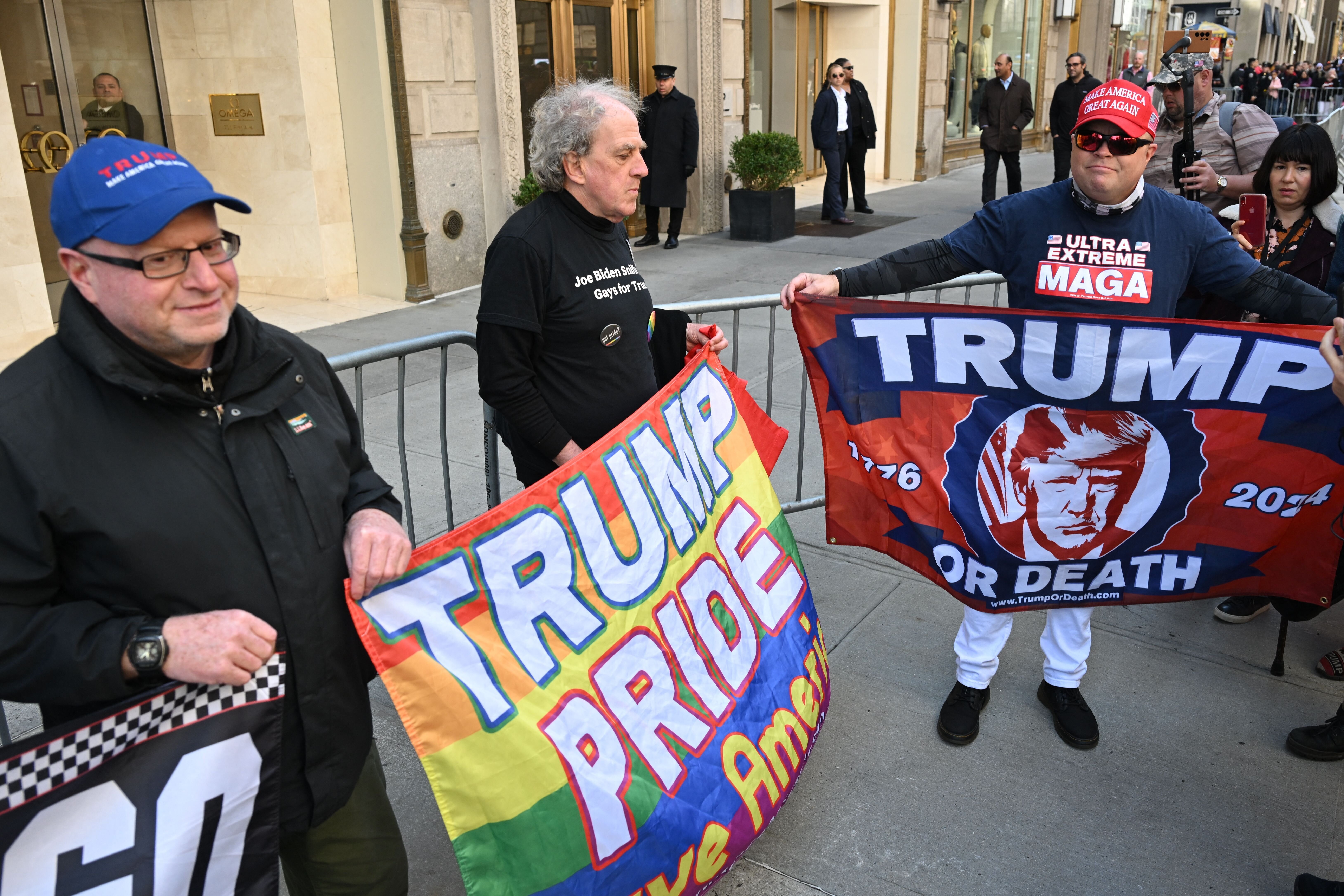
Trump’s ground journey from his Mar-a-Lago club to his red, white and blue Boeing 757, emblazoned with “TRUMP” in gold letters was carried live on national television and took him past supporters waving banners and cheering the former president. Trump and his supporters criticize the case against him — stemming from hush money payments during his 2016 campaign —as politically motivated.
Advertisement
The scene was quite different in New York, where Trump built a national profile in business and entertainment but became deeply unpopular as he moved into politics.
His return to the city opens an unprecedented chapter in American history, with Trump being the first former president to face criminal charges even as he is in the midst of a third campaign for the White House. It’s causing major legal, political and cultural events collide in unprecedented ways.
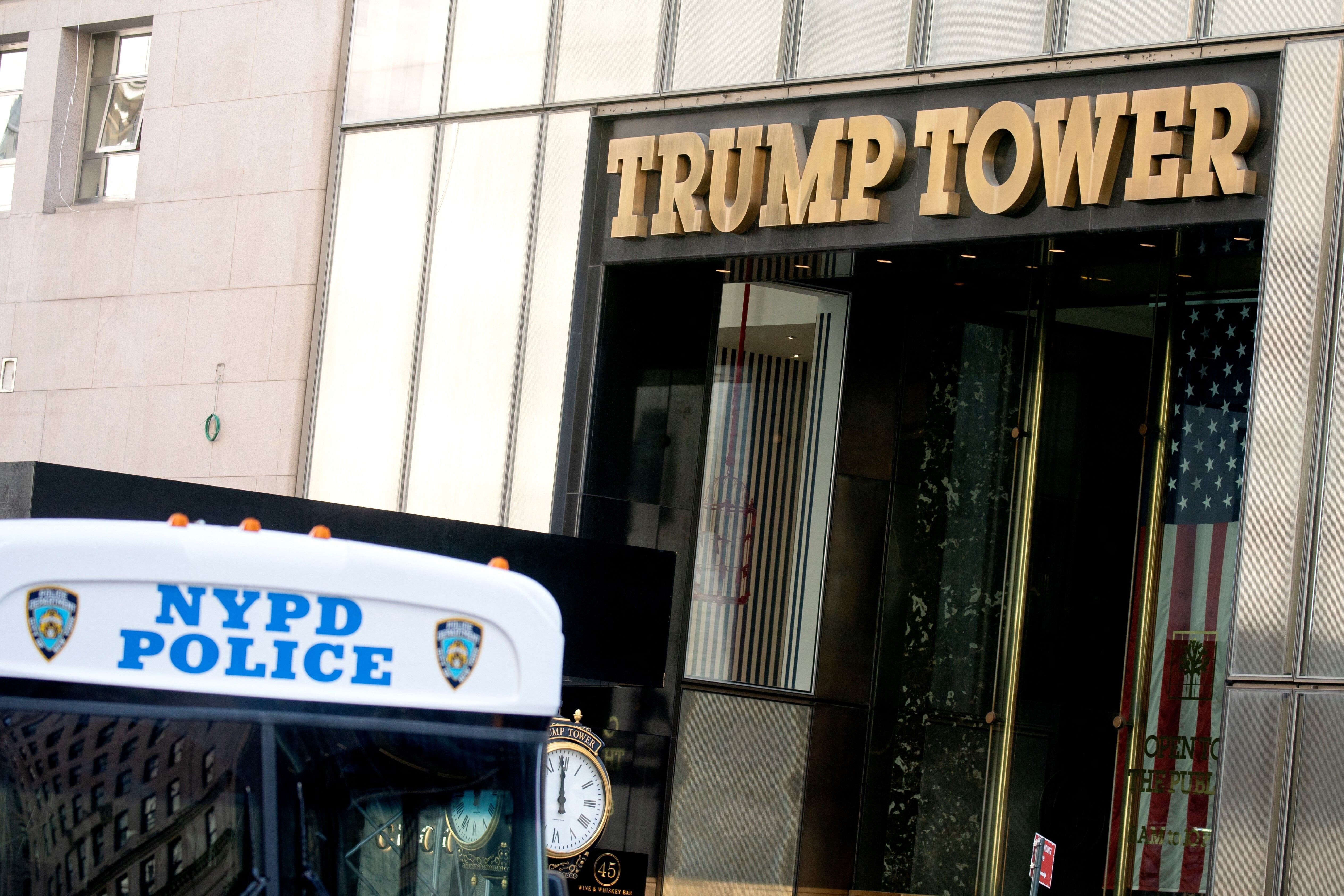
The former president planned to spend the night at Trump Tower, then surrender to authorities on Tuesday for booking and a likely afternoon arraignment. So far, officials have not seen an influx of people coming into the city, as was the case in Washington in the days before the January 6, 2021, insurrection.
Still, authorities warned that possessing a weapon in certain areas of the city, including near courthouses, is a crime.
Advertisement
“While there may be some rabble rousers thinking about coming to our city tomorrow, our message is clear and simple: control yourselves,” said New York mayor Eric Adams. “New York City is our home, not a playground for your misplaced anger. We are the safest large city in America because we respect the rule of law in New York City.”
Trump Tower was open on Monday, but authorities were planning to close nearby streets as Trump came and went, and additional security was also in the works. They’ve taken steps to close and secure the courthouse floor where the former president is set to appear for an arraignment Tuesday afternoon.
Trump supporters, including one of his staunchest defenders in Congress, Republican representative Marjorie Taylor Greene of Georgia, planned a rally in New York late on Tuesday morning, probably before Trump would have to stand before a judge as part of the arraignment. Adams took the unusual step of calling out the congresswoman by name.
“Although we have no specific threats, people like Marjorie Taylor Greene, who is known to spread misinformation and hate speech, she’s stated she’s coming to town,” Adams said. “While you’re in town, be on your best behaviour.”
The former president and his aides were eagerly embracing the expected media circus. After initially being caught off guard by news of the indictment when it broke on Thursday evening, Trump and his team are focused on using what they call a weak case against Trump to his advantage.
Advertisement
STEFANI REYNOLDS via Getty Images
ANDREW CABALLERO-REYNOLDS via Getty Images
ANDREW CABALLERO-REYNOLDS via Getty Images
More than 1,200 miles away in Florida, demonstrators supporting Trump began gathered before dawn at a West Palm Beach shopping center on the way to the airport, hours before he was set to pass along the route.
Boca Raton firefighter Erik Solensten and his retired colleague, John Fischer, got an early start putting up banners. One was 30 by 6 feet (9 by 2 meters), picturing police officers and firefighters saying, “Thanks for having our backs, president Trump.”
Advertisement
“We are fire-rescue. We are prepared and don’t like to wait for things to happen,” said Solensten, who took a vacation day to show support for Trump. “He needs morale just like everyone else needs morale. He’s done more for this country than any 10 presidents combined.”
Trump is facing multiple charges of falsifying business records, including at least one felony offence, in the indictment handed down by a Manhattan grand jury last week. The investigation is scrutinising six-figure payments made to porn actor Stormy Daniels and former Playboy model Karen McDougal.
Both say they had sexual encounters with the married Trump years before he got into politics. Trump denies having sexual liaisons with either woman and has denied any wrongdoing involving payments, arguing that the case against him is politically motivated.
No former president has ever been indicted and trump’s active campaign for the presidency during next year’s election only further raises the political stakes. Trump spent the weekend golfing and meeting advisers but his campaign says it has raised more than $5 million since word of the indictment broke. One Trump fundraising email Monday carried the subject line, “Tomorrow, I will be arrested”.
Top Republicans, including some of Trump’s potential rivals in next year’s GOP presidential primary, have decried the case against him. President Joe Biden and leading Democrats have largely had little to say about it.
Advertisement
Solensten said it is wrong that Trump is being charged with a crime stemming from an alleged tryst with a porn star long before he was in office. He said investigators should instead be looking at Biden’s son, Hunter, and his business dealings, which committees in the Republican-controlled House have already begun examining.
“To me, those acts are treasonable,” Solensten said of the Bidens. “But it’s a walk.”



Donald Trump is expected to voluntarily turn himself in to a New York district attorney’s office on Tuesday over charges related to hush money payments made to porn star Stormy Daniels.
The former president will have his fingerprints and mugshot taken and appear for arraignment in court. He will likely be released and allowed to head home, experts have said.
Advertisement
Mugshots are not public record under New York state law, though they have leaked in the past.
Trump could seek to have the picture released himself in the hopes of a political boost as he makes another bid for the White House.
Within minutes of word of his indictment breaking, his 2024 presidential campaign was sending fundraising messages off the back of the news. His campaign has said it has raised more than $5 million and logged more than 16,000 volunteer signups since the indictment.
Trump could follow the path of other politicians. Texas governor Rick Perry posed for a mugshot photo in August 2014 after he was indicted on felony charges of abuse of power and coercion of a public servant.
Perry was looking to build momentum for a 2016 presidential run that ultimately fizzled out in a matter of months – much like the case against him, which never went to trial.
Advertisement
An attorney for Trump has said they are against the former president’s mugshot being released.
Alina Habba told CNN: “I like transparency. I think that in certain situations, it’s a good thing. I do have a problem with leaking of pictures. I think that because we’re in a campaign, because he’s the leading GOP candidate, it’s not going to help anything.”
Trump’s campaign has announced he will deliver remarks on Tuesday night from his Mar-a-Lago club after returning from Manhattan. He is expected to be joined in Florida by supporters as he tries to project an image of strength and defiance to boost his presidential run.
The Associated Press has reported Trump is facing multiple charges of falsifying business records in the indictment handed up by a Manhattan grand jury last week. Trump has denied any wrongdoing and has blasted the investigation as a “witch hunt”.


Missing crucial doses of medicines and vaccines could become a thing of the past thanks to Rice University bioengineers’ next-level technology for making time-released drugs.
“This is a huge problem in the treatment of chronic disease,” said Kevin McHugh, corresponding author of a study about the technology published online in Advanced Materials. “It’s estimated that 50% of people don’t take their medications correctly. With this, you’d give them one shot, and they’d be all set for the next couple of months.”
When patients fail to take prescription medicine or take it incorrectly, the costs can be staggering. The annual toll in the United States alone has been estimated at more than 100,000 deaths, up to 25% of hospitalizations and more than $100 billion in healthcare costs.
Encapsulating medicine in microparticles that dissolve and release drugs over time isn’t a new idea. But McHugh and graduate student Tyler Graf used 21st-century methods to develop next-level encapsulation technology that is far more versatile than its forerunners.
Dubbed PULSED (short for Particles Uniformly Liquified and Sealed to Encapsulate Drugs), the technology employs high-resolution 3D printing and soft lithography to produce arrays of more than 300 nontoxic, biodegradable cylinders that are small enough to be injected with standard hypodermic needles.
The cylinders are made of a polymer called PLGA that’s widely used in clinical medical treatment. McHugh and Graf demonstrated four methods of loading the microcylinders with drugs, and showed they could tweak the PLGA recipe to vary how quickly the particles dissolved and released the drugs — from as little as 10 days to almost five weeks. They also developed a fast and easy method for sealing the cylinders, a critical step to demonstrate the technology is both scalable and capable of addressing a major hurdle in time-release drug delivery.
“The thing we’re trying to overcome is ‘first-order release,'” McHugh said, referring to the uneven dosing that’s characteristic with current methods of drug encapsulation. “The common pattern is for a lot of the drug to be released early, on day one. And then on day 10, you might get 10 times less than you got on day one.
“If there’s a huge therapeutic window, then releasing 10 times less on day 10 might still be OK, but that’s rarely the case,” McHugh said. “Most of the time it’s really problematic, either because the day-one dose brings you close to toxicity or because getting 10 times less — or even four or five times less — at later time points isn’t enough to be effective.”
In many cases, it would be ideal for patients to have the same amount of a drug in their systems throughout treatment. McHugh said PULSED can be tailored for that kind of release profile, and it also could be used in other ways.
“Our motivation for this particular project actually came from the vaccine space,” he said. “In vaccination, you often need multiple doses spread out over the course of months. That’s really difficult to do in low- and middle-income countries because of health care accessibility issues. The idea was, ‘What if we made particles that exhibit pulsatile release?’ And we hypothesized that this core-shell structure — where you’d have the vaccine in a pocket inside a biodegradable polymer shell — could both produce that kind of all-or-nothing release event and provide a reliable way to set the delayed timing of the release.”
Though PULSED hasn’t yet been tested for months-long release delays, McHugh said previous studies from other labs have shown PLGA capsules can be formulated to release drugs as much as six months after injection.
In their study, Graf and McHugh showed they could make and load particles with diameters ranging from 400 microns to 100 microns. McHugh said this size enables particles to stay where they are injected until they dissolve, which could be useful for delivering large or continuous doses of one or more drugs at a specific location, like a cancerous tumor.
“For toxic cancer chemotherapies, you’d love to have the poison concentrated in the tumor and not in the rest of the body,” he said. “People have done that experimentally, injecting soluble drugs into tumors. But then the question is how long is it going to take for that to diffuse out.
“Our microparticles will stay where you put them,” McHugh said. “The idea is to make chemotherapy more effective and reduce its side effects by delivering a prolonged, concentrated dose of the drugs exactly where they’re needed.”
The crucial discovery of the contactless sealing method happened partly by chance. McHugh said previous studies had explored the use of PLGA microparticles for time-released drug encapsulation, but sealing large numbers of particles had proven so difficult that the cost of production was considered impractical for many applications.
While exploring alternative sealing methods, Graf noticed that trying to seal the microparticles by dipping them into different melted polymers was not giving the desired outcome. “Eventually, I questioned whether dipping the microparticles into a liquid polymer was even necessary,” said Graf, who proceeded to suspend the PLGA microparticles above a hot plate, enabling the top of the particles to melt and to self-seal while the bottom of the particles remained intact, “Those first particle batches barely sealed, but seeing the process was possible was very exciting.”Further optimization and experimentation resulted in consistent and robust sealing of the cylinders, which eventually proved to be one of the easier steps in making the time-released drug capsules. Each 22×14 array of cylinders was about the size of a postage stamp, and Graf made them atop glass microscope slides.
After loading an array with drugs, Graf said he would suspend it about a millimeter or so above the hot plate for a short time. “I’d just flip it over and rest it on two other glass slides, one on either end, and set a timer for however long it would take to seal. It just takes a few seconds.”
This work was supported by the Cancer Prevention and Research Institute of Texas (RR190056), the National Institutes of Health (EB031495, EB023833) and the National Science Foundation (1842494, 2236422).

A very subtle and seemingly random type of eye movement called ocular drift can be influenced by prior knowledge of the expected visual target, suggesting a surprising level of cognitive control over the eyes, according to a study led by Weill Cornell Medicine neuroscientists.
The discovery, described Apr. 3 in Current Biology, adds to the scientific understanding of how vision — far from being a mere absorption of incoming signals from the retina — is controlled and directed by cognitive processes.
“These eye movements are so tiny that we’re not even conscious of them, and yet our brains somehow can use the knowledge of the visual task to control them,” says study lead author Dr. Yen-Chu Lin, who carried out the work as a Fred Plum Fellow in Systems Neurology and Neuroscience in the Feil Family Brain and Mind Research Institute at Weill Cornell Medicine.
Dr. Lin works in the laboratory of study senior author Dr. Jonathan Victor, the Fred Plum Professor of Neurology at Weill Cornell Medicine.
The study involved a close collaboration with the laboratory of Dr. Michele Rucci, professor of brain and cognitive sciences and neuroscience at the University of Rochester.
Neuroscientists have known for decades that information stored in memory can strongly shape the processing of sensory inputs, including the streams of visual data coming from the eyes. In other words, what we see is influenced by what we expect to see or the requirements of the task at hand.
Most studies of cognitive control over eye movement have covered more obvious movements, such as the “saccade” movements in which the eyes dart across large parts of the visual field. In the new study, Drs. Lin and Victor and their colleagues examined ocular drift, tiny jitters of the eye that occur even when gaze seems fixed. Ocular drifts are subtle motions that shift a visual target on the retina by distances on the order of a fraction of a millimeter or so — across just a few dozen photoreceptors (cones). They are thought to improve detection of small, stationary details in a visual scene by scanning across them, effectively converting spatial details into trains of visual signals in time.
Prior studies had suggested that ocular drift and other small-scale “fixational eye movements” are under cognitive control only in a broad sense — for example, slowing when scanning across more finely detailed scenes. In the new study, the researchers found evidence for a more precise type of control.
Using sensitive equipment in Dr. Rucci’s laboratory, the researchers recorded ocular drifts in six volunteers who were asked to identify which of a pair of letters (H vs. N, or E vs. F) was being shown to them on a background of random visual noise. Based on computational modeling, the scientists expected that optimal eye movements for discriminating between letters would cross the key elements distinguishing the letters at right angles. Thus, they hypothesized that a more precise cognitive control, if it existed, would tend to direct ocular drift in both vertical and oblique (lower left to upper right) directions for the H vs. N discrimination, compared to more strictly vertical movements for the E vs. F discrimination.
They found that the subjects’ eye movements did indeed tend to follow these patterns — even in the 20 percent of trials in which the subjects, though expecting to see a letter, were shown only noise. The latter result showed that the cognitive control of ocular drift could be driven solely by specific prior knowledge of the visual task, independently of any incoming visual information.
“These results underscore the interrelationship between the sensory and the motor parts of vision — one really can’t view them separately,” said Dr. Victor, who is also a professor of neuroscience in the Feil Family Brain and Mind Research Institute at Weill Cornell.
He noted that the direction of fine eye movements is thought to come from neurons in the brainstem, whereas the task knowledge presumably resides in the upper brain: the cortex — implying some kind of non-conscious connection between them.
“The subjects are aware of the tasks they have to do, yet they don’t know that their eyes are executing these tiny movements, even when you tell them,” Dr. Victor said.
Studies of this pathway, he added, could lead to better insights not only into the neuroscience of vision, but possibly also visual disorders — which traditionally have been seen as disorders of the retina or sensory processing within the brain.
“What our findings suggest is that visual disorders may sometimes have a motor component too, since optimal vision depends on the brain’s ability to execute these very tiny movements,” Dr. Victor said.

Inspired by the human finger, MIT researchers have developed a robotic hand that uses high-resolution touch sensing to accurately identify an object after grasping it just one time.
Many robotic hands pack all their powerful sensors into the fingertips, so an object must be in full contact with those fingertips to be identified, which can take multiple grasps. Other designs use lower-resolution sensors spread along the entire finger, but these don’t capture as much detail, so multiple regrasps are often required.
Instead, the MIT team built a robotic finger with a rigid skeleton encased in a soft outer layer that has multiple high-resolution sensors incorporated under its transparent “skin.” The sensors, which use a camera and LEDs to gather visual information about an object’s shape, provide continuous sensing along the finger’s entire length. Each finger captures rich data on many parts of an object simultaneously.
Using this design, the researchers built a three-fingered robotic hand that could identify objects after only one grasp, with about 85 percent accuracy. The rigid skeleton makes the fingers strong enough to pick up a heavy item, such as a drill, while the soft skin enables them to securely grasp a pliable item, like an empty plastic water bottle, without crushing it.
These soft-rigid fingers could be especially useful in an at-home-care robot designed to interact with an elderly individual. The robot could lift a heavy item off a shelf with the same hand it uses to help the individual take a bath.
“Having both soft and rigid elements is very important in any hand, but so is being able to perform great sensing over a really large area, especially if we want to consider doing very complicated manipulation tasks like what our own hands can do. Our goal with this work was to combine all the things that make our human hands so good into a robotic finger that can do tasks other robotic fingers can’t currently do,” says mechanical engineering graduate student Sandra Liu, co-lead author of a research paper on the robotic finger.
Liu wrote the paper with co-lead author and mechanical engineering undergraduate student Leonardo Zamora Yañez and her advisor, Edward Adelson, the John and Dorothy Wilson Professor of Vision Science in the Department of Brain and Cognitive Sciences and a member of the Computer Science and Artificial Intelligence Laboratory (CSAIL). The research will be presented at the RoboSoft Conference.
A human-inspired finger
The robotic finger is comprised of a rigid, 3D-printed endoskeleton that is placed in a mold and encased in a transparent silicone “skin.” Making the finger in a mold removes the need for fasteners or adhesives to hold the silicone in place.
The researchers designed the mold with a curved shape so the robotic fingers are slightly curved when at rest, just like human fingers.
“Silicone will wrinkle when it bends, so we thought that if we have the finger molded in this curved position, when you curve it more to grasp an object, you won’t induce as many wrinkles. Wrinkles are good in some ways — they can help the finger slide along surfaces very smoothly and easily — but we didn’t want wrinkles that we couldn’t control,” Liu says.
The endoskeleton of each finger contains a pair of detailed touch sensors, known as GelSight sensors, embedded into the top and middle sections, underneath the transparent skin. The sensors are placed so the range of the cameras overlaps slightly, giving the finger continuous sensing along its entire length.
The GelSight sensor, based on technology pioneered in the Adelson group, is composed of a camera and three colored LEDs. When the finger grasps an object, the camera captures images as the colored LEDs illuminate the skin from the inside.
Using the illuminated contours that appear in the soft skin, an algorithm performs backward calculations to map the contours on the grasped object’s surface. The researchers trained a machine-learning model to identify objects using raw camera image data.
As they fine-tuned the finger fabrication process, the researchers ran into several obstacles.
First, silicone has a tendency to peel off surfaces over time. Liu and her collaborators found they could limit this peeling by adding small curves along the hinges between the joints in the endoskeleton.
When the finger bends, the bending of the silicone is distributed along the tiny curves, which reduces stress and prevents peeling. They also added creases to the joints so the silicone is not squashed as much when the finger bends.
While troubleshooting their design, the researchers realized wrinkles in the silicone prevent the skin from ripping.
“The usefulness of the wrinkles was an accidental discovery on our part. When we synthesized them on the surface, we found that they actually made the finger more durable than we expected,” she says.
Getting a good grasp
Once they had perfected the design, the researchers built a robotic hand using two fingers arranged in a Y pattern with a third finger as an opposing thumb. The hand captures six images when it grasps an object (two from each finger) and sends those images to a machine-learning algorithm which uses them as inputs to identify the object.
Because the hand has tactile sensing covering all of its fingers, it can gather rich tactile data from a single grasp.
“Although we have a lot of sensing in the fingers, maybe adding a palm with sensing would help it make tactile distinctions even better,” Liu says.
In the future, the researchers also want to improve the hardware to reduce the amount of wear and tear in the silicone over time and add more actuation to the thumb so it can perform a wider variety of tasks.
This work was supported, in part, by the Toyota Research Institute, the Office of Naval Research, and the SINTEF BIFROST project.
The brother of TV presenter Phillip Schofield has been found guilty of sexually abusing a teenage boy over a period of three years.
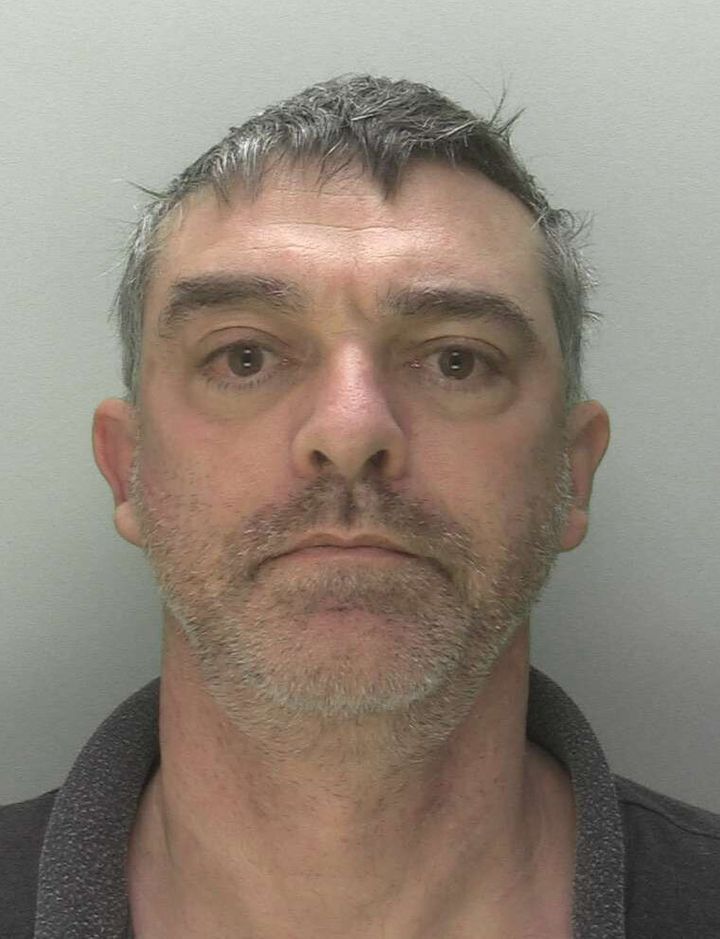
Timothy Schofield was convicted of 11 sexual offences involving a child between October 2016 and October 2019, including two of sexual activity with a child, following a trial at Exeter Crown Court.
Advertisement
The jury found him guilty on all counts with a majority of 10-2 after more than five-and-a-half hours of deliberation.
The 54-year-old, a civilian police worker from Bath, told the jury while giving evidence that he had watched pornography with the boy, whom he insisted was over the age of 16 at that time, and they had masturbated while sitting apart, but denied performing sexual acts on the teenager.
Jurors heard previously the defendant told his elder brother Phillip in September 2021 that he and the complainant had watched pornography together.
Avon and Somerset Police via PA Media
Advertisement
In a statement released by his lawyer after the guilty verdict, Phillip Schofield said: “My overwhelming concern is and has always been for the wellbeing of the victim and his family. I hope that their privacy will now be respected.
“If any crime had ever been confessed to me by my brother, I would have acted immediately to protect the victim and their family.
“These are despicable crimes, and I welcome the guilty verdicts. As far as I am concerned, I no longer have a brother.”

Karwai Tang via Getty Images
The boy, who alleged the offending started when he was 13, told the jury he felt “emotionally blackmailed” by Schofield and “forced” to participate in sexual activity.
Advertisement
He said: “I felt that emotionally there was no escape from what we had to do and I felt that there was a tremendous amount of pressure and expectation for me to fulfil what was being asked and wanted.”
Phillip Schofield described in a written statement how his brother had phoned him in an agitated and upset state, and Mr Schofield had invited him to drive to his home in London.
The court heard they spent several hours talking, including eating a meal, before he went to do the washing-up.
He told how his brother said “You are going to hate me for what I am about to say”, with him assuring him there was nothing he could say that would do that.
Mr Schofield said in the statement: “Then he said that he and (the boy) had time together and that last year they had watched porn … and (masturbated)”.
Advertisement
“I turned and said, ‘What did you just say?’ He said it was last year and we were alone together. Tim said it was just this once. I told him it should never happen again. He then started to tell me about (the boy’s) body.
“I said, ‘F***, stop’. I shouted at Tim that he had to stop. I didn’t want to know any of the details but he made it sound like a one-off.
“I said, ‘I don’t want you to tell me any more’. I said, ‘You’ve got to stop, just never do it again. Regardless how that happened, it must never happen again’.”
Giving evidence during the trial, the defendant told the jury he had been gay his “entire life” but had kept it “completely secret and hidden from everybody”.
He described this as “incredibly difficult” and told the court he had struggled with mental health problems for years.
Advertisement
The defendant wept as he was asked about phoning his famous brother before driving to his home in London.
Peter Binder, representing Schofield, asked: “You told him you were on the verge of killing yourself?”
Schofield wept as he said: “That’s correct. I was so alone.”
He insisted the teenager was “old enough” to choose to watch pornography with him.
He told the jury: “It was a consensual thing after the age of 16. He never in any way said no at all.”
He admitted searching for terms on a legal pornography website including “young boy teen sex” and “gay teen torrents”, but insisted he believed this would return results showing men aged between 18 and their early twenties.
Schofield denied the charges but was convicted of three counts of causing a child to watch sexual activity, three of engaging in sexual activity in the presence of a child, three of causing a child to engage in sexual activity and two of sexual activity with a child.
Advertisement
Judge Mrs Justice Cutts remanded him in custody ahead of sentencing at Bristol Crown Court on May 19.
An NSPCC spokesperson said: “Child sexual abuse can have devastating and long-lasting impact on a person’s life and Timothy Schofield’s actions were deeply harmful. We hope that the young man he targeted is receiving all the support he needs to move forward with his life.”
The NSPCC urged adults who are concerned about a child to contact help@nspcc.org.uk and young people to call Childline on 0800 1111.


Embarrassment over talking about women’s body parts may put people off seeking medical help.

A journalist has torpedoed the claims of senior Tories that Brexit is not to blame for the traffic chaos at Dover.
Simon Calder, The Independent’s travel editor, said the French authorities were doing what “we asked them to do” by painstakingly checking the passports of everyone trying to get across the Channel.
Advertisement
Thousands of holidaymakers trying to get away for the Easter holidays have been caught up in huge tailbacks in Kent in the past 48 hours.
Doug Bannister, the chief executive of the port at Dover, said that the “post-Brexit environment means that every passport needs to be checked”.
But home secretary Suella Braverman said: “I don’t think that’s fair to say this has been an adverse effect of Brexit.”
Appearing on Sky News today, Calder calmly explained why both Braverman and Elphicke were wrong.
He said: “For decades we’ve had so-called juxtaposed border controls at Dover.
“That very simply means French passport officials checking everything before you board the ferry. Normally that’s great because it means as soon as you get to Calais or Dunkirk, you’re free to go.
″Unfortunately, it was never designed, the port of Dover, which as you know is a very constrained area beneath the white cliffs, there was never idea that we would be a hard, external EU frontier just the same as they have in Russia and Turkey.
″But that was exactly what we signed up for after Brexit.
“So previously you would turn up in your car or on a coach and just wave your passport and if they really wanted to a passport official could check ‘is this Anna Jones, is this a valid passport’ and off you’d go.
“Now, they are required – as we asked them to do – to go through, check all your stamps to stamp the passport, and that on a coach needs to be replicated 50 or 60 times.
″And however many French frontier officials you can send over, it’s simply going to back up.”
Advertisement
Extra sailings were run overnight to try and clear the backlog and by Sunday morning the port estimated some travellers would face waits of up to eight hours, depending on the ferry operator.
A port spokesman said: “The additional sailings have assisted in clearing some of the traffic, although currently both DFDS and P&O have two full lanes of coaches in the port before French border controls, with a processing time of about 4.5 hours.
“P&O have some coaches waiting at the cruise terminal and DFDS have some at service stations in Kent.
“Once coaches are processed in an operator’s lane, more are being sent to the port. Currently, the estimated total time is six to eight hours dwell time.”