Resurrected supernova provides missing-link

Astronomers have discovered a supernova exhibiting unprecedented rebrightening at millimeter wavelengths, providing an intermediate case between two types of supernovae: those of solitary stars and those in close-binary systems.

Many massive stars end their lives in a catastrophic explosion known as a supernova (SN). Supernovae increase rapidly in brightness, and then fade over the course of several months.

Astronomers have long known that the presence or absence of a close binary companion can affect the evolution of massive stars. In a close binary system, gravitational interactions with the binary companion will strip large amounts of material from the SN progenitor long before the final explosion. In these cases, the progenitor will be quiet up until the time of the actual SN. On the other hand, in the case of an SN progenitor with no binary companion or a distant companion, leading up to the SN explosion the progenitor will keep most of its initial mass.

Of course smart alecs will ask, “What happens when the binary is not too close and not too distant?” Not just smart alecs, astronomers also wanted to know. The break came when an international research team, led by Keiichi Maeda (Professor at the Graduate School of Science, Kyoto University) and Tomonari Michiyama (ALMA Joint Postdoctoral Fellow at the Graduate School of Science, Osaka University), used ALMA (The Atacama Large Millimeter/submillimeter Array) to monitor a supernova known as SN 2018ivc as it dimmed for about 200 days after the initial explosion. The results showed that SN 2018ivc was an unusual object, so the team decided to check up on it again, at about 1000 days after the explosion. They found that the object was actually rebrightening, the first time this phenomenon had ever been observed in millimeter wavelength radiation.

Comparison to numerical modeling suggests that interaction with an intermediate-distance binary companion about 1500 years before the SN explosion created a large hollow shell of circumstellar medium. At 200 days after the SN, the ejecta flying out from the explosion had yet to reach the shell. Then sometime between 200 and 1000 days, the ejecta collided with the circumstellar medium.

Share Button

Meeting to avert junior doctors’ strike in England fails

This month’s planned 72-hour walkout in England remains after “disappointing” talks with the government.

Share Button

Princess Diana’s Revenge Dress Was Almost An Entirely Different Colour And Vibe

If anyone utters the words Princess Diana, you know her iconic revenge dress will come up in conversation. You cannot talk about the late princess without talking about the picture of her walking out of that car in that black Christina Sambolian dress.

The moment was also recreated in the fifth season of The Crown, with Elizabeth Debicki emulating the late royal.

The dress was dubbed the revenge dress because of the fact that she chose to wear it on the day the then-Prince Charles admitted to having an affair with his now-wife Camila Parker Bowles on national television.

But as it turns out, the iconic revenge dress was actually supposed to be white in colour.

The designer recalled her interaction with the late Princess and how the dress came to be in the new book Diana: A Life in Dresses by ACC Art Books.

“It was 2 o’clock on a Saturday afternoon in September,” Christina Sambolian recalled in the book, “I thought that the woman looked familiar. We all laughed when we realised it really was her.”

After the princess shopped at her store, she told the designer: “I want a special dress for a special occasion. It doesn’t matter if it is short or long. It has to be something special.”

The original sketch of the 'revenge dress'

Christina Samboli

The original sketch of the ‘revenge dress’

Sambolian then drew a few sketches on a piece of paper. The dress was revealing, quite short and showed some skin.

Diana was not sure about it and thought it was a bit risky, recalls the designer.

“I said: “Why not be daring?” But she wanted everything more covered up, longer and the neck higher. The dress was brave and revealing,” she recalled.

”Finally, she said yes to the style – then we moved on to the colour. I had black in my mind, but she wanted cream,” said Sambolian.

“To me, Diana was a black and white sort of person. That was the way she was – there were no grey areas. I thought of black for the colour. I thought of her in a sophisticated way. I didn’t like her in the pale pinks and blues with lots of beading,” she added.

It took two dressmakers more than 60 hours to make the dress. For three years, Diana did not wear the dress. The designer had lost hope that her dress would ever be worn by the Princess.

“Three years went by and she hadn’t worn it,” she said. “I was very disappointed. Then I realised she had been waiting for the right occasion. She looked like a beautiful black bird in it.”

But then that fateful day came when Diana had to attend the Serpentine Ball. She had originally planned to wear a Valentino gown to the event. But when she found out that Valentino had rung up the media, telling them that the Princess would be wearing the brand’s dress to the Ball, she was furious.

So she decided to go with the now iconic black dress she will always be remembered for.

And there you have it. That is how the revenge dress was born, which would be emulated by many, many people for decades and generations to come.

Share Button

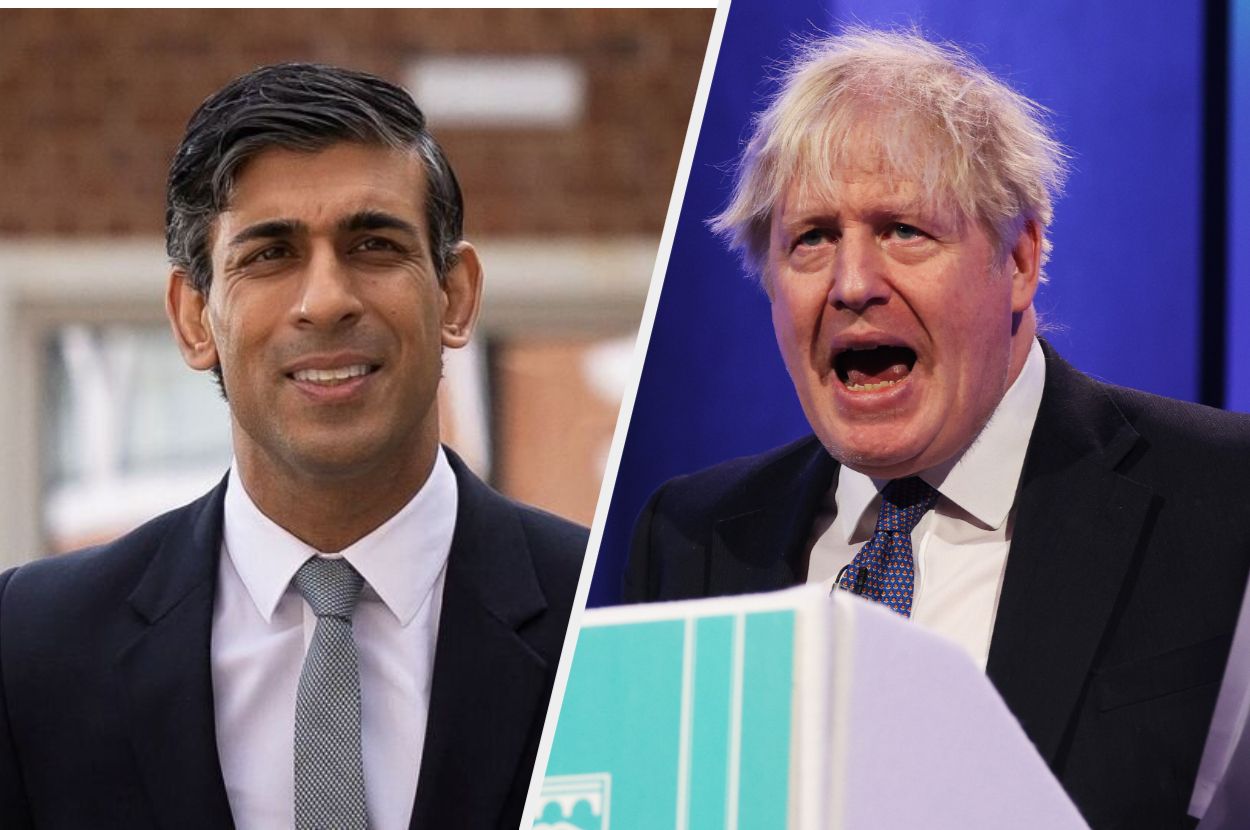
Boris Johnson Goads Rishi Sunak Over Poor Tory Poll Ratings

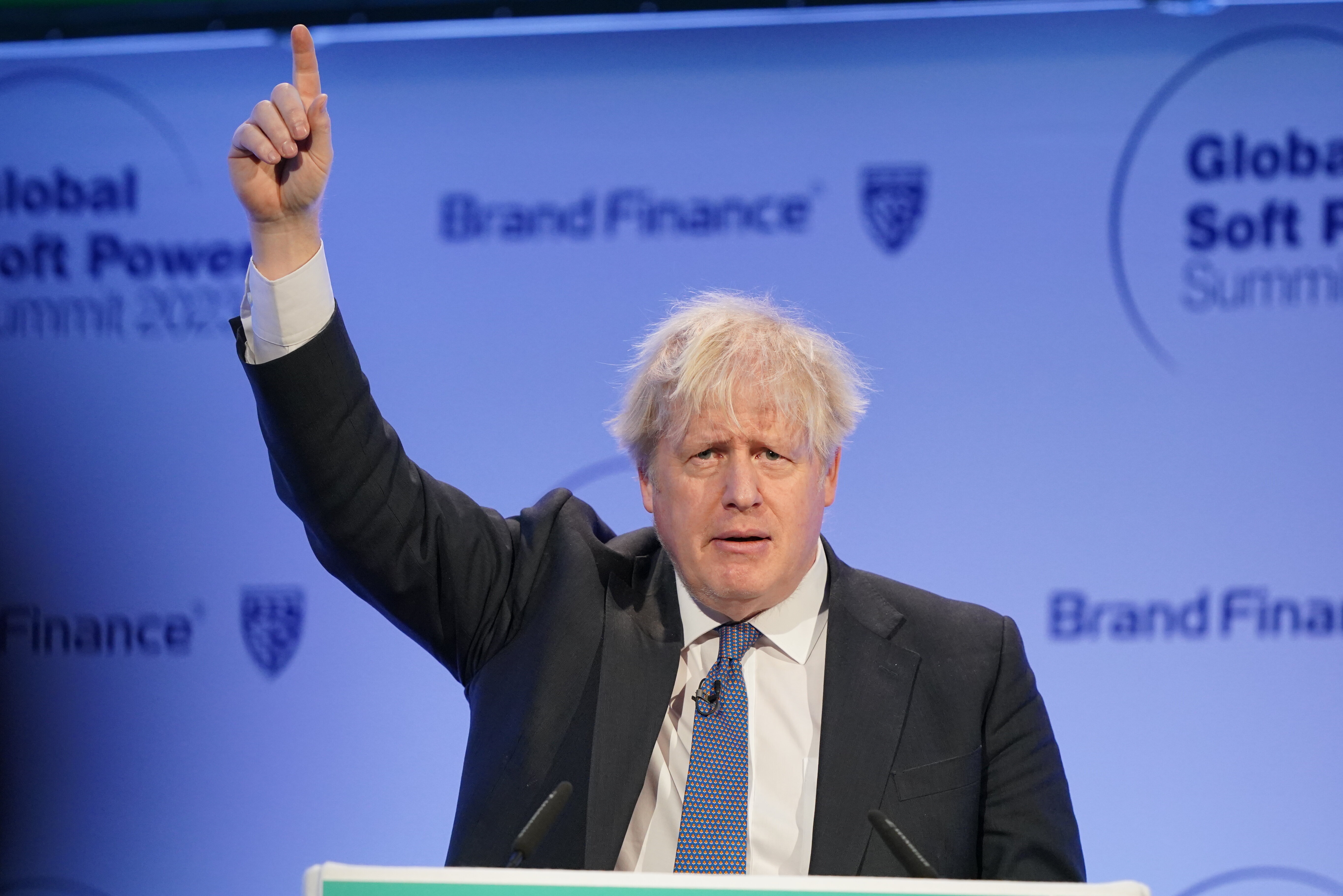
Boris Johnson has goaded Rishi Sunak over the prime minister’s poll ratings, as he delivered his first public speech in the UK after being forced out of No.10.

Speaking in Westminster on Thursday afternoon, Johnson said it was “very unlikely” he would “need to do anything big in politics again”.

But he indicated he would continue to speak out on issues including Brexit, the need to level up the north of England and to help Ukraine.

And the former PM said: “When I stepped down we were only a handful of points behind the Labour Party.”

When Johnson announced his resignation on July 7, 2022, YouGov polling showed Labour on 40% and the Tories on 29% — an 11 point lead.

The latest survey from YouGov has put Labour on 46% and the Tories on 23% — 23 points ahead.

On September 29, 2022, YouGov released a shock poll that showed Labour had surged to a 33-point lead over the Conservatives amid the market turmoil caused by Liz Truss’ mini-Budget.

When Truss quit as prime minister, Johnson mounted a dramatic challenge to Sunak in a bid to return to No.10.

In the end he pulled out of the contest after deciding he did not have enough support from Tory MPs to lead a stable government.

But rumours in Westminster that Johnson still hopes to make a comeback have not gone away, stoked by allies who want him to return.

Asked today about his future plans, Johnson said: “I think it very, very unlikely that I will need to do anything big in politics again.”

He also devoted a large section of his speech to trashing Sunak’s new Brexit deal, which he said would be “very difficult” for him to vote for.

Share Button

Boris Johnson Says Rishi Sunak’s Brexit Deal Doesn’t ‘Take Back Control’

Boris Johnson has said Rishi Sunak’s new Brexit deal does not “take back control” from the EU and will be unlikely to vote for it.

Speaking in Westminster on Thursday afternoon, the former prime minister was highly critical of the so-called Windsor Framework.

“I am going to find it very difficult to vote for something like this myself,” he said in his first public comments since the deal was agreed.

“I believe we should have done something different.”

Sunak has struck a new agreement with the the EU which seeks to remove post-Brexit trade barriers by creating a new system for the flow of goods into Northern Ireland.

Johnson said he had “mixed feelings” about the deal, adding “this is not about the UK taking back control” as Brexit “won’t be” done with it.

“Although there are easements this is really a version of the solution that was being offered last year to Liz Truss when she was foreign secretary,” he said.

“This is the EU graciously unbending to allow us to do what we want to do in our own country, not by our laws but by theirs.

“Who votes for the people who decide these rules… no one in England or Scotland or Wales and no one in Northern Ireland.”

Sunak has said MPs in the Commons will be given a vote on his new deal.

Keir Starmer has pledged Labour support, which means here is little chance of the prime minister losing the vote even if some eurosceptic Tory MPs vote against him.

The DUP, which is currently boycotting the Stormont powersharing institutions in Northern Ireland, has said it will study the deal before giving its verdict.

Share Button

Isabel Oakeshott reveals why she leaked Matt Hancock’s WhatsApp messages

The journalist released WhatsApps she obtained while working on the former health secretary’s book.

Share Button

Matt Hancock: Leaked messages reveal battle over Covid and schools

Leaked messages show the then-health and education secretaries clashed over classes resuming.

Share Button

The mesh in my body is a ‘ticking time bomb’

Sam is one of hundreds of women who have suffered since she had a transvaginal mesh implant.

Share Button

Vaping: Rise in teenage use a concern for Kent County Council

Kent County Council warns about the risk of young people swapping vapes for cigarettes.

Share Button

Physical activity can help mental health in pre-teen years

Regular physical activity can improve adolescents’ mental health and help with behavioural difficulties, research suggests.

Engaging in regular moderate to vigorous physical activity at age 11 was associated with better mental health between the ages of 11 and 13, the study found.

Physical activity was also associated with reduced hyperactivity and behavioural problems, such as loss of temper, fighting with other children, lying, and stealing, in young people.

Researchers from the Universities of Edinburgh, Strathclyde, Bristol, and Georgia in the United States explored data from the Children of the 90s study (also known as the Avon Longitudinal Study of Parents and Children; ALSPAC). They looked at the levels of physical activity of 4755 11-year-olds which was measured using devices.

The devices recorded levels of moderate physical activity — typically defined as brisk walking or cycling — as well as vigorous activity which boosts heart rate and breathing, such as aerobic dancing, jogging or swimming.

The young people and their parents reported on their levels of depressive symptoms from age 11 and at age 13 years. Participants’ parents and teachers were also quizzed about the young people’s general behaviour and emotional difficulties.

In analysing the impact of moderate to vigorous exercise on the young people’s mental health and behaviour, the team also considered factors such as age, sex and socio-economic status.

They found that higher levels of moderate or intense physical activity had a small but detectable association with decreases in depressive symptoms and emotional difficulties.

Regular exercise had a small but detectable association with reduced behavioural problems, even after controlling for other possible influences, the study found.

The findings suggest regular moderate and intense physical activity may have a small protective influence on mental health in early adolescence, researchers say.

Dr Josie Booth, of the University of Edinburgh’s Moray House School of Education and Sport, said: “This study adds to the increasing evidence base about how important physical activity is for all aspects of young people’s development — it can help them feel better, and do better at school. Supporting young people to lead healthy active lives should be prioritised.”

Researchers say the study is the first to offer such a comprehensive approach to examining mental health and exercise in young people.

Professor John Reilly, at the University of Strathclyde, said: “While it might seem obvious that physical activity improves mental health the evidence for such a benefit in children and young people has been scarce, so the study findings are important. The findings are also important because levels of moderate-to-vigorous intensity activity globally are so low in pre-teens globally — less than a third achieve the 60 minutes per day recommended by the WHO and UK Health Departments.”

The study is published in Mental Health and Physical Activity.

The research was funded by the Bupa Foundation. Researchers used data from the Children of the 90s study, also known as the ALSPAC birth cohort, based at the University of Bristol. The study is a long-term health-research project that enrolled more than 14,000 pregnant women in 1991 and 1992.

Children of the 90s has been following the health and development of the parents and their children in detail and is currently recruiting the children and the siblings of the original children into the study. It receives core funding from the Medical Research Council, the Wellcome Trust and the University of Bristol.

Share Button