How birds got their wings

Modern birds capable of flight all have a specialized wing structure called the propatagium without which they could not fly. The evolutionary origin of this structure has remained a mystery, but new research suggests it evolved in nonavian dinosaurs. The finding comes from statistical analyses of arm joints preserved in fossils and helps fill some gaps in knowledge about the origin of bird flight.

For a long time now, we have known modern birds evolved from certain lineages of dinosaurs that lived millions of years ago. This has led researchers to look to dinosaurs to explain some of the features unique to birds, for example, feathers, bone structure and so on. But there’s something special about the wings of birds in particular that piqued the interest of researchers at the University of Tokyo’s Department of Earth and Planetary Science.

“At the leading edge of a bird’s wing is a structure called the propatagium, which contains a muscle connecting the shoulder and wrist that helps the wing flapping and makes bird flight possible,” said Associate Professor Tatsuya Hirasawa. “It’s not found in other vertebrates, and it’s also found to have disappeared or lost its function in flightless birds, one of the reasons we know it’s essential for flight. So, in order to understand how flight evolved in birds, we must know how the propatagium evolved. This is what prompted us to explore some distant ancestors of modern birds, theropod dinosaurs.”

Theropod dinosaurs, such as Tyrannosaurus rex and Velociraptor, had arms not wings. If the scientists could find evidence of an early example of the propatagium in these dinosaurs, it would help explain how the modern avian branch of the tree of life transitioned from arms to wings. However, it’s not so simple, as the propatagium is made up of soft tissues which do not fossilize well, if at all, so direct evidence might not be possible to find. Instead, the researchers had to find an indirect way to identify the presence or lack of a propatagium in a specimen.

“The solution we came up with to assess the presence of a propatagium was to collect data about the angles of joints along the arm, or wing, of a dinosaur or bird,” said Yurika Uno, a graduate student at Hirasawa’s lab. “In modern birds, the wings cannot fully extend due to the propatagium, constraining the range of angles possible between connecting sections. If we could find a similarly specific set of angles between joints in dinosaur specimens, we can be fairly sure they too possessed a propatagium. And through quantitative analyses of the fossilized postures of birds and nondinosaurs, we found the telltale ranges of joint angles we hoped to.”

Based on this clue, the team found that the propatagium likely evolved in a group of dinosaurs known as the maniraptoran theropods, including the famous Velociraptor. This was backed up when the researchers identified the propatagium in preserved soft tissue fossils, including those of the feathered oviraptorosaurian Caudipteryx and winged dromaeosaurian Microraptor. All the specimens they found it in existed prior to the evolution of flight in that lineage.

This research means it’s now known when the propatagium came into being, and it leads researchers on to the next question of how it came to be. Why these particular theropod species needed such a structure to better adapt to their environment might be a harder question to answer. The team has already begun exploring possible connections between the fossil evidence and embryonic development of modern vertebrates to see if that will shed any light on it. The team also thinks some theropods might have evolved the propatagium not because of any pressure to learn to fly, as their forelimbs were made for grasping objects and not for flying.

“Dinosaurs portrayed in popular media are becoming more and more accurate,” said Hirasawa. “At least now we get to see features like feathers, but I hope we can see an even more up-to-date representation soon where theropods have their propatagium too.”


Share Button

The far-reaching consequences of child abuse

Adverse childhood experiences in mothers can affect their children’s mental and physical health, as researchers from Charité – Universitätsmedizin Berlin now report in the journal The Lancet Public Health. The study found that maltreatment during a mother’s childhood is associated with a higher risk of health problems such as asthma, autism, and depression in the next generation. Early intervention to support affected mothers might help to counter this effect.

Maltreatment during childhood is an especially serious risk factor for health problems in the exposed individual, as it brings a host of lifelong consequences. Among the impacts are physical, mental, behavioral, and social ramifications that can continue through pregnancy and parenthood. As a result, adverse experiences during the parents’ childhood can affect their own children’s development and health.

Higher risk of asthma, ADHD, autism, and depression

In the newly published study, a team of researchers headed by Dr. Claudia Buss, a professor at the Institute of Medical Psychology at Charité, shows that health problems are more common in children of mothers who experienced maltreatment themselves as children. The researchers define maltreatment as physical, emotional, or sexual abuse or neglect by a parent or guardian leading to physical or emotional harm or the threat of harm to a child. They analyzed data on more than 4,300 American mothers and their children from 21 long-term cohorts. Mothers reported on their childhood experiences and provided information on health diagnoses in their biological children up to the age of 18, or this information was collected during visits conducted as part of the study. This valuable trove of data extending across two generations of the same family allowed researchers to identify meaningful connections.

They found that children of mothers who reported adverse experiences were at higher risk of asthma, attention-deficit/hyperactivity disorder (ADHD), and autism. These children also have a higher incidence of symptoms and behaviors associated with depression and anxiety disorders, which are known as “internalizing” disorders. Daughters of mothers in this group are also at higher risk of obesity than their sons. “All of these connections are independent of whether the mother has the same diagnosis,” explains Buss, the study’s lead author. “That suggests that the risk of that particular health problem is not being transmitted genetically.”

First study to cover multiple health outcomes

Researchers have not yet fully decoded the exact mechanisms by which the risk is passed on to the next generation. There are indications that adverse childhood experiences could affect maternal biology during pregnancy, as for example stress hormones. This can affect fetal development in a way that the offspring become more vulnerable for impaired health. There is evidence that biological changes like these are more pronounced in mothers who have developed mental health problems, such as depression, as a consequence of their traumatic experiences. If the mother’s mental health is affected by her childhood experiences, this may also impact on how she interacts with her child once it is born, which is likely to be just as important a factor in these multigenerational effects.

“To our knowledge, this is the first study to examine multiple health problems at once in relation to early trauma in mothers in a large, sociodemographically and ethnically diverse sample. That has been done primarily for individual diseases in the past,” explains Dr. Nora Moog, also from the Institute of Medical Psychology at Charité and first author of the publication. In keeping with this approach, the researchers showed that children of mothers exposed to early trauma are at greater likelihood of developing multiple physical and mental health problems. The risk is also greater the more serious the mother’s childhood experiences were. “At the same time, I should stress that our findings do not mean that all children of mothers with adverse childhood experiences automatically end up with health problems,” Buss says, providing context for the group’s findings. “The risk is elevated, but it doesn’t necessarily lead to a specific health problem.”

Early identification and support for those affected

“I assume that appropriate support for mothers who suffer from the consequences of childhood maltreatment can have a positive effect on their health and well-being and that of their children. That means it’s very important to identify these mothers and children early on,” Buss points out. One way to do this would be to have doctors address parents’ own childhood experiences during prenatal or pediatric checkups and provide information on how to contact various support programs or counseling services. This kind of early intervention could help two generations: the parent, who experienced maltreatment and may be suffering from health consequences; and the child, who could be prevented from developing health problems.

Developing new, targeted therapeutic measures will depend on better understanding the exact mechanisms by which the elevated risk of health problems is passed on to the next generation. The research team is currently working on that. The researchers also plan to conduct follow-up studies to investigate which children remain resilient, meaning they do not suffer consequences beyond one generation: What makes them, their mothers, and their social environment different? Beyond that, the father’s childhood experiences have received relatively little attention so far, but there are indications that these experiences can also be passed on to the next generation, albeit in some cases by different mechanisms than those involved in mother-child transmission. The researchers plan to explore these research questions in further detail in future projects as well.

About the study

The international team of researchers analyzed the data of 4,337 American mothers from 21 long-term cohorts with an eye to the mothers’ childhood experiences. They also examined information on health diagnoses in the mothers’ biological children up to the age of 18. The cohort data were provided by a research program named Environmental influences on Child Health Outcomes (ECHO). ECHO encompasses 69 cohorts in the United States. It is supported by the National Institutes of Health (NIH). Dr. Claudia Buss, a professor at the Institute of Medical Psychology at Charité and adjunct professor at the Department of Pediatrics at the University of California Irvine, led the study. She is a principal investigator of a research group within the ECHO consortium and has furthermore received a Starting Grant from the European Research Council (ERC) and funding from the German Research Foundation (DFG) and the German Federal Ministry of Education and Research (BMBF).

Share Button

Tees, Esk and Wear Valley NHS Trust prosecuted after three patients died

Christie Harnett, Emily Moore and a third person died while under the care of a mental health trust.

Share Button

Rod Stewart pays for scans at NHS hospital to cut waiting lists

The singer pays for a day’s worth of scans and pledges to do more.

Share Button

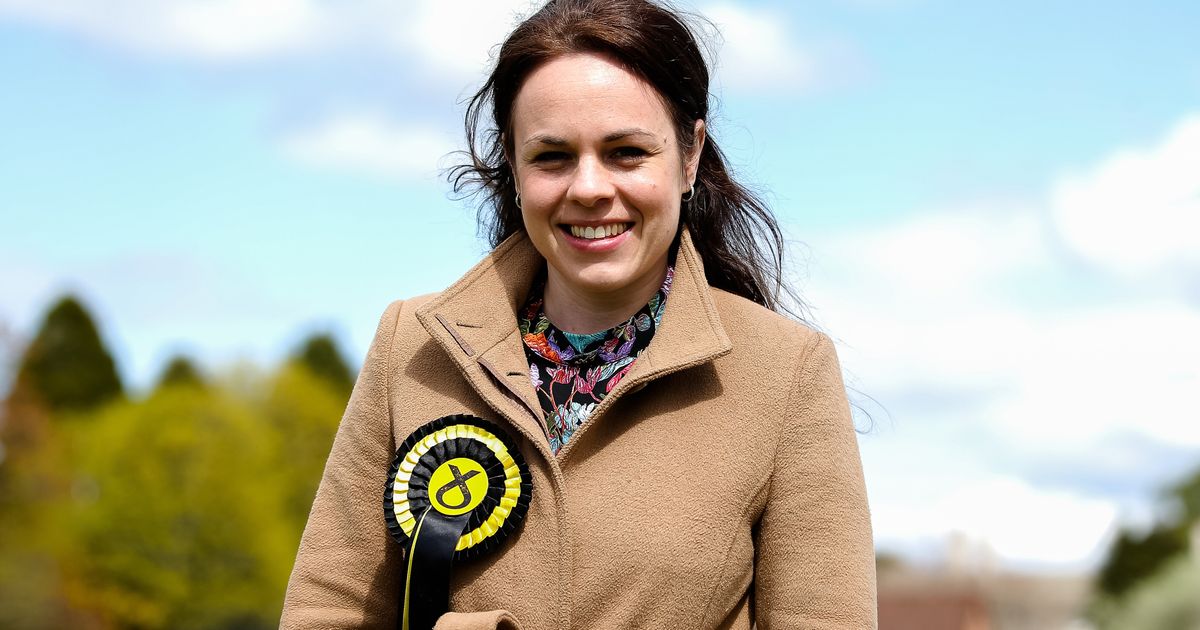
Kate Forbes Makes It Through To SNP Leadership Run-Off Despite Gay Marriage Row

Kate Forbes has made it through to the final run-off in the race to replace Nicola Sturgeon as SNP leader despite the furore caused by her stance on equal marriage.

The Scottish finance secretary will face Humza Yousaf and Ash Regan in a three-horse race to become first minister.

All three made it on to the ballot paper after nominations closed on Friday.

In a separate boost for Forbes, a new poll showed she is the most popular candidate among SNP supporters.

Forbes’s campaign got off to a rocky start after she gave a series of interviews in which she set out her strict religious views.

She revealed that she would have voted against equal marriage had she been an MSP when the law was passed, and that she believed having children outside of marriage was “wrong”.

While Forbes made clear her beliefs were personal and that she would defend any existing rights, her views led to a number of her colleagues withdrawing their support.

She later said she had felt “greatly burdened” by the hurt caused by her media responses, but also questioned whether Scotland had become “so illiberal that we cannot have these discussions”.

According to the poll of SNP members, 28% said they would back Forbes, followed by 20% for Yousaf and 7% for Regan.

The poll, carried out for communications agency the Big Partnership, involved 1,001 Scots who voted SNP in 2021. They were questioned between Monday and Wednesday this week.

It also found that only 5% of SNP supporters think the new leader’s faith or personal beliefs are important, while almost a third still did not know who to back.

This morning, Regan officially launched her campaign with a pledge that under her leadership, every election – either at Holyrood or Westminster – would be treated as a de facto independence referendum.

In an interview with the Herald, she said the SNP had “dismantled” the Yes movement since the independence referendum and that she wanted to give it “back to the people” so the Scottish government can focus on running the country.

Regan was thrust into the limelight earlier this year when she resigned from government in opposition to Sturgeon’s controversial gender reform bill, which has been blocked by Westminster. She has vowed to drop the reforms if she is elected.

Forbes also confirmed that she would not have voted for the government’s gender reforms had she not been on maternity leave when the vote was passed.

The issue separates Regan and Forbes from Yousaf, who is a vocal supporter of trans rights and is largely considered to be the favoured “continuity Sturgeon” candidate.

However, the health secretary has come under fire after he was accused of deliberately missing the vote to legalise gay marriage by setting up a “diary clash” for the same day.

In comments reported by the Independent, Labour’s shadow health secretary Wes Streeting claimed it was “common knowledge” that Yousaf was in parliament for the day of the vote.

“It’s all very well being courageous about equality when the battle has been fought and won,” Streeting said. “But where were you, Hamsa, when the battle was ongoing?

“It is perfectly reasonable to ask Yousaf if he supports equal marriage, as he says he does, “why did you abstain in the vote?” — when everyone knows he was in the Scottish parliament that day.”

In response, Yousaf told ITV he missed the vote “for good reason” after he had a meeting with the Pakistan consulate over the case of a Scottish citizen on death row.

He also told Sky News that the issue had been “resurrected” to undermine his position in the leadership contest.

Following the close of nominations, SNP members will take part in a postal vote to choose their next leader, with the winner announced on March 27.

Share Button

Everyone Is Remembering When Gove Vowed There Would Be No Food Shortages After Brexit

A resurfaced clip of Michael Gove promising there would be no fresh food shortages post-Brexit is making the rounds again on Twitter.

As supermarkets Tesco, Aldi, Morrisons and Asda have announced they are limiting customers to buying just three pieces of each item of fruit or vegetables.

Experts now believe shortages of tomatoes, peppers, cucumbers, lettuce, and more might now last until May, while cabinet minister Therese Coffey has urged the public to eat turnips instead.

Supermarkets have pointed out that it is primarily due to the knock-on effects of poor weather in southern Spain and north Africa, where a lot of this produce is grown, but others think Brexit has exacerbated the whole issue.

After all, consumers in Spain and Morocco have posted viral clips on social media showing that these weather conditions are not affecting their own supermarkets.

So some have concluded that the bureaucratic costs associated with exporting products to the UK post-Brexit also mean the UK is at the bottom of the list when it comes to accessing high-demand food.

It’s no surprise that an old clip from Gove, a prominent Brexiteer who has been in the government for the best part of 13 years – and is currently levelling up secretary – has now been making the rounds.

It dates back to September 2019, when he was chancellor of the Duchy of Lancaster under Boris Johnson (having just been environment, food and rural affairs secretary under Theresa May).

As part of an interview for his Sunday show, then BBC presenter Andrew Marr asked Gove: “Are you absolutely sure that there will be no fresh food shortages in the UK as a result of no deal?”

“Everyone will have the food you need,” the minister replied confidently.

Marr cut in: ″That’s not the answer I was… I’m saying, ‘Will there be shortages?’ and you’re saying, ‘There will be’.”

Gove said: “There will be no shortages of fresh food.”

However, not everyone agrees that Brexit is the reason for these shortages.

High energy prices have prevented domestic growers and those in the Netherlands from using greenhouses.

Others have pointed to the EU member Ireland’s struggles as it also faces shortages.

Share Button

Junior doctors to strike in England on 13 to 15 March

They are walking out over pay and want an increase to make up for 15 years of inflation.

Share Button

Brexit: Medicine supply issues ‘due to Northern Ireland Protocol’

A House of Lords Committee says more action is needed to avoid disruption to medicine supply in Northern Ireland.

Share Button

Succession To End After Season 4 And Shocked Fans Are Not OK

News that the upcoming season of Succession will be its last has got the show’s loyal fanbase well and truly in its feelings.

In an interview with the New Yorker published on Thursday night, Succession creator and writer Jesse Armstrong confirmed that the award-winning drama would not continue past season four.

He explained: “I’ve never thought this could go on forever. The end has always been kind of present in my mind.

“From season two, I’ve been trying to think: Is it the next one, or the one after that, or is it the one after that?”

(L-R) Succession stars Matthew Macfadyen, Kieran Culkin, Alan Ruck, Brian Cox, Hiam Abbass, Nicholas Braun with creator Jesse Armstrong in 2018

Jim Spellman via Getty Images

Jesse added: “I got together with a few of my fellow writers before we started the writing of season four, in about November, December, 2021, and I sort of said, ‘Look, I think this maybe should be it. But what do you think?’.

“And we played out various scenarios: We could do a couple of short seasons, or two more seasons. Or we could go on for ages and turn the show into something rather different, and be a more rangy, freewheeling kind of fun show, where there would be good weeks and bad weeks. Or we could do something a bit more muscular and complete, and go out sort of strong. And that was definitely always my preference.”

With just a few short weeks to go until season four’s debut, the news that the end of Succession is nigh caught a lot of fans off guard, and it’s fair to say they’re not taking it all that well…

Meanwhile, others took a rather different view, and chose to celebrate the fact that Succession will be going out on a high, rather than having the quality dip if the story were to be dragged out longer than necessary…

And here’s what the rest of Twitter had to say…

Since its debut in 2018, Succession has been met with huge critical acclaim, landing 48 Emmy nominations and a total of 14 wins.

These include individual victories for cast members Jeremy Strong and Matthew Macfadyen, as well as two Outstanding Drama Series wins.

The first three seasons of Succession are now available to watch in full on Now, with the fourth kicking arriving on Sky Atlantic and NOW in the UK on 27 March.

HuffPost may receive a share from purchases made via links on this page. Prices and availability subject to change.

Share Button

H5N1: Cambodian girl dies in rare bird flu case

It is the first known human transmission of bird flu in the South East Asian nation since 2014.

Share Button