WellnessMaster

Get The Latest News on Holistic Wellness

WellnessMaster

Study explores link between shark nose shape, size and sensitivity of smell

Sharks have reputations as “super smellers” that use olfaction to detect odors related to finding prey and mates, communicating with their own species and avoiding predators. Their olfactory system is unique because it is separate from the respiratory system, unlike humans. Sharks and other fish use gills to facilitate the uptake of oxygen, while two nares or nostrils on the shark’s head take in odors from the environment.

Despite general similarities among elasmobranch species’ (sharks, rays and skates) olfactory systems, the morphology or structure of their olfactory organ, or “rosette,” differs substantially. Located in their snouts, the multi-lamellar (layered tissue) rosette is covered with both non-sensory and sensory tissue that responds to distinct odor molecules in an aquatic environment. The number, size and arrangement of lamellae differ among elasmobranch species, but the functional consequences for these differences are not fully understood.

Researchers have not yet been able to correlate organ size and complexity to odor sensitivity in teleosts (ray-finned fishes) nor elasmobranchs. Differences in sharks’ olfactory systems are of particular interest not only because of their reputation for having an incredible sense of smell but also because these remarkable animals have been around since before the dinosaurs. They somehow managed to thrive in every known marine habitat for millions of years — their sense of smell may have been key to their success.

Researchers from Florida Atlantic University are the first to quantify olfactory organ morphology by examining rosette shape and other internal structures among a diverse set of shark species using dissections, phylogenetic comparisons, and a fairly new technique, called diffusible iodine-based contrast-enhanced computed tomography (diceCT) imaging.

Results, published in the Journal of Morphology, reveal that the organs did not change in shape or number of lamellae throughout the life stages, suggesting that olfaction is a key sensory modality throughout the life of elasmobranch fishes.

Overall, researchers found more lamellae in rosettes with an elongated shape than in organs with a short and wide shape. Phylogenetic analyses showed that 2D shape and lamellar count are critical to understanding rosette variations in unrelated species.

Researchers also used in situ values of rosette volume and 2D shape from diceCT to assess the impacts of dissection on morphological measurements. Rosette measurements from dissected organs did not differ significantly compared to those from CT scans, supporting the validity of both methods.

“From our CT scans, we used raw data files that have 2D x-ray images. We then created 3D reconstructions to visualize the data. As such, we were able to examine the internal morphology from the top of the head to the tip of the snout from different angles,” said Aubrey Clark, corresponding author and a doctoral student in FAU’s Biomechanics Lab within the Charles E. Schmidt College of Science. “Think of this method as taking a stack of sticky notes and removing them one at a time to see the sticky note underneath. It is incredibly useful to help us understand the internal morphology in situ or as it exists naturally inside the shark because dissections can alter structures.”

Among the species studied included the bonnethead sharks (S. tiburo) with rosettes that are narrow and elongated; the common thresher sharks (A. vulpinus) and shortfin mako sharks (I. oxyrinchus), which share similarities in their rosettes: a shape that is almost as wide as it is long, a thicker raphe, fewer lamellae and wider interlamellar distances; and blacktip sharks (C. limbatus) and Atlantic sharpnose sharks (R. terraenovae) with rosettes that are intermediate to the two aforementioned groups. Other members of the hammerhead shark family have long, thin olfactory organs, similar to the bonnethead shark.

“The shape and internal structure should be considered when characterizing olfactory rosettes in sharks in future studies because fineness ratio (2D shape) and lamellar number were the largest contributors to our phylogenetic analyses,” said Marianne E. Porter, Ph.D., senior author and an associate professor, Department of Biological Sciences, FAU’s Charles E. Schmidt College of Science. “Data from our study also should be used to further investigate rosette variation among elasmobranch species by examining the hydrodynamics of the olfactory system with 3D models and quantifying the physiological impacts of flow on odorant binding.”

Study co-author is Tricia Meredith, Ph.D., director of research, FAU’s A.D. Henderson University School and FAU High School, and an assistant research professor in FAU’s College of Education.

Video: https://youtu.be/zyr8SMkWiu8

Story Source:

Materials provided by Florida Atlantic University. Note: Content may be edited for style and length.


Share Button

Researchers create method for making net-zero aviation fuel

An interdisciplinary team of researchers at Worcester Polytechnic Institute (WPI) has developed a potential breakthrough in green aviation: a recipe for a net-zero fuel for planes that will pull carbon dioxide (CO2) out of the air. The research, which used sophisticated computational modeling and analysis, was recently published in the journal Fuel.

Led by Jagan Jayachandran, assistant professor of aerospace engineering, and Adam Powell, associate professor of mechanical and materials engineering, the work helps address an urgent climate change problem. Aviation accounts for approximately 2.5% of all global greenhouse emissions, according to the International Council on Clean Transportation (ICCT), and that number is only expected to increase.

“As aviation continues to grow, so will the industry’s emissions, says Powell. “We need to think out of the box and look at sustainable materials that will contribute to a long-term solution toward reducing the transportation sector’s carbon footprint.”

Through modeling and computation analysis, Jayachandran and Powell developed a formula for a fuel that consists of magnesium, a mineral that is found all over the globe, most abundantly in the world’s oceans. A slurry of magnesium hydride — a chemical compound made up of magnesium and hydrogen — mixed with hydrocarbon fuel would burn to produce CO2, water vapor and magnesium oxide (MgO) nanoparticles. The magnesium hydride fuel would also give planes the range for long-haul flights — e.g., from Boston to Tokyo — something that has been a challenge for other sustainable aviation fuels to provide. That longer range is achieved, in part, due to the chemical properties of the slurry — a lower volume of it is needed for combustion than a typical aviation fuel.

“We found this fuel would have up to 8% more range than other today’s jet fuel, and more than two to three times longer range than liquid hydrogen or ammonia which other researchers have proposed as sustainable fuels,” said Jayachandran.

The Department of Energy describes a sustainable aviation fuel as a “biofuel used to power aircraft that has similar properties to conventional jet fuel but with a smaller carbon footprint.” These biofuels have been made from resources including corn grain, algae, forestry, and agricultural residues, among others. Using a biofuel as the hydrocarbon in this slurry with magnesium hydride could potentially lead to net negative emissions.

The research was supported by a WPI TRIAD Seed Grant, a university award intended to encourage and promote interdisciplinary collaboration and innovation.

Jayachandran and Powell plan to further their research through physical experiments with samples of the fuel, and are also pursuing potential funding from a federal agency. In addition, they hope this work can inspire others and contribute to a more sustainable world.

Noting the promise of research to mitigate emissions and other climate threats, Powell said, “we hope our work, which opens up a new category of sustainable aviation fuel will spark the imagination of other researchers. The sky’s the limit.”

Story Source:

Materials provided by Worcester Polytechnic Institute. Note: Content may be edited for style and length.

Share Button

Quarter of 17-19-year-olds have probable mental disorder – study

An NHS Digital report for England indicates how likely children and young people are to have poor mental health.

Share Button

Ebola in Uganda: The people spreading misinformation online

Some Ugandans have been attacking the government’s efforts, even denying the Ebola virus’s existence.

Share Button

Big UK trial to find best drugs to fight flu

Covid scientists will be testing different medications to see what works against winter flu.

Share Button

Holidays don’t have to break the bank

Before the holiday shopping season starts, decide how much you can afford to spend. If money is tight, try these alternatives: Suggest drawing names for a family gift exchange. Make gifts, such as certificates for a home-cooked meal or an evening of baby-sitting. Donate canned goods to a local food shelf in lieu of gifts. Remember, the best parts of the holiday season rarely come wrapped in a box. Treasured memories are the gifts that last.

Nov. 29, 2022

See more In-depth

.

Share Button

Feeling overwhelmed? Take a break

Reprint Permissions

A single copy of these materials may be reprinted for noncommercial personal use only. “Mayo,” “Mayo Clinic,” “MayoClinic.org,” “Mayo Clinic Healthy Living,” and the triple-shield Mayo Clinic logo are trademarks of Mayo Foundation for Medical Education and Research.

Share Button

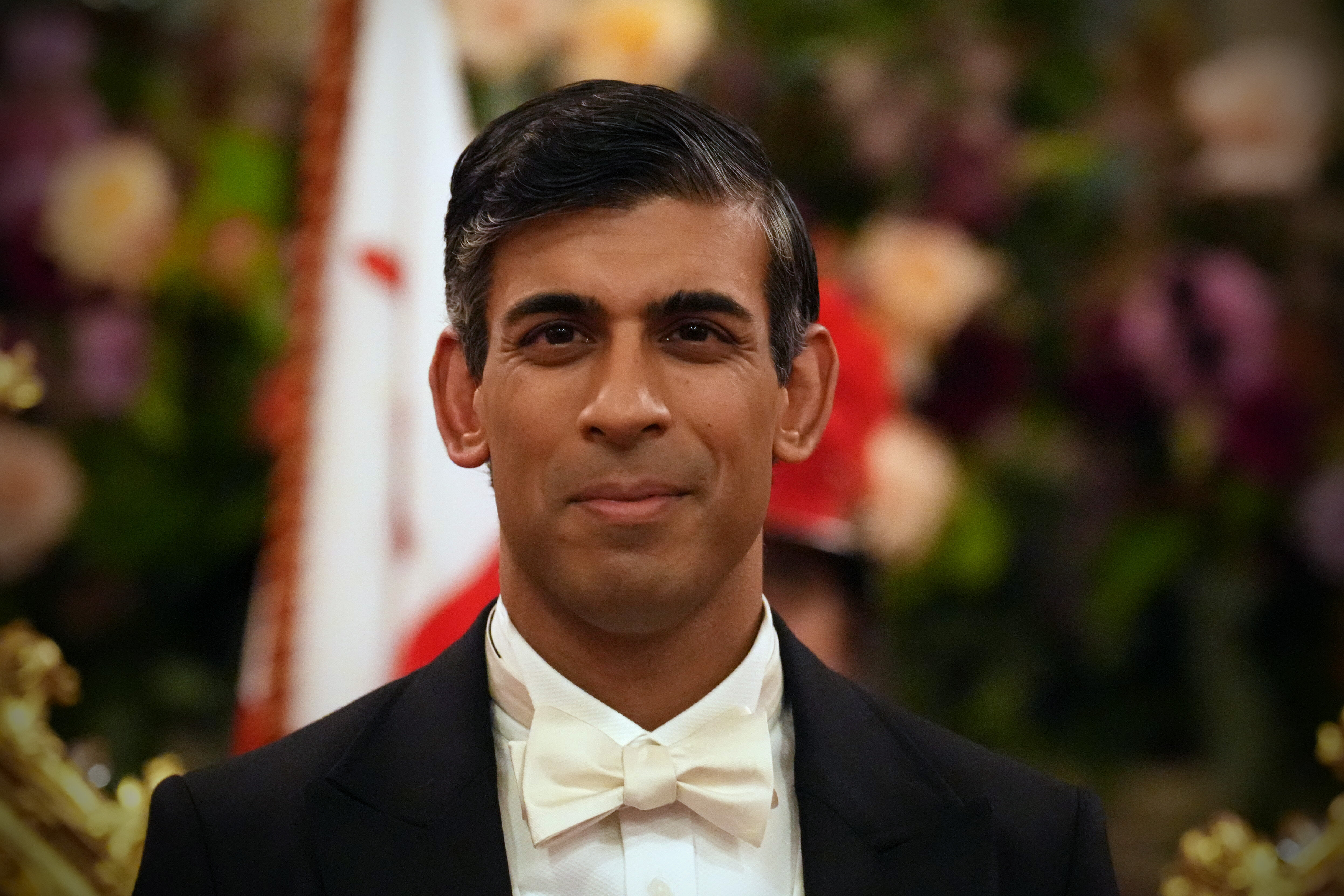
‘Golden Era’ Of Relations Between Britain And China Is Over, Rishi Sunak Says

Rishi Sunak has critcised the “naive” approach to dealing with China under previous Tory leaderships as he warned the “golden age” of Anglo-Chinese relations was over.

But the prime minister added “we cannot simply ignore China’s significance”, and said the UK needs to “evolve its approach” towards the country as he signalled closer “diplomacy and engagement” with the growing superpower.

The comments, amid growing popular unrest on the streets across China, will be interpreted as a dig at former chancellor George Osborne, who vowed to “make Britain China’s best partner in the West” and create a “golden decade”.

It comes as protests against China’s strict Covid lockdown measures have been billed as the biggest backlash against country’s authoritarian Communist Party since the 1980s.

As the country edges towards a fourth year of restrictions, thousands have flocked to Beijing, Shanghai and Wuhan streets calling for immediate change.

In Shanghai, there were angry clashes as the police cracked down on demonstrators, with a BBC journalist “beaten and kicked by the police”, according to the corporation.

In his first major foreign policy speech as PM at the annual Lord Mayor’s Banquet in London, Sunak said: “Let’s be clear, the so-called ‘golden era’ is over, along with the naïve idea that trade would lead to social and political reform. But nor should we rely on simplistic Cold War rhetoric.

“We recognise China poses a systemic challenge to our values and interests, a challenge that grows more acute as it moves towards even greater authoritarianism.

“Instead of listening to their people’s protests, the Chinese government has chosen to crack down further, including by assaulting a BBC journalist. The media – and our parliamentarians – must be able to highlight these issues without sanction, including calling out abuses in Xinjiang – and the curtailment of freedom in Hong Kong.”

He added: “Of course, we cannot simply ignore China’s significance in world affairs – to global economic stability or issues like climate change. The US, Canada, Australia, Japan and many others understand this too.

“So together we’ll manage this sharpening competition, including with diplomacy and engagement.”

George Osborne delivers a speech at the Shanghai Stock Exchange in 2015.

JOHANNES EISELE via Getty Images

The tone is in sharp contrast to Osborne in 2015, who brushed off the country’s human rights abuses during a charm offensive while giving a speech at the Shanghai Stock Exchange.

It came as it was announced that Chinese firms would help fund a new UK nuclear power station at Hinkley Point in Somerset.

Osborne said: “I believe our two countries are perfectly positioned to be partners in growth.

“Britain can be China’s best partner in the West. Of course, there will be ups and downs in the road ahead, but by sticking together we can make this a golden era for the UK-China relationship for many years to come.”

In his speech, Sunak also warned that “short-termism or wishful thinking will not suffice” in the face of threats from Russia and China.

The prime minister said: “We can’t depend on Cold War arguments or approaches, or mere sentimentality about our past.

“So, we will make an evolutionary leap in our approach.

“This means being stronger in defending our values and the openness on which our prosperity depends. It means delivering a stronger economy at home, as the foundation of our strength abroad.

“It means standing up to our competitors, not with grand rhetoric but with robust pragmatism.

“We will do all this not only through our diplomatic expertise, science and technology leadership, and investment in defence and security, but by dramatically increasing the quality and depth of our partnerships with like-minded allies around the world.”

Share Button

Spectator With Rainbow Flag Runs Onto Pitch At World Cup In Qatar

A football fan wearing a T-shirt emblazoned with the words ‘Save Ukraine’ and ‘Respect for Iranian Woman’ has run onto the pitch with a rainbow flag during the Portugal and Uruguay World Cup game in Qatar.

The rainbow flag is likely to be symbol of solidarity with the LGBTQ+ community. Homosexuality is illegal in Qatar, and Fifa has clamped down on attempts by teams and fans to show support for LGBTQ+ rights, with people complaining they’ve been barred from bringing items with rainbow colours into the grounds.

At the group H game on Monday, security officials brought the spectator down and he dropped the flag on the field before being escorted off the pitch. The referee then picked up the flag and left it on the sideline, where it stayed for a few moments before a worker came and collected it.

In the first week of the tournament, seven European teams lost the battle to wear multi-coloured One Love armbands during World Cup matches after Fifa threatened the countries with punishment.

Share Button

Diphtheria: Migrants with symptoms to be isolated

Decision comes after death of a man at a processing centre may have been caused by the disease.

Share Button
✕
smartphone

FREE
VIEW