‘Golden Era’ Of Relations Between Britain And China Is Over, Rishi Sunak Says

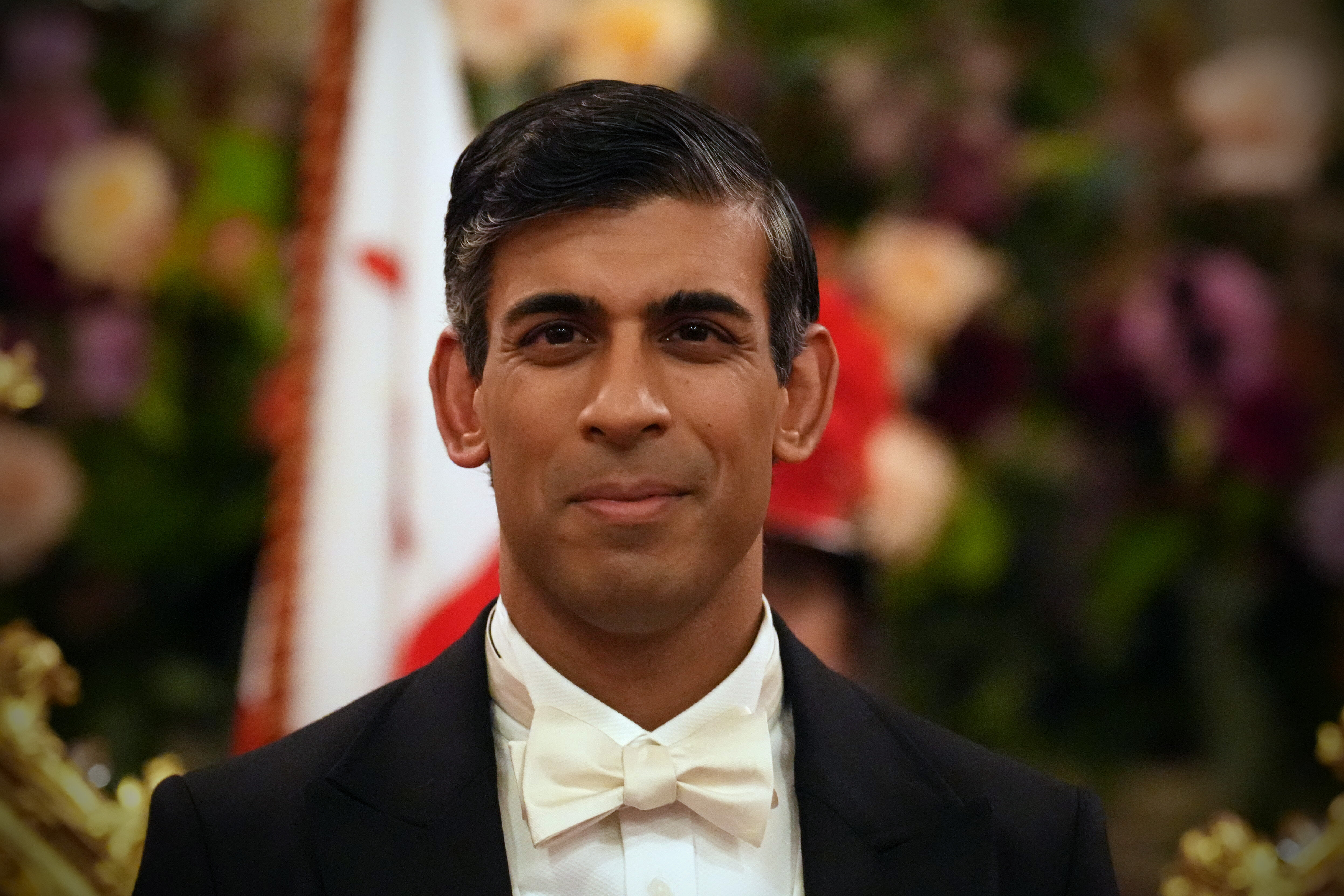
Rishi Sunak has critcised the “naive” approach to dealing with China under previous Tory leaderships as he warned the “golden age” of Anglo-Chinese relations was over.

But the prime minister added “we cannot simply ignore China’s significance”, and said the UK needs to “evolve its approach” towards the country as he signalled closer “diplomacy and engagement” with the growing superpower.

The comments, amid growing popular unrest on the streets across China, will be interpreted as a dig at former chancellor George Osborne, who vowed to “make Britain China’s best partner in the West” and create a “golden decade”.

It comes as protests against China’s strict Covid lockdown measures have been billed as the biggest backlash against country’s authoritarian Communist Party since the 1980s.

As the country edges towards a fourth year of restrictions, thousands have flocked to Beijing, Shanghai and Wuhan streets calling for immediate change.

In Shanghai, there were angry clashes as the police cracked down on demonstrators, with a BBC journalist “beaten and kicked by the police”, according to the corporation.

In his first major foreign policy speech as PM at the annual Lord Mayor’s Banquet in London, Sunak said: “Let’s be clear, the so-called ‘golden era’ is over, along with the naïve idea that trade would lead to social and political reform. But nor should we rely on simplistic Cold War rhetoric.

“We recognise China poses a systemic challenge to our values and interests, a challenge that grows more acute as it moves towards even greater authoritarianism.

“Instead of listening to their people’s protests, the Chinese government has chosen to crack down further, including by assaulting a BBC journalist. The media – and our parliamentarians – must be able to highlight these issues without sanction, including calling out abuses in Xinjiang – and the curtailment of freedom in Hong Kong.”

He added: “Of course, we cannot simply ignore China’s significance in world affairs – to global economic stability or issues like climate change. The US, Canada, Australia, Japan and many others understand this too.

“So together we’ll manage this sharpening competition, including with diplomacy and engagement.”

George Osborne delivers a speech at the Shanghai Stock Exchange in 2015.

JOHANNES EISELE via Getty Images

The tone is in sharp contrast to Osborne in 2015, who brushed off the country’s human rights abuses during a charm offensive while giving a speech at the Shanghai Stock Exchange.

It came as it was announced that Chinese firms would help fund a new UK nuclear power station at Hinkley Point in Somerset.

Osborne said: “I believe our two countries are perfectly positioned to be partners in growth.

“Britain can be China’s best partner in the West. Of course, there will be ups and downs in the road ahead, but by sticking together we can make this a golden era for the UK-China relationship for many years to come.”

In his speech, Sunak also warned that “short-termism or wishful thinking will not suffice” in the face of threats from Russia and China.

The prime minister said: “We can’t depend on Cold War arguments or approaches, or mere sentimentality about our past.

“So, we will make an evolutionary leap in our approach.

“This means being stronger in defending our values and the openness on which our prosperity depends. It means delivering a stronger economy at home, as the foundation of our strength abroad.

“It means standing up to our competitors, not with grand rhetoric but with robust pragmatism.

“We will do all this not only through our diplomatic expertise, science and technology leadership, and investment in defence and security, but by dramatically increasing the quality and depth of our partnerships with like-minded allies around the world.”

Share Button

Spectator With Rainbow Flag Runs Onto Pitch At World Cup In Qatar

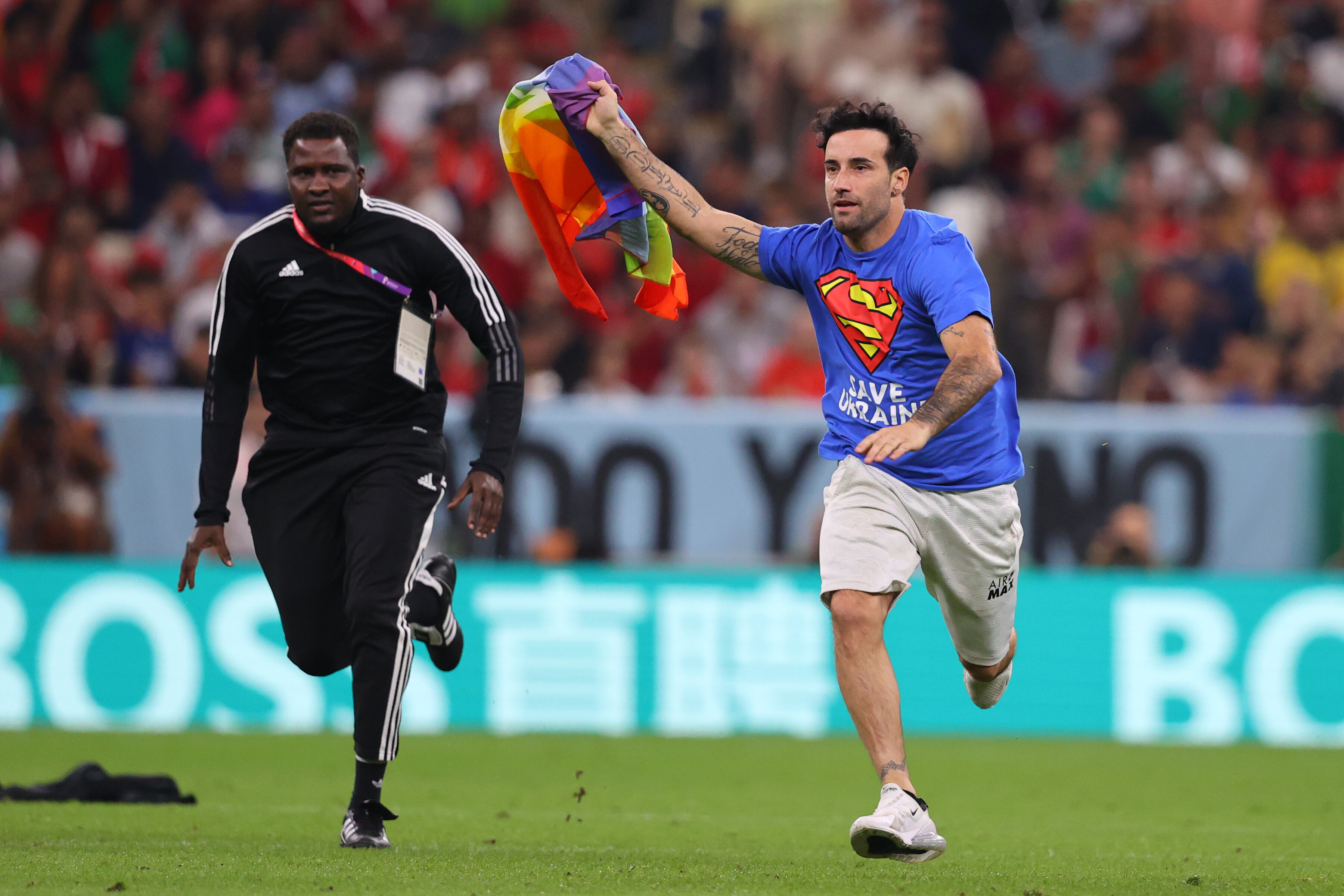
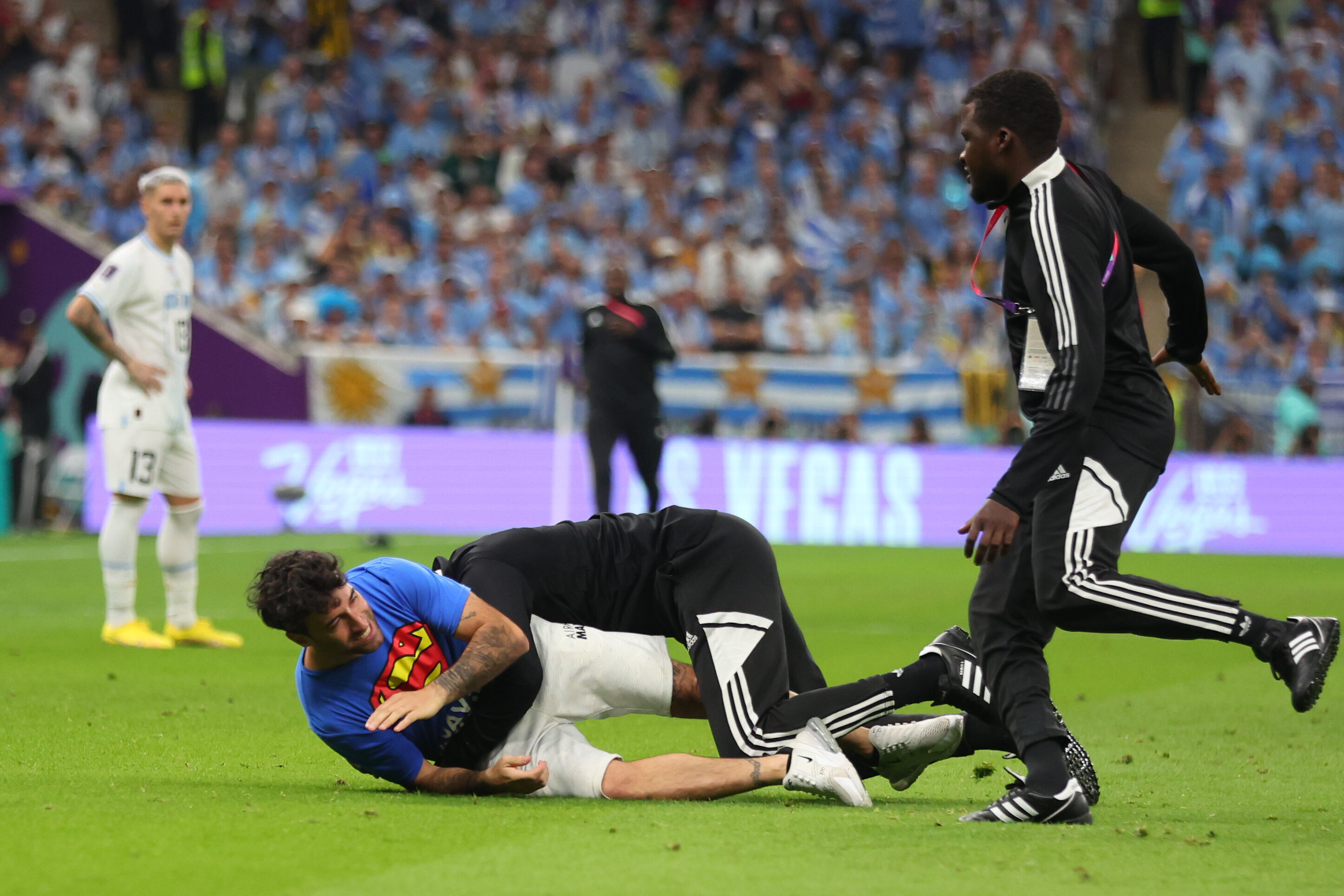
A football fan wearing a T-shirt emblazoned with the words ‘Save Ukraine’ and ‘Respect for Iranian Woman’ has run onto the pitch with a rainbow flag during the Portugal and Uruguay World Cup game in Qatar.

The rainbow flag is likely to be symbol of solidarity with the LGBTQ+ community. Homosexuality is illegal in Qatar, and Fifa has clamped down on attempts by teams and fans to show support for LGBTQ+ rights, with people complaining they’ve been barred from bringing items with rainbow colours into the grounds.

At the group H game on Monday, security officials brought the spectator down and he dropped the flag on the field before being escorted off the pitch. The referee then picked up the flag and left it on the sideline, where it stayed for a few moments before a worker came and collected it.

In the first week of the tournament, seven European teams lost the battle to wear multi-coloured One Love armbands during World Cup matches after Fifa threatened the countries with punishment.

Share Button

Diphtheria: Migrants with symptoms to be isolated

Decision comes after death of a man at a processing centre may have been caused by the disease.

Share Button

Tony Blair Defends Matt Hancock Over I’m A Celebrity Appearance

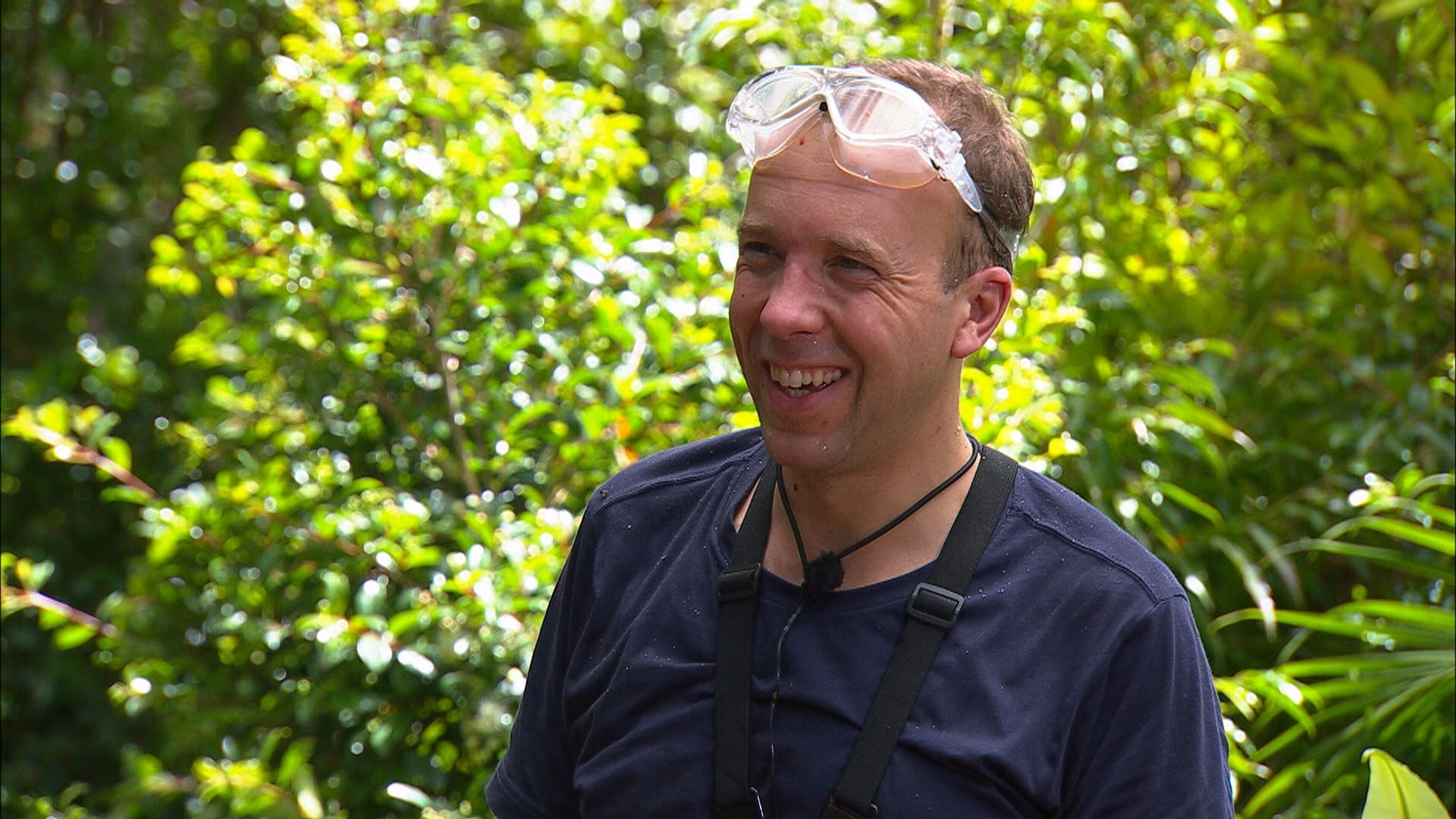
Tony Blair has defended Matt Hancock over his appearance in the I’m A Celebrity jungle – suggesting that his decision to park his political responsibilities for a spell in Australia “took courage”.

The former health secretary has faced a cross-party backlash and questions about his future in Westminster after coming third in the ITV show.

The West Suffolk MP, who explained he was “looking for a bit of forgiveness” by appearing on the show, reached the final but came behind the winner, Euro 2022 champion Jill Scott, and Hollyoaks actor Owen Warner in a public vote on Sunday night.

Hancock broke coronavirus social distancing rules during the pandemic by having an affair in his ministerial office with aide Gina Coladangelo, and has told campmates it was caused by the fact he “fell in love”.

But even though prime minister Rishi Sunak said Hancock’s decision to enter the jungle was not “noble” because he was failing to prioritise his “constituents and our country”, he seemed to have support from the former Labour PM.

Blair, who said that he had not been watching the popular TV show, told The News Agents podcast: “When you’ve been through the wringer as he has, and you know, as a politician who’s got to a certain level in politics, he’s probably got quite a lot of courage to go and do something like that.

“And I mean, people can attack him or whatever. But I always say this to (former Labour frontbencher) Ed Balls, who reinvented himself in this extraordinary way after leaving politics, and literally this is the most surprising thing I ever came across in terms of a post ministerial career.

“But, you know, it takes a lot of courage to go do something like that.

“I wished him well, from the outset. I worked with him a bit during the pandemic. And, you know, he was working hard, they were all working hard on it.”

The former Labour leader suggested that Hancock, who said entering the jungle would allow him to reach out to voters in a new way, might have had “a point”.

“I don’t think people’s political views are going to be changed one way or another.

“But I think the problem with politics nowadays is how do you communicate with people when you’re going into fragmented, media, social media, and when it’s quite difficult to get a message across to people who aren’t in your circle, because the way the media works today is essentially, it works by developing a constituency of people and essentially appealing to that constituency.

“And if you’re not careful, you don’t break out and go and talk to the people who disagree with you. So, I guess in that sense, he’s got a point. But it’s quite an extreme way of reaching the public.”

Earlier, business secretary Grant Shapps suggested that Hancock’s time on the show indicated he may have come to the conclusion his career in Westminster is “pretty much done”.

Share Button

Non-detection of key signal allows astronomers to determine what the first galaxies were — and weren’t — like

Researchers have been able to make some key determinations about the first galaxies to exist, in one of the first astrophysical studies of the period in the early Universe when the first stars and galaxies formed, known as the cosmic dawn.

Using data from India’s SARAS3 radio telescope, researchers led by the University of Cambridge were able to look at the very early Universe — just 200 million years after the Big Bang — and place limits on the mass and energy output of the first stars and galaxies.

Counterintuitively, the researchers were able to place these limits on the earliest galaxies by not finding the signal they had been looking for, known as the 21-centimetre hydrogen line.

This non-detection allowed the researchers to make other determinations about the cosmic dawn, placing restraints on the first galaxies, enabling them to rule out scenarios including galaxies which were inefficient heaters of cosmic gas and efficient producers of radio emissions.

While we cannot yet directly observe these early galaxies, the results, reported in the journal Nature Astronomy, represent an important step in understanding how our Universe transitioned from mostly empty to one full of stars.

Understanding the early Universe, when the first stars and galaxies formed, is one of the major goals of new observatories. The results obtained using the SARAS3 data are a proof-of-concept study that paves the way to understanding this period in the development of the Universe.

The SKA project — involving two next-generation telescopes due to be completed by the end of the decade — will likely be able to make images of the early Universe, but for current telescopes the challenge is to detect the cosmological signal of the first stars re-radiated by thick hydrogen clouds.

This signal is known as the 21-centimetre line — a radio signal produced by hydrogen atoms in the early Universe. Unlike the recently launched JWST, which will be able to directly image individual galaxies in the early Universe, studies of the 21-centimetre line, made with radio telescopes such as the Cambridge-led REACH (Radio Experiment for the Analysis of Cosmic Hydrogen), can tell us about entire populations of even earlier galaxies. The first results are expected from REACH early in 2023.

To detect the 21-centimetre line, astronomers look for a radio signal produced by hydrogen atoms in the early Universe, affected by light from the first stars and the radiation behind the hydrogen fog. Earlier this year, the same researchers developed a method which they say will allow them to see through the fog of the early universe and detect light from the first stars. Some of these techniques have been already put to practice in the current study.

In 2018, another research group operating the EDGES experiment published a result that hinted at a possible detection of this earliest light. The reported signal was unusually strong compared to what is expected in the simplest astrophysical picture of the early Universe. Recently, the SARAS3 data disputed this detection: the EDGES result is still awaiting confirmation from independent observations.

In a re-analysis of the SARAS3 data, the Cambridge-led team tested a variety of astrophysical scenarios which could potentially explain the EDGES result, but they did not find a corresponding signal. Instead, the team was able to place some limits on properties of the first stars and galaxies.

The results of the SARAS3 analysis are the first time that radio observations of the averaged 21-centimetre line have been able to provide an insight to the properties of the first galaxies in the form of limits of their main physical properties.

Working with collaborators in India, Australia and Israel, the Cambridge team used data from the SARAS3 experiment to look for signals from cosmic dawn, when the first galaxies formed. Using statistical modelling techniques, the researchers were not able to find a signal in the SARAS3 data.

“We were looking for a signal with a certain amplitude,” said Harry Bevins, a PhD student from Cambridge’s Cavendish Laboratory and the paper’s lead author. “But by not finding that signal, we can put a limit on its depth. That, in turn, begins to inform us about how bright the first galaxies were.”

“Our analysis showed that the hydrogen signal can inform us about the population of first stars and galaxies,” said co-lead author Dr Anastasia Fialkov from Cambridge’s Institute of Astronomy. “Our analysis places limits on some of the key properties of the first sources of light including the masses of the earliest galaxies and the efficiency with which these galaxies can form stars. We also address the question of how efficiently these sources emit X-ray, radio and ultraviolet radiation.”

“This is an early step for us in what we hope will be a decade of discoveries about how the Universe transitioned from darkness and emptiness to the complex realm of stars, galaxies and other celestial objects we can see from Earth today,” said Dr Eloy de Lera Acedo from Cambridge’s Cavendish Laboratory, who co-led the research.

The observational study, the first of its kind in many respects, excludes scenarios in which the earliest galaxies were both more than a thousand times as bright as present galaxies in their radio-band emission and were poor heaters of hydrogen gas.

“Our data also reveals something which has been hinted at before, which is that the first stars and galaxies could have had a measurable contribution to the background radiation that appeared as a result of the Big Bang and which has been travelling towards us ever since,” said de Lera Acedo, “We are also establishing a limit to that contribution.”

“It’s amazing to be able to look so far back in time — to just 200 million years after the Big Bang- and be able to learn about the early Universe,” said Bevins.

The research was supported in part by the Science and Technology Facilities Council (STFC), part of UK Research & Innovation (UKRI), and the Royal Society. The Cambridge authors are all members of the Kavli Institute for Cosmology in Cambridge.

Share Button

What is China’s zero Covid policy and what are its rules?

Protests have broken out in China over its strict Covid lockdown measures.

Share Button

Adventurous bird personalities can help population cope with climate change

The areas in the Wadden Sea where red knots, plump migratory birds, spend the winter are under pressure. The Wadden Sea is changing due to human influences such as mining for gas, tourism and due to sea level rise. Researcher Selin Ersoy, ecologist at the Royal Netherlands Institute for Sea Research (NIOZ) studied how ‘personalities’ of individual red knots differ and affect the way they search for food. Individuals that are fast explorers and take the risk to forage in different areas, also eat different food. This could make the total population of red knots a lot more resilient while their environment is changing. Red knots could copy the food-gathering behaviour of adventurous peers who succeed in new places. “Differences in character between red knots seem to be an important ingredient for the resilience of the whole group,” said Ersoy. For the first time, her study shows that behaviour that was observed in experimental settings corresponds with actual real-life behavioural strategies in the wild, on the mudflats of the Wadden Sea. This week Selin Ersoy defended her Phd thesis at the Groningen University.

Animals also have personalities

Red knots of all ages and sexes show behavioural traits. These remain mostly unchanged over time but differ across individuals. Some individuals are more adventurous and show more exploratory behaviours a in new environment than others. Other individuals take less risks and hardly dare to move around in a new environment. These ‘personalities’ have ecological and evolutionary consequences, but to what extent is largely unknown, because few studies have investigated this in the field.

During her PhD research Selin Ersoy has developed a new way of identifying the variation in personality between individual red knots. She wanted to know if the behaviour in experimental settings could be extrapolated to a larger and more complex natural setting, and how individual differences develop.

“With our new method that allowed studying animal personality in the wild, we found that red knots develop their personality probably through the experience that they get when growing up ,” says Ersoy. “After growing up, adults stick with exploratory behaviours. They seem to be like character types in humans.”

Explorers eat higher quality food

It was even possible for Ersoy and her colleagues to predict a suit of other behaviours in the wild. For instance, variation in explorative personality type (i.e., slow vs. fast explorer) predicts foraging tactics and dietary choice in the wild. Fast explorers use more visual foraging and eat soft prey such as shrimp or worms, while slow explorers use tactile foraging and feed on hard-shelled prey such as cockles. This is a new explanation for variation in foraging niche specialisation between individuals in the same population.

Exploratory behaviour also relates to variation in movement across the landscape and over time. Ersoy: “We were amazed to see that slow and fast explorers have clearly different movement patterns during the night, while at day they moved more or less the same way. These different individuals even have different arrival times from migration. Fast explorers arrive to the Wadden Sea later than the slower explorers.” Ersoy and her colleagues want to study next where they stay in the meantime. Maybe these red knots take more time to care for their youngs in the Arctic.

The whole group benefits

“We found striking differences in feeding and movement patterns between slow and fast exploring red knots. This suggests that fast explorers might provide foraging information and new foraging opportunities for entire populations,” says Ersoy. “Such new opportunities are important because red knots face pressures from human impact on their coastal wintering habitats, directly related to availability of food. Fast explorers can help the entire population to cope with environmental change.”

Gap closed between controlled experiments and real Wadden Sea

The goal of determining behaviour in experimental setups is to understand the mechanisms behind the behaviour in the wild. Selin Ersoy’s study fills a critical gap between experimental research on wild animals in controlled environments and observed behaviour in the wild.

“It’s a first step. We need to do similar personality research on other animals and on other natural habitats,” says Ersoy. “We want to know if personalities work the same in other species and situations.”

Tracking movements of guillemots with tiny transmitters

Researchers like Selin Ersoy track birds using ultra-small radio transmitters placed on their backs during the summer months. Birds are not bothered by them. Those transmitters send out unique signals. These are received by antennas scattered throughout the Wadden Sea.

Reverse GPS

WATLAS is a new system that makes use of so-called ‘reverse-GPS’. The tiny transmitters that are temporarily attached to birds transmit a signal of their own. That signal is received by fixed receiving stations in and around the Wadden Sea. Due to the tiny differences in the time of arrival of the signal between different receivers, the position of the animal-with-transmitter is calculated to the accuracy of a few meters, from second to second.

Thanks to WATLAS, researchers can watch a migratory bird such as the red knot move back and forth with low and high tide very precisely in search of food. Because many birds can be fitted with the relatively inexpensive transmitters at the same time, researchers can now see interactions between different animals happening from the comfort of their office chairs.

Share Button

Protein shapes indicate Parkinson’s disease

Many human diseases can be detected and diagnosed using biomarkers in blood or other body fluids. Parkinson’s disease is different: to date, there is no such biomarker being used in the clinicto indicate this neurodegenerative disease.

A team led by ETH Zurich Professor Paola Picotti could now help to close this gap. In a study just published in the journal Nature Structural and Molecular Biology, the researchers present 76 proteins that might serve as biomarkers for the detection of Parkinson’s disease.

Different protein structure

What makes this study special is that while the potential biomarker proteins are found in both healthy and diseased individuals, their molecules are present in different shapes (or structures) in each of the two groups. It is not the presence of certain proteins that indicates the disease, but rather the shape they have assumed. This is the first time that scientists have shown that an analysis of the structures of all proteins in a body fluid can identify potential biomarkers for disease.

The next step will be to thoroughly test the markers found and verify them using larger groups of patients. That means these candidates are not yet available for clinical diagnoses. “But from what we’ve seen so far, they’re actually a very strong indicator for the disease. So I’m confident that this idea of structural biomarkers will bear out,” says Natalie de Souza, senior scientist in Paola Picotti’s group and one of the study’s co-authors.

Measuring structural changes

In their study, the ETH Zurich researchers examined the cerebrospinal fluid of 50 healthy individuals and 50 Parkinson’s patients. The sample material was provided to them by Dutch clinicians.

To search for biomarkers, the scientists used a specific method for measuring the proteome (i.e. the totality of all proteins in a sample), called LiP-MS, which can measure structural changes in proteins and reveal where exactly the changes are located. Conventional proteome measurements tend to record only the different types of protein and their amounts, but not structural changes.

Since the structure of proteins is closely linked to their functions (or, indeed, dysfunctions), the researchers hypothesised that people with Parkinson’s and healthy individuals will exhibit different shapes of some proteins.

The present study marks the first time that the researchers have successfully applied the method to a disease.

Sharpening analysis further

In subsequent steps, the researchers want to further improve the LiP-MS method to amplify the biomarker signal and thus increase the sensitivity with which the disease can be detected. Moreover, the scientists would like to test the new biomarkers to assess how specifically they detect Parkinson’s disease or whether there might be overlap with other neurodegenerative diseases such as Alzheimer’s disease. In future, the researchers also want to use their method to determine subtypes of Parkinson’s disease and make more accurate predictions about the course of the disease.

Exactly what clinically useful diagnostics this might lead to is still uncertain. De Souza estimates that a future testing strategy could be based on antibodies that would distinguish between healthy and diseased protein structures. Making regular use of mass spectrometers in a clinical setting is in principle possible, she says, but would be a big challenge.

Story Source:

Materials provided by ETH Zurich. Original written by Peter Rueegg. Note: Content may be edited for style and length.

Share Button

Monkeypox given new name by global health experts

The change to mpox was prompted by concerns over negative connotations from the name of the virus.

Share Button

Palliative care: ‘My dad should not have been expected to die in office hours’

Most of the UK lacks consistent round-the-clock care for the terminally ill, research suggests.

Share Button