Adele Fans Can ‘Die Happy’ After Delayed Las Vegas Shows Finally Launch

Adele fans from around the world described having “butterflies” about finally seeing her perform in Las Vegas but said they would “die happy” because of it.

Others said it “did not feel real” to be back at Caesars Palace for her previously cancelled show, but they were sure it would be “worth the wait”.

Hundreds gathered outside The Colosseum venue hours before doors were due to open, forming a long line for an exclusive merchandise store.

The singer announced the last-minute postponement on Instagram earlier this year, telling fans in a tearful message that the show was “not ready”.

Adele performs onstage during the "Weekends with Adele" Residency Opening at The Colosseum at Caesars Palace on November 18, 2022 in Las Vegas, Nevada. (Photo by Kevin Mazur/Getty Images for AD)
Adele performs onstage during the “Weekends with Adele” Residency Opening at The Colosseum at Caesars Palace on November 18, 2022 in Las Vegas, Nevada. (Photo by Kevin Mazur/Getty Images for AD)

Kevin Mazur via Getty Images

Among those queueing for the show was Rafael Faci, a 23-year-old medical student from Brazil, who had been in Las Vegas in January when he learned of Adele’s postponement.

Mr Faci told the PA news agency that despite missing multiple exams to travel to the US again, he could “die happy” after seeing Adele.

“I’m pretty crazy about Adele,” he said.

“I don’t know how I’m going to react, I might cry…but I have no idea.”

He added: “This is my first time, that’s why I’m here. The last thing I have to do before I can die happy is see an Adele concert.”

Cousins Marcela de la Garza, 35, and Jesy Almaguer, 33, travelled from Mexico, also for the second time, to see the award-winning singer.

“We are happy that we are going to see her but we don’t believe it yet,” Ms de la Garza told PA.

“We don’t want to build up our expectations too much but we are happy. Right now I have butterflies.”

JJ Pollard, 24, from Seattle, told PA she was “so bummed” after Adele cancelled her first run of shows.

“I am super excited to be here, I was so bummed when she cancelled but I honestly think it’s going to be worth the wait,” she said.

“I’m super excited to see the show and just be here, her fans are always so nice – there’s a good, positive atmosphere. I think it’s going to be insane.

“We’re here for the weekend and making a whole shebang out of it. I never thought I’d see her.”

Alison Hutchings, 51, and her partner Rhyddian Piles, 47, from Neath, in south Wales, said they had been in Las Vegas for a family member’s 50th birthday and had called every day of the week to secure tickets.

“We feel amazing, we’re chuffed to bits,” Ms Hutchings told PA.

On Thursday night Adele shared an Instagram post online, in which she said she had “never been more nervous before a show in my career” but could not sit still with excitement.

Fans waiting for the show described being “triggered” by another last minute post from the singer, before realising that her message had been a positive one.

Londoner Ross Taggart, 37, told PA: “It was awful.

“I woke up and I saw a long post and I thought ‘oh no she hasn’t done it again’ but then she went on to say how excited she was, so it was fine.”

Amy Jaron, from Los Angeles, California, added: “It was very triggering, I got PTSD.”

Ms Jaron said she had just crossed over the state line into Nevada from California when she received news of the cancellation earlier this year.

“It doesn’t feel real, it’s finally here and it feels like forever ago that we were here,” she told the PA news agency.

“We met so many people so it was a great thing to happen out of a sad thing that happened…we’re happy to be reunited.”

Ms Jaron, 23, said she had been one of the lucky fans to have Facetimed Adele in January, adding that the experience had been “life-changing”.

“You could tell she felt so bad but the true fans understood,” she told PA.

Adele later declared she had “the best fans in the world” and thanked them after receiving waves of support for her decision to postpone.

Share Button

Taylor Swift Speaks Out Over ‘Excruciating’ Ticketmaster Fiasco

Taylor Swift is speaking out after tickets for her upcoming The Eras tour caused Ticketmaster to crash.

The recent debacle left millions of fans outraged — and lawmakers demanding answers about the company’s operations after many fans were unable to purchase tickets for the highly-anticipated tour on Ticketmaster.

“It goes without saying that I’m extremely protective of my fans,” Swift wrote on Instagram on Friday. ”It’s really difficult for me to trust an outside entity with these relationships and loyalties, and excruciating for me to just watch mistakes happen with no recourse,” she said in the message, which doesn’t name Ticketmaster but alludes to the ticketing failure.

“There are a multitude of reasons why people had such a hard time trying to get tickets, and I’m trying to figure out how this situation can be improved moving forward,” she continued. “I’m not going to make excuses for anyone because we asked them multiple times if they could handle this kind of demand, and we were assured they could.”

She added that it was “truly amazing” that 2.4 million people got tickets.

“But it really pisses me off that a lot of them feel like they went through several bear attacks to get them,” she wrote.

Taylor Swift
Taylor Swift

picture alliance via Getty Images

On Tuesday, sales for the Grammy-winner’s new tour began, but the high demand shut down the ticketing site, leaving fans who could not pocket a ticket utterly furious. Some even reported the site sending them back to the beginning of a virtual queue with thousands ahead of them after attempting to purchase seats.

Slews of customers also complained and reported that the platform was not loading and didn’t grant them access to tickets, even if they had a pre-sale code for verified fans.

On Thursday, Ticketmaster tweeted that “extraordinarily high demands on ticketing systems and insufficient remaining ticket inventory to meet that demand” were to blame and “tomorrow’s public on-sale for Taylor Swift | The Eras Tour has been canceled.”

The entertainment company said on Thursday more than 3.5 million people pre-registered for Swift’s Verified Fan sale, the largest in its history, per the New York Times.

Fourteen million people attempted to buy her pre-sale tickets on Tuesday, the CEO of Ticketmaster’s largest shareholder claimed.

“It’s a function of Taylor Swift. The site was supposed to open up for 1.5 million verified Taylor Swift fans,” Greg Maffei, CEO of Liberty Media, said during an interview with CNBC’s “Squawk on the Steet.” “We had 14 million people hit the site, including bots, which are not supposed to be there.”

After the cancellation, ticket prices soared on re-sale sites, with seats at various venues running as high as more than $20,000 as of Friday.

Addressing the incident, the singer wrote on Instagram: “And to those who didn’t get tickets, all I can say is that my hope is to provide more opportunities for us to all get together and sing these songs.”

She added, “Thank you for wanting to be there. You have no idea how much that means.”

Swift recently added 17 dates to the U.S. tour, which launches in March in Arizona and ends in August in Los Angeles. The tour will include 52 concerts.

Share Button

What does an unheated room do to your body?

The BBC’s health and science correspondent undergoes an experiment to find out how a cold home affects him.

Share Button

Staying warm: What does an unheated room do to your body?

The BBC’s health and science correspondent undergoes an experiment to find out how a cold home affects him.

Share Button

Elizabeth Holmes Sentenced To More Than 11 Years In Prison

Disgraced Theranos founder Elizabeth Holmes has been sentenced to 135 months, or 11.25 years, in prison for her role in defrauding investors in her blood-testing company. She’ll have an additional three years of supervised release.

Holmes won’t have to report to prison until April of next year.

Holmes, 38, was sentenced Friday by US District Judge Edward Davila, who sits on the federal court in the Northern District of California and oversaw her trial last year. Davila said he’d set a date in the future for Holmes’ restitution hearing, according to reporters in the courtroom.

Holmes, who is pregnant for the second time, spoke in court on Friday while crying.

“I stand before you taking responsibility for Theranos. It was my life’s work,” she said, according to reporters in the courtroom.

“I am devastated by my failings,” she said, noting she’s “felt deep pain for what people went through because I failed them”. She went on to apologise to investors and patients, adding: “I regret my failings with every cell of my body.”

Her sentencing comes after a last-ditch attempt by Holmes and her legal team to secure a new trial, staking it to claims that a key witness for the prosecution regrets the role he played in her conviction. Davila denied the request earlier this month.

Jurors convicted Holmes on January 4 on one count of conspiring to commit wire fraud against Theranos investors and three counts of fraud in connection to wire transfers. Each count carried a maximum of 20 years in prison and could be served concurrently. Prosecutors asked Davila to sentence her to 15 years.

“She repeatedly chose lies, hype and the prospect of billions of dollars over patient safety and fair dealing with investors,” Assistant US Attorney Robert Leach wrote in a 46-page brief filed last week. “Elizabeth Holmes’ crimes were not failing, they were lying — lying in the most serious context, where everyone needed her to tell the truth.”

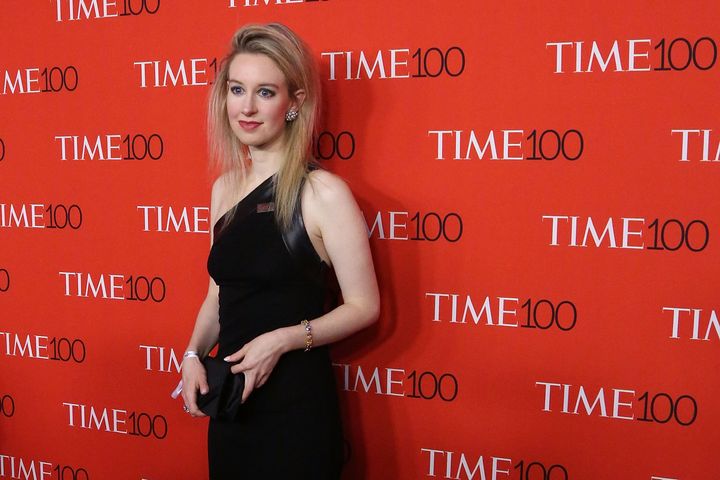
Elizabeth Holmes in 2015, when her medical testing company was valued at $9 billion.

Taylor Hill via Getty Images

The jury reviewing Holmes’ case found her not guilty on four other counts — three of which related to defrauding patients — and failed to reach a verdict on three others after seven days of deliberations.

Jurors who’ve spoken out since the trial’s conclusion said they quickly agreed to the four guilty verdicts because it was clear to them that Holmes had willfully misled investors connected to those charges by giving false financial projections and altered reports to investors.

“Everything went through her. She had final approval,” juror Wayne Kaatz, an Emmy-winning TV writer, told ABC News of Holmes’ apparent culpability when it came to Theranos’ business dealings.

Juror Susanna Stefanek, an editorial manager at Apple, told The Wall Street Journal that there were two “smoking guns” in the trial: a report Theranos gave to investors that Holmes had altered to appear to be an endorsement from the pharmaceutical and biotech company Pfizer, and a document from the company projecting $40 million in annual revenue from drug companies, even though no such contracts were in place.

Jurors said they found her not guilty on counts related to defrauding patients because she was too many steps removed from them. As for the charges they couldn’t reach a verdict on, the jurors said they couldn’t agree on whether there was enough proof Holmes had lied to certain investors.

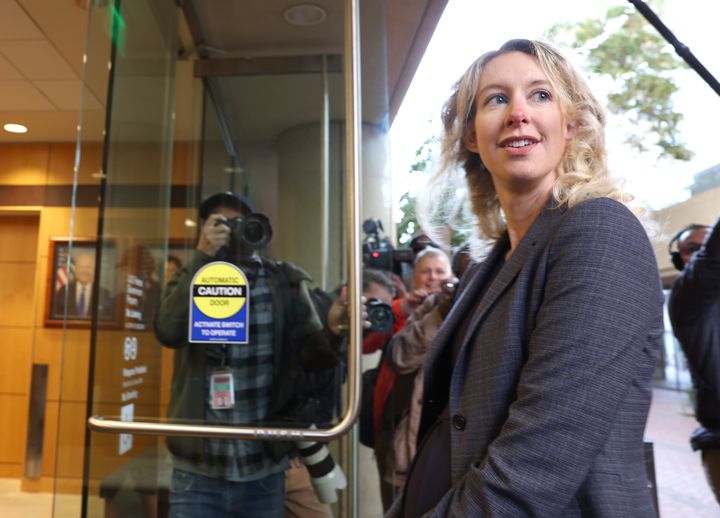
Elizabeth Holmes's request for a new trial was denied earlier this month.
Elizabeth Holmes’s request for a new trial was denied earlier this month.

Justin Sullivan via Getty Images

Holmes pleaded not guilty to all charges in 2018 after a federal grand jury elected to indict her for making fraudulent claims about the blood-testing machines she was developing. Investors say Holmes promised them that the devices could diagnose a wide range of conditions with just a few drops of blood, revolutionising the standard medical testing process that requires vials of blood and much more time.

Holmes launched Theranos in 2003, when she was just 19, after dropping out of Stanford University. Silicon Valley, media outlets and prominent figures quickly pegged her as “one to watch”, helping her attract numerous high-profile investors, including the Walton family, founders of Walmart; media magnate Rupert Murdoch; and former Education Secretary Betsy DeVos.

By 2015, her company was valued at a staggering $9 billion. But that same year, whistleblowers from within the company began informing reporters that Theranos’ machines were largely non-functional and that there was little evidence to show they ever would be. Investors and business partners began pulling out, and investigations began piling up.

In addition to the January 4 conviction, Holmes reached a settlement in 2018 with the U.S. Securities and Exchange Commission over additional fraud allegations and was thus barred from serving as a director or officer of any public company for a decade.

Share Button

Could ‘Space Karen’ Be One Of Twitter’s Last Great Moments?

Elon Musk being trolled as “space Karen” has spawned potentially the last great moment on Twitter – that’s if the dire predictions are to be believed.

On the day hundreds of Twitter employees were estimated to have quit the beleaguered company following a Thursday deadline from Musk that staffers sign up for “long hours at high intensity” or leave, someone across the street from the firm’s San Francisco headquarters projected a news-ticker style message on the building.

It included descriptions of the self-styled Chief Twit as “bankruptcy baby”, “mediocre manchild” and “petulant pimple” among others.

Gia Vang, an NBC Bay Area reporter, attributed the messages to an individual calling themself “a projection activist”.

It was “space Karen” – a reference to Musk’s inter-galactic ambitions and the archetypal woman with a fondness for asking to see the manager – that stood out.

Regardless of who was behind the prank, Twitter users were delighted.

If the doomsayers are right, it could be one the last hurrahs on the site.

Given the strife brought on by Musk’s arrival, Twitter users have been bidding farewell to the platform by way of comedy and memes following the mass resignations.

The trends #RIPTwitter, #GoodByeTwitter and #TwitterDown were among a number of hashtags and posts that users made to pay homage to the platform late Thursday and Friday morning.

And in a sign things really aren’t going well, Musk emailed Twitter staff on Friday asking that any employees who write software code report to the 10th floor of the office in San Francisco, Reuters reported.

The billionaire said in a follow-up email, “If possible, I would appreciate it if you could fly to SF to be present in person”, adding he would be at the company’s headquarters until midnight and would return Saturday morning.

It comes after the company had told employees it would close its offices and cut badge access until Monday, according to Reuters.

Musk’s first three weeks as Twitter’s owner have been marked by rapid change and chaos. He quickly fired Twitter’s previous CEO and other senior leaders and then laid off half its staff earlier this month.

Musk wrote on Twitter late on Thursday that he was not worried about resignations as “the best people are staying”.

The newest departures mean the platform is losing workers just at it gears up for the FIFA World Cup, which begins on Sunday. It’s one of Twitter’s busiest events, when tweet surges heavily stress its systems.

Share Button

Matt Hancock Survives First I’m A Celebrity Public Vote

Matt Hancock’s stay in the jungle is to be extended after surviving the first I’m A Celebrity… Get Me Out Of Here! public vote.

Journalist Charlene White was voted off after receiving the fewest votes.

The 42-year-old Loose Women star told hosts Anthony McPartlin and Declan Donnely: “This is really, really weird.”

It means the former health secretary will continue his pursuit of “a bit of forgiveness”, which he said was his reason for appearing on the show.

Hancock broke coronavirus social distancing rules during the pandemic by having an affair in his ministerial office with aide Gina Coladangelo, and has told campmates it was caused by the fact he “fell in love”.

The serving MP has faced criticism from opposition politicians and from within his own party for heading to Australia, with the Tory whip suspended.

Prime minister Rishi Sunak said Hancock’s decision to enter the jungle was not “noble” because he was failing to prioritise his “constituents and our country”.

Broadcasting watchdog Ofcom says it has received almost 2,000 complaints about the ITV show – the majority objecting to the former health secretary’s participation.

It came after Boy George had told Hancock on that he has been “hating on” the former health secretary during their time in the jungle.

The 61-year-old Culture Club singer apologised to the MP for his behaviour to him and said he found it difficult to “separate” the politician from the person.

On Friday, Boy George told comedian Seann Walsh: “(I) can’t stand Matt. I have tried to like him and I’ve failed. I find him slimy, I find him slippery.

“I find him just … I made a joke about chocolate. He just looked at me like … I wanted to say, ‘What are you looking at? Don’t you look at me like that’.”

Hancock then joined the conversation and Boy George told him: “I was making a joke about the chocolate. For god’s sake I was like … let’s have a bit of fun.

“I didn’t like the way you looked at me. I made a joke and you were like…”

Hancock said it was not his “intention” and he was sorry for making him feel “uncomfortable”.

Boy George then told the Bush Telegraph: “He’s probably going to be quite upset and I was kicking off a bit and I just thought, ‘you know what, just tell him to his face what you feel’.”

The singer then told Hancock: “I just feel everyone’s trying to be too nice. It’s getting on my tits. I don’t want arguments … I’m just like come on guys, have a laugh.

“I’ll be honest with you, I think your presence has made everyone very compliant.”

Hancock replied: “Compliant, it’s a funny word.”

Boy George said: “I have been hating on you, I have to be honest. I sometimes feel like you don’t say what you mean and you’re not particularly direct.”

He added: “I’m trying to separate you as a human being and you as a politician, and I’m struggling with it. We don’t share the same politics.

“I am struggling a little bit with you. That’s not your problem, that’s my problem. I apologise because I was really slagging you off a minute ago.”

Hancock said he would prefer the truth and has “enjoyed spending time with” Boy George.

Share Button

Toxins force construction of ‘roads to nowhere’

Toxins released by a type of bacteria that cause diarrheal disease hijack cell processes and force important proteins to assemble into “roads to nowhere,” redirecting the proteins away from other jobs that are key to proper cell function, a new study has found.

The affected proteins are known as actins, which are highly abundant and have multiple roles that include helping every cell unite its contents, maintain its shape, divide and migrate. Actins assemble into thread-like filaments to do certain work inside cells.

Researchers found that two toxins produced by the Vibrio genus of bacteria cause actins to start joining together into these filaments — which could be thought of as cellular highways on which cargo is delivered — at the wrong location inside cells, and headed in the wrong direction.

“Growing in the wrong direction is a totally new function that was not previously known and was not thought to be possible for actin filaments inside the cell,” said senior author Dmitri Kudryashov, associate professor of chemistry and biochemistry at The Ohio State University. “A large fraction of actin in the cell is consumed in formation of the ‘highways’ where they are not needed, so the cell resources are wasted and cannot be used to satisfy the cell’s basic needs.”

The research is published today (Nov. 18, 2022) in the journal Science Advances.

These disruptive toxins are called VopF and VopL, and are produced by two strains of Vibrio bacteria living in seawater: V. cholerae and V. parahaemolyticus, both of which can contaminate oysters and other shellfish that, when eaten raw, make people sick.

In this study, the research team zeroed in on describing the unexpected cellular activities rather than any further implications, such as how the hijacking relates to bacterial infection.

“We are looking at the interference at the molecular level — we have not focused here on how this cell function might affect humans,” said first and co-corresponding author Elena Kudryashova, a research scientist in chemistry and biochemistry at Ohio State.

“From a practical standpoint, this tells us more about these pathogens, and knowing your enemy helps you fight your enemy,” she said. “But finding something that we didn’t know was possible — for actin to behave in such a way inside the cell — raises new questions about whether this function might actually be needed, or could come about in some other way.”

Until now, actins have been known to assemble each filament in one way, originating from what is known as its pointed end and directed toward what is called the barbed end of the structure. Because they are limited in number, the actins disassemble as needed from the pointed end and are recycled to maintain directional activity toward the barbed end — and then these actin filaments perform functions, such as cell migration, contraction or division, as dictated by what the cell commands.

When the VopF and VopL toxins enter a cell, however, they attract actin molecules to start a new filament and cause the filaments to start assembling in this spot, which leads them to elongate in the direction of the pointed end — a reversal of their usual elongation direction.

“The toxins start making these actin filament highways in the wrong place, building something that is useless for the cell, and the cell doesn’t know how to deal with it,” Kudryashov said.

This actin interference was observed using imaging of live cells containing individual toxin molecules. Though they don’t yet know all the consequences of this hijacking activity, the researchers said the results could include seepage of nutrients through damaged intestinal walls — which would provide food for the infectious bacteria waiting outside.

“Killing cells is not always necessary — disrupting cells’ barrier function can also be beneficial to pathogens,” Kudryashova said.

And that’s why the scientists want to learn more — whether other molecules can force actins to assemble “roads to nowhere,” and whether that strange filament formation might even be a beneficial mechanism under a different set of circumstances.

“It’s quite possible that our own cells are doing this on some occasion, but we don’t know because actin has so many functions and not all of them are yet well understood,” Kudryashov said.

The Ohio State team collaborated with co-authors Ankita, Heidi Ulrichs and Shashank Shekhar of Emory University.

This work was supported by grants from the National Institutes of Health.

Share Button

Artificial neural networks learn better when they spend time not learning at all

Depending on age, humans need 7 to 13 hours of sleep per 24 hours. During this time, a lot happens: Heart rate, breathing and metabolism ebb and flow; hormone levels adjust; the body relaxes. Not so much in the brain.

“The brain is very busy when we sleep, repeating what we have learned during the day,” said Maxim Bazhenov, PhD, professor of medicine and a sleep researcher at University of California San Diego School of Medicine. “Sleep helps reorganize memories and presents them in the most efficient way.”

In previous published work, Bazhenov and colleagues have reported how sleep builds rational memory, the ability to remember arbitrary or indirect associations between objects, people or events, and protects against forgetting old memories.

Artificial neural networks leverage the architecture of the human brain to improve numerous technologies and systems, from basic science and medicine to finance and social media. In some ways, they have achieved superhuman performance, such as computational speed, but they fail in one key aspect: When artificial neural networks learn sequentially, new information overwrites previous information, a phenomenon called catastrophic forgetting.

“In contrast, the human brain learns continuously and incorporates new data into existing knowledge,” said Bazhenov, “and it typically learns best when new training is interleaved with periods of sleep for memory consolidation.”

Writing in the November 18, 2022 issue of PLOS Computational Biology, senior author Bazhenov and colleagues discuss how biological models may help mitigate the threat of catastrophic forgetting in artificial neural networks, boosting their utility across a spectrum of research interests.

The scientists used spiking neural networks that artificially mimic natural neural systems: Instead of information being communicated continuously, it is transmitted as discrete events (spikes) at certain time points.

They found that when the spiking networks were trained on a new task, but with occasional off-line periods that mimicked sleep, catastrophic forgetting was mitigated. Like the human brain, said the study authors, “sleep” for the networks allowed them to replay old memories without explicitly using old training data.

Memories are represented in the human brain by patterns of synaptic weight — the strength or amplitude of a connection between two neurons.

“When we learn new information,” said Bazhenov, “neurons fire in specific order and this increases synapses between them. During sleep, the spiking patterns learned during our awake state are repeated spontaneously. It’s called reactivation or replay.

“Synaptic plasticity, the capacity to be altered or molded, is still in place during sleep and it can further enhance synaptic weight patterns that represent the memory, helping to prevent forgetting or to enable transfer of knowledge from old to new tasks.”

When Bazhenov and colleagues applied this approach to artificial neural networks, they found that it helped the networks avoid catastrophic forgetting.

“It meant that these networks could learn continuously, like humans or animals. Understanding how human brain processes information during sleep can help to augment memory in human subjects. Augmenting sleep rhythms can lead to better memory.

“In other projects, we use computer models to develop optimal strategies to apply stimulation during sleep, such as auditory tones, that enhance sleep rhythms and improve learning. This may be particularly important when memory is non-optimal, such as when memory declines in aging or in some conditions like Alzheimer’s disease.”

Co-authors include: Ryan Golden and Jean Erik Delanois, both at UC San Diego; and Pavel Sanda, Institute of Computer Science of the Czech Academy of Sciences.

Share Button

Rapid fluctuations in oxygen levels coincided with Earth’s first mass extinction

Rapid changes in marine oxygen levels may have played a significant role in driving Earth’s first mass extinction, according to a new study led by Florida State University researchers.

About 443 million years ago, life on Earth was undergoing the Late Ordovician mass extinction, or LOME, which eliminated about 85% of marine species. Scientists have long studied this mass extinction and continue to investigate its possible causes, such as reduced habitat loss in a rapidly cooling world or persistent low-oxygen conditions in the oceans.

By measuring isotopes of the element thallium — which shows special sensitivity to changes in oxygen in the ancient marine environment — the research team found that previously documented patterns of this mass extinction coincided with an initial rapid decrease in marine oxygen levels followed by a rapid increase in oxygen. Their work is published online in the journal Science Advances.

“Paleontologists have noted that there were several groups of organisms, such as graptolites and brachiopods, that started to decline very early in this mass extinction interval, but we didn’t really have any good evidence of an environmental or climate signature to tie that early decline of these groups to a particular mechanism,” said co-author Seth Young, an associate professor in the Department of Earth, Ocean and Atmospheric Science. “This paper can directly link that early phase of extinction to changes in oxygen. We see a marked change in thallium isotopes at the same time these organisms start their steady decline into the main phase of the mass extinction event.”

That decrease in oxygen was immediately followed by an increase. This rapid shift in oxygen coincided with the traditional first die-off of mass extinction and major ice sheet growth over the ancient South Pole.

“Turbulence in oxygen levels in oceanic waters is really what seems to have been pretty problematic for organisms that were living in the Late Ordovician at that time, which might have been adapted to cope with low oxygen conditions initially or vice versa,” Young said. “The fact that oxygen levels in the oceans next to the continents switching back and forth over short geologic time scales (a few hundred thousand years) really did seem to play havoc with these marine ecosystems.”

The Late Ordovician extinction was one of five major mass extinctions in Earth’s history and the only one scientists are confident took place in what are called “icehouse” conditions, in which widespread ice sheets are present on Earth’s surface. Earth is currently experiencing icehouse conditions and loss of biodiversity, which makes this ancient mass extinction an important analog for present-day conditions, along with trying to understand Earth’s future as our climate continues to warm and ice sheets recede.

Previous research into environmental conditions surrounding the LOME used evidence found in limestones from more oxygenated settings, but this study used shales that were deposited in deeper, oxygen-poor water, which record different geochemical signatures, allowing the researchers to make conclusions about global marine conditions, rather than for local conditions.

“The discovery of the initial expansion of low-oxygen conditions on a global level and the coincidence with the early phases of decline in marine animals helps paint a clearer picture of what was happening with this extinction event,” said lead author Nevin Kozik, a visiting assistant professor at Occidental College and former FSU doctoral student.

Co-authors on this paper were doctoral student Sean Newby and associate professor Jeremy Owens of FSU; former FSU postdoctoral scholar and current assistant professor at the College of Charleston Theodore Them; Mu Liu and Daizhao Chen of the Chinese Academy of Sciences; Emma Hammarlund of Lund University; and David Bond of the University of Hull.

This research was supported by the National Science Foundation, the American Chemical Society, the Sloan Research Foundation and the Geological Society of America.

Story Source:

Materials provided by Florida State University. Original written by Bill Wellock. Note: Content may be edited for style and length.

Share Button