Genetic ‘hitchhikers’ can be directed using CRISPR

In a new study, North Carolina State University researchers characterize a range of molecular tools to rewrite — not just edit — large chunks of an organism’s DNA, based on CRISPR-Cas systems associated with selfish genetic “hitchhikers” called transposons.

The researchers investigate diverse Type I-F CRISPR-Cas systems and engineer them to add genetic cargo — up to 10,000 additional genetic code letters — to the transposon’s cargo to make desired changes to a bacterium — in this case, E. coli.

The findings expand the CRISPR toolbox and could have significant implications in the manipulation of bacteria and other organisms at a time of need for flexible genome editing in therapeutics, biotechnology and more sustainable and efficient agriculture.

Bacteria use CRISPR-Cas as adaptive immune systems to withstand attacks from enemies like viruses. These systems have been adapted by scientists to remove or cut and replace specific genetic code sequences in a variety of organisms. The new finding shows that exponentially larger amounts of genetic code can be moved or added, potentially increasing CRISPR’s functionality.

“In nature, transposons have co-opted CRISPR systems to, selfishly, move themselves around an organism’s genome to help themselves survive. We’re in turn co-opting what occurs in nature by integrating with transposons a programmable CRISPR-Cas system that can move around genetic cargo that we design to perform some function,” said Rodolphe Barrangou, the Todd R. Klaenhammer Distinguished Professor of Food, Bioprocessing and Nutrition Sciences at NC State and corresponding author of a paper describing the research.

“Using this method, we showed that we can engineer genomes by moving chunks of DNA up to 10,000 letters,” Barrangou said. “Nature already does this — the bioinformatic data shows examples of up to 100,000 genetic letters moved around by transposon-based CRISPR systems — but now we can control and engineer it by using this system.

“To complete the hitchhiking analogy, we’re engineering the hitchhiker to bring certain luggage or cargo into the car to deliver some type of payload when the car arrives at its destination.”

The study shows the researchers proving the method’s effectiveness both in vitro on the lab bench and in vivo in E. coli. The researchers selected 10 different CRISPR-associated transposons to test the method’s effectiveness. The approach worked with all 10 transposons, although they varied in effectiveness based on factors like temperature and the size of the transposon’s cargo load.

“It was exciting to find that all of the systems we tested were functional after reconstructing them into genome editing tools from their native biological forms,” said Avery Roberts, an NC State graduate student and first author of the study. “We uncovered new features of these systems, but there’s likely many more relevant findings and applications to come as the field moves at a rapid pace.”

The research also showed that the method could be used with different transposons at the same time.

“Instead of just one gene — as is the case with other CRISPR systems like the more familiar Type II Cas-9 system — we can bring in a whole metabolic pathway to incorporate a whole new set of functions to an organism,” Barrangou said. “In the future, that could mean providing more flexible disease resistance or drought resistance to plants, for example.”

“We are excited about these findings and see the potential for applying these newly discovered systems in crop plants to accelerate the development of more resilient, higher-yielding varieties,” said Gusui Wu, global head of seeds research for Syngenta Seeds.

Barrangou and Wu add that the work in this study provides a great example of public-private partnerships that drive scientific discovery and train the workforce of tomorrow.

The paper appears in Nucleic Acids Research. Funding was provided by Syngenta Seeds. Co-authors of the paper include NC State graduate student Avery Roberts and former NC State Ph.D. student Matthew Nethery.

Story Source:

Materials provided by North Carolina State University. Original written by Mick Kulikowski. Note: Content may be edited for style and length.


Share Button

‘Brain-like computing’ at molecular level is possible

A breakthrough discovery at University of Limerick in Ireland has revealed for the first time that unconventional brain-like computing at the tiniest scale of atoms and molecules is possible.

Researchers at University of Limerick’s Bernal Institute worked with an international team of scientists to create a new type of organic material that learns from its past behaviour.

The discovery of the ‘dynamic molecular switch’ that emulate synaptic behaviour is revealed in a new study in the international journal Nature Materials.

The study was led by Damien Thompson, Professor of Molecular Modelling in UL’s Department of Physics and Director of SSPC, the UL-hosted Science Foundation Ireland Research Centre for Pharmaceuticals, together with Christian Nijhuis at the Centre for Molecules and Brain-Inspired Nano Systems in University of Twente and Enrique del Barco from University of Central Florida.

Working during lockdowns, the team developed a two-nanometre thick layer of molecules, which is 50,000 times thinner than a strand of hair and remembers its history as electrons pass through it.

Professor Thompson explained that the “switching probability and the values of the on/off states continually change in the molecular material, which provides a disruptive new alternative to conventional silicon-based digital switches that can only ever be either on or off.”

The newly discovered dynamic organic switch displays all the mathematical logic functions necessary for deep learning, successfully emulating Pavlovian ‘call and response’ synaptic brain-like behaviour.

The researchers demonstrated the new materials properties using extensive experimental characterisation and electrical measurements supported by multi-scale modelling spanning from predictive modelling of the molecular structures at the quantum level to analytical mathematical modelling of the electrical data.

To emulate the dynamical behaviour of synapses at the molecular level, the researchers combined fast electron transfer (akin to action potentials and fast depolarization processes in biology) with slow proton coupling limited by diffusion (akin to the role of biological calcium ions or neurotransmitters).

Since the electron transfer and proton coupling steps inside the material occur at very different time scales, the transformation can emulate the plastic behaviour of synapse neuronal junctions, Pavlovian learning, and all logic gates for digital circuits, simply by changing the applied voltage and the duration of voltage pulses during the synthesis, they explained.

“This was a great lockdown project, with Chris, Enrique and I pushing each other through zoom meetings and gargantuan email threads to bring our teams combined skills in materials modelling, synthesis and characterisation to the point where we could demonstrate these new brain-like computing properties,” explained Professor Thompson.

“The community has long known that silicon technology works completely differently to how our brains work and so we used new types of electronic materials based on soft molecules to emulate brain-like computing networks.”

The researchers explained that the method can in the future be applied to dynamic molecular systems driven by other stimuli such as light and coupled to different types of dynamic covalent bond formation.

This breakthrough opens up a whole new range of adaptive and reconfigurable systems, creating new opportunities in sustainable and green chemistry, from more efficient flow chemistry production of drug products and other value-added chemicals to development of new organic materials for high density computing and memory storage in big data centres.

“This is just the start. We are already busy expanding this next generation of intelligent molecular materials, which is enabling development of sustainable alternative technologies to tackle grand challenges in energy, environment, and health,” explained Professor Thompson.

Professor Norelee Kennedy, Vice President Research at UL, said: “Our researchers are continuously finding new ways of making more effective, more sustainable materials. This latest finding is very exciting, demonstrating the reach and ambition of our international collaborations and showcasing our world-leading ability at UL to encode useful properties into organic materials.”

Share Button

A possible game changer for next generation microelectronics

Tiny magnetic whirlpools could transform memory storage in high performance computers.

Magnets generate invisible fields that attract certain materials. A common example is fridge magnets. Far more important to our everyday lives, magnets also can store data in computers. Exploiting the direction of the magnetic field (say, up or down), microscopic bar magnets each can store one bit of memory as a zero or a one — the language of computers.

Scientists at the U.S. Department of Energy’s (DOE) Argonne National Laboratory want to replace the bar magnets with tiny magnetic vortices. As tiny as billionths of a meter, these vortices are called skyrmions, which form in certain magnetic materials. They could one day usher in a new generation of microelectronics for memory storage in high performance computers.

“The bar magnets in computer memory are like shoelaces tied with a single knot; it takes almost no energy to undo them,” said Arthur McCray, a Northwestern University graduate student working in Argonne’s Materials Science Division (MSD). And any bar magnets malfunctioning due to some disruption will affect the others.

“By contrast, skyrmions are like shoelaces tied with a double knot. No matter how hard you pull on a strand, the shoelaces remain tied.” The skyrmions are thus extremely stable to any disruption. Another important feature is that scientists can control their behavior by changing the temperature or applying an electric current.

Scientists have much to learn about skyrmion behavior under different conditions. To study them, the Argonne-led team developed an artificial intelligence (AI) program that works with a high-power electron microscope at the Center for Nanoscale Materials (CNM), a DOE Office of Science user facility at Argonne. The microscope can visualize skyrmions in samples at very low temperatures.

The team’s magnetic material is a mixture of iron, germanium and tellurium. In structure, this material is like a stack of paper with many sheets. A stack of such sheets contains many skyrmions, and a single sheet can be peeled from the top and analyzed at facilities like CNM.

“The CNM electron microscope coupled with a form of AI called machine learning enabled us to visualize skyrmion sheets and their behavior at different temperatures,” said Yue Li, a postdoctoral appointee in MSD.

“Our most intriguing finding was that the skyrmions are arranged in a highly ordered pattern at minus 60 degrees Fahrenheit and above,” said Charudatta Phatak, a materials scientist and group leader in MSD. ?”But as we cool the sample the skyrmion arrangement changes.” Like bubbles in beer foam, some skyrmions became larger, some smaller, some merge and some vanish.

At minus 270, the layer reached a state of nearly complete disorder, but order came back when the temperature returned to minus 60. This order-disorder transition with temperature change could be exploited in future microelectronics for memory storage.

“We estimate the skyrmion energy efficiency could be 100 to 1000 times better than current memory in the high performance computers used in research,” McCray said.

Energy efficiency is essential to the next generation of microelectronics. Today’s microelectronics already account for roughly 10% of the world’s electricity. And that number could double by 2030. More energy-efficient electronics must be found.

“We have a way to go before skyrmions find their way into any future computer memory with low power,” Phatak said. ?”Nonetheless, this kind of radical new way of thinking about microelectronics is key to next generation devices.”

This research was supported by the DOE Office of Basic Energy Sciences. The team’s machine learning program was run on supercomputing resources at the Argonne Leadership Computing Facility, a DOE Office of Science user facility.

This research appeared in Nano Letters. In addition to Phatak, Li, and McCray, Argonne authors include Amanda K. Petford-Long, Daniel P. Phelan and Xuedan Ma. Other authors include Rabindra Basnet, Krishna Pandey and Jin Hu from the University of Arkansas.

Share Button

Alex Scott Praised By Football Fans For Wearing One Love Armband During BBC’s World Cup Coverage

Alex Scott has been praised by football fans after she wore a “One Love” armband during the BBC’s coverage of the World Cup just hours after Fifa threatened sporting sanctions against players who did so.

On Monday morning, England, Wales and other European countries who had been set to wear the anti-discrimination armbands at the tournament in Qatar u-turned on their decision after Fifa said that they would introduce yellow cards to players who opted to wear them during matches.

The armbands were intended “to promote inclusion and send a message against discrimination of any kind”. In Qatar, same-sex relationships are illegal.

Former Lioness and England captain Alex was seen sporting the armband during a pitch-side discussion with Kelly Somers ahead of England’s opening World Cup match against Iran.

Alex made no mention of her armband but her powerful statement did not go unnoticed by fans watching.

A joint statement from seven national Football Associations, including the English and Welsh FAs, about the armbands said they could not put their players “in a position where they could face sporting sanctions”.

The statement read: “We are very frustrated by the Fifa decision which we believe is unprecedented.

“Fifa has been very clear that it will impose sporting sanctions if our captains wear the armbands on the field of play.

“We were prepared to pay fines that would normally apply to breaches of kit regulations and had a strong commitment to wearing the armband.

“However, we cannot put our players in the situation where they might be booked or even forced to leave the field of play.

“Our players and coaches are disappointed – they are strong supporters of inclusion and will show support in other ways.”

Captains of teams are allowed to wear “No Discrimination” armbands for the duration of the World Cup.

On Sunday, Alex spoke about LGBT rights in Qatar during the opening of the BBC’s coverage of the World Cup.

She said: “A whole heap of fans from around the world from the LGBTQ+ community not wanting to travel here…

“We reference (FIFA president) Gianni Infantino from what he said… you are not gay, you will never understand travelling to a country where you are fearing for your life just because of who you choose to love.

“To keep saying football is for everyone, we sit here and it’s not, because people have not been able to travel to watch their teams, to support their teams, out of fear.”

Infantino delivered an hour-long speech in a pre-tournament press conference in Doha in which he declared “today I feel gay” and “I feel (like) a migrant worker” before taking aim at European critics of Qatar.

Share Button

NHS bosses in Scotland discuss having wealthy pay for treatment

The idea of paying for care as part of a “two-tier” system appears in minutes of a meeting of NHS Scotland leaders.

Share Button

Chris Hemsworth: Alzheimer’s risk prompts actor to take acting break

The Thor star has revealed he has a significantly heightened risk of developing the disease.

Share Button

Changing the lives of Senegalese people disabled by clubfoot

As Cape Town hosts Africa’s first ever conference on clubfoot, the BBC witnesses a pioneering treatment in Senegal.

Share Button

Strictly Come Dancing Result: Tyler West Sent Home After Dance-Off Divides Judges

Tyler West has become the eighth contestant to leave Strictly Come Dancing after he lost out to Molly Rainford in Sunday night’s dance off.

Saturday’s show opened with a spectacular extravaganza celebrating Strictly’s long awaited return to Blackpool after two years away due to the pandemic.

During Sunday’s dance-off, Tyler and his dance partner Dianne Buswell performed their Salsa, while Molly and her dance partner Carlos Gu performed their Jive again in a bid to impress the judges and remain in the competition.

After both couples had danced a second time, the judges delivered their verdicts, but it was down to head judge Shirley Ballas to cast the deciding vote after Craig Revel Horwood, Motsi Mabuse and Anton du Beke failed to unanimously decide who should go home.

Mollie and Tyler found themselves in the dance-off during Blackpool Week.

Craig and Motsi both chose to save Molly and Carlos, but Anton believed Tyler and Dianne deserved to stay in the competition.

With two votes for Molly and Carlos and one vote for Tyler and Dianne, it meant that Shirley would have to make the final decision.

Shirley said; “Well, I agree with my fellow judges, this is probably one of the most difficult dance off’s that we’ve ever had to choose.

“Both couples were outstanding, both improved their performances but I am going to go with what I believe in, and that is a quality of movement and precision in partnering, and I am going to go with Molly and Carlos.”

Tyler West and Dianne Buswell failed to impress after their Salsa in Blackpool.

Guy Levy via PA Media

When asked by Tess about his time on the show, Tyler said: “I’m more than a two step now! When you watch the show at home, you wonder what it must be like to dance on it, it’s everything and more, it’s changed my life.

“This girl here, has changed my life for sure. To think I was some shy kid who never used to talk to anyone, to dancing in front of millions, I can’t put it into words.”

He continued: “It’s my mum’s favourite show, I bought her to Blackpool, my nan bless her was always watching over me on this journey. But more importantly this show has changed my life in the sense it’s given me confidence, a new found family, every dancer, everyone in hair and make-up, costume. The judges, it’s been amazing to dance in front of you every week, I genuinely mean that.

“But this girl here, I have been blessed with the best, she is what Strictly is about and she’s changed my life, I have no doubt she will be in in my life forever.”

Tyler said his Strictly experience had "changed my life".
Tyler said his Strictly experience had “changed my life”.

Dianne was then asked if she had any words for her partner. She said: “Endless words! You have been an absolute joy to work with, when I say that, you have come in every single session with the biggest smile on your face and it lights up this whole ballroom.

“You are such a talent, you really are and you should feel so proud, I am so proud of you, your family are so proud and your nan is so proud of you. Thank you so much for everything.”

The remaining seven couples will take to the dance floor next week when Strictly Come Dancing returns to BBC One on Saturday 26 November at 7.15pm

Share Button

Gary Lineker Delivers Damning Introduction In BBC’s Coverage Of Qatar World Cup

Gary Lineker has been praised by football fans after he delivered a damning opener to this year’s coverage of the World Cup.

On Sunday, the former England player launched the BBC’s coverage of the tournament being held in Qatar, describing it as “the most controversial World Cup in history”

The fact Qatar is hosting the 2022 World Cup has been controversial since it was first announced in 2010. Thousands of migrant workers have died in the country in the lead-up to the tournament. The host nation has been also been condemned for its appalling track record with human rights, including those of LGBTQ+ people.

As he kicked off the BBC’s coverage on Sunday afternoon, Gary said: “Ever since FIFA chose Qatar back in 2010, the smallest country to have hosted football’s greatest competition, has faced some big questions.

“From accusations of corruption in the bidding process to the treatment of migrant workers who built the stadiums where many lost their lives. Homosexuality is illegal here. Women’s rights and freedom of expression are in the spotlight.

“Against that backdrop, there is a tournament to be played here that will be watched and enjoyed around the world. Stick to football say FIFA, well we will for a couple of minutes at least.”

Gary also opened a discussion on workers rights and Qatar’s discriminatory LGBTQ+ laws with his fellow pundits Alan Shearer, Alex Scott and Ashley Williams.

All three expressed their disappointment and concern at the hosting of the tournament in the country and criticised Fifa president Gianni Infantino following his bizarre speech on Saturday.

Viewers were quick to praise the stance the BBC had taken with Gary’s intro on social media…

Host nation Qatar plays Ecuador in the opening game of the tournament, which will feature 64 games including the final on December 18.

Share Button

Doctor Who’s 15th Companion Revealed As Coronation Street Actor Millie Gibson

Millie Gibson has been announced as Doctor Who’s latest companion live on Children In Need.

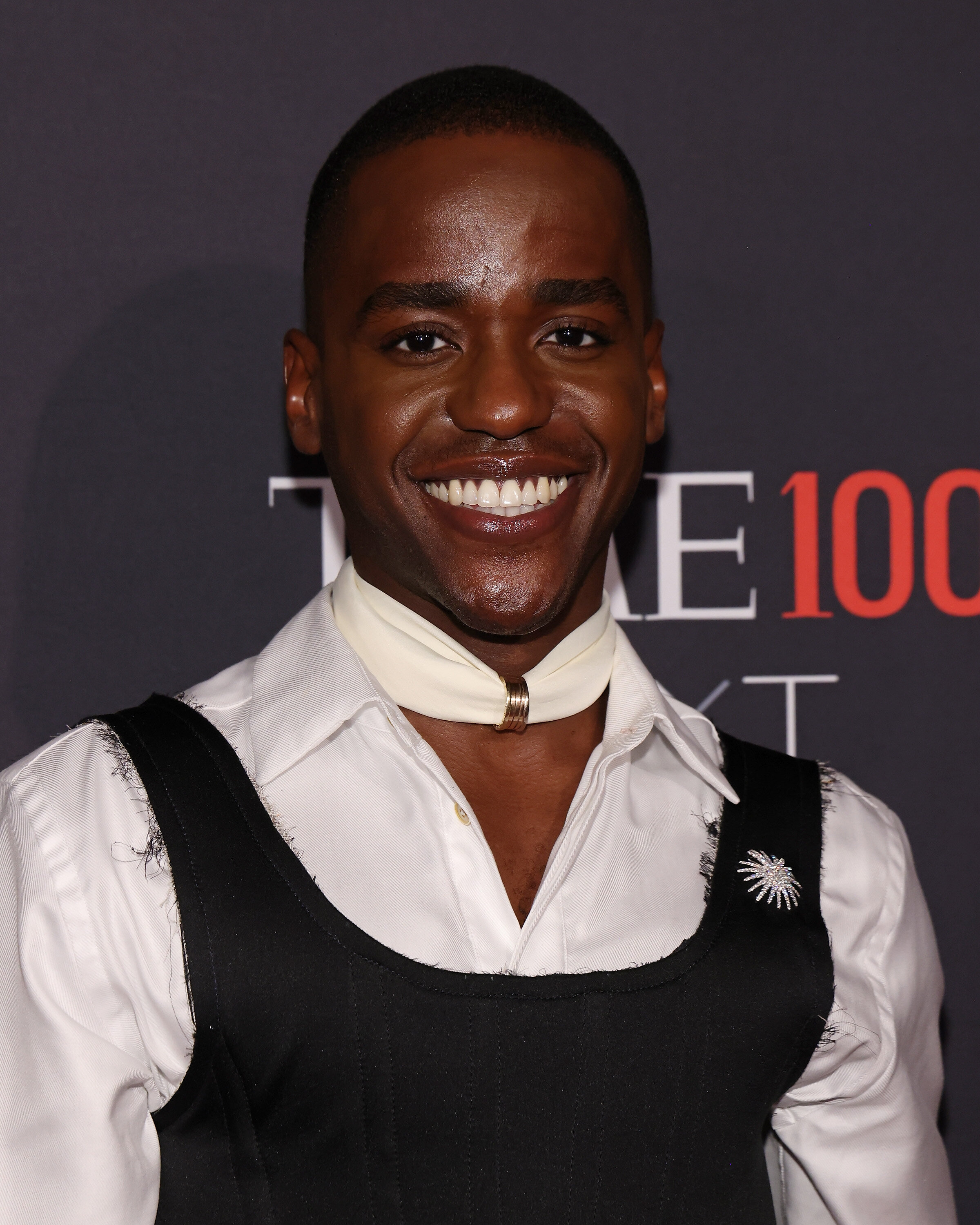
The 18-year-old Coronation Street actor will star opposite Sex Education star Ncuti Gatwa, who takes over as the Doctor in 2023.

The 15th Doctor’s companion, who will be called Ruby Sunday, will travel alongside him as they embark on a new set of adventures.

Millie said in a statement: “Whilst still being in total disbelief, I am beyond honoured to be cast as the Doctor’s companion.

“It is a gift of a role, and a dream come true, and I will do everything to try and fill the boots the fellow companions have travelled in before me.

“What better way to do that than being by the fabulous Ncuti Gatwa’s side, I just can’t wait to get started.”

Millie Gibson
Millie Gibson

Karwai Tang via Getty Images

She received the best young performer award for her role as Kelly Neelan in Coronation Street at The British Soap Awards earlier this year.

Millie has also appeared in ITV’s Butterfly and BBC’s Love, Lies And Records.

Jodie Whittaker faced her final battles as the time lord in October in a special episode of Doctor Who to mark the BBC’s centenary.

The actor became the first woman to portray the Doctor when she took over the role from Peter Capaldi in 2017.

During the feature-length programme, viewers were left surprised as Whittaker’s 13th Time Lord regenerated into David Tennant, who previously played the 10th incarnation of the Doctor.

Following the special, it was confirmed David will become the 14th incarnation, with Catherine Tate reprising her role as his former companion Donna Noble for three special episodes set to air in November 2023.

Ncuti will then take control of the Tardis as the 15th Doctor, with his first episode due to air over the festive period in 2023.

Ncuti Gatwa
Ncuti Gatwa

Taylor Hill via Getty Images

The 30-year-old said: “Millie just is the companion. She is full of talent, strength, she has a cheeky sparkle in her eye and is sharp as a razor.

“From the moment she walked into the room she captured all of our attention with her effervescence and then solidified that attention with the sheer torque of her talent.

“This adventure is going to be so wild and so fun, I cannot wait to sail the universe with Millie!”

Russell T Davies, who has returned as showrunner as the BBC show teams up with Disney, said: “It’s the great honour of my job to find the next generation of talent and Millie shines like a star already.

“She’s brilliant, dynamic, clever and a wonderful actor.

“As a Coronation Street fan, I’ve seen Millie survive chases, guns and sieges, but that’s nothing compared to what lies ahead for Ruby Sunday.”

The BBC launched a new collaboration with Disney Branded Television which will see Disney+ stream upcoming seasons of Doctor Who outside of the UK and Ireland.

The new episodes of Doctor Who will be broadcast in November 2023 to coincide with the 60th anniversary of the show.

Share Button