Analysis: Why Is Labour Failing To Capitalise On The Gaping Hole In Government?

There is a huge vacuum at the heart of government as the Conservative Party tears itself apart over Boris Johnson’s replacement.

It is a government mired in scandal, weary after 12 years in power and looking increasingly out of touch in a cost of living crisis.

The prime minister and chancellor were both on holiday when the Bank of England made its gloomy forecast that Britain faces a recession and soaring inflation.

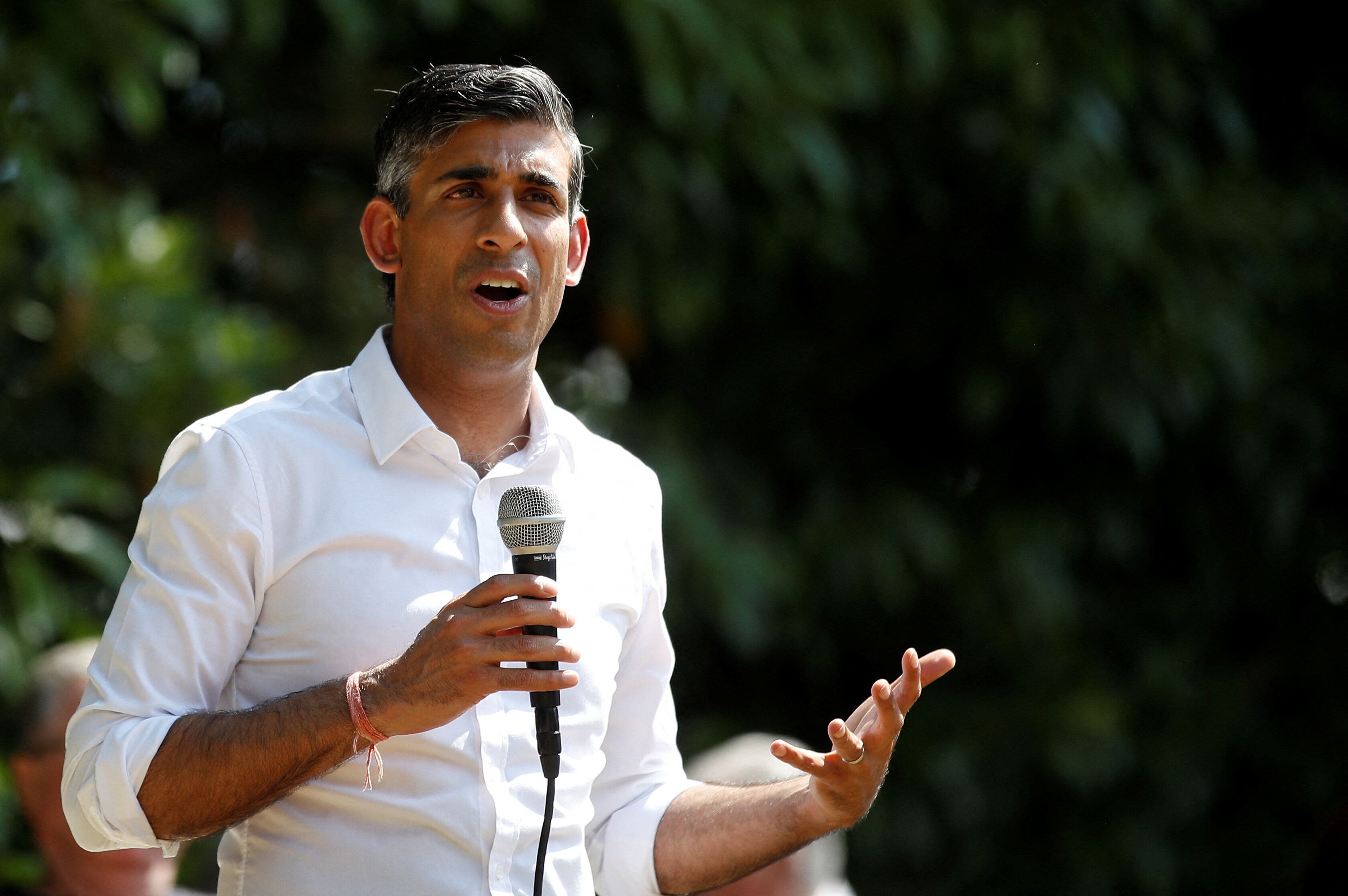
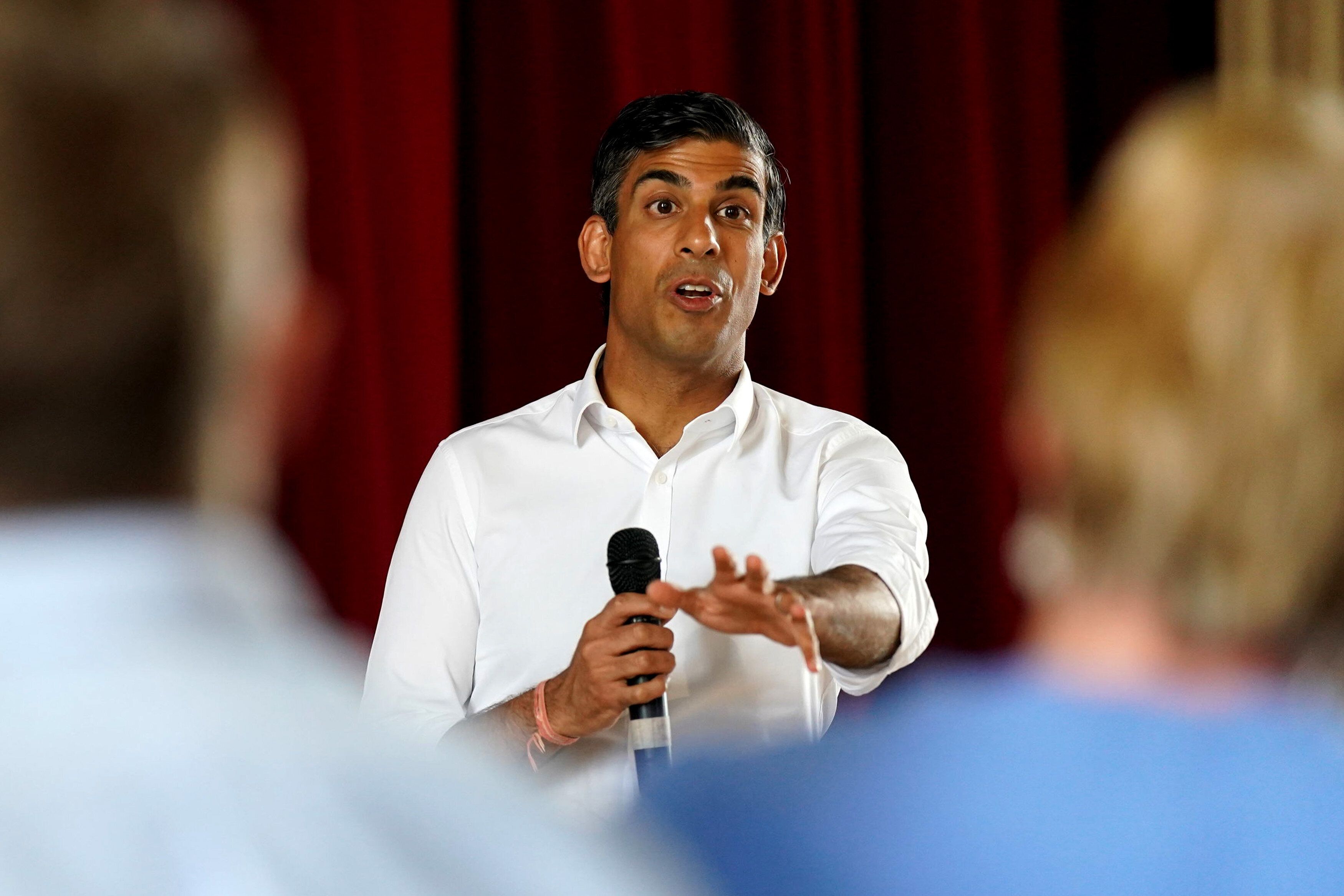
But as outriders for Liz Truss and Rishi Sunak fight like rats in a sack, where is the Labour Party?

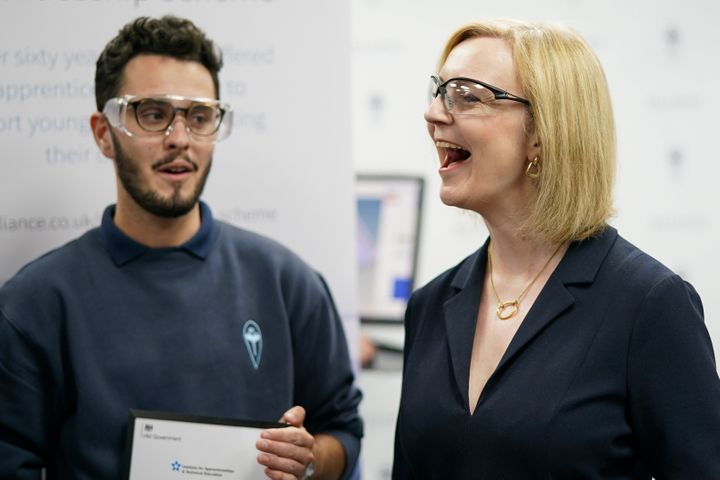
Conservative Leadership hopeful Liz Truss.

Ian Forsyth via Getty Images

Keir Starmer is said to be on holiday right now, but that shouldn’t stop the party launching fierce interventions and bright ideas.

Holidays are important but isn’t winning elections even more important? Especially given their criticism of the Tories being “missing in action”.

In this brutal game of chess, surely any ruthless political strategist would see that now was an opportune moment to strike.

Certainly, the Labour Party has been describing itself as a “government in waiting” in recent statements. Now would be a good time for frontbenchers to show they can act like one.

But we have heard more from Lib Dem leader Ed Davey and ex-Labour prime minister Gordon Brown in the last 24-hours than we have from Labour all week.

And let’s not forget money saving expert Martin Lewis who has long been at the front clobbering the government over the cost of living crisis.

Within a few weeks the next prime minister will be appointed, the narrative will shift and there will likely be a cessation in Tory infighting as MPs row in behind their new leader.

Once in power, the new PM will have the machinery of government at their disposal and will turn their sights on the electorate at large.

Labour leader Sir Keir Starmer with Shadow Culture secretary, Lucy Powell (left) and Shadow Chancellor, Rachel Reeves.

Stefan Rousseau – PA Images via Getty Images

The public might just decide that “well it’s a new government, a new crisis so maybe let’s give them one more shot”.

Heck, it’s worked before. The Conservatives are the party who have managed to reinvent themselves time and again over the last decade in order to stay in power.

Labour will have fewer opportunities to get their messages across as the country hurtles towards the next general election.

In fact, Labour keep calling for an early election. Are they even ready for it?

Of course you can’t expect Labour to make up policies on the hoof, the Tories might even nick their ideas [again] and let’s not even go there on Labour’s decision making processes.

However, after the government relied on so-called “red meat” policies to keep its head above water, the public is now begging for proper solutions.

Perhaps now is the perfect window of opportunity for Labour to show some leg, instead of descending into their own bouts of infighting (see Sam Tarry).

Scotland aside, the political pendulum will one day swing back to Labour, but the speed at which it swings depends on a number of factors.

Pundits joke about who would want to be in government at this dire time. But if you don’t want to rule, why are you in this game at all?

It might be silly season but there’s nothing funny about the news that millions of families face soaring bills and being plunged into poverty.

Labour has been suffering from a lack of confidence since its devastating 2019 defeat.

But they have been handed a political gift in the form of a Tory leadership race – they should start weaponising it now.

Share Button

Olivia Newton-John’s cancer-research legacy

The singer and actress spent years raising money to fund cancer research.

Share Button

Backlog of longest-wait patients slashed in England

Thousands waiting more than two years for scans, checks and surgery have finally been treated.

Share Button

Camhs deaths expose child mental health unit pressures

Chelsea Mooney was 17 when she died in a Camhs unit last year, following a self-harm incident.

Share Button

US doctor issues warning of many undiagnosed polio cases

The New York State medic says there could be hundreds, or even thousands, of infected people there.

Share Button

In simulation of how water freezes, artificial intelligence breaks the ice

A team based at Princeton University has accurately simulated the initial steps of ice formation by applying artificial intelligence (AI) to solving equations that govern the quantum behavior of individual atoms and molecules.

The resulting simulation describes how water molecules transition into solid ice with quantum accuracy. This level of accuracy, once thought unreachable due to the amount of computing power it would require, became possible when the researchers incorporated deep neural networks, a form of artificial intelligence, into their methods. The study was published in the journal Proceedings of the National Academy of Sciences.

“In a sense, this is like a dream come true,” said Roberto Car, Princeton’s Ralph W. *31 Dornte Professor in Chemistry, who co-pioneered the approach of simulating molecular behaviors based on the underlying quantum laws more than 35 years ago. “Our hope then was that eventually we would be able to study systems like this one, but it was not possible without further conceptual development, and that development came via a completely different field, that of artificial intelligence and data science.”

The ability to model the initial steps in freezing water, a process called ice nucleation, could improve accuracy of weather and climate modeling as well as other processing like flash-freezing food.

The new approach enables the researchers to track the activity of hundreds of thousands of atoms over time periods that are thousands of times longer, albeit still just fractions of a second, than in early studies.

Car co-invented the approach to using underlying quantum mechanical laws to predict the physical movements of atoms and molecules. Quantum mechanical laws dictate how atoms bind to each other to form molecules, and how molecules join with each other to form everyday objects.

Car and Michele Parrinello, a physicist now at the Istituto Italiano di Tecnologia in Italy, published their approach, known as “ab initio” (Latin for “from the beginning”) molecular dynamics, in a groundbreaking paper in 1985.

But quantum mechanical calculations are complex and take tremendous amounts of computing power. In the 1980’s, computers could simulate just a hundred atoms over spans of a few trillionths of a second. Subsequent advances in computing and the advent of modern supercomputers boosted the number of atoms and timespan of the simulation, but the result fell far short of the number of atoms needed to observe complex processes such as ice nucleation.

AI provided an attractive potential solution. Researchers train a neural network, named for its similarities to the workings of the human brain, to recognize a comparatively small number of selected quantum calculations. Once trained, the neural network can calculate the forces between atoms that it has never seen before with quantum mechanical accuracy. This “machine learning” approach is already in use in everyday applications such as voice recognition and self-driving automobiles.

In the case of AI applied to molecular modeling, a major contribution came in 2018 when Princeton graduate student Linfeng Zhang, working with Car and Princeton professor of mathematics Weinan E, found a way to apply deep neural networks to modeling quantum-mechanical interatomic forces. Zhang, who earned his Ph.D. in 2020 and is now a research scientist at the Beijing Institute of Big Data Research, called the approach “deep potential molecular dynamics.”

In the current paper, Car and postdoctoral researcher Pablo Piaggi along with colleagues applied these techniques to the challenge of simulating ice nucleation. Using deep potential molecular dynamics, they were able to run simulations of up to 300,000 atoms using significantly less computing power, for much longer timespans than were previously possible. They carried out the simulations on Summit, one of the world’s fastest supercomputers, located at Oak Ridge National Laboratory.

This work provides one of the best studies of ice nucleation, said Pablo Debenedetti, Princeton’s dean for research and the Class of 1950 Professor of Engineering and Applied Science, and a co-author of the new study.

“Ice nucleation is one of the major unknown quantities in weather prediction models,” Debenedetti said. “This is a quite significant step forward because we see very good agreement with experiments. We’ve been able to simulate very large systems, which was previously unthinkable for quantum calculations.”

Currently, climate models obtain estimates of how fast ice nucleates primarily from observations made in laboratory experiments, but these correlations are descriptive, not predictive, and are valid over a limited range of experimental conditions. In contrast, molecular simulations of the type done in this study can produce simulations that are predictive of future situations, and can estimate ice formation under extreme conditions of temperature and pressure, such as on other planets.

“The deep potential methodology used in our study will help realize the promise of ab initio molecular dynamics to produce valuable predictions of complex phenomena, such as chemical reactions and the design of new materials,” said Athanassios Panagiotopoulos, the Susan Dod Brown Professor of Chemical and Biological Engineering and a co-author of the study.

“The fact that we are studying very complex phenomena from the fundamental laws of nature, to me that is very exciting,” said Piaggi, the study’s first author and a postdoctoral research associate in chemistry at Princeton. Piaggi earned his Ph.D. working with Parrinello on the development of new techniques to study rare events, such as nucleation, using computer simulation. Rare events take place over timescales that are longer than the simulation times that can be afforded, even with the help of AI, and specialized techniques are needed to accelerate them.

Jack Weis, a graduate student in chemical and biological engineering, helped increase the likelihood of observing nucleation by “seeding” tiny ice crystals into the simulation. “The goal of seeding is to increase the likelihood that water will form ice crystals during the simulation, allowing us to measure the nucleation rate,” said Weis, who is advised by Debenedetti and Panagiotopoulos.

Water molecules consist of two hydrogen atoms and an oxygen atom. The electrons around each atom determine how atoms can bond with each other to form molecules.

“We start with the equation that describes how electrons behave,” Piaggi said. “Electrons determine how atoms interact, how they form chemical bonds, and virtually the whole of chemistry.”

The atoms can exist in literally millions of different arrangements, said Car, who is director of the Chemistry in Solution and at Interfaces center, funded by the U.S. Department of Energy Office of Science and including regional universities.

“The magic is that because of some physical principles, the machine is able to extrapolate what happens in a relatively small number of configurations of a small collection of atoms to the countless arrangements of a much bigger system,” Car said.

Although AI approaches have been available for some years, researchers have been cautious about applying them to calculations of physical systems, Piaggi said. “When machine learning algorithms started to become popular, a big part of the scientific community was skeptical, because these algorithms are a black box. Machine learning algorithms don’t know anything about the physics, so why would we use them?”

In the last couple of years, however, there has been a significant change in this attitude, Piaggi said, not only because the algorithms work but also because researchers are using their knowledge of physics to inform the machine learning models.

For Car, it is satisfying to see the work started three decades ago come to fruition. “The development came via something that was developed in a different field, that of data science and applied mathematics,” Car said. “Having this kind of cross interaction between different fields is very important.”

This work was supported by the U.S. Department of Energy (grant DE-731 SC0019394) and used resources of the Oak Ridge Leadership Computing Facility (grant DE-AC05-00OR22725) at the Oak Ridge National Laboratory. Simulations were substantially performed using the Princeton Research Computing resources at Princeton University. Pablo Piaggi was supported by an Early Postdoc.Mobility fellowship from the Swiss National Science Foundation.

Share Button

Seven-month-old babies already have a sense of symmetry

The UPV/EHU’s Gogo Elebiduna research group is a pioneer in the field of psycholinguistics; it conducts research of various kinds to obtain knowledge about how the language faculty is acquired, represented and organised in the brains of speakers, and about the nature of the universal characteristics of language representation and processing.

The group’s Ikerbasque research fellow Irene de la Cruz-Pavía conducted a study in collaboration with the University of Padua researcher Judit Gervain and which was recently published in the journal PLOS ONE; it explores the ability of 7-month-old infants to perceive structural symmetry in abstract, mosaic-like visual patterns. This research was carried out at the University of Paris. “We examined the spontaneous looking patterns of almost 100 infants when presented with mosaic-like sequences displaying symmetrical and asymmetrical structures,” the researchers explained.

These mosaics comprised two categories of square tiles (A and B) that differed in terms of their colour scheme and internal shape. These tiles were arranged to create mosaics with symmetrical (e.g. ABA, ABABA) or asymmetrical (e.g. AAB, AABBA) structures. The study found that the infants “discriminated between structurally symmetrical and asymmetrical mosaics, and that the length of the sequence (3 or 5 tiles) or the level of symmetry did not significantly modulate their behaviour.” These results suggest that infants quickly detect structural symmetry in complex visual patterns: “Babies as young as 7 months have a robust, automatic ability to detect that a structure is symmetrical. This ability coincides with those found in studies we conducted using other stimuli, such as sign language or speech, demonstrating that babies are simply very good at detecting structures and regularities,” said the researcher in the UPV/EHU’s Department of Linguistics and Basque Studies.

Ability of babies to extract structure and rules from various media

As the Ikerbasque research fellow pointed out, “the grammar of a language consists of the set of structures and rules of a language. I want to understand to what extent infants’ abilities to extract structures, detect regularities and learn rules are specific to language or whether they are found in other areas.” “We conducted this study using information that is visual but which is not language. With these mosaics, we were able to see how babies were capable of extracting structure from different media.”

The researchers stress that this study allows them to better understand “these infants’ fundamental skills, which will enable them to start initially with some of the more accessible parts of grammar and gradually build up to something as complex as the grammar of a language. What we want to understand is this: what are the fundamental abilities of babies when it comes to detecting structure?”

“We have many more questions to answer,” they concluded. “In this study we were able to determine that babies are able to detect structures spontaneously and quickly. Now we want to understand when this ability begins, and the degree of detail with which they analyse that structure and what aspects of the mosaics allow them to detect its structure (the shape, the colour, both…).”

Additional information

This study was carried out in collaboration with the Integrative Neuroscience and Cognition Center (CNRS, University of Paris, France), the University of Vienna (Austria) and the University of Padua (Italy).

Story Source:

Materials provided by University of the Basque Country. Note: Content may be edited for style and length.

Share Button

Rotting fish help solve mystery of how soft tissue fossils form

New research at the University of Leicester has transformed scientists’ understanding of how spectacular fossils with delicate soft tissues form.

While most fossils are ‘hard’ tissues, such as bone, shells or teeth, some rare sites around the world had unique conditions which allowed minerals to fossilise soft parts such skin, muscles and other organs — even the fragile eyeballs of some ancient creatures.

But one aspect of this rare preservation that has troubled scientists is why some internal organs seem to fossilise more commonly that others.

Researchers in Leicester’s Centre for Palaeobiology developed an experiment to study the chemistry inside a decaying fish and map the pH levels of its internal organs over the course of the carcass decaying for two-and-a-half months.

Their findings, published today (Monday) in Palaeontology, show that each organ’s specific tissue chemistry governs its likelihood to be replaced by minerals.

This result explains why some tissues are more easily turned into the calcium phosphate fossils which capture high-resolution detail of a creature’s most fragile material, while other organs are seemingly lost to time.

Dr Thomas Clements, now of the University of Birmingham, led the study during his time as a PhD researcher at Leicester. He said:

“One of the best ways that soft tissue can turn into rock is when they are replaced by a mineral called calcium phosphate (sometimes called apatite). Scientists have been studying calcium phosphate for decades trying to understand how this process happens — but one question we just don’t understand is why some internal organs seem more likely to be preserved than others.

“We designed an experiment observing rotting fish which was disgusting and smelly, but we made an interesting discovery.

“The organs don’t generate special microenvironments — they all rot in a kind of ‘soup’ together. This means that it is the specific tissue chemistry of the organs that governs their likelihood to turn into fossils.”

In order for a tissue to phosphatize, its pH must fall below about pH 6.4. At this acidity, if the fossil is buried quickly, calcium phosphate and other minerals can begin the fossilisation process which preserves the exquisite detail of some soft tissues.

One of the finest examples of such fossils includes a Cretaceous-era octopus of the extinct genus Keuppia unearthed in Lebanon, estimated to be at least 94 million years old.

Sarah Gabbott is a Professor of Palaeobiology and co-author of the paper. Professor Gabbott added:

“Watching and recording (and smelling) how a fish rots may not be most people’s idea of science, but for palaeontologists understanding the process of decay is crucial to revealing which anatomical features of an animal are likely to become a fossil, and what they will look like.

“We were really pleased with the results because we can now explain, for example, why fossils often preserve an animal’s gut but never preserve their liver.”

Story Source:

Materials provided by University of Leicester. Note: Content may be edited for style and length.

Share Button

Rishi Sunak Promises To Keep ‘Brexit Safe’ In Mysterious New Promo Video

Rishi Sunak’s latest PR efforts have once again been ripped apart, this time because he has promised to “keep Brexit safe”.

The Tory leadership hopeful is currently behind Liz Truss in the polls among Conservative Party members.

He has therefore felt the need to bolster his pro-Brexit credentials – despite being a Brexiteer and his opponent originally campaigning for Remain.

On Monday, he released a new campaign video – significantly less slick than his previous PR work – which follows a person around as they dump huge stacks of paper into one small room with a paper sign on the door saying: “Brexit Delivery Department.”

The papers are labelled “EU red tape”, and for half of the one-minute video, the person moving the documents around can be seen gathering all of the documents together (although their face is never shown).

Then, they crack their fingers and start shredding the papers.

It is part of Sunak’s promise to build a new Brexit delivery unit which “in his first 100 days as prime minister” would see him review or repeal post-Brexit EU laws. There are 2,400 at the moment.

It is worth noting that there is already a Brexit opportunities and government efficiency department, headed up by Jacob Rees-Mogg.

The words “Keep Brexit safe, vote Rishi Sunak today” appear across the screen in the last 10 seconds, as triumphant orchestral music plays.

It is an especially bold claim as Brexit has been under more criticism than ever in recent months due to delays at the Dover port for passengers going to France, problems with the Northern Ireland protocol and questions over exactly what Brexit advantages the UK is able to enjoy right now.

The video also comes two and a half years after Boris Johnson, the outgoing Tory prime minister, promised that he “got Brexit done” by securing a deal with the EU.

With the cost of living crisis worsening, a second summer heatwave around the corner and increasingly worrying reports emerging about the state of the NHS, Sunak’s new video was not an instant success.

Here’s how people responded to his efforts:

Share Button