Here Are All The Strikes That Are Happening Across The UK In March

Another month, another set of public sector strikes.

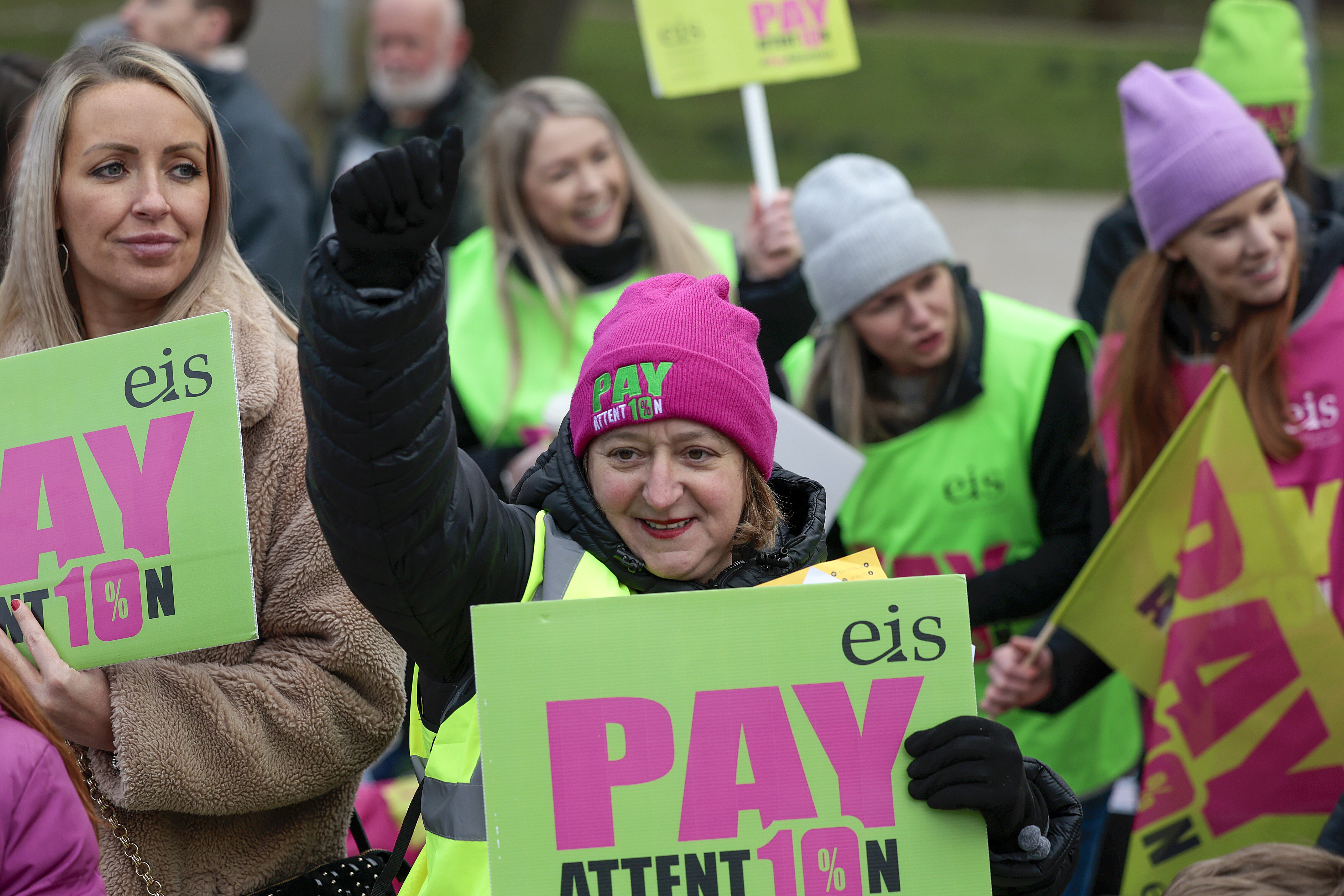
This week, tens of thousands of teachers across England and Wales will walk out over three days in the long-running dispute with the government over pay and working conditions.

The strike action kicks off today as teachers across the north of England walk out, meaning the majority of schools will either close or offer restricted access to pupils.

It will be followed by further industrial action by teachers in the Midlands and eastern regions in Wednesday and in Wales and the south of England on Thursday.

On March 15, teachers across England and Wales will strike again.

Education Secretary Gillian Keegan has branded the strike action “unforgivable”, arguing that children deserved to be in class following the shock of the coronavirus pandemic.

But Kevin Courtney, the joint general secretary of the National Education Union (NEU), which is representing striking teachers, said staff taking industrial action for a “high moral purpose” and to “get the government to invest in this generation of children”.

But over the month ahead, it is not just teachers who are walking out over pay.

HuffPost UK takes you through all the strikes that will hit the public in March.

Health and ambulance workers (most of England)

The GMB union said 10,000 of its members, including paramedics, emergency care assistants, call handlers and other staff, will walk out on March 6.

Unite members employed by different ambulance trusts will be striking on the same day in the West Midlands, the North East, the East Midlands, the North West and Wales.

Meanwhile, around 32,000 ambulance and other health staff represented by Unison will walk out across England on March 8 after the union accused the government of failing to hold “proper talks” to resolve the row.

Nurses, blood collection workers, healthcare assistants, cleaners, porters and ambulance staff will be involved in the strike.

Health workers at NHS Blood and Transplant, Great Ormond Street Hospital, the Tavistock and Portman NHS Foundation Trust, Liverpool Women’s Hospital and the Bridgewater Community Trust will be among those walking out for the first time.

They will be joined by ambulance staff at four services in England – South Central, East of England, West Midlands and East Midlands, also now able to take action following a strike vote last week.

GMB and Unite ambulance workers will strike again on March 20.

Junior doctors (England)

Junior doctors recently announced that they will strike for 72 hours from March 13 to March 15 over pay.

The British Medical Association (BMA) said that junior doctors had seen a real terms pay decline of more than 26% over the past 15 years.

Dentists who work in hospitals employed under the junior contract will also join the 72-hour walkout.

Civil Servants (England)

Approximately 100,000 civil servants across 123 government departments and agencies are expected to strike on March 15 — the day of Jeremy Hunt’s Budget.

More than 1,600 members of the Public and Commercial Services union (PCS) employed by the Driver and Vehicle Standards Agency are also set to take rolling days of industrial action from March 6 to 28.

Rail workers (England, Wales and Scotland)

RMT members will strike across the railways on March 16, 18, 30.

London Underground drivers

Commuters will endure chaos on Budget day, March 15, when London Underground drivers at Aslef go on strike.

University lecturers (UK)

Strikes by lecturers will hit 150 UK universities throughout March after the University and College Unions demanded “substantially improved offers” in the disputes over pay, working conditions and pension cuts.

In total, 70,000 UCU members will walk out on March 16, 17, 20, 21 and 22.
Share Button

What Will Be In Rishi Sunak’s Brexit Deal And Will MPs Back It?

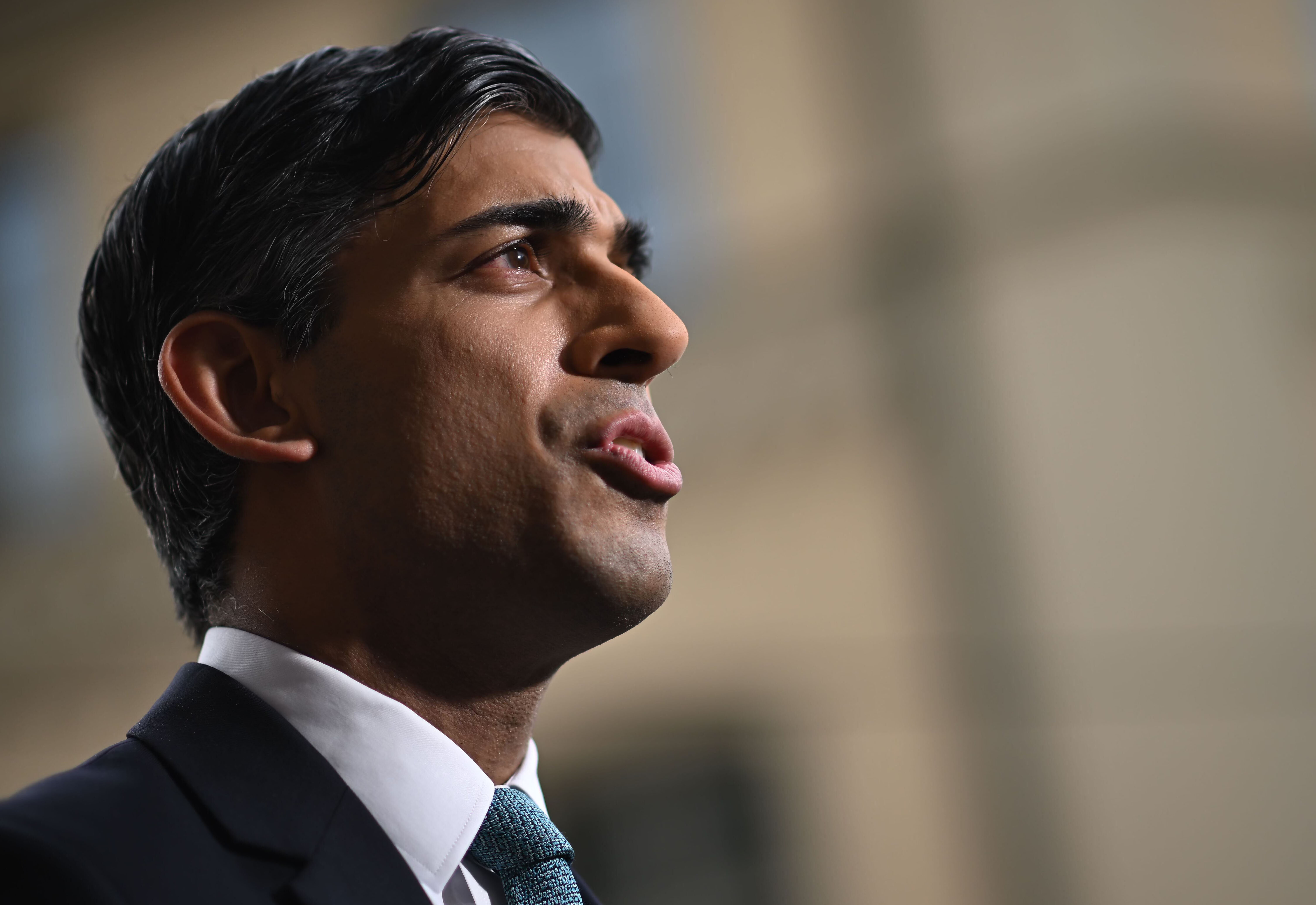
After months of impasse over the Northern Ireland protocol, Rishi Sunak is finally preparing to present a new deal to parliament that could be the defining moment of his premiership.

The prime minister holding talks with European Commission president Ursula von der Leyen to put the final touches to the new arrangements.

While it is not yet known what is in the deal, there are a number of key issues that Sunak has sought to address — including ticking his “three boxes” of sovereignty for Northern Ireland, safeguarding its place in the Union and easing disruption for people and businesses.

However, while Sunak and the EU may now be on the same page, it is not guaranteed that everyone in the Tory Party, and the Democratic Unionist Party, will be on board.

Here HuffPost UK takes you through what could be in Sunak’s deal and what the key sticking points are.

The protocol is a trading arrangement, negotiated during Brexit talks, that allows goods to be transported across the border between Northern Ireland and Ireland without the need for customs checks.

The deal was aimed at protecting the delicate Good Friday Agreement by avoiding putting up a hard border between NI and the Republic.

However, unionist parties argue that the protocol instead places an effective border in the Irish Sea, undermining Northern Ireland’s place within the UK.

Goods moving from GB to NI currently have to undergo vigorous checks because they may end up in the Republic of Ireland, which remains in the EU’s single market. That has created friction and disruption for businesses which the UK and EU both want to solve.

The protocol is so disliked by the DUP, Northern Ireland’s largest unionist party, that it has refused to take part in the power-sharing government with Sinn Fein at Stormont unless its concerns are resolved.

What are the main the problems with the protocol?

Unionists are concerned about the disruption to trade that has resulted from checks at Northern Ireland’s ports, as well as the fact that the country is being treated differently from the rest of the UK — something they regard as unacceptable.

Alongside that, unionists do not like that Northern Ireland has to follow some EU rules, without having a say on how those rules work. They call this the “democratic deficit”.

A particular gripe for Brexiteers and unionists is the role that the European Court of Justice (ECJ) plays in solving potential disputes in Northern Ireland.

While the protocol has created an economic advantage for Northern Ireland in that it can sell both within the UK internal market and into the EU single market, because it has to follow some EU laws, it also falls under the jurisdiction of the ECJ.

Put simply, the DUP want the ECJ’s influence in Northern Ireland removed entirely.

What changes could there be?

Sunak is understood to have negotiated a new arrangement to avoid customs checks on the vast majority of goods travelling between Britain and Northern Ireland.

The new deal is expected to see the creation of “green” and “red” lanes.

Goods that are only destined for Northern Ireland will enter ports via the green lane and be subject to minimal checks. Those that are due to end up in the Republic of Ireland will go through the red lane and will have to undergo full EU checks.

While Brexiteers and unionists want Northern Ireland to be free from the ECJ, for the EU its role is a red line — if the region is to enjoy the perks of being in the single market then it must abide by the rules like other EU member states.

The compromise that could be achieved is a reduced and minimal role for the ECJ.

Deputy prime minister Dominic Raab said the reduction in trade red tape would lead to a “substantial scaling back” of the role of the ECJ — but he did refuse to rule out the court having a say on future legal cases, which could prove unpalatable to the DUP.

According to the Times, the deal could ensure that Brussels would have to notify Britain if it intends to apply any future regulations to Northern Ireland, which it could raise objections to.

The Speaker of the Northern Ireland Assembly may also be able to delay any potential regulation by having the power to put it to a vote.

The newspaper reports that if there are any disputes over the application of EU law in Northern Ireland, the region’s courts would consider it first and then decide whether to refer the issue to the ECJ.

Will MPs back the deal?

The groups that Sunak needs to woo the hardest include the Brexiteers in the European Research Group (ERG) and the DUP — who want the complete eradication of EU law from Northern Ireland.

ERG chairman Mark Francois yesterday warned that the agreement must mean an end to EU laws being imposed on Northern Ireland and that there simply being “less of a role” for the ECJ was “not good enough”.

The Conservative former minister told Sky News’ Sophy Ridge: “What we want is a situation where EU law is expunged from Northern Ireland, so it is treated on the same basis as England, Scotland and Wales.”

Asked whether he would therefore not back any deal if the ECJ has any role in it, he said: “We have left the European Union. It doesn’t have that role now in England or in Scotland or in Wales.

“So, if we’re going to treat Northern Ireland as an integral part of the United Kingdom, then we have to get rid of the EU law in Northern Ireland. We’ve been absolutely consistent on this.”

The DUP has issued seven tests Sunak must meet if it is to back the deal, including that the people of Northern Ireland are given a say on the laws that affect them, that there are no checks moving between GB and NI and vice versa, and that there must be no border in the Irish Sea.

The DUP has also made it clear that it wants to see the text of the new legal framework — something the prime minister has not yet agreed to.

While Sunak promised that parliament would be allowed to “express its view” on the deal, it is not yet clear whether that will translate into a parliamentary vote.

However, if there is one, Sunak will want to avoid the scenes we saw under Theresa May — where there was deadlock in the Commons Chamber.

Opinion is divided over how important the DUP’s approval is — former Cabinet minister Jacob Rees-Mogg said the scale of any potential revolt against Sunak would “depend on the DUP”.

“If the DUP are against it, I think there will be quite a significant number of Conservatives who are unhappy,” he told GB News.

However, while Sunak will hope to the get the ERG and DUP on board, because Labour has said it will vote with the government in favour of the deal, he may be able to do it without them.

Share Button

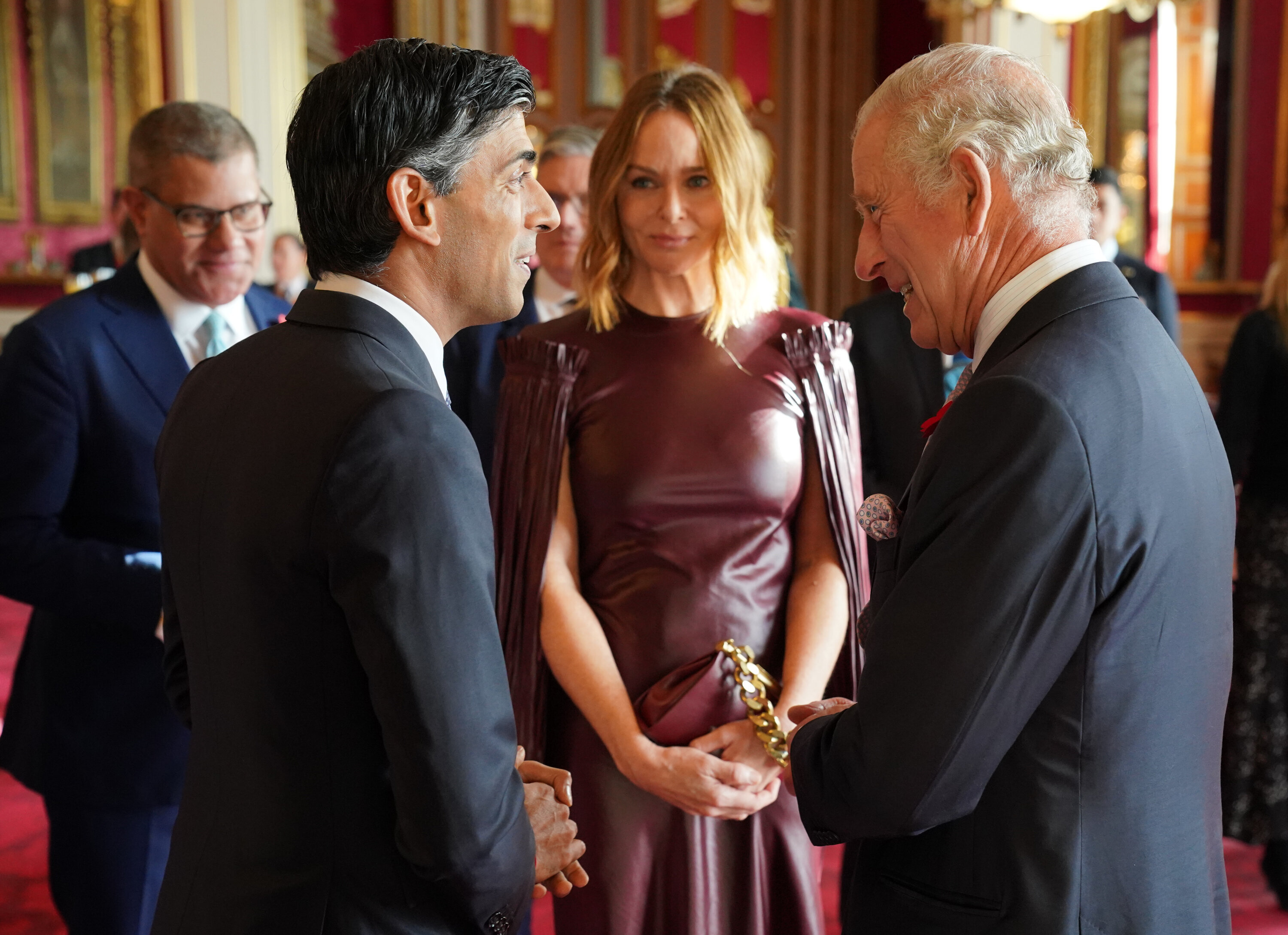
Rishi Sunak Sparks Anger By ‘Advising’ King Charles To Meet Ursula Von Der Leyen

A furious political row has erupted after Rishi Sunak urged King Charles to meet the president of the European Commission in the middle of crunch Brexit talks.

Buckingham Palace confirmed this morning that the monarch will have an audience with Ursula von der Leyen in Windsor.

The EU chief will be in the Berkshire town for negotiations with the prime minister to put the finishing touches to a new deal on the Northern Ireland Protocol.

In a statement, the palace said: “The king is pleased to meet any world leader if they are visiting Britain and it is the government’s advice that he should do so.”

But the PM’s official spokesperson insisted: “Fundamentally it is a decision for the palace.”

The spokesperson also pointed out that the king had met with other world leaders who have visited the UK recently, including Ukrainian president Volodymyr Zelenskyy.

He added: “His view is that it is a matter for the palace to decide and ultimately for the kind to decide if he wants to meet individuals.”

However, former DUP leader Arlene Foster said it was “tone deaf” for for the government to advise the king to meet von der Leyen at such a politically sensitive moment.

Reports first emerged over the weekend that the king and European Commission president could meet up.

At the time, Tory MP Jacob Rees-Mogg said: “If there were a plan to bring the King in before there is domestic political agreement, it would border on constitutional impropriety.”

Shadow Northern Ireland secretary Peter Kyle said: “I do not know how a thought of involving the king could pass somebody’s mind and reach it to their mouth before they realise that this is a very very unwise policy to choose because it has constitutional implications.”

The row comes as Sunak prepares to finally unveil the agreement he has reached with the EU on trade between Britain and Northern Ireland.

He and von der Leyen will hold a press conference this afternoon, before the PM makes a statement to MPs in the House of Commons.

However, it could potentially spark a major Tory split if the DUP say they cannot support the deal.

Share Button

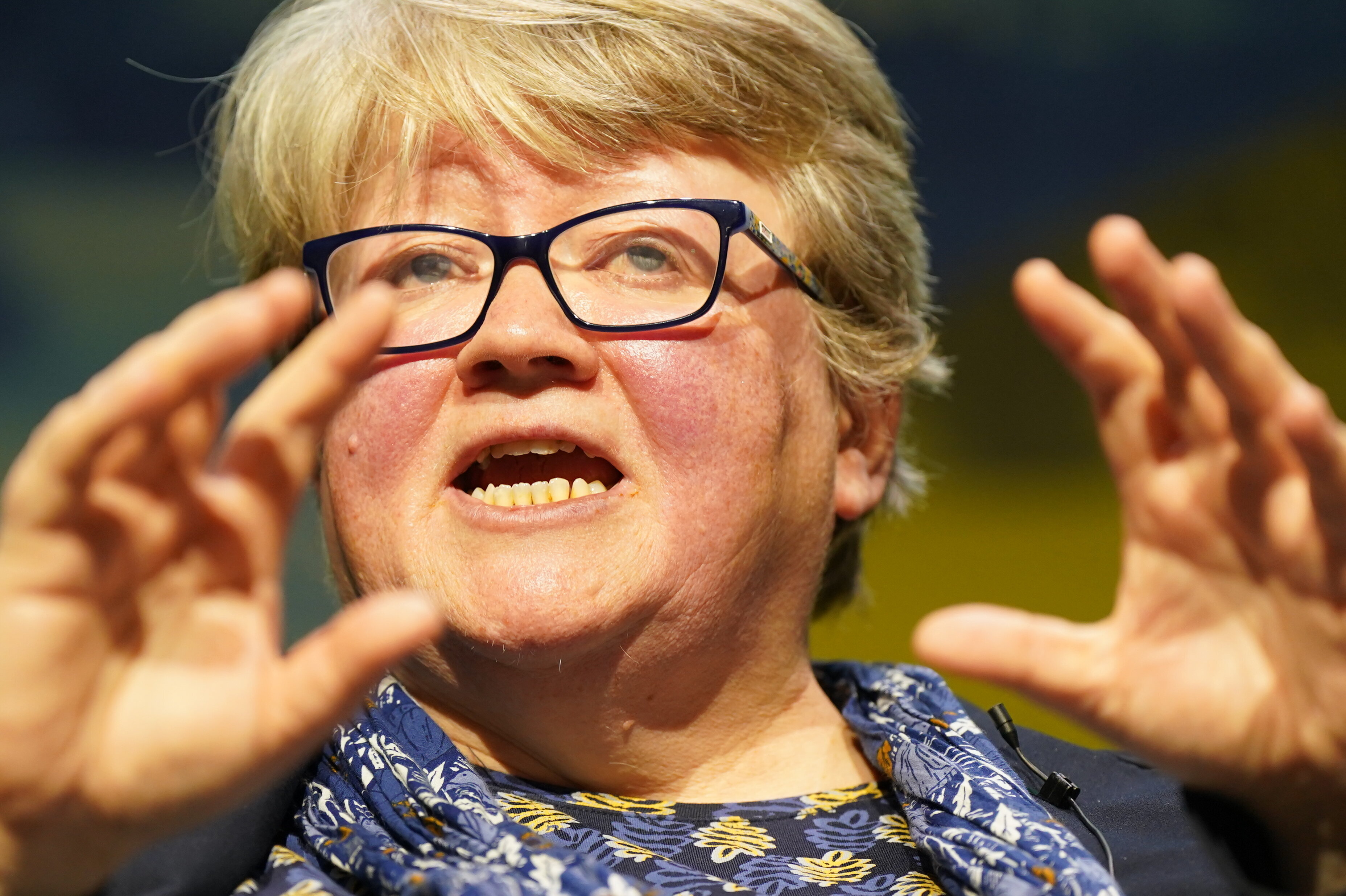
Eat Turnips Amid Tomato Shortage, Environment Secretary Therese Coffey Says

Therese Coffey made the comments when she was questioned by MPs in parliament on Thursday about food shortages.

Tory MP Selaine Saxby had suggested seasonal eating would solve the issue, saying: “The supermarkets are still importing far too many products for us and… actually we should be eating more seasonally and supporting our own British farmers.

“And if we were actually to move to a seasonal line of eating, many of these problems would be avoided… there are great food products available from local farmers at this time.”

Why Is There A Shortage Of Tomatoes And Other Fruit And Veg?

The UK government says it is mainly down to bad weather in Europe and Africa.

High electricity prices are also having an impact on food grown in greenhouses in the UK and the Netherlands.

Tesco, Aldi, Asda and Morrisons have all announced they are rationing salad ingredients for a few weeks.

Coffey replied: “It’s important to make sure that we cherish the specialisms that we have in this country.

“A lot of people would be eating turnips right now rather than thinking necessarily about aspects of lettuce and tomatoes and similar, but I’m conscious that consumers want a year-round choice and that is what our supermarkets, food producers and growers around the world try to satisfy.”

During the exchange, Coffey said the shortages would be a temporary issue that should be resolved in two to four weeks.

A shortage of tomatoes in UK supermarkets has widened to other fruit and vegetables due to a combination of bad weather and transport problems in Africa and Europe.

Some supermarkets have introduced customer limits on certain fresh produce, with photographs emerging of empty shelves.

Lib Dem Wera Hobhouse said Rishi Sunak should call an emergency Cobra meeting to respond to the “national emergency”.

Share Button

Labour Increases Poll Lead Over The Tories To 28 Points

The Labour Party is a whopping 28 points ahead of the Conservatives, according to a fresh poll.

A YouGov voting intention survey shows the Tories on just 22% of the vote – down two points from their previous survey on 8-9 February.

The pollster found Labour on 50% of the vote – an increase of three points from their last poll.

Elsewhere, the Lib Dems have 9% of the vote (-1), while the Greens have 6% (no change) and Reform UK have 7% of the vote (+1).

While polls should always be treated with caution, Labour supporters celebrated the latest figures.

Critics pointed out that the survey contained many in the 24 to 49-year-old age bracket.

However, it follows two other polls published in the last 48-hours that have put Labour well ahead of the Tories.

A Deltapoll survey found Labour on a 22 point lead while a Redfield & Wilton poll put them on a 27 point lead.

According to the YouGov poll, Keir Starmer’s lead over Rishi Sunak has also increased to 13 points.

Participants were asked which party leader would make the best prime minister. Starmer is on 34% of the vote (+1) while Sunak is on 21% (-4).

Share Button

Rishi Sunak Condemns Decision To Rewrite Roald Dahl Books For Modern Readers

Rishi Sunak has condemned the decision to re-write Roald Dahl’s books to appeal to modern-day readers.

The prime minister’s spokesman quoted much-loved Dahl character the BFG by insisting people should not “gobblefunk around with words”.

The intervention followed reports the latest editions Dahl’s children’s books have been edited to remove language which could be deemed offensive.

Sunak’s spokesperson said on Monday: “It’s important that works of literature and fiction are preserved and not airbrushed.

“When it comes to our rich and varied literary heritage, the prime minister agrees with the BFG, you shouldn’t gobblefunk around with words.”

Gobblefunk is the language Dahl created, used in his books including The BFG.

According to the Daily Telegraph teferences within the classic children’s books relating to weight, mental health, violence, gender and race have been cut and rewritten.

Edits reportedly include removing the word “fat” from every book, Augustus Gloop in Charlie And The Chocolate Factory is now described as “enormous” and The Cloud-Men in James And The Giant Peach have become Cloud-People.

The Roald Dahl Story Company confirmed it began a review into the books alongside publishers Puffin in 2020, and that any changes made were “small and carefully considered”.

A spokesperson for the Roald Dahl Story Company said: “We want to ensure that Roald Dahl’s wonderful stories and characters continue to be enjoyed by all children today.

“When publishing new print runs of books written years ago, it’s not unusual to review the language used alongside updating other details including a book’s cover and page layout.

“Our guiding principle throughout has been to maintain the storylines, characters, and the irreverence and sharp-edged spirit of the original text. Any changes made have been small and carefully considered.”

The company added that it had worked alongside Inclusive Minds, a collective for people working towards inclusion and accessibility in children’s literature.

Philip Pullman, the author of his Dark Materials, told BBC Radio 4′s Today programme, Dahl’s books should be let to “go out of print” rather than edited.

Share Button

Rishi Sunak Rejects Call From Deputy Tory Chairman For Return Of Death Penalty

Rishi Sunak has rejected calls for the return of the death penalty made by the new deputy chairman of the Conservative Party.

Lee Anderson said he backed the death penalty because “nobody has ever committed a crime after being executed”.

He told The Spectator magazine that capital punishment has a “100% success rate” when it came to stopping repeat offenders.

But speaking to reporters during a visit to Cornwall on Thursday, the prime minister said that was “not my view” and “not the government’s view”.

Sunak added: “But we are united in the Conservative Party in wanting to be absolutely relentless in bearing down on crime and making sure people are safe and feel safe.”

The prime minister said his government had “tightened up sentencing laws for the most violent criminals” and “they spend longer in prison”.

The death penalty for murder in the UK was outlawed permanently in 1969, with it totally abolished for all crimes in 1998.

Anderson was the most eye-catching appointment made as part of Sunak’s mini-reshuffle on Monday.

A former Labour councillor before converting to the Tories, he has been no stranger to controversy since being elected as MP for Ashfield in 2019.

He has criticised food bank users and also the England men’s football team for taking the knee in protest at racism.

Earlier, children’s minister Claire Coutinho said that while she was a “big fan” of Anderson, she didn’t back the return of capital punishment.

Share Button

Rishi Sunak Orders Dramatic Whitehall Shake-Up In Bid To Reboot His Leadership

Rishi Sunak has created a new energy department as part of a dramatic shakeup of government departments, in an attempt to reset his premiership after 100 days in office.

They cabinet reshuffle on Tuesday has seen Greg Hands appointed chairman of the Conservative Party, replacing Nadhim Zahawi who was sacked over his tax affairs.

Under the new structure, the department for business, energy & industrial strategy (BEIS) has been broken up into three.

Grant Shapps has moved sideways to lead a new energy security and net zero department. Its creation fulfils a pledge Sunak made during the summer Tory leadership contest.

There is a new department of science, innovation and technology to be led by Michelle Donelan.

Kemi Badenoch has been appointed business secretary, after the remaining parts of BEIS were merged with the department for international trade, creating the business and trade department (BaT).

Lucy Frazer has been promoted from housing minister to replace Donelan as culture secretary.

The government said the new departments would “ensure the right skills and teams are focused on the prime minister’s five promises”.

Sunak has chosen to keep Dominic Raab in post, despite the deputy prime minister being subject to an investigation in to multiple claims of bullying, which he denies.

Share Button

Grant Shapps Says Liz Truss’s Economic Approach ‘Clearly Wasn’t Right’

Business secretary Grant Shapps has said Liz Truss’s approach to tackling low economic growth “clearly wasn’t” the right one.

Shapps said that while he agreed with the former prime minister that the UK should have a lower-tax economy, that could not happen without “laying out the groundwork” first by tackling inflation and controlling debt.

The Cabinet minister, who served as Truss’s home secretary for just six days, was speaking in response to a 4,000-word article penned by Truss in the Telegraph on Saturday.

In the article, Truss claimed she was not given a “realistic chance” to enact her policies to cut taxes and boost growth, which she argued were correct.

Truss’s 49 days in office ended following the market turmoil caused by her chancellor Kwasi Kwarteng’s mini-budget, which unveiled £45 billion-worth of unfunded tax cuts.

It caused the value of the pound to plunge, interest rates to soar and led to the Bank of England having to bail out the UK’s pensions industry.

Truss said that while she was not “blameless” about the market turmoil that ensued, she was nevertheless held back by a “very powerful economic establishment” and a “lack of political support”.

Taking aim at her own party, she said she had “underestimated the resistance… to move to a lower-tax, less-regulated economy”.

Her intervention — her first since standing down in October — has reignited a debate in the Conservative Party about how it grapples with high taxes and sluggish economic growth.

A recent bleak forecast from the International Monetary Fund (IMF) stated that the UK economy will perform worse than every other major country in 2023 — including sanctions-hit Russia.

Asked whether he thought Truss’s approach to the economy was right, Shapps replied: “Clearly it wasn’t.”

Shapps also defended the Conservative Party from Truss’s criticisms, saying: “No-one wants to pay higher levels of taxes but I think you have to set this in an international context.

“Every Western government has been hit by Putin’s illegal invasion of Ukraine and experienced through-the-roof energy costs, and has then experienced high levels of inflation.

“People might mistakenly think this is something happening in Britain and Britain alone. In fact if you look at the international comparisons, it is happening around the world. Every government is struggling with this.”

Truss has kept a low profile ever since she was ousted from the top job after just 49 days in office —until now.

Her intervention represents another headache for Rishi Sunak, who is already battling with the resurgence of Boris Johnson.

The former prime minister has also put pressure on Sunak over the economy, calling on him to cut taxes before the next election.

The prime minister has repeatedly said that inflation must be brought under control but the government can contemplate slashing taxes.

Johnson also criticised Sunak’s decision not to send British fighter jets to Ukraine following a plea from Kyiv to Western allies.

Downing Street has said it would not be “practical” to send jets to Ukraine. The UK has, however, sent 14 Challenger 2 tanks to assist with the war effort against Russia.

Share Button

Just 7% Of Voters Believe That Rishi Sunak Can Tackle Tory Sleaze

Just 7% of voters have confidence that Rishi Sunak will tackle sleaze in British politics.

The shock findings follow the sacking of Nadhim Zahawi as Tory chairman after he was found guilty of multiple breaches of the ministerial code over a probe into his tax affairs.

Sunak is also coming under mounting pressure to sack his deputy, Dominic Raab, over bullying claims made against him by dozens of civil servants.

The poll by People Polling for GB News, also shows little public appetite for Boris Johnson to return to government.

And it confirms that the Conservatives continue to trail more than 20 points behind Labour.

Those taking part in the poll were asked how confident they were that Sunak – who marks 100 days as PM today – could eradicate sleaze from British politics.

Only 1% said they were “completely confident”, with a further 6% saying they were “confident”.

By contrast, 55% said they were “not confident at all”.

Sunak’s ratings were barely any better among Conservative voters, with just 3% of them “completely confident” in his ability to tackle sleaze. Meanwhile, 82% of Labour voters said they were “not confident at all”.

At prime minister’s questions yesterday, Keir Starmer said: “The Tory Party’s addiction to sleaze and scandal has done huge damage to this country and the cost to the public keeps adding up.”

Politics expert Professor Matt Goodwin said: “Amid the fallout from Nadhim Zahawi’s resignation and ongoing stories about sleaze and bad behaviour around the Conservative Party, we find that very few voters are confident Rishi Sunak can clean up politics and remove sleaze.

“On the contrary, more than half the electorate say they are ‘not confident at all’ he will be able to take care of sleaze.”

Amid calls for Boris Johnson to replace Zahawi as Tory chairman, the poll found that 56% of voters either “strongly opposed” or “opposed” his return to cabinet, with only 21% supporting it.

Even among Tory voters, just 47% said they support him returning, with 30% opposing it.

Overall, the poll puts Labour on 46%, with the Conservatives on 22% and the Lib Dems on 9%.

Professor Goodwin said: “The Conservative Party’s share of the national vote remains as flat as a pancake, at a historic low level of support.

“There is little evidence Rishi Sunak, whose own ratings were also down last week, is turning the boat around. The party is still headed for a heavy wipeout at the general election unless things change and, before then, a bruising set of local elections in the spring.”

Share Button