Bryant told LBC Radio: “I remember when I came in, in 2001, I was regularly touched up by older, senior gay – well, they weren’t out but – MPs.
“I never felt I was able to report it because you end up being part of the story, and that’s the last thing you want.
Advertisement
“And I think a lot of women have been through that.”
Bryant said he could think of four MPs but he did not name them, adding: “I was shocked at the time…none of them are out of course. I think that now if anybody would do that I would be absolutely robust.
“I would a call the person out immediately and I would make a complaint.”
Calls are growing for a shake-up of Westminster’s culture in the wake of sexual misconduct claims.
Advertisement
Tory MP Neil Parish stood down over the weekend after he was allegedly seen by two female MPs watching pornography on his phone in the House of Commons chamber.
Separately, there are reports that 56 MPs are currently facing sexual misconduct investigations, including three cabinet ministers and two shadow cabinet ministers.
The Sunday Times has also outlined a number of claims against MPs today, including a senior MP accused of repeatedly licking the faces of male researchers in parliamentary bars.
Other allegations include a female Tory MP who was sent an explicit photograph, known as a “dick pic”, by a male colleague and another MP repeatedly warned about his use of prostitutes, according to sources.
Meanwhile, the Mail on Sunday outlined fresh claims that a senior Conservative MP pestered a female staff member for “sexual favours”.
The allegations were so serious that party bosses were advised to take them “straight to the police”, according to the paper.
The Speaker of the House of Commons Sir Lindsay Hoyle is calling for a review of current working practices in Parliament.
He said a review is “needed urgently” to examine the current structure whereby MPs employ their staff directly.
The Speaker of the House of Commons is calling for a review of current working practices in Parliament.
Sir Lindsay Hoyle said a review is “needed urgently” to examine the current structure whereby MPs employ their staff directly.
Advertisement
It follows a spate of allegations by MPs and staff of bullying and sexual misconduct across the parliamentary estate.
Hoyle’s office said he was working with political parties and house authorities to establish a “Speaker’s Conference” as soon as possible to consider the problems.
Advertisement
Made up of MPs, the committee would review current working practices and conditions, take expert advice and consider if there is a case for change.
Sir Lindsay said: “I take recent allegations of bullying and sexual impropriety, comments and advances very seriously, which is why it is time we reviewed our working practices, particularly whether it is right that individual MPs are the employers of their staff.
Advertisement
“The question is: should someone else – or an outside body – employ the staff, as long as the MP has the right to choose them?”
The mechanism was last used in 2008 to provide advice on parliamentary representation and requires both the government and house to approve it.
Hoyle hopes the conference will reach cross-party agreement and make recommendations to the house on a case for change.
Meanwhile, Dame Andrea Leadsom, the former leader of the House of Commons, has called for the creation of a human resources service.
Advertisement
It comes after Tory MP Neil Parish stood down after he was allegedly seen by two female MPs watching pornography on his phone in the House of Commons chamber.
It prompted senior Tory MP Caroline Nokes to say her party is institutionally sexist and that there was a culture of “male entitlement” in the party.
Separately, there are reports that 56 MPs are currently facing sexual misconduct investigations, including three cabinet ministers and two shadow cabinet ministers.
The Sunday Times has also outlined a number of claims against MPs today, including a senior MP accused of repeatedly licking the faces of male researchers in parliamentary bars.
Other allegations include a female Tory MP who was sent an explicit photograph, known as a “dick pic”, by a male colleague and another MP repeatedly warned about his use of prostitutes, according to sources.
The received Westminster wisdom is that the local elections are do-or-die for Boris Johnson.
After months of awful headlines about partygate, and with the mood among Tory MPs once again turning fractious, a bad night for the Conservatives next Thursday may well be the trigger for a move to unseat the prime minister.
Advertisement
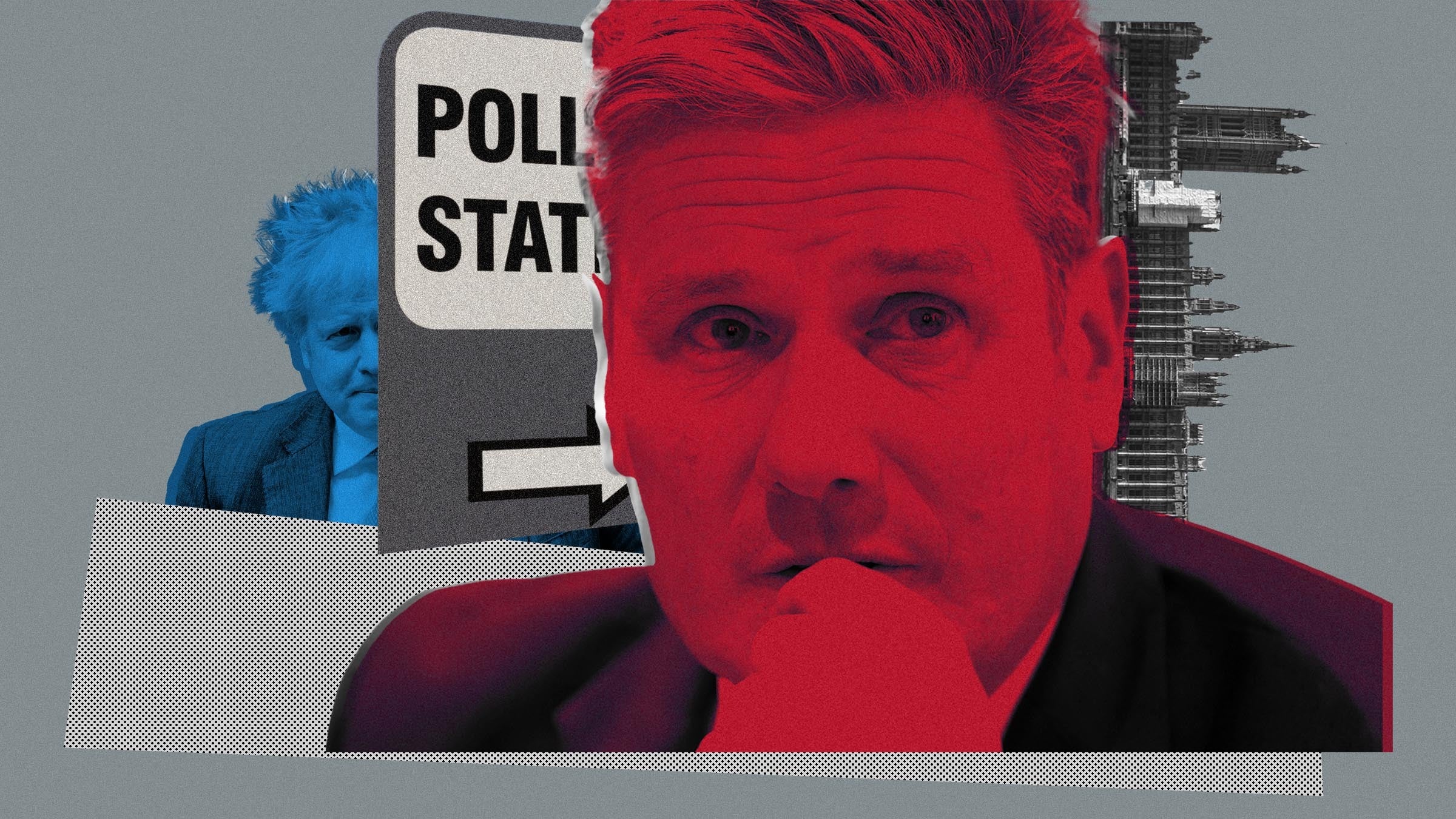
What is less discussed, however, is how the elections are also a key test for Keir Starmer and whether he has what it takes to lead Labour to victory at the general election in two years’ time.
With a new poll yesterday giving Labour a nine-point lead over the Conservatives, expectations are high that the party is set to make sweeping gains on Thursday.
Advertisement
But Starmer’s internal detractors are looking for any signs that the party is stalling to confirm their suspicions that he is failing to seal the deal with voters.
Here, HuffPost UK assesses where the main parties are ahead of a crucial night on May 5.
Advertisement
The State Of The Parties
A total of 6,812 council seats in England, Wales and Scotland are up for grabs on Thursday.
In addition, there are also mayoral elections in South Yorkshire, Hackney, Lewisham, Newham, Tower Hamlets, Watford and Croydon, as well as the Northern Ireland Assembly election.
In England, the Tories are defending 1,404 seats, Labour 2,222 and the Lib Dems 517. The rest are held by independents.
Advertisement
In Wales, Labour hold 462 council seats, with Plaid Cymru on 208, the Conservatives on 197 and the Lib Dems on 59. More than 300 seats are held by independents.
And in Scotland, the SNP have 432 seats, with the Tories second on 277, Labour on 262 and the Lib Dems on 67. Nearly 200 of Scottish councillors are independents.
What’s At Stake?
An awful lot more than which parties will be responsible for your bin collections for the next four years.
With a general election expected in 2024, this is likely to be the last big electoral test that Labour and the Tories will face before then.
As such, it will act as an important barometer of the national mood and indicate which parties, if any, are starting to build up momentum as the general election draws nearer.
Johnson needs to prove to his restive MPs that he is still the election winning-machine who delivered an 80-seat majority in 2019, and that the damage done to his reputation by partygate is not terminal.
The stakes are arguably even higher for Starmer who, two years after becoming Labour leader, has still to convince the public that he has what it takes to lead the country.
Is Starmer’s Labour Working?
While Labour has established a consistent poll lead in recent months, there remains a strong suspicion that it owes more to the public’s dissatisfaction with the Conservatives than any great enthusiasm for the Starmer project.
Advertisement
HuffPost UK revealed this week that the Labour leader is facing internal pressure to show voters how the party would tackle the cost of living crisis rather than focusing on the partygate scandal.
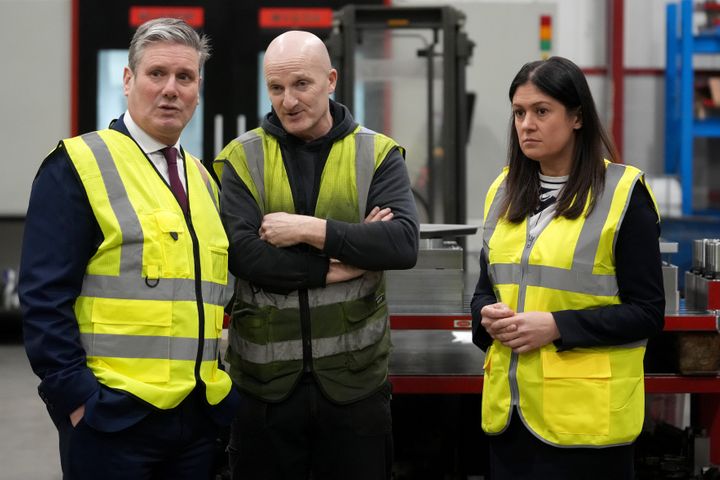
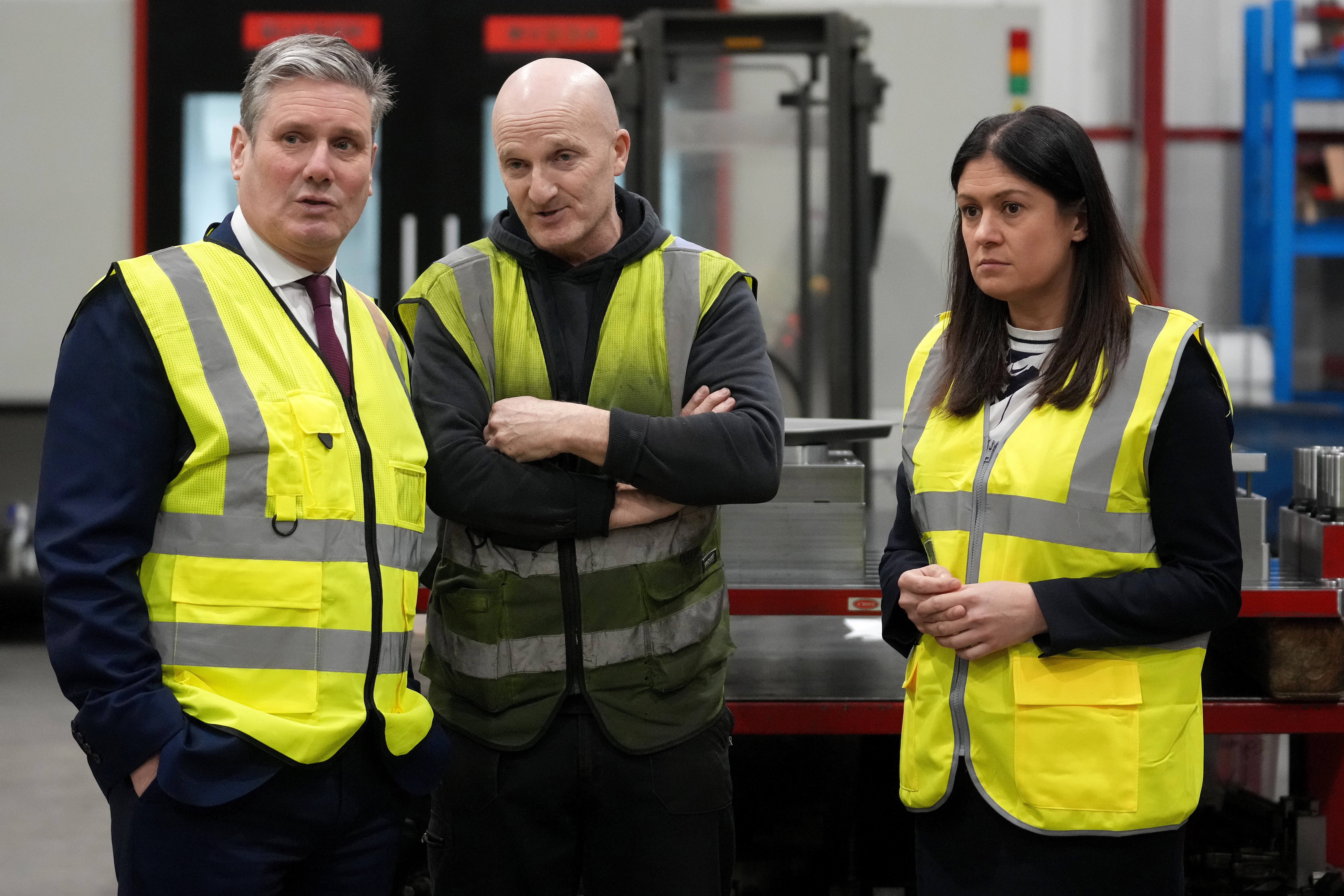
At a shadow cabinet meeting, communities spokesperson Lisa Nandy said Labour risked looking “out of touch” at a time when families across the country are struggling to make ends meet.
One senior frontbencher said: “Lisa’s not alone on this. There was strong agreement in the room to focus on the cost of living.”
It’s clear, therefore, that Starmer’s critics will be scrutinising Thursday’s results to try and assess whether the public support the leader’s strategy or are yet to be convinced.
Lisa Nandy has questioned Keir Starmer’s strategy
Christopher Furlong via Getty Images
What Does Success Look Like?
The main problem facing Labour is that the last time these council seats were up for grabs four years ago, the party did very well, making it harder for them to make sweeping gains this time around.
That said, a failure to pick up a significant number of council seats, and at least show progress in the Red Wall areas the party needs to win back if it’s to stand any chance of winning in 2024, will constitute a disappointing evening for Starmer.
“It’s a strange set of elections,” said one Starmer ally. “2018 was a bad night for the Tories and a very, very good one for Labour.
“So another bad night for the Tories and a good night for us isn’t going to result in a lot of exciting change.”
As polling gurus Colin Rallings and Michael Thrasher summed up the situation in a recent article: ”[Labour] will do well to avoid making standing still rather than picking up gains seem rather underwhelming when the post-mortem takes place.
Advertisement
“For the Conservatives, by contrast, the less dramatic the results, the more they can claim not to be suffering traditional ‘mid-term blues’.”
Labour sources are attempting to play down the prospect of the party seizing totemic Tory councils like Westminster and Wandsworth, but they admit that winning back Barnet is a distinct possibility.
Beating the Tories into second place behind the SNP is also essential if the party is to have any hope of re-establishing an electoral foothold in its former Scottish heartland.
Just as important as winning more council seats, insiders say, are signs of progress in seats currently held by the Tories in England and the SNP north of the border.
“We are also tracking where we are in about about 50-70 constituencies that would put us in government at a general election, so we will be keeping an eye on them on Thursday,” said a Labour source. “Places like Stevenage, Wakefield, Bury and Glasgow.
“We need to beat the Tories and SNP in them.”
The Tory View
Unsurprisingly, the Conservatives are keen to raise the bar as high as possible for what would constitute a good night for Labour in the hope they will come nowhere near clearing it.
One Tory source told HuffPost UK: “Labour are obviously saying how difficult it’s going to be to improve on 2018, but the reality is they are ahead in the polls and so should be doing well.
“It’s going to be very difficult for us in certain places, especially central London and in places like Wandsworth, Westminster and Kensington and Chelsea, where the demographics are turning against us.
Advertisement
“Outer London is a bit better, but things are also going to be difficult in the affluent south – places like Surrey and West Oxfordshire, where Labour are doing well.”
Significantly, however, the Tories are more confident of holding off Labour in the Red Wall, where partygate is not the major political issue many at Westminster believe it is.
“The question for Labour is whether they can make adequate progress in the places they lost in 2019 and need to win back next time,” the source said.
“While those voters are bothered about partygate, they’re more concerned with bread and butter issues such as the cost of living. They’re pissed off with the PM about partygate, but they also like what we did on vaccines and furlough.”
Winning Here?
Like Labour, the Lib Dems performed well in 2018, making further progress more difficult this time around.
“What we’re really looking to is consolidate the gains we made in places like South Cambridgeshire, Richmond and Kingston,” a source told HuffPost UK. “If we hold our ground and edge forward a little in other areas, it should spook a few Tory MPs.”
These include Stephen Hammond in Wimbledon, where the Lib Dems launched their local election campaign. The party also wants to make progress in Wokingham, where the local MP is one Dominic Raab.
The source added: “The big picture is we’re going after the Conservatives and laying the groundwork for the next election.”
The Pestminster Factor
Advertisement
In the past week alone, unnamed Tory MPs have smeared Angela Rayner by accusing her of using her legs to distract Boris Johnson, while another has been suspended by the party for allegedly watching porn in the Commons.
The timing could hardly have been worse for the Conservatives. Will voters use their ballots to register their disgust at the latest examples of Tory sleaze? Keir Starmer and Labour certainly hope so.
Labour have accused the Tories of breaking strict pre-election rules by preparing to announce a crackdown on terrorism in prison.
Justice secretary Dominic Raab is on Wednesday expected to unveil the government’s response to a report by Jonathan Hall QC, the independent reviewer of terrorism legislation.
Advertisement
According to The Times, Raab will announce that existing laws are to be strengthened to make it easier for convicted terrorists to be separated from the rest of the prison population.
He is also expected to introduce tougher measures to allow acts of terror inside prison to be punished more severely.
Advertisement
But Labour say the announcement has been timed to “deflect attention” from the partygate scandal.
Shadow justice secretary Steve Reed has written to Simon Case, the cabinet secretary, to ask whether rules banning major government announcements in the run-up to elections have been broken.
Advertisement
Voters across the country will go to the polls for the local elections on May 5.
The letter, seen by HuffPost UK, says: “The issuing of fixed penalty notices to the prime minister, the chancellor and other officials has shone a light on the government’s record on crime and an announcement such as this one could be perceived as an attempt to deflect attention away from these issues one week away from crucial local elections.
“Please will you confirm what consideration was given regarding the timing of this announcement, in line with guidance provided to all civil servants, including special advisers, and what specific advice was offered?”
Reed said: “This soft-on-crime Conservative government is trying to deflect from its own criminality.
Advertisement
“Bungling Dominic Raab has been sat on this crucial report for six months, yet it’s only now, when the prime minister is mired in the partygate scandal and the Tory-made cost of living crisis, that his department issues its response to rampant radicalisation in prisons.
“The lord chancellor needs to tell the victims of terror offenders why it has taken him so long to take radicalisation in jails seriously.”
A Ministry of Justice spokesperson said: “All announcements are made in accordance with government guidance.”
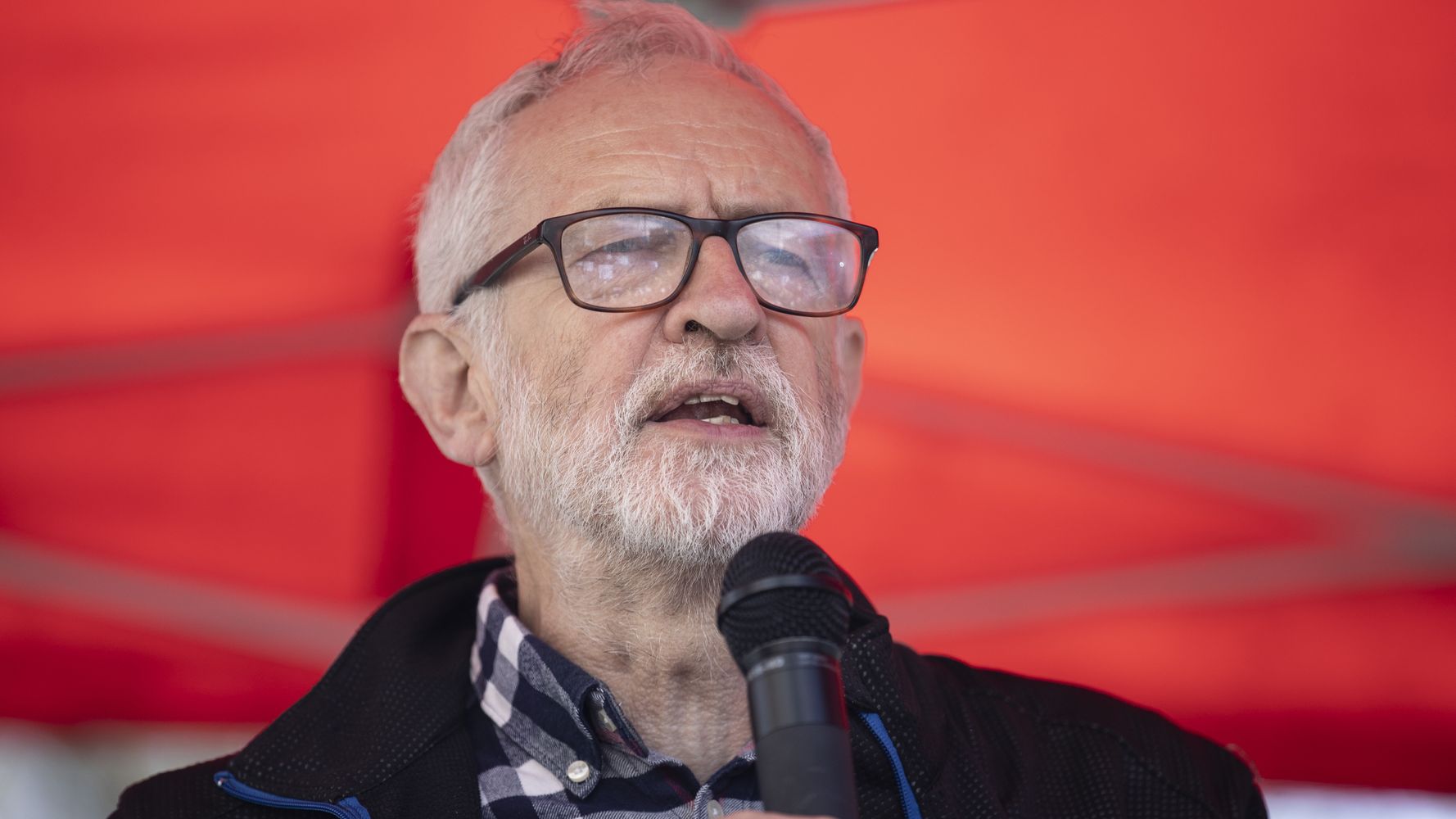
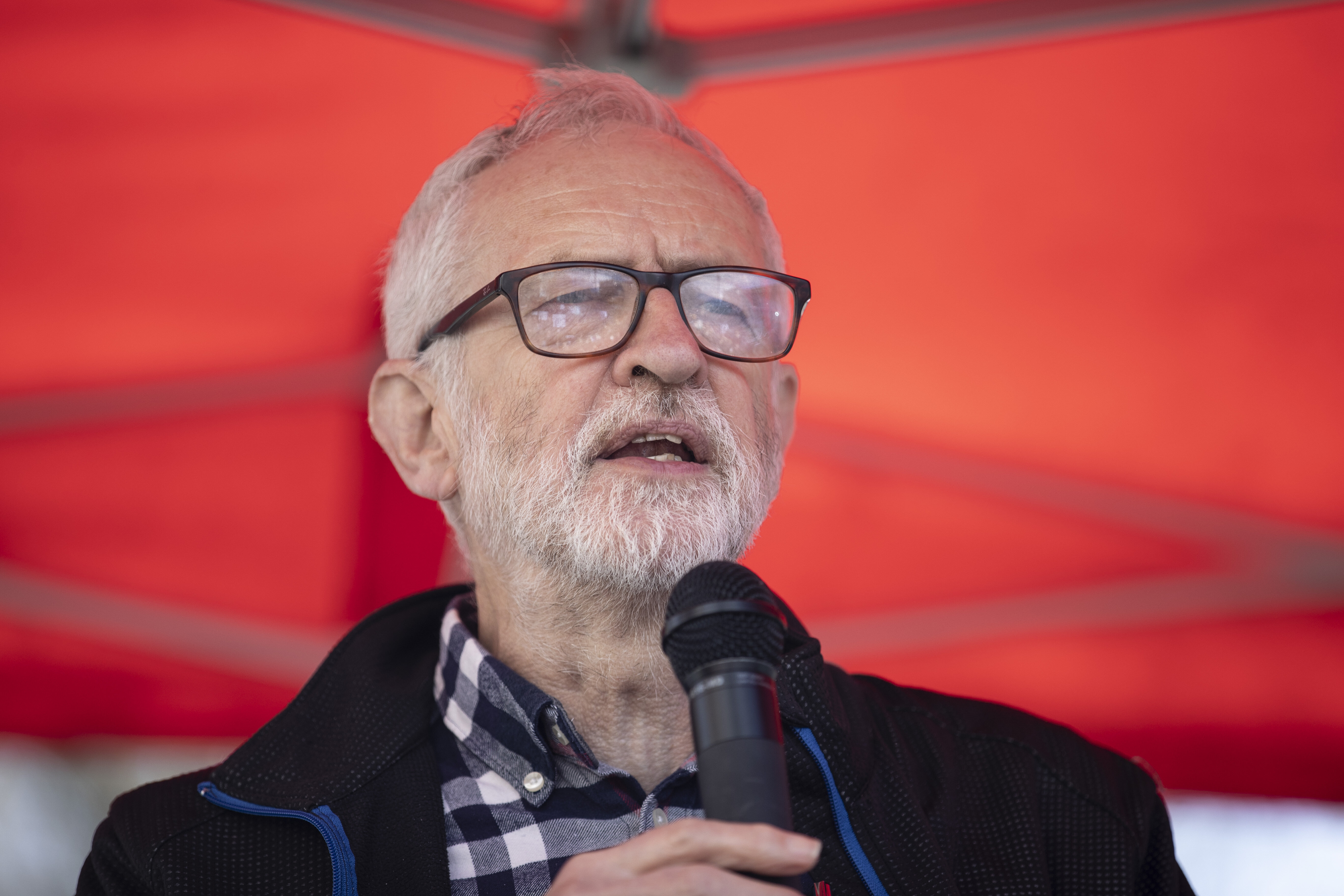
Keir Starmer said it is “difficult” to see how Jeremy Corbyn could have the Labour whip restored following his comments on Nato.
Last week Corbyn suggested military alliances like Nato could build up “greater danger” in the world and should ultimately be disbanded.
Advertisement
The former Labour leader was stripped of the whip in 2020 over his response to the equalities watchdog’s report into anti-Semitism in the party.
He was reinstated as a Labour member after a suspension, but Starmer has refused to readmit him to the parliamentary party.
Advertisement
Corbyn’s allies in the party have repeatedly demanded that their ally be allowed to sit as a Labour MP again so he can stand for the party at the next election.
But asked on the BBC’s Sunday Morning programme whether Corbyn could be restored as a Labour MP following the comments, said: “It is very difficult to see how that situation can now be resolved.
Advertisement
“He lost the whip because of his response to the Equalities and Human Rights Commission in relation to anti-Semitism but I made it very clear, the first thing I said as party leader was that I was going to tear out anti-Semitism by its roots in our party.
“I’ve also made it clear that our position in the Labour Party is not to accept the false equivalence between Russian aggression and the acts of Nato.”
Told that it sounded as if he was against Corbyn returning as a Labour MP, Starmer replied: “I’m very clear on my positions on those two issues, very clear.”
Corbyn, the MP for Islington North and a long-standing critic of Nato, told Times Radio last week that he did not blame Nato for Vladimir Putin’s invasion of Ukraine but questioned: “Do military alliances bring peace?”
Advertisement
He acknowledged the transatlantic alliance was not going to be scrapped immediately but added that people should “look at the process that could happen at the end of the Ukraine war”.
Corbyn has described the choice to remove the Labour whip from him as a “totally unjustified decision”.
Asked if he could start his new own political party, he said: “I don’t know what the future is going to bring.”
Last week Boris Johnson accused Starmer of being “a Corbynista in a smart Islington suit”.
But Starmer responded: “I think you’ll find Mr Corbyn doesn’t have the whip.”
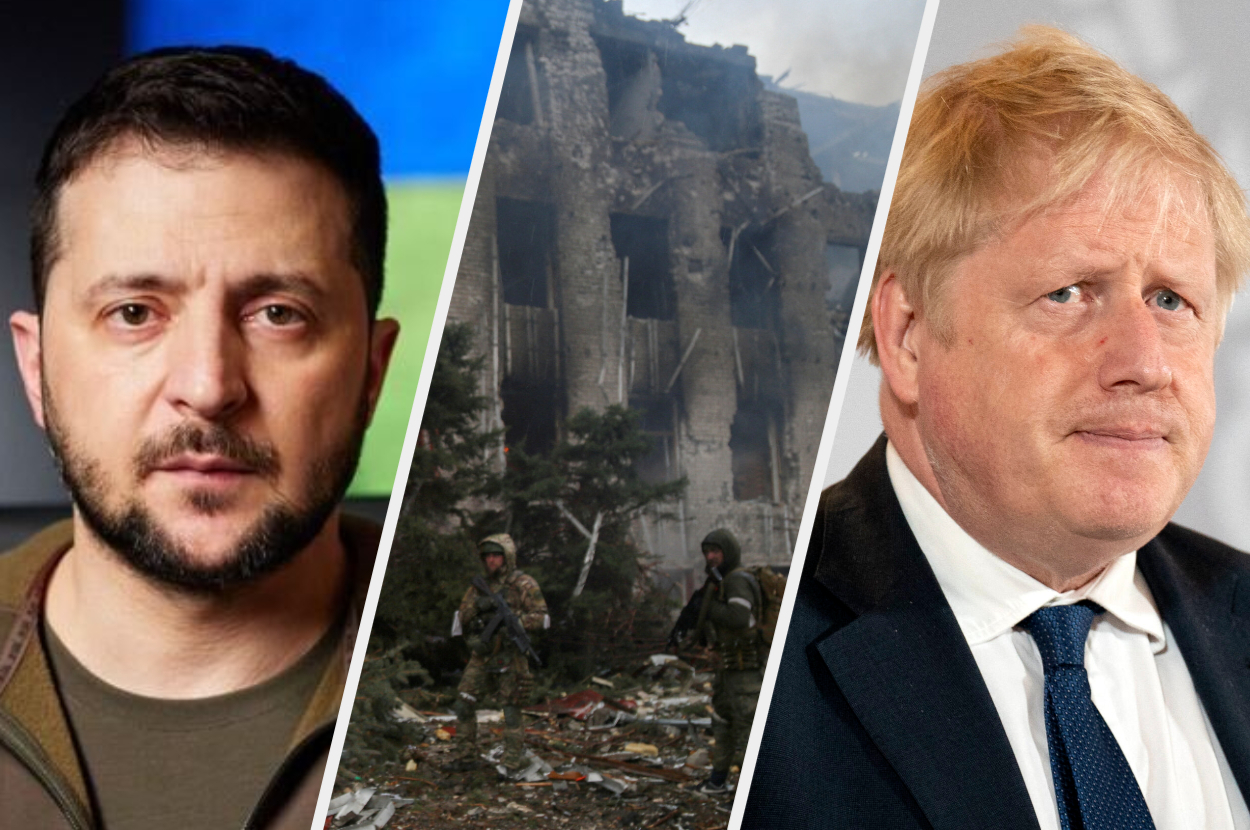
As the war enters its third month, it’s clear the Russian invasion has not gone entirely to plan – but that doesn’t mean victory for the Ukrainian resistance is on the horizon.
Further horrors have been unfolding in the east of Ukraine recently, particularly in the besieged city of Mariupol, suggesting Russia has no intention of giving up or going quietly.
Advertisement
The Ukrainian president has laid out exactly the kind of help the country needs from the west to prevent the war from spilling over into the rest of Europe. So will Nato step up, or will it continue holding back?
The war took a turn for the worse this week
Advertisement
Russia has focused its efforts on the east of Ukraine, while its attacks become more merciless.
Newly released satellite images suggest haunting mass graves have been dug near the Ukrainian port city of Mariupol, which has been under siege for more than a month. The graves could hold as many as 9,000 bodies according to the local authorities.
Advertisement
Around three-quarters of Mariupol’s residents have already fled, and a shocking 20,000 civilians are estimated to have been killed.
Despite all of this, Ukrainian forces allege they are still in control of the city – even as Russia declares its first substantial victory in the war.
Russian president Vladimir Putin previously told the forces in the area they had to either surrender or die but he has since called off an attack on the final stronghold, a steel mill where around 2,000 Ukrainian fighters are reportedly hiding.
Instead, he ordered such an unshakable blockade of the plant “so that a fly can’t get through”, which gave the Kremlin a chance to declare a win without significant casualities.
Advertisement
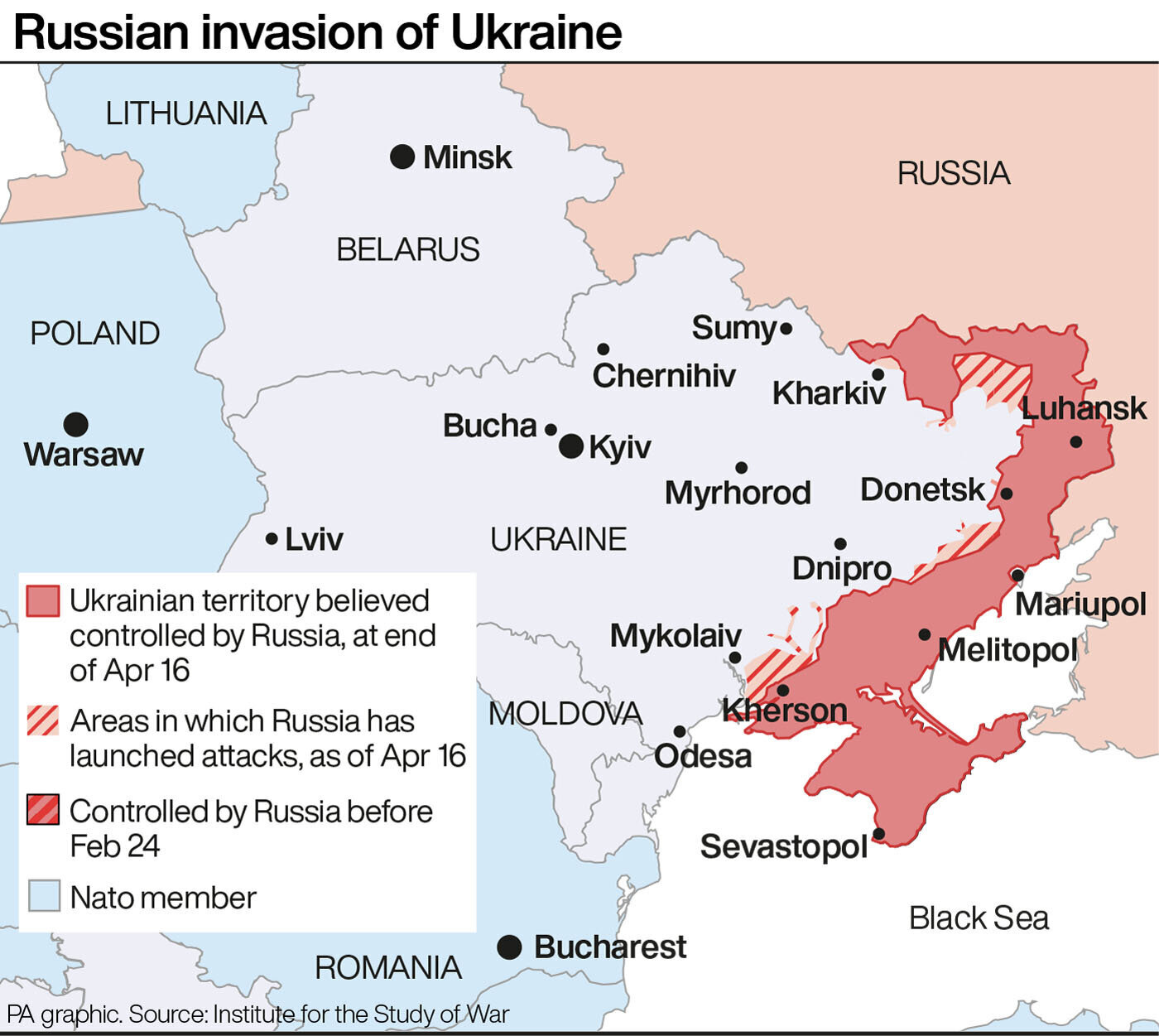
The city is a significant battleground in the war because it is the last hurdle in Moscow’s bid to create a land bridge between its territories in the eastern Donbas region and the Crimean Peninsula.
The Ministry of Defence has warned that Putin’s decision to blockade the steel plant “likely indicates a desire to contain Ukrainian resistance in Mariupol” so the Russian forces can be spread across the east of the country.
Meanwhile, eastern Donbas still faces intense shelling by the Russians, even as its troops “are still suffering from losses sustained earlier in the conflict”.
Detective chief superintendent Dominic Murphy from the Met War Crimes police also told PA new agency that it had received approximately 50 referrals from people with UK links about the Russian invasion.
As the war continues to escalate, he explains: “What we’re seeing is incredibly harrowing, beyond comprehension.
“In not far off 17 years in counterterrorism, (it is) some of the worst possible footage you could imagine seeing.”
He said it is possible that he has seen evidence of war crimes in these referrals, along with evidence of “other international crimes”.
So what kind of help does Ukraine want?
The main request coming from Ukraine now is for more money.
Ukrainian president Volodymyr Zelenskyy told the World Bank and IMF that the country needs $7 billion (£5.4 billion) per month to supplement its losses caused by Russia.
Advertisement
It comes after the country has already suffered around $60 billion (£46.6 billion) in physical damage from the Russian invasion.
He explained: “We will need hundreds of billions of dollars to rebuild all this later and recover from this war.”
The Ukrainian president also called for Russia to be excluded from the World Bank and IMF, saying such bodies are “definitely not the place for a country which is trying to ruin the lives of its neighbours”.
Ukraine used to want to join Nato so that its forces would help defend the country, but it has since abandoned this effort.
In mid-March, Zelenskyy said: “Ukraine is not a member of Nato. We understand that. We have heard for years that the doors were open, but we also heard that we could not join. It’s a truth and it must be recognised.”
Ukraine used to plead for a no-fly zone, but to the country’s disappointment, this was rejected by the west over fears it would be seen as an escalation of tensions with Russia and officially pull Nato into the war.
Instead, Zelenskyy now asks for weapons which are “comparable” with Moscow’s, including fighter jets.
The mayor of Mariupol, Vadym Boychenko, has also called for more humanitarian corridors, explaining: “We need only one thing – the full evacuation of the population. About 100,000 people remain in Mariupol.”
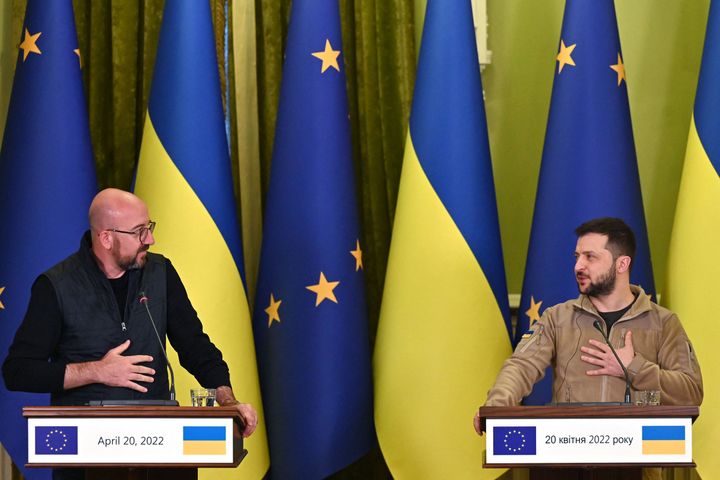
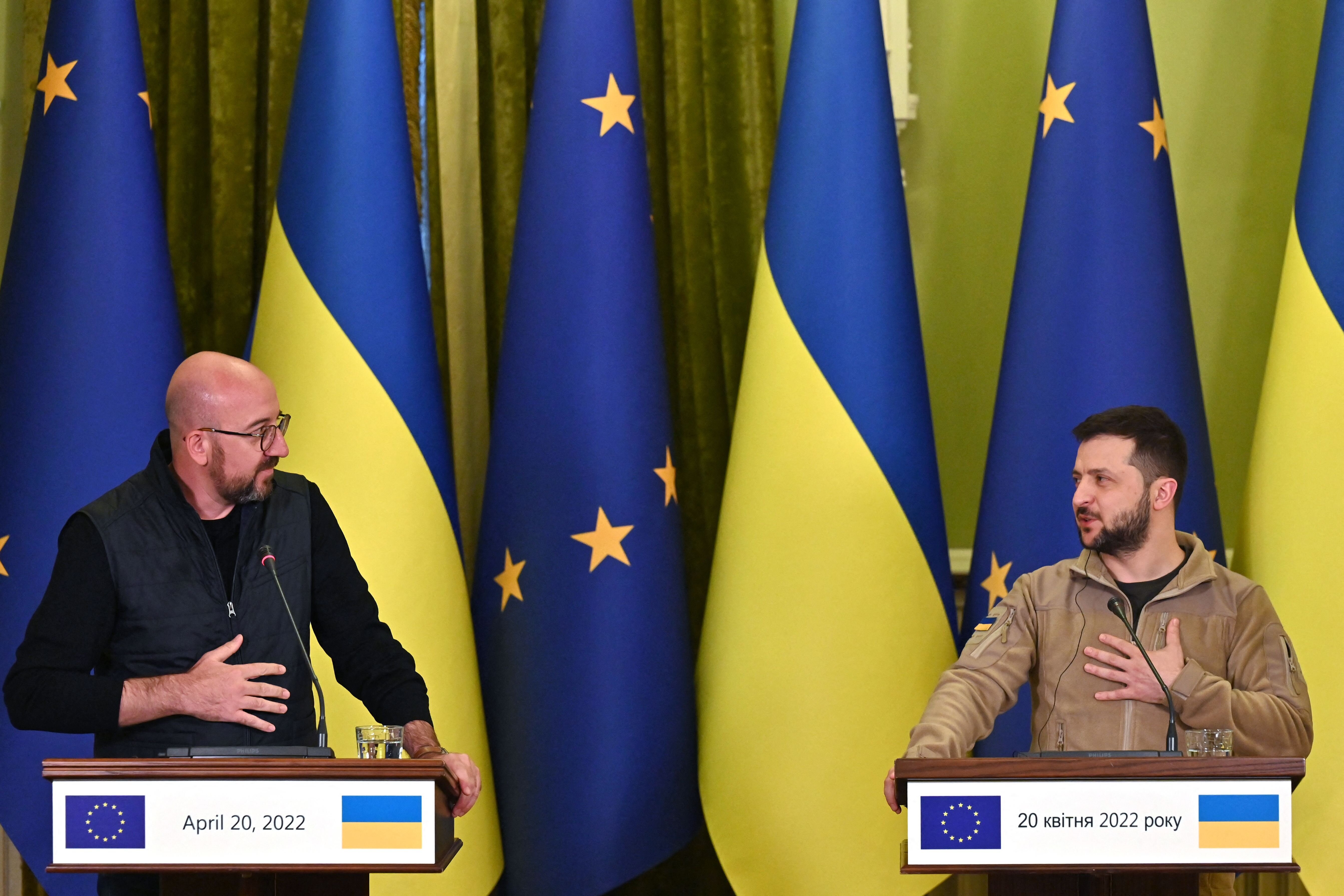
President of the European Council Charles Michel in a shared press conference with Ukrainian president Volodymyr Zelensky this week.
SERGEI SUPINSKY via Getty Images
So what is the west actually doing?
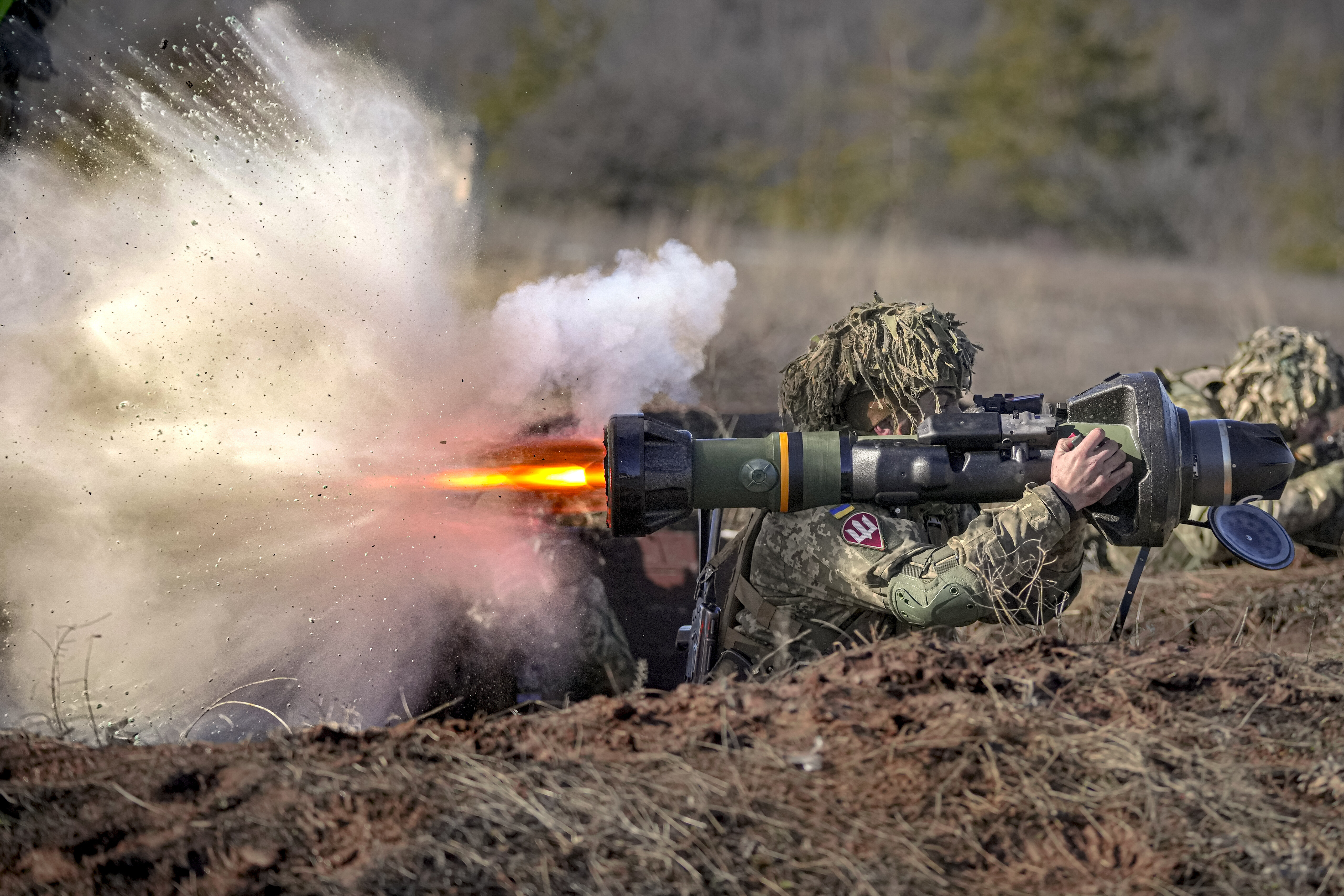
The UK supplied Kyiv with 4,000 anti-tank weapons and anti-tank Javelin missiles, while another batch of 6,000 firearms is on its way now.
Advertisement
Around £25 million in financial support was announced in March, along with body armour, helmets and combat boots.
The US and the EU have pledged to send more weapons, while France has sent £83 million worth of equipment.
Canada, Norway and even Sweden – famously neutral – have chipped in too to support Ukraine with weapons.
Since Zelenskyy’s plea, the US has promised to pass an extra $800 million (£615 million) to supply Ukraine with more equipment, ammunition and drones while. The UK is now training some Ukrainian soldiers to use armoured vehicles.
Boris Johnson said earlier this week: “They need support with more artillery, that is what we will be giving them.”
Why stop there?
The west has been extremely reluctant to interfere with the war out of fear that the war would escalate.
But, critics claim what Ukraine’s allies have offered so far is simply not enough.
Tory MP Tobias Ellwood told Radio 4′s Today programme: “The bigger question, not answered by Nato or indeed us, is what does success look like?
“We are doing enough to prevent Ukraine from losing but not enough to ensure they win.
Advertisement
“So what does our long-term mission objective look like? Is it pushing Russia back to pre-February lines or is it liberating the entire Donbas region? That’s absolutely critical in how we choose to up-arm the Ukrainians.”
Now more than five million Ukrainian refugees have now fled from the country, primarily to the rest of Europe, there is also an argument that the west is already involved.
Russian propagandists have already claimed that “World War 3” has started and that Russia is “fighting Nato”.
The Kremlin has even warned Washington recently that continued military aid could lead to “unpredictable consequences”.
Former vice chief of staff at Nato’s Supreme Headquarters Allied Powers Europe (SHAPE), Michel Yakovleff, also called for the west to take further action this week.
Asked if the west has done enough to help Ukraine, he told French broadcaster France24: “Very bluntly, and that is my personal opinion, no, not since 2014.
“Ukraine is paying now for our desire not to escalate since 2014.”
He said that while the UK and the US’ actions now “have helped massively”, the influx of new materials has come at a time when both sides are exhausted.
“Will Ukraine have time to integrate this new equipment before utter exhaustion? I don’t know.”
Advertisement
He concluded that Nato, which calls itself the “most powerful alliance in history”, should not be “frightened” of Putin and “cower” in the face of the potential “consequences”.
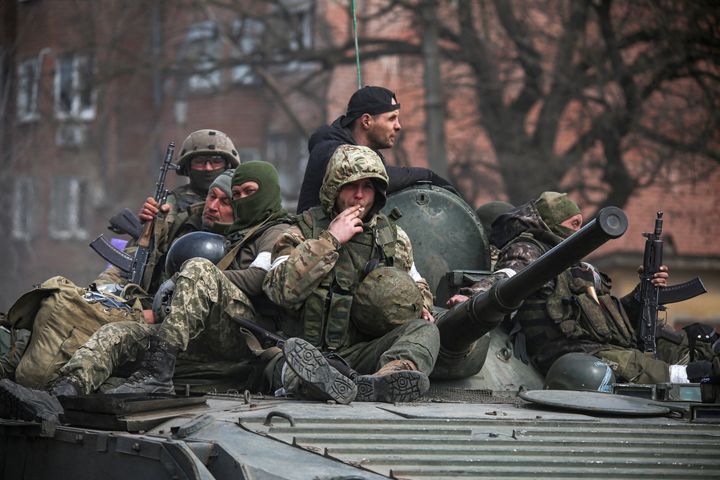
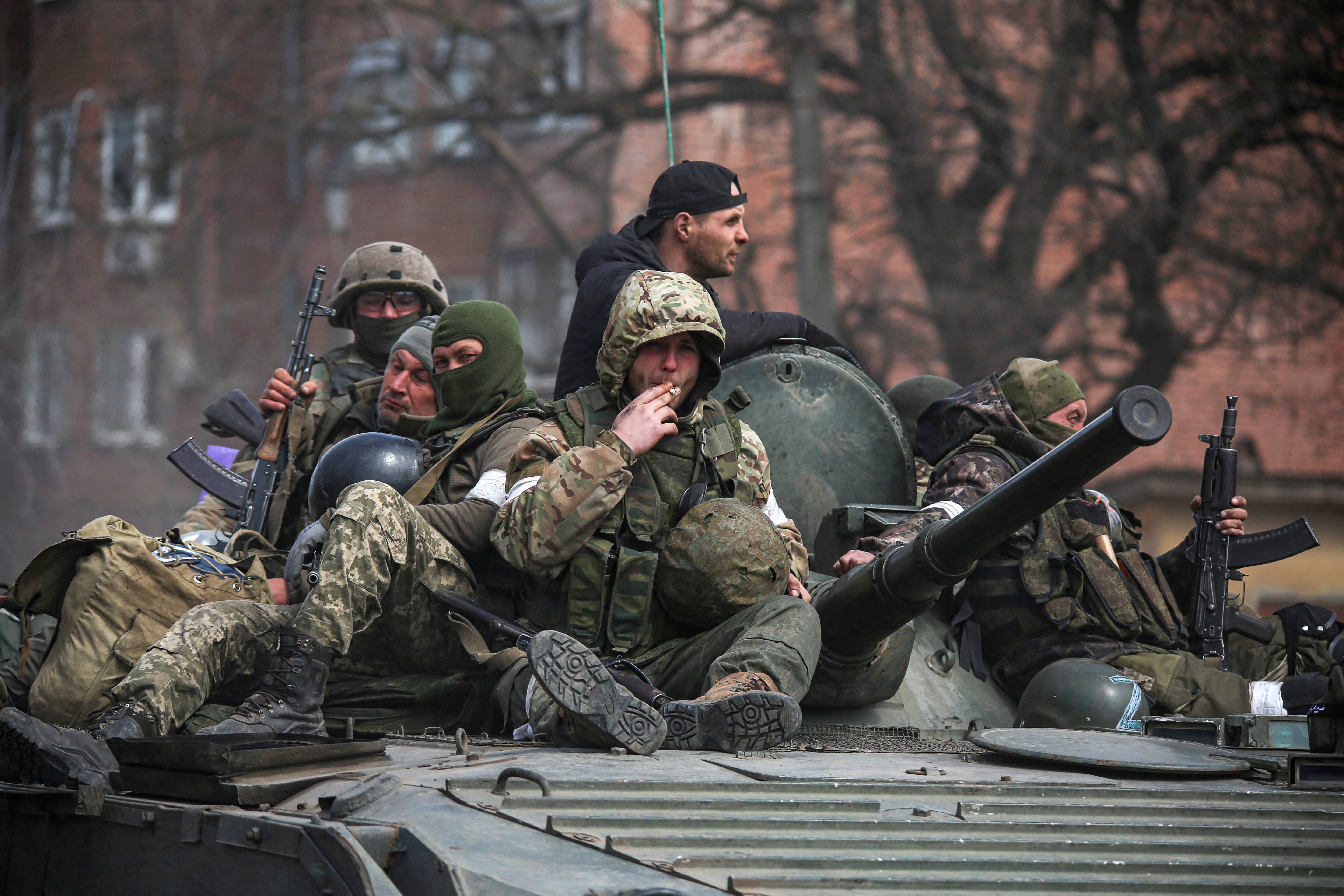
Service members of pro-Russian troops are seen atop of an armoured vehicle in the southern port city of Mariupol.
“Now we can already state that the Russian troops have begun the battle for the Donbas,” he said in a video address about the long-feared, full-scale offensive to take control of Ukraine’s east.
Advertisement
With a “significant part of the entire Russian army” now deployed in the region, according to Zelenskyy, here’s what you need to know about what could be a turning point in the conflict.
What has happened so far?
Advertisement
On February 24, Russia invaded neighbouring Ukraine. Tanks and soldiers streamed across the border, scenes more reminiscent of the Second World War than the remote cyber warfare that modern conflict was supposed to be dominated by.
Russia’s invasion has damaged or destroyed up to 30% of Ukraine’s infrastructure at a cost of $100 billion, Ukrainian officials have said, as the United Nations revealed the civilian death toll has now surpassed 2,000. About four million Ukrainians have fled the country.
Advertisement
But Russia’s swift march to victory did not materialise. Driven back by Ukrainian resistance in the north, Moscow has refocused its ground offensive in the two eastern provinces known as the Donbas, while launching long-distance strikes at other targets including the capital, Kyiv.
What does the Donbas matter?
The Donbas is Ukraine’s mostly Russian-speaking industrial heartland in the east, where Moscow-backed separatists have been fighting Ukrainian forces for the past eight years and have declared two independent republics that have been recognised by Russia.
In recent weeks, the Kremlin declared the capture of the Donbas its main goal of the war after its attempt to storm Kyiv failed. After withdrawing from the capital, it began regrouping and reinforcing its ground troops in the east for what could be a climactic battle.
Advertisement
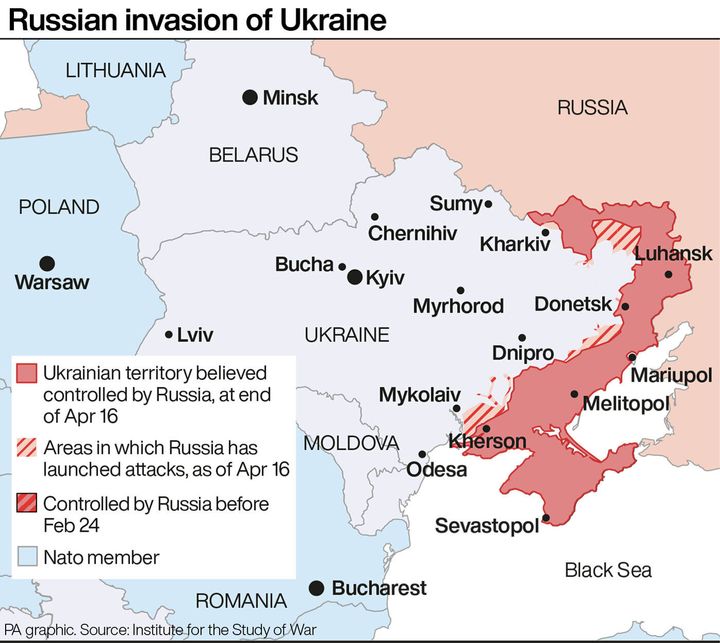
On Monday, Ukraine military generals said Russian forces were increasing assaults in the Luhansk and Donetsk regions – both of which are part of the Donbas – as well as in the area of Zaporizhzhia.
They also said Russia was sending reinforcements to the Crimean peninsula – seized from Ukraine in 2014 – and to the Rostov-on-Don area, which borders Ukraine.
PA Graphics via PA Graphics/Press Association Images
Zelenskyy’s chief of staff Andriy Yermak called it “the second phase of the war” and assured Ukrainians that their forces could hold off the offensive. “Believe in our army, it is very strong,” he said.
The Associated Press reported a senior US defence official saying there are now 76 Russian combat units in eastern and southern Ukraine, up from 65 last week. That could translate to around 50,000 to 60,000 troops.
⚡️Foreign minister: Battle of Donbas will be similar to World War II.
“This will not be a local operation based on what we see from Russia’s preparations,” Dmytro Kuleba said, adding that he expects large-scale operations involving thousands of tanks, armored vehicles, aircraft.
— The Kyiv Independent (@KyivIndependent) April 7, 2022
Russia’s stuttering campaign means control of eastern Ukraine has taken added significance, and may prompt the fiercest fighting yet. Russia needs some kind of “win” – recognising Russia’s claims in the Donbas and Crimea has also been the central plank of Vladamir Putin’s demands at failed peace talks – and following the sinking of its Black Sea lead ship, Putin will not be contemplating further embarrassment.
Wider attacks prepared the ground?
The new offensive in the east came as a Russian missile attack killed seven people in Lviv, the first civilian victims in the western city about 40 miles from Poland. It was one of a multitude of other targets across Ukraine in what appeared to be an intensified bid to grind down the country’s defences.
Lviv has seen only sporadic attacks during almost two months of war and has become a haven for civilians fleeing the fighting elsewhere.
Now President Zelensky, in a new public address, says Russia has begun the battle for the Donbas and concentrated a large part of its army there for an all-out offensive in eastern Ukraine. pic.twitter.com/Itp6VX1ROJ
In other developments, Ukrainian troops remained holed up at a mammoth steel mill in Mariupol, the last known pocket of resistance in the devastated southern port city.
The capture of Mariupol, where Ukraine estimates 21,000 people have been killed, is seen as key, and not just because it would deprive Ukraine of a vital port and complete a land bridge between Russia and the Crimean peninsula.
Advertisement
General Richard Dannatt, a former head of the British Army, told Sky News that Russia is waging a “softening-up” campaign ahead of the Donbas offensive.
The US defence official said that if Russian forces succeed in taking full control of Mariupol, that could free up nearly a dozen combat units for use elsewhere in the Donbas.
Is support from the West likely to grow?
Given the changing dynamics of the war, Ukraine is calling for an increasing supply of Western weapons.
Last week, US president Joe Biden announced an additional $800 million in military assistance to Ukraine, expanding the aid to include heavy artillery ahead of the wider Russian assault expected in eastern Ukraine.
The US military expects to start training Ukrainians on using howitzer artillery in coming days, with the training taking place outside Ukraine.
EXC: Britain will hand Stormer armoured missile launchers to Ukraine to unleash hell on Mad Vlad Putin’s jets and choppers
The Sun reported Boris Johnson is set to provide Ukraine with tank-mounted Stormer armoured missile launchers, another sign the West is prepared to offer as much military hardware as possible without triggering a wider Nato vs Russia conflict.
Britain will support Ukraine “for as long as it takes”, Boris Johnson has vowed during a surprise visit to the war-ravaged country.
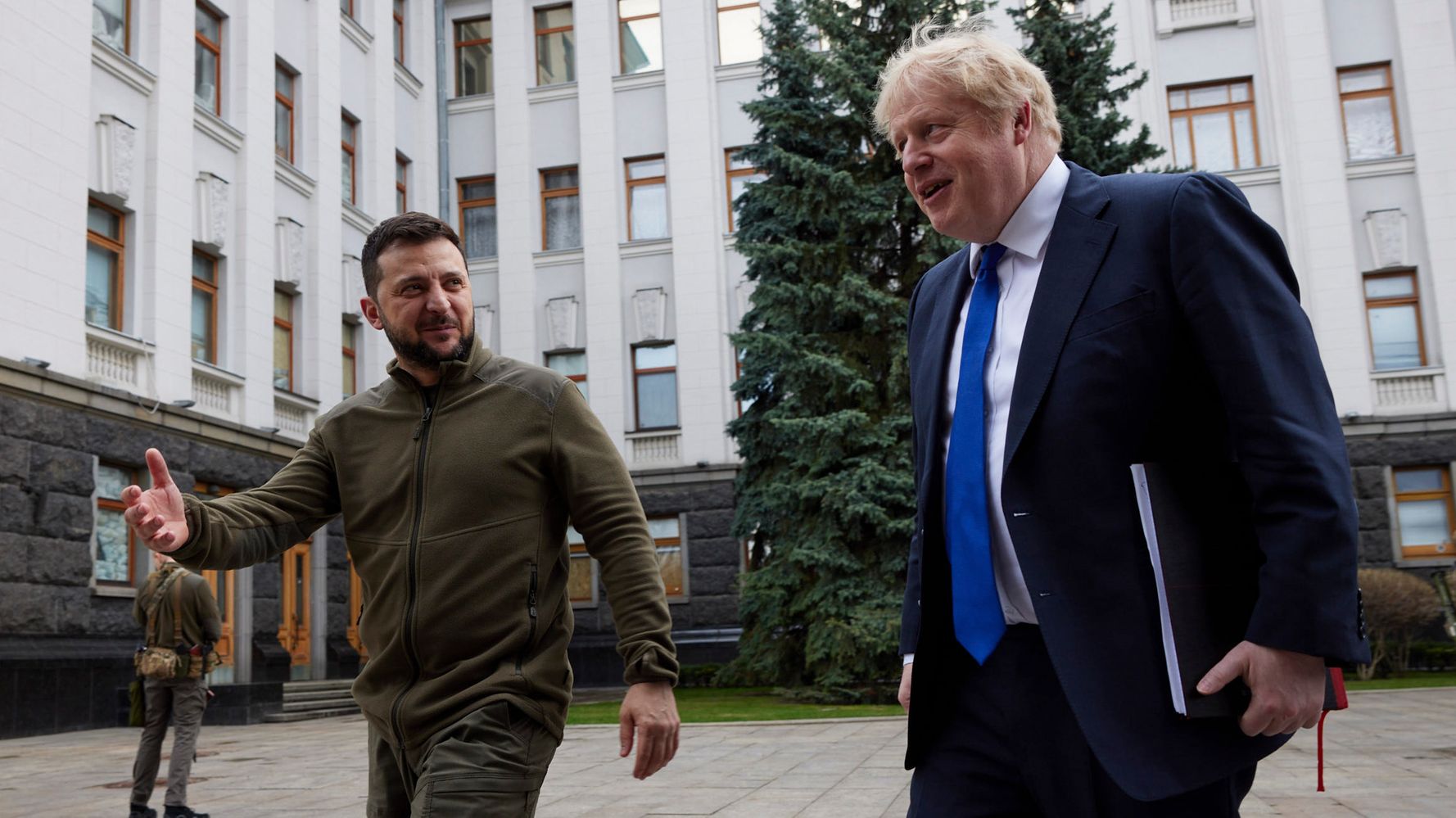
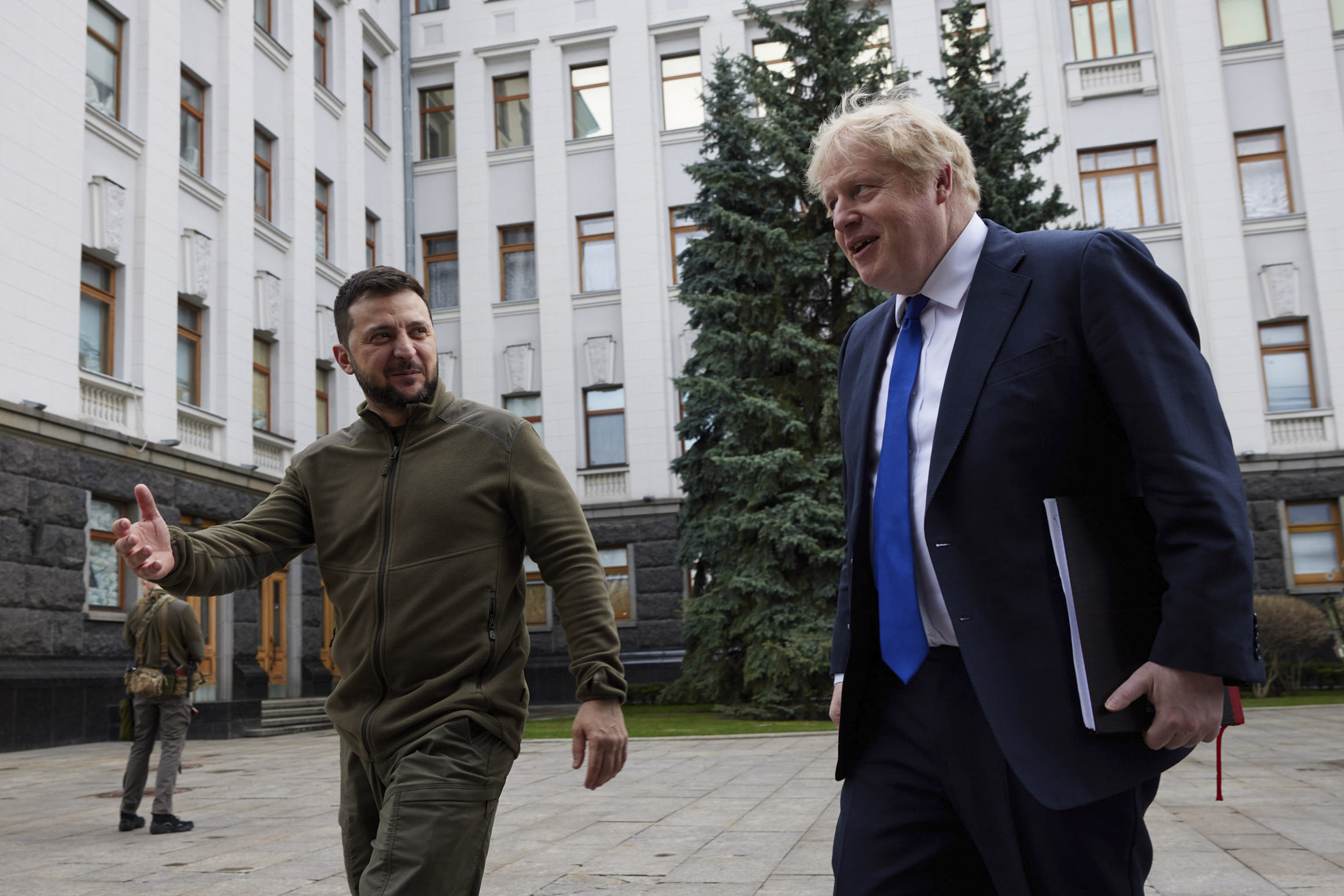
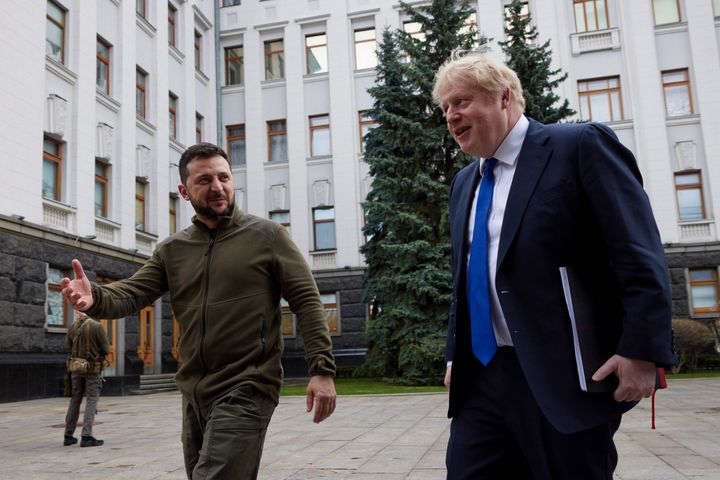
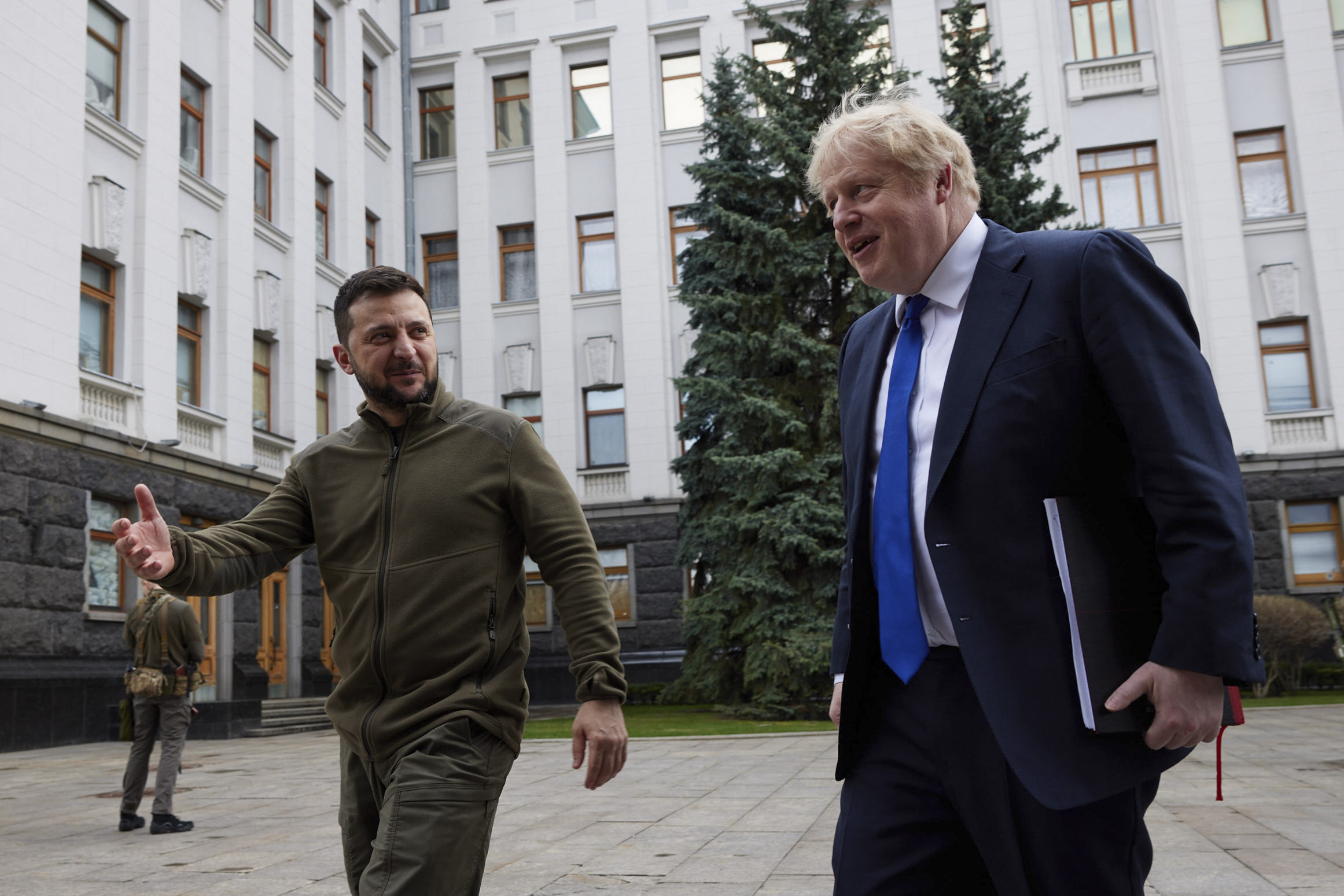
The prime minister spoke to ordinary Ukrainians as he walked around the capital city Kyiv with president Volodymyr Zelenskyy.
Advertisement
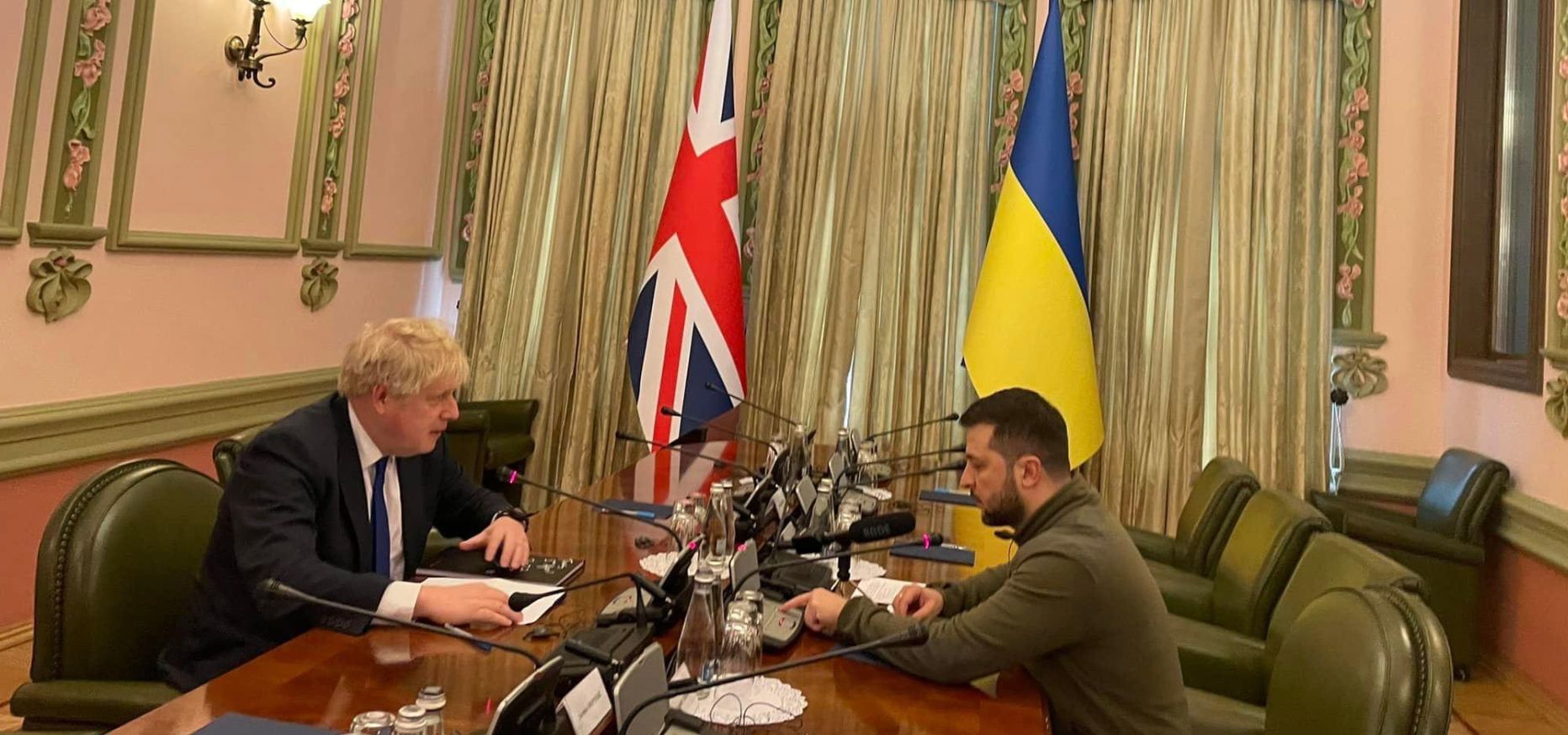
Johnson held talks with his opposite number after flying in to Ukraine on an unannounced visit amid tight security.
A video was later posted on Twitter showing the two leaders walking through the centre of Kyiv.
Advertisement
At one point, a local man expresses his gratitude to the PM for the support the UK has provided to Ukraine since Russia’s invasion began on February 24.
In response, Johnson said: “It’s nice to meet you and it’s been our privilege to help. You have a remarkable president, Mr Zelensky, who’s done an outstanding job and we simply wish to keep supporting the people of Ukraine for as long as it takes.”
Advertisement
At a handshake distance. @BorisJohnson and @ZelenskyyUa walked through the center of Kyiv and talked to ordinary Kyivans. This is what democracy looks like. This is what courage looks like. This is what true friendship between peoples and between nations looks like. pic.twitter.com/ZcdL6NqNp2
Appearing alongside Zelenskyy in a recorded broadcast clip, Johnson said the West would continue to “ratchet up” sanctions on Moscow as he praised the courage of the Ukrainian resistance.
“I think that the Ukrainians have shown the courage of a lion, and you Volodymyr have given the roar of that lion,” he said.
“The UK and others (will) supply the equipment, the technology, the know-how, the intelligence, so that Ukraine will never be invaded again.
“So Ukraine is so fortified and protected – that Ukraine can never be bullied again. Never be blackmailed again. Never be threatened in the same way again.”
Advertisement
The Ukrainian president said: “I am very grateful for this visit. It is very important at this very difficult and turbulent time for our country.
“You came here and we are especially grateful for this to happen. This is a true reflection of the decisive and significant support for Ukraine from the United Kingdom and we will always remember that.”
It was also announced that the UK has agreed to provide Ukraine with 120 armoured vehicles and new anti-ship missile systems.
That is on top of the £100 million worth of high-grade military equipment announced yesterday, including more Starstreak anti-aircraft missiles, another 800 anti-tank missiles, and high-tech loitering munitions for precision strikes.
The UK is also guaranteeing £385m in World Bank lending to Ukraine, taking its total loan guarantee to up to $1 billion.
Boris Johnson has flown to Kyiv for “surprise” talks with Ukrainian president Volodymyr Zelenskyy.
Downing Street said the prime minister made the unannounced trip “in a show of solidarity with the Ukrainian people”.
Advertisement
The lightning visit was revealed in a tweet by the Ukrainian embassy in London, which showed Johnson holding talks with Zelensky.
Above the picture was a winking emoji and “surprise”.
Advertisement
The trip had been shrouded in secrecy due to security concerns.
Afterwards, it was announced that the UK has agreed to provide Ukraine with 120 armoured vehicles and new anti-ship missile systems.
Advertisement
That is on top of the £100 million worth of high-grade military equipment announced yesterday, including more Starstreak anti-aircraft missiles, another 800 anti-tank missiles, and high-tech loitering munitions for precision strikes.
The UK is also guaranteeing £385m in World Bank lending to Ukraine, taking its total loan guarantee to up to $1 billion.
The PM said: “It is a privilege to be able to travel to Ukraine and meet President Zelenskyy in person in Kyiv today.
“Ukraine has defied the odds and pushed back Russian forces from the gates of Kyiv, achieving the greatest feat of arms of the 21st century.
Advertisement
“It is because of President Zelenskyy’s resolute leadership and the invincible heroism and courage of the Ukrainian people that Putin’s monstrous aims are being thwarted.
“I made clear today that the United Kingdom stands unwaveringly with them in this ongoing fight, and we are in it for the long run.
“We are stepping up our own military and economic support and convening a global alliance to bring this tragedy to an end, and ensure Ukraine survives and thrives as a free and sovereign nation.”
A Downing Street spokesperson said: “The prime minister has travelled to Ukraine to meet President Zelenskyy in person, in a show of solidarity with the Ukrainian people.
“They will discuss the UK’s long term support to Ukraine and the PM will set out a new package of financial and military aid.”
It is the first time the prime minister has visited Ukraine since the Russian invasion on February 24.
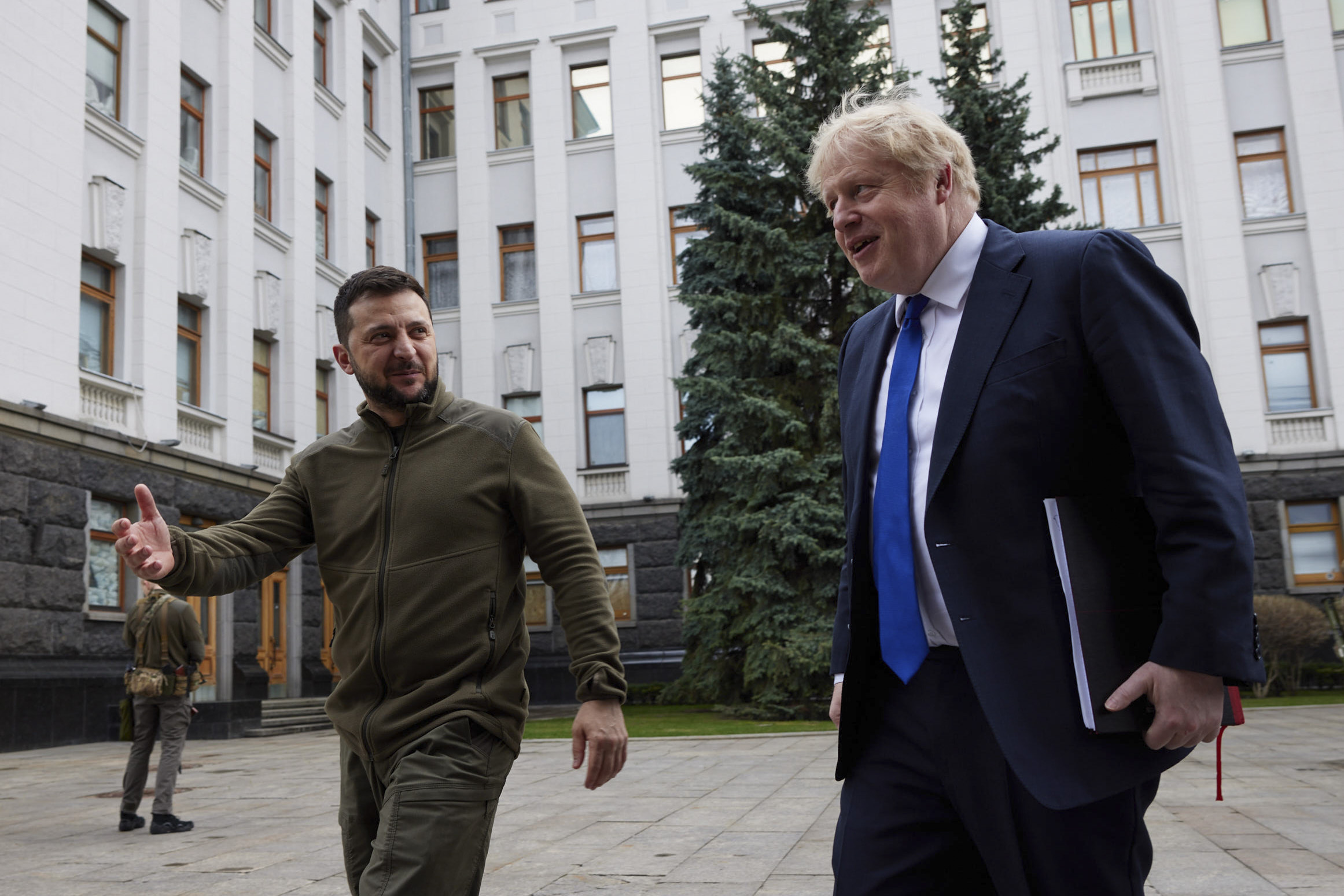
Boris Johnson meets Volodymyr Zelensky in Kyiv
No10 Downing Street
Number 10 later issued a picture appearing to show the two leaders on a walkabout in Kyiv.
The BBC reported that in a Facebook post, Andriy Sybiha, deputy head of the Ukrainian president’s office said: “The UK is the leader in defence support for Ukraine. The leader in the anti-war coalition. The leader in sanctions against the Russian aggressor.”
At his peak, Rishi Sunak was the most popular politician in the country.
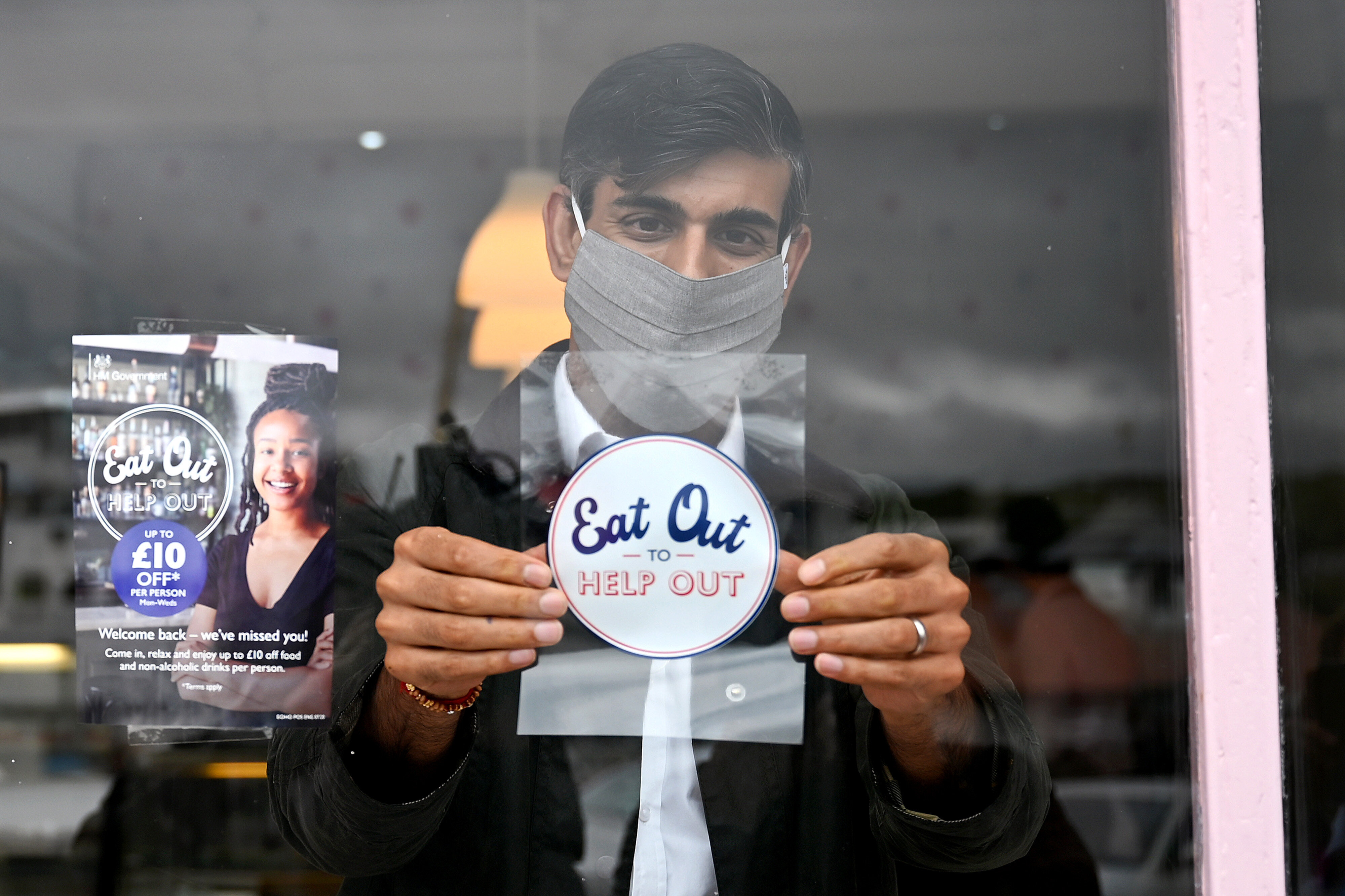
It was a reputation forged after the “crisis chancellor” rose to the challenge of the Covid pandemic — splashing billions on furlough and business support and later the “eat out to help out” scheme to keep the hospitality sector afloat.
Advertisement
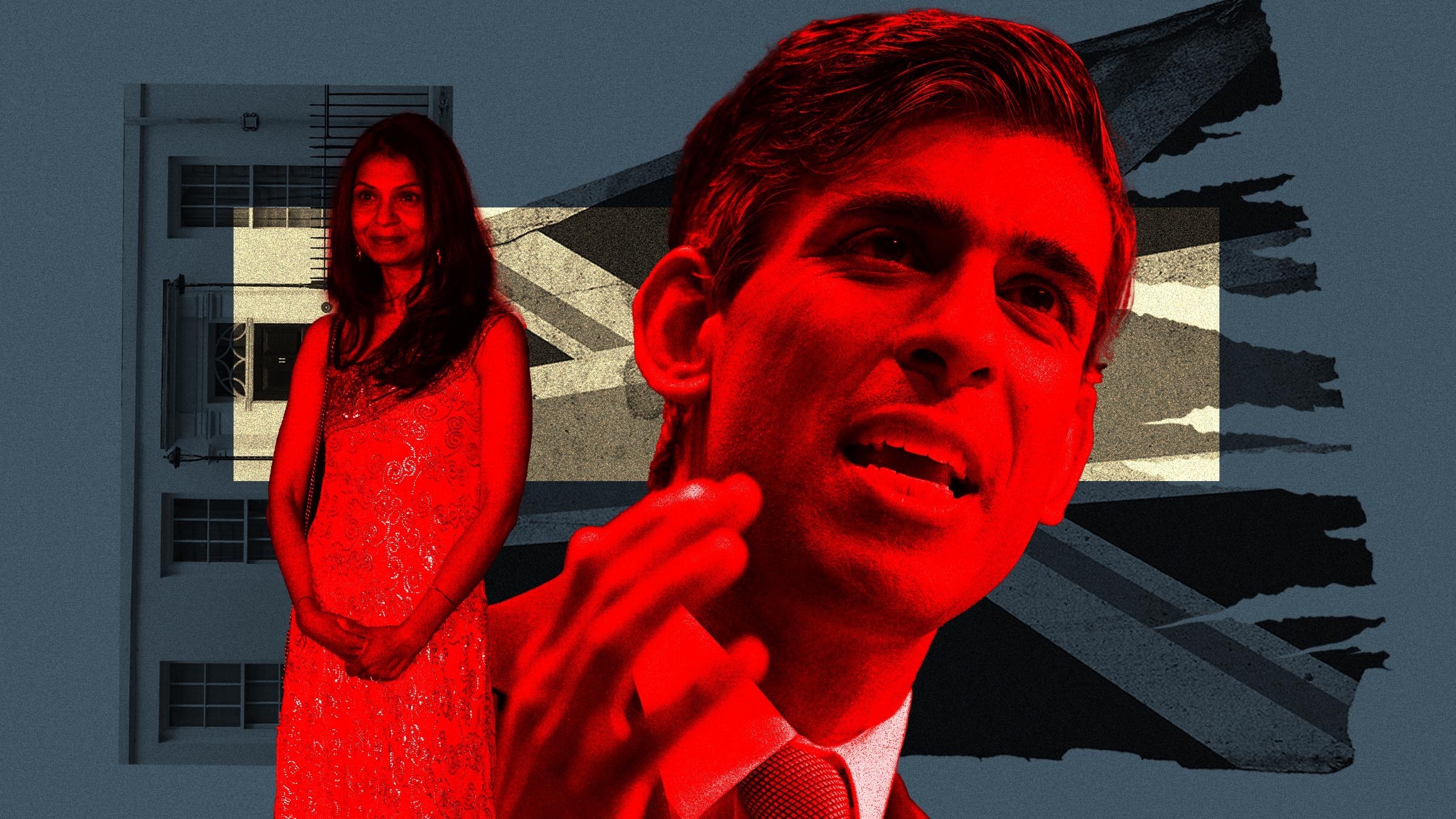
Now, the image of Sunak as a sympathetic chancellor who is in touch with the needs of ordinary people appears to be in tatters — and the same could be said of his ambitions to succeed Boris Johnson as prime minister.
Although she was forced into a screeching U-turn on Friday night, the damage to her husband’s reputation was already done.
Meanwhile, the chancellor himself was also hit by claims in the Independent that he has been listed as a beneficiary of tax haven trusts linked to Murty in the British Virgin Islands and Cayman Islands.
Advertisement
Pat McFadden, Labour’s shadow chief secretary to the Treasury, said the allegations were “extremely serious”.
“We need full transparency about this and the other stories about the chancellor emerging over the past 24 hours,” he said.
Murty always paid UK tax on any income she earned here, but under the non-dom arrangement, domestic rates did not apply to the vast majority of her foreign wealth, derived from her stake in her father’s Indian company Infosys.
It reinforced the already damaging perception that it’s “one rule for them, one for the rest of us”.
Advertisement
Reports suggest that Murty’s non-dom status, which is perfectly legal, may have allowed her to avoid millions in tax.
Given the fact that her husband has just increased national insurance contributions for working people during the worst cost-of-living crisis in decades, the timing of the revelations could hardly have been worse.
Following Murty’s U-turn, one Labour insider said: “Rishi Sunak has realised that being a total hypocrite doesn’t wash with the British public.”
One former minister admitted to HuffPost UK that the stories emerging about Sunak had put him in “a lot of trouble”.
“It looks like a coordinated campaign and that there will be more to come. Also, there’s not much support being expressed for him publicly.”
Discussing the chancellor’s leadership prospects a few weeks ago, one senior Tory backbencher said that while they liked Sunak, he was not a “political operator” like the foreign secretary, Liz Truss, and questioned whether he had any allies in the Conservative party.
“Who are his allies? I don’t know who they are.”
<img class="img-sized__img landscape" loading="lazy" alt="Chancellor of the Exchequer Rishi Sunak alongside his wife Akshata Murthy.” width=”720″ height=”553″ src=”https://www.wellnessmaster.com/wp-content/uploads/2022/04/hes-in-trouble-have-rishi-sunaks-tax-controversies-ended-his-leadership-hopes-3.jpg”>
Chancellor of the Exchequer Rishi Sunak alongside his wife Akshata Murthy.
Ian West via PA Wire/PA Images
Another Conservative said that while the chancellor may be feeling the pain now, it was only just the beginning.
“Everyone is talking about the cost of living,” one Labour source said.
“It’s a massive issue. Rising bills, rising taxes, the cost of food and fuel — the cost of petrol is in the minds of most people you speak to. They can tell you the price they last paid to the half penny.
Advertisement
“The Tories are of course making the chancellor the scapegoat: rule number one in the current Tory party is protect Johnson.
“But voters don’t seem to blame Sunak when you speak to them. They blame the government.
“They know there’s a stink but it’s from a steady and constant flow not from one single burst pipe.”
He claimed the couple were the victim of “unpleasant smears” and that those responsible were wrong to target her as a “private citizen”.
“She has had her own career,” he said. “She has her own investments and is paying the taxes that she owes in the UK.
“She is 100 per cent doing everything this country asks of her.”
Some of Sunak’s colleagues rallied to his defence, also suspecting he is the victim of an orchestrated campaign to undermine his credibility.
Alec Shelbrooke, who represents a constituency in Yorkshire, said it was “disgraceful that the chancellor’s wife should change her life, just because of her husband’s job”.
“She hasn’t done anything illegal, she has followed the law, but people are trying to say she should be subservient to her husband’s choices — any feminist attacking her, needs to find a dictionary.
Advertisement
“It’s nasty politics at all levels and its fundamentally sexist. The people attacking are, at best, confused on feminism and inconsistent on tax policy.
“Good smear campaign for them, but vacuous politics.
“Rishi has my full support.”
Another backbencher said: “I think this is quite smeary — Labour looked at non-dom when they were in power and decided to keep it with a fee, which we then jacked up when we were in charge.
But they added: “Notwithstanding that, it’s still politically damaging for him.”
<img class="img-sized__img landscape" loading="lazy" alt="Rishi Sunak places an "eat out to help out" sticker in the window of a business during a visit to Rothesay on the Isle of Bute, Scotland.” width=”720″ height=”479″ src=”https://www.wellnessmaster.com/wp-content/uploads/2022/04/hes-in-trouble-have-rishi-sunaks-tax-controversies-ended-his-leadership-hopes-4.jpg”>
Rishi Sunak places an “eat out to help out” sticker in the window of a business during a visit to Rothesay on the Isle of Bute, Scotland.
Jeff J Mitchell – PA Images via Getty Images
What is also worrying for Sunak is the confirmation that he held a US green card for the first 18 months of his role as chancellor.
Green card holders must pay US tax on their worldwide income and declare the US as their permanent residence.
Sunak’s spokeswoman said: “Upon his first trip to the US in a government capacity as chancellor, he discussed the appropriate course of action with the US authorities,” she said.
“At that point it was considered best to return his green card, which he did immediately.
Advertisement
“All laws and rules have been followed and full taxes have been paid where required in the duration he held his green card.”
For some Tories this is where the real danger lies.
Asked whether the constant drip of revelations meant it was all over for Sunak, one former Cabinet minister said: “For his leadership ambitions, certainly, and probably for his current job. The green card stuff is incredible.”
A backbencher added: “Not over non-dom, but if this green card stuff is true, then I expect it is over for him. Probably even as an MP.”
At a press conference on Friday, the prime minister was repeatedly dogged by questions on Sunak’s tax affairs.
Asked whether he was behind the briefings, the prime minister said: “If there are such briefings they are not coming from us in No 10 and heaven knows where they are coming from.”
“I think that Rishi is doing an absolutely outstanding job.”
The question now is whether Sunak can make that case himself to a weary, cash-strapped public who are feeling the pinch like never before.