Boris Johnson Accused Of Breaking Ministerial Code With ‘Political’ Attack On Sadiq Khan

Stefan RousseauPA

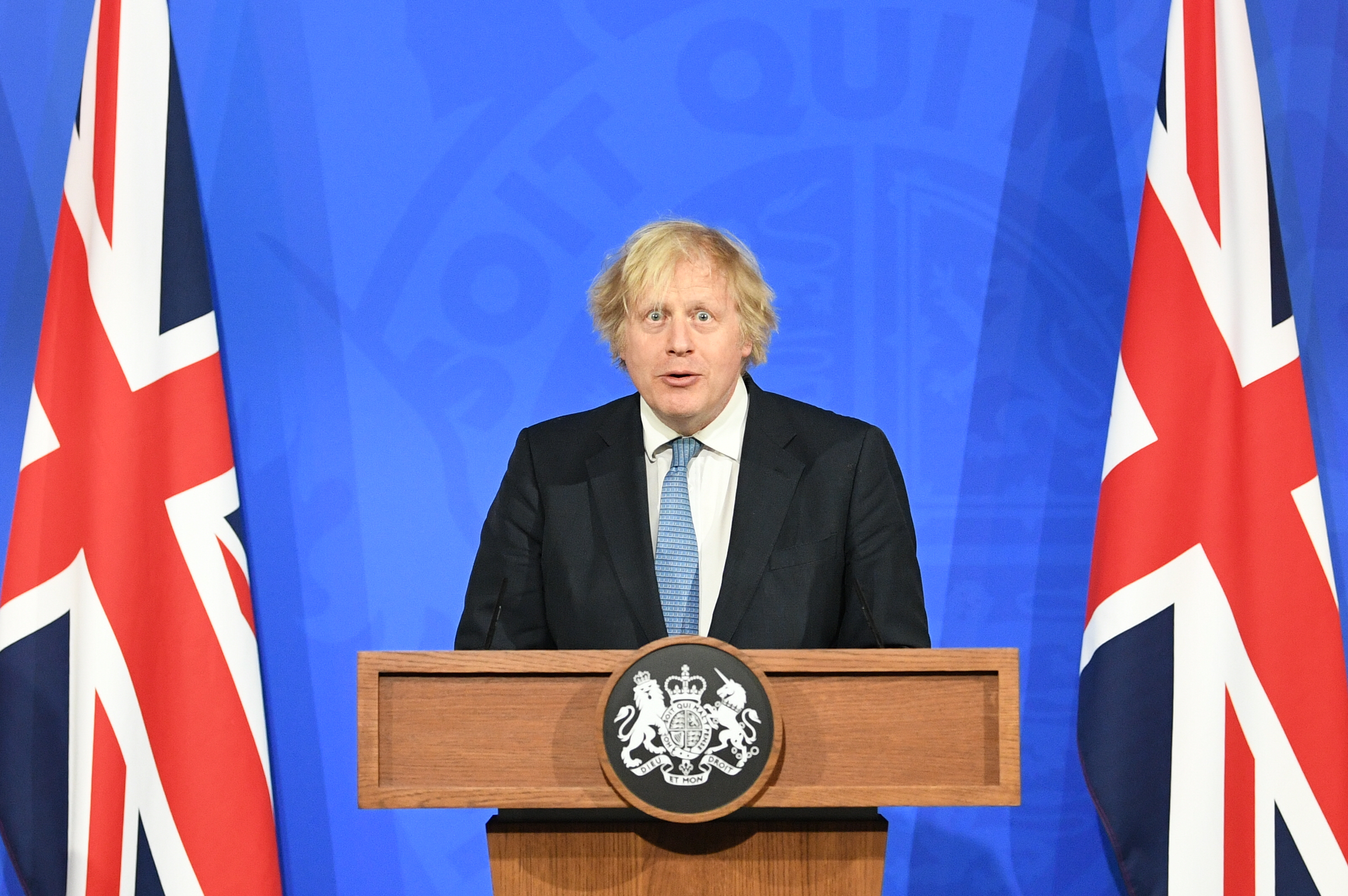
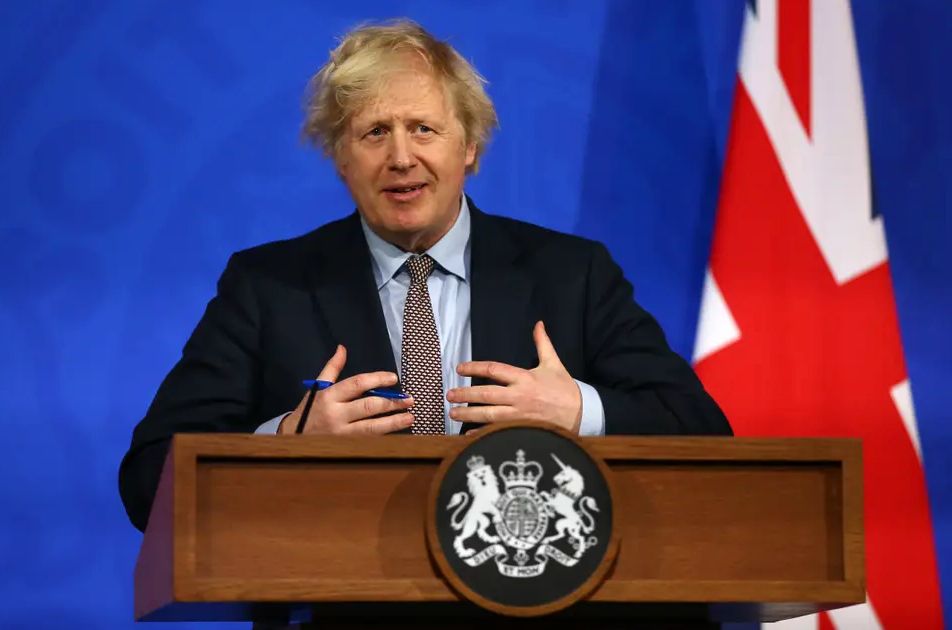
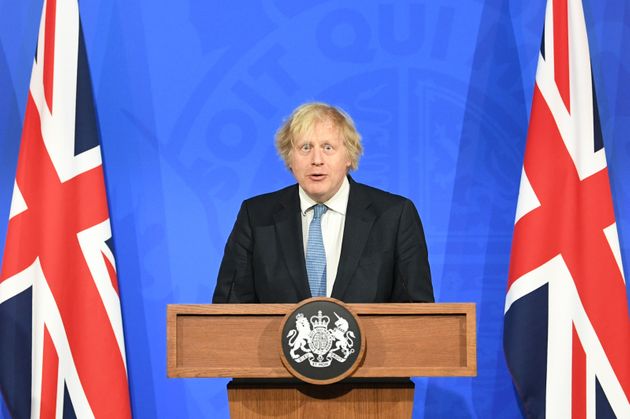
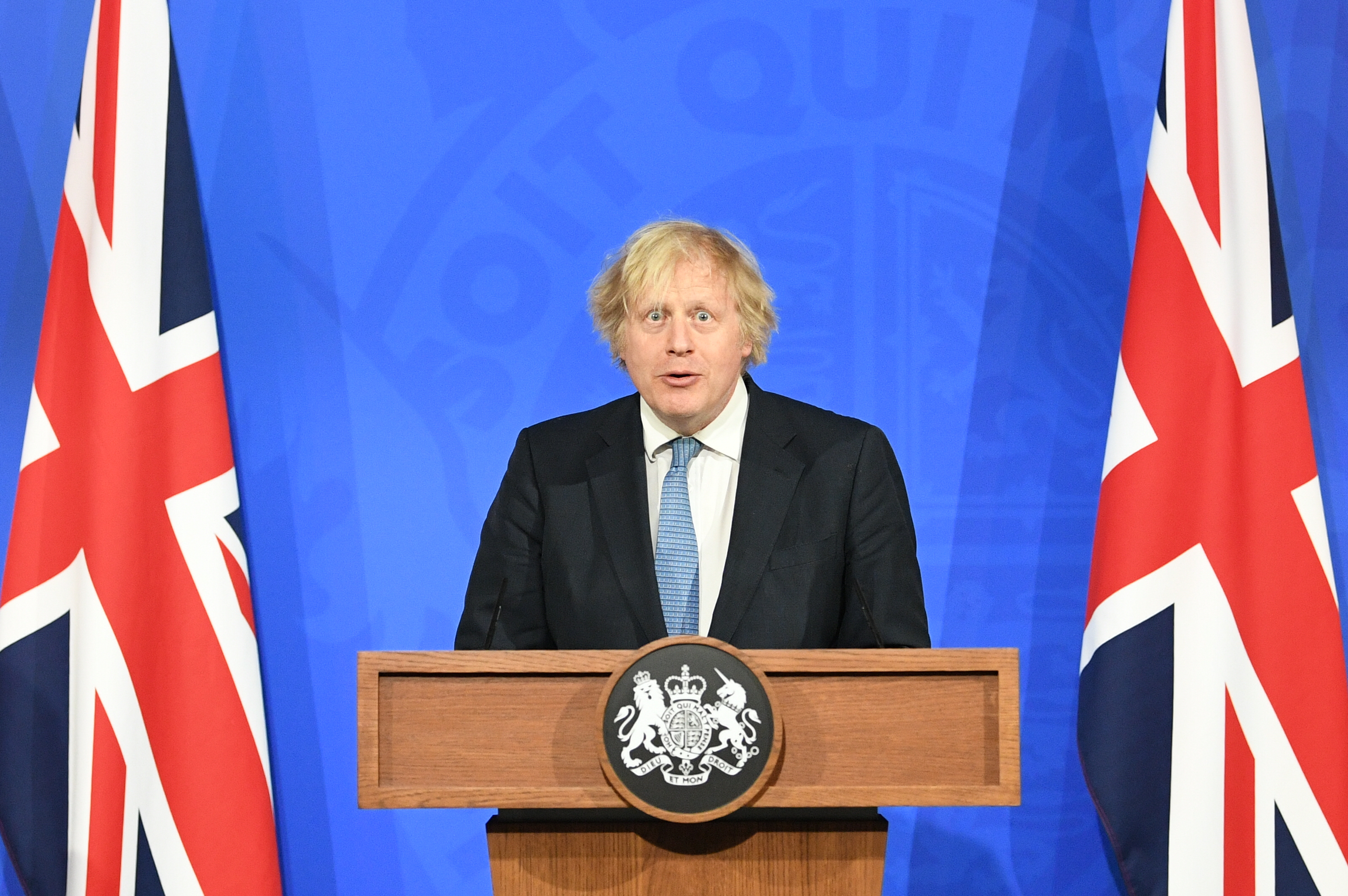
Prime Minister Boris Johnson, during a media briefing in Downing Street, London, on coronavirus (Covid-19). Picture date: Monday April 5, 2021.

Boris Johnson broke ministerial rules and misled the public when he launched on “unprompted political attack” on Sadiq Khan using the government’s new £2.6m Downing Street press room, Labour has said. 

The prime minister was reaching the end of a televised briefing on the Covid pandemic when he made false claims about the London mayor and Transport for London (TfL) budget. 

Johnson, Khan’s predecessor at City Hall, claimed he left TfL’s finances in “robust, good order”, and the current mayor had blown a “black hole” in the budget with a fares freeze. 

The complete collapse in passenger numbers since Covid hit, however, has seen government agree a £1.6bn bailout in May, followed by a £1.8bn deal in November.

A TfL report published a month before Johnson left office in 2016 also showed TfL had a nominal debt of £9.1bn.

Labour deputy leader Angela Rayner has now written to cabinet secretary Simon Case calling for him to investigate and for the PM to apologise. 

She alleges Johnson broke the ministerial code by using government resources – the Downing Street press room – for political campaigning during an election period. 

It comes ahead of local elections in May, including at City Hall. 

The code, which governs ministers’ conduct, states: “Official facilities and resources may not be used for the dissemination of party political material”.

Rayner writes: “The attack was political in nature, unprompted, and entirely unrelated to either the topic of the press conference or the question the prime minister was asked.” 

The deputy leader also hit out at Johnson’s decision not to sack home secretary Priti Patel after a formal investigation found evidence that she bullied civil servants. 

Ethics adviser Alex Allan quit after Johnson ruled Patel should stay in post. 

Rayner said: “The ministerial code, by which government ministers are bound, clearly states that official facilities and resources may not be used for the dissemination of party political material.

“This includes the prime minister’s new media briefing room, which cost the British taxpayer £2.6 million.

“The prime minister has a lot of experience with the ministerial code – his home secretary was found to have breached it after bullying staff, prompting his independent advisor on ethics and ministerial standards to resign.

“The British people would rightly not expect a prime minister who has spent so much first-hand experience of dealing with matters relating to the Code to be so blatant in flouting it during a pre-election period.”  

Rayner states that in the four years Sadiq Khan was mayor before Covid hit, he reduced the operating deficit of TfL, left by the previous mayor, by 71%. 

But Johnson said during the press briefing on Monday: “As for the finances of TfL I must respectfully remind you that I left them in robust, good order. It is not through any fault of my own the current Labour mayor decided to blow them all on an irresponsible fares policy. 

“We are doing our best to help them out and we will continue to do so. But I’m afraid you have to look at some of the decisions that were taken by the current Labour mayor as well.

“I hesitate to make a point like that but since you rightly draw attention to the fact I’m a proud former mayor of London I do think we could look at the way TfL is being run.” 

The Cabinet Office confirmed the letter had been received.
Share Button

Labour MPs Told The Party Will Vote Against Domestic Vaccine Passports

Labour MPs have been told the party will vote against coronavirus vaccine passports as things stand, setting up a high stakes showdown between Boris Johnson and Tory rebels.

A briefing sent to Labour MPs from the parliamentary Labour party (PLP) office said that the current position is to oppose in a Commons vote any measures to require people to show proof of vaccination to access shops or pubs.

The government on Monday said vaccine passports could be used by pubs and restaurants to relax social distancing rules, from May 17 at the earliest.

More than 40 Tory MPs have already signed a cross-party letter opposing the idea.

If that many rebelled in a future vote, it could be enough to join forces with Labour an other opposition parties to defeat the prime minister, if he decides to roll out the measures.

Vaccines minister Nadhim Zahawi told Times Radio that “of course we will go to parliament for a vote” if Johnson decides to proceed with passports.

The briefing confirms Labour will vote against the measures, as things stand, as the party believes they will be discriminatory.

It asks the question “how will Labour vote on vaccine and test certification”, before answering: “On the basis of what we’ve seen we would oppose domestic vaccine passports.

“Labour’s focus would be on getting the vaccine out, fixing self-isolation and contact tracing”.

But the party left the door open to backing testing certification that could, for example, allow people to attend large events after a negative Covid test.

Earlier, shadow health secretary Jon Ashworth told the BBC: “I’m not going to support a policy that, here in my Leicester constituency, if someone wants to go into Next or H&M, they have to produce a vaccination certificate on their phone, on an app.

“I think that’s discriminatory.”

A senior Labour source said: “On the basis of what we’ve seen and discussed with ministers, we oppose the government’s plans for domestic vaccine passports.

“They appear poorly thought-through, will put added burdens on business and run the risk of becoming another expensive Whitehall project that gets outsourced to friends of Tory ministers.”

On Monday, a government review said ministers believe “that there are some settings (such as essential public services, public transport and essential shops) where Covid-status certification should never be required, in order to ensure access for all”.

But it added: “Equally, Covid-status certification could potentially play a role in settings such as theatres, nightclubs, and mass events such as festivals or sports events to help manage risks where large numbers of people are brought together in close proximity.

“It is possible that Covid-status certification could also play a role in reducing social distancing requirements in other settings which people tend to visit more frequently, for example in hospitality settings.”

Share Button

UK’s Vaccine Rollout ‘On Track’ Despite Sharp Slowdown In Jabs

Yui MokPA

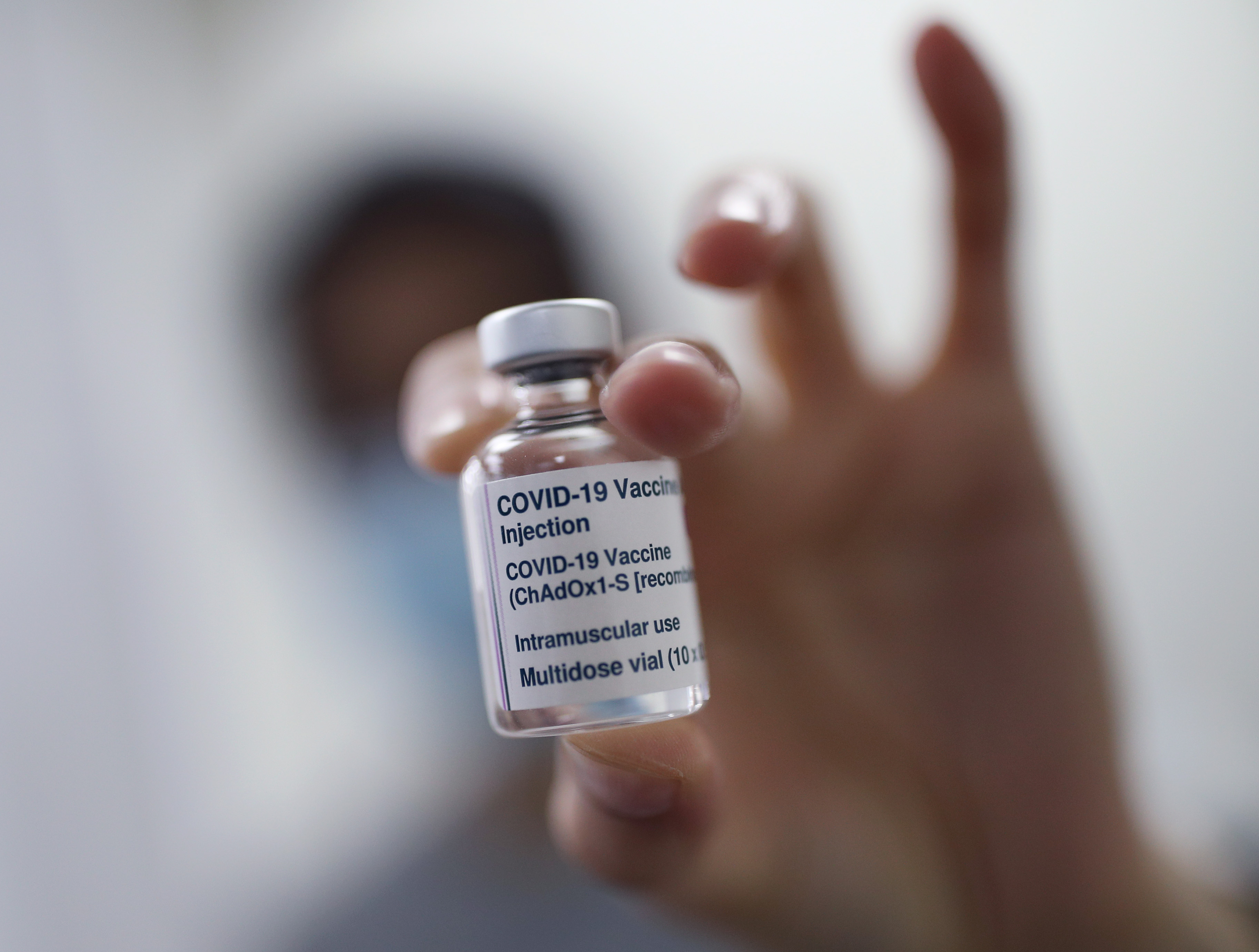
A vial of the Oxford/AstraZeneca coronavirus vaccine.

The number of people receiving a Covid-19 vaccine in the UK daily has fallen by around 75% in the last week as the supply of the jab has been squeezed.

Minsters revealed last month there would be a “significant reduction” in doses from the end of March, raising questions about whether the programme’s target dates will be met and when under-50s would be innoculated.

Supplies of vaccines in April have been constrained by the need to test a batch of 1.7 million doses and delays in a shipment of around five million from India.

Government data up to April 5 shows that first doses were given to 40,744 people on the previous day, and 64,590 got a second dose – or 105,334 in total. The number of people being injected with their first shot was the lowest since records began on January 10. A day earlier, just 95,763 people received one of their two doses. 

By contrast, just a week earlier – March 29 – 405,039 doses were distributed. And on March 5, the figure stood at 494,235. 

While the fall may seem steeper than billed, Downing Street on Tuesday moved to allay fears – insisting all adults will be offered a coronavirus vaccine by the end of July as planned.

Some 25m people have so far had a first dose of either the AstraZeneca or the Pfizer vaccine in the UK, while just under 1.8m have had both shots. The government is aiming to vaccinate all over-50s by mid-April and everyone else by the end of July.

The Cabinet Office has indicated that an average of 2.7 million doses a week will be given in England until the end of July, down from a previous estimate of 3.2 million.

The prime minister’s official spokesperson refused to be drawn on “details around supplies and deliveries” of vaccine doses but said “we remain on track” to meet the targets set for the programme.

But the Cabinet Office scenario, provided to experts on the Scientific Pandemic Influenza Group on Modelling (Spi-M) suggests the squeeze on supplies may continue for months.

Papers produced by Spi-M on February 17 were based on an average of 3.2 million doses a week until the end of July and 3.9 million thereafter.

Spi-M said the central scenario provided by the Cabinet Office for its March 31 paper was “considerably slower”, with 2.7 million weekly doses until the end of July and two million from then on.

A slower scenario suggested that just 2.5 million weekly doses might be available.

The Spi-M summary notes that the two scenarios produced by the Cabinet Office “may not reflect the situation most likely to occur”.

The PM’s spokesperson added: “The health secretary set out a couple of weeks ago now the fact that there will be a slight reduction in April but the key thing to remember is that doesn’t mean that we are not on track to hit our pledges.

“We remain on track to vaccinate all those in phase one by April 15, we remain on track to vaccinate or provide the first dose to all adults by the end of July.”

The rollout will be boosted by the introduction of Moderna jabs later in April alongside the Pfizer and AstraZeneca vaccines already being used.

“I’m not going to get into the specifics of how many we will get this month,” the spokesperson said, but “we will have three vaccines that we are able to distribute and that will ensure that we can continue to make sure we are giving people their first doses as well as giving more and more people their second doses”.

Some 26.7 million people in England have had a first dose, the equivalent of 60% of the adult population, leaving around 17.5 million adults needing their initial jab to meet the end-of-July target.

Share Button

Too Soon To Book Foreign Summer Holidays, Government Says

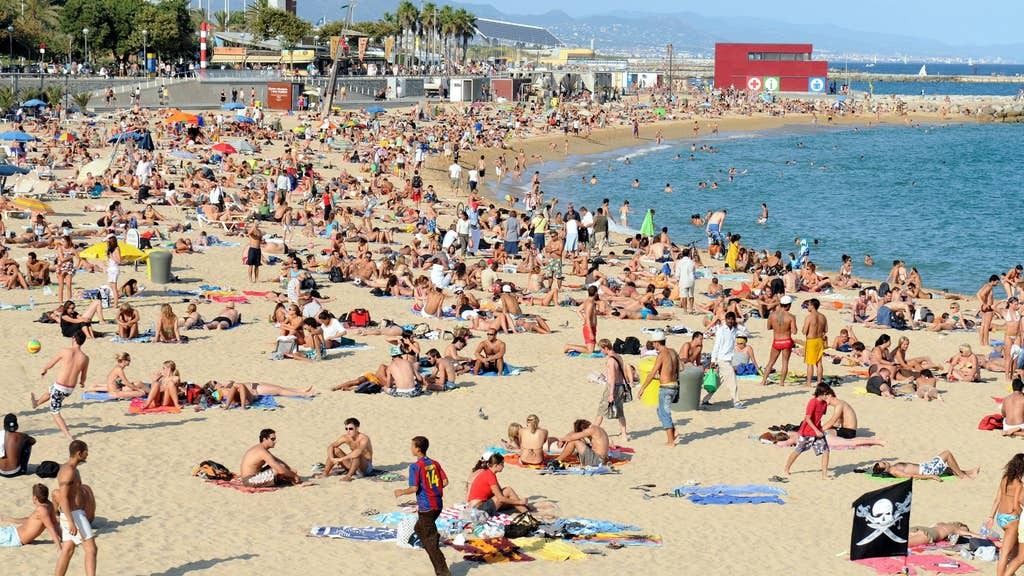
The government has urged Brits not to book foreign summer holidays yet despite lockdown measures easing as Boris Johnson warned of the risk of re-importing Covid-19.

The prime minister told a news conference he was “hopeful” that non-essential international travel would restart from May 17, but that he did not want to underestimate the growing number of Covid-19 cases elsewhere.

Britain plans to use a traffic-light risk system for countries once international travel resumes, but the government said it was too early to say which countries could be given the green light that would only require coronavirus tests before and after travel.

A government review published on Monday said: “Taking into account the latest situation with (coronavirus) variants and the evidence about the efficacy of vaccines against them, we will confirm in advance whether non-essential international travel can resume on 17 May, or whether we will need to wait longer before lifting the outbound travel restriction.”

It added: “The government advises people not to book summer holidays abroad until  the picture is clearer.”

At the Downing Street briefing, Johnson said: “Obviously we are hopeful that we can get going from May 17, but I do not wish to give hostages to fortune or to underestimate the difficulties that we are seeing in some of the destination countries that people might want to go to.

“We don’t want to see the virus re-imported from another country. Plainly there is a surge in other parts of the country, and we have to be mindful of that.”

Reports have suggested countries on the green list, requiring testing before and after travel, could include Portugal, Malta, Israel, the United Arab Emirates and the US.

Under Johnson’s original plan, international travel would not resume until May 17 at the earliest. Countries on the amber list would require self-isolation. Those on the red list would require quarantine.

Airlines such as easyJet, Ryanair and British Airways, plus holiday groups such as TUI, hope to avoid a second lost summer but Covid-19 cases have risen in continental Europe.

Johnson said a planned reopening of the economy could take place next week, with the opening of all shops, gyms, hairdressers and outdoor hospitality areas in England.

With the vaccine programme rolling out rapidly across Britain and infection numbers falling, Johnson said England could proceed to Stage 2 of his roadmap out of lockdown from April 12.

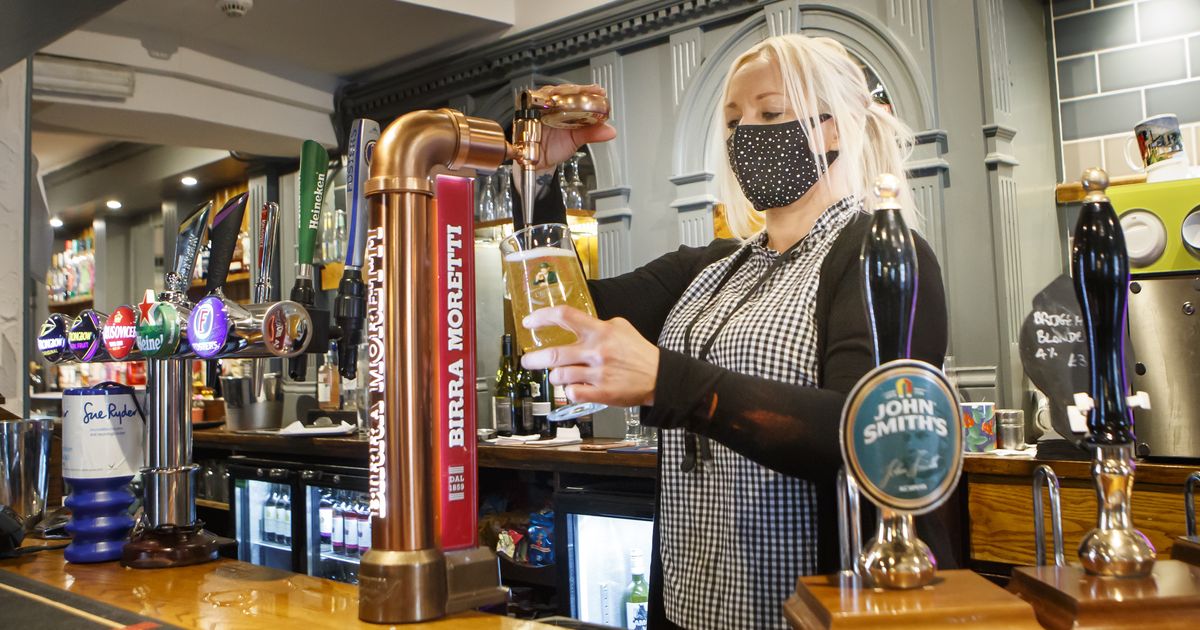
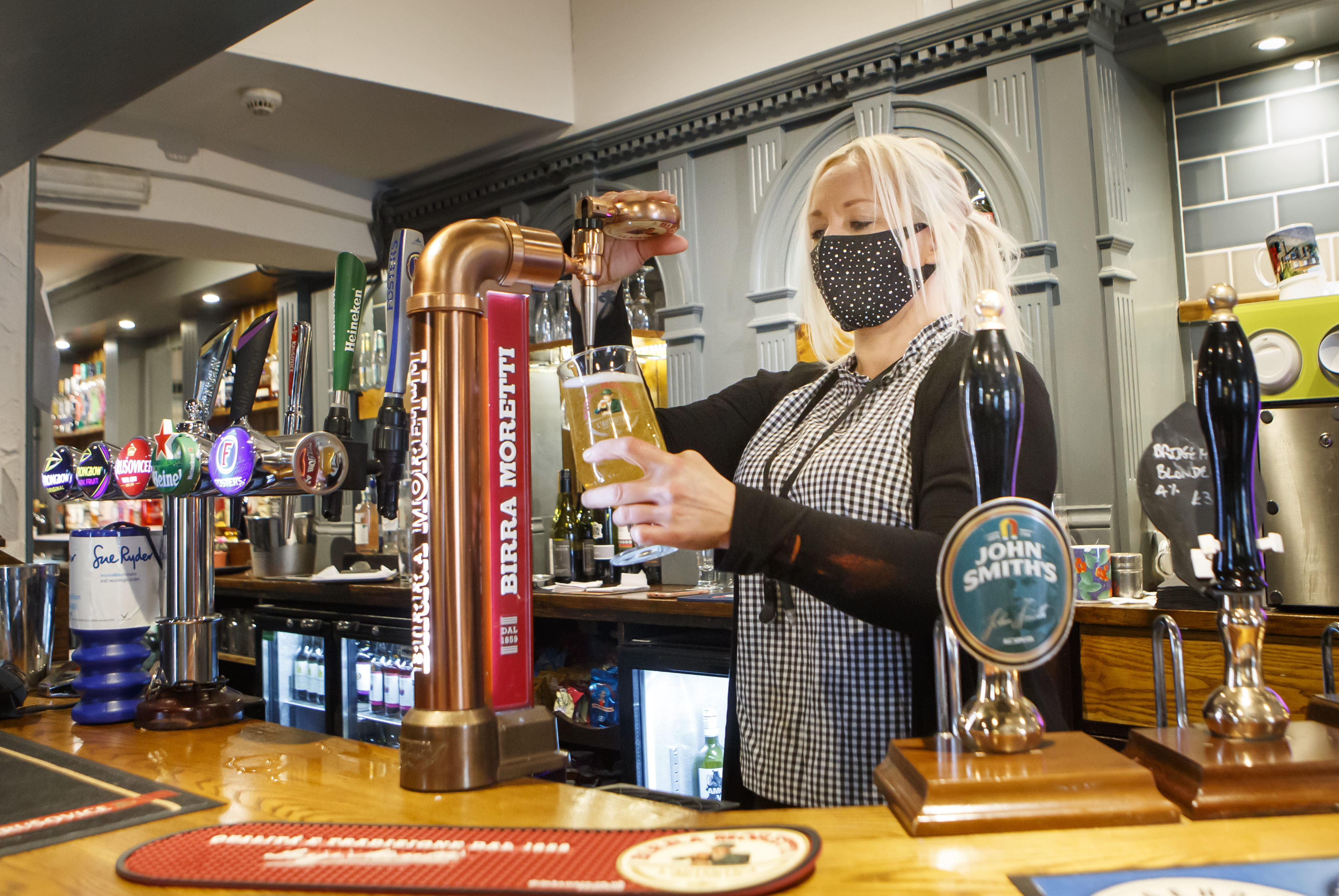
“On Monday the 12th, I will be going to the pub myself – and cautiously but irreversibly raising a pint of beer to my lips,” Johnson said.

Britain said people should continue to work from home where they can and minimise domestic travel.

Johnson also confirmed that the government was looking at a Covid-19 status certification system, or vaccine passport, to help reopen larger events and to travel.

“I want to stress that there are complicated, ethical, and practical issues… raised by the idea of Covid status certification… using vaccination alone,” Johnson said.

“You’ve got to be very careful in how you handle this and … don’t start a system that’s discriminatory.”

People will not need vaccine certification for pubs, hairdressers and shops, Johnson said.

Share Button

Vaccine Passports Could ‘Play A Role’ For Pubs, As Boris Johnson Relaxes Lockdown

Vaccine passports could be used by pubs and restaurants to relax social distancing rules, the government has confirmed, but not before May 17.

Speaking at a No.10 press conference on Monday, Boris Johnson announced the hospitality industry in England will be able to begin serving outdoors from April 12.

Non-essential retail, hairdressers and gyms will also be allowed to reopen as the government’s roadmap for lifting lockdown remains on course. 

Overnight stays away from home in England will also be permitted and self-contained accommodation can also reopen.

The prime minister said the easing of rules was “fully justified by the data”, but warned the public not to be “complacent” about the virus.

It came as the government said a Covid-status “certification system” will be developed over the coming months which could allow “higher-risk settings” to be opened up “more safely and with more participants”.

Johnson said there were “ethical and practical issues” involved in their introduction but some test events will be launched in the next few weeks.

The passports are expected to show whether someone has received the vaccine, has recently tested negative for Covid, or has “natural immunity” having tested positive in the previous six months.

In its review, published as Johnson spoke, the government said it “believes that there are some settings (such as essential public services, public transport and essential shops) where Covid-status certification should never be required, in order to ensure access for all”.

But it added: “Equally, Covid-status certification could potentially play a role in settings such as theatres, nightclubs, and mass events such as festivals or sports events to help manage risks where large numbers of people are brought together in close proximity.

“It is possible that Covid-status certification could also play a role in reducing social distancing requirements in other settings which people tend to visit more frequently, for example in hospitality settings.”

Such a move would be “further considered in consultation with industry”, the review added, amid widespread opposition. 

More than 70 Tory MPs have already signed a cross-party letter opposing the introduction of passports.

Labour leader Keir Starmer has described them as “un-British” but has yet to set out whether he would back the scheme or not.

It raises the prospect of the government being defeated in any Commons vote held to approve the scheme.

Asked if parliament would vote, Johnson said it was “too many fences at once” to know yet.

The PM also did not rule out children being required to have vaccine passports should they be implemented, only saying such a choice was “a way off”.

Holidays abroad will still be illegal from April 12 and the ban will not be lifted until May 17 at the earliest.

But Johnson unveiled a new “traffic light” system for international travel, which will see destinations rated green, amber or red depending on how each country is dealing with its Covid outbreak.

Travellers arriving from countries rated green will not be required to isolate although pre-departure and post-arrival tests will still be needed.

For those classed as amber or red, the restrictions will remain as they are with arrivals required to isolate at home or quarantine in government-approved hotels.

As part of its plan to reopen the domestic economy, the government has also promised to supply everyone in England with two quick-result lateral flow tests each week in a bid to cut the chain of transmission.

The tests, which are being widely used in schools, can provide results in as little as 30 minutes, with the two-tests-per-week available from April 9.

More than 31 million people in the UK have now received at least one dose of a vaccine.

Share Button

Tory MP Dame Cheryl Gillan Dies After Long Illness

Victoria Jones – PA Images via Getty Images

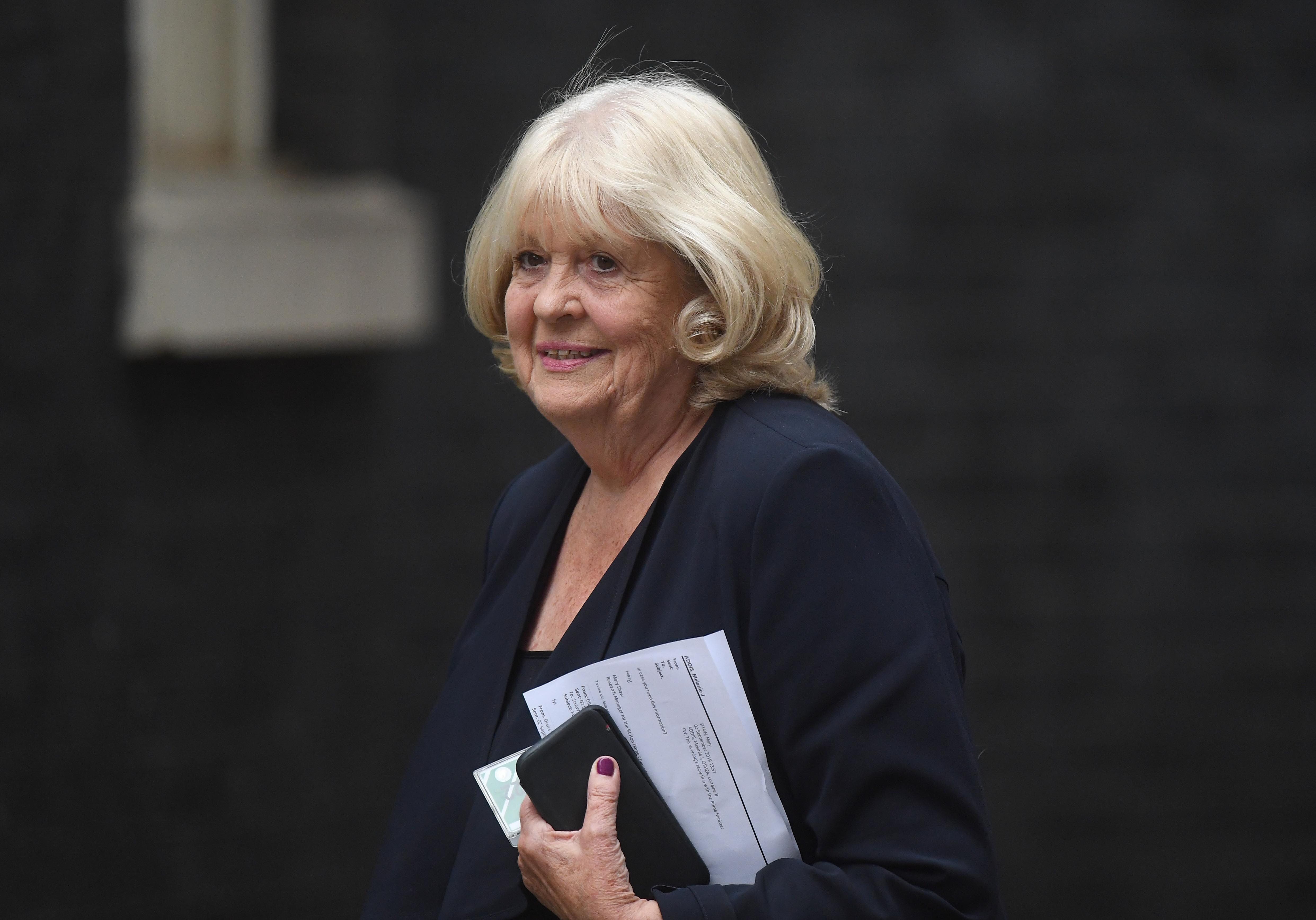
Dame Cheryl Gillan arriving for meeting being held at 10 Downing Street, central London. (Photo by Victoria Jones/PA Images via Getty Images)

Former Welsh secretary Dame Cheryl Gillan has passed away at the age of 68 after a lengthy illness, the Conservative Party has confirmed.

Boris Johnson said the former cabinet minister would be “sorely missed” and described her as a “great servant”.

“I’m very sad to hear the news of the death of Dame Cheryl Gillan,” he said in a tweet.

“She was a great servant to the people of Chesham and Amersham, to the Conservative Party and to the country as secretary of state for Wales.

“Always full of wise advice and good humour, she was much loved on all sides of the House of Commons and will be sorely missed.

“My sincere condolences to her family and friends.”

An MP since 1992,  the noted anti-HS2 campaigner had made a “huge contribution to public life”, said co-chairman of the Conservative Party Amanda Milling.

“It was incredibly sad to hear that Dame Cheryl Gillan MP passed away at the weekend,” Milling added.

“Cheryl had been ill for some time, but battled her illness with great stoicism and grace.

“Cheryl was a dedicated parliamentarian for many decades, serving in the Cabinet and she made a huge contribution to public life and our Party.

“Our thoughts and prayers are with Cheryl’s family and friends.”

Share Button

More Than 100 People Arrested At London ‘Kill The Bill’ Protest

The Metropolitan Police said 107 people were arrested in London on Saturday as demonstrations were held across England against plans to increase police powers.

Thousands of people marched in towns and cities in protest against the Police, Crime, Sentencing and Courts Bill, despite the Covid-19 lockdown.

The proposed legislation would give police in England and Wales more powers to impose conditions on non-violent protests – including those deemed too noisy or a nuisance, with those convicted liable to fines or jail terms.

Throughout Saturday, police dealt with what they said were “peaceful” Kill the Bill protests in areas including London, Newcastle, Birmingham, Liverpool and Dorset.

On Sunday, Scotland Yard said 107 people were arrested for a range of offences during the demonstration in central London.

The alleged offences included breach of the peace, violent disorder, assault on a police officer and breaches of coronavirus legislation.

The force previously said 10 officers had been injured, though “none of these are believed to be serious”.

Footage shared on social media appeared to show the arrests of legal observers, who typically monitor the actions of police during demonstrations.

One woman was also arrested on suspicion of possession of an offensive weapon.

Outcomes await for those who have been arrested, the force added.

Commander Ade Adelekan said: “While our advice to people remains not to attend large gatherings, the vast majority of people who attended central London yesterday adhered to social distancing, and engaged and listened to my officers.

“However, as the afternoon wore on it became clear that a small number of people were intent on remaining to cause disruption to law-abiding Londoners.

“Despite repeated instructions from officers to leave, they did not and, amid increasing levels of disorder, arrests were made.

“We should not allow the behaviour of a few individuals who attend these events with the purpose of committing criminal acts to taint the good behaviour of the majority who attended yesterday.”

In Bristol, Avon and Somerset Police said more than 1,500 people attended a protest in the city.

The M32 motorway was temporarily closed to inbound traffic at junction 3 when a smaller group of protesters occupied the road.

At around midnight, a section 35 dispersal order was issued for the city centre following “several instances of minor disorder between protesters”, police said.

Seven people were later arrested.

Superintendent Mark Runacres said: “At around midnight there were several altercations between the small number of people who remained in the city centre. We never tolerate violence and so we made the decision to move people on.

“It’s disappointing that once again there were those who refused to listen to our requests to leave and that we had to make arrests.”

There was a low-key response from Northumbria Police as hundreds of people gathered beneath Grey’s Monument in Newcastle.

Protesters, including one who held up a placard saying “we will not be silenced”, cheered as a singer with a guitar performed in opposition to the proposed Bill.

Many took the knee at the Civic Centre and held a minute’s silence for victims of oppression, after which a round of applause broke out.

Dorset Police thanked those who took part in “peaceful protests” in Bournemouth and Weymouth and stuck to the Covid-19 restrictions.

Share Button

PM To Detail ‘Traffic Light’ System For Overseas Holidays And Travel

Boris Johnson is to outline plans for the easing of coronavirus restrictions on foreign travel from England, potentially opening the way for holidays abroad this summer.

The PM will announce details on Monday of a “traffic light” system for rating overseas destinations, lowering controls on journeys to those countries assessed as being at the lowest risk.

Officials stressed travel would not begin before May 17 at the earliest and that it was still too soon to predict which countries would be cleared.

The advice remains that people should wait for the full report of the government’s global travel task force due on April 12 before booking a holiday.

It comes as many European countries are imposing new lockdown restrictions as a third wave of the pandemic spreads across the continent.

Under the traffic light system, assessments will be based on a range of factors, including the proportion of a country’s population which has been vaccinated, rates of infection, emerging new variants and the country’s access to reliable scientific data and genomic sequencing.

Travellers arriving from countries rated “green” will not be required to isolate although pre-departure and post-arrival tests will still be needed.

For those classed as “amber” or “red”, the restrictions will remain as they are with arrivals required to isolate or enter quarantine.

The industry body, Airlines UK, which has been calling for some type of traffic light system, said it was important that mass air travel was able to resume soon.

“There are tens of thousands of jobs dependent upon aviation and restarting travel, and the sector cannot survive another lost summer with little or no revenue,” said chief executive Tim Alderslade.

“We can do this proportionately and in a risk-based way, it’s not a question of opening up the border to every country out there.

“If there are concerns about variants restrictions will remain but where it is safe to do so we need to start the process of opening up.

“We cannot with a straight face talk about Global Britain without aviation.”

Share Button

These Are The First Mass Events You Might Be Able To Attend

The government is to begin trials to enable the safe return of crowds to mass gatherings including Wembley football cup finals and indoor events such as comedy clubs as it prepares to launch its so-called “vaccine passport”.

People attending a range of sporting events, conferences and clubs will be tested both before and after in the next step towards the easing of restrictions in England.

Ministers said the scheme, which will include the FA Cup final at Wembley, will be used to gather scientific evidence on how venues can reopen without the need for social distancing.

However the move is likely to prove controversial with many MPs deeply concerned about the implications for civil liberties of requiring people to prove whether they are clear of the disease in order to attend certain events.

More than 40 Tories have signed a letter publicly opposing the use of vaccine passports in a campaign which has brought together ex-Conservative and Labour leaders Sir Iain Duncan Smith and Jeremy Corbyn.

Cabinet Office minister Michael Gove, who has led the task force responsible for drawing up the plans, acknowledged it raised “a host of practical and ethical questions” which needed to be resolved before there could any wider rollout.

However he said that it was essential that the government took the lead, otherwise venues and other businesses would simply begin setting up their own certification schemes.

“These questions aren’t easy to resolve but I don’t think we can duck them,” he said in an article for The Sunday Telegraph.

“Unless the government takes a lead we risk others establishing the rules of the road.”

The first trial is due to take place on April 16 at the Hot Water Comedy Club in Liverpool with an audience of 300 to be followed two days later by the FA Cup semi-final at Wembley with a crowd of 4,000.

Other events where the scheme is to be tested include the World Snooker Championship at the Crucible Theatre in Sheffield, running from April 17 to May 3, and a mass participation run at Hatfield House on April 24 and 25.

The pilots will culminate with the FA Cup final on May 15, again at Wembley but this time with a crowd of 21,000.

People attending the trials will have to adhere to an agreed code of behaviour when they purchase a ticket and to take a Covid test both before and after the event.

They will be required to follow existing government guidance, including wearing face coverings, and to provide contact details of everyone in their group for NHS Test and Trace.

Health secretary Matt Hancock said: “By piloting a range of measures to reduce transmission, we can gather vital scientific evidence to inform our plans for allowing events in the future.”

At the same time the government is working on the development of a “Covid status certification” scheme, the so-called “vaccine passport”.

Ministers have said that it could involve the use of the NHS app, although they acknowledge there will have to be an option for paper certificates for those who do not have access to the digital option.

In developing the scheme, officials will take into account three factors, whether an individual has received the vaccine, has recently tested negative for the virus, or has “natural immunity” having tested positive in the previous six months.

Ministers believe the scheme will be most useful in managing the risks where the are large numbers of people in close proximity such as music festivals, sporting matches and nightclubs.

Settings where certification will not be required include essential shops and public transport.

It will also not apply initially to businesses which are set to reopen over the coming weeks such as pubs, restaurants and non-essential retail.

Officials are working with clinical and ethical experts to ensure there are “appropriate exemptions” for people who are advised to the vaccine and for whom repeat testing would be difficult.

Boris Johnson, who will set out more details on Monday, said: “We have made huge strides over the past few months with our vaccine programme and everyone in the country has made huge sacrifices to get us to this stage in our recovery from Covid-19.

“We are doing everything we can to enable the reopening of our country so people can return to the events, travel and other things they love as safely as possible, and these reviews will play an important role in allowing this to happen.”

The PM will also outline the government’s approach for easing restrictions on foreign travel when its global travel task force reports on April 12.

Ministers have made clear that the ban on foreign travel will remain in place until at least May 17.

When it is finally lifted, it will be replaced by a risk-based “traffic light” system with red, amber and green ratings for countries around the world.

This will be based on a range of factors, including the proportion of the population that has been vaccinated, rates of infection, emerging new variants and the country’s access to reliable scientific data and genomic sequencing.

Travellers arriving from countries rated “green” will not be required to isolate although pre-departure and post-arrival tests will still be needed.

For those classed as “amber” or “red”, the restrictions will remain as they are with arrivals required to isolate or enter quarantine.

Share Button

How Controversial Covid Vaccine Passports Could Work

The possible introduction of domestic vaccine passports in England has been hailed as “useful for us as we go forward” but also been branded “dangerous” and “discriminatory”.

Prime minister Boris Johnson has suggested that vaccine certification has a role to play as the nation seeks ways to safely ease out of lockdown.

But a cross-party group of politicians, including some Conservative MPs, fear a vaccine passport scheme could be “divisive”.

This is how they might work and why they are controversial.

How could a vaccine passport scheme work?

Any scheme is likely to go beyond just showing whether someone has had a vaccine – as jabs are not mandatory – but would also cover whether they have had Covid-19, and so are likely to have antibodies, or if they have had a recent negative test.

The finer details of how any scheme could work remain unclear but the Government is expected to issue an update on its plans this month.

Where could they be used?

Culture secretary Oliver Dowden has suggested that vaccine passports will not be introduced on a “permanent basis” but they could be a beneficial “tool in the short term” to safely reopen venues.

This could potentially include hospitality venues, music events and theatres.

Johnson has suggested a certificate could give “maximum confidence” to businesses and customers as society reopens.

Last week, he said it “may be up to individual publicans” whether they carry out health certificate checks on punters before allowing them into their premises.

It could mean pub landlords may be able to scrap social distancing if they check Covid health certificates on entry, and allow them to operate at much higher capacity.

On an international level, some countries are already working on requirements for people to prove their status before arriving. The European Union is working on a digital green certificate showing if someone is vaccinated, has a negative test or has recovered from Covid-19.

Has there been opposition to the idea?

More than 70 MPs, including 40 Conservatives, as well as peers from the House of Lords, have launched a campaign to oppose the introduction of vaccine passports in England, claiming they would be “divisive and discriminatory”.

A pledge, signed by former Labour leader Jeremy Corbyn as well as other prominent figures such as Conservative former leader Sir Iain Duncan-Smith, Labour former shadow chancellor John McDonnell and ex-Lib Dem leader Tim Farron, warns the Government against bringing in the scheme.

Baroness Chakrabarti, who warns that using coronavirus certificates could create a “checkpoint Britain,” told BBC Radio 4’s Today programme: “It’s one thing to have a passport to travel internationally, that is a privilege, even a luxury, but participating in local community life is a fundamental right.”

What about the hospitality industry?

The British Beer and Pub Association (BPPA) fears that a move to recommend that pubs and other hospitality venues must demand proof of immunity from people to allow them to enter – with the threat of fines for venues if non-compliant – could prevent millions of young people visiting the pub for months, unless they get themselves tested in advance.

BBPA chief executive Emma McClarkin says vaccine passports could feel like they are discriminating against sections of the population who have not had the jab, such as pregnant women.

Are any test events planned?

Reports suggest a series of pilot tests for certificates are being planned, which could include the FA Cup final and other sporting events in May.

The England and Wales Cricket Board is also exploring the possibility of using coronavirus passports to allow fans into County Championship games this summer.

With a date of June 21 in mind, the ECB’s managing director of county cricket, Neil Snowball, said: “It is going to be a question of balancing three things.

“One, if there is going to be some sort of passport or Covid certification, second is testing, third is some sort of social distancing and we have said we will do whatever we are asked to do to make sure we can get the maximum number of people back.

“The ideal would be some sort of certification with an element of social distancing and probably wearing masks.”

What issues could delay the plans?

The easing of restrictions is dependent on the continued success of the coronavirus vaccine rollout and further reductions in infection rates.

Capacities at sporting events will also be determined by the success of a number of pilot events taking place from mid-April.

Share Button