A 480-million-year-old parasite still infects oysters today

A surprising new study has revealed that a parasite still troubling modern oysters first began infecting shell-dwelling sea creatures hundreds of millions of years before the dinosaurs vanished.

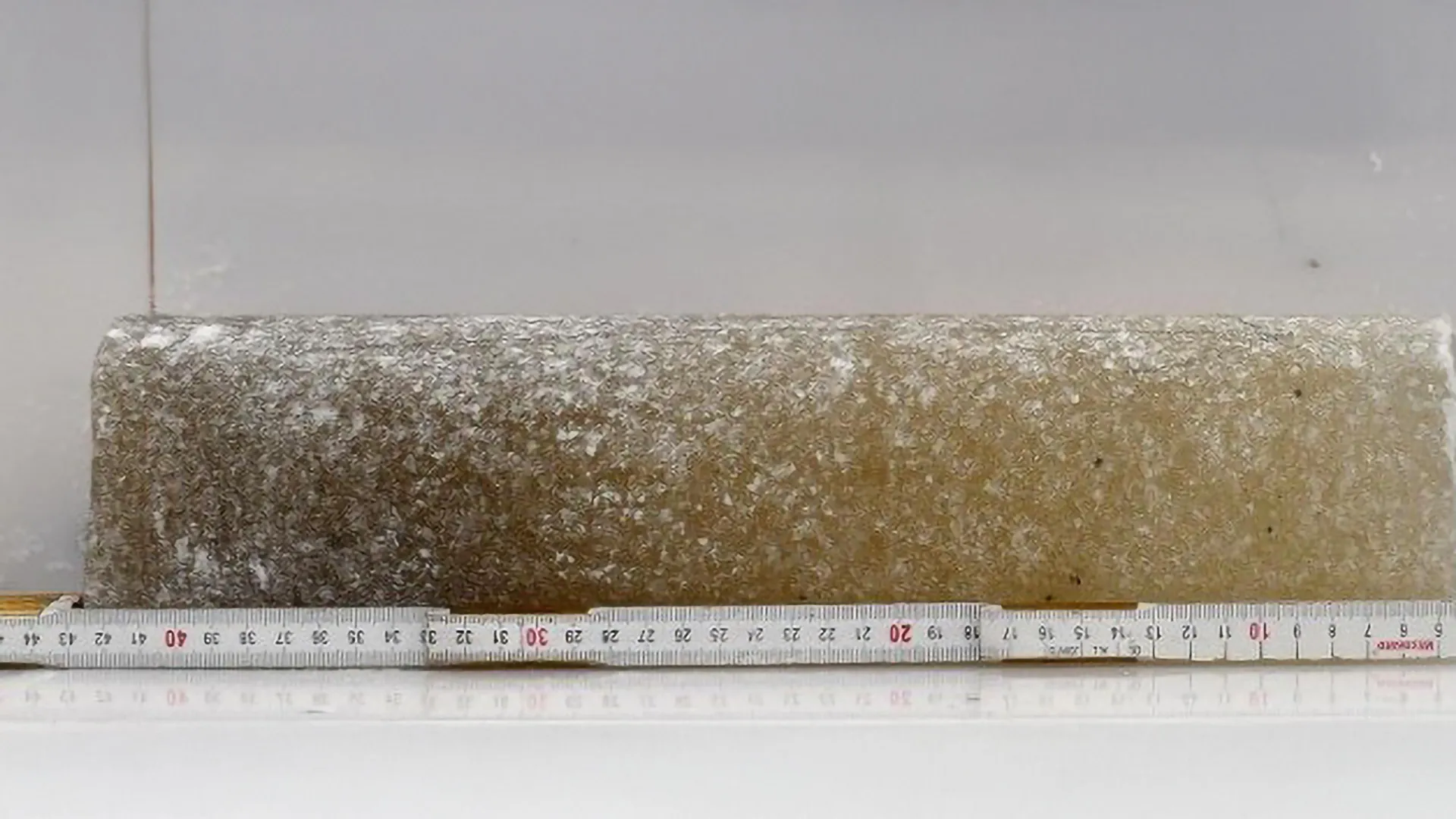
Researchers reporting in iScience used high-resolution 3D imaging to examine 480-million-year-old fossil shells from Morocco, a site famous for its exceptionally preserved marine life. The scans uncovered a pattern of unusual markings etched both on the surfaces of the shells and inside them.

“The marks weren’t random scratches,” explained Karma Nanglu, a paleobiologist at UC Riverside and lead author of the study. “We saw seven or eight of these perfect question mark shapes on each shell fossil. That’s a pattern.”

Javier Ortega-Hernandez, a Harvard evolutionary biologist and co-author, recalled the team’s initial confusion. “It took us a while to figure out the mystery behind these peculiar-looking traces. It was as if they were taunting us with their question mark-like shape,” he said. “But as often happens, we came across the answer while deep in obscure literature before our eureka moment.”

Ancient Worms Behind the Mystery Marks

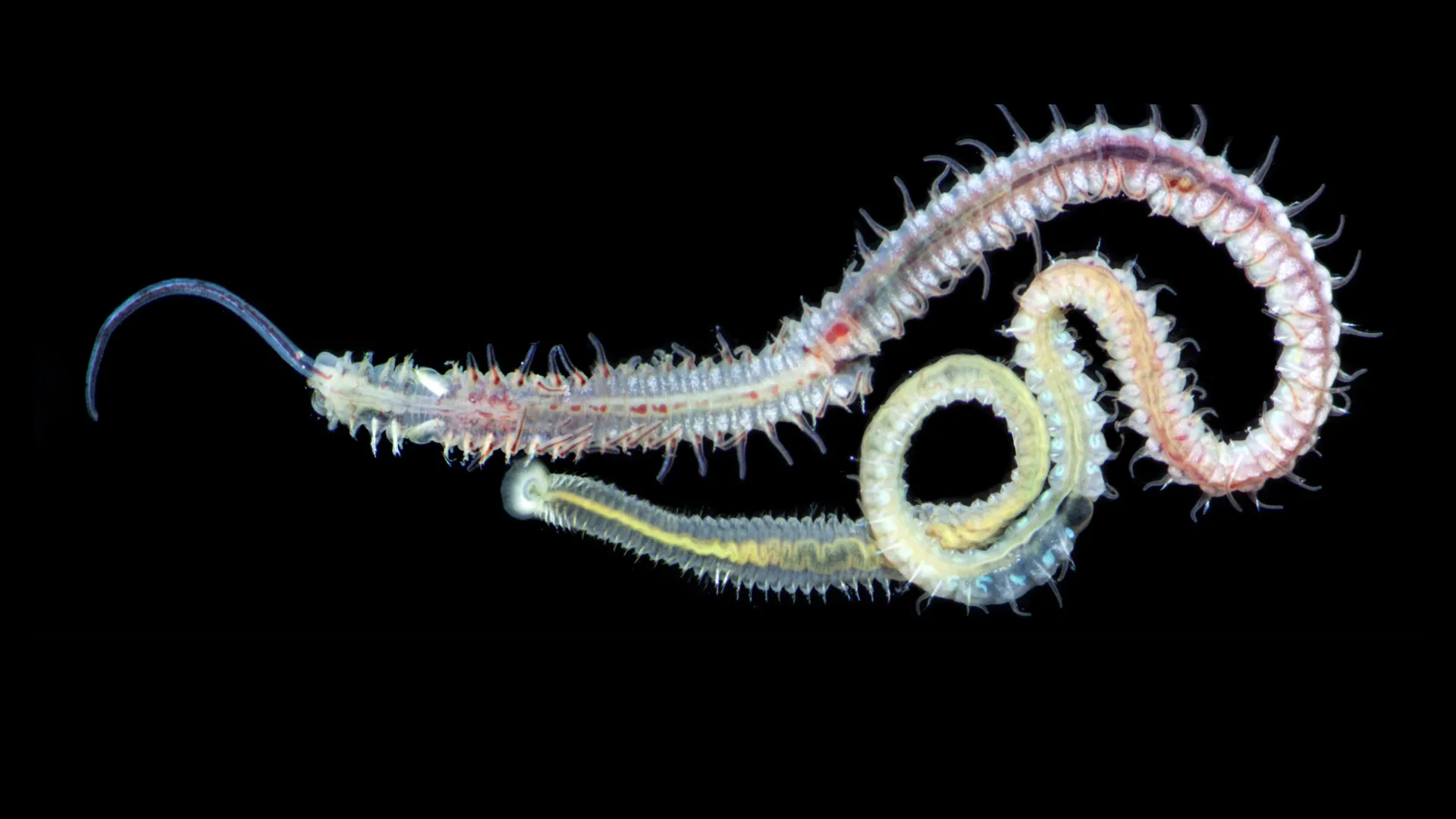
After comparing the markings with modern examples, the scientists concluded that they were made by a soft-bodied marine bristle worm belonging to a group known as spionids. These worms, still common today, bore into the shells of mussels and oysters but typically don’t kill their hosts outright.

“They parasitize the shells of bivalves like oysters, not the flesh of the animals themselves,” said Nanglu. “But damaging their shells may increase oyster death rates.”

The fossils studied came from early relatives of modern clams that lived during the Ordovician Period, a time of rapid ecological expansion when marine life became increasingly mobile, predatory, and parasitic. “This is a time when ocean ecosystems got more intense,” Nanglu said. “You see the rise of mobility, predation, and, clearly, parasitism.”

A Half-Billion-Year Parasitic Lineage

The researchers considered other explanations for the distinctive marks, such as self-inflicted shell growth patterns or traces from unrelated organisms. However, the evidence most strongly matched spionid activity.

“There’s one image in particular, from a study of modern worms, that shows exactly the same shape inside a shell,” Nanglu said. “That was the smoking gun.”

The finding offered more than just an identification — it provided a rare evolutionary insight. “This group of worms hasn’t changed its lifestyle in nearly half a billion years,” said Nanglu. “We tend to think of evolution as constant change, but here’s an example of a behavior that worked so well, it stayed the same through multiple mass extinction events.”

Peering Inside Fossils with High-Tech Scans

To reveal the interior structures of the shells, the team used a technique similar to medical CT imaging, called micro-CT scanning. This high-resolution method allowed them to visualize internal burrows and hidden shells embedded within the rock layers, which were stacked like a layered cake.

“We never would’ve seen this without the scanner,” Nanglu said.

The Parasite’s Ancient Life Cycle

The worm’s life cycle helped confirm its identity. The researchers determined that it likely began as a larva that attached itself to a shell, dissolved a small spot to secure its position, and then tunneled deeper as it grew — creating the recognizable question mark shape.

No other known species leaves this precise trace. “”If it’s not a spionid, then it’s something we’ve never seen before,” Nanglu said. “But it would have to have evolved the same behavior, in the same place, in the same way.”

A Survivor Across Deep Time

Remarkably, the same burrowing behavior continues in today’s oceans. Although spionid worms do not consume their hosts directly, the damage they inflict on oyster shells still increases mortality rates in modern fisheries.

“This parasite didn’t just survive the cutthroat Ordovician period, it thrived,” Nanglu said. “It’s still interfering with the oysters we want to eat, just as it did hundreds of millions of years ago.”

Fossil Time Capsules of Ancient Life

The Moroccan fossil site where these discoveries were made is celebrated for capturing behavior frozen in time. Other fossils there have preserved scenes of animals interacting, such as creatures feeding on the remains of squid-like ancestors.

“You’re lucky to get any record of an animal from that long ago,” Nanglu said. “But to see evidence of two animals interacting? That’s gold.”

Share Button

A shapeshifting protein explains rabies’ deadly power

  • Viruses are masters of efficiency, able to take over our cells and control vital processes using only a handful of genes.
  • For years, scientists have wondered how something so small could do so much.
  • Researchers have now uncovered the answer — a discovery that could reshape our understanding of how viruses work and lead to new ways to fight them.

Breakthrough Reveals How Viruses Outsmart Human Cells

A team of Australian scientists has uncovered how certain viruses manage to seize control of human cells, a finding that could lead to the next generation of antivirals and vaccines.

The research, led by Monash University and the University of Melbourne and published in Nature Communications, explains how the rabies virus can manipulate a wide range of cellular activities despite producing only a few proteins.

Scientists believe this same mechanism could also be at work in other deadly pathogens, including Nipah and Ebola viruses. If so, the discovery could pave the way for new treatments that block these viral strategies.

How Viruses Do So Much With So Little

Co-senior author Associate Professor Greg Moseley, head of the Monash Biomedicine Discovery Institute’s (BDI) Viral Pathogenesis Laboratory, described the remarkable efficiency of viruses.

“Viruses such as rabies can be incredibly lethal because they take control of many aspects of life inside the cells they infect,” Associate Professor Moseley said. “They hijack the machinery that makes proteins, disrupt the ‘postal service’ that sends messages between different parts of the cell, and disable the defenses that normally protect us from infection.”

He explained that scientists have long puzzled over how viruses with such limited genetic material could be so powerful. “Rabies virus, for example, has the genetic material to make only five proteins, compared with about 20,000 in a human cell,” he said.

The Key: A Shape-Shifting Viral Protein

Co-first author Dr. Stephen Rawlinson, a research fellow in the Moseley Lab, said the team’s work offers a long-sought answer.

“Our study provides an answer,” he said. “We discovered that one of rabies virus’s key proteins, called P protein, gains a remarkable range of functions through its ability to change shape and to bind to RNA.”

“RNA is the same molecule used in new-generation RNA vaccines, but it plays essential roles inside our cells, carrying genetic messages, coordinating immune responses, and helping make the building blocks of life.”

Taking Over the Cell’s Inner World

Co-senior author Professor Paul Gooley, who leads the University of Melbourne’s Gooley Laboratory, said the viral P protein’s ability to interact with RNA allows it to shift between different physical ‘phases’ within a cell.

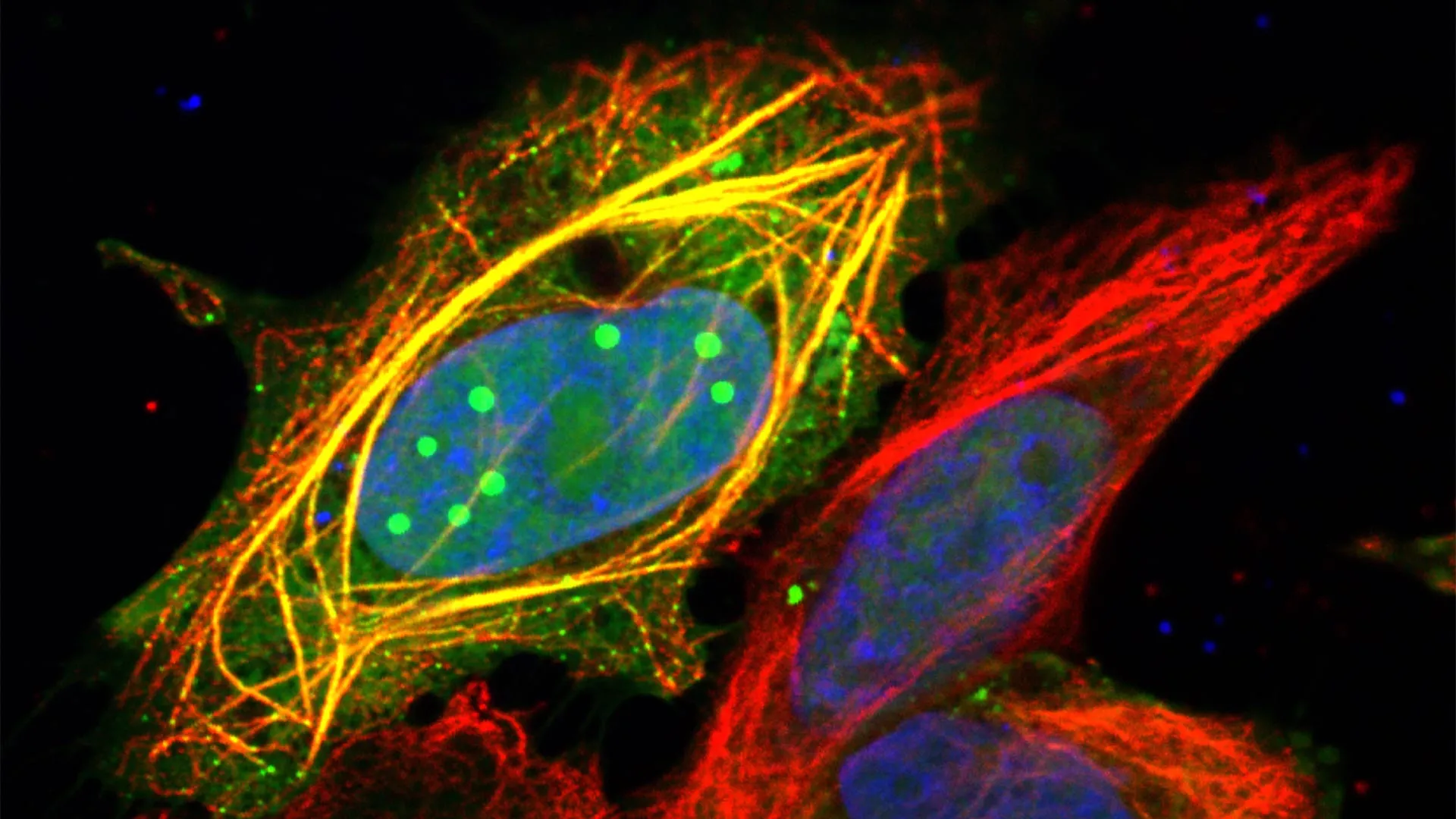
“This allows it to infiltrate many of the cell’s liquid-like compartments, take control of vital processes, and turn the cell into a highly efficient virus factory,” Professor Gooley said.

Although this research focused on rabies, he noted that similar tactics may be used by other deadly viruses, including Nipah and Ebola. “Understanding this new mechanism opens exciting possibilities for developing antivirals or vaccines that block this remarkable adaptability,” he added.

Rethinking How Viral Proteins Work

Dr. Rawlinson said the findings challenge how scientists have traditionally viewed multifunctional viral proteins. “Until now, these proteins were often viewed like trains made up of several carriages, with each carriage (or module) responsible for a specific task,” he said.

“According to this view, shorter versions of a protein should simply lose functions as carriages are removed. However, this simple model could not explain why some shorter viral proteins actually gain new abilities. We found that multifunctionality can also arise from the way the ‘carriages’ interact and fold together to create different overall shapes, as well as forming new abilities such as binding to RNA.”

A New Perspective on Viral Adaptability

Associate Professor Moseley said that the ability of the P protein to bind RNA allows it to move between different physical ‘phases’ inside the cell.

“In doing so, it can access and manipulate many of the cell’s own liquid-like compartments that control key processes, such as immune defense and protein production,” he said. “By revealing this new mechanism, our study provides a fresh way of thinking about how viruses use their limited genetic material to create proteins that are flexible, adaptable, and able to take control of complex cellular systems.”

This study involved Monash University, the University of Melbourne, the Australian Nuclear Science and Technology Organisation (Australian Synchrotron), Peter Doherty Institute for Infection and Immunity, Commonwealth Scientific and Industrial Research Organisation (CSIRO), the Australian Centre for Disease Preparedness (ACDP), and Deakin University.

Share Button

Frozen for 6 million years, Antarctic ice rewrites Earth’s climate story

In a breakthrough for climate science, a team of U.S. researchers has identified the oldest directly dated ice and air ever discovered on Earth. The samples were found in the Allan Hills region of East Antarctica, an area long known to preserve ancient ice near the surface.

According to a study published on October 28 in the Proceedings of the National Academy of Sciences, the ice is about 6 million years old. Tiny air bubbles sealed within the ice provide a rare and direct glimpse into Earth’s ancient atmosphere, offering scientists an unmatched record of the planet’s past climate.

A Glimpse Into a Warmer Ancient World

The oldest sample collected from the Allan Hills dates back 6 million years, a period when geological records indicate Earth was significantly warmer and sea levels were much higher than they are today.

The research effort was led by Sarah Shackleton of the Woods Hole Oceanographic Institution and John Higgins of Princeton University. Both are part of the National Science Foundation-funded Center for Oldest Ice Exploration (COLDEX), a multi-institution collaboration of 15 U.S. research partners coordinated by Oregon State University.

“Ice cores are like time machines that let scientists take a look at what our planet was like in the past,” explained Shackleton, who has worked on several Antarctic drilling expeditions. “The Allan Hills cores help us travel much further back than we imagined possible.”

Ed Brook, COLDEX Director and paleoclimatologist at Oregon State University, described the find as the center’s most important discovery so far. The NSF Science and Technology Center, established in 2021, was created to explore the Antarctic ice sheet, the largest reservoir of frozen water on Earth.

“We knew the ice was old in this region,” Brook said. “Initially, we had hoped to find ice up to 3 million years old, or maybe a little older, but this discovery has far exceeded our expectations.”

A Global Race to Reach Deeper Into Time

COLDEX is among several international teams striving to extend the ice core record beyond its previous 800,000-year limit. A European project recently announced a continuous deep core reaching 1.2 million years in East Antarctica, but the Allan Hills samples push the timeline back several million years further, though in discrete fragments rather than a single continuous core.

The COLDEX researchers work at a remote field site in the Allan Hills, spending months drilling through one to two hundred meters of ice near the edge of the Antarctic ice sheet. In this region, rugged terrain and ice flow patterns act together to preserve extremely old ice closer to the surface. By contrast, obtaining continuous cores from the Antarctic interior typically requires drilling to depths of more than 2,000 meters.

“We’re still working out the exact conditions that allow such ancient ice to survive so close to the surface,” said Shackleton. “Along with the topography, it’s likely a mix of strong winds and bitter cold. The wind blows away fresh snow, and the cold slows the ice to almost a standstill. That makes Allan Hills one of the best places in the world to find shallow old ice, and one of the toughest places to spend a field season.”

The age of the Allan Hills samples was determined directly from the ice itself using precise measurements of an isotope of the noble gas argon. This approach allows scientists to date the ice without relying on surrounding sediments or other indirect evidence.

Although the record is not continuous, the samples are far older than any previously studied ice. As Higgins noted, “Tthe team has built up a library of what we call ‘climate snapshots’ roughly six times older than any previously reported ice core data, complementing the more detailed younger data from cores in the interior of Antarctica.”

Reconstructing 6 Million Years of Cooling

Analysis of oxygen isotopes in the ice revealed that the region cooled by about 12 degrees Celsius (roughly 22 degrees Fahrenheit) over the past 6 million years. This is the first direct evidence quantifying how much Antarctica’s climate has cooled since that ancient warm period.

Future research will focus on reconstructing concentrations of greenhouse gases and ocean heat levels preserved within the ice bubbles — key clues to understanding the natural forces driving long-term climate change.

A new COLDEX expedition is scheduled to return to the Allan Hills in the coming months for additional drilling. The team hopes to recover even older samples and produce a more detailed record of Earth’s ancient atmosphere.

“Given the spectacularly old ice we have discovered at Allan Hills, we also have designed a comprehensive longer-term new study of this region to try to extend the records even further in time, which we hope to conduct between 2026 and 2031,” Brook said.

Collaboration and Support

Contributors to the study include Julia Marks Peterson, Christo Buizert, and Jenna Epifanio of Oregon State; Valens Hishamunda, Austin Carter, and Michael Bender of Princeton; Lindsey Davidge, Eric Steig, and Andrew Schauer of the University of Washington; Sarah Aarons, Jacob Morgan, and Jeff Severinghaus of Scripps Institution of Oceanography at the University of California, San Diego; Andrei V. Kurbatov and Douglas Introne of the University of Maine; Yuzhen Yan of Tongji University; and Peter Neff of the University of Minnesota.

COLDEX is supported by the NSF Office of Polar Programs; the NSF Office of Integrative Activities’ Science and Technology Center Program; and Oregon State University. Field operations in Antarctica are carried out with support from the U.S. Antarctic Program and NSF funding, with drilling assistance from the NSF U.S. Ice Drilling Program and sample storage managed by the NSF Ice Core Facility in Denver, Colorado.

Share Button

Council to vaccinate child in care after court win

The mother refused vaccinations out of her belief there is a link between the jabs and autism.

Share Button

Dr Xand: Five easy food swaps to improve your gut health

Instead of reaching for pricey probiotic shots or snacks, here are five easy food swaps to boost your gut health.

Share Button

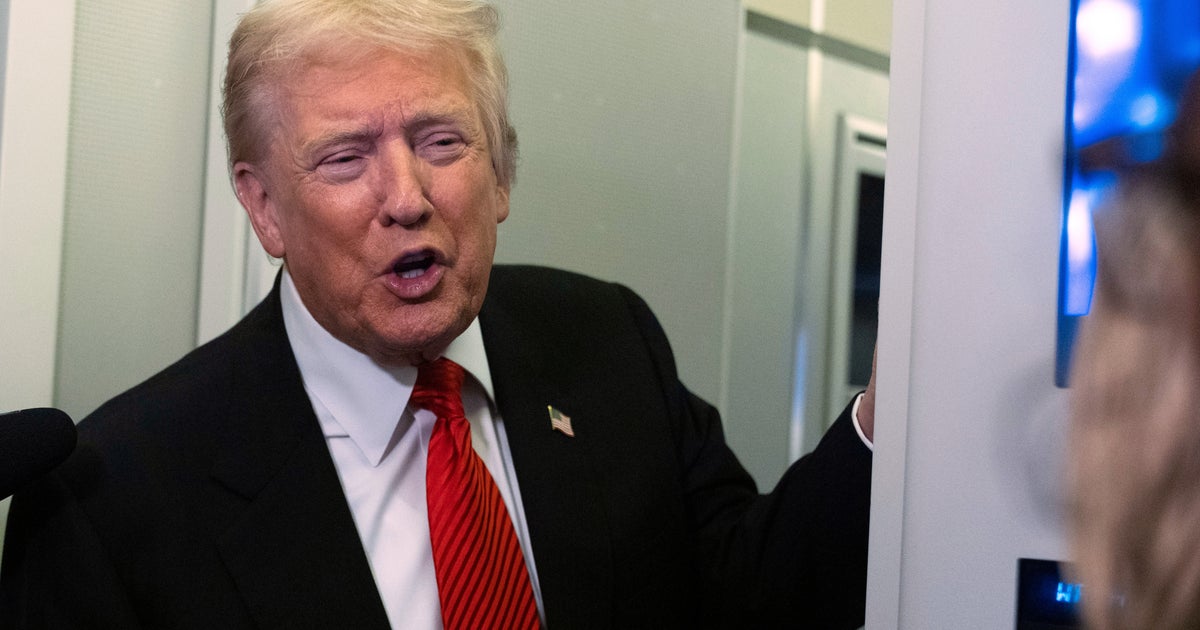
British People’s Trust In America Has Plummeted During Trump’s First Year Back In Power

British people’s trust in America has plummeted during Donald Trump’s first year back in power, according to a major new poll.

The YouGov survey of 4,000 people for the Best for Britain campaign group found that more than half the country – 56% – now distrust the USA, compared to 40% a year ago.

At the same time, the number of people who say they trust the UK’s long-standing ally has fallen from 30% to 15% in the last 12 months.

The findings were revealed on the first anniversary of Trump’s re-election to the White House after his victory over Kamala Harris last November.

Since then, he has clashed with Downing Street in areas such as the Ukraine war and Trump’s decision to impose swingeing tariffs on countries including the UK.

The poll also found that the European Union is now seen as a far more reliable international partner than the US.

A year ago, both were virtually neck-and-neck on 33% and 32% respectively.

But now, 42% of Brits say the EU is more reliable, compared to 22% who say America.

The EU is also seen as a far more important trading partner, with over 51% of people rating it number one, compared to just 21% saying the US, despite Keir Starmer and Trump agreeing a trade deal earlier this year.

Best for Britain chief executive Naomi Smith said: “British people are wide awake to the risk Donald Trump’s authoritarian and chaotic approach poses to the global order – and rightly no longer place their full trust in an increasingly volatile United States.

“Voters have repeatedly told us they expect the government to work pragmatically with our most reliable and important trading partner – Europe – to improve the economy, get bills down and ensure our collective security.

“Labour needs to pick up the pace with Brussels or risk being punished by an electorate still feeling the cost of living squeeze at the next election.”

Sir Kim Darroch, who was British ambassador to the United States during Trump’s first term in office, said: “President Trump’s response to the Russian invasion of Ukraine has been deeply inconsistent. He has at times threatened stronger sanctions on Putin’s Russia, but at other times appeared to blame Ukraine and pressed them to capitulate.

“He has been similarly inconsistent on the US commitment to Nato and the principle of collective defence. All of this makes it crucial and urgent that the government accelerates work on the reset with the EU.”

Share Button

Strictly Come Dancing Winner Ore Oduba Opens Up About Porn Addiction Struggles

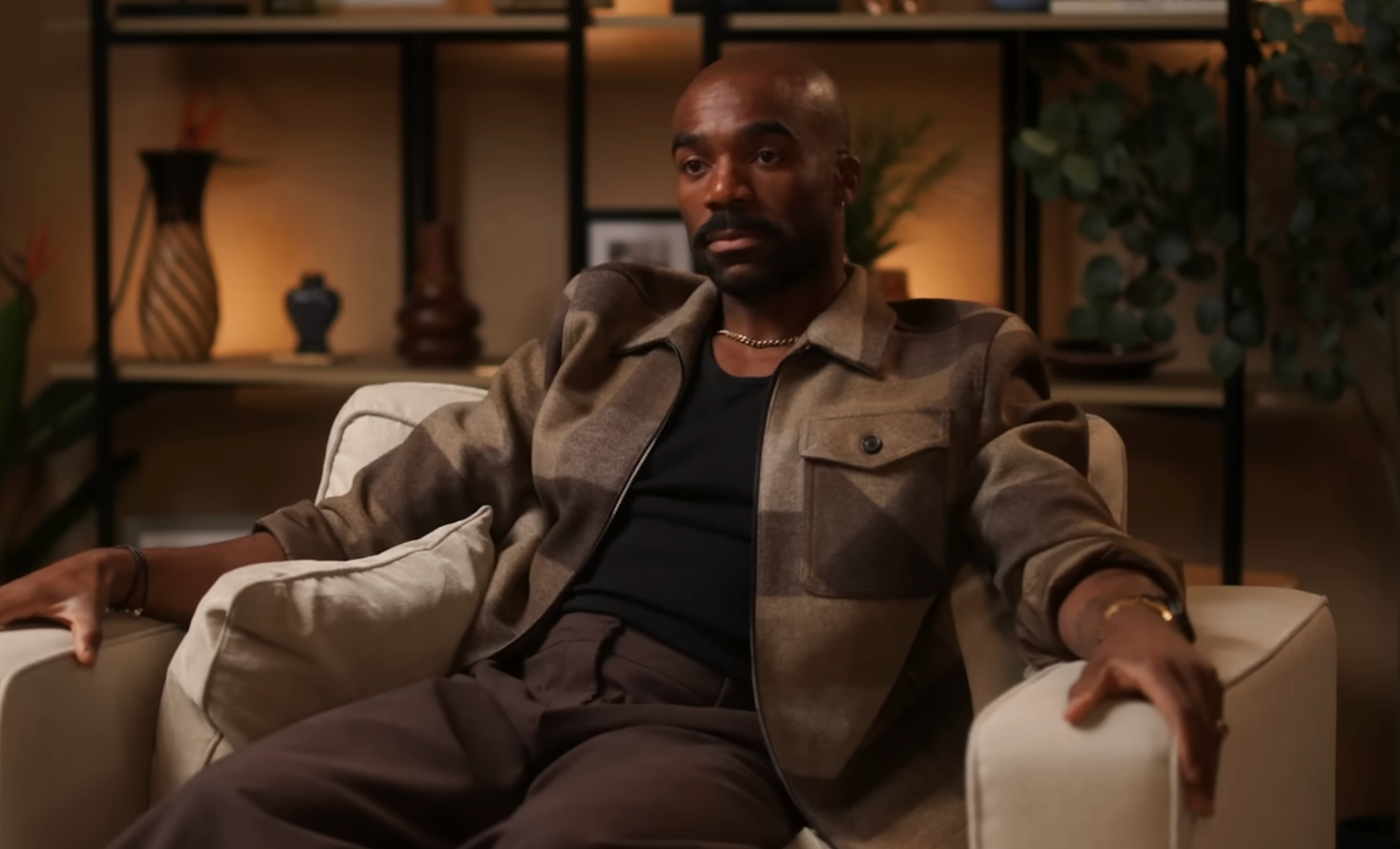
Former Strictly Come Dancing champion Ore Oduba has opened up about the first time about a porn addiction that he described as having been “destroying my life from the inside out”.

The TV personality and musical theatre star recently sat down for a wide-ranging conversation with Paul C Brunson on his interview series We Need To Talk, during which they discussed issues including racial identity, mental health, grief and the scrutiny he’s faced as a public figure.

As the interview progressed, Ore first opened up what had made him want to publicly disclose his past issues relating to porn, explaining: “There is a part of me that is terrified. I say ‘a part of me’ – the vast majority is terrified, because I feel like personally, for me, the rest of my life begins the day after this, as it’s a kind of a seminal ‘draw a line’ moment.

“I’ve got so much going on up here. I have no idea how it’s going to come out, but I know it’s going to come from a very important place. And we talked for a long time about where we should have this conversation. And in the end, it had to be you and it had to be you. What you create here is safety.”

He continued: “It’s something that I was really keen to bring to this conversation, to talk to you about, because it was only as a result of all of these awakenings that a year and a half ago, I was able to escape an addiction that had dogged me for nearly 30 years.”

Ore then shared that his addiction dates back to when he was nine years old, when he was “introduced for the first time to pornography” by a friend’s older brother.

“That’s when my addiction started,” he said. “And I think after everything that’s happened, only understanding how much of a thread that had been throughout my life was I was finally able to escape it, because I know it had been dogging me. It had been destroying my life from the inside out.

“But it was the thing that, from a very early age, was what I was running to as a response to a lot of the trauma.”

Recalling his initial reaction to discovering pornography, Ore explained: “This was 30 years ago, at a time when we didn’t have the accessibility that we do now. I was just shown some adult images on the computer, and I remember being very intrigued and a feeling of eyes being opened.

“And whilst I wouldn’t say addiction set in immediately, the intrigue started immediately. And it didn’t take long, relatively speaking, for that intrigue to start running my mind over – because at nine, at that age, you haven’t necessarily got full access. You know, this is dial-up at the time. This is the 90s. And [I wanted] to find a way to address that intrigue, wanting to find ways of [replicating] that awakening or find it, whether it was on television or in magazines.”

<div class="js-react-hydrator" data-component-name="YouTube" data-component-id="8771" data-component-props="{"itemType":"video","index":16,"contentIndexByType":2,"contentListType":"embed","code":"

","type":"video","meta":{"author":"We Need To Talk","author_url":"https://www.youtube.com/channel/UCzt4U1I0Wn-mWwZSOQp9lbQ","cache_age":86400,"description":"Strictly Come Dancing winner Ore Oduba opens up about addiction for the first time – and the secret he’s carried for over 30 years.\n\nContent warning: This episode includes discussion of suicide and addiction. \n\nIn this powerful and deeply moving conversation, Ore shares how he was first exposed at just nine years old – and the lifelong impact it had on his identity, confidence, and relationships. He also reflects on the emotional scars of growing up in fear, the silence he carried into adulthood, and the private battles behind his public success.\n\nOre shares:\n◽ Why he lived in fear of his father for years\n◽ The grief of losing his father and sister in such a short space of time\n◽ How he felt like he was dying inside – while living what looked like a “perfect” life\n◽ How Strictly Come Dancing became his awakening\n◽ Why the West End reignited his joy and love for performing\n◽ Why he struggled to open up, even to those closest to him\n◽ How he’s learning to rewrite the story for himself, and for his children\n\nOre Oduba, We Need To Talk.\n\nIf you’re struggling, you don’t have to face it alone. We’ve included support charities below: \n\nSamaritans: https://g2ul0.app.link/xghDmmYV4Wb \nCampaign Against Living Miserably (CALM): https://g2ul0.app.link/npaQKXUV4Wb \nNaked Truth Project: https://g2ul0.app.link/JPSkS5mNZXb \n\nFollow me here:\nhttps://www.instagram.com/needtotalk \nhttps://www.tiktok.com/@weneedtotalkpod \n\n00:00 Intro\n01:39 Ore on the Conversation\n03:01 Growing Up in Dorset\n06:09 Black Identity in 1990s Dorset\n11:15 Childhood and Family Dynamics\n14:06 Did Ore Feel Loved?\n16:33 Early Love for Performing\n20:45 Breaking Into TV Presenting\n28:15 Ore on Newsround\n32:36 Dealing With Media Scrutiny\n34:19 Winning Strictly Come Dancing\n45:20 Life After Strictly\n47:38 Hiding Behind a Facade\n52:40 Adobe Express Ad\n53:41 Relationship With His Brother\n1:03:28 Losing His Sister\n1:07:44 Mental Health and Identity\n1:12:32 Learning of His Father’s Death\n1:15:29 Ore’s 30-Year Addiction Struggle\n1:32:40 Adult Content Use Among Young People\n1:45:02 Message From Strictly Partner Joanna Clifton\n1:47:23 Childhood Photo Reveal\n1:51:31 Most Memorable Moment\n1:55:30 Paul’s Takeaways\n\nSponsored by:\nAdobe Express: https://ADOBE.LY/PAUL \n\nSync-ID MB01SOP0ZYTDXBS","options":{"_cc_load_policy":{"label":"Closed captions","value":false},"_end":{"label":"End on","placeholder":"ex.: 11, 1m10s","value":""},"_start":{"label":"Start from","placeholder":"ex.: 11, 1m10s","value":""}},"provider_name":"YouTube","thumbnail_height":720,"thumbnail_url":"https://i.ytimg.com/vi/kYTVEMESgCY/maxresdefault.jpg","thumbnail_width":1280,"title":"The Shame That Silenced Me For 30 Years: Strictly’s Ore Oduba “I’m Sharing This To Save My Children”","type":"video","url":"https://www.youtube.com/watch?v=kYTVEMESgCY","version":"1.0"},"flags":[],"enhancements":{},"fullBleed":false,"options":{"theme":"news","device":"desktop","editionInfo":{"id":"uk","name":"U.K.","link":"https://www.huffingtonpost.co.uk","locale":"en_GB"},"originalEdition":"uk","isMapi":false,"isAmp":false,"isMobile":false,"isAdsFree":false,"isVideoEntry":false,"isEntry":true,"isMt":false,"entryId":"6909dffbe4b04ad08e1867d0","entryPermalink":"https://www.huffingtonpost.co.uk/entry/ore-oduba-porn-addiction-strictly-come-dancing_uk_6909dffbe4b04ad08e1867d0","entryTagsList":"uk-celebrity,ore-oduba,porn-addiction","sectionSlug":"entertainment","deptSlug":null,"sectionRedirectUrl":null,"subcategories":"","isWide":false,"isShopping":false,"headerOverride":null,"noVideoAds":false,"disableFloat":false,"isNative":false,"commercialVideo":{"provider":"custom","site_and_category":"uk.entertainment","package":null},"isHighline":false,"vidibleConfigValues":{"cid":"60afc140cf94592c45d7390c","disabledWithMapiEntries":false,"overrides":{"all":"60b8e525cdd90620331baaf4"},"whitelisted":["56c5f12ee4b03a39c93c9439","56c6056ee4b01f2b7e1b5f35","59bfee7f9e451049f87f550b","5acccbaac269d609ef44c529","570278d2e4b070ff77b98217","57027b4be4b070ff77b98d5c","56fe95c4e4b0041c4242016b","570279cfe4b06d08e3629954","5ba9e8821c2e65639162ccf1","5bcd9904821576674bc55ced","5d076ca127f25f504327c72e","5b35266b158f855373e28256","5ebac2e8abddfb04f877dff2","60b8e525cdd90620331baaf4","60b64354b171b7444beaff4d","60d0d8e09340d7032ad0fb1a","60d0d90f9340d7032ad0fbeb","60d0d9949340d7032ad0fed3","60d0d9f99340d7032ad10113","60d0daa69340d7032ad104cf","60d0de02b627221e9d819408"],"playlists":{"default":"57bc306888d2ff1a7f6b5579","news":"56c6dbcee4b04edee8beb49c","politics":"56c6dbcee4b04edee8beb49c","entertainment":"56c6e7f2e4b0983aa64c60fc","tech":"56c6f70ae4b043c5bdcaebf9","parents":"56cc65c2e4b0239099455b42","lifestyle":"56cc66a9e4b01f81ef94e98c"},"playerUpdates":{"56c6056ee4b01f2b7e1b5f35":"60b8e525cdd90620331baaf4","56c5f12ee4b03a39c93c9439":"60d0d8e09340d7032ad0fb1a","59bfee7f9e451049f87f550b":"60d0d90f9340d7032ad0fbeb","5acccbaac269d609ef44c529":"60d0d9949340d7032ad0fed3","5bcd9904821576674bc55ced":"60d0d9f99340d7032ad10113","5d076ca127f25f504327c72e":"60d0daa69340d7032ad104cf","5ebac2e8abddfb04f877dff2":"60d0de02b627221e9d819408"}},"connatixConfigValues":{"defaultPlayer":"16b0ecc6-802c-4120-845f-e90629812c4d","clickToPlayPlayer":"823ac03a-0f7e-4bcb-8521-a5b091ae948d","videoPagePlayer":"05041ada-93f7-4e86-9208-e03a5b19311b","defaultPlaylist":"2e062669-71b4-41df-b17a-df6b1616bc8f"},"topConnatixThumnbailSrc":"data:image/png;base64,iVBORw0KGgoAAAANSUhEUgAAAAEAAAABCAQAAAC1HAwCAAAAC0lEQVR42mNkYAAAAAYAAjCB0C8AAAAASUVORK5CYII=","customAmpComponents":[],"ampAssetsUrl":"https://amp.assets.huffpost.com","videoTraits":null,"positionInUnitCounts":{"buzz_head":{"count":0},"buzz_body":{"count":0},"buzz_bottom":{"count":0}},"positionInSubUnitCounts":{"article_body":{"count":7},"blog_summary":{"count":0},"before_you_go_content":{"count":0}},"connatixCountsHelper":{"count":0},"buzzfeedTracking":{"context_page_id":"6909dffbe4b04ad08e1867d0","context_page_type":"buzz","destination":"huffpost","mode":"desktop","page_edition":"en-uk"},"tags":[{"name":" uk celebrity","slug":"uk-celebrity","links":{"relativeLink":"news/uk-celebrity","permalink":"https://www.huffingtonpost.co.uk/news/uk-celebrity","mobileWebLink":"https://www.huffingtonpost.co.uk/news/uk-celebrity"},"url":"https://www.huffingtonpost.co.uk/news/uk-celebrity/"},{"name":"ore oduba","slug":"ore-oduba","links":{"relativeLink":"news/ore-oduba","permalink":"https://www.huffingtonpost.co.uk/news/ore-oduba","mobileWebLink":"https://www.huffingtonpost.co.uk/news/ore-oduba"},"relegenceId":6426211,"url":"https://www.huffingtonpost.co.uk/news/ore-oduba/"},{"name":"porn-addiction","slug":"porn-addiction","links":{"relativeLink":"news/porn-addiction","permalink":"https://www.huffingtonpost.co.uk/news/porn-addiction","mobileWebLink":"https://www.huffingtonpost.co.uk/news/porn-addiction"},"url":"https://www.huffingtonpost.co.uk/news/porn-addiction/"}],"isLiveblogLive":null,"isLiveblog":false,"backfillRelatedArticles":[],"cetUnit":"buzz_body","enableIncontentPlayer":false,"bodyAds":["

\r\n\r\n HPGam.cmd.push(function(){\r\n\t\treturn HPGam.render(\"inline-1\", \"entry_paragraph_1\", false, false);\r\n });\r\n\r\n","

\r\n\r\n HPGam.cmd.push(function(){\r\n\t\treturn HPGam.render(\"inline\", \"entry_paragraph_2\", false, false);\r\n });\r\n\r\n","

\r\n\r\n HPGam.cmd.push(function(){\r\n\t\treturn HPGam.render(\"inline-2\", \"entry_paragraph_3\", false, false);\r\n });\r\n\r\n","

\r\n\r\n HPGam.cmd.push(function(){\r\n\t\treturn HPGam.render(\"inline-infinite\", \"repeating_dynamic_display\", false, false);\r\n });\r\n\r\n"],"adCount":0,"midArticleAdPartner":null},"isCollectionEmbed":false}”>

Ore also said that he felt unable to discuss his issues as a child because of his strict upbringing, eventually dealing with it when the burden of hiding it felt like too much for him to bear.

Initially, Ore rose to fame as a host of the CBBC series Newsround, as well as serving as a sports correspondent on various BBC News shows.

After winning Strictly in 2016, he has broadened his presenting horizons, and has also embarked on a career in stage performing, appearing in theatrical productions like Grease, Curtains The Musical and The Rocky Horror Show.

Since last month, Ore’s name has also been repeatedly mentioned as a potential new host for Strictly, following the news that Tess Daly and Claudia Winkleman are planning to step down from presenting the show at the end of the current series.

Share Button