Michigan health officials have confirmed the first two deaths linked to the ongoing cyclospora outbreak


Michigan health officials have confirmed the first two deaths linked to the ongoing cyclospora outbreak

Researchers have developed a bioengineered chewing gum that may offer a new way to target microbes associated with head and neck cancer. In tests involving oral samples from patients, extracts from the gum sharply reduced one virus and two types of bacteria linked to the disease.
The research team was led by Henry Daniell of the School of Dental Medicine at the University of Pennsylvania. The findings were published in Scientific Reports and could support the development of more accessible and affordable treatments.
A Need for Better Head and Neck Cancer Therapies
Head and neck squamous cell carcinoma (HNSCC) is a common form of cancer that begins in the tissues lining the mouth and throat. The disease can be particularly aggressive, and outcomes are often poor when it is discovered at a later stage.
Daniell says that many recently approved cancer medications have not produced major improvements in patients’ quality of life or five-year survival. That limited progress highlights the need for new approaches that can work alongside existing treatments.
Targeting HPV and Harmful Oral Bacteria
The new study builds on earlier research involving chewing gum made from lablab beans (bean gum). The gum contains FRIL, a naturally occurring antiviral protein.
Daniell and his colleagues used oral samples from patients with HNSCC to study three microbes associated with cancer. These included human papillomavirus, or HPV, along with two bacterial species, Porphyromonas gingivalis (Pg) and Fusobacterium nucleatum (Fn).
“The global increase in oropharyngeal cancer is linked to HPV infection,” says Daniell. “And Pg and Fn infections worsen survival rates of untreated recurrent or metastatic oral cancer, even after surgery and risk-adjusted adjuvant, or supplemental, therapies.”
Gum Extracts Sharply Reduce Microbe Levels
Tests showed that extracts from the bean gum lowered HPV levels by 93% in saliva samples. HPV levels also fell by 80% in oral rinse samples.
The researchers then engineered the bean gum to contain protegrin, an antimicrobial peptide capable of killing harmful bacteria. A single dose brought levels of Pg and Fn down to almost zero.
Importantly, the treatment did not appear to harm the beneficial bacteria that normally live in the mouth. Radiation therapy can have a different effect, reducing helpful bacteria while encouraging the growth of disease-causing yeast (Candida albicans).
A Potential Addition to Cancer Treatment
The ability to target dangerous microbes while preserving the healthy oral microbiome could make the gum useful in several ways. Researchers believe it may eventually serve as an additional therapy alongside current cancer treatments or as a preventive measure against infection and transmission.
“Lip and oral cavity cancer was the seventh leading cancer type in cancer incidence and mortality rate worldwide in adolescents, young adults, and middle-aged adults in 2022,” says Daniell. “Our findings support the value of advancing these therapies to clinical trials as adjuvants with current treatments or as prophylaxis to prevent infection and transmission.”
Henry Daniell is the W.D. Miller Professor in the Department of Basic & Translational Sciences at the School of Dental Medicine at the University of Pennsylvania.
Other authors include Geetanjali Wakade, Rahul Singh, and Smruti Nair of Penn Dental Medicine; Andrés M. Bur and Sufi M. Thomas of the University of Kansas Medical Center; Eri S. Srivatsan and Marilene B. Wang of the University of California at Los Angeles; and Saroj K. Basak of the Veterans Administration Greater Los Angeles Healthcare System.
The research received support from NIH (grant 5-R01-HL 107904-13 awarded to Henry Daniell), the Academic Senate Grant of the David Geffen School of Medicine at UCLA (the Surgical Education Research program), and the National Cancer Institute Cancer Center (Support Grant P30 CA168524).
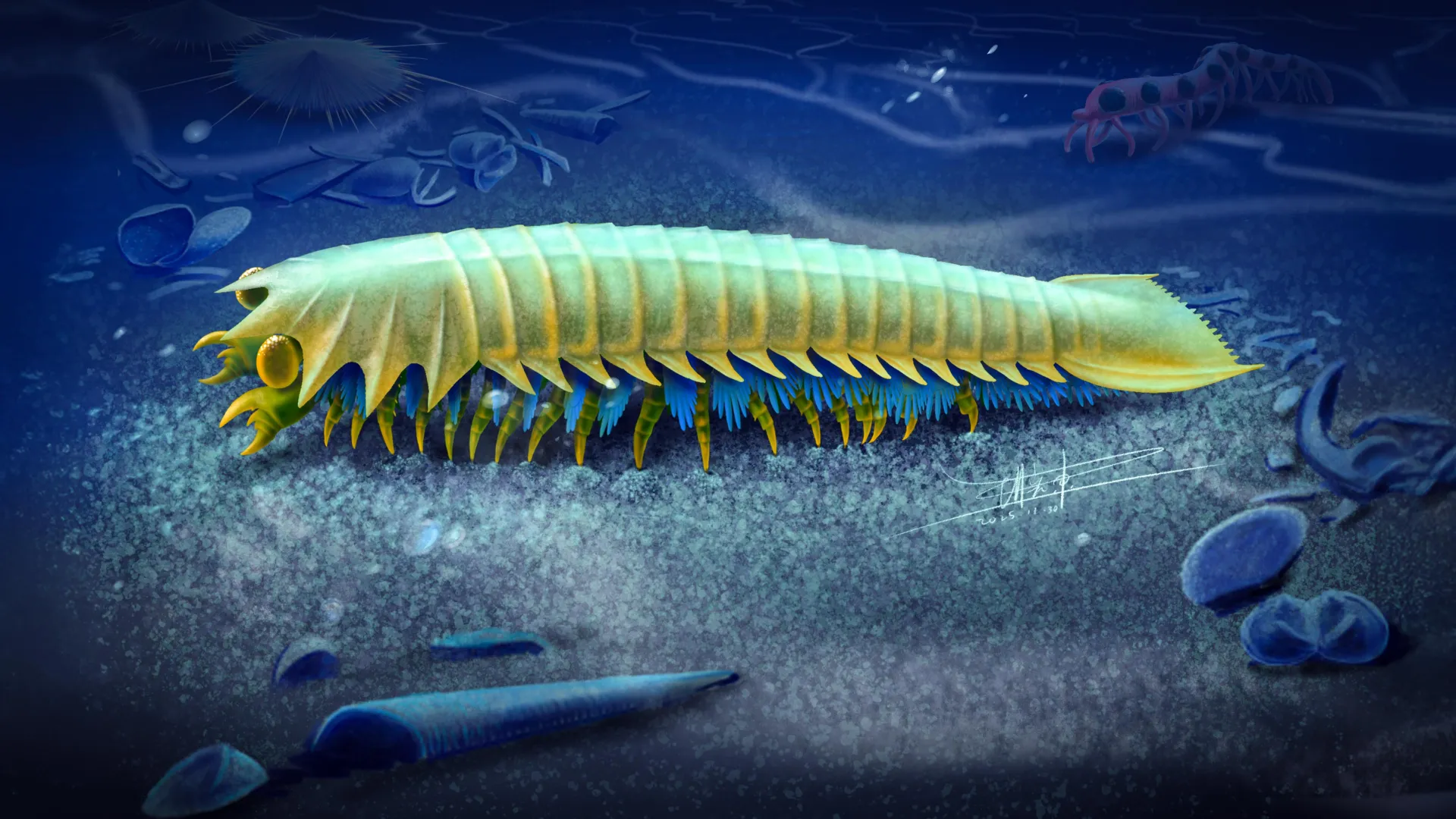
Scientists have discovered the earliest known evidence of the structures that eventually became spider fangs in a fossil dating back 518 million years. The finding was made by researchers from Yunnan University and the University of Leicester.
Whether associated with the deadly reputation of the Black Widow or the fictional bite that transformed Spider-Man, fangs have become one of the most recognizable features of spiders. Their evolutionary story, however, began long before modern spiders appeared.
A new study published in Nature traces the origins of this powerful hunting tool to Urokodia, a small marine creature that lived during the early Cambrian Period.
The Ancient Origins of Spider Fangs
Spiders belong to a large group of invertebrates called chelicerates, which also includes scorpions and ticks. More than 100,000 chelicerate species have been described.
These animals have jointed limbs and hard external skeletons. Their defining feature is a pair of specialized appendages called chelicerae, located near the front of the body. Depending on the species, chelicerae can function as pincers or fangs that grip, pierce, or stab prey.
Urokodia fossils were discovered at the renowned Chengjiang fossil site in Yunnan Province in southern China. The study was published on the 42nd anniversary of the site’s discovery.
The creature measured only around 2-3 cm in length. It had large eyes extending from stalks at the front of its body, along with a segmented skeleton and jointed limbs attached beneath its narrow frame. Its appearance bears little obvious resemblance to the spiders and scorpions that descended from its broader evolutionary lineage.
X-Rays Reveal Preserved Soft Anatomy
Researchers from Yunnan University, China, and the University of Leicester used X-ray technology to examine the rock surrounding the fossil. The scans revealed that much of the animal’s soft anatomy had remained preserved in a mummified state for hundreds of millions of years.
Most importantly, the researchers identified two pincer-like appendages positioned just behind the creature’s eyes. These structures represent an early form of chelicerae and provide evidence of the evolutionary beginnings of the pincers and fangs seen in chelicerates today.
The fossil also preserves features on Urokodia‘s legs that may have served as book gills, allowing the animal to breathe underwater. Similar respiratory structures are still found in aquatic chelicerates such as horseshoe crabs.
A Successful Lineage of Hunters
Chelicerates have become one of the most successful animal groups in both marine and terrestrial environments. Those that moved onto land developed into highly effective predators, and fossils show that their ancestors had already been hunting for hundreds of millions of years.
Despite the frightening image of spiders presented in movies such as Arachnophobia, most species pose no danger to people. Their venom and bites evolved to subdue prey that is far smaller than a human.
The research was led by Professor Yu Liu of Yunnan University, who is also a Visiting Professor at the University of Leicester.
Professor Liu said: “We were using X-ray tomography analysis of these fossils to reveal their soft anatomy buried in the rocks for hundreds of millions of years, when suddenly we noticed the pincer-like limbs at the front of the animal. We knew immediately that this was a very exciting fossil and indeed a distant ancestor of living chelicerates like scorpions and spiders.”
A Window Into the Dawn of Animal Life
Urokodia lived within a rich marine ecosystem during a crucial period in the history of animal evolution. The Chengjiang fossils preserve evidence of more than 200 types of animals that inhabited the oceans over 500 million years ago.
Co-author Professor Mark Williams from the University of Leicester School of Geography, Geology and the Environment said: “Urokodia was part of an ancient ecosystem of over 200 different types of animals living in the seas over 500 million years ago. These spectacularly preserved fossils provide real insights into how life was evolving on our planet at the very dawn of animals.”
This study was supported by a grant from the Department of Science and Technology of Yunnan Province (202401BC070012) to Professor Yu Liu, who is further funded by the Yunnan Revitalization Talent Support Program.
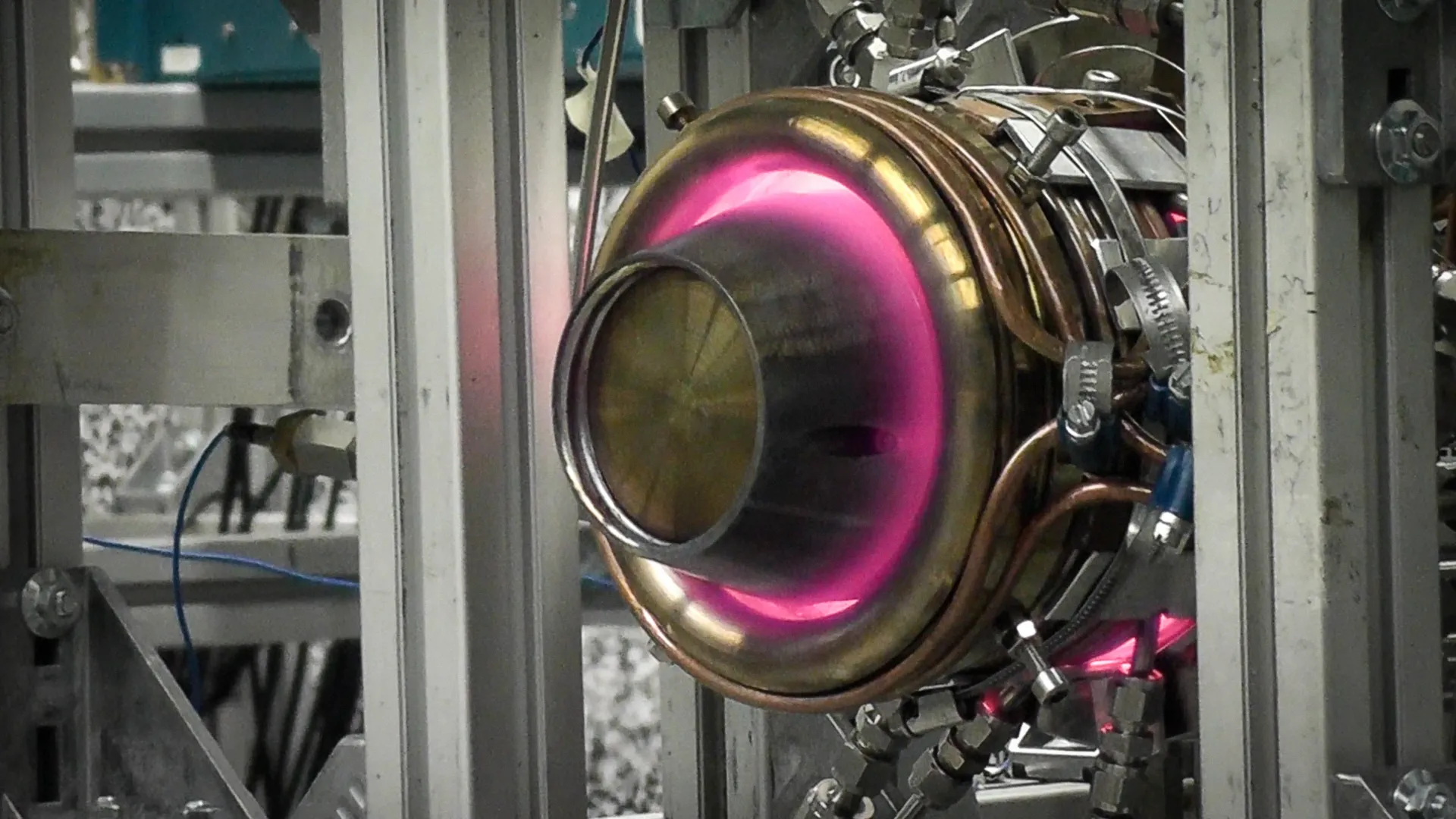
Researchers at the Karlsruhe Institute of Technology (KIT) have achieved a major milestone in hydrogen power by operating a new compressorless gas turbine for a record 303 seconds. The burner uses an advanced form of pressure-gain combustion and surpassed NASA’s previous record of 250 seconds.
The result also marks progress toward using hydrogen for cleaner energy production. Unlike natural gas, hydrogen can be produced using renewable energy sources. Earlier this year, the KIT team also became the first to generate electricity with a hydrogen gas turbine that does not rely on a mechanical compressor.
Hydrogen Turbine Runs for More Than Five Minutes
Earlier experiments could continue for only fractions of a second because longer operation would cause the combustion chambers to melt. The new test extended the operating time to more than five minutes.
“This is an important step toward highly efficient and flexible hydrogen energy for a fossil-free energy system,” explains Professor Daniel Banuti, Director of the Institute of Thermal Energy Technology and Safety (ITES).
A key benefit of the design is that it does not require energy to compress air before combustion begins.
“A conventional gas turbine, such as those used in power plants or under aircraft wings, consumes about 50 percent of its power to compress air to the high pressure needed for efficient combustion — power that is then unavailable for electricity generation,” Banuti explains.
Detonation Waves Replace the Compressor
The new turbine is built around pressure-gain combustion. Conventional gas turbines use a mechanical compressor to raise air pressure, a process that can consume roughly half of the turbine’s power output.
The KIT system creates the required pressure inside the combustion chamber instead. Detonation waves form through a fluid mechanical instability involving wave and vortex patterns in the flowing gases. This allows the turbine to operate without a mechanical compressor.
Removing the compressor could reduce energy losses, lower the number of moving components, and improve overall efficiency.
Why Hydrogen Works So Well
The technology can operate with fuels other than hydrogen, but hydrogen is especially suitable because it reacts very quickly and can produce stable increases in pressure.
Researchers say the approach could eventually support turbines that are lighter, less expensive, and highly efficient. Potential applications include electricity generation and, over the longer term, aviation.
Generating Electricity Without Mechanical Compression
Connecting the combustion chamber to a turbine and converting its intense combustion into electricity created an additional engineering challenge. The rapid and powerful reactions inside the chamber make it difficult to transfer energy to the turbine in a stable way.
“This is extremely difficult because the very fast and intense combustion processes in the chamber make stable energy transfer to the turbine challenging. We are the first to successfully operate such a turbine and generate electricity in the process,” says Banuti.
The luteal phase occurs in the second half of a woman’s cycle when they experience a huge drop in oestrogen.
An NHS trust could lose up to 330 posts and a union says there will be “consequences” for patients.
Up to 95% of younger women at higher risk of developing breast cancer are being missed, researchers say.
Up to 95% of younger women who are at higher risk of developing breast cancer are being missed by current NHS checks, researchers warn.
As child immunisation rates fall across the UK, one clinic in west Yorkshire is taking aggressive steps to boost immunisations
If you love both reading and watching films, 2026 offers rich rewards – this year will see everything from new Pride and Prejudice and Sense and Sensibility adaptations to yet another instalment in the Dune franchise.
Project Hail Mary, The Odyssey, H is For Hawk, and Wuthering Heights are already out, meanwhile.
Generally, hitting the big or small screen spells good news for book sales. People can’t stop buying copies of the Homeric text after Nolan’s blockbuster; Wuthering Heights sales skyrocketed after Emerald Fennell’s controversial interpretation.
Advertisement
But that doesn’t mean every author is a fan of their works’ film or telly counterparts.
Here, we rounded up eight authors who criticised adaptations of their books:
Paramount Pictures
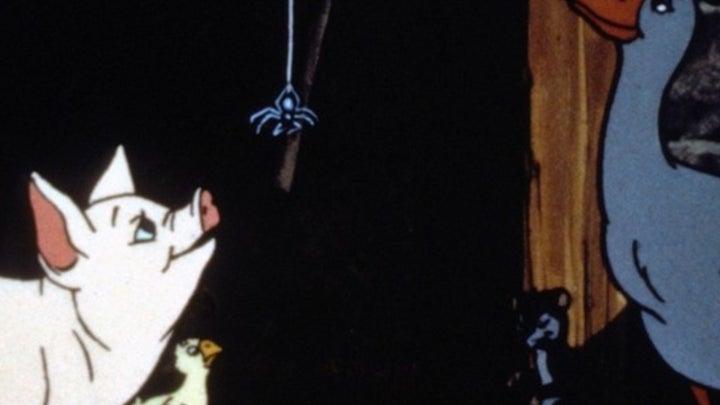
E.B. White, who wrote the 1952 children’s book, had been in negotiations with the production team John and Faith Hubley.
Eventually, Hanna-Barbera got the rights instead. After their animated 1973 movie came out, White wrote: “The movie of Charlotte’s Web is about what I expected it to be. The story is interrupted every few minutes so that somebody can sing a jolly song. I don’t care much for jolly songs. The Blue Hill Fair, which I tried to report faithfully in the book, has become a Disney World, with 76 trombones.”
Advertisement
His wife, meanwhile, told would-be director of the abandoned original adaptation, Gene Dietch, “We have never ceased to regret that your version of Charlotte’s Web never got made. The Hanna-Barbera version has never pleased either of us.”
Author Truman Capote spent many years disparaging the movie based on his 1958 novel, calling it the “most miscast” movie (he’d wanted Marilyn Monroe for the part Audrey Hepburn got).
When asked what he didn’t like about the adaptation, he replied, “Oh god, just everything” – the book’s narrator role changes, as does the book’s ending.
Advertisement
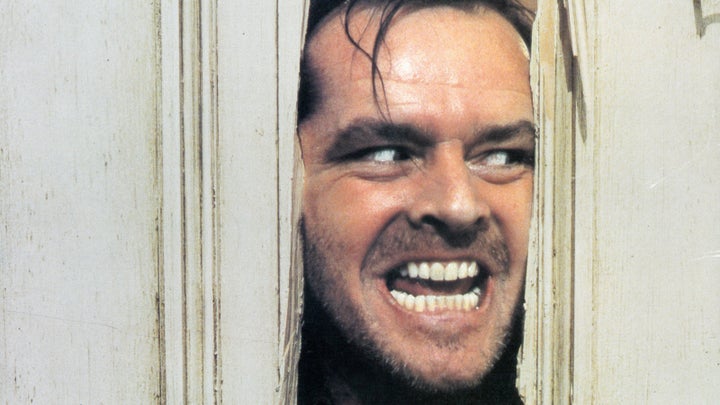
Warner Bros Pictures
Speaking to The Paris Review about Kubrick’s version of his story, King said he thought the movie was “Too cold. No sense of emotional investment in the family whatsoever on his part”.
He added that Shelley Duvall as Wendy was “insulting to women. She’s basically a scream machine…
“And Kubrick didn’t seem to have any idea that Jack Nicholson was playing the same motorcycle psycho that he played in all those biker films he did… The guy is crazy. So where is the tragedy if the guy shows up for his job interview and he’s already bonkers? No, I hated what Kubrick did with that.”
Advertisement
The writer had penned his own version of the script, which Kubrick didn’t use.
Author Rick Riordan let his feelings about the adaptation be known on X, where he likened the movie to “my life’s work going through a meat grinder when I pleaded with [the studio] not to do it.”
He also posted, “I still have not seen the movies, and don’t plan on ever doing so… I judge them from having read the scripts because I care most about the story. I certainly have nothing against the very talented actors. Not their fault. I’m just sorry they got dragged into that mess.”
Advertisement
Still, the writer hinted he was “gonna fix” this with Disney+’s 2023 series, Percy Jackson and the Olympians, for which he had more oversight.
Going so far as to remove his name from the movie’s credits, Ende publicly described the movie as “revolting” and claimed, “the makers of the film simply did not understand the book at all”.
The author even reportedly tried (and failed) to sue in order to stop the movie from going out, saying his “moral and artistic existence is at stake in this film”.
Advertisement
6) PL Travers had such a contentious relationship with Disney due to Mary Poppins, there’s a whole film about it
The film, which won a remarkable five Oscars, had a very different nanny to the one in PL Travers’ books (she “never wastes time being nice”) – Travers also disliked the fact that Disney made Mrs Banks a Suffragette.
So contentious was her relationship with Walt Disney that the movie Saving Mr Banks was made to chronicle the making of the film.
Advertisement

Warner Bros Pictures
When asked to weigh in on the adaptation, Moore said: “I’ve read the screenplay. It’s rubbish”.
He also told the New York Times that for a lot of the DC projects that had become movies, “I don’t want anything more to do with these works because they were stolen from me – knowingly stolen from me.”
The writer, who claimed the studio was using his brother’s serious illness to pressure him, said of the movie: “curse this wretched film and everything connected with it”.
Advertisement
Speaking to GQ, meanwhile, he said: “I would be the last person to want to sit through any adaptations of my work.
“From what I’ve heard of them, it would be enormously punishing. It would be torturous, and for no very good reason… It seemed to me that what people were taking away from works like Watchmen or V For Vendetta wasn’t the storytelling techniques, which to me seemed to be the most important part of it. It was instead this greater leeway with violence and with sexual references. Tits and innards.”