Both women and men can experience a loss of libido after having a child, here’s what can help.


Both women and men can experience a loss of libido after having a child, here’s what can help.
A former Harry Potter actor was left feeling “canceled” after she said that her recent work on OnlyFans got her barred from a fan convention.
Jessie Cave – who appeared as Lavender Brown in the series, a character who is best known for being Ron Weasley’s girlfriend for a short time – wrote about her experience on her Substack.
Advertisement
“I found out that I didn’t get booked for a Harry Potter convention recently, as I’m now doing OnlyFans,” she said in her post last week, which also celebrated six months on the OnlyFans platform.
“They explained it was because it’s a ‘family show and OnlyFans is affiliated with porn,’” Jessie continued.
She explained: “This was baffling to me as some actors who do conventions (most actors, actually) have done TV and films in which they’ve done sex scenes and nudity. I’m just playing with my hair!”
Advertisement
Earlier this year, Jessie shared that she was joining the adults-only subscription site, where she was sharing content specifically centred around “just very sensual stuff with my hair”.
Despite the controversy, Jessie said she isn’t “upset about the prospect of no more Harry Potter conventions”.
“There’s going to be a new cast now and it’s a different time. Plus, I have done conventions for over 15 years and have enough photos and wizard memorabilia,” the 38-year-old added.
Advertisement

Gareth Davies via Getty Images
Jessie has shared that she took on her OnlyFans account to help with bills, though she has continued her work as an actor after the Harry Potter series ended.
She wrote about her new career venture, and finding it both freeing and empowering, on both her Instagram and her most recent Substack entry.
Advertisement
“I’ve taken control of my own career, and I’m not relying on anyone but me to make things happen,” she said in a post on Monday. “It’s going to be harder this way, but more fulfilling. I won’t be waiting for emails or validation and it’s exhilarating, I can breathe again.”


Colin Farrell has opened up about the intense time filming Oliver Stone’s 2004 epic historical drama Alexander.
The actor – in a joint interview with his A Big Bold Beautiful Journey co-star Margot Robbie for Collider — revealed that the Battle of Gaugmela scene was the “hardest sequence” of his career, noting that it was shot over four weeks in the desert of Morocco.
Advertisement
After Margot asked if the sequence involved elephants, Colin then clarified that shooting the Battle of the Hydaspes was “the most dangerous thing” he’s “ever been a part of”.
“They would say ‘action’ and there was eight head of elephant, 200 head of horse and 800 background, 800 foreground, 800 Thai men who would move,” Colin explained.
“Wow, that’s crazy!” Robbie remarked.
He continued: “Eight elephants, 200 horses and 800 men would go on ‘action’.
“One guy broke his leg on horseback, that was it, nobody died. It was a miracle. You couldn’t do it, they wouldn’t do it now.”
Advertisement
Colin starred as Alexander the Great in the 2004 epic, which featured an all-star cast that included Angelina Jolie, Val Kilmer, Jared Leto, Rosario Dawson and Anthony Hopkins.
Alexander — which was in development for 16 years prior to its release — is considered to be a box office failure, grossing $167 million globally against its $155 million budget.
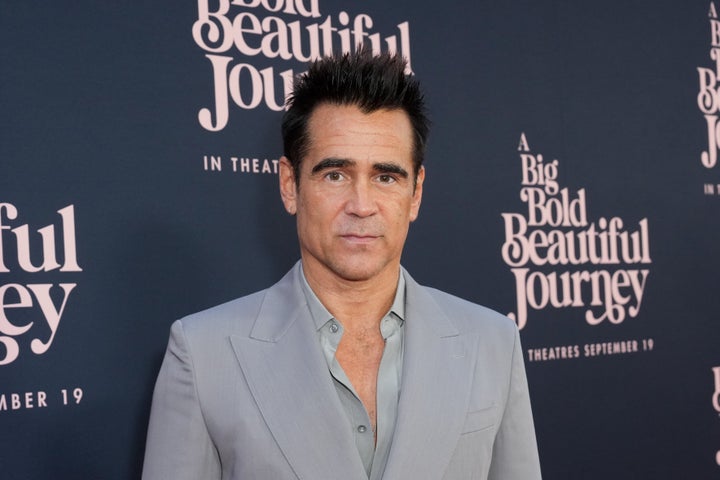
John Nacion via Getty Images
Advertisement
dURING an interview with The Hollywood Reporter in 2023, Colin said he and others with Alexander had tuxedos ready for an award show run and expected the film would be “off to the Oscars” before negative press began to trickle in.
“I was like, ‘Holy shit.’ I thought, ‘What can I do?’ I felt so much shame,” said Colin of criticism toward the film, which received six nominations at the 2005 Golden Raspberry Awards.
He added that the reception caused him to question himself as an actor, which eventually led him to “plug back into” the person he was when he walked into an acting class at age 17.
Advertisement
“I was fortunate enough to be given the opportunity to reconnect with the simplicity that should never leave the core of what we do,” he said.

Some studies have suggested an association between the two, but experts say there is no causal relationship.
Jess’s Rule urges doctors to ‘think again’ if they cannot diagnose a patient’s illness after three appointments.

Drinking too little water could increase our vulnerability to stress-related health issues, according to a new study from scientists at LJMU.
People who drink less than the recommended daily fluid intake experience a greater stress hormone response, which is associated with an increased risk of heart disease, diabetes and depression.
A new study, published recently in the Journal of Applied Physiology, found that individuals who drank less than 1.5 liters of fluid – or seven cups of tea – per day had a cortisol response to stress that was over 50% higher than those who met daily water intake recommendations.
Study lead Professor Neil Walsh, a physiologist in LJMU’s School of Sport and Exercise Sciences, said: “Cortisol is the body’s primary stress hormone and exaggerated cortisol reactivity to stress is associated with an increased risk of heart disease, diabetes and depression.”
“If you know you have a looming deadline or a speech to make, keeping a water bottle close could be a good habit with potential benefits for your long-term health.”
Poor long-term health
With the project funded by Danone R&I, Neil and his team divided healthy young adults into two equally sized groups, representing the lowest and highest 25% for daily fluid intake. The ‘low fluid’ group consisted of individuals who typically drank less than 1.5 liters of fluid per day (water, hot drinks etc.). The ‘high fluid’ group included individuals who regularly met the daily water intake recommendations – 2 liters for women and 2.5 liters for men. Both groups were matched for key factors known to influence stress responses such as psychological characteristics and sleep.
Participants maintained their usual drinking habits for one week, during which hydration levels were monitored in blood and urine samples. Then participants underwent the Trier Social Stress Test, widely used to simulate real-world stress through a mock job interview and a mental arithmetic task.
Dr Daniel Kashi, a member of the study team, said: “Both groups felt equally anxious and experienced similar increases in heart rate during the stress test. However, only the ‘low fluid’ group showed a significant increase in saliva cortisol in response to the stress test.”
He added: “Although the low fluid group did not report being thirstier than the high fluid group, they had darker and more concentrated urine, clear signs of poor hydration. An important observation was that poor hydration was associated with greater cortisol reactivity to the stress test. Exaggerated cortisol reactivity to stress has been associated with poor long-term health.”
“If you have a stressful schedule, keeping a bottle of water close could be a good habit.”
Dr Daniel Kashi, physiologist, LJMU
Why is dehydration harmful?
The answer lies in the body’s water-regulation system, which is closely connected to the brain’s stress-response center. When the body senses dehydration, whether due to inadequate fluid intake or excessive fluid loss, it triggers the release of a hormone called vasopressin. Vasopressin acts primarily on the kidneys, promoting water reabsorption to maintain blood volume and electrolyte balance. This conservation mechanism comes at a cost. Sustained vasopressin release places additional strain on the kidneys, which must work harder to concentrate urine and manage electrolyte balance.
Vasopressin also acts on the brain’s stress-response center, the hypothalamus, where it can influence the release of cortisol. This dual role for vasopressin helps maintain blood volume and electrolyte balance but also increases cortisol.
The researchers say that while further long-term studies are needed, the findings reinforce current water intake recommendations – approximately 2 liters of fluid each day for women and 2.5 liters for men.
Hydration helps us manage stress
“Being hydrated may help your body manage stress more effectively,” added Dr Kashi. A practical way to check your hydration status is to monitor your urine colour — light yellow typically indicates good hydration.
“If you know, for example, that you have a stressful schedule, maybe a looming deadline or a speech to make, keeping a water bottle close could be a good habit with potential benefits for your long-term health.”
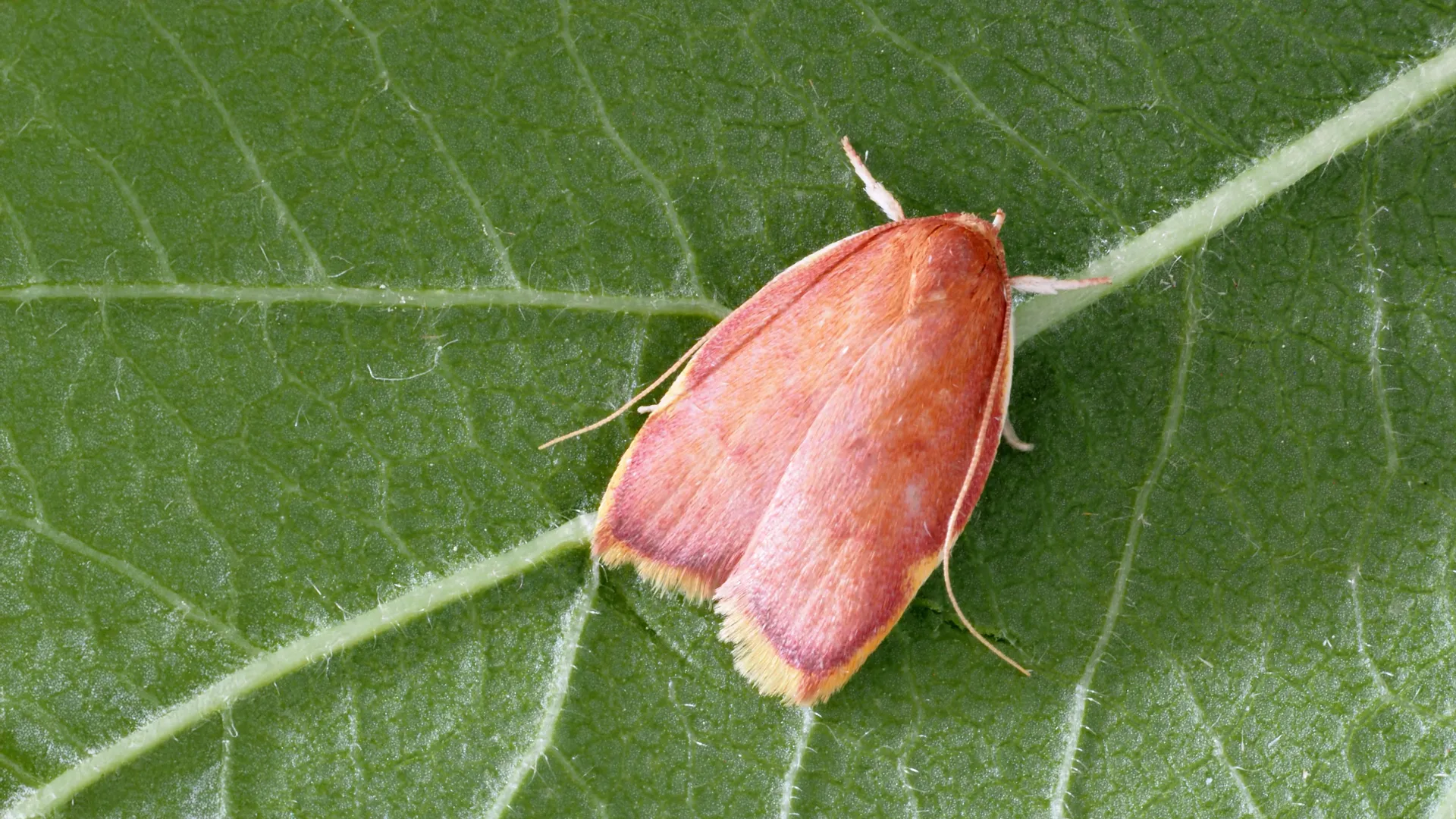
A beautiful, colorful moth, previously mistaken for over a century, has been revealed as a new species by entomologist Dr Peter Huemer of the Tyrolean State Museum Ferdinandeum in Innsbruck, Austria.
Described in the open-access journal Alpine Entomology, the new species, now officially named Carcina ingridmariae, had long been overlooked due to its close resemblance to the widespread oak carcina (Carcina quercana), a moth familiar across Europe and first described in 1775.
Despite its vibrant pink and yellow hues, Carcina ingridmariae escaped detection until advances in DNA barcoding revealed significant genetic differences of more than 6% from its lookalike relative. Subsequent analysis of the insects’ sexual organs confirmed the molecular findings, leading to the revelation that two distinct species have been hiding in plain sight.
The new species has a wingspan of about 2 cm, and is found across the eastern Mediterranean, from Croatia and Greece to Cyprus and Turkey. Its larvae likely feed on various oak species, similar to its counterpart. However, dedicated studies on its biology and distribution remain ongoing.
In recognition of enduring support throughout his career, Dr Huemer dedicated the discovery to his wife, Ingrid Maria, naming the moth after her on their 42nd wedding anniversary.
Huemer, who has described more than 200 species from Europe over 35 years said: “It is without doubt the prettiest species I have encountered in my long scientific career, even though it is still unnamed.” It was therefore “obvious” to Huemer that the new species should be given his wife’s name.
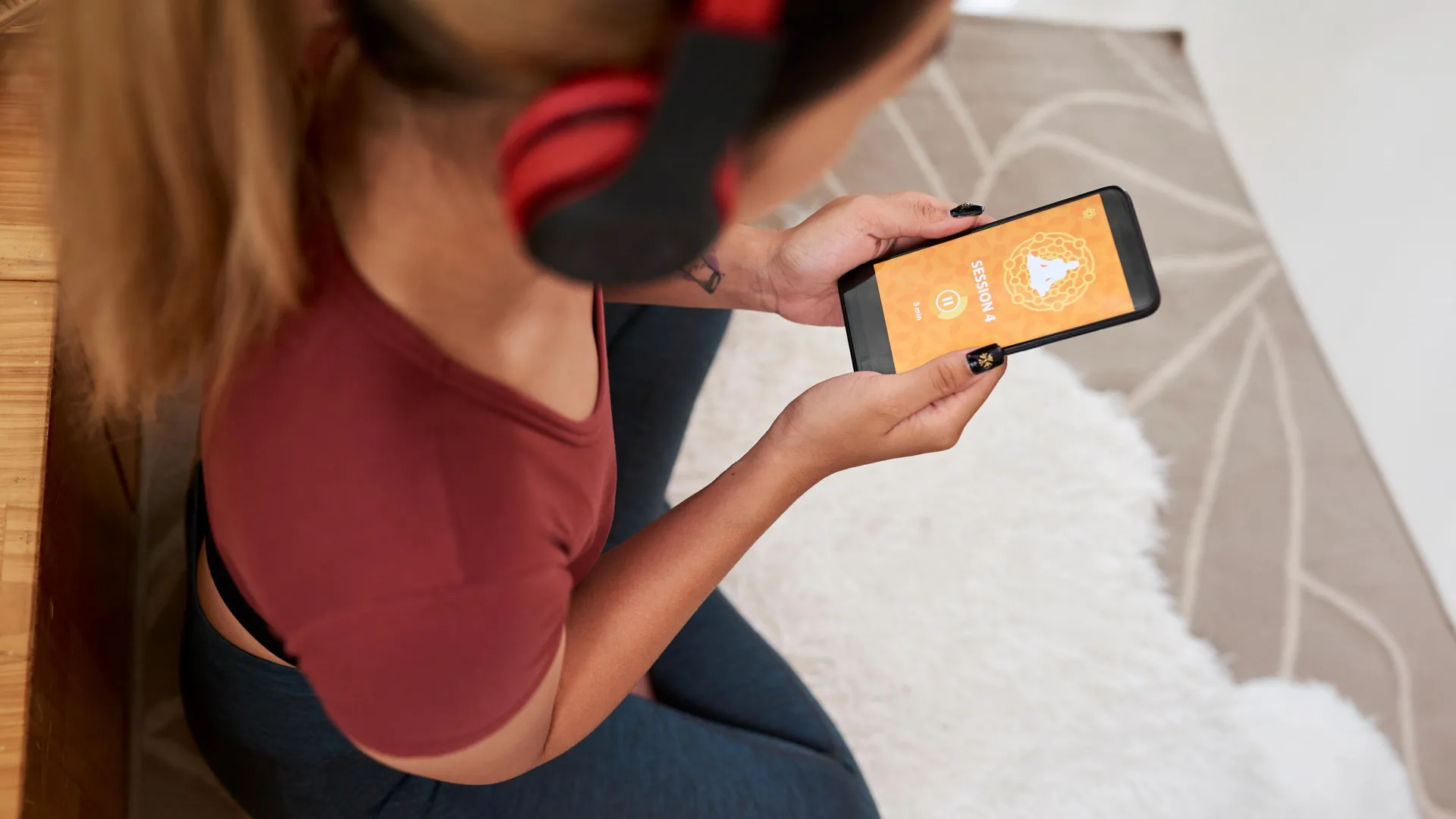
Do you have a meditation app on your smartphone, computer or wearable device? Well, you’re not alone.
There are now thousands of meditation apps available worldwide, the top 10 of which have been collectively downloaded more than 300 million times. What’s more, early work on these digital meditation platforms shows that even relatively brief usage can lead to benefits, from reduced depression, anxiety, and stress to improved insomnia symptoms.
“Meditation apps, such as Calm and Headspace, have been enormously popular in the commercial market,” said J. David Creswell, a health psychologist at Carnegie Mellon University and lead author of a review paper on meditation apps, published today in the journal American Psychologist. “What they’re doing now is not only engaging millions of users every day, but they’re also creating new scientific opportunities and challenges.”
One huge boon provided by meditation apps for users is access.
“You can imagine a farmer in rural Nebraska not having many available opportunities to go to traditional group-based meditation programs, and now they have an app in their pocket which is available 24/7,” said Creswell, who is the William S. Dietrich II Professor in Psychology and Neuroscience.
Meditation apps also provide scientists with opportunities to scale up their research.
“Historically, I might bring 300 irritable bowel syndrome patients into my lab and study the impacts of meditation on pain management,” said Creswell. “But now I’m thinking, how do we harness the capacity of meditation apps and wearable health sensors to study 30,000 irritable bowel syndrome patients across the world?”
Combined with products that measure heart rate and sleep patterns, such as Fitbit and the Apple Watch, meditation apps now also have the capacity to incorporate biometrics into meditation practices like never before.
The biggest takeaway, though, is that meditation apps are fundamentally changing the way these practices are distributed to the general public. Scientific studies of use patterns show that meditation apps account for 96 percent of overall users in the mental health app marketplace.
“Meditation apps dominate the mental health app market,” said Creswell. “And this paper is really the first to lay out the new normal and challenge researchers and tech developers to think in new ways about the disruptive nature of these apps and their reach.”
Meditation apps challenge users to train their minds, in small initial training doses
As with in-person meditation training, meditation apps start by meeting users where they are. Introductory courses may focus on breathing or mindfulness, but they tend to do so in small doses, the merits of which are still being debated.
According to the data, just 10 to 21 minutes of meditation app exercises done three times a week is enough to see measurable results.
“Of course, that looks really different from the daily meditation practice you might get within an in-person group-based meditation program, which might be 30 to 45 minutes a day,” said Creswell.
The a la carte nature of meditation through a smartphone app may appeal to those pressed for time or without the budget for in-person coaching sessions. Users may also find it comforting to know that they have access to guided meditation on-demand, rather than at scheduled places, days, and times.
“Maybe you’re waiting in line at Starbucks, and you’ve got three minutes to do a brief check-in mindfulness training practice,” said Creswell.
Finally, as meditation apps continue to evolve, Creswell believes integration of AI, such as meditation-guiding chat-bots, will only become more common, and this will offer the option of even more personalization. This could mark an important development for meditation adoption at large, as offerings go from one-size-fits all group classes to training sessions tailored to the individual.
“People use meditation for different things, and there’s a big difference between someone looking to optimize their free-throw shooting performance and someone trying to alleviate chronic pain,” said Creswell, who has trained Olympic athletes in the past.
The elephant in the room
Of course, with new technology comes new challenges, and for meditation apps, continued engagement remains a huge problem.
“The engagement problem is not specific to meditation apps,” said Creswell. “But the numbers are really sobering. Ninety-five percent of participants who download a meditation app aren’t using it after 30 days.”
If the meditation app industry is going to succeed, it will need to find ways to keep its users engaged, as apps like Duolingo have. But overall, Creswell said the market demand is clearly there.
“People are suffering right now. There are just unbelievably high levels of stress and loneliness in the world, and these tools have tremendous potential to help,” he said.
“I don’t think there is ever going to be a complete replacement for a good, in-person meditation group or teacher,” said Creswell. “But I think meditation apps are a great first step for anyone who wants to dip their toes in and start training up their mindfulness skills. The initial studies show that these meditation apps help with symptom relief and even reduce stress biomarkers.”
The Lib Dem leader will use his party conference speech to attack Donald Trump’s “anti-science agenda”.
Some studies have suggested an association between the two, but experts say there is no causal relationship.
