Some Jhoots pharmacies are accused of not paying staff, as patients face closures and low stock.


Some Jhoots pharmacies are accused of not paying staff, as patients face closures and low stock.
Reese Witherspoon has played many roles, but there’s at least one that got away.
The actor, who once famously charmed us with the “bend and snap” technique in Legally Blonde, has captivated audiences for decades. But her sweet demeanour cost her the leading role in the 2014 film adaptation of Gone Girl. On Wednesday’s episode of the podcast Las Culturistas, Witherspoon revealed that her then-production company, Pacific Standard, produced the movie — and that she had originally planned to play the leading role.
“I had optioned it to star in it, and I was supposed to star in it,” she said.
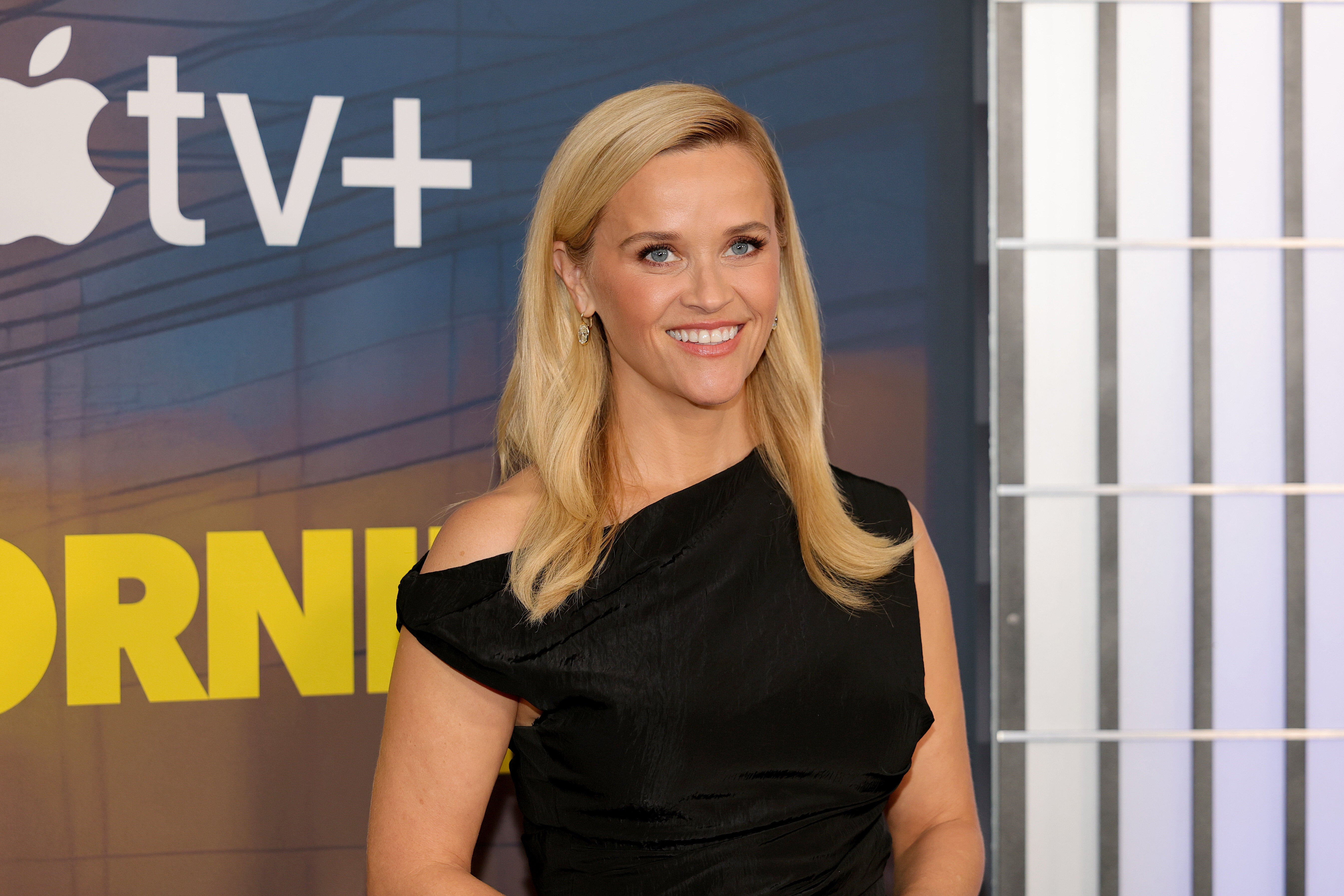
Dia Dipasupil via Getty Images
Advertisement
The Sweet Home Alabama star went on to say that when she eventually writes a book, there will be “a whole chapter” dedicated to the project because “it started” her journey into production. Witherspoon then shared that director David Fincher ultimately decided that she wasn’t the right fit for the role.
“David was like ‘You’re totally wrong for this part, and I’m not putting you in it,’” she recalled.
Witherspoon added that the book’s author, Gillian Flynn, wanted her for the role — but Fincher stood his ground, a moment she described as an “ego check.”
It helped her realise that, even if she wanted the part, she “wasn’t right for everything,” later admitting that Fincher was “totally right.”
Advertisement
The part ultimately went to Rosamund Pike, who earned an Oscar nomination for her performance.


Minister Peter Kyle was put on the spot this morning over how he praised Peter Mandelson last week – even though Mandelson had just been sacked as US ambassador over his Jeffrey Epstein ties.
Keir Starmer fired his US ambassador more than a week ago, after it emerged that Mandelson had continued to support Epstein via email, even as he was facing child underage sex charges in 2008.
Advertisement
Mandelson’s friendship with the late convicted sex offender was already public knowledge when he was appointed less than a year ago.
And, speaking to Sky News last weekend – three days after Mandelson was fired – Kyle insisted that No.10 initially thought hiring the controversial figure as US ambassador was still worth the risk.
He said: “We knew that there were risks involved, but his talent led us to believe at the time that the risk was worth it.”
Advertisement
Kyle said while they “knew the relationship continued” after Epstein’s conviction, “the decision was taken in the national interest to try and use the specific talents that he had, which were singular and outstanding.”
Those remarks caused significant backlash with the public, especially as he said them after the depth of Mandelson’s links with Epstein post-arrest were revealed.
On ITV’s Good Morning Britain on Friday, presenter Rob Rinder asked Kyle if he still stood by that assessment.
Advertisement
Kyle just insisted that new evidence had come to light which was not available at the time of Mandelson’s hiring.
“That just doesn’t answer the question,” Rinder hit back. “Let me ask you in this way.”
He said it was well-known that Mandelson had previously stayed in the home of a convicted sex trafficker at the time of his appointment, adding: “At that point, anyone doing analysis, doing any kind of investigating [or vetting], would have said ‘Where are your emails?’”
Kyle said there was an independent vetting system in place that was operating in its usual way – before deflecting to talk about the impact of Donald Trump’s state visit.
Advertisement
But co-presenter Kate Garraway brought the conversation back to Mandelson, pointing out that Kyle has been criticised because he “continued to defend” him post-sacking.
“One minister told us at Good Morning Britain that you seem to be ‘tone-deaf’,” she added. “And other MPs have said that too. Is it going to have an impact on you?”
The cabinet minister replied: “Let me be really clear: I do not defend any of the actions that Peter Mandelson took in his relationship with Jeffrey Epstein, absolutely not.
Advertisement
“What I am trying to do is show that we have been focused on delivering for people. As soon as new evidence came to light, why on earth would I ever defend what had come to light in those emails?”
“But it had?” Garraway pointed out. “It had come to light.”
Kyle stuttered before insisting: “The context of those emails was not known at the time of appointment.”
“No, but your defence was!” Garraway said.
Rinder cut in: “To close it off, the statement you made – that his ‘singular talents’ were worth the risk – you no longer think that?”
Advertisement
“What I said at the time of this coming out was explaining why he was appointed in the first place,” Kyle insisted.
“No one is appointed to being ambassador of a great country on behalf of our country, unless they have talents.”
He added that Mandelson should have been recalled as soon as new information came to light.
Advertisement


President Donald Trump offered well-wishes to reporters aboard Air Force One as he returned to the United States following his state visit to the United Kingdom.
But he then added a comment that critics said proved his self-centeredness.
“Thank you, everybody. Have a good flight. Fly safely,” Trump told the press pool after railing against late-night comedians who mock him, amid the uproar over ABC’s suspension of Jimmy Kimmel.
Then he added: “You know why I say that? Because I’m on the flight. Otherwise I wouldn’t care.”
Watch from the 17:30 mark here:
The quip, which Trump delivered with a grin, went viral on social media.
And while Trump’s supporters dismissed it as playful banter from the president, it immediately drew accusations of narcissism and more.
Earlier Thursday, a helicopter carrying Trump to London’s Stansted Airport made an unexpected landing after experiencing what the White House described as a “minor hydraulic issue.”


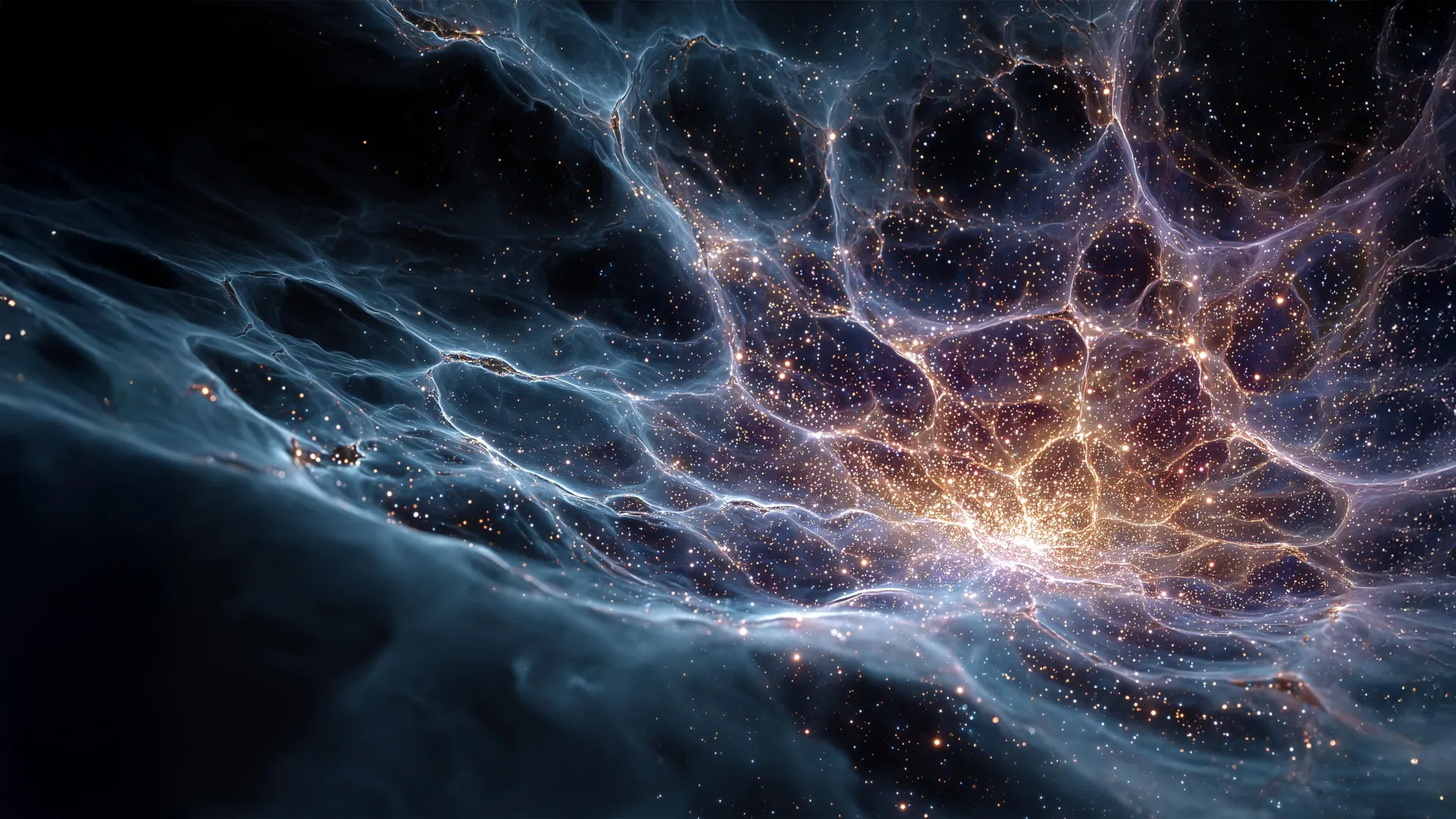
A Rutgers-led team of scientists has uncovered evidence of how galaxies expand by tracing the invisible scaffolding of the universe created by a mysterious substance known as dark matter.
In a newly published study in Astrophysical Journal Letters, researchers used what they said are the largest-ever samples of special galaxies called Lyman-alpha emitters to study how galaxies clumped together over billions of years. In doing so, they gained an improved understanding of how galaxies relate to the surrounding dark matter and how they evolve over time.
“Analyzing these fingerprints gives us insight into the mass of dark matter surrounding the galaxies,” said Eric Gawiser, a Distinguished Professor with the Department of Physics and Astronomy in the Rutgers School of Arts and Sciences and an author of the study. “The dark matter masses revealed by this study are consistent with the idea that Lyman-alpha emitting galaxies evolved into present-day galaxies like our own Milky Way.”
The analysis, which assessed wide-field images across three different eras of the universe’s history shortly after the Big Bang, revealed distinct patterns, akin to cosmic fingerprints. These patterns point to where dark matter is most concentrated, the researchers said.
Dark matter, a mysterious substance that doesn’t emit light or energy, cannot be seen, but makes up most of the matter in the universe, according to scientists. They know dark matter exists because its gravity affects how galaxies move and how these vast cosmic systems are arranged in space.
The study, led by Rutgers doctoral student Dani Herrera, used data from the ODIN (One-hundred-square-degree DECam Imaging in Narrowbands) survey, which is a large astronomical project designed to analyze more than 100,000 Lyman-alpha emitting galaxies.
The researchers focused on data taken from a region of the sky known as the Cosmic Evolution Survey Deep Field (COSMOS), in one of the largest deep-sky surveys ever conducted. Looking deep into space and into the distant past, they viewed three time periods, some 2.8 billion, 2.1 billion and 1.4 billion years after the Big Bang. During these periods, Lyman-alpha emitter galaxies were young and actively forming stars, making them ideal markers for study. They also contain hydrogen gas that emits a special glow, which allows scientists to discover large numbers of them in the distant universe.
“We wanted to find the dark matter whose gravity drives galaxies to merge and grow,” Herrera said. “Understanding where it is and how it has evolved helps us understand how the universe itself has evolved.”
Dark matter plays a crucial role in galaxy formation by acting as a gravitational “glue” that helps pull gas together to form galaxies, Herrera said. Its invisible mass creates deep wells in space where galaxies can grow, merge and evolve, forming the large-scale structure of the universe.
“We used the clumpiness of these galaxies to identify where the dark matter was densest,” Gawiser said. “Visualizing that with a contour map, much the way that a hiking map shows elevations, lets us observe the ‘fingerprints’ of dark matter in the distant universe.”
One result stood out. Three percent to 7% of the dense regions of dark matter capable of hosting galaxies contain Lyman-alpha emitting galaxies, they found. This means that Lyman-alpha emitting galaxies represent a small percentage of the galaxies forming where the dark matter is densest. The low percentage hints that the galaxies were observed during a short-lived phase, glowing in Lyman-alpha light for tens to hundreds of millions of years.
To uncover these results, the researchers used a technique called clustering which measures how galaxies are grouped compared with random distributions. They calculated the angular correlation function, a method of counting pairs of galaxies.
This research, the scientists said, not only deepens understanding of galaxy evolution but also helps scientists refine models of the universe’s structure. As the ODIN survey continues, future studies will expand to more galaxies, offering a more complete view of the cosmic web, they said.
“While invisible to our telescopes, dark matter shapes the universe through interactions with visible material,” Gawiser said. “While some try to understand what it is, others like this research team try to understand where it is and what that implies about the evolution of the universe.”
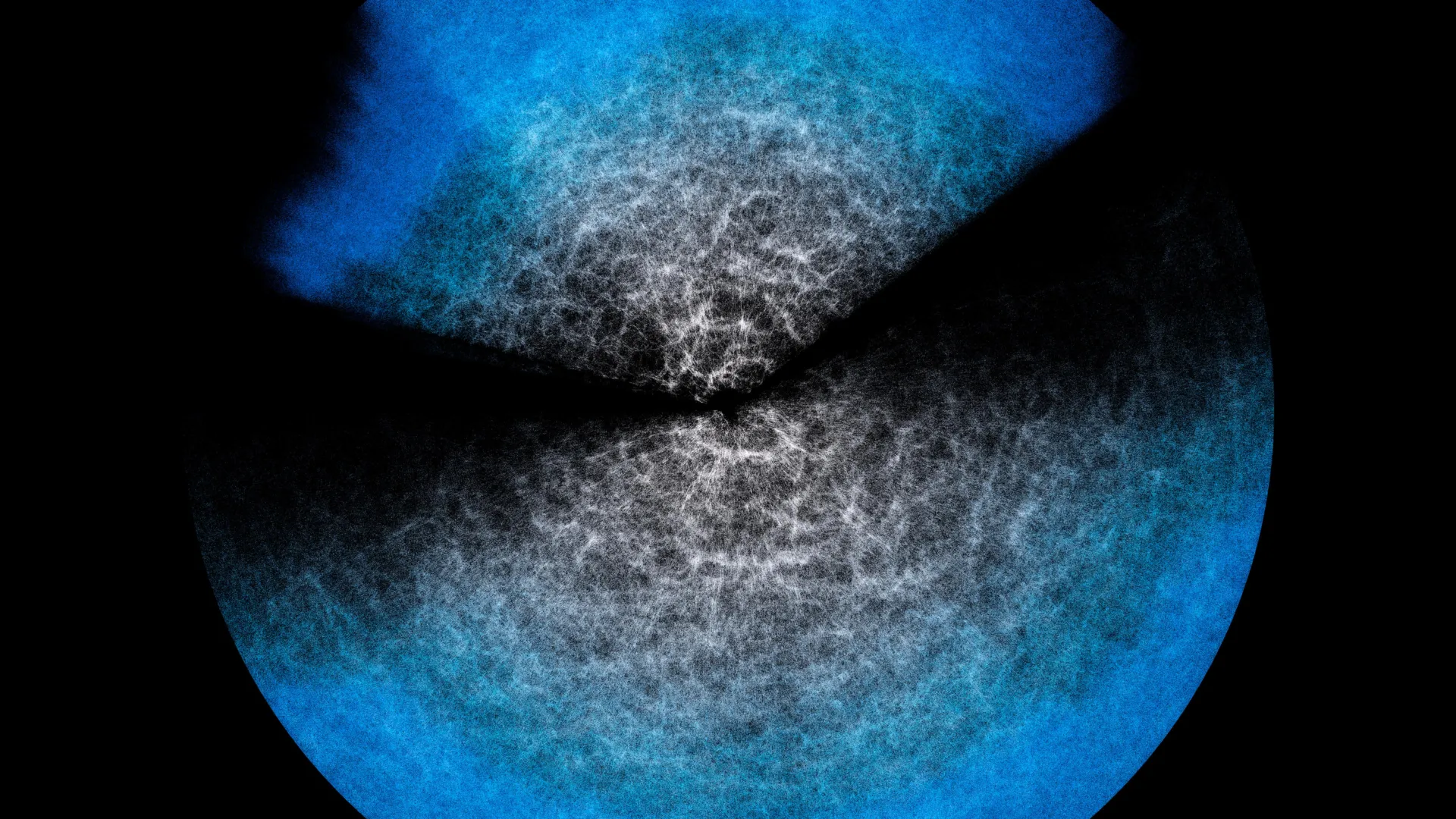
If you think a galaxy is big, compare it to the size of the Universe: it’s just a tiny dot which, together with a huge number of other tiny dots, forms clusters that aggregate into superclusters, which in turn weave into filaments threaded with voids — an immense 3D skeleton of our Universe.
If that gives you vertigo and you’re wondering how one can understand or even “see” something so vast, the answer is: it isn’t easy. Scientists combine the physics of the Universe with data from astronomical instruments and build theoretical models, such as EFTofLSS (Effective Field Theory of Large-Scale Structure). Fed with observations, these models describe the “cosmic web” statistically and allow its key parameters to be estimated.
Models like EFTofLSS, however, demand a lot of time and computing resources. Since the astronomical datasets at our disposal are growing exponentially, we need ways to lighten the analysis without losing precision. This is why emulators exist: they “imitate” how the models respond, but operate much faster.
Since this is a kind of “shortcut,” what’s the risk of losing accuracy? An international team including, among others, INAF (Italy), The University of Parma (Italy) and the University of Waterloo (Canada) has published in the Journal of Cosmology and Astroparticle Physics (JCAP) a study testing the emulator Effort.jl, which they designed. It shows that Effort.jl delivers essentially the same correctness as the model it imitates — sometimes even finer detail — while running in minutes on a standard laptop instead of a supercomputer.
“Imagine wanting to study the contents of a glass of water at the level of its microscopic components, the individual atoms, or even smaller: in theory you can. But if we wanted to describe in detail what happens when the water moves, the explosive growth of the required calculations makes it practically impossible,” explains Marco Bonici, a researcher at the University of Waterloo and first author of the study. “However, you can encode certain properties at the microscopic level and see their effect at the macroscopic level, namely the movement of the fluid in the glass. This is what an effective field theory does, that is, a model like EFTofLSS, where the water in my example is the Universe on very large scales and the microscopic components are small-scale physical processes.”
The theoretical model statistically explains the structure that gives rise to the data collected: the astronomical observations are fed to the code, which computes a “prediction.” But this requires time and substantial compute. Given today’s data volume — and what is expected from surveys just begun or coming soon (such as DESI, which has already released its first batch of data, and Euclid) — it’s not practical to do this exhaustively every time.
“This is why we now turn to emulators like ours, which can drastically cut time and resources,” Bonici continues. An emulator essentially mimics what the model does: its core is a neural network that learns to associate the input parameters with the model’s already-computed predictions. The network is trained on the model’s outputs and, after training, can generalize to combinations of parameters it hasn’t seen. The emulator doesn’t “understand” the physics itself: it knows the theoretical model’s responses very well and can anticipate what it would output for a new input. Effort.jl’s originality is that it further reduces the training phase by building into the algorithm knowledge we already have about how predictions change when parameters change: instead of making the network “re-learn” these, it uses them from the start. Effort.jl also uses gradients — i.e., “how much and in which direction” predictions change if you tweak a parameter by a tiny amount — another element that helps the emulator learn from far fewer examples, cutting compute needs and allowing it to run on smaller machines.
A tool like this needs extensive validation: if the emulator doesn’t know the physics, how sure are we that its shortcut yields correct answers (i.e., the same ones the model would give)? The newly published study answers exactly this, showing that Effort.jl’s accuracy — on both simulated and real data — is in close agreement with the model. “And in some cases, where with the model you have to trim part of the analysis to speed things up, with Effort.jl we were able to include those missing pieces as well,” Bonici concludes. Effort.jl thus emerges as a valuable ally for analyzing upcoming data releases from experiments like DESI and Euclid, which promise to greatly deepen our knowledge of the Universe on large scales.
The study “Effort.jl: a fast and differentiable emulator for the Effective Field Theory of the Large Scale Structure of the Universe” by Marco Bonici, Guido D’Amico, Julien Bel and Carmelita Carbone is available in the Journal of Cosmology and Astroparticle Physics (JCAP).
Sanctions for UK doctors guilty of sexual misconduct are too lenient in around a quarter of cases, reports suggest.
Using the cafe to treat patients “will not be allowed to happen again”, the trust’s boss says.
The play area also has a calming room for children to relax in.
If you’re a fan of a fast-paced thriller full of unpredictable twists and turns, Netflix has something you might want to check out this weekend.
On Thursday morning, the streaming giant premiered its new series Black Rabbit, which centres around two brothers who are reunited after an estrangement.
Advertisement
Jude Law plays one of the men, a successful New York nightclub owner whose life is turned upside down when his chaotic brother, portrayed by Jason Bateman, strolls back into his life, with chaos in his wake.
Reviews of the show so far have been pretty positive, with critics predicting big viewing figures for Black Rabbit, and even some (though, admittedly, not all!) of the less enthusiastic assessments still pointing out that the show is likely to make for binge-friendly viewing.
Here’s a selection of what the critics are saying about Black Rabbit so far…
“Pick of the week […] It’s snappy, fast-talking trash but with an undercurrent of fraternal tenderness that lends it a dimension beyond the generic.”
Advertisement
“Black Rabbit is worth watching for its stylish direction, propulsive pace that mitigates some of the narrative wheel-spinning, and most of all Law and Bateman’s brilliantly cast brother act. But technical polish and the faithful execution of genre conventions alone can’t elevate a show beyond competence.”

“There are parts of Black Rabbit that I appreciated, from a ground-level New York City vitality to a searing supporting performance from Troy Kotsur to a two-episode conclusion that’s effectively tense, right up until a soggy ending that left me convinced the series has no awareness that its main characters aren’t antiheroes, they just suck in very conventionally clichéd ways.”
Advertisement
“Law and Bateman have the convincing physical shorthand of siblings, the little eyebrow raises and exasperated smirks that convey a lifetime spent loving and infuriating each other. That familiarity is the backbone of Black Rabbit, and it gives urgency and emotional weight to everything that comes after the brothers reunite.”
“The writing and the pacing of Black Rabbit during the appetiser portion of the program are solid enough that one will want to stick around for dessert, though there’s quite a bit of filler, too.”
Advertisement
“There’s always something happening, but it doesn’t always work. Everything is pitched at the same level of intensity, even if it’s obviously not as important or ends up not mattering. The runtimes are bloated, and some long scenes may have you eyeing the fast forward button… [but] the good news is that the show gets better as it goes on.”
“Although the series never feels like it could go anywhere, at least the inevitability instilled by its flash-forward opening quickly illustrates why you don’t have to keep hanging around.”
Black Rabbit is now streaming on Netflix.