“You don’t die as a human being, you live on with others,” Rosen told Saturday Live.


“You don’t die as a human being, you live on with others,” Rosen told Saturday Live.
Donald Trump is clearly not happy with Israel after it chose to launch missile strikes into Qatar.
While Israeli prime minister Benjamin Netanyahu said he was trying to hit Hamas militants in the Qatari capital of Doha, striking a country which has act as a mediator in the Middle East has sent shockwaves around the world.
To make matters even worse, it appears Netanyahu pushed ahead with the attack without giving the US – or Qatar – significant advance notice.
Advertisement
Israel’s international alliances have already been put under intense strain by its war on Gaza – only the Trump administration has consistently stood by Netanyahu.
But could Israel’s surprise attack on Doha change all that?
Here’s what we know – and why it matters.
Israel launched 10 missile strikes at the Hamas headquarters in Qatar – where the militants have been offered immunity – on Tuesday night.
Several key figures within the militant group had gathered to discuss Trump’s latest peace plan for Gaza.
Advertisement
Hamas claimed its leader had survived the attack, although his son and four others were killed along with a member of the Qatari security forces.
If this is true, the strike could turn out to be a huge miscalculation for Netanyahu, considering the international reaction and the knock-on impact for peace talks.
The UK’s prime minister Keir Starmer said the attacks “violate Qatar’s sovereignty and risk further escalation across the region”, while French president Emmanuel Macron said the strikes were “unacceptable”.
Advertisement
The UN’s secretary general Antonio Guterres also echoed their concerns, saying: “I condemn this flagrant violation of the sovereignty and territorial integrity of Qatar. All parties must work towards achieving a permanent ceasefire, not destroying it.”

JACQUELINE PENNEY via AFPTV/AFP via Getty Images
Qatar’s prime minister, Mohammed bin Abdulrahman bin Jassim bin Jaber Al Thanil, also alleged Israel had used missiles in the attack which air defence systems could not detect.
Advertisement
He claimed Israel’s “treacherous attack” had sabotaged ceasefire efforts for Gaza, that mediation efforts were “part of Qatari identity”, and that a legal team was considering his country’s response to the attack.
But Netanyahu has so far doubled down. Speaking at the US embassy in Jerusalem, he said: “The days when terrorist leaders can enjoy immunity anywhere are over.”
He claimed that attack was “fully justified” because it targeted the senior leaders who organised Hamas’s raid on Israeli soil on October 7, 2023.
Advertisement
Other officials described the strike as a response to the Hamas attack on Jerusalem bus stop on Monday where six Israelis were killed.
However, Netanyahu did also insist that Israel had acted on its own, saying: “Israel initiated it, Israel conducted it, and Israel takes full responsibility.”
The strike comes after the chief of staff of the Israeli military Lieutenant General Eyal Zamir said Hamas leadership would be targeted across “the entire Middle East” with “no place to hide from us”.
Advertisement
The US is allied with Qatar, and even has a huge airbase stationed in the country.
Trump’s press secretary Karoline Leavitt said the attack on the soil of a close ally “does not advance Israel or America’s goals”.
She said the US president had been alerted to the strike by the US military, not Israel, and that Trump’s special envoy Steve Witkoff then notified the Qataris – only it was too late.
Trump “feels very badly” about the strikes, according to Leavitt, and “made his thoughts and concerns about this very clear” when he later spoke to Netanyahu.
Advertisement
The US president himself later told reporters that he was “very unhappy about the way that went down” and that he would offer a full statement on Wednesday.
Israel’s strikes pour cold water on the US’s ongoing attempts to end the war in Gaza.
Trump had been championing a US peace proposal for Israel and Hamas which would include the release of all Israeli hostages in exchange for an unspecified number of Palestinian prisoners.
Advertisement
But his plan did not include a permanent end to the war – a condition Hamas has demanded, but Israel has declined.
This new attack on Qatari soil suggests Netanyahu is clearly no longer willing to wait for America’s backing – and evidently giving up with the talks.
The decision to act without Trump’s stamp of approval also makes the US president look weak and flies in the face of Trump’s deal-making skills, something he has boasted about for years.
Advertisement
via Associated Press
This will all really rile a man so keen to secure the Nobel Peace Prize, especially as he has stood by Netanyahu’s side consistently while other allies in the west have started to question the catastrophic effects of Israel’s actions in the Middle East.
The BBC’s international editor Jeremy Bowen even suggested Trump has been “played” by Netanyahu.
Israel’s strikes could provoke further tensions in the Middle East too, particularly between Iran and Israel who have been holding a ceasefire since late June.
Advertisement
Iran’s foreign ministry said the attack was a “blatant violation of international law” and an “infringement upon the national sovereignty of Qatar and the Palestinian negotiators”.
It also stokes wider fears that Israel intends to continue a campaign of “score settling” for the October 7 raid – especially as the Qatari PM has said his country “reserves the right” to respond.
One thing is for sure: this is precisely the opposite of what Trump was hoping for.


Sure, most chefs know how to roast and skewer — but the late Anthony Bourdain could do all that with just his words.
The food author and TV personality, who died in 2018, was beloved for his cutting language. That’s precisely why a video of Bourdain using his sharp tongue against Donald Trump has recently resurfaced across multiple social media platforms.
Advertisement
A clip from a 2017 interview with the CBC shows the Kitchen Confidential author being asked if he’d ever share a meal with Trump.
It should be noted that in Bourdain’s popular food shows, No Reservations and Parts Unknown, he would travel to places around the world and share culturally authentic meals with locals.
“I’m open to sitting down with anyone who’s nice to me,” Bourdain began to explain. “I’ve sat down with everyone from Ted Nugent, the former chief of counterintelligence for the KGB, Hezbollah – people who I disagree with on many, if not every, fundamental issue.”
Advertisement
But in response to the CBC’s question about dining with Trump, Bourdain responded with an emphatic “no”.
“I just find him personally objectionable,” the chef explained. “I don’t think he likes food.
“And from people I know who have had to endure dinner with him, if you enjoy sitting there listening to him talk about himself, you know, great. God bless you.”
“He only eats steak well done, and if he knows how to use chopsticks, much less is able to grasp them with those tiny little nubbins, I’d be shocked,” Bourdain added.
Advertisement

MediaNews Group/Contra Costa Times via Getty Images via Getty Images
When the clip made its way to Instagram and X, users found Bourdain’s take refreshing – and instantly missed the chef.
“America could really use some Anthony Bourdain perspective and wisdom right about now,” one Instagram user said.
Advertisement
“Anthony Bourdain was curious and compassionate,” another Instagram user wrote. “And had an appreciation for great food, music, stories, culture, history and all that made life colourful. They do not share the same values, and this president wouldn’t deserve to share a table with Bourdain. RIP.”
“We could use his voice and humanity right about now. RIP AB,” another IG user said.
Over on X, many users felt the same way.
“Anthony Bourdain has always been a real one,” an X user said. “From his support for Palestine, to hating Trump, to just being a genuine person who wants to share food with people. I hate that he’s gone.”
Advertisement
“Miss this man. Society got worse and worse since he departed,” another X user echoed.
This was by no means the only time Bourdain spoke out about the US leader.
When Trump was running for office in 2015, Bourdain was asked what he thought about his campaign promise to build a border wall between the US and Mexico (that Trump infamously claimed Mexico would pay for) and to deport all the undocumented immigrants in the United States.
Bourdain replied that if that happened, “every restaurant in America would shut down”.
He went on to say that as a country of immigrants, we should show recent transplants more respect.
“For the people that have been living here and were so much a part of our lives, and have done nothing but do their best to achieve the American dream … there should be an easy path to legality,” Bourdain said.


After Slovenia’s national broadcaster said it will not compete in next year’s Eurovision Song Contest if Israel remains part of the competition, it looks like more countries could be following suit.
Advertisement
Over the summer, discussions took place among Eurovision’s participating broadcasters about whether Israel should remain part of the contest despite the ongoing war in Gaza, with the situation due to be reassessed in the coming months.
Since then, Slovenian broadcaster RTVSLO has said it will only return to Eurovision in 2026 if Israel is banned, similarly to how Russia has not been invited to take part in the competition since its invasion of Ukraine in 2022.
Following this, the chair of Icelandic broadcaster RÚV has said it is still not clear whether Iceland will be competing in 2026, saying the board will make a decision once it’s clear if Israel will be invited to return.
Advertisement

via Associated Press
Meanwhile, Spain’s minister for culture Ernest Urtasun has called for the country to withdraw from Eurovision if Israel remain part of the contest.
Per Eurovoix, Urtasun told La Hora De La 1: “I don’t think we can normalise Israel’s participation in international events as if nothing is happening.
Advertisement
“Events like Eurovision [bring] a certain representation of a country. In Eurovision’s case, it is not an individual artist who participates but someone who participates on behalf of that country’s citizens.”

via Associated Press
It’s worth pointing out that Spain is one of the so-called “Big Five” countries at Eurovision, who contribute more financially than other competing nations, and is therefore guaranteed a place in the grand final, without having to compete in the semi-final stages.
Advertisement
Last week, Eurovision’s director Martin Green issued a statement to HuffPost UK which read: “We understand the concerns and deeply held views around the ongoing conflict in the Middle East. We are still consulting with all EBU Members to gather views on how we manage participation and geopolitical tensions around the Song Contest.
“Broadcasters have until mid-December to confirm if they wish to take part in next year’s event in Vienna. It is up to each Member to decide if they want to take part in the Contest and we would respect any decision broadcasters make.”
Eurovision had no further comment when contacted for comment by HuffPost UK on Wednesday
Advertisement

via Associated Press
Meanwhile, it was previously reported that the broadcasters for Germany and Italy – who, like Spain, also make up the “Big Five”, as do the UK and France – had both threatened to pull out of Eurovision if Israel is not permitted to return to the event in 2026.
A spokesperson for Germany’s Südwestrundfunk (SWR) later told HuffPost UK: “The ESC is a music competition organised by EBU broadcasters, not governments.
Advertisement
“The Israeli broadcaster KAN adheres to applicable regulations and has been an integral part of the music competition for more than 60 years. We affirm their membership and the core values of the ESC.”




More than 14.1 million people experienced food insecurity last year, warns the Trussell Trust.

Women taking popular weight-loss medications during their reproductive years may be unaware of associated risks to pregnancy and unborn babies, warn Flinders University researchers.
A new study has revealed that most Australian women of reproductive age prescribed GLP-1 receptor agonists — medications increasingly used for weight loss such as Ozempic — are not using effective contraception, despite known risks during pregnancy.
Published in the Medical Journal of Australia, the research analyzed data from over 1.6 million women aged 18 to 49 who attended general practices between 2011 and 2022. Of the 18,010 women who were first prescribed GLP-1 receptor agonists during that time, only 21% had reported using contraception.
Originally developed to manage type 2 diabetes, GLP-1 receptor agonists have gained popularity for their appetite-suppressing and weight-loss effects, with the study finding that most prescriptions are now issued to women without diabetes.
Lead author and pharmacist, Associate Professor Luke Grzeskowiak, says that in 2022 alone, more than 6,000 women began treatment on GLP-1s, and over 90% of those did not have a diabetes diagnosis.
“We’re seeing widespread use of these medications among women of childbearing age, but very little evidence that contraception is being considered as part of routine care,” says Associate Professor Grzeskowiak from the College of Medicine and Public Health.
“These medications can be incredibly helpful, but they’re not risk-free, especially during pregnancy.”
The study found that 2.2% of women became pregnant within six months of starting GLP-1 treatment with pregnancy rates highest among younger women with diabetes, and among women without diabetes in their early thirties.
Women with polycystic ovary syndrome were twice as likely to conceive, suggesting that weight loss may improve fertility, even when unintended.
Importantly, women who were using contraception at the time of prescribing had a significantly lower risk of pregnancy.
A previous review of animal studies from the University of Amsterdam linked GLP-1 exposure during pregnancy to reduced fetal growth and skeletal abnormalities, and while human data is limited, the potential risks remain concerning.
“Whilst the UK advises that women using GLP-1 receptor agonists should avoid pregnancy and use effective contraception, this advice is not being followed consistently in Australian clinical practice,” says Associate Professor Grzeskowiak.
“We need to ensure that reproductive health is part of every conversation when these drugs are prescribed to any women of childbearing age.
“It is also vitally important that we have clearer practice recommendations and guidelines for those prescribing GLP-1s to women to ensure their safe and effective use.
“Our advice is to speak to your GP about the risks and benefits of GLP-1 medicines before taking them, and only take those prescribed by a healthcare professional.”
The authors say that further studies evaluating the impact of these medications on pregnancy and unborn babies are warranted.
Acknowledgements: Luke Grzeskowiak receives salary support from a Channel 7 Children’s Research Foundation Fellowship (CRF-210323). We also acknowledge the contributions of members of the SPHERE Centre of Research Excellence in Women’s Sexual and Reproductive Health in Primary Care (SPHERE 2.0 CRE), which is funded by the National Health and Medical Research Council (APP2024717).
Traditional, healthy diets are being replaced by ultra-processed foods, often high in sugar and additives, the UN agency says.
Scientists leading the trial at University College London believe the blood test could improve the accuracy of diagnosis of the disease to more than 90%.
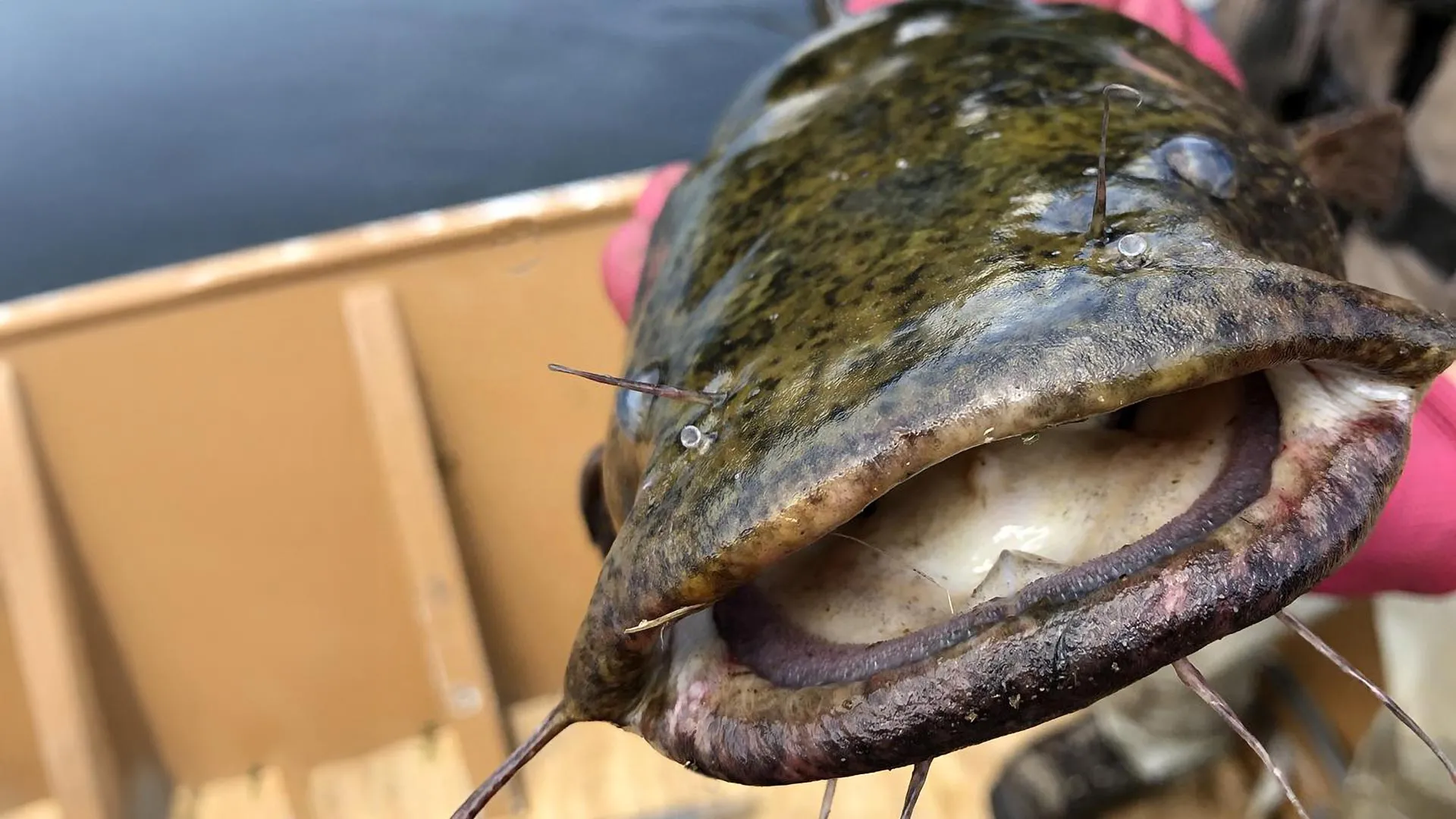
Flathead catfish, opportunistic predators native to the Mississippi River basin, have the potential to decimate native and recreational fisheries, disrupting ecosystems in rivers where they become established after their introduction or invasion from a nearby river drainage. That concern led a team of researchers from Penn State, the U.S. Geological Survey (USGS), and the Pennsylvania Fish and Boat Commission to assess how flatheads are affecting the food web and energy flow in the Susquehanna River in Pennsylvania, where they were first detected in 1991. Their population has grown rapidly in the decades since.
“Flatheads grow fast in this river system, attain large body sizes and can eat a variety of prey,” said study first author Olivia Hodgson, a master’s degree student in Penn State’s Intercollege Graduate Degree Program in Ecology. “Because adult flatheads have few natural predators, flathead catfish can exert strong control over the ecosystem.”
Hodgson is working with Tyler Wagner, a scientist with the USGS Pennsylvania Cooperative Fish and Wildlife Research Unit Program and a Penn State affiliate professor of fisheries ecology. He is senior author on the study. In findings published Sept. 4 in Ecology, the researchers reported that flathead catfish are apex predators.
Flatheads had the highest trophic position — the level an organism occupies in a food web, based on its feeding relationships — even higher than resident top predators such as smallmouth bass and channel catfish. Channel catfish had a lower trophic position in areas with flathead catfish. This means they now eat lower on the food chain, likely because they are being outcompeted by flatheads or avoiding them, the researchers explained. In areas with flathead catfish, they found, all species showed broader and overlapping diets.
“This suggests that resident species are changing what they eat to avoid competing with or being eaten by the invader,” Hodgson said. “These findings support the ‘trophic disruption hypothesis,’ that says when a new predator enters an ecosystem, it forces existing species to alter their behavior, diets and roles in the food web. This can destabilize ecosystems over time. Our study highlights how an invasive species can do more than just reduce native populations — it can reshape entire foodwebs and change how energy moves through ecosystems.”
Although the predatory effects of invasive catfishes on native fish communities have been documented — such as in a recent study on the Susquehanna River led by researchers at Penn State — the impacts of invasion on riverine food webs are poorly understood, Hodgson noted. This study quantified the effects of invasive flathead catfish on the food web in the Susquehanna by comparing uninvaded river sections to invaded sections, focusing on several key species: flathead catfish — invader, channel catfish and smallmouth bass — resident predators, and crayfish and minnows — prey.
In addition to evaluating trophic position, the researchers analyzed the isotopic niche occupied by the fish species — the range of carbon and nitrogen markers found within the tissues of an organism, reflecting its diet and habitat, providing insights into its ecological role.
To reach their conclusions, the researchers employed stable isotope analysis, a widely used tool that can explain patterns within a food web, highlighting links between trophic positions, as well as the breadth and overlap of trophic niches. Stable isotope analysis is especially useful for studying invasion ecology, such as investigating trophic reorganization and trophic overlap between introduced and resident species.
When fish eat, their bodies incorporate the isotopic signature of their food. By sampling their tissues, scientists can measure nitrogen isotopes and determine their diet, carbon isotopes to determine habitat use, and compare isotopic signatures across regions to deduce fish migration or habitat shifts. For this study, channel catfish, smallmouth bass, minnows and crayfish were selected as focal species because a previous diet analysis conducted in collaboration with Penn State, USGS, and Pennsylvania Fish and Boat Commission researchers within the Susquehanna River, showed that these species are important prey for flathead catfish.
The researchers collected a total of 279 fish and 64 crayfish for stable isotope analysis, including 79 flathead catfish, 45 smallmouth bass, 113 channel catfish and 42 minnows comprising nine species. All samples were oven dried and ground to a fine powder using a mortar and pestle. Stable isotope samples were sent to Penn State’s Core Facilities and the Michigan State University Stable Isotope Laboratories for isotope determination.
“Stable isotope analysis explained patterns within the Susquehanna food web in habitats invaded and not invaded by the flathead catfish, and it allowed us to understand links between different species in the river food web and how invasive species might lead to changes in how native species interact and compete, what they eat and how their diets overlap, and if they might be displaced from preferred habitats by the invader,” Hodgson said. “We were able to infer resource use, helping us to better understand potential competition for resources and how this changes when flathead catfish become established.”
Contributing to the research were: Sydney Stark, recent Penn State graduate with a master’s degree in wildlife and fisheries science; Megan Schall, associate professor of biology and science at Penn State Hazleton; Geoffrey Smith, Susquehanna River biologist for the Pennsylvania Fish and Boat Commission; and Kelly Smalling, research hydrologist withtheU.S. Geological Survey, New Jersey Water Science Center.
Funding for this research was provided by Pennsylvania Sea Grant and the U.S. Geological Survey.

The spread of species beyond their native habitat is a human-made environmental change on a global scale. Among vascular plants, over 16,000 species have now permanently settled in foreign countries. The majority of these “naturalizations” has taken place since the 1950s and predominantly in regions with considerable human influence.
Naturalized alien plants, also known as neophytes, can have major impacts on the affected regions’ ecosystems. This is particularly evident in the case of invasive plants, which are spreading rapidly in new regions and outcompete the native flora. But what makes these plants so successful? Is it because they are exploiting an “ecological gap” in the foreign ecosystem, allowing them to thrive so easily? Or are they simply “naturally” good at expanding their range? In other words: Do plant species that are on the rise in their native habitats also become globally widespread as naturalized aliens?
Led by the University of Konstanz, an international research team found clear evidence supporting this theory. Their study compared the spread of 3,920 native plant species in ten European countries with how widely these species are naturalized globally. Europe is one of the world’s “main exporters” of naturalized plants. “Our results show that many of the European plant species that successfully naturalize in foreign ecosystems are species that have expanded rapidly in their European home regions as well,” explains Konstanz biologist Mark van Kleunen, who led the study. “Plants that are declining in their natural range, on the other hand, rarely succeed in settling in foreign areas.”
The results of the study indicate that it could be the same characteristics that make plants successful both in their homelands and in foreign regions. The researchers identified common characteristics of these species: “In general, they are tall, ecologically versatile generalists that are highly competitive and prefer nutrient-rich habitats,” summarizes Rashmi Paudel, first author of the study.
“If the plant species that are widespread and on the rise within their native habitats are essentially the same as those that spread successfully – and sometimes become invasive – in other regions of the world, then it stands to reason that both processes are at least based on similar biological mechanisms,” concludes Paudel. “This could reflect that the selective pressures that have made certain species common in their native regions also have preadapted them for success as invaders. This could also reflect that such common species were more likely to be picked up, transported and introduced elsewhere.” Observing the dynamics of the spread of native plants at home can thus provide valuable indications for assessing the likelihood of their establishment in new territories.
