The US health secretary’s plans could have a huge impact on health policy not just in the US, but across the globe.


The US health secretary’s plans could have a huge impact on health policy not just in the US, but across the globe.
Is drinking milk good for us, or an unnecessary habit?
Errors by diabetes analysis machines mean at least 55,000 people in England will need further hospital tests.
Donald Trump has continued his decades-long feud with Rosie O’Donnell by once again threatening to revoke the comedian’s citizenship.
The president shared an altered photo of Rosie on his social media network, Truth Social, on Wednesday, in a post which included Trump’s trademark erratic capitalisation.
Advertisement
“As previously mentioned, we are giving serious thought to taking away Rosie O’Donnell’s Citizenship,” Trump told his followers.
“She is not a Great American and is, in my opinion, incapable of being so!” he added.
To escalate matters further, the president’s Truth Social post was then reposted by the White House’s official account on Instagram Thursday.
Advertisement
The White House account watermarked the post.
Rosie, who now resides in Ireland, immediately fired back with two posts on Instagram.
The Emmy winner reposted the doctored photo by Trump in her first post, and included some references to the award-winning drama Succession.
“Banishing me again? Logan Roy would be proud,” she said. “I’m the distraction – EPSTEIN SURVIVORS are the reckoning and your gold lamé throne is melting.”
Advertisement
In her second post, Rosie shared a selfie and once again invoked the convicted sex trafficker.
“Donnie – stripping my citizenship? Cute – the capital is shaking because Epstein survivors are speaking – I volunteer as tribute… to remind you how terrified you are,” she wrote, signing off her message with a kissing emoji.
Trump first threatened to take away Rosie’s citizenship in July, calling her a “threat to humanity”, hours after HuffPost UK published an interview with the former talk show host in which she spoke out against the US leader.

via Associated Press
Advertisement
“Because of the fact that Rosie O’Donnell is not in the best interests of our Great Country, I am giving serious consideration to taking away her Citizenship,” he wrote at the time. “She is a Threat to Humanity, and should remain in the wonderful Country of Ireland, if they want her. GOD BLESS AMERICA!”
Paul A. Gowder, professor of law at Northwestern University’s Pritzker School of Law, previously told HuffPost that Trump’s citizenship threats are “unadulterated dictator behavior” and “a familiar practice of authoritarians”.
“He seems to view it not as an inalienable right but as a status that he can grant and take away at will, a meaningless instrument of his personal public policy,” Gowder said.
Advertisement


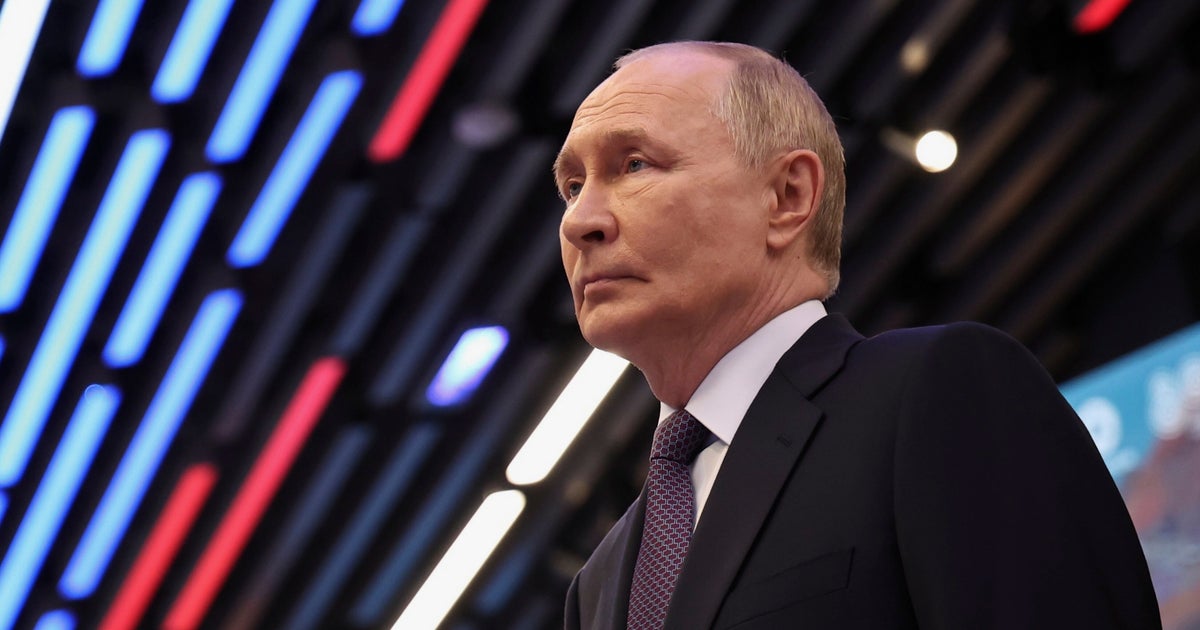
The former head of the British Army has insisted the war in Ukraine has been a “disaster for Russia”.
Admiral Sir Tony Radakin, who was chief of the defence staff until this week, said Vladimir Putin’s progress since the 2022 invasion had been slower than a snail’s.
Advertisement
His comments came a day after Keir Starmer warned Donald Trump that the Russian president “could not be trusted” as attempts to end the conflict drag on.
Speaking on Radio 4′s Today programme this morning, Sir Tony listed the reasons why Putin’s decision to invade his neighbour had backfired.
He said: “This war has been a disaster for Russia. Putin wanted less Nato, he’s got more Nato. We’ve grown from 30 nations to 32 nations.
Advertisement
“Putin originally thought that he would subjugate Ukraine in days, if not weeks. That’s clearly not the case.
“It’s a facile description but it’s a really important one. If a snail had left Rostov-on-Don in Russia on February 24, 2022, by now it would have crossed all the way through Ukraine and now would be halfway through Poland. That’s how difficult Russia is finding it.”
He said that at its current rate of progress, it would take the Russian army 4.4 years to capture the four Ukrainian oblasts it wants to occupy, at the cost of a further two million casualties.
Advertisement
Sir Tony also stressed the importance of the “coalition of the willing” group of countries, including the UK, which has pledged to defend Ukraine after any peace deal is agreed.
He said: “It’s much more about European security, the reassurance to America that Europe is taking more responsibility for its security.
“Let’s use that to garner a better responsibility for our own security.”
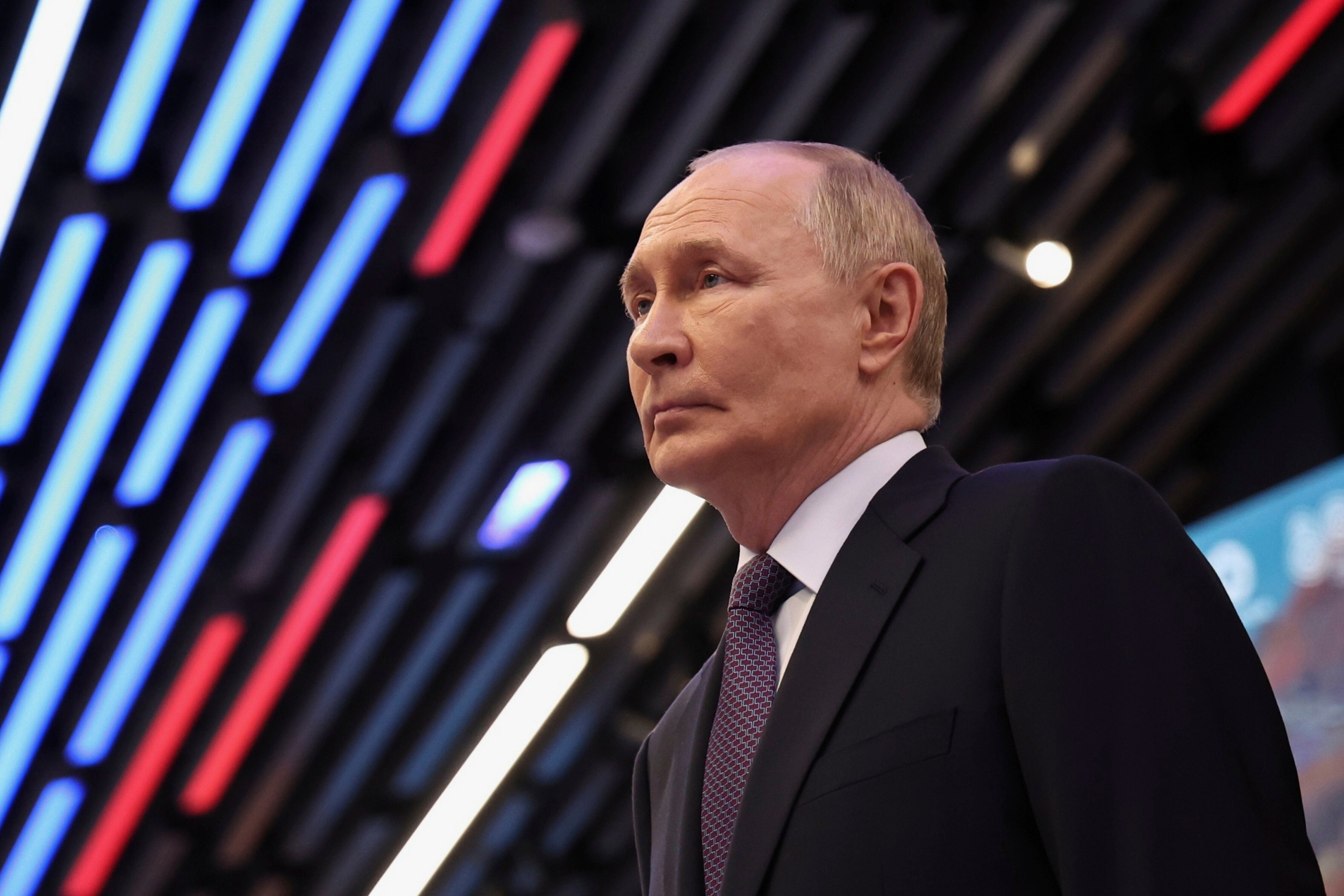
The controversy around Israel’s participation in the Eurovision Song Contest continues to escalate, as one participating country has now said it will not return to the contest unless the Israeli delegation is not invited next year.
Advertisement
Earlier this year, discussions took place among Eurovision’s participating broadcasters about whether Israel should remain part of the contest despite the ongoing war in Gaza, with the situation due to be reassessed in the autumn.
The Slovenian broadcaster RTVSLO has now said it will only return to Eurovision next year if Israel is banned, similarly to how Russia has not been invited to take part in the competition since its invasion of Ukraine in 2022.

via Associated Press
Advertisement
RTVSLO’s communication department has now issued a statement, translated by the fansite ESC Today, which said that its decision about whether to return to Eurovision would be made imminently.
“By this time, it should be clear whether the EBU will make any decision regarding Israel’s participation and whether it will take into account the comments of several EBU member states regarding the transparency of voting,” they said. “At that time, it will be clear whether [we still want] to participate in this competition.
“At the EBU General Assembly, which was held in London at the beginning of July, RTV Slovenia presented its position that if Israel were to participate in the Eurovision Song Contest – due to the genocide in Gaza – it would not participate in the competition.”
Advertisement
“The EBU is currently holding talks with its members regarding Israel’s possible participation in the future competition,” they concluded.
HuffPost UK has contacted the European Broadcasting Union (EBU) for comment.

via Associated Press
Advertisement
Meanwhile, back in July, it was reported by Israel’s N12 News (as cited by The National) that the national broadcasters for Germany and Italy had threatened to pull out of Eurovision if Israel was not permitted to return to the event in 2026.
A spokesperson for Germany’s Südwestrundfunk (SWR) later told HuffPost UK: “The Eurovision Song Contest is a major musical event that has brought people across Europe and beyond together for decades – diverse and respectful, regardless of origin, religion, or belief.
“The ESC is a music competition organised by EBU broadcasters, not governments. The Israeli broadcaster KAN adheres to applicable regulations and has been an integral part of the music competition for more than 60 years. We affirm their membership and the core values of the ESC.
Advertisement
“We welcome the process initiated by EBU Director General Noel Curran. A former senior TV executive will engage in a structured, open dialogue with the members over the coming months to explore various perspectives and identify courses of action. The goal should be a well-founded and sustainable solution in line with the EBU’s values.”
The EBU previously said: “We understand the concerns and deeply held views around the current conflict in the Middle East. The EBU is not immune to global events but, together with our members, it is our role to ensure the Contest remains – at its heart – a universal event that promotes connections, diversity and inclusion through music.
“We all aspire to keep the Eurovision Song Contest positive and inclusive and aspire to show the world as it could be, rather than how it necessarily is.”
Advertisement
“As a reminder, the EBU is an association of public service broadcasters, not governments, who are all eligible to participate in the Eurovision Song Contest every year if they meet the requisite requirements,” they added. “It is not our role to make comparisons between conflicts.”



The programme’s runner-up said small changes can make a big difference to those with stoma bags.
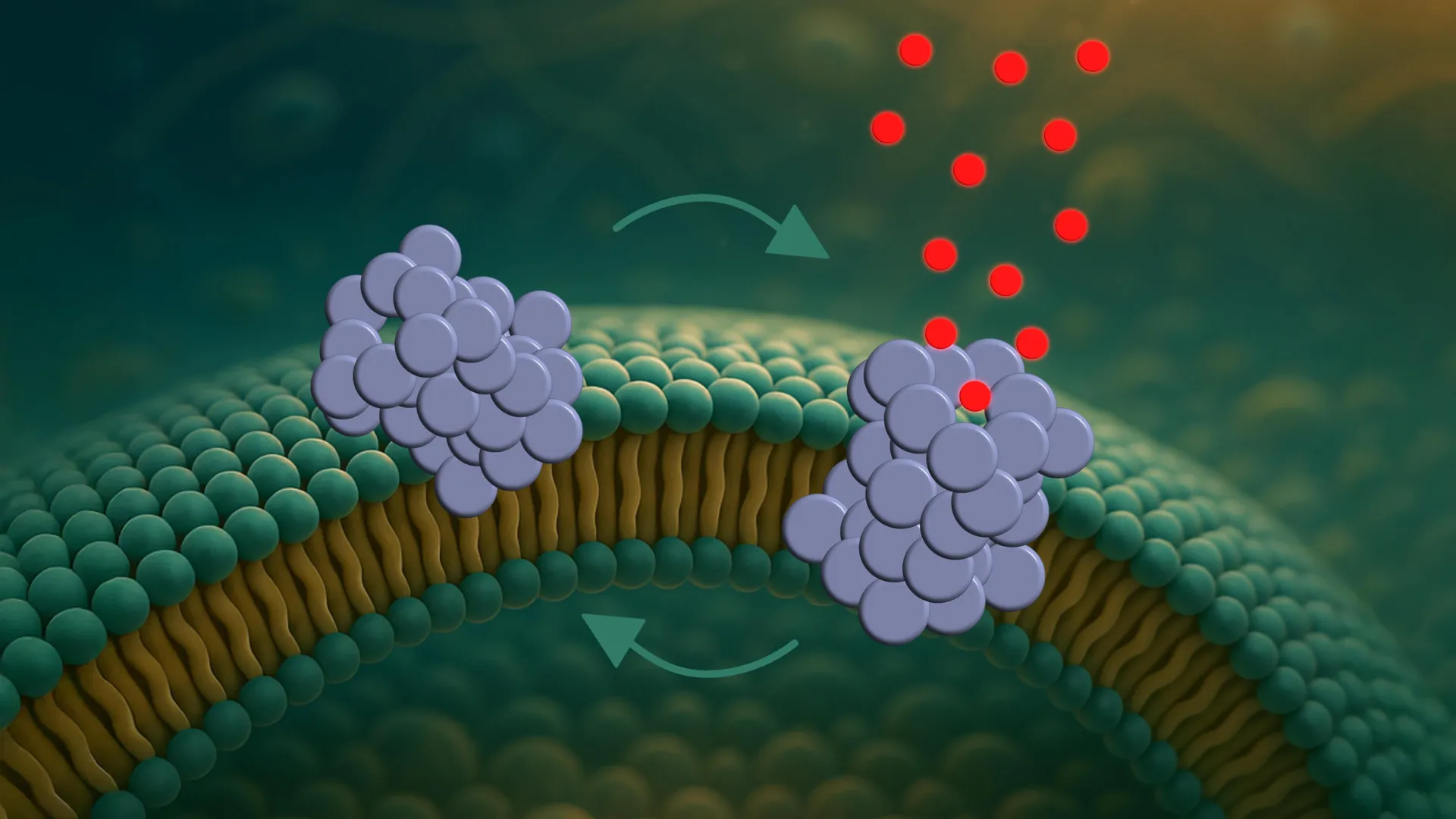
A toxic protein forms dynamic pores in the membranes of brain cells – and that may be the key to understanding how Parkinson’s disease develops. This is the conclusion of a new study from Aarhus University, where researchers have developed an advanced method to track molecular attacks in real time.
Parkinson’s disease often begins subtly. A slight tremor in the hand. A bit of stiffness. But over time, brain cells begin to die, and the symptoms worsen. The cause has long remained a mystery – but scientists may now be a step closer to an explanation.
At the center of attention is the protein α-synuclein, which plays a role in cell-to-cell communication in the healthy brain. In Parkinson’s, however, it starts to behave abnormally and clumps into toxic structures.
Until now, most research has focused on the large aggregates known as fibrils, which are visible in brain tissue from patients with Parkinson’s. But a new study focuses on smaller, less understood, and more toxic structures: α-synuclein oligomers. According to the researchers, these are the ones that drill microscopic holes in the membranes of nerve cells.
The study was recently published in the prestigious journal ACS Nano, published by the American Chemical Society.
Tiny revolving doors in the cells
“We are the first to directly observe how these oligomers form pores – and how the pores behave,” says Mette Galsgaard Malle, postdoctoral researcher at both Aarhus University and Harvard University.
The process unfolds in three steps. First, the oligomers attach to the membrane, especially at curved regions. Then they partially insert themselves into the membrane. Finally, they form a pore that allows molecules to pass through and potentially disrupt the cell’s internal balance.
But these are not static holes. The pores constantly open and close like tiny revolving doors.
“This dynamic behavior may help explain why the cells don’t die immediately,” says Bo Volf Brøchner, PhD student and first author of the study. “If the pores remained open, the cells would likely collapse very quickly. But because they open and close, the cell’s own pumps might be able to temporarily compensate.”
Molecular movie in slow motion
This is the first time such pore dynamics have been observed in real time. It was made possible by a newly developed single-vesicle analysis platform that allows researchers to follow interactions between individual proteins and individual vesicles.
Vesicles are small artificial bubbles that mimic cell membranes and serve as simplified models of real cells.
“It’s like watching a molecular movie in slow motion,” explains Mette Galsgaard Malle. “Not only can we see what happens – we can also test how different molecules affect the process. That makes the platform a valuable tool for drug screening.”
Long road to treatment
In fact, the team has already tested nanobodies – small antibody fragments – developed to specifically bind these oligomers. They show promise as highly selective diagnostic tools. However, as a treatment, there is still some way to go.
“The nanobodies did not block the pore formation,” says Bo Volf Brøchner. “But they may still help detect oligomers at very early stages of the disease. That’s crucial, since Parkinson’s is typically diagnosed only after significant neuronal damage has occurred.”
The study also shows that the pores are not formed randomly. They tend to emerge in specific membrane types – especially those resembling the membranes of mitochondria, the cell’s energy factories. This could indicate that the damage begins there.
One step at a time
However, the researchers emphasise that the study was conducted in model systems – not in living cells. The next step will be to replicate the findings in biological tissue, where more complex factors come into play.
“We created a clean experimental setup where we can measure one thing at a time. That’s the strength of this platform,” says Mette Galsgaard Malle. “But now we need to take the next step and investigate what happens in more complex biological systems.”
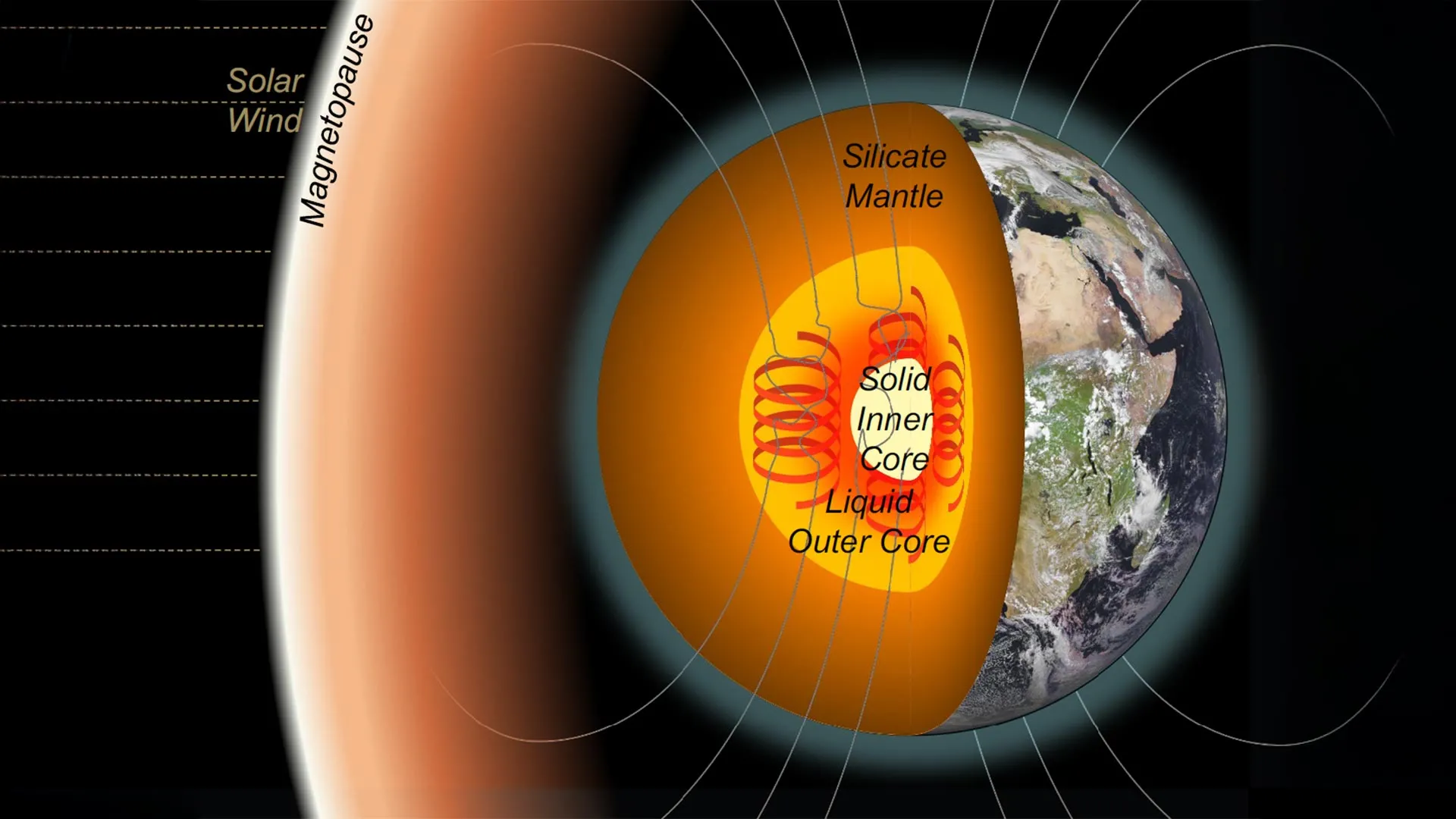
A new study by researchers at the University of Oxford, University of Leeds, and University College London has identified a new constraint on the chemistry of Earth’s core, by showing how it was able to crystallize millions of years ago. The study was published today (September 4) in Nature Communications.
The researchers showed that the core would need to be made of 3.8% carbon for it to have begun crystallizing. This result indicates that carbon may be more abundant in Earth’s core than previously thought, and that this element could have played a key role in how it froze, offering a rare glimpse into the processes occurring at the heart of our planet.
Earth’s inner core, the solid iron-rich mass at the center of our planet, is slowly growing as the surrounding molten outer core cools and freezes. But this process has been a source of debate amongst scientists for decades.
Inner core formation is not just a matter of determining when the core cooled to its freezing point, but instead involves the process of crystallization which depends on its exact chemical composition. Like water droplets in clouds, which can cool to -30 °C before forming hail, molten iron must be supercooled (cooled to below its melting point) before it can freeze.
Previous calculations have suggested that 800-1000 °C of supercooling would be needed to initiate freezing of the core if it were made of pure iron.
However, if the core is supercooled to this degree, researchers have shown that the inner core would grow massively, and the Earth’s magnetic field would fail. But neither of these outcomes have occurred during our planet’s history. Instead, scientists believe that in the past, the core could have cooled to no more than about 250 °C below its melting point.
This new research aimed to understand how the inner core exists as observed today with such limited supercooling in the past. Without direct access to the Earth’s deep interior, the research team needed to rely on computer simulations of the freezing process.
They looked at the presence of other elements, specifically silicon, sulphur, oxygen, and carbon, and how these might affect the freezing process.
“Each of these elements exist in the overlying mantle and could therefore have been dissolved into the core during Earth’s history,” explained co-author Associate Professor Andrew Walker (Department of Earth Sciences, University of Oxford). “As a result, these could explain why we have a solid inner core with relatively little supercooling at this depth. The presence of one or more of these elements could also rationalise why the core is less dense than pure iron, a key observation from seismology.”
Using atomic-scale computer simulations of around 100,000 atoms at supercooled temperatures and pressures equivalent to those in the inner core, the research team tracked how often small crystal-like clusters of atoms formed from a liquid. These “nucleation” events are the first steps toward freezing.
What they found was surprising: silicon and sulphur, elements often assumed to be present in the core, actually slow down the freezing process. In other words, more supercooling would be needed to start forming the inner core if these elements were abundant in that part of the Earth.
On the other hand, they found that carbon helped to accelerate freezing in the simulation.
In the study, the researchers tested how much supercooling would be required to freeze the inner core if 2.4% of the core’s mass were made of carbon. The result: about 420 °C, still too high, but the closest result to viability yet.
But when they extrapolated their results to a case where 3.8% of the core’s mass is carbon, the required supercooling dropped to 266 °C. This is the only known composition that could explain both the nucleation and observed size of the inner core.
This result indicates that carbon may be more abundant in Earth’s core than previously thought, and that without this element, the formation of a solid inner core may never have happened.
The experiments also show that inner core freezing was possible with just the right chemistry, and unlike water when it forms hail, it did so without “nucleation seeds,” tiny particles which help to initiate freezing. This is vital, because when tested in previous simulations, all of the candidates for nucleation seeds in the core have melted or dissolved.
Lead author Dr Alfred Wilson (School of Earth and Environment, University of Leeds) said: “It is exciting to see how atomic scale processes control the fundamental structure and dynamics of our planet. By studying how Earth’s inner core formed, we are not just learning about our planet’s past. We’re getting a rare glimpse into the chemistry of a region we can never hope to reach directly and learning about how it could change in the future.”
Scientists have debated when the inner core began to solidify for decades, with some arguing for an ancient inner core (with freezing beginning more than two billion years ago) and others suggesting a much younger age (less than half a billion years). With this new information about the carbon content of the core, we are one step closer to constraining its chemistry and physical properties, and therefore how it evolved.
The work was funded by the Natural Environment Research Council (NERC).
Neil Hopper claimed that injuries to his legs were the result of sepsis and not self-inflicted.
