Eddie Baker, 83, was given immunotherapy alongside the usual chemotherapy.


Eddie Baker, 83, was given immunotherapy alongside the usual chemotherapy.
The number of students reporting mental health concerns is rising. But to what extent should the onus be on universities?
Shop-bought health kits for a wide range of conditions are readily available across the UK.
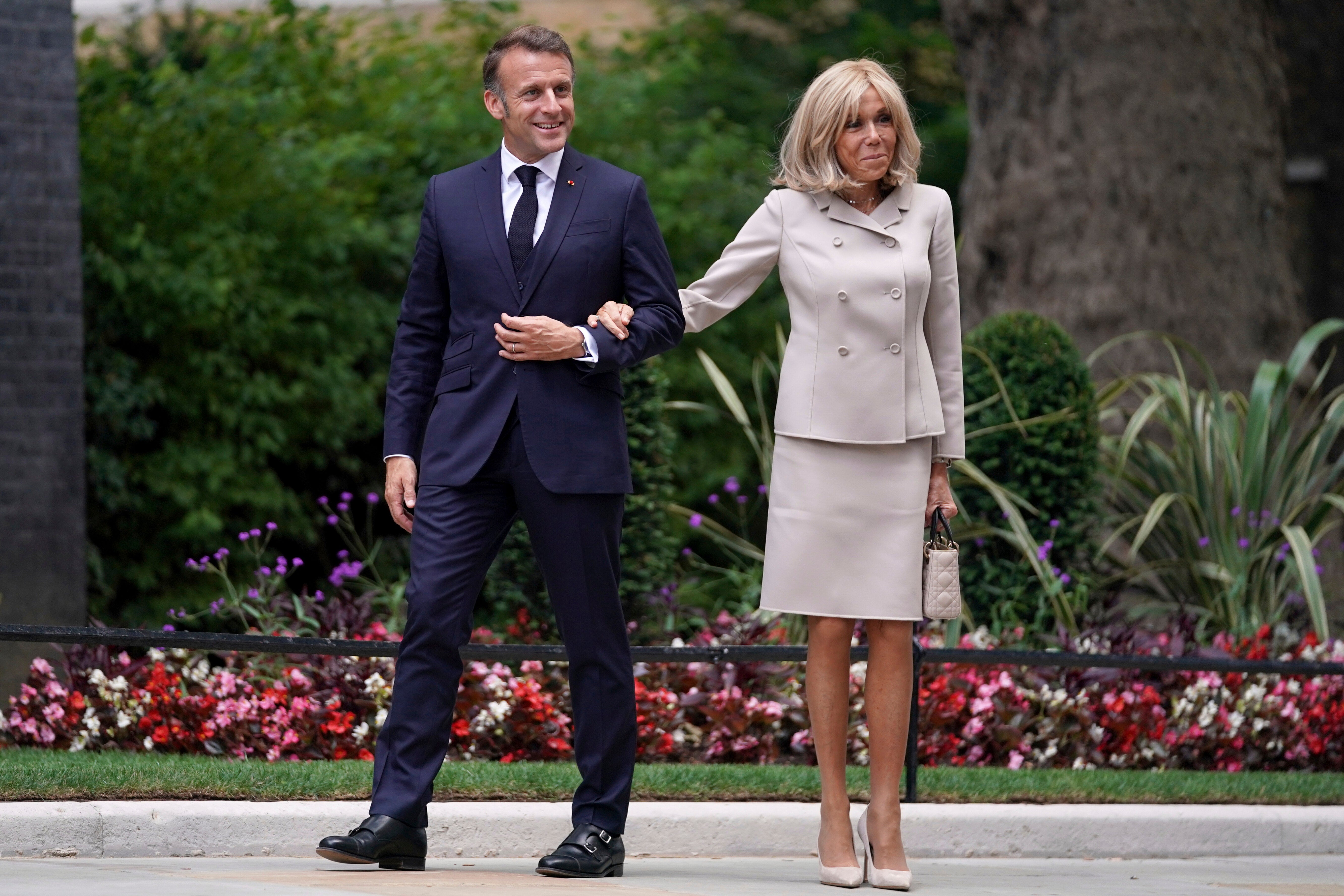
French President Emmanuel Macron and his wife, Brigitte Macron, have hit far-right influencer Candace Owens with a defamation lawsuit over her false claims that Brigitte Macron is male.
In a suit filed on Wednesday in Delaware, the Macrons allege that Owens has profited from a “campaign of global humiliation” against the Macrons, the complaint said.
Advertisement
In a March 2024 podcast, Owens said she “would stake [her] entire professional reputation on the face that Brigitte Macron is in fact a man,” according to the lawsuit.
Despite attempts to stop Owens from spreading the conspiracy ― including a retraction letter sent by the Macrons ― she instead “helmed an eight-part podcast series entitled Becoming Brigitte (the ‘Series’) and accompanying X posts,” the lawsuit said.
As part of the series, Owens fired off a series of “outlandish, defamatory, and far-fetched fictions.” More from the lawsuit:
Advertisement
These outlandish, defamatory, and far-fetched fictions included that Mrs. Macron was born a man, stole another person’s identity, and transitioned to become Brigitte; Mrs. Macron and President Macron are blood relatives committing incest; President Macron was chosen to be the President of France as part of the CIA-operated MKUltra program or a similar mind-control program; and Mrs. Macron and President Macron are committing forgery, fraud, and abuses of power to conceal these secrets.
The Macrons allege Owens has turned their lives “into fodder for profit-driven lies,” the complaint said.
“Owens has dissected their appearance, their marriage, their friends, their family, and their personal history — twisting it all into a grotesque narrative designed to inflame and degrade,” the lawsuit said. “The result is relentless bullying on a worldwide scale.”
Advertisement
Owens, a notorious conspiracy theorist who has been banned entry to Australia and New Zealand over her hateful rhetoric, has previously amplified a conspiracy about Jews being “drunk on Christian blood,” a reference to a false, centuries-old antisemitic trope.
And in July of last year, Owens suggested on her podcast that the horrific experiments Nazi physician Josef Mengele conducted on twins at Holocaust death camps never happened, in part because it would be a “tremendous waste of time and supplies.”
“That just sounds like bizarre propaganda,” she concluded.
The lawsuit against her does not specify the amount of damages the Macrons are seeking.
Owens has not responded to the lawsuit, but did respond on Tuesday to news that Brigitte Macron was suing the author of the book that first brought the baseless conspiracy to a mass audience.
Advertisement
“It’s official! Brigitte is now suing the author of ‘Becoming Brigitte’ for ‘cyberbullying,’” Owens posted on X. “Am I next?!”


US President Donald Trump hung up on a CNN reporter during a phone call Tuesday that lasted a mere 30 seconds after the journalist questioned him about resurfaced images showing Jeffrey Epstein at Trump’s 1993 wedding to his second wife, Marla Maples.
While appearing on Erin Burnett OutFront on Tuesday, reporter Andrew Kaczynski shared details about the abrupt phone call with Trump that ended in name-calling.
Advertisement
The call took place after CNN’s KFile found photos of Epstein and Trump that had not been widely reported on before. One photo showed the disgraced financier and sex offender attending Trump’s Plaza Hotel wedding to Maples.
In a separate image, Epstein was seen with Trump and his children at a Harley-Davidson Cafe that same year.
CNN also released a video of Trump and Epstein chatting with each other at a Victoria’s Secret Fashion Show in New York in February 1999.
Advertisement
Kaczynski told host Burnett that the call, in which he asked Trump about the images, ended with the president slamming CNN as “fake news” and hanging up after he refused to answer questions about his past connection to Epstein.
“We were not on the phone very long. I think our call was about 30 seconds or so,” Kaczynski told Burnett. “But when I asked him about the wedding photo, he said, he sort of paused for a second and then said, ‘You’ve got to be kidding me,’ before calling CNN ‘fake news’ and then hanging up on me.”
In a statement to CNN, Kaczynski said, White House communications director Steven Cheung said, “These are nothing more than out-of-context frame grabs of innocuous videos and pictures of widely attended events to disgustingly infer something nefarious.”
Advertisement
Cheung added: “The fact is that the president kicked [Epstein] out of his club for being a ‘creep.’”
Kaczynski’s heated yet ultra-brief conversation with Trump comes after the Department of Justice and FBI released a two-page memo earlier this month, claiming their Epstein investigation determined that there was no evidence Epstein was murdered or had a “client list” of powerful figures he could potentially blackmail.
Following the memo release, Trump faced scrutiny over his administration’s handling of the Epstein files, particularly from his own base. Since then, both Republicans and Democrats have called on the president and his administration to release more information.
Advertisement
Watch Kaczynski’s appearance below.


The reviews have landed for Marvel’s fourth go at The Fantastic Four – and could it be that director Matt Shakman has finally given the superhero quartet the movie they deserve?
First we had 2005′s edition (and subsequent 2007 sequel, Rise of the Silver Surfer), which starred Chris Evans (who recently reprised the role of Johnny Storm in Deadpool vs Wolverine) and Jessica Alba. A perfectly fine offering… but truly fine at best.
Advertisement
Then we got the moody 2015 reboot. It’s somewhat long-forgotten amongst other Marvel films of the time, despite starring Miles Teller and Michael B. Jordan – which is maybe for the best given its 9% Rotten Tomatoes scoring.
Now, with a super fun press tour to boot, we’ve been given a brand new set of superheroes (and Pedro Pascal’s entrance to the Marvel cinematic universe at last) alongside new storyline (no origin stories here this time!) – but what do critics make of the latest iteration?
Some have called it “the best Marvel film yet”, while others have labelled it “not quite the confident strides fans were hoping for” – but if there’s one thing they can all agree on, it’s that the film heralds a much-needed new era for Marvel.
Advertisement
Check out a selection of the reviews for yourself below…
“The result hangs together as an entertaining spectacle in its own innocent self-enclosed universe of fantasy wackiness, where real people actually read the comic books that have made mythic legends of the real Four. I have expressed my dissatisfaction recently with superhero films… but at least this finale emerges from the established story premise, and works well with the tone of uncomplicated fun.”
“If the script doesn’t hit quite so many comedic high notes as some other Marvels, it at least brims with sincerity, presenting a heroic squad committed to protecting the Earth, while encouraging the whole world to link arms and do its bit, too. Those are the kind of heroes, it feels, that we need right now.
“This is the best Fantastic Four yet. And if that bar’s too low for you, then it’s also the best Marvel movie in years.”
Advertisement
“Fantastic? We’ll settle for merely good. Fantastic Four may not be the confident stride Marvel fans were hoping for but, at the very least, it’s a solid first step.”
“These First Steps might not be the great strides I was hoping for, but they are sure footing for the Fantastic Four to officially leap into the MCU.”
“After spending the best part of a decade since Iron Man 3 blundering into the furniture, Marvel has finally learned how to put one foot in front of the other again – and in doing so, arrived at the studio’s funniest, most exciting, moving and complete film in more than 10 years.”
Advertisement
“This film feels like a warm-up, introducing characters who will become major parts of the MCU. These characters are strong enough to stand out amidst the other superheroes, but you can already hear Wikipedia calling.”
“All four leads bring something special to their respective roles and to the superbly gauged balance of personalities that makes each of them essential to the group… It’s fun but never campy.”
“First Steps is no disaster – but it’s no Superman, either. Angst isn’t on the cards for Marvel as of now. And it’s nice, admittedly, to see the genre embrace wonder once again.”
Advertisement
“True to its subtitle, the film feels like a fresh start. And like this summer’s blockbuster “Superman” reboot over at DC, that could be just what it takes to win back audiences suffering from superhero exhaustion.”


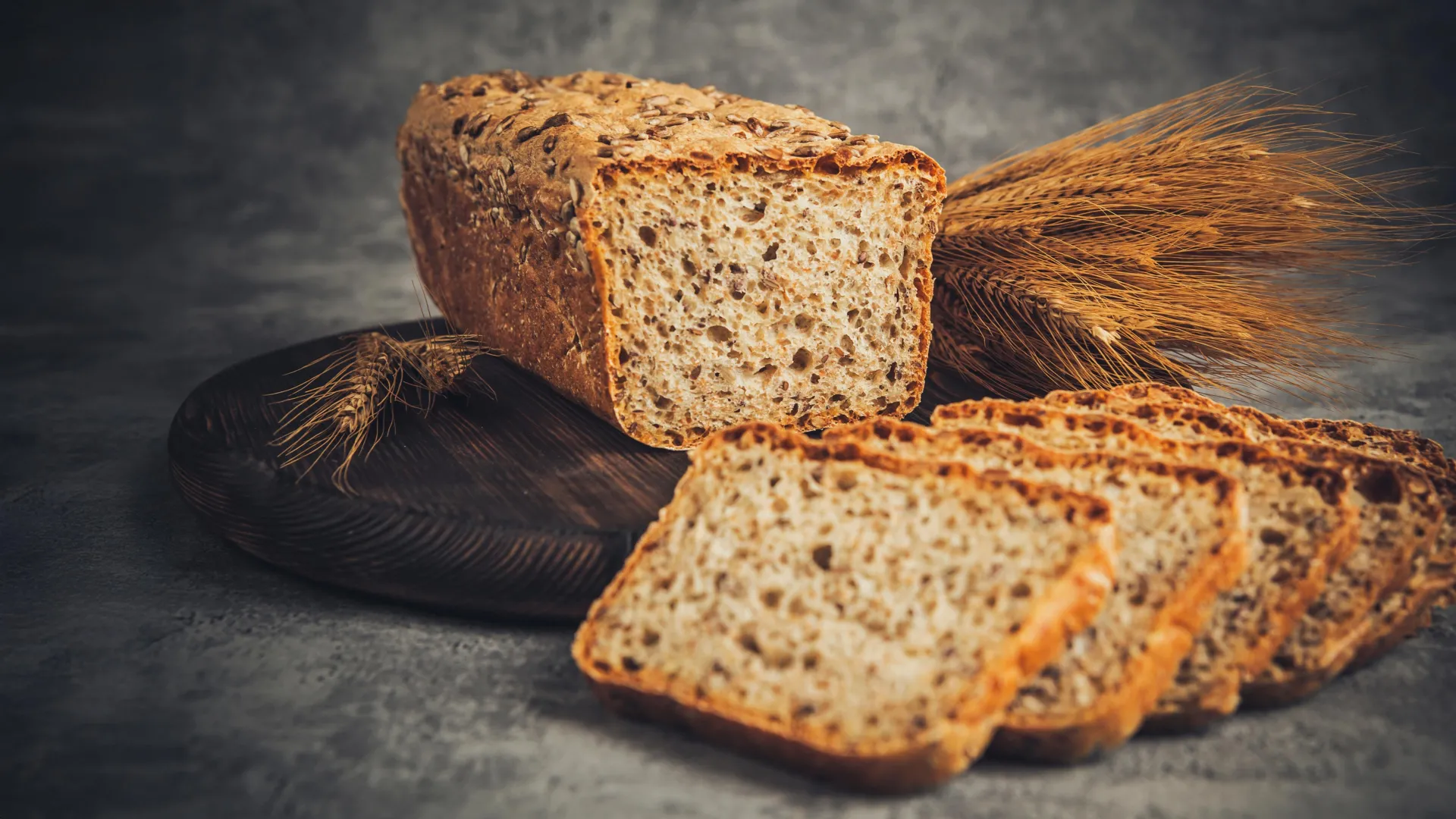
New research in Plants, People, Planet indicates that bread wheat’s micronutrient content can be increased by cultivating it with a specific type of fungus.
When investigators grew different types of wheat with and without the arbuscular mycorrhizal fungus Rhizophagus irregularis, they observed that crops grown with fungi developed larger grains with greater amounts of phosphorus and zinc. The higher amount of phosphorus in the grain did not result in an increase in phytate (a compound that can hinder digestion of zinc and iron). As a result, bread wheat grown with fungi had higher bioavailability of zinc and iron overall compared with bread wheat grown in the absence of fungi.
“Beneficial soil fungi could be used as a sustainable option to exploit soil-derived plant nutrients. In this case, we found potential to biofortify wheat with important human micronutrients by inoculating the plants with mycorrhizal fungi,” said corresponding author Stephanie J. Watts-Williams, PhD, of the University of Adelaide, in Australia.
Rhizophagus irregularis is a species of arbuscular mycorrhizal fungus that forms beneficial relationships with the roots of many types of plants. It helps plants take in more nutrients—especially phosphorus and micronutrients—by extending its thin, root-like structures deep into the soil.
This fungus is one of the most widely studied and used in agriculture and ecology because of its broad compatibility with crops and its ability to improve plant growth, health, and soil quality. By boosting nutrient uptake naturally, R. irregularis supports more resilient plants and reduces the need for chemical fertilizers, making it a valuable tool in sustainable farming and reforestation efforts.

A new commentary published in Nature Communications by Dr James Bradley, Reader in Environmental Science at Queen Mary University of London, and his team reveals a dramatic and concerning shift in the Arctic winter. During a fieldwork campaign in Svalbard in February 2025, researchers encountered exceptionally high temperatures, widespread snowmelt, and blooming vegetation.
Svalbard, warming at six to seven times the global average rate, is at the forefront of the climate crisis, with winter temperatures rising at nearly double the annual average. The commentary highlights that winter warming in the Arctic is no longer an exception but a recurring feature of a profoundly altered climate system, challenging the long-held assumption of a reliably frozen Arctic winter.
“Standing in pools of water at the snout of the glacier, or on bare, green tundra, was shocking and surreal,” Dr Bradley describes his experience. “The thick snowpack covering the landscape vanished within days. The gear I packed felt like a relic from another climate.”
The team, accustomed to preparing for extreme cold with thermal layers, thick gloves, and insulated down, found themselves working bare-handed in the rain on the glacier.
Laura Molares Moncayo, a PhD student at Queen Mary and the Natural History Museum and a co-author on the study, added: “The goal of our fieldwork campaign was to study freshly fallen snow. But over a two-week period, we were only able to collect fresh snow once, as most of the precipitation fell as rain. This lack of snowfall in the middle of winter undermines our ability to establish a representative baseline for frozen-season processes. The unexpected melt not only disrupted our sampling plan, but also made us question how safe or feasible winter fieldwork really is under such rapidly changing conditions.”
This firsthand experience corroborates long-standing projections about Arctic amplification, but it also underscores the alarming speed at which these changes are taking hold. The crossing of the 0°C melting threshold has a transformative impact on the physical environment, the dynamics of local ecosystems, and the very methodology of conducting scientific research in the Arctic during winter.
The implications of these rapid winter changes for the Arctic ecosystem are far-reaching. Winter warming events can disrupt everything from microbial carbon cycling to the survival of Arctic wildlife. These events may also create a feedback loop, accelerating permafrost thaw, microbial carbon degradation, and the release of greenhouse gases across the Arctic. The observed meltwater pooling above frozen ground, forming vast temporary lakes and reducing snow cover to zero in large areas, further exposes the bare ground surface and leads to widespread blooms of biological activity.
The commentary calls for urgent action and highlights critical policy implications. “Climate policy must catch up to the reality that the Arctic is changing much faster than expected, and winter is at the heart of that shift,” states Dr Bradley.
The commentary urgently calls for increased investment in wintertime Arctic monitoring, highlighting a significant lack of data and understanding regarding Arctic systems during this fastest-changing season. More observations and experimentation are crucial, not only to establish baselines but also to project future impacts. Furthermore, the authors stress that policymaking must shift from reactive to anticipatory strategies, recognising winter as a critical season of risk. The challenges already faced by well-equipped scientific bases due to mid-winter warming underscore the immense pressure this might place on remote Indigenous Arctic communities, their infrastructure, transport, and emergency responses.
The unexpected conditions during fieldwork, including the thin and slushy snow that hindered snowmobile access to field sites, forced researchers to reconsider how and even whether they can continue winter science as usual. This also presents new safety concerns, including rescue efforts and the ability for the researchers to retreat quickly to the safety of the research station if they encounter polar bears while working in the field.
The commentary, “Svalbard winter warming is reaching melting point,” serves as a stark reminder of the accelerating pace of climate change in the Arctic, emphasising that these anomalies are, in fact, the new Arctic reality.
The article involves authors from Queen Mary University of London, the Mediterranean Institute of Oceanography in Marseille, France, The Natural History Museum in London, University of Naples Federico II in Italy, the CNR Institute of Polar Science in Italy.
“We are still unaware of the consequences that these recurring events are bringing to Arctic ecosystems, especially during the winter period, where conditions are more complex and data is scarce,” said Donato Giovannelli, an geomicrobiologist at the University of Naples Federico II in Italy and one of the senior authors on the paper. “We might have been too cautious with our messages. Irreversible changes to the Arctic climate are happening in front of our own eyes.”
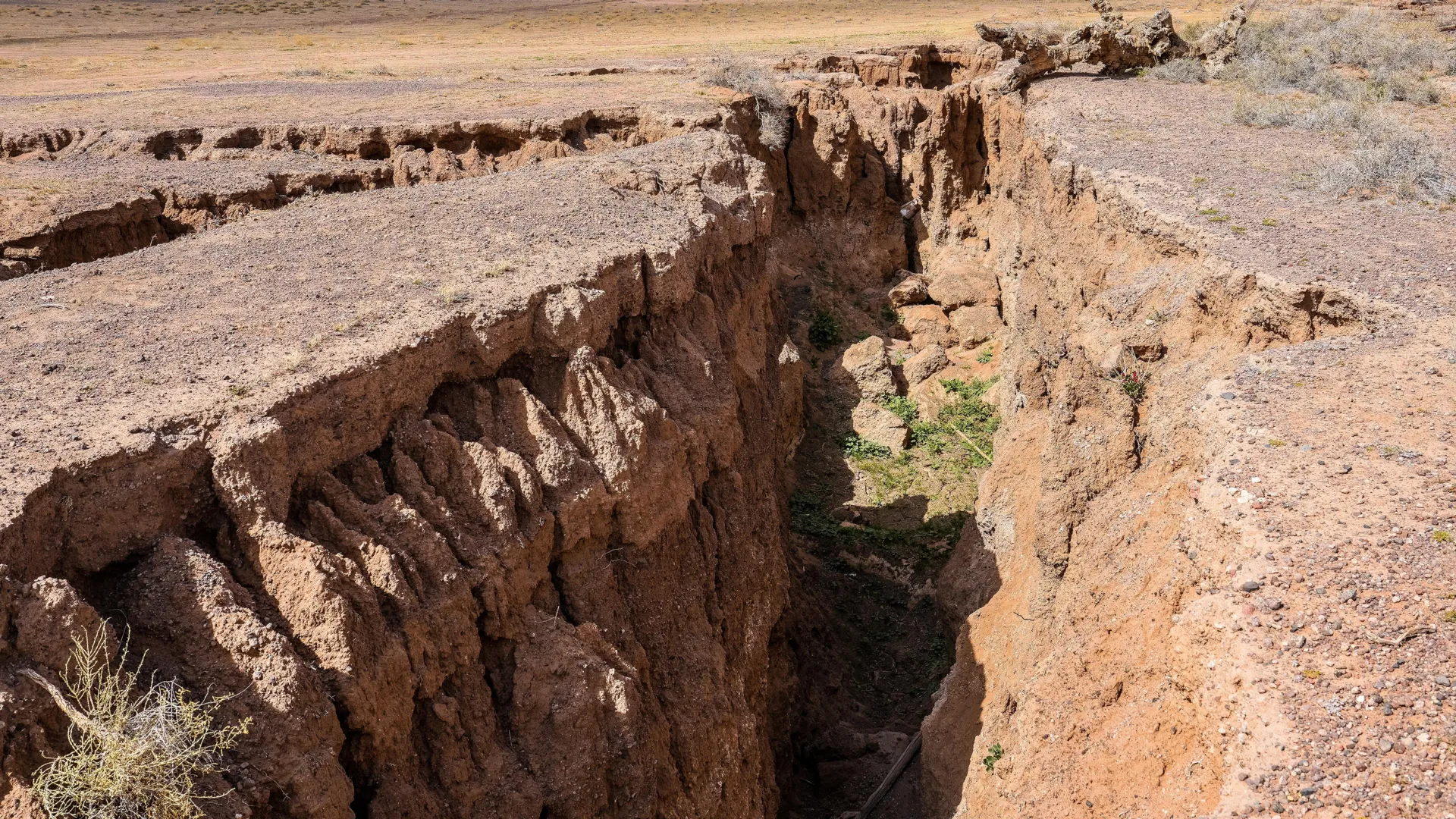
During the midday Friday prayer hours on March 28, 2025, a magnitude 7.7 earthquake struck central Myanmar along the Sagaing Fault. With an epicenter close to Mandalay, the country’s second-largest city, it was the most powerful earthquake to strike Myanmar in more than a century and the second deadliest in its modern history.
The cause was a strike-slip fault, in which two masses of earth “slip” past each other horizontally along a vertical fault plane. To an observer, it would look like the ground were split in two along a defined line, with both sides being wrenched past each other in opposite directions.
Previous seismological studies have inferred pulse-like rupture behavior and curved slip paths from the analysis of seismic data. However, because the recording instruments were at a considerable distance from the fault itself, these findings were indirect.
This time, however, a CCTV camera caught this slip in action, presenting a unique opportunity for a team researchers at Kyoto University to study the fault motion in real time. (See video link at bottom of article.)
The team applied a technique known as pixel cross-correlation to the CCTV footage to analyze the fault’s movement frame-by-frame. Their analysis reveals that the fault slipped sideways 2.5 meters in just 1.3 seconds, with a maximum speed of 3.2 meters per second. The total sideways movement recorded during this earthquake is typical of strike-slip ruptures, but the short duration of the fault slip is a major discovery.
“The brief duration of motion confirms a pulse-like rupture, characterized by a concentrated burst of slip propagating along the fault, much like a ripple traveling down a rug when flicked from one end,” says corresponding author Jesse Kearse.
The team’s analysis also proves that the slip path was subtly curved, a finding which aligns with previous geological observations from faults around the world. This may suggest that such slips are typically curved, as opposed to being completely linear.
The study demonstrates that video-based monitoring of faults is a powerful tool for seismology, enabling unprecedented insights into earthquake behavior. Capturing this level of detail is fundamental to improving our understanding of earthquake processes and enhancing our ability to anticipate the ground shaking expected in future large events.
“We did not anticipate that this video record would provide such a rich variety of detailed observations. Such kinematic data is critical for advancing our understanding of earthquake source physics,” says Kearse.
The next phase of their research will utilize physics-based models to investigate the factors that control fault behavior as revealed by this analysis.
East of England Ambulance NHS Trust is offering the video coaching to callers.
