As a society, we take mothers for granted and raising children is a thankless job, says actor Kalki Koechlin.


As a society, we take mothers for granted and raising children is a thankless job, says actor Kalki Koechlin.

LHS 3844b is an exoplanet just slightly larger than Earth that orbits the red dwarf star LHS 3884, located 48.5 light years from our solar system. Unlike Earth, it is tidally locked, meaning it rotates once on its axis in exactly the same amount of time it takes to orbit its star. As a result, one hemisphere experiences constant, blistering daylight while the other remains in permanent darkness so cold it approaches absolute zero (zero Kelvin).
At first glance, such an extreme environment seems completely inhospitable. Daytime temperatures can reach roughly 1,000 to 2,000 Kelvin, while the night side is so cold that particle motion effectively stops. Yet new research suggests these worlds may not be as hostile to life as they appear.
“Just looking at the extreme temperatures on the day and night sides — like 1,000-2,000 Kelvin on the day side and absolute zero on the night side — might lead one to conclude these exoplanets are too harsh for life. But,” says Daisuke Noto, a postdoctoral researcher in Hugo Ulloa’s Penn GEFLOW Lab at the University of Pennsylvania, “life might find a way.”
In a study published in Nature Communications, Noto and collaborators from the Japan Agency for Marine-Earth Science and Technology and Hokkaido University found that “such exoplanets may be more tolerant of sustaining life as ‘tidal locking’ can contribute to maintaining moderate thermal environments locally by distributing heat flux laterally.”
Why Tidally Locked Exoplanets Are So Common
The findings challenge a common assumption about planets that always show the same face to their stars. According to Noto, worlds with permanent day and night are actually much more common than planets like Earth, which experience a regular day and night cycle.
“Many celestial bodies like moons and planets that are very close to their parent stars are what we call tidally locked,” he explains. “Meaning, as they spin around on their axes and orbit around their parents, those rates/frequencies match, leading to the phenomena like us only seeing one side of our moon.”
This constant orientation creates a dramatic temperature contrast across the planet. Instead of focusing on surface conditions alone, the researchers wanted to understand what happens deep inside the planet, specifically within the mantle, the thick rocky layer between the crust and the core.
Recreating an Alien Planet in the Lab
Rather than relying only on computer simulations, the team built a physical laboratory model to mimic the interior of a tidally locked planet.
“Building an actual exoplanet in the lab wasn’t in the budget,” Noto jokes.
Instead, the researchers used a tabletop rectangular tank filled with viscous glycerol and tiny thermochromic liquid crystals that change color as temperatures shift. Similar experimental systems have long been used to study how heat moves through slow moving materials, making them useful stand ins for the rocky interiors of planets.
Unlike weather or ocean currents, which are strongly influenced by Earth’s rotation and gravity, convection inside a rocky mantle is driven mainly by differences in temperature and density. To reproduce those conditions, the team installed four thermostats around the tank to heat and cool different regions, creating temperature gradients similar to those expected between the permanently illuminated side, the permanently dark side, the surface, and the deep interior of a tidally locked exoplanet.
A Planetary Heat Engine
The experiments revealed a remarkably stable pattern. Hot material consistently rose beneath the day side, flowed across the upper region, cooled as it reached the night side, then sank before returning through the lower mantle. The result was one continuous circulation loop that behaved like a steady planetary heartbeat.
“It’s not chaotic like Earth’s mantle,” Noto says. “It’s slow and steady. Predictable. Kind of boring — but in a good way.”
The researchers also observed occasional mushroom shaped plumes rising from the heated base of the tank. Unlike volcanic hotspots on Earth, such as those beneath Hawaii or Iceland, these plumes remained fixed in one location rather than drifting over time.
Measurements of heat transport, known as Nusselt numbers, were comparable to those seen for Earth’s mantle. That finding suggests some tidally locked exoplanets could maintain localized geothermal environments that provide conditions favorable for life, particularly in more temperate mid latitudes.
What This Could Mean for Alien Life
The steady circulation pattern may influence more than just surface temperatures. Noto believes it could also affect the movement of a planet’s liquid core, potentially generating magnetic fields that differ from Earth’s familiar dipole field.
“That’s something we couldn’t test in this experiment,” he says, “but it’s an exciting direction for future work.”
Looking Beyond Other Worlds
Noto and Ulloa are continuing to develop similar laboratory models to investigate a wide range of geophysical processes. Earlier research from the Penn GEFLOW Lab explored how heat and mass move through confined spaces, providing new insight into the role of fluids in hydrothermal systems.
“We are planning on further extending the experimental methods to delve deeper into different systems on our planet in different contexts, the possibilities are, quite literally, out of this world,” says Noto.
Daisuke Noto is a postdoctoral researcher in the School of Arts & Sciences at the University of Pennsylvania.
Hugo Ulloa is an assistant professor in the Department of Earth and Environmental Science in Penn Arts & Sciences.
Other authors include Takehiro Miyagoshi and Takatoshi Yanagisawa of the Japan Agency for Marine-Earth Science and Technology; and Tomomi Terada and Yuji Tasaka of Hokkaido University.
Loved for making tired eyes look better rested, smoothing the appearance of wrinkles and giving your skin an instant refreshment during the hot summer months, Belif’s Aqua Bomb cooling eye gel is really doing the most — fast. After grabbing this “magic” pen for themselves, reviewers cite a “noticeable difference” in the puffiness, dark circles and fine lines around their eyes, in mere days. This rarely-on-sale beauty is currently 30% off, aka the lowest price it’s been since March, so we recommend snagging one quick. In the blink of an eye, it will be right back to full price.
Advertisement
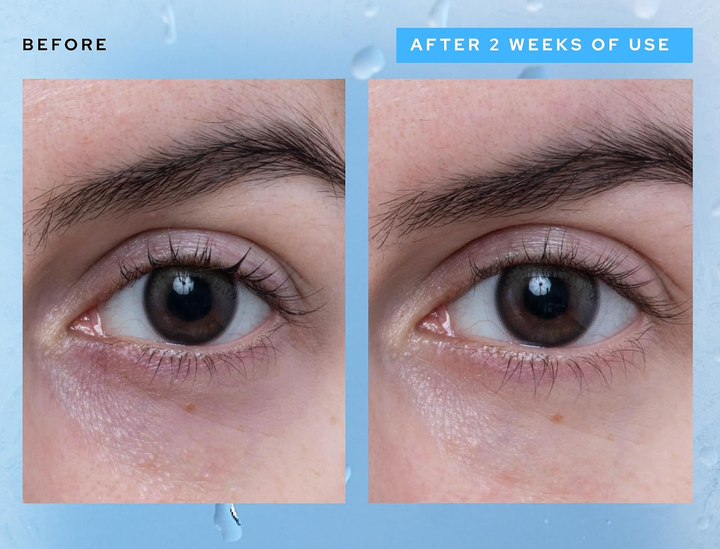
The caffeine, niacinamide and Vitamin C work to even out dark spots, reduce puffiness and brighten around your eyes, making it like you’ve had “a full night’s rest” particularly on days “when I haven’t slept at all,” Monica wrote. Yet, the formula doesn’t just make eyes look better rested, as one reviewer notes, “it helps relieve eye fatigue during night shifts and provides moisture.”
Advertisement
The real moisture comes from the included hyaluronic acid and collagen, which help your skin retain hydration, keeping it plump and firm. “I have some fine lines, and a little bit of saggy skin under my eyes, and wanted something to smooth it out before applying makeup,” shopper Michelle wrote. “This has worked great so far! I feel like the lines are softened, and there is a slight tightening of the skin.”
“I’ve used it twice, and I already have visible results,” Bree writes. “It has a cooling sensation and it’s very hydrating and smooths fine lines and puffiness visibly after just two uses.” “I’ve tried other eye balms with little results but this one is different,” Kelli added. “It glides on and feels cool. About five minutes later, my eye wrinkles are smoothed.”
Others agree they’re seeing the results they want soon after using. “Used this only for about four days but I love the cooling feel and it really takes puffiness away and tired eye look away,” LA wrote.
Advertisement
Apart from the formula itself, users rave about the sleek, squeeze-to-apply component that’s easy to use and carry. “I can confidently say this is one of the most convenient designs I’ve used,” one wrote, calling it their “go-to eye gel for the summer.” “Unlike expensive eye creams that come in glass jars with tiny applicators that can’t reach the bottom (leaving a lot of product wasted), this design lets you use every last bit with ease.”
Others compliment how the ceramic tip “feels cool to the touch,” saying that it helps with puffiness and lets them almost “massage” around their eyes in a way that feels gentle and relaxing.
“The applicator makes it so easy to use around my under eyes and eyelids, and it feels instantly refreshing,” Tiffany said. “I’ve noticed my fine lines look tighter and smoother — such a game-changer in my routine!”
Advertisement
“Used this only for about four days but I love the cooling feel and it really takes puffiness away and tired eye look away.” — LA
“I absolutely love this eye gel! It really helps reduce puffiness around the eyes — especially on those days when I haven’t slept at all. The results are amazing: it makes my eyes look like I’ve had a full night’s rest. It’s refreshing, lightweight, and works fast. Definitely a must-have in my skincare routine!” — Monica
“This product is amazing and I’ve used it twice and I already have visible results. It has a cooling sensation and it’s very hydrating and smooths fine lines and puffiness visibly after just two uses. I recommend using this before bed and after waking up in the morning. It has a very light scent, I’m not sure what the scent is but it’s very nice and light. The packaging and the ceramic tip is also a very nice added benefit to the packaging but I’d say for this product it’s definitely worth every penny. 🔥☺️” — Bree L.
“I’d say it works. After a few days used, i saw my under eye area looks clean, hydrated and removed some hairline wrinkles. Eye bag area gets more flat. I don’t usually use eyecream due to it makes me feel very itchy and my eye color gets radder. However, this product doesn’t give me any itchy feels. very mild and effective. Highly recommended! Love it and will buy again!” — Eileen

Amazon
If you’re an eye cream skeptic, then this affordable gel might change your mind. It’s made with caffeine, peptides and hyaluronic acid to help reduce the look of tired, puffy eyes and dark circles. The formula is surprisingly effective and can help perk up your peepers for just $6 a tube.
Promising review: “I really love this stuff. It is extremely moisturizing and feels great under your eyes. I am in my late 50’s and have had multiple coworkers ask me what I was doing differently the first week I started using it. It does seem to offer some lasting smoothing, hydrating and brightening effects, for me at least. I will definitely continue to use. For the price, it’s great and better than other more expensive brands I have tried. It also takes a very small amount to apply.” — LD16

Amazon
This dermatologist-recommended eye cream is a HuffPost reader favorite. Yummy, nourishing and potent anti-aging ingredients like hyaluronic acid, niacinamide and ceramides can help to increase hydration while smoothing and brightening the under-eye area. It’s a great affordable option for someone who wants to add a bit of oomph to their routine without breaking the bank. This cream is also fragrance-free so it’s ideal for people with extra sensitivities.

Amazon
This cult-fave and HuffPost reader-pick eye cream is wildly popular at Amazon, boasting over 19,000 5-star ratings from happy customers.Reviewers note that the cream works wonders on dark circles, in particular. It can help address common eye concerns like puffiness, dark circles and wrinkles thanks to its hydrating formula that’s been infused with dermatologist Dr. Bradley Glodny-approved ingredients like retinol and antioxidants.
Promising Amazon review: “I have probably tried a hundred different eye creams, and this is the only one that has given me noticeable results. My under-eyes were visibly firmer with the first use, and the dark circles are fading after only a few days. Definitely recommend!” — stefany9579
Advertisement
The Real Deal: We use deal trackers and commerce experience to sift through “fake” hike-and-drop deals and other deceptive sales tactics. Products will usually be rated at least 4 stars with a minimum 15% discount. (And when there’s an exception, we’ll tell you why.)
Advertisement

“This wedge system was an amazing find, particularly after my shoulder surgery. Its versatility is its greatest asset, as it can be configured in multiple ways to help ease pain in the neck, back, hips, and legs.
Initially, it was invaluable. During the uncomfortable first week post-surgery, while I was confined to a large sling with limited mobility, the wedges provided the necessary support and comfort for sitting up in bed to work on my laptop.
Even after the sling came off, I continued to use the main wedge because it offered great comfort, specifically easing my chronic hip and back pain. While I don’t use the leg piece often, I found that placing it under my knees while lying on my back (which sounds counterintuitive, but works!) provided excellent relief for back discomfort.
The only drawback is storage; when not in use, the set is bulky, and I currently leave it out on a table in my room. Overall, I highly recommend this system for therapeutic support and general comfort.” — Mozue
“I bought this pillow system to help me recover from breast cancer surgery. It was life saver and instrumental in getting rest. It has multiple elements so it can be adjusted to sleep , reading or sitting up position. It has a no slide side so it will stay stationary without slipping even during sleep. Elements are easy to use and helped reducing back pain.” — Stefanie Johnson
“If you suffer from acid reflux, this is a game changer! It does of course take some getting used to when you’re changing your sleeping position, but don’t risk your long-term health by ignoring the persisting side effects that can occur from reflux. Side note, this has also been a nice option for evenings when I want to sit up in bed simply to read or do a sudoku puzzle.” — Lisa
“My wife calls this pillow a gift from heaven, and honestly — I agree.
I’ll start with a confession: I snore. And not the cute kind of snoring — I’m talking freight-train-barreling-down-the-tracks levels. My wife, being the saintly and wonderful soul she is, doesn’t complain much. But every now and then, when I sound like Yosemite Sam fighting a tornado, she gives me a gentle nudge to quiet the storm.
I’ve tried everything over the years: nose clips, mouthguards, even CPAP machines. The results? Minimal at best.
Then this wedge pillow entered my life — and brother, everything changed.
It’s been almost a week now, and according to my beloved wife, I haven’t snored at all. Not a single peep. That is nothing short of miraculous.
Even better: I’m waking up with energy. Real, honest-to-goodness, “I feel alive again” energy. My neck feels better. My breathing feels clearer. And I no longer wake up feeling like my spine spent the night wrestling with a raccoon…
So yes — this wedge gets five stars without hesitation. I sleep better. I breathe better.
My wife sleeps better because the roaring bear has finally quieted down. My neck is grateful. And Rudy loves it. What more can I ask?” — Robert David Johnston [This review has been edited for length. Full review HERE.]

On Thursday afternoon, the BBC revealed that Cach would be the second former Love Island star to be taking part in the new series, joining fellow champion Dani Dyer on the line-up.
He said: “I have grown up watching the show with my family and am so excited to now be part of the cast.
“Dancing is a huge passion of mine and I can’t wait to learn ballroom and do the Foxtrot for the first time!”
Since leaving the vila, he’s enjoyed work as a model and DJ, and become a major presence on social media, with the BBC noting that he has accrued tens of millions of likes on TikTok, thanks to his posts “showcasing his Afrobeat, hip-hop and street dance moves”.



Filmmaker Denis Villeneuve has shared how the much-anticipated third instalment in the Dune franchise will differ from the previous two movies.
The third and final film in the sci-fi trilogy picks up almost two decades after Dune: Part Two, with Timotheé Chalamet’s Paul Atreides now a not-so-benevolent ruler of the known universe.
Advertisement
Speaking at a Q&A event on Wednesday, the Canadian director explained that he didn’t want to rest on his creative laurels after the success of the second Dune film, and as a result, Part Three is quite different.
“I said to myself, it’s a good idea to come back to this world, not by nostalgia but by urgency,” he explained. “And to go there with a critical eye and the idea not to be self-indulgent.”
The Oscar nominee – who is set to helm the next film in the James Bond franchise – continued: “I want us to bring the audience to new parts of Arrakis, and [offer] something that [feels] fresh and new.”
Advertisement
He also pointed that “people who know the book know that it’s a very different beast”, before laying out what audiences should expect from the new movie.
“It’s more of a thriller,” he teased. “It’s a more intense story. And it’s definitely more emotional as well.
“So, it will be the third and last Dune movie. It’s a Dune movie that is very different[ly] written and it’s much more intense, I must say.”
Advertisement
Timotheé Chalamet, who was also in attendance at the Q&A, agreed: “The approach was slightly different on this one. It wasn’t like, ‘OK, we found a formula and now we’re going to run it back’. This is a different movie.”
He added: “I think the first two are sort of siblings, and the third one is really its own energy, and I love that approach. I thought, ‘Wow, it’s familiar – this crew, this family – but there’s a new tone to this’.”
Advertisement
Denis and Timothée’s comments coincide with the release of an exciting new trailer for Dune: Part Three, also released on Wednesday, which promises to be the darkest instalment of the film series yet.
The trailer shows Timotheé’s Paul as he finds himself waging wars, facing his betrayed lover, Zendaya’s Chani, and coming face to face with a shapeshifting new character, played by Robert Pattinson.
Audiences also get a glimpse at Florence Pugh’s Princess Irulan and Jason Momoa’s Duncan Idaho, who has mysteriously – at least, to people who haven’t read the book – returned from the dead.
Advertisement
Dune: Chapter Three hits cinemas on Friday 18 December 2026. Watch the new trailer for yourself below:




Restore Britain leader Rupert Lowe has been slammed after he described the Dunblane massacre as “one murder”.
The right-wing former Reform UK MP made the remark while being interviewed by Joe Rogan, the world’s most popular podcaster.
Advertisement
The pair were discussing the ban on handguns in the UK, which was introduced following the killing of 16 children aged five and six, and their teacher, by Thomas Hamilton at Dunblane Primary School on March 13, 1996.
Another 15 children and three adults were injured before Hamilton killed himself.
Lowe told Rogan the ban was brought in “because there was a murder up in Dunblane”.
When Rogan then asked the Great Yarmouth MP: “One murder?”, Lowe replied: “One murder.”
Keir Brown, the SNP MSP for Clackmannanshire and Dunblane, said: “Rupert Lowe is a stain on our politics and his comments are beyond despicable.
Advertisement
“Sixteen children and a teacher were shot dead while 15 more children were wounded.
“Despite these hideous remarks from Rupert Lowe, the Snowdrop Campaign that followed that terrible day ensured a ban on the private ownership of most handguns – that is the proud legacy of the bereaved families and the local community.
“Their courage and determination in the aftermath of the attack is something we should never betray and our community will never let the likes of Rupert Lowe do exactly that.”
Scottish Conservative MSP Stephen Kerr said: “One murder? Sixteen kids and their teacher were murdered. Fifteen other primary school children were wounded.
Advertisement
“My children’s school, about 15 minutes from Dunblane, was locked down that day. They’ll never forget being kept in the gym hall until everyone learned the gunman was dead.
“They’ll never forget the teachers trying to hold themselves together while reassuring frightened children.
“To reduce that atrocity to ‘one murder’ is deeply insulting. It wasn’t a single murder. It was a mass murder. In a primary school.
Advertisement
“Almost as disturbing was the tone – one of disbelief, even mockery, that anyone could respond by tightening gun laws.
“This wasn’t some obscure historical event. It happened in 1996, when Lowe was 38 years old.
“He should have known what happened on that terrifying day in Dunblane.
“For anyone who remembers that day, hearing it dismissed so casually is genuinely shocking.”
Lowe told Rogan that he was opposed to the UK’s strict gun laws.
“Effectively, they are trying to make that very difficult through the licensing laws for guns,” he said.
“My father used to shoot pistols for Oxford University and he’s dead now, bless him, but all his pistols were taken away, the pistols he used to shoot with at Oxford University. I mean, we now have a society which needs radical change.”
Advertisement
A Restore Britain spokesman said: “Rupert was clearly referring to one incident.”
Listen to Commons People, the podcast that makes politics easy. Every week, Kevin Schofield and Kate Nicholson unpack the week’s biggest stories to keep you informed. Join us for straightforward analysis of what’s going on at Westminster.


Trees do not necessarily keep growing for as long as they keep photosynthesizing, according to a new study published in Science Advances. Researchers found that oak trees continue absorbing carbon dioxide well after their annual growth has ended, suggesting forests may store less carbon in wood than many climate models currently predict.
The discovery challenges a long standing assumption that higher rates of photosynthesis naturally lead to greater tree growth. If trees continue taking in carbon without turning much of it into new wood, less carbon may remain locked away over the long term.
Trees Keep Capturing Carbon After Growth Stops
Forests play a major role in slowing climate change because trees remove carbon dioxide (CO2) from the atmosphere and store much of it in their trunks, branches, and roots. Scientists have generally expected that rising atmospheric CO2 levels would boost photosynthesis, leading to faster growth and increased long term carbon storage.
The new findings suggest the relationship is more complicated. While trees may continue absorbing additional carbon, much of it does not necessarily become new wood. Instead, that carbon may be used to produce leaves, fuel short lived metabolic processes, or serve other functions, reducing the amount of carbon stored in forests compared with previous expectations.
The results could have important implications for climate forecasting.
“Right now, most models assume that if you have photosynthesis, you have growth. We find that’s not the case,” says lead author Mukund Palat Rao, an ecoclimatologist at Lamont-Doherty Earth Observatory, which is part of the Columbia Climate School. “Just because there is more photosynthesis might not necessarily mean more tree growth in the future.”
Why Photosynthesis and Growth Are Different
During photosynthesis, plants use sunlight to convert CO2 and water into sugars while releasing oxygen back into the atmosphere. The captured carbon remains inside the plant, but it is not all used to build wood.
Some of that carbon becomes woody tissue in the trunk, branches, and roots, where it can remain stored for decades, centuries, or even millennia. The rest supports the production of leaves and fruit, is temporarily stored as starch, or is converted into compounds released into the soil to nourish microbial communities, improve nutrient uptake, and help defend the tree against disease.
Because wood stores carbon for such long periods, understanding how much of the carbon captured through photosynthesis ultimately becomes woody biomass is critical for estimating how forests help slow climate change.
“Understanding how photosynthesis and growth are linked is very important from the perspective of understanding how forests will store carbon over long time scales,” says Rao.
Tracking Trees Across the United States
Scientists had previously suspected that carbon uptake and tree growth were not always synchronized, but there had been too few detailed observations to fully understand why.
To investigate, Rao and his colleagues combined several sources of data. They analyzed satellite imagery capable of detecting photosynthesis at 137 oak forest sites across the eastern United States and California. They also used instruments that measured CO2 levels in tree canopies every hour and sensors attached to tree trunks that tracked tiny changes in trunk size throughout the day. (Trees tend to expand at night as roots take up water, then shrink slightly in daytime as they transpire water, with the long-term trajectory adding up to growth.) The team also incorporated tree ring records and temperature data spanning 1950 through the present.
Together, these datasets provided daily measurements of photosynthesis, carbon uptake, and tree growth.
Trees Stop Growing Months Before Photosynthesis Ends
The researchers found a clear separation between growth and photosynthesis.
At eastern U.S. sites, oak trees typically grew from May through July but continued photosynthesizing into October. About 36 percent of their annual carbon assimilation occurred after growth had already stopped in late summer.
California oaks showed a different seasonal schedule but the same overall pattern. Growth generally occurred between December and April, then slowed during mid summer and ended by August even though photosynthesis continued. Roughly 26 percent of the trees’ yearly carbon uptake happened after growth had ceased.
According to Rao, the explanation is straightforward. Tree growth depends on internal water pressure, and that pressure drops quickly during hot, dry conditions.
“The moment you have dry and hot conditions, growth activity stops pretty instantly while photosynthesis seems to continue at a slightly decreased rate,” says Rao.
What Happens to the Extra Carbon?
Some of the carbon captured after growth ends is saved to help fuel growth when the next growing season begins. The remainder is used to produce new roots and leaves or is oxidized to keep living cells functioning through the winter.
Researchers still do not know exactly how much of that carbon eventually becomes long term woody biomass versus how much returns to the atmosphere over shorter time periods. However, the findings suggest that projections of forests growing larger and storing substantially more carbon in a warmer, CO2 rich world may need to be reconsidered.
The team also found that the disconnect between photosynthesis and growth became even stronger during years when local weather swung between unusually wet and unusually dry conditions. Because climate change is expected to increase this kind of variability in many regions, the pattern could become more common in the future.
Rao and his colleagues are now investigating whether similar patterns occur in other tree species, forest ecosystems, and climates. He expects the degree of separation between photosynthesis and growth will vary across different forests, but says many questions remain unanswered.
“I don’t really have answers yet,” he says. “There are many questions still left to address.”
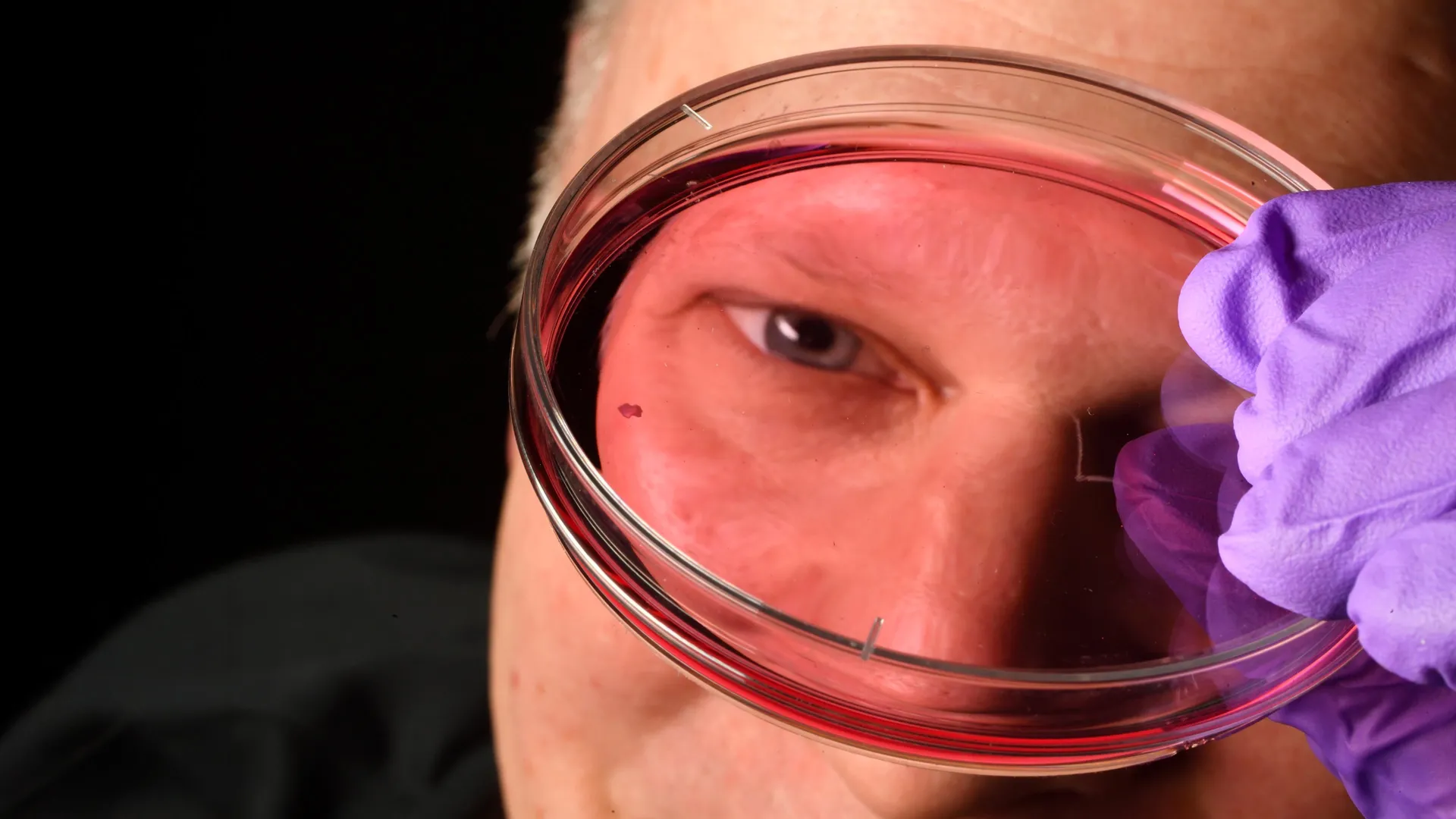
Scientists at Johns Hopkins University have uncovered how humans develop sharp central vision before birth, identifying a carefully timed interaction between a vitamin A derived molecule and thyroid hormones in the retina. The discovery challenges a decades old explanation for how key light sensing cells form and could guide future treatments for macular degeneration, glaucoma, and other diseases that damage vision.
The research, which relied on lab grown retinal tissue, was published in the Proceedings of the National Academy of Sciences.
Lab Grown Retinas Reveal How Sharp Vision Forms
“This is a key step toward understanding the inner workings of the center of the retina, a critical part of the eye and the first to fail in people with macular degeneration,” said Robert J. Johnston Jr., an associate professor of biology at Johns Hopkins who led the research. “By better understanding this region and developing organoids that mimic its function, we hope to one day grow and transplant these tissues to restore vision.”
To investigate how the human eye develops, the researchers used organoids, small clusters of tissue grown from fetal cells that closely mimic parts of the retina. After observing these lab grown retinas over several months, the team identified the cellular events that shape the foveola, the tiny region at the center of the retina responsible for the sharpest vision.
The study focused on cone photoreceptors, the light sensing cells that provide daytime and color vision. These cells eventually become blue, green, or red cones, each responding to different wavelengths of light. Although the foveola makes up only a small portion of the retina, it is responsible for about half of all human visual perception. Unlike the rest of the retina, where all three cone types are present, the foveola contains only red and green cones.
A Surprising Transformation of Cone Cells
Humans are unusual in having three different cone types that together allow a broad range of color vision. Exactly how this specialized pattern develops has remained a mystery for decades. According to Johnston, scientists have struggled to study this process because common research animals such as mice and fish do not develop the same arrangement of photoreceptor cells.
The new findings suggest that the cone pattern in the foveola is established through a coordinated sequence of events early in fetal development. During weeks 10 through 12, a small number of blue cones appear in the developing foveola. By week 14, however, those cells have changed into red and green cones.
The researchers found that this happens through two separate mechanisms. First, retinoic acid, a molecule derived from vitamin A, is broken down, reducing the formation of new blue cones. Then thyroid hormones drive the remaining blue cones to convert into red and green cones.
“First, retinoic acid helps set the pattern. Then, thyroid hormone plays a role in converting the leftover cells,” Johnston said. “That’s very important because if you have those blue cones in there, you don’t see as well.”
Challenging a Longstanding Theory
The results offer a new explanation for a question that has puzzled vision researchers for decades. The prevailing theory suggested that blue cones formed in the center of the retina and later migrated outward. Instead, the new evidence indicates those cells remain in place but change their identity into red and green cones, producing the specialized arrangement needed for sharp vision.
“The main model in the field from about 30 years ago was that somehow the few blue cones you get in that region just move out of the way, that these cells decide what they’re going to be, and they remain this type of cell forever,” Johnston said. “We can’t really rule that out yet, but our data supports a different model. These cells actually convert over time, which is really surprising.”
Potential for Future Vision Restoration
The researchers believe these discoveries could eventually support new approaches to treating vision loss. Johnston’s team is continuing to improve its retinal organoids so they more closely resemble the function of the human retina. Better models could help scientists produce healthier photoreceptor cells for future cell replacement therapies targeting diseases such as macular degeneration, which currently has no cure.
“The goal with using this organoid tech is to eventually make an almost made-to-order population of photoreceptors. A big avenue of potential is cell replacement therapy to introduce healthy cells that can reintegrate into the eye and potentially restore that lost vision,” said Hussey, who is now a molecular and cell biologist at cell therapy company CiRC Biosciences in Chicago. “These are very long-term experiments, and of course we’d need to do optimizations for safety and efficacy studies prior to moving into the clinic. But it’s a viable journey.”
Experts are calling for better awareness of the heat-related risks to women and more targeted efforts to protect them.
