If Your Makeup Settles Into Wrinkles, Reviewers Swear By This 60% Off Primer For A Smoother Base

Stop the presses: Laura Geller’s Spackle hydrating primer is 60% off right now on Amazon. Whether it’s the last step of your skincare or the first step of your makeup, applying a quality primer is not to be skipped — especially at this price. Whether you’re in the market for a new one or if you’re a devout fan of the brand, Spackle Hydrate is a true standout as a two-in-one moisturizer and primer. And while it usually runs close to $40, you can snag a tube for just $15 today. These days, that’s drugstore prices — so we recommend snatching one (or two!) fast.

This primer is “fabulous for mature skin” and loved for helping makeup go on smoothly and look “absolutely flawless.

Made with hydrating hyaluronic acid and plumping glycerin, this fragrance-free primer is designed to transform your skin into a smooth, even base. The brand recommends adding one to two pumps to the back of your hand, applying a thin layer on clean skin, then letting it absorb for a minute before adding new products.

“Perfect to wear under makeup,” one wrote. “Keeps it looking smooth. Dries nice with no sticky feeling. Kind of feels like light weight moisturizer. About a dime size is all you need.”

Fans appreciate the “lightweight, almost serum-like texture” that glides over skin and absorbs fast. “It doesn’t feel greasy or overly matte,” one wrote. “Just that perfect middle ground where your skin feels hydrated but not slick.”

Fans say it helps them achieve the makeup looks they crave…

“As you get older your skin get dryer and more textured. This primer was a game changer for me,” one shopper writes. “It blurs and my makeup doesn’t settle in my skin at all. The days I don’t use it are massively more noticeable.”

“I’m ashamed to admit that I’m 42 and had never heard of primer before,” another wrote. “The results were immediate and impressive — my skin looks so smooth and my makeup looks absolutely flawless over this spackle!”

..and it even gets them excited about makeup again.

“I had stopped wearing makeup because it always just settled into the wrinkles and made things look worse,” an 82-year-old reviewer wrote. “This primer is perfectly named. Spackle Primer did exactly what I had hoped. It smoothed out my skin and the makeup did went on perfectly.”

Another reviewer who reports struggling to find a smoothing primer that didn’t feel heavy calls this a “go-to,” for how well it preps the skin for foundation.

“It really does ‘spackle’ over texture and fine lines, giving a soft-focus effect,” they said. “Makeup applies more evenly and tends to last longer throughout the day. For those with dry or mature skin, this primer is especially friendly — it doesn’t cling to dry patches or settle into creases.”

Reviewers love this hydrating primer for keeping their skin soft and smooth. Read on for more 5-star reviews, and grab a bottle for a massive 60% off while you can.

“I am 82 yrs old and this is the perfect primer for my skin. After reading about it on. line, I wanted to try it. I had stopped wearing makeup because it always just settled into the wrinkles and made things look worse. This primer is perfectly named. Spackle Primer did exactly what I had hoped. It smoothed out my skin and the makeup did went on perfectly.” — QQMKXP938

“Absolutely love this product it’s lovely and smooth and unlike some it doesn’t sit on the surface of your skin or take a lot of rubbing in and you only need a small amount so lasts well too this is my second purchase I was so impressed and great for mature skin.” — jas

“I just started using Laura Gellar cosmetics and Spackle. I am definitely going to keep using these products. Love the Spackle – I do believe it helps firm up the wrinkles a bit and the makeup goes on so beautifully.” — Amazon customer

This has to be the best primer ever for more mature skin. I am 61 and have not used makeup without primer for years. I ordered this along with the LG Baked Balance. Together they are heaven for an older face. I no longer have to worry about crease lines, dryness or fading. I’m quite picky when it comes to my primers, and this one beats them all.” — Jamie

“This primer went on easily and I could feel it ‘set’ and waited a few….…My foundation went on so nicely and when I looked at my face after I was finished with all my products I felt like my face looked great! Big Smile and I was ready to go out...just for reference I am a mature lady. Hope this is helpful.” — Leslie S.

Amazon

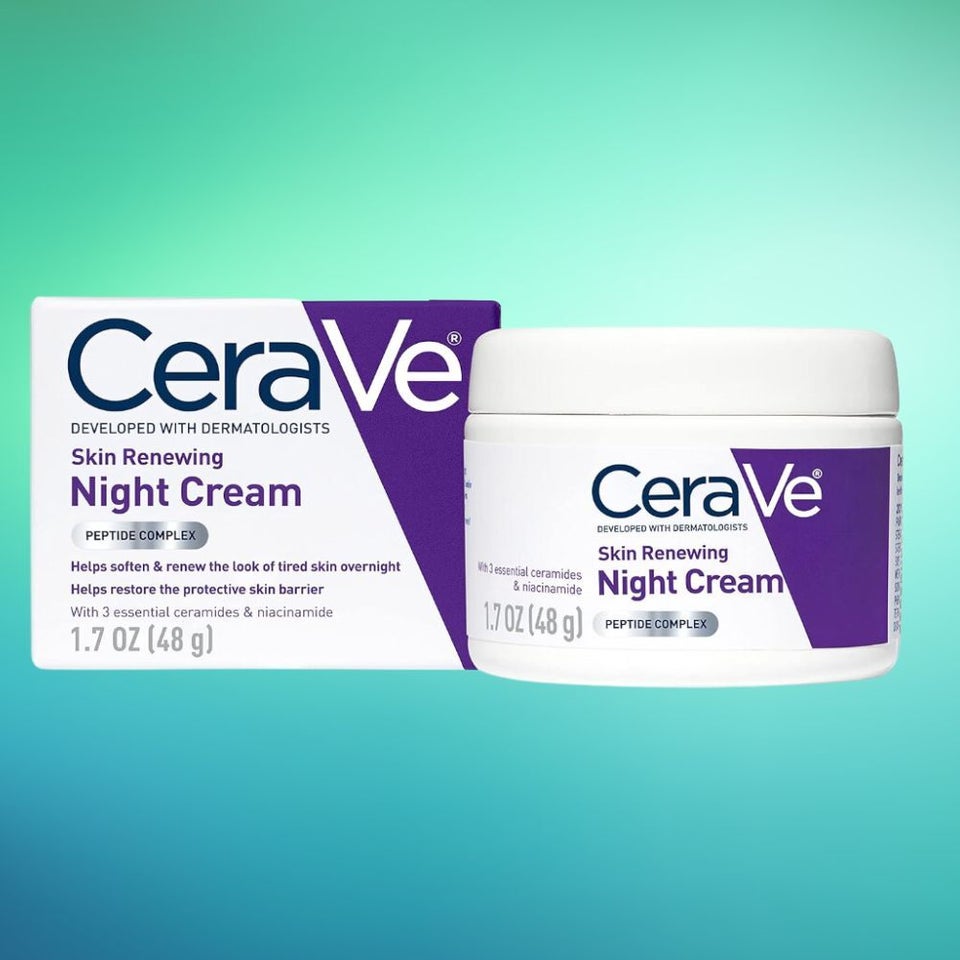
A CeraVe night cream with a peptide complex

Dr. Azza Halim, a Florida-based physician with a focus in aesthetic medicine, suggested this night cream by CeraVe because it contains a unique peptide complex to support skin elasticity and niacinamide for soothing. And like all of CeraVe’s dermatologist-beloved formulations, the thick cream contains three essential ceramides, which help ensure a strong skin barrier.
Amazon

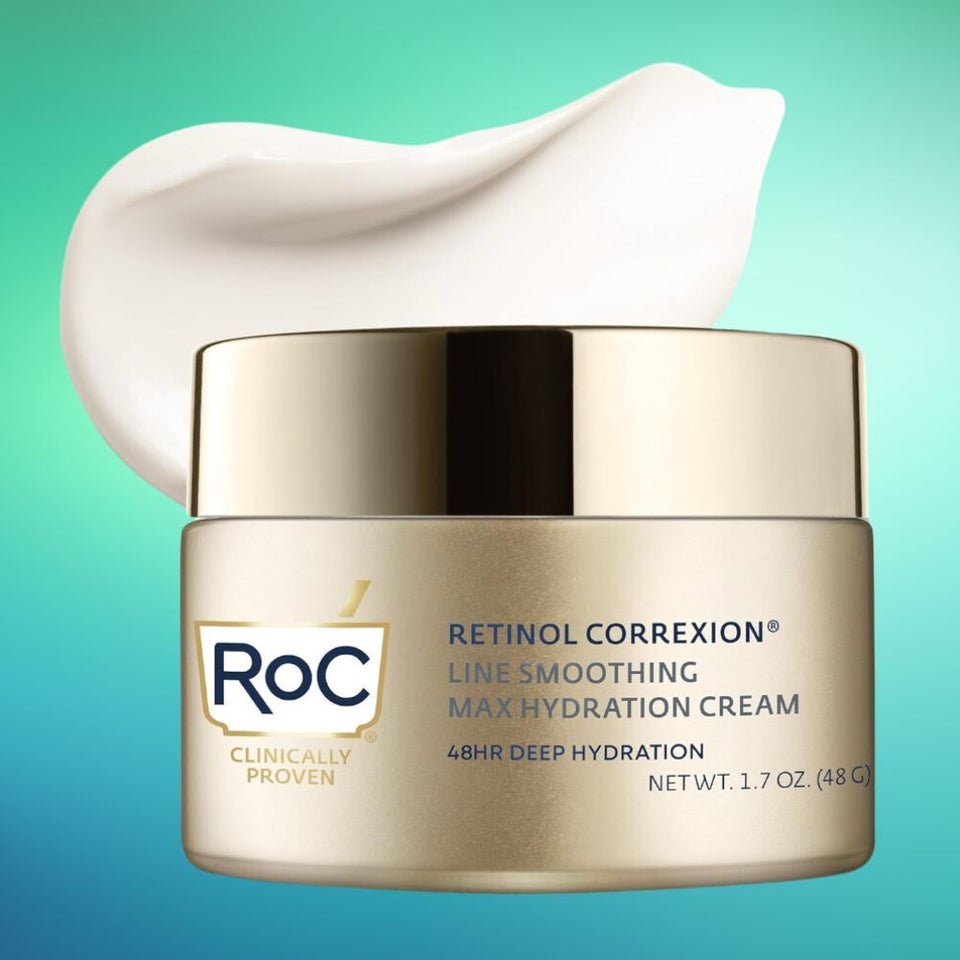
A deeply hydrating retinol cream

Board-certified dermatologist Dr. Mina Amin called RoC’s Retinol Correxion max hydration cream an “ultimate miracle worker to nourish and rejuvenate [the] face and neck.” She considers it to be very hydrating for dry skin — thanks to the inclusion of two popular humectants, hyaluronic acid and glycerin — and it includes peptides to support the skin’s natural collagen. The main active is retinol, which accelerates cellular turnover to promote collagen production and reduce the appearance of fine lines and lack of elasticity.
Amazon

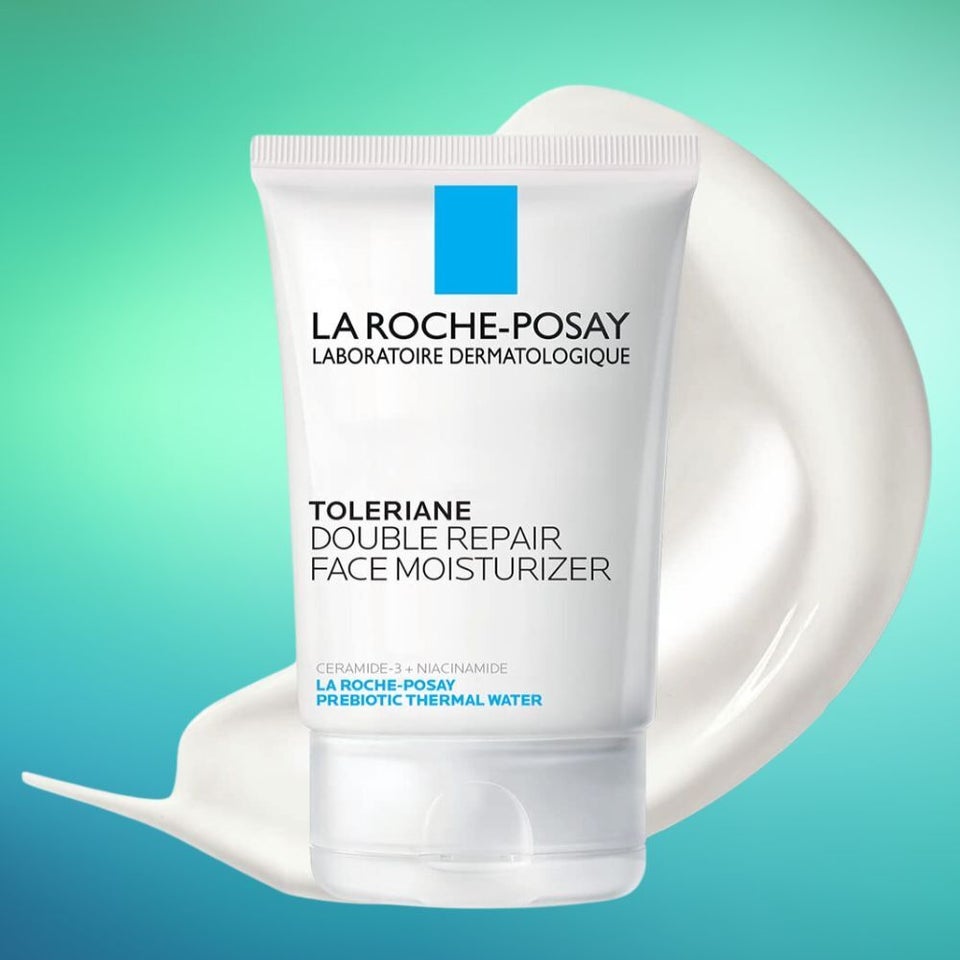
A double-repair prebiotic moisturizer

“[This]is made with niacinamide to help with fine lines, appearance of large pores, and dark spots,” board-certified dermatologist Dr. Mina Amin said of this popular heavier-weight moisturizer by French pharmacy staple brand, La Roche-Posay. It features the brand’s signature prebiotic thermal spring water, which is rich in antioxidants, three ceramides that mimic the lipids in the skin’s natural barrier.

The Real Deal: We use deal trackers and commerce experience to sift through “fake” hike-and-drop deals and other deceptive sales tactics. Products will usually be rated at least 4 stars with a minimum 15% discount. (And when there’s an exception, we’ll tell you why.)

Share Button

Pioneering treatment saves twins in early pregnancy

Identical twins Nancy and Margo benefitted from the procedure while in the womb as part of a world-first medical trial.

Share Button

British Voters Want Count Binface To Beat Nigel Farage In Clacton By-Election

British voters want Count Binface to beat Nigel Farage in next month’s Clacton by-election.

A new poll by Ipsos UK shows that in a head-to-head contest, 33% would back the comedy candidate, compared to just 21% who support the Reform UK leader.

But 32% said they would vote for neither of them, and 13% don’t know.

The by-election was triggered after Farage announced on Tuesday that he was resigning as Clacton’s MP amid mounting controversy over his and Reform’s finances.

Parliament’s standards commissioner is investigating a £5 million gift Farage received from a Thailand-based crypto billionaire shortly before he became an MP.

The sleaze watchdog has also been urged to probe Farage’s decision not to declare financial support he received from convicted fraudster George Cottrell.

Farage denies any wrongdoing and says he is the victim of a witch-hunt.

He wants the by-election to me a “people versus the establishment” contest, but that has backfired after Labour, the Tories, the Lib Dems, Greens and Restore Britain all said they would not put up candidates.

Instead, Farage’s main rival is set to be Count Binface.

The poll also showed that 74% of voters believe the standards commissioner should be investigating whether Farage broke parliamentary rules.

And 73% say the investigation should continue even if Farage wins the by-election.

Ipsos research director Keiran Pedley said: “Of course, it is the people of Clacton that will vote in the upcoming by-election and not the public overall.

“But the fact that just one in five Britons would prefer Nigel Farage to win reflects how his personal poll ratings have fallen over the past year – even if Reform supporters remain very much behind him.

“Elsewhere in the poll we see strong support for parliamentary standards investigations continuing even if Mr Farage wins the by-election – suggesting his assumed victory will not make these issues go away.”

Listen to Commons People, the podcast that makes politics easy. Every week, Kevin Schofield and Kate Nicholson unpack the week’s biggest stories to keep you informed. Join us for straightforward analysis of what’s going on at Westminster.

Share Button

UK Gardeners Warned Never To Do Three Jobs In A Heatwave

We’re on our third heatwave of the year, and this one’s looking extra-long. That means gardeners might be facing browning grass, drying potted plants, and wilting flowers.

Still, though your first instinct might be to spring into action when you see your plants stressed, some gardening tasks are best left ’til after the hot spell. Watering your grass, for instance, might not be necessary, even if it’s browning – and it could go against your area’s current hosepipe rules.

Here are three activities to put on pause for now:

1) Mowing

Speaking to Gardening Etc., Chris Bonnett of GardeningExpress.co.uk said that it’s important to “avoid mowing the lawn during extreme heat, as the lawn will be trying to recover from the heat or a potential drought”.

Grass that grows in very hot conditions often struggles to form healthy roots, meaning the added stress of mowing might damage it further.

Additionally, even though it might look unhealthy, even scorched grass has its protective place in your backyard.

It works as a sort of canopy for your lawn, protecting it from the extreme, drying heat of the sun.

2) Fertilising

When plants’ leaves curl and brown, you might be tempted to fertilise them, the University of California Agriculture and Natural Resources’ page reads.

But a heatwave is probably one of the worst times to do so.

“Your urge may be to whack off the dead parts and give the plant a shot of fertiliser. Hold on!” they said.

“The dead part can protect the living part from further burning. Refrain from fertilizing until temperatures drop below 90 [°F, or 32°C] during the daytime… Fertiliser pushes the plant to grow, stressing the plant even more.”

3) Aerating soil

Aerating soil every two to three years is generally a good idea – it can improve drainage and give roots access to more of those sweet, sweet nutrients.

But experts generally recommend waiting until autumn to do the job.

Luke Newnes, a gardening expert at Hillarys, told Ideal Home: “During a heatwave, your lawn is already working hard just to cope with the stress of high temperatures and dry conditions.

“Creating hundreds of small holes in the soil can increase moisture loss and make it even harder for the grass to recover when it’s already under pressure. Most lawns simply don’t have the energy reserves to bounce back properly in those conditions.”

As if you needed any more reason to hang your gardening gloves up in these punishing temps…

Share Button

The biggest problem with solid-state batteries may finally be solved

Smartphones, electric vehicles, and countless portable electronics all depend on batteries. As demand for better energy storage grows, improvements in battery capacity, lifespan, and safety will play a major role in the future of electrification. One of the most promising technologies is the solid-state battery, which could allow smartphones to operate for several days on a single charge and give electric vehicles driving ranges up to three times greater than many current models.

Unlike conventional lithium-ion batteries, which use a liquid electrolyte between two solid electrodes, solid-state batteries replace the liquid with a solid electrolyte. This design offers several potential advantages, including higher energy density, improved safety, and longer battery life. But one stubborn problem has slowed commercial adoption. During charging, tiny tree-like structures called dendrites can grow from the lithium anode, pierce the solid electrolyte, and create internal short circuits.

Now, an interdisciplinary team at the Max Planck Institute for Sustainable Materials (MPI-SusMat) has identified exactly how these dendrites trigger fractures that ultimately lead to battery failure. Their findings were published in the journal Nature.

How Dendrites Crack Solid-State Batteries

Exactly how soft lithium dendrites manage to break through a hard ceramic electrolyte has long puzzled researchers.

“Although the electrodes and the forming dendrites consist of lithium metal, which is soft like a gummy bear, the dendrites are able to penetrate the ceramic electrolyte and lead to a short circuit,” says Dr. Yuwei Zhang, first author of the new publication and head of the group “Chemo-Mechanics of Battery Materials” at MPI-SusMat. “How can soft dendrites fracture the stiff solid ceramic? There are two hypotheses: either internal stress is built up inside the dendrites and induces mechanical fracture of the solid electrolyte. Or, electrons leak along the grain boundaries of the solid electrolyte promoting the formation of lithium nuclei that interconnect later.”

To determine which explanation was correct, the researchers used an advanced combination of sample preparation and materials characterization techniques. Every step was performed under vacuum and at cryogenic temperatures to eliminate interference from oxygen, water, or even the microscopes’ electron beams.

The team examined both the internal stress and the plastic deformation of lithium dendrites trapped inside cracks. Their analysis found no buildup of lithium ahead of the dendrite tip, ruling out one proposed mechanism.

“The soft lithium metal is able to penetrate the stiff ceramic electrolyte, like a continuous waterjet that penetrates a rock. We calculated that hydrostatic stress in the dendrite leads to brittle fracture of the solid electrolyte in the end,” says Zhang.

The researchers also confirmed their conclusions using phase field simulations and electron backscatter diffraction measurements.

New Strategies to Prevent Battery Failure

With a better understanding of how dendrites fracture solid electrolytes, the team is now investigating ways to stop or delay the process.

Potential solutions include making the solid electrolyte tougher so it resists cracking for longer, introducing microscopic voids that redirect dendrite growth and steer cracks away from vulnerable areas, or adding protective coatings to lithium electrodes to reduce dendrite formation in the first place.

The researchers say their work demonstrates the importance of understanding how materials behave at the microscopic level. Those insights could help transform solid-state batteries from a promising concept into a practical technology for future smartphones, electric vehicles, and other electronic devices.

Share Button

The Security Step A Travel Expert Says To Make Before Closing Your Suitcase

We’ve written before at HuffPost UK about how military-style packing can save you precious storage space, as well as why ribbons may not be the best way to identify your luggage while flying.

But if you want to protect its contents, it turns out that travel experts recommend taking an added security step just before you head off.

Luckily, it requires no added tools: your phone should do.

Take a picture of your suitcase’s contents before travelling

Christian Bennett, head of travel at Multitrip.com, said that taking a quick picture of the inside of your case before you head off might be worth your while.

“Keeping receipts, taking photos before you travel and holding on to important paperwork means you’ll have everything you need at your fingertips if you do need to make a claim,” he explained.

In other words, if something in your luggage goes missing or gets damaged, you’ll have a far stronger case with “before” pics in your camera roll.

It takes “seconds” to snap a picture, the pro stated, and means you’ll have a record to hand whenever you need it.

Redditors swear by the practice too.

“Take a photo of your luggage and contents – ESPECIALLY if you’re traveling overseas,” a site user wrote.

Take a picture of the outside of the suitcase, too

For added safety, take a picture of the exterior of your suitcase before travelling too.

Speaking to Travel + Leisure, Rob Merlin, a travel advisor at SmartFlyer, said: “We always recommend that clients photograph their luggage before a trip, including the exterior of the bag, the luggage tag, and the contents inside”.

This not only means you’re able to document any luggage damage, but it could also help airline staff to identify your suitcase from a sea of others in lost and found.

The more you know…

Share Button

‘People don’t realise how at risk they are’: A day with an ambulance service in a heatwave

The BBC join a crew based in Exeter as the UK sizzles in one of its longest-running heatwaves.

Share Button

The galaxy’s coldest “stars” may actually be alien megastructures

Since physicist Freeman Dyson first proposed the idea in 1960, the hypothetical “Dyson sphere” has become one of the most intriguing concepts in the search for extraterrestrial intelligence. Rather than a single solid shell, scientists now envision a Dyson “swarm” made up of countless orbiting structures that capture nearly all of a star’s energy.

While the concept has long been discussed in theory, an important question remains: if one actually existed, what would astronomers see? A new study by Amirnezam Amiri of the University of Arkansas, currently available as a pre-print on arXiv and scheduled for publication in Universe, explores exactly how these enormous structures might appear through modern telescopes. The research also identifies the types of stars most likely to host them.

Red Dwarfs and White Dwarfs Are Prime Targets

One of the strongest candidates is the red dwarf. These small, cool stars are the most common type in the Milky Way and consume their nuclear fuel so slowly that they can survive for trillions of years, far longer than the universe has existed so far.

Their relatively small size also makes them attractive from an engineering perspective. According to the study, a Dyson swarm could orbit a red dwarf at a distance of roughly 0.05 to 0.3 AU, requiring far less construction material than one built around a larger star like the Sun.

White dwarfs may be even more appealing. These dense stellar remnants are the leftover cores of Sun like stars that have exhausted their fuel and collapsed to only about 1% of their original size.

Because they are so compact, a Dyson swarm could orbit just a few million kilometers above the star’s surface, dramatically reducing the scale of the structure needed. White dwarfs also release energy at a steady rate for billions of years, making them reliable long term power sources.

How a Dyson Sphere Would Change a Star’s Appearance

Astronomers classify stars using the Hertzsprung-Russell (H-R) diagram, which plots stellar temperature against luminosity. A Dyson sphere would dramatically alter where a star appears on that chart.

Instead of allowing visible light to escape, the structure would absorb virtually all of the star’s radiation. Since energy cannot simply disappear, the same amount of energy would have to be emitted back into space, but as heat in the infrared portion of the spectrum. In effect, the megastructure would absorb starlight, use that energy for whatever purpose its builders intended, and then radiate the excess as infrared heat.

Although the star’s total energy output would remain unchanged, its apparent temperature would be much lower. Because H-R diagrams use bolometric luminosity (i.e. the luminosity over all of the spectra), the object would remain at the same luminosity but shift dramatically toward the cooler side of the diagram.

A Unique Infrared Signature

That temperature shift is one of the study’s most striking predictions. A typical red dwarf has a surface temperature of about 3000K. A surrounding Dyson sphere, however, could have an effective temperature as low as 50K, around two orders of magnitude colder.

No known natural stars occupy that region of the H-R diagram. Any object found there would immediately become an intriguing candidate for further investigation.

Another possible clue would be the absence of dust. Ordinary stars often display silicate emission associated with dusty disks. A Dyson swarm, by contrast, would consist of radiator panels rather than dust, giving it an unusually “clean” spectrum.

Looking for Strange Light Curves

The study also emphasizes that a true solid Dyson sphere is almost certainly impossible to build. Modern calculations indicate that even around relatively small stars, the amount of material required would be unrealistic.

Instead, an advanced civilization would likely construct a swarm of many independent solar collectors, leaving gaps between them or varying their density throughout the structure. As those components orbited the star, they could produce highly unusual, non natural variations in brightness that would stand out from the behavior of ordinary stars.

James Webb and the Hunt for Alien Megastructures

The James Webb Space Telescope is especially well suited to search for these hypothetical structures because it specializes in infrared observations. Older missions such as WISE are also contributing to the effort.

In May 2024, researchers from Project Hephaistos reported seven promising Dyson sphere candidates, all associated with red dwarfs, after examining a catalog of roughly 5 million stars. One candidate was later ruled out because a perfectly aligned supermassive black hole in the background explained the unusual signal.

That still leaves five candidates deserving closer study. While none have been confirmed as alien megastructures, Amiri’s work provides astronomers with another set of observational clues that could help distinguish genuine technosignatures from natural cosmic phenomena. If Dyson swarms do exist somewhere in the Milky Way, future infrared observations may finally reveal where they have been hiding.

Share Button

Vapes to have less enticing names to protect children, under UK plans

People are being consulted about plans to stop vape companies using of enticing flavour descriptions that “attract” children into experimenting.

Share Button

Pioneering treatment saves identical twins from rare pregnancy condition

Identical twins Nancy and Margo benefitted from the procedure while in the womb as part of a world-first medical trial.

Share Button