An inter-departmental research team at the LKS Faculty of Medicine of the University of Hong Kong (HKUMed) has conducted the world’s first analytic real-world cohort study on the association of clozapine, a highly efficacious antipsychotic drug, with the incidence of blood cancer. Their findings show that the risk of blood cancer associated with the use of clozapine is very low, with an average increase of less than six cases per 10,000 persons using clozapine for one year. Therefore, the clinical significance of such a risk is plausibly low. While previous preliminary Western studies have shown a potentially significant increase in risk, this study suggests that with stringent blood monitoring measures before and during clozapine use in Hong Kong and around the world, it may not be necessary to further restrict the use of clozapine or issue special warnings by the Department of Health or local drug regulatory authorities, thus facilitating early and effective treatment of mental illness. The study was published in PLOS Medicine.
Background
Clozapine is currently the only antipsychotic drug approved by the Food and Drug Administration (FDA) of the United States for treatment-resistant schizophrenia. It is widely known for its high efficacy in reducing symptoms, relapse rate, and all-cause mortality in schizophrenia and is widely regarded as a drug of last resort. Recent Finnish and American studies suggested that clozapine may be associated with a significantly increased risk of blood cancer. However, owing to data restrictions and study design, the additional number of blood cancer cases associated with prior clozapine exposure could not be estimated and remained unclear. The clinical significance of this risk, therefore, had yet to be determined.
Research methods and findings
The research team utilised territory-wide electronic health records from the Hospital Authority of Hong Kong to comb through 400,000 patient records to construct a retrospective cohort of approximately 10,000 patients diagnosed with schizophrenia between 2001 and 2022 and followed up for a median of seven years since their drug initiation. The team’s observations of the patients showed the following:
The absolute risk of blood cancer is very rare: In the cohort of 10,000 patients followed over a period of about seven years, only 39 developed blood cancer. After statistical adjustment, the study estimated that there were fewer than six cases of blood cancer per 10,000 patients using clozapine for one year.
Consistent with Western studies: The weighted incidence rate ratio of blood cancer in clozapine users versus controls was estimated at 2.22, suggesting that there is a slight association. This observation is consistent with the findings of previous Finnish and American case-control studies.
No risk for other cancers: No association was observed for other cancer types.
Significance of the study
‘In response to Western studies suggesting a potential risk of blood cancer after clozapine use, this study provides reliable evidence for patients and healthcare professionals supporting the safety of the drug. The current blood monitoring measures are very comprehensive. Patients do not need to be overly concerned about the risk of blood cancer caused by clozapine given the rarity of its occurrence demonstrated in this study. Clinicians should weigh the risks and benefits of the drug, taking into account the rarity of the association between clozapine and blood cancer, and make appropriate arrangements according to patients’ needs,’ said Professor Francisco Lai Tsz-tsun, the project leader and Assistant Professor in both the Department of Pharmacology and Pharmacy and the Department of Family Medicine and Primary Care under the School of Clinical Medicine of HKUMed.
‘Because of the readily linked and longitudinally available data across all public healthcare facilities in Hong Kong, we were able to come up with a better study design than those in other countries,’ said Professor Lai. ‘This enabled us to make immediate use of big data to better address clinically meaningful healthcare issues than researchers in many other countries, highlighting the key strengths of Hong Kong’s healthcare big data and its potential application in drug safety monitoring.’
The research team is currently re-examining a wide range of potential adverse effects of other psychotropic drugs, especially cancer risks, and their overall long-term safety and effectiveness. ‘Ultimately, through our joint interdisciplinary efforts, we hope to better inform day-to-day clinical decisions and make medication use in patients with mental illness much safer and more effective,’ Professor Lai added.
A new international study led by researchers at Karolinska Institutet in Sweden shows that AI-based models can outperform human experts at identifying ovarian cancer in ultrasound images. The study is published in Nature Medicine.
“Ovarian tumours are common and are often detected by chance,” says Professor Elisabeth Epstein at the Department of Clinical Science and Education, Södersjukhuset (Stockholm South General Hospital), at Karolinska Institutet and senior consultant at the hospital’s Department of Obstetrics and Gynecology. “There is a serious shortage of ultrasound experts in many parts of the world, which has raised concerns of unnecessary interventions and delayed cancer diagnoses. We therefor wanted to find out if AI can complement human experts.”
AI outperforms experts
The researchers have developed and validated neural network models able to differentiate between benign and malignant ovarian lesions, having trained and tested the AI on over 17,000 ultrasound images from 3,652 patients across 20 hospitals in eight countries. They then compared the models’ diagnostic capacity with a large group of experts and less experienced ultrasound examiners.
The results showed that the AI models outperformed both expert and non-expert examiners at identifying ovarian cancer, achieving an accuracy rate of 86.3 per cent, compared to 82.6 per cent and 77.7 per cent for the expert and non-expert examiners respectively.
“This suggests that neural network models can offer valuable support in the diagnosis of ovarian cancer, especially in difficult-to-diagnose cases and in settings where there’s a shortage of ultrasound experts,” says Professor Epstein.
Reducing the need for expert referrals
The AI models can also reduce the need for expert referrals. In a simulated triage situation, the AI support cut the number of referrals by 63 per cent and the misdiagnosis rate by 18 per cent. This can lead to faster and more cost-effective care for patients with ovarian lesions.
Despite the promising results, the researchers stress that further studies are needed before the full potential of the neural network models and their clinical limitations are fully understood.
“With continued research and development, AI-based tools can be an integral part of tomorrow’s healthcare, relieving experts and optimising hospital resources, but we need to make sure that they can be adapted to different clinical environments and patient groups,” says Filip Christiansen, doctoral student in Professor Epstein’s research group at Karolinska Institutet and joint first author with Emir Konuk at the KTH Royal Institute of Technology.
Evaluating the safety of the AI support
The researchers are now conducting prospective clinical studies at Södersjukhuset to evaluate the everyday clinical safety and usefulness of the AI tool. Future research will also include a randomised multicentre study to examine its effect on patient management and healthcare costs.
The study was conducted in close collaboration with researchers at the KTH Royal Institute of Technology and was financed by grants from the Swedish Research Council, the Swedish Cancer Society, the Stockholm Regional Council, the Cancer Research Funds of Radiumhemmet and the Wallenberg AI, Autonomous Systems and Software Program (WASP).
Elisabeth Epstein, Filip Christiansen and three co-authors have applied for a patent through the company Intelligyn for methods of computer-supported diagnostics. Elisabeth Epstein, Filip Christiansen and Kevin Smith, researcher at the KTH Royal Institute of Technology, also own shares in Intelligyn, for which Professor Epstein is an unsalaried manager.
Researchers from the Bakkers group at the Hubrecht Institute have successfully repaired damaged mouse hearts using a protein from zebrafish. They discovered that the protein Hmga1 plays a key role in heart regeneration in zebrafish. In mice, this protein was able to restore the heart by activating dormant repair genes without causing side effects, such as heart enlargement. This study, supported by the Dutch Heart Foundation and Hartekind Foundation, marks an important step toward regenerative therapies to prevent heart failure. The findings were published in Nature Cardiovascular Research on January 2, 2025.
After a heart attack, the human heart loses millions of muscle cells that cannot regrow. This often leads to heart failure, where the heart struggles to pump blood effectively. Unlike humans, zebrafish grow new heart muscle cells: they have a regenerative capacity. When a zebrafish heart is damaged, it can fully restore its function within 60 days. “We don’t understand why some species can regenerate their hearts after injury while others cannot,” explains Jeroen Bakkers, the study’s leader. “By studying zebrafish and comparing them to other species, we can uncover the mechanisms of heart regeneration. This could eventually lead to therapies to prevent heart failure in humans.”
A protein that repairs damage
The research team identified a protein that enables heart repair in zebrafish. “We compared the zebrafish heart to the mouse heart, which, like the human heart, cannot regenerate,” says Dennis de Bakker, the study’s first author. “We looked at the activity of genes in damaged and healthy parts of the heart,” he explains. “Our findings revealed that the gene for the Hmga1 protein is active during heart regeneration in zebrafish but not in mice. This showed us that Hmga1 plays a key role in heart repair.” Typically, the Hmga1 protein is important during embryonic development when cells need to grow a lot. However, in adult cells, the gene for this protein is turned off.
Clearing ‘roadblocks’
The researchers investigated how the Hmga1 protein works. “We discovered that Hmga1 removes molecular ‘roadblocks’ on chromatin,” explains Mara Bouwman, co-first author. Chromatin is the structure that packages DNA. When it is tightly packed, genes are inactive. When it unpacks, genes can become active again. “Hmga1 clears the way, so to say, allowing dormant genes to get back to work,” she adds.
From fish to mammals
To test if the protein works similarly in mammals, the researchers applied it locally to damaged mouse hearts. “The results were remarkable: the Hmga1 protein stimulated heart muscle cells to divide and grow, significantly improving heart function,” says Bakkers. Surprisingly, cell division occurred only in the damaged area — precisely where repair was needed. “There were no adverse effects, such as excessive growth or an enlarged heart. We also didn’t see any cell division in healthy heart tissue,” Bouwman emphasizes. “This suggests that the damage itself sends a signal to activate the process.”
The team then compared the activity of the Hmga1 gene in zebrafish, mice, and humans. In human hearts, as in adult mice, the Hmga1 protein is not produced after a heart attack. However, the gene for Hmga1 is present in humans and active during embryonic development. “This provides a foundation for gene therapies that could unlock the heart’s regenerative potential in humans,” Bakkers explains.
What’s next?
These findings open doors for safe, targeted regenerative therapies, but there is still much work to do. “We need to refine and test the therapy further before it can be brought to the clinic,” says Bakkers. “The next step is to test whether the protein also works on human heart muscle cells in culture. We are collaborating with UMC Utrecht for this, and in 2025, the Summit program (DRIVE-RM) will begin to explore heart regeneration further.”
Heart for collaboration
This research brought together scientists from the Hubrecht Institute and beyond. It was conducted as part of the OUTREACH consortium and funded by the Dutch Heart Foundation and Hartekind Foundation. The OUTREACH consortium is a collaboration between research institutes and all academic hospitals involved in treating patients with congenital heart defects in the Netherlands. “Normally, our group only focusses on zebrafish,” says Bouwman. “But to understand how our findings could be applied to mammals, we collaborated with the Van Rooij group and Christoffels group (Amsterdam UMC), experts in mouse research. Thanks to the Single Cell Core at the Hubrecht Institute, we were able to study heart regeneration at a detailed level.”
“We’re very lucky that we were able to set up these collaborations,” Bouwman continues. “It allows us to translate discoveries from zebrafish to mice and, hopefully, eventually to humans. We are learning so much from the zebrafish and its remarkable ability to regenerate its heart.”
His 2024 election campaign was no exception, only this time, he was promising to stop wars, too.
Trump claims to be such a good mediator that he is not even afraid to do deals with ruthless dictators – like Vladimir Putin.
While the rest of Ukraine’s allies have refused to consider organising a truce with the Kremlin until Kyiv initiates it, Trump has already pledged to end the three-year war within his day.
Advertisement
But, with his inauguration less than a month away, just how likely is it that Trump will be able to secure a deal?
And will actually stop the war – or just appease Putin, temporarily?
Will Trump actually be able to set up some kind of Ukraine-Russia peace deal?
That depends on your definition of a deal.
According to senior consulting fellow of Chatham House’s Russia and Eurasia Programme, Keir Giles, Trump will probably be able to force Moscow and Kyiv to agree to something which he can portray as a deal.
However, Giles told HuffPost UK: “Is it going to be something that is durable, sustainable and actually ensures fighting comes to an end on a more or less permanent basis? Almost certainly not.”
Advertisement
Giles said it all comes down to the US president-elect and the Russian president finding a “mutual point of interest that sells”.
For Trump, that most likely means living up to his own promises of ending the war – at least, for now – while, for Putin, it means weakening Ukraine and taking as much of its land as he can.
Giles also warned: “Putin has given every indication during Trump’s first presidency that he knew precisely how to play him in order to get the maximum possible benefit function.”
Advertisement
There is a chance the Russian president may be able to get his way in exchange just for appearing to stop the war – while possibly still hoping to take more of eastern Europe.
It is worth remembering that Trump and Putin appeared to strike up quite the friendship during the Republican’s first term in office, and the president-elect even praised Putin’s invasion in 2022, calling it “genius” and “savvy”.
There is, of course, a third albeit less powerful player in these negotiations, Ukraine, who previously refused to negotiate with Putin unless all Russian troops were withdrawn from Ukrainian land.
“There’s a mutual interest between Trump and Putin to do something but of course the wild card is Ukraine, which would prefer to survive,” Giles said, adding: “The likelihood of Ukraine agreeing to something that blights its future permanently is pretty slim.”
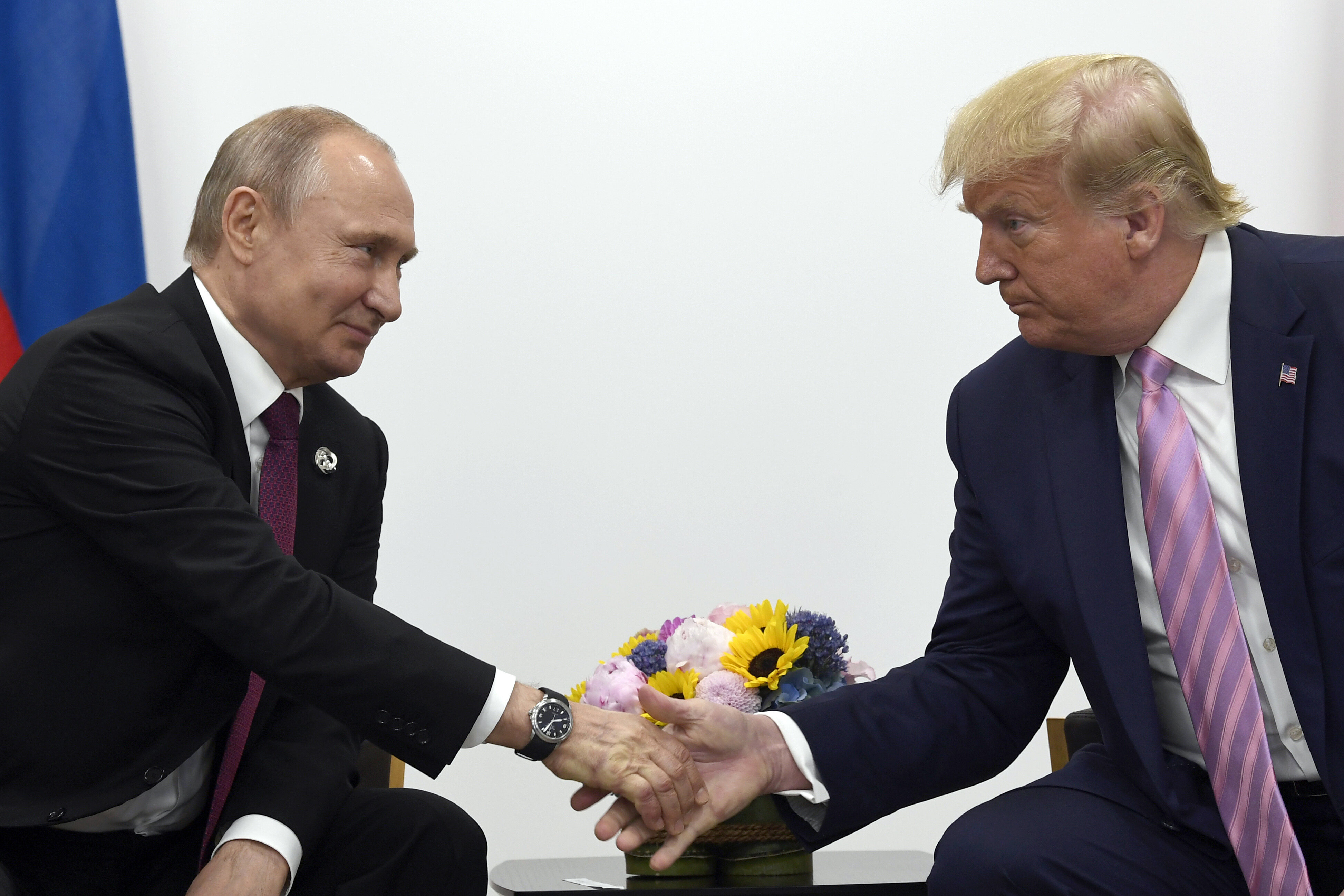
President Donald Trump, right, shakes hands with Russian President Vladimir Putin
via Associated Press
Advertisement
Why would Putin agree to a pause in the fighting?
Putin has made it clear that his main objective is to seize the whole of Ukraine.
So Putin may be more inclined to press pause on the conflict, so he can keep his troops in the occupied parts of Ukraine.
Giles also noted there would be some diplomatic benefit to freezing the war, saying: “To some extent Putin will want to make Trump look good if they’re looking for future cooperation.”
Advertisement
Meanwhile, Steve Forbes, of Forbes Media, claimed Putin would be rooting for the kind of deal Hitler got from Neville Chamberlain in Munich 1938 – in exchange for a chunk of Czechoslovakia – which only lasted a few months before World War 2 began.
As Forbes claimed: “Like Hitler, Putin won’t be appeased, that’s why he must be thwarted.”
Giles also seemed questioned the idea of just trying to placate the Russian president because of the impact it would have on the rest of Europe.
He said: “The problem is it also buys time for Putin to rebuild its forces without Ukraine destroying them almost as fast as they can be rebuilt.
Advertisement
“And precedent suggests the danger is that as soon as a ceasefire is declared, whether or not is a real and durable one, that will give western Europe the opportunity to pretend the problem has gone away and to ease off its own paltry efforts to actually rebuild its defence.”
Former adviser to the Ukrainian government, Yuliya Kazdobina claimed Putin does not have any interest at all in ending his invasion long-term.
She said: “As Donald Trump attempts to implement his campaign promise and end the war in Ukraine, he is likely to discover that his famed deal-making skills are no match for Putin’s single-minded obsession with the destruction of Ukraine.
“In words and deeds, Putin has repeatedly demonstrated his commitment to wiping Ukraine off the map.
“In such circumstances, any talk of a compromise settlement is dangerously delusional.
“Until Putin is forced to recognise Ukraine’s right to exist, any peace deals will be temporary and the threat of further Russian aggression will remain.”
Similarly, a Western military source told HuffPost UK: “If negotiation means capitulation on his terms, I think he’s ready to do that. But he is not ready for a genuine negotiation about Ukraine’s future sovereignty.”
Advertisement
Soldiers of Ukraine’s 1st Separate Mechanised Battalion
via Associated Press
Is a Trump peace deal the best option for Ukraine?
The best outcome for Ukraine would be if Trump were to reject any request from Putin, throw his weight fully behind Ukraine and lift any restrictions on US weaponry to Kyiv – but that’s pretty unlikely to happen considering the recent promises from his incoming administration.
The details of the president-elect’s potential agreement are still unclear, but it’s believed he wants to take Ukraine’s potential Nato membership off the table and propose Zelenskyy concedes some land to Moscow – even though that was a red line for Kyiv in the past.
Advertisement
According to Forbes, Trump can still get a “great deal” for Kyiv without asking all the Russian forces in Crimea and the eastern part of the country.
He said: “Indeed a settlement will realistically involve the Kremlin getting formal control of a few pieces of territory in the east, where it can claim the population is predominantly Russian.
“But either way the people there should have the right to emigrate elsewhere.”
He claimed that Ukrainians might have to pull out of Kursk, the Russian region which Kyiv seized in August.
Advertisement
“But the final deal must unmistakably leave Ukraine an independent nation with strong security arrangements,” he said.
He also suggested Ukraine could avoid Nato membership – one of Putin’s red lines – by having permanent military bases in the country, funded by frozen Russian assets.
However, others believe Ukraine should not be forced into any kind of negotiation.
“We can’t talk about peacekeepers when there’s no peace. And why is there no peace? Because Russia does not want peace.”
Labour MP David Taylor told HuffPost UK: “Talks of any form of deal are for the Ukrainian people and their president.
“They are the ones who have been engaged in a bloody war, fighting tooth and nail for freedom against Russian tyranny.”
Advertisement
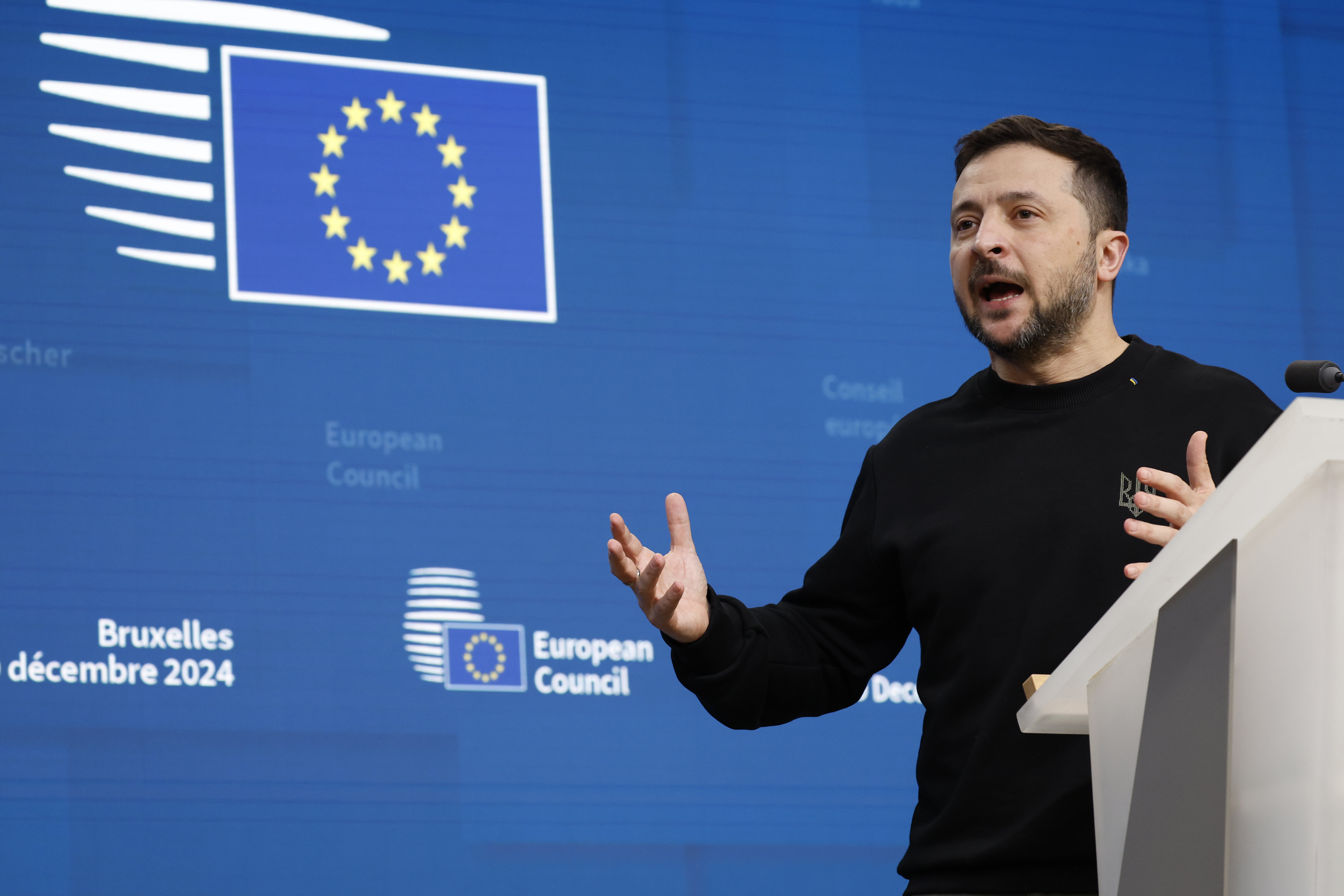
Ukraine’s President Volodymyr Zelenskyy speaks addresses a media conference during an EU summit in Brussels, Thursday, Dec. 19, 2024.
via Associated Press
What happens if Ukraine rejects any peace deal?
In the unlikely scenario that Ukraine rejects any deal with Russia, Giles suggested the White House might utilise the authority it has over Kyiv as the country’s most powerful ally.
He said: “Trump can use leverage against Kyiv far more effectively than he can on Putin for example, by freezing aide to Ukraine.”
Advertisement
Without the US, Kyiv would be less restrained in terms of how it fights Moscow.
For instance, Washington famously dragged its feet when it came to authorising Kyiv’s use of its long-range missiles against Russia, and only gave its permission in November after months of pleading from Ukrainian president Volodymyr Zelenskyy.
But Giles said: “Ukraine will be able to continue fighting with or without support [from the US].
“Let’s not forget that in the run up to the full scale invasion when all the predictions that were coming from the US in particular – not from the UK – was that Ukraine would be overrun swiftly, all of the planning and support for Ukraine was for after it was overrun.
“The last time that happened, 1944-45, resistance actually continued for more than a decade afterwards.”
Advertisement
Yet, Giles was wary that Ukraine can only succeed if it still has the backing from its other allies.
He added: “If Europe is unable to or unwilling to step up to fill the gap [from the US], then the prospects for Ukraine are dire.”
However, Kyiv may well choose to discard its own red lines rather than lose the US as an ally.
Zelenskyy has been presenting Trump with his “victory plan” for months, and appears to softening his language around negotiations.
While making it clear he does not want any other country to negotiate with Putin without Ukraine’s backing, he pointed out that Kyiv is not exactly in a strong position right now.
Advertisement
“Are we in NATO? We don’t know. Will we be part of the EU? Yes, in the future, but when?” he said.
“Under these circumstances, sitting down at the negotiating table with Putin means giving him the right to dictate terms in our part of the world.
“First, we need to develop a model, an action plan, or a peace plan – call it what you will. Then we can present it to Putin or, more broadly, to the Russians.”
He said in December that his troops can only count on “diplomatic pressures” to oust Russia from Ukraine’s occupied territories, as his troops “do not have the strength” to remove them by force.
Advertisement
As Giles explained: “Ukraine might at some point reach the calculus that it is better to freeze the conflict for the sake of national survival.
“But that certainly won’t be an end of the long-term war.”
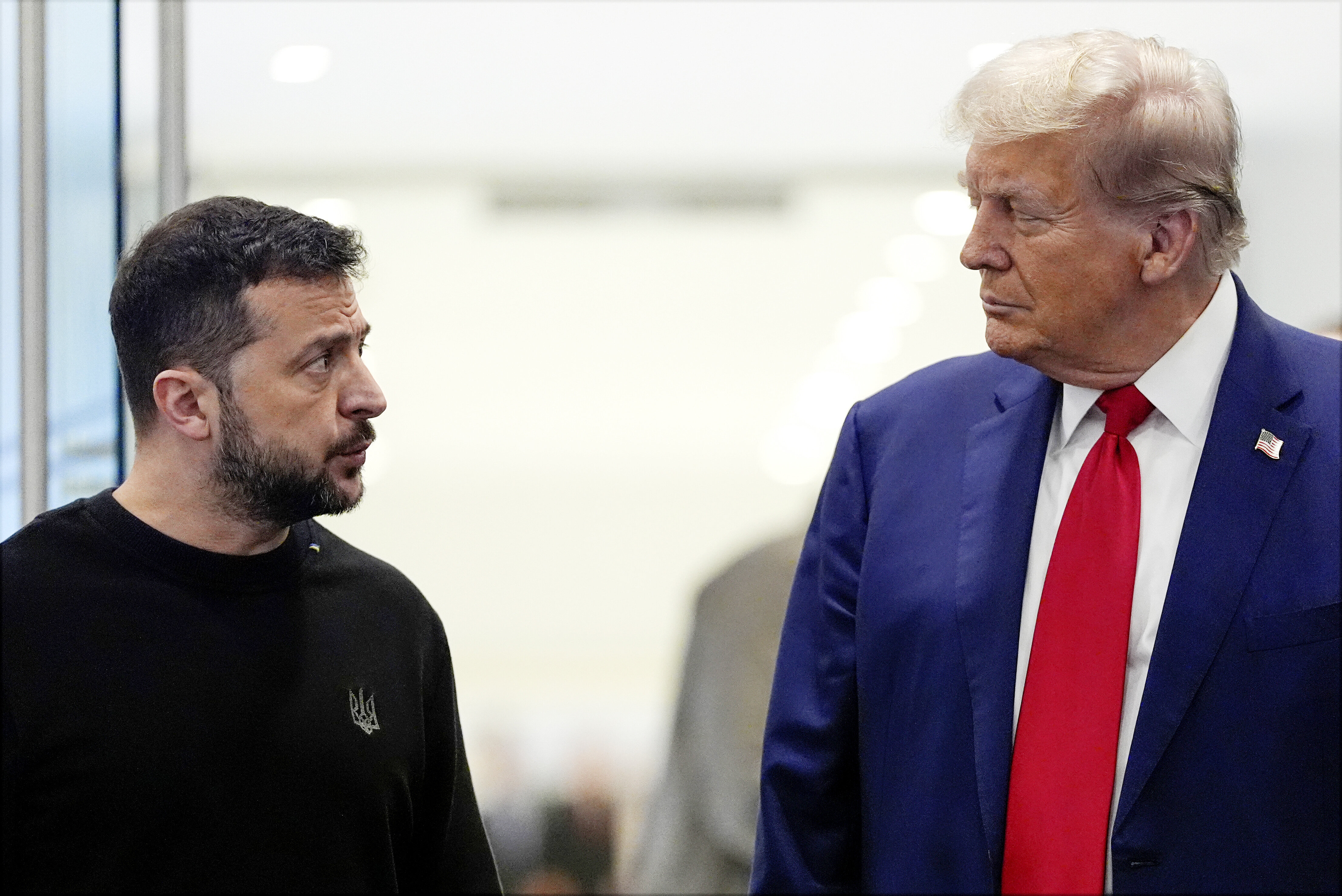
Former President Donald Trump meets with Ukraine’s President Volodymyr Zelenskyy at Trump Tower, Friday, Sept. 27, 2024
Elon Musk has said Jess Phillips should be in prison in his latest attack on the Labour government.
The billionaire X owner hit out after the safeguarding minister reportedly rejected calls for a public inquiry into historic child abuse in Oldham.
According to GB News, Phillips said it was up to the local council, not the government, to instigate such an inquiry.
Advertisement
In a letter to the local authority, the minister said: “I welcome the council’s resolution to do so … and to continue its important work with victims and survivors.”
The story was highlighted on X by former Tory prime minister Liz Truss, who said: “This is Jess Phillips, the same Home Office minister who excused masked Islamist thugs.
“Her title ‘Parliamentary Under-Secretary of State for Safeguarding and Violence Against Women and Girls’ is a perversion of the English language. Its clear whose side she is on.”
Advertisement
Responding to her post, Musk said: “She deserves to be in prison.”
His comments are the latest salvo in his long-running war of words on the government.
During the riots in the summer, Musk was slapped down by No.10 after he said “civil war is inevitable” in the UK.
President Joe Biden reportedly believes he would’ve defeated Donald Trump if he didn’t drop out of the race after a disastrous debate performance over the summer.
Trump, naturally, disagrees.
“Well, he was way behind, he would’ve really, I assume, not had a chance,” the president-elect told reporters at a Mar-a-Lago New Year’s Eve party when asked about the report.
“I wish him well,” Trump added. “He had a chance to do it in the debate, and that didn’t work out too well for him. That was, I guess, the reason that really led to his downfall.”
Biden’s approval ratings sagged through much of his presidency and he was behind Trump in a number of polls when the two met for what would turn out to be a fateful debate in June.
Biden did so poorly there were calls for him to abandon his reelection campaign.
The Washington Post reported over the weekend that Biden and some of his aides believe he would have won had he stayed in the race but admits he “screwed up” in the debate.
Groundbreaking cerium oxide-based thermal switches achieve remarkable performance, transforming heat flow control with sustainable and efficient technology.
Thermal switches, which electrically control heat transfer, are essential for the advancement of sophisticated thermal management systems. Historically, electrochemical thermal switches have been constrained by suboptimal performance, which impedes their extensive utilization in the electronics, energy, and waste heat recovery sectors.
A research team led by Professor Hiromichi Ohta of the Research Institute for Electronic Science, Hokkaido University employed a novel approach of using cerium oxide (CeO2) thin films as the active material in thermal switches, providing a highly efficient and sustainable alternative. Their findings have been published in Science Advances.
The research team showed that CeO2-based thermal switch performance can exceed prior benchmarks. “The novel device features an on/off thermal conductivity ratio of 5.8 and a thermal conductivity (κ)-switching width of 10.3 W/m·K, establishing a new benchmark for electrochemical thermal switches,” Ohta explains. “The thermal conductivity in its minimal state (off-state) is 2.2 W/m·K, but in the oxidized state (on-state), it significantly rises to 12.5 W/m·K. These performance metrics remain consistent after 100 cycles of reduction and oxidation, demonstrating remarkable durability and reliability for extended usage in practical applications.”
A notable benefit of this technology is the utilization of cerium oxide, a substance abundant in the earth, recognized for its economic viability and ecological sustainability. In contrast to conventional thermal switches that depend on scarce and costly materials, CeO2 offers a sustainable and readily available alternative, reducing expenses and the ecological footprint of thermal management solutions. This enhances the technology’s efficiency, scalability, and applicability across diverse industrial sectors.
The development of CeO2-based thermal switches represents a significant breakthrough in thermal management technology, offering broad applications across industries such as electronics cooling and renewable energy systems. These switches, utilized in thermal shutters and advanced displays, efficiently regulate infrared heat transfer, enhance waste heat recovery, and contribute to energy-efficient systems.