The Secretary of State says there is little ‘financial accountability or responsibility’ across Northern Ireland’s executive.


The Secretary of State says there is little ‘financial accountability or responsibility’ across Northern Ireland’s executive.
The Scottish athlete, who has inoperable brain tumours, previously made a tearful plea for more investment in brain cancer research on BBC Breakfast.

A colossal prehistoric snake that lived in India about 47 million years ago may have been one of the largest snakes ever to exist. Known as Vasuki indicus, the ancient reptile could have reached an extraordinary 15.2 meters (50 feet) in length, putting it in the same league as Titanoboa, the enormous extinct snake long regarded as the largest ever discovered.
The remarkable discovery, described in 2024 in the journal Scientific Reports, came from fossils unearthed in Gujarat, western India. Researchers estimate that Vasuki measured between 10.9 and 15.2 meters (36 and 50 feet) long, although its exact size remains uncertain. Its enormous body and unusual evolutionary history offer a glimpse into a time when giant snakes inhabited the warm, tropical landscapes of ancient India.
Giant Snake Fossils Unearthed in India
Paleontologists Debajit Datta and Sunil Bajpai of the Indian Institute of Technology Roorkee identified the species from fossils recovered at the Panandhro Lignite Mine in Kutch, Gujarat. The remains date to the Middle Eocene, a period roughly 47 million years ago when Earth’s climate was considerably warmer than it is today.
The researchers examined 27 fossilized vertebrae, the individual bones that make up a snake’s backbone. Many were remarkably well preserved, and some remained connected in their original arrangement. The bones appear to have belonged to a fully grown animal.
The species was named Vasuki indicus in honor of Vasuki, the mythical serpent associated with the Hindu deity Shiva, who is traditionally depicted with the snake wrapped around his neck. The second part of the name refers to India, where the fossils were discovered.
How Big Was This Prehistoric Snake?
Although the scientists did not recover a complete skeleton, the preserved backbone provides important clues about the snake’s enormous proportions.
Individual vertebrae measured between 37.5 and 62.7 millimeters (1.48 and 2.47 inches) long and between 62.4 and 111.4 millimeters (2.46 and 4.39 inches) wide. Their unusually broad shape suggests that Vasuki possessed a thick, cylindrical body capable of supporting tremendous weight.
To estimate its total length, the researchers compared the fossilized bones with vertebrae from living snakes whose body lengths are known. Two different methods produced estimates ranging from 10.9 to 12.2 meters (36 to 40 feet) and 14.5 to 15.2 meters (48 to 50 feet).
Those measurements place Vasuki among the largest snakes ever identified. Its estimated length rivals that of Titanoboa, the giant snake that inhabited what is now Colombia approximately 60 million years ago and is thought to have reached around 13 meters (43 feet).
However, the researchers caution that their calculations involve considerable uncertainty. Different methods can produce substantially different estimates, particularly when scientists must reconstruct an extinct animal using an incomplete backbone. It remains unclear whether Vasuki actually exceeded Titanoboa in length.
A Massive Predator That Likely Hunted by Ambush
Despite its intimidating size, Vasuki probably was not a particularly fast or agile hunter.
The researchers suggest that its enormous body and distinctive vertebral structure would have favored relatively slow movement. Rather than actively chasing prey, the snake may have relied on ambush tactics, remaining concealed until another animal came within striking distance.
Its hunting behavior could have resembled that of modern anacondas and large pythons, which can overpower prey through constriction. These snakes use their muscular bodies to tighten around captured animals, interfering with circulation until the prey dies.
Scientists suspect Vasuki may have hunted in a similar way, although its precise diet and hunting behavior cannot be determined from the surviving fossils.
Its anatomy also suggests that the snake may have spent much of its time on land or in shallow, swampy environments, rather than living exclusively in water. The ancient landscape surrounding the fossil site contained wetlands and marshes that could have provided suitable habitat for an enormous ambush predator.
Ancient India’s Warm Climate May Have Helped Snakes Grow Enormous
The discovery also raises questions about why some prehistoric snakes reached sizes far beyond those of most species alive today.
During the Middle Eocene, the region where Vasuki lived experienced tropical conditions, with average temperatures estimated at approximately 28 degrees Celsius (82 degrees Fahrenheit).
Snakes are ectothermic animals, meaning they depend heavily on external sources of heat to regulate their body temperature. Warm environments can support the activity, digestion, and growth of large reptiles, potentially helping explain why exceptionally large snakes appeared during some of Earth’s warmer periods.
However, temperature alone does not determine how large a snake can become. Food availability, suitable habitat, evolutionary history, and other environmental factors also influence body size.
A Lost Lineage of Giant Snakes That Spread Across Continents
Beyond its extraordinary size, Vasuki provides evidence of an ancient branch of snake evolution.
The species belonged to Madtsoiidae, an extinct family of snakes that survived for roughly 100 million years, from the Late Cretaceous to the Late Pleistocene. Members of this group occupied regions including India, Africa, Europe, South America, and Australia.
Unlike modern anacondas and pythons, Vasuki represented a separate evolutionary lineage within this long-extinct family.
The researchers found that its closest relatives included Madtsoia pisdurensis, a fossil snake from ancient India, and Gigantophis garstini, another large prehistoric snake known from North Africa.
These relationships suggest that a lineage of giant madtsoiid snakes originated on the Indian subcontinent before spreading into other parts of the world.
As India moved northward and collided with Asia around 50 million years ago, changing geographic connections may have allowed these snakes to disperse through southern Eurasia, including southern Europe, and eventually into Africa during the Eocene, approximately 56 to 34 million years ago.
Later Fossil Discoveries Reveal an Ancient World Filled With Snakes
Research published in 2025 has added important context to the discovery of Vasuki.
In a study published in the Journal of Paleontology, Datta and Bajpai described additional fossil snakes from Eocene deposits in western India. Their findings revealed a surprisingly diverse community of ancient reptiles, including aquatic snakes, another large member of the madtsoiid family, and other extinct snake groups.
Among the discoveries was Pterosphenus rannensis, an ancient aquatic snake species that adds to scientists’ understanding of how these reptiles evolved and spread.
The researchers also identified another madtsoiid snake that appears to have shared a marshy environment with Vasuki. This suggests that the giant predator was part of a broader community of snakes occupying different ecological roles, rather than an isolated evolutionary oddity.
Evidence from the fossil deposits indicates that some of these snakes inhabited tidal environments, while others occupied swamps and marshes. Together, the discoveries paint a more detailed picture of the complex ecosystems that existed in India tens of millions of years ago.
What Modern Anacondas Reveal About Giant Snakes
Additional evidence about snake gigantism emerged from a separate 2025 study published in the Journal of Vertebrate Paleontology.
Researchers examining fossilized anaconda vertebrae from Venezuela found that these enormous snakes had already evolved large bodies by approximately 12.4 million years ago. Ancient anacondas reached estimated lengths of around 5.2 meters (17 feet), comparable to the size of many living anacondas.
The findings suggest that anacondas maintained their impressive size for millions of years, even as climates and ecosystems changed. They also show that prehistoric snakes did not necessarily grow larger simply because the planet was warmer.
Although anacondas are evolutionarily distinct from Vasuki, the research offers a useful comparison for understanding how different snake lineages became giants and adapted to their environments.
For Vasuki indicus, the full story remains incomplete. Its precise size, appearance, and behavior are still uncertain, but the fossil evidence establishes it as an extraordinary example of prehistoric gigantism.
Together with later discoveries from the same region, the ancient snake is helping scientists reconstruct a largely forgotten world in which massive serpents occupied the tropical landscapes of India.
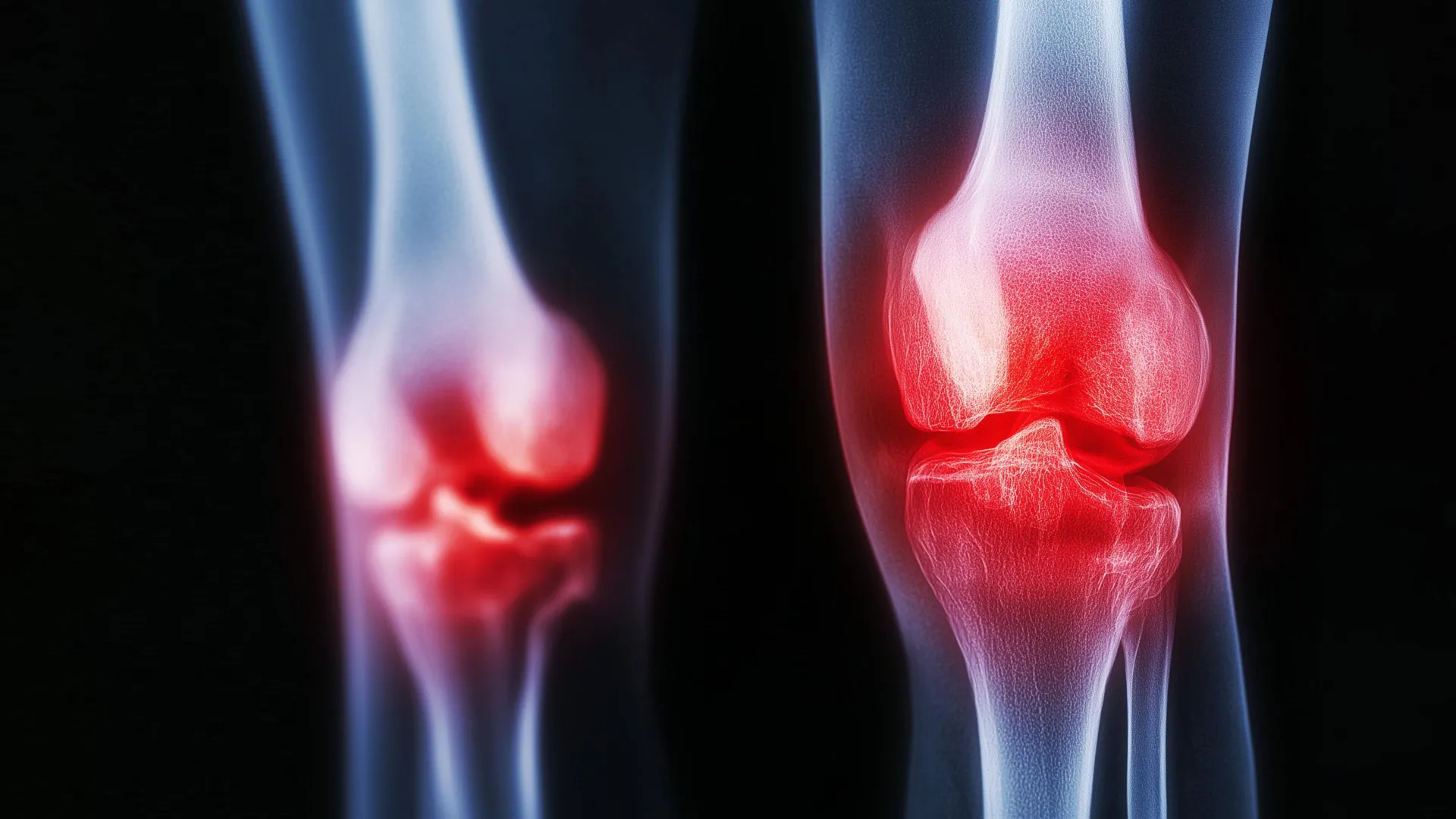
A minimally invasive procedure that targets abnormal blood vessels in the knee could provide lasting relief for people struggling with osteoarthritis, offering a potential alternative to joint replacement surgery.
In a study involving 194 patients, researchers found that a treatment using tiny particles that dissolve within hours was associated with substantial reductions in knee pain and improvements in mobility. The benefits persisted for at least 12 months, with 80% of patients assessed at the one-year follow-up reporting clinically meaningful pain relief.
The approach, known as genicular artery embolization, aims to interrupt the inflammation and abnormal blood vessel growth that contribute to chronic knee pain. Rather than replacing the damaged joint, doctors use a thin catheter to deliver microscopic particles directly into specific blood vessels.
The findings, published in the journal Radiology, suggest that this technique could provide another option for patients who have exhausted conventional treatments but cannot or do not want to undergo knee replacement surgery.
Why Knee Arthritis Is So Difficult To Treat
Osteoarthritis is the world’s most common form of arthritis and a major cause of disability. According to the World Health Organization, knee osteoarthritis affects more than 365 million adults worldwide.
The condition develops as cartilage, the protective tissue that cushions the ends of bones, gradually deteriorates. But osteoarthritis involves more than cartilage damage. Inflammation within the joint, changes in surrounding tissues, and increased sensitivity of pain signaling nerves can all contribute to persistent discomfort.
For many people, the consequences extend far beyond occasional knee pain. Everyday activities such as walking, climbing stairs, exercising, or standing for extended periods can become increasingly difficult.
Treatments typically begin with physical therapy, medication, and injections into the affected joint. When these approaches stop providing adequate relief, knee replacement surgery may eventually be considered. However, surgery is not appropriate or desirable for everyone.
“For many patients with knee osteoarthritis, there is a real treatment gap today,” said Florian Nima Fleckenstein, M.D., deputy head of Interventional Radiology Campus Mitte, Charité — Universitätsmedizin Berlin. “Conservative measures such as intra-articular injections no longer provide sufficient relief, but joint replacement is not an option for medical or personal reasons.”
A Different Way To Fight Knee Arthritis Pain
The treatment being investigated, genicular artery embolization (GAE), approaches knee arthritis from an unusual direction. Instead of focusing directly on damaged cartilage, it targets the abnormal blood vessels that develop around an inflamed joint.
These vessels can form within and around the synovium, a thin membrane lining the inside of the joint. As the vessels multiply, they can contribute to inflammation and encourage the growth of sensory nerves involved in transmitting pain.
GAE is designed to interrupt this process by reducing blood flow through the abnormal vessels while preserving the knee’s normal circulation.
During the procedure, an interventional radiologist inserts a thin catheter into an artery and carefully guides it toward the affected blood vessels. Tiny particles are then injected to block selected vessels, with the goal of reducing inflammation and pain.
The technique is called superselective embolization because doctors target specific small arteries rather than blocking circulation throughout the joint. It does not require an open surgical incision or replacement of the knee.
Researchers have previously investigated both temporary blocking agents and permanent microscopic particles. Each approach has potential drawbacks, including differences in how precisely the particles can be delivered and how long they remain inside the blood vessels.
For this study, the team examined rapidly resorbable, gelatin-based microspheres. These precisely sized, spherical particles are engineered to dissolve within hours, potentially combining the advantages of temporary agents with the controlled delivery of permanent microspheres.
“GAE is a whole new treatment regimen that targets abnormal hypervascularity around the joint and, in turn, modulates the pathological neurovascular environment,” Dr. Fleckenstein said.
Hypervascularity refers to an unusually high concentration of blood vessels. The pathological neurovascular environment describes the abnormal interactions between those vessels and pain signaling nerves in the affected tissue.
“By reducing both inflammation and pain, GAE with resorbable microspheres may be the first procedure that alters the course of the disease, slowing its progression.”
Whether the procedure can actually slow osteoarthritis progression remains an open question. Although reducing inflammation could theoretically influence the disease, the study did not demonstrate that GAE prevents cartilage deterioration or reverses existing joint damage.
Nearly 200 Patients Underwent the Procedure
To evaluate the approach, researchers conducted a prospective single-center study involving 194 patients with osteoarthritis-related knee pain. The participants included 114 women and 80 men, with a median age of 69 years and a median body mass index of 28.4.
All had continued to experience symptoms despite at least three months of conventional care, including physical therapy, anti-inflammatory medications, and injections into the knee.
“We believe these results carry real weight because they come from real-world data,” Dr. Fleckenstein said. “With this broad, inclusive study design, our participants are exactly the patients that physicians encounter every day in their practices.”
The procedures took place between July and November 2024. Forty-five participants (23%) had osteoarthritis affecting both knees and received two separate treatments, with the second performed within four weeks of the first.
Altogether, the researchers carried out 239 GAE procedures.
Doctors used real-time X-ray imaging, known as fluoroscopy, to guide the catheter and deliver the particles to the targeted arteries. All 239 procedures were technically successful, meaning the intended blood vessels were successfully treated.
The safety findings were also encouraging. No moderate or severe adverse events were recorded, and mild, temporary complications occurred in 6.7% of procedures.
These included brief skin discoloration near the treated area and one superficial collection of blood near the catheter insertion site. All resolved without lasting complications.
Knee Arthritis Pain Dropped and Stayed Lower for a Year
The researchers monitored pain, movement, and quality of life before treatment and at several intervals afterward. Assessments were conducted at six weeks, three months, six months, and 12 months. An orthopedic surgeon also examined patients in person at the six-month follow-up.
Participant retention remained relatively high throughout the study. Follow-up rates were 94% at six weeks (183/194), 89% at three months (172/194), 89% at six months (171/194), and 79% at 12 months (154/194).
The most striking finding was the sustained reduction in knee pain.
Using the Numeric Rating Scale (a 0-to-10 measure of pain intensity), median pain scores fell from 7 before treatment to 4 after six weeks. By six months, the median score had declined to 3, and it remained at that level at the 12-month follow-up.
That represents a reduction of more than half from the original median pain score, with benefits that were still apparent a full year after treatment.
“In our cohort, we saw a significant drop in pain and a significant increase in function, including sports and recreation and daily activity,” Dr. Fleckenstein said. “Most importantly, their quality of life significantly increased.”
Patients Also Reported Better Mobility and Quality of Life
The improvements extended beyond pain reduction. Researchers used the Knee Injury and Osteoarthritis Outcome Score, a standardized questionnaire that evaluates how knee problems affect symptoms, mobility, recreation, and everyday life.
Across all five areas assessed, patients reported meaningful progress during the year following treatment.
Median scores for daily activities increased from 53 to 71.5, suggesting that routine movements such as walking and climbing stairs became easier. Sports and recreation scores climbed from 15 to 36, indicating improvements in more physically demanding activities.
Scores measuring osteoarthritis symptoms rose from 51 to 68, while the pain category improved from 44 to 65 (where 0 indicates extreme knee pain and 100 indicates no pain at all).
Quality of life scores also increased substantially, rising from 19 before treatment to 40 after 12 months.
To determine whether these changes were large enough to matter to patients, the researchers applied established thresholds for clinically meaningful improvement.
Previous studies have identified a reduction of at least 2.0 points on the Numeric Rating Scale and an increase of at least 10 points in the Knee Injury and Osteoarthritis Outcome Score categories as meaningful improvements.
These thresholds are known as the minimum clinically important difference. In simple terms, they distinguish changes that are likely to be noticeable in daily life from smaller statistical differences that may have little practical significance.
At 12 months, 80% of participants who completed the pain assessment exceeded the clinically meaningful improvement threshold.
“Our study demonstrates that GAE using rapidly resorbable gelatin-based microspheres is a safe, minimally invasive therapy that provides meaningful pain relief and functional improvement in participants with osteoarthritis-related knee symptoms for at least 12 months,” Dr. Fleckenstein said. “By embolizing the pathological vessels, we’re able to normalize the vessel structure — and, in turn, the neuronal structure of the knee.”
What Other Studies Reveal About Knee Artery Embolization
The results add to a growing body of evidence investigating whether blocking abnormal knee blood vessels can offer sustained relief from osteoarthritis.
A randomized study published in Clinical Radiology in 2026 provided encouraging findings. Researchers compared GAE combined with standard care against standard care alone in 50 patients. After one year, pain scores had improved by 72.7% in the embolization group, compared with 24.2% in the standard care group. The treated patients also reported better knee function.
However, that study used polyvinyl alcohol particles rather than the dissolving gelatin particles examined by Fleckenstein’s team. It also did not include a sham procedure, making it difficult to separate the treatment’s physical effects from patients’ expectations.
Other research has raised important questions about how much of the improvement is caused by embolization itself.
A randomized, sham-controlled study published in European Radiology in April 2026 followed 58 patients for 12 months. Both the GAE and sham treatment groups experienced sustained reductions in pain, but researchers found no statistically significant difference between them. MRI examinations also failed to identify a significant reduction in joint inflammation attributable to embolization.
Similarly, an analysis appearing in the September 2026 issue of the European Journal of Radiology examined 22 studies involving 633 patients. Although pain scores often improved substantially after treatment, the researchers found no statistically significant advantage over sham procedures when results from three randomized trials were combined.
A separate June 2026 analysis of 45 studies involving 2,205 patients also documented improvements in pain and function, but judged the overall certainty of the evidence to be low or very low.
Together, these findings suggest that GAE is associated with promising improvements, particularly in observational studies, but more rigorous trials are needed to establish how much benefit comes directly from blocking the blood vessels.
Could This Treatment Help Patients Avoid Knee Replacement?
Despite the remaining uncertainties, researchers and medical specialists are increasingly exploring GAE as a possible option for patients who have limited alternatives.
In a 2026 position statement, the Society of Interventional Radiology supported offering the procedure to appropriately selected patients whose symptoms persist despite conservative treatment, particularly those who cannot undergo or wish to delay knee replacement surgery.
The society also emphasized the importance of specialist training, careful patient selection, and continued clinical trials to establish the treatment’s effectiveness and long-term safety.
The study led by Fleckenstein provides particularly valuable information about rapidly resorbable gelatin microspheres. With nearly 200 participants, it represented the largest published clinical investigation of this specific approach at the time.
Still, because the study did not include an untreated or sham treatment comparison group, it cannot establish how much of the observed improvement resulted directly from the procedure. The researchers also did not evaluate whether the treatment slows cartilage loss or prevents patients from eventually needing joint replacement.
Longer follow-up and larger controlled trials will be essential to determine how durable the benefits are, which patients respond best, and whether dissolving particles offer advantages over other embolization materials.
For patients whose knee arthritis continues to interfere with everyday life despite medication, therapy, and injections, the approach nevertheless represents an increasingly studied possibility.
“This lets us speak about safety and efficacy with real confidence,” Dr. Fleckenstein said. “For the right patient, it can mean lasting relief from a single, minimally invasive procedure — a meaningful new option between injections and joint replacement.”
Stephen Gilbert, 74, was born with unilateral microtia, a rare condition in which the external ear is underdeveloped or missing on one side.

Britain will double down on its support for Ukraine despite Donald Trump calling for Volodymyr Zelenskyy to be replaced as its president.
Andy Burnham said that the UK is ready to go “further and faster” in its backing for Kyiv.
That will include £45 million-worth of surface-to-air missiles and urging other countries to join the UK in banning Russian liquefied natural gas (LNG) exports.
Advertisement
On Wednesday, the PM will welcome Zelenskyy to Downing Street for the first time time since he replaced Keir Starmer in July.
The meeting takes place in the wake of Trump agreeing a deal to buy Russian diesel in a move which will help to boost Vladimir Putin’s warchest.
He then followed that up by attacking Zelenskyy and demanding that he be removed from office.
Burnham’s invitation for the Ukrainian president to visit No.10, made in a phone call between the pair on Saturday, will be seen as a direct riposte to Trump.
Advertisement
The PM said: “Our rock-solid support to Ukraine is vital for keeping us safe here in the UK and ensuring those on the frontlines have the equipment they need to push back Russia.
“My message to the Ukrainian people could not be clearer, we are with you for as long as it takes, and we will go further and faster in our support to back your courageous fight for peace in Europe.
“It is not just the right thing to do, but it’s the necessary thing to do. Russia’s aggression cannot be allowed to succeed on our continent.”
Advertisement
Chancellor John Healey said: “Conflict in the Middle East and in Europe is hitting people across the world.
“As the full-scale invasion of Ukraine by Putin continues, our commitment to the Ukrainian people is unshakeable.
“I urge partners to back the ban on Russian LNG, like we have done in the UK, to curtail the war chest funding Putin so desperately wants.”
Advertisement
Listen to Commons People, the podcast that makes politics easy. Every week, Kevin Schofield and Kate Nicholson unpack the week’s biggest stories to keep you informed. Join us for straightforward analysis of what’s going on at Westminster.


The chief of MI5 has urged Andy Burnham to stop talking about Russia’s attempted interference in the Brexit referendum.
Head of the security services Ken McCallum spoke out just days after the prime minister raised the issue on the Rest Is Politics podcast.
Advertisement
In remarks that led to a fresh political row, the PM said: “I asked the question coming to Downing Street, was there interference in the 2016 referendum from Russia?
“And I’ve had the clear answer that yes, there was.”
Just a day later, 10 Downing Street was forced to admit that the Russian interference had made no difference to the Leave vote.
Reform UK’s Nigel Farage called Burnham a “liar” over the remarks while the Tories’s shadow communities secretary Katie Lam accused the PM of peddling “conspiracy theories”.
Advertisement
McCallum did confirm that Russia had tried to influence the outcome of the referendum – but said raising the issue a decade later was counter-productive.
In his annual speech outlining the security threats facing the UK, he said Moscow had spread Eurosceptic content via Kremlin-backed media outlets RT and Sputnik, and by using social media troll accounts.
However, the spy chief said there was a significant difference between “what may have been attempted and what actually resulted”.
Advertisement
He said that any Russian impact on the campaign would have been marginal at best – and expressed concern about letting this debate rage once again.
He said: “There is a really important difference between interference attempted and outcome swayed.
“It’s quite important to focus on the difference between what may have been attempted and what actually resulted.”
“It is up to us how far we allow our adversaries to divide us,” he continued.
“I’m a little bit worried that if we all stay in this debate for another few days, the Russian trolls who didn’t appear to do all that much at various points over the years, they’ll be delighted they are front page news once again despite the comparative unimpressed-ness of what they do at all points along the journey.
Advertisement
“I’m a little bit interested that we don’t play into our adversaries’ hands by making these trolls look ten feet tall. That is not our experience here.”
McCallum also described Russia as “aggressor number one as Putin’s Kremlin continues to lash out at the UK and its allies”.
He said Moscow was attempting to intimidate Britain for its support over Ukraine.
Listen to Commons People, the podcast that makes politics easy. Every week, Kevin Schofield and Kate Nicholson unpack the week’s biggest stories to keep you informed. Join us for straightforward analysis of what’s going on at Westminster.
Advertisement

Donald Trump drew fierce condemnation over his response to a protester being physically attacked by a member of the crowd during his speech at a midterm election rally on Monday.
The protester, a woman wearing a shirt bearing the slogan “Release the Epstein Files,” was shoved and hit in the face by an apparent Trump supporter, who also tried to force her to the ground, as the president watched the incident unfold from the stage.
Trump just smiled and accused the woman, whom he repeatedly referred to as a man, of being a “paid protester.”
Advertisement
As the crowd chanted “USA, USA,” Trump said: “He’s a paid protester. They’re all paid. They get paid by the lefties — in order to destroy our country. They’re scum.”
Trump, who was speaking in Youngstown, Ohio, did not offer any evidence to back up his claim.
“But he’s going back home to mom. He’s going back home to mom,” the president taunted, as members of law enforcement escorted the protester away.
Advertisement
Trump then turned to mock her appearance.
“Look at him, look at him, terrible. Don’t we love law enforcement? Oh, he’s got to go on a diet. He’s a fat guy,” he continued, later adding: “Gotta go on a diet fast. We all do.”
Video appeared to show the man who struck the protester was allowed to remain inside the venue and high-fived other audience members, Fox News reported.
With the crowd cheering and again chanting “USA,” Trump continued: “You know, they are paid protesters; that’s a very low-class protester. What he doesn’t know is that his mother and father voted for me. They’re angry as hell.”
Advertisement

via Associated Press
“That’s our boy, what’s he doing there?” Trump mimicked the parents as saying, drawing more cheers from the crowd, before predicting, “He’s gonna get home and he’s gonna get smacked.”
Trump then returned to his speech.
It’s not the first time Trump has been slammed for his response to protesters at his rallies.
In 2015, he suggested that a Black Lives Matter protester who was shoved and punched “should have been roughed up.”
Advertisement
The following year, the then-presidential candidate told supporters to “knock the crap out of” anyone they saw getting ready to throw a tomato.
At another rally, as a protester was being removed, Trump said: “I’d like to punch him in the face.”
Advertisement
Advertisement



A massive galaxy cluster dating back to an era when such enormous structures were only beginning to take shape is challenging scientists’ understanding of how the universe evolved. New observations from NASA’s James Webb Space Telescope (JWST) reveal that the cluster contains an unusually dense concentration of matter, suggesting that some cosmic structures may have developed much faster than current models predict.
The galaxy cluster, known as XLSSC 122, has become the focus of three recent studies led by researchers at IPAC, Caltech’s science and data center for astrophysics and planetary science. Their findings establish XLSSC 122 as the most distant galaxy cluster known to exhibit strong gravitational lensing, a phenomenon that allows astronomers to measure the mass of otherwise invisible matter. The research was presented at a press conference on June 17, 2026, during the 248th meeting of the American Astronomical Society.
Located approximately 10.4 billion light-years from Earth, XLSSC 122 stood out to astronomers because of its surprising maturity. Although it existed during a period when galaxy clusters were still assembling, it already displayed the size and organized structure typically associated with clusters in the modern universe.
Webb has now uncovered another remarkable feature. XLSSC 122 happens to lie directly in front of one or more galaxies that are even farther away. The cluster’s powerful gravity bends and distorts the light traveling from those background galaxies, creating a rare effect called strong gravitational lensing. This fortunate alignment has given scientists an exceptionally precise way to measure how mass is distributed throughout the cluster.
“When we got those first images back from JWST, we said, ‘wow, look at this, there’s strong lensing coming from this cluster!'” said Kyle Finner, a staff scientist at IPAC and lead author of the first paper examining the cluster. “XLSSC 122 has now set the record for the most distant galaxy cluster displaying strong lensing, which is a valuable tool for astronomers.”
An Ancient Galaxy Cluster Challenges Cosmic Predictions
The newly detected gravitational lensing has allowed researchers to examine the distribution of mass in an ancient galaxy cluster in greater detail than ever before. XLSSC 122 dates to a period known as “cosmic noon,” roughly 10 billion years ago, when the universe was experiencing its most intense era of star formation.
During this time, galaxies were producing stars at rates up to 100 times higher than those observed in the present-day universe. Galaxy clusters were also becoming increasingly common as smaller systems gradually combined into larger structures.
Yet XLSSC 122 appears to have developed in an unexpected way. The new measurements show that a remarkably large amount of its mass is packed into its central region. According to standard cosmological models, the growth of massive structures should have been more gradual, making such a concentrated cluster particularly surprising at this early stage of cosmic history.
“XLSSC 122 is one of the first clusters we know of that formed in the universe, and it has a mass concentration that doesn’t agree with our cosmological model predictions,” said Finner.
To investigate the mystery further, Finner and his collaborators conducted two additional JWST studies, first authored by Zachary Scofield and Hyungjin Joo at Yonsei University. Together, the three papers provide a much more complete picture of this unusual cluster and offer new insights into galaxy cluster formation during cosmic noon.
James Webb Reveals Hidden Dark Matter
Astronomers originally identified XLSSC 122 in 2014 through an X-ray survey carried out by the European Space Agency’s XMM-Newton spacecraft. Later observations with the Hubble Space Telescope helped establish its distance of approximately 10.4 billion light-years and confirmed that the cluster appeared unusually developed for its age.
However, Hubble did not reveal clear evidence of strong gravitational lensing. That changed when JWST captured distinctive curved arcs of light surrounding the cluster’s center, providing the first definitive signs of this phenomenon in XLSSC 122.
“Before JWST, we couldn’t do this level of science in the early, distant universe,” said Finner.
The gravitational distortions are caused primarily by something astronomers cannot directly observe: dark matter.
Although XLSSC 122 contains visible stars and glowing gas, these familiar forms of matter account for only a small fraction of the gravitational lensing effect. Most of the distortion comes from dark matter, an invisible substance that has not been directly detected through light but whose gravitational influence is supported by extensive astronomical evidence.
Scientists estimate that dark matter is approximately five times more abundant than ordinary matter, which makes up stars, planets, and everything around us. Its gravity helps hold galaxies together and shapes the universe’s enormous network of galaxy groups, clusters, and filaments.
Because dark matter plays such an important role in cosmic structure, determining how it was distributed billions of years ago offers a powerful way to test theories describing the universe’s development since the Big Bang approximately 13.8 billion years ago.
“Strong lensing is a way to measure the dark matter without actually seeing the dark matter,” said Finner. “It gives us a sensitive probe of our cosmological models.”
A Wider View Reveals a Galaxy Cluster Merger
In their second paper, the researchers investigated XLSSC 122 using another form of gravitational lensing known as weak lensing.
Strong gravitational lensing produces obvious distortions, including the striking arcs captured by JWST. Weak lensing, by comparison, causes much smaller changes in the apparent shapes of distant galaxies. These subtle effects are difficult to identify individually, so astronomers rely on statistical methods to detect them.
The two techniques provide complementary information. Strong lensing is especially useful for measuring the mass concentrated near a cluster’s center, while weak lensing can reveal how matter is distributed across its outer regions.
“Weak gravitational lensing can constrain mass much further out, so you can get a better picture of the surrounding cluster area,” said Finner.
By combining these measurements with X-ray and radio observations from other telescopes, the scientists determined that XLSSC 122 is still undergoing a merger. Its galaxies are continuing to come together as the larger cluster takes shape.
The broader analysis also reinforced the earlier finding that an unusually large amount of mass is concentrated near the cluster’s center.
Ancient Starlight Offers New Clues to Dark Matter
The team’s third and most recent paper revealed another important feature of XLSSC 122: faint light produced by stars that are no longer bound to individual galaxies.
Known as intracluster light, this diffuse glow comes from stars scattered into the spaces between galaxies. Webb’s observations represent the earliest known detection of intracluster light, providing another way to examine the development of galaxy clusters in the distant universe.
The widespread distribution of this light supports the conclusion that XLSSC 122 is undergoing a merger. As galaxies interact and collide, some stars are pulled away from their original galaxies and spread throughout the cluster. In XLSSC 122, many of these displaced stars appear not to have settled into its dense central region.
The researchers also uncovered an intriguing connection between these wandering stars and dark matter.
Near the cluster’s center, the shape of the intracluster light closely matches the distribution of dark matter inferred from strong gravitational lensing. This suggests that the faint glow of stars between galaxies could potentially serve as a visible indicator of where invisible dark matter is concentrated.
If astronomers observe the same relationship in other clusters, particularly those from the early universe, intracluster light could become a valuable new tool for mapping dark matter across cosmic history.
“In this cluster, the intracluster light essentially traces the dark matter,” said Finner. “That light tells us that the cluster is in a merging state.”
Could More Ancient Galaxy Clusters Challenge Cosmology?
The next goal for Finner and his colleagues is to identify and investigate dozens of additional galaxy clusters from similarly early periods in the universe’s history.
Finding these distant objects requires a different approach from studying them in detail. Although JWST is exceptionally powerful, its relatively narrow field of view makes it better suited to examining selected targets than searching enormous areas of the sky.
Instead, astronomers must first identify promising candidates through wide-area X-ray and radio surveys, similar to the observations that originally revealed XLSSC 122.
One promising technique relies on the Sunyaev-Zel’dovich effect, which occurs when energetic particles inside galaxy clusters scatter radiation from the cosmic microwave background, the faint afterglow of the Big Bang.
This interaction can create distinctive regions that appear as “holes” in observations of the cosmic microwave background. By searching for these signatures, astronomers can locate galaxy clusters that might otherwise be difficult to detect.
Finding more objects like XLSSC 122 could have major implications for cosmology. If other ancient clusters also contain unexpectedly concentrated dark matter and display unusually advanced development, scientists may need to revise some of their basic assumptions about how quickly large cosmic structures formed.
For now, XLSSC 122 provides an important test of existing models, but a larger sample will be necessary to determine whether its unusual properties are rare or part of a broader pattern in the early universe.
“It’s still early in the JWST era,” said Finner, “and if we can start to get data on tens or hundreds of these types of objects at this stage in the universe, then we can really start putting our cosmological models to the test.”
Kelly O’Shea says she’s “lost faith” in women’s health after paying £20k for treatment she needed.
