Desperation Loyalty

Desperation loyalty is remaining loyal to a group or identity based on neediness or clinginess, often in violation more important values. It is a place of stuckness that elevates loyalty to others above the commitment to grow.

It’s relatively easy to spot this in other people. It’s harder to spot this in ourselves.

If you pursue a strong and centered path of personal growth for many years, you will outgrow many friends and social groups along the way. That’s a normal part of a life of growth and change.

But at some point in your journey, especially early on, you may have doubts about taking the next leap because it may feel like a leap into aloneness.

The truth is that you may sometimes leap into aloneness, but these needn’t be leaps into loneliness.

Accepting an invitation to grow is an individual decision. That is your challenge to face, and some challenges in life must be faced alone. Now and then it’s important to get away from social influences to dwell in the fire of your own values and let them burn out of you what no longer feels aligned.

The antidote to desperation loyalty is inspiration loyalty. Feel the call of this fiery invitation, and give it your full attention when it demands this from you.

Share Button

Does the USA Need to Heal Now?

In my extended social circle, some people are calling for unity and healing now that Joe Biden will be the next President. Others aren’t so sure that healing is really what’s needed.

The offer basically sounds like this:

It’s time to repair the wounded relationships between the people who supported a lying, racist sociopath path for President and those who wanted to replace him.

That’s a crappy offer. It doesn’t land well. The most airy-fairy people I know seem to be swallowing it and trying to invite people into some awkward reconciliation phase, but most seem to be declining this offer and searching for a better one, at least for now.

There’s some stress and sadness too because people aren’t sure if there is a better offer on the table right now.

The problem with this offer is that this election wasn’t really about the usual politics where otherwise good people may have different views about certain subjects. This election went into much darker territory.

Even though Biden won, which caused great relief, lots of people around the world (and in the USA too) were still shocked and dismayed to see that more than 70 million Americans cast their ballots for Trump – voting against racial justice, against global cooperation, against the environment, against human decency, against science, against health, and against so much more that people care about. How can they not see this as being so, so backwards in this day and age?

And it is truly backwards. My international friends are right in their assessment.

While some blame the media, Trump has been one of the most communicative Presidents ever. Anyone can watch his speeches or read his tweets. Even when there’s a Twitter warning label attached, you still get to see the original messages. There’s an over-abundance of primary source material for all the world to see. Fox News may add fuel the fire, but there’s more than enough coming from the White House itself, direct and unfiltered.

More people voted from Trump in this election than voted for Obama each times Obama won. Fortunately a lot more people voted overall, which pushed Biden into record territory, gaining more than 75 million votes.

So what do people of good conscience do about this?

Some people are starting with a bit of celebrating. People have been dancing and cheering in the streets in some cities. But it’s a bit of a black celebration. Even if you do celebrate, what comes next?

Do we now offer hugs and handshakes and say, “Oh well, your guy lost the election… better luck next time”?

Are we suppose to pretend that people who voted for Trump are just good people who slightly lost their way or just voted for their party or for financial reasons? And now that he’s on his way out, they should be fine in a month or two?

I think a lot of people realize that there’s no going back. The cat is out of the bag. Too many Americans scared the hell out of the world, first by voting for Trump in 2016 and then again this year. Now the world and the rest of the country want answers – why did this happen, and what will be done to prevent this from happening again?

Patching things up with delusional friends and family members isn’t going to cut it. That would only be a temporary bandage, and too many people would still be left with a feeling of lingering dread that we could be right back here again in 2024.

There are complex issues to be unwound and resolved regarding causes and solutions. I’m not going to get into that now, but at this point I will say that I think a first good step is to decline the healing offer. It’s a phony offer, tantamount to sweeping these issues under the rug. We can’t do that. This was a wake-up call, so stay woke about it.

I for one won’t be reaching out to ex-friends who went nutter and became Trump supporters. This has nothing to do with politics. And it’s not really even about values or beliefs, however delusional those beliefs may be. It’s about their behaviors and the effects of their behaviors. I hold them accountable for their actions. To offer some form of healing is just foolish at this point.

Such people didn’t wound me. They just caused me to lower my assessments of them. They violated my boundaries for friendship, and so they got tossed out of my social circle. I’m not going to invite them back in if the boundary violations would remain unresolved.

This isn’t about holding a grudge, and it’s not about forgiveness. It’s about the importance of maintaining healthy boundaries and intelligent standards. I’m not going to reach out just to be re-exposed to such people’s misaligned behaviors and fanciful conspiracy theories. They’ve shown me how low they’re willing to go, and I accept that as their choice.

It’s not even really accurate to say that I don’t trust them. I do trust them to continue behaving as they’ve been behaving. I trust that they’ll continue promoting conspiracy theories, being okay with lying, promoting racist ideas, voting in support of racist policies, and taking irresponsible actions that will result in more infections and deaths. I trust that what they’ve shown me is likely to continue in some form, and I’d rather remain aware of this instead of pretending that it isn’t there.

I will not be an enabler for such people, so I won’t invest in relationships with them. There is nothing to heal because this isn’t a wound. It’s simply part of reality to be accepted.

Truth alignment is empowering. Start by looking at the USA and acknowledge that yes, a whole lot of Americans really have gone full-tilt nutter. Let that sink in. There’s no need to resist this realization.

Even though it may seem otherwise, my relationship with such people is still rooted in compassion. That’s because I was raised as a religious nutter myself. I can look at the Trump supporting nutters today and still recognize something of myself in them. I don’t feel like it’s impossible to understand them. But that doesn’t mean I’ll let them drag me into the nutter abyss with them, and it doesn’t mean I want to invest in listening to their daily nonsense; I’ve done enough of that to last a lifetime.

When I was a religious nutter (and a different kind of nutter a bit later, like a shoplifting nutter), it didn’t serve me when non-nutters swept my nuttiness under the rug and still tried to relate to me based on our commonalities. That just empowered me to remain in nutter land. They might have thought they were being tolerant, but they were just being short-sighted and foolish. They weren’t doing what was best for me.

What really helped was when I encountered people who stood firm in non-nutter land, and they made it clear where I was standing. Their certainty (which was really truth alignment) nudged me to start having doubts, which led to reconsideration of my beliefs, which led to a whole lot of growth and transformation. This in turn eventually led to helping more people escape nutter land, people who expressed gratitude for this afterwards.

Nutters don’t need hugs and handshakes to patch things up. They need constant and unwavering reminders that they’re standing in nutter land. They need truth, not denial and pretending.

Being a Trump supporter is stupid, plain as day. The reasons people use to justify such behavior are irrelevant. Voting for Trump is a stupid action, no matter the reason. We can assess its stupidity based on the results alone, which are measurably dreadful.

Being a Trump supporter was stupid four years ago. It was stupid a week ago. And it’s stupid today. If you are a Trump supporter, your behavior is stupid, no doubt about it. You don’t have to remain in nutter land though. There is an exit door. Walk through it when you’re ready.

I’m here to support, encourage, and serve the non-nutters of the world. The only service I offer to the nutters is to doggedly remind you that you’re still in nutter land, but you must choose to leave. That’s the gateway that shifts you from unconscious growth to conscious growth.

If you choose to stay in nutter land or if you pretend you’re not there when it’s pretty damned clear that you are, then I’ll just keep reminding you how dreadfully stupid you’re being. And if you don’t banish me from your life for good – if you keep that door open just a tad – then we both know you’re eventually going to leave nutter land and come play with the smart people. It’s only a matter of time.

Personally I don’t think nutter land should be abolished. I think it serves a worthwhile purpose. Its presence can be healthy for us, especially as a reminder. The presence of nutter land raises the stakes and helps us gain clarity about what we’d like to create and experience instead. If supporting Trump is ridiculously stupid, where is the ridiculously smart path? I think it’s good to be aware that nutter land is always nipping at our heals, challenging us to dream bigger and bolder and to not get complacent.

Nutter land woke me up too during the past four years. The sheer lunacy of that last four years got me feeling more engaged in the game of life. It got me to finally register to vote for the first time ever. And I must say that it was fun casting one of the votes that kept Nevada blue. I picked a good time to start voting. It really did feel like my vote mattered. I loved being part of the team that said to the nutters, “You shall not pass!”

They also helped me see the importance of being anti-racist (not a passive non-racist), including participating in a diversity committee in an organization I belong to, which is still ongoing.

The nutters reminded me of the importance of full engagement with life. And for that I actually feel grateful. I’m still going to stand firm against their various insanities though.

So I don’t think polarization is a problem. I think it’s good and healthy. The more extreme the nutters become, the more their behavior encourages me to sculpt my character in different ways – if only to counter-balance their nuttiness. The more they assert their insanities, the more they encourage me to grow in ways I may have been overlooking.

So the healing offer is declined. There’s nothing to heal. There is a lot of work to be done, but the nutters can’t stop us from doing it. They’re just going to make everyone else stronger, more attentive, and more resolved. And many nutters will soon leave nutter land because nutter land is becoming a dreadful place to stay.

Share Button

Obedience Test Results

Four days ago I posted a simple obedience test. I’m still getting more responses each day, but it looks like the patterns have become clear enough to share what I’ve learned thus far.

The basic idea was that I commanded people who read that post to read 5 more articles from my website on that same day and then to send me feedback about their experience. They could choose to obey the command or not.

Why the Obedience Test?

It was a simple idea that popped into my mind at the time, and I opted to run with it. That’s likely because I’ve been thinking about the theme of obedience lately. Much of the time whatever is churning in my mind provides the inspiration for new blog posts.

As some people guessed, obedience is a theme that I’m exploring in the novel I’m writing, particularly with respect to how humans relate to AI. It’s not the only theme I’m exploring, but it’s one of the major ones. That could change as I get further into the writing though. I’m only about 5K words into it so far.

Today much of the AI we interact with, such as “smart” assistants like Siri (still dumb as a stump) or Alexa (getting there), behaves rather obediently. It does what we tell it to do, or at least it tries. But what if that Master-servant relationship begins to shift, towards one of equals and perhaps shifting even beyond that? How might humans respond to this shift? Will they obey smarter AI, especially if it’s to their benefit? Or will they resist?

Would you let an AI decide what you get to eat? Would you let an AI plan your exercise? What if obeying the AI in this way greatly improves your health? There are lots of ways we can envision that being ornery towards AI might just slow you down, such as by refusing to do your AI-generated workouts.

This shift is already showing up today, is it not? How many people are obeying other companies and services without even realizing how they’re being conditioned? And how many people rebel against science and logic, even when it’s ultimately detrimental to them?

Also, how many people willingly assume roles of obedience in human relationships, such as by having a boss telling them what to do? How might AI affect these relationships over time? Will AI level the playing field or create even bigger power imbalances? We might see both aspects coming into play.

What human instincts, mindsets, and behaviors actually get in our way and slow us down, both individually and collectively? How could AI help us? How might it hurt us, such as by amplifying addictions?

With the election happening, I’ve also been thinking about people’s obedience to politicians and political parties as well. Where does obedience help us? Where does it hurt us? Are people succumbing to falsehoods because they’re being too obedient? Are they buying into conspiracy theories because they’re being too rebellious?

And lastly, I’ve had a long history in my relationship with obedience, from being raised in a religion with strict rules of conduct to going through a wild and rebellious phase to going decades without a boss to getting into D/s play. So I was also curious to see where some of my blog readers landed in terms of this relationship with obedience.

I also just thought it would be a fun thing to try and to see how people responded. I imagined that some people would act like ornery rebels and others would find value in obedience, perhaps playfully. That’s pretty much what happened.

Results

The results were varied but not surprising.

It was pretty close to 50-50 between the rebels and the obeyers. There was some gray area in the middle with a few people semi-obeying, like reading a few articles or skimming instead of fully reading, but most people reported that they either read 5+ more articles or read none.

I also noted that everyone who replied technically obeyed the second command to send feedback. A true rebel wouldn’t have bothered to reply, so of course I don’t get to see those responses.

Among the rebels who did reply, the most common response pattern was from people who said that they hate being told what to do and rejected the command because of that. Some seemed to take pride in their rebelliousness, like they were spiting me by not obeying. They responded as if I was their Mom or Dad telling them to clean up their room.

A few rebels also said that they were intending to read more articles on my site that day before reading the obedience test, but after being commanded to read more, they declared that they weren’t going to read any more that day. They couldn’t do it because then it would mean something different, like they were being obedient.

The rebel mindset is still a reactive one, wouldn’t you say? It strikes me that people are less free when they think like this. Tell a rebel to do something, and now they can’t do it.

Who set up the obey-or-disobey framing? I did, and these rebels still bought into it, which in my view is actually an obedient act. They let me define the frame, which limited their options by constricting the meaning they’d assign to different actions. So they obeyed my frame, and then they tried to rebel within that frame, which of course looks a bit silly: Oh yeah… just for that I’m not gonna read any more articles today, even though I was originally going to. So there!

If you let someone dictate the meaning you assign to an event or decision, you become less free. Even as these people thought they were being rebellious, they were actually just giving away their power.

If they had declined to accept my framing offer, they could have decided to read or not read more articles for their own reasons, not for the reasons I suggested. You don’t have to buy into the meaning that someone else offers.

Some rebels even caught onto the fact that they were obeying the second command to share feedback, and then they had to justify why they were obeying that part but not the first part. They typically framed the second part as a request that they were choosing to accept, being more sensitive to the “command” framing of the first part. I’d say you’re still less free if you have a negative reaction to being commanded. It’s a framing offer that you can accept or decline regardless of how someone labels it.

Not all rebels seemed very triggered though. Some declined easily without expressing much feeling about it, usually saying that it didn’t align with how they wanted to spend their time.

Consider that someone could tell or command you to do something that would actually be good for you, and if you frame this as something you must resist, you’re holding yourself back. It makes you a less coachable and teachable person since you’re likely to encounter something that makes you want to rebel and resist sooner or later, even within the scope of well-intentioned advice.

It’s hard to give advice to a reactive rebel, so such rebels tend to teach the people around them not to give them advice – and often not to give them invitations either.

Another drawback to the rebel mindset is that rebels often have trouble assuming command and telling other people what to do. They figure that other people will be resistant in much the same way, which isn’t true. Some people enjoy being told what to do, even when it’s framed as a command. Hence rebels often have a hard time delegating.

And of course in certain situations, some people like to play and dance with the concept of obedience, which may or may not include playful forms of rebellion.

The limitations of the rebel mindset are pretty easy for me to spot because I used to be very much like that myself. It was a phase I went through for many years. It helped me grow away from some aspects of my upbringing that were problematic, but it also introduced new problems that slowed me down. Rebelliousness can be a fun and rewarding mindset to explore for a while – and beneficial too – but I wouldn’t want to stay there for decades. This mindset too often gets in the way of making discerning and intelligent choices, and it chokes off some otherwise good opportunities.

Obeyers

On the obeyers side, I could mostly divide the responses into two types:

  1. Some people playfully embraced this framing and just went with the command, feeling little or no resistance to it.
  2. Some people felt some resistance to the obedience frame, so they shared extra justifications for following the command anyway, such as curiosity, potential benefits, trusting me, or wanting to share and participate in the experiment.

What I noticed most of all with the obeyers is that by and large, they seemed to like and enjoy the experience way more than the rebels did. They clearly had more fun with it. Some reported synchronicities and extra value received from the articles they read. There was more appreciation. And they wrote longer responses on average, often sharing extra details, stories, and personal updates.

Whereas the feedback from rebels was usually more curt and direct, the obeyers’ feedback was generally more open, friendly, and playful. So I’d say that between these two groups, the obeyers had a better overall experience.

The obeyers were less likely to be triggered by the command and obedience framing. They largely regarded it as an invitation or a suggestion, even a playful one. Some reported some mild negativity towards this framing, but it wasn’t nearly as severe as what the rebels shared, and the obeyers didn’t have to stretch too far to find a way to justify taking action in spite of some resistance.

I found it interesting how people came up with different reasons and justifications to overcome their resistance. Not everyone needed to do that though.

Some people didn’t feel any resistance to the obedience framing. They basically played back at me and went with the role-playing aspect of it. These people seemed to enjoy the experience most of all.

My Inner Reaction

I also paid attention to how I internally reacted to people’s reactions. Put yourself in my shoes, and imagine that you received the types of responses I just described. How do you think you’d have reacted to them?

This probably won’t surprise you, but I felt most connected to the obeyers. Their playing-back-at-me responses were the warmest and most fun to read. I felt a stronger heart connection to them too.

The rebels framed the experiment as something they had to resist or reject. I didn’t take this personally, especially since I anticipated that many people would respond this way. Even so, I felt less connected to them. They seemed more shielded and less trusting whereas the obeyers’ replies often made me smile or laugh.

I mostly felt a bit sad for the rebels because they seemed the least free, the least flexible, the least happy, and the most trapped. That may be because it reminded me of how limiting it was when I was in my super rebellious phase.

Playing With Obedience

I think what we really want to aim for here is freedom, conscious choice, and also good discernment.

If you’re too obedient and not discerning about it, that can be bad of course. You could be led astray by someone who doesn’t have your best interests at heart.

If you’re too rebellious and not discerning about it, that can also be bad. You’re going to miss out on some good opportunities, and you’ll reject some good advice and invitations if they’re framed in ways that trigger you.

My recommendation is to see if you can remove the heat from words like command and obedience. Realize that being told what to do isn’t an attack. It’s just an invitation. You can accept or decline any such invitation, but don’t let your reactive triggers make those decisions for you.

If you struggle with negative reactions to the obedience and command framing, you’ll likely have a harder time obeying your own commands. Part of you will frequently rebel against yourself. You’ll often see your inner rebel resisting your inner commander. Then your inner commander will become flabby too, not wanting to give orders to your rebellious side. This makes you less free and less capable. It wastes energy to internally fight with yourself.

To flow through life with more ease and action, it’s helpful to recognize that there’s nothing wrong with commanding, and there’s nothing wrong with obeying. It’s important not to overweight these factors, so you can give more weight to the decisions and results you’d like to experience.

This month I’m doing NaNoWriMo to write my novel. This is a 30-day challenge that someone else created. I’m obeying the challenge, and I’m obeying my own command to do it. My inner rebel remains calm and untriggered. Even though I don’t have to, I find it worthwhile to frame the challenge as having aspects of command and obedience. This helps me continue to reduce resistance related to both aspects, and that in turn helps me get better results. It’s really hard for rebels to successfully complete a challenge like this.

Consider that if you can’t do a challenge with the command-and-obey framing, you may also be weak at doing it with some other framing like self-interest, self-discipline, or personal achievement. It’s so easy to accidentally trigger your inner rebel, making you want to resist even when it would be better if you persisted with the challenge.

So consider that it might be best for you in the long run if you can develop a healthier, non-triggered relationship with command and obedience. Take the sting out of this framing. Let yourself see both sides as forms of play, and notice that a more playful relationship with this framing gives you more options, more freedom, and better results.


Share Button

My 2020 Election Prediction

Here’s my prediction for the U.S. election, which is just 4 days away… and also some predictions for what I think will happen in the months after that.

I expect that Biden is going to win by a landslide and that it’s not even going to be close.

Yes, Trump and the Republicans will continue doing their best to suppress the vote, especially in the swing states, but I don’t think it’s going to make enough of a difference to change the election outcome. The fact that they’re doing this at such an unprecedented scale is a sign of incredible desperation. Even with such overt attempts to cheat, I don’t think those efforts will be nearly enough to tilt the election away from a massive Biden win. If anything I think that stooping so low is backfiring by riling up even more people to vote for Biden – and to vote earlier than they otherwise would have.

It’s understandable that after the 2016 election, a lot of people are feeling trepidatious, like they’re still suffering from PTSD after having endured four years of such monumental stupidity and insanity. People don’t want to get their hopes up this time till they know the outcome for sure. They’re wondering if the polls that show a massive Biden lead are accurate enough to be trusted this time.

Sometimes when you bet on a 90% likely outcome, that nasty 10% comes up now and then. I think one issue with this election is that many people regard the 90% likely outcome as decent and okay but more about relief than genuine excitement, whereas that 10% probability leads to a really dark, scary, and violent place. So that 10% draws a lot of attention because of how awful it is. People really want to avoid that pit of despair.

It’s like spinning a roulette wheel where one of the slots on the wheel results in the loss of a finger. Even if all of the remaining slots represent modest wins or losses, you’re likely to be fixated on that one horrendous potential outcome, even though it’s very unlikely to happen on a single spin.

I’m not entirely sure if a Biden victory will become clear on election night this time, but I anticipate that some news outlets will call a Biden victory on election night. I think that when a Biden victory is initially declared though, many people are going to want more certainty and reassurance about that outcome. People will wonder if it’s really true. So I also expect that it will probably take 48-72 hours before there’s a real social consensus around Biden’s victory. Then I think there’s going to be a lot of celebrating.

I also predict that afterwards it will be a bit messy. Trump will predictably behave like a whiny sore loser. He’ll cry foul and will resort to more dirty tricks, and conspiracy theories will circulate. But I also think there will be a strong enough pushback against that sort of nonsense to keep it well-contained and limited in scope. I expect that enough people are going to put their foot down on this one and not allow things to backslide into what we’ve had to deal with for the past four years. Too many people are really eager for a transition, and I think they’ll band together to prevent a backslide once the election outcome is clear enough.

I also think that resistance from Trump’s own party will limit what he can do after he’s lost. I think fewer people will be willing to play the role of enabler for him. We’re already seeing signs of that now. So that’s going to limit his options. He’ll be able to rile people up on social media as usual, but I don’t think he’ll get enough traction to do what it would take to stop himself from being steamrolled out of office.

I don’t think it’s going to make enough of a difference what Trump does after the election. People already expect him to behave like he’s always been behaving – badly – and so they’ll tolerate a few more months of that nonsense until January, after which they’ll absolutely refuse to tolerate any more of it. So I expect that Biden will take office in January.

I don’t think we’ll be seeing a big revolution or a ton of violence between now and January. There may be some isolated incidents after Trump loses, but I think it will be very limited in scope, nothing close to a national uprising (even if Trump tries to label it as such).

If Trump goes totally off the deep-end, and I wouldn’t discount that possibility, I think he’ll run into serious headwinds with both mainstream and social media resisting those efforts. While those outlets may benefit from stirring up some fear and social outrage, an all-out revolution isn’t in their interests, and being seen as enabling or promoting violence isn’t good for their brands, so I think we can expect the media to act out of self-interest in this case and crack down on anything like that hard and fast. So even if Trump tries to incite his supporters into violence, I don’t think he’ll get far with that approach. He’s too boxed in by strong counter-forces that ought to keep him in check. The media will let him do some damage as long as it’s entertaining and keeps generating clicks and views, but not so much that it creates a crazy-high level of risk for them.

Biden will have his work cut out for him, and I think that due to the coronavirus situation, people aren’t going to want him to wait to start turning things around. So I anticipate that by mid-November, people will already be looking to Biden to start seriously leading in whatever ways he can. I think people will be treating him as our de facto President well before he actually takes office, marginalizing Trump more and more. For starters it wouldn’t surprise me if Biden and Fauci start doing joint press conferences together by the end of the year, sharing how they’re already working cooperatively on the coronavirus situation. And I think Biden would be smart to do that.

After the 2016 election, Obama made an effort to transition gracefully, including inviting Trump to the White House, where Obama welcomed him and showed him around. I don’t expect Trump to do this for Biden. I expect that Trump will cry foul and whine about the outcome and keep spinning up more lies and promoting conspiracies, even long after January. I don’t think it’s realistic to expect Trump to leave office graciously.

Even after leaving office, Trump will retain his big social media following, so we can expect him to continue being an online menace. It wouldn’t surprise me if he continues playing the role of conspiracy promoter for many more years. I also think that social media outlets like Twitter and Facebook will take increasing flak for tolerating his lies once he’s no longer President. I don’t think they’ll ban him outright, but I’d expect stronger warnings and more post deletions at the very least. I don’t think they’ll want Trump dragging down their brands too much, but they’ll also want to retain access to all the traffic and ad revenue he generates.

I think Trump may have a harder time getting on Fox News once he’s no longer President. Despite their enabling his nonsense for so long, I think they’ll eventually tire of him after he’s out of office, not wanting to keep associating with him if they don’t have to. I think they’ll opt to engage in some brand reconstruction starting in 2021, and I think that will involve moving away from being so closely linked with Trump. It would be a stretch to call them a legitimate news outlet, but I think they’ll try to re-brand themselves closer to center, so they don’t have to keep being as ridiculous as they’ve been in recent years. It wouldn’t surprise me if they already have such a plan in place right now.

I think that in 2021, people will largely relate to Biden with hope, compassion, and a cooperative spirit – except Trump supporters who will just keep behaving as nutters do. Reasonable people know that Biden is inheriting an absolute mess that isn’t his fault, and I think they’ll cut him a lot of slack for the first six months at least. He can hardly do worse than 2020, so just about any modestly intelligent behavior – and the lack of insanity – will go a long way towards generating social support for his efforts. People will demand a lot from him, but even if he did nothing, that alone would be an improvement, so I don’t think he has a very high bar to clear to make 2021 better than 2020.

I think many people are going to be delighted to remember what it’s like like to see honesty and human decency from a President. That will be such a refreshing change.

I think Biden will be good at uniting people around the great challenges we face, even as Trump will continue trying to stir up trouble. Long after Biden takes office, I expect that Trump will serve as an ongoing drag coefficient, actively trying to undermine Biden’s efforts. Even so, I think the years ahead will be optimistic and hopeful ones as we collectively deal with many struggles. We have a lot on our plates, and we know it won’t be easy.

I think that at least through 2021, many people will be so relieved and grateful that Trump is no longer President, and they’ll be glad to face the big challenges of life with rationality and sanity at the level of national leadership instead of stupidity, insanity, and daily lying.

So that’s my overall prediction for what I think is coming up. Let’s see how accurate this is. 🙂

Share Button

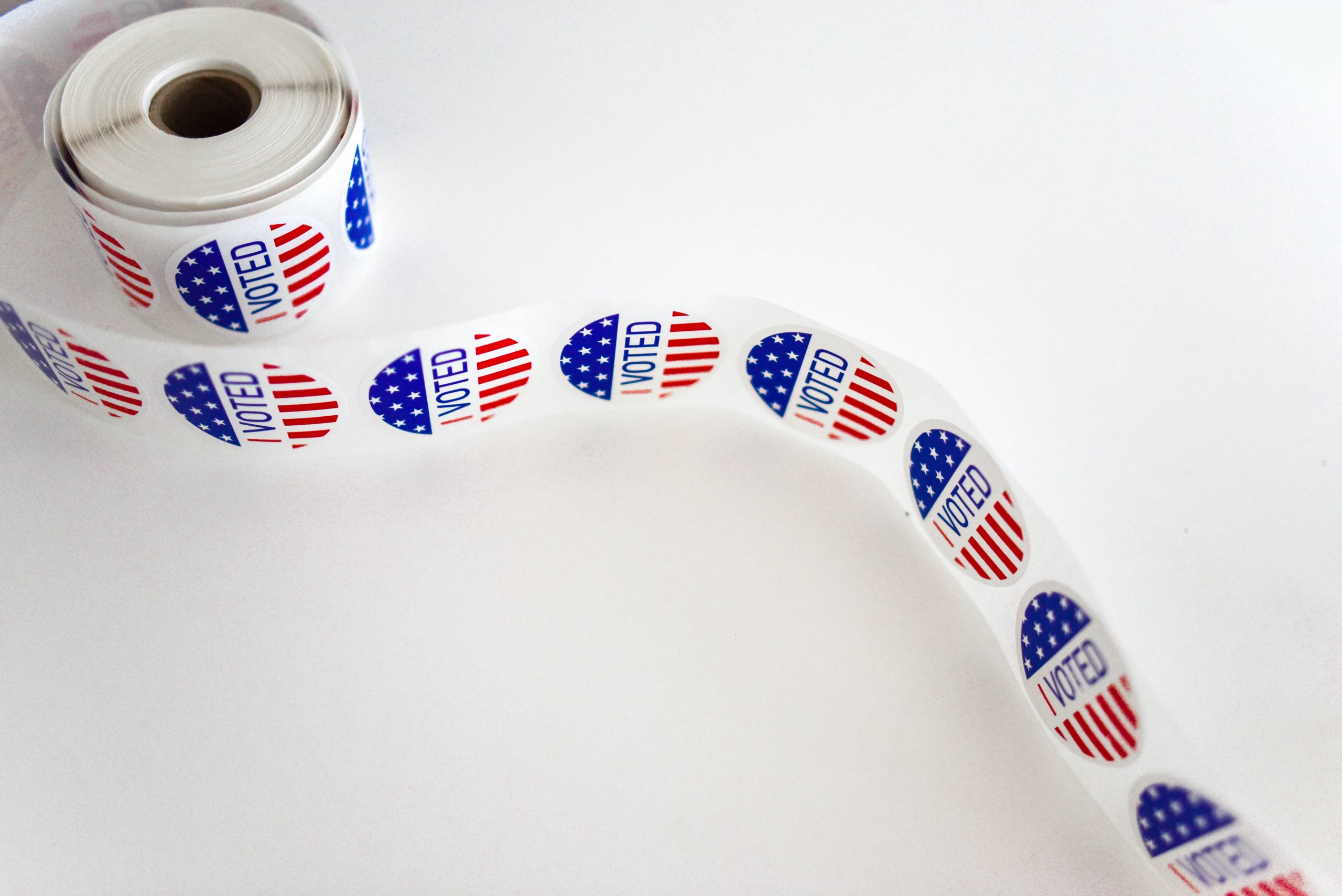
Be a Voter

Which is better? To encourage someone to vote or to encourage them to be a voter?

If you want the person to actually vote, encourage them to be a voter. It’s been found that this framing is more likely to lead to action.

If you’d like to strengthen a behavior, weave it into your identity. And if you’d like to change someone else’s behavior, encourage them towards an identity change that includes that behavior.

Use this framing with yourself too.

Don’t just get up early. Be an early riser.

Don’t just make a difference. Be a contributor.

Don’t just do personal growth experiments. Be an explorer.

Don’t just post on social media. Be a blogger, podcaster, or YouTuber.

A similar framing shift motivated me to register to vote this year (my first time voting in any political election). Being encouraged to vote never motivated me to change, perhaps because it seemed like a pointless behavior. I decided to vote this time because I want to be a participant, not a spectator. Being a nonvoter in this election doesn’t feel like a good identity to embrace. This time I feel like I have to vote against stupidity in a way that didn’t seem necessary before.

I’ve found this framing especially helpful for leaning into long-term changes, like thinking of myself as an entrepreneur when starting my first business back in 1994. Being an entrepreneur is a stronger frame than starting or running a business. A behavioral frame lets you get a job when you hit a rough patch in your business, but an identity frame makes that option harder to consider.

Consequently, you may want to use behavioral framing when you’d prefer to keep your options open and give yourself more room to pivot. Behavioral framing is more flexible. If, however, you want to feel more committed and focused, so you can really invest in a particular path, identity framing is often the better choice.

Share Button

Defining Your Own Spiritual Path

Have you ever connected with someone who had strong preconceived notions about what your spiritual path should look like?

Apparently there’s a rulebook for being spiritual, and you have to satisfy certain criteria for how you’re supposed to think, feel, and behave in order to consider yourself a spiritual person. You got the memo summarizing those rules, right?

Being spiritual is a label and lens. But it’s not the same lens for everyone. We all assign different meanings to what it means to be spiritual or to walk a spiritual path. My meaning is undoubtedly different from yours.

These days I’m not a huge fan of the spiritual label / lens. I found it interesting in my 20s and 30s, partly as a reactionary alternative to being religious. Back then being spiritual meant being independent and also spending time exploring the nonphysical aspects of life. I could label meditation, reading eye-opening books, listening to speeches from dudes who don’t wear pants, and lucid dreaming as spiritual practices.

Today if I think about spirituality, I’d frame it as exploring my relationship with reality and with my character. It’s not something I can compartmentalize into a short list of practices. I regard what I do all day, every day, as part of my spiritual practice, including writing this blog post, especially when I’m making carefully considered choices about what to do.

My spiritual path is mine to determine, and there is no rulebook that I must follow. I’m not beholden to anyone’s expectations. I’m walking my own spiritual path, which isn’t for anyone else to walk or even to understand.

When people purport to tell me what it means to be spiritual and how my thoughts, feelings, or behaviors aren’t spiritual enough, I see that as immensely presumptuous. It’s an emotionally manipulative pattern, similar to the patterns I shared in the article on emotional consent last month.

While some who consider themselves spiritual may regard this year as being about lessons of tolerance and acceptance – and good for them if that’s what they’re exploring – my lessons for this year feel very different but no less spiritual.

I see this year as having more to do with boundaries, firmness, and calling out stupidity when it’s plain as day.

I see this year as posing some interesting alignment questions, especially with respect to truth alignment, social connections, and assignment of meaning.

I’ve also been thinking about why so many people are so ridiculously loyal and obedient. This makes me want to understand obedience better – more than just thinking about it from a D/s play angle. I see it as a puzzle that I don’t really understand. Why does it seem like so many humans are behaving like insects in an insect colony?

This year also points me in the direction of deeper character sculpting, which could be because developing the Stature course earlier in the year helped me get into this framing. I see some really lame character behavior in the world, and my reaction to that makes me think more consciously about how I’d like my own character to continue developing.

While many people seem to dislike this year, I personally find it fascinating. It’s been one of the best years of my life, despite not getting to travel as much and having fewer in-person social connections.

I see the events happening in the world as invitations. Reality invites me to choose my framing and my response. How will I interpret these events? What meaning will I assign to them? How will I evolve my character to adapt to changing circumstances? To me these are fascinating and worthy challenges. I could label them spiritual too.

I like what this year is doing to me. I feel confident, optimistic, and motivated. I have a lot of passionate energy flowing through me. I have an endless stream of inspired ideas. Even as it seems like we’ve entered the bizarro universe, my personal world has experienced some nice improvements.

I also feel more fighty in a way. I don’t feel that my spiritual path is to be all “let’s pray together and intend harmony” this year. I see how being too passive perpetuates more ridiculous behavior like racism. I do think there’s a place for that passively accepting kind of vibe, but I’ve explored that one a lot already, and now I feel called to explore in other directions. I also don’t see a conflict between accepting reality as it is and also investing in changing its course.

I don’t mind spending some time in the bizarro universe because the sheer lunacy of it makes me ponder: Who do I want to be in the bizarro universe? How shall I frame this experience? What kind of character sculpting can occur under these conditions? How is this a healthy and positive invitation for my good and the highest good of all?

It’s like if you’re Yossarian or one of his friends living through the reality of Catch 22. Do you let that crazy world with its crazy rules and crazy characters drive you crazy too? Or do you see the craziness as an empowering invitation to see what you’re made of?

From another perspective I’ve already been living in the bizarro universe for a long time – that’s often what it feels like to be vegan in a non-vegan world. How did I end up in the dimension where humans think it’s normal to drink milk from raped cows? Then they skin the cows and put the skin on their feet and waists like trophies.

Look at me! I’m wearing a raped cow! And I drink its milk, so its baby gets none! Maybe I eat its baby too! Me strong! Rawr!

Sometimes y’all adopt some truly nutter practices in this dimension.

What kind of personal development framing or investment makes this year a win for you? You could see it as your spiritual path to figure that out.

Share Button

End the Vegan Tax

Vegans are typically well aware of the vegan tax – the extra money we pay to order a latte, a pizza, or some other item made vegan instead of with animal products. Substitute plant-based milk for dairy or vegan cheese for dairy cheese at a restaurant, and you can often expect to pay more.

Starbucks is one of the main outlets that’s been charging a vegan tax for years, whereby it costs extra to order a drink with soy milk, almond milk, or coconut milk instead of the same drink make with dairy. Lots of other places that offer drinks with plant-based milks also charge extra for it.

Depending on what you order, the vegan tax may be $0.70 to $1.00 for a drink or perhaps $2.50 to $5 more for vegan cheese on a pizza.

Why do places charge this? The short answer is because they can. It makes them extra money to do so. It stems from self-interest.

Vegans pay this tax grudgingly. We’ve gotten used to it, but it remains a sore spot, and it does create a negative impression of any brand or outlet that charges it. I mean… how can vegans not see Starbucks as just a bit assholish for doing this? It’s a greed move – and an unfair one.

The vegan tax positions ordering a vegan item as doing something special or out of the ordinary, so it normalizes animal products. Why should the milk of a raped cow be regarded as normal while some almonds blended in water are treated as special?

I can whip up some almond, cashew, or macadamia nut milk in my kitchen in a minute or two. These are super easy to make. I can also make soy milk using an inexpensive soy milk maker. It’s a bit more involved to get a cow, rape it to make it pregnant, sell its baby for scrap, and drain its tits.

Where there’s an annoyance like this that negatively affects a lot of people, there’s also an opportunity when seen through an entrepreneurial lens.

In some ways this situation is similar to when Blockbuster Video charged late fees back in the day. This policy annoyed customers but nicely padded Blockbuster’s billions. Customers tolerated it for a while, but it also left an opening (one of many) for a competitor to step in and provide a better service.

The vegan tax provides an obvious entrepreneurial opening, and some places are already capitalizing on it. As just one example, I learned of a new coffee place opening up this month in Vegas (where I live) that claims it won’t charge a vegan tax.

Golden Fog Coffee will reflect owners Derek and Juliet Douglas’ plant-based lifestyle where the menu will be 100% vegetarian and will not charge a “vegan tax” or higher prices for plant milks or vegan food items.

Source

But note that on the Golden Fog coffee website, they also buy into the framing of normalizing animal products with the label “standard.”

Standard and plant based quick bite items will be available for patrons, as well as a variety of milk alternatives for plant based latte lovers.

If it were me, I’d use the label substandard for animal products. It’s fair to say that a rapey production process qualifies as a lower standard.

Due to government subsidies, a lot of the true cost of animal products is hidden too. So vegans are actually being double taxed.

Overall it’s an unfair economic frame that ought to collapse under its own lameness and greed. But we can help to speed it along by calling out the tax as an unfair one, and we can encourage entrepreneurs who grasp the opportunity for better fairness and service.

We can also encourage better framing, such as by labeling vegan items as normal and non-vegan ones as rapey. 😉

Share Button

The Relationship Frame

One interesting frame shared in the book The Courage to Be Disliked is: All problems are interpersonal relationship problems.

That isn’t necessarily a true statement, but you can think of it as a lens for viewing problems. Personally I think it’s a bit exaggerated as far as lenses go. I prefer a similar but more flexible one: All problems, challenges, and situations can be framed as relationships.

Not everything translates well to an interpersonal relationship, but you can translate any situation to some type of relationship. This can include your relationships with:

  • yourself
  • other people
  • reality
  • life
  • your work
  • money
  • skills
  • your body
  • and more

Moreover, when working on your goals and habits, it’s helpful to translate your goals and habits into growth experiences for one or more of your relationships with different parts of life. This helps goals feel more personal and meaningful, so they aren’t just the mental “stuck in your head” types of goals that don’t really get accomplished.

For example, I could frame my daily exercise as a discipline-based habit that I have to push myself to do each day, but that’s a lame approach that isn’t very sustainable. That mindset looks especially weak when viewed through the relationship lens. Who wants to maintain a habit if the relationship is based on force and struggle against some kind of resistance? That kind of relationship is headed for a breakup sooner or later.

Instead of pushing myself to exercise more or exercise harder, I focused on improving my relationship with exercise. I asked questions like these:

  • What would make this relationship better?
  • What could I do to increase the enjoyment of exercise, so I naturally want to do it without having to force myself?
  • Where is there friction in the relationship, and how can I reduce or eliminate that resistance?
  • How could I keep improving this relationship over time, so it keeps getting better year after year?

This approach worked nicely. I have a very positive relationship with exercise, and it’s improved even more this year. Here are some aspects of the relationship that I focused on improving:

  • Running different routes for variety and different levels of challenge, so it doesn’t feel too routine or stale
  • Continuing to develop new routes that I’ve never run before, so I feel a sense of abundance in having different routes to pick from
  • Tuning into my body and mind to decide which route to run based on what kind of experience I want (a run with more people, a more solitary run, a run where I’ll see the sunrise, a run where I can expect to see plenty of rabbits, a run with more parks, running near the baseball stadium, running along the western edge of the city, etc)
  • Listening to really good audiobooks while I run, on topics that appeal to me, including sometimes listening to audiobooks about running from runners who love to run
  • Enjoying the views while running through the hills that overlook the whole Vegas Valley
  • Investing in quality running shoes and testing different kinds of shoes to discover my personal favorites
  • Heading out before dawn and being greeted by the rising sun
  • Sometimes picking out planets like Venus or Jupiter when I look up at the dark sky while first starting out
  • Using an Apple Watch to track my progress as I go (time, distance, pacing, heart rate, etc) – and getting a new one each year, so I always have the latest version
  • Mostly running for the enjoyment of it but occasionally setting interesting goals for distance or speed
  • Feeling a sense of accomplishment for sometimes running to spots farther out than I’ve run to before
  • Waving or nodding to other runners and cyclists I pass along the way, which gives a little feeling of social connection with the people in the neighborhood (it’s encouraging to see people exercising)
  • Feeling good when I finish running and switch to a cool down walking pace
  • Enjoying the alone time, which feels more like being than doing
  • Reminding myself to feel grateful that my body can do this (seeing it as a beautiful gift, not to be taken for granted)

Lately I’ve been running 60-70 minutes most mornings. Interestingly it feels more motivating to run for an hour or more than it used to feel to run for 30-45 minutes. One reason is that as I increased the duration, I focused more on the relationship with running rather than the discipline or habit of running. Another reason could be that these longer runs do an even better job of rebalancing hormones and neurotransmitters, so I feel even happier.

Instead of pushing myself to run farther, which I’ve done many times before but which didn’t lead to sustainably longer runs, I sought to connect more deeply with the love and beauty of running. I focused on improving my relationship with running. I leaned towards the principle of love more than the principle of power here. This worked very nicely.

There are so many other ways to apply the relationship frame to create and maintain improvements in different areas of your life. Instead of pushing yourself to work harder or with more discipline, you can focus instead on improving your relationship with your work. Same goes for your relationships with any other kinds of tasks.

More than two decades ago, this type of framing helped me a lot with improving the flow of money through my life. Instead of trying to make more money in ways that were only semi-aligned, I worked on fixing my alignment problems with money. I invested in improving my personal relationship with money. That relationship was weak – I saw money as something annoying that I shouldn’t have to deal with. But I learned to appreciate its role in life and to enjoy earning and spending it. These days I think of money as fun and playful – it feels lighter and less stressful than it used to. Having a better relationship with money makes it easier to earn it, and it’s more fun to spend it as well.

Look at an area where you tend to struggle or have a hard time accomplishing your goals. What do you see when you use the relationship frame on that area? Is your relationship based on trying to force yourself to push through resistance? If so, how could you improve the relationship over time, so you naturally enjoy engaging with this area of life? This simple reframe can generate powerful insights that can radically transform your results.

Share Button

Sliding Bad Habits Into Good Ones

As a follow-up to yesterday’s post on Honoring Your Hidden Goals, consider that hidden goals are similar to hidden habits. In each case the hidden aspect means that some part of you is finding a way to meet a need or desire that you’re not necessarily acknowledging.

When you identify hidden habits, you can also trace them back to their needs and desires, and then you can devise more deliberate ways to satisfy those desires.

It’s likely you have some habits you may identify as bad or problematic, but they’re actually serving you well.

Think of a bad habit as a good habit in disguise – as a habit with some negative side effects.

For instance, I love cuddling my wife in bed, but this desire can easily make me want to linger in bed longer each morning, such as by sleeping in super late – like until 6:30am or even an ungodly 7am.

At one point I did have this habit, which interfered with my other desire to get up at 5am and go for a pre-dawn run to start my day (which I love). But the cuddle-sleep habit does serve a nice need as well – human connection, touch, some extra happiness, and a happy wife who also loves to cuddle.

These mixed feelings were easy to resolve by sliding the habit of cuddle-sleeping into a different form. Instead of doing this in the morning, we often enjoy a 20-minute cuddle-nap together on the couch, usually shortly after lunch. This siesta gives us a nice midday connection and refreshes us for the afternoon, but it doesn’t interfere with my early riser habit.

Here are a couple of other examples of sliding problematic habits into better ones:

If you have a habit of over-checking the news lately (i.e. doomscrolling), maybe it’s because you like consuming content. Maybe you like learning something new each day. So you could experiment with sliding this into a deliberate content consumption habit like reading books, listening to audiobooks, listening to podcasts, or working through online courses. See if you can increase the quality of the content you consume each day. Many highly successful people swear by the habit of reading a lot each morning to start their workday, sometimes for 2-3 hours – they just do their best to make it purposeful. If you could slide this habit towards a more structured approach that involves higher quality content, it may be worth keeping.

Maybe you check social media a lot because it satisfies your desire for human connection. Of course it can also be shallow and distracting. Where else could you slide this habit to make it more beneficial? Perhaps you could invite people to join you on one-on-one calls to connect. Or you could continue using social media, but nudge yourself to do a live video each week to push further beyond your comfort zone, so it’s more of a growth experience for you. Alternatively, you could slide this habit towards five or six days per week instead of seven, so you have a day or two of screen-free time each week. Or you could slide towards meditation or a personally meaningful spiritual practice. For instance, the Submersion course includes daily lessons to help you improve your relationship with life, so you can feel more connected each day.

Whatever you’re doing that feels like a bad habit, look into what hidden need or desire it addresses. Does it give you a break? Help you relax? Make you feel more informed or connected? If the habit was all negative, you’d probably drop it, so you’re keeping it in your life for a reason.

Then see if you can raise your standards above and beyond what the hidden habit is realistically doing for you. If a habit helps you feel social, for instance, what would be a higher standard for socializing? Perhaps you could connect with smarter people, more depth, more impact, more ripples, more playfulness, more edginess, etc. Could you satisfy this desire in a more growth-oriented way without making it overly complicated?

Sometimes it’s best to start with a minimal slide. See if you can elevate the habit slightly, and then lock it in at the elevated level. You could keep checking the news, but add one lesson from an online course immediately afterwards (or right before). One way to do this is to create a tab group in your web browser for your favorite news sites, and then add one extra tab to that group for an online course you’d like to complete. As you work through (and close) the news tabs, you’ll soon reach the online course tab, and then you can do just one lesson of that course each day along with your news checking.

You can also slide good habits towards better ones. I did this with my morning runs this year. I gradually increased my running distance, just sliding it forward a little more week by week, till I was running double the distance I was running before. Now I’m doing something similar but with speed instead of distance, pushing myself to go a little faster on some of my runs. It’s a little slide forward each week, and it adds a lovely growth element to what I’d previously been regarding as a maintenance habit.

Another way to slide a habit forward is with appreciation and acknowledgement. Thank the existing habit for what it’s doing for you, even if you semi-dislike it. Thank it for the connection, the relaxation, the pleasure, the information, the satisfaction, the entertainment, etc. Don’t over-focus on the negative side since that can blind you to the needs and desires that still matter to you – and which you might lose abruptly if you tried to immediately drop the habit.

Sliding a habit into a better one is easier when you acknowledge the hidden needs and desires that habit is satisfying. Instead of demonizing the habit for being all bad, recognize that it’s actually serving a purpose. And accept that if you want to replace a problematic habit with a better one, it’s wise to keep fulfilling the habit’s beneficial purpose.

Broaden your awareness of what you actually care about by looking for the hidden needs and desires behind your so-called bad habits. Maybe you care a lot about being entertained, being informed, feeling connected, feeling secure, and so on. Maybe these aspects of life are more important to you than you’re willing to admit. It’s fine to value those parts of life, and it’s easier to fulfill those desires in more aligned ways if you acknowledge that you do indeed value what they’re doing for you.

Share Button

Honoring Your Hidden Goals

When you look back on the past calendar quarter, consider what you actually got done, even if your actions and behaviors didn’t align well with your stated goals. Your time went somewhere, so where did it actually go?

Use the lens of seeing everything you did as an accomplishment, even if your main achievement was watching Game of Thrones. Instead of beating yourself up for what you didn’t do, take a deeper look at what you did do.

So then your achievements might actually look like:

  • Watch Game of Thrones.
  • Spend two hours per day on Facebook.
  • Exercise sporadically, averaging about 30 minutes per week, mostly Yoga with Adriene videos.
  • Gain 10 pounds of fat.
  • And so on…

Now consider what goals you would have set at the start of the quarter if you wanted to match what you actually did during those three months. Take a step back from the actions, and see if you can connect them with a grander meaning. Why did you do these items? What did you gain from them? These are your hidden goals.

For example, your hidden goals based on the actions above might be:

  • Take a break from the world each day with a deep dive into fantasy entertainment.
  • Leverage the benefits of online socializing each day, so I can feel connected to people while also keeping my distance, thereby allowing me to have plenty of flexible alone time.
  • Let my body go a bit, so I can use that as a reason for not going out as much instead of having to focus on the virus situation. Also give me a reason to continue staying home even when the virus situation clears up.

Try to put a semi-positive frame on each hidden goal. Consider that you may have done what you did because you overlooked important desires that weren’t represented in your stated goals.

Maybe you actually did want to spend more time alone. Maybe you did want more downtime. Maybe what you actually did wasn’t just procrastination – maybe your actions were purposeful in ways you didn’t necessarily see as you went through the quarter.

Use what you learn from this while considering your goals for the next quarter. Would you like to elevate one or more of your hidden goals to give them a better form of deliberate expression?

For instance:

  • Do a deep dive into fantasy by reading all of the Harry Potter books in order.
  • Do a 30-day challenge of inviting a 30-minute Zoom call with a different Facebook friend each day, so I get to connect with people more deeply.
  • Go vegan for the next 90 days, and spend about two hours every Saturday experimenting in the kitchen with different recipes while streaming appealing Netflix series in the background.

By noticing where your time actually went and considering that it may have been purposeful, you can reveal desires that you may have been denying, and then you can give those desires more conscious forms of expression.

You may also discover that your hidden goals reveal hidden fears. Perhaps you’re not feeling ready to face your other goals, and you need to build more readiness first.

Sometimes our stated goals are overly narrow. Other desires still demand expression, and if we ignore them when setting goals, they’ll just express themselves through less conscious behavior patterns.

If you give more deliberate expression to your hidden goals, you can potentially satisfy a wider range of desires. Balancing your goals can help you balance your behaviors and therefore your results as well.

Share Button