As the NHS enters 2024 and a difficult winter period, find out what’s happening in your area.


As the NHS enters 2024 and a difficult winter period, find out what’s happening in your area.
Its passage comes less than a month after state fertility services paused when a court ruled that frozen embryos are children.

The House of Lords has inflicted another five defeats on the government’s Rwanda bill.
It means peers have defied Rishi Sunak to amend his flagship legislation 10 times this week.
The government will call on MPs to vote to overturn the amendments when the Safety of Rwanda Bill returns to the House of Commons later this month.
The five defeats tonight included moves to prevent modern slavery victims being deported to Africa against their will, and restoring the ability of the courts to decide whether Rwanda is a safe country.
Advertisement
On Monday night, the Lords voted to ensure the legislation is fully compliant with domestic and international law.
Dick Newby, the Lib Dem leader in the Lords, said: “Time after time, this Bill has been proved to be deeply flawed, yet this Conservative Government continues to promote a policy that frankly is unworkable.
“We are calling for Sunak and Cleverly to seriously consider the changes this House has called for. It is far too dangerous to ignore these amendments because lives are at stake.
“The Government should now accept that the policy is fatally flawed and will do little to solve the sky high asylum backlog.”
Advertisement
The Safety of Rwanda Bill is designed to overcome legal challenges to past attempts to send asylum seekers with a one-way ticket to the east African country.
The bill would compel judges to regard Rwanda as safe, and give ministers the power to ignore emergency injunctions.
The policy is central to the prime minister’s hopes of convincing voters he can “stop the boats” crossing the English channel.
The government hopes once the bill passes flights will be able to take off by the spring, but that timetable now looks in disarray.


More than 70% of American Indian young adults aged 20-39 and 50% of American Indian teens have cholesterol levels or elevated fat in the blood that put them at risk for cardiovascular disease, suggests a study supported by the National Institutes of Health. In some cases, these levels — specifically high low-density lipoprotein (LDL) cholesterol, often thought of as “bad cholesterol,” — were linked to plaque buildup and cardiovascular events, such as heart attack and stroke.
The findings, published in the Journal of the American Heart Association, came from a 19-year-review of the Strong Heart Family Study, part of the Strong Heart Study — the largest study of cardiovascular health outcomes and risk factors among American Indian adults. Researchers followed more than 1,400 participants, ages 15-39, between 2001-2003 and 2020. At the beginning of the study, 55% of participants ages 15-19 had abnormal cholesterol levels, as did 74% of those ages 20-29, and 78% of those ages 30-39.
“We were surprised about the numbers, especially in adolescents,” said Jessica A. Reese, Ph.D., an epidemiologist in the Center for American Indian Health Research at the University of Oklahoma Health Sciences Center, Oklahoma City. “These findings show the importance of early screenings and interventions, especially for teens and young adults who may be more likely to have underlying cardiovascular risks, diabetes, or chronic liver disease.”
The researchers defined a person’s cholesterol as abnormal if they had either high total cholesterol; high LDL cholesterol or other types of “bad” cholesterol; moderately-high triglycerides; low HDL cholesterol, often thought of as “good cholesterol”; or if they had been prescribed cholesterol-lowering medication.
About 40% of study participants had high LDL levels (at least 100 mg/dL), while nearly 3% had very high levels (at least 160 mg/dL). However, less than 2% of participants with very high LDL cholesterol took cholesterol-lowering medication at the start of the study.
“This research supports efforts to identify ways, such as increased screenings and culturally relevant education, to improve heart health and support younger generations of Native Americans,” said Mona Puggal, M.P.H., an epidemiologist in the Division of Cardiovascular Sciences at the National Heart, Lung, and Blood Institute (NHLBI), part of NIH.
Heart disease is twice as high in American Indian adults compared to the general U.S. population. Abnormal cholesterol levels seen among participants in the current study were also twice as high as abnormal levels seen in the general population of U.S. teens and young adults. Researchers underscored the value of routine check-ins and screenings. All participants in this observational study were also notified about their lab work and imaging results after their physical exam and researchers encouraged them to take the results to their healthcare providers.
At the start of the study, 1,165 participants had ultrasounds of the carotid artery, an artery in the neck that carries blood from the heart to the brain. Approximately 61 (5%) showed signs of plaque or early plaque development. Plaque can prohibit blood flow to the heart or rupture when too much of it accumulates in an artery, and that can lead to a stroke or need for surgery.
About 5.5 years after the baseline measurements, 19 participants — about one-third of those with detectable plaque — had signs of their plaque getting worse. Among the 1,104 who did not have detectable plaque at the beginning, 109 (10%) had signs of it during the second check-in. Researchers linked high levels of LDL cholesterol, total cholesterol, and other non-HDL cholesterol to these outcomes.
By the end of the study, approximately 127 participants (9%) had experienced a heart attack, stroke, heart failure, or a related heart surgery or death. Participants who had diabetes and at least a few cardiovascular risks, such as having a large waistline, high blood sugar, high triglycerides, high blood pressure, or low levels of HDL cholesterol, were also more likely to have cardiovascular events.
To support early risk detection, researchers emphasized the importance of youth staying connected to health care providers.
“It’s important for everyone to work with their physician to annually check their blood cholesterol and blood sugar, which can support a healthy life later on,” said Ying Zhang, M.D., Ph.D., Director at the Center for American Indian Health Research at the University of Oklahoma Health Sciences Center. “It’s also vital that annual care is coordinated as youth mature from seeing pediatricians to adult health care providers.”
To learn more about cholesterol and heart health, visit: https://www.nhlbi.nih.gov/resources/cholesterol-your-heart-what-you-need-know-fact-sheet
This research was funded by NHLBI.

Evaporation is a natural process so ubiquitous that most of us take it for granted. In fact, roughly half of the solar energy that reaches the earth drives evaporative processes. Since 2017, researchers have been working to harness the energy potential of evaporation via the hydrovoltaic (HV) effect, which allows electricity to be harvested when fluid is passed over the charged surface of a nanoscale device. Evaporation establishes a continuous flow within nanochannels inside these devices, which act as passive pumping mechanisms. This effect is also seen in the microcapillaries of plants, where water transport occurs thanks to a combination of capillary pressure and natural evaporation.
Although hydrovoltaic devices currently exist, there is very little functional understanding of the conditions and physical phenomena that govern HV energy production at the nanoscale. It’s an information gap that Giulia Tagliabue, head of the Laboratory of Nanoscience for Energy Technology (LNET) in the School of Engineering, and PhD student Tarique Anwar wanted to fill. They leveraged a combination of experiments and multiphysics modelling to characterize fluid flows, ion flows, and electrostatic effects due to solid-liquid interactions, with the goal of optimizing HV devices.
“Thanks to our novel, highly controlled platform, this is the first study that quantifies these hydrovoltaic phenomena by highlighting the significance of various interfacial interactions. But in the process, we also made a major finding: that hydrovoltaic devices can operate over a wide range of salinities, contradicting prior understanding that highly purified water was required for best performance,” says Tagliabue.
The LNET study has recently been published in the Cell Press journal Device.
A revealing multiphysics model
The researchers’ device represents the first hydrovoltaic application of a technique called nanosphere colloidal lithography, which allowed them to create a hexagonal network of precisely spaced silicon nanopillars. The spaces between the nanopillars created the perfect channels for evaporating fluid samples, and could be finely tuned to better understand the effects of fluid confinement and the solid/liquid contact area.
“In most fluidic systems containing saline solutions, you have an equal number of positive and negative ions. However, when you confine the liquid to a nanochannel, only ions with a polarity opposite to that of the surface charge will remain,” Anwar explains. “This means that if you allow liquid to flow through the nanochannel, you will generate current and voltages.”
“This goes back to our major finding that the chemical equilibrium for the surface charge of the nanodevice can be exploited to extend the operation of hydrovoltaic devices across the salinity scale,” adds Tagliabue. “Indeed, as the fluid ion concentration increases, so does the surface charge of the nanodevice. As a result, we can use larger fluid channels while working with higher-concentration fluids. This makes it easier to fabricate devices for use with tap or seawater, as opposed to only purified water.”
Water, water everywhere
Because evaporation can occur continuously over a wide range of temperatures and humidities — and even at night — there are many exciting potential applications for more efficient HV devices. The researchers hope to explore this potential with the support of a Swiss National Science Foundation Starting Grant, which aims to develop “a completely new paradigm for waste-heat recovery and renewable energy generation at large and small scales,” including a prototype module under real-world conditions on Lake Geneva.
And because HV devices could theoretically be operated anywhere there is liquid — or even moisture, like sweat — they could also be used to power sensors for connected devices, from smart TVs to health and fitness wearables. With the LNET’s expertise in light energy harvesting and storage systems, Tagliabue is also keen to see how light and photothermal effects could be used to control surface charges and evaporation rates in HV systems.
Finally, the researchers also see important synergies between HV systems and clean water generation.
“Natural evaporation is used to drive desalination processes, as fresh water can be harvested from saltwater by condensing the vapor produced by an evaporative surface. Now, you could imagine using an HV system both to produce clean water and harness electricity at the same time,” Anwar explains.

A galaxy that suddenly stopped forming new stars more than 13 billion years ago has been observed by astronomers.
Using the James Webb Space Telescope, an international team of astronomers led by the University of Cambridge have spotted a ‘dead’ galaxy when the universe was just 700 million years old, the oldest such galaxy ever observed.
This galaxy appears to have lived fast and died young: star formation happened quickly and stopped almost as quickly, which is unexpected for so early in the universe’s evolution. However, it is unclear whether this galaxy’s ‘quenched’ state is temporary or permanent, and what caused it to stop forming new stars.
The results, reported in the journal Nature, could be important to help astronomers understand how and why galaxies stop forming new stars, and whether the factors affecting star formation have changed over billions of years.
“The first few hundred million years of the universe was a very active phase, with lots of gas clouds collapsing to form new stars,” said Tobias Looser from the Kavli Institute for Cosmology, the paper’s first author. “Galaxies need a rich supply of gas to form new stars, and the early universe was like an all-you-can-eat buffet.”
“It’s only later in the universe that we start to see galaxies stop forming stars, whether that’s due to a black hole or something else,” said co-author Dr Francesco D’Eugenio, also from the Kavli Institute for Cosmology.
Astronomers believe that star formation can be slowed or stopped by different factors, all of which will starve a galaxy of the gas it needs to form new stars. Internal factors, such as a supermassive black hole or feedback from star formation, can push gas out of the galaxy, causing star formation to stop rapidly. Alternatively, gas can be consumed very quickly by star formation, without being promptly replenished by fresh gas from the surroundings of the galaxy, resulting in galaxy starvation.
“We’re not sure if any of those scenarios can explain what we’ve now seen with Webb,” said co-author Professor Roberto Maiolino. “Until now, to understand the early universe, we’ve used models based on the modern universe. But now that we can see so much further back in time, and observe that the star formation was quenched so rapidly in this galaxy, models based on the modern universe may need to be revisited.”
Using data from JADES (JWST Advanced Deep Extragalactic Survey), the astronomers determined that this galaxy experienced a short and intense period of star formation over a period between 30 and 90 million years. But between 10 and 20 million years before the point in time where it was observed with Webb, star formation suddenly stopped.
“Everything seems to happen faster and more dramatically in the early universe, and that might include galaxies moving from a star-forming phase to dormant or quenched,” said Looser.
Astronomers have previously observed dead galaxies in the early universe, but this galaxy is the oldest yet — just 700 million years after the big bang, more than 13 billion years ago. This observation is one of the deepest yet made with Webb.
In addition to the oldest, this galaxy is also relatively low mass — about the same as the Small Magellanic Cloud (SMC), a dwarf galaxy near the Milky Way, although the SMC is still forming new stars. Other quenched galaxies in the early universe have been far more massive, but Webb’s improved sensitivity allows smaller and fainter galaxies to be observed and analysed.
The astronomers say that although it appears dead at the time of observation, it’s possible that in the roughly 13 billion years since, this galaxy may have come back to life and started forming new stars again.
“We’re looking for other galaxies like this one in the early universe, which will help us place some constraints on how and why galaxies stop forming new stars,” said D’Eugenio. “It could be the case that galaxies in the early universe ‘die’ and then burst back to life — we’ll need more observations to help us figure that out.”
The research was supported in part by the European Research Council, the Royal Society, and the Science and Technology Facilities Council (STFC), part of UK Research and Innovation (UKRI).

Researchers from the Broad Institute of MIT and Harvard, Harvard Medical School, and McLean Hospital have uncovered a strikingly similar suite of changes in gene activity in brain tissue from people with schizophrenia and from older adults. These changes suggest a common biological basis for the cognitive impairment often seen in people with schizophrenia and in the elderly.
In a study published in Nature, the team describes how they analyzed gene expression in more than a million individual cells from postmortem brain tissue from 191 people. They found that in individuals with schizophrenia and in older adults without schizophrenia, two brain cell types called astrocytes and neurons reduced their expression of genes that support the junctions between neurons called synapses, compared to healthy or younger people. They also discovered tightly synchronized gene expression changes in the two cell types: when neurons decreased the expression of certain genes related to synapses, astrocytes similarly changed expression of a distinct set of genes that support synapses.
The team called this coordinated set of changes the Synaptic Neuron and Astrocyte Program (SNAP). Even in healthy, young people, the expression of the SNAP genes always increased or decreased in a coordinated way in their neurons and astrocytes.
“Science often focuses on what genes each cell type expresses on its own,” said Steve McCarroll, a co-senior author on the study and an institute member at the Broad Institute. “But brain tissue from many people, and machine-learning analyses of those data, helped us recognize a larger system. These cell types are not acting as independent entities, but have really close coordination. The strength of those relationships took our breath away.”
Schizophrenia is well-known for causing hallucinations and delusion, which can be at least partly treated with medications. But it also causes debilitating cognitive decline, which has no effective treatments and is common in aging as well. The new findings suggest that the cognitive changes in both conditions might involve similar cellular and molecular alterations in the brain.
“To detect coordination between astrocytes and neurons in schizophrenia and aging, we needed to study tissue samples from a very large number of individuals,” said Sabina Berretta, a co-senior author of the study, an associate professor at Harvard Medical School, and a researcher in the field of psychiatric disorders. “Our gratitude goes to all donors who chose to donate their brain to research to help others suffering from brain disorders and to whom we’d like to dedicate this work.”
McCarroll is also director of genomic neurobiology for the Broad’s Stanley Center for Psychiatric Research and a professor at Harvard Medical School. Berretta also directs the Harvard Brain Tissue Resource Center (HBTRC), which provided tissue for the study. Emi Ling, a postdoctoral researcher in McCarroll’s lab, was the study’s first author.
SNAP insights
The brain works in large part because neurons connect with other neurons at synapses, where they pass signals to one another. The brain constantly forms new synapses and prunes old ones. Scientists think new synapses help our brains stay flexible, and studies — including previous efforts by scientists in McCarroll’s lab and international consortia — have shown that many genetic factors linked to schizophrenia involve genes that contribute to the function of synapses.
In the new study, McCarroll, Berretta, and colleagues used single-nucleus RNA sequencing, which measures gene expression in individual cells, to better understand how the brain naturally varies across individuals. They analyzed 1.2 million cells from94 people with schizophrenia and 97 without.
They found that when neurons boosted expression of genes that encode parts of synapses, astrocytes increased the expression of a distinct set of genes involved in synaptic function. These genes, which make up the SNAP program, included many previously identified risk factors for schizophrenia. The team’s analyses indicated that both neurons and astrocytes shape genetic vulnerability for the condition.
“Science has long known that neurons and synapses are important in risk for schizophrenia, but by framing the question a different way — asking what genes each cell type regulates dynamically — we found that astrocytes too are likely involved,” said Ling.
To their surprise, the researchers also found that SNAP varied greatly even among people without schizophrenia, suggesting that SNAP could be involved in cognitive differences in healthy humans. Much of this variation was explained by age; SNAP declined substantially in many — but not all — older individuals, including both people with and without schizophrenia.
With better understanding of SNAP, McCarroll says he hopes it might be possible to identify life factors that positively influence SNAP, and develop medicines that help stimulate SNAP, as a way to treat the cognitive impairments of schizophrenia or help people maintain their cognitive flexibility as they age.
In the meantime, McCarroll, Berretta, and their team are working to understand if these changes are present in other conditions such as bipolar disorder and depression. They also aim to uncover the extent to which SNAP appears in other brain areas, and how SNAP affects learning and cognitive flexibility.
Funding:
This work was supported by the Stanley Family Foundation, the Simons Collaboration on Plasticity and the Aging Brain, and the National Institute of Mental Health and the National Human Genome Research Institute at the National Institutes of Health.

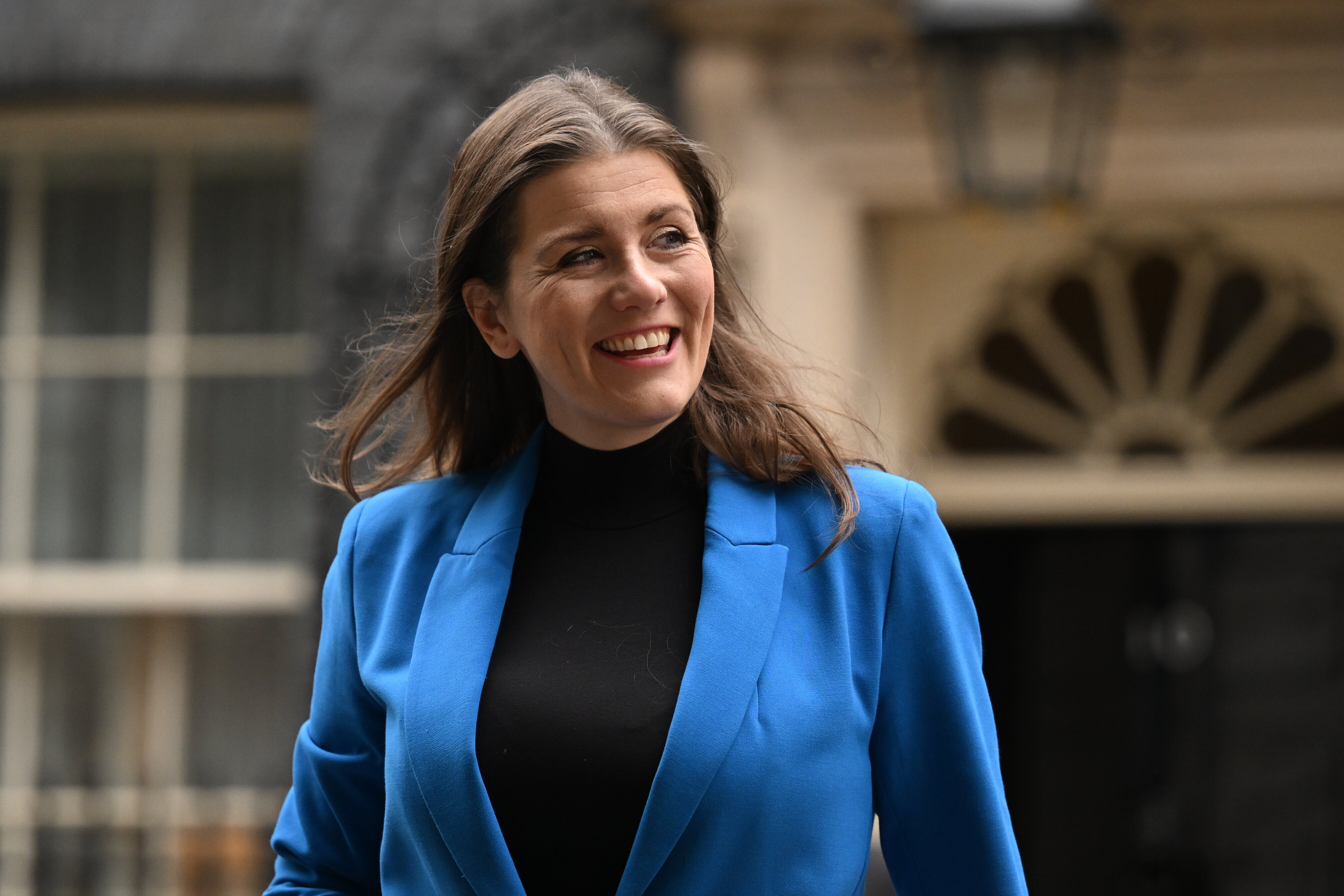
The government has spent £15,000 of taxpayers’ money to cover the damages incurred by a cabinet minister’s inaccurate claim against a professor.
The science secretary, Michelle Donelan, wrongly accused Professor Kate Sang of expressing sympathy for the Palestinian militant group, Hamas, on X (formerly Twitter).
Advertisement
The professor then took out a libel action against the cabinet minister, which was settled with Donelan agreeing to pay damages – with the public purse picking up the bill.
It has now emerged that the payment was £15,000, which the Department for Science, Innovation and Technology, said was paid “without admitting any liability”.
“There is an established precedent under multiple administrations that ministers are provided with legal support and representation where matters relate to their conduct and responsibilities as a minister, as was the case here,” the department said in a statement.
“The Secretary of State received the appropriate advice from relevant officials at all times.
“A sum of £15,000 was paid without admitting any liability. This approach is intended to reduce the overall costs to the taxpayer that could result from protracted legal action, no matter what the result would have been.”
Advertisement
The government is yet to reveal the full legal costs of the incident, and Donelan is now facing calls to resign from the University and College Union.
The minister misinterpreted a social media post where Professor Sang posted a link to a Guardian article about the aftermath in the UK after Hamas’ attack on Israel on October 7 last year.
At the time, Donelan also wrote to the UK Research and Innovation government agency (UKRI) suggesting Professor Sang and a second academic Dr Kamna Patel had shared extremist material.
Both faced a lengthy investigation by the UKRI.
Donelan retracted her accusations in a post on X on Tuesday afternoon this week.
She said: “I have never thought or claimed that Professor Sang, or any member of the Board, committed a criminal offence.
Advertisement
“I fully accept that she is not an extremist, a supporter of Hamas or any other proscribed organisation and I note that an independent investigation has concluded that there is no evidence that she is. I have deleted my original post to my X account.”
Professor Sang’s legal representative confirmed this week that Donelan has now withdrawn her false allegations and agreed to pay damages and costs to the academic.
The academic herself said the cabinet minister “made a cheap political point at my expense and caused serious damage to my reputation”, adding: “I propose to donate part of the damages she has paid to a charity.”
The Liberal Democrats also suggested Donelan’s salary – £159,38 year, including her £86,584 MP pay – should be docked.
The party said that amount of money could have funded 5,928 free school meals or 357 GP appointments.
Advertisement
Shadow science secretary Peter Kyle said: “It is outrageous that £15,000 of taxpayers money has been spent on the Science Secretary calling a scientist a terrorist sympathiser on social media, without any evidence at all.
“Michelle Donelan should be embarrassed, she should apologise, and she should repay the full amount back to the taxpayer. Her conduct falls so far below that expected of a minister.
“It is emblematic of this Tory government’s arrogance and recklessness that a Minister is forcing the taxpayer to pick up the legal bill for hurling abuse at a scientist online.”
Lib Dem deputy leader Daisy Cooper said this incident was “nothing short of a scandal”.
She said: “If Michelle Donelan had a shred of integrity left, she would pay for this bill out of her own pocket instead of asking taxpayers to pick up the tab. If she refuses to do so, Rishi Sunak should dock her pay.
Advertisement
“This news will come as a kick in the teeth to people who are seeing their finances clobbered by the cost of living crisis while local health services are on their knees.
“This is yet another scandal that proves it’s time to kick this sleaze-ridden Conservative Government out of office for good.”
They say they are disabled after catching Covid at work, with no protection from employers.

Bursting onto the show in the fifth series, Erin Hannon, played by Ellie Kemper, soon became the sweetheart of The Office, befriending Kelly, dating Andy and taking her role as receptionist far more seriously than Pam ever did.
A ray of sunshine in an otherwise quite cynical office, Erin was a truly welcome addition to the show and as Andy, played by Ed Helms said: “You’re the nicest person I’ve ever met.”
Advertisement
Whether you loved or hated her, Erin really made a name for herself in the workplace and was soon just as familiar as Michael, Dwight, and Pam herself.
However, her name, uh, actually wasn’t Erin. It was Kelly. And they even told us that.
How did we forget?!
According to NBC, audiences originally met her as “Kelly,” her actual first name. But every time the new boss, Charles Miner (Idris Elba) called for her, Kelly Kapoor (Mindy Kaling) would run into his office and say, “Yes, you wanted me?” so he decided they needed to differentiate between the two Kellys.
Erin then very sweetly offered to use her middle name instead and continued to for the rest of the series.
I mean, would you try to compete with Kelly Kapoor? I know I wouldn’t.
Plus, as ScreenRant said, it worked out for the best: “The closest thing Erin had to an actual friend on The Office was definitely Kelly. Some of their friendship was developed in online web videos like “Subtle Sexuality,” but they were also shown to hang out with one another during the show as well.”
Advertisement
While the two didn’t have a perfect relationship and Erin was often naive to Kelly’s more manipulative behaviour’s, they were an iconic duo and dropping Erin’s real name was a small price to pay.
The US Office is available to stream on Netflix.