A&E consultant Chris Bird said the measures felt like going “back to Covid” in some ways.


A&E consultant Chris Bird said the measures felt like going “back to Covid” in some ways.
A spokesman says a cancerous mole was found while the duchess was having reconstructive surgery.
The medic intervenes while on a Ryanair flight to Verona for a skiing holiday.
The Royal College of Obstetricians and Gynaecologists says women are being wrongly prosecuted.

Scientists working on biological design should focus on the idiosyncrasies of biological systems over optimisation, according to new research.
In a study, published today in Science Advances, researchers from the Universities of Bristol and Ghent have shown how exploring the unknown may be the crucial step needed to realise the continual innovation needed for the biotechnologies of the future.
Recognising the role of open-endedness in achieving this goal and its growing importance in fields like computer science and evolutionary biology, the team mapped out how open-endedness is linked to bioengineering practice today and what would be required to achieve it in the lab.
For success, algorithms used for biological design should not solely focus on moving toward a specific goal — such as better yield – but also consider the creation and maintenance of novelty and diversity in the solutions that have been found.
Dr Thomas Gorochowski, co-author and Royal Society University Research Fellow in the School of Biological Sciences at Bristol, explained: “When we try to design a complex biological process, it’s often tempting to just tweak something that partially works rather than take the risk of trying something completely new.
“In this work we highlight that in these situations the best solutions often come from unexpected directions, because we don’t always fully understand how everything works. With biology, there are lots of unknowns and so we need a vast and diverse toolkit of building blocks to ensure we have the best chance of finding the solution we need.”
Professor Michiel Stock, lead author from Ghent University, added: “Biological systems have a natural capacity for innovation that has led to the overwhelming biodiversity we see in nature today.
“Our own attempts to engineer biology, in contrast, lack this creativity — they are far more rigid, less imaginative, and often doesn’t make the best use of what biology is capable of.
“With all life around us originating from the open-ended process of evolution, wouldn’t it be awesome if we could harness some of that power for our own biological designs.”
The ability to create new biotechnologies is becoming increasingly important for tackling global challenges spanning the sustainable production of chemicals, materials and food, to advanced therapeutics to combat emerging diseases. Fueling this progress are innovations in how biology can be harnessed in new ways. This work supports this goal by offering a fresh direction for new research and design approaches.
The study was made possible due to a travel grant from the FWO Flanders and funding from the Royal Society, BBSRC and EPSRC.

A team of scientists led by a Tulane University oceanographer has found that deposits deep under the ocean floor reveal a way to measure the ocean oxygen level and its connections with carbon dioxide in the Earth’s atmosphere during the last ice age, which ended more than 11,000 years ago.
The findings, published in Science Advances, help explain the role oceans played in past glacial melting cycles and could improve predictions of how ocean carbon cycles will respond to global warming.
Oceans adjust atmospheric CO2 as ice ages transition to warmer climates by releasing the greenhouse gas from carbon stored within the deep ocean. The research demonstrates a striking correlation between global ocean oxygen contents and atmospheric CO2 from the last ice age to today — and how carbon release from the deep sea may rise as the climate warms.
“The research reveals the important role of the Southern Ocean in controlling the global ocean oxygen reservoir and carbon storage,” said Yi Wang, lead researcher and an assistant professor of Earth and Environmental Sciences at Tulane University School of Science and Engineering. Wang specializes in marine biogeochemistry and paleoceanography.
“This will have implications for understanding how the ocean, especially the Southern Ocean, will dynamically affect the atmospheric CO2 in the future,” she said.
Wang conducted the study with colleagues from the Woods Hole Oceanographic Institution, the world’s leading independent nonprofit organization dedicated to ocean research, exploration and education. She worked for the institute before joining Tulane in 2023.
The team analyzed seafloor sediments collected from the Arabian Sea to reconstruct average global ocean oxygen levels thousands of years ago. They precisely measured isotopes of the metal thallium trapped in the sediments, which indicate how much oxygen was dissolved in the global ocean at the time the sediments formed.
“Study of these metal isotopes on glacial-interglacial transitions has never been looked at before, and these measurements allowed us to essentially recreate the past,” Wang said.
The thallium isotope ratios showed the global ocean lost oxygen overall during the last ice age compared to the current warmer interglacial period. Their study revealed thousand-year global ocean deoxygenation during abrupt warming in the Northern Hemisphere, whereas the ocean gained more oxygen when abrupt cooling occurred during the transition from the last ice age to today. The researchers attributed the observed ocean oxygen changes to Southern Ocean processes.
“This study is the first to present an average picture of how the oxygen content of the global oceans evolved as Earth transitioned from the last glacial period into the warmer climate of the last 10,000 years,” said Sune Nielsen, associate scientist at WHOI and co-author of the research. “These new data are a really big deal, because they show that the Southern Ocean plays a critical role in modulating atmospheric CO2. Given that high latitude regions are those most affected by anthropogenic climate change, it is troubling that these also have an outsize impact on atmospheric CO2 in the first place.”
Other authors include Kassandra Costa, Sophie Hines, and Wanyi Lu.

A new study shows the Megalodon, a gigantic shark that went extinct 3.6 million years ago, was more slender than earlier studies suggested. This finding changes scientists’ understanding of Megalodon behavior, ancient ocean life, and why the sharks went extinct.
The Megalodon or megatooth shark is typically portrayed as a super-sized monster in popular culture, with recent examples in the sci-fi films “The Meg” (2018) and “Meg 2: The Trench” (2023). Previous studies assume that the shark likely reached lengths of at least 50 feet and possibly as much as 65 feet.
However, the Megalodon is largely known only from its teeth and vertebrae in the fossil record — a rather incomplete set of data from which to draw assumptions. Thus, the modern great white shark was traditionally used as a model for Megalodon bodies in previous studies. That model led researchers to conclude that the shark was round and stocky like great whites.
“Our team reexamined the fossil record, and discovered the Megalodon was more slender and possibly even longer than we thought. Therefore, a better model might be the modern mako shark,” said UCR biologist and paper first author Phillip Sternes. “It still would have been a formidable predator at the top of the ancient marine food chain, but it would have behaved differently based on this new understanding of its body.”
For the new study published in the journal Palaeontologia Electronica, a team of 26 scientists from around the world, co-led by Sternes and DePaul University paleobiology professor Kenshu Shimada, was inspired by differences in previously estimated body lengths for the Megalodon.
“It was a ‘eureka-moment’ when our research team realized the discrepancy between two previously published lengths for the same Megalodon specimen,” said Shimada.
The team then weighed in on a new comparison of Megalodon vertebra fossils to those of living lamniform shark relatives. “We measured the whole vertebral skeleton of a living great white shark with a CT scanner and compared that to the previous reconstruction of the Megalodon vertebral column,” Sternes said.
“It was still a giant, predatory shark. But the results strongly suggest that the Megalodon was not merely a larger version of the modern great white shark.”
A revised understanding of the Megalodon body type would in turn affect scientists’ understanding not only of the giant shark itself, but also of its impact on the ecology and evolution of marine ecosystems that shaped the present-day oceans.
There is no doubt the Megalodon is one of the largest marine predators ever to have lived. But a slimmer and more elongated body would suggest the Megalodon also had a longer digestive canal. Sternes explained that in this case, the sharks might have enjoyed enhanced absorption of nutrients, and may not have had to eat as often as previously believed.
“With increased ability to digest its food, it could have gone for longer without needing to hunt. This means less predation pressure on other marine creatures,” Sternes said. “If I only have to eat one whale every so often, whale populations would remain more stable over time.”
Some shark scientists have theorized that a natural decrease in prey led to the extinction of Megalodons. However, Sternes has another theory, in part supported by the revised understanding of its shape.
“I believe there were a combination of factors that led to the extinction, but one of them may have been the emergence of the great white shark, which was possibly more agile, making it an even better predator than the Megalodon,” Sternes said. “That competition for food may have been a major factor in its demise.”
The research team of shark experts from the U.S., UK, Austria, France, Japan, Mexico, Brazil, and Australia all feel that a revised understanding of ancient marine life would have a cascading effect on the oceans that are still visible today.
“Now that we know it was a thinner shark, we need to reinvestigate its lifestyle, how it really lived, and what caused it to die,” Sternes said. “This study represents a major stepping stone for others to follow up on.”

Florida Governor Ron DeSantis, who entered the 2024 presidential race with a bankroll rivalling that of coup-attempting former President Donald Trump, dropped his bid for the Republican nomination on Sunday — and endorsed Trump on his way out.
“Nobody worked harder and we left it all out on the field,” DeSantis said in a video posted on X, formerly Twitter, before going on to say, “If there was anything I could do to produce a favourable outcome ― more campaign stops, more interviews ― I would do it.”
Advertisement
“But I can’t ask our supporters to volunteer their time and donate their resources if we don’t have a clear path to victory. Accordingly, I am today suspending my campaign.”
DeSantis then added that he was backing Trump over former South Carolina Governor Nikki Haley, the remaining major candidate in the race.
“It’s clear to me that a majority of Republican primary voters want to give Donald Trump another chance,” he said, adding, “He has my endorsement because we can’t go back to the old Republican guard of yesteryear, a repackaged form of warmed over corporatism that Nikki Haley represents.”
At a campaign stop in Seabrook, New Hampshire, Haley acknowledged DeSantis’ announcement.
“I want to say to Ron, he ran a great race. He’s been a good governor, and we wish him well. Having said that, it’s now one fella and one lady left,” she said.
Advertisement
The announcement comes just days after DeSantis claimed he had gotten his “ticket punched” to continue his campaign despite finishing a distant second to Trump in the Iowa caucuses. Late polls in that state showed that DeSantis could finish third behind Haley. When DeSantis ultimately finished just two percentage points ahead of her, he tried to spin it as a victory ― even though he had previously said he had to win Iowa to win the nomination.
DeSantis was polling even worse in New Hampshire and South Carolina than he had been in Iowa, and his campaign seemed uncertain of a strategy going forward. His first stop after Iowa was a campaign visit to South Carolina, a contest that is a full month after New Hampshire’s first-in-the-nation primary on Tuesday. He was to return to New Hampshire on Friday, but then was planning to head back to South Carolina on Saturday.
Republicans who feared Trump could not win a general election, particularly wealthy party donors, had initially lined up behind DeSantis after his nearly 20%-point reelection as governor in November 2022. That star power allowed him to continue collecting donations of unlimited size in a state account and eventually transfer more than $80 million into a federal super PAC created to support him.
But DeSantis’ high point in the campaign turned out to be just after that reelection victory, when some polls showed him actually ahead of Trump for the 2024 nomination.
Advertisement
That began to change quickly. Trump entered the race just weeks after those midterm elections and soon began attacking DeSantis in speeches, online and even in television ads.
DeSantis chose not to enter the race himself until the end of Florida’s legislative session in May, by which point he was polling only in the 20s both nationally and in Iowa and New Hampshire.
The poor polling resulted in weaker fundraising, which resulted in two rounds of staff layoffs and shakeups ― even though much of the logistical work of the campaign was effectively outsourced to the relatively flush Never Back Down super PAC.
An even bigger problem for DeSantis, though, may have been something even the best fundraising could do nothing about: his personality. Longtime Florida Republicans told HuffPost a year ago that DeSantis has never seemed to enjoy interacting with people.
That trait, as it turns out, became a major liability in a primary race that still places a high value on personal interactions with primary voters in the early voting states.
Advertisement
“His problem is that the more people see him, the less they like him,” said one influential New Hampshire Republican, speaking on condition of anonymity.



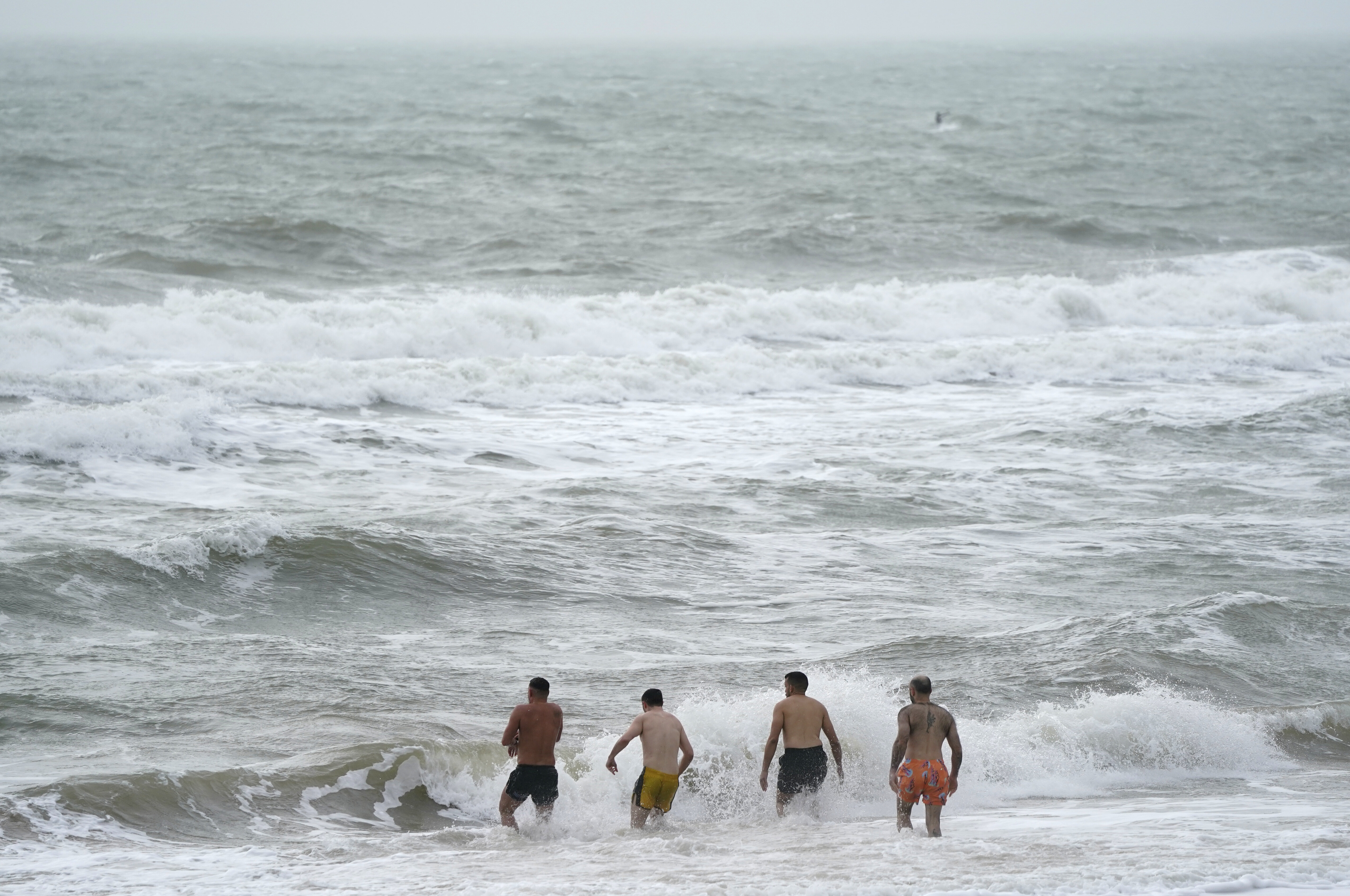
Storm Isha is on its way – but, as the ninth named storm the UK has faced since summer ended, why are meteorologists calling it “unusual”?
The UK has seen plenty of storms recently, particularly named ones – after all, Storm Henk was only earlier this month.
Advertisement
If a storm has been named, it means they pose a threat to life.
The Met Office names them in alphabetically order. Isha is the ninth storm of the winter season (which technically begins in September) so it is named after the ninth letter.
The Met Office has explained that storm was triggered by the subsiding of the cold Arctic air which had been hanging over the UK – meaning air from the Atlantic came in.
The weather has therefore become much milder in temperature, but it’s much wetter and windier, too.
And that’s why meteorologists keep saying Isha is of particular interest – the UK does not often see storms which see the whole country hit by weather warnings.
According to Sky News, Met Office forecaster Ellie Glaisyer said that the “main thing” about Isha is that it is “very widespread” – and it’s “relatively rare” to have the whole of the UK covered by a warning.
Advertisement
“That’s the main difference to previous storms we have seen,” she said.
Channel 4 weather presenter Liam Dutton echoed this, writing on X (formerly Twitter): “Storm Isha is unusual because the disruptive winds cover a very large area.”
The Met Office has already issued an amber weather warning for wind for the north and south-west of England, Wales, large parts of Northern Ireland and central and southern Scotland, from Sunday into Monday.
Another warning will be introduced for Sussex and Kent from Monday morning.
Winds of up to 80mph are expected along the UK coasts, and many places will see gusts of 50-60mph inland.
There’s a risk to life in coastal areas, and yellow flood warnings are expected for the next two days.
Advertisement
Ireland’s meteorological service, Met Eireann, has also introduced amber wind warnings for Sunday, which will escalate into a red storm warning for coastal areas in the north of the country on Monday.
Amber means there’s a good chance of power cuts, and other services could be impacts. Buildings may be damaged, journeys may be lengthened or cancelled altogether and some roads and bridges may close.
It also means injuries and danger to life likely from large waves and beach material thrown onto coastal roads, sea fronts and property.
A red weather warning means people need to seek cover and protect themselves or their properties.
A yellow wind warning will be in place covering Northern Ireland, north Wales, northern England and much of Scotland from Tuesday until midday on Wednesday.
The winds will gradually east throughout Monday, and overnight it should be a “calmer interlude” according to the Met Office – although it will be wet and windy again on Tuesday.
Advertisement

Defence secretary Grant Shapps was put in the hot seat on Sunday when he was questioned over the two Royal Navy warships which recently crashed into each other.
The two warships were there as part of the UK’s ongoing presence in the Gulf when they collided off the coast of Bahrain on Friday.
Advertisement
The Ministry of Defence has confirmed no one was injured in the crash.
Clips of the moment the two vessels hit one another have been making the rounds on social media.
Speaking to Shapps on Sunday morning, Sky News’ Trevor Phillips said: “In the Middle East, we have three mine hunters – and two of them collided in the last few days.
“One backed into the other, thinking it was going forward, but somebody wired the engine up in the wrong way, and instead of going forward it went into reverse.
“So now, instead of having three mine hunters, we’ve only got… one.
“It’s pretty humiliating, isn’t it?”
Shapps deflected by saying just as with “all walks of life, accidents happen”.
“This was incompetence,” Phillips said.
“You may know more about it than I do,” the defence secretary said. “I’ve spoken to the First Sea Lord [Admiral Sir Ben Key] who is in charge of the Navy, and he has assured me there is an investigation under way.
“And as with all these things, we don’t say it is incompetence when we see an aircraft come down – a very rare occasion – just as this would be a rare occasion.”
Advertisement

