YAP and TAZ: Protein partners identified as potential key for fetal bone development

A pair of proteins, YAP and TAZ, has been identified as conductors of bone development in the womb and could provide insight into genetic diseases such as osteogenesis imperfecta, known commonly as “brittle bone disease.” This small animal-based research, published today in Developmental Cell and led by members of the McKay Orthopaedic Research Laboratory of the Perelman School of Medicine at the University of Pennsylvania, adds understanding to the field of mechanobiology, which studies how mechanical forces influence biology.

“Despite more than a century of study on the mechanobiology of bone development, the cellular and molecular basis largely has remained a mystery,” said the study’s senior author, Joel Boerckel, PhD, an associate professor of Orthopaedic Surgery. “Here, we identify a new population of cells that are key to turning the body’s early cartilage template into bone, guided by the force-activated gene regulating proteins, YAP and TAZ.”

By combing through the genes expressed by individual cells in developing mouse limbs, through single-cell sequencing, Boerckel and the study’s first author, former Penn Bioengineering doctoral student Joseph Collins, PhD, along with their colleagues, found and described a class of cells that they named “‘vessel-associated osteoblast precursors (VOPs),” which “invade” early cartilage alongside blood vessels. Since osteoblasts are the cells required to form (and fix) bones, these cells would essentially be the grandparents to bones, with osteoblasts being bones’ parents.

And, importantly, a pair of proteins called YAP and TAZ that are sensitive to the natural movement of the body — which the team’s previous work has shown is crucial to early bone development and regeneration — serve as guides to the VOPs, passing on signals they glean from the body’s mechanobiology.

The researchers found that YAP and TAZ help direct blood vessel integration into the cartilage, a vital aspect of bone development. They were able to demonstrate this role by first genetically removing YAP and TAZ from human cell models, which appeared to stop angiogenesis, the process by which new blood vessels form. Then, the researchers treated those human cell models with a special variety of protein called CXCL12, which restored YAP and TAZ and restarted normal angiogenesis.

The study is a result of a long-time collaboration with Dr. Niamh Nowlan of University College Dublin, whose laboratory focuses on how mechanical forces direct skeletal development in animal models and in human patients.

It’s also appropriate that Boerckel, Collins, and their team are using their exploration of bone development as a lens to further the understanding of mechanobiology.

“The study of bone development is the birthplace of mechanobiology,” Boerckel said. “For example, Wolff’s Law of Bone Transformation, says that trabecular — spongy — bone adapts in a manner depending on the stresses placed on it, but Julius Wolff spent more time in his 1894 book focused on bone development than on trabecular bone.”

With the information the Penn researchers gleaned from their study on both bone development and mechanobiology, they believe they can now inform some of the knowledge and, hopefully, treatment of genetic and congenital musculo-skeletal conditions. That includes brittle bone disease — in which the body doesn’t make collagen correctly, causing bones that can break easily — or arthrogryposis — a condition in which joints develop improperly due to limited fetal movement.

“We are now working on using these findings to target these cells and pathways, either by direct mechanical or pharmacologic means, to restore cellular function and proper bone development in utero, potentially preventing these types of conditions,” Boerckel said.

This research was funded by the National Institute of Arthritis and Musculoskeletal and Skin Diseases (R01 AR073809, R01 AR074948, P30AR069619, NSF CMMI 1548571) and the European Research Council (336306).


Share Button

Engineers invent octopus-inspired technology that can deceive and signal

With a split-second muscle contraction, the greater blue-ringed octopus can change the size and color of the namesake patterns on its skin for purposes of deception, camouflage and signaling. Researchers at the University of California, Irvine have drawn inspiration from this natural wonder to develop a technological platform with similar capabilities for use in a variety of fields, including the military, medicine, robotics and sustainable energy.

According to its inventors, new devices made possible by this innovation will benefit from dynamically adjustable fluorescent and spectroscopic properties, ease of manufacturing, and potential for scaling to areas large enough to cover vehicles, billboards and even buildings. The bio-inspired creation is the subject of a study published recently in Nature Communications.

Hapalochlaena lunulata is a species of octopus native to the Western Pacific Ocean and Indian Ocean. It uses a neurotoxin venom to stun its prey and can ward off predators with a flash of its blue rings. These iridescent circles on a brown background on the creature’s skin are what drew the attention of the UCI researchers.

“We are fascinated by the mechanisms underpinning the blue-ringed octopus’ ability to rapidly switch its skin markings between hidden and exposed states,” said senior co-author Alon Gorodetsky, UCI professor of chemical and biomolecular engineering. “For this project, we worked to mimic the octopus’ natural abilities with devices from unique materials we synthesized in our laboratory, and the result is an octopus-inspired deception and signaling system that is straightforward to fabricate, functions for a long time when operated continuously, and can even repair itself when damaged.”

The architecture of the innovation calls for a thin film consisting of wrinkled blue rings surrounding brown circles — much like those on the octopus — sandwiched between a topmost transparent proton-conducting electrode and an underlying acrylic membrane, with another identical electrode underneath.

Further technical creativity by the researchers occurs at the molecular level as they explored the use of acenes, which are organic compounds made up of linearly fused benzene rings. Designer nonacene-like molecules (with nine linearly fused rings) used by the team help give the platform some of its outstanding capabilities, according to Gorodetsky.

“For our devices, we conceptualized and designed a nonacene-like molecule with a unique architecture,” said co-lead author Preeta Pratakshya, who recently received her Ph.D. in UCI’s Department of Chemistry. “Acenes are organic hydrocarbon molecules with a host of advantageous characteristics, including ease of synthesis, tunable electronic characteristics, and controllable optical properties.”

She added, “Our nonacene-like molecules are exceptional among acenes because they can survive years of storage in air and over a day of continuous irradiation with bright light in air. No other expanded acene displays this combined long-term stability under such harsh conditions.”

According to Gorodetsky, the type of molecules used to fabricate the colored blue ring layer are what endow the devices with their most favorable features, including adjustable spectroscopic properties, the facilitation of straightforward benchtop manufacturing and ambient-atmosphere stability under illumination.

“Our co-author Sahar Sharifzadeh, a Boston University professor of electrical and computer engineering, demonstrated that the stimuli-responsive properties of the molecules can be computationally predicted, which opens paths for the in silico design of other camouflage technologies,” Gorodetsky said.

In their laboratory tests, many of which happened in UCI’s California Institute for Telecommunications and Information Technology, the team found that the bioinspired devices could change their visible appearance over 500 times with little or no degradation, and they also could autonomously self-repair without user intervention.

The invention was demonstrated to possess a desirable combination of capabilities in the ultraviolet, visible light, and near-infrared parts of the electromagnetic spectrum, according to Gorodetsky. This would enable the devices to disguise other objects from detection or to clandestinely signal observers.

“The photophysical robustness and general processability of our nonacene-like molecule — and presumably its variants — opens opportunities for future investigation of these compounds within the context of traditional optoelectronic systems such as light-emitting diodes and solar cells,” added Gorodetsky.

Joining Gorodetsky and Pratakshya in this study were Chengyi Xu, Panyiming Liu, Reina Kurakake, and Robert Lopez in UCI’s Department of Materials Science and Engineering; David Josh Dibble and Anthony Burke in UCI’s Department of Chemical and Biomolecular Engineering; Philip Denison in UCI’s Department of Chemistry; and Aliya Mukazhanova and Sharifzadeh of Boston University. The Office of Naval Research, the Defense Advanced Research Projects Agency, and the National Science Foundation provided funding support.

Share Button

Can Denmark’s world-beating drugs maker stay ahead?

Thanks to its weight loss drug, Novo Nordisk briefly became Europe’s most valuable firm in 2023.

Share Button

Trump Asks Court To Find Jack Smith In Contempt, In Further Bid To Delay January 6 Trial


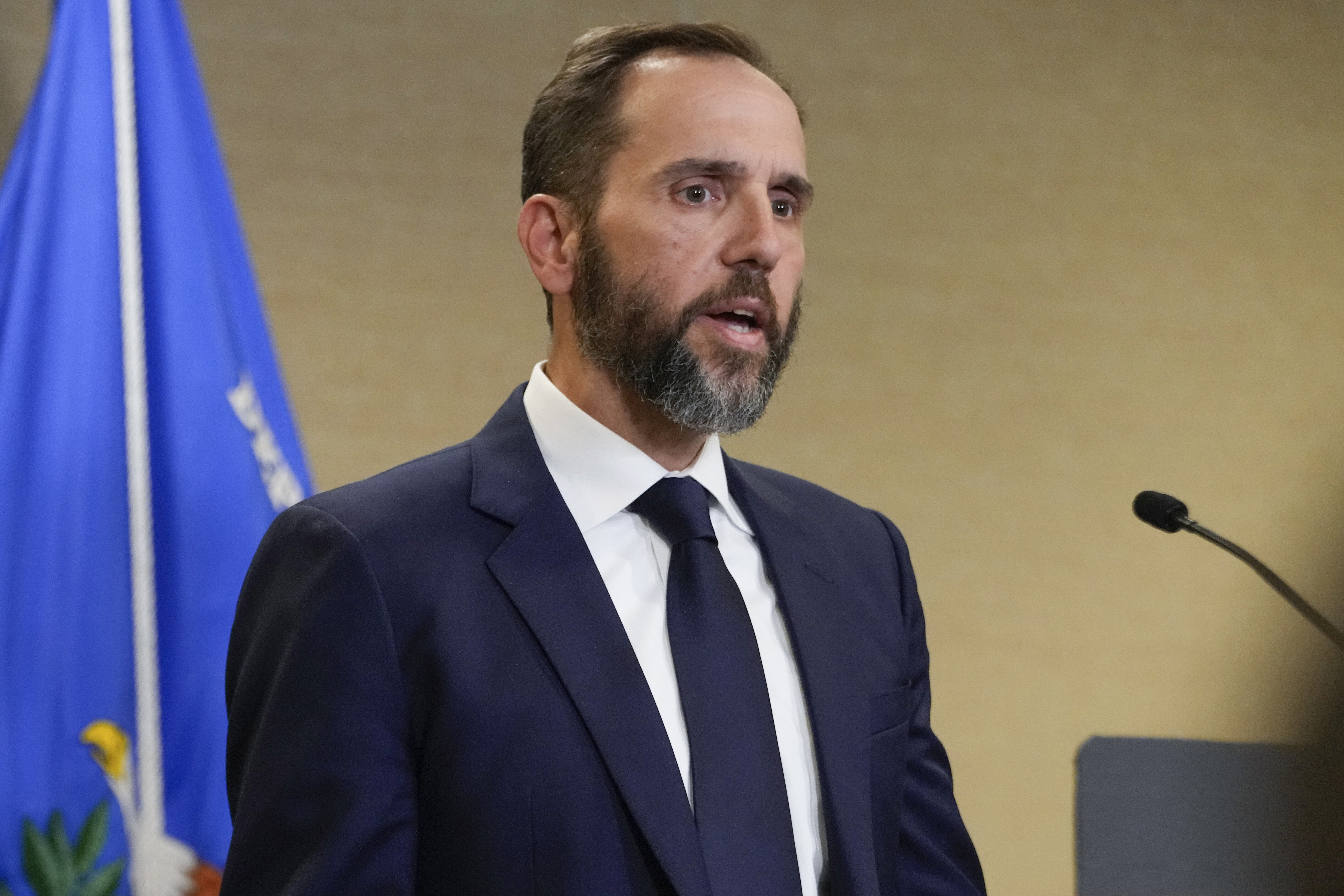
Former President Donald Trump asked the district court judge overseeing his trial for his actions leading up to January 6, 2021, to hold special counsel Jack Smith in contempt of court, according to a filing submitted on Thursday.

Trump’s filing claims that Smith, who is prosecuting the former president in a DC federal court, is in violation of a stay order put in place by Judge Tanya Chutkan after the prosecutor submitted new pretrial filings during the ongoing stay period.

The stay order was put in place after Trump appealed a previous decision by Chutkan rejecting Trump’s assertion of absolute immunity from criminal prosecution. That appeal will be heard by the D.C. Circuit Court of Appeals on January 9. Smith’s office did not immediately respond to a request for comment.

The argument Trump puts forward in his filing is that Smith’s motions are filled with “partisan rhetoric” that “mirrors the Biden Administration’s dishonest talking points”. Since Trump is relieved of having to respond by the stay order, “the prosecutors seek to weaponise the Stay to spread political propaganda”.

Like many Trump-related legal motions, this filing is likely little more than a bid to buy time. Since his multiple indictments for trying to steal the 2020 election and illegally taking classified documents, Trump has engaged in a legal battle to delay his trials as much as possible, since he would become immune from prosecution, and even have the power to dismiss federal charges, if he were to win the 2024 election and take office again.

Former President Donald Trump asked a district court on Jan. 4 to hold special counsel Jack Smith in contempt of court.

Jacquelyn Martin via Associated Press

Trump faces four charges in the trial, including conspiracy to defraud the country by lying about election fraud, conspiracy to obstruct an official proceeding for planning to derail the counting of electoral votes on January 6, obstruction of an official proceeding for the attempt to do so, and conspiracy against rights for his efforts to threaten people’s right to vote.

It’s one of four separate legal battles the former president is facing: two related to his attempts to overturn the 2020 election, one regarding his alleged mishandling of classified documents, and one relating to his 2016 hush money payment to a porn star.

The request that Smith be held in contempt revolves around the prosecutor’s continued filing of pretrial motions during the stay period where Trump is relieved of the “burdens of litigation”. That relief means that Trump need not respond to motions filed by the prosecution until the appeal is concluded.

The prosecution’s continued motions, Trump argues, place an ongoing burden of litigation on him, in contravention of the stay order.

The pretrial filings Trump accuses Smith of improperly submitting are known as motions in limine, which state what evidence or arguments should be held inadmissible during the trial. The court previously ordered Smith to file these motions by January 9, which is also the date Trump’s appeal is slated to be heard by the DC Circuit Court of Appeals.

Smith’s motions aim to hold that filing deadline, which Chutkan said may still stand, depending on the appeal verdict, in her stay order.

With Trump asking the court to rule that the prosecution’s motions be withdrawn, and that they be forbidden from submitting any more filings until the stay is lifted, the contempt request can be seen as Trump’s effort to tie up Smith’s motions and further delay the trial if he loses his appeal.

Share Button

Why Has Rishi Sunak Suggested He’s Waiting Until Autumn For A General Election?

British politics is slowly returning after the Christmas break, and speculation is growing over when the eagerly-anticipated general election will take place after comments made by Rishi Sunak.

What did Sunak say?

The prime minister announced on Thursday his “working assumption” was he would delay going to the country until the “second half” of 2024.

His comments suggest the election will be held in either October or November, as had been widely expected. But it comes following speculation Sunak could decide to call the election for May.

While he did not categorically rule out a spring poll, Sunak told broadcasters: “My working assumption is we’ll have a general election in the second half of this year.”

Labour, which have consistently held a 20-point poll lead over the Tories, seized on the remarks as a sign he had “bottled” facing the British public and accused Sunak of “squatting” in Downing Street.

What do we actually know?

In Britain, each electoral term is supposed to last five years. Then prime minister Boris Johnson called the last general election in December 2019, meaning meaning the latest possible date for the country to go to the polls would be January 2025.

But in reality, and ever since the establishment of fixed terms in 2011, the five-year gap between polls is not what happens in practice.

Under the Dissolution and Calling of Parliament Act 2022, a prime minister has the power to call an election earlier than the deadline – all voters would have to wait for is the 25 days between a PM making a “request” to the King to dissolve parliament (and as a constitutional monarch, the King Charles could not reject it) and polling day.

What’s influencing the date?

As it’s in his gift to choose, Sunak is clearly likely to pick a date most favourable to him and his party. And since Labour holds a commanding poll lead, he isn’t going to rush the country to the ballot box when there’s still time to steal a win – however unlikely that currently looks.

His decision could be based on not just whether he can snatch an unlikely victory from the jaws of defeat, but also under the grimest projections if he can reduce the number of seats the Tories lose and prevent a 1997-style Labour landslide (or worse).

So what is affecting that choice?

The next big political fixture is the spring budget, when chancellor Jeremy Hunt could magic up some tax and spending commitments that sit well with the electorate. It was the announcement of the March 6 fiscal event that prompted speculation of an spring budget, and a blitz of crowd-pleasing promises could yet encourage Sunak to go early.

But his words on Tuesday suggest he doesn’t think this will be enough.

Other than pushing taxpayers’ money around, he may be on the lookout for something to materialise, and that could lead the country to waiting until the last minute. Three areas in particular will be on his radar: the economy, immigration and an apparent lack of enthusiasm for the Labour alternative.

A positive story around the economy could be possible if the UK manages to avoid a recession in 2024 as inflation cools to more normal levels. But it may be too late to reverse voter antipathy towards the Tories given how Liz Truss crashed the economy, and high mortgage rates continue to hurt homeowners.

Sunak’s “stop the boats” pledge has been central to his pitch to voters since becoming Tory leader, and any sense that he has been able to curb the number of small boats crossing the English channel may be something he can stitch a better narrative out of.

He may hope to combine an uptick on either or both of these with the argument Keir Starmer isn’t the answer to Britain’s problems – but perhaps even January 2025 isn’t enough time to make this strategy work.

Share Button

Here’s Why People Think Argylle Author Elly Conway Is Actually Taylor Swift

You may have heard of the 2024 movie Argylle, starring the likes of Henry Cavill, Dua Lipa, Samuel L. Jackson and Bryce Dallas Howard, but have you also heard about the wild fan theory linking the film to global superstar Taylor Swift?

Swifties have flooded social media to perpetuate a theory that the singer-songwriter is in fact the author behind the novel of the same name, which supposedly inspired the film.

As you might imagine, it’s a convoluted theory with many clues and links, so let’s break it down a little bit, shall we?

Who is Elly Conway, the author of Argylle and the protagonist in the film?

Elly Conway is a never-before-heard-of author whose debut novel was turned into a movie before it was even published – not exactly a common trajectory for a first time writer.

Though the author has an Instagram page (where she doesn’t post pictures of her face) and an author page on her publisher Penguin’s website, virtually nothing is known about her.

This has led to many commentators speculating that either: Conway isn’t real, and the book that has been released today is the book from the film, likely written by a ghost writer. Or, Conway is a pseudonym for a very famous person who would’ve been able to secure a movie deal on whatever they wrote.

Swift is currently the favourite for a whole host of reasons, which range from sort of credible to quite a reach, but other contenders including Harry Potter author J.K. Rowling, who has published under a pen name in the past.

Why do people think Elly Conway is Taylor Swift?

Seemingly, the first person to talk about this theory is TikTok user @JessiSwiftTok, who shared her theory on 21st October 2023. In the video – which has received nearly 1 million views – she points to the cat backpack Conway wears, which appears in the trailer and on promotional artwork for the film, as something Swift herself often uses to carry around her own cats.

Another parallel between Conway, played by Bryce Dallas Howard, and Swift is their looks. As @JessiSwiftTok explains, at the end of Swift’s famous All Too Well short film, the star portrays herself as a redheaded author with a very similar appearance to that of Dallas Howard in the film.

Other clues include several pictures of Swift in the same bejewelled pattern used in the Argylle film posters, a picture of Swift on her tour in a Conway Studios jumper and lots of date synchronicities that are honestly beyond my comprehension as a casual Swiftie.

The similarities between Swift and Dallas Howard in Argylle have not gone unnoticed by Swifties

PolyGram Entertainment/Republic Records/Universal Pictures

Will we ever know who Elly Conway really is?

It’s uncertain whether we will ever know the true identity behind Conway, but since she is supposedly going to write three more books in the Argylle series, this saga could extend far into the future.

While some contend that this Conway-Swift theory is actually a clever marketing ploy by the studio behind the movie, others believe the parallels between Conway and Swift are too glaring ignore.

Indeed, Swift has been known to use a pseudonym before – hello Nils Sjöberg – but so far the Cruel Summer singer hasn’t confirmed anything. One thing I’ll say is if it turns out to be J.K. again, we’re gonna be pissed!

Argylle is scheduled to release in cinemas worldwide on 2nd February.

Share Button

Baby formula recalled over bacteria contamination fears

Reckitt are recalling batches of Nutramigen powders after finding bacteria in an “isolated overseas sample”.

Share Button

New antibiotic compound very exciting, expert says

A new antibiotic compound could help treat a bacterium the World Health Organization classes as a major threat.

Share Button

Nematode proteins shed light on infertility

We have two copies of each chromosome in every cell in our bodies except in our reproductive cells. Sperm and egg cells contain a single copy of each chromosome with a unique mix of genes from our parents, an evolutionary trick to give our offspring genetic variability. The sperm and egg are made during meiosis, the process by which cells with two chromosome copies reduce their chromosome numbers to one. For meiosis to work, the two chromosomes must align perfectly and exchange the correct amount of genetic information. Any deviation puts fertility at risk.

Enter the synaptonemal complex (SC), a zipper-like protein structure that lines up and anchors the two parental chromosomes together, end-to-end, to facilitate successful genetic exchanges. Failure to regulate this exchange is a leading cause of age-related infertility in humans and could compromise fertility across the tree of life. Humans, fungi, plants, worms and anything that reproduces sexually uses the SC to make reproductive cells, known as gametes. Despite its importance, we don’t understand how proteins within the SC regulate chromosomal interactions because this multi-step process happens in internal organs and has been impossible to recreate in a lab.

In a new study, University of Utah biologists developed a method for illuminating the intricate interactions of the SC in the nematode C. elegans. The authors identified a trio of protein segments that guide chromosomal interactions, and pinpointed the location where they interact with each other. Their novel method uses a technique known as genetic suppressor screening, which can serve as a blueprint for research on large cellular assemblies that resist traditional structural analysis.

“This is a way to lock in on systems in cells that are too ‘loosie-goosey’ to use methods that rely on crystallization,” said Ofer Rog, associate professor of biology at the U and senior author of the study. “A lot of the interactions in cells are loosely bonded together. The problem is that you can’t look at it under an electron microscope because nothing is stable enough — everything is constantly moving. Our approach allows you to study even the interactions that are relatively weak or transient.”

The study published on Dec. 6, 2023, in the journal Proceedings of the National Academy of Sciences (PNAS).

The birds and the bees… and the nematodes

Let’s dig into meiosis. Chromosomes are thread-like structures made of DNA that carry genetic information when cells divide and from generation to generation. Regular cells have a certain number of chromosomes; humans have 46 and C. elegans have 12. Chromosomes come in pairs called homologous chromosomes that carry the genes we inherited from each of our parents — one from our mom, one from our dad. When meiosis begins, homologous chromosomes arrange themselves into elongated structures organized along a backbone called the axis. The axes of homologous pairs are aligned lengthwise to each other while at the same time, the synaptonemal complex (SC) forms between the parallel axes. The homologous pairs have matching genes arranged in the same order, with small variations within the genes — these are the variations that make each individual unique.

“You can think of it like a zipper,” Rog explained. “The axes of the chromosomes are like the two sides of your shirt. The synaptonemal complex is kind of like the teeth of the zippers that lock onto each other and can pull and align the two sides of the shirt correctly.”

Scientist previously knew that the SC of C. elegans formed between homologs, but the U biologists are the first to pinpoint the exact position where the SC interacts with itself to facilitate genetic exchanges.

“When you exchange information between the chromosomes, you want to make sure that at the end you still have two complete chromosomes,” said Rog. “The way the cell does it is that the two chromosomes are perfectly aligned. So, when you exchange segments between them, you’re not losing any information in the process.

How to analyze loosie-goosey structures

The researchers bred 50,000 nematodes that had temperature-sensitive defects in the SC. At high temperatures, the worms were unable to form the SC protein zipper needed to join the chromosomes together. Without the zipper, the gene exchanges during meiosis either didn’t happen at all or didn’t occur at the right number. Lisa Kursel, postdoctoral researcher and lead author of the study ran the experiments.

“We grew the worms at the permissive, cooler temperature, then exposed them to a chemical that caused millions of mutations along their chromosomes and watched to see if any of the mutated worms could reproduce at the warmer temperature,” Kursel said. The chemically induced mutations that corrected the nematode’s infertility are known as suppressor mutations. “Then we’d know if the suppressor mutations restored their fertility.”

To identify the animals with mutations that made them fertile again, the researchers put the nematodes on agar plates filled with yummy bacteria. The agar plates that had fertile nematodes were soon empty as their progeny ate the food. The agar plates with sterile worms died off before they could clean their plate, allowing the bacteria to flourish.

Once they had fertile nematodes, they could test if the mutation “fixed” the protein zipper. They then screened every single base pair on the DNA — 100 million base pairs — and identified which mutations restored the worms’ ability to reproduce. They found that all the helpful mutations occurred in short segments of three proteins, SYP-1, SYP-3, SYP-4. Moreover, the mutations carried distinct signatures of interaction. For example, while the original mutations changed the electric charge from positive to negative, the helpful mutations flipped the charge back.

“This was a strong indication that SYP-1, SYP-3 and SYP-4 interact with each other like magnets, with positive and negative regions attracted to each other,” said Rog. Such “sticky” interactions could also help tether the chromosomes together.

Jesus Aguayo Martinez, a senior biology major and co-author of the study, looked at the behavior of the suppressor mutation in nematodes without the original SC-disrupting mutation.

“We thought that since the original mutation alone produced a fertility defect, then the nematodes with the suppressor mutation alone would also have a fertility defect. That wasn’t the case,” said Aguayo Martinez. “Surprisingly, normal worms and worms with only the suppressor mutations produced similar numbers of progeny.”

Next steps

Uncovering the SC’s role in meiosis may help to better understand fertility in humans. The SC has a similar role across all eukaryotes, from nematodes to fungi to plants to humans. Previous research by the Rog Lab at the U showed that the structure itself looks the same and acts similarly to bring in parental chromosomes to facilitate exchanges. However, the actual sequences of the protein components are different between organisms. Such a pattern is unusual: Most cellular structures that carry essential, basic functions like cell division, genome duplication or metabolism are highly conserved, and could in fact be swapped between different organisms.

“A question that we think a lot about is what is special about the SC? Why can it do the same thing and look the same way, but consist of different building blocks?” Rog asked.

Kursel, Aguayo Martinez, Rog and other members of the lab are doing more analysis on the evolution of the SC across species, and of other cellular structures that defy the common wisdom of evolution.

This work was funded by the National Institute for General Medical Sciences grant R35GM128804. Kursel was supported by the Developmental Biology Training Grant from the U.S. National Institute of Child Health and Human Development, and Aguayo Martinez was supported by a University of Utah Biology Research Scholar Award.

Share Button

The choreography connecting kelp forests to the beach

The Santa Barbara Channel’s kelp forests and its sandy beaches are intimately connected. Giant kelp, the foundation species of rocky reefs, serves as a major part of the beach food web as fronds of the giant seaweed break away from the forest and are transported to the beach. But the relationship goes deeper.

In a paper published this week in the Proceedings of the National Academy of Sciences, a team of scientists demonstrated that kelp forests can do more than supply food to tiny, hungry crustaceans living in the sand. They can also influence the dynamics of the sandy beach food web.

“The amount of kelp on the reef changes through time in a way where the peaks and low points in abundance across several kelp forests are matched together,” said lead author Jonathan Walter, a senior researcher at the University of California, Davis, and its Center for Watershed Sciences. “That’s what we refer to as synchrony. It is related to the ability of systems to persist in the face of changing environmental conditions. A little asynchrony allows systems to be resistant to fluctuations and therefore more stable.”

The study uncovers the role of synchrony in the beach food web, with broader implications as the climate shifts in ways that might change how linked ecosystems perform their functions.

Revealing synchrony’s role in these ecosystems fills a key knowledge gap in our understanding of the connection of reef and beach.

“The kelp forest and the beach are both highly dynamic ecosystems,” said co-author Jenny Dugan, a coastal marine ecologist at UC Santa Barbara. “How the dynamics of those two ecosystems interact and behave is the key question here, especially with the beach system so dependent on the kelp forest.”

In sync

Though a natural and ubiquitous phenomenon, synchrony and its implications are not yet fully understood.

The research team sought to understand whether and how kelp wrack (detritus) could affect the beach ecosystem’s dynamics. For instance, how might species respond to the changing environment, and how resilient is the beach ecosystem to disturbances?

To address these questions, the study used long-term data from UCSB’s Santa Barbara Coastal Long Term Ecological Research site, which is supported by the National Science Foundation. The team’s model was built on a time series of wind, wave, wrack, and beach-width data at five sandy beaches over 11 years.

It revealed patterns of synchrony — where the abundance of kelp wrack on beaches could be explained by kelp abundance in the forest, wave action, and beach width fluctuating together. At the longest timescales, kelp forest biomass and beach width were the biggest drivers of kelp wrack on the beaches.

Beach melodies

“We found time lags in this synchrony that were important,” Dugan said. “It wasn’t as simple as everything changing at the same time — it was like separate songs or melodies that came together in different ways. This made the patterns more complex, which is why it required the type of analyses we used.”

Importantly, the researchers found this synchrony crossed from ocean to shore. The abundance of predatory shorebirds, like sandpipers and plovers, lagged behind the deposition of wrack on beaches.

“Once on the beach, kelp wrack feeds a highly productive community of small invertebrates — crustaceans and insects — that are in turn a favorite food of shorebirds,” Dugan explained. The cross-system synchrony is particularly notable because the beach ecosystem relies so heavily on kelp subsidies, she added.

Dynamic nature

“The dynamic nature of kelp forests, in terms of their high productivity and turnover, is unique for ecosystems structured around foundation species,” said co-author and coastal ecologist Kyle Emery, a researcher in the UCSB Marine Science Institute. “It allows us to observe change many times over compared to other foundation species and gives us the ability to observe many different system states, processes and functions. This enabled us to more rapidly analyze these questions of cross-ecosystem synchrony.”

The study was funded by the Santa Barbara Coastal Long Term Ecological Research, National Science Foundation, McDonnell Foundation and Humboldt Foundation.

Share Button