Scientists work to bring tissue regeneration to replace root canal treatment

Want to avoid a root canal? In the future, you might be able to opt for tissue regeneration instead. ADA Forsyth scientists are testing a novel technology to treat endodontic diseases (diseases of the soft tissue or pulp in your teeth) more effectively. The study, “RvE1 Promotes Axin2+Cell Regeneration and Reduces Bacterial Invasion,” which appeared in The Journal of Dental Research, demonstrates regenerative properties of resolvins, specifically Resolvin E1 (RvE1), when applied to dental pulp. Resolvins are part of a greater class of Specialized Proresolving Mediators (SPMs). This class of molecule is naturally produced by the body and is exquisitely effective in the control of excess inflammation associated with disease.

“Pulpitis (inflammation of dental pulp) is a very common oral health disease that can become a serious health condition if not treated properly,” said Dr. Thomas Van Dyke, Vice President at the Center for Clinical and Translational Research at ADA Forsyth, and a senior scientist leading the study. “Root canal therapy (RCT) is effective, but it does have some problems since you are removing significant portions of dentin, and the tooth dries out leading to a greater risk of fracture down the road. Our goal is to come up with a method for regenerating the pulp, instead of filling the root canal with inert material.”

Inflammation of this tissue is usually caused by damage to the tooth through injury, cavities or cracking, and the resulting infection can quickly kill the pulp and cause secondary problems if not treated.

The study applied RvE1 to different levels of infected and damaged pulp to explore its regenerative and anti-inflammatory capacities. There were two major findings. First, they showed RvE1 is very effective at promoting pulp regeneration when used in direct pulp-capping of vital or living pulp (replicating conditions of reversible pulpitis). They were also able to identify the specific mechanism supporting tissue regeneration.

Second, the scientists found that placing RvE1 on exposed and severely infected and necrotic pulp did not facilitate regeneration. However, this treatment did effectively slow down the rate of infection and treat the inflammation, preventing the periapical lesions (abscesses) that typically occur with this type of infection. Previous publications have shown that if the infected root canal is cleaned before RvE1 treatment, regeneration of the pulp does occur.

While this study focused on this technology in treating endodontic disease, the potential therapeutic impact is far reaching. Dr. Van Dyke explained, “because application of RvE1 to dental pulp promotes formation of the type of stem cells that can differentiate into dentin (tooth), bone, cartilage or fat, this technology has huge potential for the field of regenerative medicine beyond the tissues in the teeth. It could be used to grow bones in other parts of the body, for instance.”

The study was funded by Alvin Krakow Harvard/Forsyth Research Fund (Y. Wu), and USPHS grant DE025020 from the National Institute of Dental and Craniofacial Research (NIDCR) (T.E. Van Dyke).

Study authors include Yu-Chiao Wu, Ning Yu, Carla Alvarez Rivas, Nika Mehrnia, and Alpdogan Kantarci.

Share Button

Unlocking the secret strength of marine mussels

How do you create strong, yet quick-release connections between living and non-living tissues? This is a question that continues to puzzle bioengineers who aim to create materials that bond together for advanced biomedical applications.

Looking to nature for inspiration, the McGill-led research zeroed in on the marine mussel byssus, a fibrous holdfast, which these bivalve mollusks use to anchor themselves in seashore habitats. The byssus attaches to rocky surfaces using an underwater glue, but the other end (the byssus stem root) is firmly anchored within the mussel’s soft living tissue. This area of contact between the living tissue and the non-living byssus stem root is known as a biointerface, and is the focus of a study by McGill professor of Chemistry Matthew Harrington.

“Up to this point, it was baffling how the byssus stem root biointerface could be strong enough to resist constant crashing waves but also be suddenly released by the mussel upon demand,” said Harrington. “It seemed as if the mussel could somehow control its strength.”

Surprisingly strong, yet releasable

Following a cross-disciplinary investigation, the team found that the stem root separates into approximately 40-50 sheets known as lamellae that interlock with the living tissue, creating an incredibly strong interface much like interleaving two phone books together.

“The biggest surprise is how this strength can be lowered through the beating movements of billions of tiny hair-like cilia on the surface of the living tissue. Cilia movement is under the control of the neurotransmitters serotonin and dopamine, enabling the quick release of the whole stem root on demand.” says Harrington who holds the Canada Research Chair in Green Chemistry

This finding is particularly relevant for biomedical engineers and materials scientists as they look towards the future of bio-implants, wearable sensors, brain-computer interface design, and more.

“The stem root biointerface is unlike anything seen in human-made materials and could offer important inspiration for the next generation of biointerfaces,” said Harrington. “Since further medical advances will depend on novel biointerface design, these findings could have impact on human health in the future.”

Share Button

Researchers have taught an algorithm to ‘taste’

For non-connoisseurs, picking out a bottle of wine can be challenging when scanning an array of unfamiliar labels on the shop shelf. What does it taste like? What was the last one I bought that tasted so good?

Here, wine apps like Vivino, Hello Vino, Wine Searcher and a host of others can help. Apps like these let wine buyers scan bottle labels and get information about a particular wine and read the reviews of others. These apps build upon artificially intelligent algorithms.

Now, scientists from the Technical University of Denmark (DTU), the University of Copenhagen and Caltech have shown that you can add a new parameter to the algorithms that makes it easier to find a precise match for your own taste buds: Namely, people’s impressions of flavour.

“We have demonstrated that, by feeding an algorithm with data consisting of people’s flavour impressions, the algorithm can make more accurate predictions of what kind of wine we individually prefer,” says Thoranna Bender, a graduate student at DTU who conducted the study under the auspices of the Pioneer Centre for AI at the University of Copenhagen.

More accurate predictions of people’s favourite wines

The researchers held wine tastings during which 256 participants were asked to arrange shot-sized cups of different wines on a piece of A3 paper based upon which wines they thought tasted most similarly. The greater the distance between the cups, the greater the difference in their flavour. The method is widely used in consumer tests. The researchers then digitized the points on the sheets of paper by photographing them.

The data collected from the wine tastings was then combined with hundreds of thousands of wine labels and user reviews provided to the researchers by Vivino, a global wine app and marketplace. Next, the researchers developed an algorithm based on the enormous data set.

“The dimension of flavour that we created in the model provides us with information about which wines are similar in taste and which are not. So, for example, I can stand with my favourite bottle of wine and say: I would like to know which wine is most similar to it in taste — or both in taste and price,” says Thoranna Bender.

Professor and co-author Serge Belongie from the Department of Computer Science, who heads the Pioneer Centre for AI at the University of Copenhagen, adds:

“We can see that when the algorithm combines the data from wine labels and reviews with the data from the wine tastings, it makes more accurate predictions of people’s wine preferences than when it only uses the traditional types of data in the form of images and text. So, teaching machines to use human sensory experiences results in better algorithms that benefit the user.”

Can also be used for beer and coffee

According to Serge Belongie, there is a growing trend in machine learning of using so-called multimodal data, which usually consists of a combination of images, text and sound. Using taste or other sensory inputs as data sources is entirely new. And it has great potential — e.g., in the food sector. Belongie states:

“Understanding taste is a key aspect of food science and essential for achieving healthy, sustainable food production. But the use of AI in this context remains very much in its infancy. This project shows the power of using human-based inputs in artificial intelligence, and I predict that the results will spur more research at the intersection of food science and AI.”

Thoranna Bender points out that the researchers’ method can easily be transferred to other types of food and drink as well:

“We’ve chosen wine as a case, but the same method can just as well be applied to beer and coffee. For example, the approach can be used to recommend products and perhaps even food recipes to people. And if we can better understand the taste similarities in food, we can also use it in the healthcare sector to put together meals that meet with the tastes and nutritional needs of patients. It might even be used to develop foods tailored to different taste profiles.”

The researchers have published their data on an open server and can be used for free.

“We hope that someone out there will want to build upon our data. I’ve already fielded requests from people who have additional data that they would like to include in our dataset. I think that’s really cool,” concludes Thoranna Bender.

Share Button

King Charles Wears Tie With Greek Flag At COP28 Amid UK’s Row With Athens

King Charles caused quite the stir with his outfit choice during his keynote speech at COP28 on Friday.

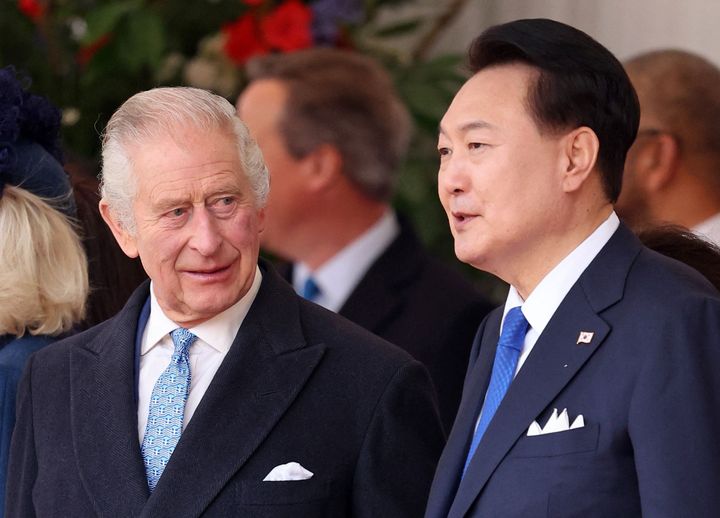
While at first glance it may appear pretty subtle, upon closer inspection, the Greek flag appears to have been printed on the monarch’s blue and white tie, with a similar pattern seen on his pocket-square.

Earlier this week, prime minister Rishi Sunak triggered a diplomatic row with Greece when he decided to cancel a meeting with his Greek counterpart at the last minute.

No.10 claim it was because Kyriakos Mitsotakis broke his promise not to publicly discuss Greece’s demand for the UK to return the 2,500-year-old Elgin Marbles (or Parthenon sculptures) to their place of origin – Greece.

This has led to significant public backlash against Sunak for his supposed “petulance”.

Sending subtle political messages through clothing, while outwardly maintaining your place as an apolitical figurehead, was an art Charles’ mother Queen Elizabeth II was well-known for.

The Queen’s decision to wear a blue hat with yellow circles on it at the 2017 state opening of parliament was widely perceived as a sign of solidarity with the EU at a time when Brexit negotiations were pulling Westminster apart.

The Queen’s dresser Angela Kelly later denied any political intent behind the outfit, saying it “never occurred to her” that it would be comparable to the EU flag.

The King has managed to steer clear of direct intervention in politics since ascending the throne in September last year – as his role demands – despite his reputation as the “activist prince” when he was the heir apparent.

He does have Greek heritage through his father, the late Prince Philip who was born in Corfu as the Prince of Greece and Denmark, and has visited the European country on multiple occasions.

However, the King did also seem to wear the same tie last week, when meeting the South Korean president – before the Elgin Marbles row kicked off.

Charles meeting the South Korea president on November 21

CHRIS JACKSON via Getty Images

Share Button

Covid inquiry: Earlier lockdown could have kept schools open, says Matt Hancock

The former health secretary says avoiding action in autumn 2020 led to tougher lockdowns later on.

Share Button

Bewildered By Language Used In COP28? 5 Key Climate Terms, Explained

The largest climate summit of the year began this week amid hope that world leaders may actually agree to an effective deal to target the environmental crisis.

The 28th Conference Of Parties – COP28 – is being held in Dubai, UAE, this year, and will run from November 30 to December 12.

Activists are looking for governments to agree for a more equitable management of the environment this year, as extreme weather hit almost every part of the planet over the last 12 months.

What’s decided at COP28 could therefore be very consequential – but it can be hard to understand what’s happening through all of the jargon.

So here’s a breakdown of some of the phrases we can expect to see this year.

1. Abated fossil fuels

The abatement of fossil fuels does not have an official definition, but is loosely meant to describe reducing use of the carbon-spewing resources.

It pops up regularly in climate commitment plans – it turned up seven times in the April G7 summit’s final statement – but the exact definition has not been spelt out by governments.

According to the UN’s Intergovernmental Panel on Climate Change (IPCC), it often alludes to the controversial practise of carbon capture and storage.

Critics see that as a means for the fossil fuel companies to continue selling the product, and it has been widely described as a delay tactic which stops companies from having to phase out fuels.

Supporters of abatement argue that this is needed for the foreseeable future, as the planet is not even close to phasing out fossil fuels altogether.

2. Climate finance

The UN describes climate finance as “local, national or transnational financing—drawn from public, private and alternative sources of financing—that seeks to support mitigation and adaptation actions that will address climate change”.

Effectively, developed nations promise to pass some funds onto developing countries that have fewer resources to defend against the climate crisis.

COPs have repeatedly agreed to pass more finances onto other countries since 1992.

Back in 2009, the parties agreed to share $100 billion a year from developed countries to developing countries by 2020, but this target was missed.

This year’s COP will see countries debate several controversial elements of climate financing: how the finance is allocated; how much goes to adaptation; and how much goes to loss and damage.

3. Carbon pricing

Carbon pricing ties the cost the public ends up paying for greenhouse gas emissions – from crop damage to sea level rise – to their sources through a price, according to the World Bank Group.

This usually means putting a price on the amount of CO2 emitted, in an effort to put the carbon burden back onto the producers of the fossil fuels, while also boosting revenue to help the environment.

President of the European Commission, Ursula von der Leyen, said in her opening remarks that there must be a “price on carbon”.

She said: “Carbon pricing nudges the private sector towards innovation. It makes heavy polluters pay a fair price. And the revenues can be reinvested in the fight against climate change, in innovation and in a just transition.”

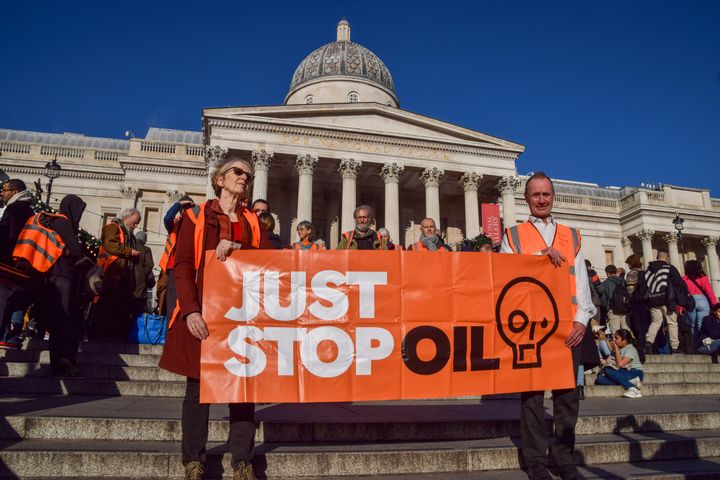
Activists march with a Just Stop Oil banner during a demonstration in Trafalgar Square.

SOPA Images via Getty Images

4. The UN Global Stocktake (GST)

This is a measure for countries (and other stakeholders) to see where they’re collectively making progress toward meeting the goals of the Paris Agreement, according to the UN.

It describes this as a “critical turning point” when it comes to addressing climate change, and akin to “taking inventory”.

The first ever global stocktake is going to conclude at the end of COP28, and will take place every five years after that.

It’s likely to be pretty damning considering scientists have warned we are still a long way off limiting global temperature change to 1.5C compared to pre-industrial levels.

“Governments will take a decision on the global stocktake at COP28, which can be leveraged to accelerate ambition in their next round of climate action plans due in 2025,” the UN said.

The GST is also meant to inform future NDCs.

5. Nationally Determined Contributions (NDCs)

These are the pledges at the centre of the Paris Agreement, and they’re unique to each country. They are submitted every five years to the UN – so the next ones will be due in 2025.

Each nation tries to see how it can reduce national emissions and adapt to climate change by taking these actions.

The UN understands these targets will be harder for developing countries to achieve, so emission reduction is “undertaken on the basis of equity, and in the context of sustainable development as well as efforts to eradicate poverty”.

Share Button

Here’s The Emotional Moment The New Reigning Queen Of Drag Race UK Was Crowned

After ten weeks of the fiercest competition around, a new queen has taken the crown of Drag Race UK.

Ginger Johnson, Michael Marouli and Tomara Thomas – the ‘Angels of the North’, so called because of all three of the trio’s North-Eastern background – made it to the finale of Drag Race UK season five, with one of them superseding Danny Beard, who won season four a year ago.

In the queens’ final challenge, they had to write and perform a verse on RuPaul’s song ‘Spotlight’, and appear in a sexy, cat burglar themed video.

Elsewhere in the episode, the queens had sit down with RuPaul and Michelle Visage, got to enjoy a visit from their biggest supporters and reflected on the season as a whole.

Beware: spoilers below.

After a stellar season, the top three were rejoined on the main stage by six eliminated queens of the season, including the recently fallen Dede Licious and the iconic Kate Butch; Cara Melle was absent due to illness.

With the badge count stacked against her, Tomara Thomas and her single challenge win were told to sashay away from the competition, with the star leaving the stage with a signature cackle and good humour.

It was then up to Ginger Johnson and Michael Marouli, with three challenge wins apiece, to lip sync for the crown to ‘A Little Respect’ by Erasure.

After a fierce battle (and a cameo from Danny Beard), the winner of season five of RuPaul’s Drag Race UK was announced as… Ginger Johnson!

Now, a bit of behind-the-scenes tea; at the end of a Drag Race season, multiple endings are filmed, so not even the queens know who’s won before it airs on TV – so here’s the moment Ginger actually found out she’d snatched the crown.

In the clip, season five’s top two (Ginger and Michael) can be seen reacting to the announcement with an appropriate amount of tears and celebration. Tomara, to her credit, looks thrilled to be there.

And here’s the moment we at HuffPost UK found out during the finale screening!

Drag Race UK Seasons 1-5 and Drag Race UK Vs. The World are available to stream on BBC iPlayer.

Share Button

Strictly Come Dancing: Amy Dowden’s blood clot after chemo

The dancer, 33, says her “nightmare seems to be never ending” after a blood clot on her lung.

Share Button

Head teacher says autistic student died despite family’s plea for support

Isaac Uzoegbu was hit by a car when he ran from home. His head teacher says it could have been prevented.

Share Button

Scientists build tiny biological robots from human cells

Researchers at Tufts University and Harvard University’s Wyss Institute have created tiny biological robots that they call Anthrobots from human tracheal cells that can move across a surface and have been found to encourage the growth of neurons across a region of damage in a lab dish.

The multicellular robots, ranging in size from the width of a human hair to the point of a sharpened pencil, were made to self-assemble and shown to have a remarkable healing effect on other cells. The discovery is a starting point for the researchers’ vision to use patient-derived biobots as new therapeutic tools for regeneration, healing, and treatment of disease.

The work follows from earlier research in the laboratories of Michael Levin, Vannevar Bush Professor of Biology at Tufts University School of Arts & Sciences, and Josh Bongard at the University of Vermont in which they created multicellular biological robots from frog embryo cells called Xenobots, capable of navigating passageways, collecting material, recording information, healing themselves from injury, and even replicating for a few cycles on their own. At the time, researchers did not know if these capabilities were dependent on their being derived from an amphibian embryo, or if biobots could be constructed from cells of other species.

In the current study, published in Advanced Science, Levin, along with PhD student Gizem Gumuskaya discovered that bots can in fact be created from adult human cells without any genetic modification and they are demonstrating some capabilities beyond what was observed with the Xenobots. The discovery starts to answer a broader question that the lab has posed — what are the rules that govern how cells assemble and work together in the body, and can the cells be taken out of their natural context and recombined into different “body plans” to carry out other functions by design?

In this case, researchers gave human cells, after decades of quiet life in the trachea, a chance to reboot and find ways of creating new structures and tasks. “We wanted to probe what cells can do besides create default features in the body,” said Gumuskaya, who earned a degree in architecture before coming into biology. “By reprogramming interactions between cells, new multicellular structures can be created, analogous to the way stone and brick can be arranged into different structural elements like walls, archways or columns.” The researchers found that not only could the cells create new multicellular shapes, but they could move in different ways over a surface of human neurons grown in a lab dish and encourage new growth to fill in gaps caused by scratching the layer of cells.

Exactly how the Anthrobots encourage growth of neurons is not yet clear, but the researchers confirmed that neurons grew under the area covered by a clustered assembly of Anthrobots, which they called a “superbot.”

“The cellular assemblies we construct in the lab can have capabilities that go beyond what they do in the body,” said Levin, who also serves as the director of the Allen Discovery Center at Tufts and is an associate faculty member of the Wyss Institute. “It is fascinating and completely unexpected that normal patient tracheal cells, without modifying their DNA, can move on their own and encourage neuron growth across a region of damage,” said Levin. “We’re now looking at how the healing mechanism works, and asking what else these constructs can do.”

The advantages of using human cells include the ability to construct bots from a patient’s own cells to perform therapeutic work without the risk of triggering an immune response or requiring immunosuppressants. They only last a few weeks before breaking down, and so can easily be re-absorbed into the body after their work is done.

In addition, outside of the body, Anthrobots can only survive in very specific laboratory conditions, and there is no risk of exposure or unintended spread outside the lab. Likewise, they do not reproduce, and they have no genetic edits, additions or deletions, so there is no risk of their evolving beyond existing safeguards.

How Are Anthrobots Made?

Each Anthrobot starts out as a single cell, derived from an adult donor. The cells come from the surface of the trachea and are covered with hairlike projections called cilia that wave back and forth. The cilia help the tracheal cells push out tiny particles that find their way into air passages of the lung. We all experience the work of ciliated cells when we take the final step of expelling the particles and excess fluid by coughing or clearing our throats. Earlier studies by others had shown that when the cells are grown in the lab, they spontaneously form tiny multicellular spheres called organoids.

The researchers developed growth conditions that encouraged the cilia to face outward on organoids. Within a few days they started moving around, driven by the cilia acting like oars. They noted different shapes and types of movement — the first. important feature observed of the biorobotics platform. Levin says that if other features could be added to the Anthrobots (for example, contributed by different cells), they could be designed to respond to their environment, and travel to and perform functions in the body, or help build engineered tissues in the lab.

The team, with the help of Simon Garnier at the New Jersey Institute of Technology, characterized the different types of Anthrobots that were produced. They observed that bots fell into a few discrete categories of shape and movement, ranging in size from 30 to 500 micrometers (from the thickness of a human hair to the point of a sharpened pencil), filling an important niche between nanotechnology and larger engineered devices.

Some were spherical and fully covered in cilia, and some were irregular or football shaped with more patchy coverage of cilia, or just covered with cilia on one side. They traveled in straight lines, moved in tight circles, combined those movements, or just sat around and wiggled. The spherical ones fully covered with cilia tended to be wigglers. The Anthrobots with cilia distributed unevenly tended to move forward for longer stretches in straight or curved paths. They usually survived about 45-60 days in laboratory conditions before they naturally biodegraded.

“Anthrobots self-assemble in the lab dish,” said Gumuskaya, who created the Anthrobots. “Unlike Xenobots, they don’t require tweezers or scalpels to give them shape, and we can use adult cells — even cells from elderly patients — instead of embryonic cells. It’s fully scalable — we can produce swarms of these bots in parallel, which is a good start for developing a therapeutic tool.”

Little Healers

Because Levin and Gumuskaya ultimately plan to make Anthrobots with therapeutic applications, they created a lab test to see how the bots might heal wounds. The model involved growing a two-dimensional layer of human neurons, and simply by scratching the layer with a thin metal rod, they created an open ‘wound’ devoid of cells.

To ensure the gap would be exposed to a dense concentration of Anthrobots, they created “superbots” a cluster that naturally forms when the Anthrobots are confined to a small space. The superbots were made up primarily of circlers and wigglers, so they would not wander too far away from the open wound.

Although it might be expected that genetic modifications of Anthrobot cells would be needed to help the bots encourage neural growth, surprisingly the unmodified Anthrobots triggered substantial regrowth, creating a bridge of neurons as thick as the rest of the healthy cells on the plate. Neurons did not grow in the wound where Anthrobots were absent. At least in the simplified 2D world of the lab dish, the Anthrobot assemblies encouraged efficient healing of live neural tissue.

According to the researchers, further development of the bots could lead to other applications, including clearing plaque buildup in the arteries of atherosclerosis patients, repairing spinal cord or retinal nerve damage, recognizing bacteria or cancer cells, or delivering drugs to targeted tissues. The Anthrobots could in theory assist in healing tissues, while also laying down pro-regenerative drugs.

Making New Blueprints, Restoring Old Ones

Gumuskaya explained that cells have the innate ability to self-assemble into larger structures in certain fundamental ways. “The cells can form layers, fold, make spheres, sort and separate themselves by type, fuse together, or even move,” Gumuskaya said. “Two important differences from inanimate bricks are that cells can communicate with each other and create these structures dynamically, and each cell is programmed with many functions, like movement, secretion of molecules, detection of signals and more. We are just figuring out how to combine these elements to create new biological body plans and functions — different than those found in nature.”

Taking advantage of the inherently flexible rules of cellular assembly helps the scientists construct the bots, but it can also help them understand how natural body plans assemble, how the genome and environment work together to create tissues, organs, and limbs, and how to restore them with regenerative treatments.


Share Button