Large herbivores such as elephants, bison and moose contribute to tree diversity

Using global satellite data, a research team has mapped the tree cover of the world’s protected areas. The study shows that regions with abundant large herbivores in many settings have a more variable tree cover, which is expected to benefit biodiversity overall.

Maintaining species-rich and resilient ecosystems is key to preserving biodiversity and mitigating climate change. Here, megafauna — the part of the animal population in an area that is made up of the largest animals — plays an important role. In a new study published in the scientific journal One Earth, an international research team, of which Lund University is a part, has investigated the intricate interplay between the number of voracious herbivores and the diversity of trees in the world’s protected areas.

“Our findings reveal a fascinating and complex story of how large herbivorous animals shape the world’s natural landscapes. The tree cover in these areas is sparser, but the diversity of the tree cover is much higher than in areas without large herbivores,” says Lanhui Wang, a researcher in physical geography and ecosystem science at Lund University.

“In our global analysis, we find a substantial association between the biomass of large herbivores and varied tree cover in protected areas, notably for browsers and mixed-feeders such as elephants, bison and moose and in non-extreme climates,” explains the study’s senior author, Jens-Christian Svenning, professor at Aarhus University.

Hereby, the study supports that large wild herbivores promote a diverse vegetation structure, creating a rich habitat for many other species. This is due to the animals’ consumption of vegetation as well as physical disturbances.

According to Lanhui Wang, these new research findings highlight the need to integrate large herbivores into restoration and conservation strategies. Not only for the sake of the animals themselves but also for the vital role they play in shaping landscapes and influencing biodiversity. The researchers argue that this aspect is not sufficiently considered within the framework of sustainable land management and ecosystem restoration.

“At a time when global initiatives are intensely focused on combating climate change and biodiversity loss, our findings highlight the need for a broader and more nuanced discussion about ecosystem management and conservation measures. It is of utmost importance to integrate understanding of the ecological impact of megafauna into this,” says Lanhui Wang.

The UN has declared the 2020s as the decade of ecosystem restoration. In total, 115 countries have agreed to restore up to 100,000 square kilometres of nature in total. To achieve this, more wild-living large herbivores are needed worldwide, says Lanhui Wang.

“I believe that we will need to protect and conserve large herbivores to achieve the UN goals. Megafauna are crucial for tree cover, which in turn promotes carbon sequestration and a diversity of habitats,” says Lanhui Wang.

Share Button

Suicide site encouraged daughter to die – parents

Bronwen Morgan’s parents are calling for a block on suicide websites after she took her own life.

Share Button

Exclusive: Keir Starmer Warns Labour Rebels He Will Not U-Turn On Israel-Hamas War

Keir Starmer will not back calls for an unconditional ceasefire in the Israel-Hamas war despite facing a growing Labour revolt over the issue.

A senior source close to the party leader said Starmer “is not going to move” on his current position of supporting “humanitarian pauses” to let aid get to Gaza.

In a speech earlier this week, the Labour leader said he understood the calls for an immediate ceasefire, but believes that would simply allow Hamas to regroup and mount more attacks on Israel.

He said he would only support a cessation once the Israeli hostages currently being held in Gaza are released and Hamas’ military capabilities are degraded.

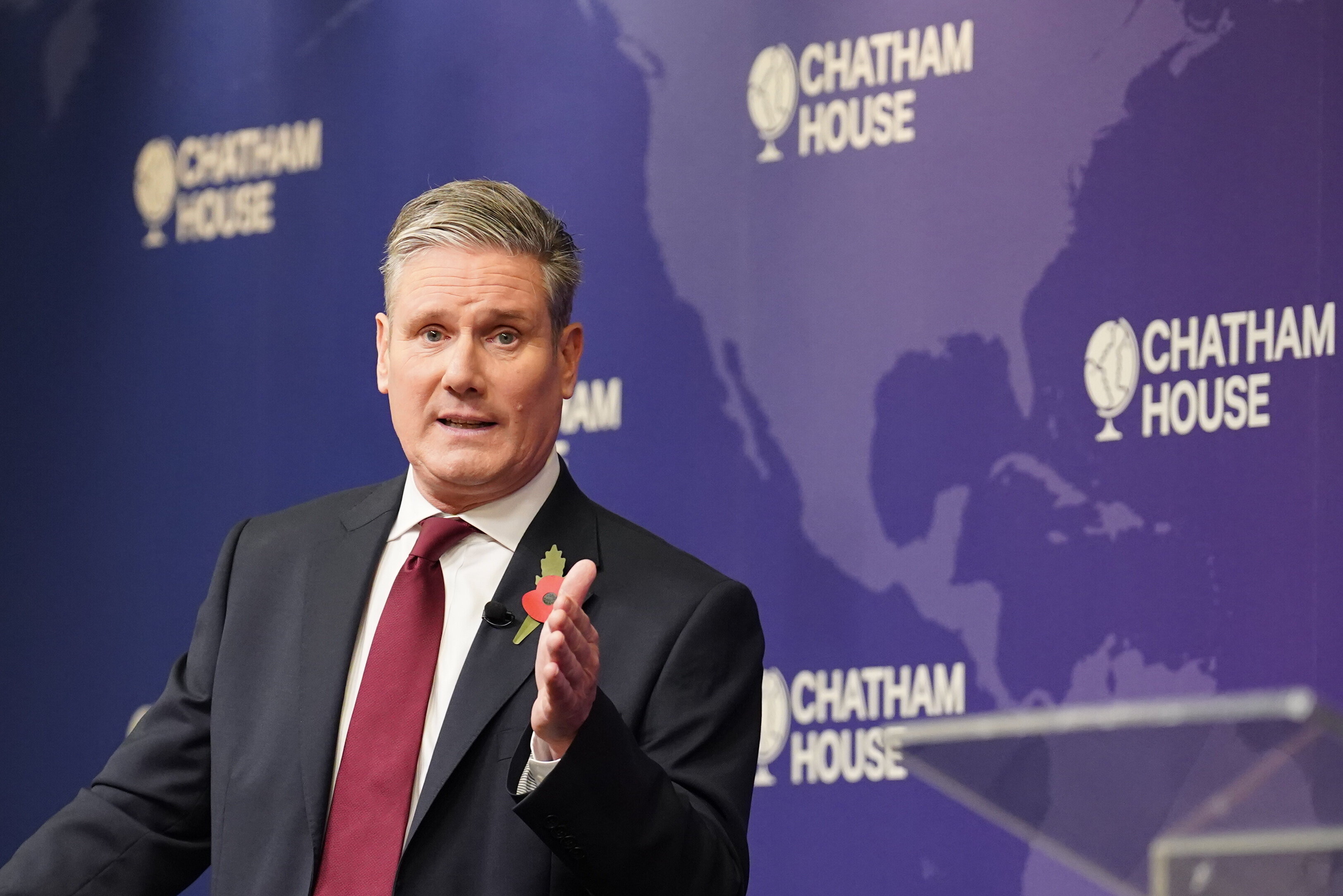
Outside Chatham House, where Starmer delivered his speech, he had to be bundled into a waiting car as he was heckled by protesters.

Since then, the calls for a ceasefire from within the Labour party have grown louder.

Two Labour council leaders today called on Starmer to resign over his refusal to back a ceasefire.

Burnley Council leader Afrasiab Anwar said the leader had “not stood up for Labour values”.

Asjad Mahmood, who is the leader of Pendle Borough Council, said Starmer had “failed to listen” to calls for a ceasefire.

But the senior Labour source told HuffPost UK: “The position is not going to change.

“We want to see a situation where the hostages are returned and we want to get to a place where the violence is ended but that’s not as simple of calling for a ceasefire

“Keir is not going to move on that.”

The row is the biggest challenge Starmer has faced since he succeeded Jeremy Corbyn as Labour leader in 2020.

More than 30 Labour councillors have so far quit the party, while 15 shadow ministers at Westminster have also broken ranks to call for a ceasefire.

But despite speculation, none of them has yet resigned from the Labour frontbench and Starmer is reluctant to sack them amid fears it could make the situation even worse.

Share Button

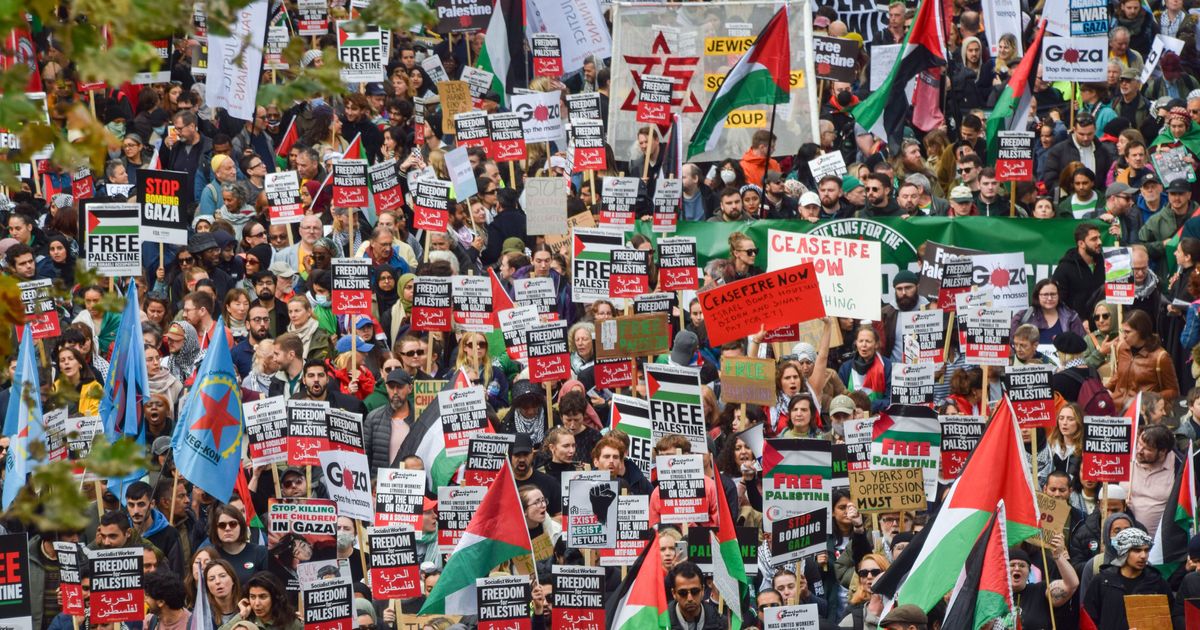
Rishi Sunak Condemns ‘Provocative’ Pro-Palestine March On Remembrance Day

Rishi Sunak has hit out at “provocative” plans to hold a pro-Palestine march on Remembrance Day.

The prime minister said it was “disrespectful” for the demo to go ahead on November 11 because of the “clear and present risk” of the Cenotaph and other war memorials being “desecrated”.

Sunak said he had asked home secretary Suella Braverman and the Metropolitan Police to “do everything necessary to protect the sanctity of Armistice Day and Remembrance Sunday”.

His comments, in a statement released on social media platform X (formerly Twitter) came just hours after security minister Tom Tugenhadt said the march was “inappropriate”.

Sunak said: “The right to remember, in peace and dignity, those who have paid the ultimate sacrifice … must be protected.”

Tugendhat said this morning that he had written to London mayor Sadiq Khan, Westminster Council and the Met asking them to take action.

But he was accused of “posturing” by Khan, who said only government had the power to ban marches.

The calls for the marches to be controlled or cancelled come amid fears they could disrupt the two-minute silence on November 11 commemorating those who lost their lives in the conflict and cause damage to the cenotaph.

The Public Order Act 1986 allows the home secretary to ban protests from certain areas if the Met believes there is a disorder risk.

However, organisers of the march have insisted they will not go past the Cenotaph, where politicians and veterans will lay poppy wreaths for Remembrance Sunday the following day.

The Met Police have also made clear that protest groups do not have any plans to march on Remembrance Sunday.

Met Commissioner Sir Mark Rowley has promised to “ensure” any demonstrations will not interfere with Remembrance weekend events.

Home secretary Suella Braverman has called pro-Palestine protests “hate marches” and has suggested they are the cause in the rise of anti-semtism seen in the UK since the war began.

Share Button

Tory Minister Says Pro-Palestine March On Remembrance Day Should Be Stopped

A pro-Palestine march planned for Remembrance Day is “inappropriate”, security minister Tom Tugendhat has said.

He has written to London mayor Sadiq Khan, Westminster Council and the Metropolitan Police setting out his concerns about the event, which is due to take place on Saturday, November 11.

That is also Armistice Day, which marks the end of fighting in the First World War. A two-minute silence will be held at 11am.

Speaking on BBC Breakfast this morning, Tugendhat said that the planned march was “a matter of great concern to me”.

He said: “I know that many of my fellow veterans will be looking forward to that day, not a day of joy but a day of grief. It’s a day when many of us remember those who aren’t standing with us, who aren’t there to lay a wreath, who aren’t there with their friends to have a beer afterwards and talk about the old days.

“It’s a moment when we remember those we lost and I think for the whole country, the Cenotaph is sacred ground and the idea that on a day like Remembrance Day you’d have a protest going past it, I don’t think that’s acceptable.”

However, organisers of the march have insisted they will not go past the Cenotaph, where politicians and veterans will lay poppy wreaths for Remembrance Sunday the following day.

Tugendhat said that in his letters, he had asked Sadiq Khan, Westminster Council and the Met to “look very carefully at the powers that they have and to consider what options they have available” with regard to the November 11 march.

He added: “Personally, I don’t think this is an appropriate time for a protest.”

HuffPost UK understands that only home secretary Suella Braverman has the power to ban the march.

Asked if the protest should be banned, Tugendhat said: “I think protest is incredibly important in a free society.

“I’m just saying the Cenotaph on Remembrance Sunday is a particularly sensitive time and a sensitive place and it’s a moment when the country comes together, and so I think there are moments where and places where that’s not appropriate.”

Friends of Al-Aqsa (FOA) is planning to bus protestors from Leicester to London to take part in the march calling for a ceasefire in the war between Israel and Hamas.

FOA spokesman Ismail Patel said: “We definitely will not be at the Cenotaph. We understand the sensitivity of the date.”

A Met Police spokesperson said the organisers of the November 11 march were considering different locations in London.

He said: “They have indicated they are planning a march on the Saturday, but that they are considering different locations given the sensitives around this date,” the spokesperson said.”

Share Button

No targeted mental health support for flood-hit farmers

The government rejects calls to provide new funding for mental health support for farmers in crises.

Share Button

Children’s health warning system rolled out by NHS

The concerns of families and carers will be at the heart of a new early-warning system, the NHS says.

Share Button

Pioneering operation combines cancer surgery and Caesarean

Four women have had a landmark two-in-one operation to reduce the inherited risk of ovarian cancer.

Share Button

Predicting saltwater intrusion into groundwater using Plymouth, Mass. as test case

As the world warms and ice sheets melt, the ocean continually rises. The greater Boston area can expect to see between one and six feet of sea level rise by 2100, according to recent estimates. To find out what this rise might mean for freshwater supplies, a team of hydrogeologists from the University of Massachusetts Amherst, led by David Boutt, professor of Earth, geographic and climate sciences, partnered with the Southeastern Massachusetts Pine Barrens Alliance (SEMPBA) and 13 other grassroots environmental organizations to develop an innovative new model that can not only predict saltwater intrusion over the next 75 years, but also pinpoint the main sources of salt contamination today — road salt and human development. The team released the results of their study in the recent report, Saltwater Intrusion Vulnerability Assessment in Plymouth, MA.

“For many years now, I’ve been working with citizen stakeholders in the southeastern corner of Massachusetts,” says Boutt, “and in 2021, the Pine Barrens Alliance, an environmental group interested in preserving the area’s unique environmental character, approached me with an idea for a project to help assess how communities along the coast could best prepare for climate change.”

Boutt and his colleagues, including recent UMass graduate and research assistant Alexander Kirshen, undergraduates Rachel King and Carly Lombardo, graduate student Daniel Corkran and postdoctoral researcher Brendan Moran, jumped at the opportunity to apply their academic research to an urgent, real-world problem close to home.

Plymouth sits on top of a freshwater aquifer — the town’s sole source of water. Because Plymouth extends to the ocean’s edge, it is extremely susceptible to rising sea levels. For their study, Boutt, Kirshen and colleagues peeked underground to see what was happening.

Groundwater, flowing beneath the surface of the land, and the ocean’s water, which, likewise, flows subterraneanly, push against each other and reach an equilibrium state. A well sunk on the freshwater side will flow with sweet water, but one that drills down into the brackish meeting point between fresh and salt will come up briny. As the oceans rise, that sub-surface saltwater pushes farther inland, and wells that have delivered pure water for generations can suddenly turn salty.

While the theory might seem intuitive enough, actually mapping, to say nothing of predicting, the flows and interactions of both fresh and salt water is an enormously complex task.

To start, the team built a salinity database that gathered all the available data from groundwater wells and surface water, such as ponds and streams, in the Plymouth area and measured them for salinity. This gave them a baseline understanding of the current locations and likely sources of elevated water salinity.

advertisement


Next, Boutt and Kirshen adopted an existing U.S. Geological Survey hydrogeological model, which only focused on the onshore half of the hydrogeology equation, by extending its reach five kilometers offshore. The model includes ponds, streams, terrestrial recharge — or the rate and amount of precipitation that seeps down into the aquifer — as well the various wells that draw from the aquifer and the wastewater that is returned to the aquifer via re-infiltration or septic systems.

Finally, they conducted a series of model runs that took into consideration various scenarios in terms of future precipitation, sea-level rise, groundwater usage and changes in water returned to the aquifer.

“We found that, under the high sea-level rise scenario, areas of the aquifer will increase in salinity by up to 17,000 milligrams per liter by 2100,” says Kirshen, “and the mixing zone between the ocean and freshwater will migrate inland by up to 200 meters.” While a few ponds might see significant rise in water elevation, by up to 1.8 meters, most ponds would not see their salinity increase from this source of salinization.

The team also learned that water returned to the aquifer by septic systems plays a major role in helping to limit saltwater intrusion. “About 66% of the water that gets pumped out of the aquifer ends up returning to it,” says Kirshen.

Perhaps the biggest surprise is that the highest levels of salinity today aren’t near the coast, but inland, and especially around the roads. “This surprised me,” says Boutt, “and it looks like road salt is one of the main sources of elevated salinity today.”

“In partnering with UMass Amherst, we were always thinking beyond the municipal boundaries of Plymouth,” says SEMPBA Vice President Frank Mand. “We share an aquifer and a geological foundation with over 30 communities in our ecoregion. So, though the news for Plymouth is good, more importantly we now have a scientific foundation — and new methods for evaluating susceptibility to saltwater intrusion — that are transferrable to those other communities and will help inform Plymouth’s and other communities’ planning for years to come.”

“We were not looking to science to help us recover from our mistakes,” Mand adds. “We were seeking to avoid problems in the future. That, in and of itself, was a worthy goal.”

To prepare for the future, Boutt and Kirshen recommend further, finer-grained analyses of the region’s hydrogeography, the creation of an early warning system to monitor the sites most vulnerable to saltwater intrusion, developing new wells in areas that are at the least risk of salt contamination and reconsidering practices, such as salting the roads in the winter, which are currently responsible for the majority of saltwater contamination in the area.

Share Button

AI should be better understood and managed — new research warns

Artificial Intelligence (AI) and algorithms can and are being used to radicalize, polarize, and spread racism and political instability, says a Lancaster University academic.

Professor of International Security at Lancaster University Joe Burton argues that AI and algorithms are not just tools deployed by national security agencies to prevent malicious activity online, but can be contributors to polarization, radicalism and political violence — posing a threat to national security.

Further to this, he says, securitization processes (presenting technology as an existential threat) have been instrumental in how AI has been designed, used and to the harmful outcomes it has generated.

Professor Burton’s article ‘Algorithmic extremism? The securitization of Artificial Intelligence (AI) and its impact on radicalism, polarization and political violence’ is published in Elsevier’s high impact Technology in Society Journal.

“AI is often framed as a tool to be used to counter violent extremism,” says Professor Burton. “Here is the other side of the debate.”

The paper looks at how AI has been securitized throughout its history, and in media and popular culture depictions, and by exploring modern examples of AI having polarizing, radicalizing effects that have contributed to political violence.

The article cites the classic film series, The Terminator, which depicted a holocaust committed by a ‘sophisticated and malignant’ artificial intelligence, as doing more than anything to frame popular awareness of Artificial Intelligence and the fear that machine consciousness could lead to devastating consequences for humanity — in this case a nuclear war and a deliberate attempt to exterminate a species.

advertisement


“This lack of trust in machines, the fears associated with them, and their association with biological, nuclear and genetic threats to humankind has contributed to a desire on the part of governments and national security agencies to influence the development of the technology, to mitigate risk and (in some cases) to harness its positive potentiality,” writes Professor Burton.

The role of sophisticated drones, such as those being used in the war in Ukraine, are, says Professor Burton, now capable of full autonomy including functions such as target identification and recognition.

And, while there has been a broad and influential campaign debate, including at the UN, to ban ‘killer robots’ and to keep the human in the loop when it comes to life-or-death decision-making, the acceleration and integration into armed drones has, he says, continued apace.

In cyber security — the security of computers and computer networks — AI is being used in a major way with the most prevalent area being (dis)information and online psychological warfare.

Putin’s government’s actions against US electoral processes in 2016 and the ensuing Cambridge Analytica scandal showed the potential for AI to be combined with big data (including social media) to create political effects centred around polarization, the encouragement of radical beliefs and the manipulation of identity groups. It demonstrated the power and the potential of AI to divide societies.

And during the pandemic, AI was seen as a positive in tracking and tracing the virus but it also led to concerns over privacy and human rights.

advertisement


The article examines AI technology itself, arguing that problems exist in the design of AI, the data that it relies on, how it is used, and in its outcomes and impacts.

The paper concludes with a strong message to researchers working in cyber security and International Relations.

“AI is certainly capable of transforming societies in positive ways but also presents risks which need to be better understood and managed,” writes Professor Burton, an expert in cyber conflict and emerging technologies and who is part of the University’s Security and Protection Science initiative.

“Understanding the divisive effects of the technology at all stages of its development and use is clearly vital.

“Scholars working in cyber security and International Relations have an opportunity to build these factors into the emerging AI research agenda and avoid treating AI as a politically neutral technology.

“In other words, the security of AI systems, and how they are used in international, geopolitical struggles, should not override concerns about their social effects.”

As one of only a handful of universities whose education, research and training is recognised by the UK’s National Cyber Security Centre (NCSC), part of GCHQ, Lancaster is investing heavily in the next generation of cyber security leaders. As well as boosting the skills and talent pipeline in the region by building on its NCSC certified Masters degree with a new undergraduate degree in cyber security, it launched a trailblazing Cyber Executive Masters in Business Education.

Share Button