Contrary to common belief, artificial intelligence will not put you out of work

New research in theINFORMS journal Management Science is providing insights for business leaders on how work experience affects employees interacting with AI.

The study, “Friend or Foe? Teaming Between Artificial Intelligence and Workers with Variation in Experience,” looks at the influence of two major types of human work experience (narrow experience based on the specific task volume and broad experience based on seniority) on the human-AI team dynamics.

“We developed an AI solution for medical chart coding in a publicly traded company and conducted a field study among the knowledge workers,” says Weiguang Wang of the University of Rochester and leading author of the study. “We were surprised by what we found in the study. The different dimensions of work experience have distinct interactions with AI and play unique roles in human-AI teaming.”

“While one might think that less experienced workers should benefit more from the help of AI, we find the opposite — AI benefits workers with greater task-based experience. At the same time, senior workers, despite their greater experience, gain less from AI than their junior colleagues,” says Guodong (Gordon) Gao of Johns Hopkins Carey Business School, and study co-author.

Further investigation reveals that the relatively lower productivity lift from AI is not a result of seniority per se but rather their higher sensitivity to the imperfection of AI, which lowers their trust in AI.

“This finding presents a dilemma: Employees with greater experience are in a better position to leverage AI for productivity, but the senior employees who assume greater responsibilities and care about the organization tend to shy away from AI because they see the risks of relying on AI’s assistance. As a result, they are not effectively leveraging AI,” says Ritu Agarwal of Johns Hopkins Carey Business School, a co-author of the study.

The researchers urge employers to carefully consider different worker experience types and levels when introducing AI into the work. New workers with less task experience are disadvantaged in leveraging AI. Meanwhile, senior workers with more organizational experience may be concerned about the potential risks imposed by AI. Addressing these unique challenges are key to productive human-AI teaming.

Share Button

Two million European households could abandon the electrical grid by 2050

Researchers report that 53% of European freestanding homes could have supplied all their own energy needs in 2020 using only local rooftop solar radiation, and this technical feasibility could increase to 75% in 2050. Publishing November 2 in the journal Joule, the study shows that there is no economic advantage for individual households to be fully self-sufficient under current or future conditions, though in some cases the costs are on par with remaining on-grid. The researchers estimate that self-sufficiency will be economically feasible for 5% (two million) of Europe’s 41 million freestanding single-family homes in 2050, if households are willing to pay up to 50% more than the cost of remaining fully grid dependent.

“Our results show that even in 2050 going off-grid won’t be the most economic choice, but it could make sense to invest in these kinds of self-sufficient buildings if you are willing to pay more for self-sufficiency,” says lead author Max Kleinebrahm, an energy economics researcher at the Karlsruhe Institute of Technology in Germany.

Grid energy costs are rising while renewable energy technology is becoming more affordable. In pursuit of self-sufficiency, more and more households are showing interest in producing their own renewable energy supplies. Kleinebrahm’s team wanted to know how feasible it would be for individual residential buildings in different parts of Europe to become fully self-sufficient, and whether doing so would come with any financial benefits. Though the potential of converting Europe to 100% renewable energy has been considered at the continental, national, and regional scale, this study is the first analysis at the level of individual buildings.

To identify regions and building types that are more amenable to self-sufficiency, the researchers compiled a database of homes across Europe and identified 4,000 homes that were representative of different regions in terms of architecture, household electricity demand, climate conditions, and the local economic framework. Then, the researchers designed optimal energy systems for each representative home that would fully cover electrical and thermal energy needs while minimizing costs. These systems included measures such as rooftop solar panels, small wind turbines, different types of storage systems, heat pump installation, and retrofitting and insulation measures.

Next, the researchers scaled their results up to estimate the technical and economic feasibility of energy self-sufficiency for Europe’s 41 million freestanding single-family homes. Overall, they estimated that 53% of homes could have technically achieved energy self-sufficiency in 2020, and that this proportion could increase to 75% by 2050 with expected improvements in renewable energy and storage technologies. However, becoming fully self-sufficient was more expensive than remaining fully dependent on the grid, both in 2020 and 2050.

Homes in sunny European countries such as Cyprus, Malta, and Italy have more economic potential for self-sufficiency, while northern European countries such as Finland, Norway, and Sweden (where there is a large mismatch between high winter energy needs and solar radiation) have the lowest potential. Regions with larger rooftops, such as Denmark, Slovenia, the Netherlands, and France, also have greater potential for self-sufficiency. The researchers also noted that there is greater potential for self-sufficient buildings in countries with high on-grid electricity costs, such as Germany, since there is less financial incentive to remain on-grid.

Though becoming fully self-sufficient may not be economically advantageous, the researchers demonstrated that partial self-sufficiency — where a building remains connected to the electricity grid but also invests in a photovoltaic system, heat pump, and insulation — could lower household energy costs. The optimal degree of self-sufficiency varied for different buildings and regions, but for one representative building in Germany, the researchers estimated that it would have been cost-optimal to be 73% self-sufficient in 2020 and 78% self-sufficient in 2050.

The researchers note that high carrier costs make leaving the grid more appealing and say that policymakers and utility companies should encourage even fully self-sufficient households to remain connected to the grid. “At a macroeconomic scale it would be less efficient to have a large number of households abandoning the grid rather than supporting it,” says Kleinebrahm.

Since the costs of supporting the grid are shared amongst users, there is also the potential for grid costs to climb further as households choose to leave the grid. “From the social perspective, you have to consider the possibility that very rich households could go off grid, in which case the rest of the grid operation would have to be paid for by economically weaker households,” says Kleinebrahm.

This study is unable to answer questions about how the expanding number of self-sufficient homes would impact electricity demand and electricity markets, but the researchers plan to address those topics in future.

Share Button

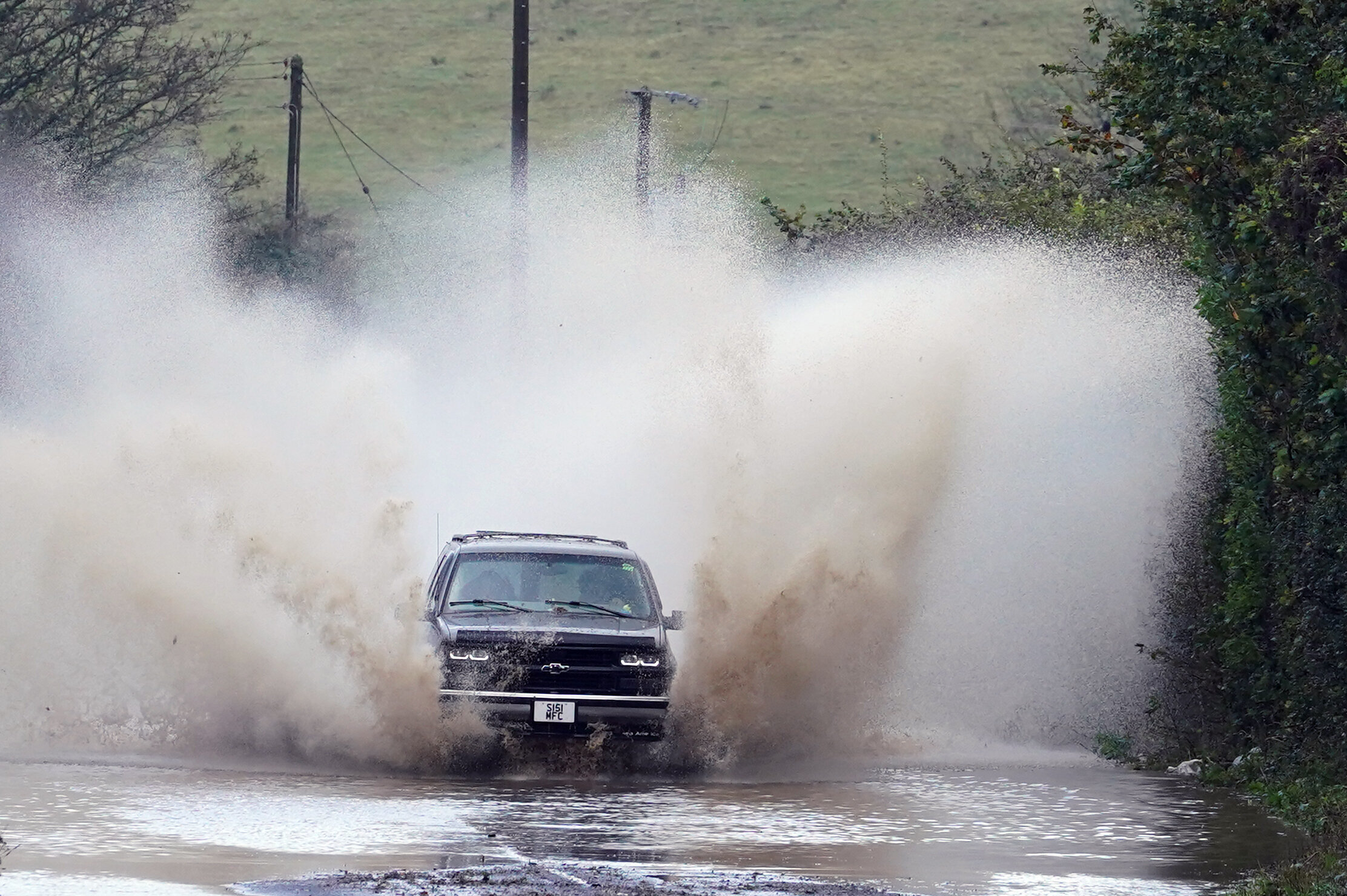
8 Clips Which Show Just How Fierce Storm Ciarán Really Is

Storm Ciarán has swept across northwestern Europe today, causing travel disruption and leaving millions without power.

It has triggered a record low for sea pressure levels around England and Wales, and a red weather warning for the Channel Islands.

The BBC has also reported windows being blown in by the storm and said a roof had been ripped off a house on Jersey.

School closures have already been announced on the island as winds have reached 104mph. Forty people have been evacuated from their homes due to damage.

Outside of the UK, 1.2 million households have been left without power in France and a red weather warning is in place in Spain.

Authorities in the French peninsula of Brittany have also encouraged people to remain indoors, at home, and avoid the winds as they crept up to 129mph, with 66ft waves off the coast.

Ciarán comes two weeks after Storm Babet, which came in from the Atlantic and was accompanied with heavy rain and winds. It caused intense flooding in Northern Ireland and the UK.

While there are fears this new storm could last for three days, Meteo France weather service has just downgraded its alerts for strong winds in Mache, Finistere and Cotes d’Armor from red to orange.

Dutch Airline KLM also cancelled flights going to and from Amsterdam. International trains from Amsterdam to Paris were also halted.

The Met Office noted that the storm came off the back of “what was provisionally the joint-sixth wettest October on record for the UK”.

The weather experts noted there’s evidence to suggest the intensity and frequency of windstorms in British winter could be increasing due to climate change – although the data is inconsistent.

It added: “Storm Ciarán is a fairly normal Autumn storm for the UK, and due to the natural year-to-year variability in strong winds and windstorm numbers, significant trends have not been detected in observations over the recent climate.”

Royal National Lifeboat Institution’s (RNLI) water safety manager Ross Macleod warned: “This rough weather could make visiting our coasts around southern England and Wales treacherous and bring very dangerous sea conditions.”

Here’s a look at some of the most jaw-dropping clips circulating on social media capturing the storm:

Share Button

Here’s Who’ll Be Taking Over James Corden’s Former Talk Show Slot

When James Corden stepped down as the host of his aptly-named US chat show The Late, Late Show earlier this year, the first question on the lips of many viewers was who would be taking over his slot.

Enter: comedian Taylor Tomlinson, who has confirmed she’ll be occupying the spot on the schedule once occupied by the former Gavin & Stacey star.

Taylor – who has previously fronted two Netflix specials in 2020 and 2022 – will present a new show, After Midnight, in the same slot that James used to (that’s 12:37am ET/PT, for those wondering).

Produced by talk show great Stephen Colbert, the announcement was made during an episode of the comedian’s own show, The Late Show.

In the clip, Stephen plucks Taylor out of the audience, seemingly at random – oh, the magic of television – and brings her onto the couch.

Taylor begins by introducing herself to the audience and saying: “I’ve never had a real job… I’ve been doing stand-up since I was 16, which is not a job.”

She then went on to field any objections to her appointment as host, saying: “I’m 29 so if you don’t know who I am, don’t worry. I barely know myself.”

With her 30th birthday just days away, Stephen replied: “Happy birthday, I got you a network show.”

Taylor Tomlinson performing stand-up on The Tonight Show

NBC via Getty Images

After Midnight will follow Stephen’s show in the schedule, and Taylor’s introduction as host will make her the only female late-night host across the United States, and the youngest by 20 years.

After Midnight With Taylor Tomlinson will be based on the previous Comedy Central show, Midnight With Chris Hardwick, which originally ran from 2013 to 2017.

Her show is set to premiere in early 2024.

Share Button

Glastonbury Ticket Sale Delayed By Two Weeks, Organisers Confirm

The sale of this year’s Glastonbury tickets has been pushed back just hours before they were due to be released.

On Thursday evening, tickets including coach travel for the annual music event were supposed to go on sale at 6pm, with general sale tickets scheduled to be available from Sunday 5 November.

However, organisers confirmed in the afternoon that the sale had been delayed by two weeks to “ensure that everyone who would like to buy a ticket is registered and therefore eligible to purchase one”.

It’s also been confirmed that coach tickets will go on sale from Thursday 16 November at 6pm, followed by general release on Sunday 19 November at 9am.

In a lengthy statement, the festival explained: “Following this year’s Festival, we alerted everyone with a registration which pre-dated 2020 of a scheduled review of the details held by See Tickets in the Glastonbury Festival registration database.

“This was in order to ensure that the details we hold are current and that we do not store individuals’ information for any longer than is necessary.”

Elton John closed the show on the Pyramid Stage in 2023

Harry Durrant via Getty Images

“These registrants were asked to take action to confirm their registration if they wished to keep it,” the statement continued.

“As always, registration was then closed on Monday (30 October) ahead of the ticket sale. Unfortunately, it has come to light that some individuals hoping to buy tickets for 2024 have discovered after Monday’s registration deadline that they are no longer registered, despite believing they were.

“Out of fairness to those individuals, we will be re-opening the window for registration at 12 noon on Monday, 6 November. It will remain open until 5pm on Monday, 13 November.

“We urge everyone hoping to buy a ticket to Glastonbury 2024 to either check their existing registration now or submit new registration, which remains free of charge […] from 12 noon on Monday.”

They added: “We apologise for the late change to the ticket sale dates, but we want to ensure that everyone who would like to buy a ticket for next year’s Festival is able to confirm their registration ahead of the sale.”

Next year’s Glastonbury event will take place from 26-30 June 2024, at the event’s usual site, Worthy Farm.

Information about which acts will be taking to the stage is yet to be confirmed, but that hasn’t stopped rumours from swirling, with Bruce Springsteen and Madonna among the latest stars tipped to be performing.

Emily Eavis previously teased that two of next year’s Pyramid Stage headliners are women, neither of whom have performed at the event before, after the festival was criticised over its line-up in 2023.

Share Button

Covid inquiry hears Matt Hancock wanted to decide who lived and died

Former NHS boss Sir Simon Stevens tells the Covid inquiry the “horrible dilemma never crystallised”.

Share Button

Cough syrup maker boss jailed in Indonesia

The pharmaceutical firm, Afi Farma, has been linked to the deaths of more than 200 Indonesian children.

Share Button

Hospitals fail people with learning disabilities, says watchdog

Watchdog concerned over lack of specialist nurses, training for staff and information sharing in England.

Share Button

Brain power dropped among over-50s during Covid-19 pandemic, study shows

Cognitive skills, such as memory, waned – possibly linked to stress, loneliness and alcohol, study shows.

Share Button

In a surprising finding, light can make water evaporate without heat

Evaporation is happening all around us all the time, from the sweat cooling our bodies to the dew burning off in the morning sun. But science’s understanding of this ubiquitous process may have been missing a piece all this time.

In recent years, some researchers have been puzzled upon finding that water in their experiments, which was held in a sponge-like material known as a hydrogel, was evaporating at a higher rate than could be explained by the amount of heat, or thermal energy, that the water was receiving. And the excess has been significant — a doubling, or even a tripling or more, of the theoretical maximum rate.

After carrying out a series of new experiments and simulations, and reexamining some of the results from various groups that claimed to have exceeded the thermal limit, a team of researchers at MIT has reached a startling conclusion: Under certain conditions, at the interface where water meets air, light can directly bring about evaporation without the need for heat, and it actually does so even more efficiently than heat. In these experiments, the water was held in a hydrogel material, but the researchers suggest that the phenomenon may occur under other conditions as well.

The findings are published this week in a paper in PNAS, by MIT postdoc Yaodong Tu, professor of mechanical engineering Gang Chen, and four others.

The phenomenon might play a role in the formation and evolution of fog and clouds, and thus would be important to incorporate into climate models to improve their accuracy, the researchers say. And it might play an important part in many industrial processes such as solar-powered desalination of water, perhaps enabling alternatives to the step of converting sunlight to heat first.

The new findings come as a surprise because water itself does not absorb light to any significant degree. That’s why you can see clearly through many feet of clean water to the surface below. So, when the team initially began exploring the process of solar evaporation for desalination, they first put particles of a black, light-absorbing material in a container of water to help convert the sunlight to heat.

Then, the team came across the work of another group that had achieved an evaporation rate double the thermal limit — which is the highest possible amount of evaporation that can take place for a given input of heat, based on basic physical principles such as the conservation of energy. It was in these experiments that the water was bound up in a hydrogel. Although they were initially skeptical, Chen and Tu starting their own experiments with hydrogels, including a piece of the material from the other group. “We tested it under our solar simulator, and it worked,” confirming the unusually high evaporation rate, Chen says. “So, we believed them now.” Chen and Tu then began making and testing their own hydrogels.

advertisement


They began to suspect that the excess evaporation was being caused by the light itself — that photons of light were actually knocking bundles of water molecules loose from the water’s surface. This effect would only take place right at the boundary layer between water and air, at the surface of the hydrogel material — and perhaps also on the sea surface or the surfaces of droplets in clouds or fog.

In the lab, they monitored the surface of a hydrogel, a JELL-O-like matrix consisting mostly of water bound by a sponge-like lattice of thin membranes. They measured its responses to simulated sunlight with precisely controlled wavelengths.

The researchers subjected the water surface to different colors of light in sequence and measured the evaporation rate. They did this by placing a container of water-laden hydrogel on a scale and directly measuring the amount of mass lost to evaporation, as well as monitoring the temperature above the hydrogel surface. The lights were shielded to prevent them from introducing extra heat. The researchers found that the effect varied with color and peaked at a particular wavelength of green light. Such a color dependence has no relation to heat, and so supports the idea that it is the light itself that is causing at least some of the evaporation.

The researchers tried to duplicate the observed evaporation rate with the same setup but using electricity to heat the material, and no light. Even though the thermal input was the same as in the other test, the amount of water that evaporated never exceeded the thermal limit. However, it did so when the simulated sunlight was on, confirming that light was the cause of the extra evaporation.

Though water itself does not absorb much light, and neither does the hydrogel material itself, when the two combine they become strong absorbers, Chen says. That allows the material to harness the energy of the solar photons efficiently and exceed the thermal limit, without the need for any dark dyes for absorption.

Having discovered this effect, which they have dubbed the photomolecular effect, the researchers are now working on how to apply it to real-world needs. They have a grant from the Abdul Latif Jameel Water and Food Systems Lab to study the use of this phenomenon to improve the efficiency of solar-powered desalination systems, and a Bose Grant to explore the phenomenon’s effects on climate change modeling.

advertisement


Tu explains that in standard desalination processes, “it normally has two steps: First we evaporate the water into vapor, and then we need to condense the vapor to liquify it into fresh water.” With this discovery, he says, potentially “we can achieve high efficiency on the evaporation side.” The process also could turn out to have applications in processes that require drying a material.

Chen says that in principle, he thinks it may be possible to increase the limit of water produced by solar desalination, which is currently 1.5 kilograms per square meter, by as much as three- or fourfold using this light-based approach. “This could potentially really lead to cheap desalination,” he says.

Tu adds that this phenomenon could potentially also be leveraged in evaporative cooling processes, using the phase change to provide a highly efficient solar cooling system.

Meanwhile, the researchers are also working closely with other groups who are attempting to replicate the findings, hoping to overcome skepticism that has faced the unexpected findings and the hypothesis being advanced to explain them.

The research team also included Jiawei Zhou, Shaoting Lin, Mohammed Alshrah, and Xuanhe Zhao, all in MIT’s Department of Mechanical Engineering.


Share Button