A Conservative MP has said that children are too “coddled” nowadays, during a panel on free speech.
Miriam Cates said that young people are sheltered from emotional distress which means they find it hard to hear opposing or offensive ideas.
The MP for Penistone and Stocksbridge said that her young children needed to have a risk as assessment before visiting the park with school.
Advertisement
Free speech is a hot topic at Tory party conference in Birmingham and at a separate panel a professor claimed the country was facing a cultural “Cold War”.
Cates told a debate hosted by the Young Conservatives that young people did not have a “good reputation” in terms of welcoming free speech.
She added: “I want to say it’s not your fault and I blame the parents.
“I think one of the things that your generation has been subjected to is this kind of coddling.
“I’m getting most of my ideas from a fantastic book called The Coddling of the American Mind, which I very much recommend to you. But the premise is that from a very young age, young people have been coddled physically.
“My grandfather, who’s 90 next week, when he was four he and his twin brother would be kicked out of the house every day from breakfast time, told to have some fun and come home for tea.
Advertisement
“So that was in the 1930s. When I grew up in the 1980s, we didn’t have anywhere near that amount of freedom.
“But, for example, I went on a school trip to France when I was 11, we got kicked out on the coach at 8 o’clock in the morning and none of us spoke a word of French and we were told to come back to 6 o’clock and our teachers went down the pub. That was just a normal school trip.
“Now my children – who are in primary school – have to have a risk assessment and I have to sign permission for them to go to the local park.
“That involves crossing one road on a zebra crossing with the teacher.
“So you’ve been coddled physically and not exposed to physical risk. And that has hampered your ability to face challenge, to make decisions and to face defeat or failure and to rise back from that.”
Cates said there had been a “mission creep” from physical safety into emotional safety. She said we protected children from emotional distress, which meant young people find it difficult to hear opposing or offensive ideas, adding: “So I think the future of free speech is not necessarily strong.”
Advertisement
In another debate on the first day of Tory conference, panellists were asked: “Is the UK a safe space for free speech?”
Eric Kaufmann, professor of politics at Birkbeck College, claimed that the country was in a cultural “Cold War”.
He told a panel, organised by the Institute of Economic Affairs and TaxPayers’ Alliance, that “wokeness” and “cultural socialism” was becoming a dominant theme among young people, especially younger women.
“We are in a fight for the future of Western civilisation, for British civilisation,” he claimed.
Marshall told the panel: “It seems to me in the arts industry, where I am, there is a serious problem which is completely paradoxical because it’s an industry of people who rely on being able to express themselves and they are censoring themselves and it’s almost every week.”
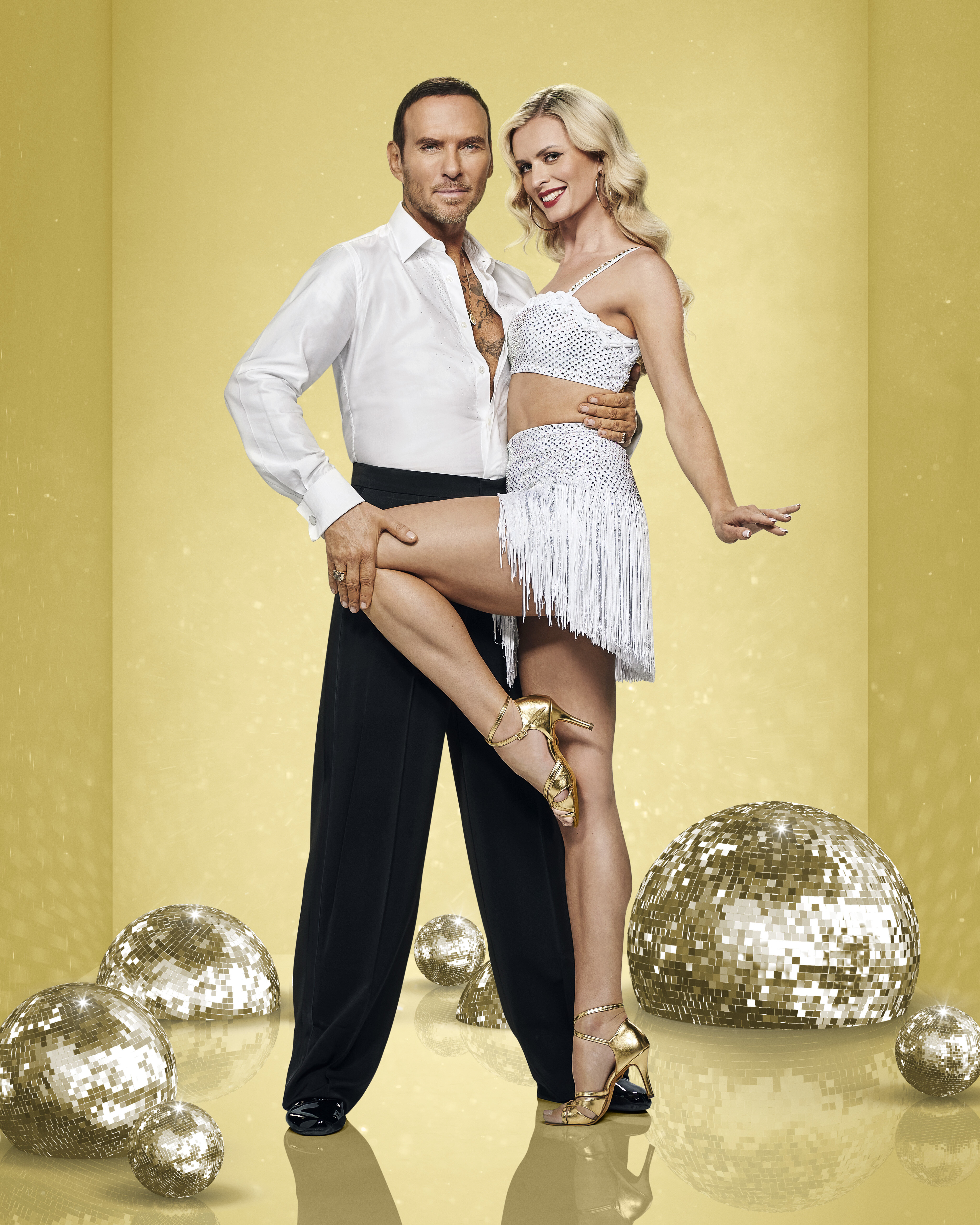
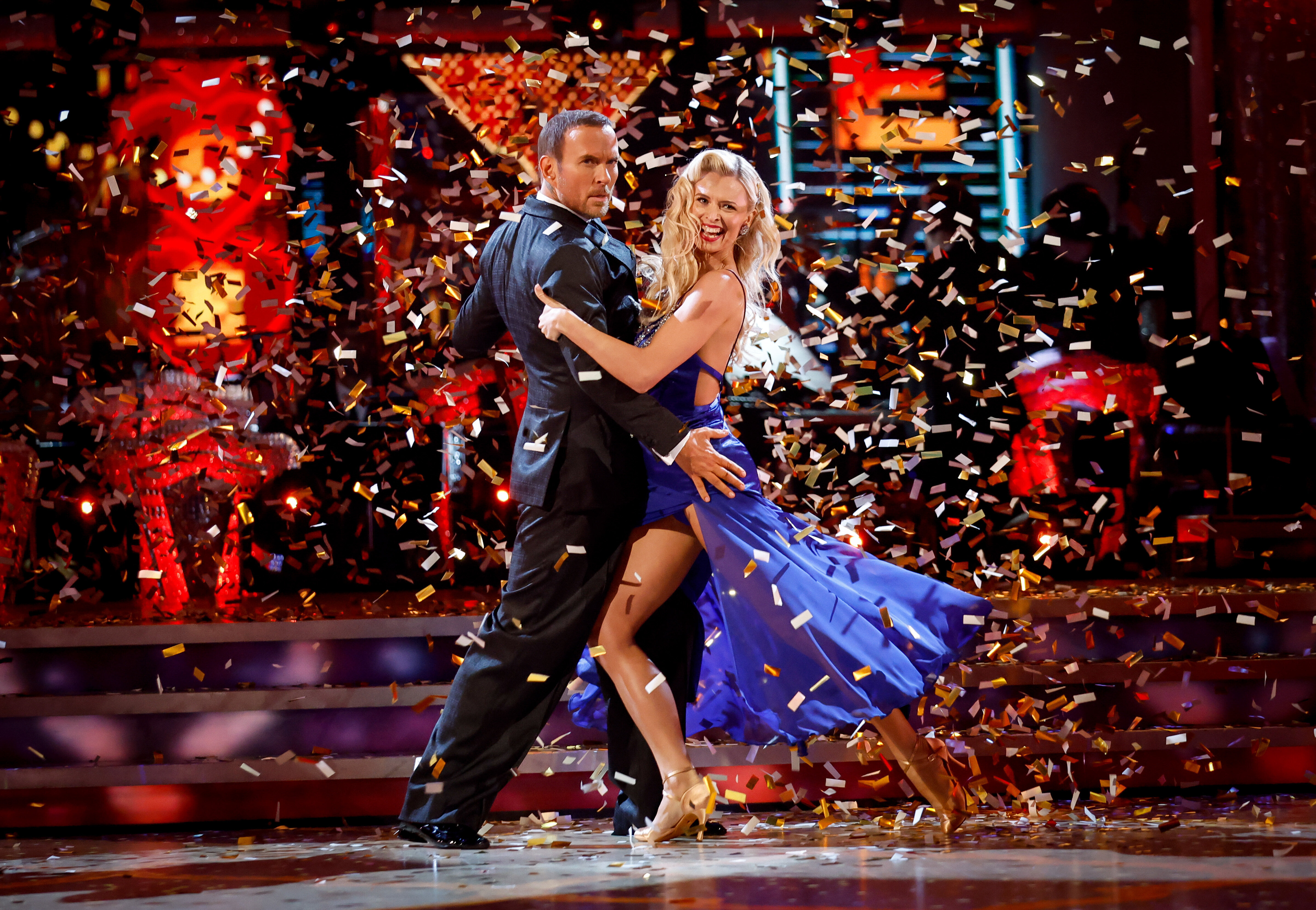
After their first performance on last week’s show, some fans speculated that the pair weren’t getting along after Matt pulled Nadiya into a shot while chatting to host Claudia Winkleman.
However, in an interview with Metro.co.uk, the singer branded the rumours “bollocks”.
Matt Goss and Nadiya Bychkova
Ray Burmiston/BBC via PA Wire/PA Images
Advertisement
“First of all, I couldn’t enjoy my partner’s company more actually. She is just such a cool person. It’s all a load of bollocks,” he said.
“And to be quite honest with you, If she’s my partner, and I’m told to stand there, as a gentleman I will always make sure that she’s beside me – I’m not going to let stand behind some dark disco ball.
“I’m going to pull her in so she’s with me like every other couple but it is a load of bollocks and, as a gentleman. I’m going to make sure she’s next to me.”
Guy Levy/BBC via PA Media
Advertisement
Matt and Nadiya aren’t the only pairing from this year’s Strictly who have been at the centre of ’feud’ rumours.
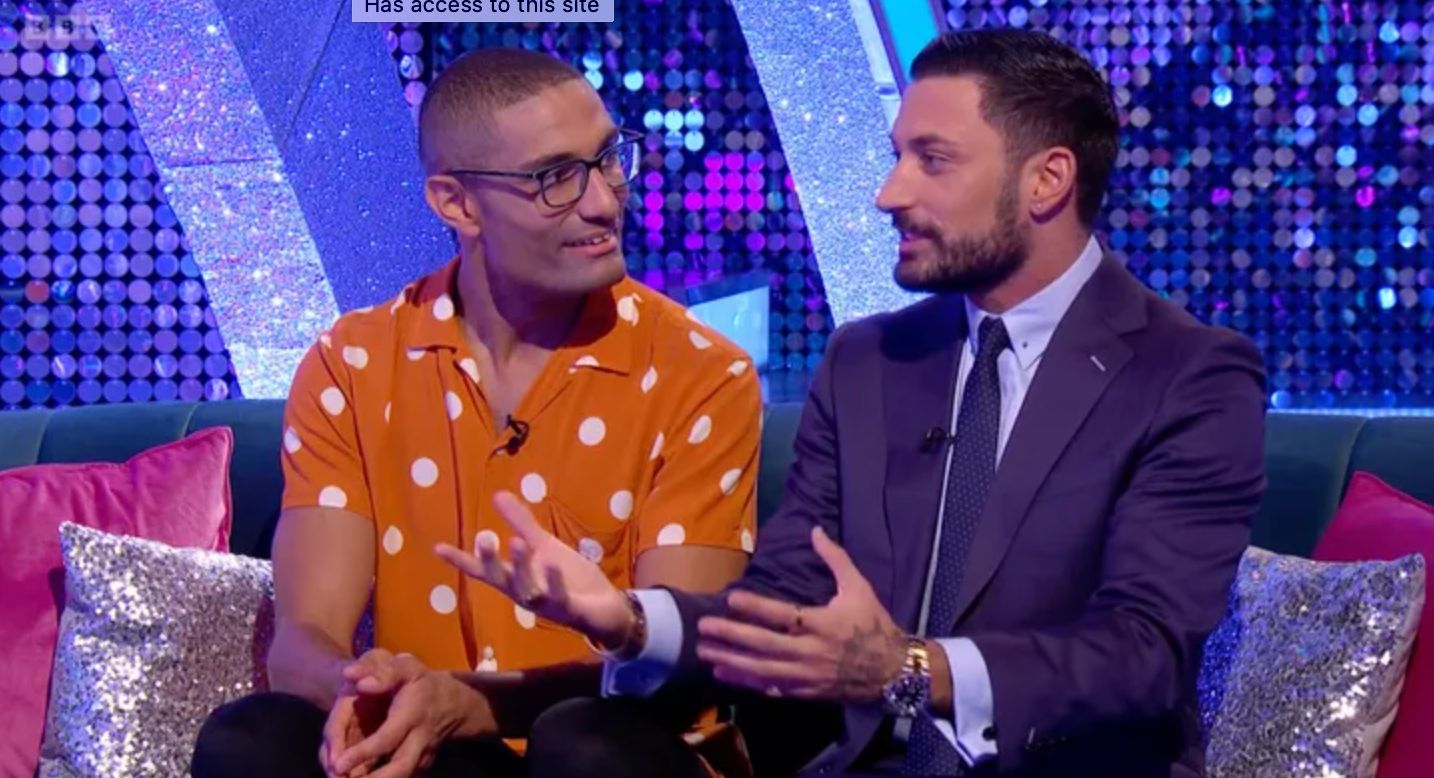
Earlier this week, professional Giovanni Pernice shut down reports in the press claiming that he and his dance partner Richie Anderson aren’t getting along when the pair appeared on It Takes Two.
When host Janette Manrara asked Giovanni whether the pair were “having the best time in rehearsals”, the Italian dancer insisted: “We’re having a good time.
Richie Anderson and Giovanni Pernice
“Obviously it’s a dance competition at the end of the day, so we have to learn something,” he continued, before saying directly into the camera: “But there is no problem between us.
Advertisement
“We are having a good time! So forget about what you’re reading, it’s not true.”
We’ve all got our favourite meals from childhood, but David Beckham’s go-to dinner has divided fans after he shared a snap of it online.
While his wife Victoria sticks to grilled fish and steamed vegetables, which David recently revealed she had eaten for the last 25 years, the same can’t be said for her husband.
Advertisement
The former footballer has revealed one of his favourite meals includes pineapple and baked beans on the same plate.
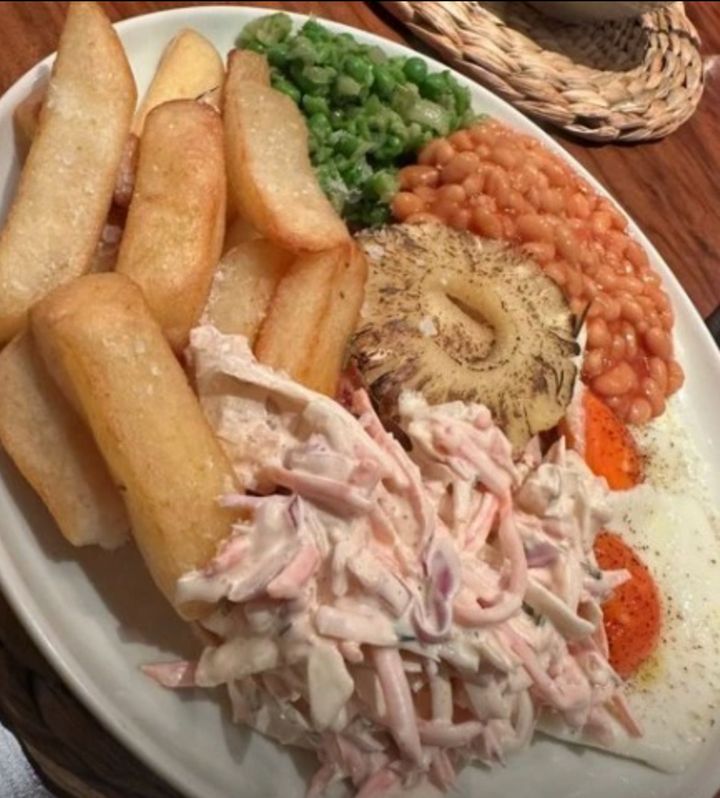
Sharing a pic of the meal on Instagram, Becks captioned it: “Last night’s feast one of my favourites growing up. Thanks mum. Gammon, chips, fried egg, tinned pineapple, peas & baked beans, coleslaw.”
David Beckham’s favourite meal
David Beckham/Instagram
People had thoughts…
“Pineapple does not belong on a main meal,” one fan commented.
A second wrote: “Coleslaw and mushy peas? Has everyone gone berserk?”
But others thought the opposite. “Perfectly acceptable dinner. Egg goes well with gammon, coleslaw with pineapple, chips with peas,” another fan wrote.
Advertisement
Speaking to the River Cafe Table 4 podcast earlier this year, David admitted that he gets “emotional” about food and wine, unlike his wife.
Victoria Bekham and David Beckham (Photo by Marc Piasecki/GC Images)
Marc Piasecki via Getty Images
“When I’m eating something great I want everyone to try it,” he said.
“Unfortunately I’m married to someone that has eaten the same thing for the last 25 years. Since I met Victoria, she only eats grilled fish, steamed vegetables, she will very rarely deviate away from there.”
David continued: “The only time she’s probably ever shared something that’s been on my plate was actually when she was pregnant with Harper and it was the most amazing thing. It was one of my favourite evenings. I can’t remember what it was but I know she’s not eaten it since.”
Appearing on the same podcast last year, Victoria revealed her go-to comfort food, and it sounded, well, anything but.
Advertisement
“This is where I sound even more boring in the food department,” she said.
“I like whole grain toast with salt on it. It’s that carbohydrate that makes you feel comforted and I love salt.”
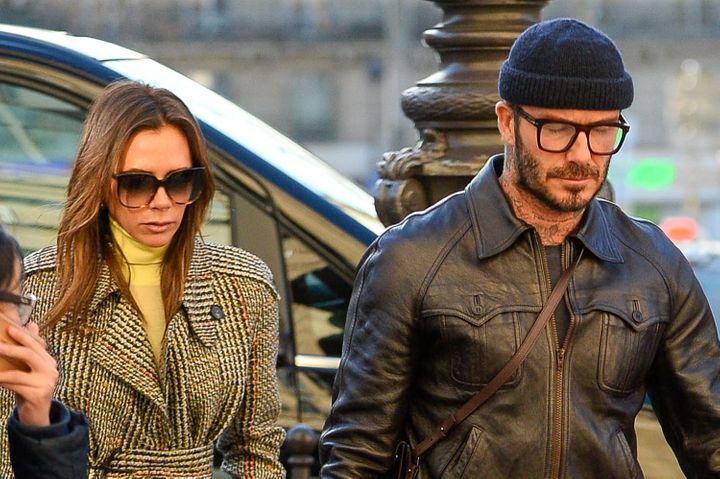
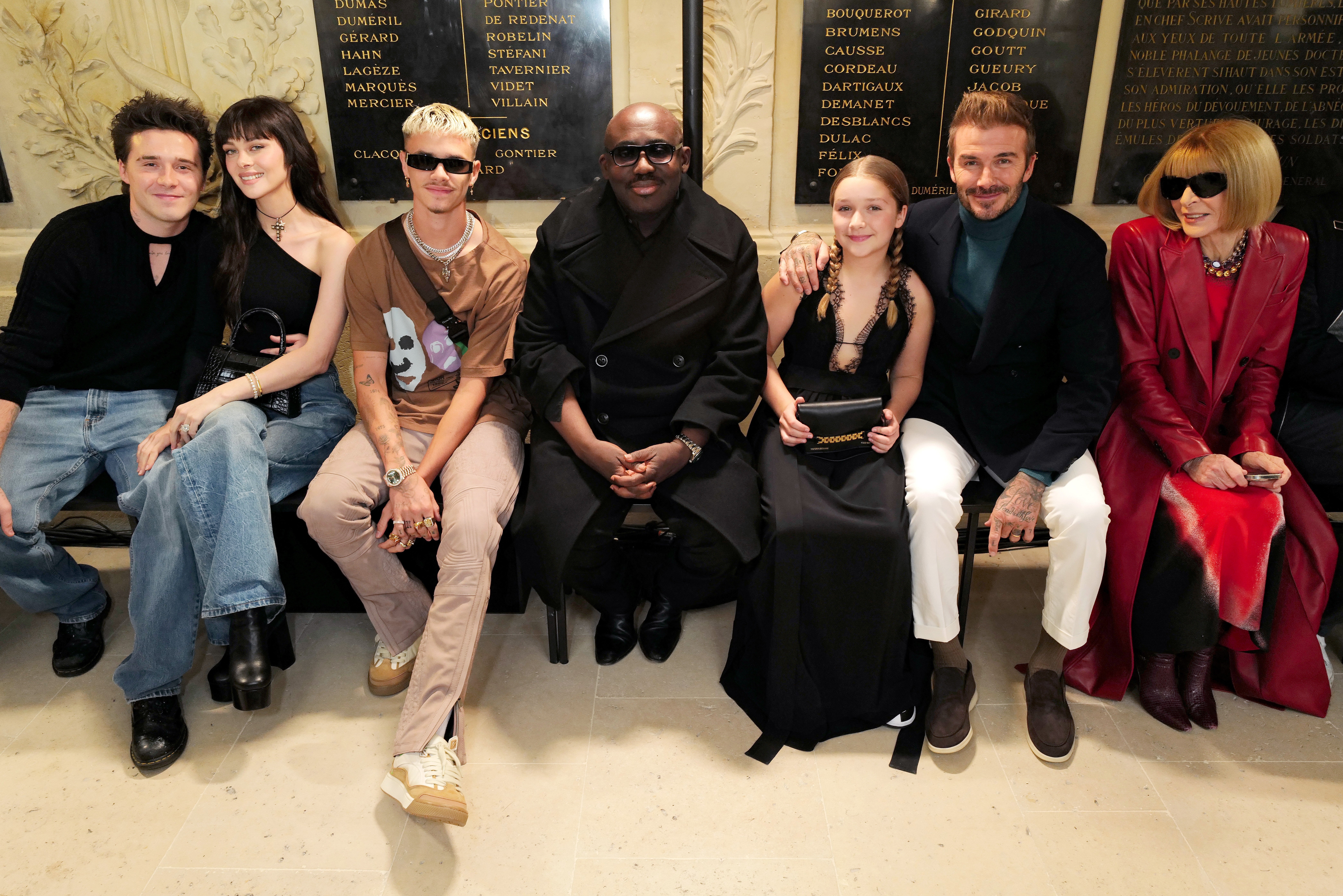
The Beckham’s put on a united front on Friday to show their support for Victoria Beckham’s first ever Paris Fashion Week show.
The former Spice Girl-turned fashion designer debuted her latest collection in front of husband David Beckham, along with sons Romeo, 20, and Cruz, 17, and 11-year-old daughter Harper.
And despite unfounded rumours of a rift between Victoria and her eldest son Brooklyn’s wife Nicola Peltz, the newlyweds were also on the front row.
Advertisement
There was also a nod to Victoria and David’s former habit of wearing (often questionable) outfits with Brooklyn and Nicola rocking up in coordinated ensembles of denim jeans, black tops and boots.
Also sitting in the front row were Vogue editors Anna Wintour and Edward Enniful.
Victoria captioned her Instagram post: “It’s Paris baby!! I’m so grateful for my family, @BritishVogue and @VogueMagazine for always supporting me on this journey xx VB”.
Brooklyn also shared the post to his Story, writing: “Congratulations mum on a great show”.
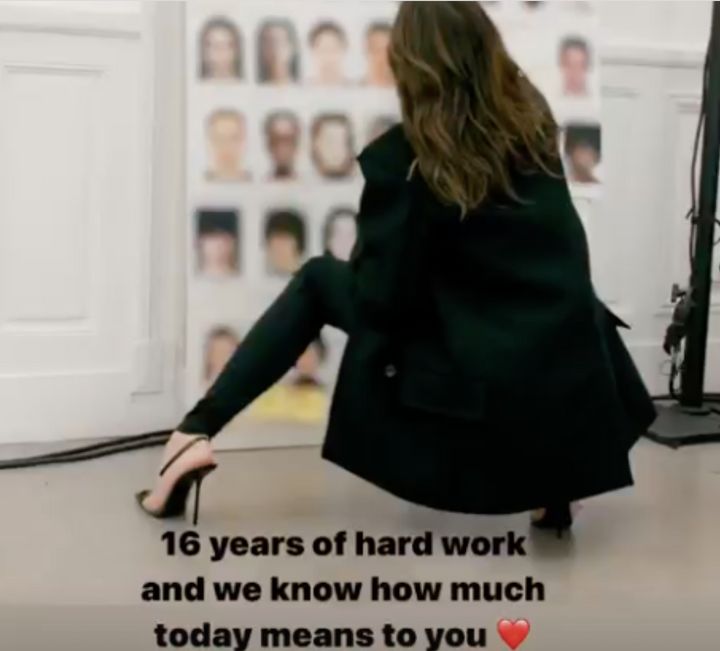
Meanwhile, David shared a behind-the-scenes snap on his Instagram Story of Victoria backstage, and congratulated his wife on her latest collection and show.
Advertisement
Victoria Beckham
David Beckham/Instagram
“16 years of hard work and we know how much today means to you. We are so proud,” he wrote.
US supermodels Gigi and Bella Hadid both walked in the show and other guests included Desperate Housewives star Eva Longoria and model Poppy Delevingne.
Describing her catwalk show, Victoria wrote: “Bold. Feminine. Delicate. Sexy. Those are the ideas I was thinking of for #VBSS23.
Advertisement
“It’s about embracing femininity and shifting between soft and hard, structured and fluid.
“Thank you so much to my incredible team and to these incredible VB women!!”
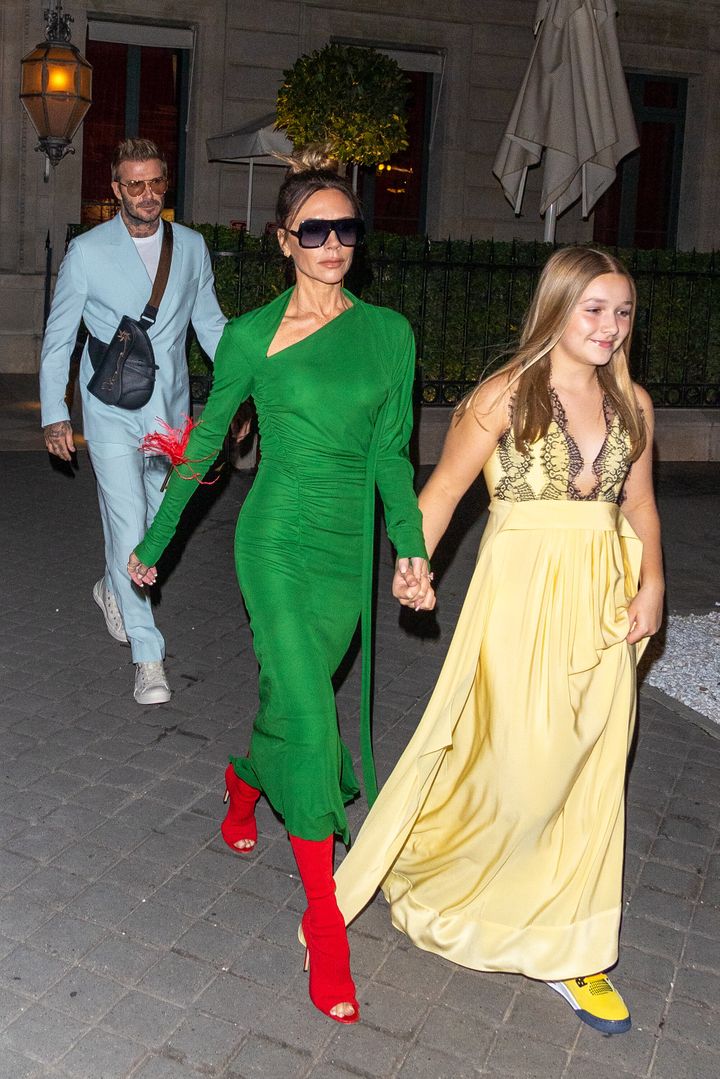
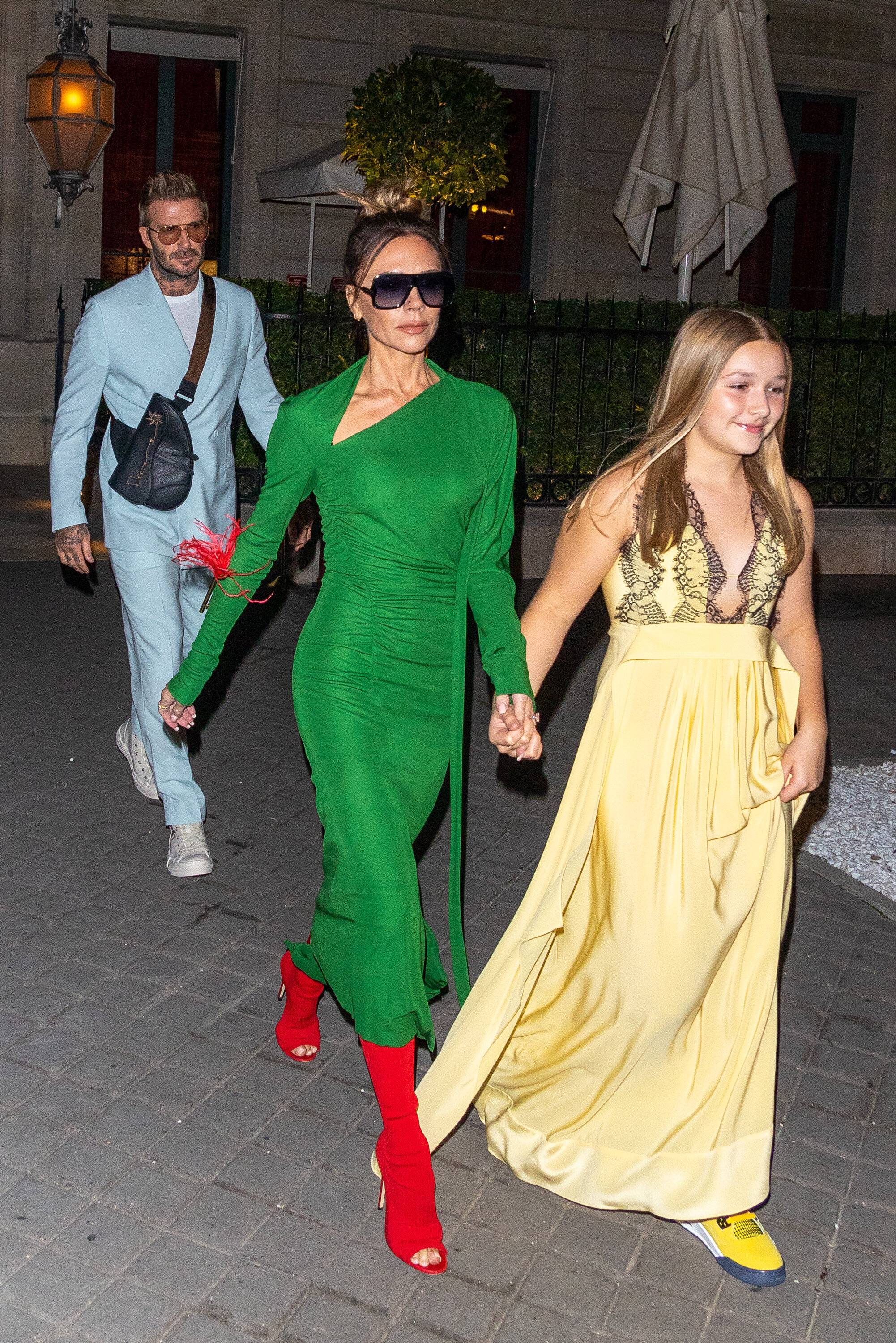
(L-R) David Beckham, Victoria Beckham and Harper Beckham are seen on September 30, 2022 in Paris, France. (Photo by Marc Piasecki/GC Images)
Marc Piasecki via Getty Images
Nicola recently spoke out about the false stories that there is any bad blood between her and her famous mum-in-law, after she chose to wear a Valentino dress to her wedding earlier this year.
She told Grazia: “When I read things that say [things like] I was never planning on wearing a [Victoria Beckham] dress or things like that, it does hurt my feelings. I try not to let it, but it’s just not the truth. It’s just a bit of a bummer when you’re like, ‘Oh, people think that,’ but it’s just not true.”
The language of economics and the financial system can be confusing for those not steeped in the world of pensions, gilts and bear markets.
But there’s been a lot of around, as the Conservative Party’s mini-budget spooked the markets, causing a collapse in the pound and a surge in the UK’s borrowing costs. Here’s an explanation to some of the phrases and ideas being bandied around.
Advertisement
Why is ‘supply-side economics’ being mentioned?
The economic theory is highly fashionable having been fully embraced by the UK’s new prime minister, Liz Truss and her chancellor, Kwasi Kwarteng, in their controversial “fiscal event”.
The theory holds that the supply of goods and services within the economy is the main driver of growth. Put bluntly, the idea is to give wealthy individuals or large corporations tax cuts, which in turn creates jobs and later increases the number of people paying taxes and boosts the amount of money collected by the Treasury. The prime minister’s approach has been dubbed “Trussonomics”, and supporters talk a lot about baking a bigger economic “pie” that everyone can share.
The theory was particularly popular in right-wing circles in the 1980s. In common with US president Ronald Reagan, UK prime minister Margaret Thatcher experimented in this kind of low-tax economics, the results of which have been disputed ever since.
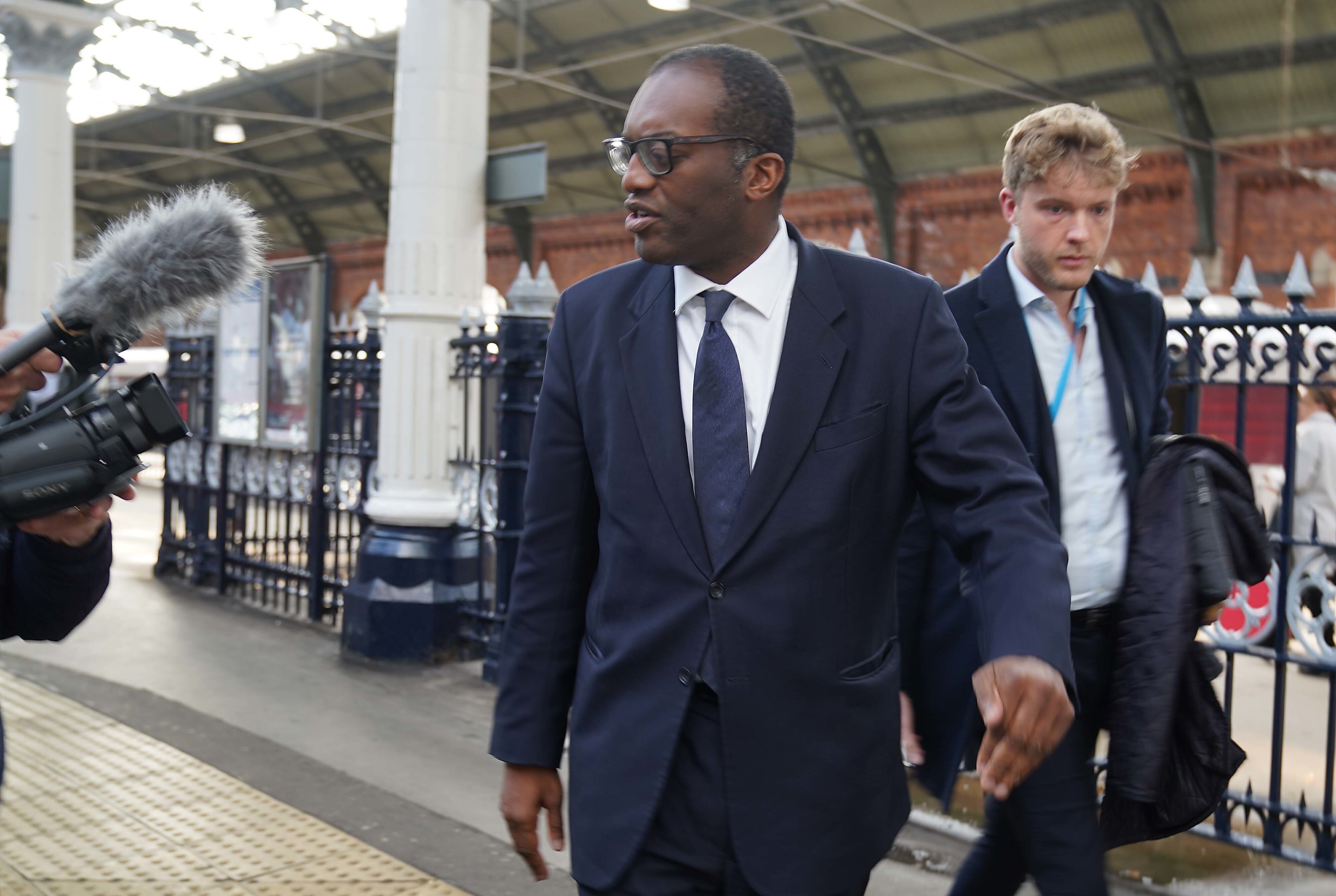
<img class="img-sized__img landscape" loading="lazy" alt="Chancellor Kwasi Kwarteng arrives at Darlington station for a visit to see local business.” width=”720″ height=”482″ src=”https://www.wellnessmaster.com/wp-content/uploads/2022/09/a-guide-to-the-confusing-language-describing-the-uks-financial-markets-meltdown-3.jpg”>
Chancellor Kwasi Kwarteng arrives at Darlington station for a visit to see local business.
Owen Humphreys via PA Wire/PA Images
Advertisement
The phrase “trickle-down” economics – the benefits generated at the top trickling down to everyone – has become synonymous with the idea.
When talking about supply-side economics, commentators will invariably refer to the Laffer Curve – a graph showing the relationship between tax rates and the amount of tax revenue collected by governments. It’s named after Arthur Laffer, a member of Reagan’s economic policy advisory board, who also advised Thatcher, earning him the nickname the “father” of supply-side economics.
When do we know we’re in a recession?
A technical recession is defined by two successive quarters of falling economic output – measured by gross domestic product (GDP), which attempts to summarise all the activity of companies, governments and individuals in an economy in a single figure.
Some people argue the term “recession” is an unreliable indicator because people could be suffering all the effects of an economic downturn, such as long-term unemployment, but the data might not officially say as much.
Kwarteng has admitted the UK is “technically” in a recession, even if the official figures are yet to confirm it.
Advertisement
In 2020, the Office for National Statistics (ONS) officially declared the UK in recession – the steepest on record – after the economy plunged by 19.6% between April and June due to the coronavirus lockdown.
It followed a 2.2% contraction in the previous three months – marking the first recession since the 2008 global financial crisis, when the UK fell into a year-long recession.
What is inflation?
At its heart, inflation is the measure of how quickly the cost of goods and services is growing. It is an average across many categories, so if food prices rise, that could still be offset by drops in, say, the price of petrol.
In the UK, the ONS is tasked with estimating the inflation rate.
It has a basket of goods and services that it tracks. It might be helpful to think of this as a massive shopping basket with what the ONS thinks that people in the UK buy. It includes around 730 items, anything from dating agency fees to condoms, wild bird seed to petrol, and crumpets to pet food.
What is in the basket changes every year – with some additions and some removals – because what people buy changes. For 2022 antibacterial surface wipes were added, along with meat-free sausages and other items.
Advertisement
What’s the Bank of England’s role?
Owned by but independent from the UK government, the Bank of England is tasked with keeping inflation under control, targeting 2% a year.
But in recent months inflation has started to run away. It hit 9.9% in August and, despite government action to freeze energy bills, is still expected to strike a new 40-year-high “just below 11%”, the central bank has said.
The Bank of England also has a wider remit to ensure the health of the economy. Many will remember the economy-boosting stimulus in the form of quantitative easing – often referred to as printing money – being deployed during the 2008 financial crisis.
How do interest rates fit in?
An interest rate is a measure that tells you how high the cost of borrowing money is, or how high the rewards are for saving.
Advertisement
The Bank of England’s “base rate” – the interest rate at which banks borrow from the central bank, which has billions of pounds in assets at its disposal – has a knock-on effect on the interest rates offered on the high-street for mortgages and savings.
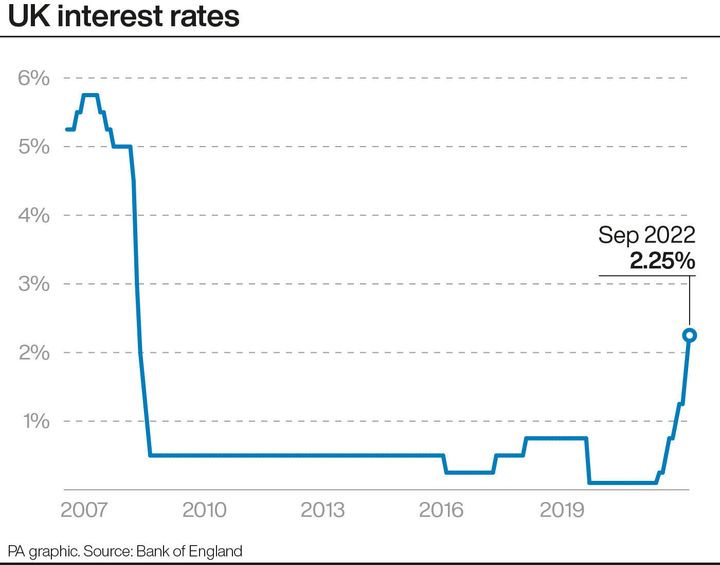
Raising and lowering interest rates is the blunt instrument at the Bank’s disposal to control the economy. Hiking the base rate increases the cost of borrowing, making both credit and investment more expensive. The idea is to put the brakes on the economy and curb soaring inflation. Bringing rates down is an attempt to have the opposite effect – stimulate growth by making borrowing cheaper, and in turn, encourage investment.
UK interest rates. See story ECONOMY Rates. Infographic PA Graphics. An editable version of this graphic is available if required. Please contact graphics@pamediagroup.com.
PA Graphics via PA Graphics/Press Association Images
Before the mini-budget, the Bank raised the base rate by 0.5 percentage points – the seventh hike since December – in a bid to keep inflation under control. Now some analysts are predicting the base rate, currently standing at 2.25%, will have to rise to as high as 6% next year.
What about bonds and yields?
The Bank of England has also intervened to try to bring surging yields in government bonds – known as gilts – under control as they spiralled higher, sending UK public borrowing costs soaring.
Advertisement
It said it would buy bonds “on whatever scale is necessary”. The Bank stepped in to calm markets after some types of pension funds were at risk of collapse.
Bonds are loans that investors make to a bond issuer and can be issued by companies or governments to raise money.
The yield on a bond is the amount of money an investor receives for owning the debt and is represented as a percentage of its price. When a bond price falls, its yield rises.
Yields fall when investors are less willing to own the debt, meaning they will pay a lower price for the bonds.
Alarm bells were ringing when yields on 10-year UK government bonds rose above 4%, the highest since the 2008 financial crisis, and more than triple the 1.3% rate at the start of the year.
Advertisement
The higher yield reflected fears investors had in the state of the UK economy, and again impacts how much interest banks charge for various types of loans, most notably mortgages.
A defiant Volodymyr Zelenskyy has announcedUkraine is formally applying for fast-track membership of theNatomilitary alliance, cranking up fears of a full-blown conflict between Russia and the West.
The Ukrainian leader’s move appeared to have been prompted by Russian president Valdimir Putin holding a ceremony in Moscow to proclaim four partially-occupied Ukrainian regions as annexed Russian land, following a series of sham referendums. The land-grab breaks international law.
Advertisement
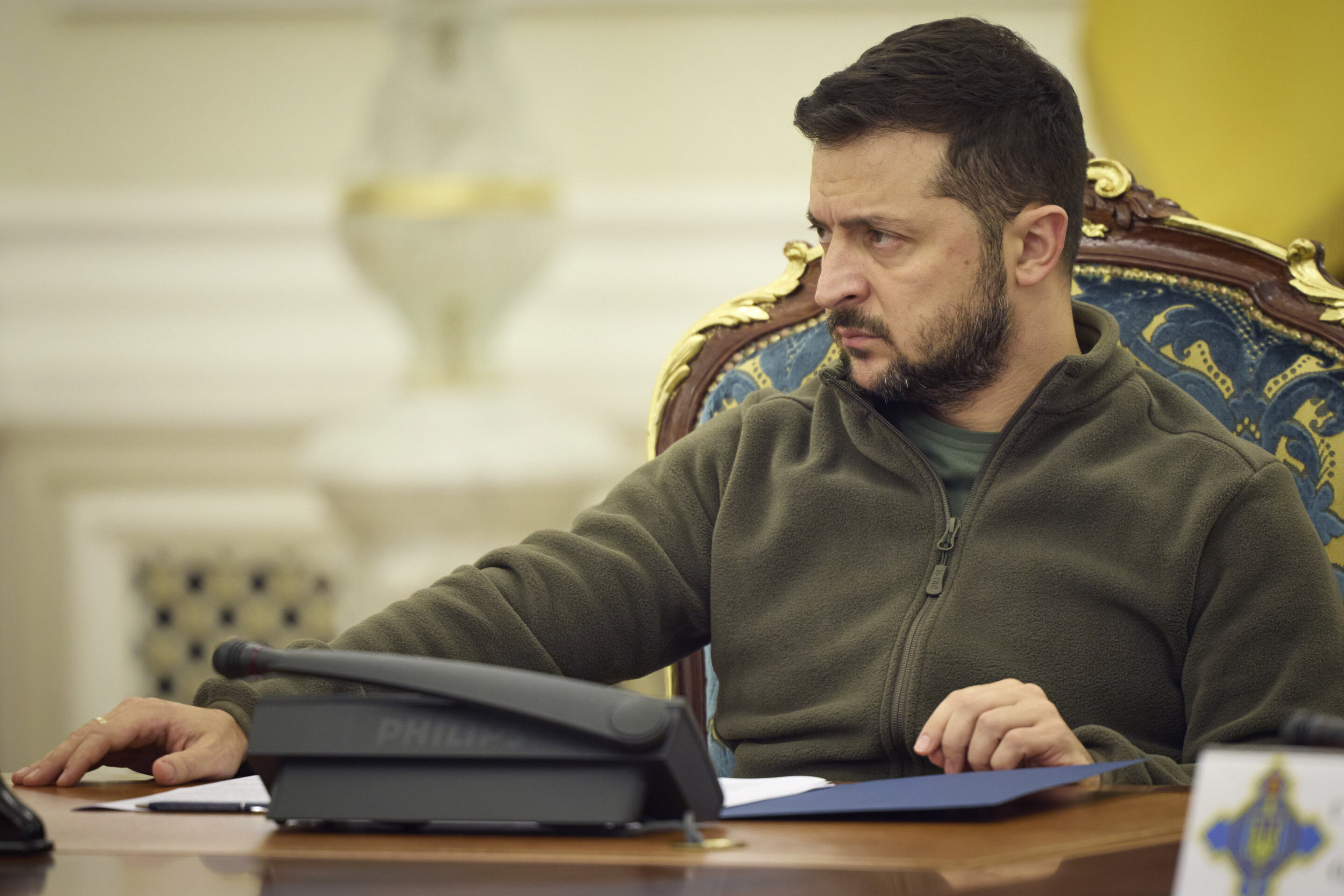
A video showed president Zelenskyy announcing the membership bid and then signing a document flanked by his prime minister and the speaker of parliament.
“De facto, we have already proven compatibility with alliance standards,” Zelenskyy said. “We trust each other, we help each other, and we protect each other. This is the alliance.”
The announcement is likely to stoke Putin, who sees Nato as a hostile military alliance bent on encroaching in Moscow’s sphere of influence and destroying it.
In his video speech, Zelenskyy accused Russia of brazenly rewriting history and redrawing borders “using murder, blackmail, mistreatment and lies”, something he said Kyiv would not allow.
Advertisement
“We trust each other, we help each other and we protect each other.”
Volodymyr Zelenskyy says Ukraine has formally submitted a fast-track application to join Nato. pic.twitter.com/8xq3mDr1aq
The military alliance goes by the acronym of Nato.
The North Atlantic Treaty Organisation was formed in 1949 to prevent a resurgence of nationalism and militarism in Europe after two world wars, and to deter the Soviet Union’s expansion.
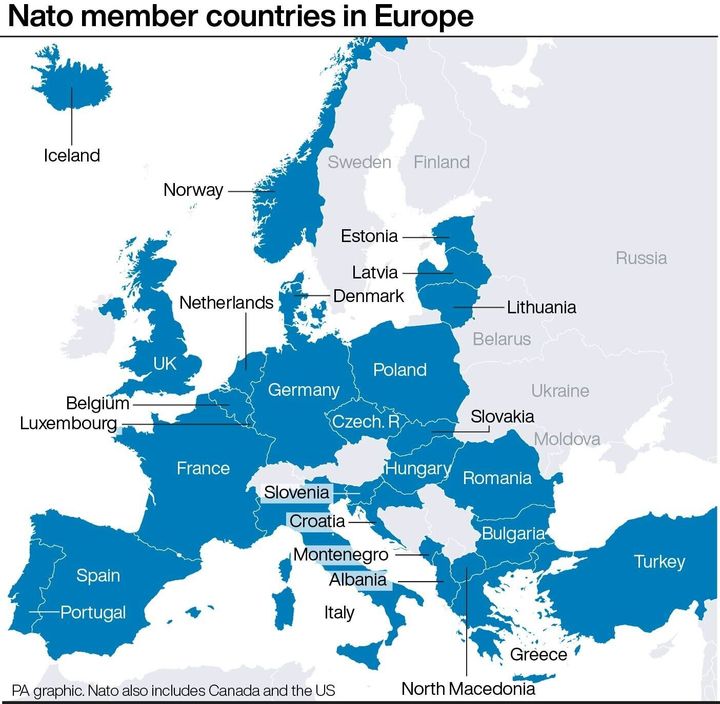
Its membership has swelled to 30 member nations, and over the 1990s and 2000s its enlargement stretched further east to include the former Soviet republics of Estonia, Latvia and Lithuania.
They agree to mutual defence – military action – in response to an enemy attack. The principle goes: “An attack against one ally is considered as an attack against all allies.” This is Article 5 of the Nato constitution.
Sweden and Finland, which shares a 1,300-km (810-mile) border with Russia, sought membership to Nato earlier this year following Russia’s invasion of Ukraine, but have faced a hurdle as its application needs the approval of all 30 current members, with Turkey raising objections.
Advertisement
Efforts to join the US-led military alliance marked a radical break in the policy of both north east European countries given their staunch military neutrality.
Nato member countries in Europe
PA Graphics via PA Graphics/Press Association Images
Because Ukraine is not a member of Nato, Western support for Zelenskyy has fallen short of putting their troops on the ground.
Nato’s enlargement was Putin’s biggest publicly-stated grievance with the West during the build-up up to war, claiming the eastward expansion and potentially sweeping up the largest other former Soviet republic breaks promises.
Nato has been adamant it will not accept limits on the nations that it admits and has always maintained an “open door policy”.
Advertisement
Will tensions flare up more?
Many will fear the countries are on a collision course that could lead to a bona fide world war.
Putin vowed to protect newly-annexed regions of Ukraine by “all available means”, a nuclear-backed threat where he also railled furiously at the West, accusing the United States and its allies of seeking Russia’s destruction.
Russia has repeatedly made clear that any prospect of Ukraine joining the world’s largest military alliance is one of his red lines and it was among the justifications he has cited for his invasion — the biggest land war in Europe since the Second World War.
Will Nato membership actually happen?
The immediate ramifications of the “accelerated” Nato application weren’t clear, since it requires the unanimous support of all members. The supply of Western weapons to Ukraine has, however, put it closer to the alliance’s orbit.
But it seems unlikely Nato will accept Ukraine’s application while a war is raging. Article 5 compels fellow members to actively defend it against Russia, a commitment that goes well beyond the supply of weapons.
Ukraine’s admission to Nato has been a stated goal going back to its constitution in 2002, but at the start of the war Zelenskyy accepted his country couldn’t join at present.
Advertisement
“For years we heard about the apparently open door, but have already also heard that we will not enter there, and these are truths and must be acknowledged,” he said at the time.
The Labour Party has surged to an astonishing 33-point lead over the Tories, according to new polling.
The YouGov poll, carried out on Wednesday and Thursday, put Labour on 54% (+9) compared to the Conservatives’ 21% (-7).
Advertisement
The Times, which commissioned the poll, said it is believed to be the largest poll lead enjoyed by any party with any pollster since the late 1990s.
It follows a successful Labour conference in Liverpool and, more importantly, market turmoil and public outcry following Kwasi Kwarteng’s mini-budget last Friday.
The poll also shows the gap between the Lib Dems in third (7%) and the Tories is smaller than between Labour and the Conservatives.
With reports of unease among Tory MPs after the market chaos of recent days, some have called for an urgent change of course from the prime minister.
Julian Smith, a former Cabinet minister, urged the government to “take responsibility” for the crisis.
“The government must scrap 45p, take responsibility for the link between last Friday and the impact on people’s mortgages and make clear that it will do everything possible to stabilise markets and protect public services,” he tweeted.
Former science minister George Freeman called on the Cabinet to meet and agree a “Plan B”.
“The economic package of borrowing & tax cuts announced last week clearly can’t command market or voter confidence,” he said on Twitter.
Advertisement
Truss and Kwasi Kwarteng have insisted their £45 billion package of tax cuts is the “right plan” to get the economy moving despite chaos on the financial markets and fears of rocketing mortgage bills.
In their first public comments since the pound hit a record low on Monday, neither the prime minister nor the chancellor commented directly on the turmoil created by his mini-budget.
During a round of BBC local radio interviews, Truss said the government had to take “urgent action” to kick-start the economy and protect consumers from rising energy costs.
And during a visit to an engine plant in Darlington, Kwarteng said the package he announced in the Commons on Friday was “absolutely essential” if the economy was to generate the revenues needed to fund public services.
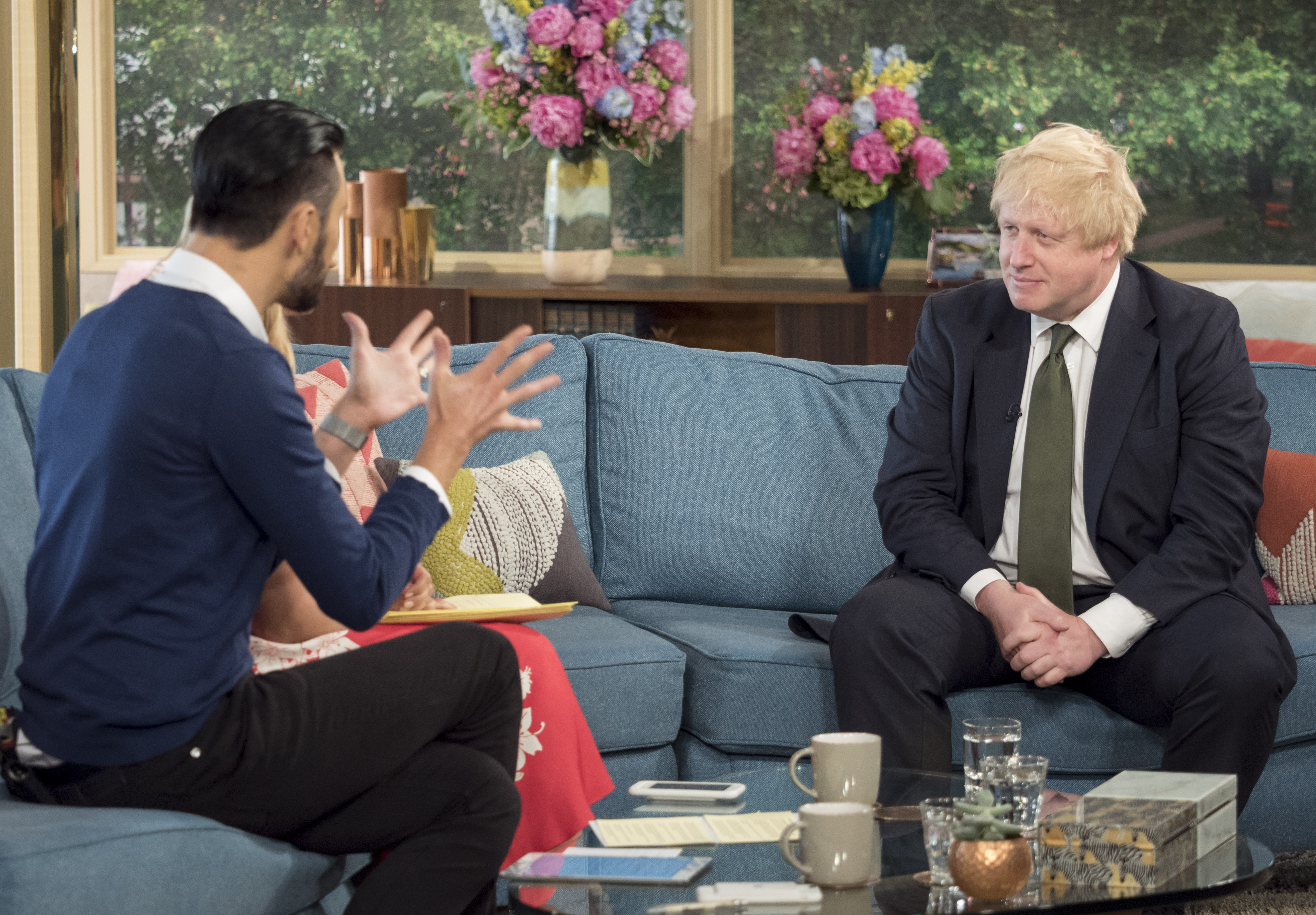
The politician sat down with Rylan and Holly Willoughby on the ITV daytime show in June 2016, but writing in his new autobiography Ten, the former X Factor star alleged he was told that Johnson’s advisors felt he wasn’t “qualified enough” to do the interview.
Speaking about how he often faces snobbery around his interest in and commentary on politics, Rylan wrote (via Evening Standard): “In 2016 before the EU referendum, for example, I was due to interview Boris Johnson on This Morning.
“Then I found out he had threatened to pull out because his advisers heard that I was standing in for Phillip Schofield that day.
“Apparently they thought I wasn’t ‘qualified enough’ to ask him questions.
“Obviously, This Morning didn’t tell me this, and I’m sure it wasn’t Boris who said it, it was probably someone on his team, and I did eventually interview him, but how do they know if I’m qualified or not?”
HuffPost UK has contacted Boris Johnson’s team for comment and is awaiting a response.
Earlier this year, Rylan hit out at the Tory party during an appearance on The Last Leg and called on MPs to “run the country right, look after people in this country and stop being a fucking arsehole” amid in-fighting in the Conservatives.
Austerity is to be revived to tackle the economic crisis critics says was caused by a splurge on tax cuts in the government’s mini-budget.
HuffPost UK understands Chris Philp, chancellor Kwasi Kwarteng’s deputy in the Treasury, will write to Cabinet ministers to urge them to make efficiency savings in their departments’ existing budgets to help balance the public finances.
Advertisement
It marks a significant change in direction since, in 2018, then prime minister Theresa May declared the government’s programme of austerity – started by her predecessor David Cameron eight years earlier – was “over”.
It also signals Liz Truss’s government will not row back from a massive £45 billion tax cut funded by government borrowing.
Chris Philp, Chief secretary to the Treasury, to write to all Secretaries of State telling them to identify efficiencies and reprioritise departmental spending plans.
Treasury source insists that even with 10% inflation, departmental spending is still growing in real terms.
It came as the Bank of England has launched an emergency UK government bond-buying programme to prevent borrowing costs from spiralling out of control.
Advertisement
It was the latest shock move after the pound briefly slumped to an all-time low, triggering fears of sharp interest rate rises to save the currency.
The Bank’s extraordinary intervention, responding directly to the government’s tax-cutting strategy, will pile further pressure on Truss and Kwarteng to defend a vision for the economy that has spooked markets and shocked most mainstream economists.
While the pound hit an all-time record low of 1.03 against the US dollar on Monday, the yield on 10-year gilts – which is a proxy for the effective interest rate on public borrowing – has also soared by the most in a five-day period since 1976, according to experts.
Truss and Kwarteng have stayed publicly silent since the weekend, with only financial secretary to the Treasury Andrew Griffith sent out to the media on Wednesday.
He insisted the government was sticking to the plan set out by Kwarteng in the Commons on Friday.
“What the chancellor and I are focused on is delivering that economic growth plan,” he said in a pooled clip for broadcasters.
Advertisement
“We think they are the right plans because those plans make our economy competitive.”
A Treasury minister has denied the government’s mini-budget has caused an economic meltdown, as a senior figure in government finally spoke publicly about the market turmoil.
With prime minister Liz Truss and chancellor Kwasi Kwartengsilent on the tumbling pound and interest rate fears in recent days, financial secretary Andrew Griffith was presented to the media to answer questions on their behalf.
Advertisement
It came as the Bank of England has launched an emergency UK government bond-buying programme to prevent borrowing costs from spiralling out of control, and followed the International Monetary Fund urging the UK to reverse a massive £45 billion tax cut funded by government borrowing.
On Wednesday, Griffith was asked by Ed Conway of Sky News if the government took responsibility for “the storm in the financial markets” since last Friday’s “fiscal event”.
In response, Griffith said: “No, we both know we’re seeing the same impact of Putin’s war cascading through things like the cost of energy, some of the supply side implications of that. And that’s impacting every major economy. Every major economy you are seeing interest rates going up as well. Every major economy is dealing with exactly these same issues.”
Griffith welcomed the “timely” intervention by the Bank of England in the markets, adding: “What the chancellor and I are focused on is delivering that economic growth plan.”
Advertisement
Treasury financial secretary, Andrew Griffith says the current economic issues are being experienced in “every major economy” due to Putin’s war, not the mini budget.
While the Tories are denying a self-inflicted wound, some are happy to blame others.
Tory peer Daniel Hannan was mocked after he blamed the economic on the prospect of Keir Starmer becoming prime minister.
He said a Labour victory at the next election would lead to “higher taxes, higher spending, and a weaker economy”.
Meanwhile Andrew Lilico, a right-wing economist supportive of the tax cuts, hit out at the IMF as a “left-wing body” after its rare criticism of a developed country as the lender of last resort highlighted the negative impact of the tax cuts.
The scale of the crisis in the markets has led to unease in some quarters of the Tory party, while Labour has joined calls for parliament, currently on a conference recess, to be recalled.
Advertisement
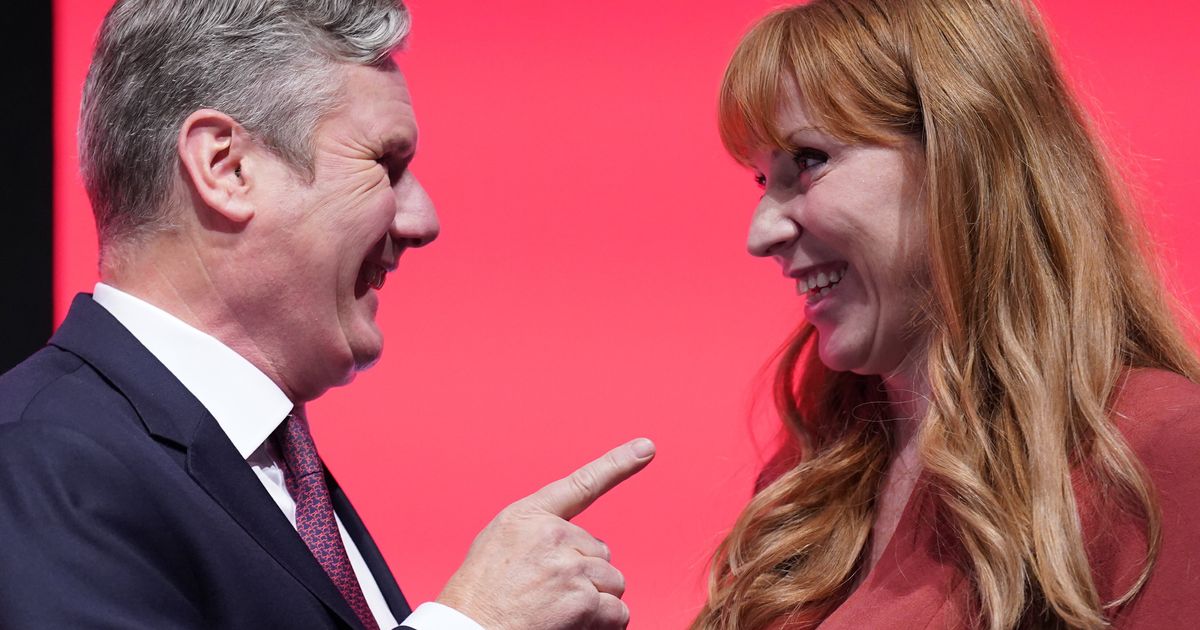
“The government has clearly lost control of the economy,” Keir Starmer told reporters in Liverpool.