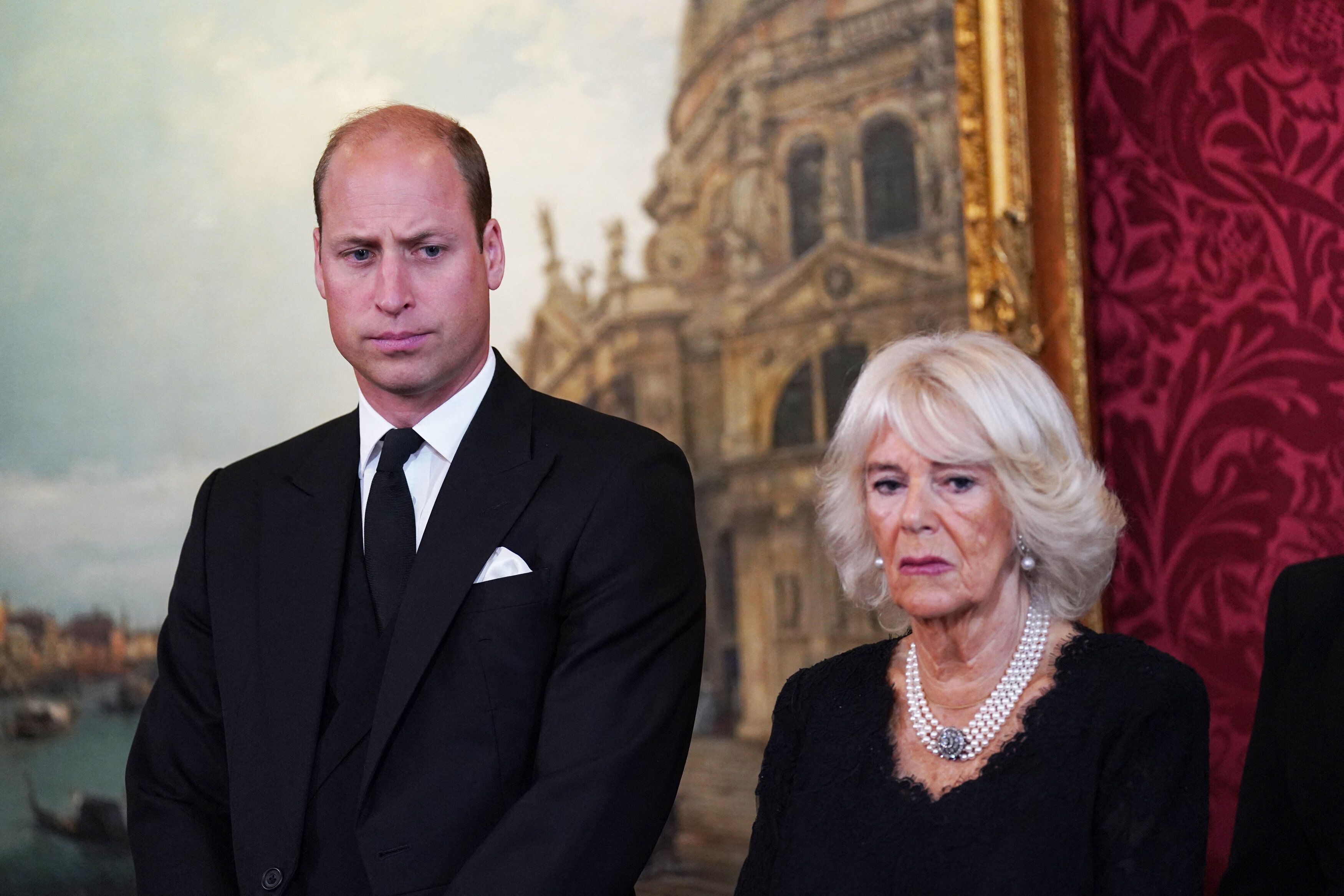
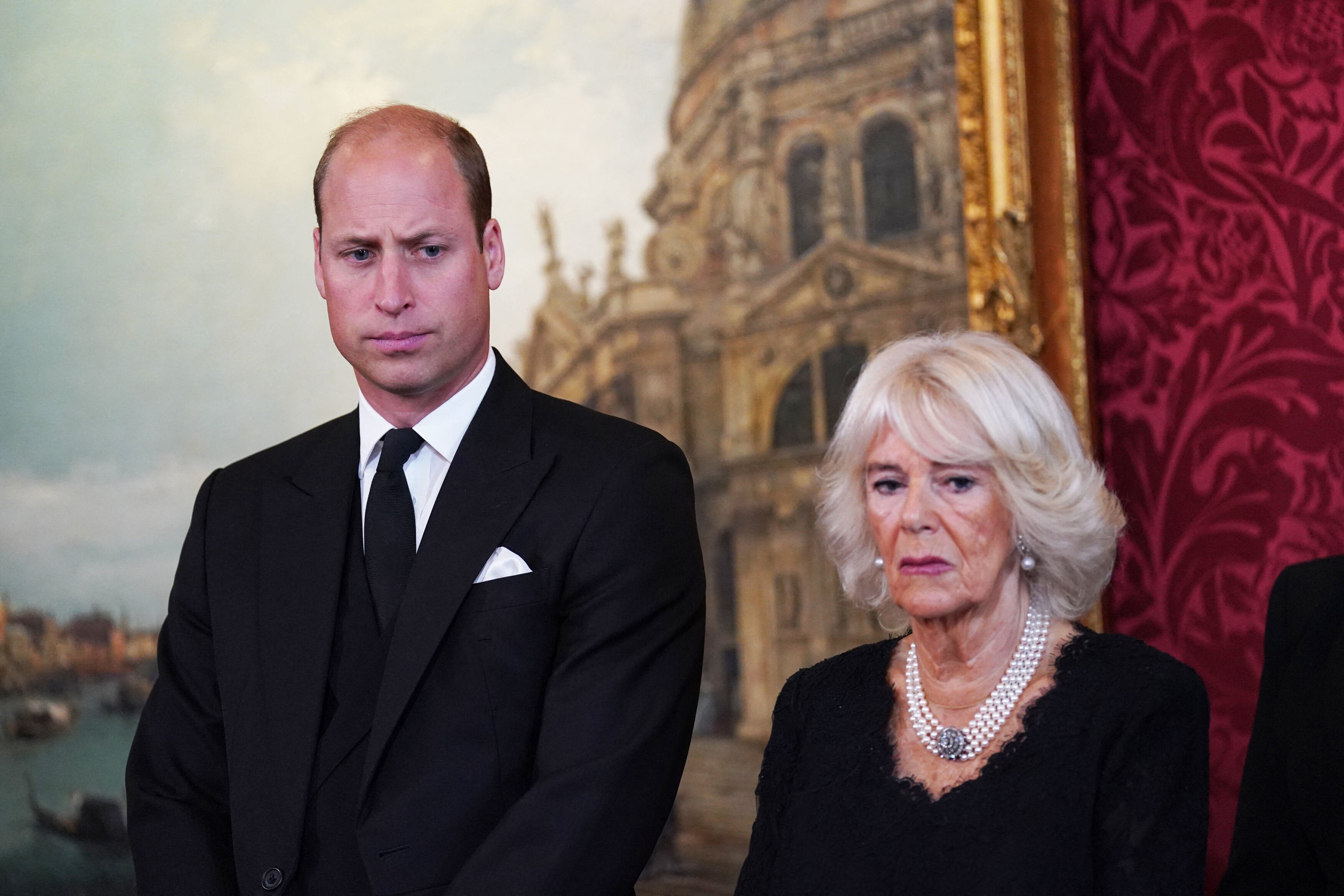
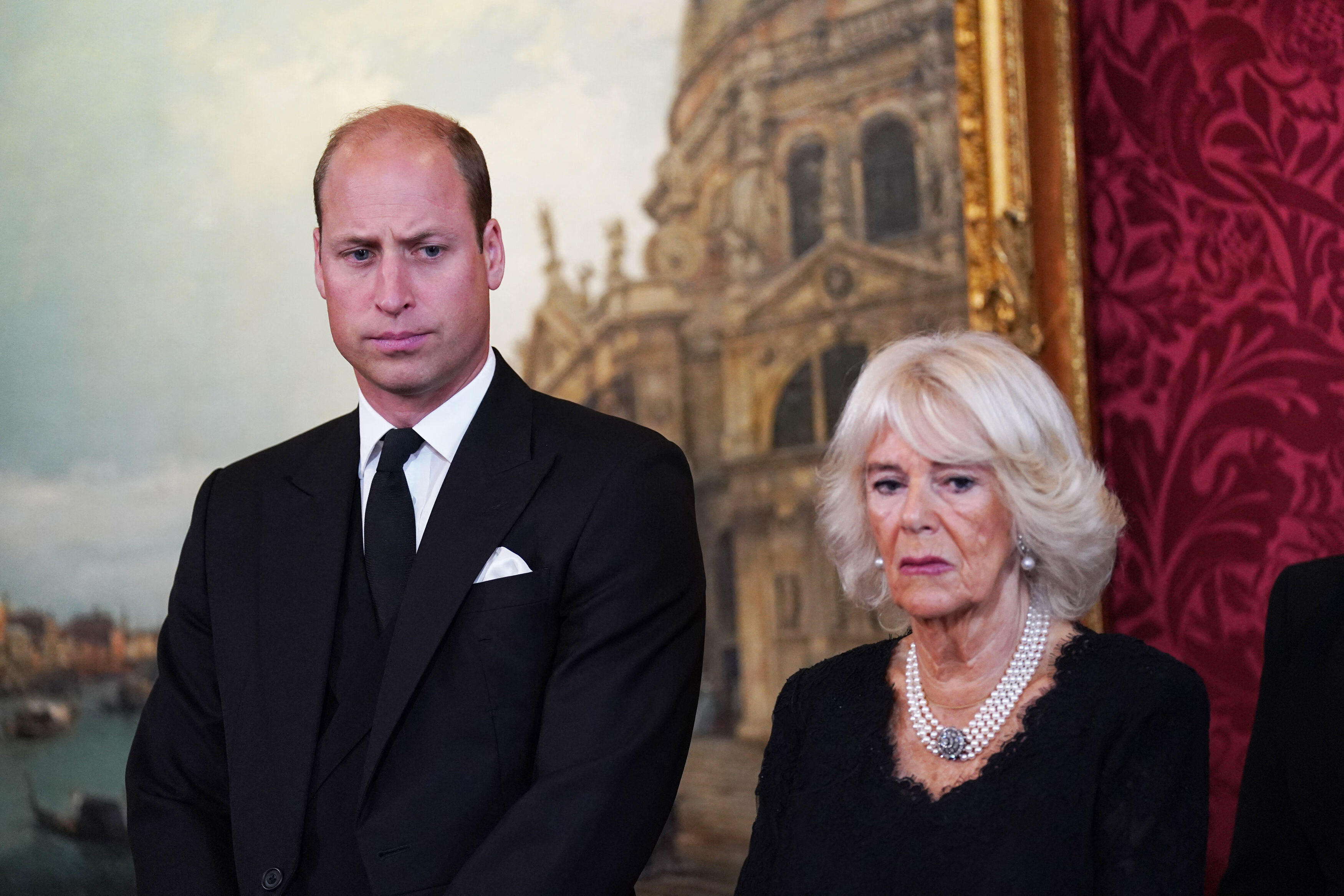
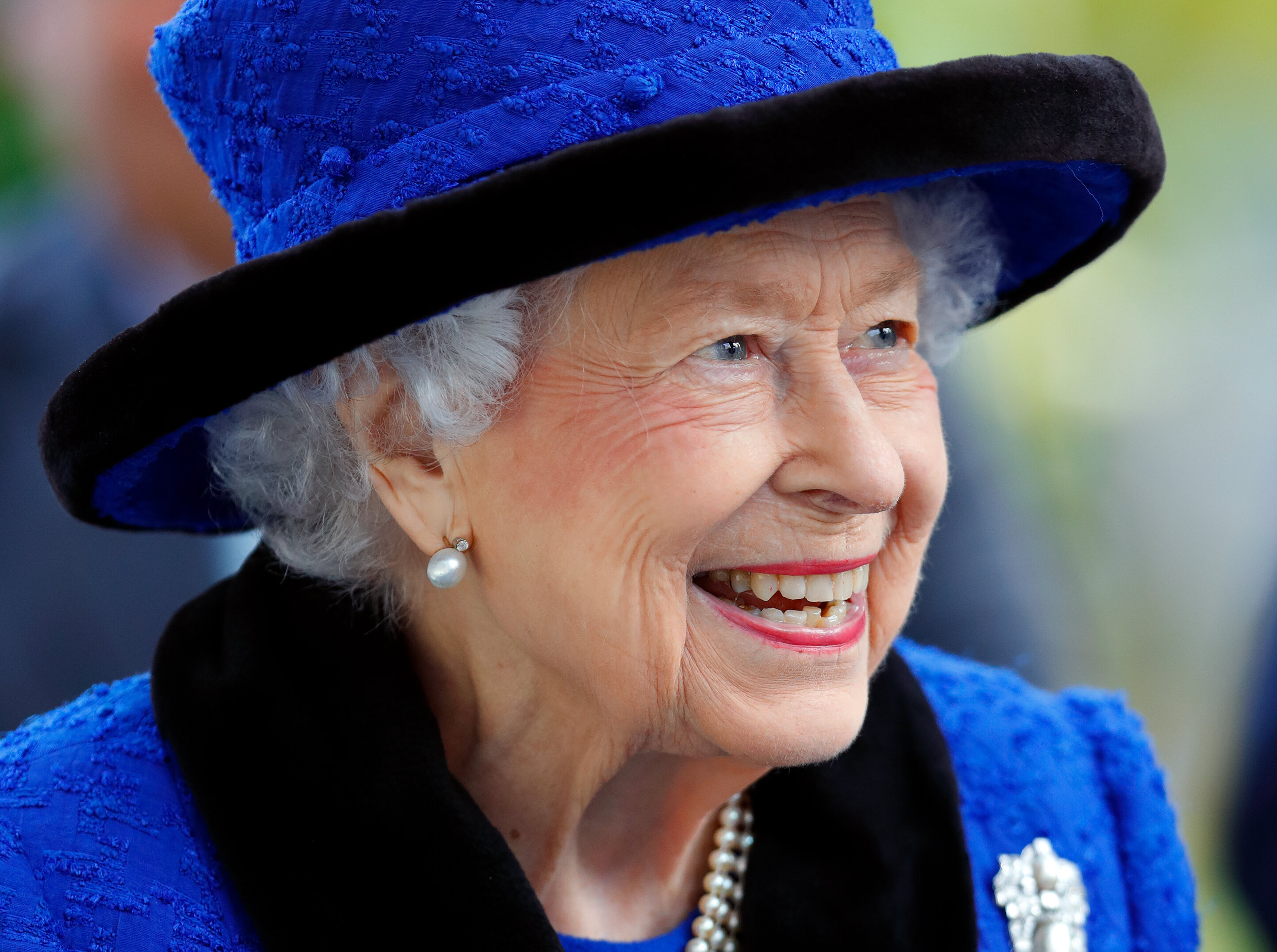
The new Prince of Wales, now first heir to the throne, said: “On Thursday, the world lost an extraordinary leader, whose commitment to the country, the Realms and the Commonwealth was absolute.
Advertisement
“So much will be said in the days ahead about the meaning of her historic reign. I, however, have lost a grandmother.”
“I have had the benefit of the Queen’s wisdom and reassurance into my fifth decade,” William said of his grandmother in his statement on Saturday.
“My wife has had twenty years of her guidance and support. My three children have got to spend holidays with her and create memories that will last their whole lives.”
Advertisement
In what could be seen as a references to his wedding to Kate and, possibly, to his mother’s death, he added: “She was by my side at my happiest moment. And she was by my side during the saddest days of my life.”
On Saturday morning, the Prince of Wales, together with Camilla, Queen Consort, was witness to the formal proclamation of his father as King Charles III.
The Prince said that while he grieves the Queen’s loss, he also feels “incredibly grateful”.
“I thank her for the kindness she showed my family and me,” he said. “And I thank her on behalf of my generation for providing an example of service and dignity in public life that was from a different age, but always relevant to us all.”
Echoing the words of his father, he said: “I knew this day would come, but it will be some time before the reality of life without Grannie will truly feel real.”
“My grandmother famously said that grief was the price we pay for love,” he said.
“All of the sadness we will feel in the coming weeks will be testament to the love we felt for our extraordinary Queen. I will honour her memory by supporting my father, The King, in every way I can.”
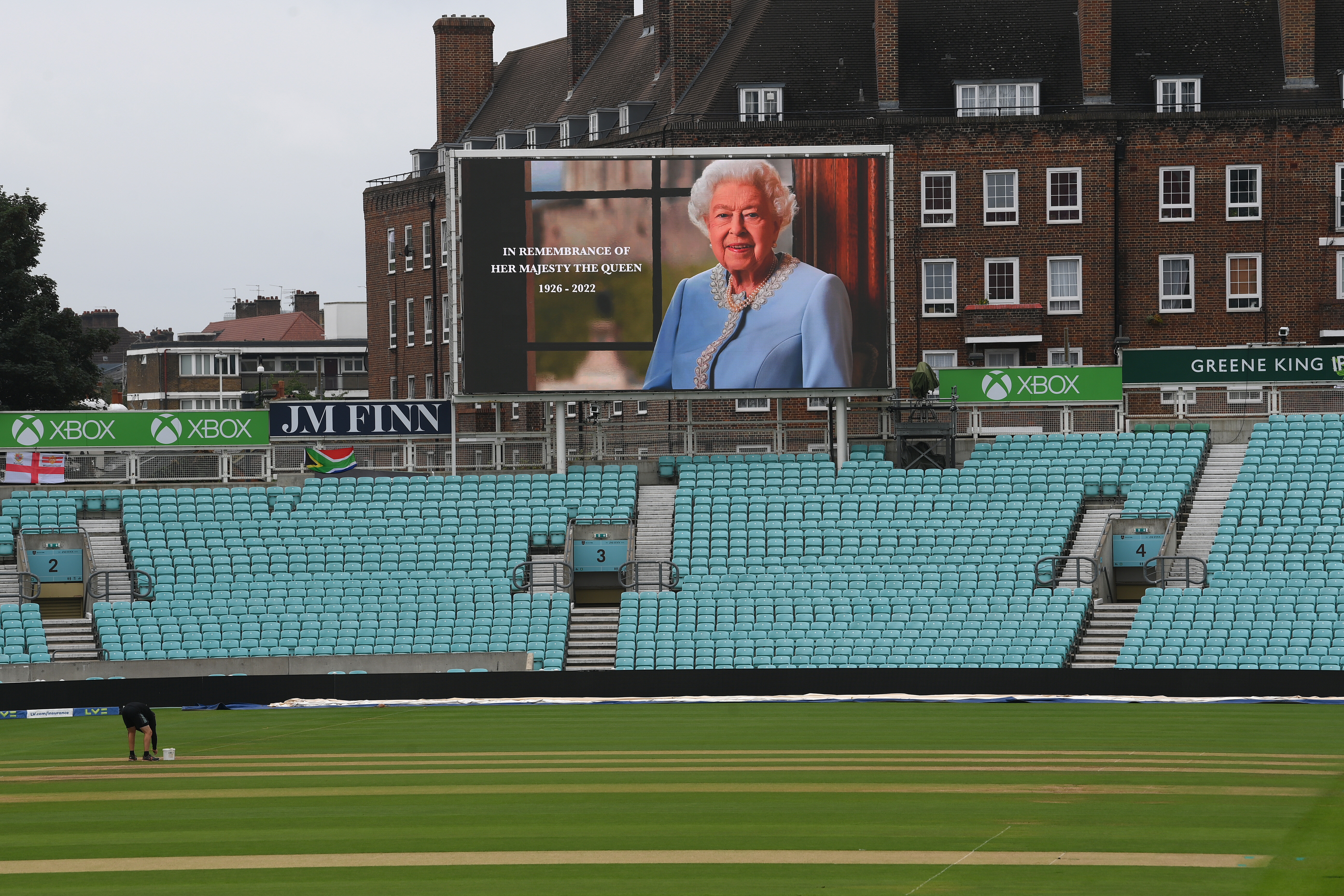
Britain has been paying its respects after the death of Queen Elizabeth II, after the monarch died at the age of 96 following 70 years on the throne.
But the reactions have came in all shapes and sizes – with some a mix of baffling, bizarre and just plain weird.
Advertisement
Weather forecasts scaled back
I am totally bewildered @metoffice. Why is it a mark of respect to give us the weather forecast for today, but not tomorrow? Or to put it another way, why is it disrespectful to give us tomorrow’s weather? pic.twitter.com/CNT8Gym4vo
Football fixtures at all levels across the UK have been postponed.
The UK’s football authorities have decided to postpone all fixtures planned for this weekend as a mark of respect to the Queen, and there is a possibility no further Premier League matches will now be played this month.
Advertisement
Ex-England footballer Peter Crouch tweeted: “I know it’s only a game and some things are much bigger but imagine all our games went ahead this weekend.
“Black armbands, silences observed, national anthem, Royal band playing etc to the millions around the world watching? Isn’t that a better send off?”
A ‘Queen-shaped cloud’ appears
Believe it or not, but multiple news outlets reported on a cloud that “looks like the Queen” was spotted in Telford, Shropshire.
Leanne Bethell captured the photographs in the skies above the A4169.
She says her daughter Lacey was first to point out the glowing figure, shouting: “Oh my God” repeatedly.
Advertisement
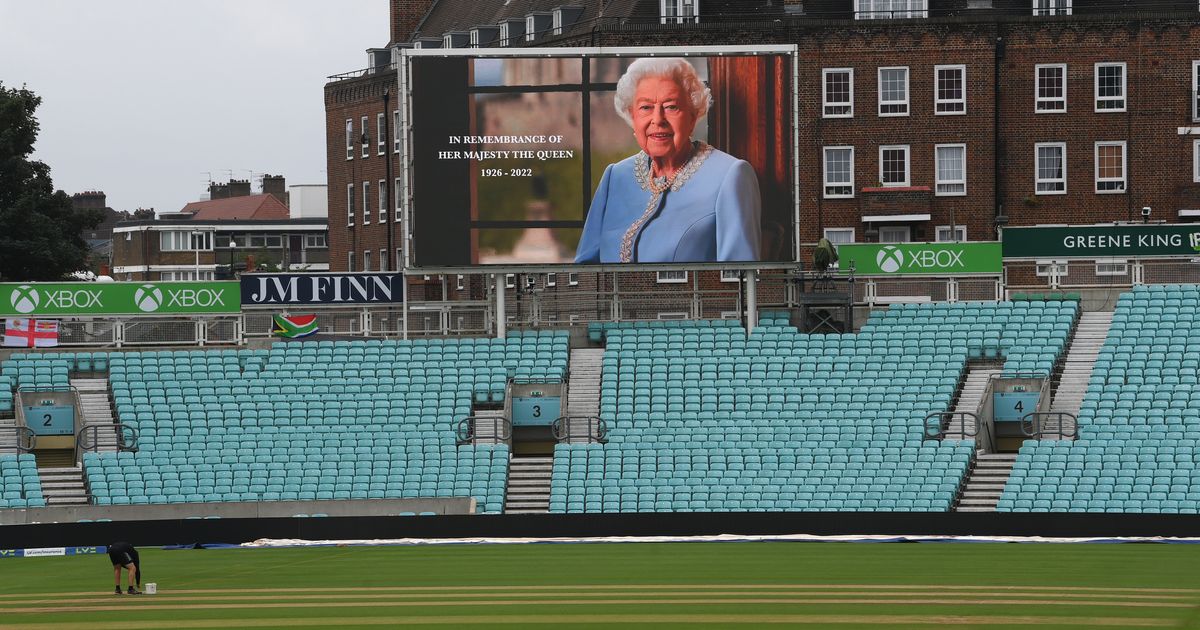
No fancy dress at the cricket
It’s game on at the Oval tomorrow.
Spectators are encouraged to be in their seats at 10:30am for a celebration of HM the Queen and no fancy dress is permitted.
England’s third and final Test against South Africa will resume this weekend at the Kia Oval,
What was supposed to be day two of the series decider was called off on Friday as a mark of respect following the death of the long-reigning monarch.
Surrey have announced fancy dress will not be permitted in the ground, a historical asset owned by the Duchy of Cornwall, across the three days.
Interest rate decision postponed
A widely expected rise in interest rates has been put on hold due to the death of the Queen, the Bank of England has said.
Advertisement
The Bank said that decision makers on its Monetary Policy Committee would not meet as scheduled next week.
Instead the meeting, at which committee members were expected to hike rates again, will take place the following week, the Bank said.
Corporate Britain was quick to get out its tributes, with purveyours of pasties, indoor cycling workouts and baked beans offering tributes.
Crazy Frog, the British Kebab Awards and the musical Hamilton joined the chorus, as did Ann Summer – which also unintentional promoted some of its sex toys.
Advertisement
The unfortunate gaffe garnered much attention on Twitter with the post, tweeted out by Summer Ray, a voiceover artist and writer, achieved over 2,000 likes and many comments.
Perhaps The Queen should posthumously be awarded an Oscar – Best Supporting Actor perhaps? – for her great Paddington Bear performance, or at least a Bafta?
A journalist has suggested that the monarch should receive an acting award, after the late Queen briefly appeared in a comic sketch with the animated character Paddington Bear back in June, for her Platinum Jubilee.
Their funny exchange over a cup of tea showed Paddington being characteristically ill-mannered at the table, and the Queen revealing she shares the bear’s love of marmalade sandwiches.
The two also tap out the beat of Queen’s We Will Rock You anthem during their exchange. The clip took half a day to film, and was celebrated at the time for showing the monarch’s jovial nature.
Advertisement
Michael Crick tweeted on Friday that the Queen should receive a posthumous Oscar – “Best supporting actor, perhaps?” – for that brief sketch. He added: “Or at least a Bafta.”
Prominent Eurosceptic and former leader of UKIP Nigel Farage shared a short clip on Twitter on Thursday night, showing him putting flowers down outside Buckingham Palace at night.
Curiously, Farage does not look at the camera but nods with deference at the Palace gates, before walking back through the crowd with his umbrella.
It’s not clear who filmed the video or how the GB News host secured the clip to share on his own account – along with the caption “paying respects” – especially considering he does not interact with the person filming at all. Twitter was quick to add its own captions.
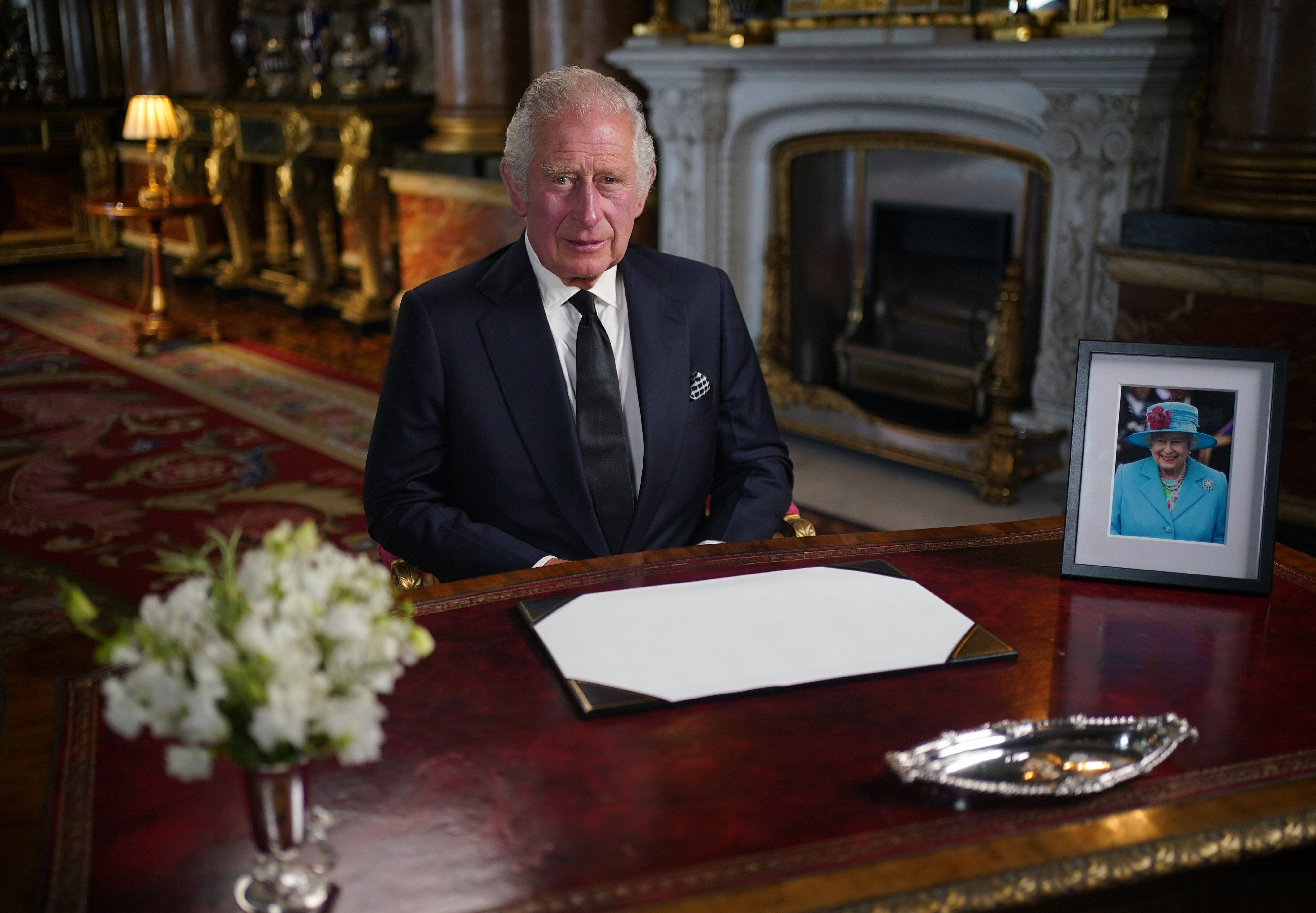
The King has given a moving tribute to his “darling Mama” the Queen in his first public broadcast as monarch, as he promised to continue her “lifelong service” to the country.
Ending his address, the new monarch said: “To my darling Mama, as you begin your last great journey to join my dear late Papa, I want simply to say this: thank you.
Advertisement
“Thank you for your love and devotion to our family and to the family of nations you have served so diligently all these years. May ‘flights of Angels sing thee to thy rest’.”
The King pledged his whole life as service as the new sovereign just as the Queen did, saying: “That promise of lifelong service I renew to you all today”.
King Charles III delivers his address to the nation and the Commonwealth from Buckingham Palace, London, following the death of Queen Elizabeth II on Thursday.
And he paid tribute to his “darling wife” Camilla – calling her “my Queen Consort”, saying he can “count on her loving help”.
The King also set out his changing role, as he steps away from his considerable charity work which shaped his life as the heir to the throne.
“My life will of course change as I take up my new responsibilities. It will no longer be possible for me to give so much of my time and energies to the charities and issues for which I care so deeply. But I know this important work will go on in the trusted hands of others,” he said.
The monarch pre-recorded the lengthy speech, which was just under 1,000 words and lasted around nine-and-a-half minutes in the Blue Drawing Room of the royal residence in central London, and it was played out at 6pm on Friday.
Charles said of his “beloved mother” the late Elizabeth II: “We owe her the most heartfelt debt any family can owe to their mother; for her love, affection, guidance, understanding and example”.
Queen Elizabeth II has died aged 96, Buckingham Palace has confirmed.
In a statement, the Palace said: “The Queen died peacefully at Balmoral this afternoon. The King and The Queen Consort will remain at Balmoral this evening and will return to London tomorrow.”
Prince Charles, who is the heir apparent, was with her.
It comes shortly after the UK’s longest-reigning monarch celebrated her 70th year on the throne, her platinum jubilee.
Advertisement
The whole country came together to honour the occasion across the extended bank holiday, paying tribute to her unprecedented reign through Trooping the Colour, a service of Thanksgiving and Big Jubilee Lunches up and down the UK.
The Queen was also a reassuring presence for many as the country tried to cope with successive lockdowns, despite catching Covid herself in February 2022.
In her 2020 Christmas message she praised the efforts of individuals and called on the nation to “remain united and resolute” in the face of the outbreak. And in a poignant video to mark the 75th anniversary of VE day in 2020, she delivered a message of hope, promising in the words of Dame Vera Lynn’s wartime anthem: “We will meet again.”
The royal family also grieved in April 2021, when the Queen’s husband of 73 years, Prince Philip, died. The entire ‘Firm’ followed Covid restrictions and sat apart in their bubbles at the televised funeral – meaning the Queen had to sit on her own.
Advertisement
The Queen was widely praised for returning to her royal duties after just a two-week mourning period for the Duke of Edinburgh, who she referred to as her “strength and stay”.
The news of her death marks the end of a new Elizabethan era that began when the 25-year-old princess became Queen Elizabeth II on the death of her father King George VI, in the early hours of February 6, 1952.
She became the longest-ever reigning monarch in British history on September 9, 2015, bypassing the record set by her great-great-grandmother Queen Victoria. This took into account 63 years plus 16 leap days, additional months and days, and the timing of George VI’s death.
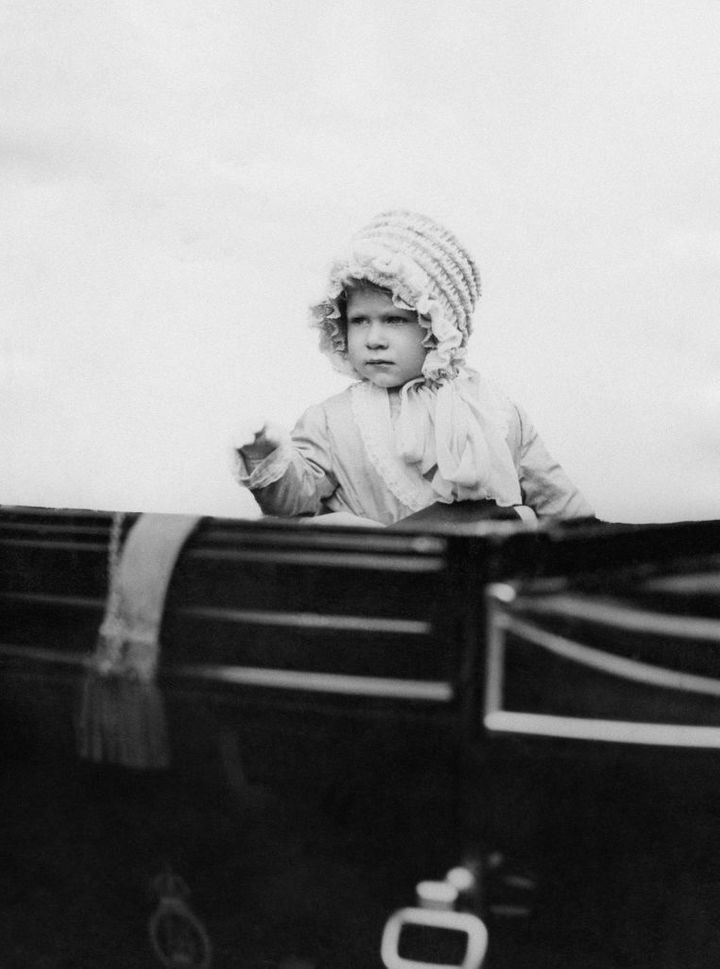
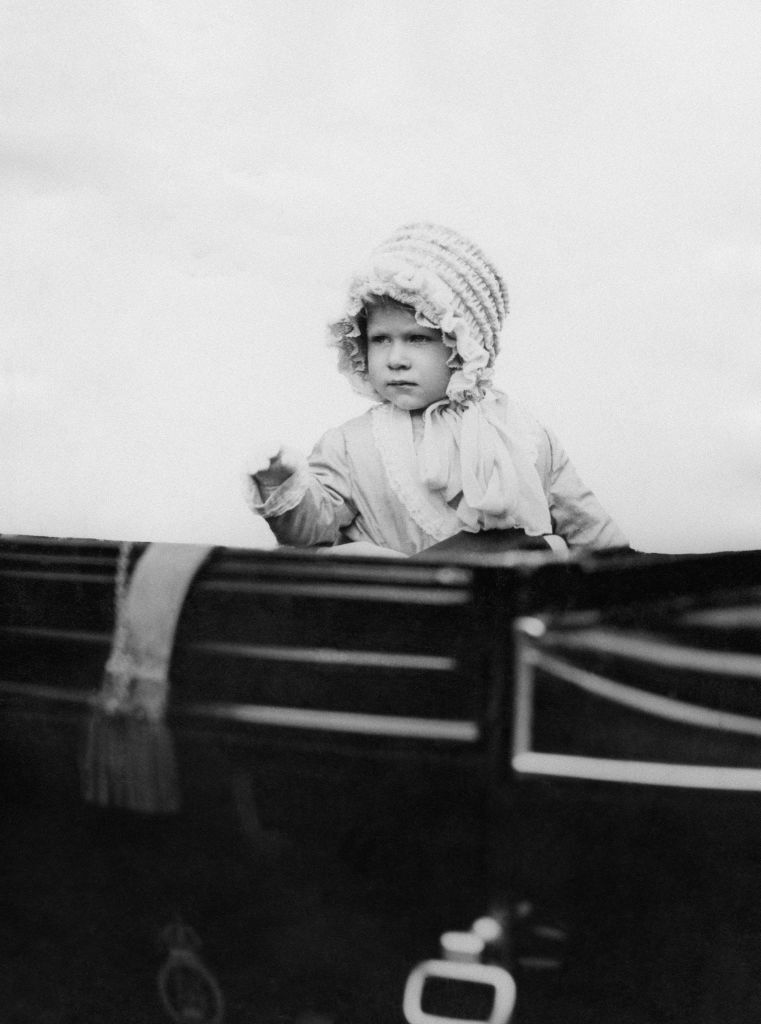
Princess Elizabeth waves from her carriage in London in 1928
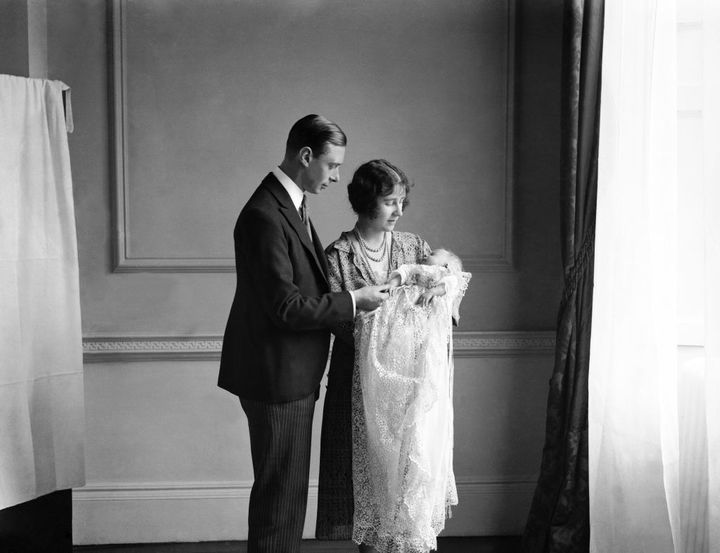
The Queen Mother (then the Duchess of York) with her husband, King George VI (then the Duke of York), and their daughter Elizabeth II at her christening in May 1926
Advertisement
With the death of 88-year-old King Bhumibol Adulyadej of Thailand in 2016, the Queen then took the record for the world’s longest reigning living monarch.
She is the world’s second-longest reigning monarch ever, after French King Louis XIV, who served on the throne for more than 72 years.
Princess Elizabeth Alexandra Mary was born by Caesarian section on April 21, 1926, in her maternal grandparents’ London home: 17 Bruton Street, Mayfair, while the home secretary Sir William Joynson-Hicks waited in the next room.
The presence of the government minister was an age-old custom designed to ensure that no substitute had been smuggled in hidden in a warming pan or similar receptacle. Apparently one of Princess Elizabeth’s first acts was to yawn at Sir William.
Elizabeth’s father, George VI, only became king after the abdication of his brother Edward VIII in 1936 – when she was born, the princess was not expected to take the throne.
Advertisement
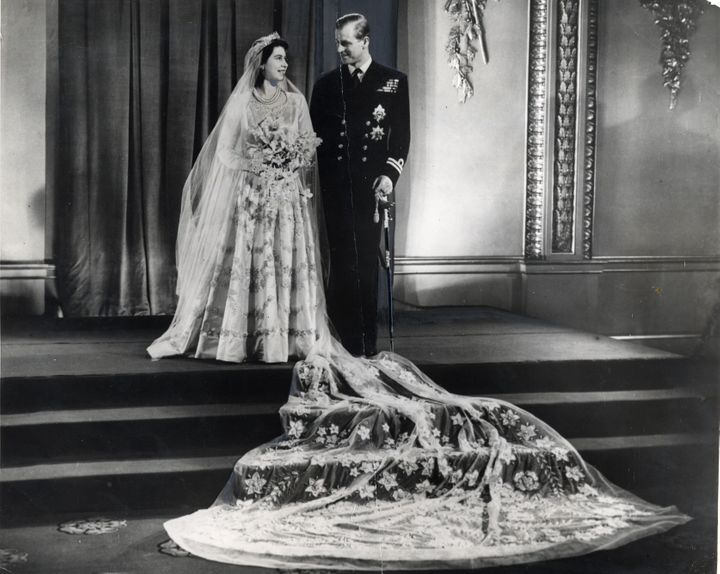
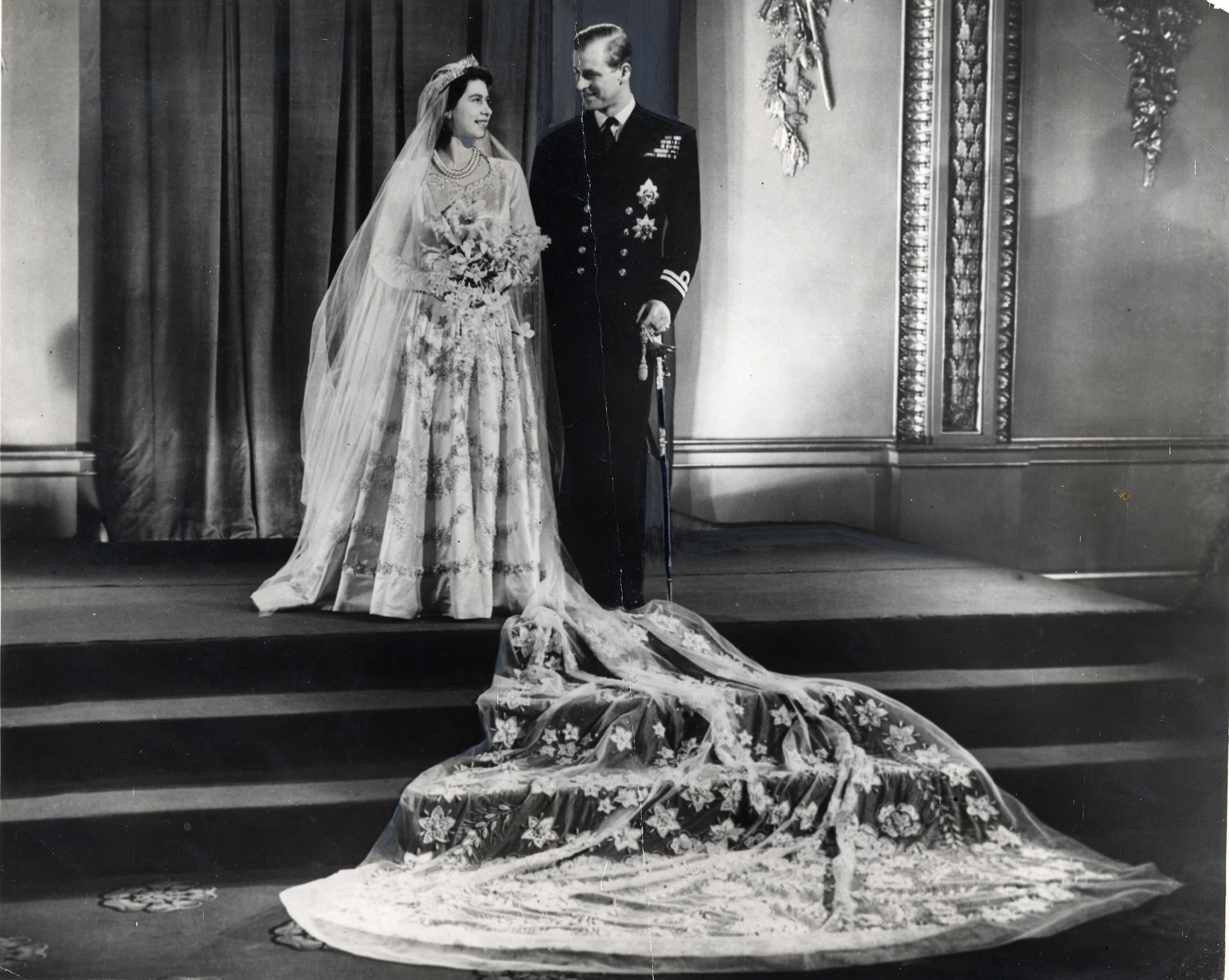
She married Lieutenant Philip Mountbatten of Greece at the age of 21 at Westminster Abbey in 1947 in front of 2,000 guests. Princess Elizabeth was dressed in an ivory silk Norman Hartnell gown, decorated with 10,000 seed pearls, glittering crystals and an intricate 13ft (4m) star-patterned train. The dress was bought with food rationing coupons as the UK was still struggling in the aftermath of World War 2. Philip, 26, was fresh from serving in the Royal Navy for the war effort.
Princess Elizabeth and the Duke of Edinburgh on their wedding day in 1947
Evening News/Shutterstock
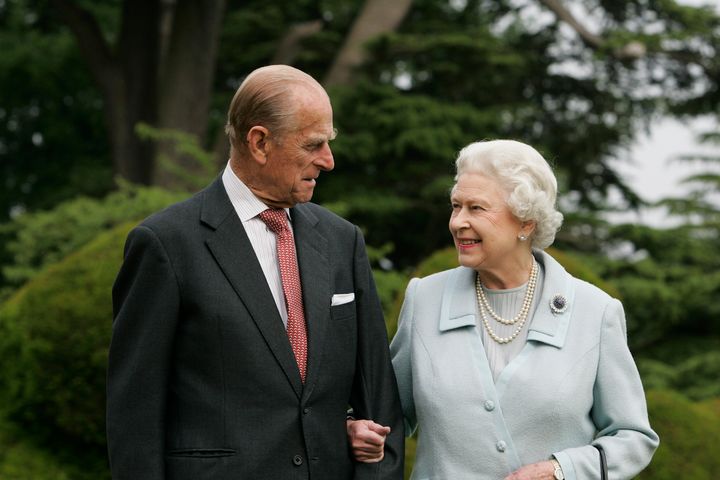
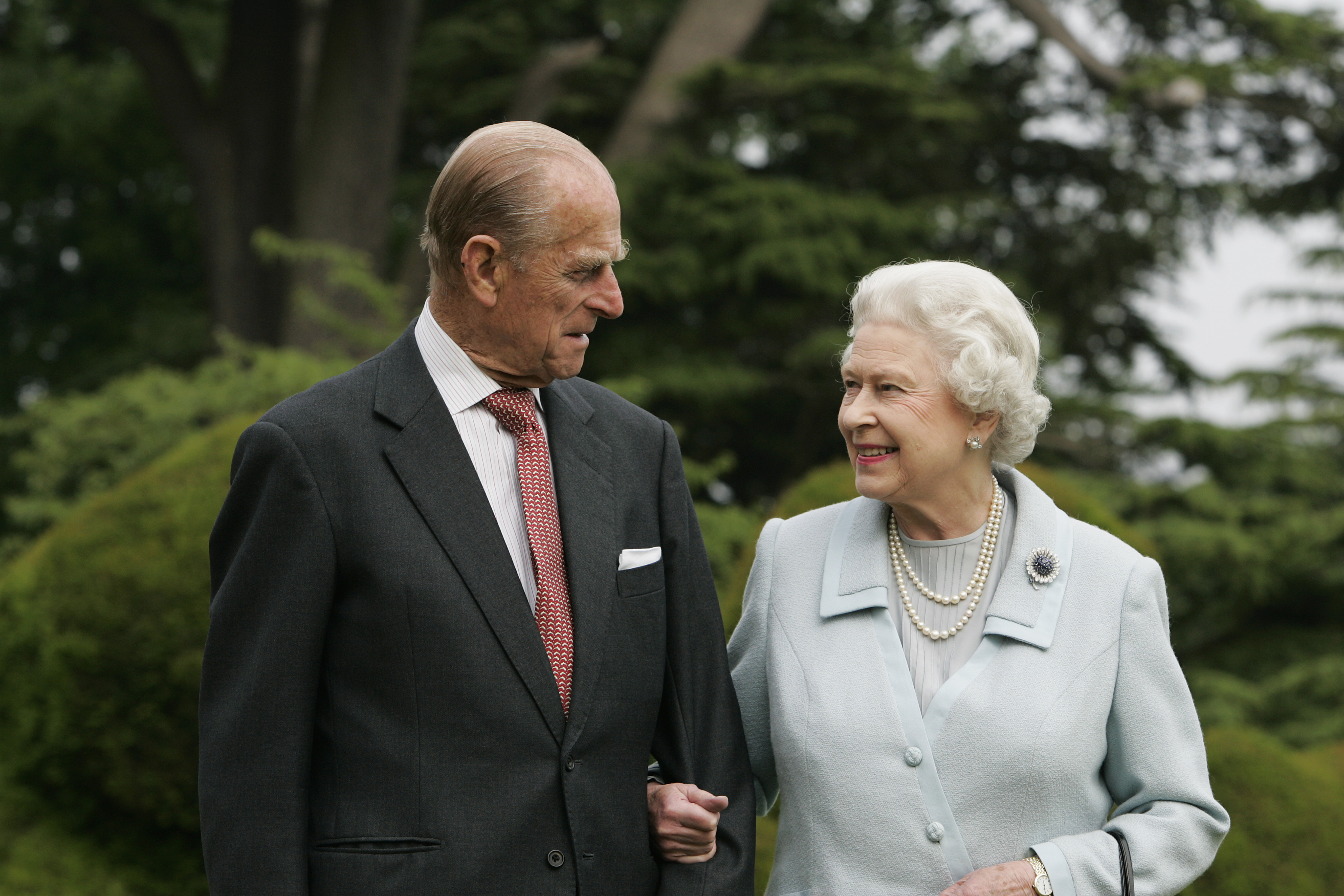
Prince Philip and the Queen for their Diamond Wedding Anniversary in 2007
Tim Graham via Tim Graham/Getty Images
Another 200 million people listened to the radio broadcast of the nuptials and thousands lined the streets to watch the spectacle.
The pair had begun exchanging letters in 1939 when Elizabeth was 13 and Philip was 18, and their friendship blossomed over the years.
Advertisement
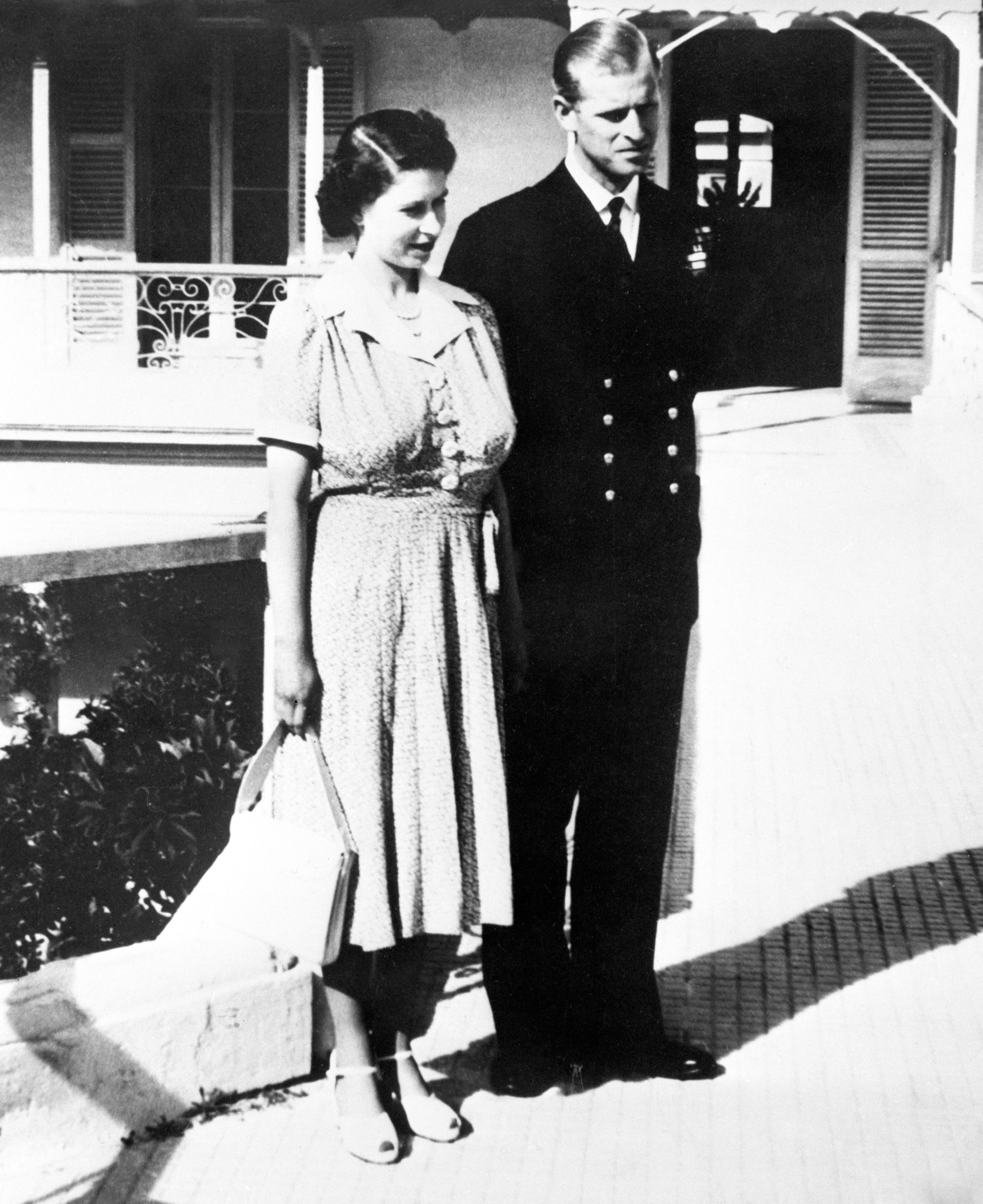
After their wedding, the couple lived together on the island of Malta for periods between 1949 and 1951 while the duke served on HMS Chequers with the Mediterranean Fleet.
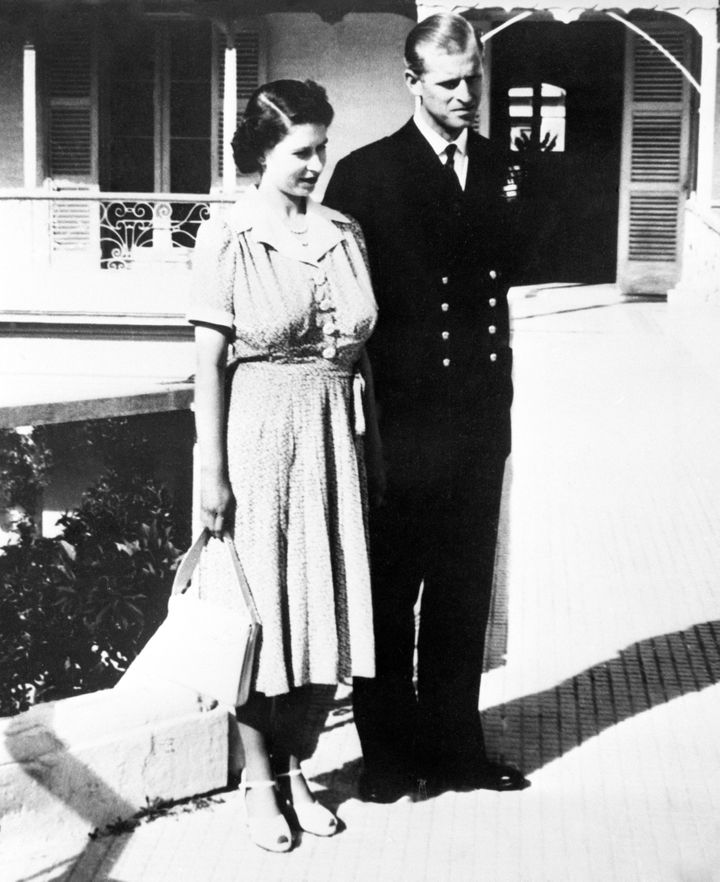
Villa Guardamangia, a palazzo-style mansion on the outskirts of the capital Valletta, served as a much-loved base for the couple in the early years of their marriage. Their stay in Malta offered them their only real taste of life as a relatively ordinary couple.
They enjoyed parties, picnics and boat expeditions, and the princess was even able to take a trip to the hairdresser for the first time. In 2015 during an official trip, the Queen recalled: “Visiting Malta is always very special for me. I remember happy days here with Prince Philip when we were first married.”
Princess Elizabeth and the Duke of Edinburgh, celebrating the her 24th birthday at Villa Guardamangia, Malta
PA Wire/PA Images
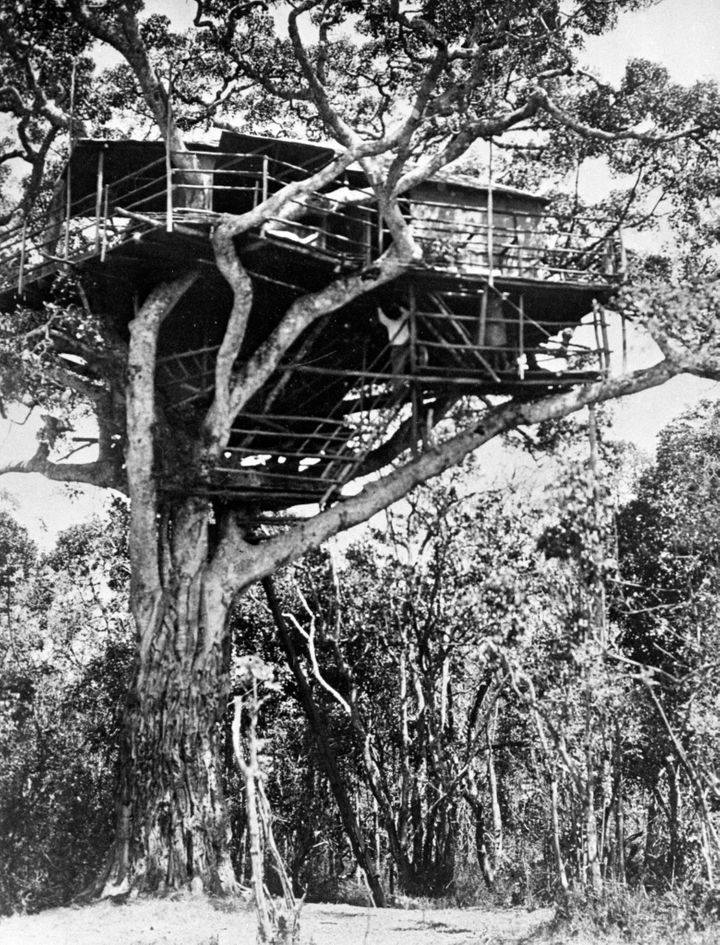
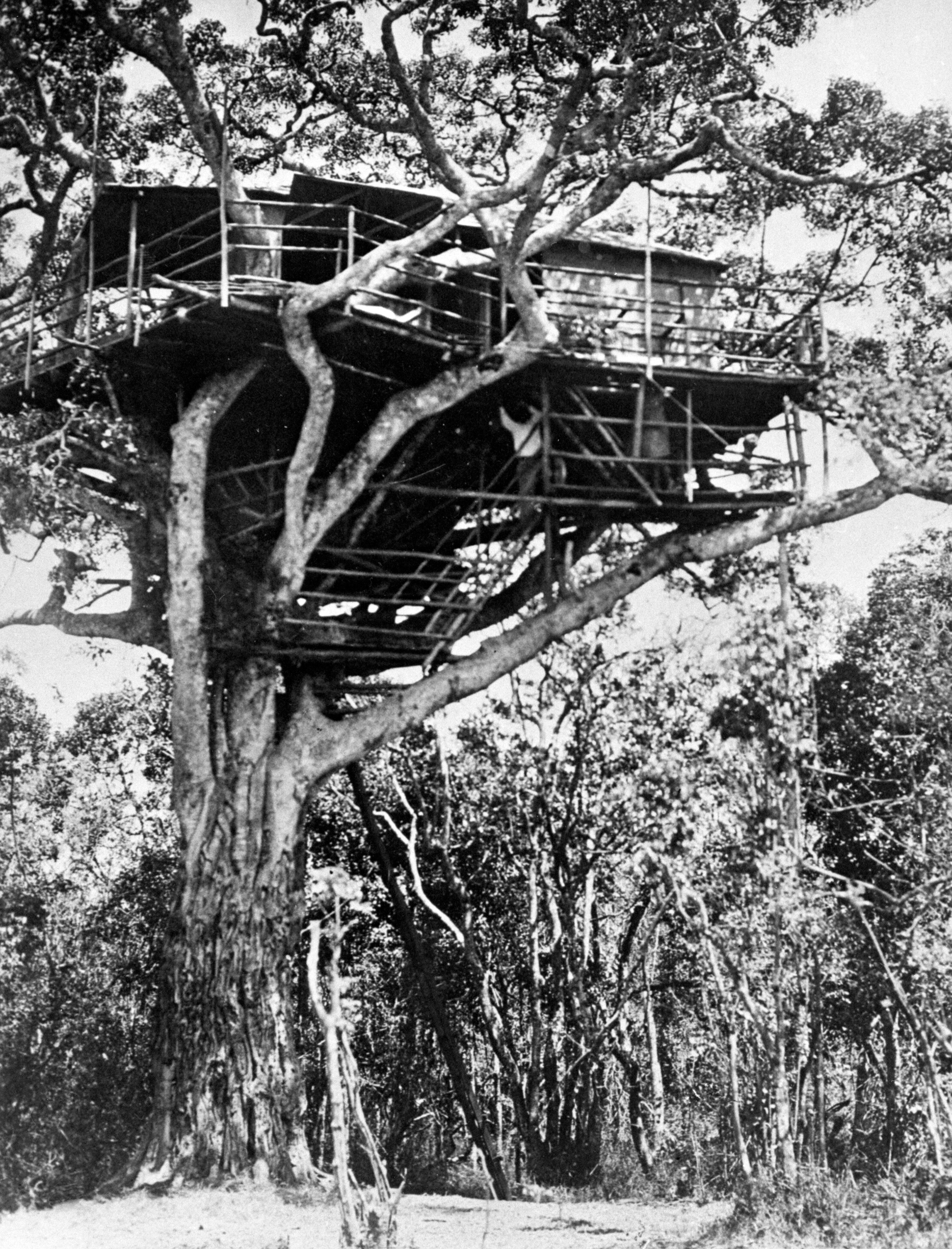
Princess Elizabeth was staying in an exclusive tree house hotel in Kenya in 1952 when she was informed of her father’s death.
Advertisement
Former lady-in-waiting Pamela Hicks recalled: “She goes up as a princess. The king died that night. She comes down the ladder as a queen.”
Prince Philip was told the news first, and covered his face with his newspaper, murmuring “this will be such a shock”, before taking her for a walk in the gardens, where he told his young wife of her father’s death and that she was now to be Queen.
Treetops Hotel, in Kenya – it was here that Princess Elizabeth learned of the death of her father, King George VI
PA Archive/PA Images
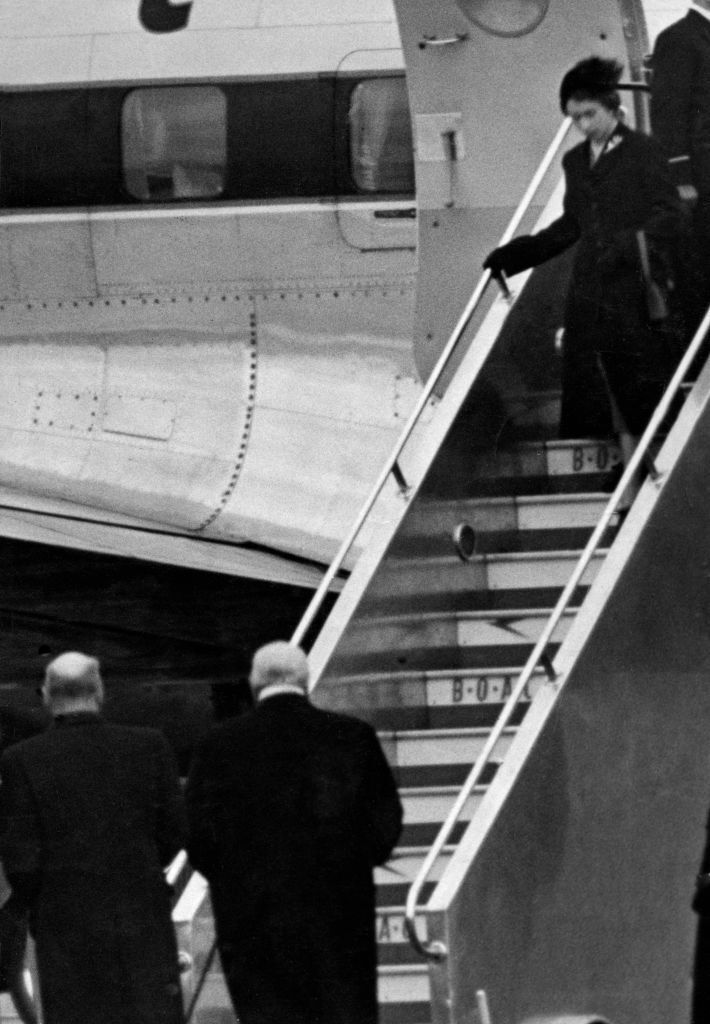
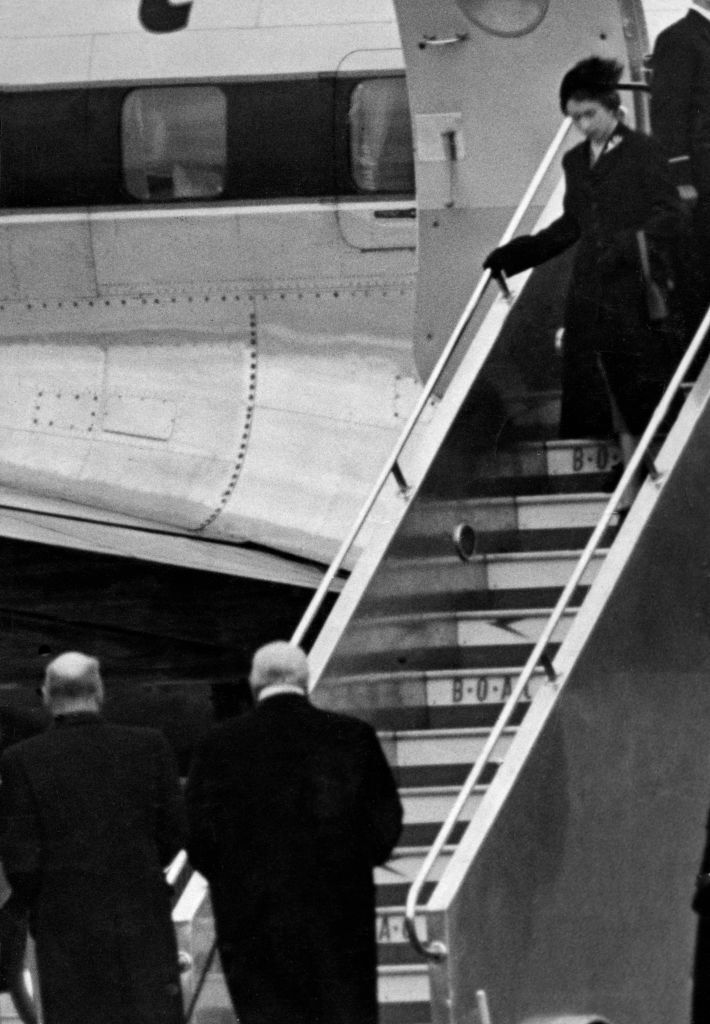
Elizabeth II sets foot on British soil for the first time since her accession as she lands in Britain, following the death of her father. Waiting for her at the bottom of the plane steps are Clement Attlee and then prime minister Winston Churchill
The couple’s children, Prince Charles, Princess Anne, Prince Andrew and Prince Edward, were born between 1948 and 1964, all at Buckingham Palace.
Advertisement
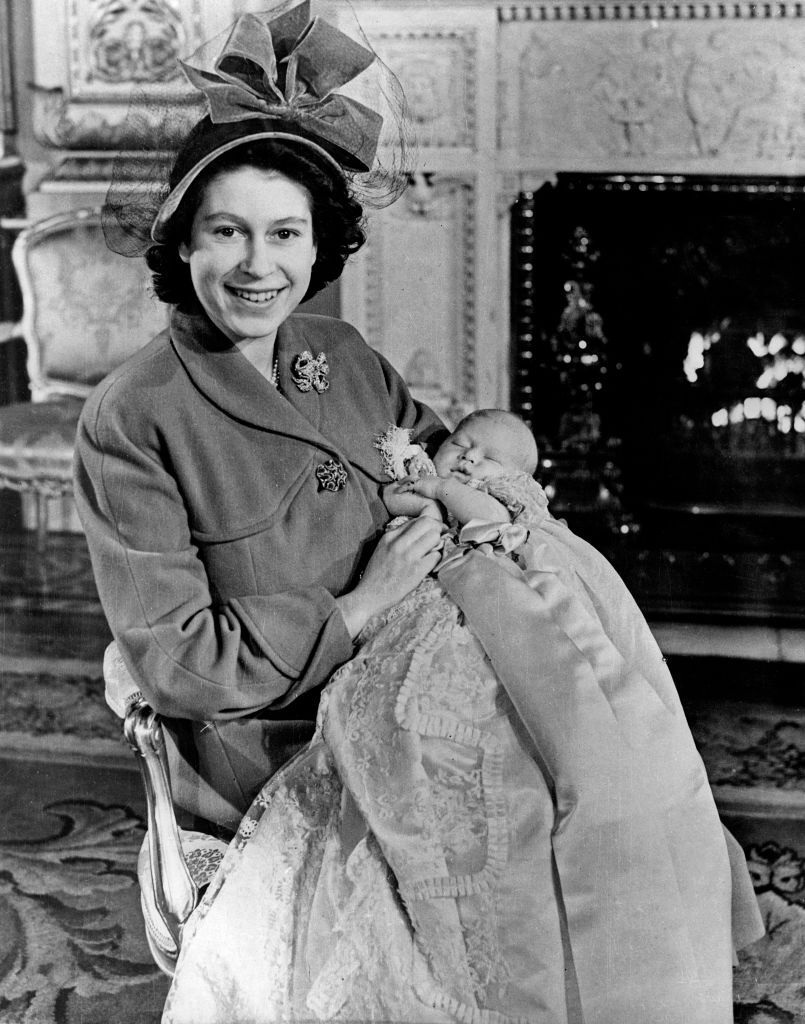
Charles’ birth on November 14, 1948, was the first in centuries without a government minister present to witness the arrival of a future heir to the throne. The occasion was marked publicly with the fountains of Trafalgar Square lit up in blue. The Duke of Edinburgh, said to be “not indifferent but restless”, played squash while his wife was in labour.
As Victoria had done the previous century, Elizabeth acted as a figure of continuity as the country modernised. Serving through the 20th century, the Millennium and well into the 21st century, she was also head of state, the armed forces and the commonwealth.
She witnessed many new technological advances and a succession of British governments of different political persuasions.
Elizabeth II met every US president of her reign – except one.
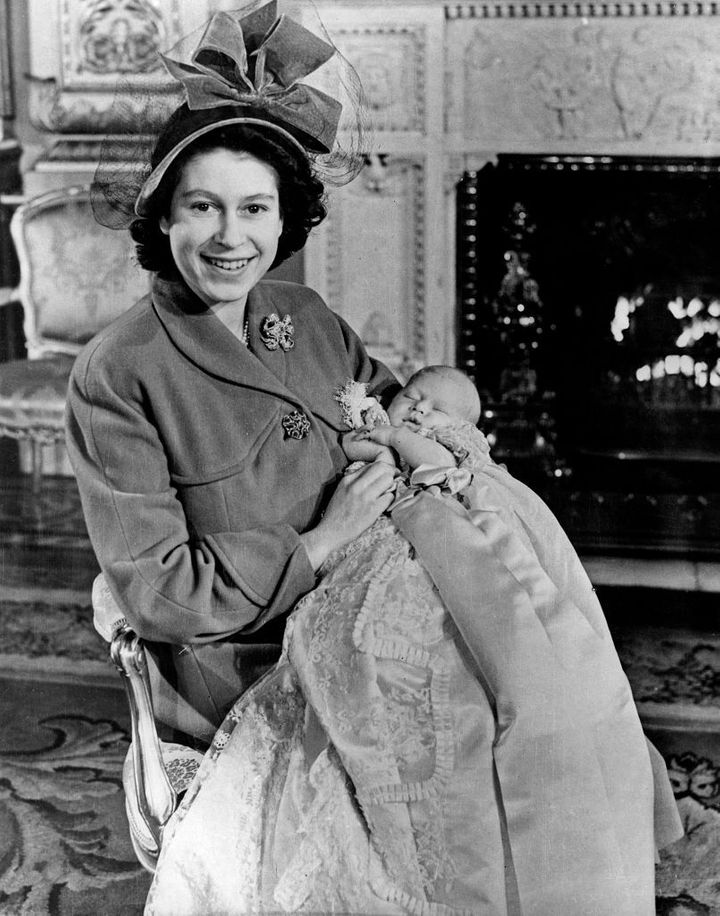
Queen Elizabeth II and baby Prince Charles at Buckingham Palace in 1948
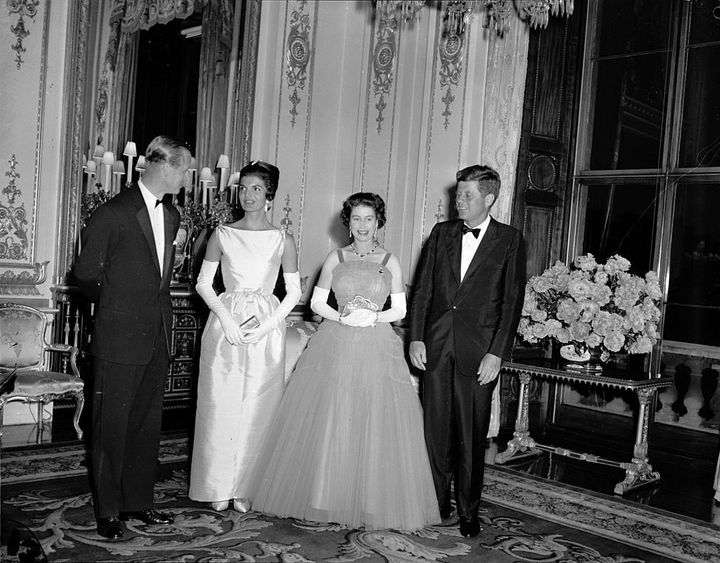
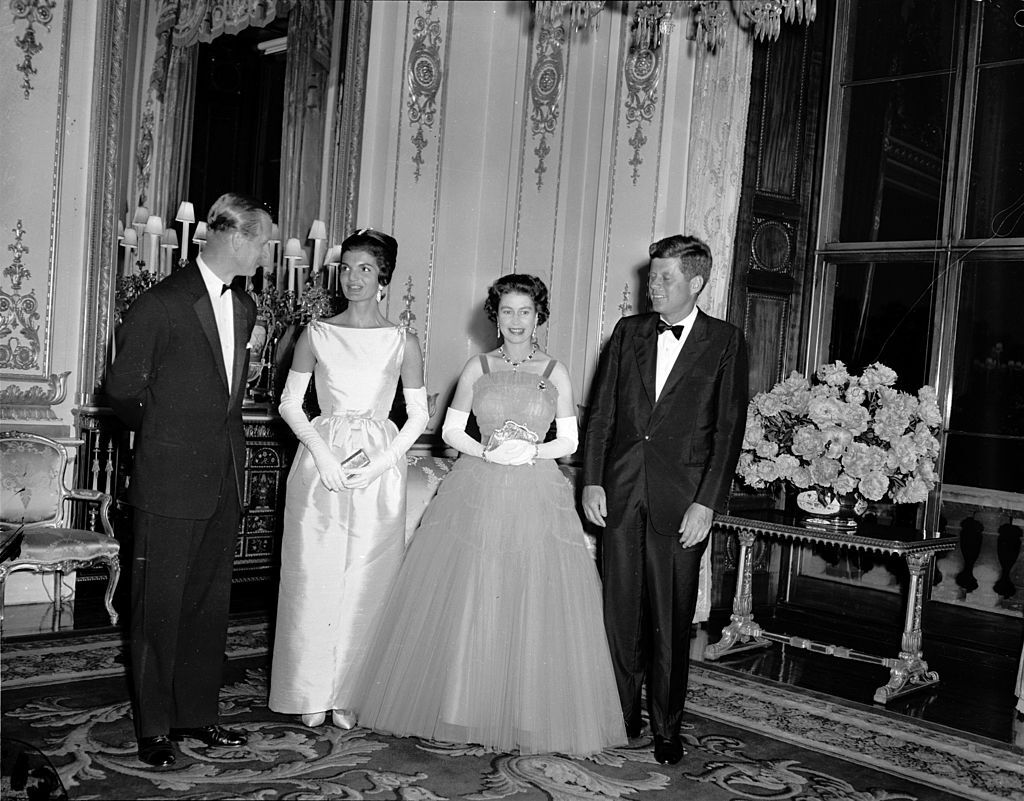
President John Kennedy with his wife Jackie, meeting the Queen and the Duke of Edinburgh at Buckingham Palace in London, 1961
Advertisement
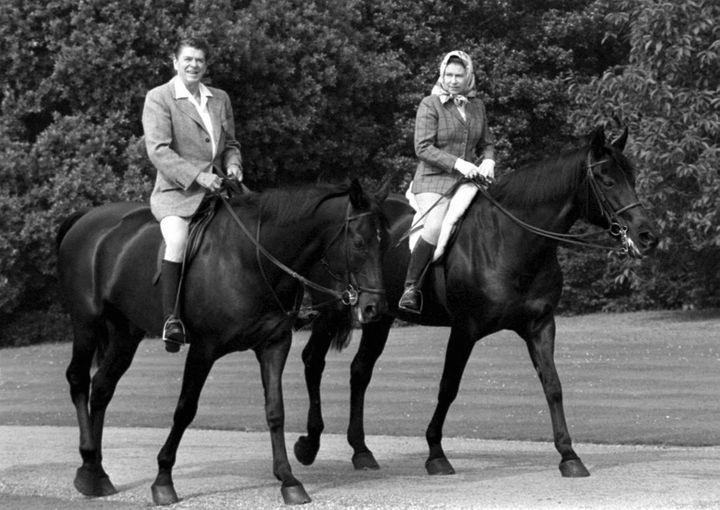
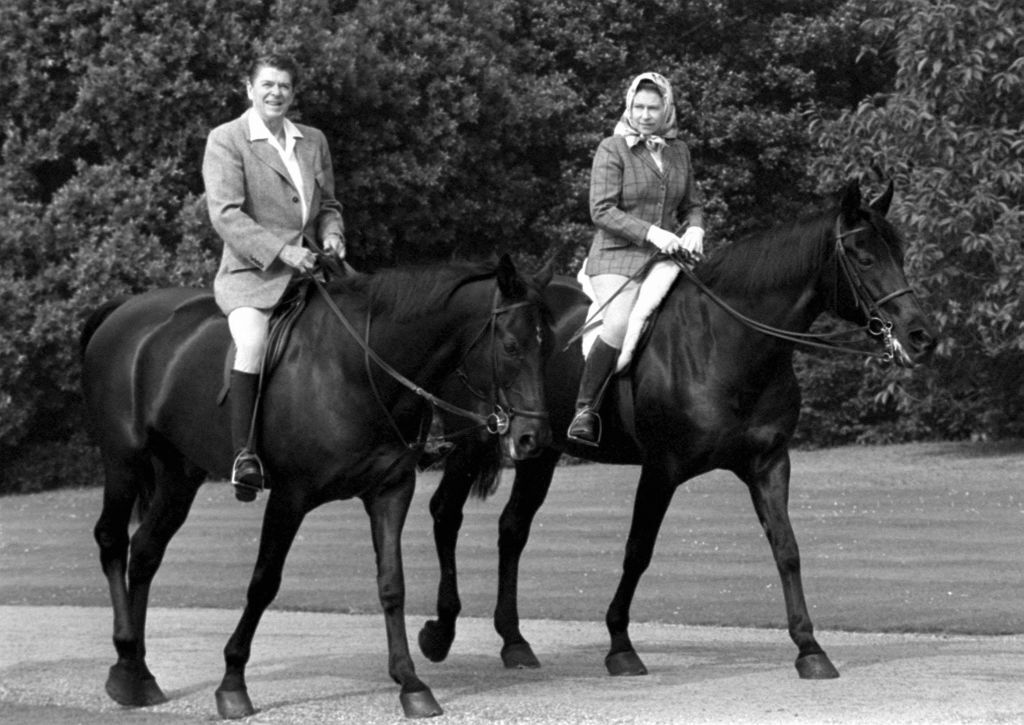
US President Ronald Reagan goes riding in Windsor Home Park with the Queen
Lyndon B Johnson, who took over in 1963 following John F Kennedy’s assassination, never crossed paths with the Queen. By contrast, president Donald Trump, who visited Britain three times during her reign, boasted about having “automatic chemistry” with her and praised her as a “spectacular woman”.
Current President Joe Biden took office in January 2021, and made his first official visit overseas to visit the UK – and its monarch – in June.
The Queen had become accustomed to milestones during her decades on the throne. In December 2007, she became the longest living British monarch, overtaking Victoria who died when she was 81, and in May 2011, she became the second-longest reigning monarch in British history, when she overtook George III.
According to Guinness World Records, the Queen also held the world record for most currencies featuring the same person.
Advertisement
Her Diamond Jubilee river pageant in 2012 set a new world record for the number of boats in a parade with more than 1,000 vessels taking part and 670 making the complete trip down the Thames to Tower Bridge.
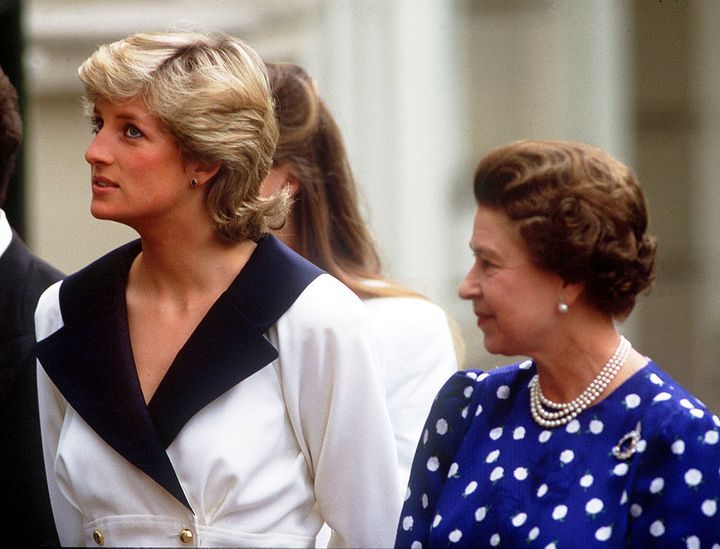
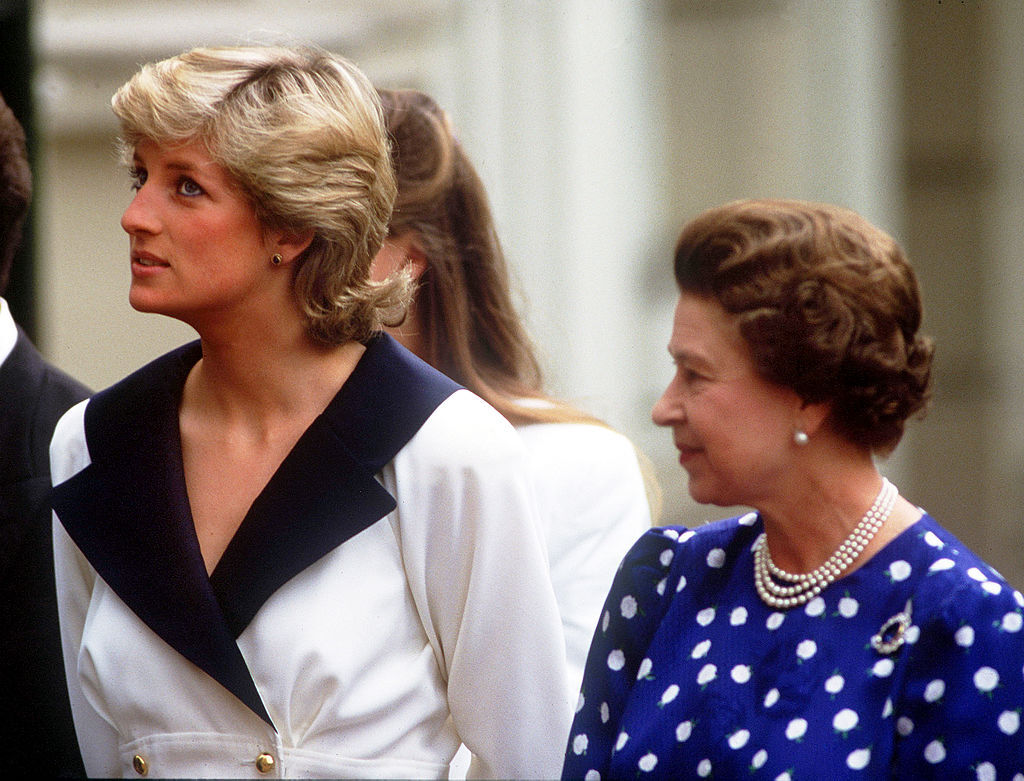
Princess Diana with Queen Elizabeth II on the Queen Mother’s 87th Birthday, at Clarence House, in 1987
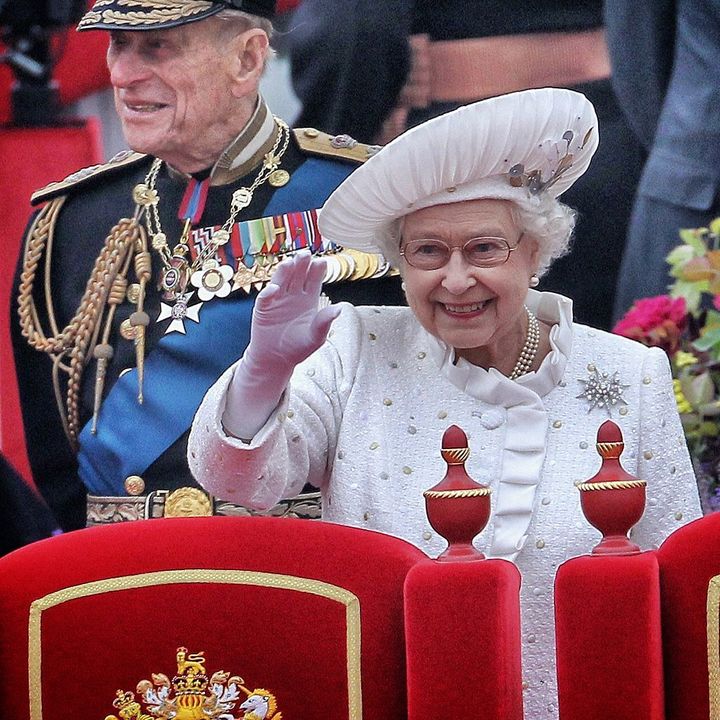
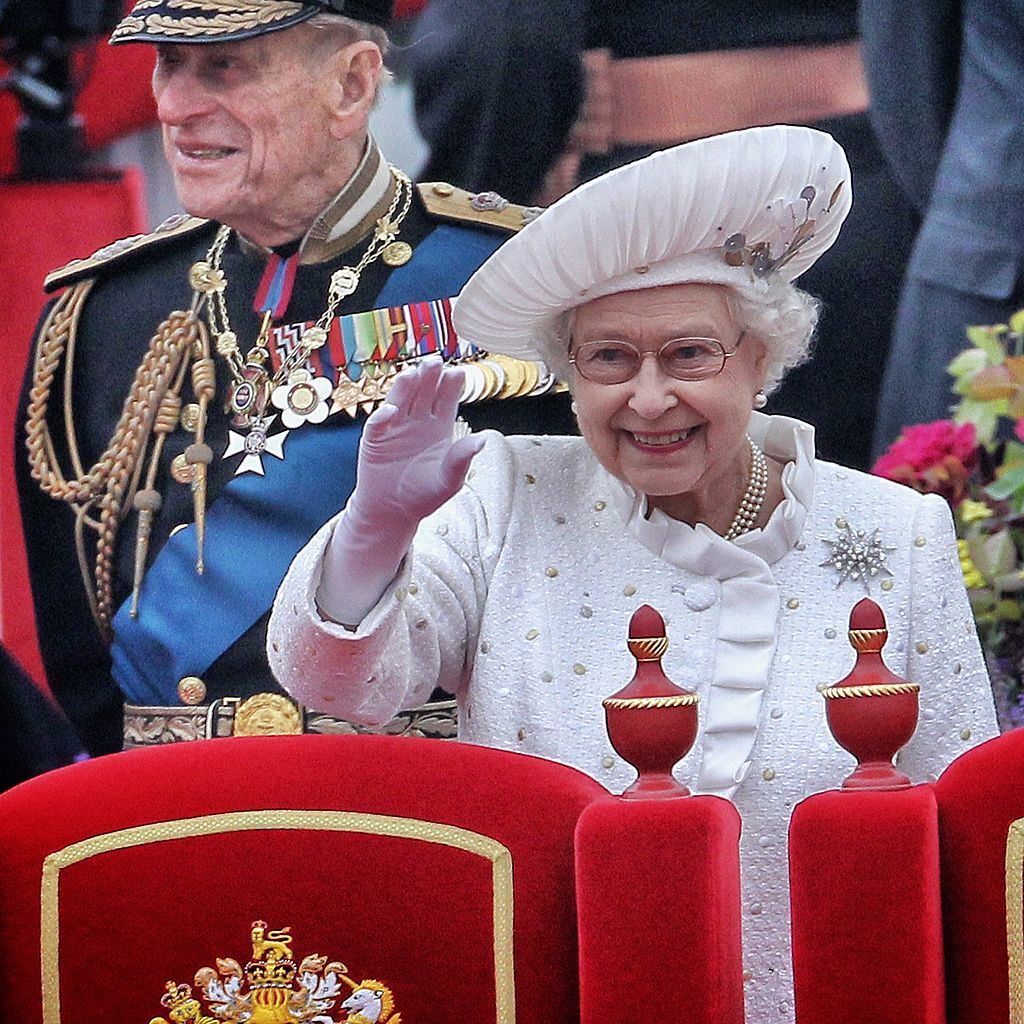
The Queen and Prince Philip during the Diamond Jubilee River Pageant in 2012
The monarch’s “second birthday” – that is, the official celebration – was marked on the second Saturday in June each year, commemorated with the Trooping the Colour parade. The double birthday tradition was introduced in 1748 by King George II, who was born in November – a time where the UK weather was typically dreary. Wanting a big public celebration, the king decided to hold a birthday parade in the sunnier months and to combine it with an annual military parade.
The Queen was also the first British monarch to send an email, to have a message put on the moon, to conduct a royal “walkabout” and to hold a public concert in her back garden.
Advertisement
Each year, without fail, the Queen would retreat to Balmoral in Aberdeenshire during the summer months, where she is said to have been happiest. It was her private home and was handed down to her through generations of royals after being bought for Queen Victoria by Prince Albert in 1852.
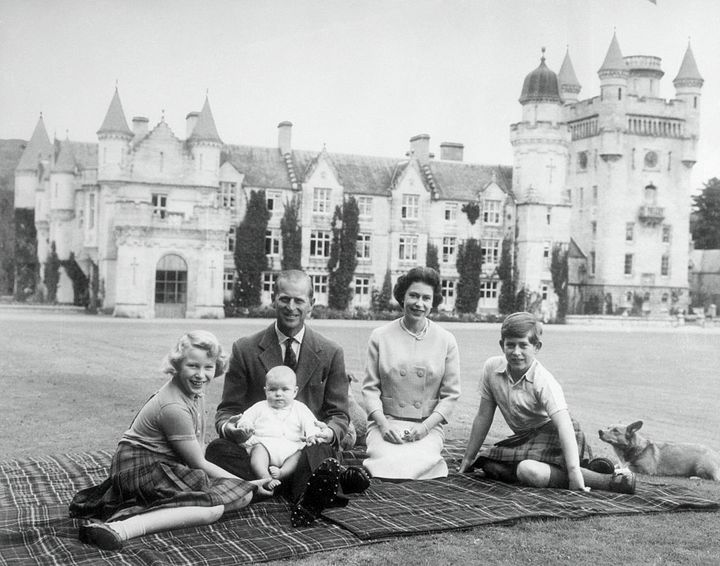
Baby Prince Andrew perches on Prince Philip’s lap during a picnic on the grounds of Balmoral Castle. Also pictured are Queen Elizabeth, Prince Charles, and Princess Anne
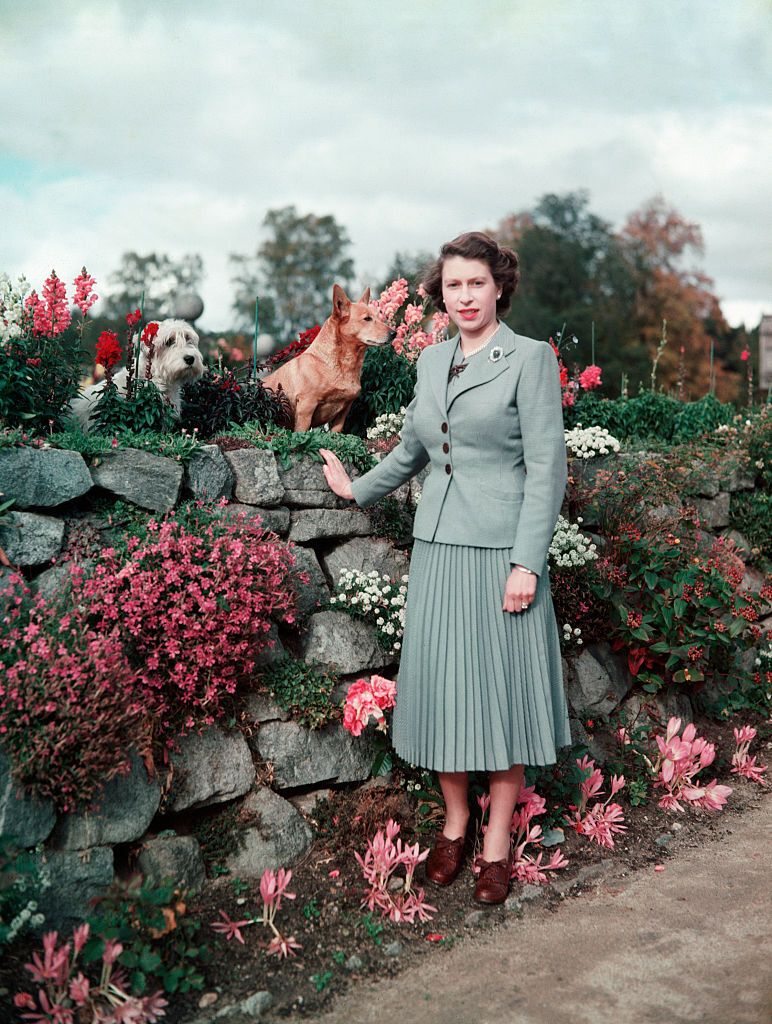
The Queen at Balmoral Castle with some of her beloved dogs in 1952
Victoria described Balmoral as her “heaven on Earth” and it was where she sought solace after Albert’s death. Queen Elizabeth’s usual two-month stay in August and September traditionally included a visit to the nearby Braemar Gathering, where she was chieftain of the Highland games.
Princess Eugenie, the Queen and Duke of Edinburgh’s granddaughter, once described Balmoral as the most beautiful place on the planet.
Advertisement
“Walks, picnics, dogs – a lot of dogs, there’s always dogs – and people coming in and out all the time,” she said.
“It’s a lovely base for granny and grandpa, for us to come and see them up there; where you just have room to breathe and run.”
Years of happy royal memories were forged at Balmoral, including family barbecues – where Philip did the cooking and the Queen the washing-up – and each morning a lone piper would play below the Queen’s bedroom window.
In recent times, the Queen had endured the biggest crisis the royal family had faced in years after her supposed “favourite son” Prince Andrew gave a television interview about his friendship with late sex offender Jeffrey Epstein.
It triggered a public outcry, and it was decided in an unprecedented move for Andrew to step back from public duties for the “foreseeable future”. Andrew kept a low profile but fell back into the spotlight when one of Epstein’s alleged victims started a civil case against him.
Advertisement
And in early 2020, her grandson Harry and his new wife, the actress Meghan Markle, sparked a major royal crisis when they made a decision to step down as senior royals for personal and financial freedom, in a move that was dubbed by the media as Megxit.
The Queen did not comment on either matter publicly.
She had previously dubbed 1992 her “annus horribilis”, following a series of scandals involving her children.
Prince Charles separated from Diana, his first wife; the Princess Royal divorced; and Andrew’s newly estranged wife Sarah Ferguson appeared in the tabloids topless and having her toes sucked.
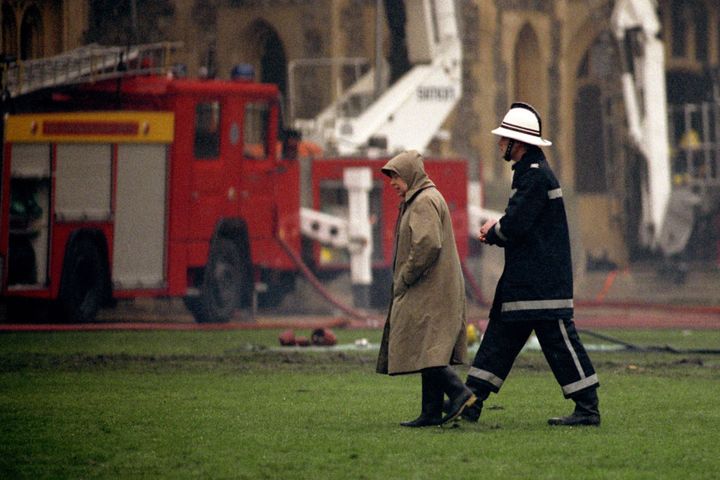
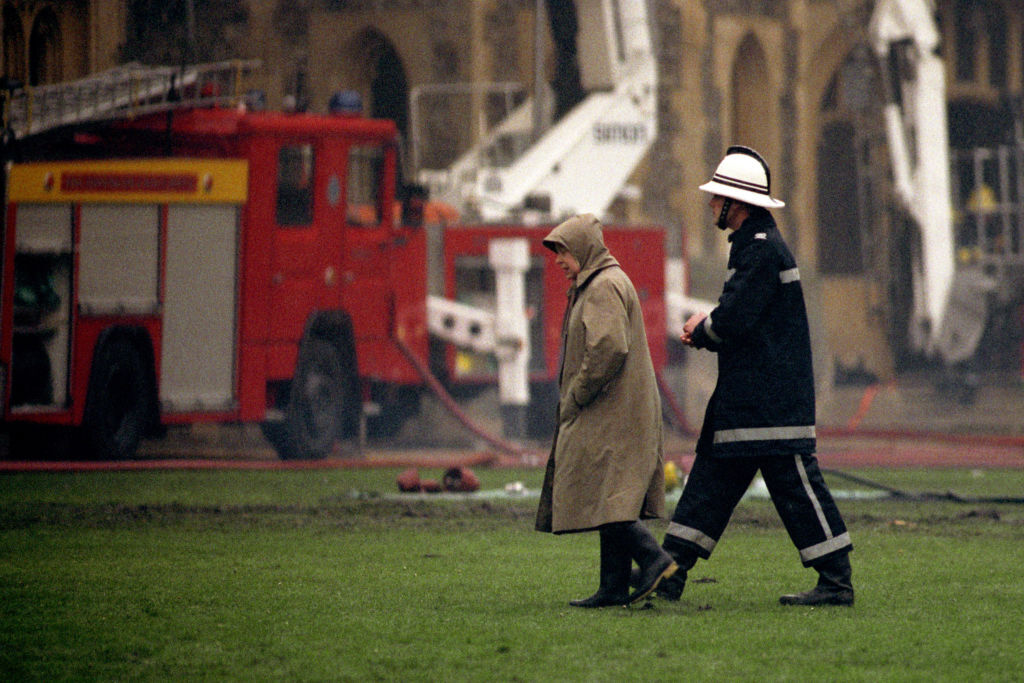
That year also saw public opinion turn against the royals amid fears that taxpayers would have to foot the bill for repairs to Windsor Castle after a fire. In the end, the Queen agreed to pay 70% of the £36.5 million costs by opening Buckingham Palace to the public for the first time to generate extra income.
It was also announced that she would pay income tax for the first time and cut down the size of the Civil List.
Advertisement
The Queen surveying the scene at Windsor Castle following the fire in 1992
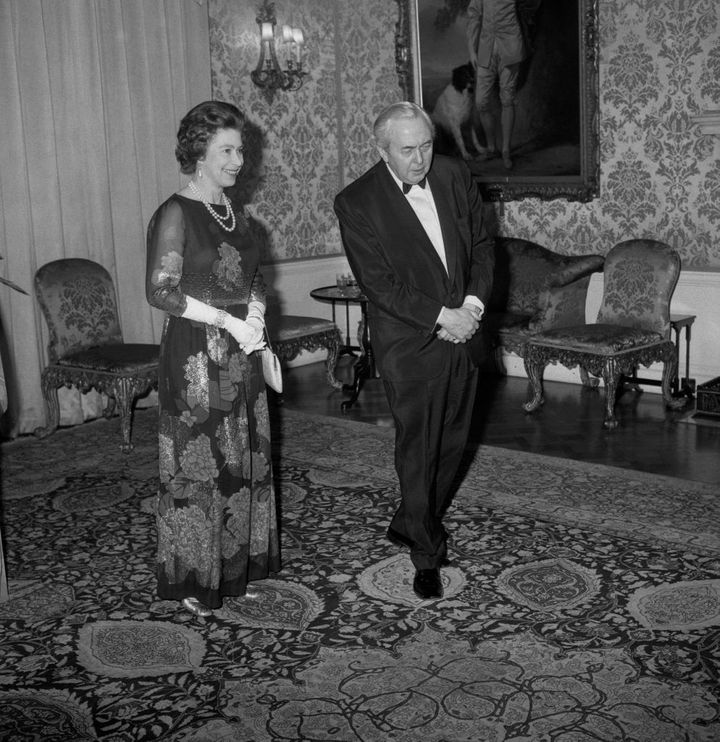
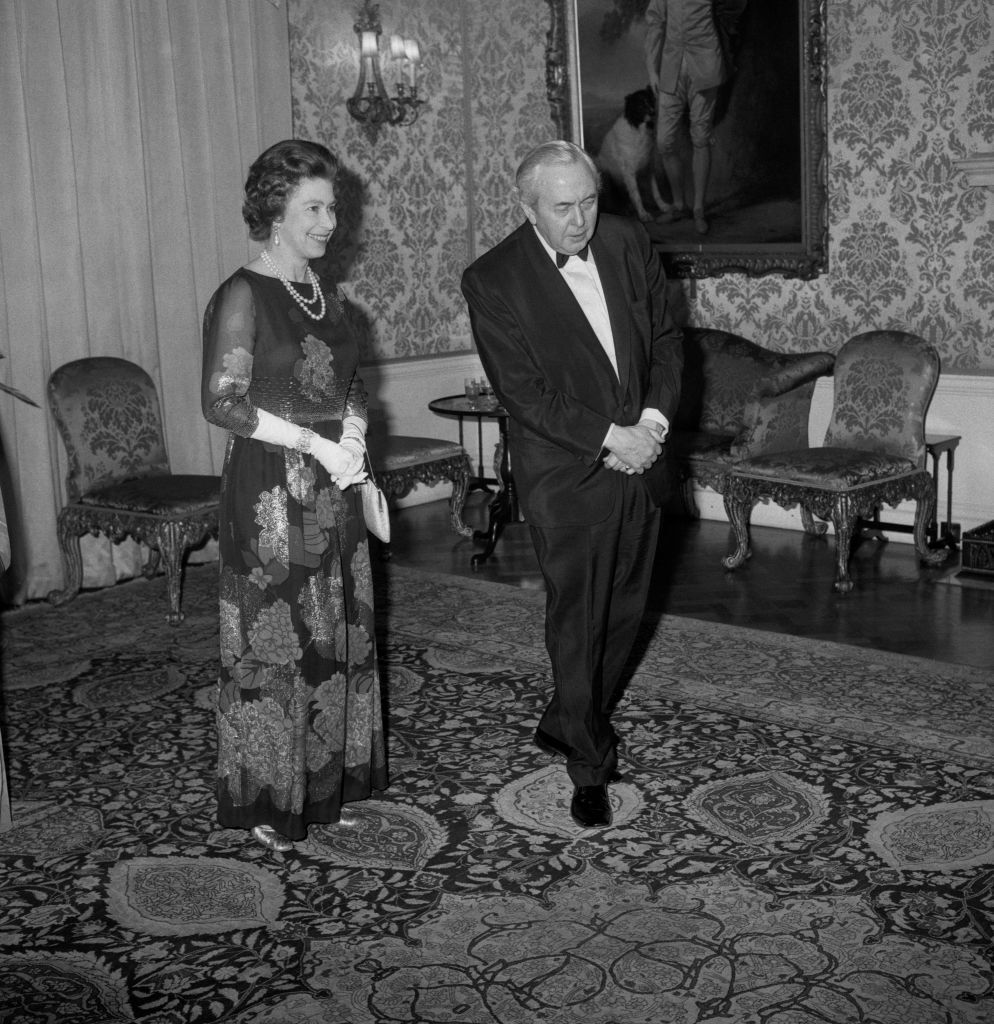
The Queen at 10 Downing Street at a farewell dinner for retiring prime minister Harold Wilson
With a reign spanning many British governments under 15 prime ministers and dozens more in the Commonwealth, the Queen did not escape constitutional difficulties over the years.
She officially accepted Johnson’s resignation just two days before her death and invited his successor, newly-elected Tory leader Liz Truss, to form a government.
Advertisement
However, the Queen’s dedicated attention to her constitutional functions has been commented upon by many of her prime ministers.
Politicians knew they ought not go to Buckingham Palace unless fully prepared.
Harold Wilson once confessed that he felt like a schoolboy who had not done his homework when the Queen cited a document which he had not read.
In the documentary Elizabeth R, filmed in 1992 to mark her 40th year on the throne, the Queen gave her view on the importance of her meetings with her prime ministers.
“They unburden themselves or tell me what is going on or if they have any problems, and sometimes I can help in some way as well,” she said.
“They know I can be impartial and it is rather nice to feel one is a sponge.
“Occasionally one can put one’s point of view and perhaps they have not seen it from that angle.”
As head of state, the Queen was politically neutral and acted on the advice of her government in political matters, but her political knowledge was known to be immense.
Advertisement
She rarely voiced her thoughts on current affairs but was occasionally caught on camera revealing her real opinions, such as when she expressed her frustration with world leaders who “talk but don’t do” when it comes to the climate crisis.
She received weekly briefings from the prime minister of the day and dozens of government documents passed across her desk every week for formal approval.
The Queen is survived by her four children – Charles, Anne, Andrew and Edward – and her 20 grandchildren and great-grandchildren.
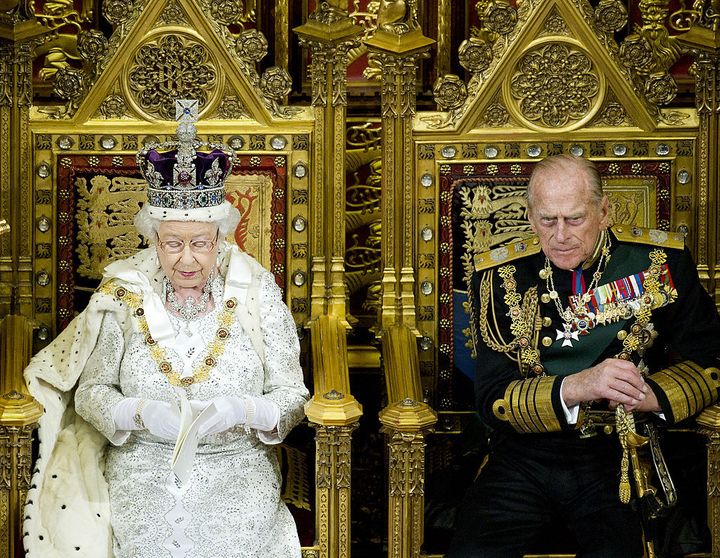
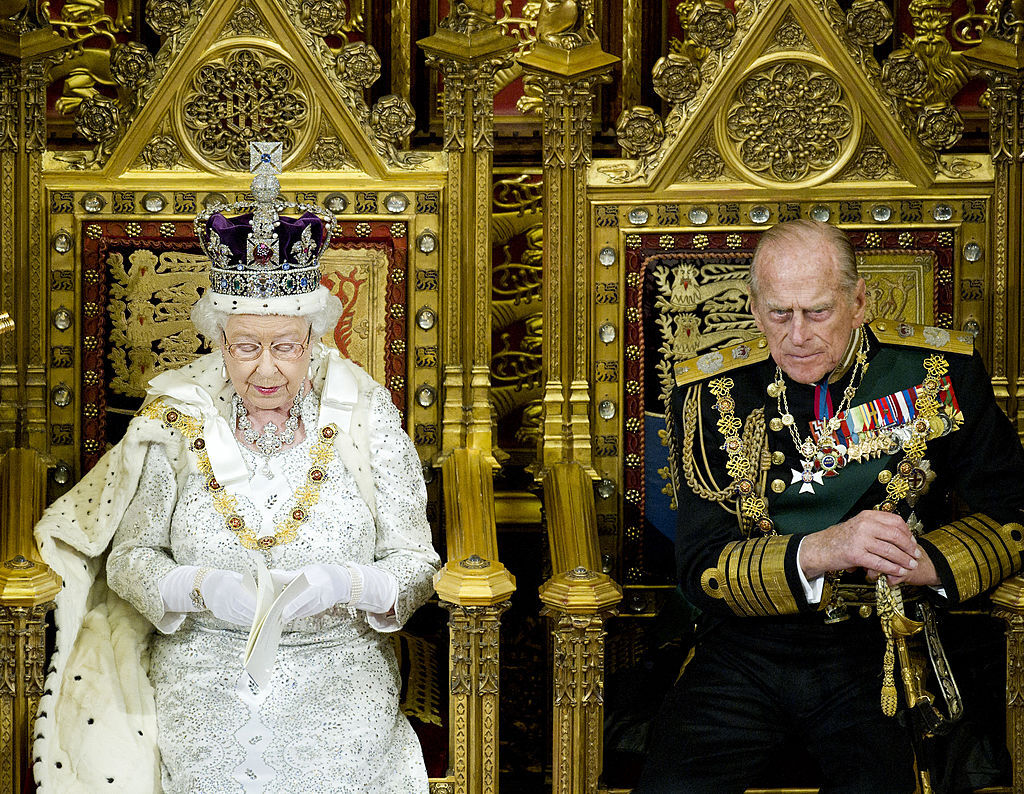
The Queen and Prince Philip seated on thrones in the House of Lords at the state opening of parliament in 2013
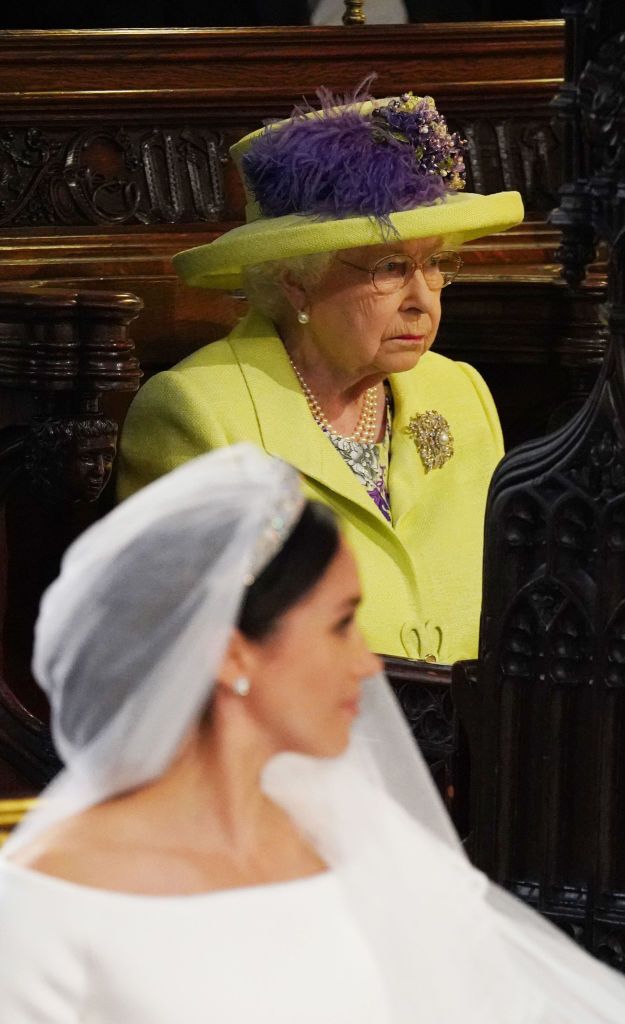
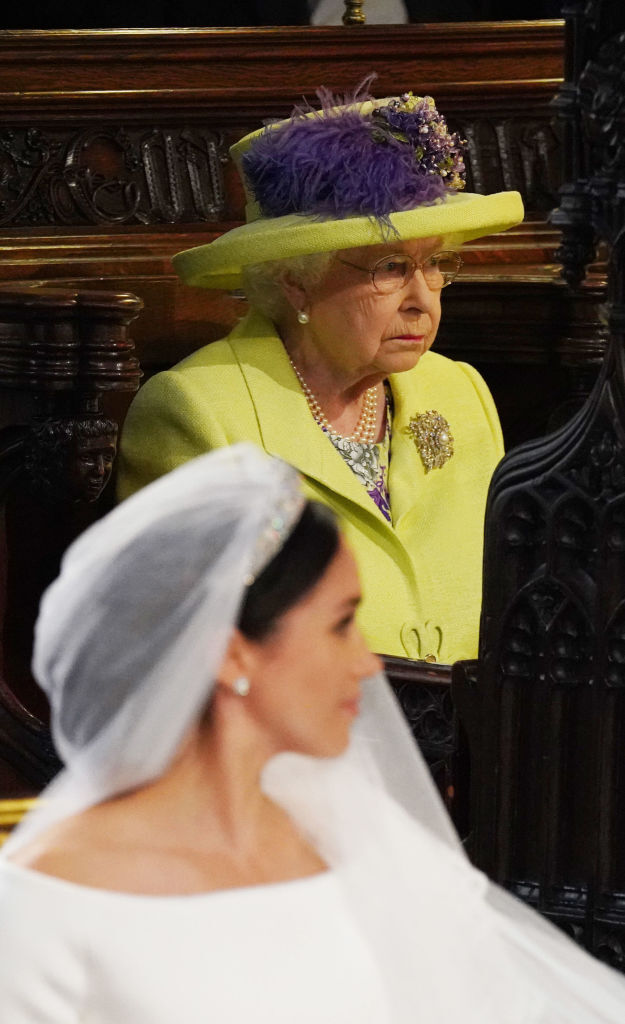
The Queen at the wedding of her grandson Prince Harry to American actress Meghan Markle in May 2018
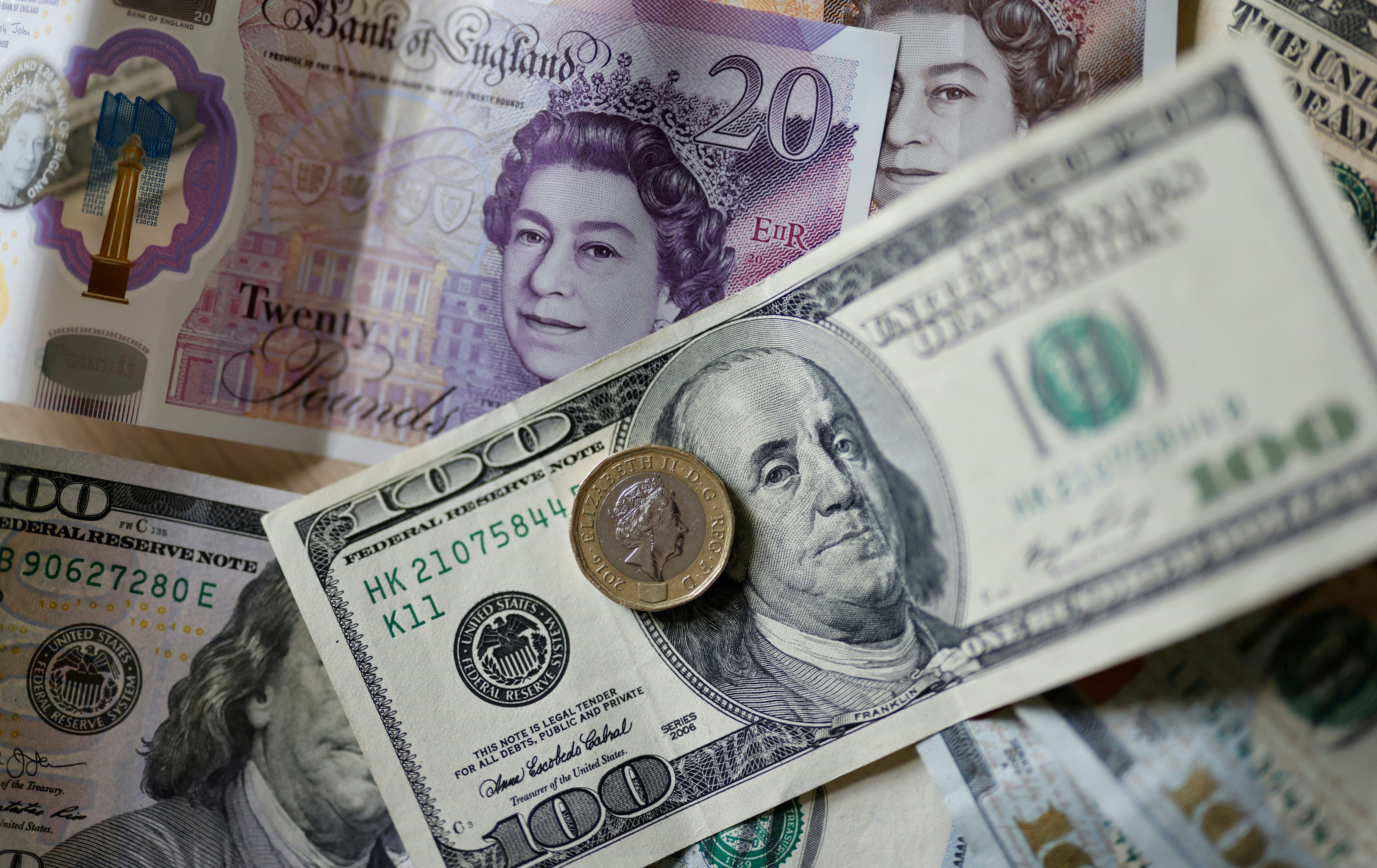
The economic woes facing new prime minister Liz Truss have been underlined by the pound slipping to a new 37-year-low against the US dollar.
In symbolism noted by many, the last time sterling dipped this low was 1985 – when Truss’s political hero Margaret Thatcher was in power.
Advertisement
Britain’s currency dropped to as low as $1.1403 on Wednesday, surpassing the trough of $1.1412 seen at the outset of the Covid-19 pandemic in March 2020.
The currency is down more than 15% against the dollar so far this year.
Sterling hit an all-time low of $1.0545 in March 1985, just before the Group of Seven (G7) economies acted to rein in the superdollar of the Reagan era in the so-called Plaza Accord.
Why has the pound fallen so low against the US dollar?
The value of a currency invariably reflects how traders fell about the health of a country’s economy – either for better or worse.
Advertisement
The UK is suffering from a series of factors – most pressingly, soaring energy bills – but the pound’s plunging value against the dollar is also a measure of the relative strength of the American economy, where inflation is easing and strong jobs numbers continue.
Andrew Bailey, governor of the Bank of England, highlighted the strength of the US currency during a Treasury select committee meeting earlier on Wednesday, as he explained to MPs the recent weakness in the pound.
Pound hits new low against the dollar, $1.1406, lowest since 1985. That’s one more parallel between Truss and Thatcher ticked off
A sustained rally in the US dollar, referred to by traders as the “greenback”, has also seen it hit a 24-year high against the Japanese yen – reflecting how the UK is not in a unique position.
Against the euro, the pound was also down almost 1% on Wednesday, although sterling has held up far better against the euro than versus the dollar. It is down just 3% versus the single currency this year.
Advertisement
Nonetheless, investors are dumping British assets in the face of a bleak economic outlook that incudes the rising risk of a recession. The country’s surging inflation rate is also the highest among G7 powers, with the Bank of England previously predicting inflation could pass 13% in October. Concerns over tax cuts and increased public spending under the new Truss government also add to the uncertainty influencing traders.
Britain has further been hit differently by the energy crisis. While the UK only imports a small percentage of its gas from Russia, it relies more on gas than its European neighbours because it has less nuclear and renewable energy and does not have as much capacity to store gas.
“The British pound slid to its lowest level against the U.S. dollar since 1985, a reflection of the U.K.’s dire economic situation. Investors are braced for sterling to weaken even further to a nadir not seen in more than two centuries” https://t.co/PFtOkw8G1k
Analysts say the direction of the pound could now be swayed by the economic plans of the new prime minister, with Truss expected to detail her response to energy bills on Thursday, with government borrowing likely to pick up the tab for freezing bills for households and businesses.
The tumbling pound is also a headache for the Bank of England since it increases the cost of imports and can cause more imported inflation. The UK’s central bank meets next week and is expected to hike interest rates by 0.5 or even 0.75 percentage points.
Advertisement
The worst could yet come. Nordea chief analyst Jan von Gerich said: “There could be a recovery in sterling but I wouldn’t catch a falling knife for now.”
What does this mean for Brits?
The immediate impact of the falling pound is being felt by British travellers heading off for their holidays.
This means that travellers to the US – and to a lesser extent, Europe – will find their pound does not go very far, hiking up the cost of everything from accommodation to food.
Other countries use the greenback as the main currency, so even destinations such as Dubai and China are more expensive as their currencies are pegged to the US dollar.
Is it just holidaymakers who will be affected by the pound’s tumble?
All UK consumers stand to be impacted by a sustained plummet in the value of the pound, because it makes it more expensive for retailers and manufacturers to import food, goods and materials.
Advertisement
This means prices will be pushed up for goods and services, sending UK inflation rising even further and hitting Brits hard in the pocket.
Are there any benefits to a falling pound?
A weak pound can prove helpful in a number of ways, by making it cheaper for foreign companies to buy UK goods and boosting exports as a result.
It can also increase foreign investment in the UK, for example in property and in shares.
The FTSE 100 Index on London’s stock market usually rises when the pound falls as it is dominated by internationally-focused firms, which trade largely in US dollars.
A falling pound can also increase tourism to the UK, with overseas travellers looking to make the most of a better exchange rate.
This offers a boost to retailers and other sectors, such as restaurants and leisure attractions.
Student nurse Owami Davies has been found “safe and well” in Hampshire almost eight weeks after she went missing, the Metropolitan Police has said.
Davies, 24, had last seen walking north along London Road in Croydon on July 7 and concerned had been growing for her safety.
Advertisement
The force said the 24-year-old is not in the “vulnerable state” feared when she first disappeared.
Questions will be raised over the investigation after Davies was found asleep in a doorway in Croydon on July 6 while waiting for a friend, but told Metropolitan Police officers that she did not need help and left.
Her family had reported her disappearance at that stage but Davies had not been marked as a missing person on the police database at that time.
The Met also released CCTV images from a shop in Croydon of a woman they said was Davies, which was reported by much of the media.
But the force withdrew the images, saying they were not of Davies, but another woman, and apologised shortly afterwards.
Met commander Paul Brogden said “all aspects” of the investigation are now to be reviewed to assess whether there is “any learning that we need to take” from how it was handled.
On Tuesday, DCI Nigel Penney from the force’s specialist crime command said: “This is clearly the outcome we were hopeful for – the finding of the missing lady, Owami Davies.
“I’d like to say she has been found safe and well outside the London area in the county of Hampshire and she’s currently with specialist officers from my team.”
He added: “She looks in good health, she’s in a place of safety, and not currently in this vulnerable state that we were led to believe she was in at the start of her disappearance.”
Advertisement
Despite the arrests of five people and numerous appeals for information, officers were struggling to locate Davies as they trawled through 117 reported sightings of the 24-year-old.
The 118th report, made in response to a media appeal by a member of the public, at 10.30am on Tuesday was the one which led to her being found.
Detectives said on Monday that Davies could be sleeping rough, with no money on her Oyster card and no access to her phone or bank cards.
This was one working hypothesis, the Met said, adding that officers were keeping an open mind to all possibilities.
Davies had last been seen on July 7 after leaving her family home in Grays, Essex on July 4 having told her mother she was going to the gym.
Advertisement
Both Brogden and Penney said they were “ecstatic” at the outcome of the case, with the Met commander adding: “More importantly I’m pleased for Owami’s mother and her brother.”
Five people were arrested and bailed in connection with her disappearance – two on suspicion of murder and three on suspicion of kidnap – but police said there was no evidence that she had come to harm.
Officers confirmed on Tuesday that all five were released and are still on police bail, with a decision on what will happen next following a “full debrief”.
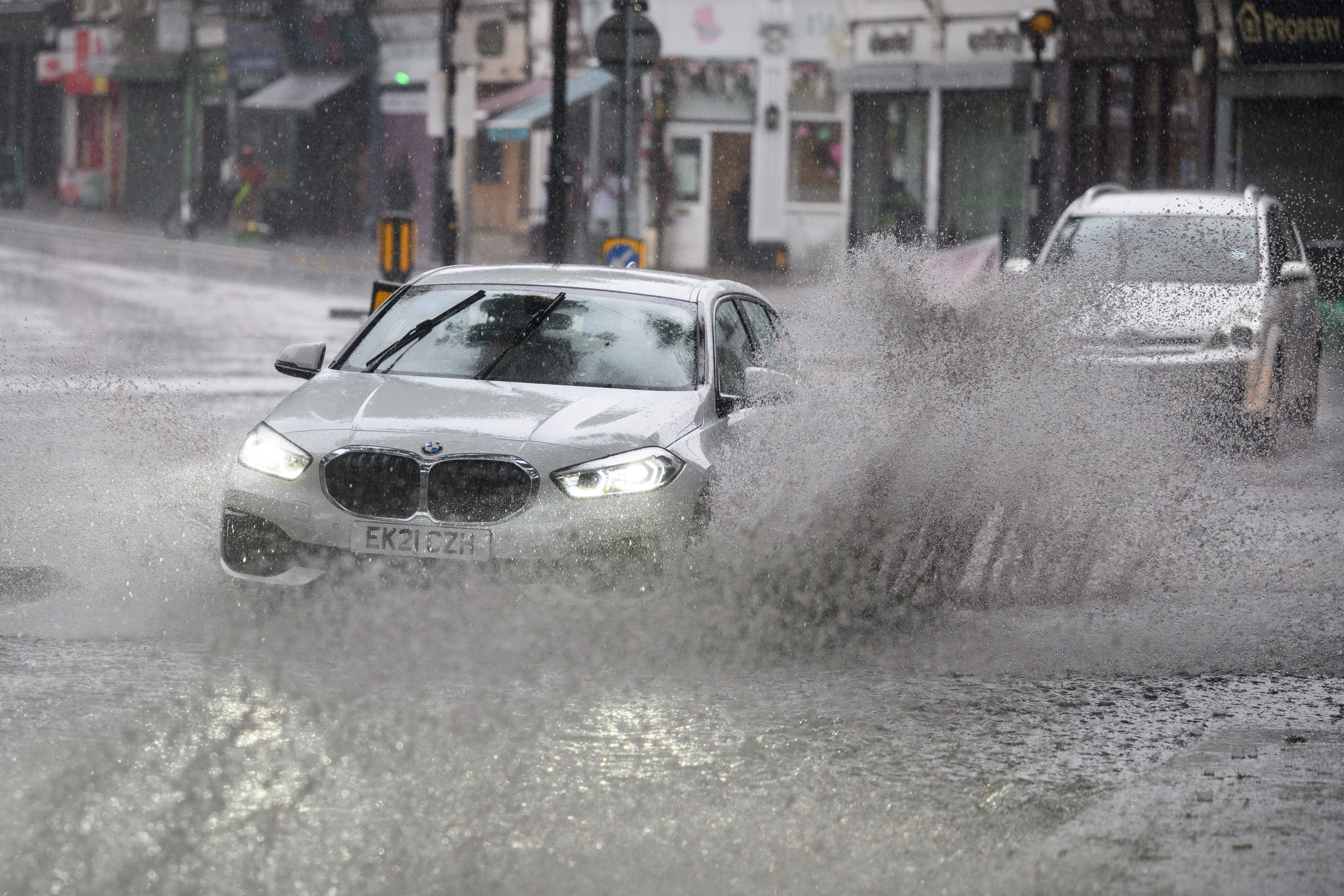
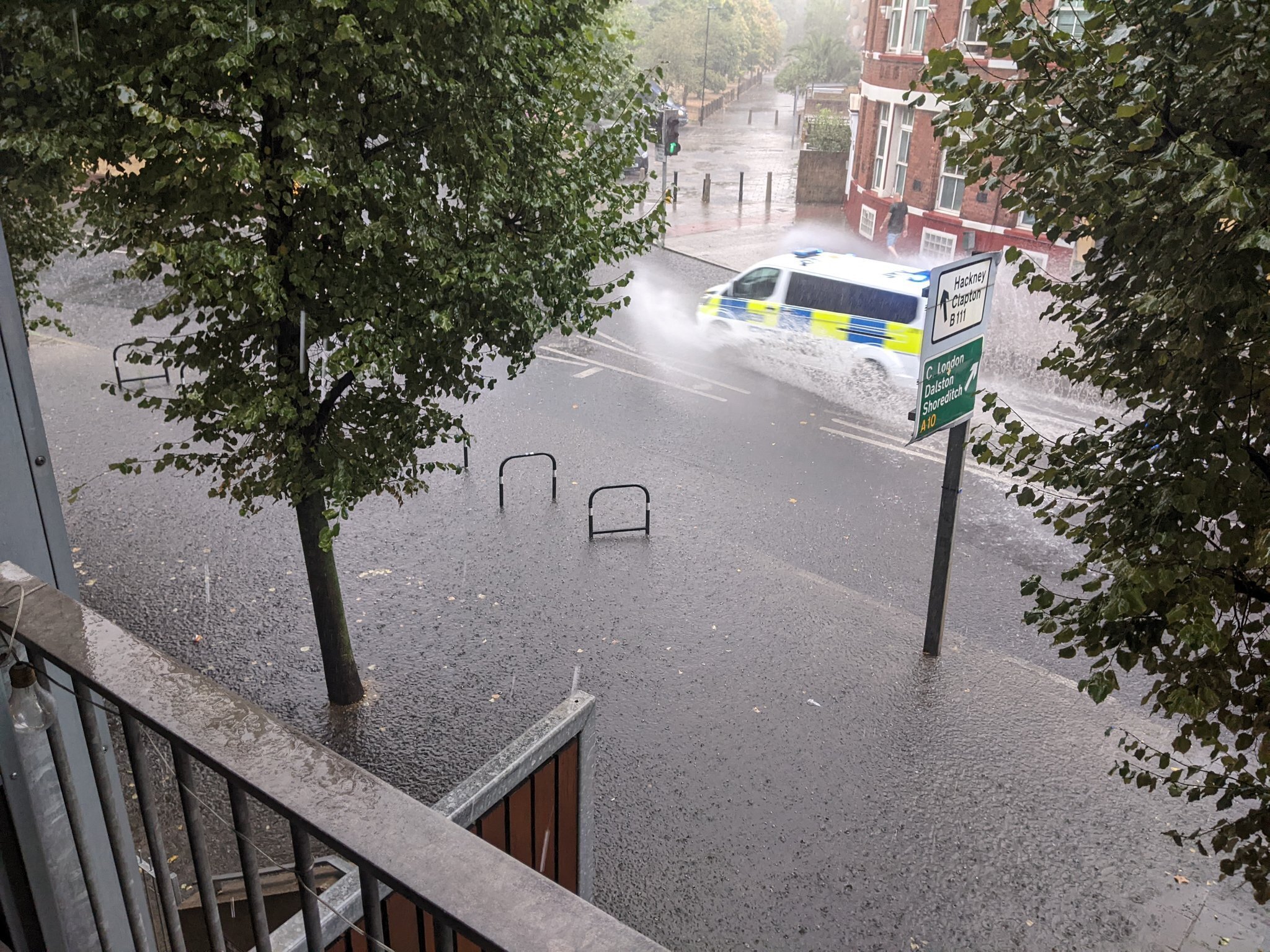
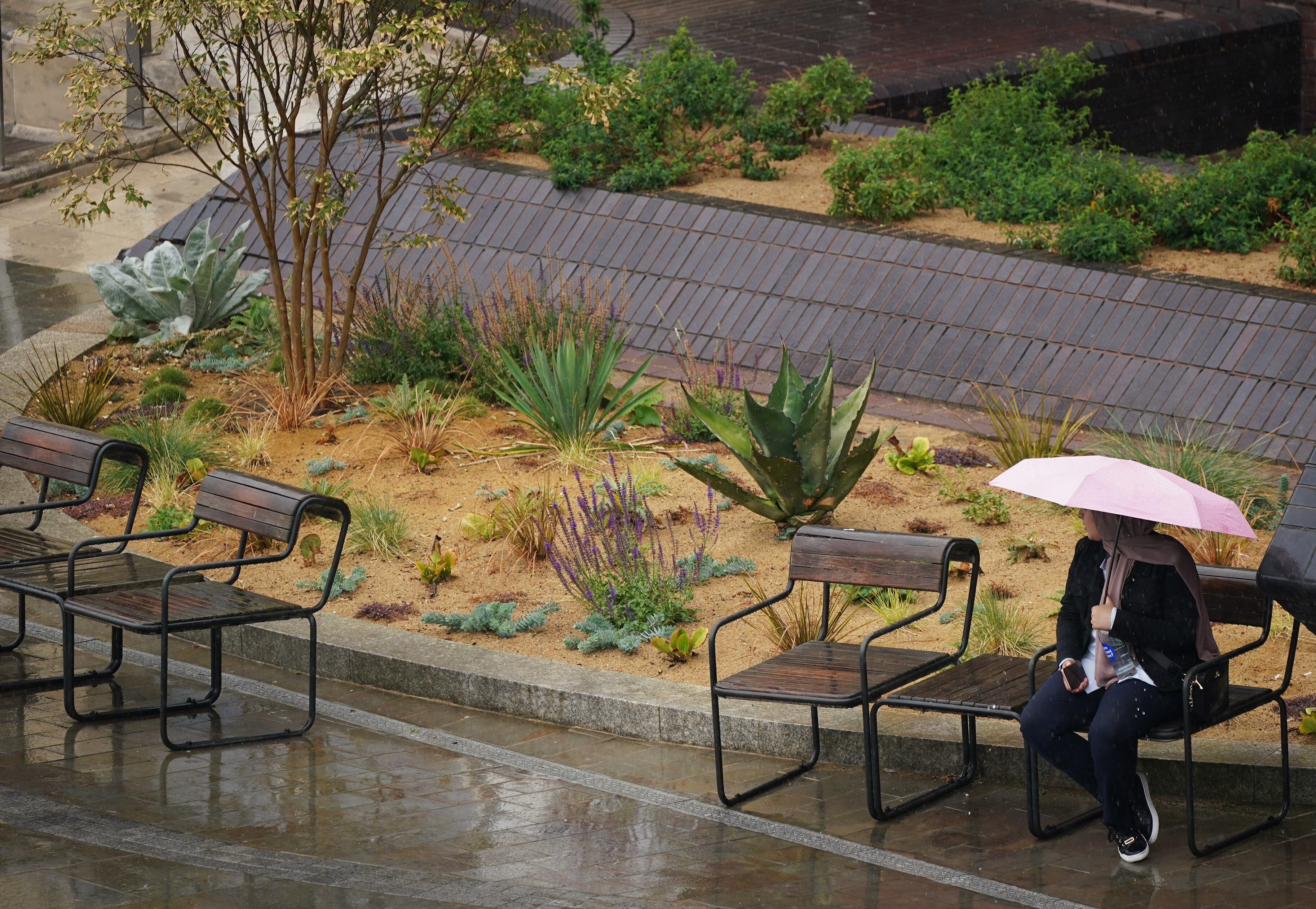
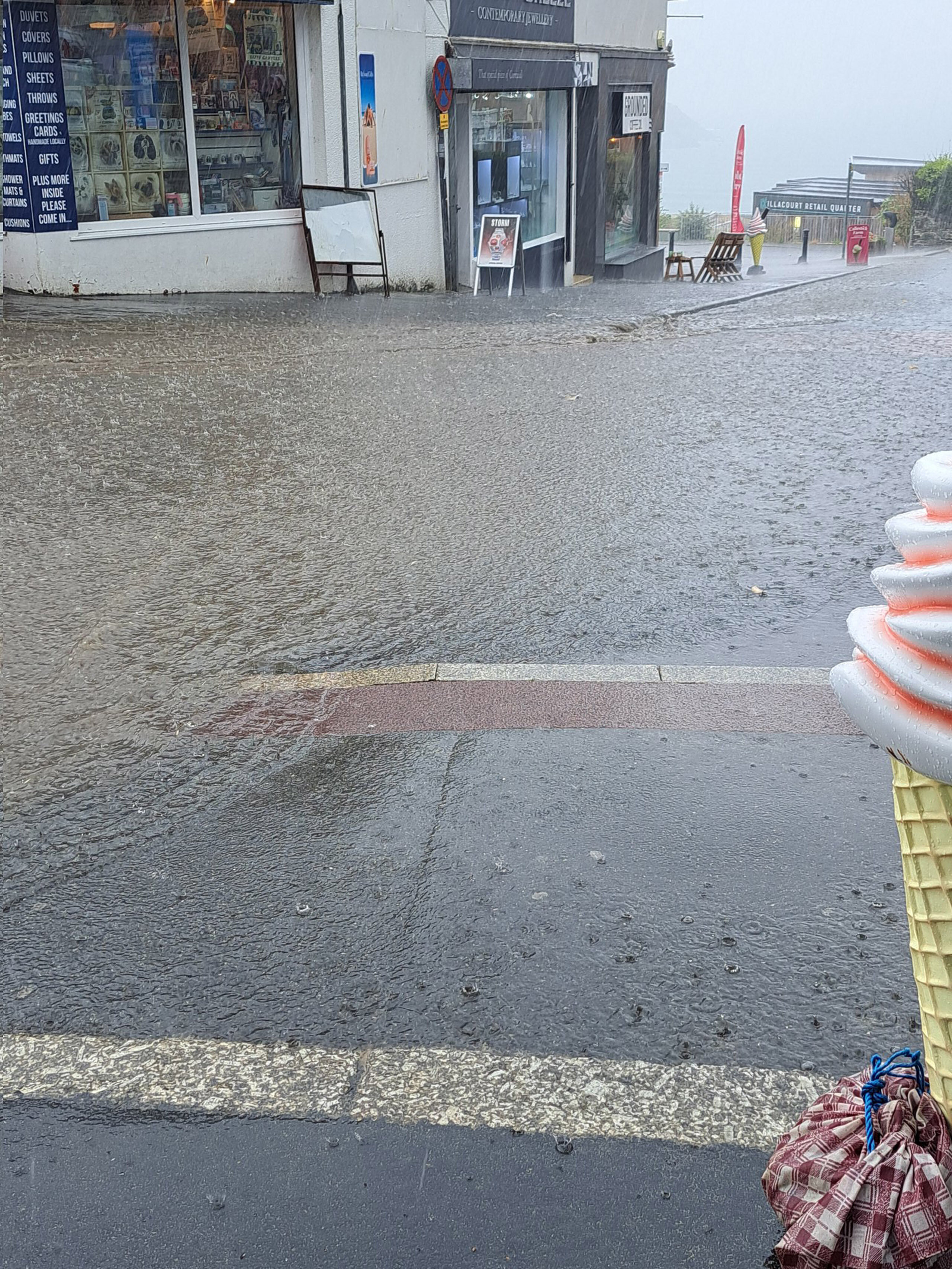
Parts of the UK have faced two days of torrential rain, which follows weeks of hot weather and sunshine, with a thunderstorm warning covering most of the south east of England, including parts of London, in place.
While the weather extremes may be disconcerting, one invariably leads to another. With land left parched, it will take heavy rain much longer to be absorbed into the ground – leading to the spate of flash floods being recorded on social media.
And the downpours will not magically solve the country’s drought problem. The Environment Agency has said it will take weeks of rain to replenish water sources and end the drought.
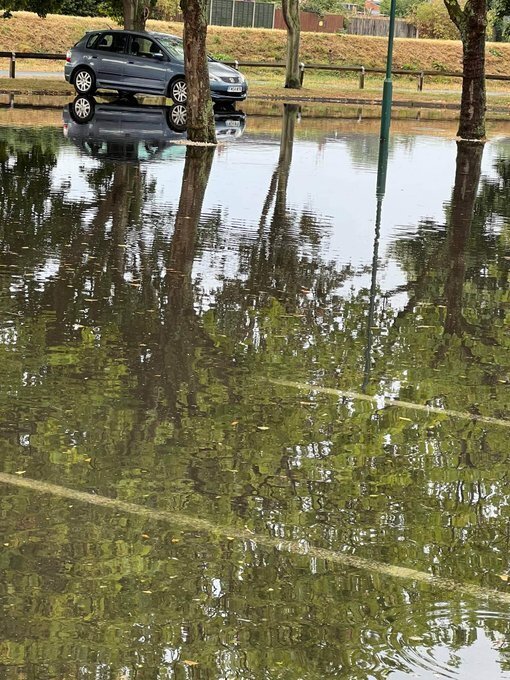
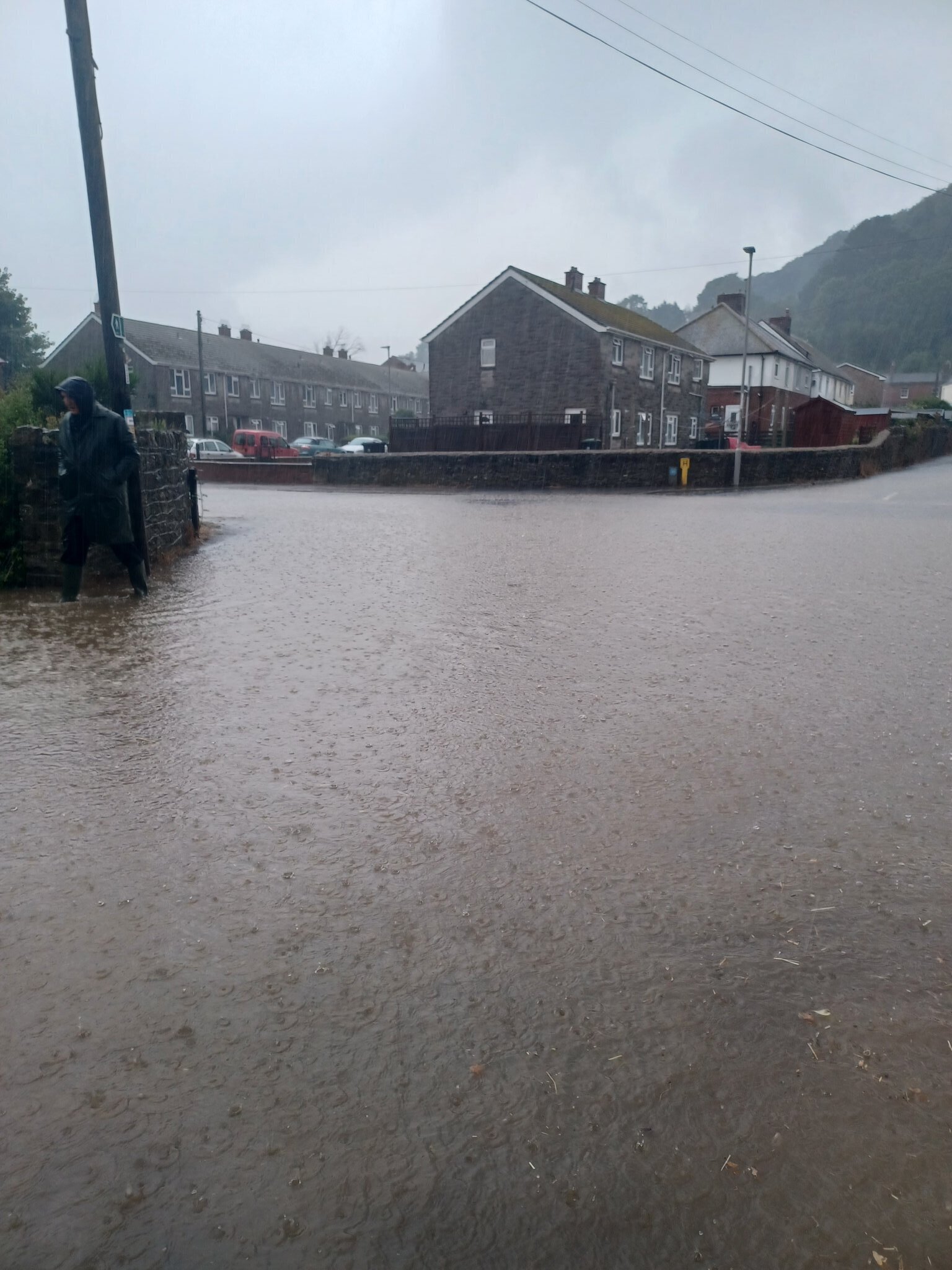
Footage and photos showed torrential rain and floodwater sweeping through towns across the UK.
The Met Office issued an amber thunderstorm warning from 11am until 10pm on Wednesday, meaning people should expect flooding and disruption.
The warning says: “Fast flowing or deep floodwater is likely, causing danger to life.”
Flooding is likely to affect homes and businesses “quickly”, as 30mm to 50mm of rain could fall in just an hour, while a few places may see more than 100mm in a few hours.
Forecasters say this could lead to train and bus cancellations amid difficult driving conditions, power cuts and communities becoming cut off from roads.
Lightning, hail and strong winds will also lash areas included in the warning, which spreads across Suffolk, Kent, Surrey and West Sussex.
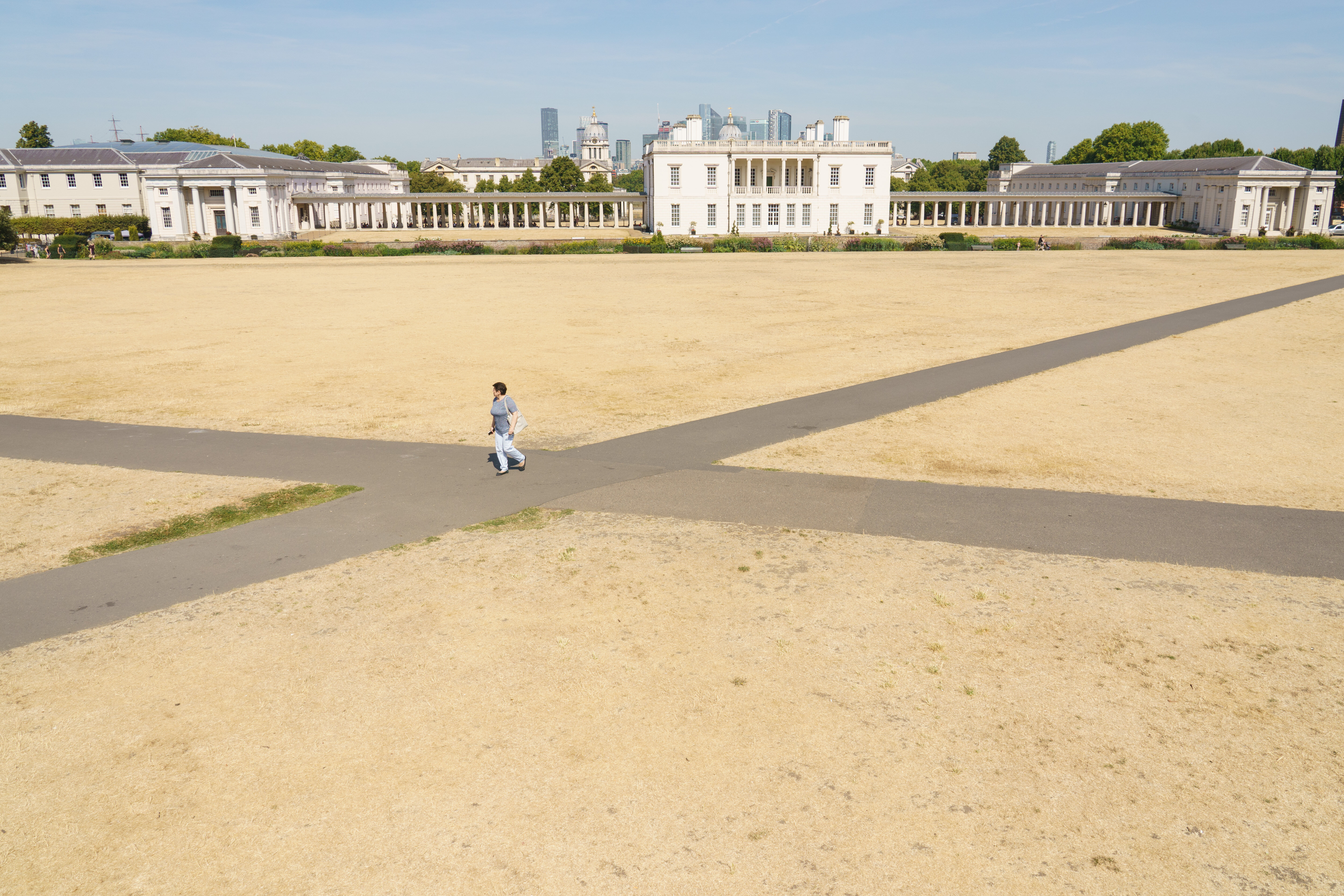
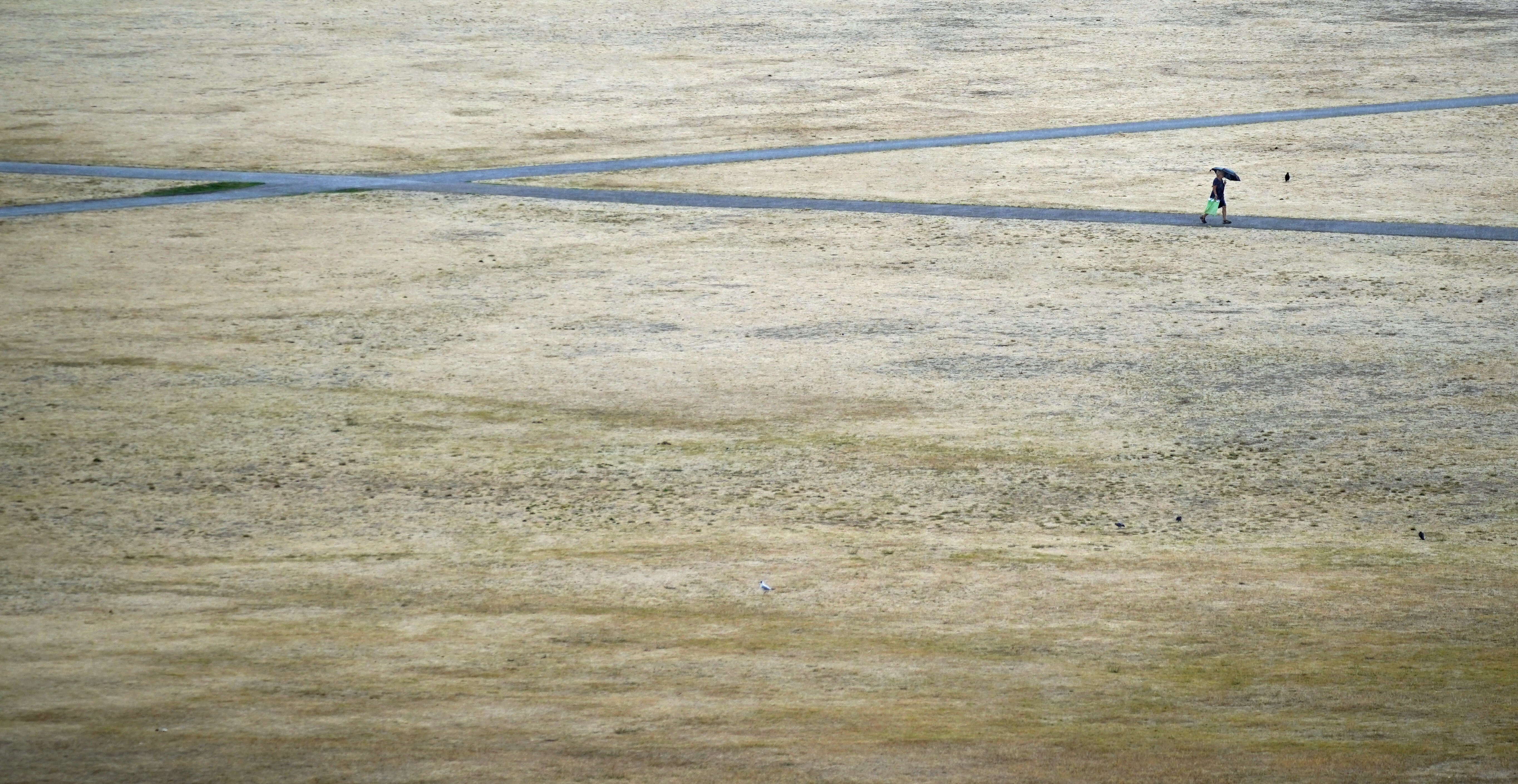
The images of floods emerging are in stark contrast to last week, when England’s green pastures had been turned yellow and brown.
A drought was officially declared across most of England following the driest July for 50 years and the driest first half of the year since 1976.
Thames Water, which supplies 15 million people, is putting a hosepipe ban in place next week, saying water levels in its reservoirs were “much lower than usual”.
It joins Welsh Water, Southern Water and South East Water in implementing a hosepipe ban.
South West Water and Yorkshire Water will follow suit on August 23 and 26 respectively – meaning more than 29.4 million customers across the UK will be prohibited from using hosepipes by the end of next week.
Salman Rushdie, whose writing led to death threats in the 1980s, has suffered an apparent stab wound to the neck and has been airlifted to hospital after he was attacked on stage as he was about to give a lecture in western New York, police have said.
The Indian-British author, 75, was attacked on Friday onstage at the Chautauqua Institution. Rushdie’s condition is not known.
Advertisement
Witnesses reported Rushdie falling to the floor when the man attacked him, and was then surrounded by a small group of people who held up his legs, seemingly to send more blood to his upper body, as the attacker was restrained.
Rabbi Charles Savenor was among the hundreds of people in the audience. Amid gasps, spectators were ushered outside.
“This guy ran on to platform and started pounding on Mr Rushdie. At first you’re like, ‘What’s going on?’ And then it became abundantly clear in a few seconds that he was being beaten,” Savenor said. He said the attack lasted about 20 seconds.
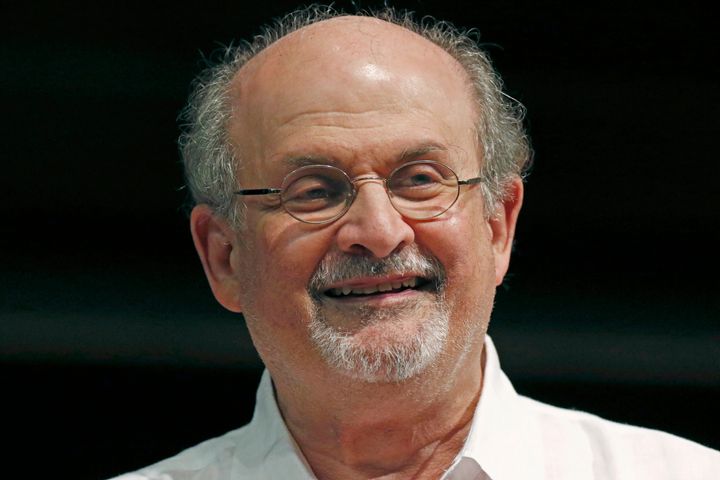
Author Salman Rushdie in 2018.
via Associated Press
Advertisement
The New York state police department has issued a statement confirming a male suspect ran onto the stage and attacked Rushdie and an interviewer.
The statement said: “State police are investigating an attack on author Salman Rushdie prior to a speaking event at the Chautauqua Institution in Chautauqua, NY.
“On August 12, 2022, at about 11am, a male suspect ran up onto the stage and attacked Rushdie and an interviewer.
“Rushdie suffered an apparent stab wound to the neck, and was transported by helicopter to an area hospital.
“His condition is not yet known.
“The interviewer suffered a minor head injury. A state trooper assigned to the event immediately took the suspect into custody.
Advertisement
“The Chautauqua County Sheriff’s Office assisted at the scene.”
Rushdie’s book The Satanic Verses has been banned in Iran since 1988, as many Muslims consider it to be blasphemous. A year later, Iran’s late leader Ayatollah Ruhollah Khomeini and issued a fatwa, calling for Rushdie’s execution.
A bounty of over $3 million has also been offered for anyone who kills Rushdie.
Iran’s government has long since distanced itself from Khomeini’s decree, but anti-Rushdie sentiment has lingered. In 2012, a semi-official Iranian religious foundation raised the bounty for Rushdie from $2.8 million to $3.3 million.
Rushdie dismissed that threat at the time, saying there was “no evidence” of people being interested in the reward.
That year, Rushdie published a memoir, Joseph Anton, about the fatwa. The title came from the pseudonym Rushdie had used while in hiding.
Rushdie rose to prominence with his Booker Prize-winning 1981 novel Midnight’s Children, but his name became known around the world after The Satanic Verses.
Advertisement
The Chautauqua Institution, about 55 miles southwest of Buffalo in a rural corner of New York, is known for its summertime lecture series. Rushdie has spoken there before.
This is a breaking news story and will be updated. Follow HuffPost UK on Twitter, Facebook and Instagram.
Salman Rushdie, whose writing led to death threats in the 1980s, was stabbed in the neck and abdomen by a man who rushed the stage as the author was about to give a lecture in western New York.
He is on a ventilator and may lose an eye, according to the New York Times, and sustained nerve damage to his arm and damage to his liver.
Advertisement
The Indian-British author, 75, was attacked on Friday onstage at the Chautauqua Institution.
Police identified the attacker as Hadi Matar, 24, of Fairview, New Jersey. He has been taken into custody.
Witnesses reported Rushdie falling to the floor when the man attacked him, and was then surrounded by a small group of people who held up his legs, seemingly to send more blood to his upper body, as the attacker was restrained.
According to the NYT, Rushdie’s agent Andrew Wylie said he is on a ventilator and unable to speak.
Wylie added the news was “not good” and the author will “likely lose one eye”.
He said the nerves in Rushdie’s arm were severed in the attack and his liver was “stabbed and damaged”.
Rabbi Charles Savenor was among the hundreds of people in the audience. Amid gasps, spectators were ushered outside.
Advertisement
“This guy ran on to platform and started pounding on Mr Rushdie. At first you’re like, ‘What’s going on?’ And then it became abundantly clear in a few seconds that he was being beaten,” Savenor said. He said the attack lasted about 20 seconds.
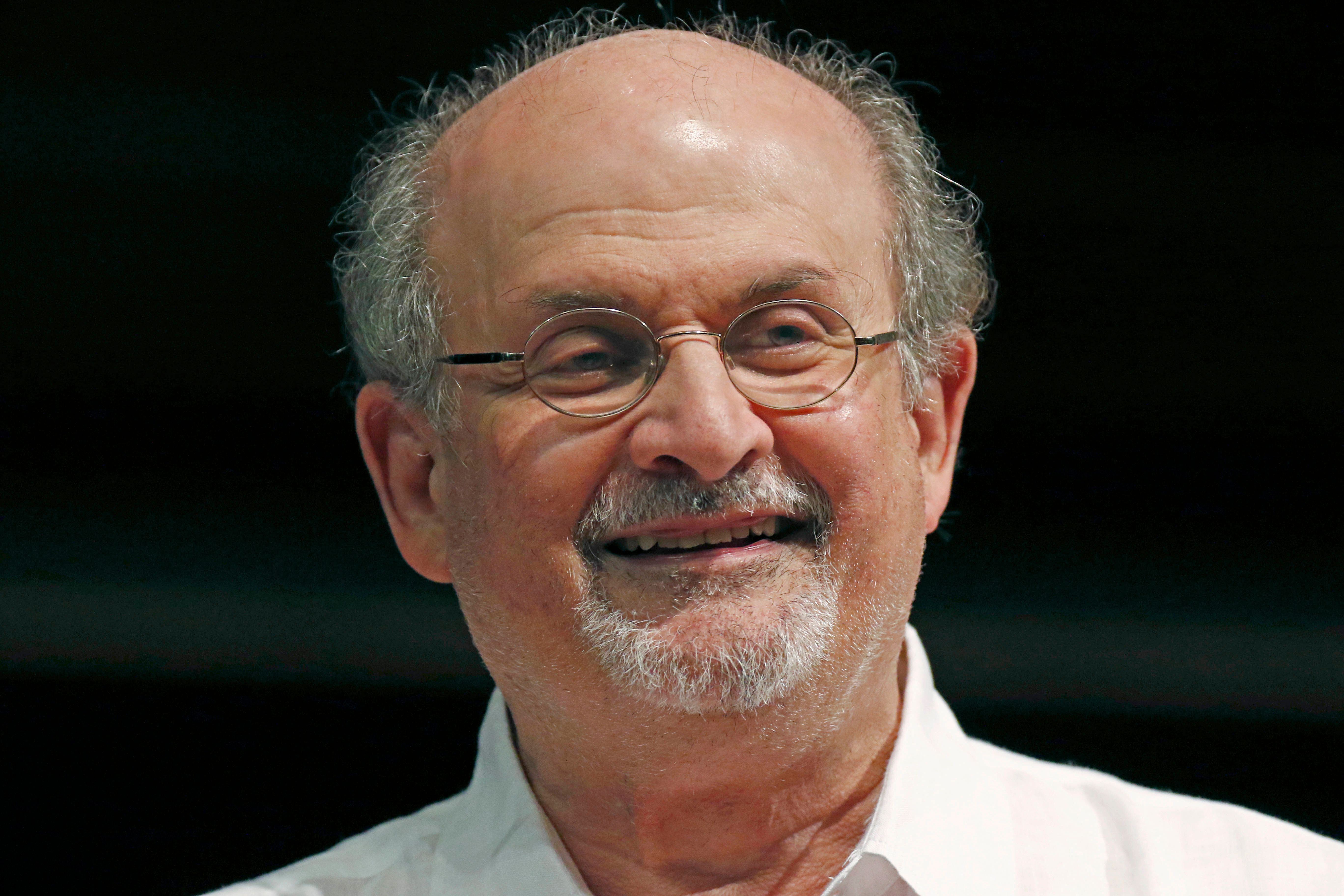
Author Salman Rushdie in 2018.
via Associated Press
Major Eugene Staniszweski of New York State Police said late on Friday: “Earlier today at approximately 10.47am, guest speaker Salman Rushdie, aged 75, and Ralph Henry Reese, age 73, had just arrived on stage at the institution.
“Shortly thereafter, the suspect jumped on to the stage and attacked Mr Rushdie, stabbing him at least once in the neck and at least once in the abdomen.
“Several members of the staff at the institution and audience members rushed the suspect and took him to the ground, and shortly thereafter, a trooper who was at the institution took the suspect into custody with the assistance of a Chautauqua County Sheriff’s deputy.
Advertisement
“Mr Rushdie was provided medical treatment by a doctor who was in the audience until EMS arrived on scene.
“Mr Rushdie was airlifted to a local trauma centre and is still currently undergoing surgery.”
Rushdie’s book The Satanic Verses has been banned in Iran since 1988, as many Muslims consider it to be blasphemous. A year later, Iran’s late leader Ayatollah Ruhollah Khomeini and issued a fatwa, calling for Rushdie’s execution.
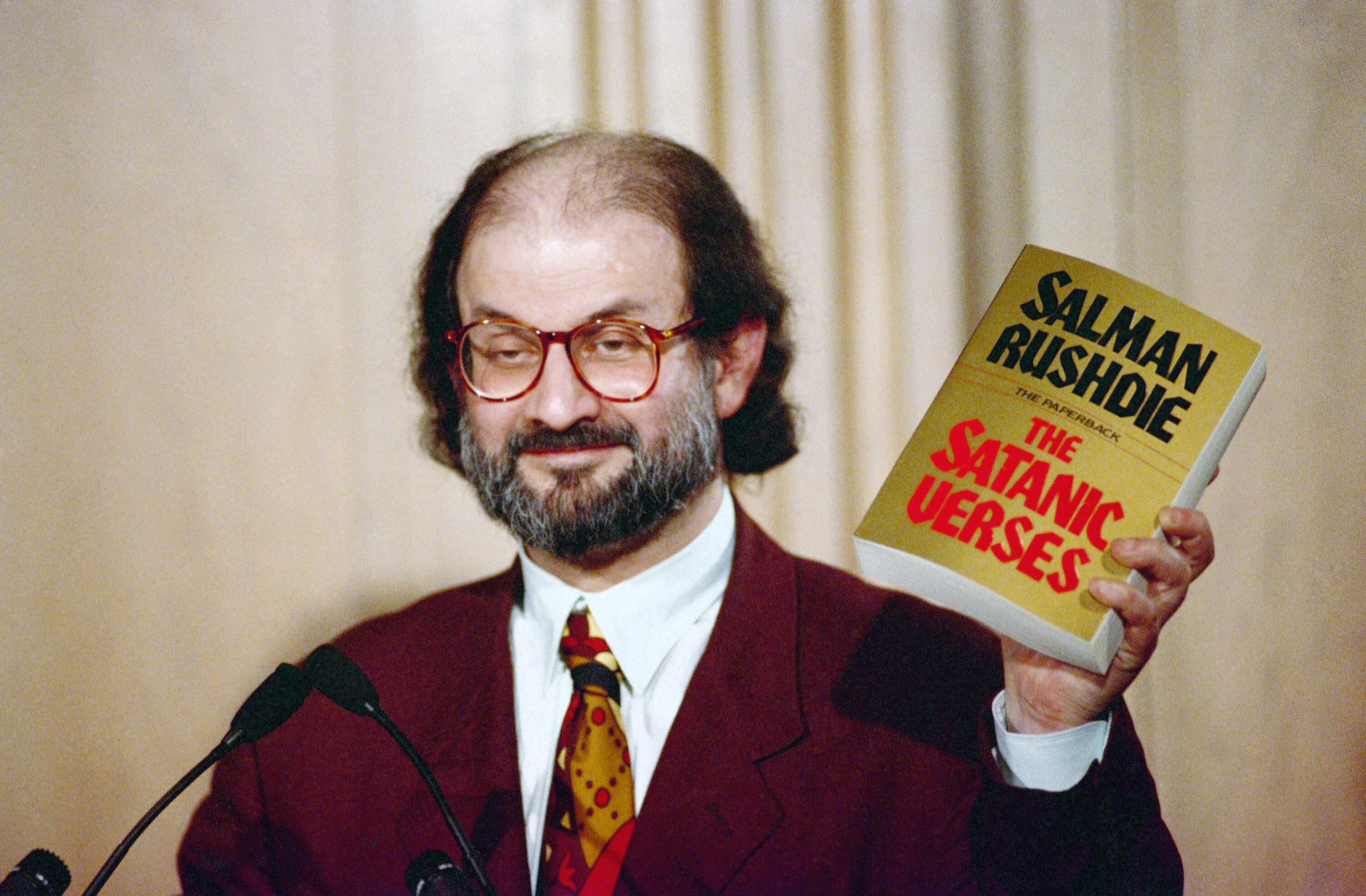
<img class="img-sized__img landscape" loading="lazy" alt="Salman Rushdie holds up a copy of his book The Satanic Verses at Freedom Forum in Arlington, Virginia in March 1992.” width=”720″ height=”472″ src=”https://www.wellnessmaster.com/wp-content/uploads/2022/08/salman-rushdie-on-a-ventilator-and-could-lose-an-eye-after-new-york-attack-4.jpg”>
Salman Rushdie holds up a copy of his book The Satanic Verses at Freedom Forum in Arlington, Virginia in March 1992.
via Associated Press
A bounty of over $3 million has also been offered for anyone who kills Rushdie.
Iran’s government has long since distanced itself from Khomeini’s decree, but anti-Rushdie sentiment has lingered. In 2012, a semi-official Iranian religious foundation raised the bounty for Rushdie from $2.8 million to $3.3 million.
Rushdie dismissed that threat at the time, saying there was “no evidence” of people being interested in the reward.
Advertisement
That year, Rushdie published a memoir, Joseph Anton, about the fatwa. The title came from the pseudonym Rushdie had used while in hiding.
Rushdie rose to prominence with his Booker Prize-winning 1981 novel Midnight’s Children, but his name became known around the world after The Satanic Verses.
The Chautauqua Institution, about 55 miles southwest of Buffalo in a rural corner of New York, is known for its summertime lecture series. Rushdie has spoken there before.
This is a breaking news story and will be updated. Follow HuffPost UK on Twitter, Facebook and Instagram.
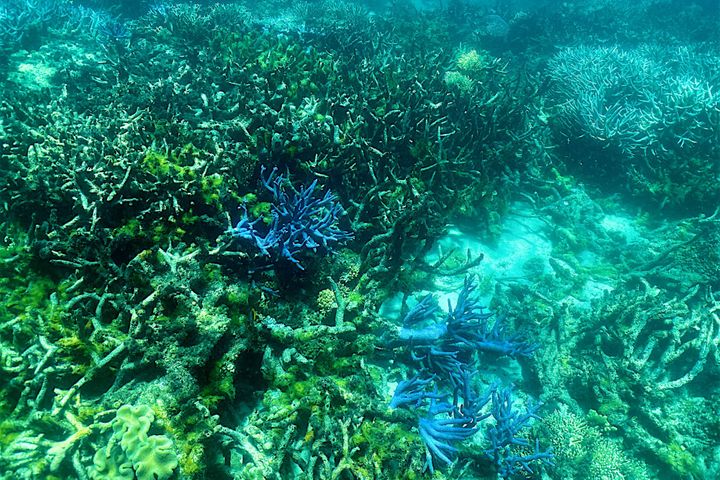
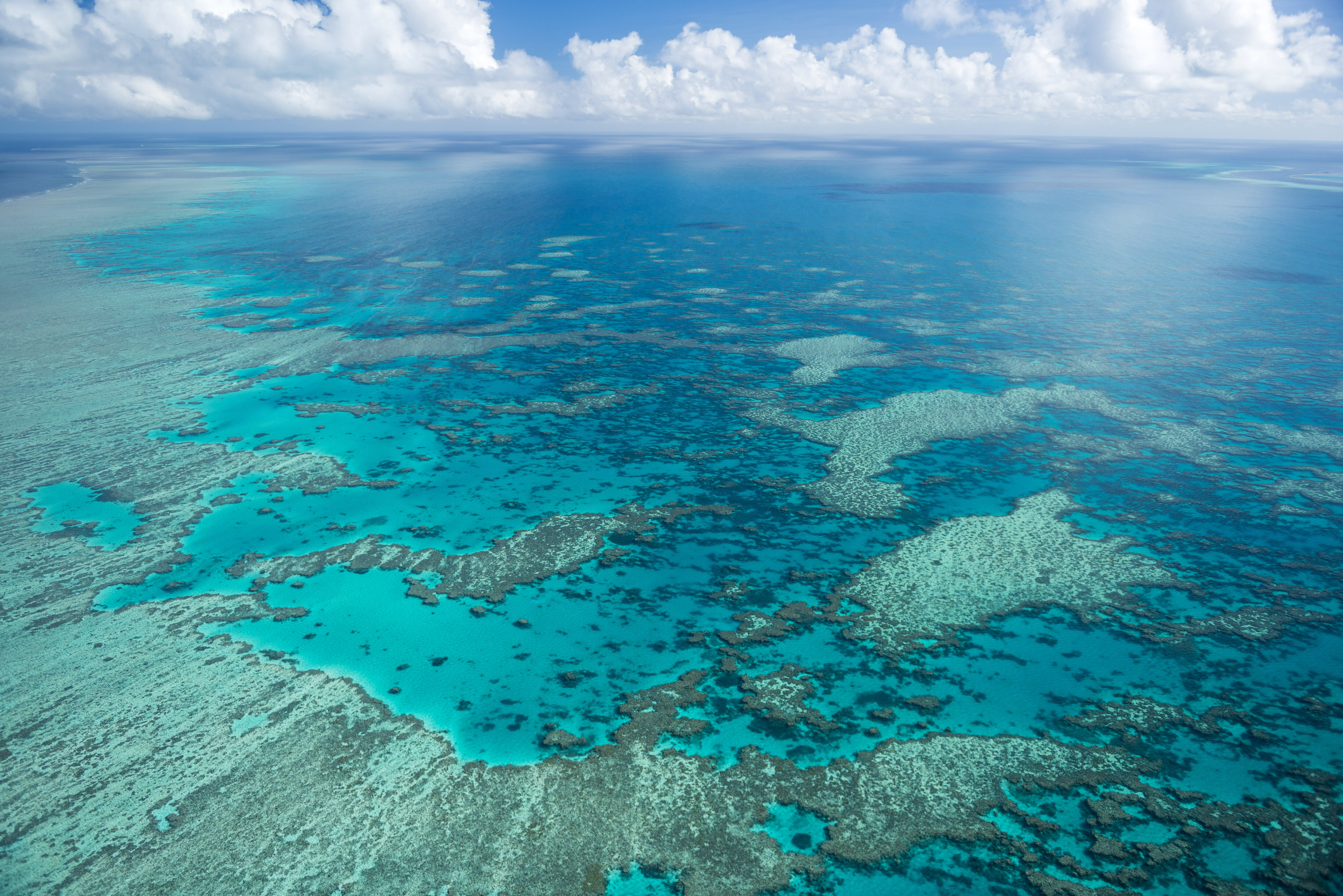
But, amid all the anxiety-inducing headlines, there is a spot of hope – Australia’s Great Barrier Reef appears to have recovered, ever so slightly.
Advertisement
What happened to the reef before?
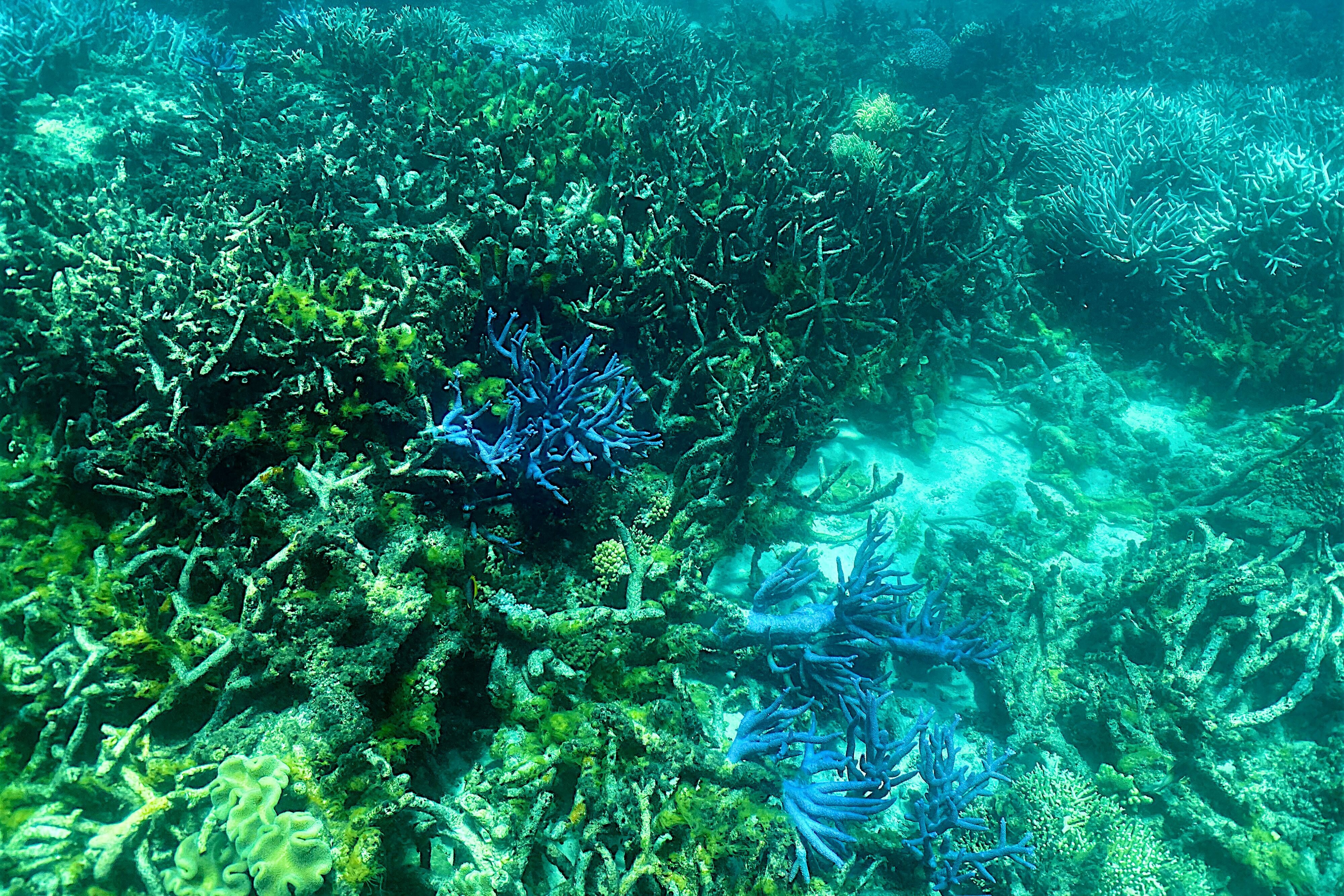
The world-heritage site has been suffering from mass bleaching, essentially killing the coral which grows there.
Mass bleaching typically happens when delicate coral polyps are effectively cooked by unusually warm waters. When coral is bleached, it turns white, although it can recover if water temperatures return to normal.
However, if the warm water stays for too long – often a consequence of the climate crisis – large areas of the reef can die.
The Great Barrier Reef Marine Park Authority has explained before that bleached coral “is stressed by still alive”.
A long-term monitoring programme has found two-thirds of the famous reef now have the largest amount of coral cover seen in 36 years, suggesting it has recovered from previous bleaching.
The progress has occurred in the central and northern stretches of the reef, although the southern region is still struggling, according to the Australian Institute of Marine Sciences.
“What we’re seeing is that the Great Barrier Reef is still a resilient system. It still maintains that ability to recover from disturbances,” programme leader Mike Emslie said.
In the northern region, the hard coral cover soared tot 36% in 2022, up from 13% in 2017.
The central region coral cover climbed to 33% from 12% in 2019.
Both of these areas are recording the highest levels since they started being monitored in 1985.
It’s not all good, though
As with all climate news right now, we still should not be complacent.
In the southern region of the reef, in 2021 the coral cover was 38%. It fell to 34% in 2022.
Emsile told Reuters that, while the recovery of the northern and central regions is encouraging, “the frequency of these disturbance events is increasing, particularly the mass coral bleaching events”.
Advertisement
There has been four mass bleaching incidents in the last seven years – one of which was during a La Nina event, which is an oceanic phenomenon which brings the cooling of surface ocean waters.
Even in the areas of more reassuring growth, there are concerns it will not be sustainable. The recovery has been driven by Acropora corals, which are vulnerable to wave damage, heat stress and crown of thorns starfish.
“We’re really in unchartered waters when it comes to the effects of the bleaching and what it means moving forward,” Emslie said. “But as of today, it’s still a fantastic place.”
The United Nations Educational, Scientific and Cultural Organisation (UNESCO) is still considering whether to list the site as “in danger”. The World Heritage Committee was set to discuss the fate of the reef in June in Russia, but it has since been postponed.