There have always been generational conflicts, but the chasm between baby boomers (born between 1946 and 1964) and other generations after them seems particularly hard to bridge.
As challenging as it may feel sometimes, there’s a simple solution for those wanting to experience more closeness with their boomer relatives and to understand them better: ask more questions.
Advertisement
Simple curiosity, by way of a thoughtful question, can make people feel heard and respected – and can also help change your perspective on why someone you love thinks the way they do, why they are the way they are. That dialogue may prove to be one of the most rewarding ones you undertake.
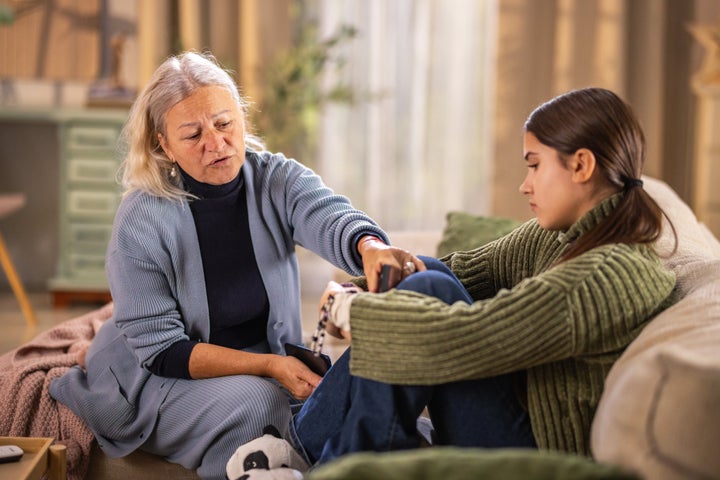
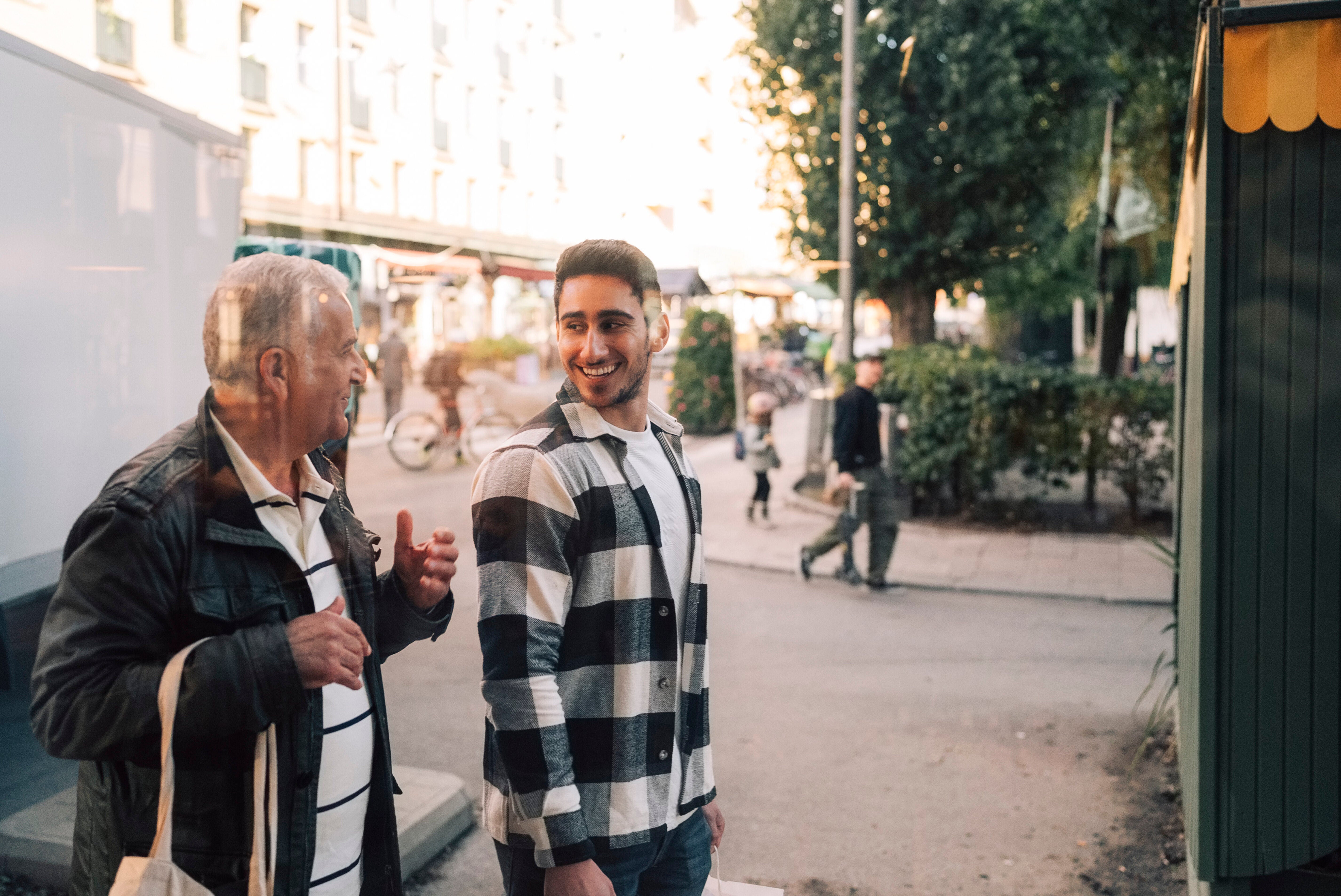
Maskot via Getty Images
Asking more questions is a great way to start the conversations you’re longing to have with your loved one.
“In my work with families, I’ve noticed that older relatives are rarely waiting to be corrected,” Anna Marchenko, a licensed mental health counsellor and principal practitioner at Miami Hypnosis and Therapy, tells HuffPost.
Advertisement
“What they tend to want is to be understood in the context of the world they grew up in. These questions often slow conversations down in a way that makes real understanding possible.”
HuffPost asked family therapists to suggest some starter questions boomer relatives wish they’d get asked more – and they may appreciate having these conversations more than you could ever know.
‘What do you wish people asked you about more?’
If you’re new to opening this kind of dialogue with an older relative, the best start is often… to ask what they want to be asked. Yes, it’s a little like cheating, but this question in itself can lead the way to so much understanding on both sides.
Advertisement
This question “gets at what a parent may want to share more in their relationship with you,” Sarah Epstein, a marriage and family therapist who specialises in family dysfunction, told HuffPost. “Maybe they wish you asked about their health, their hobbies, their careers or their travels.”
For Epstein, this question can open the door to a new dynamic between your parent or older relative and you. “Asking shows an interest in not only having parents support you, but you to invest in them,” she said. “You can then lean into that more by asking about their current excitement and stressors.”
Remember: the point of asking questions in the first place is to allow your relative to feel heard, so open-ended and even apparently vague conversation starters work like a charm.
Advertisement
‘What was your family like when you were growing up?’
Imagine you were meeting a new friend for coffee. You are likely to ask questions about their upbringing. While you may already know the basics about your relative, like where they grew up and how many siblings they have, asking them about their family of origin is an amazing way to get to know them better – and even forge a new kind of relationship with them.
As well as the more general, “What was your family like?” Epstein also recommends asking more specific questions, such as, “What were your parents like?” or “Who in your extended family were you closest with and who were you not close with?”
“As their child, you only see their adult relationships, not the ones they experienced as children themselves,” Epstein said. “Asking these kinds of questions humanises parents to their children and other younger relatives, and gives parents a chance to tell their children more about themselves. It opens up possible vulnerable topics, like what felt good and what felt difficult in their upbringing and how they managed that.”
Advertisement
‘What did the world expect from you when you were young?’
This is an amazing question to get people to reflect on what the world’s expectations of them might have cost them – as well as any gifts they might have brought.
When asked this question, “people usually talk about pressure rather than nostalgia,” Marchenko said. “They describe growing up fast, being needed early, and making tradeoffs that were not optional. It helps younger relatives see that many values were shaped by necessity rather than preference.”
This line of questioning may also naturally lead into other similar revelations from your older relative, such as how systems of power worked in the environment they grew up in and what beliefs their upbringing created that they may have challenged later in life, says Marchenko.
Advertisement
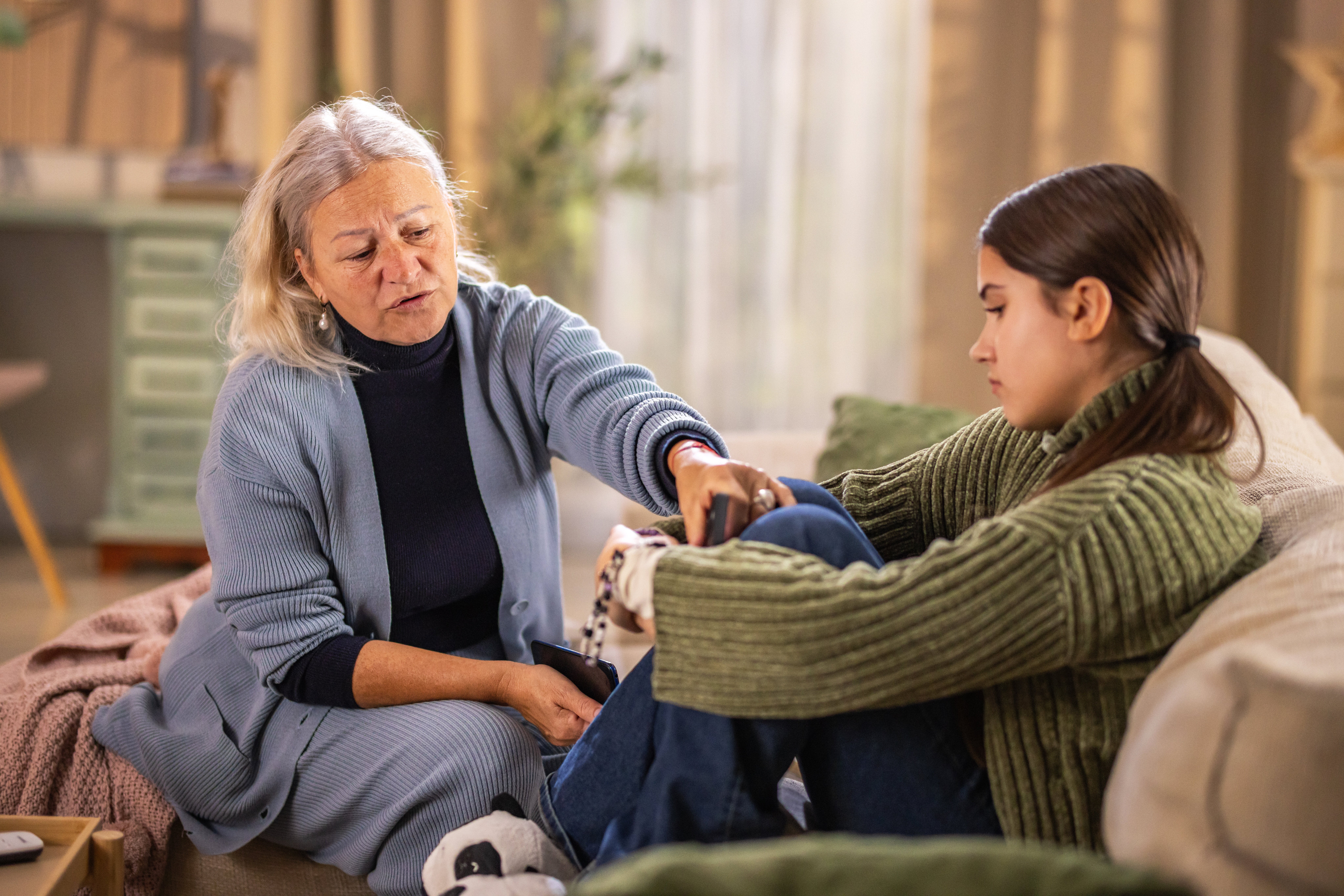
FG Trade via Getty Images
You never got to know your parents or grandparents in certain ways — because you simply weren’t there for it. But it’s a perspective you won’t want to miss out on.
‘When you look at the world now, how does it feel to you?’
One of the greatest obstacles to creating mutually respectful relationships with our older relatives today is the stark difference in values and politics younger generations often have. But phrasing a question like this opens the door to curiosity rather than immediately creating defensiveness.
“This avoids debates about progress and invites reflection instead,” Marchenko said. “People speak about gains and losses at the same time, which allows disagreement without turning anyone into the problem.”
Advertisement
‘Is there anything you still feel responsible for passing on?’
“This reframes older generations as caretakers rather than obstacles,” Marchenko said. “The answers are usually less about advice and more about values, restraint, and hard-earned perspective.”
This is a great question because they may have previously avoided sharing their thoughts on this subject for fear of how they might be received. For you, hearing about how your relative views their potential legacy may also be eye-opening and perspective-shifting.
‘What feels good in our relationship right now? What doesn’t?’
In the same way that you may find some aspects of your relationship with your older relative difficult, they might too. If you can ask this question and receive the answer without getting defensive, the two of you might be able to work together to deepen the relationship and smooth over areas of discontent.
Advertisement
“When you ask straight out how the relationship feels, you can start to have open, honest discussions about how the relationship is going,” Epstein said. “It may turn out you each have things you love doing together, or discussing, that you can double down on. You may also identify things your relative has been feeling about the relationship that you can then work on together. The easiest route to clarity is gently, respectfully asking about the other person’s experience.”
There’s a seemingly endless array of quippy terms to describe rising travel trends and preferences.
One particularly interesting term is “inheritourism”, which really gets to the heart of why different individuals travel the way that they do and how family plays a role.
Below, travel experts break down the meaning of “inheritourism”, as well as the benefits and drawbacks of this holiday phenomenon.
Advertisement
What is ‘inheritourism’?
“Inheritourism reflects how travel preferences are passed down across generations,” said Jess Petitt, senior vice president or strategy, insights and full service brands at Hilton.
“Many people inherit travel preferences from their parents, with family experiences often shaping how people travel well into adulthood.”
A 2026 travel report from Hilton identified “inheritourism” as a notable trend for the new year – with 66% of travellers surveyed by the hotel brand saying that their parents have influenced their choice of accommodations, 60% saying they guided their choice of loyalty programs and 73% saying they shaped their general travel style.
Advertisement
“I think inheritourism shows up most clearly in how people define what ‘comfortable’ travel looks like,” said travel blogger Esther Susag. “Many travellers inherit not just destinations, but entire travel styles from their parents. For example, I often notice that people who grew up only doing cruises or all-inclusive resorts tend to gravitate back to those formats as adults.”
Travellers accustomed to the ease of having everything in one place might be more hesitant to go off the beaten path with independent accommodations, hidden gem destinations or locations that require more planning or cultural navigation.
“That same pattern extends into how people pay for travel,” Susag said. “I’ve noticed that travellers whose parents used travel credit cards and understood points and miles tend to feel much more comfortable navigating loyalty programs and booking elevated experiences. On the other hand, people who grew up saving for years for one big trip and paying mostly in cash or with a single credit card often carry that same cautious mindset forward and are hesitant to open multiple cards or experiment with points strategies.”
Advertisement
She added that many parents remain deeply involved in their adult children’s travel decisions, often financing trips with their own loyalty points or preferred brands. Multigenerational travel is increasingly popular, thus exposing new generations to the same kinds of choices.
“Over time, that becomes their baseline for what travel ‘should’ look like,” Susag said. “As travel has become more expensive and more intentional, people are less willing to experiment and more likely to stick with what they know works. That often means repeating the travel patterns they grew up with, whether that’s specific destinations, hotel brands or trip formats.”
Flashpop via Getty Images
It’s only natural that people who grew up vacationing in a certain way as children would adopt similar travel behaviors as adults.
Advertisement
It’s only natural that people who grew up travelling in a certain way as children would adopt similar preferences. Katy Nastro, a spokesperson and travel expert for the flight alert service Going, pointed to the cliché “the apple doesn’t fall far from the tree”.
“I personally grew up going to warm beach destinations to escape the New York winter every February,” Nastro said. “I wholeheartedly believe that the desire for a warmer weather destination during the month of February versus a cold weather trip is not just a preference but is now a personality trait inherited from my family travels as a child.”
She believes the same pattern is evident in the families attracted to “the magic of Disney” with Disney theme parks vacations over multiple generations. Our early memories can inform what we find meaningful and rewarding as we grow up.
Advertisement
“My family chooses the mountains over the beach always, because it’s where I grew up vacationing – and if you ask me, it’s just better,” Petitt said. “Those experiences are also what I’m excited to share with my kids, building on those memories. If we never visit a beach as a family, that would be OK by me.”
Family travel habits strongly influence people’s choices – but is that a good thing?
“Any travel is beneficial in my opinion,” Nastro said. “And in theory, inheritourism can create generational travel because people are inclined to continue the tradition of travel to a certain place, hotel, etc. The only downside may be that this perpetuates a blinder affect where people don’t tend to branch away from what they know, and thus never really explore beyond their comfort zone.”
She added that inheritourism might lead people to miss out on good deals if they can’t look beyond the specific brands or locations they’ve “inherited”.
Advertisement
“Travellers may avoid less popular destinations or more immersive experiences because they feel less predictable or convenient,” Susag said. “That said, awareness is growing, and many people are starting to challenge those habits once they realise there are other ways to travel that still feel safe and rewarding.”
Overall, she sees a mix of downsides and benefits to the influence of inheritourism today.
“On the positive side, inheritourism makes travel more accessible and lowers the barrier to entry for a lot of people,” Susag said. “It also encourages multigenerational travel and shared experiences, which can be incredibly meaningful.”
Inheritourism can serve as “a foundation, rather than a fixed path,” she emphasised. Travellers can carry forward meaningful traditions but also cultivate their own.
Advertisement
“People tend to start by recreating the trips and habits they grew up with, then adapt them as their confidence grows and their priorities shift,” Susag said. “Whether that means exploring less traditional destinations, traveling more independently or becoming more intentional about how they spend on travel, many travellers eventually build on what they inherited rather than abandoning it altogether.”
As in other areas of life, parents tend to set the norms and serve as trusted sources for young adults as they make decisions.
“In a world of digital overwhelm and an abundance of choice, travellers are looking to their inner circle to inform their travel decisions,” Petitt said.
Advertisement
“When seeking an experience beyond what is familiar, inherited preferences and trusted travel habits serve as a starting point for discovering something new. The key is balance – while inheritourism offers comfort and confidence, the greatest benefit comes when those familiar influences open the door to exploration, rather than limit it.”
Estrangement, and especially the estrangement of adult children from their parents, has been a big topic in the past few months.
Oprah Winfrey invited a panel of therapists to talk about the “rising trend” of estrangement on her podcast, for instance. One of the experts controversially blamed “therapy” for “inflammatory reactions” to parents’ behaviour.
We don’t know the particulars of that case for sure.
But with so much attention around the topic of estrangement, we spoke to Dorcy Pruter, the founder of the Conscious Co-Parenting Institute, who began her business after reconnecting with her father following years of estrangement.
Here, she shared “the hard truth most [estranged] parents aren’t ready to hear (at least not at first)”.
Advertisement
“Going no-contact is never the first choice”
Some parents may feel blindsided by their grown-up child going no-contact.
But “going no-contact is never the first choice,” Pruter said. “It’s the last resort of a child who didn’t feel safe, seen, or sovereign in the relationship.”
She added that there is often no single moment that leads to a break.
Instead, “it begins with small moments of emotional misattunement. Dismissed feelings. Subtle control. A child becomes the parents’ emotional regulator.
“It can look like ‘loving too much’ or ‘doing everything for them,’ when in reality, the parent may have unknowingly made their child responsible for their self-worth.”
Advertisement
For the parent, she said, they might really feel they gave their child everything.
“So when a parent finds themselves mystified by estrangement, the most powerful question they can ask is not ‘What went wrong?’ but: ‘What truth did my child not feel safe enough to tell me?’
“Is it helpful to reflect? Yes, but only if the reflection is rooted in curiosity, not guilt or blame. Parents must be willing to trade the need to be ‘right’ for the courage to reconnect. That means listening to the silence not as a punishment, but as a message.”
Advertisement
How can I tell if my grown-up child is distancing themselves from me, and what can I do if they go no-contact?
Another reason parents might feel shocked by their child’s distance, Pruter told us, is that they struggle to notice early signs of disconnection for what it really is.
“There are often early signs of withdrawal, short or transactional conversations, and emotional distance, but many parents miss them because they interpret that distance as rudeness or ingratitude, rather than disconnection,” she said.
Advertisement
And if your child has already gone no-contact, she recommended taking that as an opportunity to “heal [your] own wounds, take radical responsibility, and become safe for their child again, even if that child never returns.
“I often tell my clients that reconnection isn’t about changing your child’s mind. It’s about transforming your own heart.”
Which means that renting long past retirement age, never mind costly nursing home care, is out of the question for many.
That might lead some, like the mother of Redditor u/Swimsmoke, to assume their children will help with their housing, care, and costs in their old age.
Advertisement
But, like the 6.6 million UK adults who say they wouldn’t know where to start with the commitment, the site user said they’re not sure they’re able to do it.
We asked Dr Barbara Sparacino, an adult and geriatric psychiatrist also known as The Ageing Parent Coach, how to handle the situation.
Advertisement
The original poster (OP) feels guilty
Writing to the forum r/AmItheAsshole (AITA), the OP said that her 63-year-old mother retired from her career 15 years ago but has been making money through a soap business since.
“She lives in a small studio and has a car but not much else to her name,” the woman added, stating that her mother is quite frivolous with her spending and likes to travel a lot.
Ahead of a hip surgery, her mum has started to think about what her future will look like and expects her 30-year-old daughter to “help”.
Advertisement
OP has a few reservations. Firstly, their relationship is a little fraught, and the poster says their mother delivered “bare minimum” care in their teens.
Then, guilt, money, and time come into it.
“I also feel some amount of responsibility for the woman who birthed me, a woman who had a hard and traumatising life as well – but I don’t have the resources to help in any real capacity,” they wrote.
“I don’t have money to throw at the problem, I don’t want to use all my time off for the year taking care of her, and I wouldn’t get paid if I take leave, which I won’t even qualify to take until another six months from now.”
Advertisement
She ended, “AITA for putting myself first here?”
Honesty is the kindest policy
Speaking to HuffPost UK, Dr Sparacino said that, “Often, these expectations are unspoken. A parent might have spent years believing you’d ‘step in one day,’ even if that was never discussed.
“When you finally say you can’t, guilt and fear can flood in, but honesty is an act of love, too.”
There is no point offering something you cannot emotionally or financially afford, she added. So, try to stay clear-sighted and precise about what you’re really able to offer – even if that doesn’t feel like much.
Advertisement
“Maybe you can help plan for future care, find resources, or support them emotionally, but you can’t take on full-time or financial responsibility. That’s not neglect; that’s setting a boundary rooted in realism and care,” the psychiatrist said.
She recommends saying something like, “Mum, I love you and want you to be well supported as you get older. But I can’t be your full-time caregiver. I’d like to help you make a plan so you’ll have what you need.”
Dr Sparacino added that your parent might respond with fear, anger, or sadness.
“Try to respond with calm empathy: ‘I know this is hard to hear, but I want us to plan ahead so neither of us faces this alone,’” she stated.
Advertisement
“You’re not rejecting your parent; you’re protecting both of you from burnout, resentment, and crisis later on. Love without boundaries leads to depletion, not devotion.
“If you’re struggling with this kind of conversation, you don’t have to figure it out alone, reach out to a professional experienced in ageing and family dynamics for guidance and support.”
Help and support:
Mind, open Monday to Friday, 9am-6pm on 0300 123 3393.
Samaritans offers a listening service which is open 24 hours a day, on 116 123 (UK and ROI – this number is FREE to call and will not appear on your phone bill).
CALM (the Campaign Against Living Miserably) offer a helpline open 5pm-midnight, 365 days a year, on 0800 58 58 58, and a webchat service.
The Mix is a free support service for people under 25. Call 0808 808 4994 or email help@themix.org.uk
Rethink Mental Illness offers practical help through its advice line which can be reached on 0808 801 0525 (Monday to Friday 10am-4pm). More info can be found on rethink.org.
Many parents nonchalantly refer to their children, whether babies or adults, as their “best friend”. It can be an offhanded comment about an infant daughter or a declaration to the room at your child’s 30th birthday party.
It’s a phrase that, generally, comes from a good place. But if a parent actually treats their child as a best friend, such as by sharing personal stories or swapping gossip, it can become a problem.
Advertisement
“There is absolutely nothing wrong with you wanting to spend time with your child and [if] you find that you have fun hanging out with them, that is great, but when you are referring to your child as your best friend, that is a blurring of boundaries,” said Holly Humphreys, a licensed professional counsellor with Thriveworks in Roanoke, Virginia.
This can cause the relationship dynamics to move from parent-child to parent-friend or parent-counsellor, she noted.
“So, you’re actually putting your child into a different category when you say that they’re your best friend, and then that can lead into oversharing of personal details that your child should not know about,” Humphreys noted.
Advertisement
It can also cause problems for both the kid and the parent in other realms, too. Here’s what therapists want you to know:
Your young children should absolutely never be your “best friend”
It’s always a no-no for parents to refer to and treat a young child as their best friend, therapists say. And that’s true whether you have kids in elementary school, middle school, high school or college.
The idea that your young child is “your best friend” may come from a loving place, “but even with good intentions, it points to a deeper issue,” said Carrie Howard, a licensed clinical social worker and anxiety coach.
Advertisement
“Kids need their parents to be their parents. They need [their parents] to be the safe, guiding adults in their lives, not their peers. And when those lines get blurred, it makes it harder to set boundaries and actually parent well,” Howard explained.
If you treat your kid like your best friend, they may not want to listen to you when you do set rules. Or, they may feel pressure to care for you, either emotionally, practically or both. This role-reversal is known as parentification, Howard explained.
“A child can’t be their parent’s best friend without feeling some unspoken pressure to meet the needs of the parent that just aren’t theirs to meet,” said Howard.
Advertisement
“Children aren’t developmentally equipped to be a parent’s primary emotional support system.”
– Kyndal Coote, licensed social worker
Kyndal Coote, a psychotherapist, said when she hears a parent refer to their young child as their best friend, her first concern is the emotional burden that’s falling on the child.
“Children aren’t developmentally equipped to be a parent’s primary emotional support system. They don’t have the tools to do that, their brain is not even developed,” Coote said.
Advertisement
If a child is a parent’s primary emotional support system, the child may feel responsible for managing a parent’s feelings, she noted. “And that is a very, very heavy burden for someone who should just be focused on learning how to manage their own development,” added Coote.
As children get older, this kind of emotional burden can cause the child to feel insecure in their decision-making and lead to guilt when prioritising other relationships, such as romantic partnerships, Coote said.
“When we rely too heavily on our children in adolescence or in childhood, that relationship is just going to continue to be enmeshed as the child grows into an adult child,” said Meredith Van Ness, a psychotherapist and the owner of Meredith Van Ness Therapy.
The line is a little more blurred with adult children, but they still shouldn’t be your “best friend.”
With adult children, this is a much more nuanced issue and likely depends on the relationship and the family, Van Ness said.
Advertisement
Treating your adult child as your best friend isn’t as damaging as treating a young child that way, because adult children can understand grown-up issues, but it can still be problematic and is not advisable.
“With adult kids, the dynamic is a bit different. Sometimes these relationships can feel very close and even look like a friendship in some ways – you might talk on the phone every day or spend a lot of time together, and that can be really wonderful, but I caution parents not to mistake that closeness for a peer-to-peer best friend relationship,” Howard said.
When your child becomes an adult, they’ll start to have their own relationship woes and other grown-up problems. “And they should still be able to come to you as their parent,” Humphreys said.
Advertisement
More, the parent-child history doesn’t just disappear when a child grows up, which can lead to an imbalance in the so-called “best friendship,” Howard said.
“Think of it this way, in my role as a therapist, ethically, I can’t be friends with my clients when they discharge from treatment, even though we’re both consenting adults, and there’s an important reason for this. It’s really hard to have a truly mutual, healthy, give-and-take relationship when there’s been a significant power differential in the past, like with therapist [and] client or parent and child,“ Howard explained.
Former roles in a relationship leave an imprint, Howard added. “It’s hard to erase that history of who had more power, influence or responsibility in the relationship,” Howard noted.
Advertisement
This can then make the relationship vulnerable to bad boundaries and blurred lines, Howard noted.
Finance adds another power dynamic to this relationship, Van Ness added.
Parents often pay the dinner bill for their grown-up children or give them money for the grandkids. This isn’t so common in friendships.
The Good Brigade via Getty Images
While it’s OK to be friendly and warm to your child, you shouldn’t lean on them as you would with a best friend.
There are red flags that the parent-child friendship has gone too far
There can certainly be an aspect of friendship within a parent-child relationship, but you have to understand when that goes too far, Howard said.
Advertisement
“We want to maintain boundaries with our kids … these are long-standing relationships, so we don’t want to infringe on those boundaries by burdening [our kids] with our emotions that we really need to rely on someone else for,” Van Ness said.
If a child, no matter the age, has to become the emotional caretaker of the parent, it’s a red flag that the parent-child friendship has crossed a line, said Van Ness.
“Unfortunately, that happens with young children when parents get divorced,” said Van Ness.
This may look like one divorced parent trying to get a child to “side with them” instead of the other parent, Van Ness said.
Advertisement
Oversharing personal details that your child shouldn’t know is another sign that the relationship isn’t healthy, Humphreys said.
“You should not be going to your child to discuss marital difficulties, problems with other people, that sort of thing,” Humphreys added.
“If you find yourself doing that, then that’s a red flag that you need to have more peer-to-peer relationships,” said Humphreys.
Advertisement
“It’s hard to erase that history of who had more power, influence or responsibility in the relationship.”
– Carrie Howard, licensed clinical social worker and anxiety coach
Instead of reaching out to your child about these things, you should aim to talk to your significant other, a friend, another parent, or a sibling, Humphreys noted.
“You should not be relying on your child to help you get through situations. That puts a lot of pressure on a child, and also, if you are going to them when you’re having marital issues or relationship issues, that puts them in the middle a lot of times with the other parent or the other significant person in your life,” Humphreys said.
Advertisement
If you find yourself getting jealous of your child’s friendships or romantic relationships because you feel threatened by the bond, that’s also a bad sign, Coote said. You should want your child to have other happy and healthy relationships.
If you lean on your parent or child too much for support, there are other places to go
If you think you’ve been leaning on your parent or child a little too hard and treating them as that “best friend” role, it’s OK. In most cases, it comes from a place of love.
“This is everybody’s first human experience, so the first thing I tell parents is, it’s not your fault that you weren’t taught healthy relationship skills and you didn’t have the tools to develop that — most of us didn’t get an education on managing your emotions and [emotional] intelligence and relational intelligence and that sort of thing — but, even if you didn’t get that education and you didn’t have that healthy example, it’s not your fault, but it is your responsibility to do something about it and develop those skills as adults so you don’t unintentionally harm your kids,” said Coote.
Advertisement
The first step in breaking this pattern is developing your own support system, Coote added.
“Do you have healthy adult friendships? Are you good at managing your own emotions independently? Do you know how to regulate your emotions? Can you sit with difficult emotions?” Coote asked.
“You can have warm, loving relationships while still maintaining that role as their parent. It’s almost like mentorship rather than friendship. You’re not their equal, you’ve been on the planet much longer than them, so you really shouldn’t even developmentally feel like they’re equal,” Coote said.
Whether your child is six, 16 or 36, the parent’s job is to “guide them toward independence, not keep them close to meet your emotional needs,” Coote noted.
Advertisement
“Our goal as a parent is to raise our kids so that they can be independent,” Van Ness said.
“We really need to know that our parents are going to be OK without us and that our kids are going to be OK without being in their lives so fully,” said Van Ness.
Leaning on your child (or your parent) as your best friend only puts unfair pressure on them and takes away from all the great aspects that can exist in a parent-child relationship.
Wedding planning is incredibly stressful. There’s the expense, the (surprisingly political) guest list, the weather – to name just three stressors.
And that’s without the added complication of a difficult family dynamic.
Sometimes, as Redditor u/ThrowRAsisterswed shows, the tensions can build so high that the couple don’t even want to invite their own parents to the big day.
Advertisement
Writing to r/AITAH (Am I The Asshole Here), the site user asked: “AITAH for telling my parents they were deserve to be kicked out of my sisters wedding?”
So, we asked relationship therapist and author at Passionerad, Sofie Roos, about how to decide whether you should cut your relatives out of the celebration.
Advertisement
The bride-to-be’s brother is the “golden child”
The original poster (OP), who is the bride’s sister, says their parents have always given their son more leeway than the rest of their children.
“He has been babied to the point of uselessness by our mum and dad, and that’s made him an entitled slob,” she wrote, adding: “he could do wrong in my parents’ eyes.”
The brother has always performed “pranks” on his sister, “Kelly,” who is soon to be married. These included pulling her dress up at a family wedding.
Advertisement
As an adult, Kelly has distanced herself from her family. But at her recent engagement party, her sister said she brought the family back together again.
At this event, the brother tried to “prank” Kelly again by pouring water all over her. He was stopped by Kelly’s fiancé, who was so annoyed by the brother’s behaviour that he banned him from their wedding.
When their parents tried to justify their adult son’s actions, Kelly and her fiancé decided to ban them from the wedding, too.
Advertisement
Her sister told their parents she was right to do so, asking: “AITAH for telling my parents that they sucked a parents and deserved to be kicked out of my sisters wedding?”
Ask yourself 3 questions to see where your boundaries should lie
Roos tells us that though you might feel guilty about enforcing them, boundaries are “not a punishment towards others, but a protection for your own well-being.”
Those can sometimes include cutting your parents out of your wedding.
Still, she admits it’s a “loaded” topic, and has suggested some questions to ask yourself when considering which course of action to take.
Advertisement
Have your parents consistently ignored or diminished your boundaries, for instance?
If so, Roos says, “that’s a sign that setting a big boundary such as not inviting them to your wedding might be necessary to fully relax, be yourself and have a great time at your own wedding.”
Secondly, how do you feel when you spend time with your parents? Feeling tense or stressed about their presence is a red flag, she warns.
Lastly, “ask yourself what your wedding day would feel like without them – would it be easier to have a great day due to not needing to worry about criticism, drama, sneaky comments, or guilt?
Advertisement
If you are feeling relieved of the thought of them not coming… then that’s a strong indicator” you shouldn’t invite them, the therapist ends.
Sounds like in this case, the Redditor is in the right.
Money makes families argue at the best of times. Add grief and old grudges to the mix, and it’s no wonder one in five of us has squabbled with our loved ones about inheritance.
It seems that’s what happened to Redditor u/FantasticEagle6062, who told the members of r/AITAH (Am I The Asshole Here) that he’d accepted his grandmothers’ entire inheritance without splitting a cent with his father or step-siblings.
Advertisement
So, we thought we’d speak to Fei Chen, former investment strategist and current CEO of Intellectia AI, as well as Joseph Fresard, a lawyer at Simasko Law, about how to handle the issue.
The poster had lived with his grandmother until she died
The original poster (OP) had a difficult relationship with his father and step-siblings, who he says bullied him.
Advertisement
He added that neither his father nor his stepmother seemed to care about their cruel treatment, which his grandmother noticed and hated.
Because the poster’s dad didn’t like the grandmother siding with his son, the poster didn’t speak to his grandmother for years – but as soon as he could leave, OP lived with her from 17 to 23, looking after her until her “sudden” death.
“When grandma died she had a strong will in place,” OP continued.
“She left my dad $100. That was the minimum she could leave him so he couldn’t sue for the rest, which she gave to me.”
Advertisement
The poster got the house, some investments, and his grandmother’s remaining money. But his father and step-siblings and father are upset at his taking the full amount, claiming it amounts to disrespecting his family.
“I told him she was right and they were all monsters and that they didn’t deserve anything,” the poster ended, before asking “AITA?”.
“His legal rights are clear”
Family tensions aside, Fresard told us that “If the will or trust leaves it only to him, his legal rights are clear, and he does not have to share it with his step-siblings. It also appears that her nan’s wishes are clear, that the inheritance was for him only.”
Advertisement
Chen agreed, but added: “Feuds between family members over inheritances aren’t typically about money – they’re about recognition, equity, and emotional heritage.
If one member of a family, like the Redditor, has been the exclusive caregiver, there’s a deep sense of entitlement earned. But without open, honest conversations well before the will is read, assumptions build – and blow.”
Both experts agree that whenever possible, it’s both legally and morally better to discuss any will division as soon as you’ve written it up.
Advertisement
“If you are the recipient of an inheritance and it is causing tension, it may help for the family to meet with the attorney who drafted the plan for all to be reassured about the wishes of the decedent and their reasoning,” Fresare advised.
After all, as Chen says, “More has been lost fighting than lost through poor investing. The most underutilised estate tools are transparency, planning, and empathy.”
Losing a loved one is something we all will experience at some point – and unfortunately, no prior loss can prepare us for the ones that lie ahead and the world-shattering emotions that come with them.
For those of us who have to face the financial admin that’s left behind when somebody dies, there is a compounded grief as we try to navigate the institutions and paperwork that are an essential part of death admin.
Advertisement
In fact, in Octopus Legacy’s Human Cost of Dying report, families rank financial institutions among the least helpful when dealing with a loved one’s death.
These findings reflect the stories of people like Rosie and Lucy, who have faced overwhelming hurdles in the wake of their loved ones’ passing.
HuffPost UK spoke with Rosie and Lucie about the traumatic obstacles they faced following their losses – and what needs to change.
Advertisement
Rosie’s mother dying left her with an unmanageable amount of admin
Rosie lives in Edinburgh with her husband and three children.
Back in 2003, Rosie’s mother came to live with the family. But sadly in 2009 she suffered from a ruptured aortic aneurysm, was rushed to hospital and placed in the high-dependency unit.
Speaking with HuffPost UK, Rosie explains how her mother’s health deteriorated over time: “She was non-responsive for a couple of weeks – and as she woke up, it became evident that something wasn’t right.
“She had suffered a stroke during the operation and was eventually transferred to a hospital which supported stroke rehabilitation. From there, she was eventually well enough to come home.”
Advertisement
Unfortunately, their family’s peace didn’t last long.
“A few months later, as I was coming home from a run, I saw my mum waving at me from a bedroom window. I then watched her fall,” says Rosie.
“I ran home and found that she had suffered another stroke – we returned her to the local stroke unit, and then back to the rehabilitation hospital. This time, she wasn’t in for stroke rehabilitation but in a geriatric ward. She never left.”
The family experienced a prolonged period of grief prior to her passing
Rosie admits: “For me the grieving process was initiated in 2009 when she first went into emergency surgery. This was a long, tortured process of gradually watching my mother losing herself.
Advertisement
“My mother had been a force of nature, immensely practical and sensible. If there was a problem, my mother would find a way to resolve it.
“There were moments, during her rehabilitation when her very strong sense of humour would peep through. She would have a twinkle in her eyes watching the banter between staff on the ward. She would beam at me or my children when we came to visit – and pat our hands.”
But mostly, as she watched her mum deteriorate, she grieved.
“When my mum died it was a release. For her – and for all of us. We could actually say goodbye,” says Rosie.
Advertisement
Thankfully, the funeral went smoothly. Rosie and her family shared stories of her mother and bonded with others over their stories.
But the financial admin following the funeral was when the problems started
Rosie is self-employed and offered to work on the financial side of her mother’s estate on behalf of her siblings for an agreed fee. However, it wasn’t as simple as she had expected it to be.
“My mother had 13 ISAs with different institutions,” Rosie says.
“When my father died, my mother had become really interested in money management. She had invested in the stock market and had also taken advantage of great rates each year for her TESSA (tax exempt special savings scheme) and ISA allowance.
Advertisement
“I discovered that each bank had different requirements in order to close the accounts. Some required a death certificate certified in a branch. Some required a death certificate certified by a lawyer. Some required correspondence just from me. Some required correspondence from all three siblings. No two of the financial institutions I approached required the same process.
“The details are woolly now – but I remember sending endless letters / forms to my siblings for them to sign and return.”
The admin put a strain on Rosie’s relationship with her siblings
For Rosie, it seemed bizarre that there wasn’t a standard process that institutions used.
“Had I known at the outset, I would not have proposed to complete this work, particularly given the fact that my mother had died in Scotland, but her will was drawn up in England,” she says.
Advertisement
The siblings ended up needing to engage a legal firm to complete the work anyway.
“The whole process was time consuming, resulting in me spending far longer on the process than I had anticipated. Rather than supporting each other in a period of loss, we were really discussing who wanted a footstool, a salad bowl – or who had signed what form,” she says.
“The length of the process created friction between me and my siblings to the point that we had periods of not speaking following this time.”
One silver lining during this dark time was that Rosie’s mother had already been through the process of settling an estate when her husband died in 1993.
Advertisement
“As a very practical person, she had written a list every year, of all her assets and where they were. That was invaluable,” says Rosie.
“My mother had also taken the precaution to open joint accounts with each of us, so that we would be able to access funds in the event of her death.”
Advertisement
The admin following the loss of her husband put Lucie’s life on hold for years
After losing her husband during the pandemic, Lucie encountered administrative hurdles that sent her back to when she lost her husband.
Advertisement
Between receiving questions from pension providers like “could you have saved your husband?” and having bailiffs sent to her property, Lucie spent the next two years battling against a range of institutions.
Her life was on pause, and she was forced to relive the trauma of finding her husband dead every single time.
Speaking with HuffPost UK, Lucie says that young widowers face a wealth of obstacles that leave them unable to process their grief: “There are very few widows, particularly young widows, who can leave the financials to sort themselves out.
Advertisement
“Mostly, we really need that cash to keep going and enable at least a sense of stability at a time which is so destabilising. Having to relive your trauma, deal with what seems so trivial (yet unfortunately vital) takes strength and clarity which is so challenging to achieve at this time.
“Instead of focusing on self or family, one has to really focus on getting through a challenging process which means setting aside the grieving process – which, in my view, prolongs the process.”
Financial institutions left Lucie feeling overwhelmed and frustrated
If Lucie could suggest anything to organisations that frequently speak with grieving families, it’s better training. She urges: “Have specifically trained teams with appropriate scripts and understanding of the challenges.
Advertisement
“Additionally, ensure that customers are regularly reminded to provide statements of wishes, emergency contacts, nominated representatives who can deal with financials in the event of death or critical illness.”
She also believes that empathy can go a long way
Following a loss, particularly the loss of somebody very close to you, the world can feel like such a strange place – like you are the walking wounded and nobody quite understands the particular pain that you are feeling.
This is compounded by a lack of empathy in institutions that aren’t suitably prepared to work with people going through something so life-altering.
Advertisement
Lucie admits: “I was made to feel like a nuisance. So many inappropriate questions about the nature and circumstances of my husband’s death, none of which were relevant.
“Because I was pushing hard for resolution, I was made to feel like I was in the wrong and almost not grieving enough. It was a genuinely awful process.”
Lucie shares a warning to couples and families
Some of this is still unavoidable for families in the wake of a death, but Lucie believes preparation is essential.
Advertisement
She advises: “Agree on where you will store passwords. Communicate well about what financial products you have and where the information is.
“Draft a will. Complete your expression of wishes and update them regularly. Get comfortable talking about money and death.
“My biggest reflection is that these were not conversations we had; I had no idea where my husband’s paperwork was and most of it was on his laptop, the password of which I did not know… Share this stuff!”
A 2018 study found that about 10% of Millenials were hoping their in-laws would disinvite them from Christmas dinner at the last moment.
Regardless of which age group you’re in, you may know the feeling ― whether you outright hate your in-laws or just wish for the comfort of your own Crimbo traditions, it’s no secret some struggle to deal with spouses’ parents at Christmas.
Advertisement
If you’re among them, I can at least assure you you’re far from alone.
1) “Bought my toddler a gigantic John Deere ride-on tractor toy which is now taking up my entire lounge.”
2) “My MIL bought me a hair brush set. I have alopecia.”
“And I shave the rest so definitely do not need it. She also bought my male partner I floral bath bomb and a Christmas candle set. She does it on my purpose and it winds me up because my partner spends so much time looking for the perfect gifts for them!” Abz75
Advertisement
3) “Mother-in-law (who lives in a posh apartment and dresses in Gucci) arrived at my daughter’s for Christmas day. Her contribution was a bottle of lime cordial.”
8) “They turned up just in time to sit on their arses scrolling for an hour while we prepared both days’ Christmas meals, and returned to the couch immediately when it was time to clear up.”
“Then when we’d waited until after lunch and a walk to open the presents so that everyone would be there, they decided they needed a snack and made the rest of the family sit waiting for them to work out where the snacks were, then they returned with their snack without even considering asking if anyone else wanted anything.” u/bluntbangs
Advertisement
9) “Argued that all TV on Christmas day had to be live, and not recorded months before.”
10) “MIL saw the mountain of ingredients and other things I had bought for Christmas dinner and desserts. She was happy with our plan and didn’t want to change anything.”
“As I’m assembling a massive trifle (made from scratch), after cooking for hours, she waltzes in with a huge jelly dessert and a prepared ham under the other arm.
There’s obviously no room in the fridge and of course, absolutely no way the FOUR of us will be in any way able to eat all of it.
Advertisement
I didn’t say anything of course but I’m mightily pissed off.” u/daniel625
11) “We woke up early to FaceTime them when they were all together for Christmas and my MIL then spent 25 minutes going one by one through the Christmas cards one of them made with AI.”
“She’d already shared all of the images via text.” u/annedroiid
Do you have anything to add? Let us know in the comments!
When I exit the elevator into the hotel lobby, the urgency of my own voice startles me. “Are there any bodies of water nearby that I can access on foot?” The front desk receptionist gestures to the door and says I’ll meet Indian Creek within a few blocks.
I see sadness wash across my 73-year-old mother’s face. She’s holding the plastic bag containing her younger sister Carol’s cremains, and we’ve just learned we need permission from the U.S. Consulate to fly them back to my mother’s home in Spain for a proper memorial. Our flight leaves in a few hours, and a quick online search reveals that scattering ashes within 3 nautical miles of Florida’s shore is illegal. We have to be discreet.
“Carol loved Miami,” my mother whispers to soften the reality of what we are about to do: Leave Carol behind.
Advertisement
My aunt’s death at 69 had taken us by surprise. My mother’s weekly voice message, left on a Thursday, went unreturned. By Sunday, my aunt’s neighbour, who lives on the other side of the adjoining patio wall, smelled something off. He heard Chelsea, my aunt’s rescue dog, barking for days before he called 911.
The autopsy report attributes acute peritonitis caused by untreated (treatable) rectal carcinoma as the cause of my aunt’s death. The medical examiner surmised that she sat down in her rocking chair while preparing Chelsea’s food and never got back up to serve it.
The dog sat vigil by my aunt’s side for four days before they were discovered.
The Miami-Dade homicide detective explained that, because my aunt died alone in her home, the law required a forensic account of the scene. After they removed her body, I requested the property remain untouched. I wanted to piece together her final days to better understand her life, but I was not prepared for the chaotic state of her final months.
Perhaps my journalistic approach to her death is a way of coping with guilt and loss, but my investigation has revealed a heartbreaking reality.
Advertisement
My aunt, an educated, politically passionate, older gay woman, died isolated, financially destitute and alone. What could I have done to prevent it?
I had never asked Carol questions about her health or well-being. I was always caught up in my career and relationships, assuming deaths like this didn’t happen in a family like mine. I also believed my aunt was part of a system that took care of its aging population, and that I didn’t have to worry about her. I was terribly wrong, and I wanted to understand why.
Courtesy of Michelle Tamara Cutler
Aunt Carol’s home in Miami after her death (2012); Left: Aunt Carol’s kitchen Right: The room in Aunt Carol’s condo where she died.
My aunt knew she was gay at 13, in 1955, but coming out wasn’t the custom in 1950s America. Instead, Carol excelled in sports, was known as a class comedian and had a boyfriend, despite being in love with her best friend, according to my mother.
The comments under her yearbook photo describe her as a “pistol-packing mistress of ceremonies… always ready with a joke… athletic… psychology major in college.” Compared to the other femalestudents on the same page, with descriptions like “knee-length sweaters” and “future Miss Private Secretary,” it’s clear Carol was already defining herself by her choices.
Advertisement
Courtesy of Michelle Tamara Cutler
Aunt Carol’s high school yearbook photo (Philadelphia, 1958)
A man who introduced himself as Carol’s high school boyfriend contacted me after reading my aunt’s obituary. He said they were going steady until she suddenly cut off contact right before his senior prom. When he drove by her house to speak with her about what had happened, she ran inside. He was heartbroken and confused by her behaviour.
Years later, he bumped into my aunt when they were studying for their master’s degrees at Temple University. She pointed to his Eldridge Cleaver “If you’re not part of the solution, you are part of the problem” pin and let him know that she was now open about her sexuality and that he should accept it or else remain part of the problem.
Surprisingly, between the dreaded 1959 high school prom and the empowered run-in with her high school ex at Temple in 1970, my aunt married a young man from the neighbourhood. He was a friend, my mother told me, who agreed to a “sham” marriage to ward off scrutiny from her parents.
I can imagine how difficult it may have been for Carol to come out to them. My grandparents were first-generation Americans who owned a successful beauty salon known for styling young Grace Kelly’s hair before she left for Hollywood. They raised their family with the understanding that public appearance was social currency, and heteronormative relationships were the gold standard.
Advertisement
Still, Carol was 25 when she got married in 1967. Couldn’t she have escaped her parents’ middle-class aspirations without the charade of a marriage? And what happened during the three years between her wedding and 1970, when she was fully out of the closet? What had changed? Was there some specific catalyst for her coming out and accepting who she truly was, or had she simply grown tired of hiding? I wish I’d asked her.
Later, when I was growing up in the ’70s, I had two aunts: Aunt Carol and Aunt Patty. There was never talk of lesbians or girlfriends or homosexuality; there was simply Carol and Patty as a couple until something changed in their relationship in the ’80s.
According to my mother, Carol didn’t want Patty, who was younger, to see Carol’s body aging. Vanity is another byproduct of growing up in the beauty business, but I think their breakup had more to do with my aunt’s codependent relationship with my grandmother.
Courtesy of Michelle Tamara Cutler
The author’s grandmother, left, with Aunt Carol in Miami sometime in the 1980s.
When my grandparents retired to Miami, my aunt followed and was single for another 40 years. She did have one longtime friend, also named Pat, but Pat swore in a conversation with me that she and my aunt were never romantically together. She said they went to the same “women’s parties” in Coral Gables in the ’80s and lived with or close to each other for decades.
Advertisement
Pat said she felt she had met a “veteran lesbian” in my aunt, someone who knew who she was and wasn’t struggling with her truth. Carol was liberating to young Pat. Pat was also the last person to see my aunt alive.
Pat agrees that Carol didn’t invite anyone into her life after the relationship with Patty ended. She had no long-term romantic relationships, just her rescue dogs and exotic birds, public television, and football.
She was a frequent caller on sports talk radio shows and taught English composition to the football players at the University of Miami to make sure they kept up their grades to play. I remember her saying The Rock was one of her favourite students.
My aunt was also known for her sharp humour and open critique of politics, according to reviews on RateMyProfessor.com. One of her Florida International University colleagues told me Carol was “always upbeat and eager to discuss books, teaching, and travel.”
The challenges of being an underpaid adjunct lecturer without benefits gradually wore her down, he explained, though her dedication to students remained clear. It was around this time that her contract at FIU wasn’t renewed, and she left her house less and less.
Advertisement
Courtesy of Michelle Tamara Cutler
Aunt Carol with Chelsea as a puppy in Miami (date unknown).
The whole experience of going through Carol’s few remaining belongings in her foreclosed, gated-community condo shook me. I sobbed in the parking lot after seeing my mother break down for not successfully convincing Carol to move to Spain with her. It reminded me that I’d made no real effort to check in beyond email. Carol never extended an invitation to visit, and I never thought to just show up.
Suddenly flooded with memories, I quickly jotted them down before they disappeared — like one Christmas holiday in Miami Beach when Carol, dressed in black, made me laugh uncontrollably with an inspired version of Placido Domingo & John Denver’s 1981 song “Perhaps Love.”
Perhaps Love…
Is like a sweater
That fits into a box.
It shouldn’t smell like herring.
It shouldn’t taste like lox.
Carol had a way of poking fun at tradition even though she never felt at home with family gatherings or holidays, as she shared with me in an email the year before her death.
Courtesy of Michelle Tamara Cutler
The author, left, with her grandmother, center, and Aunt Carol in Miami Beach (Christmas, 1981).
Advertisement
On June 26, 2015, 19 years after President Clinton signed the Defense of Marriage Actinto law, marriage equality became a right for millions of Americans. On that historic day, friends coloured my newsfeed with celebratory rainbow filters and messages.
Some had no intention of marrying, some were already traditionally or symbolically married, but they were all in agreement that discrimination has no place in our society.
I wondered if my aunt’s distrust of institutions, doctors and the public in general was an underlying contributor to her heightened level of self-preservation and loneliness.
I dug out a black and white photograph of Aunt Carol in her late 30s.After studying her for a few moments, contemplating her life as an intelligent animal lover and activist with a wicked sense of humour — a real political firecracker — I decided to put a rainbow filter on the photo and share it on Facebook.
Advertisement
Courtesy of Michelle Tamara Cutler
The author’s 2015 Facebook post with a photo of Aunt Carol, circa 1980
If Carol were a 13-year-old today, however, there’s no guarantee she would feel any safer than she did in 1955. Basic civil rights, like marriage, family and financial planning, and hate crime prevention, have been argued and advanced in courtrooms, capitol buildings and the media, but these freedoms are perennially under attack.
I do believe Carol would still be fighting this fight if she were alive. I found her listed as a signatory in a 1993 pro-choice ad in the Miami Herald published in protest of the murder of Dr. David Gunn at a women’s medical clinic in Pensacola.
In another folder she kept of her achievements, I found letters from the head of her public television chapter, and in a 1997 volunteer profile, Carol is quoted as saying, “By contributing what I can… I am taking a stand and declaring, ‘You will not quiet this voice.’”
Advertisement
Still, her voice was ultimately quieted — and I know she’s not the only one.
Courtesy of Michelle Tamara Cutler
WLRN Volunteer Spotlight featuring Aunt Carol (1990s)
I wonder how many other Aunt Carols will die alone. There are an estimated 1.1 million LGBTQ+ identifying adults aged 65 and older.One study found 7 in 10 LGBTQ+ older adultslive by themselves compared to 3 in 10 non-queer adults, and many queer elders don’t have children to help them.
LGBTQ+ retirement communities and care facilities are on the rise, but not everyone — including Aunt Carol — wants to live their day-to-day life with other people or has the funds to support that level of care. Organisations like SAGE, founded in 1978 by queer activists, further advocacy, services and support to older members of the LGBTQ+ community, but these groups do not exist in many areas and, where they do, there is still much work to be done to prevent queer elders from facing an end like my aunt.
I cannot change what happened in my family, but I will continue to tell Aunt Carol’s story whenever and however I can. I miss her voice, her humor, and her chutzpah. She was navigating an era of deep adversity and left a lasting impact on the people and organisations she touched.
At the same time, I’m beginning to understand the tragic truth of her last days and why she closed herself off from a world in which she felt unvalued, invisible, and at risk.
Advertisement
I often think of the day Aunt Carol talked me into water skiing for the first time when she was working with the Miccosukee tribe in the Everglades. I was 12 and terrified to go out of my comfort zone, but as the engine revved, Aunt Carol sang out Elton John’s biggest hit at the time from the back of the boat: “I’m still standing better than I ever did… Looking like a true survivor, feeling like a little kid!”
And as the boat pulled away, my arms extended at the end of the rope. Thanks to her inspiring confidence in me, I found my footing, stood up tall, and overcame my fear.
Michelle Tamara Cutler is an award-winning screenwriter and storytelling coach who specialises in true story adaptations. Her reported and personal essays have appeared in HuffPost, Business Insider, Trail Runner Magazine, Under the Gum Tree, Longridge Review, Brevity Blog and elsewhere. She is writing a memoir that examines the circumstances of her Aunt Carol’s death to illuminate LGBTQ+ elder isolation, the rewards of family caregiving, and the influence of the beauty business on identity and mental health. Learn more at michellecutler.com and connect on Instagram.