‘Immoral’ Three Miscarriage Rule Set To Be Scrapped Following MP’s Campaign

Office of Olivia Blake MP

Sheffield Hallam MP Olivia Blake is campaigning for more support for women who experience miscarriages.

An obscure rule that means women have to endure three miscarriages in a row before they receive support is poised to be scrapped in a victory for campaigners. 

New draft guidelines issued by the Royal College of Obstetricians and Gynaecologists (RCOG), which are open for consultation, should mean that women can get support after their first miscarriage instead of their third.

The changes —which if implemented would represent the biggest reform to miscarriage care for 50 years — would mean all NHS trusts would adopt a system of graded care.

After the first miscarriage a woman would receive information, the second miscarriage would be followed by an appointment at a specialist clinic to identify the cause, and following the third the woman would be eligible for a major investigation and care, such as blood tests. 

The guidelines also redefine “recurrent miscarriage” to include non-consecutive occurrences.

The win follows sustained campaigning from Sheffield Hallam Labour MP Olivia Blake, who spoke movingly about her experience of miscarriage during the coronavirus lockdown last autumn.

Blake revealed she had to undergo private counselling through her place of work to receive support after she learned she had miscarried her baby while her partner waited in the A&E car park. Coronavirus restrictions at the time meant her partner was unable to attend the appointment with her. 

She said the change in guidelines was a “huge step and an incredible win for campaigners and individuals who have been speaking up about this injustice for years”.

“If implemented, these new guidelines will mark the end to the outdated and immoral three miscarriage rule, which has prevented millions of people from accessing vital support and care when they most need it,” she said.

Blake went on to secure an adjournment debate this summer, in which she called for an end to the three miscarriage rule.

During the debate, the health minister at the time, Nadine Dorries, committed to including reforming the women’s health strategy by including a record of national miscarriage data as well as 24/7 care and support for those who have experienced miscarriage.

The UK currently does not routinely collect and publish miscarriage data in the way it does for other losses such as stillbirth and neonatal death, but the most recent research from the Lancet suggests that 23million miscarriages occur every year globally – equivalent to 15% of all pregnancies annually.

The guidelines are due to be finalised by the end of the year following a consultation.

Last week Blake starred in the TV documentary “Myleene Klass: Miscarriage and Me” during baby loss awareness week.

Klass said she was “over the moon” at the new guidelines. 

“I hope this is the beginning of the change we need and that miscarriage is never again swept under the rug or dismissed as an inevitability.”

Share Button

BBC Breakfast’s Charlie Stayt Skewers Kwarteng Over The Government’s Ineffective Covid Policy

Twitter @BBCBreakfast

Charlie Stayt with Kwasi Kwarteng on BBC Breakfast

BBC Breakfast’s Charlie Stayt pointed out the obvious to Kwasi Kwarteng when the business secretary said the government’s Covid policy was working.

Speaking on Wednesday as the UK has one of the highest Covid infection rates in the world, the presenter was questioning why Downing Street has not yet acted and brought in more restrictions.

Kwarteng replied: “Our approach is working.”

Stayt probed: “In what sense?

“The situation we have according to the statistics – the infection rate is growing, the death rate is growing and the hospitalisation rate is growing…

“So your policy is working in… what respect?”

Hospital admission rates are six times higher, and the Covid-related death rate is three times higher, in the UK when compared to neighbouring European nations.

Kwarteng replied: “If you look at the beginning of the year where we had a huge rate, toll of daily deaths – the rate now, even though it’s picked up a little bit, is much lower as is the hospitalisation rate.

“This is a virus we are learning to live with.

“Clearly any increase is concerning and we’re monitoring the data as I say on a daily basis.

“But for now we think this policy is working. It can be reviewed at any stage, and we’ve talked to the experts you’ve quoted.

“But I don’t see any cause for changing the course at this minute.”

Kwarteng flatly ruled out the possibility of a future lockdown as well.

The government has faced repeated calls from NHS representatives to switch to plan B of its winter Covid strategy as the infection rate continues to climb. On Tuesday, the UK recorded the highest number of daily Covid cases since March 2021.

The NHS Confederation wants Downing Street to implement more mandatory face masks and less indoor mixing in a bid to prevent a crisis over the coldest months of the year.

However, No 10 has rejected such pleas even though it has been repeatedly accused of acting too late when it comes the pandemic before.

A damning Covid report released in October found that Downing Street’s early handling of the pandemic back in March 2020 was “the biggest ever public health failing” for not locking the UK down soon enough.

Share Button

Nigel Farage Gets Completely Owned On Irish TV After Saying ‘Up The RA’

Twitter @ClaireByrneLive

Nigel Farage speaking to journalist Claire Byrne for RTE One

Nigel Farage was firmly put in his place by Irish presenter Claire Byrne on Monday night after he controversially said “up the Ra” in a video.

Farage, prominent Eurosceptic, former leader of both UKIP and later the Brexit Party, and GB News host, caused a stir when he was tricked into ending a paid-for birthday greeting with the republican slogan backing the IRA in October.

The IRA, Irish Republican Army, was the most active paramilitary group during the Troubles.

Farage’s €87 (£73) shout-out – posted on the video-sharing platform Cameo – came up during an interview with the Irish journalist Claire Byrne over Irish independence.

Speaking on RTE One, she said: “Look, I know you apologised for the birthday greeting which you delivered in the last couple of days.”

Bryne then shared the clip on her show, and explained: “I want people to see just how much you know about the history and culture of this island.”

After it played she said: “Up the RA, Nigel?

“I know you said sorry and I know you got 87 quid, that’s entirely within your rights to do that – but come on.

“Don’t try and lecture the Irish people on culture and history and the precarious nature of peace on this island, you haven’t got a clue.”

The Eurosceptic ended up just pivoting the conversation back to whether the Republic of Ireland should remain part of the EU rather than addressing his own controversial statement.

He said: “Do you want to be an independent democratic nation or governed by foreign bureaucrats, that’s the question that Ireland will ask itself.”

He continued: “Do the Irish people wish to be independent or not? That is a debate that will happen in your country in the next few years, believe you me.”

Farage had addressed his insensitive video during an interview with the MailOnline before speaking to Byrne.

He said: “If I saw ‘Up the ’Ra!’ I would have looked at that as something very innocent, and wouldn’t have even known there was an implication to it.

“A lot of messages that I get are friends sending each other messages with their own little jokes or their own little words, which I have to judge – and of course I reject some if they are crude or offensive.”

When asked if he would ever read out a message if he knew it supported the IRA, he said: “Are you joking? I had a face-to-face death threat from them.”

Farage claimed that he usually rejects all unsuitable messages but some break through the screening process.

Share Button

Ed Miliband Reminds Us Starmer’s Driving Test Fail Could Have Been Worse: ‘It’s Hardly The Bacon Sandwich’

Getty

Sir Keir Starmer on Tuesday (L) and shadow cabinet minister Ed Miliband

Ed Miliband was quick to defend Sir Keir Starmer over his HGV driving disaster by comparing it to one of his one embarrassing moments as Labour leader.

Miliband, now shadow business secretary, spoke to Sky’s Kay Burley about the Labour leader’s PR slip-up from Tuesday where he tried (and failed) to drive a lorry.

Burley said: “Certainly don’t want your leader to be an HGV driver – did you see what he did yesterday?”

Miliband replied: “Come on – it’s hardly the bacon sandwich is it, Kay?”

They laughed, but Burley pointed out that Starmer still failed his mock HGV driving test.

The shadow cabinet minister replied: “He was drawing attention to the fact that we need trained HGV drivers, it was all part of the plan.”

Burley has not been the only person to find Starmer’s driving attempts rather excruciating – especially when the driving instructor told him to “move to the left”, something Labour’s left-wing faction have long been trying to do with the party’s leader.

Journalist David Jack tweeted: “Who in Keir Starmer’s office thought that this was a good idea?”

However, Miliband’s own PR efforts as Labour leader were arguably more entertaining.

A photograph of him eating a bacon sandwich with an unusual expression on his face became an infamous internet meme in 2014 when he was campaigning for local elections.

It soon played a key part  in the criticism towards Miliband, as his opponents said it captured his awkwardness and inability to do ordinary tasks.

It was used on the front page of The Sun newspaper the day before the 2015 general election, which saw Labour lose 26 seats in Parliament.

Share Button

Tory MP Seems To Forget The Facts And Calls His Own Government Weak On Brexit

Hannah Mckay via Reuters

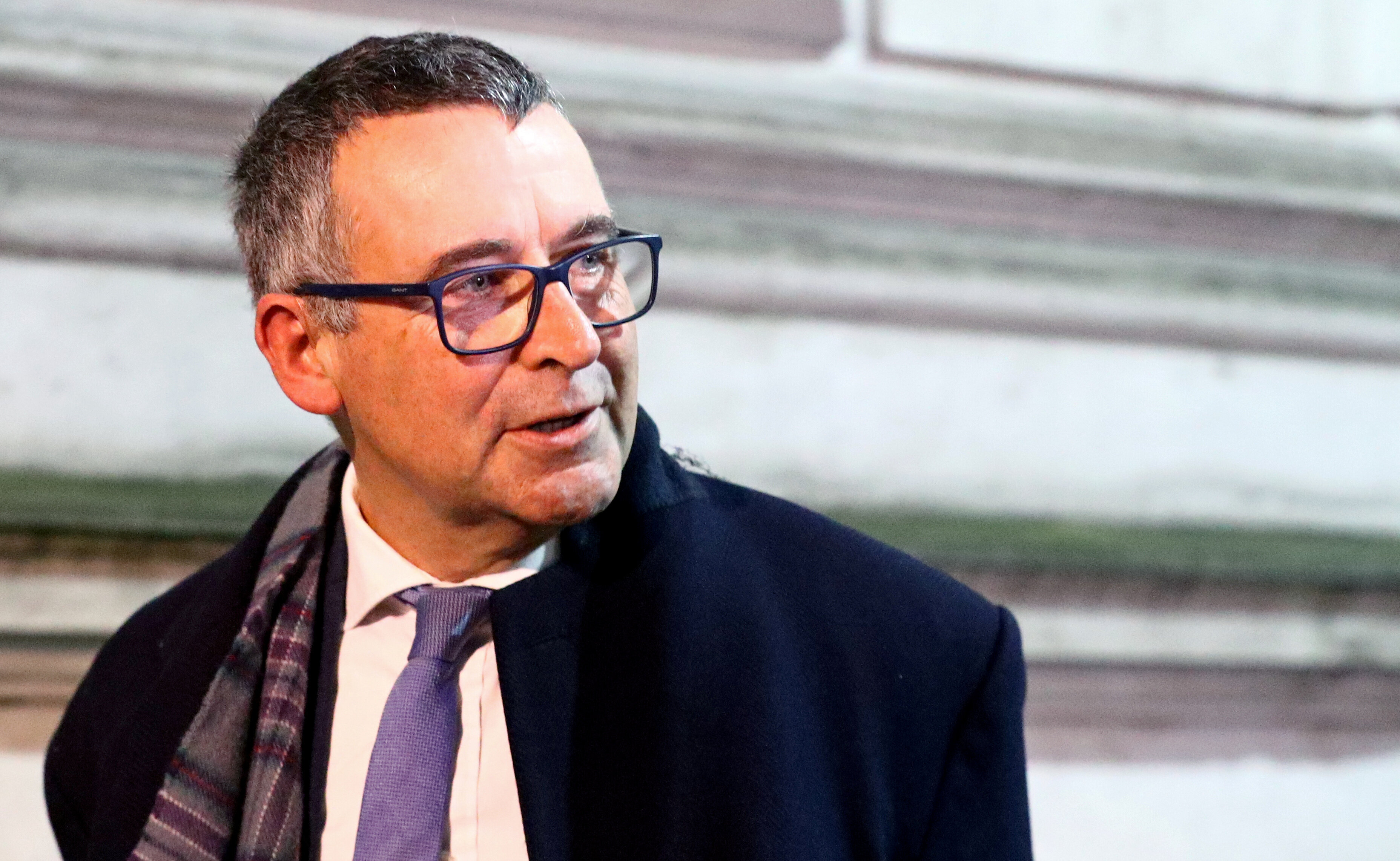
Tory MP Bernard Jenkin

Conservative MP Sir Bernard Jenkin claimed the Brexit deal was signed with the government was in a “constitutional crisis” – even though Tories actually had an 80-seat majority at the time.

Speaking to BBC Newsnight on Monday, Jenkin addressed the growing scrutiny facing the Brexit deal which has been blamed for the ongoing supply and distribution issues in the UK.

Suggesting the deal should be altered, the Tory backbencher claimed: “The Brexit deal was signed at a time when government was weak and gripped by a political and constitutional crisis, the EU took advantage.”

The deal, signed in December 2020, came just a year after prime minister Boris Johnson had secured a huge landmark majority of 80 seats in the Commons.

While there was some tension within the Tory party over how closely aligned post-Brexit Britain should be to the EU, the Conservatives all won on a manifesto to “get Brexit done”.

BBC Newsnight presenter Emily Maitlis probed: “So you think it’s a terrible deal?”

Jenkin replied: “I personally would have been happy to vote against it. The only reason I voted for it is because there didn’t seem to be an alternative.”

He then cut Maitlis off and said: “We can go on talking about the past, but the point is about the future. Is this agreement working? 

“I think even now the EU agrees that there are aspects of this deal which are not working.

“That’s a big shift. That’s a big change.”

The BBC presenter interjected: “So when the prime minister came back and he hailed it as a great deal, a breakthrough, and it was all signed by Christmas, were you sitting there and thinking, ‘I don’t know what you’re talking about, this is a terrible deal’?

“Were you thinking that all along?”

He replied: “I thought I suppose he’s got to sell the deal, but it’s not a great deal, but you know, we could live with it.”

He added that the Tories have tried to make it “work”.

Irish senator Lisa Chambers then criticised Jenkin on Newsnight and said the EU did not take advantage of the UK during the negotiations.

She continued: “It’s not unreasonable to suggest that we would expect that deal to be honoured – to the letter.

“It was signed eyes wide open, everyone knew what they were signing. I don’t think anyone could suggest we didn’t talk about it enough or that we didn’t understand all elements of it.”

Share Button

BT Boss Defends £50m ‘Fandangled’ 888 ‘Walk Me Home’ Phone Service For Women

Ian Forsyth via Getty Images

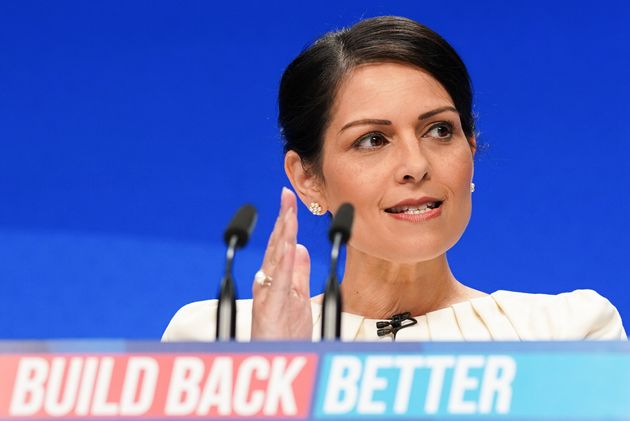
Priti Patel has backed the proposal 

The boss of BT has claimed that a phone service to walk women home late at night will act as a “small deterrent” in the problem of male violence. 

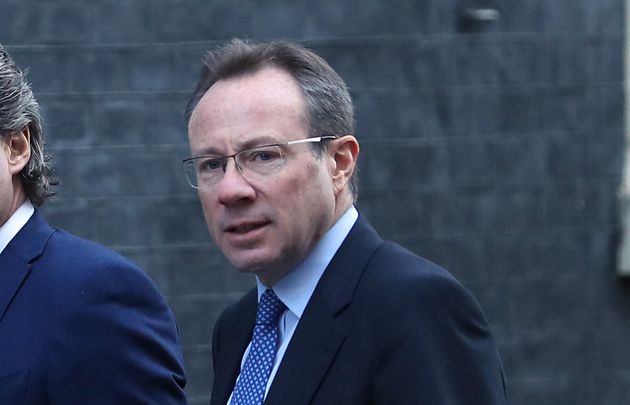
Philip Jansen, BT’s chief executive, said the service was “just one small idea” that could help.

The telecomms giant has laid out plans for a £50 million phone service aimed at protecting women in the wake of the murder of Sarah Everard.

The “Walk Me Home” app would allow users to have their journeys tracked, triggering an alert if they failed to reach home in time.

Women could also use the mobile app alongside the number 888 to summon police if they felt threatened.

However, critics say the plan is a “sticking plaster” and point out the real problem is male violence.

Home secretary Priti Patel has reportedly approved the proposal submitted last week.

When it was put to him that the service would not stop violence against women in the streets, Jansen told BBC’s Radio 4 Today programme: “No I think it’s possible that if it’s known that people are using a triple eight service, that it will form some form of small deterrent.

“If it would stop one attack, one murder, one abduction, I think it’s worth it.”

DANIEL LEAL-OLIVAS via Getty Images

 Chief executive officer of BT Philip Jansen 

When it was suggested they were putting the onus on women to protect themselves rather than making an effort to stop male violence, he replied: “I completely agree with that and this is just one small idea which I think can help.

“Let’s not forget it’s an opt-in voluntary service. Unfortunately, as I said before, the Sarah Everard case is totally horrific, but it’s rare.

“But what’s really common and is happening every single day up and down the country is individuals – often women but not always – boys and girls who are fearful, anxious and worried, and therefore having a very simple app which is nationwide easy to use I think it’s a good idea.”

Jansen said they needed to work through the details to ensure the app did not trigger any “unnecessary alerts”. 

He said Patel had been “very supportive” of the idea, adding: “I think she, like me, thinks we need to think through the idea.”

Jamie Klingler, from campaign group Reclaim These Streets, said the idea was “so impractical and doesn’t work”.

She added: “We all text people when we get home – we’ve been doing that since we got mobile phones.

“Instead of spending £50 million on this new fandangled idea – which is really an old idea – 999 needs to work for us. 

“We need to look at the problem, we need to look at male violence at the hands of men.

“It’s not about women keeping themselves safe, it’s not about me dialling a 888. 

“By the time I dial 888 that I’m being threatened, I’m dead.”

Share Button

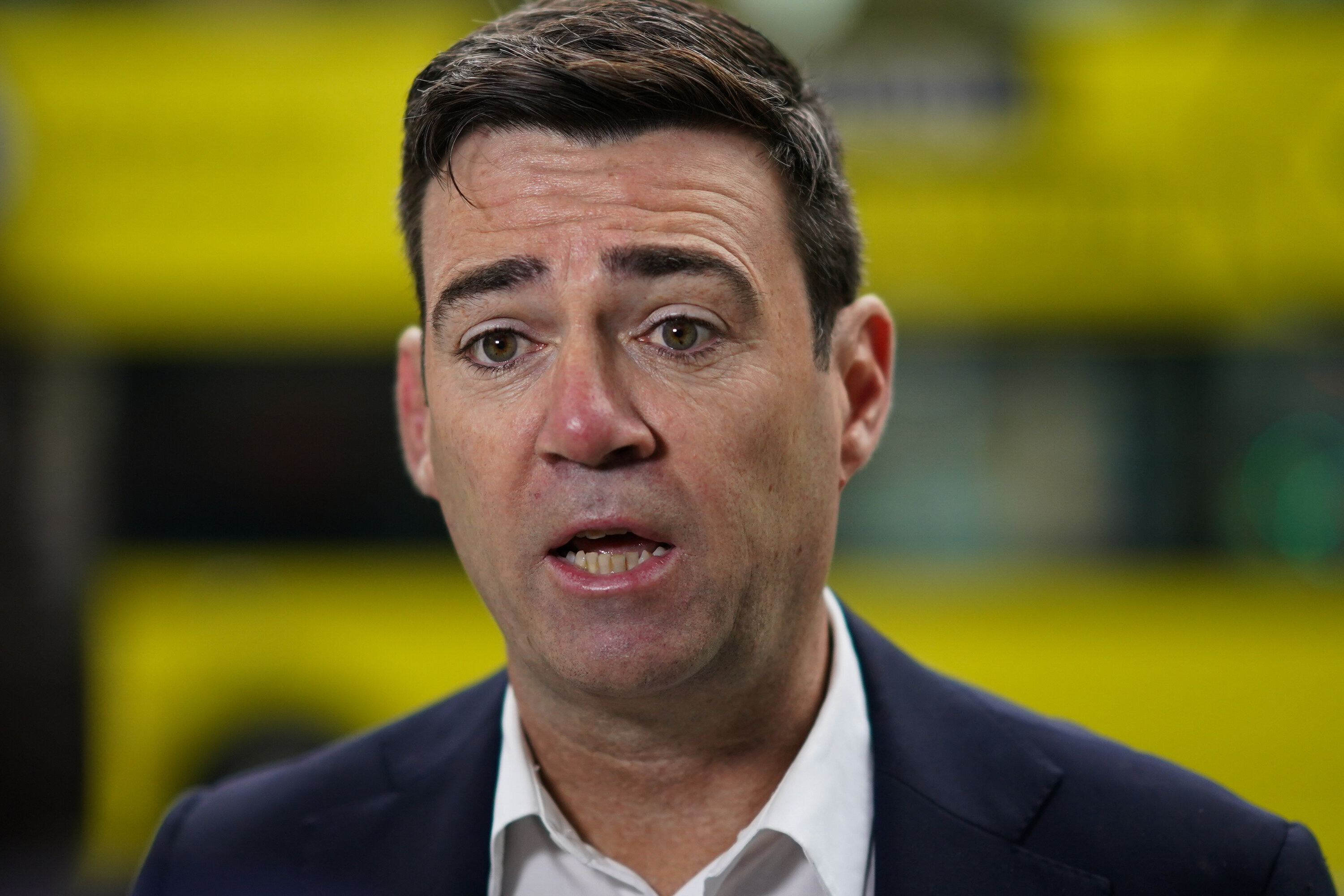
Andy Burnham Interview: Boris Johnson Is Giving The Public False Hope

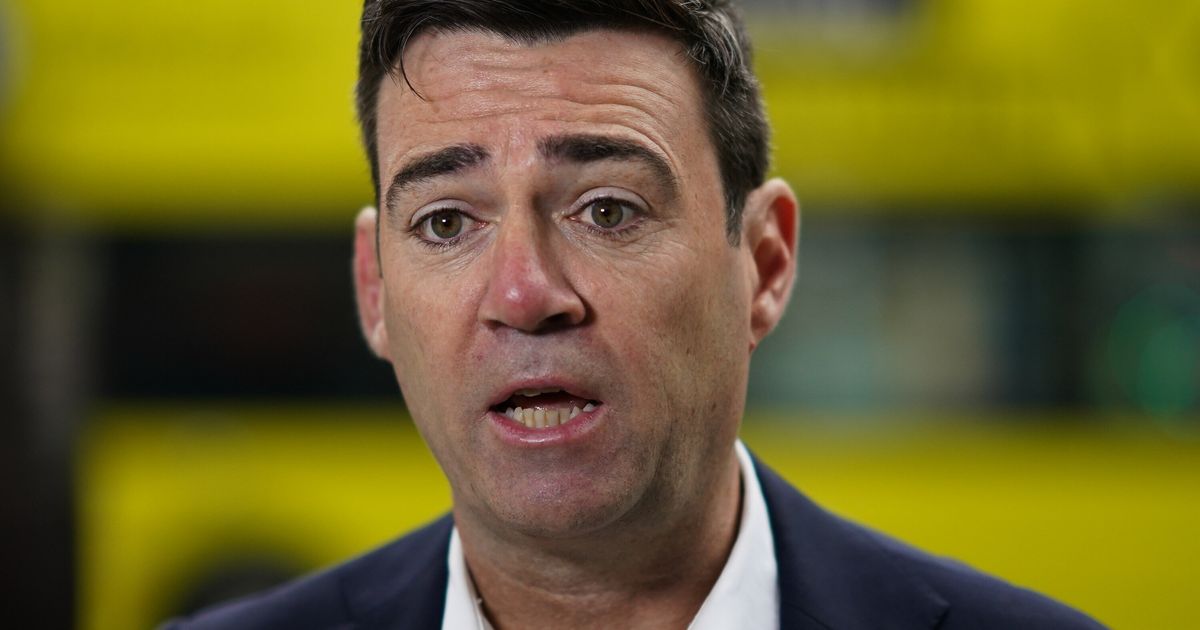
Andy Burnham has denied he undermined Keir Starmer at Labour party conference, saying he instead brought “energy” and “value” to the gathering in Brighton.

The Greater Manchester mayor had been criticised by unnamed shadow cabinet members in the press for criticising Starmer from the sidelines during the annual meeting.

But in an interview with HuffPost UK, Burnham said he did “exactly the opposite” of what his critics have accused him of.

“I heard those noises from unnamed shadow cabinet, whoever they were, but I see it as us putting energy into the conference, because I did go and talk about the things that I am doing here, which I think are interesting for people,” he said.

“The London-style public transport – that is an idea that people can really get behind, I think. 

“The way I look at it is I made a very deliberate decision, I kind of thought, ‘What would I go to conference to do’ – it will be to add value to the policy debate, and that’s exactly what I did.”

Burnham has since said he is not gunning for the Labour leadership, despite reports – which he has denied – that his allies had given Starmer 12 months to turn the party’s prospects around.

The mayor made a series of interventions as Labour’s conference kicked off in Brighton, including that his party could not afford to wait until the next general election to unveil policies. 

He also criticised the Labour leader’s decision to overhaul its leadership rules and for failing to put northern mayors high on the agenda at the gathering – suggesting it meant the party was not “serious about winning back the north of England”.

As well as attending Labour’s conference, Burnham was also spotted at the Conservatives’ annual event in Manchester, where he pressed the government to respond to his levelling up deal for the city.

In his speech, Boris Johnson said the government would “do” Northern Powerhouse Rail – a project that would connect cities and boost journey times across the north of England – which was welcomed by Burnham.

But Johnson did not specify whether there would be a new line linking Leeds to Manchester or simply upgrades to existing lines which will worry the project’s proponents.

A dominant theme of the prime minister’s speech was to pitch what he called a “radical and optimistic Conservatism” against a “tired old Labour” that was “hopelessly divided”.

Burnham branded the dividing line a “simplistic characterisation” and accused Johnson of giving the public “false hope” even as the cost of living crisis spirals and there remains long petrol queues in parts of the country.

“I think the mood of the country doesn’t necessarily reflect what I think might be more wishful thinking on the prime minister’s part,” he said, adding that the £20-a-week cut to Universal Credit would have a “big impact here”.

“I don’t think the public are feeling massively optimistic about things but they probably want to be, but they haven’t been given a reason to be.”

Asked whether Starmer instilled the kind of hope in people in the way that Johnson attempts to do, Burnham replied: “Is that what people want – do people want a sense of false hope? 

“I think people want credibility, don’t they – seriousness, credibility.

“I think this is why it’s that there’s a choice there, it feels like they are different characters in terms of what they’re all about, and I think that very much comes through the two speeches.”

Despite welcoming climate change policies from shadow chancellor Rachel Reeves and from Starmer on greater mental health provision, Burnham expressed a sense of dismay that neither party showed they were “completely connecting to the mood of the country”.

“I think people are hurting after the pandemic, I think people are looking for hope and a lift, and I don’t think they got it in terms of the detail, from either party actually, in terms of ‘This is what we think takes us from where we are as a country now to where we should be’,” he said.

He is eager for both to unveil concrete announcements in October’s spending review, which he said was a “critical” moment for the country and as the UK prepares to host the United Nations COP26 climate change summit.

Burnham said now was the time for the government to “massively accelerate on both levelling up and decarbonisation” for it to feel real to the public before the next general election in 2023 or 2024.

“And certainly if we don’t have a massive gear change particularly on net zero, we’re not going to get there, and we’re not going to have anything to say on that at the COP,” he said.

“Both conferences were light on that to be honest, I mean this is a sort of window that’s kind of closing a little bit now.

“I’m not making party political points, we’re just making a sort of broader point about is the current political scene engaging enough with the current seriousness of that situation – I’ll be honest I didn’t hear enough of that at either party conference.”

Share Button

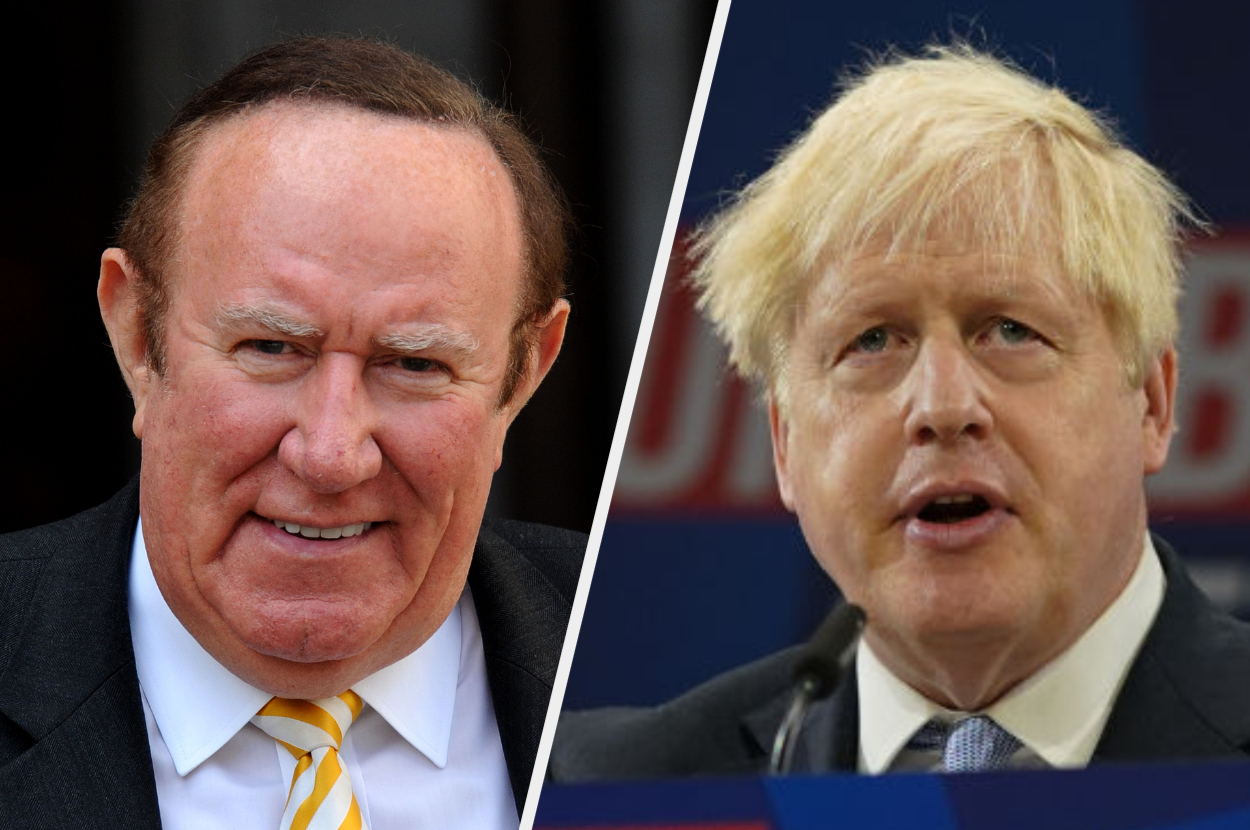
Andrew Neil Slams Boris Johnson On His Strategy For Fixing The UK’s Crises

Boris Johnson has been criticised by veteran broadcaster and Spectator chairman Andrew Neil for his “policy-lite” keynote speech at the Tory Party conference.

Speaking to LBC on Thursday, Neil said the public had an “expectation we’d get some policy now” as the pandemic has subsided and as the UK is being plunged into crisis after crisis.

He continued: “You can have more alliteration, as Mr Johnson had, than a West Coast poet from the 60s on LSD.

“That’s all fine. But we’re a country with major problems and we need to know the government’s solution to these problems and on that Mr Johnson had not a jot.”

Neil pointed out: “This winter we’re going into a serious cost of living crisis which will hit the poorest most of all, we don’t know when the shortages on the supermarket shelves or the petrol forecourts will end.

“We don’t know what the policy is on social care, we don’t know what the policy is on the NHS, other than to bung it more money, and we don’t know what ‘levelling up’ means.”

PA/Getty

Andrew Neil hit out at Boris Johnson after his speech on Wednesday

He said this was the first Conservative conference in five years when the party was not in some form of crisis – now that the divisions over Brexit have subsided and the pandemic has abated – meaning Johnson was in “world king” mode during his speech.

Neil agreed that Downing Street’s new promise to ‘level up’ the UK “is a very good idea,” especially as the UK needs more development in the Midlands and the north – but he added that this is an idea “without any flesh” at the moment.

The political pundit continued: “We have a right to know what the policies are, and to know if we have these been implemented yet.”

The former chairman of GB News speculated that Johnson’s popularity with voters comes down to his sunny optimism and that his rhetoric-heavy speech on Wednesday showed his priority is “bolstering the red wall”, rather than addressing the grim reality of the upcoming winter.

Share Button

Boris Johnson’s Weird Running Outfit Impressed Basically Nobody

TOBY MELVILLE via REUTERS

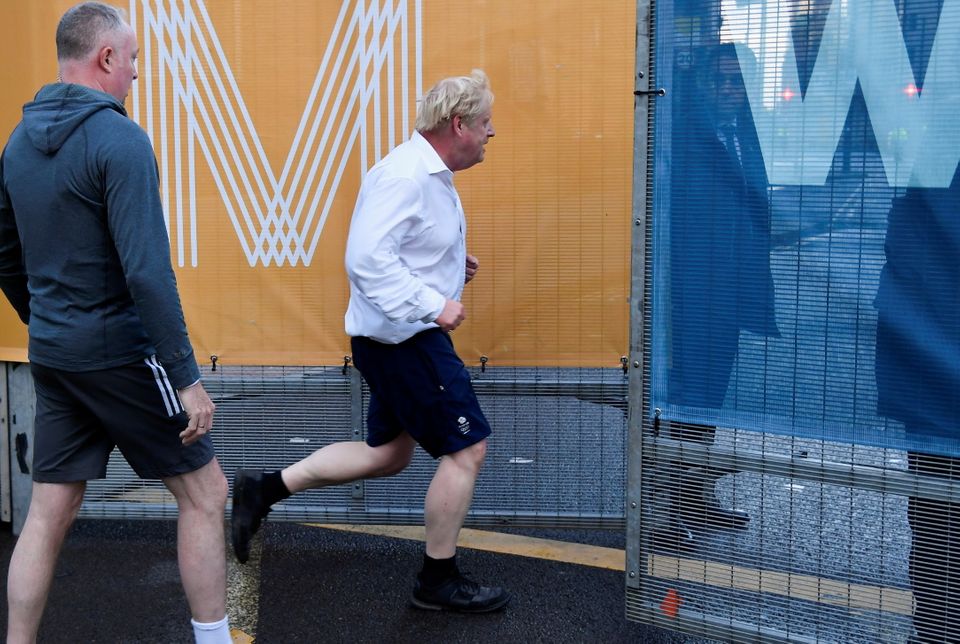
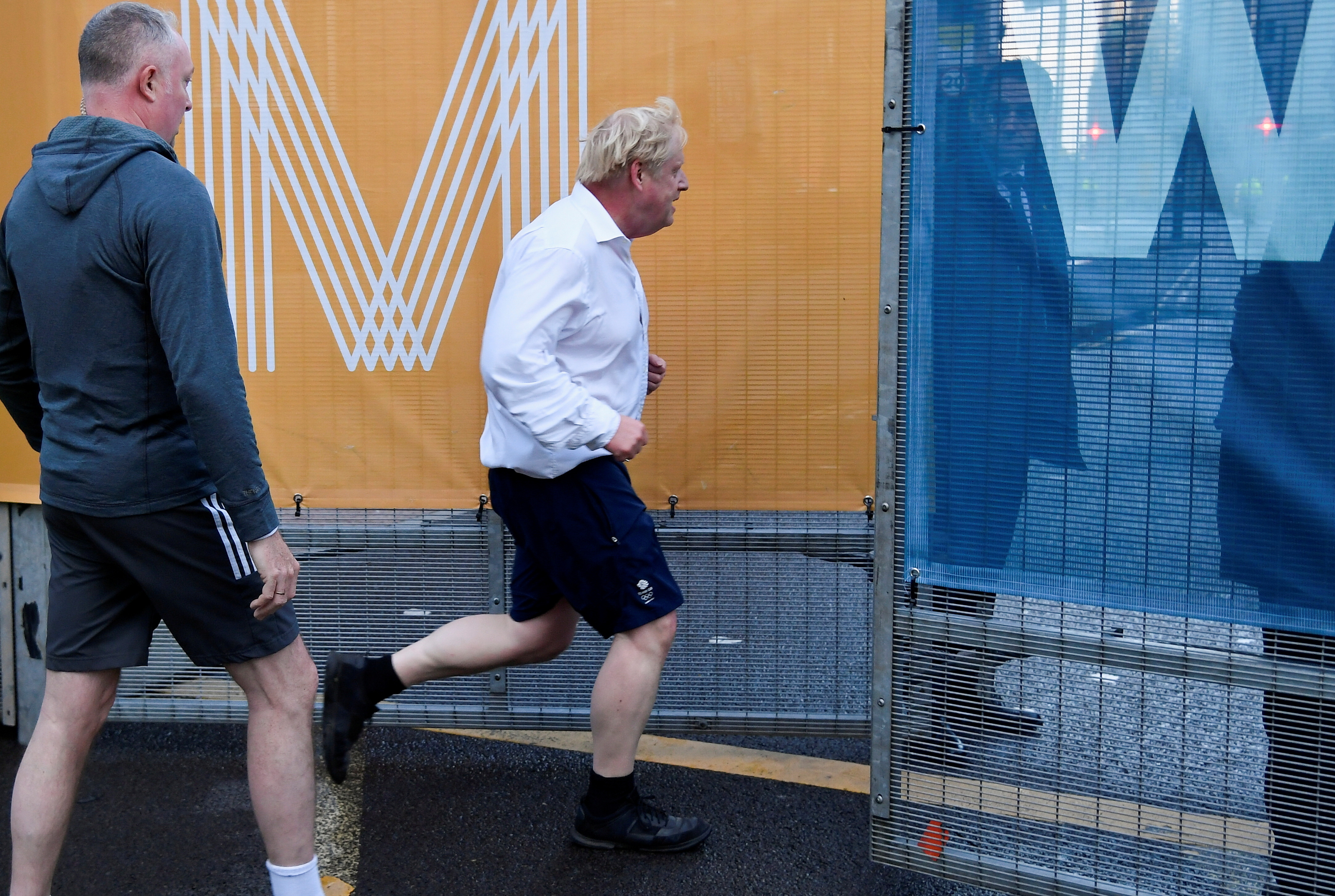
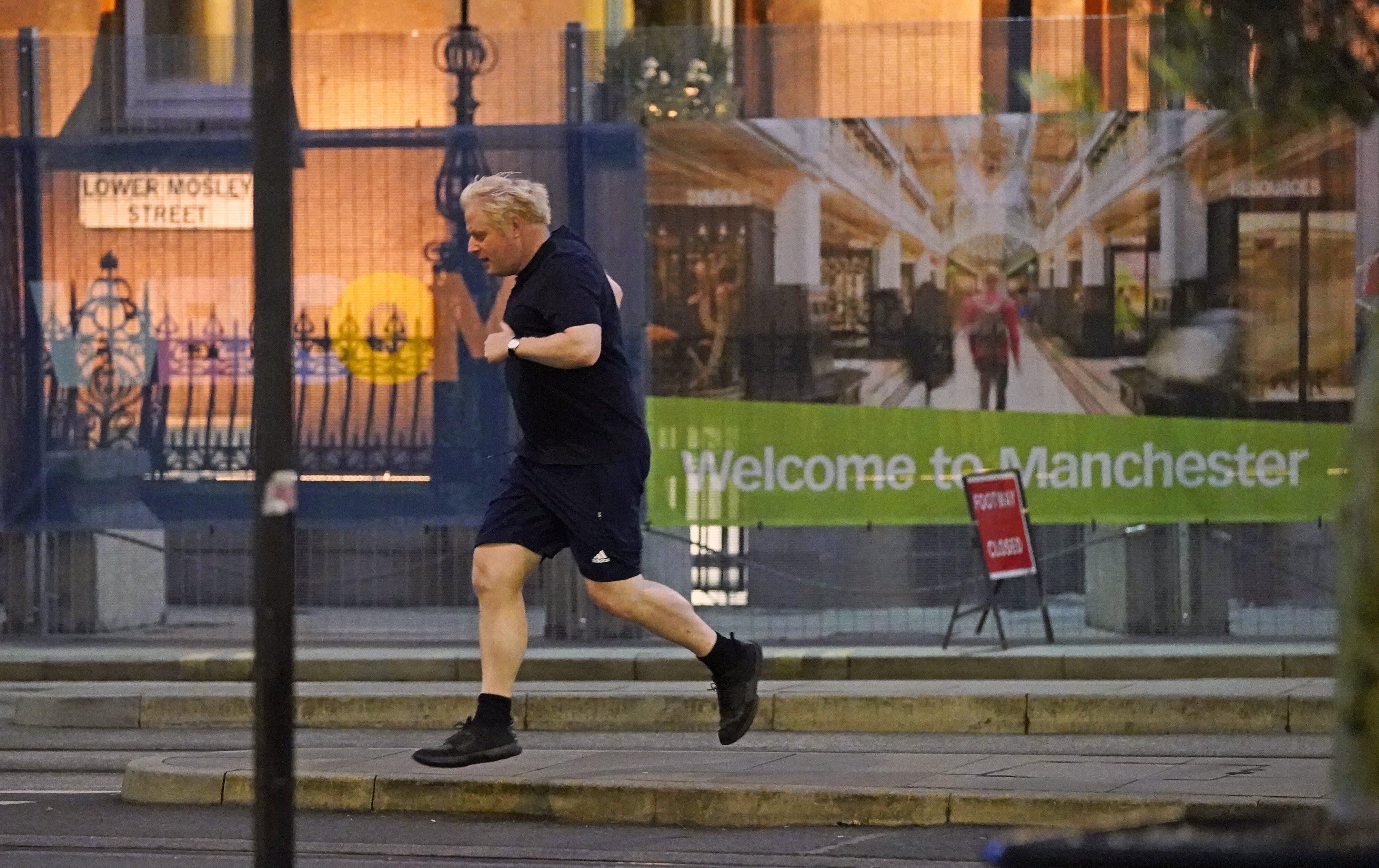
Boris Johnson jogs in the morning before the annual Conservative Party conference in Manchester

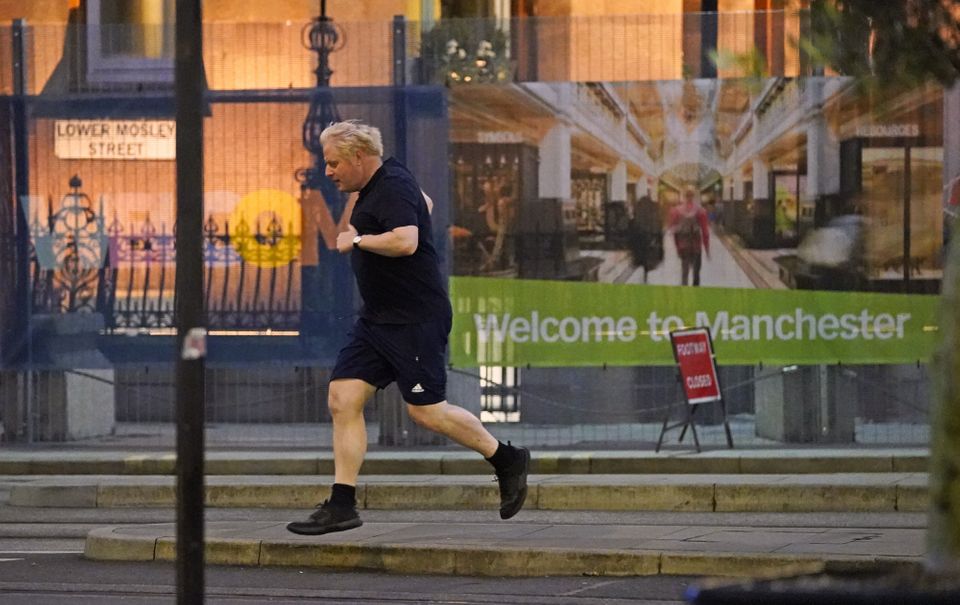
Boris Johnson caused a stir when he was pictured jogging in Manchester wearing shorts, formal shoes and a white shirt on Sunday.

The prime minister is in the city along with the rest of the Conservative Party to attend the annual Tory conference.

While Johnson has been spotted out running in the past, this was the first time he’s mixed up his exercise wear with business clothes – he reverted back to normal sports clothes on Monday, but the blunder has not been forgotten.

Chancellor Rishi Sunak addressed the outfit on Times Radio on Monday and said: “I have not spoken to him about that, I have only seen the photo… I could not pull that off the way the Prime Minister does.”

Not everyone was as complimentary as Sunak, though.

Broadcaster Ryan Bailey joked that he was worried “I don’t dress formally enough when I go running”, while football coach Gary Neville tweeted: “Surely a Tory donor can get him some running gear.”

Satirical Twitter account Newsthump also tweeted: “Fortunately, the prime minister avoided a terrible fashion faux pas by remembering his jogging cufflinks.”

Others noticed that this is a trend with Johnson, as he has previously been spotted wearing shirts during runs.

The image was also brutally edited by photoshop account Cold War Steve to accompany the prime minister’s controversy on the BBC’s Andrew Marr Show when he said: “I’ve given you the most important metric – never mind life expectancy, never mind cancer outcomes – look at wage growth.”

It was noted as a distraction technique too, as a fuel crisis and HGV driver shortage continues to grip the nation.

Others even compared to the cautionary tale of The Emperor’s New Clothes.

However, by Monday Johnson seemed to recognise that he had not won over any fans with his latest stunt and returned to normal jogging wear.

Stefan Rousseau – PA Images via Getty Images

Prime Minister Boris Johnson goes for a run ahead on Monday

Share Button

Rishi Sunak Defends ‘Reasonable’ £20-A-Week Universal Credit Cut

Christopher Furlong via Getty Images

Rishi Sunak also warned there could be shortages in the run-up to Christmas caused by supply chain challenges.

Rishi Sunak has denied he is being “dogmatic” by sticking to the impending cut to Universal Credit, arguing that the government is “not done supporting people”.

The chancellor is under pressure to reverse his decision to end the £20-a-week uplift to Universal Credit as people struggle with higher energy bills and higher prices for goods.

But Sunak said it was “reasonable” that the benefit uplift was coming to its “natural end” and argued that it was only intended as a temporary measure.

He told BBC Radio 4: “We put in place a lot of things during the acute phase of coronavirus that were necessarily temporary – there’s things that are appropriate when you’re dealing with a hopefully once-in-a-century pandemic, and it’s reasonable that those things will come to a natural end.

“Whether it’s universal credit or indeed furlough, these things are coming to their end, but we’re not done supporting people.

“I don’t think anyone, given the support we’ve provided over the last year and a half, could accuse me or the government of being dogmatic or not wanting to support people, we just have a view about the best way to do that.”

The chancellor will give a speech to Tory party conference today in which he will unveil a £500m package to help people come off furlough and get back into work as the country recovers from the coronavirus pandemic.

Local councils will also be given £500m to support the most vulnerable households throughout the winter months. 

The Conservatives have already begun hammering the message that wages are rising as the economy recovers, but already there are warnings that this could soon be outstripped by inflation. 

Senior Conservative Jake Berry warned that families were being “kept up at night” by the higher costs of living and as the cut to Universal Credit approaches.

Berry, who chairs the Northern Research Group of MPs, said removing the £1,000-a-year uplift was going to be “really difficult for people”.

And he said that while wages were increasing in some sectors, they were not in all and prices for commodities were going up.

“If wages are going up at the same time as prices are going up – and the chancellor said yesterday inflation kept him up at night, I’m sure it keeps loads of families up at night who are managing their budget – then it will only work if the salary for all jobs goes up,” he said.

“And what we’re hearing about is certain sectors – transport and logistics, people working in the hospitality sector – their wages are going up but not necessarily everyone else.

“If your wage isn’t going up at the same time as prices are going up, you’re getting poorer aren’t you?”

The backdrop to Tory party conference has been set by rising food and energy prices and a high demand for petrol that has resulted in long queues at stations particularly in London and the south east.

A shortage in HGV lorry drivers has led to distribution problems with fuel and could also cause food supply issues this winter.

Sunak admitted there could be food shortages this Christmas and said that while the government would do its best to “mitigate” the problem, he could not “wave a magic wand” and make the problems disappear.

“It’s reasonable that people expect us to do what we can,” he told the BBC.

“But we can’t wave a magic wand and make global supply chain challenges disappear overnight.

“With regards to butchers, my understanding is that those are indeed on the shortage occupation list that we already have.”

Share Button