Ben Birchall – PA Images via Getty ImagesCarolyn Harris
Keir Starmer’s parliamentary aide has quit amid claims that she spread groundless rumours about fellow MPs’ private lives.
Carolyn Harris resigned from her post of parliamentary private secretary (PPS) after a formal complaint was made by a senior MP about her conduct, HuffPost UK has been told.
The departure of the Swansea East MP, who is also deputy leader of the Welsh Labour Party, was seen as the latest fallout from a bitter briefing war over Starmer’s shadow cabinet reshuffle and his decision to “sack” deputy leader Angela Rayner as party chair and campaigns chief.
In a statement issued by Starmer’s office, she said: “It has been the proudest moment of my career to co-chair the campaign that saw Keir Starmer elected as Labour leader, and to serve as his PPS for the past year.
“Stepping back from this role is the right thing at this moment, coming as it does after some trying personal times and an ever-increasing workload as deputy leader of Welsh Labour. I have enjoyed every minute, and look forward to supporting Keir the best way I can in the months ahead.”
It is understood that Harris, who has made no secret of her combative approach to the leader’s critics within the party, sparked a backlash with recent briefings about shadow cabinet ministers’ alleged disloyalty and about MPs’ personal lives.
The Times, which first broke the news that she was stepping down, alleged that Harris had spread “salacious rumours” about colleagues.
One frontbencher told HuffPost UK: “She’s been stirring it about shadow cabinet members, among the PLP, for weeks. She’s been spreading it about in the [Commons] tea room, everywhere. And she’s finally been caught red handed this weekend.”
“The job of PPS is to be the ears and eyes of the leader, not the mouth,” one senior MP said. “She was playing too high a profile role, throwing her weight around, interfering rather than feeding back what the PLP felt. Listen, assess, report, that’s the job.”
Another said: “It felt like Keir wasn’t fully aware of what she was up to, or at least I hope he wasn’t. It would be much worse if he sanctioned it.”
Starmer is now on the hunt for a new PPS. “We need to stop thinking of PPSs as some new intaker, and maybe appoint someone who’s been around a bit,” one backbencher said. “Amiable, clubbable, friends with everybody, that’s what you want.”
Relations between the Labour leader and his deputy soured badly on Saturday night when she learned from the Sunday Times of a plan to fire her from her campaigns role.
At one point, Rayner was tempted to go public with her anger at being apparently made a scapegoat for Labour’s poor local elections performance in parts of England.
Starmer used the Queen’s Speech debate in the Commons to joke about his recent showdown with Rayner over her move to a new role, saying a “black belt” in martial arts would be useful for “the next shadow cabinet meeting”.
Boris Johnson jibed that Rayner, whose authority in the party was enhanced by several new roles including shadow first secretary of state, was a “lioness” who was likely to become hungrier “the more titles he feeds her”.
Sitting opposite, she gestured that she had her eyes on the Tory leader, and later wrote on Twitter: “The only title I’m hungry for, Boris Johnson, is Deputy Prime Minister.”
Most of the results are now in and the parties are now conducting their post-mortems of the “super Thursday” local elections.
The Tories were the big winners in England, gaining control of 13 councils and adding 240 councillors, at the time of writing when 140 of 143 councils had declared.
Labour meanwhile had a terrible election, losing control of eight councils as the party shed 318 councillors, prompting Keir Starmer to embark on a shadow cabinet reshuffle.
But with elections of metro mayors across England, and for the Scottish and Welsh parliaments also taking place, the full picture is more complex.
With the help of YouGov’s Patrick English and Tory polling expert Lord Hayward, here are the five key things you need to know:
1. Labour turmoil in the ‘red wall’
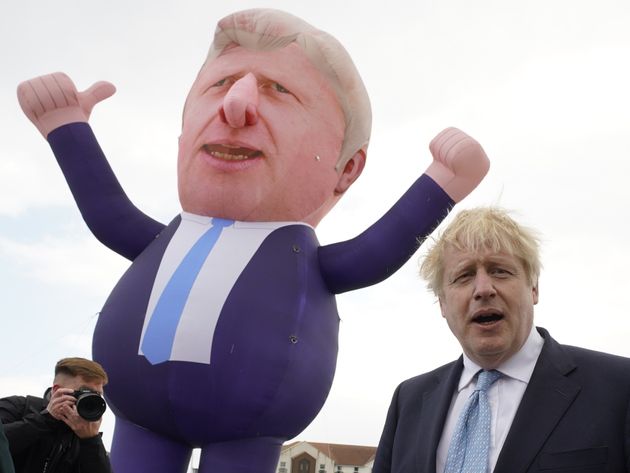
Owen Humphreys – PA Images via Getty ImagesBoris Johnson in front of a giant inflatable of himself as he meets and newly elected Tory MP Jill Mortimer at Jacksons Wharf in Hartlepool
There were bitter recriminations in Labour after it lost a slew of council seats and the crunch by-election in the so-called “red wall” seat of Hartlepool, which the party had held since the constituency’s inception in the 1970s.
Labour also lost control Durham, the county of the miners’ gala and a previous bastion of support for the party, and endured “staggeringly bad” losses in the likes of Rotherham, according to Hayward.
English says these losses to the Tories in working class Leave-voting areas are a continuation of the realignment of British politics that followed the Brexit vote in 2016.
And they are a stinging indictment of Starmer’s strategy to win back ex-Labour Brexit supporters who deserted the party for the Tories en masse in the 2019 general election and handed Boris Johnson a huge parliamentary majority.
The Labour leader is now facing an internal battle for Labour’s future, as he prepares to embark on a shadow cabinet reshuffle to refresh his top team amid a backlash over the sacking of his deputy Angela Rayner from her party chair job.
Plenty are now also asking whether Labour can ever recover, or whether the party is finished as an electoral force.
2. Glimmers of hope?
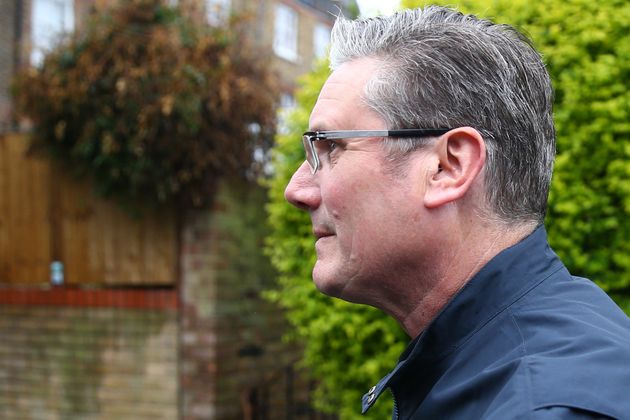
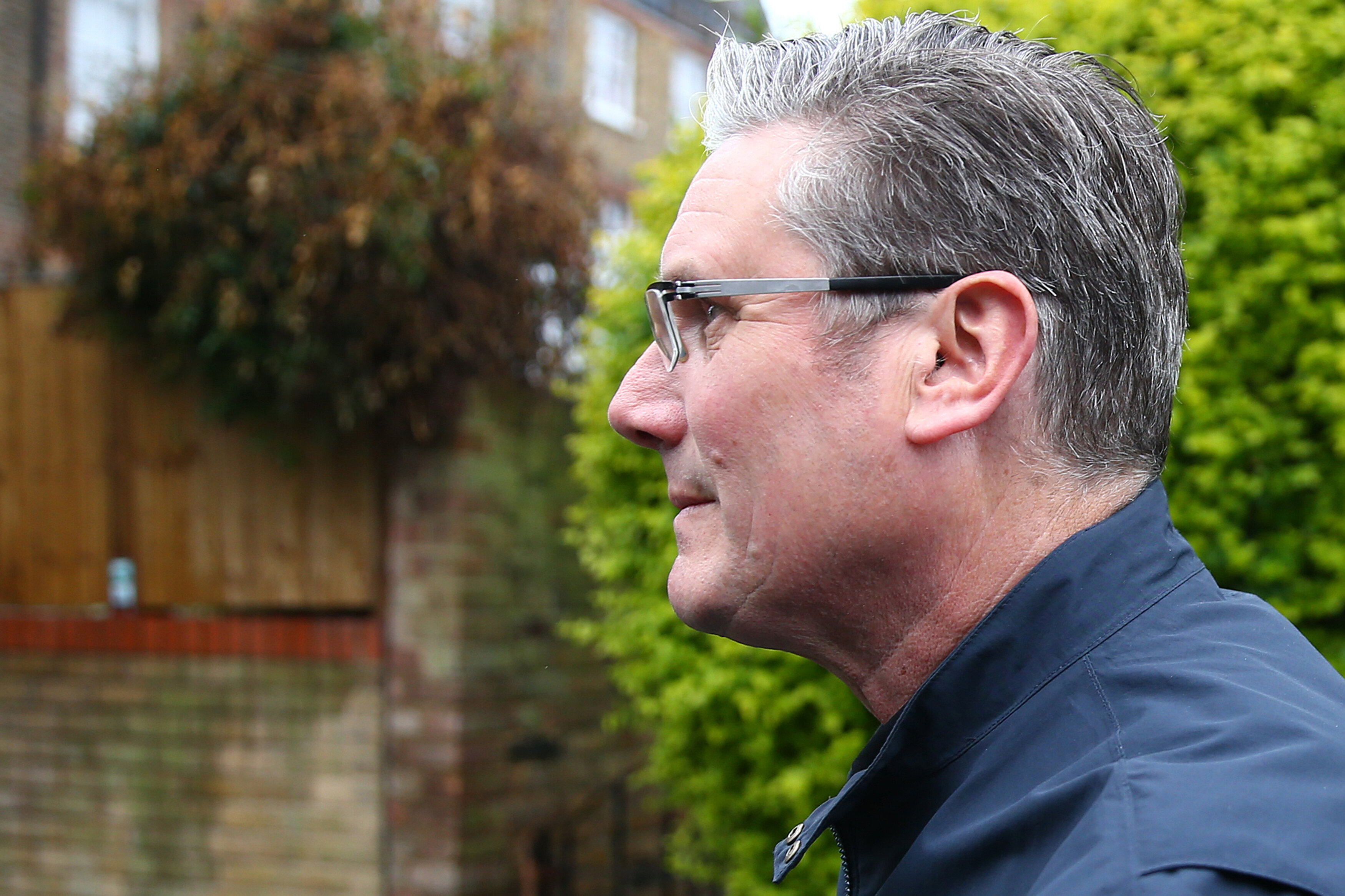
Hollie Adams via Getty ImagesStarmer leaves home on Saturday morning
There were small glimmers of hope for Labour, with the party performing well in Wales where it secured an effective majority and “stemmed the tide of Leave voters flooding away to the Conservatives”, according to English.
The party also did well in so-called “blue wall” traditionally Tory seats, but which voted Remain in 2016 and are now beginning to turn to Labour.
Starmer is likely to be pleased with Labour taking the West of England and Cambridgeshire and Peterborough mayoralties.
And there were signs of a “Brighton effect” stretching out across the south coast as Labour took a swathe of seats on Worthing council, according to Hayward.
Starmer’s party even won a county council seat from the Tories in Chipping Norton, in the affluent Cotswold area where former prime minister David Cameron lives.
Labour can at least begin making up ground on the Tories thanks to these types of university-educated, Remain voters, as voters continue to turn British politics on its head.
But “in terms of the mathematics there are not enough blue wall areas to gain a majority in a general election, absolutely not”, English says.
“If Keir Starmer is looking for silver linings, he got beaten 5-2,” the pollster adds.
“Okay, you got hammered, but you scored two goals.”
3. Green surge
💚 We’re seeing huge swings to the Greens all over the country.
🌍 It’s time for new and bold ideas. It’s time for change.
Labour supporters may want to look away now, because they have another problem with the Greens enjoying a good day across England.
The party has 14 seats on Bristol council, with the city still counting remaining areas, helped push Sheffield into no overall control following the long-running tree-felling row, and has done well in the suburban home counties.
Hayward says this is “a problem” for Labour as the Greens are “showing signs of being able to do well in towns and cities as the alternative [to Labour]”.
English meanwhile talks of a “pincer movement” with Labour losing seats to both the Greens and the Liberal Democrats.
But the Greens are also appealing to different kinds of voters, and have taken more seats from the Tories than Labour, according to English.
“They are winning seats off everyone all over the country, including in places where Labour couldn’t even dream of winning,” he says.
“And they are building these coalitions of voters who are very different types.
“It would be really daft to think that they are just young, hippy, liberal voters and old tree huggers who vote for them, it’s not.”
4. High profile Tory mayors dig in
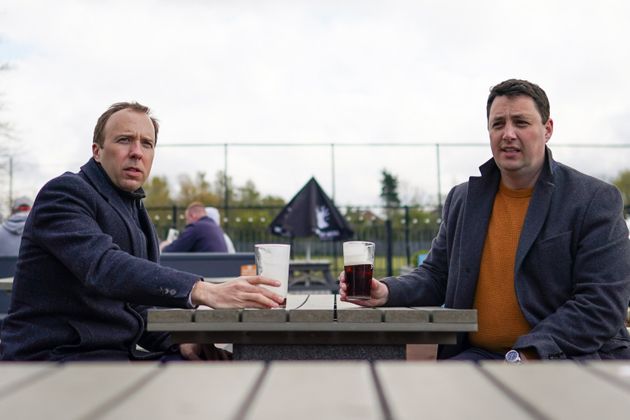
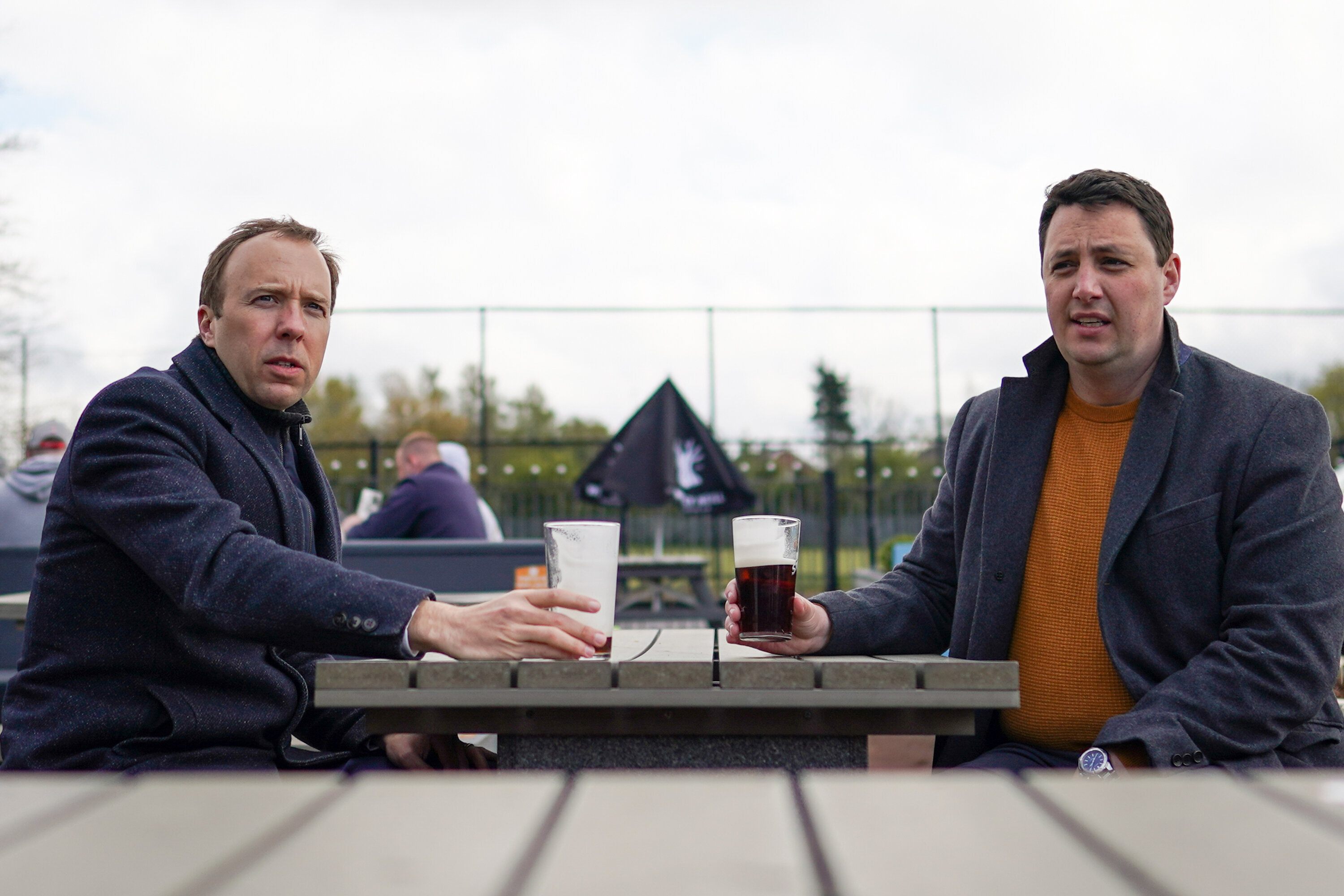
Ian Forsyth via Getty ImagesRe-elected Tees Valley mayor Ben Houchen with health secretary Matt Hancock
While Labour looked set to win 11 of the 13 mayoralties being contested in cities and metropolitan regions across England, the party’s heavy defeats in former strongholds in the West Midlands and Tees Valley provided more evidence of the Brexit alignment.
Andy Street was re-elected in the West Midlands with more than 48% of the vote, embarrassing Labour challenger Liam Byrne, who suggested he could win easily.
And Ben Houchen’s thumping victory in Tees Valley with 73% of the vote inspired Johnson to reportedly leave a voice note for the current toast of the Tory Party saying: “You’re just showing off now with that majority”.
English says: “Is it because the Conservatives are flooding money into these places so the mayors can campaign on it? “Or you could flip it around, and the Conservatives would say that’s just evidence the mayors have done a bloody good job, securing money for their areas.
“There are general incumbency effects as well – once you’ve got a mayor in there and they have done a good job, they are going to get rewarded.”
Perhaps the most significant result of them all was north of the border, where Nicola Sturgeon’s SNP fell just short of the overall majority that would have made her calls for a second independence referendum even more difficult to ignore.
However, there is a majority in Holyrood for another referendum, thanks to the pro-independence Greens picking up eight seats to add to the SNP’s 64.
In response, there are signs that the UK government’s position on a referendum may be softening slightly.
Cabinet Office minister Michael Gove made clear on Sunday that now was not the time for an independence vote, with the UK recovering from coronavirus.
But he pointedly refused to say the Westminster government would go to the Supreme Court to block referendum legislation from Holyrood, and stopped short of an outright rejection of another vote in an interview with ITV Scotland.
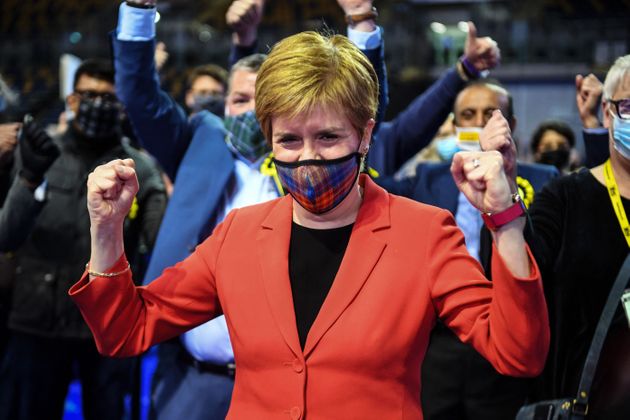
ANDY BUCHANAN via Getty ImagesScotland’s First Minister and leader of the Scottish National Party (SNP), Nicola Sturgeon reacts after being declared the winner of the Glasgow Southside seat
Nicola Sturgeon hailed the SNP’s “record-breaking” victory in the Holyrood elections as she warned Boris Johnson not to block a second independence referendum.
The first minister said her party had secured an “emphatic” win and Johnson’s continued resistance to a second vote would be “picking a fight with the democratic wishes of the Scottish people”.
It came as the SNP was on course to win a fourth consecutive term in control of the Scottish Parliament. Though an overall majority looked unlikely for Sturgeon, she was set to continue governing with the support of the pro-independence Scottish Greens.
She said: “It looks as though it is beyond any doubt that there will be a pro-independence majority in the Scottish Parliament and by any normal standard of democracy that majority should have the commitments it made to the people of Scotland honoured.
“So to any Westminster politician that tries to stand in the way of that, I say two things: firstly, you are not picking a fight with the SNP you are picking a fight with the democratic wishes of the Scottish people.
“And secondly, you will not succeed. The only people who can decide the future of Scotland are the Scottish people and no Westminster politician can or should stand in the way of that.”
The SNP failed to capture Aberdeenshire West from the Tories and the key target seat of Dunbarton, after Scottish Labour deputy leader Jackie Bailie hung on.
But the party also made key gains, such as Edinburgh Central, which was captured by former Westminster leader Angus Robertson.
The SNP leader said: “We have won more constituency seats than we did in the last election, we have won a higher share of the vote in the constituency ballot than in 2016, and actually we have won more votes and a higher share of the vote than any party in the history of devolution.
“By any standard this is a historic achievement, a quite extraordinary achievement for the SNP – our vote share is up, the vote share of the other main parties is down.
“So the SNP has won this election emphatically, the message we took to the people has been endorsed, and I now intend to get back to work to deliver on all of what we put to the Scottish people.”
The SNP has pledged to hold a second independence referendum, with Sturgeon having already said she wants this vote to be held before the end of 2023.
The prime minister has however insisted it would be “irresponsible and reckless” to have such a ballot as Britain emerges from the coronavirus crisis.


Dan KitwoodPAPrime Minister Boris Johnson
He told the the Daily Telegraph his impression was that Scottish voters had “moved away from the idea of a referendum”.
And when asked what he would do if Sturgeon attempted to hold one without a Section 30 order from Westminster granting permission, Johnson insisted there was “no case now for such a thing”.
Meanwhile Lorna Slater, the Scottish Greens co-leader, told BBC Scotland: “Certainly we can see that with the Scottish Greens we clearly have a pro-independence majority in the Scottish Parliament, and that is something we are very excited about.
“We think it is a clear mandate to at least go back to the Scottish people and ask the question, to have an actual conversation about what kind of country we want to be.”
Her comments came as the regional list seats started to be declared, with the Scottish Greens picking up a seat in Central Scotland for the first time ever.
Earlier on in the day, the Tories had held the key seats of both Aberdeenshire West and Galloway and West Dumfries.
And while Sturgeon’s party made other gains in the constituency votes at Holyrood on Friday, their success in gaining Ayr and East Lothian, from the Tories and Labour respectively, will see them lose MSPs from the South of Scotland regional list.
The coronavirus pandemic meant traditional overnight counts were abandoned after Thursday’s Scottish Parliament election, with counting instead taking place on Friday and Saturday.
Sturgeon, who comfortably defeated Scottish Labour leader Anas Sarwar to claim Glasgow Southside, said afterwards her initial focus would be “to get back to work to steer the country through the crisis and into recovery”.
She added: “That remains the case. But once the crisis is over, and if there is a majority in the parliament for an independence referendum, people should have the right to choose our future. Scotland’s future should always be in Scotland’s hands.”
Meanwhile, former first minister Alex Salmond conceded it is unlikely his new Alba Party will take seats in this election.
Gogglebox siblings Sophie and Pete Sandiford got the shock of their lives when they called Boris Johnson’s mobile number on this week’s episode of the Channel 4 show.
Last week it was revealed that the PM’s personal number could be found on the bottom of an old press release dating back to when he was MP for Henley and a shadow minister in 2006.
After watching a news report that revealed callers would now get an automated message saying that the phone was switched off, Sophie tried it out for herself.
But she wasn’t prepared when someone actually answered the call.
Cue Sophie hilariously lobbing the phone at her equally panicked brother.
After hanging up, Sophie blocked the number to prevent being called back – as Pete joked that security service MI5 would soon be knocking on their door.
Twitter was very much amused…
pete and sophie getting through to boris’s phone 😭😭 i’m wheezing #gogglebox
As the results came in, the pattern was clear and, for Labour activists, painfully familiar.
Keir Starmer, the man elected to stop the bleed in the party’s so-called red wall, was instead presiding over yet more red ruin.
Boris Johnson’s Conservatives had not only captured the totemic Westminster seat of Hartlepool – a Labour constituency since its inception – but a slew of English council seats from County Durham to Dudley were turning from red to blue.
Despite a scramble to manage expectations by Labour HQ, there could be no glossing over the fact these were terrible results, with Starmer rejected by much of its previous working-class base.
Starmer did not quell speculation he will embark on a reshuffle in response to the drubbing, telling reporters on Friday his party has “lost the trust of working people” and he will do “whatever it takes” to restore it.
So, who might he look to in order to shake things up? Here are some of the options.
On The Way Up
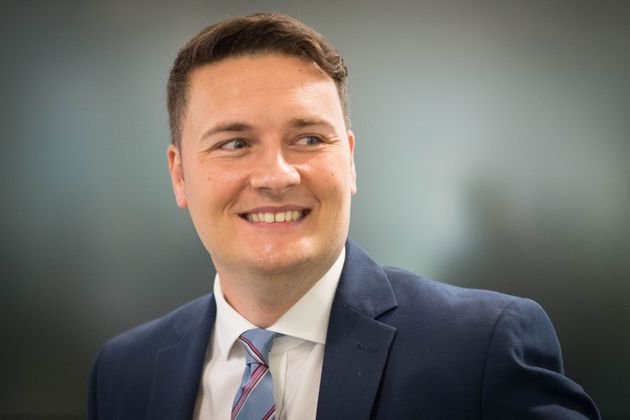
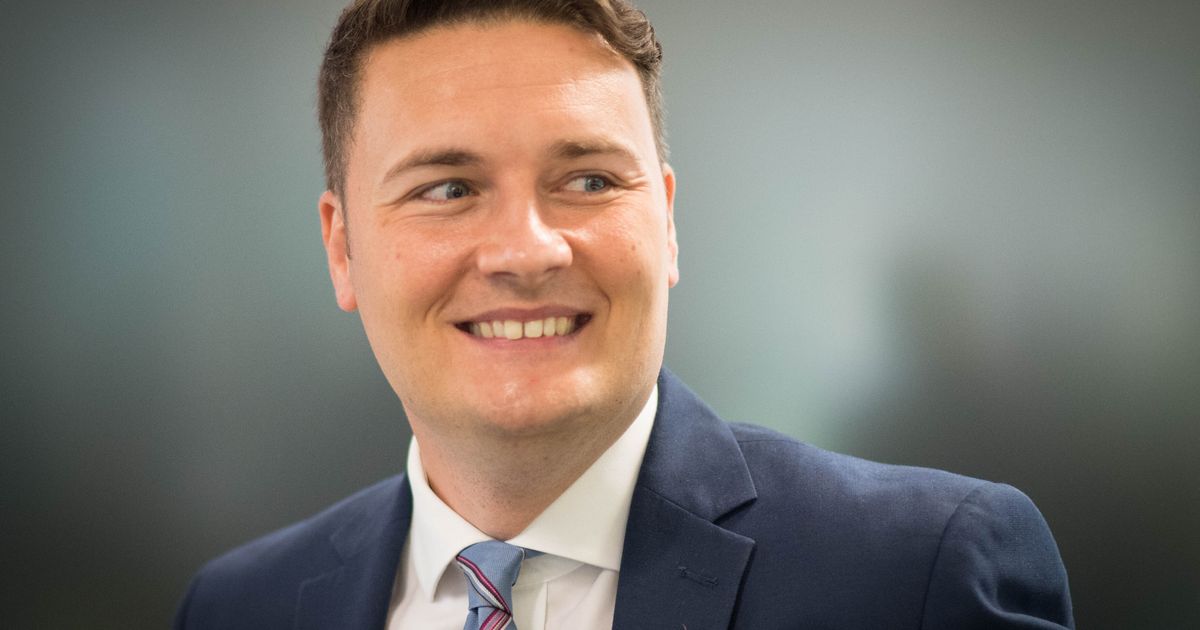
Stefan Rousseau – PA Images via Getty ImagesLabour’s shadow schools minister Wes Streeting could be in line for a promotion
Wes Streeting
Viewed as a rising star hungry to do battle with the Tory benches, the shadow schools minister grew up in a council flat in Stepney and went on to study at Cambridge.
A moderate and vocal critic of Jeremy Corbyn’s leadership, Streeting has become a close ally of Starmer’s in recent months, repeatedly taking to the airwaves to defend the party’s new direction.
As the country recovers from coronavirus, Labour may see the Tories as vulnerable on social mobility and the widening opportunity gap between rich and poor.
It is for this reason, many tip Streeting to take the education brief from Kate Green, who some feel has failed to land blows on Gavin Williamson despite the A-Levels fiasco and a series of cuts.
“Wes would be Gavin Williamson’s worst nightmare,” said one Labour source.
It is also possible, however, that Streeting’s confident media performances could be placed in a more strategic role, such as shadowing Michael Gove’s Cabinet Office role.
His previous support for the People’s Vote campaign could hamper his chances, however, with Starmer keen to draw a line under Brexit.
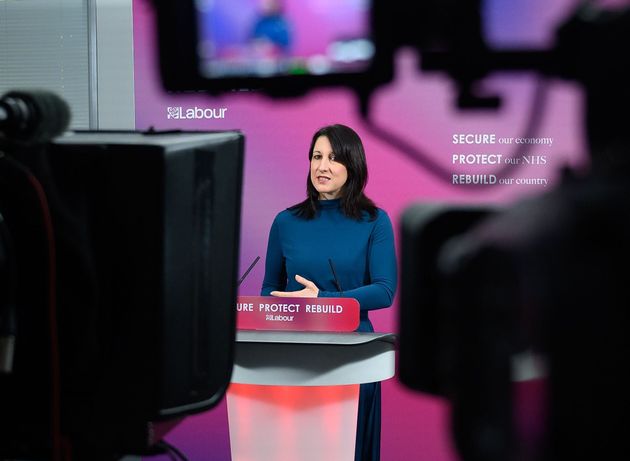
LEON NEAL via Getty ImagesRachel Reeves, Shadow Chancellor of the Duchy of Lancaster, who spearheaded the Tory sleaze drive is tipped for a big job
Rachel Reeves
Widely tipped to replace Anneliese Dodds as shadow chancellor, Leeds West MP Reeves is one of the few shadow ministers with previous frontbench experience.
Seen as on the right of the party, Reeves served in Ed Miliband’s shadow cabinet and is seen as having won trust and respect among those the left by leading the campaign against “Tory sleaze”.
A former economist for the Bank of England and British Embassy in Washington, Reeves is not thought to have any competition if Starmer is searching for a new face to take on Rishi Sunak at the despatch box.
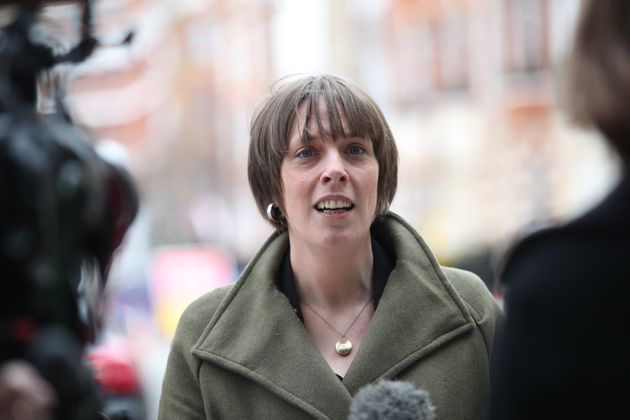
Yui MokPAJess Phillips could be in line for a promotion
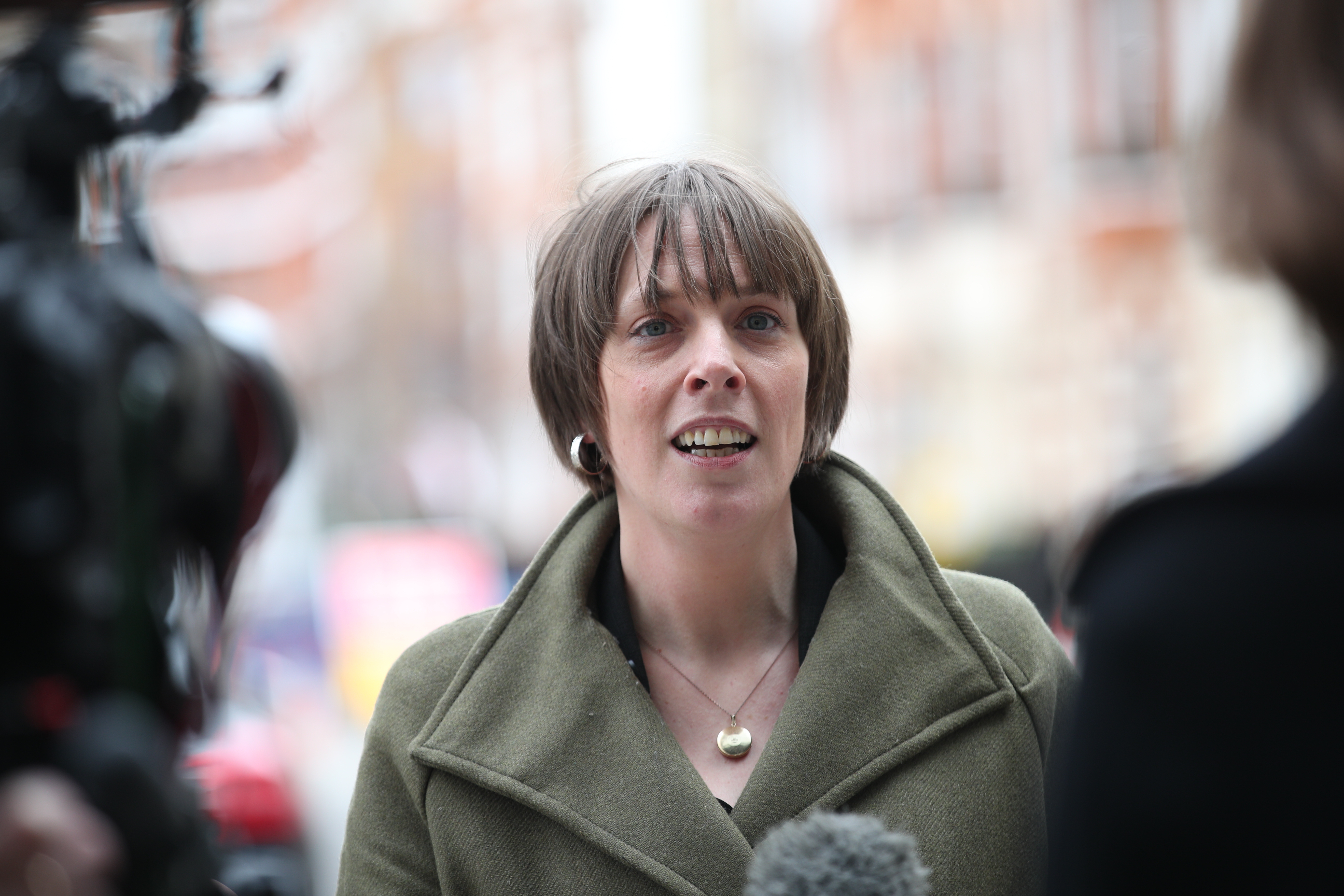
Jess Phillips
One of Starmer’s most high-profile frontbenchers, the shadow domestic violence minister led party calls for action after Sarah Everard’s murder.
The Birmingham Yardley MP has a forthright style and, though Starmer may view her as something of a loose cannon, he is said to highly prize her work campaigning on homelessness, domestic killings and violence against women.
Phillips, who was the moderates’ candidate for leadership when Corbyn stepped down, is also a strong communicator, both online and on broadcast, and comfortable with the “red wall” voters Starmer fears the party has lost touch with.
The 39-year-old has previously voiced an ambition to be home secretary, which is a brief Starmer may consider for her, but possible alternatives may be shadow equalities secretary.
She may also be considered for the role of shadow employment rights secretary should Starmer wish to move Corbyn ally Andy McDonald.
On the way out?
Ian Forsyth via Getty ImagesAnneliese Dodds, shadow chancellor of the exchequer, is thought not to have landed any blows on Rishi Sunak
Anneliese Dodds
Starmer’s choice for shadow chancellor, the most important appointment for any leader, has attracted regular criticism.
Her allies point out her difficult task in facing Rishi Sunak while the occupant of Number 11 has handed out huge sums of cash via the furlough scheme and other Covid support.
But many feel Dodds has failed to nail her opponent when he was weak on free school meals cuts, the Eat Out To Help Out debacle and the Greensill Capital scandal.
Prevaricating over whether Labour would back a wealth tax and hiring a former advisor of John McDonnell’s also fanned concerns about whether she was suitable.
Demoting his own pick for such a crucial job would inevitably invite criticism of Starmer’s judgement, however, and Dodds is well-liked and viewed as knowledgeable among MPs.
But, equally, if Starmer refused to consider a move, he may face the charge of tinkering around the edges.
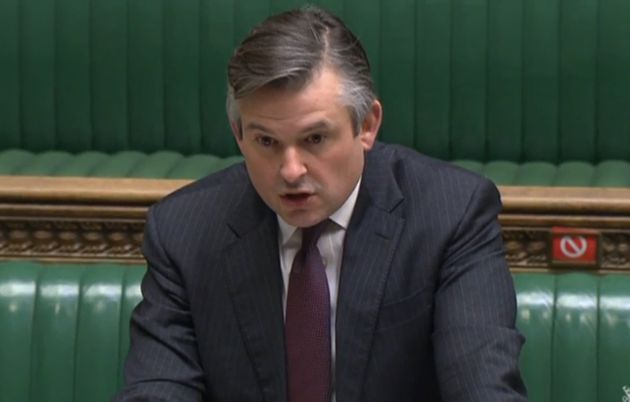
House of Commons – PA Images via Getty ImagesShadow health secretary Jonathan Ashworth is a solid media performer but is connected to Jeremy Corbyn’s era in power
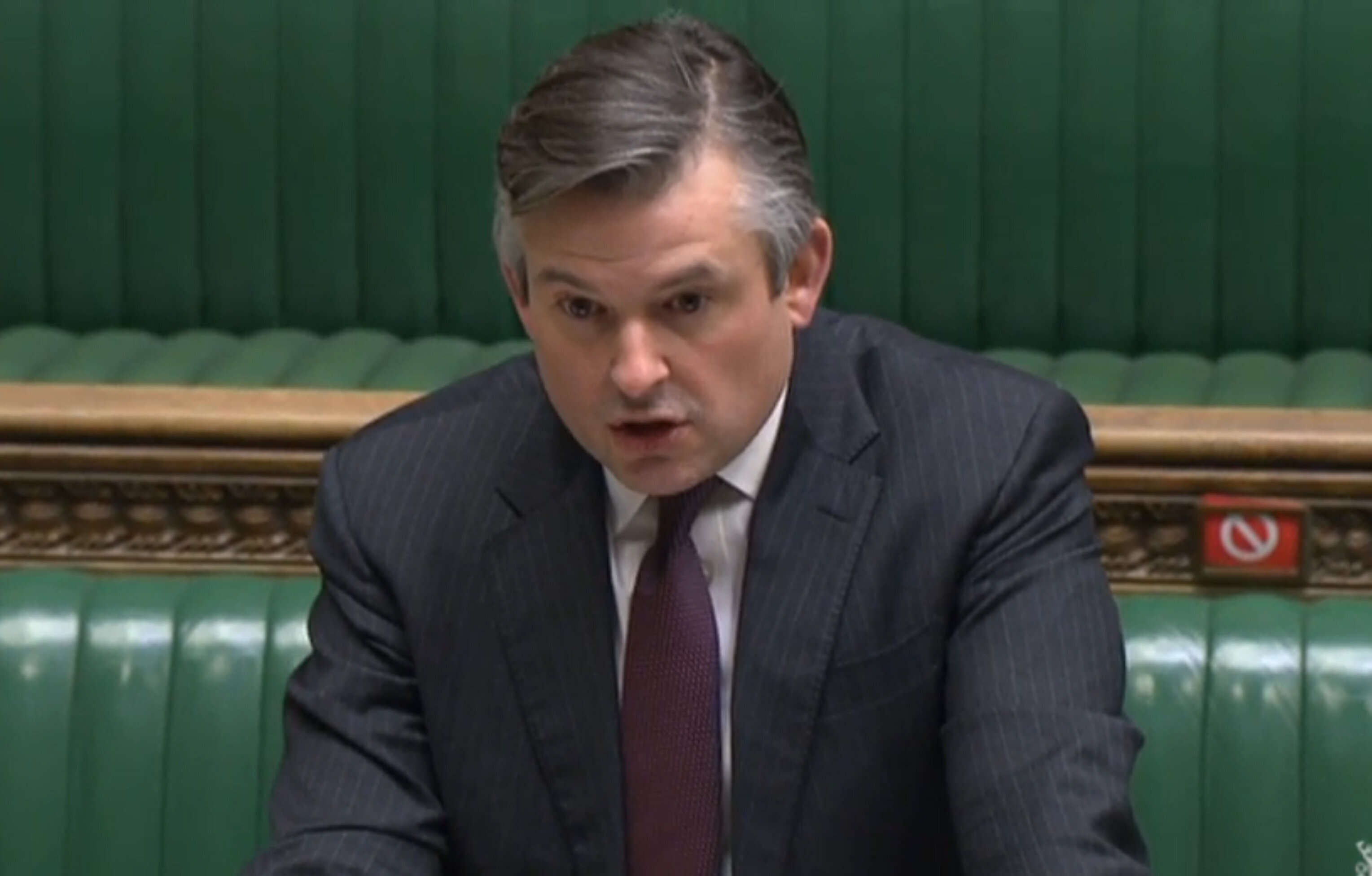
Jonathan Ashworth
The shadow health secretary has been in post since 2016 and was appointed by Corbyn, despite not sharing the former leader’s left-wing outlook.
Sources have suggested Starmer is keen for a reset on health policy, especially as the NHS is traditionally Labour’s strongest campaign issue and Johnson’s approach to social care may soon be a key dividing line.
Others have underlined that sacking Ashworth, whose current knowledge of the brief is likely to be unrivalled, during the pandemic would be a misstep.
Questions over whether Ashworth has briefed against Starmer and his staff to journalists have been swirling, however.
“He is acting like he has already lost his job,” said one source.
Liz Kendall, Justin Madders, Rosena Allin-Khan and Lucy Powell are among the names touted as his replacement.
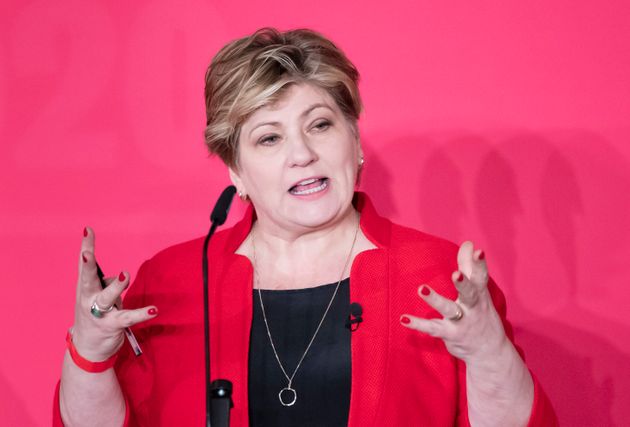
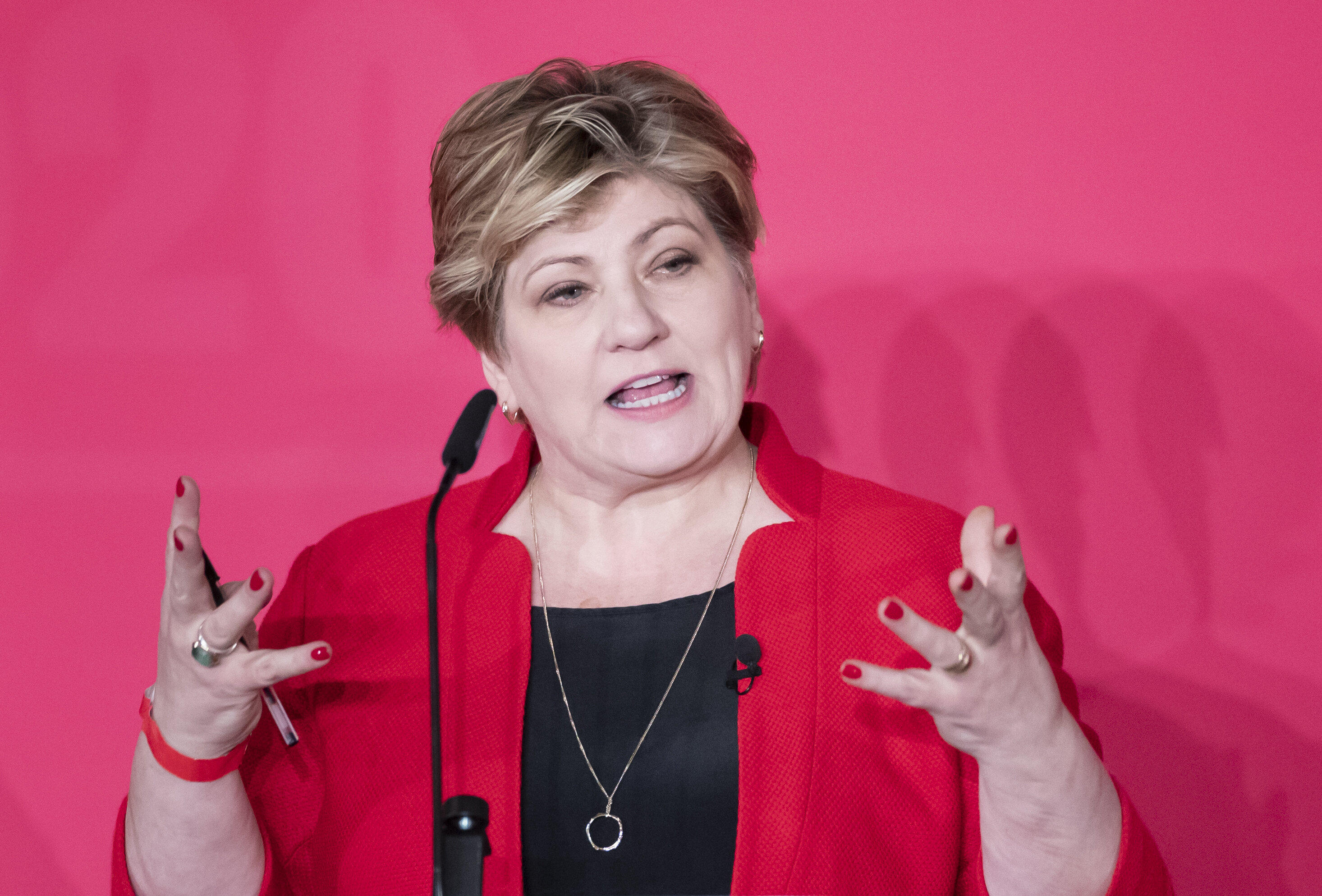
Danny Lawson – PA Images via Getty ImagesEmily Thornberry during the Labour leadership hustings
Emily Thornberry
Relations between the shadow trade secretary and Starmer are thought to have been rocky in recent months.
Starmer demoted his leadership rival from her role as shadow foreign secretary last year and there are suggestions he could go further.
Despite her combative scrutiny of Liz Truss, Thornberry has been increasingly sidelined in recent months, rarely, if ever, appearing on the media.
Her previous comments about the St George’s flag are also seen by Starmer’s allies as undermining the party’s attempts to appear more patriotic.
It is possible she is offered an alternative role as shadow leader of the Commons, should long-serving Valerie Vaz wish to move on, but it’s not clear Thornberry would accept.
Starmer might consider bringing in a well-known “big beast” as her replacement, such as former shadow foreign secretary Hilary Benn.
What else could Starmer do?
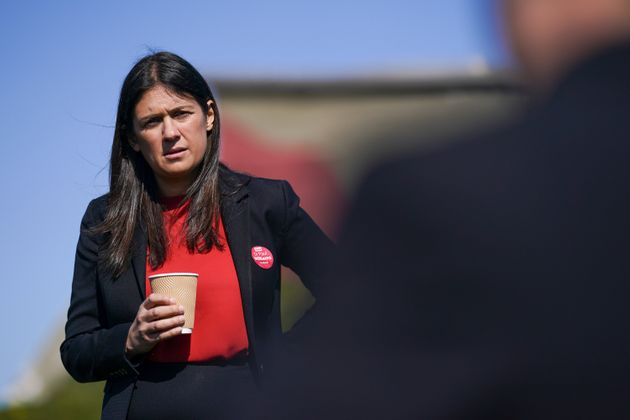
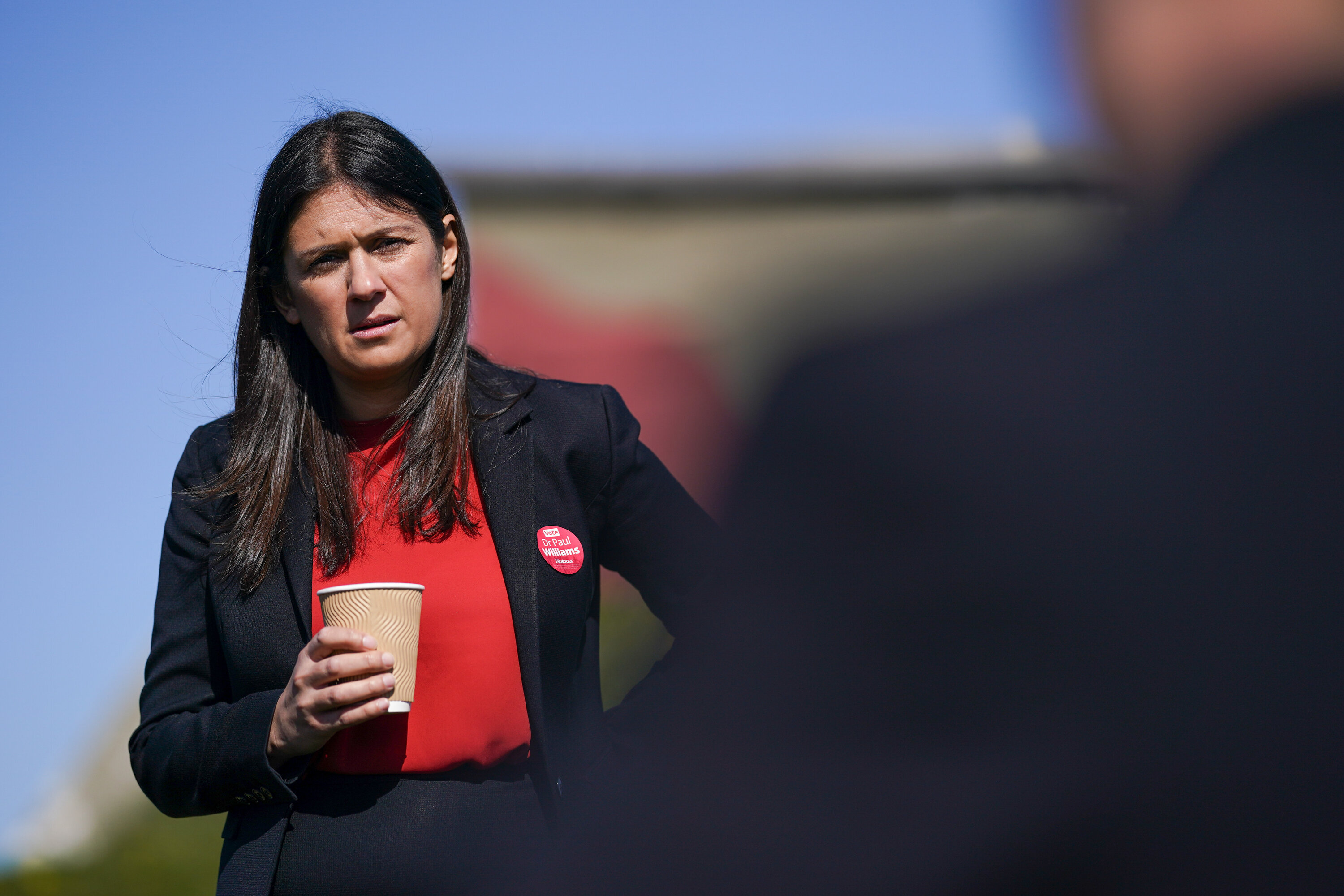
Ian Forsyth via Getty ImagesLisa Nandy
Starmer will be desperate to show working class voters he is listening and may look to boost the role of Wigan MP and shadow foreign secretary Lisa Nandy.
Her policy work on reviving the party’s offer to towns is highly rated and sources say he is keen for her to be seen on broadcast media more often.
A sideways move to the Home Office role, replacing Nick Thomas-Symonds, to shadow Priti Patel may be on the cards.
It would see Nandy front and centre of efforts to make the party credible on issues like crime and immigration, something vital to securing support in the red wall.
Deputy leader Angela Rayner’s role as elections chief has also been questioned, with some saying she lacks experience of marginal battles.
Others lay the blame for defeats at the door of former Darlington MP Jenny Chapman, Starmer’s campaign chief, though the leader is said to remain loyal to her.
Ian Murray, who is helping Anas Sarwar to lead a resurgence in Scotland, and Chris Bryant, whose local party has ousted Plaid Cymru’s former leader Leanne Wood in the Rhondda in the Welsh assembly elections, are said to have strong cases for expanded attacking roles.
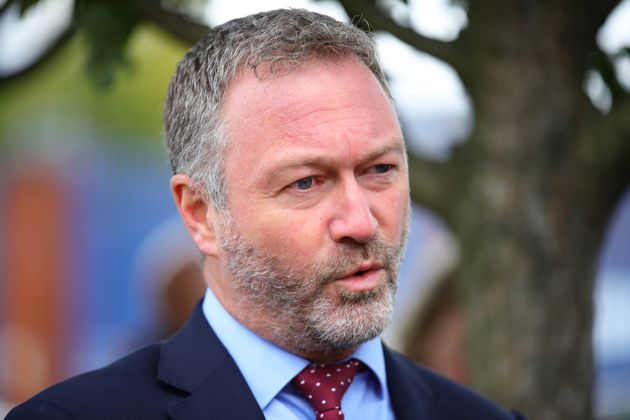
Aaron Chown – PA Images via Getty ImagesSteve Reed, shadow communities secretary
Should Rachel Reeves’ potential elevation to shadow chancellor create a vacancy as shadow minister for the Cabinet Office, Starmer will need a strategic brain.
He may choose one of his key allies, such as Steve Reed or Bridget Phillipson, to battle Michael Gove. Rayner may also be approached.
It is a high-profile spot that entails building on the success Reeves has had scrutinising Johnson’s rule-breaking in the wake of the cash for curtains scandal and questions over PPE contracts.
It is not clear whether Marsha de Cordova’s position as shadow equalities minister is safe, despite fears about the optics of removing a black, disabled woman from his top team. Flo Eshalomi and Taiwo Owatemi could be options that allow Starmer to demonstrate a clear break with the Corbyn era.
Starmer may also choose to stamp his authority on the Parliamentary Labour Party by removing long-serving chief whip Nick Brown, potentially to make way for Alan Campbell.
Others in line for promotion include Sarah Jones, who is currently shadow policing minister, and Chi Onwurah, who has long been tipped for shadow business secretary. It is unlikely, however, that Ed Miliband will relinquish his climate change responsibilities ahead of the COP 26 conference.
Alison McGovern, shadow sports minister and Wirral MP, and Alex Norris may be asked to step up if Starmer’s reshuffle is wide-ranging.
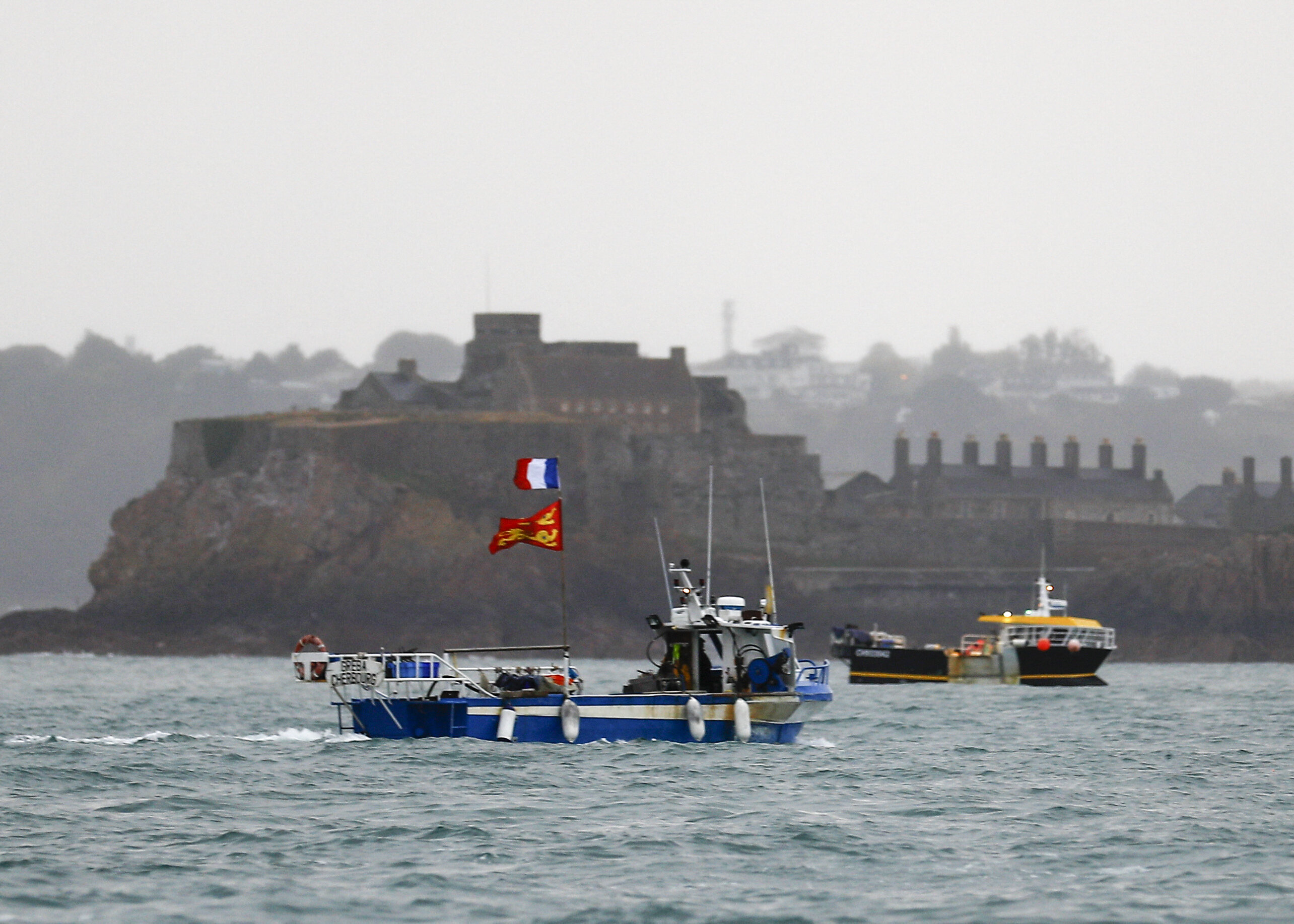
SAMEER AL-DOUMY via Getty ImagesFrench fishing boats protest in front of the port of St Helier off the island of Jersey.
The UK government has said Navy ships patrolling Jersey amid a stand-off over fishing rights in the Channel island’s waters are to return home.
Patrol boats HMS Severn and HMS Tamar had been deployed less than 24 hours ago following warnings French fishing boats could mount a blockade to protest against the new licences they have been required to obtain from the Jersey government.
Early on Thursday, around 60 French fishing boats gathered off the island’s main port St Helier. At the height of the tensions, a Jersey fishing boat was rammed by a French trawler – with footage shared widely on social media.
After the protestors returned, a UK government spokesman said the Royal Navy vessels would now also prepare to return to port.
“We are pleased that French fishing boats have now left the vicinity of Jersey,” the spokesman said.
“Given the situation is resolved for now, the Royal Navy Offshore Patrol Vessels will prepare to return to port in the UK. We remain on standby to provide any further assistance Jersey requests.
“The Trade and Cooperation Agreement brought in changes to fishing arrangements between the UK and the EU.
“Jersey authorities have a right to regulate fisheries in their waters under this agreement and we support them in exercising those rights.
“We will work with Jersey to support the discussions under way with the European Commission.”
The EU had accused Jersey of breaching the terms of the UK’s post-Brexit trade deal.
The European Commission complained the authorities were imposing “additional conditions” on French fishing boats operating there, in breach of the terms of the agreement hammered out on Christmas Eve.
But in a call with Jersey’s chief minister John Le Fondre, Boris Johnson again voiced his “unequivocal support” for the actions taken by the island’s government.
Jersey, the biggest of the Channel Islands, is a British Crown Dependency and is defended and internationally represented by the UK government.
It lies just 14 miles from the French coast and 85 miles south of the English coast.
As HuffPost UK reported earlier, the stand-off prompted some over the top reactions on social media, with some perhaps semi-seriously suggesting it represented the start of a “war” between the UK and France.
To be clear, the UK and France are both Nato members, and war between the two would be incredibly unlikely.
As the issue had been brewing for some time, questions have been raised over armed ships being sent by the government on the eve of crucial elections.
Hopes have been raised that the UK could move a step closer to pre-pandemic normality if the one-metre plus rule for social distancing is relaxed next month.
The government has been targeting June 21 as the earliest date on which the vast majority of coronavirus restrictions can be lifted as part of its four-step “roadmap” out of lockdown.
With around 50 million doses of a vaccine in people’s arms, the UK’s successful inoculation programme appears to be influencing the government’s thinking on how far it can go with re-opening.
While post-weekend reporting of Covid cases tends to be lower than the average, official figures on Monday showed the UK has recorded just one death in the latest 24-hour period.
What could happen?
The Times reported social distancing rules will be lifted to allow pubs, restaurants and theatres to open to full capacity for the first time in more than a year.
One-way systems, screens and mask-wearing while moving around might remain for hospitality venues but customer numbers will no longer be limited, the newspaper said.
Audiences in theatres and cinemas will have to wear face coverings during performances, while there will be strict guidance on ventilation and staggered entry, The Times reported.
A government insider told The Times: “The evidence we’ve got so far from the pilots is very positive and the general background on data is hugely encouraging in terms of numbers, falling deaths and hospitalisations.
“The pilots have shown us that mitigations have worked sufficiently to allow us to remove social distancing at least in the settings that we really need to in order to get them in a viable position again.
“The kind of thing we’re looking at is keeping in place mask wearing, extra ventilation, staggered entry — all of that has been shown to have worked so far.”
What has the government said?
Responding to the report, Boris Johnson said there was a “good chance” the one-metre plus rule for social distancing can be ditched next month.
The final decision on whether the change can be brought in from June 21 will depend on the data, the prime minister added.
Johnson said he feels like the next stage of reopening on May 17 – which covers indoor hospitality, entertainment and possibly foreign travel – “is going to be good”.
Speaking during a campaign visit to Hartlepool, Johnson told reporters: “As things stand, and the way things are going, with the vaccine rollout going the way that it is – we have done 50 million jabs as I speak to you today, quarter of the adult population, one in four have had two jabs.
“You are seeing the results of that really starting to show up in the epidemiology.
“I think that we will be able to go ahead, feels like May 17 is going to be good.
“But it also looks to me as though June 21 we’ll be able to say social distancing as we currently have to do it, the one-metre plus, I think we have got a good chance of being able to dispense with the one-metre plus from June 21.
“That is still dependent on the data, we can’t say it categorically yet, we have got to look at the epidemiology as we progress, we have got to look at where we get to with the disease. But that’s what it feels like to me right now.”
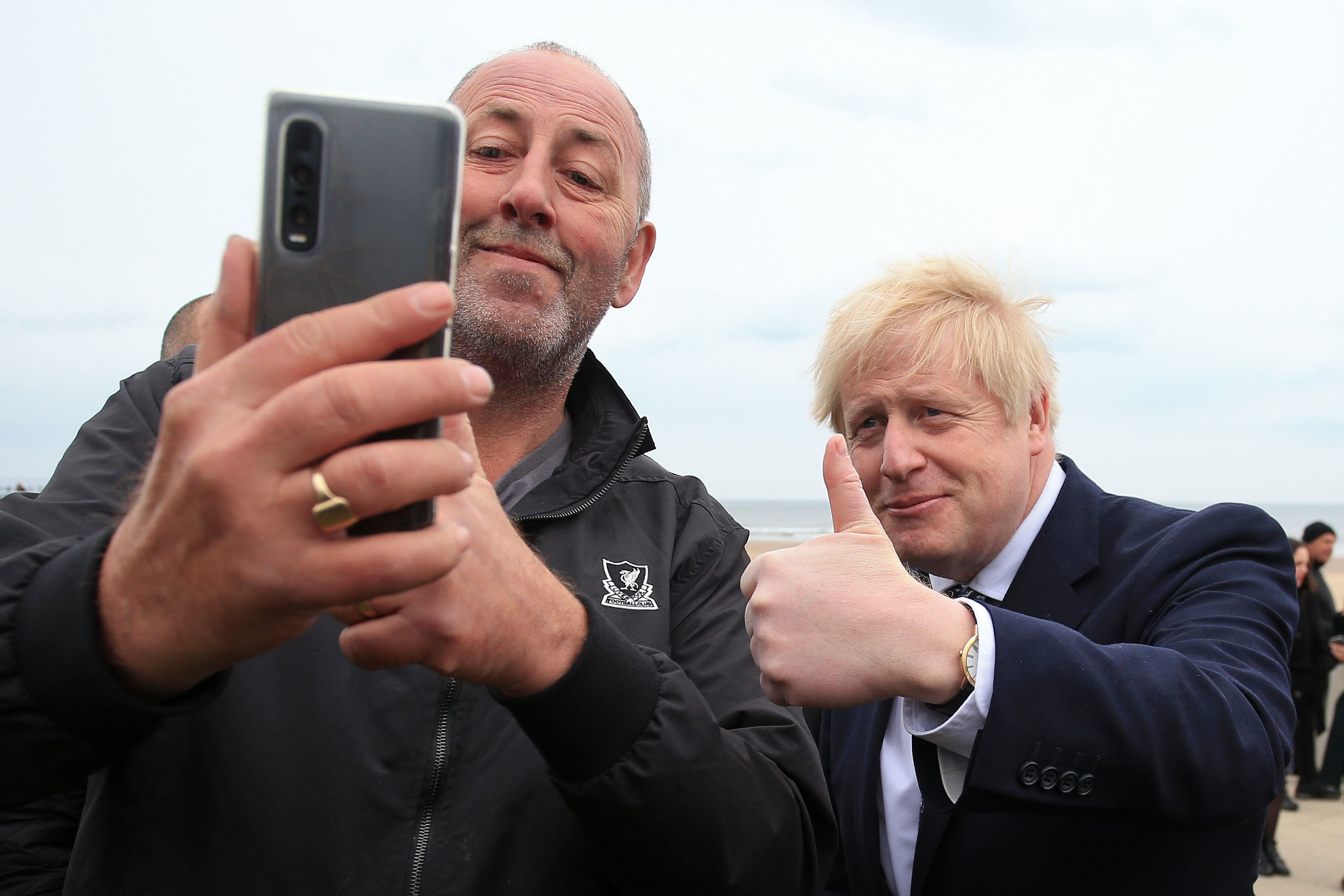
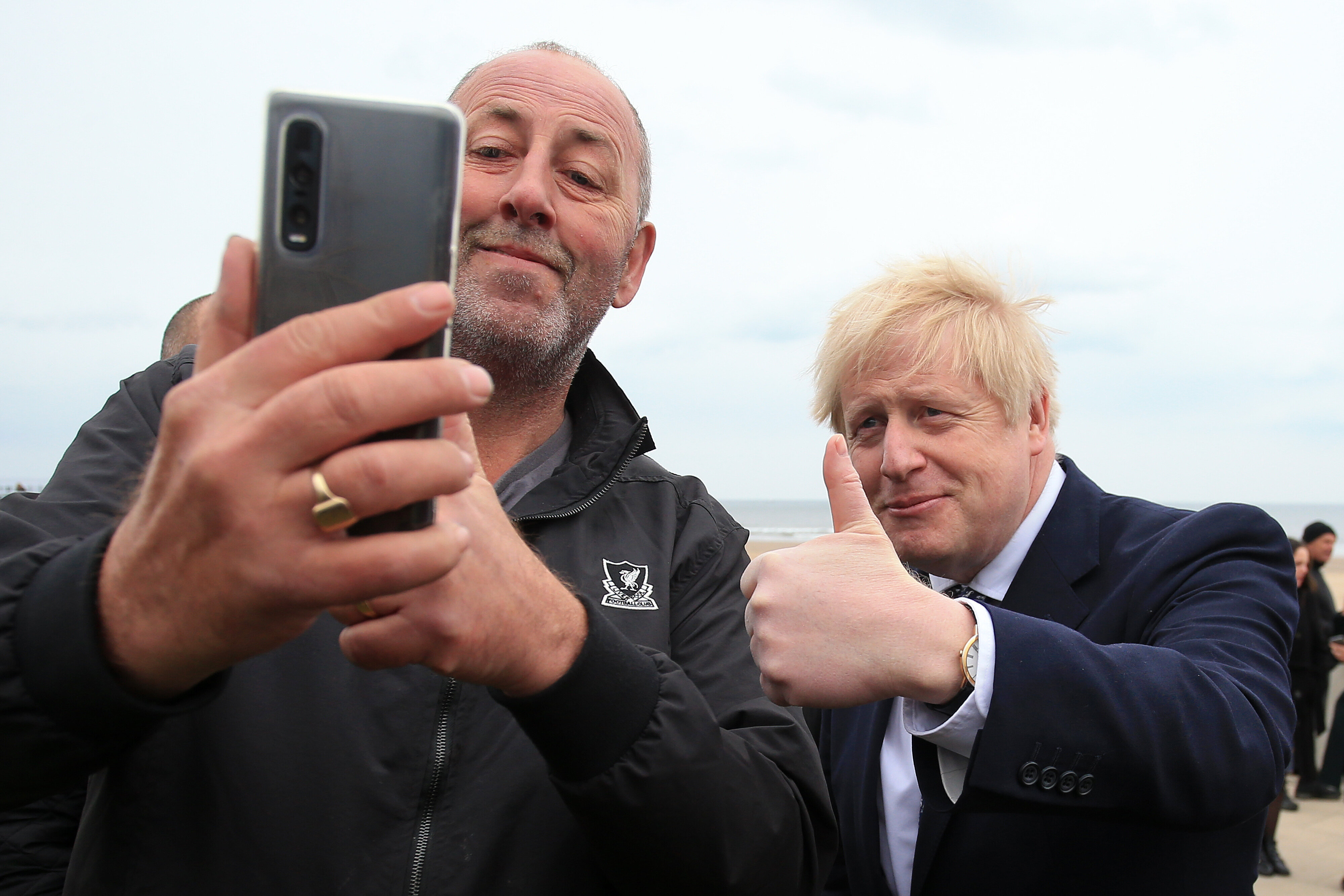
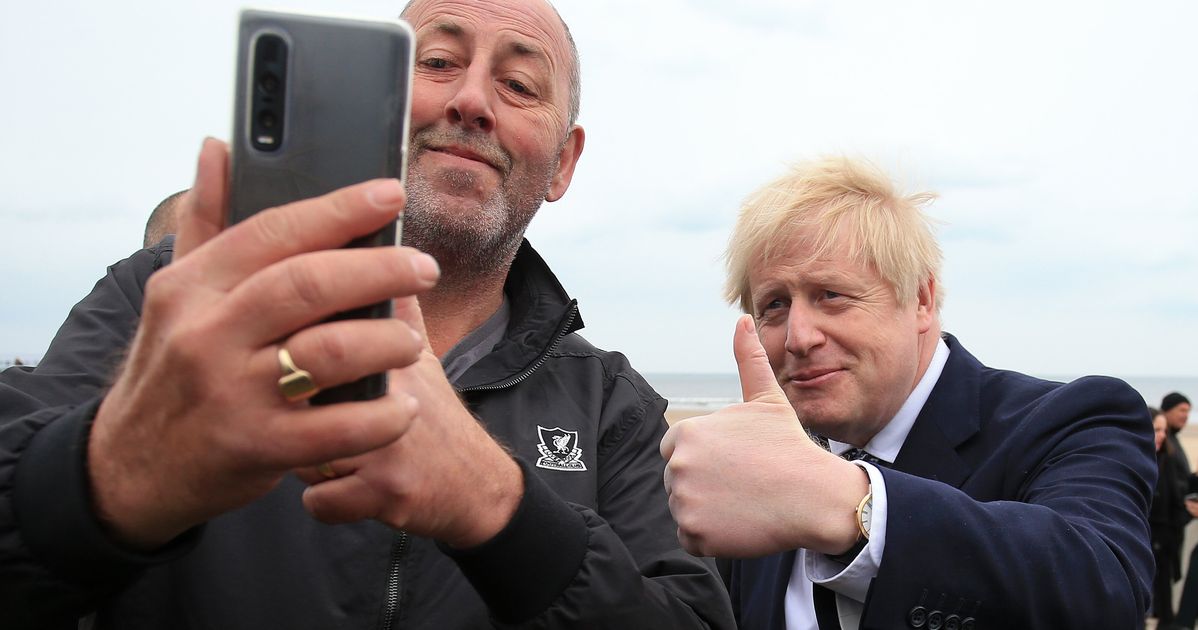
WPA Pool via Getty ImagesBoris Johnson poses for a ‘selfie’ photograph as he meets members of the public while campaigning in Hartlepool.
A Cabinet Office spokesman pointed back to the wording of the road map out of lockdown, which states that the government “will complete a review of social distancing measures and other long-term measures that have been put in place to limit transmission”.
The review’s findings “will help inform decisions on the timing and circumstances under which rules on one-metre-plus, face masks and other measures may be lifted”.
What does the hospitality industry say?
One industry chief has said a return to unrestricted trading for hospitality from June 21 is “critical” and will mean firms can “come off life support”.
Kate Nicholls, chief executive of trade body UKHospitality, said: “These reports are very welcome if true.
“However, we must wait to see the full detail of plans as any restrictions in venues will continue to impact revenue and business viability.
“A return to unrestricted trading on June 21 is critical and will mean hospitality businesses (can) come off life support and be viable for the first time in almost 16 months.
“We urge the government to confirm reopening dates and these plans at the earliest opportunity, which will boost confidence and allow companies to step up planning and bring staff back.”
A spokesman for the UK Cinema Association indicated that the organisation hopes face coverings will not be a continued requirement.
He said: “We strongly believe that our exemplary record on safety – with not a single case of Covid traced back to a UK venue – and our ability to manage the movement of cinema-goers in modern, highly ventilated indoor environments offer ample evidence that any relaxation from June 21 can be undertaken safely without the need for further ongoing restrictions, including any requirement for face coverings.”
Do scientists agree?
Last month, government scientific advisers said the public should be able to remove face masks over the summer as vaccines do the heavy lifting in controlling Covid-19 – but they cautioned that masks and possibly other measures may be needed next autumn and winter if cases surge.
But there is a fierce debate within the scientific community.
In an open letter, one group of scientists said last month “a good society cannot be created by obsessive focus on a single cause of ill-health” and that Covid-19 “no longer requires exceptional measures of control in everyday life”.
The 22 signatories – who include Professor Carl Heneghan, director of the Centre for Evidence Based Medicine at University of Oxford and Professor Karol Sikora from the medicine school at the University of Buckingham – say mandatory face coverings, physical distancing and mass community testing should end no later than June 21.
The letter states: “It is more than time for citizens to take back control of their own lives.”
But others were less optimistic.
Professor Stephen Reicher, from the University of St Andrews and a member of the Scientific Pandemic Insights Group on Behaviours, which advises ministers, said calls from scientists and academics to end coronavirus restrictions are “wrong” and “remarkably insular”.
He said: “We have heard from these people before, arguing that Covid isn’t a risk and that restrictions should be lifted.
“They were wrong then and they are wrong now.”
Prof Reicher said the irony of saying “it’s all over” makes such measures less likely, makes increased infections more likely and therefore makes lockdown restrictions “a real possibility”.
What other measures have been relaxed?
And the last sign of progress being made, the government announced the limit on the number of mourners who can attend funerals is to be lifted in England.
The Ministry of Housing, Communities and Local Government said the legal restriction of a maximum of 30 mourners will be removed as part of the next stage of lockdown easing, expected on May 17.
The capacity will be determined by how many people venues, such as places of worship or funeral homes, can safely accommodate while maintaining social distancing, the department added.
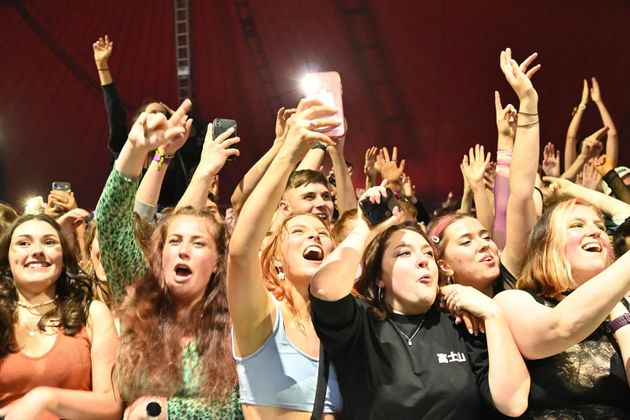
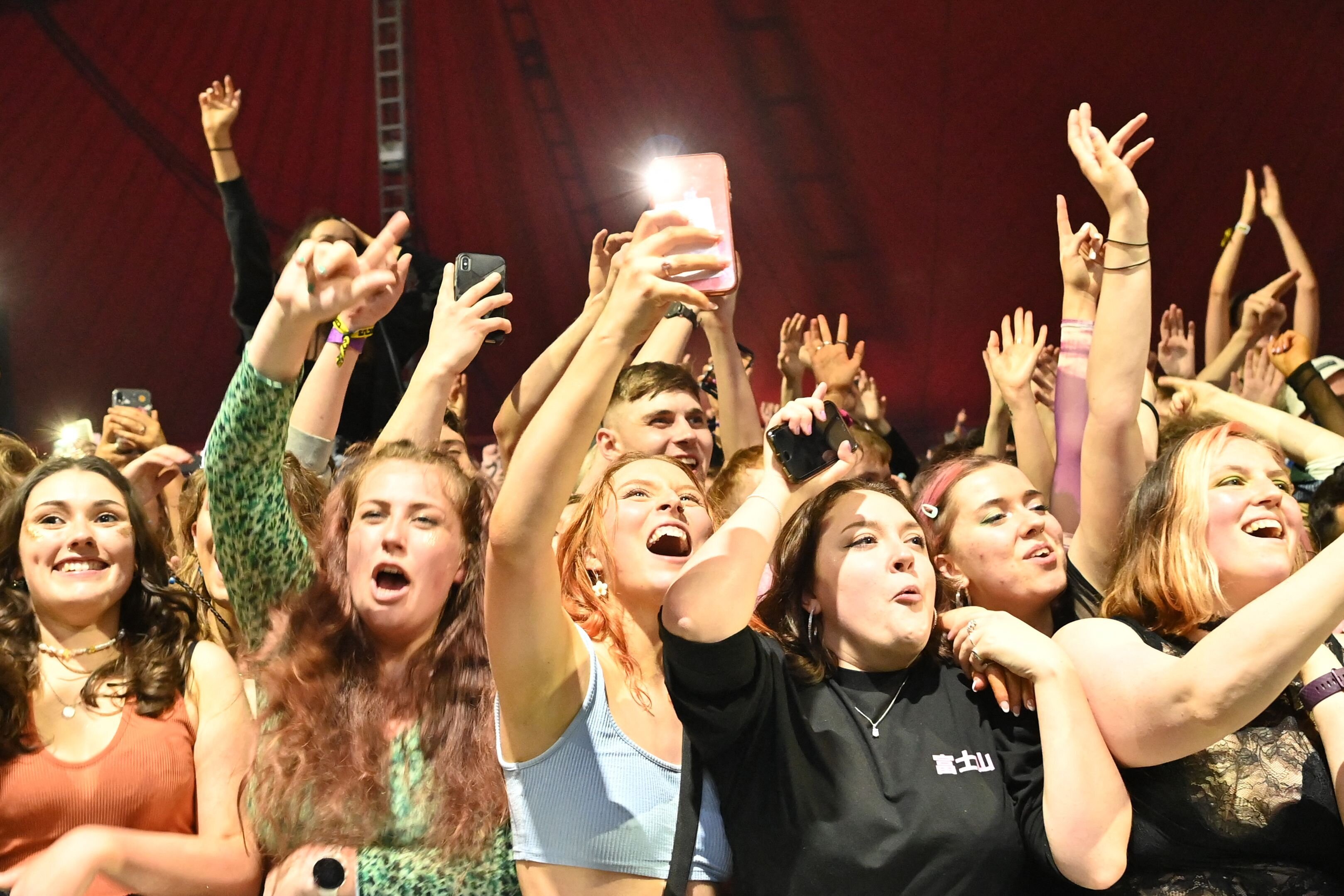
PAUL ELLIS via Getty ImagesFans watch Blossoms perform at a live music concert hosted by Festival Republic in Sefton Park in Liverpool.
Meanwhile, thousands of revellers without face coverings danced shoulder to shoulder to live music for the first time in more than a year at a pilot music festival.
Around 5,000 people packed into Sefton Park in Liverpool on Sunday for the outdoor gig which included performances from Blossoms, The Lathums and Liverpool singer-songwriter Zuzu.
Pictures and videos showed people packed together, arms in the air, dancing to the music at the event which has been hailed as a milestone towards getting live events running again.
Everyone had to produce negative coronavirus tests to enter the event but did not have to wear face coverings or follow social distancing rules.
It is hoped that test events like this will pave the way for festivals and venues across the country to reopen for mass gatherings again.
What about foreign holidays?
The ban on foreign holidays is expected to be lifted for people in England from May 17 as part of the next easing of coronavirus restrictions.
But Johnson cautioned that while there will be “some openings up” from that date, the approach must be “sensible” to avoid an “influx of disease” when international travel resumes.
Johnson’s cautious tone came as some MPs called for restrictions on foreign holidays to be maintained to protect the country from Covid-19 variants, and Labour leader Keir Starmer urged a “careful” approach.
Johnson told reporters during a campaign visit to Hartlepool: “We do want to do some opening up on May 17 but I don’t think that the people of this country want to see an influx of disease from anywhere else.
“I certainly don’t and we have got to be very, very tough, and we have got to be as cautious as we can, whilst we continue to open up.”
Asked if people should be planning foreign holidays, he told reporters: “We will be saying more as soon as we can.
“I think that there will be some openings up on the 17th, but we have got to be cautious and we have got to be sensible and we have got to make sure that we don’t see the virus coming back in.”
Starmer criticised the “chopping and changing” of the travel corridors list introduced last year and said such a situation should be avoided this holiday season.
Dan KitwoodPAPrime Minister Boris Johnson answers questions from the media
Boris Johnson is “withholding information” over the revamp of his Downing Street flat and believes “rules don’t apply to him”, says Labour’s Lisa Nandy.
The shadow foreign secretary hit out at the prime minister’s “arrogance” on Sunday, claiming he does not believe the public “deserve truth” over the expensive renovation of his official residence at Number 11.
Johnson has insisted he “met the cost” personally but has pointedly refused to answer questions on whether a Tory donor initially loaned him £58,000 – something which, if true, the PM should have openly declared.
Speaking to Sky News on Sunday, Nandy said the public needed to know who Johnson may feel he owed as a result of any loan.
“There’s an arrogance at the heart of this that he seems to believe that we don’t deserve to know the truth about what goes on in government,” she said.
“We need to know who the prime minister is beholden to, we need to know what he has promised in return.
“If the prime minister is beholden to other people, who is he not serving? That’s the people of this country.
“This is about integrity, it’s about trust, and it’s about whether there’s one rule for them and one rule for everyone else.”
The Electoral Commission, meanwhile, has launched an investigation into whether the PM broke electoral law.
Downing Street underlined last week , however, that Johnson remained the he “ultimate arbitrator” of the ministerial code and therefore had the final say on whether he broke the rules.
Nandy added it was clear Johnson was “withholding information” from the public.
“It’s appalling we are in a position where he won’t come clean about who loaned him money or gave him money, and what favours or promises may have been given in return,” she said.
“There’s an arrogance at the heart of this”
Lisa Nandy says the PM “seems to believe that we don’t deserve to know the truth about what goes on in government, adding “at the moment, we don’t know who the Prime Minister is beholden to” #Ridge
— Sophy Ridge on Sunday (@RidgeOnSunday) May 2, 2021
“We already know that this is a prime minister who frankly thinks that the rules don’t apply to him and his friends. He is quite happy for his cabinet ministers to break the ministerial code and then not resign, he is quite happy for his advisers to drive around the country with Covid in the middle of lockdown and not resign.
“I think people are angry, actually, that in a year when we have all followed the rules, often at great personal cost, we have followed the rules because we know that the rules matter, and yet over and over again we have seen a prime minister who seems to think that the rules don’t apply to him.”
Claims also emerged on Sunday that Johnson sought help from Tory donors for childcare.
Foreign secretary Dominic Raab said he has “no idea” if this were true but dismissed the allegation as “tittle tattle”.
“I have no idea, you don’t have conversations like that with the PM,” he said. “I can’t comment on every little bit of gossip that’s in the newspapers.
“The last thing you asked me about, I think, is an example of tittle tattle.”
Asked if there was a second invoice for refurbishments of the prime minister’s Downing Street flat settled directly with a supplier, he said: “As the prime minister has set out this week, he covered the cost himself, he’s followed all the relevant codes of conduct at all relevant times, he took official advice all along the way.
“There are three reviews now, I think, into this and I think the right thing for me to do is not add political commentary that could otherwise prejudice those reviews, but to respect the integrity of them, so I’m not going to offer you, I’m afraid, any more commentary, or if you like chatter, on the various different reports and speculation that I see in the Sunday papers.”
A No 10 spokeswoman said the prime minister “has covered the cost of all childcare”, but did not respond when asked if he paid for the original bill himself or had reimbursed somebody else.
As well as pressure over the renovations, Johnson has been forced to deny saying he would rather see “bodies pile high” than impose a third coronavirus lockdown, on top of a lobbying row and allegations of cronyism.
Although earlier polls suggested the “sleaze” allegations were not significantly denting public support for the Tories, two fresh surveys gave evidence to the contrary ahead of the local elections in England and votes for the parliaments in Scotland and Wales.
The Conservatives fell to a five-point lead over Labour, with 42% compared to 37%, according to the Opinium poll of more than 2,000 adults between Wednesday and Friday.
That put the Tories down two points and Labour up four compared to a week earlier, halving the Conservatives’ lead ahead of the elections, in which some 48 million people are eligible to vote.
And in separate polling, Focaldata put Labour on 39%, one point behind the Tories, who previously had a healthy lead, according to The Sunday Times.
Johnson has denied breaking any laws over the refurbishment of his residence and insisted he had paid “personally” for the works.
You’re reading The Waugh Zone, our daily politics briefing. Sign up now to get it by email in the evening.
Despite the fire and fury of this week’s prime minister’s questions, it seems the cash for cushions row has so far amounted to little but a pillow fight in the eyes of voters.
Several polls in the last 24 hours have shown Tory numbers barely moving, with Labour’s even slightly down despite the sleaze allegations engulfing Boris Johnson.
And in a much less scientific test, a red wall Tory MP tells me they have had just 10 emails on the row over the past week from concerned voters.
Normally, we might give it a few more days before delivering a judgment on the impact of the row.
But the impending local elections next Thursday have led to a painful debate about whether it has had so-called “cut through” with the public.
Patrick English of YouGov tells me there is no doubt that it has, with nearly a third (31%) of the public following the story fairly or very closely, and a further 27% following it, if not closely.
The depressing truth seems that voters’ trust in politicians generally, and Johnson particularly, is so low that a row like this is “baked in”, says English.
“It’s not that they don’t care, or that they don’t want them to do it, they just sort of shrug and say they expect it from politicians.”
This has inevitably led to questions about whether Starmer has got his strategy right ahead of his first key electoral test.
The red wall Tory tells me the sleaze row is coming up more on the doorstep since Starmer’s evisceration of Johnson at prime minister’s questions.
But they wonder if his visit to a John Lewis store on Thursday (Carrie Symonds reportedly described the No.11 flat as a “John Lewis furniture nightmare”) may have been a mis-step, as voters are bringing up the row but in a “jokey” way.
Meanwhile, Tory election expert Lord Hayward believes Labour have missed opportunities to speak out on issues “which actually do matter to people now”, with jobs under threat at Liberty Steel in a situation linked to the Greensill lobbying scandal, the Toyoda Gosei factory closure in Rotherham and Nestle closing a factory in Newcastle.
Hayward says: “What they’ve been so obsessed with is sleaze, which appears in the immediate not to matter, that even issues that are there and matter to people on a day-by-day basis have actually gone by the board.
“And that I find absolutely staggering.”
Hayward does, however, believe political events can take a week or so to begin affecting polls, so there is time yet for the Labour leader on sleaze.
Looking beyond the local elections too, Starmer will have positioned himself as a leader on the issue if the Electoral Commission or other watchdogs punish Johnson or the Tories over the flat.
And the underlying numbers are not great for the PM should things go badly, with a YouGov trust rating of –22 and less than half of Tory voters more inclined to believe Johnson over top aide Dominic Cummings, who is promising to damage the PM at his select committee appearance on May 26.
English tells Tories: “I definitely wouldn’t be jubilant.
“If it just gets worse or if it does not go away, the figures of who is following it is only going to go up, the figures that say ‘I’m aware of it but I don’t care’ are only going to go down.
“That does have the potential to be quite harmful, there’s a lot of potential for this to move quickly in the wrong direction for the Tories.”
Meanwhile senior Tories, speaking privately this week, fear the collateral damage caused by the sleaze rows.
They worry about what happens to the party’s poll numbers when the twin effects of the vaccine bounce and the furlough life support scheme for jobs end, and if stories like this become more important to voters amid job losses.
Some even wonder whether Johnson can still carry out the big reshuffle many believe is coming soon, and will root out incompetence in government.
Can you sack Robert Jenrick following cronyism allegations when you yourself are facing them? Can you fire Gavin Williamson for incompetence when you can’t even file your register of interests on time? And if you can’t have a better Cabinet, do we see a repeat of the exams fiasco?
Starmer, as my colleague Paul Waugh suggested earlier this week, may be able to promote Johnson from “Major Sleaze” to the potentially far more damaging “General Shambles”.
Others also worry that a good performance in the local elections next week in the face of the sleaze row can only breed complacency in Downing Street about the need to improve standards in public office.
And that could lead to a very bad place, with faith in politics and politicians already so low.
The election watchdog must carry out its investigation into who funded Boris Johnson’s Downing Street flat refurbishment quickly or risk the perception that it is “playing politics”, a senior Tory has said.
Tom Tugendhat told HuffPost UK’s Commons People podcast that the Electoral Commission must prove to be “regulators who are not only independent but are seen to be independent”.
The watchdog has said it is satisfied that “there are reasonable grounds to suspect that an offence or offences may have occurred” relating to the funding of the refurbishment of the No.11 flat.
No.10 has refused to say whether Johnson sought an initial loan or donation to cover a reported £58,000-worth of renovations to his residence in No. 11, which he shares with partner Carrie Symonds and their baby son Wilfred.
Political donations have to be declared to ensure there are no questions or concerns over politicians or parties being unduly influenced by those giving them money.
Tugendhat urged the commission to bring forward any evidence it has of wrongdoing quickly, or to drop the probe.
It comes after the watchdog took more than a year between launching an investigation into Tory spending in the 2015 general election and publishing its findings, although that appeared to be a much wider case.
Tugendhat told Commons People the commission was an organisation that has “really not always covered itself in glory”.
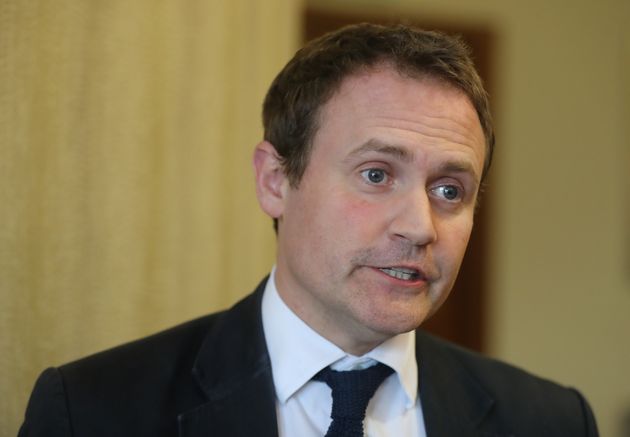
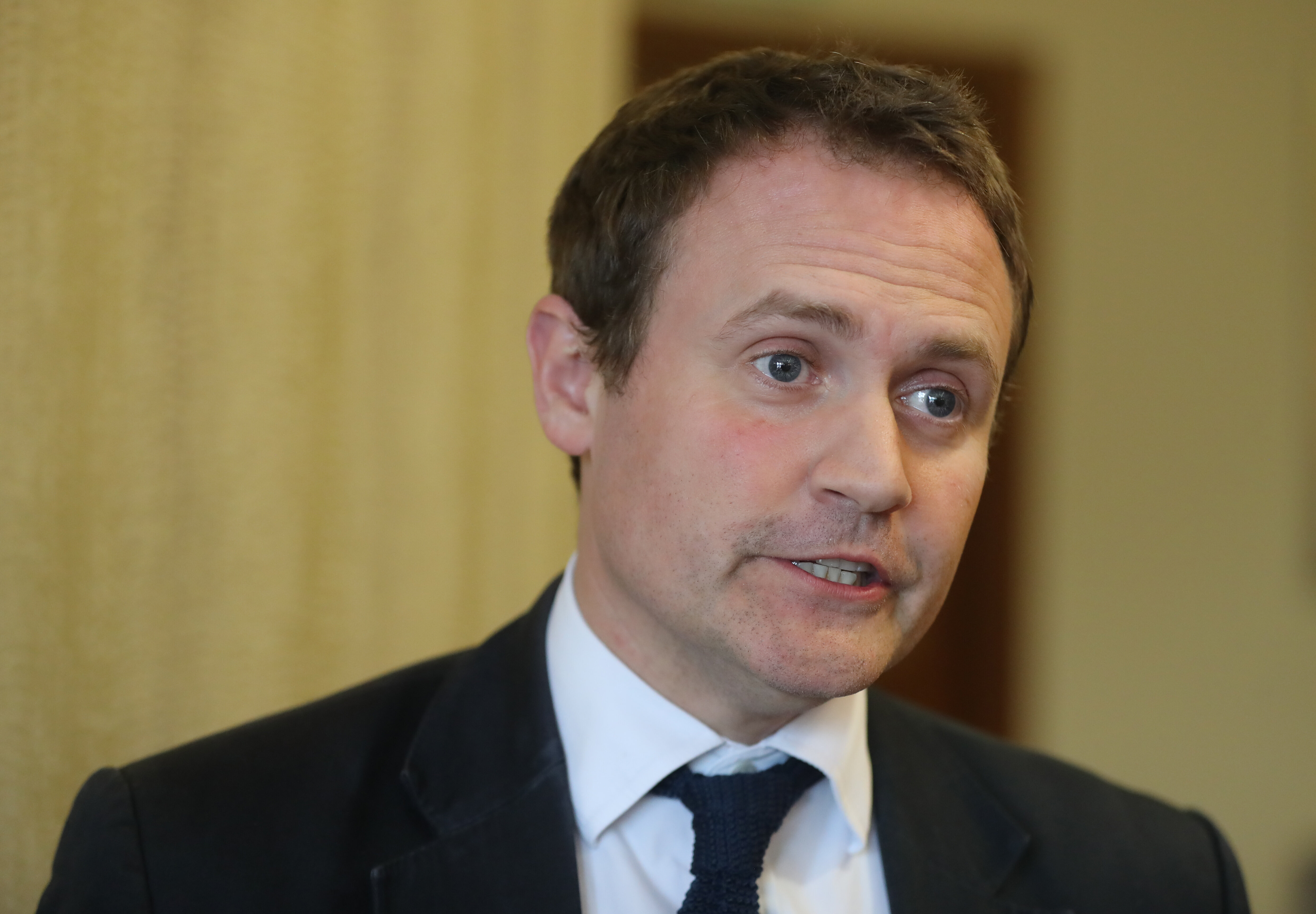
Niall Carson – PA Images via Getty ImagesTory MP and Commons foreign affairs committee chair Tom Tugendhat
Addressing the watchdog’s assessment that an offence may have been committed, he went on: “It is a certain challenge but I hope very much that if they are making statements like that then they will stand them up quickly.”
Tugendhat added: “I’m not in charge of this and the Electoral Commission is an independent organisation and they will have to do what they have to do.
“But if they are going to drag it out then it will begin to look like they are playing politics with it and that would be a great shame.
“Because what we need to have is independent regulators who are not only independent but are seen to be independent.
“So if they’ve got evidence, fine, bring it forward, publish, and if you don’t, drop it.”
The Commons foreign affairs committee chair was also asked whether he believes Johnson’s denial that he said in autumn that he would rather see “bodies piled high” than order another lockdown, and also the PM’s statements about the flat.
Tugendhat replied: “I think we’ve got to take the prime minister at his word.
“We all know what he’s like, he hasn’t changed in 25-30 years.
“None of this is a surprise.”
Asked how Johnson has been in those 25-30 years, the MP replied: “He’s been somebody who expresses himself with bonomie and with a certain lightness and that’s what we’re seeing.”
Tugendhat also said Tory candidates gearing up for next week’s local elections would rather be speaking about policy issues than the various allegations against Johnson.
“I’ve been speaking to a lot of candidates who would wish that the focus was on what they were trying to achieve for their communities, of course they do,” he said.
“And I sympathise with them, because there’s a lot of people who have worked extremely hard for four years who are trying to explain to their friends and neighbours exactly what they are going to do over the next four and that’s what really matters.”
Earlier, Johnson said he would “comply” with the Electoral Commission inquiry.
“I don’t think there is anything to see here, or worry about,” he told reporters.