‘Immoral’ Three Miscarriage Rule Set To Be Scrapped Following MP’s Campaign

Office of Olivia Blake MP

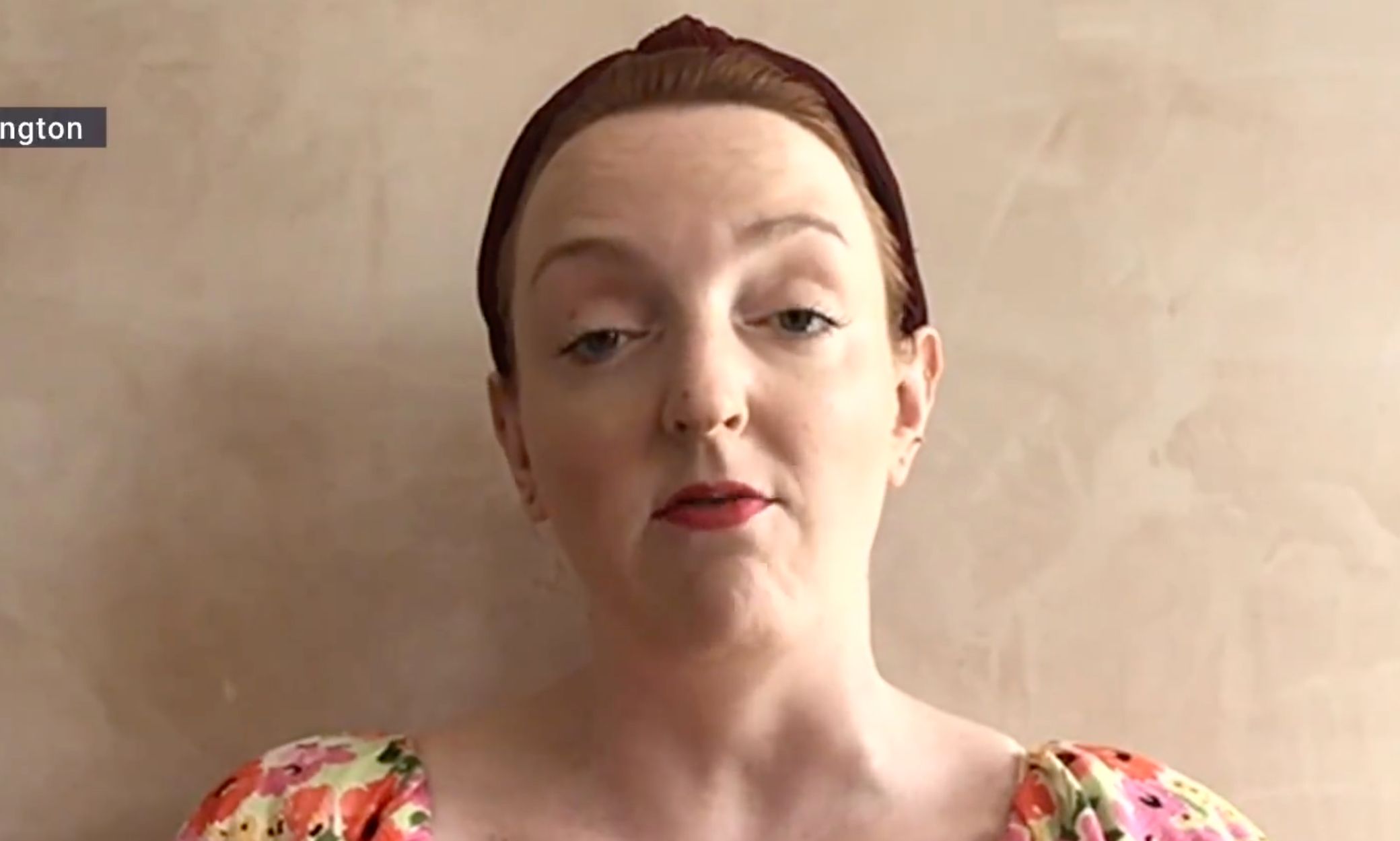
Sheffield Hallam MP Olivia Blake is campaigning for more support for women who experience miscarriages.

An obscure rule that means women have to endure three miscarriages in a row before they receive support is poised to be scrapped in a victory for campaigners. 

New draft guidelines issued by the Royal College of Obstetricians and Gynaecologists (RCOG), which are open for consultation, should mean that women can get support after their first miscarriage instead of their third.

The changes —which if implemented would represent the biggest reform to miscarriage care for 50 years — would mean all NHS trusts would adopt a system of graded care.

After the first miscarriage a woman would receive information, the second miscarriage would be followed by an appointment at a specialist clinic to identify the cause, and following the third the woman would be eligible for a major investigation and care, such as blood tests. 

The guidelines also redefine “recurrent miscarriage” to include non-consecutive occurrences.

The win follows sustained campaigning from Sheffield Hallam Labour MP Olivia Blake, who spoke movingly about her experience of miscarriage during the coronavirus lockdown last autumn.

Blake revealed she had to undergo private counselling through her place of work to receive support after she learned she had miscarried her baby while her partner waited in the A&E car park. Coronavirus restrictions at the time meant her partner was unable to attend the appointment with her. 

She said the change in guidelines was a “huge step and an incredible win for campaigners and individuals who have been speaking up about this injustice for years”.

“If implemented, these new guidelines will mark the end to the outdated and immoral three miscarriage rule, which has prevented millions of people from accessing vital support and care when they most need it,” she said.

Blake went on to secure an adjournment debate this summer, in which she called for an end to the three miscarriage rule.

During the debate, the health minister at the time, Nadine Dorries, committed to including reforming the women’s health strategy by including a record of national miscarriage data as well as 24/7 care and support for those who have experienced miscarriage.

The UK currently does not routinely collect and publish miscarriage data in the way it does for other losses such as stillbirth and neonatal death, but the most recent research from the Lancet suggests that 23million miscarriages occur every year globally – equivalent to 15% of all pregnancies annually.

The guidelines are due to be finalised by the end of the year following a consultation.

Last week Blake starred in the TV documentary “Myleene Klass: Miscarriage and Me” during baby loss awareness week.

Klass said she was “over the moon” at the new guidelines. 

“I hope this is the beginning of the change we need and that miscarriage is never again swept under the rug or dismissed as an inevitability.”

Share Button

Ed Miliband Reminds Us Starmer’s Driving Test Fail Could Have Been Worse: ‘It’s Hardly The Bacon Sandwich’

Getty

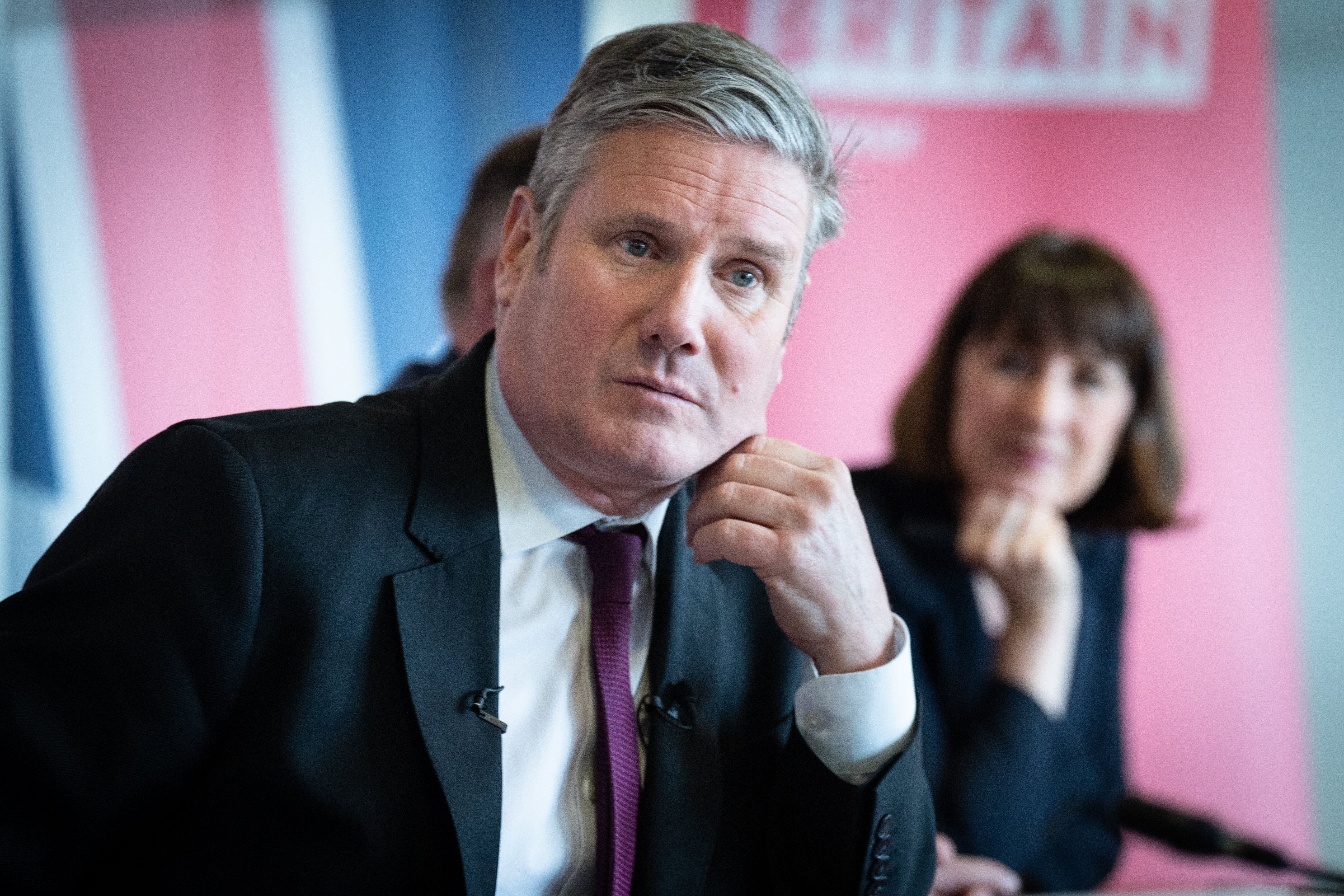
Sir Keir Starmer on Tuesday (L) and shadow cabinet minister Ed Miliband

Ed Miliband was quick to defend Sir Keir Starmer over his HGV driving disaster by comparing it to one of his one embarrassing moments as Labour leader.

Miliband, now shadow business secretary, spoke to Sky’s Kay Burley about the Labour leader’s PR slip-up from Tuesday where he tried (and failed) to drive a lorry.

Burley said: “Certainly don’t want your leader to be an HGV driver – did you see what he did yesterday?”

Miliband replied: “Come on – it’s hardly the bacon sandwich is it, Kay?”

They laughed, but Burley pointed out that Starmer still failed his mock HGV driving test.

The shadow cabinet minister replied: “He was drawing attention to the fact that we need trained HGV drivers, it was all part of the plan.”

Burley has not been the only person to find Starmer’s driving attempts rather excruciating – especially when the driving instructor told him to “move to the left”, something Labour’s left-wing faction have long been trying to do with the party’s leader.

Journalist David Jack tweeted: “Who in Keir Starmer’s office thought that this was a good idea?”

However, Miliband’s own PR efforts as Labour leader were arguably more entertaining.

A photograph of him eating a bacon sandwich with an unusual expression on his face became an infamous internet meme in 2014 when he was campaigning for local elections.

It soon played a key part  in the criticism towards Miliband, as his opponents said it captured his awkwardness and inability to do ordinary tasks.

It was used on the front page of The Sun newspaper the day before the 2015 general election, which saw Labour lose 26 seats in Parliament.

Share Button

Andy Burnham Interview: Boris Johnson Is Giving The Public False Hope

Andy Burnham has denied he undermined Keir Starmer at Labour party conference, saying he instead brought “energy” and “value” to the gathering in Brighton.

The Greater Manchester mayor had been criticised by unnamed shadow cabinet members in the press for criticising Starmer from the sidelines during the annual meeting.

But in an interview with HuffPost UK, Burnham said he did “exactly the opposite” of what his critics have accused him of.

“I heard those noises from unnamed shadow cabinet, whoever they were, but I see it as us putting energy into the conference, because I did go and talk about the things that I am doing here, which I think are interesting for people,” he said.

“The London-style public transport – that is an idea that people can really get behind, I think. 

“The way I look at it is I made a very deliberate decision, I kind of thought, ‘What would I go to conference to do’ – it will be to add value to the policy debate, and that’s exactly what I did.”

Burnham has since said he is not gunning for the Labour leadership, despite reports – which he has denied – that his allies had given Starmer 12 months to turn the party’s prospects around.

The mayor made a series of interventions as Labour’s conference kicked off in Brighton, including that his party could not afford to wait until the next general election to unveil policies. 

He also criticised the Labour leader’s decision to overhaul its leadership rules and for failing to put northern mayors high on the agenda at the gathering – suggesting it meant the party was not “serious about winning back the north of England”.

As well as attending Labour’s conference, Burnham was also spotted at the Conservatives’ annual event in Manchester, where he pressed the government to respond to his levelling up deal for the city.

In his speech, Boris Johnson said the government would “do” Northern Powerhouse Rail – a project that would connect cities and boost journey times across the north of England – which was welcomed by Burnham.

But Johnson did not specify whether there would be a new line linking Leeds to Manchester or simply upgrades to existing lines which will worry the project’s proponents.

A dominant theme of the prime minister’s speech was to pitch what he called a “radical and optimistic Conservatism” against a “tired old Labour” that was “hopelessly divided”.

Burnham branded the dividing line a “simplistic characterisation” and accused Johnson of giving the public “false hope” even as the cost of living crisis spirals and there remains long petrol queues in parts of the country.

“I think the mood of the country doesn’t necessarily reflect what I think might be more wishful thinking on the prime minister’s part,” he said, adding that the £20-a-week cut to Universal Credit would have a “big impact here”.

“I don’t think the public are feeling massively optimistic about things but they probably want to be, but they haven’t been given a reason to be.”

Asked whether Starmer instilled the kind of hope in people in the way that Johnson attempts to do, Burnham replied: “Is that what people want – do people want a sense of false hope? 

“I think people want credibility, don’t they – seriousness, credibility.

“I think this is why it’s that there’s a choice there, it feels like they are different characters in terms of what they’re all about, and I think that very much comes through the two speeches.”

Despite welcoming climate change policies from shadow chancellor Rachel Reeves and from Starmer on greater mental health provision, Burnham expressed a sense of dismay that neither party showed they were “completely connecting to the mood of the country”.

“I think people are hurting after the pandemic, I think people are looking for hope and a lift, and I don’t think they got it in terms of the detail, from either party actually, in terms of ‘This is what we think takes us from where we are as a country now to where we should be’,” he said.

He is eager for both to unveil concrete announcements in October’s spending review, which he said was a “critical” moment for the country and as the UK prepares to host the United Nations COP26 climate change summit.

Burnham said now was the time for the government to “massively accelerate on both levelling up and decarbonisation” for it to feel real to the public before the next general election in 2023 or 2024.

“And certainly if we don’t have a massive gear change particularly on net zero, we’re not going to get there, and we’re not going to have anything to say on that at the COP,” he said.

“Both conferences were light on that to be honest, I mean this is a sort of window that’s kind of closing a little bit now.

“I’m not making party political points, we’re just making a sort of broader point about is the current political scene engaging enough with the current seriousness of that situation – I’ll be honest I didn’t hear enough of that at either party conference.”

Share Button

University Of Oxford Made Me Feel ‘Totally Thick’ Says Labour MP

JUSTIN TALLIS via Getty Images

Shadow secretary of state for sousing Lucy Powell 

A Labour MP has revealed she dropped out of the University of Oxford after a year because it left her feeling “totally thick”. 

Shadow housing secretary Lucy Powell described herself as a “fish out of water” when she went to study Chemistry at the elite university nearly 30 years ago.

Powell told Gloria De Piero on GB News she was studying maths, physics and chemistry at her state sixth form when a teacher picked her out and said she should apply to Oxbridge. 

Powell said: “I went down for my interviews and I phoned my mum up just crying because I hated it so much. 

“It was just so awful. But then I got in, I got an offer. I cried when I got the offer, I didn’t want to go at all. 

“But what do you do? You get an offer from Oxford. You get into Oxford and everyone’s like oh that’s amazing. That’s great. 

“I just was like a fish out of water for most of it. I did make some really good friends there and I’m sort of glad I went to see how the other half live in a way. But I didn’t thrive there at all. So, I left after a year and then went to Kings.” 

Asked why she felt like a fish out of water, Powell replied: “I was a state educated, northern girl doing science. 

“It’s not an environment I was used to at all. I’d come from Hacienda Manchester.

“And I was sort of in Oxford with a load of books and there was no support. What I realised was everybody else had had a lot of coaching, a lot of extra tuition, a lot of support. 

“There was no teaching really, it’s just like here’s an exercise book get on with it. And so it just crushed my confidence immediately.”

Powell said she had gone from being picked out at her sixth form from two thousand children to “basically being made to feel like I was totally thick” and described the experience as “crushing”.

She added: “I sort of lost interest, I really struggled, I put on weight. Over that summer, after my first year when I came home, I just made the decision that I wasn’t going to succeed there and I hadn’t done very well.” 

Powell phoned around other universities and transferred straight into second year at King’s College in London. 

The MP for Manchester Central added: “Oxford and Cambridge are getting a bit better, but that was nearly 30 years ago. My experience, you don’t expect it to still be like that in 21st century Britain, do you? But I think unfortunately, it is still for too many.” 

Powell also revealed that she went clubbing at the age of 15 and used to go to the Hacienda nightclub that became famous during the “Madchester” years. 

She added: “I used to go clubbing on a school night and things I really shouldn’t have done that my parents really didn’t know I was doing.” 

But she also revealed that she never gets drunk now, adding: “I’ve become a lightweight and maybe I am a sort of control freak about it. 

“In my youth, as people who were at university or at school will testify, I was perfectly able to get completely paralytic drunk as lots of people were at that age. 

“But as I’ve got older, I don’t know when that kicked in, I’m very sensible I’m afraid. So I just have my two spritzers and that’s me done.”

The interview will be broadcast on GB News at midday on Thursday.

Share Button

Labour Parties: MPs Let Their Hair Down In Brighton Nightclub

HuffPost UK

MPs let their hair down at Dawn Butler’s Jamaica party

Sadiq Khan made a speech behind the DJ decks and MPs raved on the dancefloor at Dawn Butler’s Jamaica party last night. 

The event took place in Pryzm on Brighton seafront and has become one of the biggest parties at Labour’s annual conference. 

Among those spotted include MPs Nadia Whittome, Lloyd Russell-Moyle and Barry Gardiner as well as ITV’s political editor Robert Peston. 

Mayor of London Sadiq Khan made a guest appearance, telling the crowd from behind the DJ decks: “The best party in this Labour conference week is Dawn Butler’s Jamaican party.

“I’ve got to tell you, I saw Michael Gove coming to Brighton but [he] likes dancing so don’t be surprised if you see Michael Gove here dancing.

“Have a great conference, have a great Dawn Butler Jamaican night.”

Butler, the MP for Brent Central, tweeted at around 7.30am the morning after: “What a night! Just getting to bed. Thank you to everyone who came and raved, enjoyed and just went with the vibes.”

Party conference will run through to Wednesday when Sir Keir Starmer will give his first speech at the event as leader of the Labour Party.

Labour uses the opportunity to vote on major policies from taxes to foreign affairs.

As well as the main speeches, smaller events including panel discussions and drinks receptions are also taking place.

Share Button

‘It’s Street Language’ – Angela Rayner Defends Calling Tories ‘Scum’

Stefan Rousseau – PA Images via Getty Images

Labour deputy leader Angela Rayner speaks at the Labour Party conference in Brighton.

Angela Rayner has defended calling Tories “scum” last night, saying it was her “street language”.

The deputy leader of the Labour Party launched an attack on Conservatives calling them “scum, homophobic, racist, misogynistic”. 

She made the comments at a reception for Labour members in the north west of England at the party’s annual conference in Brighton.

The comments sparked a backlash from Tory MPs but Rayner stood by her words this morning, saying it was “post-watershed”.

She told Sky’s Trevor Phillips on Sunday: “That was post-watershed as we’d say, with a group of activists at an event last night.”

Rayner said she was trying to get across in her “passionate way” the frustration and anger people feel over Boris Johnson’s comments and actions.

The senior MP said she would only apologise if Johnson said sorry for his past comments that she claimed were “homophobic, racist and misogynistic”.

Pressed on her comments, Rayner said she was talking about members of the cabinet. 

She added: “Anyone who leaves children hungry during the pandemic and can give billions of pounds to their mates on WhatsApp, I think that was pretty scummy. 

“Now that is a phrase, and let me contextualise it, it’s a phrase that you would hear very often in northern working class towns that we’d even say it jovially to other people. 

“We say it’s a scummy thing to do. And that to me is my street language as you would say – about actually it’s pretty appalling that people think that’s okay to do.”

Last night Rayner said: “I’m sick of shouting from the sidelines and I bet you lot are as well. We cannot get any worse than a bunch of scum, homophobic, racist, misogynistic, absolute vile…Banana Republic, vile, nasty, Etonian…piece of scum.”

Labour leader Sir Keir Starmer said the tirade was “not language that I would have used”.

He told BBC’s Andrew Marr Show it was a matter for Rayner whether she apologised but said he would speak to her about it.

“Angela and I take different approaches and that’s not language that I would use,” he said.

Asked if she should apologise, Starmer said: “That’s a matter for Angela… but I would not have used those words. I will talk to Angela about it later on.”

Labour former shadow chancellor John McDonnell rowed in behind Rayner, saying: “We’ve all been there, late at night, getting very angry about what’s going on. What I like about Angie Rayner is that she’s human.

“She may well drop herself in it, just as I have time and time again, but she’s human and she has human emotions and when you get angry about something sometimes the language that you use might be over the top.”

Dan Kitwood via Getty Images

Starmer was quizzed about Rayner’s comments on the BBC’s Andrew Marr show.

However, transport secretary Grant Shapps called on Rayner to apologise and said her comments were “absolutely appalling”.

The cabinet minister said: “There’s no place in public life for that sort of language, that sort of behaviour. I saw that she had described herself as being somebody who wanted to see a kinder kind of politics back in 2019. I’m very sorry that seems to have disappeared.”

He added: “I think it would be befitting if she actually just apologised, rather than talked around the subject.”

Tory MP Alec Shelbrooke told HuffPost UK: “It once again shows that Labour have nothing to offer the north other than bitter and nasty comments against those who northern voters elected over an out of touch Labour Party, who still show that instead of recognising the issues that people want addressed, would rather stoop to the actions of the defeated play ground bully. Labour continue to show that the true party of the workers is the Conservative Party.”

Foreign Office minister James Cleverly also hit back, tweeting: “I’m sure this went down well in the room but when voters look at the party that has had both female PMs, with half of the great offices of state filled by women, half by Bame, most diverse government, more gay ministers than Labour ever had etc they’ll know she’s talking crap.”

Share Button

Sikh MP Speaks Out About ‘Taliban’ Jibes And Racist Attacks Outside Parliament

Joe Giddens – PA Images via Getty Images

Tan Dhesi, Labour Party MP for Slough

A Sikh MP has spoken out about the “Taliban” jibes he faces and how a visitor was attacked outside parliament for wearing a turban. 

Tanmanjeet Dhesi, who is Britain’s first turban-wearing MP, said racism was a “common experience” for many people from ethnic minorities. 

He told Gloria De Piero on GB News he had been called “Taliban” over the last couple of decades, adding: “After the 9/11 attacks – the level of racism towards people, especially with turbans like me, or with beards, that increased substantially. 

“In the US – our close friend and allies – there, Sikhs were shot dead, just because they had a turban and beard. 

“People made Islamophobic remarks, calling them the Taliban, and then more than one individual was shot dead, because of that hatred – which is unfortunately instilled in so many people across not only North America, but Europe too.”

He said people could not imagine the impact the Taliban and Mujahideen had on Sikhs in Afghanistan who faced “significant persecution”. 

The MP for Slough added: “Don’t think that minorities like the Sikhs or Hindus see the Taliban as some sort of heroes. They have faced the persecution and discrimination from those religious extremists.”

He has previously spoken out about how children tried to tear his turban off when he was at school, but warned it was a “similar experience” for many.

Dhesi described how an Indian guest, who came to visit him in the House of Commons to discuss the climate crisis, faced the same abuse. 

The Labour MP added: “As he was queueing up outside parliament – somebody, filled with so much hatred, went along and disparaging remarks to him, Islamophobic remarks to him, saying ‘go back to your country’, and so on. 

“He also, unfortunately, also tried to pull off his turban. While I was trying to console him – and it was lucky the police were there, who caught it on CCTV – I just felt so shameful, that this had happened outside our parliament.

“What image is that going to make of our country, as he goes back to Punjab, as he goes back to India? And unfortunately, it made news within the Sikh media – that this had happened outside the House of Commons, for which people have a great and higher regard – thinking of it as the mother of all parliaments.”

He said the incident demonstrated how common the problem was and how we need to tackle racism “head on”.

The interview is due to be aired on Monday at 12.40pm.

Share Button

Labour Would Give Employees Legal Right To Work From Home

Dan Kitwood via Getty Images

Labour deputy leader Angela Rayner has said all workers should be allowed to enjoy the benefits of home working even once the Covid pandemic was over.

A Labour government would give employees a legal right to work from home, deputy leader Angela Rayner has announced.

Under a new package of reforms, all staff would also also be granted a “right to switch off” to avoid being contacted via phone or email by bosses outside working hours.

Rayner said that Labour would place on duty on employers to provide “flexible working” from day one of employment, where there was no reason a job could not be done with varying hours or remotely.

The shadow secretary for work said all workers should be allowed to enjoy the benefits of home working even once the Covid pandemic was over.

Home workers would also be encouraged to join trade unions to allow them to continue to collectively organise on terms and conditions of work.

The right to flexible working – including flexible hours, staggered hours and flexibility around childcare and caring responsibilities – was aimed at ensuring “work fits around people’s lives instead of dictating their lives”, she said.

Among the changes the party wants to see is flexibility around school runs for parents, as well as childcare during school holidays.

Labour is also calling for the end of “one-sided flexibility” that currently benefits bosses, so all workers have secure employment and regular and predictable working.

Anadolu Agency via Getty Images

Commuters, most of them continuing to wear face masks, at Waterloo station

Unions would be granted greater access to workplaces, including to home workers, t”o ensure fair flexibility for all is delivered through a collective voice for all staff, including those who are working flexibly or remotely”.

“Labour will make flexible working a force for good so that everyone is able to enjoy the benefits of flexible working, from a better work-life balance to less time commuting and more time with their family,” Rayner said.

“The ‘new normal’ after this pandemic must mean a new deal for all working people based on flexibility, security and strengthened rights at work.

“The right to flexible working will change our economy and the world of work for the better, stop women losing out at work or even dropping out of the workforce altogether, end the sexist assumption of Dad being at work in the office and Mum looking after the kids at home and improve the lives of millions of workers.”

Boris Johnson pledged in the 2019 Conservative manifesto to make flexible working the “default” but appears to have shelved the plans along with an Employment Rights Bill.

Last month the Prime Minister’s spokesperson said: “We’ve asked people to work from home where they can during the pandemic, but there are no plans to make this permanent or introduce a legal right to work from home…It is important to stress that there are no plans to make working from home the default, or introduce a legal right to work from home.”

The TUC has found that 82% of workers want to work flexibly (87% for women workers), whereas the most popular form of flexible working, flexi-time, is unavailable to over half of the UK workforce.

Some 30% of flexible working requests are turned down because staff do not have a statutory right to work variable hours. The UK ranked 24th out of 25 countries on how often job demands interfere with family life.

Two-thirds of working mothers lack childcare during these summer holidays, and before Covid only 3.6% of eligible fathers took shared parental leave.

Share Button

Force Universities To Collect Data On Sex Harassment, Labour Tells Government

Hollie Adams via Getty Images

 A placard saying ‘End Rape Culture’ attached to the fence outside James Allen’s Girls’ School (JAGS) on March 28, 2021 in London, England. 

Universities should be forced to collect data on sex harassment complaints by students, Labour has said. 

Shadow minister Matt Western told HuffPost UK a review by the independent regulator, the Office for Students, setting out “expectations” of higher education institutions fell “woefully short” of protecting young people on campus. 

It comes after the Everyone’s Invited project allowed thousands of students to give personal testimonies in confidence, and exposed widespread sex harassment, abuse and assault on campuses. 

The website’s research estimated as many as 50,000 incidents of sexual harassment have been taking place at universities every year. 

The Office for Students review called on all English higher education institutions to review their policies, systems and procedures before the next academic year. 

But Western said education secretary Gavin Williamson should act now to order universities to collect data – something the opposition believes is vital to ensure the sector and government can be held to account. 

The party also urged the regulator to engage directly with experts in violence against women and girls in order to better support victims. 

After a year of lockdown, students have begun to return to in-person learning and activities on campus. 

Western said: “Despite much talk about tackling ‘rape culture’ on campuses, the Conservatives have failed to take steps to secure students’ safety.

“These so called ‘expectations’ fall woefully short. They carry no force and provide no support for universities to actually deliver the desired outcomes.  

“Labour is taking action to tackle violence against women and girls because the government are failing to. Higher education providers must be given support now to end the sexual harassment women are facing across university campuses.”

Office for Students’ chief executive Nicola Dandridge did not rule out mandatory data collection at universities after education chiefs reviewed policies. 

JOHN SIBLEY via Getty Images

Education secretary Gavin Williamson

She said: “Our new statement of expectations outlines the practical steps universities and colleges can take to prevent and respond to incidents of sexual harassment and assault. We have called on universities and colleges to review their policies and procedures now, ahead of the new academic year.

“We will then examine how universities and colleges respond, listen to feedback from students’ and their representatives, and consider options for connecting the statement directly to our conditions of registration.”

Ministers have been under pressure to step up efforts to ensure women’s safety following the killing of Sarah Everard. 

Everard’s kidnap and murder took place as the 33-year-old was walking home from a friend’s flat in March. It sparked an outpouring of anger and fresh demands for action.  

Labour has published its own strategy on tackling violence against women and girls and has accused Boris Johnson of ignoring an “epidemic of misogyny” after no specific bill on violence against women was set out in the Queen’s Speech.

The strategy includes proposals to create a specific offence of street harassment, making misogyny a hate crime and whole life sentences for people who rape, abduct and murder strangers.

The government is expected to publish proposals later this year. 

Justice secretary Robert Buckland, meanwhile, is expected to introduce a new penalty of up to two years in jail for those who identify rape victims online. 

Share Button

5 Key Takeaways From The Local Election Results

Most of the results are now in and the parties are now conducting their post-mortems of the “super Thursday” local elections.

The Tories were the big winners in England, gaining control of 13 councils and adding 240 councillors, at the time of writing when 140 of 143 councils had declared.

Labour meanwhile had a terrible election, losing control of eight councils as the party shed 318 councillors, prompting Keir Starmer to embark on a shadow cabinet reshuffle.

But with elections of metro mayors across England, and for the Scottish and Welsh parliaments also taking place, the full picture is more complex.

With the help of YouGov’s Patrick English and Tory polling expert Lord Hayward, here are the five key things you need to know:

1. Labour turmoil in the ‘red wall’

Owen Humphreys – PA Images via Getty Images

Boris Johnson in front of a giant inflatable of himself as he meets and newly elected Tory MP Jill Mortimer at Jacksons Wharf in Hartlepool

There were bitter recriminations in Labour after it lost a slew of council seats and the crunch by-election in the so-called “red wall” seat of Hartlepool, which the party had held since the constituency’s inception in the 1970s.

Labour also lost control Durham, the county of the miners’ gala and a previous bastion of support for the party, and endured “staggeringly bad” losses in the likes of Rotherham, according to Hayward.

English says these losses to the Tories in working class Leave-voting areas are a continuation of the realignment of British politics that followed the Brexit vote in 2016.

And they are a stinging indictment of Starmer’s strategy to win back ex-Labour Brexit supporters who deserted the party for the Tories en masse in the 2019 general election and handed Boris Johnson a huge parliamentary majority.

The Labour leader is now facing an internal battle for Labour’s future, as he prepares to embark on a shadow cabinet reshuffle to refresh his top team amid a backlash over the sacking of his deputy Angela Rayner from her party chair job.

Plenty are now also asking whether Labour can ever recover, or whether the party is finished as an electoral force.

2. Glimmers of hope?

Hollie Adams via Getty Images

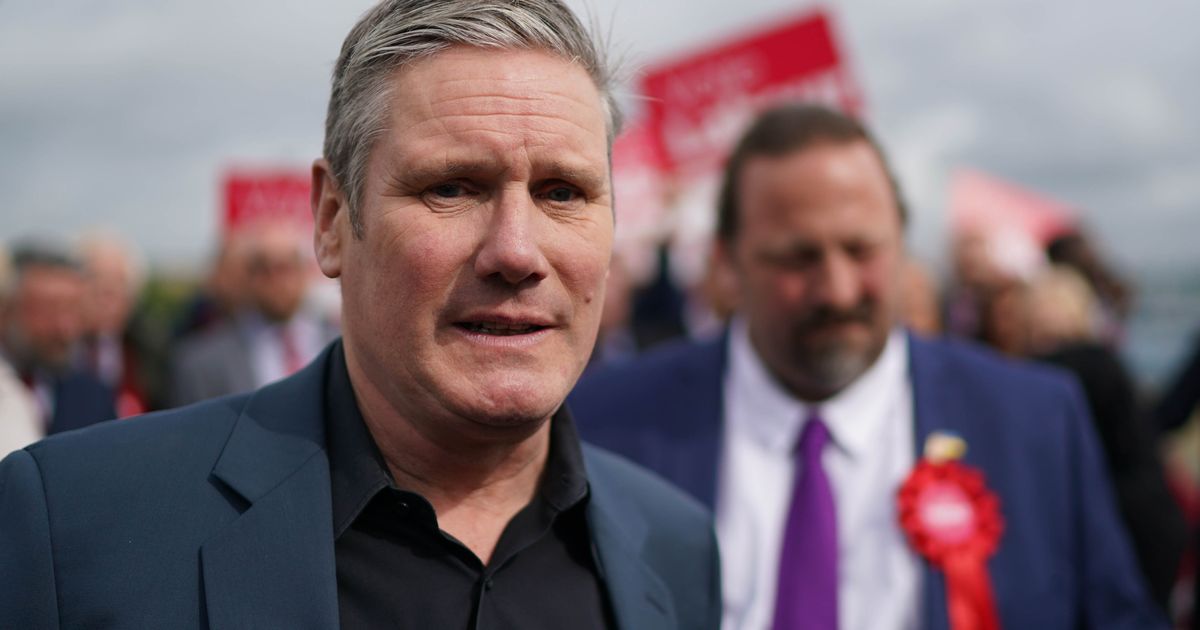
Starmer leaves home on Saturday morning

There were small glimmers of hope for Labour, with the party performing well in Wales where it secured an effective majority and “stemmed the tide of Leave voters flooding away to the Conservatives”, according to English.

The party also did well in so-called “blue wall” traditionally Tory seats, but which voted Remain in 2016 and are now beginning to turn to Labour.

Starmer is likely to be pleased with Labour taking the West of England and Cambridgeshire and Peterborough mayoralties.

And there were signs of a “Brighton effect” stretching out across the south coast as Labour took a swathe of seats on Worthing council, according to Hayward.

Starmer’s party even won a county council seat from the Tories in Chipping Norton, in the affluent Cotswold area where former prime minister David Cameron lives.

Labour can at least begin making up ground on the Tories thanks to these types of university-educated, Remain voters, as voters continue to turn British politics on its head.

But “in terms of the mathematics there are not enough blue wall areas to gain a majority in a general election, absolutely not”, English says.

“If Keir Starmer is looking for silver linings, he got beaten 5-2,” the pollster adds.

“Okay, you got hammered, but you scored two goals.”

3. Green surge

Labour supporters may want to look away now, because they have another problem with the Greens enjoying a good day across England.

The party has 14 seats on Bristol council, with the city still counting remaining areas, helped push Sheffield into no overall control following the long-running tree-felling row, and has done well in the suburban home counties.

Hayward says this is “a problem” for Labour as the Greens are “showing signs of being able to do well in towns and cities as the alternative [to Labour]”.

English meanwhile talks of a “pincer movement” with Labour losing seats to both the Greens and the Liberal Democrats.

But the Greens are also appealing to different kinds of voters, and have taken more seats from the Tories than Labour, according to English.

“They are winning seats off everyone all over the country, including in places where Labour couldn’t even dream of winning,” he says.

“And they are building these coalitions of voters who are very different types.

“It would be really daft to think that they are just young, hippy, liberal voters and old tree huggers who vote for them, it’s not.”

4. High profile Tory mayors dig in

Ian Forsyth via Getty Images

Re-elected Tees Valley mayor Ben Houchen with health secretary Matt Hancock

While Labour looked set to win 11 of the 13 mayoralties being contested in cities and metropolitan regions across England, the party’s heavy defeats in former strongholds in the West Midlands and Tees Valley provided more evidence of the Brexit alignment.

Andy Street was re-elected in the West Midlands with more than 48% of the vote, embarrassing Labour challenger Liam Byrne, who suggested he could win easily.

And Ben Houchen’s thumping victory in Tees Valley with 73% of the vote inspired Johnson to reportedly leave a voice note for the current toast of the Tory Party saying: “You’re just showing off now with that majority”.

English says: “Is it because the Conservatives are flooding money into these places so the mayors can campaign on it?
“Or you could flip it around, and the Conservatives would say that’s just evidence the mayors have done a bloody good job, securing money for their areas.

“There are general incumbency effects as well – once you’ve got a mayor in there and they have done a good job, they are going to get rewarded.”

5. Scottish independence

Perhaps the most significant result of them all was north of the border, where Nicola Sturgeon’s SNP fell just short of the overall majority that would have made her calls for a second independence referendum even more difficult to ignore.

However, there is a majority in Holyrood for another referendum, thanks to the pro-independence Greens picking up eight seats to add to the SNP’s 64.

In response, there are signs that the UK government’s position on a referendum may be softening slightly.

Cabinet Office minister Michael Gove made clear on Sunday that now was not the time for an independence vote, with the UK recovering from coronavirus.

But he pointedly refused to say the Westminster government would go to the Supreme Court to block referendum legislation from Holyrood, and stopped short of an outright rejection of another vote in an interview with ITV Scotland.

Share Button