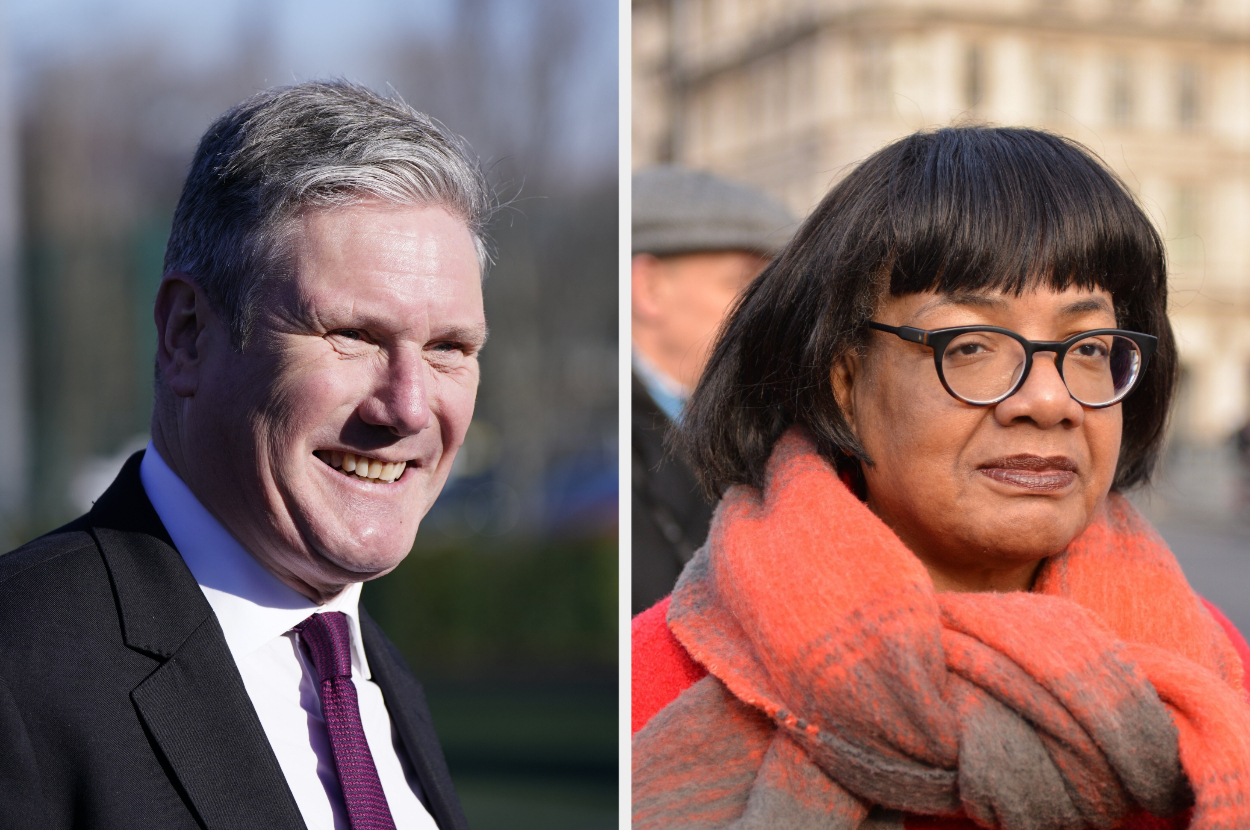
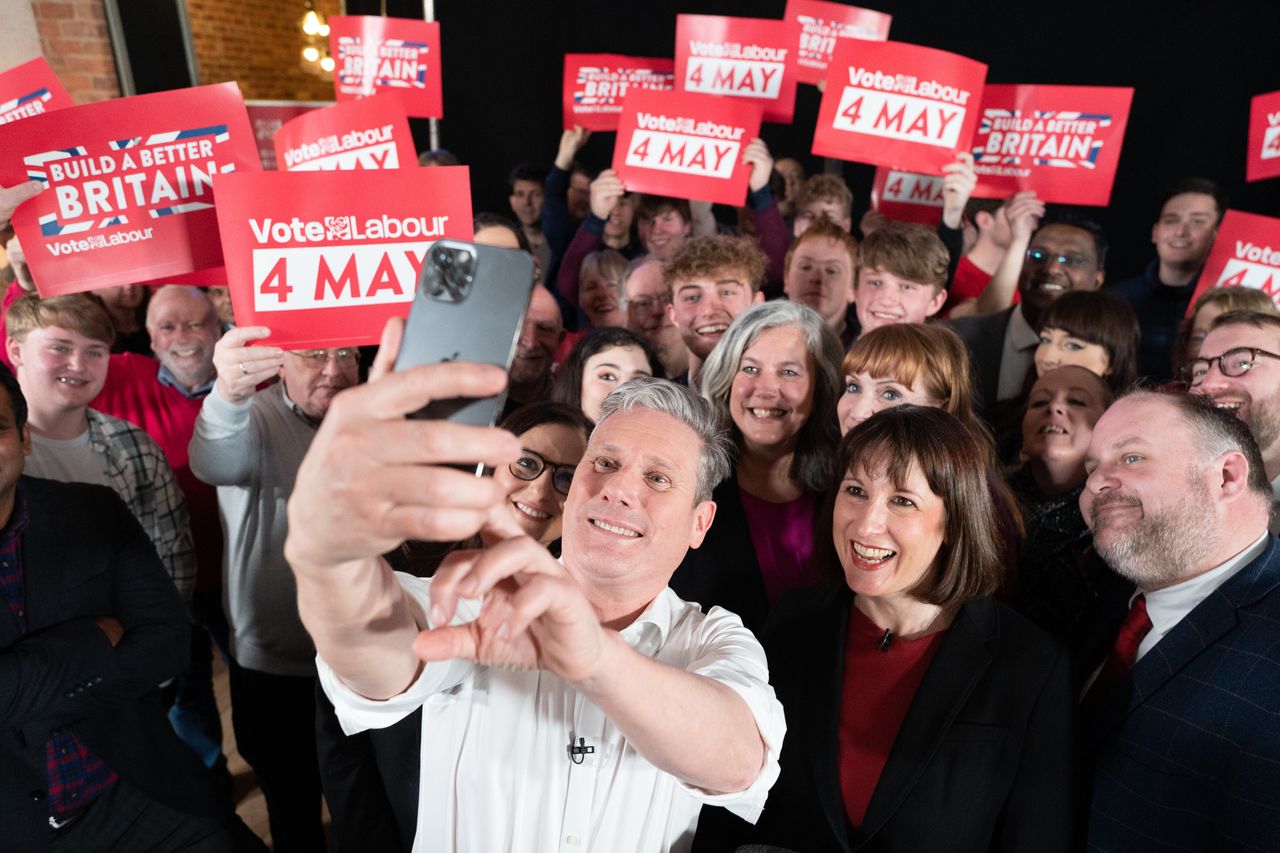
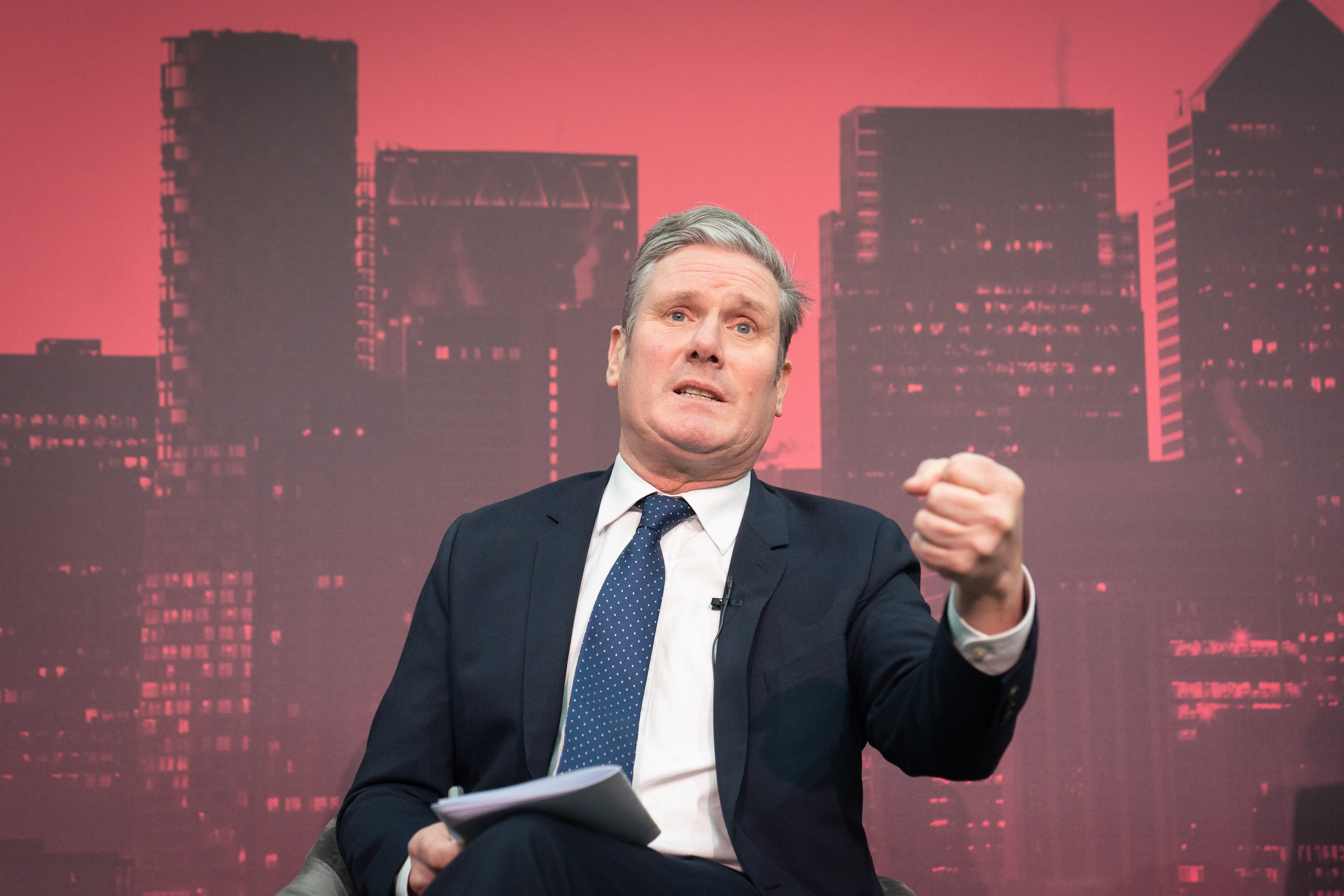
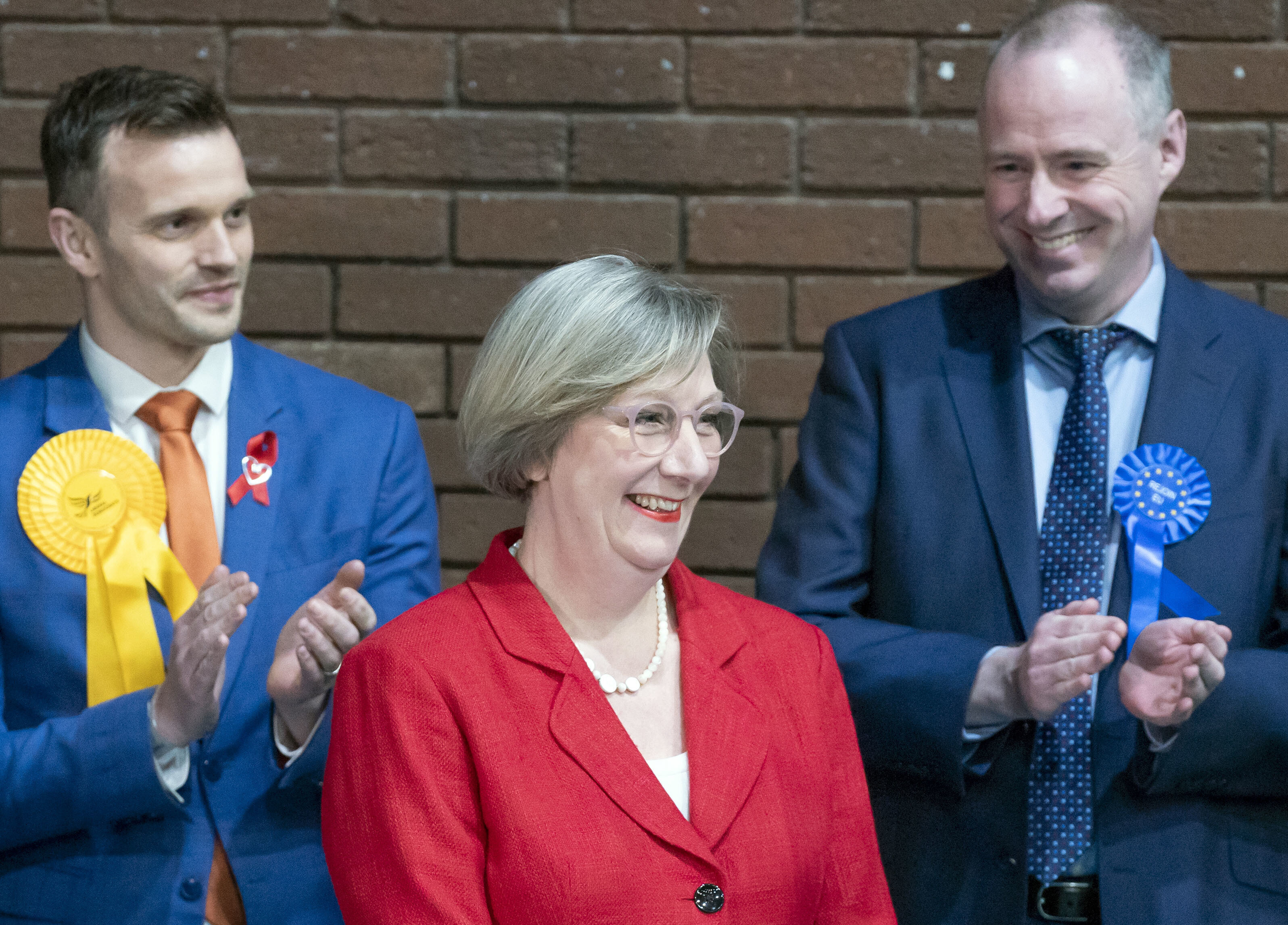
The Labour Party has surged to an astonishing 33-point lead over the Tories, according to new polling.
The YouGov poll, carried out on Wednesday and Thursday, put Labour on 54% (+9) compared to the Conservatives’ 21% (-7).
Advertisement
The Times, which commissioned the poll, said it is believed to be the largest poll lead enjoyed by any party with any pollster since the late 1990s.
It follows a successful Labour conference in Liverpool and, more importantly, market turmoil and public outcry following Kwasi Kwarteng’s mini-budget last Friday.
The poll also shows the gap between the Lib Dems in third (7%) and the Tories is smaller than between Labour and the Conservatives.
With reports of unease among Tory MPs after the market chaos of recent days, some have called for an urgent change of course from the prime minister.
Julian Smith, a former Cabinet minister, urged the government to “take responsibility” for the crisis.
“The government must scrap 45p, take responsibility for the link between last Friday and the impact on people’s mortgages and make clear that it will do everything possible to stabilise markets and protect public services,” he tweeted.
Former science minister George Freeman called on the Cabinet to meet and agree a “Plan B”.
“The economic package of borrowing & tax cuts announced last week clearly can’t command market or voter confidence,” he said on Twitter.
Advertisement
Truss and Kwasi Kwarteng have insisted their £45 billion package of tax cuts is the “right plan” to get the economy moving despite chaos on the financial markets and fears of rocketing mortgage bills.
In their first public comments since the pound hit a record low on Monday, neither the prime minister nor the chancellor commented directly on the turmoil created by his mini-budget.
During a round of BBC local radio interviews, Truss said the government had to take “urgent action” to kick-start the economy and protect consumers from rising energy costs.
And during a visit to an engine plant in Darlington, Kwarteng said the package he announced in the Commons on Friday was “absolutely essential” if the economy was to generate the revenues needed to fund public services.
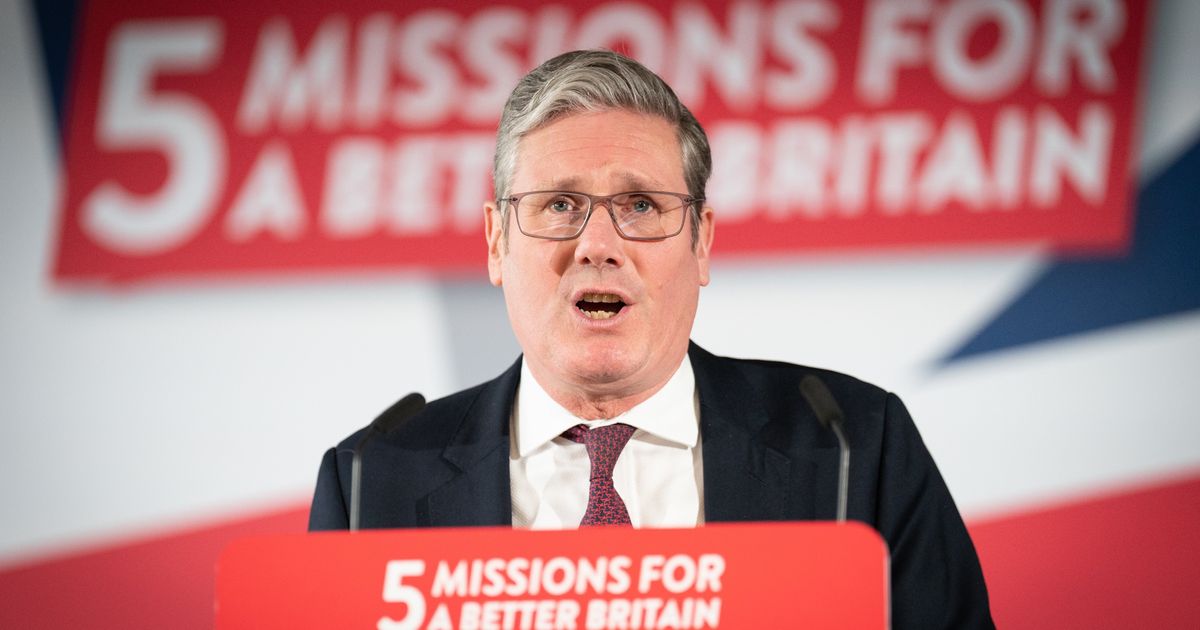
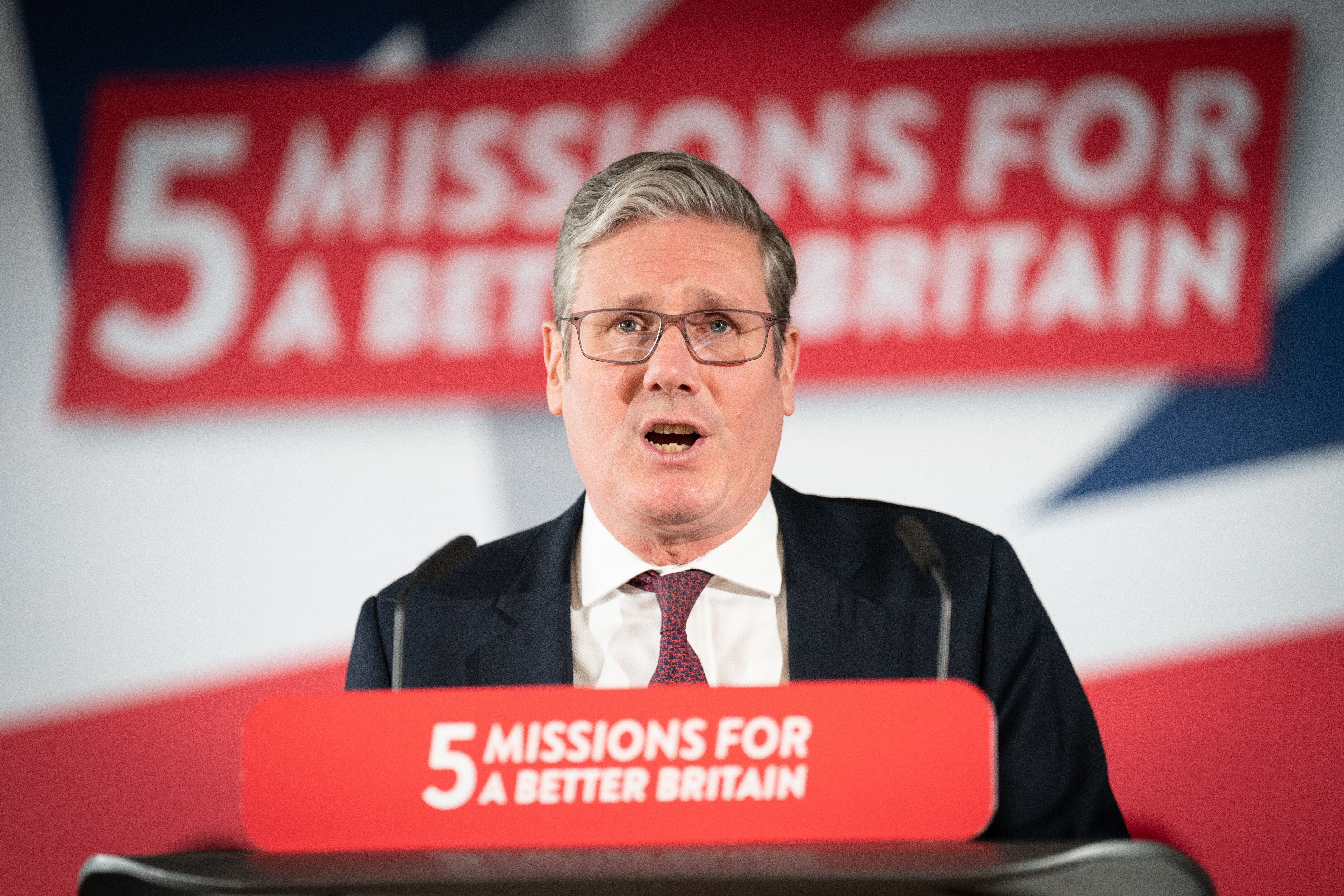
The Labour leader gave a confident and assured pitch not only to the party faithful, but to the country at large — to a Britain that he described as “all at sea”.
Advertisement
Starmer’s speech was designed to demonstrate that he was listening and that Labour was ready to step up where the Tories had stepped down.
Channelling the late Queen Elizabeth’s dedication to duty, he said it was now time to “turn our collar up and face the storm”.
Here are five things we learned from Starmer’s conference speech.
Labour is capitalising on Tory woes
Starmer said there were “two sides of Britain”: one of order and unity characterised by the queue to see the Queen’s lying-in-state, and one where a “cloud of anxiety hangs over working people”.
Starmer firmly pinned the blame for such anxiety on the Tories, whom he portrayed as reckless vandals: “They haven’t just failed to fix the roof. They’ve ripped put the foundations, smashed through the windows and now they’ve blown the doors off for good measure.”
“The government has lost control of the British economy – and for what?” he said. “They’ve crashed the pound – and for what?
“Higher interest rates. Higher inflation. Higher borrowing. And for what?
“Not for you. Not for working people. For tax cuts for the richest one per cent in our society. Don’t forget. Don’t forgive.”
The sense of crisis provides Labour with an opportunity to play the adult.
“At moments of uncertainty like this we must provide clear leadership,” he went on. “We must stand with working people. Meet their ambitions for real change. Walk towards a better future. And build a new Britain, together.”
While the Tories had “failed to prepare” for the economic crisis the UK now finds itself in, Starmer said he was looking to the future by transitioning to a green economy that would give “British power to British people”.
“Green and growth don’t just go together – they’re inseparable,” he said.
“The future wealth of this country is in our air, in our seas, in our skies. Britain should harness that wealth and share it with all.”
The phrase “British power to British people” was not only literal but metaphorical.
Starmer redefined Labour as the party of aspiration, accusing the Tories of failing to understand how they had “choked it off for working people”.
He recalled a meeting with a woman in Grimsby who told him: “I don’t just want to survive; I want to live”.
“Conference, I want to look her in the eyes after five years of a Labour government and I want to know that she, and millions of people like her, are not just surviving, they’re thriving.”
Advertisement
Taking on the Tories’ turf
The Tories have long been regarded as the party of home ownership, but Starmer showed he was serious about reclaiming that title with a pledge to guarantee 70 per cent home ownership.
He said he would bring in a new mortgage guarantee scheme to help real first-time buyers onto the housing ladder.
“My message is this: if you’re grafting every hour to buy your own home Labour is on your side,” he said. “Labour is the party of home ownership in Britain today.”
Country first, party second
Labour has long been criticised for been inward-facing rather than outward- facing, constantly distracted by internal divisions and fights.
If Starmer’s first in-person conference speech was marked by addressing the active issues within his own party, this one will be remembered for how little the Labour Party featured in the leader’s speech.
Advertisement
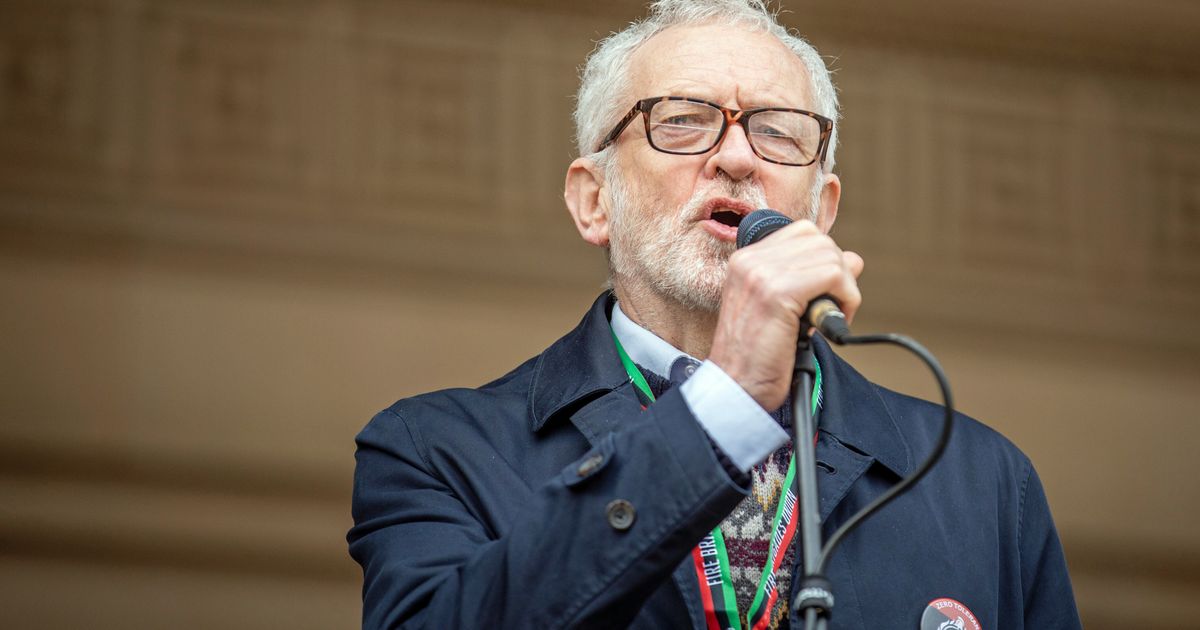
In a sign of the change the party has gone through under Starmer’s leadership, issues such as the problem of anti-Semitism and Jeremy Corbyn’s ambivalence to Nato, were mentioned as problems past, not present.
Labour’s moment?
Tony Blair famously described the Labour Party as the “political wing of the British people” in his conference speech in 1997 — the year that Labour would go on to win the general election by a landslide.
Starmer said that like 1945, 1964, 1997, “this is a Labour moment”.
Indeed, the party would be hard-pressed to find a moment more opportune to rebuild from the rubble.
Kwasi Kwarteng’s tax giveaway for the rich would not have looked out of place in Latin America and could lead to economic meltdown, according to Ken Clarke.
The Tory grandee – who served as chancellor under John Major – said the decision to scrap the 45p tax rate for high earners could send inflation even higher and cause the value of the pound to collapse.
Advertisement
Kwarteng unveiled a £45 billion package of tax cuts in Friday’s mini-budget, which he said would lead to increased economic growth.
But Clarke, who quit parliament in 2019 after nearly 50 years as an MP, said they would not work.
He told Radio Four’s ‘World At One’ programme: “I don’t accept – I never have, the Conservative party never has – the overall premise of the budget, which is that you make tax cuts for the wealthiest 5 per cent, and it makes them work so much harder, and [there’s a] rush to invest.
“I’m afraid that’s the kind of thing that’s usually tried in Latin American countries without success.
“I do not think you stimulate growth by cutting taxes on the better-off, or taxes on business. If it was so simple, we would have got rid of taxes all together some time ago.
Advertisement
“What the increased spending power … is going to do is run the risk of further stimulating inflation. And we’re going into a serious inflationary recession this winter.”
Kwarteng is paying for the tax cuts by piling another £70 billion on the national debt, which Clarke said was now too high.
He said: “We’re heading in the Italian direction. That is going to be a problem, a very great problem, in the short term if it leads to a collapse in the pound and the loss of confidence in our economy. We’re going to drive investment away, not attract it.
“I don’t think anybody I was ever in government with would have contemplated a budget like this.”
Kwarteng this morning defended his mini-budget, and suggested more tax cuts were on the way.
He said: “We’ve got to have a much more front-footed approach to growth and that’s what my Friday statement was all about.
Advertisement
“I think that if we can get some of the reforms … if we get business back on its feet, we can get this country moving and we can grow our economy, and that’s what my focus is 100 per cent about.”
He said: “I do not think that the choice to have tax cuts for those that are earning hundreds if thousands of pounds is the right choice when our economy is struggling the way it is, working people are struggling the way they are and our public services are on their knees. So it is the wrong choice.
“I would reverse the decision that they made on Friday, let’s be absolutely clear about that.”
The investigation into whether Keir Starmer and Angela Rayner broke Covid laws cost taxpayers £101,000, it has emerged.
A team of nine officers from Durham Constabulary’s major crime team – who normally work on cases like serious sexual assaults and murders – worked a total of 3,203 hours on the so-called “beergate” probe.
Durham Constabularly initially dismissed claims that Starmer had breached anti-Covid laws by eating a curry and drinking beer with Labour staff in the constituency office of City of Durham MP Mary Foy on April 30, 2021.
But they re-opened their investigation earlier this year under pressure from the Conservatives.
Starmer had said he was “confident no rules were broken” and that there was “no equivalence” between the accusations levied at him and the partygate scandal that contributed to Boris Johnson’s downfall.
In a major political gamble, both he and Rayner stated that they would stand down from their posts if they received fixed penalty notices from the police.
Durham Constabulary said their investigation found that the event was “reasonably necessary work” and therefore allowed under the rules.
Advertisement
A Freedom of Information request by the NationalWorld website revealed the cost to the public purse of the police probe.
The nine officers involved in the investigation were a detective superintendent, a detective inspector, a detective sergeant and six detective constables. Two other police staff members also took part.
In a statement after he was cleared, Starmer said: “I’ve always said no rules were broken when I was in Durham.
“The police have completed their investigation and agreed: there is no case to answer.
“For me, this was always a matter of principle. Honesty and integrity matter. You will always get that from me.”
Shortly after the Queen’s coffin arrived on Wednesday at Westminster Hall, where as many as 400,000 people are expected to witness the lying in state, politicians joined the royals in a service remembering the late monarch.
But an image of prime minister Liz Truss and Labour leader Keir Starmer was quickly seized upon on social media. It’s not the first time the new Conservative leader has been mocked since the Queen’s death, with many commenting on her unusual curtsey when meeting King Charles.
A constant procession of mourners is continuing to make its way through Westminster Hall to pay their respects, with members of the public having queued for hours along the Thames.
The Queen’s state funeral on Monday will see 2,000 people including world leaders and foreign royals gather inside Westminster Abbey in London on for the final farewell to the nation’s longest reigning monarch.
Some 800 people, including members of the Queen’s Household and Windsor estate staff, will attend the committal service afterwards at 4pm in St George’s Chapel, Windsor Castle.
Truss said: “We are all devastated by the news we have just heard from Balmoral. The death of her Majesty the Queen is a huge shock to the nation and to the world.
“Queen Elizabeth II was the rock on which modern Britain was built. Our country has grown and flourished under her reign. Britain is the great country it is today because of her.”
Truss said the UK was now “a modern, thriving, dynamic nation” as a result of the Queen’s 70-year reign.
Advertisement
“Through thick and thin, Queen Elizabeth II provided us with the stability and the strength that we needed,” she said. “She was the very spirit of Great Britain and that spirit will endure.”
The PM said the late monarch had been “a personal inspiration to me and to many Britons – her devotion to duty is an example to us all”.
And she added: “In the difficult says ahead, we will come together with our friends across the United Kingdom, the Commonwealth and the world to celebrate her extra ordinary lifetime of service.
“It is a day of great loss, but Queen Elizabeth II leaves a great legacy.”
In his own tribute on Twitter, Johnson said: “This is our country’s saddest day,”
“We think of her deep wisdom, and historic understanding, and her seemingly inexhaustible but understated sense of duty,” he said.
“Relentless though her diary must have felt, she never once let it show, and to tens of thousands of events – great and small – she brought her smile and her warmth and her gentle humour – and for an unrivalled 70 years she spread that magic around her kingdom.
Advertisement
“This is our country’s saddest day because she had a unique and simple power to make us happy. That is why we loved her.
“That is why we grieve for Elizabeth the Great, the longest serving and in many ways the finest monarch in our history.”
Labour leader Keir Starmer said the country would mourn “the passing of a remarkable sovereign”.
He said: “We will always treasure Queen Elizabeth II’s life of service and devotion to our nation and the Commonwealth; our longest-serving and greatest monarch.”
Commons Speaker Lindsay Hoyle tweeted: “Few of us in the House of Commons have ever known a time when Her Majesty was not there, so her passing has left a huge hole in our lives.
“She was our equilibrium, our history, our guide and our Queen – and we will miss her beyond measure.”
Advertisement
Scottish first minister Nicola Sturgeon tweeted: “The death of Her Majesty Queen Elizabeth is a profoundly sad moment for the UK, the Commonwealth and the world.
“Her life was one of extraordinary dedication and service. On behalf of the people of Scotland, I convey my deepest condolences to The King and the Royal Family.”
Former prime minister Tony Blair said the Queen “was not only respected but loved”.
“Respected because of the qualities of duty, decency, integrity and fidelity which she embodied,” he said. “And loved because of the love and affection she bestowed on us.”
Lib Dem leader Ed Davey said: “We are all deeply mourning the profound loss of a great monarch, who served our country so faithfully all her life and who was loved the world over.
“For many people, including myself, The Queen was an ever-fixed mark in our lives. As the world changed around us and politicians came and went, The Queen was our nation’s constant.
Advertisement
“The Queen represented duty and courage, as well as warmth and compassion. She was a living reminder of our collective past, of the greatest generation and their sacrifices for our freedom.”
Meanwhile, RMT general secretary Mick Lynch announced that the rail strikes planned for September 15 and 17 have been suspended following the Queen’s death.
He said: “The RMT joins the whole nation in paying its respects to Queen Elizabeth.
“The planned railway strike action on 15 and 17 September is suspended. We express our deepest condolences to her family, friends and the country.”
But Lillis told Radio Four’s World At One programme that a “degree of silence” was needed from his fellow trade union boss.
Asked what he thought of her criticisms of Starmer, he said: “I don’t think it is fair, I think it’s actually unfair.
“I think Keir Starmer has demonstrated time and time again that he’s on the side of workers. He understands the industrial action that’s taking place at the minute.
Advertisement
“We have seen over 12/13 years now of wage stagnation across the economy from the 2008/2009 financial tsunami and we’ve seen employers squeeze employees and squeeze wages down. We need to be, as a trade union and Labour movement, putting the blame squarely where it belongs, and that’s with this Tory government, who have been missing in action.”
Lillis added: “Anyone that’s doing the Labour Party down isn’t doing us a favour.
“If you look over history, we’ve had six Labour prime ministers in our history and each time we turn on each other.
“This is a shadow cabinet that’s worked with the trade union leaders to come up with an employment rights green paper, looking at what they will introduce in power. So to turn round and say Keir Starmer’s not supportive of workers is not true.
“I think there’s a degree of silence needed sometimes and let the Labour leadership get on with taking the fight to the Tories and holding them to account for what’s wrong in this country.”
HuffPost UK revealed how Starmer has put Labour on a war footing in case the new prime minister – who will be announced in a week’s time – calls a snap election.
Labour lost 91,000 members in 2021, the party’s latest accounts show.
The accounts, published by the Electoral Commission, said the party’s membership fell from 523,332 at the end of 2020 to 432,213 in a year.
Membership peaked in recent years at 564,443 in 2017 at the height of the Jeremy Corbyn-inspired membership boom. It had fallen to 518,659 by 2018.
Advertisement
The party also ended the year with a financial deficit of more than £5 million.
The figures were described by Momentum as “alarming”, as the pro-Corbyn left-wing pressure group pointed the finger of blame at Keir Starmer’s leadership.
Income from membership fees dropped from £19.3 million to £16.2 million in 2021, though last year’s fees were comparable with 2017 and 2018 levels.
The party treasurer’s report described 2021 as a “difficult and demanding year”, with redundancy pay-offs to cut costs in the long term contributing to the loss.
These figures are alarming.
Keir Starmer’s pledge-breaking & factional approach have prompted an exodus of members and a financial crisis for the Party.
Yet the Leadership has welcomed these departures while alienating Labour’s affiliated trade unions.https://t.co/zKN159eAH7
“Party finances do remain challenging with pressure on income coinciding with increasing costs,” the report said.
The size of Labour’s deficit went up from £1 million to £5.2 million.
The report continued: “The one-off cost of the voluntary severance scheme contributed to the deficit result which required the allocation of cash reserves to fund. For the avoidance of doubt, the Party remains debt free.”
But the report also said there had been a return to more normal operations after Covid, and a Labour spokesman said the party was “on track to returning to a firm financial footing”.
In 2021, the party raised nearly £10 million in donations, including from members, supporters, major donors and unions, up from £5.7 million a year earlier.
Commercial income increased by £2.5 million in 2021.
Labour’s income was also significantly higher than the Conservative Party’s last year, raising nearly £46 million compared with the Tories’ £32 million.
Advertisement
A Labour spokesman said: “Thanks to Keir Starmer’s firm leadership and clear commitment to taking Labour back into power, the party is on track to returning to a firm financial footing – with commercial income and donations rising significantly.”
But Momentum blamed Starmer’s failure to stand by the 10 policy pledges made during the 2019 leadership campaign and his stance towards trade unions for the exodus of members.
The group tweeted: “These figures are alarming.
“Keir Starmer’s pledge-breaking & factional approach have prompted an exodus of members and a financial crisis for the Party.
“Yet the Leadership has welcomed these departures while alienating Labour’s affiliated trade unions.”
Last week saw the grimmest development yet for people struggling with the cost of living crisis, with experts predicting that already-unaffordable energy bills could reach an eye-watering £4,000 in January.
Energy bills, which have already risen as a consequence of Russia’s invasion of Ukraine, are set to soar further as the ongoing conflict puts a squeeze on supplies throughout Europe.
Advertisement
The energy price cap, which currently stands at £1,971, is set to increase to £3,582 in October.
The forecasts have prompted a sense of panic and a national conversation about what should be done to help people who may find themselves unable to pay their bills in the winter.
Here HuffPost UK takes you through what the main parties and figures are proposing and how their ideas have been received.
Liz Truss
Liz Truss has hardened her stance against a further windfall tax, dismissing the policy as “bashing business”.
Ian Forsyth via Getty Images
The frontrunner in the race to replace Boris Johnson has emphasised tax cuts as the main way she would help people struggling with bill hikes.
Advertisement
The foreign secretary has vowed to immediately reverse the 1.25 percentage point increase in national insurance as well as temporarily scrap green levies on energy bills.
In a recent interview with the Financial Times, Truss said she would hold an emergency budget to outline a new approach to the problem, which she said she wanted to be in the “Conservative way of lowering the tax burden, not giving out handouts”.
That prompted a U-turn of sorts by Truss who said that despite criticism, she was not ruling out further direct support for households completely.
She is said to be considering proposals from the Treasury that could see the price cap fall by scrapping a new allowance suppliers will be allowed to charge families in the winter, in a move that could reduce bills by a further £400.
Instead the shortfall would be made up by the government providing loans to suppliers. However, it is too late to have an effect in October, when the cap is expected to rise once again.
Last week, analysis by the Tony Blair Institute found that Truss’s national insurance reversal would save the poorest families just 76p a month on average while the most wealthy households would benefit from by £93 a month from the policy.
Truss’s leadership rival, Rishi Sunak, also attacked her plan to scrap green levies, saying it would only claw back £150 a year.
Truss has also hardened her stance against a further windfall tax on energy giants, dismissing the policy as “bashing business”.
Rishi Sunak
Sunak has indicated he would expand existing support schemes when the price cap rises again in the winter.
Ben Birchall – PA Images via Getty Images
Advertisement
The former chancellor has committed to scrapping VAT on energy bills for a year and has also said he will expand the emergency support schemes already in place.
So far that scheme includes £650 off for the lowest income households, £300 off for eight million pensioner households, £150 off for those receiving non-means tested disability benefits and a £400 energy grant for every household.
In an article for the Times, Sunak said if he is elected PM he would extend the scheme that knocks £400 off bills for every household, rising to £1,200 for pensioners and those on benefits.
He also said he would “drive a programme to identify savings across Whitehall” in order to pay for expanding the help on offer, which The Times said would cost around £10 billion.
Sunak signalled the government could need to raise more revenue from the energy profits levy — the so-called windfall tax —and also refused to rule out “some limited and temporary one-off borrowing as a last resort to get us through this winter”.
Advertisement
According to the Institute of Fiscal Studies, removing VAT on bills would cost £4.3 billion to implement and would provide households with a relief of about £154 on their energy bills.
Labour
Finnbarr Webster via Getty Images
After initially facing criticism for being absent as the new energy projections were revealed, Keir Starmer has offered what he calls a “radical” response to the cost of living crisis.
The scheme would cost £29 billion and would be funded by increasing the windfall tax on energy firms’ massive profits by backdating it to January, in a move that would raise £8 billion.
Advertisement
The party argues that reducing energy bills would also have a knock-on effect on inflation which would lead to cut in government debt interest payments of £7bn.
The government’s current plan to offer £400 off energy bills for every household would be ditched as a result.
Responding to the proposals, the Paul Johnson, the director of the thinktank the Institute for Fiscal Studies, said inflation will continue to climb unless Labour continues to subsidise energy bills beyond the six-month period it has suggested.
He also told BBC Radio 4′s Today programme that Labour’s plan to cancel the rise in energy price cap would be “looking at the cost of furlough” if extended from six months to a year.
The Liberal Democrats
Ed Davey said Liz Truss and Rishi Sunak were Truss “more interested in speaking to their party than taking the action our country needs”.
Finnbarr Webster via Getty Images
Advertisement
Liberal Democrat leader Ed Davey called on the government to cancel the price cap rise in October to help people save hundreds of pounds off their energy bills.
Davey said energy suppliers could supply customers with their current rates if the government covers the shortfall to allow them to do so.
The Lib Dems said the policy would cost £36 billion and said the windfall tax on oil and gas company profits should be increased to help cover it.
…And former PM Gordon Brown
Gordon Brown criticised the Tory leadership candidates, saying: “Time and tide wait for no one. Neither do crises. They don’t take holidays, and don’t politely hang fire – certainly not to suit the convenience of a departing PM and the whims of two potential successors.”
Jeff J Mitchell via Getty Images
Perhaps the most radical response to the energy crisis has come from former Labour leader Gordon Brown, who is no stranger to navigating the country through a crisis.
Under Brown’s plan, the energy price cap would be scrapped and new, lower prices would be negotiated with energy giants, who are all raking in bumper profits as gas prices surge.
If firms fail to bring prices down, the government should consider bringing them into public ownership“as a last resort … until the crisis is over”.
There is a huge vacuum at the heart of government as the Conservative Party tears itself apart over Boris Johnson’s replacement.
It is a government mired in scandal, weary after 12 years in power and looking increasingly out of touch in a cost of living crisis.
Advertisement
The prime minister and chancellor were both on holiday when the Bank of England made its gloomy forecast that Britain faces a recession and soaring inflation.
But as outriders for Liz Truss and Rishi Sunak fight like rats in a sack, where is the Labour Party?
Conservative Leadership hopeful Liz Truss.
Ian Forsyth via Getty Images
Keir Starmer is said to be on holiday right now, but that shouldn’t stop the party launching fierce interventions and bright ideas.
Holidays are important but isn’t winning elections even more important? Especially given their criticism of the Tories being “missing in action”.
Advertisement
In this brutal game of chess, surely any ruthless political strategist would see that now was an opportune moment to strike.
Certainly, the Labour Party has been describing itself as a “government in waiting” in recent statements. Now would be a good time for frontbenchers to show they can act like one.
But we have heard more from Lib Dem leader Ed Davey and ex-Labour prime minister Gordon Brown in the last 24-hours than we have from Labour all week.
And let’s not forget money saving expert Martin Lewis who has long been at the front clobbering the government over the cost of living crisis.
Within a few weeks the next prime minister will be appointed, the narrative will shift and there will likely be a cessation in Tory infighting as MPs row in behind their new leader.
Advertisement
Once in power, the new PM will have the machinery of government at their disposal and will turn their sights on the electorate at large.
Labour leader Sir Keir Starmer with Shadow Culture secretary, Lucy Powell (left) and Shadow Chancellor, Rachel Reeves.
Stefan Rousseau – PA Images via Getty Images
The public might just decide that “well it’s a new government, a new crisis so maybe let’s give them one more shot”.
Heck, it’s worked before. The Conservatives are the party who have managed to reinvent themselves time and again over the last decade in order to stay in power.
Labour will have fewer opportunities to get their messages across as the country hurtles towards the next general election.
Advertisement
In fact, Labour keep calling for an early election. Are they even ready for it?
Of course you can’t expect Labour to make up policies on the hoof, the Tories might even nick their ideas [again] and let’s not even go there on Labour’s decision making processes.
However, after the government relied on so-called “red meat” policies to keep its head above water, the public is now begging for proper solutions.
Perhaps now is the perfect window of opportunity for Labour to show some leg, instead of descending into their own bouts of infighting (see Sam Tarry).
Scotland aside, the political pendulum will one day swing back to Labour, but the speed at which it swings depends on a number of factors.
Pundits joke about who would want to be in government at this dire time. But if you don’t want to rule, why are you in this game at all?
Advertisement
It might be silly season but there’s nothing funny about the news that millions of families face soaring bills and being plunged into poverty.
Labour has been suffering from a lack of confidence since its devastating 2019 defeat.
But they have been handed a political gift in the form of a Tory leadership race – they should start weaponising it now.