My Mum Tortured Me And Made My Brothers Her Enforcers. Years Later, I Finally Discovered Why.

If the plane crashes, I will finally be free.

The thought came to me often when I was a young teenager, as easily as breathing. My mother was away, and I imagined what life would be without her. The fantasy didn’t last — she always came home — and everything exploded.

One night in 1969, I was in the car with my friends. I was running 30 minutes late. I’d tried to call my mom from a public phone booth, but the rotary dial was broken. My stomach tightened. I knew what awaited me.

As the headlights swept across the driveway, I saw her standing there — stiff and stern, her body rigid with rage. One hand clutched our dog’s leash, the other gripped a glass of water and was trembling slightly — not from fear, but from fury held barely in check. Her jaw was so tight, it looked like it might snap.

Brightly lit by the car lights, she hurled the water in my face before I could even say hello.

“Walk the dog,” she snapped. “I don’t care if you get raped — if you weren’t already.”
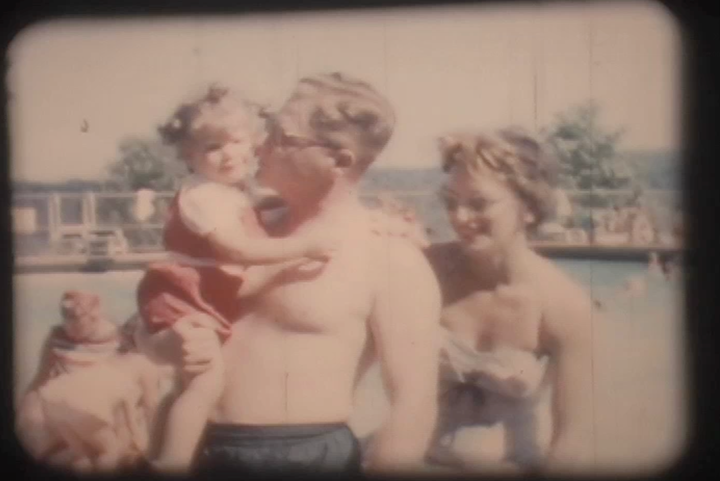
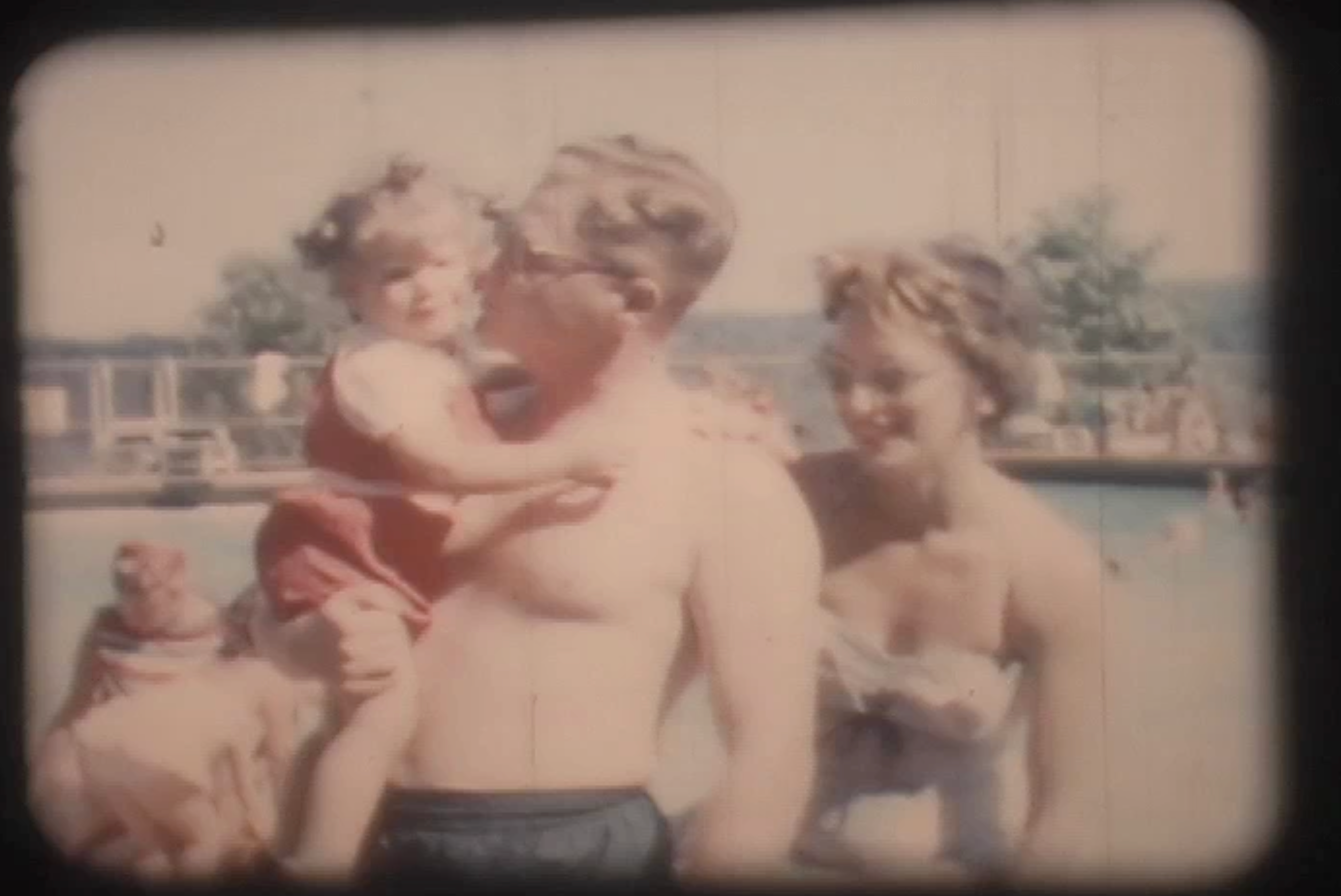
The author with her father and mother in 1955.

Courtesy of Gayle Kirschenbaum

The author with her father and mother in 1955.

She marched to the car and demanded everyone’s phone numbers. I burned with humiliation. I knew this wasn’t the end — it was only the beginning.

Inside, she ordered me upstairs. Her angry breath followed me like a shadow. My father was asleep. She ripped every item from my closet and screamed at me to put everything back. Every time I tried, she tore it all out again. Her rage was unstoppable. It was as if she saw the devil… and that devil was me. Her fury was always aimed at me.

If you believe in deeply personal journalism — the kind that connects us in our hardest, most honest moments — please consider becoming a HuffPost member today.

That night bled into the next day. At our cabana at the local beach club, she forced me into a skimpy bikini. I was painfully thin and flat-chested, and ashamed of my body. My mother refused to let me wear my cover-up. My brother teased me constantly, saying things like, “The carpenters need you — they need flat boards.”

Mother had a solution, one I didn’t want. She stuffed my bikini top — the hard-cup kind — with foam falsies.

My worst fear happened. During swimming lessons, the pads floated out, one at a time. Everyone saw them and started laughing. I wanted to sink to the bottom of the pool and stay there.

Humiliation was routine for me.

My brothers became my mother’s enforcers. At her command, they once hoisted me onto the refrigerator and left me there, terrified, while the family ate dinner. I begged to be taken down. They laughed. She stayed silent.

One brother frequently pinned me down and shoved the dog’s blanket into my mouth as I squirmed and screamed. Mother’s voice would ring out from downstairs: “Leave your brother alone.” I was blamed even when I was the one being attacked.

My body responded to the unpredictable attacks. I experienced dizzy spells. Headaches. Nausea. I lived in a constant state of fight-or-flight.

Childhood friends saw glimpses of my torment. They heard my mother call me in her high-pitched voice, order me around, and constantly interrupt my time with them. She forced-fed me oatmeal as my friends watched and were told to eat it too. They stopped sleeping over.
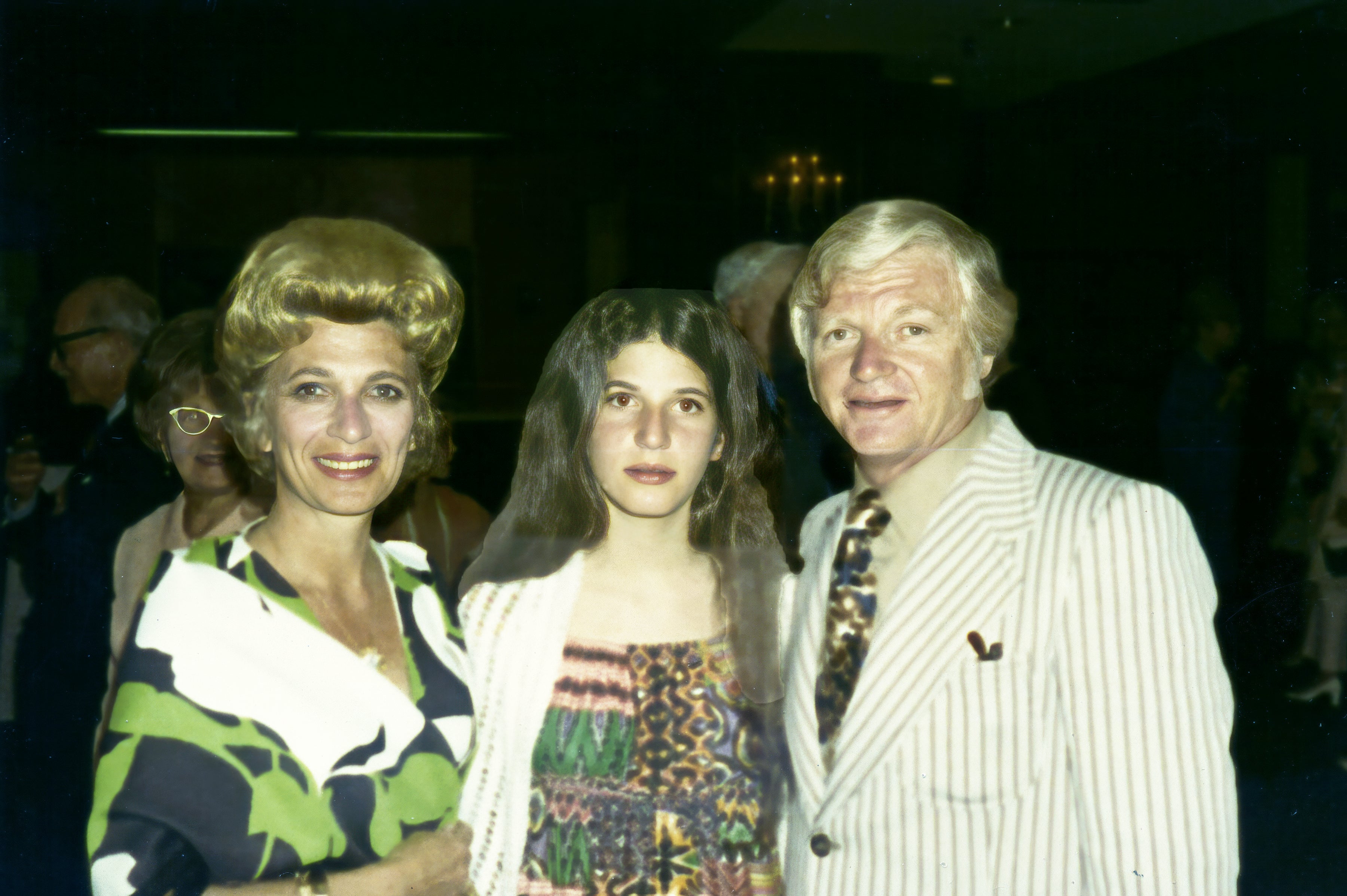
The author with her parents in 1969.

Kirschenbaum Family Archives

The author with her parents in 1969.

At 16, a social worker — likely from school — told me I had to get out. I can’t remember much about her; my memory has gaps so large that pages and even chapters of my life are gone. People get frustrated when I can’t recall them or our shared experiences. I do remember a sense of urgency and finding out how to graduate high school early, which I did.

By January 1972, I had fled 200 miles away to college at SUNY Binghamton. It was a hippie school then, and I fit right in. My long, thick, frizzy hair — which my mother constantly straightened when I was a child — was suddenly admired. I dove into the fine arts department, and began painting and drawing. I was surrounded by people who praised me instead of tearing me apart.

But I was still desperate to be loved. I said yes to too many boys because I thought saying no would make them leave. I fell in love for the first time, and experimented with drugs. I had relationships, but they didn’t last. I had made a vow: No one will ever hurt me again. My walls stayed high.

I couldn’t outrun the wounds.

My relationship with my mother remained toxic. She craved control. Once, she drove up for a surprise visit. When I walked into my apartment, she was sitting with my roommates, having already rummaged through my drawers.

When I was 20, she became convinced I was dying of lymphoma because I had slightly enlarged lymph nodes. Every doctor told her I was fine. She told friends I was dying anyway. Eventually, she found an elderly ENT at Mount Sinai who was willing to operate on me.

The night before my surgery, she jokingly said, “Now that you’re here, you might as well get a nose job.” It was something I never wanted, but she’d been campaigning for it since I was 14. She’d had her first facelift by then.

When I woke up from the anaesthesia, she was standing over me saying, “You’ll never guess what we’ve done?” I lifted my hand and patted my nose in fear that she had them do it when I was out.

The lymph nodes were benign, but the surgeon had cut against the grain of my neck, leaving a scar like a slash across my throat. I covered it for years with a scarf. Twenty-five years later, I decided to get a copy of the surgical report. I learned then that the doctor had accidentally cut my jugular vein. Many people die from that. I didn’t because the surgeon quickly stitched it closed with vascular sutures.
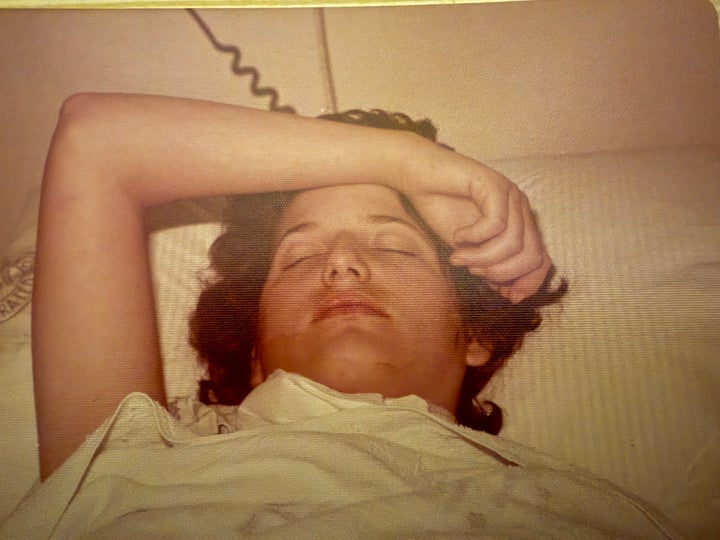
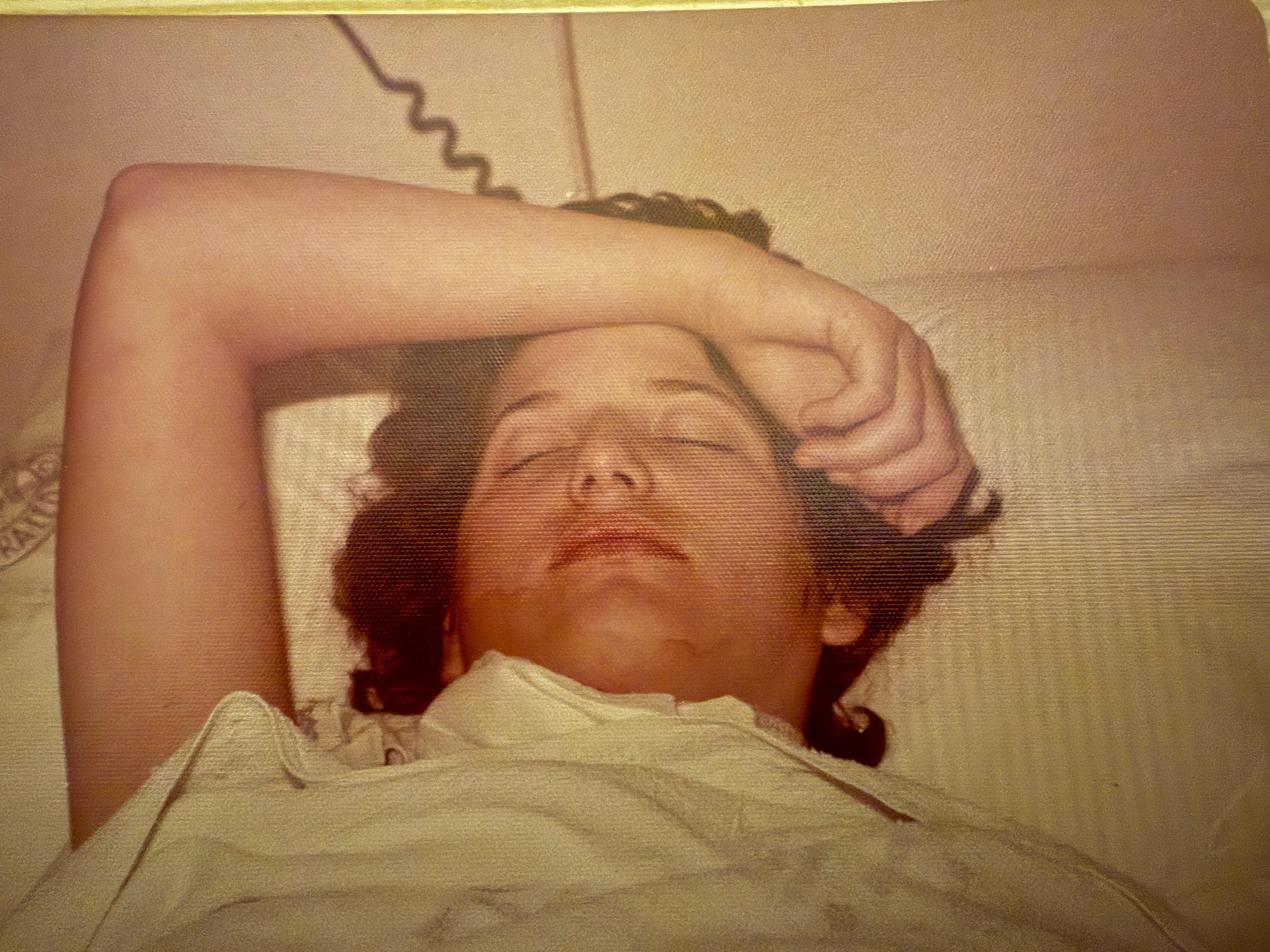
The author after neck surgery in 1975.

Courtesy of Gerald Kirschenbaum

The author after neck surgery in 1975.

Friends urged me to cut off contact with my mother. They heard my stories, my complaints, and some even witnessed the terror that she inflicted. I couldn’t do it. Even as a child, I’d sensed she must have been deeply wounded to be so cruel. I used to ask her brother, my Uncle Sonny, “What happened to Mommy when she was little? What happened in your childhood?” But I never got an answer. They grew up in a time when they learned not to share bad things. Instead, they buried them.

The truth is, I didn’t want to cut my mother off completely. Part of it was fear — the idea of losing her felt like another rupture I couldn’t survive. Part of it was that she wasn’t always cruel. We took countless road trips — on weekends, weeklong trips, even a cross-country drive. Mom had a sense of adventure and curiosity about life, which I inherited from her. And part of it was something harder to admit: I still wanted a mother. Even a damaging connection with her felt less painful than no connection at all. So when she pushed and pushed, I gave in to her.

When I was 51, I agreed to visit three plastic surgeons with her for consultations about my nose — but only if I could bring a camera crew. My mother instantly said yes. She loved attention. What resulted was a funny short film called “My Nose” about her relentless campaign to get me to have the surgery.

At film festivals, when I got off the stage after the Q&A, there was always a line of people who wanted to chat with me. They usually said the same three things:

“I love your nose. Don’t touch it.”

“I can’t stand your mother. How do you talk to her?”

“Let me tell you my story.”

Often their tale had nothing to do with their nose. Instead, it was about the childhood trauma they were still struggling with. Some of the people I met were much older than me, and their mothers were long deceased. I realised I wasn’t alone, and I wanted to do something to help others.

When “My Nose” played in Washington, D.C., The Washington Post ran a story about it on the cover of the style section. The first line of the piece was “Whatever your holiday woes this season, be glad you don’t have a mother like Gayle Kirschenbaum, and if you do, get thee to a psychotherapist.”

When Mom read it, she said, “Bad press is better than no press. I’m on the cover of The Washington Post.”

That told me everything. She loved attention at all costs.
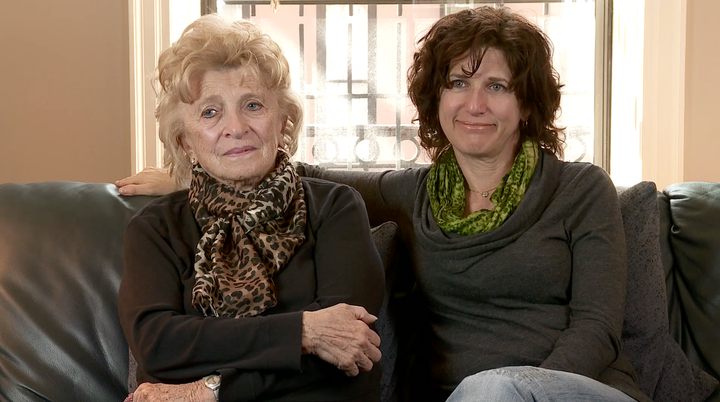
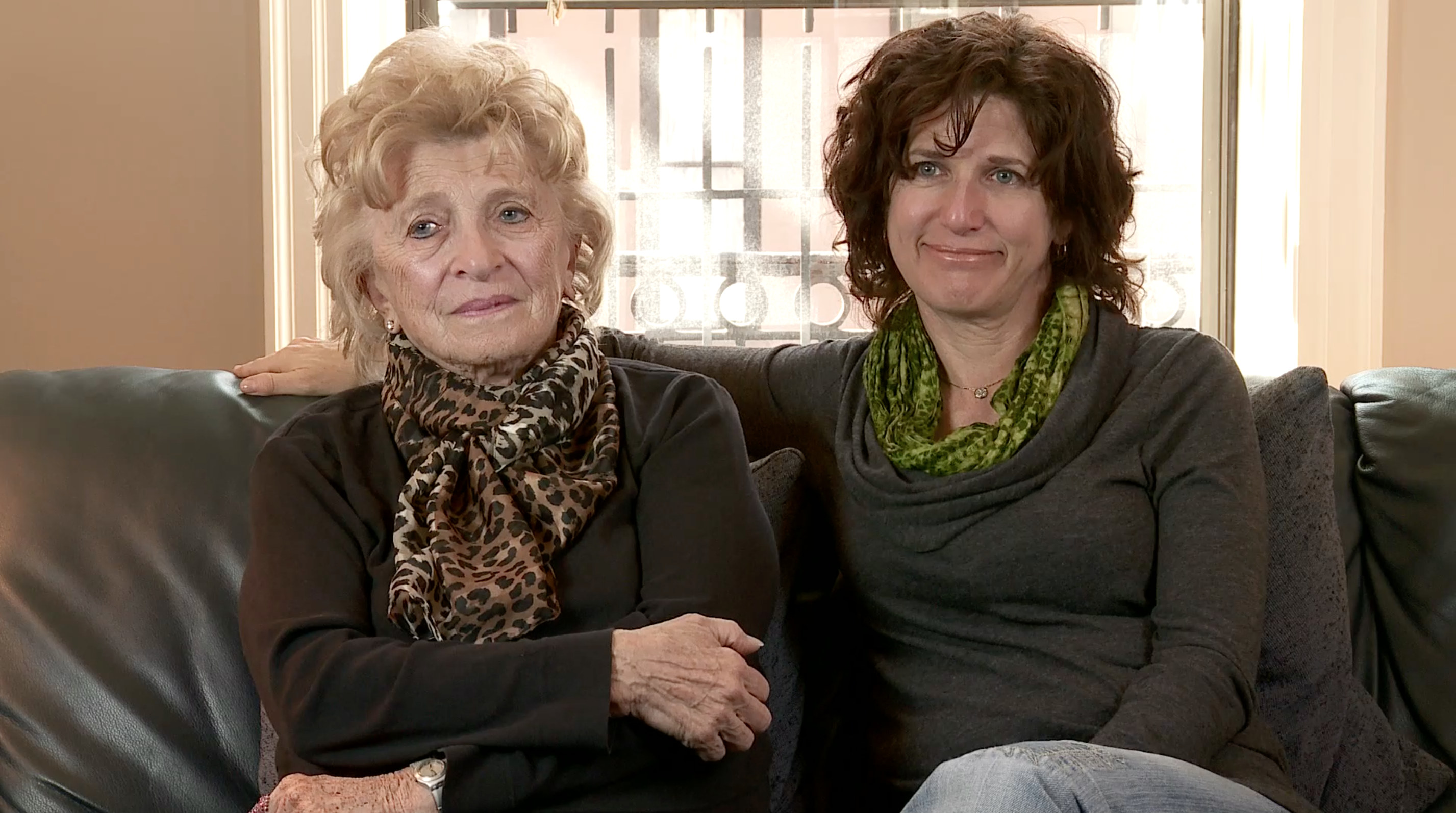
The author and her mother in a still from the author's film, "Look At Us Now, Mother!"

Courtesy of Gayle Kirschenbaum

The author and her mother in a still from the author’s film, “Look At Us Now, Mother!”

I asked her if she’d be willing to work on our relationship in front of the cameras. She said yes. I felt like I won the lottery. At the time, she was in her late 80s — funny, smart, happy, living well in a Florida country club community. I had a treasure trove of archival material: the 8mm films my father began shooting in the 1950s, old love letters, my childhood diaries, and tons of genealogy records I had dug up.

The resulting film ― “Look At Us Now, Mother!” ― is about our journey. The cameras rolled as I confronted her in therapy sessions. At first, she denied everything, but slowly, cracks formed.

“I once pulled a ‘Mommie Dearest’ on her,” she admitted, referencing the infamous movie about Joan Crawford’s abuse of her daughter Christina. The closet-and-clothes-hanger night? I was Christina. I was Christina many nights.

“I don’t remember why,” she told the therapist.

But I remembered.

I reminded her of the night with the water, the closet, the threats. I reminded her of the baby boy she told everyone she was giving birth to — Gary — and the baby girl — me — she got instead.

“You weren’t welcomed,” my brother confirmed. “She was just warmer to the males in the house.”

The therapists in the film helped me piece together my mother’s hardships: her father’s mental health issues and his two suicide attempts, the untimely death of her 18-month-old sister, and her family’s financial troubles. My grandmother had to roll up her sleeves and start a business as she was the only provider because her husband was depressed in bed. My mother told me, while wiping the tears from her eyes, how she’d spent more than one summer sitting alone in the lobby of Kings County Hospital while her mother visited her father for hours each day because children weren’t allowed upstairs then. It was the first time I had ever seen her get emotional like that.
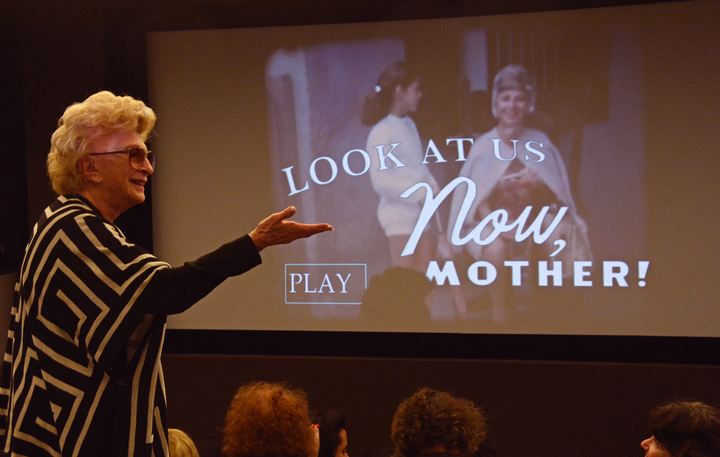
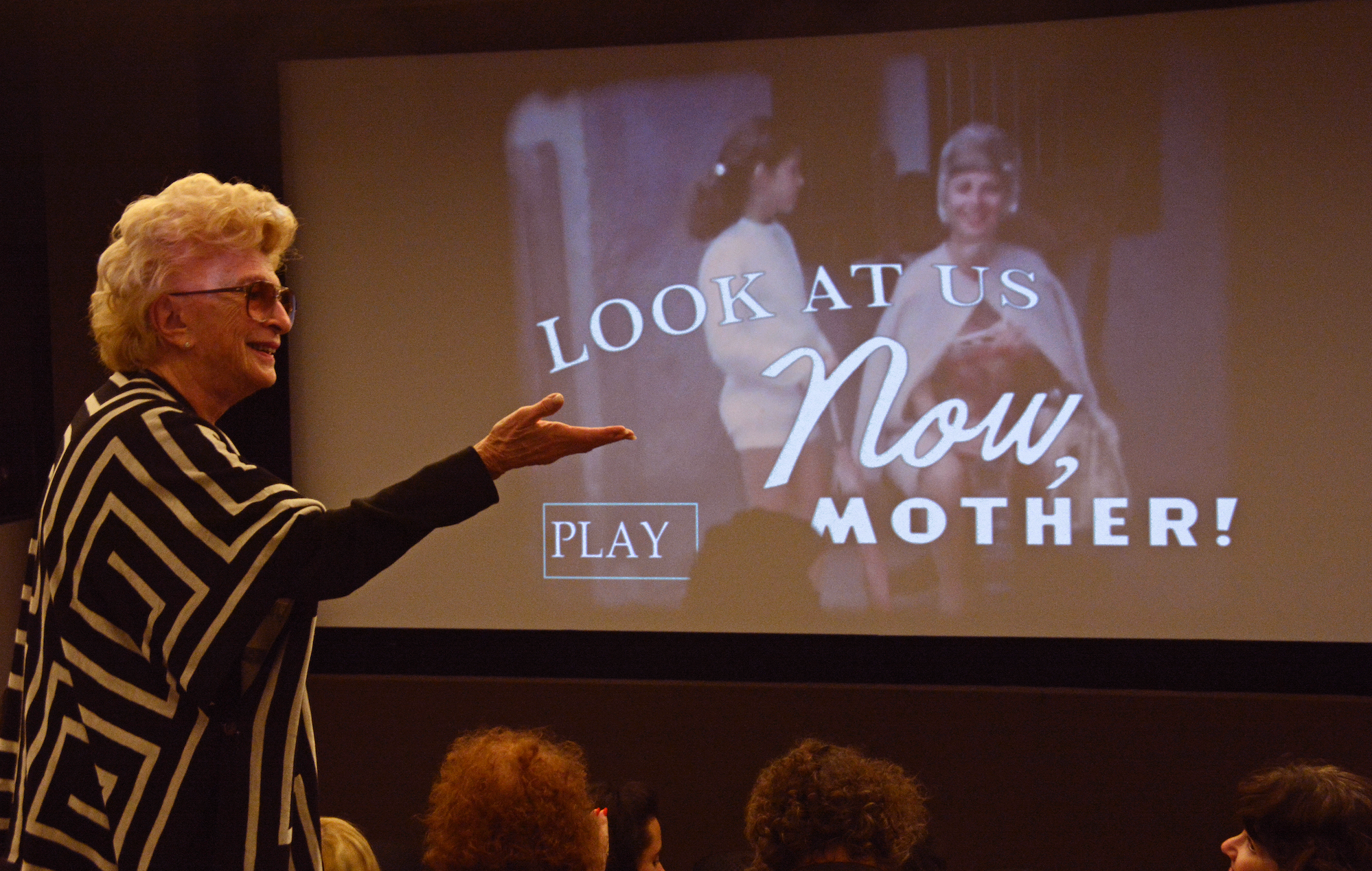
The author's mother at the screening of "Look At Us Now, Mother!"

Tina Buckman

The author’s mother at the screening of “Look At Us Now, Mother!”

A true turning point in my life came when a facilitator asked me to close my eyes and imagine my mother as a little girl. An image of my mother as a wounded child came into my mind. The facilitator then told me to imagine myself as a little girl. I knew I was a wounded child. Lastly, I was guided to imagine my younger self walking toward my mother’s younger self. She was no longer my mother or responsible for loving and nurturing me. We were just two wounded little girls who had finally met each other without any of our baggage.

That was the start of my forgiveness journey. It showed me how to reframe the person who had hurt me so much. When I began to see her as a hurt child, my expectations of her changed. When she unleashed her criticism on me, I no longer reacted — there was no more cowering or firing back with rage and anger. Instead, I dismissed it, ignored it, refused to feed it. She lost her power to hurt me, and slowly, she stopped trying.

I was no longer the pincushion that flinched with every stab — no longer the designated scapegoat.

And I chose to forgive her.

Not because she deserved it. Not because she asked. But because I could no longer carry her pain in my body. Forgiveness wasn’t letting her off the hook — it was taking me off it.

At 99, my mother made a video. It was around Yom Kippur, the Jewish day of atonement.

“Gayle, I was very harsh to you in so many ways, and for that, I ask your forgiveness. In my heart, I know you forgave me, but now I’m trying to forgive myself.”

The clip went viral.

Many people responded with some version of, “You’re so lucky. My mother never said sorry.”

What they didn’t know was that I didn’t need the apology. I had already forgiven her.

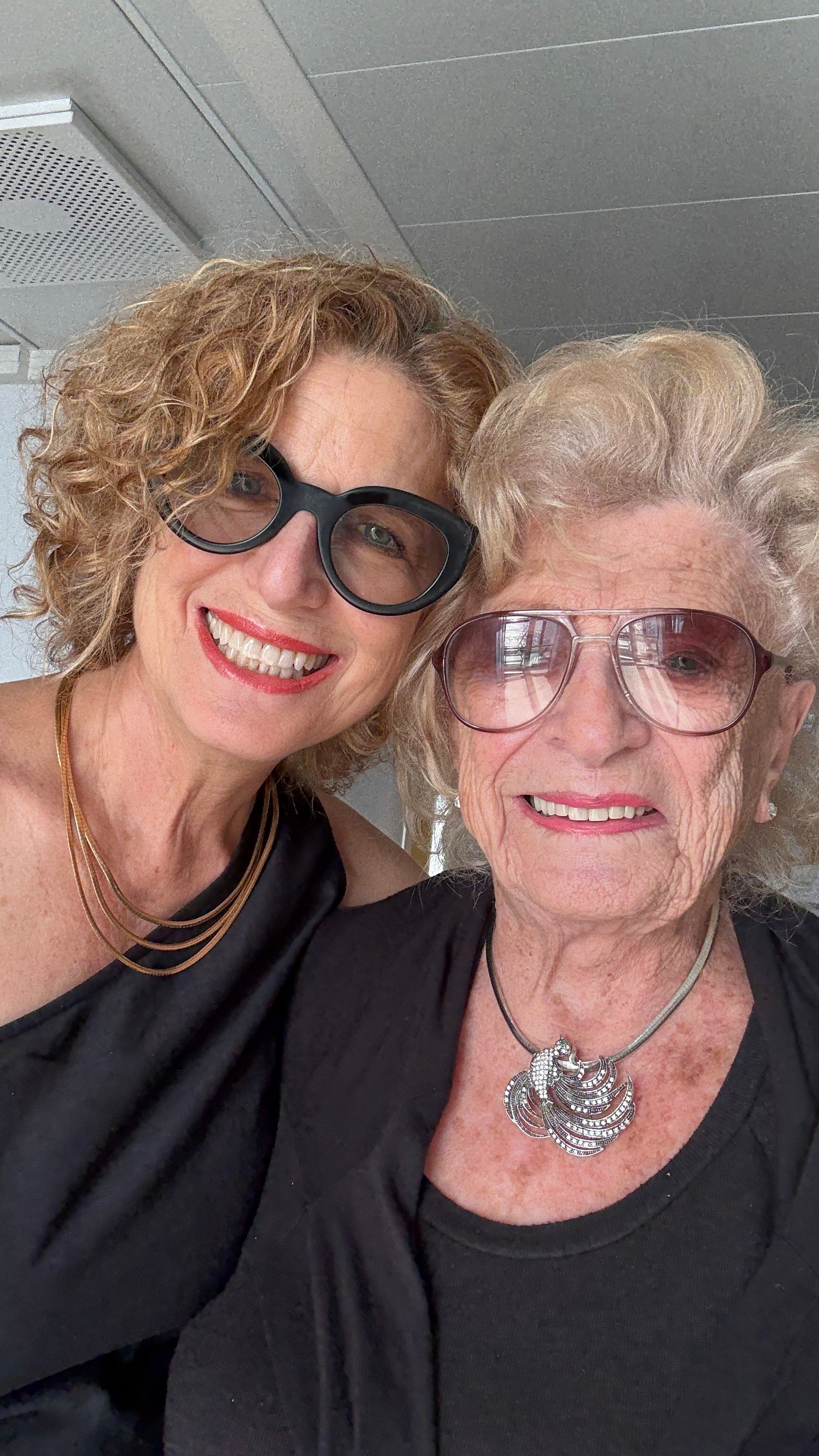
She’s now 102. We’re close — very close.
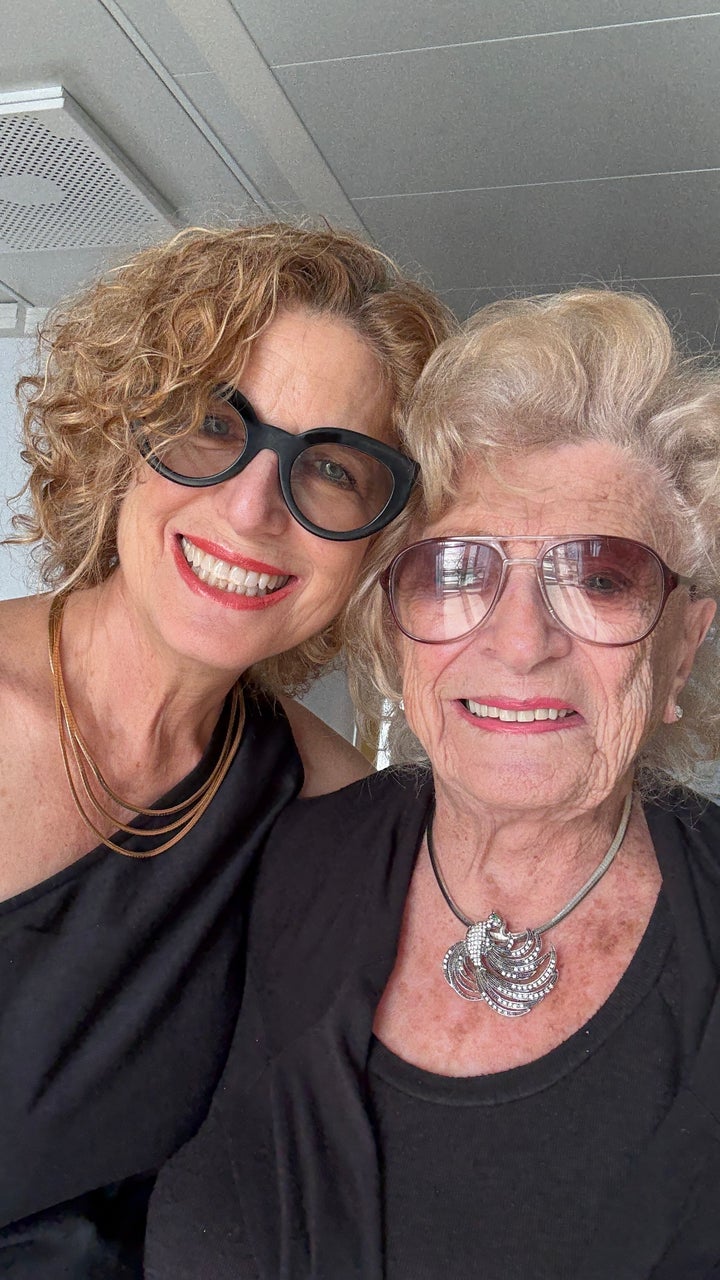
The author and her mother in 2025.

Courtesy of Gayle Kirschenbaum

The author and her mother in 2025.

Forgiveness didn’t come easily. But it came because I stopped waiting for her to change. I did the changing.

It’s not about forgetting the past. It’s about reclaiming yourself in the face of it.

My mother is not the woman she once was, and I’m no longer the girl she tried to destroy.

Sometimes, peace doesn’t come when someone apologises. It comes when you decide it’s time.

I did. And I’m finally free.

Gayle Kirschenbaum is an Emmy-winning filmmaker, writer, photographer, and forgiveness coach. Her film “Look At Us Now, Mother!” premiered on Netflix and has been credited with transforming lives. She co-authored “Mildred’s Mindset: Wisdom From A Woman Centenarian” with her mother, centenarian influencer Mildred Kirschenbaum. Her debut memoir, “Bullied To Besties: A Daughter’s Journey To Forgiveness,” has been praised by Publishers Weekly as “riveting and beautifully wrought.”

Share Button

I Had A Secret Teenage Romance. It Wasn’t Until Years Later That I Realised What Really Happened.

“I can’t stop thinking about him,” my client said. “I even daydream about our wedding.”

She stared at me intently from across the coffee table where our two cups of peppermint tea sat untouched. When I didn’t respond, she lowered her voice and said, “I just feel like we’re meant to be together.”

I’d been counselling this client long enough to know the “him” to whom she was referring was not her husband of 15 years. Instead, it was the much younger man she’d met two months prior at a yoga retreat.

“OK,” I said, reaching for my mug. “Let’s try to figure out why this person has such a hold on you.”

My client could have easily spent another hourlong session obsessing over “hot yoga guy” — which she’d done many times before — but I wasn’t going to let her. My job as a therapist was to help bring deeper awareness to her emotional experience and to identify what was simmering just beneath the surface, driving compulsive thoughts and behaviours. In this case — limerence.

Almost everyone, at some point, has experienced a romantic crush. However, unlike a typical crush, limerence is defined by obsessive ruminations, deep infatuation and a strong desire for emotional reciprocation — an unfulfilled longing for a person.

According to Dorothy Tennov, American psychologist and author of “Love and Limerence: The Experience of Being in Love,” limerence “may feel like a very intense form of being in love that may also feel irrational and involuntary.”

Tennov identified the most crucial feature of limerence as “its intrusiveness, its invasion of consciousness against our will.”

Limerence differs from the liminal dating phenomenon known as “situationships,”or “we’re dating but we’re also not quite dating.” While both feed off uncertainty, when someone is experiencing limerence, they often prefer the idea of their limerent object (LO) over being with that person in real life. In fact, they might actually feel something akin to disgust when in the physical presence of their LO. I understand this feeling all too well — my own limerent object held my heart and mind hostage for years.

Levi and I met on the first day of my sophomore year of high school in the mid-’90s. I was wearing baggy denim overalls and combat boots, and my blond hair was long and parted down the middle. I’d just gotten my braces off and my teeth were the straightest they’d ever be. Our relationship unfolded to the soundtrack of Baz Luhrmann’s “Romeo + Juliet” and “August and Everything After” by The Counting Crows. There were knowing looks and homemade mixtapes — filled with Dire Straits, Jewel and Better Than Ezra — passed discreetly in the hallway between classes. We were running through the wet grass, desperately wanting, but never quite having. We never actually dated.

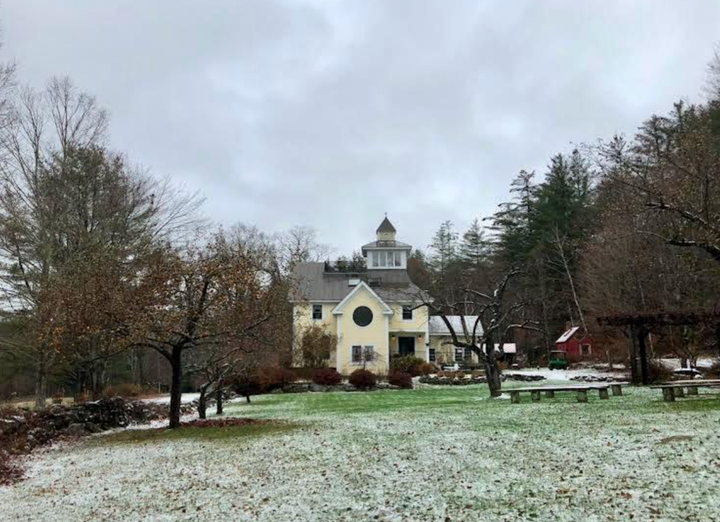
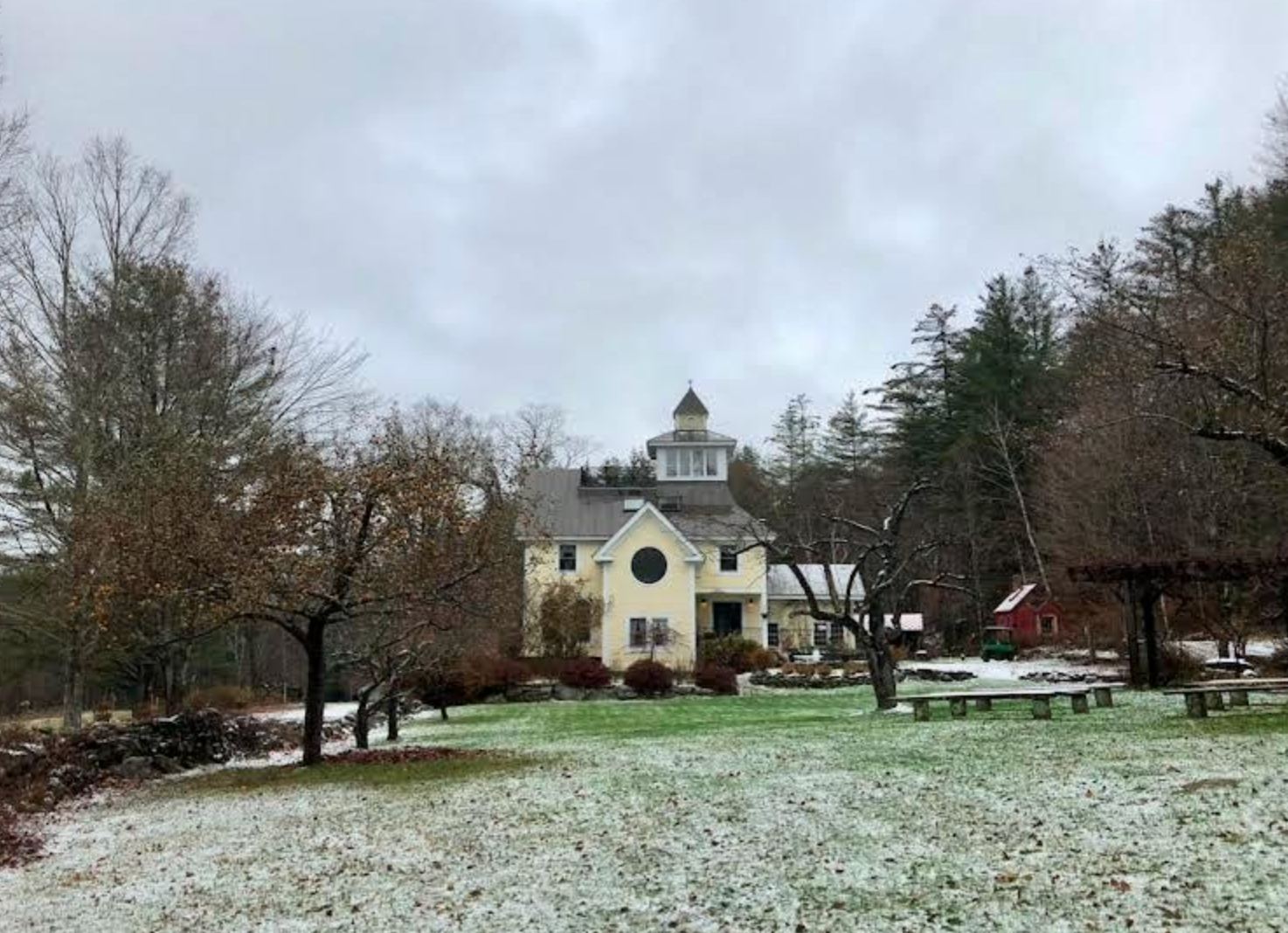
Earlier that summer, my family — minus my father — had moved to Woodstock, Vermont, from Boston. My parents were unhappily married, but instead of divorcing, they decided to lead two separate lives. My mother, a retired school administrator and former nun, moved to rural Vermont, and my dad stayed behind to work at his law firm.

Levi wanted to be my boyfriend. He was unwavering and absolute with his feelings as only a love-struck teenager could be. In response, I held him at arm’s length while dating other people. But late at night, I’d let him sneak into my bedroom on the top floor of my family’s rambling farmhouse and we’d lie tangled up together underneath the shiny soccer medals and enormous round window that hung above my bed. By homeroom the next morning, it was like it never happened.

The author's family home in Woodstock, Vermont.

Courtesy of Anna Sullivan

The author’s family home in Woodstock, Vermont.

Nobody needed to tip-toe around my house. After the move, my mother’s drinking escalated to the point where she often passed out in her bedroom before dinner. My father visited us once or twice a month. He spent the weekend arguing with Mom and left without saying goodbye. On Monday morning, I’d wake to find him gone and a pile of cash on the kitchen counter. By the time I left for college, my sister and I were basically parenting ourselves.

After college I moved to Manhattan. I casually dated — and even had a few serious relationships — but I’d be lying if I said I didn’t think about Levi. I thought about him a lot. Out of nowhere, his image would pop up, haunting my consciousness like a ghost. Memories of us lying in my twin-size bed, bathed in moonlight, played on a loop with Jewel crooning in the background, “dreams last for so long / even after you’re gone.” Eventually, I began to question whether I still had feelings for this person. Was he the one who got away?

The strange thing was every time Levi and I happened to be in the same city at the same time, I avoided seeing him. Something prevented me from exploring an actual relationship with him in real time. A therapist reasoned it was hard for me to let go of his memory because we never had closure, but her take always felt slightly off. My feelings for Levi felt primal — instinctual. Bone deep. Something I couldn’t shake.

In my late 20s — practically estranged from my father by this point — Levi reached out to me. It was a basic missive, but still, reading his name in my inbox sent an electric current up my spine. I felt like I’d been plugged into a wall. I replied and said I was good, even though I wasn’t. I’d just ended a long relationship that I thought was going to end in marriage. I was fleeing to New Mexico to pursue a graduate degree in counselling. My life was poorly packed in 20 boxes, stacked haphazardly in my parents’ garage. “How are you?” I redirected.

Levi invited me to coffee. I lost five pounds before we met at a familiar spot in our hometown the following week. I arrived wheeling a suitcase because I was hopping a flight to Santa Fe later that afternoon. He looked a lot different in person than he did in my imagination — older, his hair thinning.

Seeing him was like a controlled science experiment. He mostly talked about himself, and I felt relieved when it was time to go. Later that afternoon, as I boarded my flight, he emailed me: “If you’re still in town let’s meet for a drink….” His invite gave me goosebumps. I never responded.

Eventually, I finished graduate school and began my career as a counsellor. I met my husband, Alex, in Santa Fe, and we later got married and had two children. The years passed and we built a beautiful life together, though it hasn’t always been easy. Our older son was born with many challenging issues. Shortly after his first birthday, I lost my mother to fast-moving bone cancer. Less than two years later, I was diagnosed with breast cancer and underwent a unilateral mastectomy and adjuvant hormone treatments that pushed me into premature menopause.

Through it all, Alex stuck by me. He held my hand at my oncology appointments. He did the lion’s share of parenting our two toddlers while I recovered from surgery. He rocked me back to sleep when I woke in the night riddled with anxiety about mortality and motherhood, and he made me laugh when all I wanted to do was cry. Sometimes, I look back on those first years of married life and wonder how we ever made it through. But somehow, we did — together.

And yet, every now and then, I thought about Levi. He’d enter my consciousness without warning like a spectral whack-a-mole or a goblin. And then, just as quickly, his image would disappear, leaving me feeling guilty and ashamed. Even though I didn’t feel physically attracted to this person, the thoughts felt like a betrayal to my husband, who I loved. My sweet husband, who nursed me back to health after cancer and snaked the shower drain whenever my hair clogged it. How could I still be thinking of some random person from my past? I was starting to think I needed a seance for my psyche. Instead, I decided to utilise my professional training as a therapist to identify — once and for all — the origin of these adolescent ruminations.

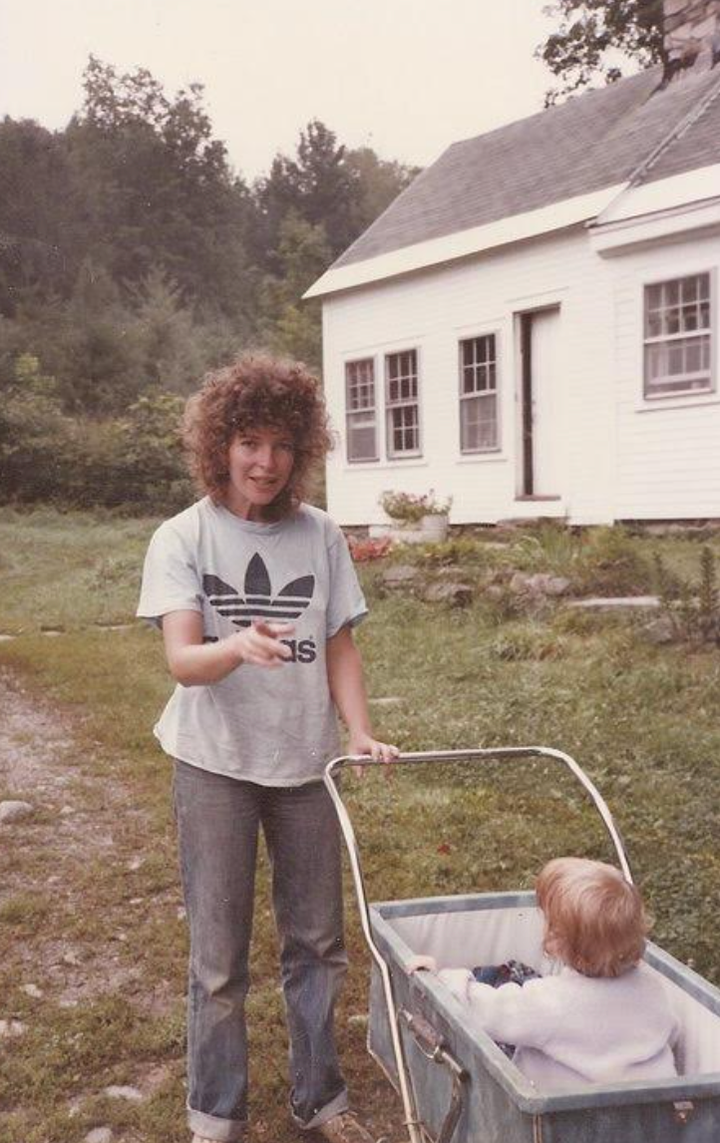
Anna with her mother (1982).

Courtesy of Anna Sullivan

Anna with her mother (1982).

I first learned about attachment theory in graduate school. The theory, originated by British psychiatrist John Bowlby in the 1960s, posits that attachment is formed during the first few years of life and determined by the quality of relationships between children and their primary caregivers. It offers a psychological framework for understanding how early relationships with caregivers impact interpersonal relationships, behaviours and emotional regulation throughout life.

Psychologist Mary Ainsworth later expanded on Bowlby’s work by conducting the “Strange Situation” experiment where babies were left alone for a period of time before being reunited with their mothers. Based on her observations, Ainsworth concluded that there were different types of attachment, including secure, ambivalent-insecure and avoidant-insecure. Later, a fourth type of attachment was added, disorganised attachment, based on research performed by Mary Main and Judith Solomon, two psychologists from the University of California, Berkeley.

During my practicum, I took a quick online assessment and wasn’t at all surprised to learn that I have anxious/insecure attachment — the unfortunate combo of disorganised and fearful-avoidant. Learning about my attachment style was a critical first step toward gaining a deeper understanding of how I operate in relationships. For instance, it made me recognise my tendency to disconnect during difficult emotional experiences. My college boyfriend referred to this behaviour as “going into Anna land,” which looked like avoiding emotionally charged conversations, daydreaming and pulling away.

Over the years, the more I learned about attachment theory, the more I wondered if my anxious attachment and age-old coping mechanisms had something to do with Levi? They both seemed to share deeply entrenched and unconscious patterns of behaviour, and there seemed to be an obvious commonality between the two — fantasy.

When I was young, I adopted various mental and emotional coping mechanisms to help me feel safe. I carried these limerent strategies — detachment, avoidance and fantasy — into adolescence. Back then, I needed to escape the reality of my childhood home — my sad, lonely mother and my emotionally unavailable father. My limerent object became the lightning rod for all my emotions, both good and bad. My relationship with Levi helped to ease my insecurities and fear of abandonment, but limerence becomes pathological when a person prioritises the fantasy version of someone over the real, live version of them — especially because those two versions don’t often add up.

It took me a long time to distill the idea of my LO from the reality of my experience. Love demands a willingness to meet the other person in the moment, and the truth is, some nights I’d hide from Levi — in a closet or my sister’s room — as he wandered around my dark, empty house looking for me.

Coming to terms with how — and why — I created these maladaptive coping strategies was a pivotal turning point in my emotional development. As a child, I longed to grow up with answers and a sense of certainty — to be taught to believe in things like God and the Red Sox. During adolescence, my limerent object became my mental, emotional and spiritual bypass to get me through. As an adult, I was still using archaic coping mechanisms as a means to self-regulate. I knew that if I wanted to be fully autonomous and present in my life, I needed to let them go.

These days, as a mother and wife, I understand that love is an action, not just a feeling. I am responsible for creating my own happily-ever-after. While it’s impossible to have all the answers, I try to be honest with myself and others about the things I don’t understand. I believe that showing up and being present with the people I love, even when it’s difficult, is the best thing I can do — like when my son has a sensory meltdown and I sit with him until he stops screaming, or when my husband and I have a disagreement, I stay in the room and work it out.

Equally difficult, I allow — often force — myself to witness moments of beauty — like how my younger son still loves to climb into my bed each morning and press himself into the folds of my body. I know these moments are fleeting.

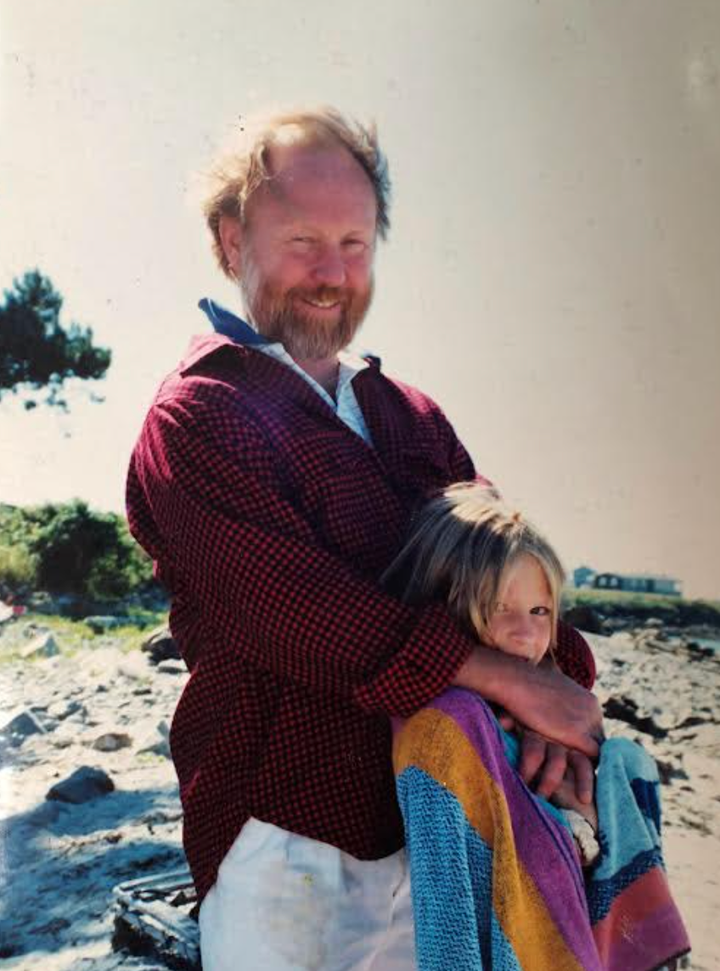
Anna with her father (1988).

Courtesy of Anna Sullivan

Anna with her father (1988).

Limerence is not love. It’s born from an unmet psychological need, and I believe that it can only be extinguished through the act of self-compassion. This involves the ongoing practice of forgiving myself for the mistakes I made when I was young, and forgiving my parents for their limitations, too. The truth is, my parents often failed me, but that doesn’t mean that they were failures. I know they loved me and did the best they could.

Over time, I’ve gotten better at sitting with uncomfortable feelings like grief, shame, anxiety and sadness. Therapy has helped a lot. And Al-Anon, which taught me how to practice discernment, or “the wisdom to know the difference.” At the end of the day, I know that I’ve developed the skills and self-assurance to move through life’s challenges without needing to check out. I’m working to rebuild my self-esteem from within instead of seeking validation from others, and I’m much more aware when I turn to fantasy as a means of self-regulation (like binging a show on Netflix). Most importantly, I’ve come to accept that my deepest longings belong to me — these primeval yearnings cannot be filled by another person.

Occasionally, I still think of my limerent object. Levi will appear in my dreams or pop into my head at random times during the day, and he’s always a much younger version of himself. However, the memories now feel less charged, and slightly melancholic. I understand the longing for a person who was always there and never there. Like a ghost, he’ll forever roam the halls of my childhood home — lit up with moonlight — searching for someone to hold in the night.

Note: Some names and identifying details have been changed to protect the privacy of individuals mentioned in this essay.

Anna Sullivan is a mental health therapist, author and co-host of “Healing + Dealing.” She has written for The New York Times, Vogue, Cosmopolitan, HuffPost, Today, Newsweek, Salon and more. She is currently writing a book, “Truth Or Consequences,” about going through early induced menopause due to cancer treatment. Find more from her at annasullivan.net.

Do you have a compelling personal story you’d like to see published on HuffPost? Find out what we’re looking for here and send us a pitch at pitch@huffpost.com.

Share Button

I Was 6 When My Dad Decided We’d Sail Around The World. I Was Trapped On That Boat For Nearly A Decade

It has taken me decades to be ready to tell this story. Until I reached the safety of adulthood and created my own family, I wasn’t able to confront my parents’ story about my past. In their telling, I was “privileged.” After all, I grew up on a beautiful boat called Wavewalker, sailing around the world.

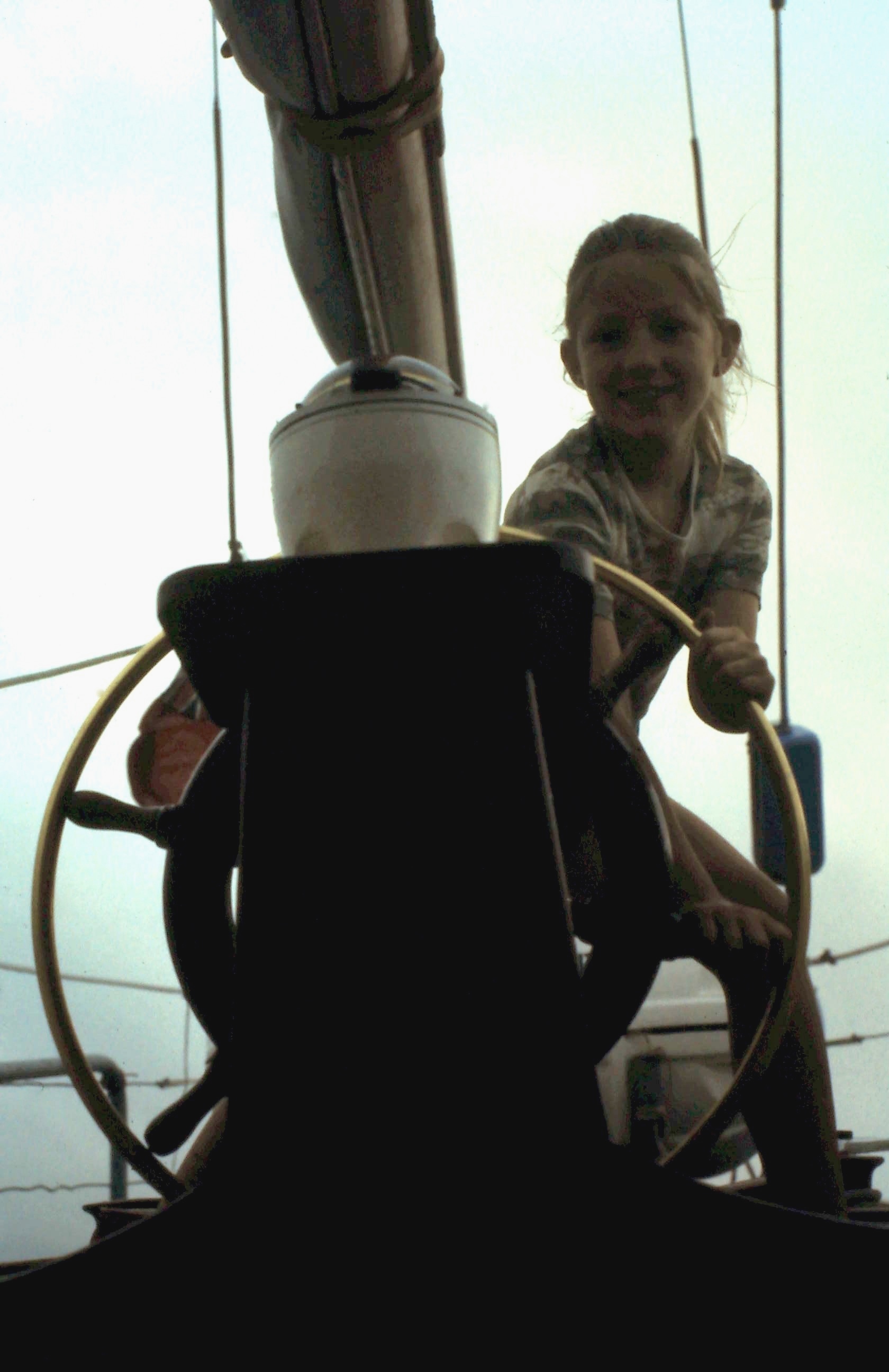
Of course I knew their story wasn’t true. Although I had grown up on Wavewalker from the age of seven for almost a decade, I was trapped there — unable to go to school or have friends. While my brother was allowed to help out on deck, I was expected to cook and clean down below for hours each day.

My normal life in England ended when I was six years old and my father announced that we were going to sail around the world. He wanted to recreate Captain Cook’s third voyage, which would take three years. This was a long time – but we would be back, he promised, before I was 10. That meant that even though I was leaving my best friend Sarah, my beloved water spaniel Rusty, and my dollhouse behind, they would all be waiting for me when we returned.

Except that wasn’t what happened. We set sail from England a year after that announcement, and it was a decade before I returned alone at the age of 17. Most of the time in between I lived on Wavewalker and was unable to go to school. We often ran out of fresh food – and sometimes almost ran out of water – on longer voyages. When that happened, we relied on canned and dried food, and my father allowed us each a cup of water a day for drinking and washing.

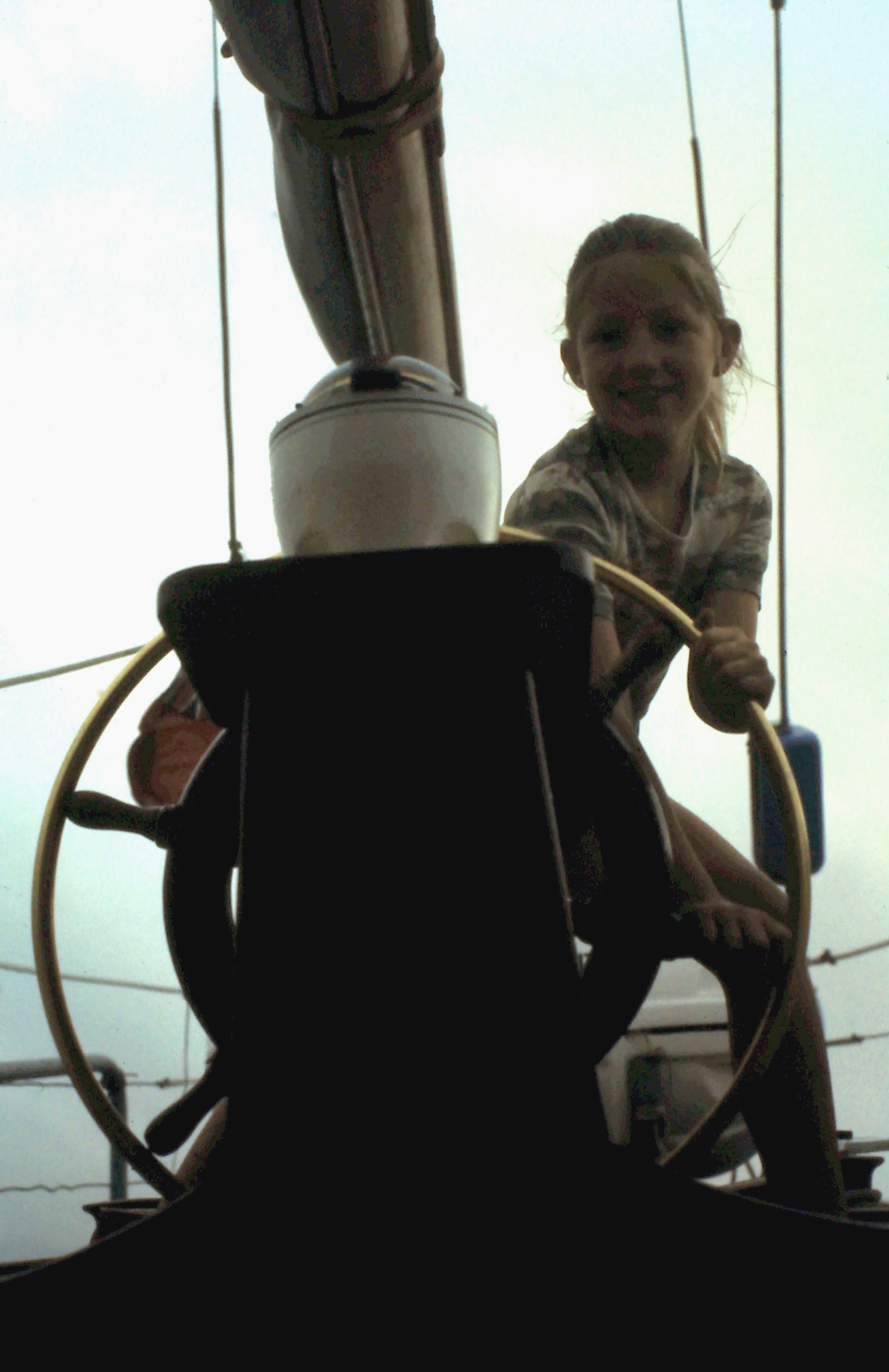
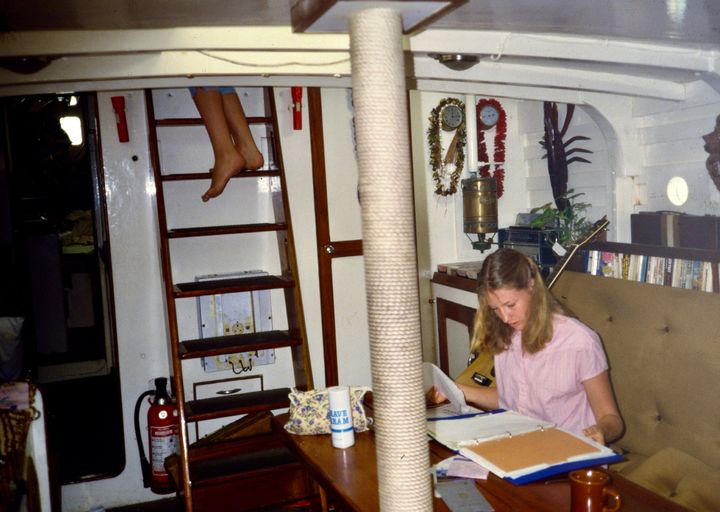
The author on Wavewalker.

Photo Courtesy Of Suzanne Heywood

The author on Wavewalker.

One of the challenges of my childhood, I grew to understand, was that my parents’ narrative looked true – we seemed to be living a privileged life by being able to sail to gorgeous places like Vanuatu and Fiji in the South Pacific. But the reality was very different.

For a start, I learned early on our voyage how dangerous the ocean could be. A few months after we left England, we were hit by an enormous wave when my father attempted to cross the Southern Indian Ocean accompanied only by two novice crew members, my mother (who didn’t like sailing) and his two small children. I fractured my skull and broke my nose in that accident and had to endure multiple head operations without anaesthesia on the small atoll that we eventually found in the middle of the ocean.

But my life on Wavewalker wasn’t just physically dangerous. Living on a boat for a decade meant that I could rarely have friendships, I had little or no access to medical care and I couldn’t attend school.

As I turned into a teenager, I had no private space. Instead I had to share the one working toilet we had on board with my family and up to eight or nine crew, and to share a cabin with adult crew members.

As the years went on, it became clear that my parents had no intention of fulfilling their promise to return home. I had no way of leaving the boat — I had no passport or money. But more than that, I had nowhere to go.

We’d set sail when I was a small child, and after that I never saw any of my relatives again. Apart from my parents, I had no other adults in my life apart from the crew members who came and went. The only people I saw in authority were the customs and immigration officials who boarded our boat when we arrived in each new country, and they never expressed any interest in the welfare of the two children they found there.

While Wavewalker represented freedom for my parents — they could pull up the anchor and sail away whenever they wanted — it was a prison for me.

I eventually realised that the only way I would ever escape Wavewalker was if I found a way to educate myself. I tried to convince my parents to let me go to school, and six years after setting sail, they finally agreed to allow me to enroll in an Australian correspondence school. I was 13 years old.

While it was clear to me that my only possible escape was through education, studying by correspondence on a boat was very difficult. By this time my father had turned our boat into a sort of “floating hotel” to pay for our endless voyage, and my parents wanted me to work rather than spending my days with my nose in my books.

There were also more practical issues. I had no postal address and I had no space in which to study apart from the one small table in our main cabin. Sometimes I would hide myself inside a sail at the front of the boat to study, knowing no one would come looking for me there. I had to fight my father for paper, which was an expensive commodity in the South Pacific. Whenever we reached a major port, I sent off the lessons I’d completed and asked the school to send them back to the post office at our next port of call, but if my father decided to change course, my lessons went astray.

I found the correspondence lessons very challenging, partially because I had missed a lot of education and because it was very difficult to learn remotely without being able to talk to a teacher. I knew, however, that I had no choice ― it was my only way out.

The author studying on Wavewalker.

Photo Courtesy Of Suzanne Heywood

The author studying on Wavewalker.

After three years of studying by correspondence while at sea, when I was 16 and my brother was 15, my parents decided to put my brother into a school in New Zealand. (As my father once explained it to me, my education was less important since I would never have to support a family.)

When my parents sailed away, I was left behind to look after my brother, doing the shopping, cooking and cleaning while he went to school each day and I tried to keep studying by correspondence. For nine months, we lived alone in a small hut beside a lake in a country in which I only knew one adult (who lived several hours away). My father left a small amount of money in a bank account that I could only access by forging his signature.

I kept working through my correspondence lessons, posting them off each week. I also wrote to every university I’d ever heard of, asking them if they would let me apply to be a student. Most wrote back saying that they would not consider me.

The local universities wouldn’t consider me because I was an English citizen, and the English ones wouldn’t consider me because they thought my qualifications were too hard to assess. But eventually Oxford University wrote back and ― after I sent them two essays – offered to interview me if I could find some way to get myself back to England. So I used money I’d earned picking kiwis, together with a small contribution from my father, to buy a one-way plane ticket, betting everything on that meeting.

Amazingly, Oxford gave me a place, and I went to university the following year. By that time, however, my relationship with my parents was tenuous. I really struggled that first year at university — not only because I had almost no money and survived mainly on cans of tomatoes and dried pasta, but also because I found it hard to fit in socially after so many years of isolation.

The good news is that after that tough first year, I started to make friends, and with access at last to libraries and laboratories, I thrived academically. After finishing my degree, I went on to do a Ph.D. at Cambridge University and then joined the U.K. government, working in the Treasury. It was there that I met my wonderful husband, Jeremy. When I became a parent myself — Jeremy and I had three lovely children ― I was determined to treat my children very differently. I make it clear to them that my love will always be unconditional, and that I will always be there for them if they need me.

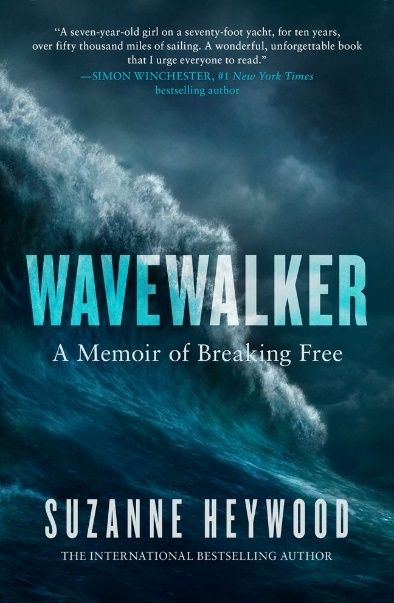
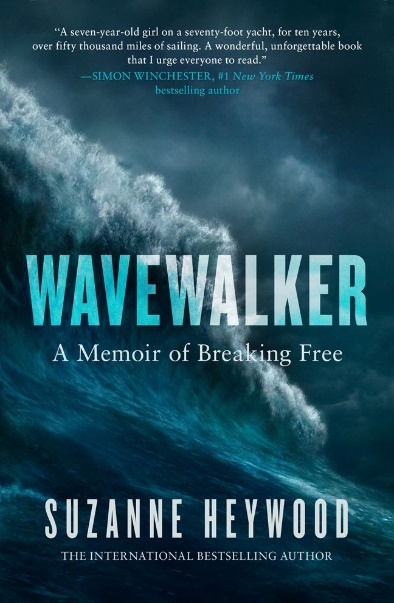
The author's book about her time on the boat.

Harper Collins

The author’s book about her time on the boat.

When my parents eventually returned to the UK, I tried several times to talk to them about the past, but they always reacted defensively, stating that it had “all worked out fine in the end.”

I knew I would probably lose the remaining relationship I had with them when I told the true story about my childhood. However, I never doubted that I would write about my time on Wavewalker.

When my children reached the same age I was when I was struggling with my loneliness and lack of access to education, I at last saw my childhood through a mother’s eyes. I knew that I no longer had an obligation to maintain my parents’ narrative: My childhood was certainly unusual, but it was never privileged.

Author’s Note: This essay is an account of my childhood as I experienced it, and based on extensive diaries and other documents from the time. Others who were present may have experienced it differently. But this is my story.

Do you have a compelling personal story you’d like to see published on HuffPost? Find out what we’re looking for here and send us a pitch.

Share Button