Holidays are expensive enough as it is. While you can circumvent the guilt of splashing out more than you wanted to on flights by booking just far enough in advance, your bank account will inevitably feel the strain of your spending habits as soon as you touch down at your destination.
The last thing you need on top of that is a notification from your phone provider saying you’ve spend £25 a day on data roaming. Shudder.
Personally, I avoid Monzo’s travel summary like the plague, so the idea of having to stomach that notification and then being slapped across the face by my phone bill is almost hellish.
Luckily, we’ve evolved past the need to fear not being able to find WiFi abroad. So you don’t have to turn your data off every time you finish doomscrolling on Instagram for fears you’ll run out of data and not be able to find your way home (not speaking from experience or anything) Holafly offers unlimited data through an easy to install, no hidden fees eSIM.
Remember the good ol’ days when you had to spend hours fucking about trying to get a tiny travel sim out of its holder and into your phone every time you moved between countries?
Yeah, well that’s now a thing of the past, because all you have to do to access unlimited streaming and scrolling is download the Holafly app on your phone.
From there, it takes a mere few minutes to buy an eSIM for foolproof internet connectivity in over 200 countries.
Once you’ve downloaded the app (which is available on Android or Apple, FYI) all you have to do is choose the plan you want.
If you’re currently travelling the world, you can opt for an unlimited plan for just £50.95 a month (less than my actual phone bill, TBH), which offers you unlimited data and hotspot, a local phone number, and can be used in any of the app’s compatible countries.
Or, if you’re going on a shorter, last-minute Euro holiday, you can choose the number of days you’re travelling for so that you can keep your number and simply make the use of its unlimited data for the exact number of days you’re travelling.
I just went on holiday to Greece for five days, and it cost me just £16 for unlimited data for my whole trip. Considering I wasn’t sure if I’d have WiFi at my Airbnb, that was well worth my peace of mind.
Not to mention, I had to fly back early due to unforeseen circumstances, and it was just as easy to request a refund for the days of data I didn’t need as it was to set it up.
I know this sounds ridiculous, but all I wanted was to lie on a beach and listen to a podcast or stream music without worrying about the data not working, and I had no connectivity issues while I was away.
Holafly also doesn’t contribute to environmental waste, as an eSIM doesn’t require you to throw away those ridiculous empty squares of plastic once you’ve installed it. Simple!
For some people, the joy of a holiday is slightly dampened by the inevitable impacts holidaying can have on sleep. In fact, according to new research commissioned by sleep technology firm Simba has found that over three quarters of Brits 76% find that holiday travel affects their sleep, with over 2 in 5 UK adults finding that tiredness affects the first day of their holiday and more.
Very relatable. The first day of every holiday for me seems to be experienced in a tired and wired daze.
Advertisement
It doesn’t stop there, though. In fact, this tiredness can reoccur once you’re back home in what sleep experts have dubbed a “Holiday Sleep Hangover”.
The ‘Holiday Sleep Hangover’
According to Lisa Artis, Deputy CEO of Simba’s charity partner, The Sleep Charity, the “holiday sleep hangover” describes the lingering effects of travel-related sleep disruption caused by early airport starts and poor in-flight sleep to unfamiliar hotel rooms, changing time zones and disrupted routines
But unlike a traditional hangover, it can strike twice: “once when you arrive on holiday and again when you return home.”
Advertisement
“The holiday sleep hangover has become the hidden physical and mental cost of modern travel,” says Artis.
“Sleep disruption usually starts much earlier and can continue long after you’ve unpacked your suitcase. It’s the combination of lost sleep, changes to routine and, for some travellers, jet lag that can leave people feeling out of sync for days.”
Additionally, if you’re a sucker for an early flight so you can “make the most of the day” once you arrive at your destination, you may be doing yourself a disservice, Artis warns, saying: “If you’re up at 3am for an airport transfer after a restless night’s sleep, you’re already asking your body to function on less recovery than it normally would. That sleep debt can follow you into the first few days of your trip.”
Advertisement
“It can be tempting to over-optimise the night before you travel. But trying to force a really early night can make it harder to switch off,” she explains.
“You end up clock-watching and feeling more alert.”
Instead, she recommends keeping your usual evening routine calm and consistent.
How to recover from a Holiday Sleep Hangover
According to Lisa, the most effective approach is getting back to a consistent routine as quickly as possible. That means returning to regular bedtimes, exposing yourself to daylight during the day and avoiding the temptation to stay up late to prolong the holiday feeling.
“Your sleep environment can help speed up recovery. When you’re trying to get your routine back on track, comfort and temperature become important,” adds Arts.
Advertisement
“If you’re waking because you’re too hot, too cold or uncomfortable, it can make recovery feel slower.”
National Rail said on its site that the issues began just before 2pm on 6 August and are expected to last “until the end of the day” in the Greater Manchester/north-west of England area.
The BBC reports we don’t yet know what caused the issue, how severe it may be, or how long it will last.
Advertisement
Here’s which train lines may be affected, and what each have said, as of the time of writing:
What has National Rail said?
In a statement, it warned of “major disruption for the rest of the day due to power issues impacting signalling”.
The service added: “Currently no trains can run from Manchester Piccadilly through to Manchester Victoria and Bolton, impacting services right across the North West network.
Advertisement
“Some trains are running south and east of the city towards Stockport, but are also subject to delays.
“As a result, cancellations are expected on rail routes across Greater Manchester until the end of today (Thursday 6 August).”
If you’re travelling by train today, check with National Rail or your train line first.
Which lines have been affected?
Per National Rail, lines affected by the signal issue include:
Avanti West Coast,
CrossCountry,
East Midlands Railway,
London Northwestern Railway,
Northern,
TransPennine Express,
Transport for Wales.
What have these lines said?
This is what each line has said as of the time of writing. (Advice is subject to change, so check in regularly before travelling.)
TransPennine Express’s site reads: “All trains will be stopped due to a failure of the communication systems on the network”, adding there is “major disruption and no trains or replacement buses are operating, and we strongly advise you not to travel”.
Transport for Wales said “train services between Chester and Liverpool Lime Street are also disrupted” and trains “will not be able to run until the electrical supply has been restored”.
Advertisement
It added: “We have organised buses to run between Liverpool Lime Street and Chester to help you complete your journey, at no extra cost. These will arrive at 15:30 at Chester provided by Patts Coaches and arrive at Liverpool Lime Street at approximately 15:30 provided by Northwich Travel.” These arrangements will last until 6pm.
Northern’s site says there are “major disruptions” across various routes, adding, “due to failure of the electricity supply at Manchester Piccadilly all lines are blocked”. It said this is expected to last until the end of the day.
Esst Midlands’ site said: “There is a failure of the electricity supply around the Manchester Piccadilly area. This is currently disrupting our trains on the Liverpool Lime Street/Nottingham/Norwich routes.” The company added: “Our services are unable to run between Sheffield and Liverpool Lime Street until the end of the day.”
Advertisement
London Northwestern Railway’s site lists “major problems” from services via London Euston, from Euston to Crewe, from Crewe to Stafford, and services via Birmingham New Street.
And Avanti West Coast’s site reads: “This Friday, we’re seeing some short-notice cancellations on our network, so please check your journey before you travel. We’re really sorry if this affects you and your journey, but we’re working hard to make sure we can minimise these cancellations.” Its site has a section to help you find out your live train status.
If you’re anything like me, you pack half your medicine cupboard before going away on holiday ‘just in case’.
But if you’re planning to venture abroad anytime soon, a pharmacist has warned that common prescription and over-the-counter medicines could result in confiscation, hefty fines, or even arrest in some countries.
Advertisement
So, make sure to do your homework before you travel.
Ian Budd, lead prescribing pharmacist at Chemist4U, said: “Most people don’t think twice about packing their regular medicines for a holiday, because they assume that if something is legal in the UK, it will be legal everywhere else.
“Unfortunately, that’s not always the case. Every year, travellers are caught out by medication restrictions they didn’t know existed.
“In some countries, medicines we consider completely routine in the UK can be treated as controlled substances, even when they have been legitimately prescribed by a doctor.”
Advertisement
Medicines to be wary of when packing your suitcase
1. Codeine, and any painkiller containing it (e.g. co-codamol).
This is considered a controlled substance in many countries. In the United Arab Emirates (UAE), it’s led to confiscation, detention and in some cases, prosecution, said Budd.
2. Diazepam and other benzodiazepines
The medication, used for anxiety and sleep, is restricted in several destinations.
Budd noted that in Singapore, bringing these in without a Controlled Drugs Permit from the Health Sciences Authority “is treated as a drug-import offence, and can carry fines or imprisonment, even with a valid UK prescription”.
3. Pregabalin and gabapentin
These are used for nerve pain and are controlled in the UAE. Without a prescription and a doctor’s letter, they can be confiscated and, in serious cases, lead to arrest.
Advertisement
4. ADHD medicines
Several countries, including Japan, ban amphetamine-based medicines outright, even with a valid foreign prescription.
Many countries treat these as controlled drugs – without the right documentation, they can be seized, and in some cases, lead to detention or prosecution.
6. Cold and flu remedies containing pseudoephedrine
Some of these are restricted or banned in a handful of countries, including Japan.
What to do before you go away
The pharmacist urged travellers to be aware of the extra steps needed so a routine prescription doesn’t turn into a stressful situation at the border.
Advertisement
“My advice is to check the rules for your destination as soon as you book your trip, rather than the night before you travel,” he said.
“That gives you enough time to speak to your GP or pharmacist, get any paperwork sorted, and travel with confidence.”
The UK government warns that people can be fined or even go to prison if they travel with medicine that is illegal in another country. It advises checking with the embassy of the country you’re going to before you travel – you might require a permit or supporting documentation to take your medication in with you.
Advertisement
For example, travellers must get approval in advance from the UAE Ministry of Health to bring medication – applications are generally processed within five working days.
Budd recommends asking your pharmacist for a short covering letter confirming your name, dosage and how much medicine you’re carrying. This, he said, “is often enough to avoid questions at customs, especially for controlled medicines such as codeine, tramadol or diazepam”.
The pharmacist also recommends keeping medicines in their original packaging when travelling, with the pharmacy label attached, as loose tablets in a pill organiser are hard to identify if you’re stopped at customs.
Advertisement
“Make sure to check any countries you’re passing through, not just your final stop,” added the expert. “These rules apply to layovers too, so check the requirements for any country you’ll pass through, even if you’re not leaving the airport.”
Money saving pro Martin Lewis has shared an “urgent warning” for anyone who wants to try and bag cheap flights for their 2027 summer holiday.
Taking to social media, Lewis said that Tuesday (28 July) marks easyJet’s ‘flight release day’, when the travel provider releases millions of new flight seats for people to buy ahead of their 2027 holidays.
Advertisement
“Now, easyJet has a rather interesting system for pricing its flights,” said Lewis. “It’s called ‘dynamic pricing’ and it means that the price depends on the demand – the more demand, the more that you pay.
“So, the most predictable time to get cheap flights is exactly the moment it releases the flights because there’s minimum demand at that time because they weren’t available beforehand.”
When will the seats be released?
The financial expert said 14 million seats are being released across 78,000 different flights.
“As for when those seats are released, I don’t know, easyJet won’t say,” said Lewis, noting that in the past it’s been around 5am or 6am, while other times it’s been spread throughout the morning.
Advertisement
The expert added it’s “not a definitive” that you’ll bag a cheap seat, but it’s “something to look at and try”.
HuffPost UK has contacted easyJet for comment.
Set an alarm and get your details ready
If you are looking to book cheaper flights, Lewis suggested getting up early and knowing which routes you want to look at, while having all your passenger details ready.
Advertisement
He also urged people to benchmark and compare with other flights ahead of booking, so you know what a competitive price looks like at present.
More tips for cheaper travel
Travel expert Ferdinando D’Agostino at Transfeero previously warned that flights which appear to be the cheapest aren’t always the best option overall due to costly add-ons (baggage and seat selection being some of the most obvious ones), but also other overlooked costs, such as the cost of getting from the airport to your final destination.
If you want to save money on your travels, he advised:
Calculating the ‘door to destination’ costs before you book. Booking a slightly more expensive flight could mean saving much more money in the long run, so make sure you add up every possible additional cost.
Planning all transport in advance, not just the flight. Having your onward journey arranged, removes the uncertainty of being able to get a taxi at the airport – and the unpredictable costs.
Creating an ‘arrival budget’. Having a separate budget with a realistic amount of money to get from the airport to the hotel means you reduce the pressure to choose the quickest and most expensive mode of transport, and it also means you can set that budget and have everything arranged before you get there.
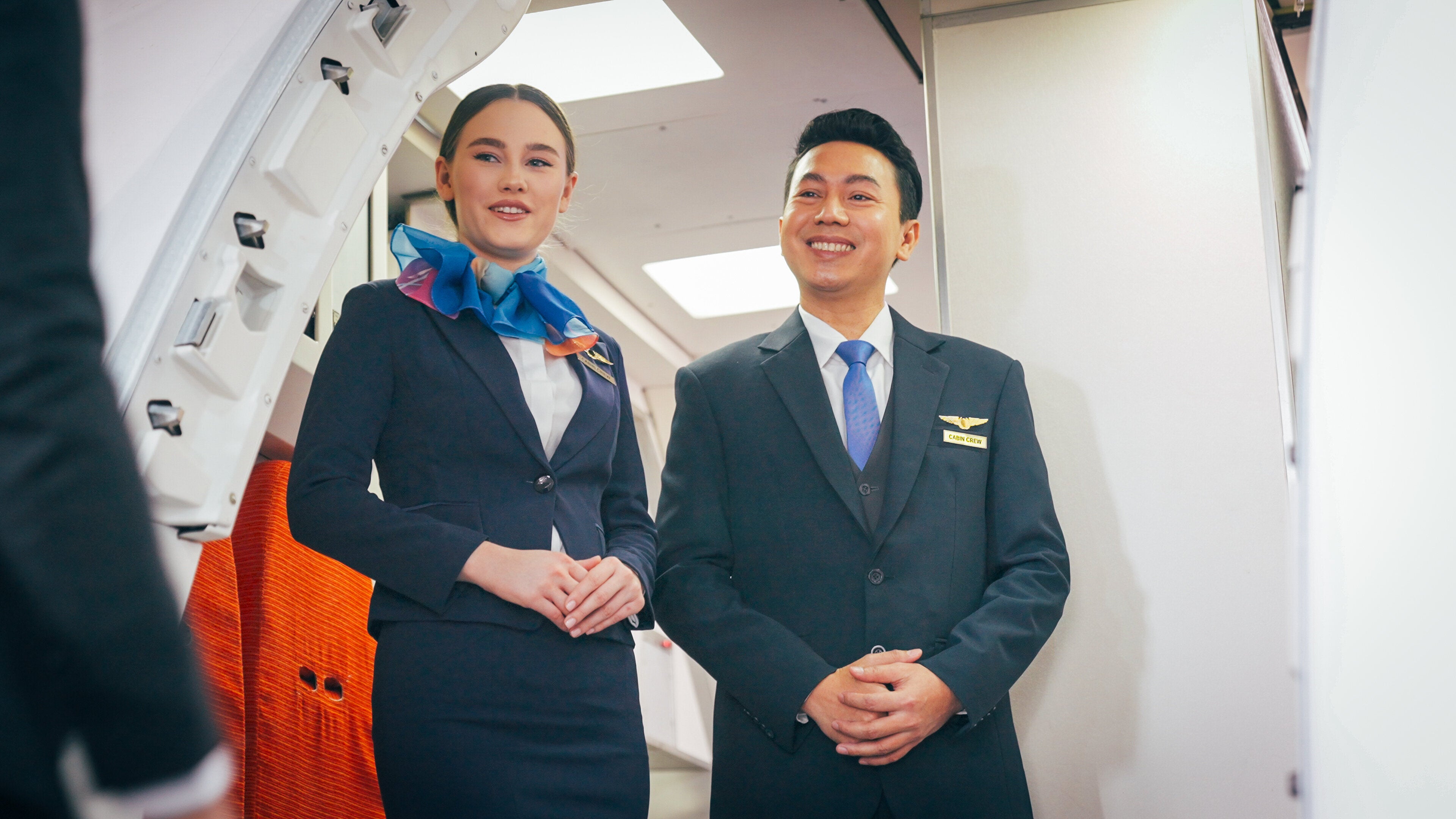
You’ve probably never thought too hard about it. As you board a plane, a flight attendant stands at the aircraft door, smiles, says “welcome,” maybe glances at your boarding pass. It feels like basic hospitality, like the aviation equivalent of a host greeting you at a restaurant.
But that brief interaction is doing a lot more than it seems.
“The smile and greeting you get at an airplane door is probably one of the most judgmental welcomes you’ll ever receive,” Jay Robert, a senior flight attendant and the founder of A Fly Guy Travels, told HuffPost. “We’re judging a lot in those few seconds, and believe it or not, that judgment is part of our job.”
Advertisement
It’s not for the sake of judgment, however. The purpose is actually safety.
“Greeting passengers at the door is our first line of defense in identifying threats that could be brought onto the aircraft,” Robert explained. “Whether it’s illness, intoxication or someone carrying prohibited dangerous goods, we’re constantly scanning for anything that could disrupt the flight or pose a safety risk.”
Of course, there is a customer service and hospitality element to the greeting as well.
“It’s the first opportunity to welcome passengers onboard and set a positive tone for the flight,” said Yuvraj Datta, the chief supply and revenue officer at the travel tech company Fareportal. “It’s also an important observational moment for the cabin crew. Flight attendants are making initial safety and operational assessments that can help identify potential issues before departure.”
He added that flight attendants begin assessing the cabin environment the moment they get on board.
“The greeting is actually a behavioural assessment,” said AirAdvisor founder and CEO Anton Radchenko. “The social framing is deliberate – passengers engage more naturally when they believe they’re being welcomed. Crew are trained to read each individual during that interaction – orientation, steadiness and anything that could become a liability in an enclosed environment at altitude with no exit available.”
Advertisement
In an era of increasing reports of unruly passenger behaviour and even abuse of flight attendants, airline crews are more vigilant than ever. And many of those incidents involve alcohol.
“Generally, flight attendants assess passengers during boarding for sobriety,” said Henry Harteveldt, president and airline industry analyst at Atmosphere Research Group. “If they notice a passenger who appears to be overtly drunk or high, they may ask to see their boarding pass, under the premise of directing them to their seat, but also to alert the crew who may be working where that passenger is sitting to monitor her or his alcohol intake on board.”
Robert echoed that intoxication is one of the biggest things flight attendants are checking for during that greeting process.
Advertisement
“It’s much easier to stop someone at the aircraft door than it is to remove them once they’re seated and settled in,” he said. “During boarding, we constantly communicate with each other. I’ll often call the crew at the back and ask them to keep an eye on a passenger I’ve noticed or get a second opinion before we decide whether someone is fit to fly.”
Flying with an intoxicated passenger can be a serious matter. Dan Bubb – a former airline pilot and professor in residence in the honors college at the University of Nevada, Las Vegas – explained why catching these situations early matters so much.
“You don’t want to be at altitude and have somebody who’s drunk and belligerent, and now you’ve got a problem,” he said. “You have to divert the plane. That’s going to cost money and time. So it’s better to try to catch those possible problems at the door before it closes.”
Advertisement
Mongkol Chuewong via Getty Images
There are legal implications to getting it wrong as well.
“Boarding an impaired passenger creates significant legal and operational exposure,” Radchenko said. “By the time a passenger reaches the cabin door, gate agents have already conducted an initial screen. If you’re flagged at the door, you’ve already passed one assessment, which means the carrier has two separate documented grounds to work with if a denial gets challenged.”
For passengers, the legal calculus runs in the other direction.
“If you’re denied boarding after that interaction, aviation law starts from the assumption that the crew was right,” Radchenko said. “The discretionary authority aircrews hold on safety grounds is wide by design. To challenge it, a passenger has to demonstrate the decision was arbitrary, not just uncomfortable or inconvenient.”
Advertisement
He advised anyone who believes they are unjustly denied boarding to ask for a written reason before leaving the gate. “That document is the starting point for any claim worth filing,” he said.
Flight attendants are also trained to pick up on physical cues that passengers might be trying to hide.
“I’m looking for signs of illness, such as clammy or pale skin, excessive sweating or even visible contagious skin conditions that may require us to offload a passenger before the aircraft door closes,” Robert said.
Advertisement
“Passengers often try to hide the fact they’re unwell, so we have to use all the clues the body gives us to quickly determine whether someone is fit to make the journey by air.”
He’s also paying attention to the way passengers respond to his greetings.
“Slurred speech, confusion, difficulty maintaining balance or the smell of alcohol can all indicate intoxication or impairment,” Robert said. “Once passengers move into the cabin, the other flight attendants continue the assessment, watching for the same signs and making their own observations.”
Scent is part of these assessments for multiple reasons.
“We’re checking for the smell of alcohol but also for offensive body odour,” Robert said. “Both can result in you being denied boarding, as BO is a no-go. Many people don’t realise that excessive body odour can significantly affect the comfort and wellbeing of everyone else on the flight, and airlines have the right to refuse carriage if it becomes an issue.”
Flight attendants also keep an eye on people’s luggage to ensure carry-ons meet the airline’s size and quantity requirements and to identify bags that need to be gate-checked. Robert added that they look out for anything that could be considered a dangerous item as well.
“In recent years, we’ve also added another important responsibility during boarding – looking for potential signs of human trafficking,” he said. “Cabin crew around the world now receive training to recognise indicators that someone may be a victim and know how to discreetly report their concerns.”
These assessments can be wide-ranging, but the practice becomes second-nature over time. And it’s a subtle but important function.
“Airlines often position their most experienced cabin crew at the aircraft door because we’ve developed the ability to rapidly identify potential issues,” Robert said. “As a purser, or cabin manager, while I’m making a good first impression and welcoming guests onboard, I’m also continuously assessing whether each passenger is fit to travel.”
Beyond looking for potential issues, flight attendants are also quietly scanning for potential assets.
“We’re also identifying passengers who may be able to assist in an emergency if they’re seated in an exit row,” said Paula S. Adams, a former crew member for Etihad Airways who now works as a private flight attendant and aviation and business trainer.
Advertisement
Indeed, the boarding process is when crew members identify what they call able-bodied passengers or ABPs.
“These are the passengers we’re most likely to ask for assistance if we ever have an emergency,” Robert said. “I naturally take note of people who appear physically capable, law enforcement officers, military personnel, firefighters, medical professionals or simply someone who looks strong and confident enough to help if a passenger becomes disruptive or assistance is needed during an evacuation.”
Harteveldt noted that another pre-flight step contributes to this process.
“The FAA requires flight attendants to give a verbal briefing to passengers sitting in exit rows and by exit doors about the requirements to operate the doors in an emergency, if so directed by cabin crew, and to receive a verbal confirmation from each passenger sitting in those seats that they understand and agree to the safety-related requirements they are expected to fulfill,” he said. “The flight attendants also use this briefing to determine that the passengers meet the safety requirements and, again, are not impaired by alcohol or other substances before take-off.”
Advertisement
The boarding process is also a time when flight attendants identify travelers who might need additional assistance during the flight due to disability, for example.
“It helps crew members build situational awareness about who is on the aircraft. In an emergency, knowing which passengers may need extra help, or which travelers appear particularly capable of assisting others, can be valuable,” Datta said, adding, ”The few seconds spent greeting each passenger can help crew members identify potential issues before the aircraft ever leaves the gate.”
For all the safety assessment happening at that door, flight attendants also genuinely enjoy greeting travellers.
Advertisement
“While we’re scanning the cabin, we’re also looking for passengers we genuinely want to connect with,” Robert said. “Contrary to popular belief, many flight attendants actually like people. We enjoy chatting with our guests, hearing their stories and helping make their flight memorable.”
“That brief greeting is often our first opportunity to build rapport with passengers,” Adams said. “A friendly interaction at the door helps set a positive tone for the entire flight while allowing us to quietly assess the cabin before departure.”
Robert noted that he’s usually spotted his “in-flight friends” during boarding.
“And if you want a little galley gossip, flight attendants also tend to spot the ‘BOB’ during boarding,” Robert added. “That’s the ‘Best On Board,’ otherwise known as the passenger who catches our eye. It’s usually harmless fun, and you’ll often hear a little discussion in the galley about who we think is the most attractive passenger in our section.”
Advertisement
Now and then, these kinds of connections turn into something more as well.
“I know several cabin crew who met their husbands or wives because of a spark that started during boarding,” Robert said. “So you never know. That warm smile and eye contact at the aircraft door could one day lead to you enjoying one of the best perks of dating a flight attendant. As we often joke in the industry, ‘Marry me and fly for free.’”
Marriage prospects aside, there’s something to be said for simply being kind to the crew.
“If you can just greet the flight attendant, say hi or ask how their day is going, believe it or not, those little comments go a long way with flight crews because they have very long days,” Bubb said. “Before I go on a trip, I even buy a small stack of $5 Starbucks gift cards, and I give them out to the flight crew. It really brightens people’s days. One time I did that, the captain actually came back, shook my hand and gave me a handwritten note. It’s all about little things.”
There’s nothing quite like spending time by the pool. Cool water. Time with loved ones. A delicious snack. What could be better?
But before you grab your towel and jump in the water, pay attention to a few common poolside habits that doctors wish more swimmers and parents would think twice about.
Advertisement
We spoke to some clinicians about the behaviours they’d personally avoid in and around the pool this summer. Here’s what they had to say:
1. They’d never skip rinsing off before getting in the pool
It might feel pointless, especially if you’re planning to shower afterwards, but a pre-swim rinse matters more than you may realise.
Sweat, sunscreen, body lotions, hair products and natural skin oils all react with chlorine when they hit the water, which reduces chlorine’s ability to kill germs and creates irritating byproducts that can sting eyes and aggravate skin.
Advertisement
That’s why the Centers for Disease Control and Preventionrecommends a quick pre-swim rinse, at least a minute under the shower, to wash off bacteria and other microbes you might unknowingly be carrying in.
This is especially key if “someone is dirty or has sand on them, as to not contaminate the water or clog up filtration systems,” said Dr Chris Bunick, a Yale Medicine dermatologist and associate professor at Yale School of Medicine.
2. They’d never bring glass anywhere near the pool
It’s easy for glass to end up around the pool in the summer, whether from an open bar, poolside cocktails or carrying bottled beverages near the water. However, it can be a risk for both swimmers and people on the deck.
Advertisement
“Broken glass is not a visible hazard. Whether on the pool deck or in the water, it can be nearly invisible,” said Dr Steven Valassis, chair of the emergency department at Hartford HealthCare St. Vincent’s Medical Center.
“When combined with the fact that people are typically barefoot, this can lead to significant lacerations. Nearly 5% of these lacerations are deep enough that they require hospital admission and surgical repair,” he added.
Additionally, glass that ends up in a pool can be especially problematic because even tiny pieces are difficult to detect and remove, sometimes necessitating a full drain as well as professional cleaning, Dr Valassis explained.
Advertisement
The good news is you don’t have to ditch your poolside drink, just the glassware. Try plastic cups or aluminum cans instead.
Maryna Terletska via Getty Images
Leaving a child unattended by the pool — even for a short period of time — can be incredibly dangerous, doctors warn.
3. They’d never leave a child unattended, not even for a minute
The biggest misconception parents get about drowning is that they think they’d hear if their child got into trouble in the water. But the reality is far scarier.
Advertisement
“Drowning is fast, often silent, and can happen to any child. A survey found that 48% of parents mistakenly believe they would hear splashing or crying if a child was in trouble. Sadly, this is often not the case,” Valassis said.
Although swim lessons can help improve water safety skills, the American Academy of Pediatrics emphasises that swim lessons alone do not eliminate a child’s risk of drowning.
Drowning can happen in seconds, according to the CDC, so constant, focused supervision is non-negotiable, no matter how well your child swims.
Advertisement
4. They’d never swim while sick
Even if you’ve been looking forward to a day at the pool, it’s best to sit this one out if you’re feeling under the weather – especially if you’re dealing with a stomach bug.
“Swimming in the pool while sick is generally not a good idea, because further swimming and activity may precipitate nausea, vomiting and add risk for dehydration, all which may make a person more ill,” Dr Bunick said.
There’s also the issue of getting others sick through close contact. “Illnesses can be transmitted through pool water because the chlorine or other chemicals do not necessarily work instantly to stop infectious agents, thus allowing a window of time for infectious agents to pass to other people,” Dr Bunick added.
Advertisement
Bob Thomas via Getty Images
Emergency room physicians have seen many traumatic injuries from diving into the shallow end of a pool.
5, They’d never swim with an open wound
If you have a fresh scrape, deep cut or surgical incision, it’s best to keep it dry.
“It is best to not swim in the pool with an open wound, especially with a deep scrape or gash,” Dr Bunick said.
“First, the chlorine or other chemicals used to treat the water can further damage tissue in the wound, adding to skin breakdown and inflammation. Second, there is risk of infection of the wound with continued exposure to water, and this risk is increased more if swimming in lake, river or ocean water.”
Advertisement
If you have a minor cut or paper cut, you likely don’t need to skip the pool altogether. Dr Bunick recommended covering the wound with a healing ointment and a waterproof bandage before swimming in chlorinated water.
Just keep an eye on the area afterward, as redness, swelling or drainage could signal an infection that needs further medical attention, he explained.
6. They’d never dive into shallow water
While it may seem unlikely, this scenario is more common than many people realise, especially for children, who can get into trouble without ever reaching the deep end of the water.
Advertisement
“If a child dives into a shallow pool and hits their head on the bottom, the initial impact can cause a head/brain injury. The force is then transmitted from the head to the neck and cervical spine, where the spinal cord can be injured. This can potentially lead to paralysis and, in severe cases, the inability to breathe independently,” Dr Valassis said.
Most of these injuries don’t happen at public pools with lifeguards; they happen at home, Dr Valassis explained. The American Red Cross recommends going feet first into unfamiliar water.
The good news, Dr Valassis emphasised, is that most pool injuries are preventable with basic precautions and awareness. So this summer, swim smart and enjoy the splash.
So what does that look like, and how can it help your relationship?
What is an “airport divorce”?
It means you and your partner go through the sometimes-stressful processes of security, check-in, and even arriving at the airport separately.
Advertisement
A colleague told me that their partner likes to reach the travel hub far, far earlier than she likes. My own beau can get a little flustered in airports, while I would rather crawl across the ocean floor myself than publicly stress out.
Some people love a leisurely duty-free browse. Others like to march through security with laser focus, their passports and boarding passes constantly ready for inspection.
An early-queuer and late-queuer relationship can feel impossible to manage in times like these, too.
Advertisement
So, some, like Times writer Huw Oliver, have found a solution: just do your own thing, and regroup on the plane.
Won’t that feel a bit… splintering?
Not necessarily. An “airport divorce” can be selective.
Maybe you agree on some things, like arriving about two hours before the flight and/or having a pre-plane tipple. These can, and I’d argue should, still be shared.
Advertisement
But I reckon most of us can agree that our airport self is not representative of our true character. Nobody needs to see the beast I become when the boarding gate changes last minute, least of all someone I’m about to share a hotel room with.
Besides, if you’re mostly enduring your partner’s dangerously leisurely shopping time or over-keen boarding queue approach out of a vague sense of duty, why not let that go (travel duty-free, if you will?).
It might make your holiday together even more relaxing and enjoyable – and it means that finally, you’ll both be able to do it The Only Right Way.
Three years ago, I stood beside my husband Al’s bed and prepared to say goodbye.
After 25 years of marriage, cancer was taking him where I could not follow. Before he died, he looked at me and said something that shocked me at the time.
“Diane, you’ll need another man.”
I immediately dismissed the idea. I was 80 years old. I had already experienced a full life. What on earth would I need another man for? I certainly wasn’t looking for one.
Advertisement
Then life did what life often does. It ignored my plans.
Just a few months after Al died, friends introduced me to a man named Bob. I welcomed it because I was experiencing what I later discovered, after many late-night Google searches, was called “widow’s fire,” a fierce longing for intimacy and closeness after losing a spouse that, despite being surprisingly common, few people talk about.
Some people, including some of my children, thought it was too soon for me to begin dating. But grief doesn’t follow a timeline.
I wasn’t looking to replace Al. No one could. But for 25 years of marriage, I had been part of a pair. Suddenly, I was standing alone. The silence and loneliness were overwhelming.
Advertisement
What I realised was that I didn’t want to spend the rest of my life alone. I wanted companionship, laughter, conversation and, yes, physical attraction. And to my surprise, I found that in Bob, a kind, funny and handsome man who understood that loving him didn’t mean I loved Al any less.
Bob and I have been together for more than two years. We are deeply committed to one another, but marriage isn’t part of our equation. At our age, we’ve learned that relationships don’t need to look a certain way to be meaningful. What works for us is love, honesty and a healthy dose of practicality.
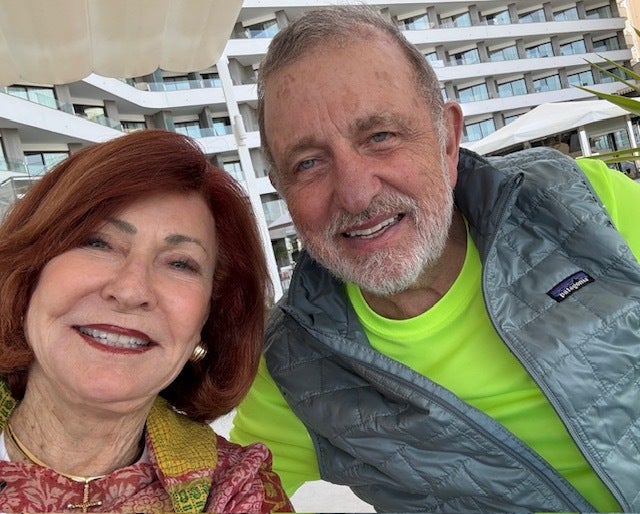
That practicality was put to the test recently when Bob and I embarked on a 22-day adventure through Norway, France and Spain. With me at 82 and Bob at 83, travelling halfway around the world requires a little more planning than it did a few decades ago.
Advertisement
Before we left, I sent an email introducing my daughter and son-in-law to Bob’s brother and sister. Not because we were planning a family reunion. Because we were 82 and 83 years old and about to cross an ocean together.
“Should we get lost along the way and need your assistance,” I wrote, “you now can connect with one another and try to retrieve, grieve or rejoice from our far distant travels.”
I also informed everyone that I had travel insurance in case my body needed to be shipped home and that Bob had thoughtfully prepared his own end-of-life arrangements. My children thought it was hilarious. Bob’s family may have thought I was crazy. They’re not entirely wrong.
Advertisement
But if you’re going to travel the world in your 80s, you learn to laugh about the realities that come with it. Like money. People don’t like talking about finances in matters of romance, but they should.
In our case, I happen to have a larger wallet than Bob. Before we left, we talked openly about expectations. I agreed to pay for the trip itself, including the airline tickets. Bob was perfectly willing to fly economy. I was perfectly unwilling to sit in first class without him. The good Lord knows I’m spoiled, and I wasn’t going to be up front sipping champagne while the man I loved was squeezed into seat 34B. Besides, I like him next to me.
We agreed that he would cover many of the extras along the way, including meals, excursions and spontaneous treats. There were no complicated contracts. Just two adults having an honest conversation.
Advertisement
Widowhood taught me many things. Like I wish more people understood that discussing money isn’t unromantic. Avoiding it is.
Photo Courtesy Of Diane Heiler
The author and Bob ending a long day at the hotel bar with their favorite drink, Old Fashioneds.
The trip itself became a lesson in something even bigger. Standing in Norway, surrounded by glaciers that looked as though they belonged on another planet, I found myself thinking about Al. He loved to travel.
Advertisement
The glacier train rides were breathtaking. The scenery was so beautiful it almost didn’t seem real. It was colder than a witch’s teat but magnificent. Al and I had never made it to Norway together, and I couldn’t stop thinking about how much he would have loved it.
Unexpectedly, I didn’t feel guilty. For a long time, widows are made to feel that happiness somehow betrays grief. It doesn’t. Missing Al and loving Bob can occupy the same space. Both things are true.
Bob understood that. He never tried to compete with my memories. He simply stood beside me while I carried them. That’s one of the many reasons I love him.
Advertisement
Norway also introduced me to two things I never expected: iced cider and brown cheese.
The cider was delicious.
The cheese was downright addictive.
I liked it so much that I packed half a pound of it in my suitcase and hauled it through France, Spain and all the way back home to Florida.
At 82 years old, apparently, I travel internationally with contraband cheese.
Photo Courtesy Of Diane Heiler
The author and Bob sailing on a catamaran through Sognefjord, Norway’s largest and one of its most breathtaking fjords.
Then there was Bergen.
The minute we arrived, I announced to Bob, “I could live here.”
It had everything I love: beauty, charm, walkability and friendly people. We spent our days wandering old streets, taking in spectacular views and pretending, just for a moment, that we belonged there.
Advertisement
Next came France.
Of all the places we visited, Normandy affected me the most.
Standing among the endless rows of white crosses at the American Cemetery overlooking Omaha Beach, I felt humbled in a way that is difficult to describe.
The older I get, the more familiar loss becomes. Friends die. My spouse died. Parents die. Even pieces of ourselves disappear. The woman I was at 40 no longer exists. Neither does the woman I was before widowhood.
Yet there I was, halfway around the world, still creating memories. Still laughing. Still planning. Still living.
Advertisement
Spain brought its own lessons.
I use wheelchair assistance because of a painful foot. Bob uses a cane. Airport assistance services managed to leave us at the wrong gate on two separate occasions, causing us to miss our flights.
After missing our second flight, I told Bob I could have learned to become a professional tango dancer in less time than it took airport personnel to move my behind through that airport. For two days we were shuffled from gate to gate while trying not to lose our sense of humour. Thankfully, we succeeded.
By the time we reached Mallorca after nearly three weeks abroad, we realised something. We may have been tourists, but we didn’t particularly want to be around tourists anymore.
Advertisement
Maybe we were tired. Maybe we missed our own beds. Or maybe we had officially become old people. Either way, home was sounding awfully good.
Traveling at 82 also comes with one unexpected advantage: I no longer care about impressing anyone.
Photo Courtesy Of Diane Heiler
The author having a delicious meal at Le Marsala in the heart of beautiful Bayeux, France.
When I was younger, I packed as though every day required a completely different outfit, matching shoes, jewellery and accessories. These days, I pack for comfort, practicality and the occasional nice dinner.
Advertisement
For 22 days abroad, Bob and I shared one checked suitcase, and we each carried a small bag. It wasn’t because we were trying to prove anything. It’s simply that we’ve learned what matters and what doesn’t.
I’ve discovered that one scarf, one pair of comfortable shoes and a little confidence can carry you remarkably far. That’s one of the gifts of ageing. You spend less time worrying about how you look and more time enjoying where you are.
At this age, I’ve learned that nobody really cares what you’re wearing, whether your hair is perfect or if you’ve packed the right shoes. What people remember is whether you laughed, loved, showed up and enjoyed the journey.
Advertisement
And that’s true whether you’re standing on a glacier in Norway, wandering the streets of Barcelona or simply sitting beside a koi pond at home with someone you love.
The greatest surprise of the trip wasn’t Norway’s glaciers, Normandy’s history or Barcelona’s architecture. It was realising how comfortable I have become with this unexpected chapter of my life.
If you had told me three years ago, while I was sitting beside Al’s hospital bed, that I’d be crossing Europe with another man, I would have told you that you were out of your mind.
Advertisement
If widowhood has taught me anything, it’s that we don’t honour those we’ve lost by stopping our lives. We honour them by continuing to live them.
When Al died, I thought my story was winding down. Instead, it simply changed genres.
Photo Courtesy Of Diane Heiler
The author and Bob enjoying a drink by their hotel’s pool, overlooking the beautiful yacht basin in Mallorca.
These days, I’m perfectly content sitting beside that pond with Bob discussing books, sports, grandchildren, politics or whatever we’re streaming on Netflix. Twenty years ago, I would have called that boring. Now I call it happiness.
Advertisement
One of the most damaging myths about ageing is that life becomes smaller. I’ve found the opposite. Life becomes more precious. At some point, every one of us realises our time is finite. The horizon becomes visible. Oddly enough, that’s what makes each day matter more.
At 82, the future looks different than I imagined. It includes a new love. A few more aches and pains. Occasionally a wheelchair. And gratitude for every single day I still get to wake up and see what comes next.
Al knew all this before I did. He knew I would need companionship. He knew I would need laughter. He knew I would need someone to sit beside me on airplanes and hold my hand during life’s inevitable turbulence. Most of all, he knew I would need a future.
Advertisement
As it turns out, he knew me better than I knew myself.
Diane Heiler is the author of “A Widow’s Fire: An Intimate Memoir of Heartbreak, Survival and Moving On.” Widowed in 2023 after caring for her husband through his battle with cancer, she writes about grief, resilience and finding joy again after profound loss.
But if you want to protect its contents, it turns out that travel experts recommend taking an added security step just before you head off.
Advertisement
Luckily, it requires no added tools: your phone should do.
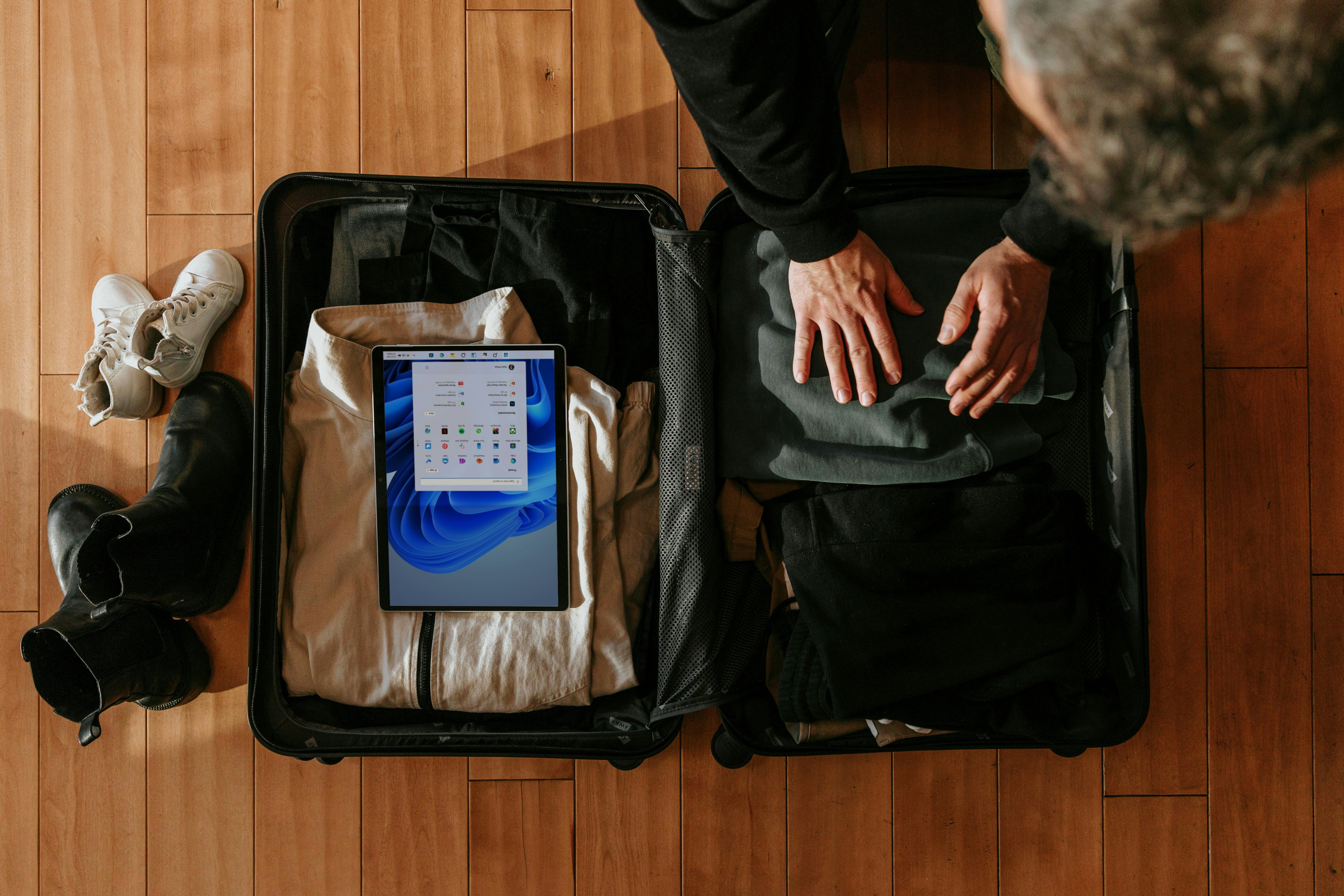
Take a picture of your suitcase’s contents before travelling
Christian Bennett, head of travel at Multitrip.com, said that taking a quick picture of the inside of your case before you head off might be worth your while.
“Keeping receipts, taking photos before you travel and holding on to important paperwork means you’ll have everything you need at your fingertips if you do need to make a claim,” he explained.
In other words, if something in your luggage goes missing or gets damaged, you’ll have a far stronger case with “before” pics in your camera roll.
Advertisement
It takes “seconds” to snap a picture, the pro stated, and means you’ll have a record to hand whenever you need it.
“Take a photo of your luggage and contents – ESPECIALLY if you’re traveling overseas,” a site user wrote.
Advertisement
Take a picture of the outside of the suitcase, too
For added safety, take a picture of the exterior of your suitcase before travelling too.
Speaking to Travel + Leisure, Rob Merlin, a travel advisor at SmartFlyer, said: “We always recommend that clients photograph their luggage before a trip, including the exterior of the bag, the luggage tag, and the contents inside”.
This not only means you’re able to document any luggage damage, but it could also help airline staff to identify your suitcase from a sea of others in lost and found.