They are walking out over pay and want an increase to make up for 15 years of inflation.


They are walking out over pay and want an increase to make up for 15 years of inflation.
A House of Lords Committee says more action is needed to avoid disruption to medicine supply in Northern Ireland.
News that the upcoming season of Succession will be its last has got the show’s loyal fanbase well and truly in its feelings.
In an interview with the New Yorker published on Thursday night, Succession creator and writer Jesse Armstrong confirmed that the award-winning drama would not continue past season four.
Advertisement
He explained: “I’ve never thought this could go on forever. The end has always been kind of present in my mind.
“From season two, I’ve been trying to think: Is it the next one, or the one after that, or is it the one after that?”

Jim Spellman via Getty Images
Jesse added: “I got together with a few of my fellow writers before we started the writing of season four, in about November, December, 2021, and I sort of said, ‘Look, I think this maybe should be it. But what do you think?’.
Advertisement
“And we played out various scenarios: We could do a couple of short seasons, or two more seasons. Or we could go on for ages and turn the show into something rather different, and be a more rangy, freewheeling kind of fun show, where there would be good weeks and bad weeks. Or we could do something a bit more muscular and complete, and go out sort of strong. And that was definitely always my preference.”
With just a few short weeks to go until season four’s debut, the news that the end of Succession is nigh caught a lot of fans off guard, and it’s fair to say they’re not taking it all that well…
Advertisement
Advertisement
Advertisement
Meanwhile, others took a rather different view, and chose to celebrate the fact that Succession will be going out on a high, rather than having the quality dip if the story were to be dragged out longer than necessary…
Advertisement
Advertisement
Advertisement
And here’s what the rest of Twitter had to say…
Advertisement
Advertisement
Advertisement
Since its debut in 2018, Succession has been met with huge critical acclaim, landing 48 Emmy nominations and a total of 14 wins.
These include individual victories for cast members Jeremy Strong and Matthew Macfadyen, as well as two Outstanding Drama Series wins.
The first three seasons of Succession are now available to watch in full on Now, with the fourth kicking arriving on Sky Atlantic and NOW in the UK on 27 March.
Advertisement
HuffPost may receive a share from purchases made via links on this page. Prices and availability subject to change.


It is the first known human transmission of bird flu in the South East Asian nation since 2014.

Six massive galaxies discovered in the early universe are upending what scientists previously understood about the origins of galaxies in the universe.
“These objects are way more massive? than anyone expected,” said Joel Leja, assistant professor of astronomy and astrophysics at Penn State, who modeled light from these galaxies. “We expected only to find tiny, young, baby galaxies at this point in time, but we’ve discovered galaxies as mature as our own in what was previously understood to be the dawn of the universe.”
Using the first dataset released from NASA’s James Webb Space Telescope, the international team of scientists discovered objects as mature as the Milky Way when the universe was only 3% of its current age, about 500-700 million years after the Big Bang. The telescope is equipped with infrared-sensing instruments capable of detecting light that was emitted by the most ancient stars and galaxies. Essentially, the telescope allows scientists to see back in time roughly 13.5 billion years, near the beginning of the universe as we know it, Leja explained.
“This is our first glimpse back this far, so it’s important that we keep an open mind about what we are seeing,” Leja said. “While the data indicates they are likely galaxies, I think there is a real possibility that a few of these objects turn out to be obscured supermassive black holes. Regardless, the amount of mass we discovered means that the known mass in stars at this period of our universe is up to 100 times greater than we had previously thought. Even if we cut the sample in half, this is still an astounding change.”
In a paper published today (Feb. 22) in Nature, the researchers show evidence that the six galaxies are far more massive than anyone expected and call into question what scientists previously understood about galaxy formation at the very beginning of the universe.
“The revelation that massive galaxy formation began extremely early in the history of the universe upends what many of us had thought was settled science,” said Leja. “We’ve been informally calling these objects ‘universe breakers’ — and they have been living up to their name so far.”
Leja explained that the galaxies the team discovered are so massive that they are in tension with 99% percent of models for cosmology. Accounting for such a high amount of mass would require either altering the models for cosmology or revising the scientific understanding of galaxy formation in the early universe — that galaxies started as small clouds of stars and dust that gradually grew larger over time. Either scenario requires a fundamental shift in our understanding of how the universe came to be, he added.
“We looked into the very early universe for the first time and had no idea what we were going to find,” Leja said. “It turns out we found something so unexpected it actually creates problems for science. It calls the whole picture of early galaxy formation into question.”
On July 12, NASA released the first full-color images and spectroscopic data from the James Webb Space Telescope. The largest infrared telescope in space, Webb was designed to see the genesis of the cosmos, its high resolution allowing it to view objects too old, distant or faint for the Hubble Space Telescope.
“When we got the data, everyone just started diving in and these massive things popped out really fast,” Leja said. “We started doing the modeling and tried to figure out what they were, because they were so big and bright. My first thought was we had made a mistake and we would just find it and move on with our lives. But we have yet to find that mistake, despite a lot of trying.”
Leja explained that one way to confirm the team’s finding and alleviate any remaining concerns would be to take a spectrum image of the massive galaxies. That would provide the team data on the true distances, and also the gasses and other elements that made up the galaxies. The team could then use the data to model a clearer of picture of what the galaxies looked like, and how massive they truly were.
“A spectrum will immediately tell us whether or not these things are real,” Leja said. “It will show us how big they are, how far away they are. What’s funny is we have all these things we hope to learn from James Webb and this was nowhere near the top of the list. We’ve found something we never thought to ask the universe — and it happened way faster than I thought, but here we are.”
The other co-authors on the paper are Elijah Mathews and Bingjie Wang of Penn State, Ivo Labbe of the Swinburne University of Technology, Pieter van Dokkum of Yale University, Erica Nelson of the University of Colorado, Rachel Bezanson of the University of Pittsburgh, Katherine A. Suess of the University of California and Stanford University, Gabriel Brammer of the University of Copenhagen, Katherine Whitaker of the University of Massachusetts and the University of Copenhagen, and Mauro Stefanon of the Universitat de Valencia.

For over 50 years, scientists have observed that the behaviour of a wide variety of animals can be influenced by the Earth’s magnetic field. However, despite decades of research, the exact nature of this ‘magnetic sense’ remains elusive. Will Schneider and Richard Holland from Bangor University in Wales and their co-worker Oliver Lindecke from the Institute for Biology, Oldenburg, Germany have now written a comprehensive overview of this cross-disciplinary field, with an emphasis on the methodology involved. This work is now published in the journal EPJ Special Topics.
This magnetic sense, or ‘magnetoreception’, was first noticed in birds, and particularly in migratory songbirds. It has now been observed in many other species including mammals, fish and insects. However, the exact relationship between the magnetic field and the behaviour is difficult to pin down because it can be masked by other environmental factors. Experiments must be very carefully designed if their results are to be statistically sound.
“We aim to provide a balanced overview for researchers who wish to enter this exciting area of sensory biology,” explains Schneider. He and his co-authors outlined a range of methods that are used to deduce whether an animal’s behaviour is affected by a magnetic field. These include using GPS to mark animals’ alignment with the Earth’s field during normal activities, such as cows grazing; observing behaviour after tissues thought to be responsible for magnetoreception have been removed, or genes knocked out; and attaching small magnets on or near the animals’ bodies to disrupt the mechanism. Further work by animal physiologists, neuroscientists, geneticists and others will also be necessary to truly understand this phenomenon.
And this research is not only of academic interest. “Understanding animal magnetoreception will help us to protect animals released into unknown environments in the wild,” adds Lindecke.

Bowel leakage, the need for anal incontinence protection and a restricted social life may cause severe, decades-long suffering among women with obstetric injuries to the anal opening, according to a study from the University of Gothenburg.
The study, published in the American Journal of Obstetrics and Gynecology, comprises a total of more than 11,000 women who had given birth vaginally in Sweden, twice, in the years 1987-2000.
The researchers have previously described how the risk of accidental bowel leakage increases after obstetric anal sphincter injuries (OASIs) during childbirth. The present study focuses on the severity of these problems and their potential impact on women’s lives two decades later.
Three groups were studied: women who had no anal sphincter injuries, those who incurred the OASI during one of the births, and those with an OASI both times they gave birth. The data analysed came from the Swedish National Birth Register and replies to a questionnaire concerning the women’s symptoms of bowel leakage and the psychological impact and effect on social life of the incontinence after 20 years.
Problems increase with number of injuries
Of the women with two OASIs, 10.5 percent report leakage of liquid feces two times or more monthly; this is categorized in the study as high-frequency anal incontinence. When the women with low-frequency incontinence are included as well, the proportion is 34.9 percent. Of all the women with two injuries, 29.6 percent state that leakage affects their everyday life.
The results thereafter follow a descending scale. Of the women with one anal sphincter injury, 6.4 percent report high-frequency leakage and 21.7 percent leakage of both high and low frequency. For 19.7 percent of the latter, the injury affects their everyday life. Of the women with no OASI, 2.7 percent report high-frequency leakage and 10.8 percent either high- or low-frequency leakage, while 8.6 percent report that the incontinence impacts everyday life.
In terms of the severity of these problems, going from no injury to one injury is roughly equivalent to the step from one to two injuries. Thus, the problems are cumulative, and this is also reflected in the women’s subjective perception of how their everyday lives are affected by fecal incontinence.
Incontinence pads for fecal leakage are used by 2.3 percent of the women with no OASI, 7.1 percent of those with one OASI and 8.4 percent of those with two OASIs. The study found no influence of OASIs on other pelvic floor disorders or symptoms in the lower urinary tract.
Major impact on quality of life
Attitudes vary, too. In women with no OASI, fecal incontinence is found “bothersome” by 28.2 percent. The corresponding share in the group with one injury is 43.9 percent, against 46.0 percent among those with two injuries.
The first and corresponding author of the study is Ida Nilsson, a researcher affiliated with Sahlgrenska Academy, University of Gothenburg, in obstetrics and gynecology. She is also a resident obstetrician at Södra Älvsborg Hospital Women’s Clinic in Borås.
“An anal sphincter injury considerably raises the risk of accidental bowel leakage later in life. With repetition of the injury, the risk of persistent fecal incontinence is doubled. The degree of severity also rises, with a higher frequency of leakage occasions, more severe incontinence, and a greater impact on quality of life,” Nilsson states.
Experts are assessing a very rare side effect of nasal decongestants that could harm brain blood flow.

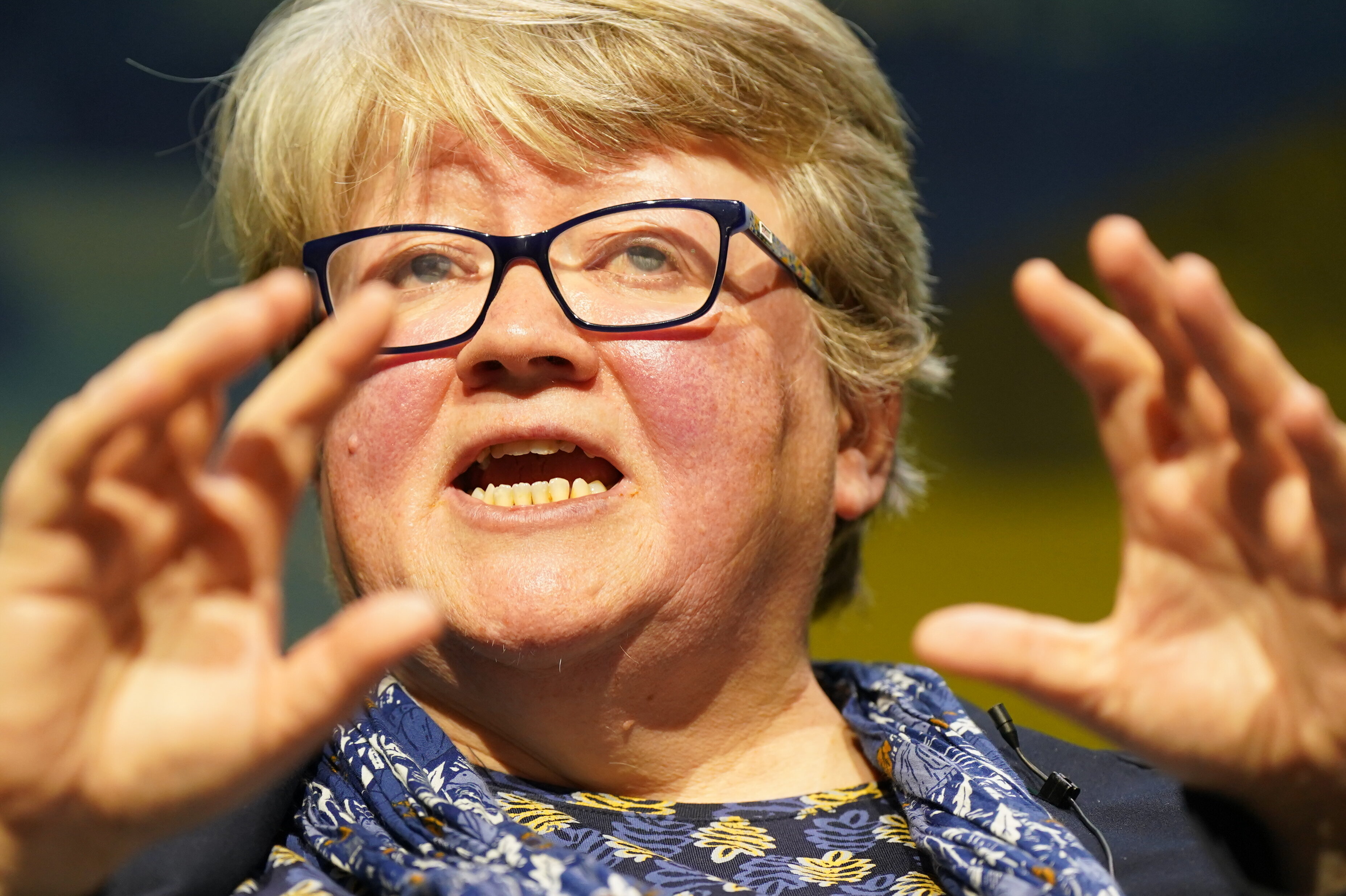
Therese Coffey made the comments when she was questioned by MPs in parliament on Thursday about food shortages.
Tory MP Selaine Saxby had suggested seasonal eating would solve the issue, saying: “The supermarkets are still importing far too many products for us and… actually we should be eating more seasonally and supporting our own British farmers.
“And if we were actually to move to a seasonal line of eating, many of these problems would be avoided… there are great food products available from local farmers at this time.”
Why Is There A Shortage Of Tomatoes And Other Fruit And Veg?
The UK government says it is mainly down to bad weather in Europe and Africa.
High electricity prices are also having an impact on food grown in greenhouses in the UK and the Netherlands.
Tesco, Aldi, Asda and Morrisons have all announced they are rationing salad ingredients for a few weeks.
Coffey replied: “It’s important to make sure that we cherish the specialisms that we have in this country.
“A lot of people would be eating turnips right now rather than thinking necessarily about aspects of lettuce and tomatoes and similar, but I’m conscious that consumers want a year-round choice and that is what our supermarkets, food producers and growers around the world try to satisfy.”
During the exchange, Coffey said the shortages would be a temporary issue that should be resolved in two to four weeks.
A shortage of tomatoes in UK supermarkets has widened to other fruit and vegetables due to a combination of bad weather and transport problems in Africa and Europe.
Some supermarkets have introduced customer limits on certain fresh produce, with photographs emerging of empty shelves.
Lib Dem Wera Hobhouse said Rishi Sunak should call an emergency Cobra meeting to respond to the “national emergency”.
Paul Mescal has shared his “fury” after being groped in the street by a fan.
The Normal People actor is currently starring in a London production of A Streetcar Named Desire, and told the Evening Standard that he had been stopped outside the theatre by a woman asking to take his photo.
“As we posed for it, she put her hand on my ass,” he recalled.
Initially presuming that “it was an accident”, he tried to move away, continuing: “But the hand followed. I remember tensing up and feeling just, like, fury.
Advertisement
“I turned to her and said, “What’re you doing? Take your hand off my ass’.
“The last thing I want to do is call somebody out in front of the theatre — it’s uncomfortable for everyone involved — but it was really not okay. It was so gross, creepy.”
During an interview last year, Paul recalled a similar “fucking rude” incident when a stranger in a bar shared to him she had a screengrab of one of his nude scenes from Normal People as her phone wallpaper.

Karwai Tang via Getty Images
“I didn’t think the show was any good but I saw your willy and I have a photo!” Paul claimed the stranger said to him.
Advertisement
He said: “I remember that was the first time that I was really angry. I was like, ‘That’s fucking rude!’ It’s embarrassing for you, it’s embarrassing for me, it’s embarrassing for my friends.”
Reflecting on attention from the public in his Standard interview, Paul said: “When Normal People came out, the attention was a bit affronting. It was like, ‘This is fucking crazy’. Now I’m a bit more comfortable with it.
“I realised, like, this can consume me and I can be pissed off with every person who has a naked picture of me stashed somewhere or I can just let it go. It’s the internet.
“The internet is this evil fucking entity and it has so much power but it’s an exhausting hill to try and die on because you’re not going to win.”
He also pointed out that he doesn’t have it as bad as his female peers, adding: “Women have been objectified by men throughout history — and still are.”
Advertisement
Paul is currently in the running for Best Actor at the upcoming Oscars, for his performance in the acclaimed drama Aftersun.
He’s in the running against fellow Irish actor Colin Farrell – who he told the Standard he is rooting for – as well as Austin Butler, Bill Nighy and Brendan Fraser.


