If you’ve ever played the claw game at an arcade, you know how hard it is to grab and hold onto objects using robotics grippers. Imagine how much more nerve-wracking that game would be if, instead of plush stuffed animals, you were trying to grab a fragile piece of endangered coral or a priceless artifact from a sunken ship.
Most of today’s robotic grippers rely on embedded sensors, complex feedback loops, or advanced machine learning algorithms, combined with the skill of the operator, to grasp fragile or irregularly shaped objects. But researchers from the Harvard John A. Paulson School of Engineering and Applied Sciences (SEAS) have demonstrated an easier way.
Taking inspiration from nature, they designed a new type of soft, robotic gripper that uses a collection of thin tentacles to entangle and ensnare objects, similar to how jellyfish collect stunned prey. Alone, individual tentacles, or filaments, are weak. But together, the collection of filaments can grasp and securely hold heavy and oddly shaped objects. The gripper relies on simple inflation to wrap around objects and doesn’t require sensing, planning, or feedback control.
The research was published in the Proceedings of the National Academy of Sciences (PNAS).
“With this research, we wanted to reimagine how we interact with objects,” said Kaitlyn Becker, former graduate student and postdoctoral fellow at SEAS and first author of the paper. “By taking advantage of the natural compliance of soft robotics and enhancing it with a compliant structure, we designed a gripper that is greater than the sum of its parts and a grasping strategy that can adapt to a range of complex objects with minimal planning and perception.”
Becker is currently an Assistant Professor of Mechanical Engineering at MIT.
advertisement
The gripper’s strength and adaptability come from its ability to entangle itself with the object it is attempting to grasp. The foot-long filaments are hollow, rubber tubes. One side of the tube has thicker rubber than the other, so when the tube is pressurized, it curls like a pigtail or like straightened hair on a rainy day.
The curls knot and entangle with each other and the object, with each entanglement increasing the strength of the hold. While the collective hold is strong, each contact is individually weak and won’t damage even the most fragile object. To release the object, the filaments are simply depressurized.
The researchers used simulations and experiments to test the efficacy of the gripper, picking up a range of objects, including various houseplants and toys. The gripper could be used in real-world applications to grasp soft fruits and vegetables for agricultural production and distribution, delicate tissue in medical settings, even irregularly shaped objects in warehouses, such as glassware.
This new approach to grasping combines Professor L. Mahadevan’s research on the topological mechanics of entangled filaments with Professor Robert Wood’s research on soft robotic grippers.
“Entanglement enables each highly compliant filament to conform locally with a target object leading to a secure but gentle topological grasp that is relatively independent of the details of the nature of the contact,” said Mahadevan, the Lola England de Valpine Professor of Applied Mathematics in SEAS, and of Organismic and Evolutionary Biology, and Physics in FAS and co-corresponding author of the paper.
“This new approach to robotic grasping complements existing solutions by replacing simple, traditional grippers that require complex control strategies with extremely compliant, and morphologically complex filaments that can operate with very simple control,” said Wood, the Harry Lewis and Marlyn McGrath Professor of Engineering and Applied Sciences and co-corresponding author of the paper. “This approach expands the range of what’s possible to pick up with robotic grippers.”
The research was co-authored by Clark Teeple, Nicholas Charles, Yeonsu Jung, Daniel Baum and James C. Weaver. It was supported in part by the Office of Naval Research, under grant N00014-17-1- 206 and the National Science Foundation under grants EFRI-1830901, DMR-1922321, DMR-2011754, DBI-1556164, and EFMA-1830901 and the Simons Foundation, and the Henri Seydoux Fund.
Butterfly wing patterns have a basic plan to them, which is manipulated by non-coding regulatory DNA to create the diversity of wings seen in different species, according to new research.
The study, “Deep cis-regulatory homology of the butterfly wing pattern ground plan,” published as the cover story in the Oct. 21 issue of Science, explains how DNA that sits between genes — called ‘junk’ DNA or non-coding regulatory DNA — accommodates a basic plan conserved over tens to hundreds of millions of years while at the same time allowing wing patterns to evolve extremely quickly.
The research supports the idea that an ancient color pattern ground plan is already encoded in the genome and that non-coding regulatory DNA works like switches to turn up some patterns and turn down others.
“We are interested to know how the same gene can build these very different looking butterflies,” said Anyi Mazo-Vargas, Ph.D. ’20, the study’s first author and a former graduate student in the lab of senior author, Robert Reed, professor of ecology and evolutionary biology in the College of Agriculture and Life Sciences. Mazo-Vargas is currently a postdoctoral researcher at George Washington University.
“We see that there’s a very conserved group of switches [non-coding DNA] that are working in different positions and are activated and driving the gene,” Mazo-Vargas said.
Previous work in Reed’s lab has uncovered key color pattern genes: one (WntA) that controls stripes and another (Optix) that controls color and iridescence in butterfly wings. When the researchers disabled the Optix gene, the wings appeared black, and when the WntA gene was deleted, stripe patterns disappeared.
advertisement
This study focused on the effect of non-coding DNA on the WntA gene. Specifically, the researchers ran experiments on 46 of these non-coding elements in five species of nymphalid butterflies, which is the largest family of butterflies.
In order for these non-coding regulatory elements to control genes, tightly wound coils of DNA become unspooled, a sign that a regulatory element is interacting with a gene to activate it, or in some cases, turn it off.
In the study, the researchers used a technology called ATAC-seq to identify regions in the genome where this unraveling is occurring. Mazo-Vargas compared ATAC-seq profiles from the wings of five butterfly species, in order to identify genetic regions involved in wing pattern development. They were surprised to find that a large number of regulatory regions were shared across very different butterfly species.
Mazo-Vargas and colleagues then employed CRISPR-Cas gene editing technology to disable 46 regulatory elements one at a time, in order to see the effects on wing patterns when each of these non-coding DNA sequences were broken. When deleted, each non-coding element changed an aspect of the wing patterns of the butterflies.
The researchers found that across four of the species — Junonia coenia (buckeye), Vanessa cardui (painted lady), Heliconius himera and Agraulis vanillae (gulf fritillary) — each of these non-coding elements had similar functions with respect to the WntA gene, proving they were ancient and conserved, likely originating in a distant common ancestor.
They also found that D. plexippus (monarch) used different regulatory elements from the other four species to control its WntA gene, perhaps because it lost some of its genetic information over its history and had to reinvent its own regulatory system to develop its unique color patterns.
“We have progressively come to understand that most evolution occurs because of mutations in these non-coding regions,” Reed said. “What I hope is that this paper will be a case study that shows how people can use this combination of ATAC-seq and CRISPR to begin to interrogate these interesting regions in their own study systems, whether they work on birds or flies or worms.”
The study was funded by the National Science Foundation (NSF).
“This research is a breakthrough for our understanding of the genetic control of complex traits, and not only in butterflies,” said Theodore Morgan, a program director at the NSF. “Not only did the study show how the instructions for butterfly color patterns are deeply conserved across evolutionary history, but it also revealed new evidence for how regulatory DNA segments positively and negatively influence traits such as color and shape.”
Story Source:
Materials provided by Cornell University. Original written by Krishna Ramanujan, courtesy of the Cornell Chronicle. Note: Content may be edited for style and length.
Scientists discovered an important molecular link between lung tumor growth and disrupted circadian rhythms, according to a new paper co-authored by a University of Rochester Wilmot Cancer Institute investigator and led by the Scripps Research Institute in California.
Circadian rhythms, sometimes called the “biological clock,” is the cellular process that rules sleep-wake cycles. The World Health Organization has proclaimed that disrupted circadian rhythms are a probable carcinogen.
The latest research, published in the high-impact journal Science Advances, describes that when the circadian clock gets off track it implicates a cancer-signature gene known as HSF1 that can trigger lung tumors. Lungs are under tight circadian control and seem to be particularly vulnerable to a disrupted biological clock.
The paper describes in mouse models the role of HSF1 signaling, a previously unknown mechanism that may explain tumor formation in response to rhythm disruption.
The findings also suggest that it may be possible to target HSF1 with drug therapy, to prevent cancer among people with frequently disturbed circadian rhythms.
Although this study was done in mice, other data link circadian disruption to human tumors, said co-author Brian Altman, Ph.D., an assistant professor of Biomedical Genetics at the University of Rochester Medical Center and a Wilmot faculty member.
“Everything points in the same direction,” he said. He noted that in this case, when the circadian clocks in mice are disrupted by inconsistent sleep, for example, the outcomes are highly relevant to people who work night shifts or rotating schedules.
Altman’s chief contribution to the study was to provide expertise on a scientific method to assess how the circadian clock behaves in tissues. The Scripps team reached out to Altman to collaborate after seeing a presentation he gave at a scientific meeting on use of the technique, which was invented in 2018 at Vanderbilt University by Jacob Hughey, Ph.D. Altman and his lab have been focused on circadian rhythms and the connection to cancer for several years.
Lead author of the study is Katja Lamia, Ph.D., associate professor of Molecular Medicine at Scripps. The Scripps news release is here. Funding was provided by the National Science Foundation and the National Institutes of Health.
Some of Asia’s largest animals, including tigers and elephants, are defying 12,000 years of extinction trends by thriving alongside humans, a University of Queensland-led study has revealed.
Researchers scoured paleontological records to compare the historic distribution of Asia’s 14 largest species with their populations in present-day tropical forests.
PhD candidate Zachary Amir, from UQ’s School of Biological Sciences and the Ecological Cascades Lab, said four species — tigers, Asian elephants, wild boars and clouded leopards — showed increased populations in areas with human infrastructure.
“These results show that, under the right conditions, some large animals can live nearby humans and avoid extinction,” Mr Amir said.
“These results challenge the narrative within some conservation circles that humans and megafauna are incompatible.
“Globally there is a trend towards ‘trophic downgrading’, a term referring to the disproportionate loss of the world’s largest animals.
advertisement
“Trophic downgrading is usually worst near humans because hunters target larger species.
“But in the case of tigers, elephants, wild boars and clouded leopards, their Asian populations are higher nearby humans.
“This may be the outcome of tougher anti-poaching efforts in the national parks that are closer to human settlements and are more frequently visited by tourists.”
The study also found deforestation was still impacting species, and clouded leopard numbers in particular experienced a strong decline in those areas.
But, Mr Amir said the research showed that if the large animal species were not hunted, they could live in relatively small habitats and near humans.
advertisement
“Previously, there have only been a few examples of large Asian species thriving in small habitats near humans, notably in Mumbai, India where leopards in an urban park prey on stray dogs,” Mr Amir said referring to a prior UQ study.
“Thankfully, we found that a wider range of animals can coexist with humans.”
At one of their study sites in Singapore, where poaching has been eliminated and there are considerable forest restoration efforts, two large animal species are thriving again.
“Singapore has actually experienced the natural re-wilding of sambar deer and wild boars, which are now frequently observed in an urban forest, the Bukit Timah Nature Reserve,” Mr Amir said.
“If we replicate those protection efforts in larger forests and other counties, we may see positive impacts right around the world.
“But before this can happen, humans need to get our act together and limit poaching.”
While there are some positive results, UQ’s Dr Matthew Luskin said the study also noted strong declines in tapirs, Sumatran rhinoceros, sun bears, guar and other large animals.
“The key innovation of this work was to systematically investigate the population trends of many different wildlife species across the region,” Dr Luskin said.
“Then we tested if all species showed consistent trends and if similar parks retained similar species.
“Remarkably, we found no two forests currently possess the same group of wildlife compared to thousands of years ago.”
Dr Luskin said the research offered an opportunity to shape the future of nature.
“These results provide hope for wildlife in forests previously considered too far degraded or too close to cities,” he said.
“Now we’re exploring new conservation strategies for these surprising places.”
Longstanding theories of how plants rely on calcium waves to respond systemically to wounding and other stresses have been given fresh perspective.
John Innes Centre researchers have shown that calcium waves are not a primary response, but rather they are a secondary response to a wave of amino acids released from the wound.
These findings challenge established thinking on long distance plant signalling molecules and the mechanisms by which information travels from the point of stress through living and non-living plant tissues.
It has been observed for many years that wounding, and other trauma, initiates calcium waves that travel both short distances from cell to cell, and longer distances from leaf to leaf.
These calcium waves are reminiscent of signalling seen in the nerves in mammals, but as plants do not have nerve cells the mechanism by which this happens has been in question.
The new findings which appear in Scientific Advances suggest that when a cell is wounded, it releases a wave of glutamate, an amino acid. As this wave travels through plant tissues, it activates calcium channels in the membranes of the cells it passes. This activation appears like a calcium wave but is a passive response, or “readout” of the moving glutamate signal.
Previous hypotheses to explain how calcium waves pass through plant cells involved active mechanisms to propagate the calcium signal. These hypotheses relied on the signal propagating along the cell membrane, or via a pressure wave in the xylem, but there was no explanation for how the response passed from one cell to the next.
Dr Christine Faulkner, Group Leader at the John Innes Centre said, “Every time active propagation models were presented, I would question how this wave travelled from cell to cell. It appeared to me that there was a hole in the theory, and this research uncovers a new mechanism that shows that the calcium wave isn’t what it seems.”
Dr Faulkner’s group specializes in the study of plasmodesmata, the channels or bridges that connect cells and the team speculated that a wound signal would travel from cell to cell through plasmodesmata. However, using quantitative imaging techniques, data modelling and genetics they found that the mobile signal is a glutamate wave that travels outside of cells, along the cell walls.
“The glutamate and calcium waves are connected — glutamate triggers the calcium response. You could imagine it with an analogy of a corridor. The glutamate rushes down the corridor and as it passes a door it kicks it open. The calcium response is the door opening. Up to now the assumption has been that what moved down the corridor was hydraulic pressure or a series of propagating chemical reactions, but our study shows that this is not the case,” said Dr Faulkner.
First author of the study Dr Analisa Bellandi said, “We’ve shown that calcium waves are synchronous with glutamate waves, and their dynamics match transmission by diffusion and flow. This research makes us rethink what we know. I am hoping that our research will inspire debate and allow people to take a fresh perspective on data which has been in the field for a long time.”
Diffusion and bulk flow of amino acids mediate calcium waves in plants appears in Science Advances.
A new study released in the American Cancer Society journal Cancer reconsiders guidelines for when to start screening with mammograms if a woman has a mother, sister, or daughter who was diagnosed with breast cancer.
Women with a first-degree family relative diagnosed with breast cancer, who are otherwise at average risk, are often advised to get screened 10 years earlier than the relative’s diagnosis age. However, there is little evidence to support the long-standing recommendation.
UC Davis Comprehensive Cancer Center researcher Diana Miglioretti joined Danielle Durham, with the Department of Radiology at University of North Carolina at Chapel Hill, and five other researchers on the study. They analyzed data from the Breast Cancer Surveillance Consortium on screening mammograms conducted from 1996-2016 to evaluate when screenings should begin for women with a family history of breast cancer.
More than 300,000 women were included in the national study. Researchers compared cumulative 5-year breast cancer incidence among women with and without a first-degree family history of breast cancer by relative’s age at diagnosis and screening age.
“The study concluded that a woman with a relative diagnosed at or before age 45 may wish to consider, in consultation with her doctor, initiating screening 5-8 years earlier than their relative’s diagnosis age, rather than a decade earlier. That puts them at a risk that is equal to that of an average-risk woman who is age 50, which is the most recommended age for starting mammograms,” said Durham.
BRCA gene mutation carriers may benefit from starting screenings earlier. Women ages 30-39 with more than one first-degree relative diagnosed with breast cancer may wish to consider genetic counseling.
Increasing the age for initiating screening could reduce the potential harms of starting breast cancer screenings too early. These include increased radiation exposure and false positive results that require women to return to the clinic for diagnostic imaging and possibly invasive procedures, but do not result in a breast cancer diagnosis. The earlier a woman starts receiving mammograms, the more screenings they will undergo over their lifetime — and that increases the chances of experiencing these harms.
“Mammography also may not perform as well in younger women because they are more likely to have dense breasts which increase the difficulty of finding cancer on the images and results in more false-positives,” Miglioretti said.
The other authors on this study include Linn A. Abraham, Kaiser Permanente Washington Health Research Institute; Megan C. Roberts, UNC Eshelman School of Pharmacy; Carly P. Khan, Patient-Centered Outcomes Research Institute; Robert A. Smith, American Cancer Society and Karla Kerlikowske, UCSF Health. Miglioretti is an affiliate investigator with UC Davis Center for Healthcare Policy and Research and Kaiser Permanente Washington Health Research.
The study was supported through funding by the Cancer Prevention Fellowship Program, Division of Cancer Prevention and the National Cancer Institute (NCI) at the National Institutes of Health. Data collection by the Breast Cancer Surveillance Consortium was funded by the NCI (grant numbers P01CA154292, U54CA163303 and PCS-1504-30370).
You’re reading Gen:Blxck, a series exploring Black culture, history, family and identity through the generations.
My earliest memories of having my hair done are all at home. My mother would braid mine and my sister’s hair before it got too thick for her to manage. Then I met my first hairdresser, a family friend of a friend, called Akosi. I’d travel to her house with my mum and spend the next few hours sitting in between her legs, getting curly box braids (my absolute go-to back then).
Advertisement
But in recent years, there’s been a surge of young Black women getting into the hair industry and using Instagram as a way to find clients. They’re labelled IG hairdressers by the community, and fewer women my age are now going to traditional Black hair salons where ‘Aunties’ typically styled your hair.
Aunties once ruled the Black hair landscape here – we grew up with them and we didn’t have anyone else to compare them to. But now there is a growing ‘Aunties versus IG hairdressers’ debate in the community. And of course there are pros and cons to each.
If you’re looking for a cheap price point, you’d probably want to get your hair done by an auntie. The trouble is, you’re more likely to be waiting a few hours to get your hair finished in the salon as they switch – and chat – between clients.
IG hairdressers, on the other hand, are easier to find and book online and more likely to be able to do a hairstyle they haven’t done before, but they also tend to charge more and often get called out for unprofessional behaviour like cancelling last minute.
Advertisement
Whoever we trust with our hair, the styles Black women are favouring are changing – and fast. For centuries our hair has been policed by whiteness, but now, Black women are finding a new sense of pride. We’re finding our unique styles, whether that’s braving the big chop or saying ‘no’ to wigs altogether.
It’s been a long journey to get here and even the biggest fans of IG hairdressers will acknowledge we’ve got decades of salon owners to thank for it.
“In the 1960s, Black hair was often either stylishly styled in a natural African look or chemically treated to give it a washed-out colour,” co-founder and CEO of Curl Centric, Akirashanti Byrd tells HuffPost UK,
Byrd is 45 and she’s been styling Black hair for 15 years. Her customers are mainly Black women who want to keep their hair in its natural state.
“Often, these women are not familiar with the various styling techniques and products available to them, so I spend a lot of time educating them on the available options,” Byrd says. She has seen many trends in her time as a hairdresser. “By the 1980s, Black women were experimenting with naturally kinky curls and Afros, greatly expanding their style options,” she says.
Advertisement
“In the 1990s, we saw celebrities like Viola Davis rocking bold Black hairstyles that stood out from all other styles. This decade also saw the introduction of blonde hair dye, which helped make light-skinned people’s dark locks more visible. Since then, many variations of Black hairstyles have continued to be popular today, including relaxed curls, cornrows, dreadlocks and afro.”
The ways you can treat and style Black hair have also expanded in this time – especially with the help of the natural hair movement.
Akirashanti Byrd
Akirashanti Byrd: ‘I spend a lot of time educating [women] on the available options.’
The natural hair movement really kicked off in the 60s alongside the civil rights movement, and was spearheaded by political activist Angela Davis. Afros were worn to protest against white supremacy and champion Black liberation.
However, the early to mid 2000s saw a resurgence of this movement. More and more women in our community started to question why we relied so much on straight hair to make us feel worthy. So we put relaxers and the hot combs on pause and brought back the blue magic, afro combs and blow dryers.
Advertisement
Social media has played a big part in this. I learnt how to style my natural hair by watching YouTube. I watched to see how I could maintain a wash and go, slick down my 4C hair, and even attempted to learn how to cane roll (I’m still learning).
“The rise in popularity of natural hairstyles has led to an increase in demand for products and services that cater to this market and has resulted in more Black-owned businesses entering the industry,” Byrd says.
“The natural hair movement has positively influenced the Black hair industry. It has helped increase awareness of the need for products specifically designed for Black hair and has created a demand for these products. This has resulted in more companies developing Black hair care lines, helping to grow the industry.”
Brands like Ruka Hair, Cantu, Shea Moisture, KeraCare are Black girls’ go to for hair products. And women are investing their money into these brands. Black Women in the UK account for 10% of haircare spending, although they make up only 2% of the UK adult population, a survey by TreasureTress found.
Advertisement
“Today, I feel like hair trends seem to change with the season: seasonal colours, lengths and protective styles etc,” says hairstyilst Ayanda Soares. Soares has been a hairdresser for 14 years and describes her customers as those who want to embrace their natural hair and often opt for protective styling.
She began learning when she was a teenager. “I had always done my own hair, as my mum was terrible at doing mine and my sister’s hair – she had dreadlocks for most of our childhood,” she shared. “In secondary school, I would braid friends’ hair and I learned to do braided weaves around the same time.”
Soares tells HuffPost that in her time as a hairdresser, she’s seen a surge in demand for experimental methods such as tape-ins and keratin fusion. These options weren’t accessible in the UK in the same way they were in the US due to a lack of hair suppliers offering extensions for women with Black hair.
“These have been around for many years, but have not been seen at this level in the afro/Black hair space,” she adds.
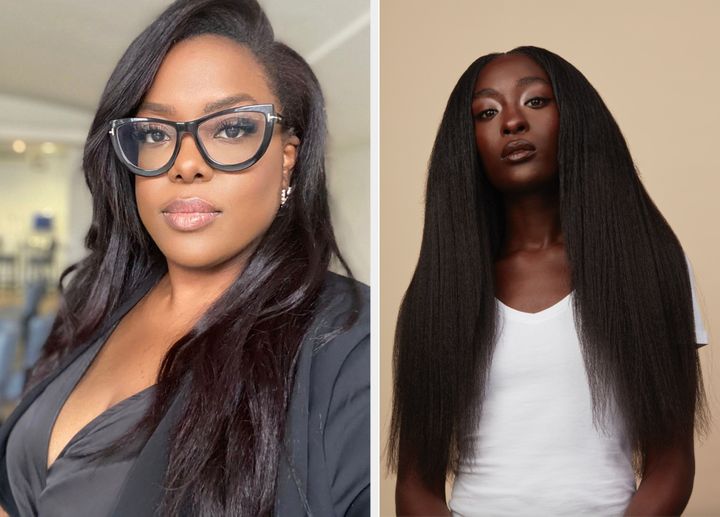
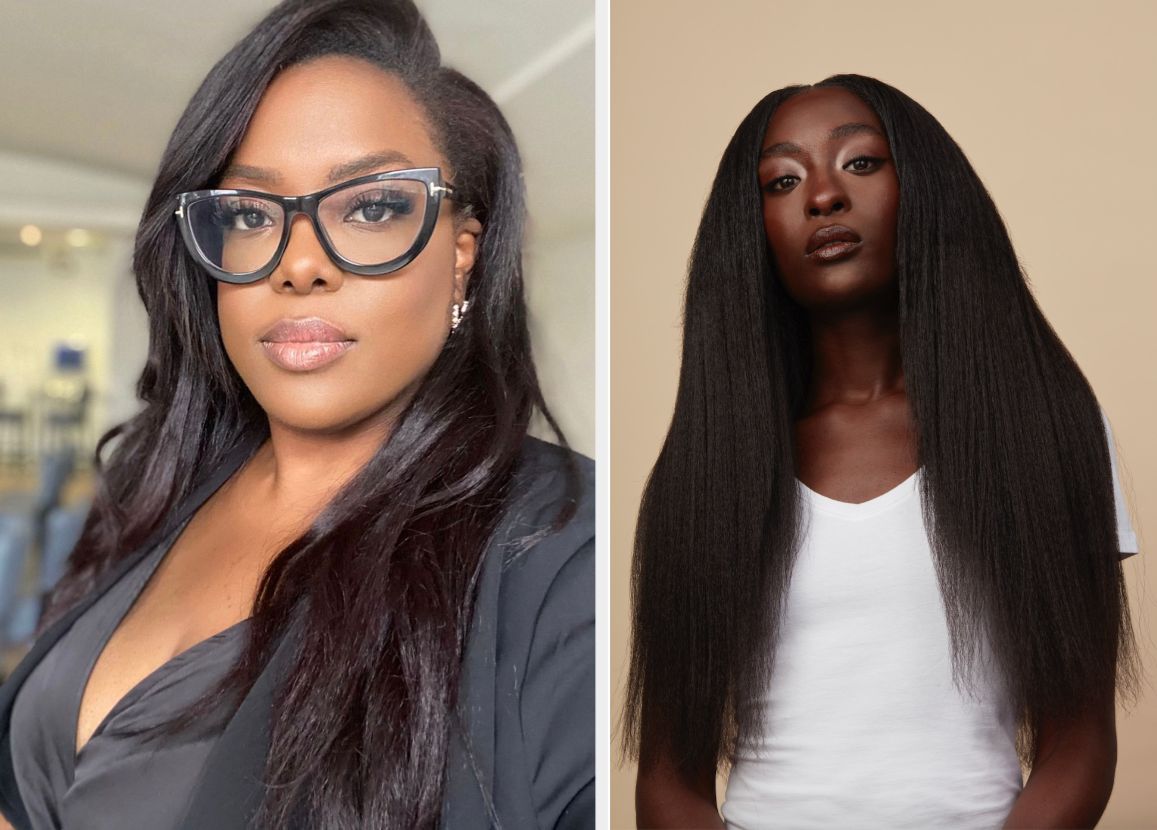
Ayanda Soares
Ayanda Soares (left) and a model with tape-ins styled by her (right).
Soares agrees that social media has played its part in changing the landscape of Black hair styling. “It has also has allowed us to showcase our work globally,” she says.
Advertisement
She is big on educating women about how to care for their hair, running training programmes that highlight how to clean and prolong your hair extensions, for example.
“Content creators also help sell the message for us business owners, in terms of education, so we tend to work with influencers often,” she adds.
The pandemic also affected the way Black women do their hair – 64.7% said the way the did their hair changed as a result of lockdowns, according to the TreasureTress research.
More of us made the decision to transition “back to natural”, where women grow out their chemically treated hair. Additionally, they actively sought out resources to educate themselves on how to take care of their hair because they were no longer able to visit professionals due to lockdowns.
And with a younger demographic booking clients, the hair styles Black women are choosing is shifting.
Advertisement
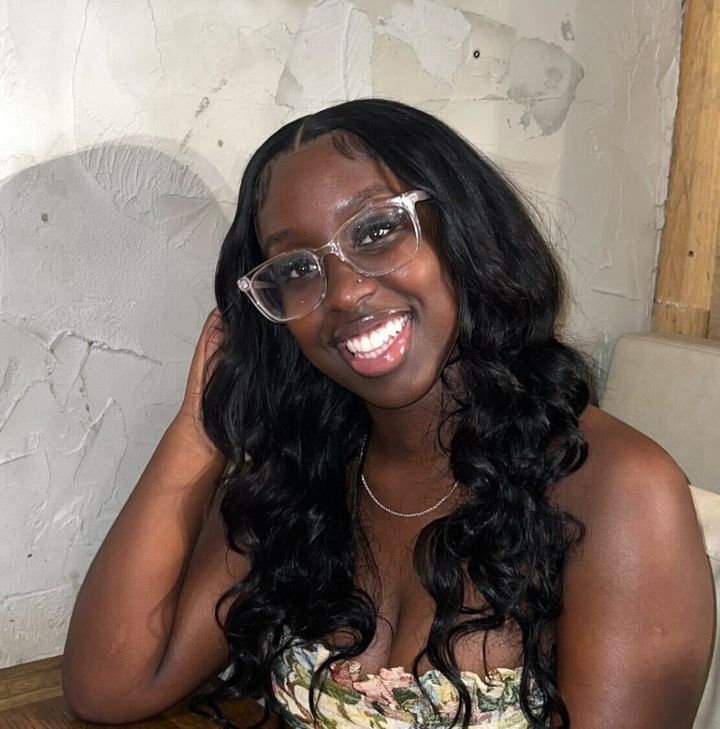
Marlene Gatrude Twinomugisha
Marlene Gatrude Twinomugisha: ‘I just kind of fell into it’
The most popular hairstyles today tend to be the more natural ones, like knotless braids, free-style feed in cane rolls or locs, Marlene Gatrude Twinomugisha, a 20-year-old hairdresser from London tells me.
She started doing hair by “accident”. Similar to Soares, she didn’t like the way her mum did her hair, so took it upon herself to learn how to style it. “I then moved on to to doing hair for my cousins, then my friends and more people were asking me to do their hair at school, so I just kind of fell into it,” she says.
“My experiences getting my hair done by aunties when I was younger was me showing them a hairstyle, them saying they can do it but whenever the style was done, it didn’t look the same at all,” says Twinomugisha, who posts her styles on Instagram under the name Crowned By Her UK.
Advertisement
She believes younger girls have moved to sourcing stylists from Instagram because IG hairdressers are able to jump on hair trends quicker. “Aunties can’t really keep up,” she adds.
However, IG hairdressers also have their issues. Writing for Refinery29 earlier this summer, Yolanthe Fawehinmi detailed how the convoluted booking process and poor customer service is causing young women to return to their roots.
“As more and more horror stories pile in about the last-minute cancellations, excessive fees, where you’ll need to pay a deposit via a booking system to secure an appointment and can be charged for being late, wanting extra length or colour, and of recent, even parting your hair — sometimes bad customer service, young people on social media are boycotting Instagram hairstylists, particularly those on TikTok, who are going back to Britain’s African braiders,” she reported.
Sade Idem, a 25-year-old hairstylist from Kent, says younger black stylists have more of a business mindset.
“With many of us growing up in the UK, we’ve seen how much Caucasian stylists would charge for less challenging hair services, and we realise £60 for seven hours of braiding with no breaks is criminal!” she says.
Advertisement
Idem has a lot of respect for older stylists as they’ve paved the way for the younger ones. “However, many older stylists are focused on the final look, rather than the health of the client’s hair long term,” she comments. “Their customer service can also be affected as they’re trying to fit in as many clients as possible to make up for the low prices they charge.”
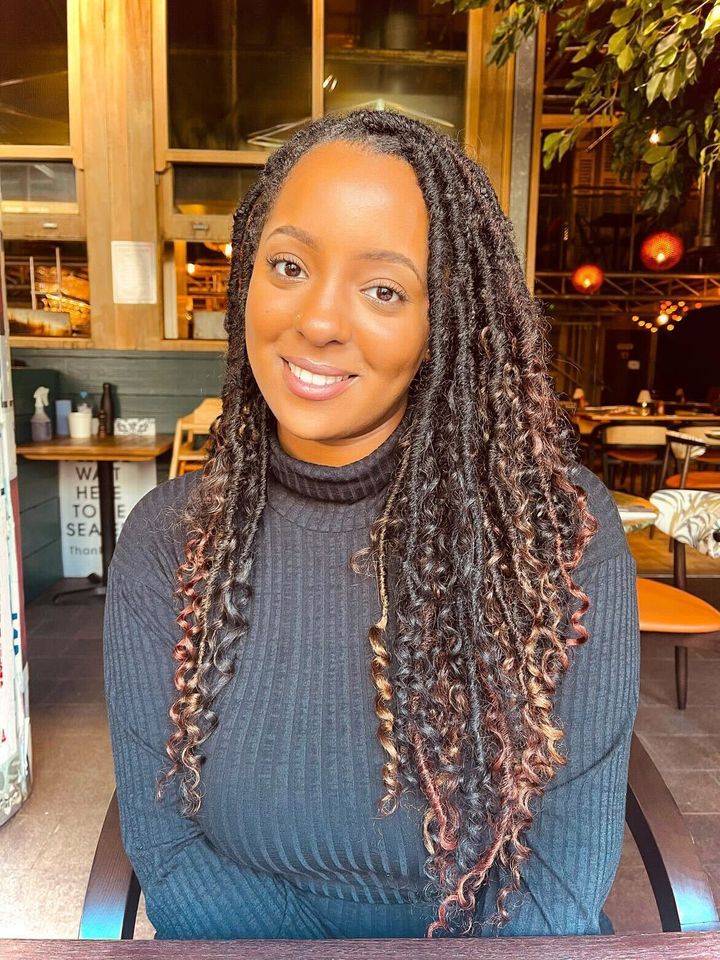
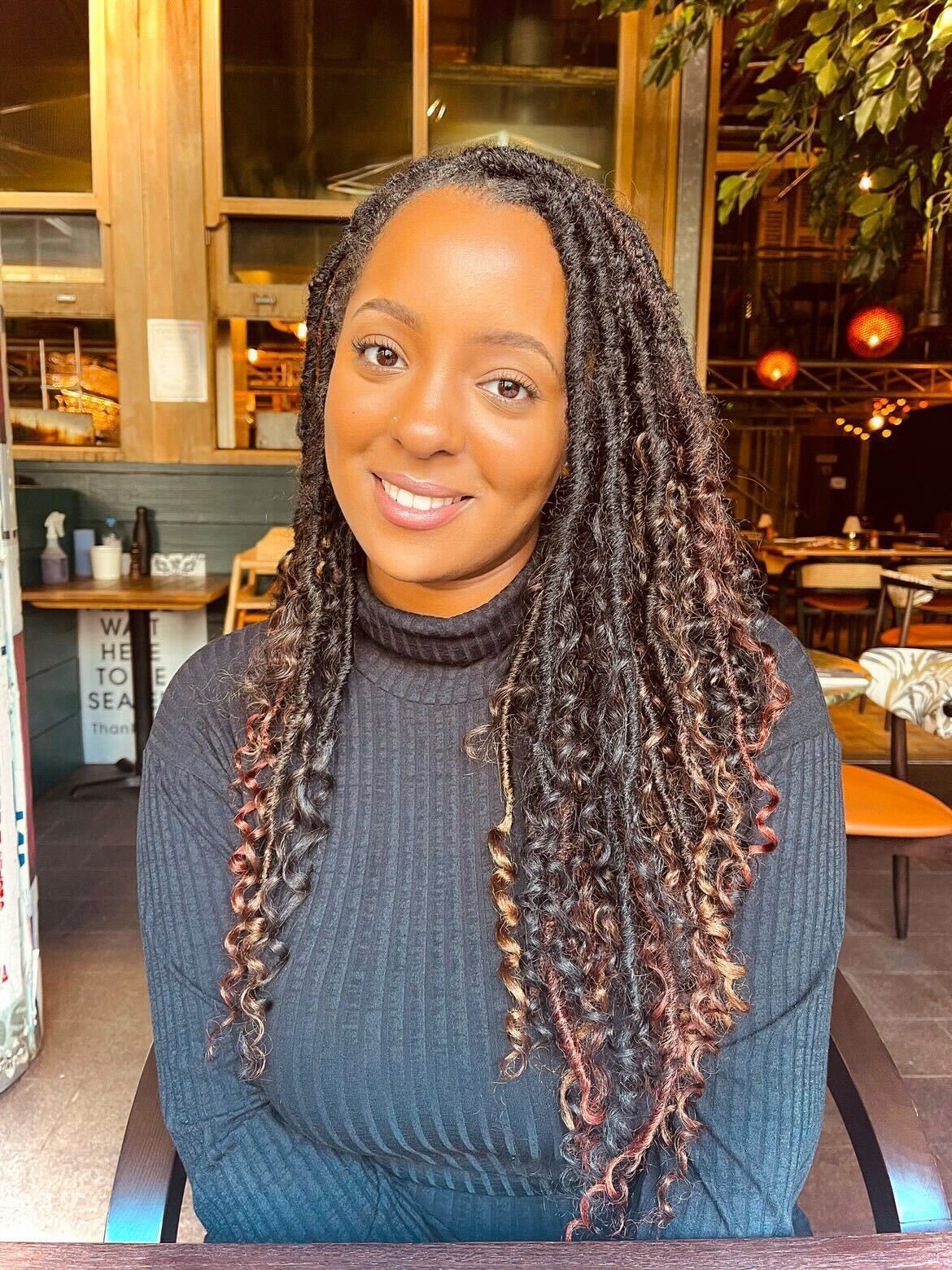
Sade Idem: ‘We realise £60 for seven hours of braiding with no breaks is criminal.’
So what does the future of Black hair and hairdressing look like from here? To me, it looks like versatility, growth and experimentation. As we move towards more protective and natural styles, I see us breaking away from the idea that we have to play it safe with our hair. Let’s enjoy it, and have fun.
I hope to see more young Black girls growing in the profession, but I do believe there’s a place for aunties in the Black hairdressing arena. They worked hard to build Black spaces for women to do hair in this country and paved the way for younger Black women to learn and grow as hairdressers.
As Byrd puts it: “There’s no doubt that Black hairdressing is a growing industry with immense potential. The future looks bright for those willing to put in the hard work and dedication required to succeed.”
Advertisement
What does it mean to be Black and British? Well, it depends which generation you ask. This Black History Month, HuffPost UK has teamed up with BuzzFeed’s Seasoned and Tasty UK to find out. Read more from Gen:Blxck here.