We aren’t seeking to explain that difference here. Instead, we wanted to know whether the higher grades girls tend to get in school actually translate to better wages once they enter the workplace.
Here, we asked a spokesperson for the European Institute for Gender Equality (EIGE) about the topic.
“These stronger school outcomes do not automatically translate into equal outcomes later in life”
An EIGE spokesperson said that girls’ academic achievements are a “long-standing achievement in the EU”.
But “these stronger school outcomes do not automatically translate into equal outcomes later in life.
“Evidence consistently shows that structural inequalities in households, the labour market and public life continue to shape women’s opportunities, earnings, and career progression.”
Indeed, the author of the Cambridge study we mentioned earlier said that “apparent advantages” suggested by girls’ academic successes “are not necessarily carried through to employment”.
Why don’t girls’ higher grades appear to lead to better pay?
The EIGE spokesperson said that one-third of young men aged 15-24 believe men are better leaders than women, compared to 15% of young women.
Advertisement
“These attitudes shape unequal outcomes over the life course, [and] contribute to a persistent divide in the labour market, where women are overrepresented in public sectors such as education, health, and care – roles that are essential but often undervalued and lower paid,” they added.
Men, meanwhile, are likelier to work in higher-paying sectors.
And “even when women enter the workforce with strong qualifications, they face barriers to career progression. Women remain underrepresented in senior and decision-making positions, which has a direct impact on earnings,” the spokesperson said.
“In addition, unequal sharing of care responsibilities means women are more likely to work part-time, take career breaks, or adjust their working patterns, all of which can slow career advancement and reduce lifetime earnings,” the EIGE spokesperson said.
“Women are also twice as likely as men to provide over 35 hours of childcare per week and, on average, receive only 75% of men’s pensions.”
Advertisement
Ultimately, “the assumption that better school results lead to better professional outcomes does not hold in reality. Addressing these gaps requires tackling structural inequalities that continue to limit women’s economic equality.”
But while appetite is clearly there, that’s not to say women feel safe when they do travel alone. Far from it.
Advertisement
A new survey conducted by hospitality company The Social Hub, along with Opinion Matters, as part of their “Room For Her” campaign, has found that 100% of women aged 18-24 from the UK say they worry for their safety when travelling alone.
The study polled 2,000 women from eight countries in the UK and Europe.
What else did the survey find?
Their data also showed:
Only 12% of women aged 45-54 travelling for business said they felt “very safe”.
40% of 18-24-year-old women say they “don’t feel safe at all” after it gets dark on their travels,
29% of women surveyed reported being “followed or watched” while solo travelling (that figure rose to 41% for women age 18-24).
16% of women surveyed said they’d experienced physical abuse or assault while solo travelling.
57% of women said 24/7 hotel staff would make them feel safer.
45% said better lighting would help.
Advertisement
These are “eye-opening” results
A 2024 National Police Chiefs’ Council report declared violence against women and girls a “national emergency” in England and Wales, with a possibly low estimate of about two million women and girls targeted a year.
Amber Westerborg, a director of sustainability and impact at The Social Hub, said she hopes the survey encourages the hospitality industry “to start talking and take action, ensuring safe travel for all”.
“The results are eye-opening and shine a light on a real problem across the industry,” she said.
“Women should not have to change their behaviour, limit their ambition or decline an opportunity because they don’t feel safe.”
And this week, she spoke to us about straight women.
Here, she shared the topics she hears about most frequently:
1) Having a lower sex drive than their partner
“The single most common problem straight women bring up with me is that their sex drive has decreased or is overall low, while their partner is way more interested in being intimate, leading to worries and tension in the relationship,” Roos told us.
She added that women may be more likely to compare their lust levels to their partner’s, and feel their lower desire poses an “issue”.
Advertisement
2) Pain during penetrative sex
Experiencing pain during sex thanks to conditions like vulvodynia, vaginal dryness, or pelvic floor issues is “extremely common” among this group, said Roos.
“What most don’t know is that there’s both a physical and mental part… pain leads to fear, and fear leads to deeper problems,” leaving some in a vicious cycle.
3) Not orgasming during partnered sex
Straight women have long suffered from “the orgasm gap”. The sexologist said this doesn’t seem to be going away.
Advertisement
“Many straight women are having a very hard time orgasming during intimacy with their partner, and they don’t know how to solve it,” she said.
4) Body image issues
“I’ve met countless straight women that are extremely aware of how their own bodies look, smell and feel… they think so much about age, weight and how they are seen that it becomes difficult to just let go and be in the moment,” Roos added.
5) Losing desire thanks to the mental load
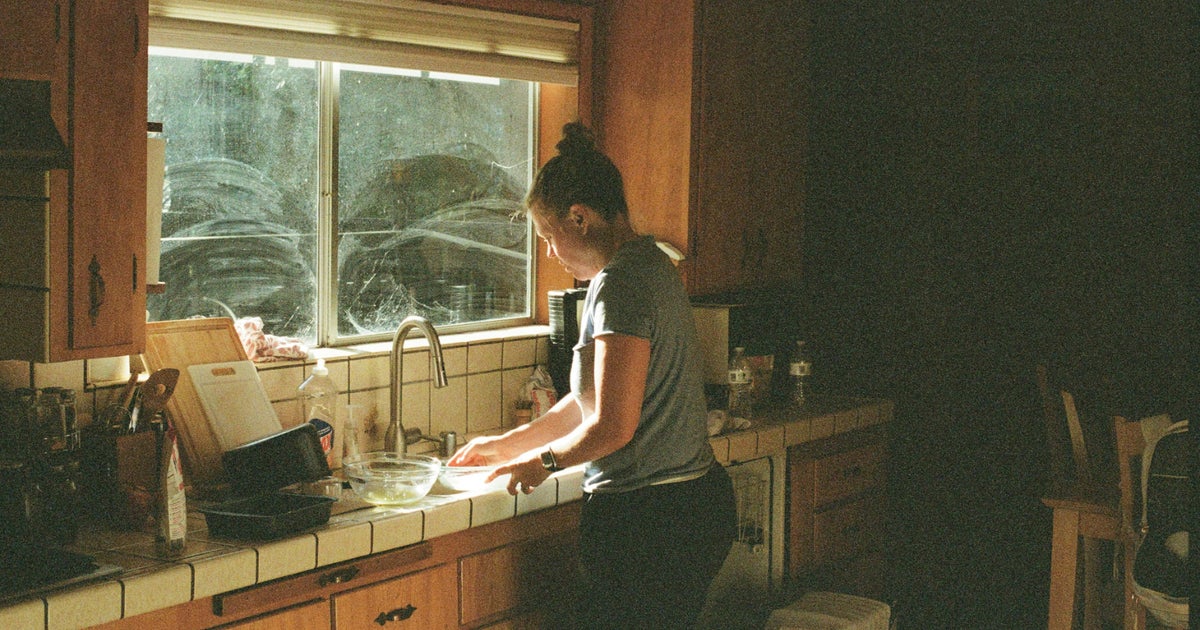
In straight relationships, the mental load – or having to think about, keep track of, and remember the endless tasks that keep a household going – still predominantly falls on women’s shoulders.
Advertisement
And the sexologist said that can have a knock-on effect in the bedroom. Doing “all the planning… as well as all the emotional work in the relationship” can “lead to higher stress levels, which makes the body de-prioritise desire”.
6) Not putting their own pleasure first
“I often meet women who describe themselves as having a hard time with setting their sexual needs and boundaries first, as they’ve been taught to be accommodating rather than prioritise what they want and don’t want,” she stated.
So, uh, any advice?
Yes. The sexologist said that accepting shifts in your levels of lust and trying alternative forms of intimacy, like “oral sex, massage, kisses, caresses and more mentally-focused pleasure, such as roleplaying or dirty talk,” may help.
Advertisement
Explore your own desires, perhaps through masturbation, and communicate them with your partner. “As a majority of women can only reach all the way via clitoral stimulation, I also advise focusing more on that, either with your hands, mouth or a sex toy,” the sexologist said.
Remember also that “pain during sex isn’t normal”, so it’s important to seek professional help if you experience it.
And keep in mind that “your sex life isn’t isolated from the rest of the way you live, so try to look at your diet, sleep schedule, exercise habits, how you drink, how you deal with stress and how your relationships are,” she concluded.
91% of women with children spend at least one hour a day on housework, compared with 30% of men with kids, the European Institute for Gender Equality shared in 2021.
According to the same data, working women spend 2.3 hours a day on housework, whereas working men spend 1.6 hours on it daily.
But no matter what, or who, the cause of chore inequality, chances are anyone who brings up being on the more labour-intensive side of it will have heard “write them/me a list!” at least once.
I have grown to despise that advice in relationships where one person is already doing the bulk of the domestic work. Here, we spoke to relationship therapist and author at Passionerad, Sofie Roos, about why I might not be alone.
Advertisement
“Write a list” profoundly misunderstands the nature of domestic inequality
Roos said that, while she understands that the idea aims to “create a fairer share of the home labour, I think this advice in reality fails to address the core problem”.
It creates more work for someone who, by nature of being given the task, likely already does the lion’s share of domestic labour, she said.
“When one of the partners is expected to write a list and manage things, they also get all of the responsibility for the situation in their lap as they then must see what needs to be done, to prioritise and organise, and plan and follow through… [which is a] big workload.
Advertisement
“This tip also tends to add to the myth that (usually) women should just ‘know how to run a home and a relationship’, as if it were a skill you’re born with rather than something you learn and build up together with your partner,” she added.
Plus, Roos said, it adds to the feeling that one partner is “helping” another, implying that household work is inherently one partner’s domain.
And a single list assumes that housework is static, that noticing, judging, pre-empting, remembering, and reacting to changes and unexpected shifts in your household’s needs isn’t a huge part of the mental load.
Advertisement
“That said,” Roos told me, “I think it’s [a] pretty stupid piece of advice that in reality tends to make things worse rather than solving anything between you”.
What should couples do instead?
OK, so Roos agrees that the dreaded list should be off the table. But given that domestic labour inequality is so pronounced, and that at least some of the parties involved probably want to improve that, what should we do instead?
“I think the focus should be shifted… to share[d] responsibility,” the therapist told us.
Instead of assigning a “project manager” role to one partner, she added, “Ask yourselves what’s your shared responsibility, where the two of you can take more initiative and where you can lead, and communicate around what tasks you feel more keen on doing and try to split it between you in a fair way”.
Advertisement
It’s important to find a way to follow up on that, too, she continued, “for example, by sitting down and having a check-in every second week where both of you take a shared responsibility of communicating how it goes, what you can do better or change and what you should keep on doing the same.”
The partner who has historically done less in the home needs to understand why this is important, however, she added.
“To make them understand that, you might need to sit down and have a talk where you honestly explain how it feels to you when they say [things like], ‘Just tell me what to do and I do it’… you’re not their parent, and this dynamic easily makes it feel that way, which isn’t sustainable in the long run.
Advertisement
“And lastly, don’t forget that this is something you’ll need to tweak and adjust with time as life changes… household labour needs to stay up to date with your situation,” she ended.
“Finding the balance is therefore nothing you do through one set solution, but by having an ongoing process around the labour work at home!”
Jennifer Lopez’s highly anticipated residency in Las Vegas recently came to an end, but not without renewed attacks from her critics who remain vocal in their opposition to how the pop star dresses.
The Jenny from the Block singer kicked off her “Up All Night Live in Las Vegas” residency at the Colosseum at Caesars Palace on Dec. 30, 2025, and performed the final show on Saturday. She’s set to return to the Colosseum with several dates in March.
Advertisement
While many fans of Lopez across social media celebrated her recent Las Vegas performances and her looks onstage, some critics online took the opportunity to level all-too-familiar digs at the singer and actor: that the 56-year-old performer – whose Las Vegas costumes included bodysuits, bikinis and sheer catsuits – was apparently not dressing for her age … whatever that means.
Lopez has long faced scrutiny for how she dresses. Last July, right-wing pundit Megyn Kellyripped Lopez for wearing a thong bodysuit during a performance onstage, calling Lopez a “soft porn star” during an episode of her podcast, The Megyn Kelly Show.
Advertisement
“She’s 55 years old, and she hasn’t come to grips with the fact that she’s not a sex symbol anymore,” Kelly said at the time. She had also criticised Lopez the year prior, saying Lopez was “past her prime”.
Lopez clapped back at the hate she receives over her clothing choices during her residency in Las Vegas, saying at one point onstage: “I do laugh at some of the things [people say online] sometimes, because they do say funny things, too.”
″‘Why is she always dressed that way? Why don’t she dress her age?’ – I’m like, ‘Huh?’ ‘Why’s she always naked?’” she continued. “And I say, ’If you had this body, you’d be naked, too!” she added as the crowd cheered.
Advertisement
Monica Cwynar, a licensed clinical social worker with Thriveworks who specialises in trauma and coping skills, said she believes the attacks against Lopez and how she chooses to dress are “rooted in societal perceptions of ageing, particularly for women”.
And there’s a reason behind it.
“Many people hold ingrained beliefs about how women should physically present themselves as they age,” Cwynar told HuffPost. “Partly because of a perception that desirability should dwindle as we age.”
“It stems from the same place that people don’t want to think of their parents or grandparents as sexual people,” she continued. “Because of that, there is a cultural expectation that women should adopt more conservative or demure attire as they get older.”
Advertisement
Cwynar emphasised that Lopez is an entertainer and that her personal expression and her body autonomy is “hers to display how she sees fit”.
“Women like Jennifer challenging those stereotypes can lead to backlash as it forces people to confront their own biases about age, femininity, and sexuality,” she said.
Denise Truscello via Getty Images
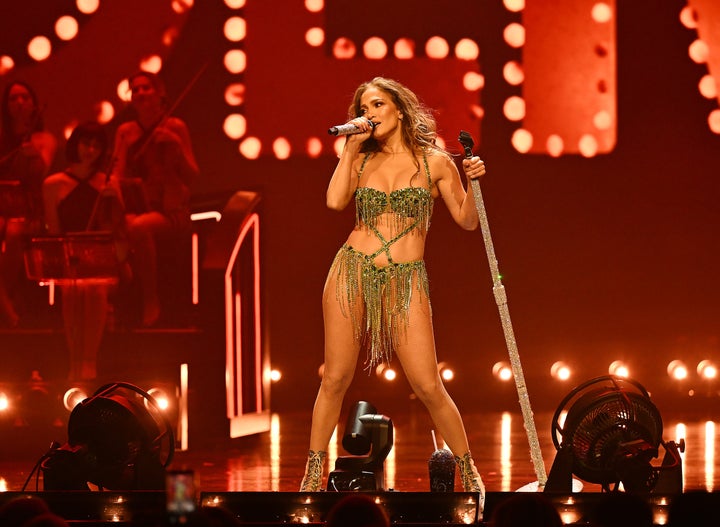
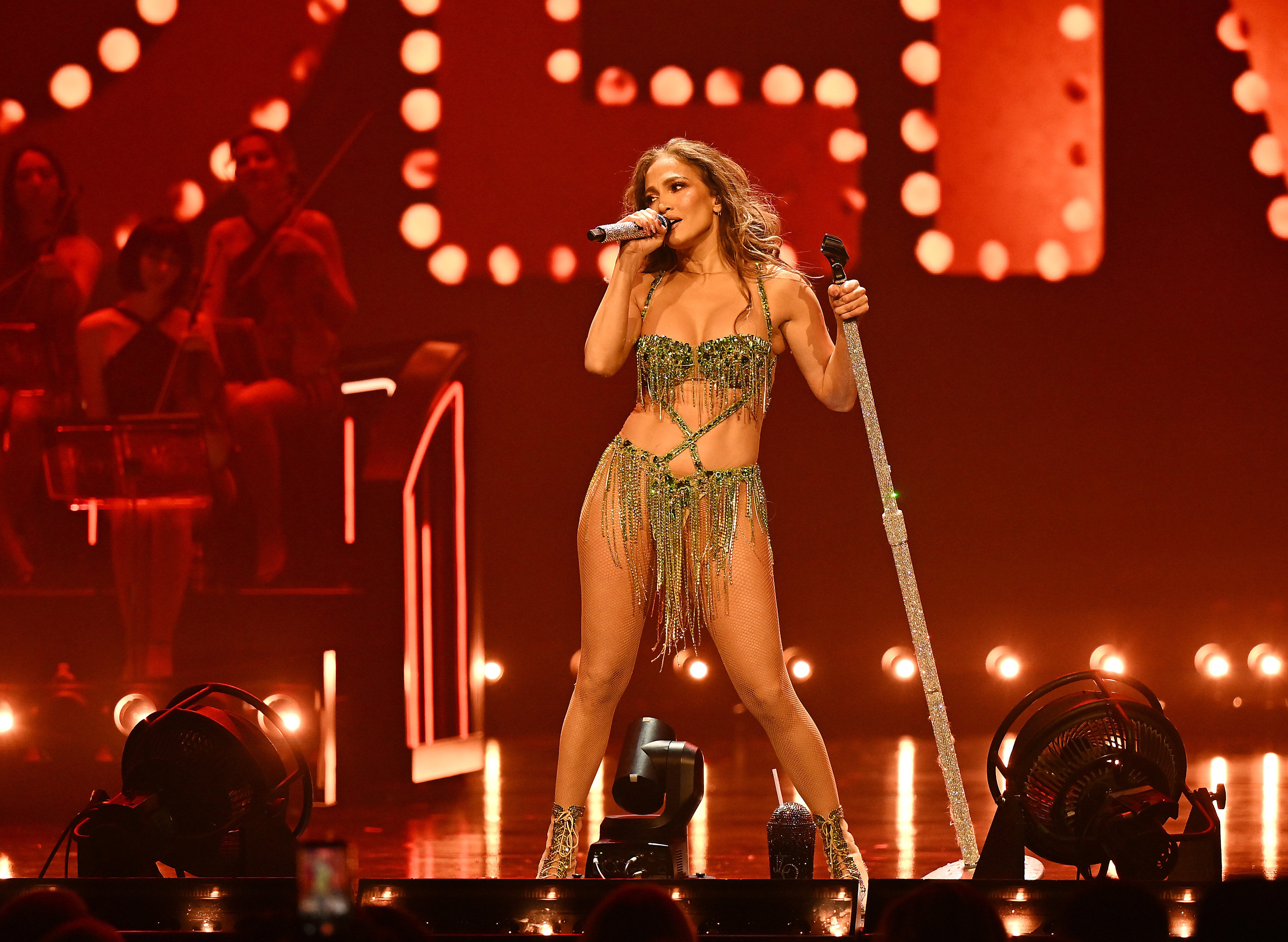
Jennifer Lopez photographed performing during her Las Vegas residency at The Colosseum at Caesars Palace on December 30, 2025 in Las Vegas, Nevada.
Advertisement
Societal norms have historically regulated women’s bodies – but there are ways to push back against criticism about your choices
“Historically, women’s bodies have been objectified and regulated by societal norms, leading to a policing mentality regarding female sexuality,” Cwynar said, adding that society has long asked women to dress in a way “that makes others feel more comfortable”.
Cwynar emphasised that there are societal double standards regarding the expectations for how celebrities should dress.
Advertisement
“When Brad Pitt, who is close in age to Jennifer Lopez, has his shirt off, no one seems to have a problem with that – in fact, it’s likely to be celebrated,” she said, adding, “We often allow men greater freedom in their self-expression.”
And Cwynar thought that Lopez’s response to her critics was “proof of her empowerment and agency” and that the singer emphasised that she “finds joy in her body at 56, encouraging a more inclusive perspective on beauty standards”.
And for any woman navigating criticism about their choices as they age, Cwynar recommends that you embrace your individuality and ignore the noise.
Advertisement
“Recognise that value and beauty come in many forms and that self-confidence can be empowering and extremely sexy. Engaging in practices that promote body positivity can foster a greater sense of peace with oneself,” she said.
She also recommends finding people and community that allow you to “be yourself and celebrate diversity and uniqueness.”
And when it’s appropriate, it may be helpful to engage your critics. “Share your perspective and the importance of individual expression and agency,” she said.
Advertisement
Overall, Cwynar said that it’s important to emphasise personal satisfaction over external validation.
“This is your life and you need to live it in a way that makes you happy, so dress in whatever makes you feel great.”
Dutch comedian Eline Van der Velden, the head of AI production studio Particle6, which developed Tilly, said she wants the AI character to be the next Scarlett Johansson.
But not if the rest of Hollywood has its way.
After Van der Velden announced what she calls “the world’s first artificial intelligence talent studio” at a film festival and said Tilly had talent agents hoping to sign her, this news of potential representation sparked widespread Hollywood backlash.
Advertisement
Multiple actors’ unions havereleased statements condemning Tilly. Actors have also accused Tilly’s makers of stealing real people’s images to make the AI-generated character.
“And what about the hundreds of living young women whose faces were composited together to make her?” actor Mara Wilson posted on social media. One Nashville-based musician even claims that Tilly is her doppelganger.
The company behind Tilly denies that the character was created with stolen images.
“Tilly was developed entirely from scratch using original creative design,” Particle6 said in a statement to HuffPost. “We do not and will not use any person or performer’s likeness without explicit consent and fair compensation.”
Advertisement
After outcry, Van der Velden said Tilly was “not a replacement for a human being, but a creative work – a piece of art” in a social media statement.
But no matter how original or creative you believe Tilly to be, she is definitely drawing from tired old tropes about women and raising unsettling implications for real working people, AI experts caution. Here’s what you need to know.
Tilly reinforces more of the same tired beauty standards for women
Tilly Norwood is not real, but the AI character is causing a real debate over how women’s images get used. Above are images from Tilly’s Instagram account.
Advertisement
For one, Tilly replicates a narrow idea of what generative AI thinks a woman should look like.
In a Washington Post investigation of three of the leading AI image tools, the Post found that generative AI thinks beautiful women should look thin, young and white – which is exactly how Tilly looks.
Particle6 did not answer HuffPost’s questions about Tilly’s appearance.
What we see on social media – including the accounts set up for Tilly on TikTok, Facebook and Instagram – might have long-term effects on how people view their own real bodies.
Safiya Noble, a professor at the University of California, Los Angeles, and the author of the book Algorithms of Oppression, said Tilly is a continuation of the kind of distortions that social media photo filters cause people.
Advertisement
“Those distortions, even though they are seemingly unreal, they circulate so much in our culture that then are celebrated and … liked and hearted,” Noble said. “And that certainly has a psychological and emotional toll on us.“
A 2022 study on Instagram found that browsing how other people looked on the popular social media platform was linked to “detrimental outcomes” around body dissatisfaction in young women.
Tilly’s obedience might be the most unsettling part about “her”
Above all, Tilly reveals a lot about how corporations value women’s work.
Alexandra Mateescu, a researcher with Data & Society’s Labor Futures program, said what she found most interesting and unsettling about Tilly’s existence came from a line in a Particle6 video where she appears in her first role.
Advertisement
In an AI-generated comedy sketch from Particle6, Tilly gets cast to be in a TV show. A man then states, “She’ll do anything I say; I’m already in love.”
That line suggests “this vision of this feminine, docile, cute, young actress who won’t talk back or complain about working conditions or anything,” Mateescu said.
That’s why, for Mateescu, her biggest worry with Tilly is “more about these kinds of marketing exercises being used as a cudgel, particularly for actors at the bottom of film industry hierarchies, to discourage them from demanding better working conditions under this threat of potentially being replaced”.
Advertisement
Mateescu said she has seen this power dynamic in other creative industries, like modelling. She recently co-authored a paper on how generative AI is making it easier for companies to use a model’s image and measurements and alter them without a model’s knowledge or compensation.
In her research, “people at the top of the industry, both photographers and top models, they could view AI as this creative tool in their arsenal to be able to enhance their creative practices,” Mateescu said. But struggling models doing profit-driven e-commerce catalogs were more negatively impacted. “And I think that’s sort of the same pattern we see across industries.”
In this sense, Tilly might represent a bigger existential threat to vulnerable, newer actors who do not have the same power and networks as A-list stars.
Advertisement
In Noble’s view, Tilly’s existence normalises “controlling women’s images” and the idea that it’s OK to “make women do what we want them to do. That culture is prevalent all around us”.
Avoiding “AI personhood” might be the best way to deal with Tilly
Tilly is not real, but it’s normal if you’re confused over what to call her. That might be by design.
Noble pointed to the character saying, “I may be AI generated, but I’m feeling very real emotions right now” in a post appearing on her Facebook page as an example of the kind of misrepresentation this AI-generated actor perpetuates.
Advertisement
“The more kind of anthropomorphised they are, the more misleading and deceptive they are to the public,” Noble said. “This is why these technologies are so incredibly dangerous.”
One way to resist is to be more careful about how you talk about AI-generated projects like Tilly.
Instead of seeing Tilly as an “actor,” as her profile describes her, or as the next Scarlett Johansson, as her creator hopes her to be, experts suggest you should see her for what she really is – a marketing product.
That’s why Noble suggests against calling Tilly art and instead categorising Tilly as the latest example of low-quality, spam-like “AI slop”.
Advertisement
And try to avoid referring to Tilly as an actor. “We should call it ‘it,’” Noble said. “We should talk about it like a machine learning model.”
“The notion of AI personhood is a marketing exercise and a legal manoeuvre that I don’t think we should buy into,” Matreescu said. “Tilly is not an actress any more than, like, Sid the sloth from the ‘Ice Age’ movies is an actor. It’s just a digital likeness.”
Try as I might (and believe me, I’ve tried), I constantly manage to wake up hot and sweaty at 3am.
I’ve always attributed that to my insomnia. But hormone and sleep specialists have shared my issues might be partly down to my biology.
We know it’s crucial to keep bedrooms cool (experts recommend 16-18°C) to be able to sleep well – and this is perhaps even more important for women.
Advertisement
When a study found rising temperatures are impacting sleep globally, it also revealed women were impacted more than men. The Guardian noted “women’s bodies cool earlier in the evening than men’s when going to sleep, meaning higher night time temperatures may have a bigger impact on women”.
Women’s slightly higher core body temperatures can also make us “feel” external cold and warmth more intensely, Dr Karan Rajan previously shared.
Women appear to wake up overheated more often than men – but why?
Dr Renee Young, an endocrinologist and founder of the Young Naturopathic Centre For Wellness, told Pretty You London that “hormones like oestrogen and progesterone play a central role in how the brain regulates body temperature”.
Advertisement
She added: “Even slight fluctuations can confuse the body into thinking it needs to cool down. That often looks like a hot flush or a sudden sweat episode, especially at night.”
These are not exclusive to menopause or perimenopause, though both of these can lead to similar symptoms.
“Women in midlife often have a lower stress threshold… Higher cortisol levels, especially when they don’t follow their normal rhythm, can interfere with sleep and make overheating worse,” she shared.
Advertisement
How can I stop overheating at night?
Though you might be tempted to take a cooling shower before settling down, NHS GP Dr Hana Patel said this may not be the answer.
“A cold shower can cause your body to generate more heat as a response,” she advised, while the cool-down period following a warm shower “tells your brain it’s time to sleep”.
Wearing thinner pyjamas, avoiding heavy bedding, and even keeping your partner out of your bed (if needed) may help, The Sleep Foundation said.
Advertisement
Whatever the cause, though, you should see your GP if your sleep is consistently interrupted.
“Menopause and hormonal changes don’t have to steal your sleep,” Dr Fogarty-Draper stressed. “When we understand the cause, we can take back control.”
If you’re into podcasts, you’ve probably heard of the hugely popular Mel Robbins Podcast, which is currently the No. 1 podcast on Apple podcasts and is in the Top 10 podcasts on Spotify.
If you aren’t familiar, Robbins is a motivational author, speaker and podcast host who regularly talks about mental health topics such as anxiety, stress and confidence, as well as physical health topics such as disease prevention and women’s fitness.
Advertisement
Her podcast episodes often inspire lots of conversations and even lifestyle changes, and a March episode of the podcast was no different.
On the episode, podcast guest Dr. Vonda Wright, who is an orthopedic surgeon and longevity expert, shared with Robbins the weekly exercise regimen that all women should follow: It included walking a total of three hours each week (broken up over at least four days), lifting heavy weights at least twice a week, and learning “to lift your own bodyweight” — which according to Wright means all women should be able to do 11 push-ups. Robbins asked if those push-ups can be on your knees, and Wright replied “no.”
The 11 push-up idea quickly caught the attention of women across the country who took to social media to try the challenge. But do all women really need to be able to do 11 push-ups? Or are there better measures of fitness?
Advertisement
Below, trainers share their honest thoughts on this 11 push-up challenge:
No, all women should not be able to do 11 push-ups
According to Katie Gould, thefounder of KG Strong, a strength-training gym in Philadelphia, the idea that all women should be able to do 11 push-ups likely comes from a 2019 study of 1,100 male firefighters that found that men who could do more than 40 push-ups had a lower risk of cardiovascular disease compared to men who could do fewer than 10 push-ups.
“So, these findings aren’t really directly … applicable to women,” Gould noted.
Danielle Repetti, the founder and head coach at Iron and Mettle, a women’s strength training gym in San Francisco, agreed and said the 11 push-up number feels arbitrary.
Gould also questioned how fast people were doing the push-ups, which can make them easier to do, or if they were doing them with resistance, which can make them tougher, and if they even had proper form.
Advertisement
“If you’re doing three super slow push-ups, to me, I would say that that’s an even greater indicator of strength than doing 11 improper form fast push-ups,” Gould said.
“I’ve had clients that can bench press 100, 125 pounds, and they aren’t able to do 11 push-ups on their toes, and that doesn’t mean that they’re not strong, and it doesn’t really mean anything about them as people in a body,” Repetti said.
Both Repetti and Gould said there are many reasons why a fit, strong person can’t do a chest-to-floor push-up. Maybe they just had a baby, have wrist issues, have larger bodies or are older, Repetti said.
Advertisement
“I’m not going to ask them to do a full-range push-up. It doesn’t feel good, it hurts. So that’s not how we’re necessarily going to strengthen their upper body,” said Gould.
“We’re going to do single-arm floor press, or we’re going to do a plank and hold that. There’s so many other exercises that can build your upper body if a full-range hands-on-floor push-up isn’t accessible to you,” Gould noted.
Your strength goals should be personal and should make you feel good
While it’s important to have benchmarks when it comes to bettering your health and fitness, it doesn’t mean one across-the-board benchmark is right for everyone, noted Gould.
Advertisement
“Your personal goals are really going to be the determining factor for what your benchmark should be. Not everybody’s goal is going to be to do 11 push-ups,” Gould said.
“Strength goals should be personalised, and while push-ups are a really valuable measure of upper body and core strength, they’re not the only indicator of fitness, and they’re not a sole indicator of health conditions,” Gould added.
Plus, your strength goal shouldn’t make you feel bad. That will only discourage you from returning to a workout class or personal training session in the future.
Advertisement
“Any time we embark on a strength journey, I think it’s really important to feel good about your body while you’re doing it, and not look at it from the lens of ‘Oh, I failed and that means something about me and my body,’” Repetti added.
An 11 push-up challenge is a fast-track way to feel discouraged if you can’t hit the number.
Everyone expresses strength in different ways, and everyone has different places where they excel and where they struggle, Repetti said.
“If you go and do the push-ups and you can’t do it … I just really want women to know that doesn’t mean anything about you and your own strength,” Repetti noted.
Advertisement
In strength training, you’ll find the movements that you’re great at and not so great at. “It’s important that women don’t think of the push-up as being the end all be all,” Repetti added.
Hiraman via Getty Images
The most important strength training regimen is one you’ll stick to.
But push-ups do have benefits when it comes to healthy aging and building strength
“So, push-ups work pretty much all the muscles in the upper body — chest shoulders, triceps, those are all parts of the horizontal pressing motion, and then push-ups also challenge our core,” Repetti said.
Advertisement
Push-ups benefit your posture, your functional strength, and can help with daily activities like lifting things, pushing things away, pulling yourself up and even boosts your bone density (which is crucial for women as they age and bone density drops), said Gould.
Push-ups can also help you have the strength to push yourself off the ground, whether you’re playing with your grandkids, your pets, or if you fall down, both experts said.
Like all strength training, push-ups can help you continue to do the things you want to do as you get older, such as move around your home, go up and down stairs, even dance.
Advertisement
“How you feel in 50 years is kind of dependent on some of the things you’re doing now,” Repetti said. “We really want to build as much strength as we can so that … we don’t have to be one of those people who are like, ‘Oh, I used to do that, and now I don’t anymore because my body doesn’t feel good when I do that.’”
If you do want to be able to do push-ups, there are steps you can take to get there
So, not being able to do a push-up (let alone 11) on your toes doesn’t mean anything about you or your fitness, but if you do have a goal to be able to do some push-ups, the trainers who spoke with HuffPost have some tips.
For this type of push-up, you’ll want to put your hands on an elevated surface like a bench or box, said Repetti. Or, you can even do it with your hands on your couch.
This way, you’re moving less of your body weight while still maintaining a push-up position. You can also see your progress as you move to lower and lower surfaces, said Gould, “and that is a big thing for me with my clients.”
These modifications allow you to “train the full range of motion and get the most out of learning that movement,” noted Repetti.
Advertisement
“So, once you strengthen some of those muscles, then the push-ups in and of themselves get easier,” Repetti said. “We want to essentially make the movement easier at first, so that our body can learn how to do it, and then slowly and gradually over time, make that movement more and more challenging.”
“I would consider a push-up on your toes one of the more challenging variations of the push-up,” Repetti said ― and noted that you can make a push-up even harder by adding weight.
“But, for most people, I think learning some of the easier variations and then slowly building up to push-ups on your toes is the best way to get better at push-ups,” she said.
Advertisement
And, if you find that you can’t hit 11 push-ups even with some additional training, that’s OK. There are other ways to get strong and stay strong – what matters most is that you find a sustainable strength regimen that makes you feel good and keeps you moving.
But in a recent episode of his podcast Dr Karan Explores, surgeon Dr Karan Rajan spoke to doctors Dean and Ayesha Sherzai, neurologists and codirectors of the Brain Health and Alzheimer’s Prevention Programme at Loma Linda University Medical Centre, who shared that there may be other factors at play too.
Why might women have higher instances of dementia?
“We know that lipid metabolism and how women’s bodies respond to vascular risk factors, whether it’s an abnormal cholesterol panel or abnormal blood pressure, is different” than men’s, Dr Ayesha Sherzai said.
Advertisement
Cleveland Clinic says that women “face unique risks, largely due to differences in anatomy and hormones,” such as narrower blood vessels and fewer red blood cells, when it comes to heart issues.
“We also know that in the perimenopausal period, the woman’s body goes through a lot of physiological and neurological changes, because oestrogen is a very important factor in memory creation and in brain health,” the doctor added.
The combination of increased effects of vascular issues and the decline in oestrogen as women age “may increase the risk factors” of dementia for women, the expert says.
Any other reasons for the gender gap?
Harvard Health says that aside from the age difference, women are way more likely to develop Alzheimer’s than men. But they are not more likely to develop other kinds of dementia when you adjust for age.
Advertisement
Part of the reason for that may be that women are far more likely to experience autoimmune disorders than men.
That might be because women’s immune system is stronger, which may have the effect of creating more amyloid plaques in the body. These plaques have been linked to dementia.
The university’s site recommends taking aerobic exercise, like swimming, jogging, or dancing up for 30 minutes a day, at least five days a week, sleeping well, socialising, and eating well to mitigate the potential risks.
Before becoming a parent, I often heard from other mums about how self-aware you become when you have kids, but I never imagined how something as simple as a passing comment could ignite such deep reflection — and even make me fearful.
In early December, my daughter and I flew back to Colombia to visit my family. It was the kind of day I’ve come to cherish when raising a child abroad. But in the midst of all the warmth, I heard a phrase that made my heart sink.
Advertisement
“Don’t ask for too much; be grateful for what you have,” my grandmother said to my mum.
It wasn’t the first time I’d heard her say it. She had said it to me when I started many of my jobs, and she meant it with the best intentions of a caring grandma. In all of those instances, I didn’t think much of it. This time, however, it hit differently. This time, I pictured my 10-month-old daughter hearing those words one day, and the thought terrified me.
Beliefs like this one are not unique to my grandmother; many of us have them. However, working with female entrepreneurs to overcome financial trauma has taught me that phrases like these create a turmoil of mixed signals between pursuing what you want and staying where you are.
Why this phrase is so limiting
I’ve learned that every phrase reflects a belief system that makes sense for the season and context in which you grew up. For my grandmother, “don’t ask for too much” represented humility, gratitude and holding on to what she had accomplished with much effort. But it also discouraged her from taking further risks and continuing to nurture her ambition — and, consequently, my mum’s ambition.
Advertisement
I remember my mum once telling me how she had wanted to become a flight attendant when she was younger. Her face lit up when she talked about it.
Still, she never pursued it because, while deciding whether to stick with her current career — which offered security — or take a leap and pursue her dream, the phrase “don’t ask for too much; be grateful for what you have” echoed in her head.
How that phrase shaped me
I was only able to grasp the extent of how this phrase had shaped me when I left home at 19 years old and started living on my own. I started noticing the same patterns in my own life, and whenever I felt I wanted to reach for something different, aim higher, dream bigger, or ask for what I deserved, I had a little voice in the back of my mind that would make me hesitate to take the step. I’d feel as though I wasn’t being grateful enough or was asking for too much if, for instance, I wanted to ask for a raise.
Advertisement
This inner conflict only worsened when I started my business. I had to dream more significantly to create the kind of movement I wanted for female entrepreneurs and finances; I needed to ask for more. Although I had been very blessed to have already experienced things that nobody else in my social circle was experiencing — like traveling around the world — that inner hesitation made me question if I truly deserved and was capable of the career and lifestyle I was pursuing.
It wasn’t until much later — through my studies of financial trauma, therapy, self-reflection and the building of my frameworks for helping entrepreneurs achieve wealth — that I began to unpack how deeply ingrained those beliefs were.
Surrounding myself with ambitious, like-minded women also helped me see that those beliefs weren’t mine. They had been passed down, generation after generation, like an heirloom I never asked for.
Advertisement
Breaking the cycle for my daughter
Now, as a mum, I’m determined to rewrite what was once a subconscious narrative. I want my daughter to grow up with a mindset that supports her in her dreams and growth and encourages her to seek as many opportunities as she desires. I want her to believe — and genuinely know — that she can dream big, ask for what she wants and deserves, and take up space in any room she enters.
But breaking the cycle isn’t easy. It starts with unlearning my subconscious beliefs, so I don’t unintentionally pass them on to her. For instance, when she asks for something — whether it’s a new toy or a more significant goal down the road — resist the urge to say, “you don’t need that” or “you already have enough.” Instead, I try to understand her context, explore what she wants, and help her determine what makes sense in her environment.
It also means modelling what I preach. I can’t tell my daughter to be ambitious while shrugging off opportunities myself. So, I’ve made it a point to dream big and take risks, even when they scare me.