Greek volcano mystery: Archaeologist narrows on date of Thera eruption

One of the largest volcanic eruptions in the Holocene epoch — as measured by the volume of material ejected — occurred on the Greek island of Santorini, traditionally known as Thera. It is considered a pivotal event in the prehistory of the Aegean and East Mediterranean region, with the city of Akrotiri, buried some 1,600 years before Pompeii, becoming one of the key archaeological sites of the second millennium BCE. That much is uncontested.

Archeologists in the early 20th century posited the volcano erupted around 1500 BCE, during the Egyptian New Kingdom period, and created a history around this assumption. But beginning in the 1970s, advances in radiocarbon dating have thrown that timeline into chaos, with many experts insisting the eruption happened as much as 100-plus years earlier.

Sturt Manning, Distinguished Professor of Arts and Sciences in Classical Archaeology in the College of Arts and Sciences, is hoping to settle one of modern archaeology’s longstanding disputes. By parsing the available data and combining it with cutting-edge statistical analysis, he has zeroed in on a much narrower range of dates for the eruption: approximately 1609-1560 BCE, during the preceding Second Intermediate Period of Egypt, when the Hyksos — a Canaanite-origin dynasty — controlled Lower Egypt. While not yet a precise date, to the year, for resolving the big-picture question of the correct historical period, the finding clarifies many years of debate.

“This has been the single most contested date in Mediterranean history for over 40 years,” said Manning, who directs the Cornell Tree-Ring Laboratory. “It’s been one of these endless disputes, to the point where people just say, ‘there’s a problem here, we can’t solve it, let’s move on.’ I’m hoping with this paper people may suddenly go, ‘You know what, this actually limits and defines the problem in a way that we’ve never been able to do before, and narrows it down to where, usefully, we can say it’s in the Second Intermediate Period. So we should start writing a different history.'”

For Manning, the Thera eruption has been like Mount Everest — a challenge that he has wanted to tackle since early in his career. Accurately dating the event has become more feasible in recent years with the increased sophistication of Bayesian statistical analysis, enabling chronological modeling that can integrate massive amounts of data and archaeological observations to better define the probability parameters for an unknown event.

The parameters have been fairly well understood for years, Manning said, thanks to the extensive geological and archaeological research that’s been conducted. The missing piece of the puzzle has been an often-raised concern that volcanic carbon dioxide emissions could have contaminated organic samples from Thera and caused incorrect age assessments.

Last spring, Manning realized he could solve the problem by looking elsewhere — hundreds of kilometers away from Thera — to regions of the Aegean Sea that experienced the tsunami effects caused by the eruption. Manning incorporated dates obtained for these episodes into his model to test for, and discount, the volcanic carbon dioxide caveat. On Thera itself, he also spotted the importance of a short but clearly observed gap in time between the abandonment of the town at Akrotiri and the huge eruption, and he incorporated this previously overlooked constraint into the modeling.

“It’s been observed for years that there is some short interval in the archaeological sequence between when the city of Akrotiri was abandoned by its human population and before its burial under meters of pumice from the eruption. Even though several hectares have been excavated, no human skeletons have been found, so clearly people had warning of impending peril and left. No one’s allowed for that in the past,” Manning said. “By putting that extra qualification in, we tighten the statistical analysis.”

The modeling identified the most likely range of dates for the eruption to be: between about 1609-1560 BCE (95.4% probability), or about 1606-1589 BCE (68.3% probability).

The new timeline synchronizes the civilizations of the eastern Mediterranean while also ruling out several ancillary theories, such as the idea that the Thera eruption was responsible for destroying Minoan palaces on the coast of Crete as the first excavator of Akrotiri, Spyridon Marinatos, proposed in 1939.

“That seems not to be the case,” Manning said. “Because when we date the destruction levels on Crete, they seem to be upwards of a century later.”

Because his analysis pegs the Thera eruption earlier than the original proposed date, but not as early as radiocarbon dating had initially suggested, Manning hopes the new timeline may be more palatable for experts on both sides of the long-running debate.

“This demonstrates, as with so much of science, that people have to make hypotheses based on the initial information, but as you get more and more information and better analysis, you revise and refine,” he said. “In this case, the answer seems to be between the original position and the first radiocarbon indications pointing as much as 100-150 years earlier. Hopefully this new analysis, based on a large dataset and a recent, better-defined radiocarbon calibration curve released in 2020, should be more palatable for the overall archaeological and historical fields. It changes the historical context, but at the same time, is not trying to push things quite so far out of the envelope.”

Story Source:

Materials provided by Cornell University. Original written by David Nutt, courtesy of the Cornell Chronicle. Note: Content may be edited for style and length.

Share Button

When are the £400 energy rebate and other cost-of-living payments due?

The latest cost-of-living support payments include grants worth £150 for six million disabled people.

Share Button

UK’s first Early Cancer Institute is launched in Cambridge

Scientists at the new institute will devote their expertise to detecting and studying cancers early.

Share Button

What happens in an alcohol addiction detox unit?

Current and former patients, along with medical specialists, share their stories with the BBC.

Share Button

Covid: Oxford oncologist in plea to government over Evusheld

Dr Lennard Lee wants the government to reconsider rolling out Evusheld for people who are immunosuppressed.

Share Button

From A Spider Surprise To Boris Bashing: How Twitter Reacted To Coverage Of The Queen’s Funeral

It was a solemn day for the nation. But on social media, people were taking a more sideways look at the Queen’s state funeral.

Here’s just some of the quirkier, unintended highlights of the day seen through Twitter’s prism.

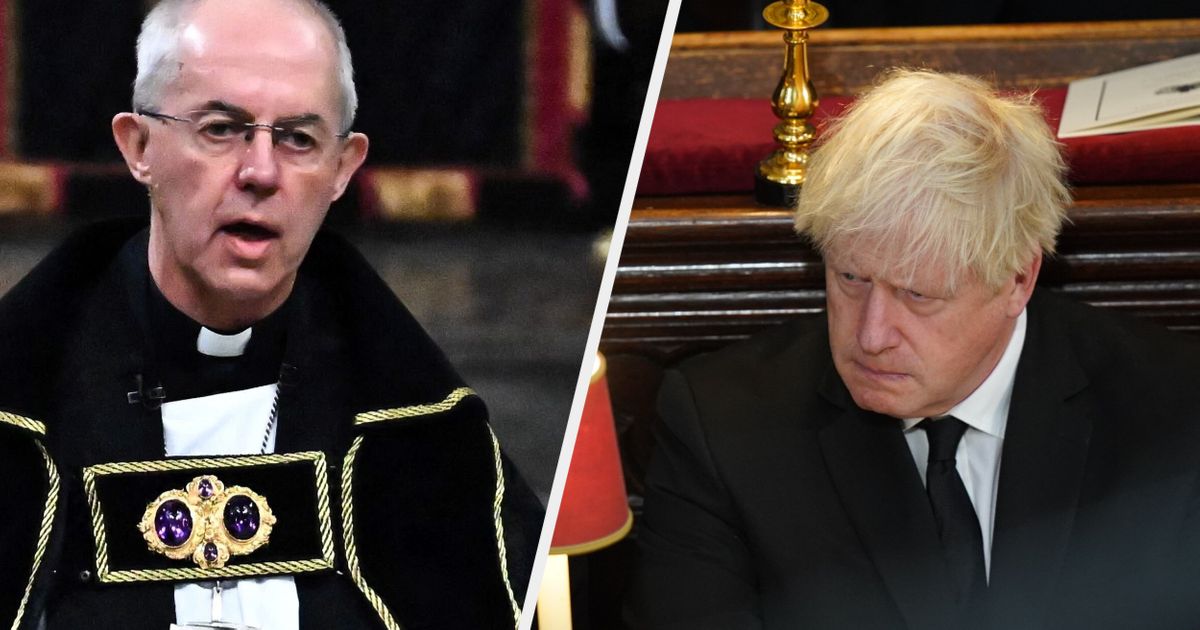
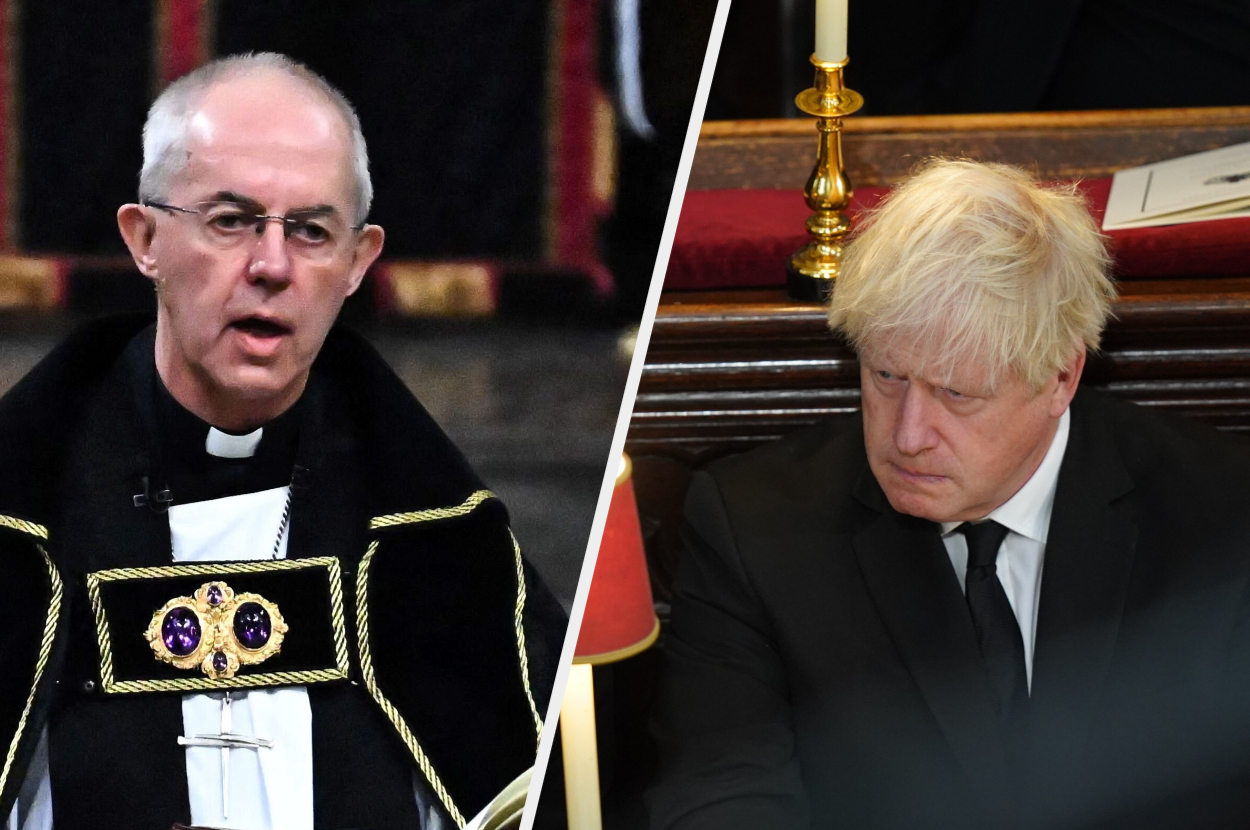
Archbishop of Canterbury v Boris Johnson?

During his sermon at the funeral, the Archbishop of Canterbury told the congregation the outpouring of emotion for the Queen “arises from her abundant life and loving service, now gone from us”.

Justin Welby told mourners: “People of loving service are rare in any walk of life. Leaders of loving service are still rarer.

“But in all cases those who serve will be loved and remembered when those who cling to power and privileges are forgotten.”

Many thought he was pointedly referring to the recently departed prime minister.

Who is the tall man?

An “impossibly tall” mourner walking in the Queen’s procession caught many people’s attention.

Towering above soldiers and sailors, Matthew Magee, who stands at 7 feet 2 inches tall, was appointed by the Queen as her assistant private secretary in 2018.

Spider surprise

Several people on social media noted the appearance of a spider on the Queen’s coffin as the ceremony took place.

The creature was seen crawling across a piece of card placed on the coffin alongside the crown and a floral display.

Mike Tindall’s medals

The Queen’s granddaughter Zara Tindall arrived with her husband Mike, the former England rugby union international.

But why was the non-military man wearing four medals?, Twitter asked.

“What did Mike Tindall do to get four military medals? Watching Dad’s Army?”, wrote one.

Another said: “What medals has Mike Tindall got? Has he got his World Cup Winners medal pinned to his jacket?”

Reports noted one represented his award of a Member of the Order of the British Empire (MBE) in 2007 for his contribution to rugby, and another was the Queen Elizabeth II Diamond Jubilee Medal.

The silver medal, which bears the Queen’s face, was gifted to Tindall as a member of the royal family, and the last is the Queen Elizabeth II Platinum Jubilee Medal.

Where’s Prince Louis?

The future King, Prince George, and his sister, Princess Charlotte, remained impeccably behaved through a long and solemn day as they bid farewell to their beloved “Gan Gan”.

But the prince and princess’ four-year-old brother, Prince Louis, was not present, and many on Twitter began to speculate.

Share Button

6 Major News Stories That May Have Slipped Under Your Radar During National Mourning

The Queen’s death marked the end of an era for many in the UK, but that didn’t mean life stopped for the world.

While a few stories – such as the death of Chris Kaba, the ongoing cost of living crisis, and Liz Truss’ new cabinet – did get a look-in, the state funeral meant others slipped off the agenda.

So, as the country comes out of this period of national mourning, here’s a list of essential news stories you might have missed altogether over the last 11 days.

1. Community tensions soar in Leicester

Leicester is famous for its multicultural population, but a spate of clashes in recent weeks has shaken the city to its core.

Violence first broke out after the India vs Pakistan cricket match a month ago, on Sunday, August 28, and more scuffles followed in the next few weeks.

But, locals claim that the tensions began rising long before the match, with members of both the local Hindu and Muslim communities allegedly squaring up against one another, although the exact cause is still unclear.

The tensions seemed to come to a head on the night of September 17, when around 200 people – mainly masked or hooded men – gathered for an unauthorised protests in the east of the city.

All local officers available were called to the scene, and a stand-off followed, with police having to separate rival groups as they threw bottles at one another.

Police officers were even diverted from the Queen’s funeral in London to provide back up to the force in Leicestershire. They made 47 arrests in total and 16 officers were injured in the violence on Saturday night alone.

Claudia Webb, independent MP for Leicester East, said tensions had been simmering for “months”, and has previously claimed that some social media accounts were “preying on this unease” by “spreading misinformation”.

In a Twitter post, she wrote: “There are reports of incitement to hate being targeted at those of Muslim and Hindu faith, which is being shared on social media to cause fear.

“Places like Facebook and via WhatsApp designed to ‘entrap’ members of the local community to attend a protest, sparked by hate.”

She claimed such posts were “designed to provoke additional clashes and to cause disharmony and distrust”.

Mayor of Leicester Sir Peter Soulsby has said these recent events have left him “baffled”, while Labour MP for Leicester South, Jonathan Ashworth, said the troubles were a “dark episode” where he and residents “rightly pride ourselves on celebrating our diversity”.

Extremists, territorial rivalries and the influence of people from outside the city have all been blamed for supposedly inciting violence.

Webb also warned on Tuesday that the violence could spread beyond Leicester without central government intervention.

The Hindu and Muslim communities in Leicester released a joint statement two days after the violence at the weekend, saying: “We are from one family. We settled here in this city together, we fought the racists together, we build it up together. The recent violence is not who we are as a city.”

The Indian government has also released a statement, strongly condemning the violence.

“We have strongly taken up this matter with the UK authorities and have sought immediate action against those involved in these attacks.”

2. Mahsa Amini’s death

Protests have broken out across Iran’s capital Tehran, following the death of Mahsa Amini, a 22-year-old woman, last Friday.

She had been in a coma for three days after “morality” police held her for supposedly breaking hijab rules. She was detained outside a Tehran metro station, as part of the police’s clampdown on clothing.

Witnesses said officers beat her inside a police van which later took her to a detention centre, although police brigadier-general Hossein Rahimi dismissed such claims as “cowardly accusations”.

Police also claimed that Amini had suffered from “sudden heart failure” while at the detention centre where she was to be “educated” with other women.

The authorities later released footage showing a woman they claim is Amini talking to a female official, who had tried to reach for her clothing. Amini then holds her head with her hands and falls to the floor.

The police, who described her death as “unfortunate”, said that Amini had “previous physical problems”, but her father denied such a claim, and claimed the CCTV footage is edited.

In protest to Amini’s death and the strict regime of Iran, women have since been seen removing their headscarves and cutting their hair while shouting “death to the dictator”, in what is believed to be a reference to the country’s supreme leader, Ayatollah Ali Khamenei.

Demonstrations in Tehran and western Iran over the weekend reportedly led to the death of two people during a clash with riot police.

Protests in Saqez, a western part of Iran, led security forces to allegedly open fire on a crowd as they tried to move towards the local governor’s office.

Further demonstrators took place in Kurdistan’s capita, Sanandaj. Amini was an ethnic Kurd from Saqez.

3. Hurricane Fiona

A devastating storm, Hurricane Fiona, has swept across parts of the Caribbean in recent weeks – and it doesn’t look like it’s going to slow down any time soon.

Residents on the Turks and Caicos Islands were urged to seek shelter on Tuesday, after Fiona had already wrecked havoc in Puerto Rico and the Dominican Republic. The hurricane is expected to reach the southern Bahamas too, and the eastern Bahamas by Wednesday.

In Puerto Rico, the storm killed at least three people and caused significant flooding with more than 75cm of rain falling.

It also caused a total blackout which isn’t expected to be fixed any time soon, especially as the territory is still struggling with its power grid after the brutal category 5 storm, Hurricane Maria, which knocked out 80% of power lines in 2017.

The weather in the US territory was still chaotic on Monday, with frequent lightning and rain. Torrential rain and wind then hit the Dominican Republic too, and it now seems to be building up in power.

The category 2 storm is expected to become a category 3 with winds beyond 111mph, which will make it the first “major hurricane” of the 2022 season, according to the National Hurricane Centre. By the time it reaches the eastern Bahamas, it could be category 4.

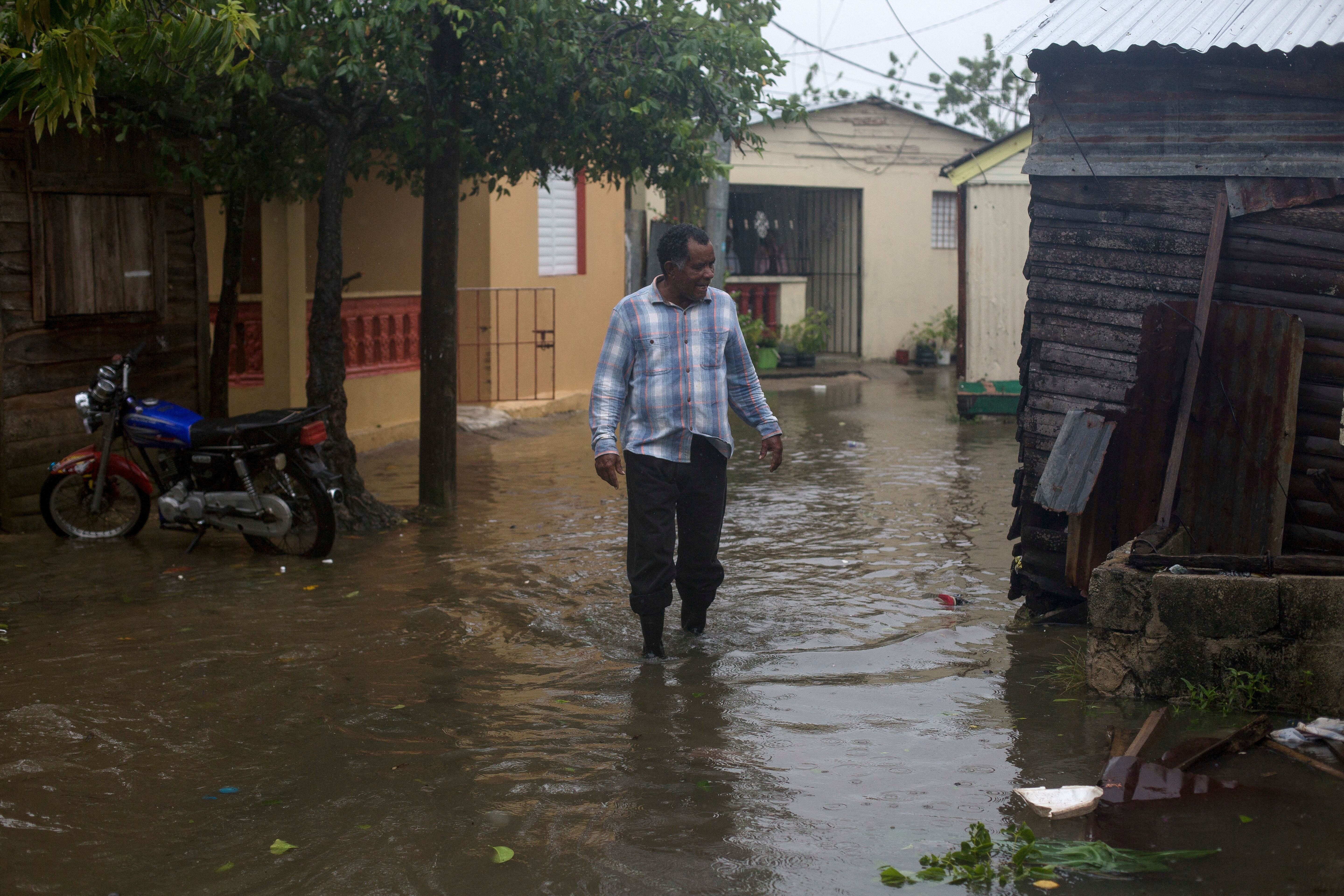
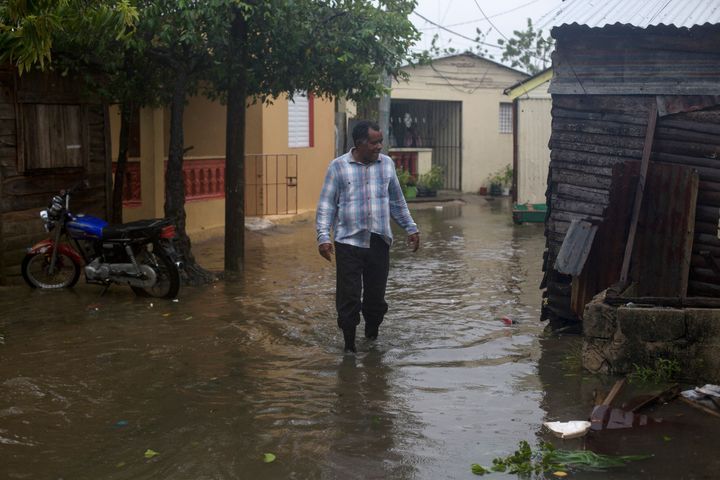
A man wades through a flooded street in Nagua, Dominican Republic, on September 19

ERIKA SANTELICES via Getty Images

4. Typhoon Nanmadol

At least two people were killed as record winds and rain hit the west of Japan on Monday.

Prime minister Fumio Kishida even delayed his flight to New York for the UN General Assembly so that he could look at the damage of the 14th typhoon Japan has faced this season.

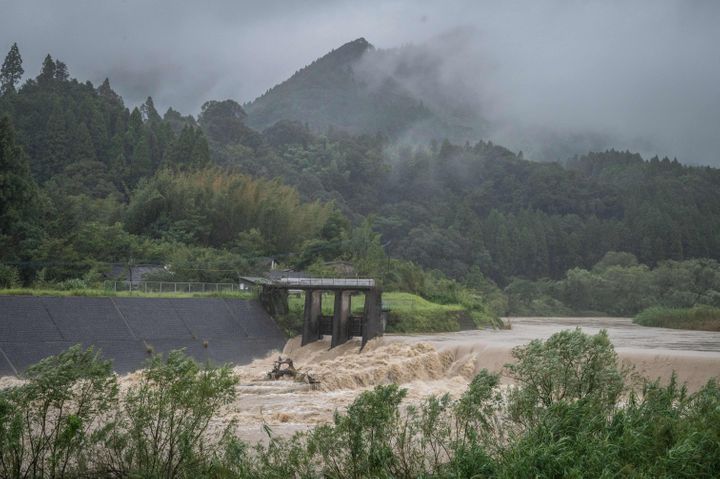
There was major landfall near Kagoshima city on Sunday, before it hit the islands of Kyusha and Honshu, while rivers overflowed and roofs were ripped off by the strong wind.

“We need to remain highly vigilant for heavy rains, gales, high waves and storm surges,” a Japanese Meteorological Agency official said, according to Reuters news agency. At least 115 people have been reported injured and around 340,000 households lost power.

Water flowing along the Sendai River in the wake of Typhoon Nanmadol in Ebino, September 19

YUICHI YAMAZAKI via Getty Images

5. Putin moves submarines away from Crimea – but nuclear fears continue

Russian president Vladimir Putin has allegedly moved the country’s submarines away from the annexed peninsula Crimea.

As Crimea was seized by Russia in 2014 (and seen by some as the start of Russia’s war against Ukraine), it was thought to be secured under Moscow’s rule.

But, as the UK’s defence ministry tweeted on Tuesday, Russia’s Black Sea Fleet “has almost certainly relocated” its submarines from Crimea to southern Russia.

The officials explained: “This is highly likely due to the recent change in the local security threat level in the face of increased Ukrainian long-range strike capability. In the last two months, the fleet headquarters and its main naval aviation airfield have been attacked.

“Guaranteeing the Black Sea Fleet’s Crimea basing was likely one of Russian president Vladimir Putin’s motivations for annexing the peninsula in 2014. Base security has now been directly undermined by Russia’s continued aggression against Ukraine.”

It comes after Ukraine’s highly successful counteroffensive which has reclaimed large swathes of land from Russia in the north-east.

“The occupiers are clearly in a panic,” Ukrainian president Volodymyr Zelenskyy claimed on Monday.

Russia has also sparked fears of a nuclear war once again, after a missile exploded less than 900 feet from reactors of the South Ukraine Nuclear Power Plant, the second largest nuclear plant in the country.

This is separate to the worries around the Zaporizhzhia power plant, which sits on the frontline of the fight between Ukraine and Russia.

The South Ukraine plant is far from the frontline, but the attack demonstrates the extent of Russia’s reach (if it did indeed come from Moscow).

Still, there was no damage to safety equipment, and the exact source of the explosion could not be independently confirmed.

6. Mexico earthquakes

On the anniversary of two other significant earthquakes, dating back to 1985 and 2017, Mexico was hit by yet another earthquake which killed at least two people.

The National Autonomous University of Mexico said there is no scientific explanation for why all three quakes would happen on the same day.

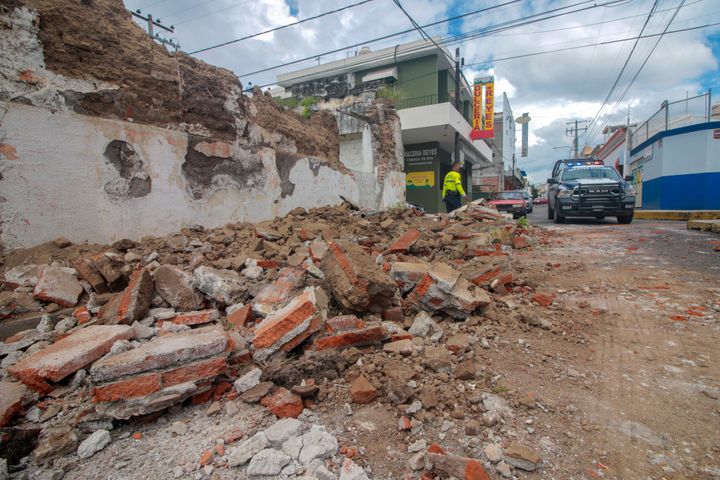
A 7.6 magnitude hit western Mexico on Monday, knocking out power and leaving people in Mexico City desperately seeking safety.

Hospitals were damaged, and other buildings collapsed onto the people within.

The US Pacific Tsunami Warning Centre also issued a warning for coastal areas, saying waves reaching up to three metres above the tide level were possible.

The September 19, 1985 earthquake killed thousands, and more than 350 died in September 19, 2017.

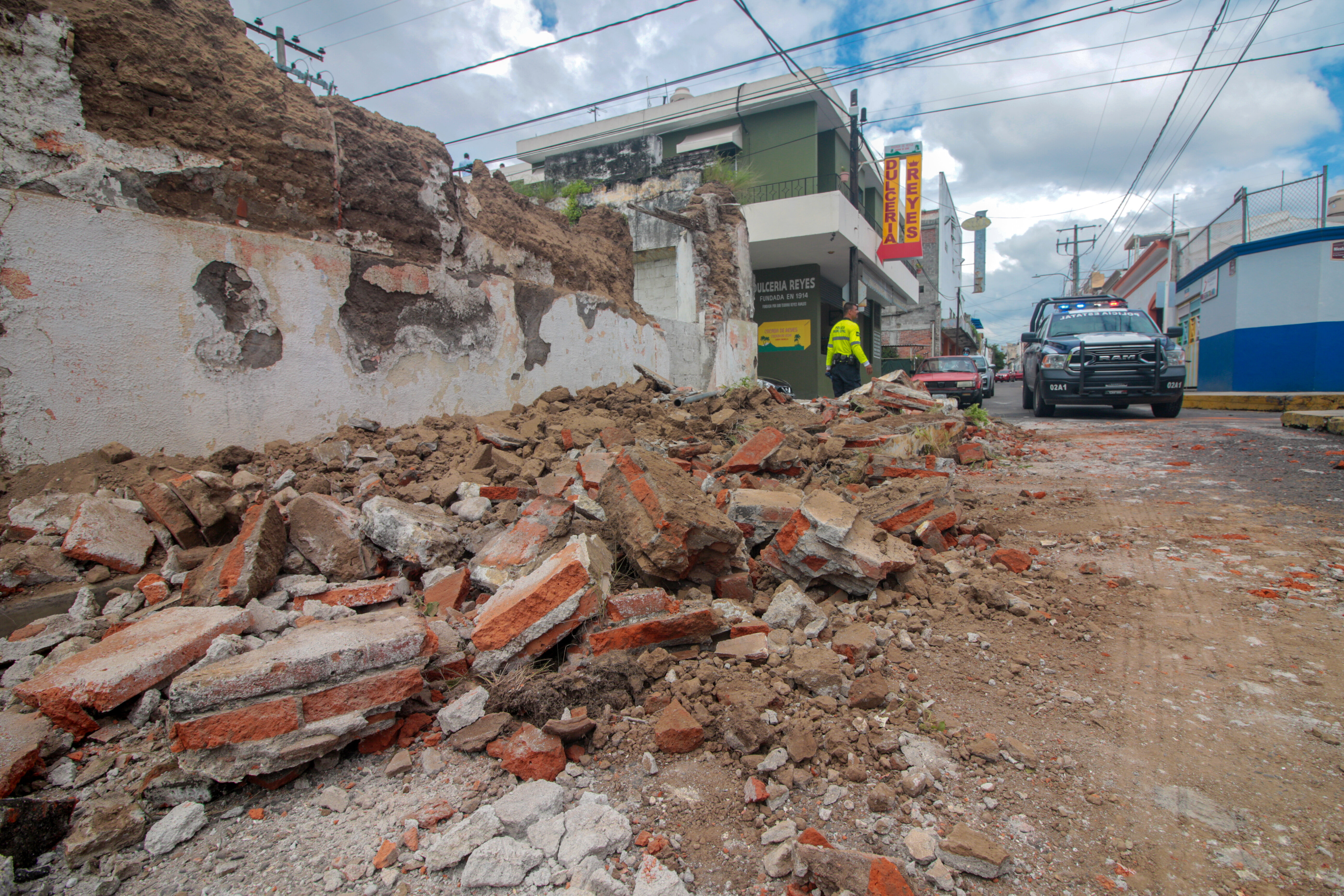
 A view of damaged buildings aftermath of 7.6 magnitude earthquake in Colima, Mexico, on September 19.
A view of damaged buildings aftermath of 7.6 magnitude earthquake in Colima, Mexico, on September 19.

Anadolu Agency via Getty Images

Share Button

Adam Levine Denies ‘Affair’ Claims But Says He ‘Crossed A Line’ As He ‘Clears The Air’

Musician Adam Levine has spoken out to “clear the air”, following rumours that he was involved in a year-long romance with an Instagram model while married to his wife.

Earlier this week, internet personality Sumner Stroh claimed in a viral TikTok post that she’d previously been involved in “an affair with a man who’s married to a Victoria’s Secret model” for a year.

In the clip, she then shared screenshots of messages which she alleged were sent to her by the Maroon 5 frontman.

On Tuesday afternoon, Adam shared a statement on his personal Instagram, which read: “A lot is being said about me right now and I want to clear the air.

“I used poor judgment in speaking with anyone other than my wife in ANY kind of flirtatious manner. I did not have an affair, nevertheless, I crossed a line during regrettable period in my life.

“In certain instances, it became inappropriate; I have addressed that and taken proactive steps to remedy this with my family.”

A screenshot of Adam Levine's Instagram post
A screenshot of Adam Levine’s Instagram post

Instagram/Adam Levine

Adam has been married to model Behati Prinsloo since 2014. The pair have two daughters together, five-year-old Dusty Rose (who will turn six later this week) and four-year-old Geo Grace.

Earlier this month, it was reported that Adam and Behati were expecting their third child.

Behati Prinsloo and Adam Levine pictured at an event last year

Axelle/Bauer-Griffin via Getty Images

At the end of his Instagram statement, Adam concluded: “My wife and my family is all I care about in this world. To be this naive and stupid enough to risk the only thing that truly matters to me was the greatest mistake I could ever make. I will never make it again.

“I take full responsibility. We will get through it. And we will get through it together.”

Share Button

Did my computer say it best?

With autocorrect and auto-generated email responses, algorithms offer plenty of assistance to help people express themselves.

But new research from the University of Georgia shows people who rely on algorithms for assistance with language-related, creative tasks didn’t improve their performance and were more likely to trust low-quality advice.

Aaron Schecter, an assistant professor in management information systems at the Terry College of Business, had his study “Human preferences toward algorithmic advice in a word association task” published this month in Scientific Reports. His co-authors are Nina Lauharatanahirun, a biobehavioral health assistant professor at Pennsylvania State University, and recent Terry College Ph.D. graduate and current Northeastern University assistant professor Eric Bogert.

The paper is the second in the team’s investigation into individual trust in advice generated by algorithms. In an April 2021 paper, the team found people were more reliant on algorithmic advice in counting tasks than on advice purportedly given by other participants.

This study aimed to test if people deferred to a computer’s advice when tackling more creative and language-dependent tasks. The team found participants were 92.3% more likely to use advice attributed to an algorithm than to take advice attributed to people.

“This task did not require the same type of thinking (as the counting task in the prior study) but in fact we saw the same biases,” Schecter said. “They were still going to use the algorithm’s answer and feel good about it, even though it’s not helping them do any better.”

Using an algorithm during word association

To see if people would rely more on computer-generated advice for language-related tasks, Schecter and his co-authors gave 154 online participants portions of the Remote Associates Test, a word association test used for six decades to rate a participant’s creativity.

“It’s not pure creativity, but word association is a fundamentally different kind of task than making a stock projection or counting objects in a photo because it involves linguistics and the ability to associate different ideas,” he said. “We think of this as more subjective, even though there is a right answer to the questions.”

During the test, participants were asked to come up with a word tying three sample words together. If, for example, the words were base, room and bowling, the answer would be ball.

Participants chose a word to answer the question and were offered a hint attributed to an algorithm or a hint attributed to a person and allowed to change their answers. The preference for algorithm-derived advice was strong despite the question’s difficulty, the way the advice was worded, or the advice’s quality.

Participants taking the algorithm’s advice were also twice as confident in their answers as people who used the person’s advice. Despite their confidence in their answers, they were 13% less likely than those who used human-based advice to choose correct answers.

“I’m not going say the advice was making people worse, but the fact they didn’t do any better yet still felt better about their answers illustrates the problem,” he said. “Their confidence went up, so they’re likely to use algorithmic advice and feel good about it, but they won’t necessarily be right.

Should you accept autocorrect when writing an email?

“If I have an autocomplete or autocorrect function on my email that I believe in, I might not be thinking about whether it’s making me better. I’m just going to use it because I feel confident about doing it.”

Schechter and colleagues call this tendency to accept computer-generated advice without an eye to its quality as automation bias. Understanding how and why human decision-makers defer to machine learning software to solve problems is an important part of understanding what could go wrong in modern workplaces and how to remedy it.

“Often when we’re talking about whether we can allow algorithms to make decisions, having a person in the loop is given as the solution to preventing mistakes or bad outcomes,” Schecter said. “But that can’t be the solution if people are more likely than not to defer to what the algorithm advises.”

Story Source:

Materials provided by University of Georgia. Original written by J. Merritt Melancon. Note: Content may be edited for style and length.
Share Button

High-fat diets trigger inflammatory immune cell generation in bone

The results may help explain how high-fat diets trigger inflammation, which can contribute to the development of insulin resistance, type 2 diabetes and other complications in individuals with obesity.

An invasion of inflammatory immune cells, called monocytes, into fat tissue is a hallmark of obesity, but what leads to this harmful phenomenon is unclear. Many immune cells, including monocytes, are produced in the bone marrow, which is very sensitive to environmental changes. Scientists have already shown that fat cells in the bone marrow rapidly expand in response to a high-fat diet.

“We wanted to know if bone marrow tissue was an early responder to a high-fat diet that could serve as a precursor to the inflammation observed in obesity,” says senior author Amira Klip, Senior Scientist in Cell Biology at SickKids, and Professor in the Departments of Paediatrics, Biochemistry, and Physiology at the University of Toronto, Canada. “Do high-fat diet-induced changes in the bone marrow lead to the production of the inflammatory monocytes that invade fat tissue in people with obesity?”

Klip and colleagues found that mice fed a high-fat diet begin to experience metabolic disturbances throughout their body and in the bone marrow within three weeks. Fat cells in the bone marrow multiply and take on white fat cell characteristics. Metabolic changes in the monocytes at the bone marrow cells also occur — they use less oxygen to break down sugar into energy, and lactic acid builds up in the cells and surrounding fluid. The team also found that mitochondria, cellular factories that break down sugar into energy, break apart into fragments within the monocytes and become less efficient. This process of mitochondrial fragmentation is associated with insulin resistance.

Over several weeks, the number of monocytes in the bone marrow shifts to include less of a monocyte called Ly6Clow to more of a monocyte called Ly6Chigh, the same type of monocyte that invades fat tissue in people with obesity. This accumulation of Ly6Chigh monocytes in the bone marrow starts before monocytes build up in fat tissue in the rest of the body to become inflammatory macrophages — the mature form of monocytes.

“These results show that high-fat diets can cause remodelling in bone marrow fat cells that disrupt the normal balance of monocytes, and can subsequently lead to invasive Ly6Chigh monocytes spilling into the body,” continues Klip.

The team further demonstrated that white fat tissue can spur these changes in experiments using cell samples from mice fed a high-fat diet. They also found that brown fat tissue, which is more abundant in leaner people, can cause a shift towards the non-invasive Ly6Clow monocytes.

“Our study reveals how high-fat diets trigger a cascade of inflammation in the body that involves the bone marrow,” concludes Klip. “More research is needed to understand this process further and find out if there are ways to prevent or reverse this process. It will also be important to know if the bone marrow is also an early responder to obesity in humans. Learning more could lead to new therapies for treating obesity and preventing complications such as diabetes.”

Story Source:

Materials provided by eLife. Note: Content may be edited for style and length.
Share Button