Simple measures can go a long way to combating air pollution in schools

Most UK primary schools experience levels of pollution which exceed the safe levels set out by the World Health Organization, yet simple measures can cut outdoor and indoor exposure of toxins by almost half, according to a new study from the University of Surrey.

Working with a select number of London schools, researchers from Surrey’s Global Centre for Clean Air Research (GCARE) investigated whether putting up a green screen along the perimeter fence of a school, installing air purifiers in classrooms, and organising school street initiatives during pick-up and drop-off hours, improved air quality of classrooms and playgrounds. These initiatives were funded by Impact on Urban Health.

The researchers found that air purifiers in classrooms reduced indoor pollution concentrations by up to 57%, and the School Streets initiative, which stops motor vehicles driving past schools at the start and end of school days, reduced particle concentrations by up to 36%. Green screens at the school boundary reduced some of the most dangerous outdoor particle levels coming from roads by up to 44%, depending on wind conditions.

Prashant Kumar, founding Director of the Global Centre for Clean Air Research (GCARE) at the University of Surrey, said:

“Everybody, especially our children, deserves to live and work where the air is as clean and safe as possible. Unfortunately, the reality is far from ideal, with many of our schools unwittingly exposing children to harmful pollutants. The problem is particularly bad at schools near busy roads.

“Our research offers hope to many who care about this issue, as the results show that taking reasonable action can make a positive difference.”

Ten million students worldwide spend 30% of their daily lives at school, with 70% of this time being spent indoors. Currently, 7,000 UK schools breach the World Health Organization’s air quality limits, leaving children vulnerable to respiratory diseases, affected lung and brain health, behavioural problems, and increased risk of cancer.

Kate Langford, Programme Director of the Health Effects of Air pollution programme at Impact on Urban Health, funders of the research, said:

“Every child has the right to learn in an environment that keeps them safe and healthy. But, every day, children are exposed to dangerously high levels of air pollution in and around schools.

“Our partnership with Arup, Global Action Plan and the University of Surrey has shown there are practical ways that we can protect children in and around schools and can help guide schools to implement these solutions.

“These measures now need to be combined with efforts from local authorities at regional and national levels to improve air quality and create healthier places for children to live, learn and play.”

Larissa Lockwood, Director of Clean Air at Global Action Plan, said:

“Schools should be safe places of learning, not places where students are at risk of health hazards. There is no safe level of air pollution, but children are particularly vulnerable to its impacts including the development of organs and their ability to learn. Services like the London Schools Pollution Helpdesk ensure that schools have access to advice on what they can do to reduce exposure to air pollution, including the measures tested in this research. But this needs to be rolled out nationally — all children must be protected from the health effects of air pollution in their everyday lives.”

Professor Prashant Kumar concluded:

“My simple plea to decision-makers in the UK is this: simple actions speak louder than words. By giving every school resources to implement one of the measures detailed in our research, they could make a world of difference to tens of thousands of children in this country.”

The study was co-designed by Global Action Plan and Arup and supported by Impact on Urban Health.

The research was published in the journal Atmospheric Environment. Schools looking to implement changes can use a toolkit for guidance and should seek advice from an air quality specialist.

Share Button

China approves inhaled Covid vaccine

Inhaled as a fine mist, Convidecia Air can provide good protection after just one breath, its maker says.

Share Button

Fines for smoking outside Scottish hospitals become law

Anyone lighting up within 15m of a hospital building could incur a fine of up to £1,000.

Share Button

NHS whistleblower Shyam Kumar wins case against regulator

Orthopaedic surgeon Shyam Kumar worked as a special adviser on hospital inspections.

Share Button

How, When And Where The New Prime Minister Will Be Announced

After a bitter eight week long campaign, the Conservative Party will announce its new leader – who will become prime minister – on Monday.

This is how the next 72 hours are roughly due to play out.

Monday

At 12.30pm the winner of the leadership race will be revealed at an event at the Queen Elizabeth II Conference Centre in Westminster.

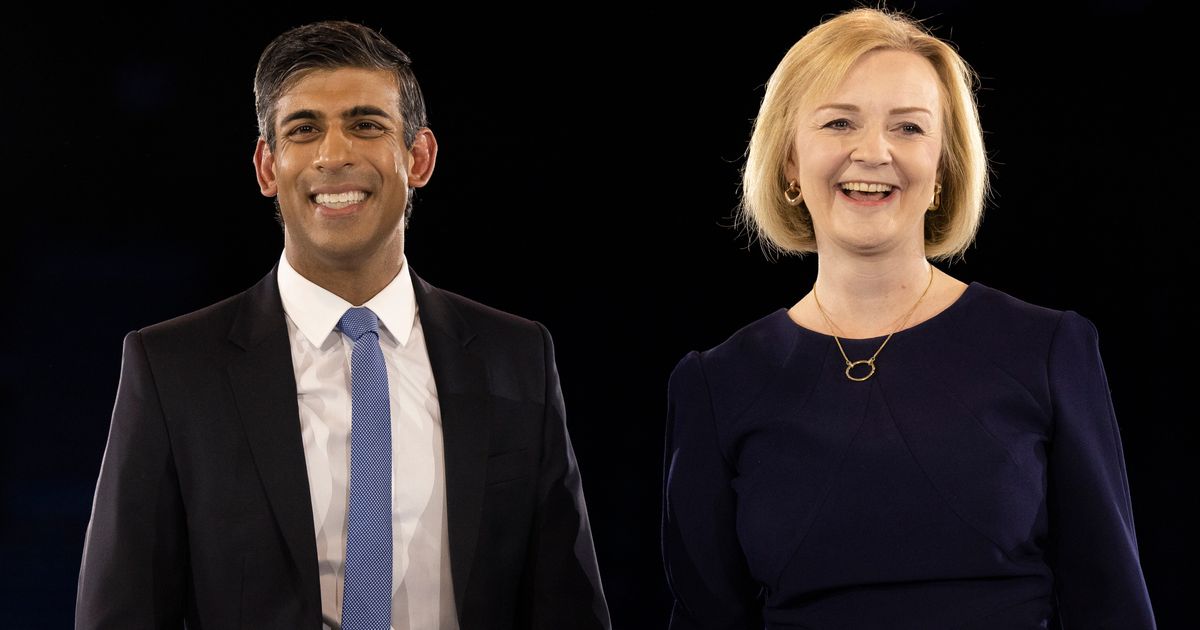
Liz Truss or Rishi Sunak will learn who has won – widely expected to be Truss – a few minutes before the result is made public.

The venue, a short walk from parliament and Downing Street, was also where Jeremy Corbyn was announced as Labour leader in 2015.

But the new Tory leader will not take over as prime minister immediately.

Tuesday

This will be Boris Johnson’s last day in office as PM. In the early morning, around 8.30am, he will deliver a farewell speech in Downing Street.

Johnson will then fly from London to Aberdeen and make his way to Balmoral to see the Queen and resign.

The Queen will then meet with the new Tory leader and appoint them prime minister.

Truss – or Sunak if he pulls off a spectacular upset – will then fly to London and deliver their first speech as PM outside No.10 at about 4pm.

It is then expected the that the new cabinet will be formed over the course of the next few hours.

Wednesday

Parliament returns from its long summer recess this week, which means the new PM will face Labour leader Keir Starmer at PMQs after about only 24-hours in the job.

Later in the week

Truss has promised to reveal within one week of taking office how she will deal with rising energy bills.

But the likely incoming PM has not said what form any help will take or given a precise date when she will unveil any plan.

Share Button

Refugees Minister Richard Harrington Quits Government

Richard Harrington, the minister in charge of the Ukrainian refugee programme, has resigned from the government.

Speaking to Times Radio on Sunday, Lord Harrington said his job of setting up the schemes was now complete and Liz Truss or Rishi Sunak could use the “machinery” how they wished.

“I felt it was an opportune moment,” he said of his decision to quit. “It certainly was not a political statement about this leader or that leader or anything like that.”

Harrington said the “argument is won” on welcoming Ukrainian refugees and it but all decisions are for the new prime minister”.

“Never again will we have people arrive in the UK and go into hotels without a plan, as happened with those coming from Afghanistan and from the Ukraine, where at the beginning we didn’t have any idea where to put them all,” he said.

“I was brought in to do a very specific job, which was to set up working machinery across Government to deal with helping the Ukrainians in need,” Lord Harrington said.

“I believe we now have a process and procedure in place that means there won’t necessarily be the need for a minister like myself.

“I’m not walking out on the role or either candidate and will continue to support where helpful. But what I was specifically asked to do is essentially complete so it seems right that I make clear to both leadership contenders that they may be able to save on a ministerial post when they take over.

“Or at least have the option to shape the role for the next phase with a new person now I’ve established a successful system.”

Over 100,000 Ukrainians have come to the UK under the Ukraine Family Scheme and Homes for Ukraine Scheme since March.

Truss is the overwhelming favourite to takeover from Boris Johnson as prime minister, following a bitter leadership campaign against rival Rishi Sunak.

The winner of the contest will be announced on Monday and the new PM will take office on Tuesday.

Johnson has been praised by Ukrainian President Volodymyr Zelenskyy.

He wrote a piece in the Mail On Sunday and also spoke to the Sunday Times about his gratitude to the outgoing Prime Minister.

Zelenskyy also expressed his hope for future “close relations” with Johnson’s successor, who could be in line for an invitation to visit Kyiv.

He told the Sunday Times that it would be a “priority” to extend an invitation to the next prime minister, while he also admitted he was “concerned” when he heard Mr Johnson was resigning.

“When we learned that there would be a change of government, all of us were concerned,” he told the paper.

“Johnson was supporting us and a lot depends on the leader. The leader is the one who communicates. The leader is the one that mediates between a country and its people, and a leader has an impact upon society.”

Speaking about Johnson’s successor, he said of that relationship: “I can only pray that it will be at the same level as I had with Prime Minister Johnson.”

Share Button

George Alagiah Says He’s Spent A Lot Of Time ‘In Extreme Pain’ As He Opens Up About Living With Cancer

George Alagiah has said he has spent “a lot of the last 18 months in extreme pain” thanks to a “tumour site” at the base of his back.

The BBC newsreader publicly shared his stage four bowel cancer diagnosis in 2014 and is continuing to undergo gruelling treatment.

In a candid new interview with The Sunday Telegraph, George opened up about how he continues his presenting duties while living with cancer.

He detailed a tumour that is “resting very close to the spine” that doctors think has “eroded a bit of a vertebra”, and while they are not yet sure if it is the cancer, he said it causes him major discomfort.

“I’ve spent a lot of the last 18 months in extreme pain. There have been times when even lying down makes it worse,” he said.

“Sleep deprivation was an issue, but I don’t want people to think I am feeling sorry for myself.”

He added that his back pain is currently not so bad as it has been.

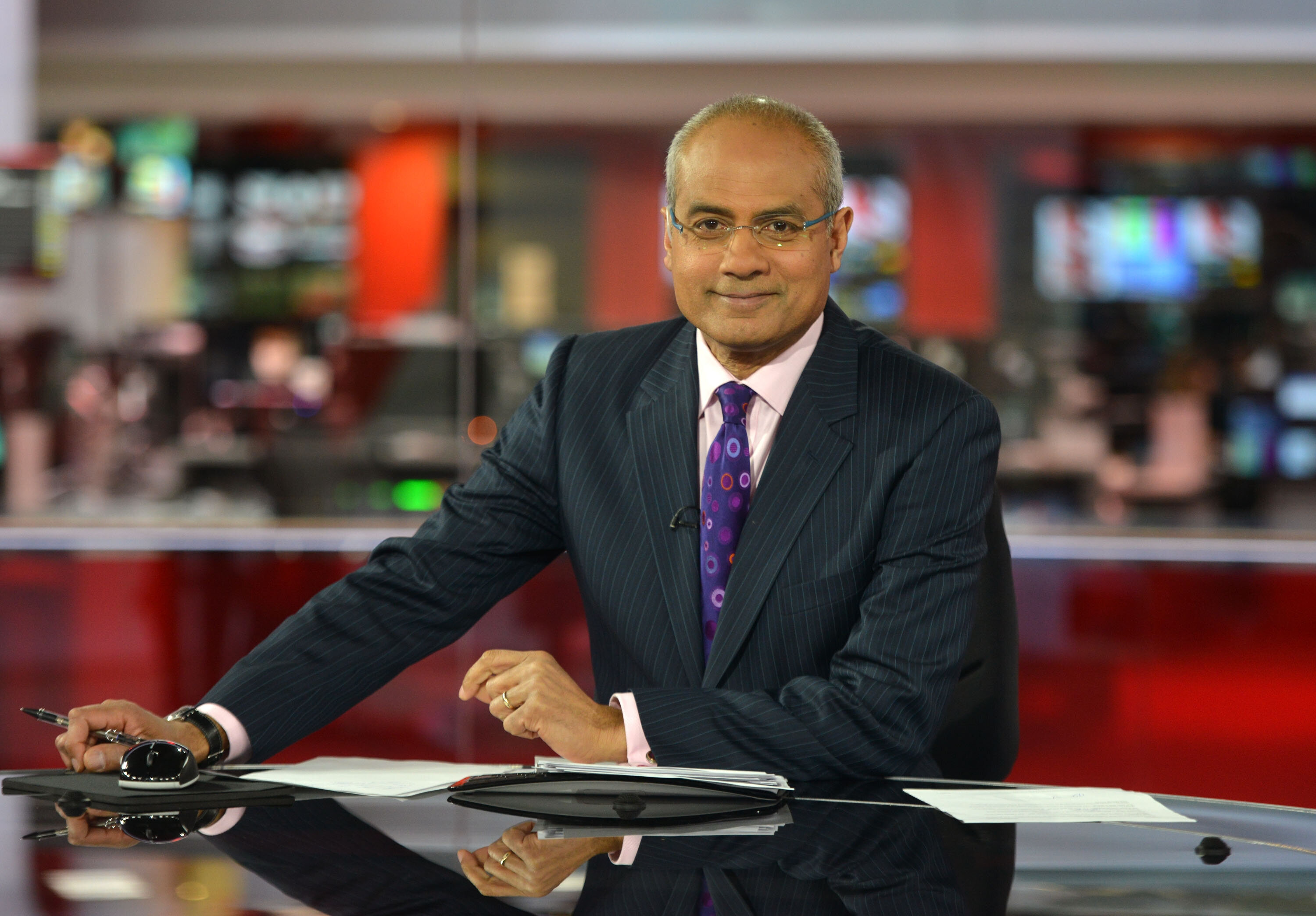
George in the BBC News studio

Jeff Overs/BBC via PA Media

Asked how he manages to continue to present BBC News if he is in pain, George said: “It is incredible what adrenalin will do. It is invented by nature to get you through anything.”

He explained enjoys working, which leaves him “absolutely knackered physically”, but “mentally rejuvenated”.

“I’ve been with people who treat me as they always did, who don’t patronise me, and it is a tremendous fillip,” he said.

George said that with his chemotherapy schedule – which sees him have low doses for around three quarters of the year, and higher doses for the rest of the time – means he “quite regularly” wakes up “feeling shit”.

“I can suddenly have an energy collapse. But I’ve got amazing colleagues at the BBC who step in to my place on the rota,” he added.

The former BBC foreign correspondent, who was part of the BBC team that was awarded a Bafta in 2000 for its coverage of the Kosovo conflict, underwent treatment his advanced bowel cancer in 2014.

He returned to presenting duties in 2015 after making progress against the disease, and said he was a “richer person” for it.

His cancer returned in December 2017, and the presenter underwent further treatment before once again returning to work.

Last October, he announced a break from his role on BBC News as he dealt with “a further spread” of the disease.

Share Button

Covid: Millions invited for booster jabs from Monday

Health bosses predict a resurgence of the virus and flu during the autumn and winter.

Share Button

Laura Whitmore Says There Was ‘Nothing More She Could Do’ With Love Island Role As She Explains Exit

Laura Whitmore has opened up about her exit from Love Island, claiming there was “nothing more” she could do with her hosting role.

The presenter announced she was leaving the ITV2 reality show last month after three series at the helm.

At the time, she said she found “certain elements of the show… very difficult”, including the travelling required.

In a new interview with ES Magazine, Laura has now further explained why she decided to quit, following the announcement she is to make her West End debut in play 2.22: A Ghost Story.

She said: “Love Island is a show that I love to watch, and I always want to work on shows that I enjoy. But there’s nothing more that I can do with it. There are parameters.

“When you work on the show, you can’t really talk about certain things. But I’m really proud of what I did, and proud to leave on what I think has been a brilliant series, with great winners.”

Laura said she was a “huge fan” of 2022 champions Ekin-Su Cülcüloğlu and Davide Sanclimenti, adding: “I know Love Island. People love a journey. No-one wants a happy relationship, because life isn’t a happy relationship. We want to see the ups and downs.”

Laura took over as the host of Love Island for the show’s first winter season in 2020, after her predecessor Caroline Flack stood down amid her legal issues at that time.

She paid tribute to the late star when announcing her departure, saying: “I was only planning to fill in for Caroline for a series and it turned into three series. I hope I did you proud Caroline.”

Maya Jama, AJ Odudu and former Islander Maura Higgins have all been linked to the role since Laura stepped down.

ITV recently confirmed that Love Island would be airing two seasons in 2023, the first of which will see the show returning to South Africa for the first time since its initial winter run received a mixed response in 2020.

Share Button

Serena Williams Bids Tennis An Emotional Goodbye After Final Match

Serena Williams bid an emotional goodbye to tennis after playing what is likely to be her final professional match on Friday.

The player bowed out of the third-round of the US Open tournament after losing in three sets to Ajla Tomljanovic.

Following her previous victories against Danka Kovinic and Anett Kontaveit, her fans hoped her swansong could have a fairy-tale ending.

But, despite a memorable second-set fightback in a raucous atmosphere, there will be no record-equalling 24th grand slam singles title, with Serena succumbing to a 7-5 6-7 (4) 6-1 loss.

After missing a final forehand, Serena – who played her first professional tennis match back in 1995 – walked to the net before waving to all sides of Arthur Ashe Stadium while Simply The Best played over the loudspeakers.

Addressing the crowd through tears, she said: “Thank you so much, you guys were amazing. I tried. Thank you daddy, I know you’re watching. Thanks mom.

“I just thank everyone that’s here, that’s been on my side for so many years, literally decades, But it all started with my parents and they deserve everything so I’m really grateful for them. And I wouldn’t be Serena if there wasn’t Venus, so thank you Venus. It’s been a fun ride.”

She had previously revealed she had decided the time was right to step away.

“This week has been really great,” she said later. “Just so much support, so much love. It was really amazing and overwhelming. I am so grateful for it. The whole crowd was really wanting to push me past the line. I’m so thankful and grateful for that.”

She added: “It takes a lot of work to get here. Clearly I’m still capable. It takes a lot more than that. I’m ready to be a mom, explore a different version of Serena. Technically in the world I’m still super young, so I want to have a little bit of a life while I’m still walking.”

Former first lady Michelle Obama led tributes to her friend and her “amazing career,” on social media saying she would go on to “transform lives” with her talents.

Other famous faces including Oprah Winfrey, Jennifer Hudson and Tiger Woods also hailed Serena as a “legend forever”.

Share Button