Ricky Gervais Reveals How He Would Have Avoided Will Smith Fiasco At Oscars

Comedian Ricky Gervais, known for burning celebrities as a frequent host of the Golden Globes, said he would not have joked about Jada Pinkett Smith’s bald head at the Oscars. So Will Smith’s slap of Chris Rock would not have happened, he concluded.

“I’ll get it out of the way,” he said at a show in London, per the Mirror. “I have not got any Will Smith material. I trended when that happened, and I was not even there.”

“What has it got to do with me? People were going, ‘What would have happened if Ricky Gervais had been doing it [presenting an Oscar award)]?’” he continued. “Well, nothing, as I would not have made a joke about his wife’s hair. I would have made a joke about her boyfriend.”

Gervais was referring to Jada Pinkett Smith’s “entanglement” with rapper August Alsina, which she revealed in 2020. While Will Smith hinted last year that he and his wife had an open marriage, the couple said they were separated at the time of Jada Pinkett Smith’s dalliance with Alsina.

Gervais, however, is no stranger to jokes about alopecia, Jada Pinkett Smith’s hair loss condition. At the Oscars on Sunday, Rock made a “G.I. Jane” dig about it and an offended Will Smith hit him in the face onstage in a stunning TV moment.

Gervais joked at his recent show that he might change his tour name from “Armageddon” to “Alopecia,” the Mirror reported.

After the Oscars incident, the comedian also shared a cringe-worthy tweet of his character from “The Office” making fun of people with alopecia.

Gervais could be considered somewhat of an expert on dishing out political incorrectness to a celebrity crowd. Watch him eviscerate Hollywood during his fifth Golden Globes hosting gig.

Share Button

Will Smith Resigns From Oscars Academy Following ‘Inexcusable’ Chris Rock Slap

Will Smith has announced his resignation from the Academy following his “shocking, painful, and inexcusable” actions at last weekend’s Oscars.

The actor said he was “heartbroken” and would accept any consequences that emerged from his scheduled disciplinary hearing, in a statement announcing his decision.

It comes less than a week on from the ceremony, during which Smith took to the stage and slapped Chris Rock after the comedian made a joke about his wife Jada Pinkett Smith’s shaved head.

Moments later he was awarded the Oscar for Best Actor for his performance in King Richard and gave a tearful acceptance speech about the importance of protecting family.

The Academy said it had received his resignation and would push forward with disciplinary proceedings against him, the details of which are to be discussed at a board meeting on 18 April.

On Friday, Smith apologised again to his fellow nominees and winners for having “deprived” them of the opportunity to celebrate their achievements on the night.

“I have directly responded to the Academy’s disciplinary hearing notice, and I will fully accept any and all consequences for my conduct,” he said in a statement.

“My actions at the 94th Academy Awards presentation were shocking, painful, and inexcusable.

“The list of those I have hurt is long and includes Chris, his family, many of my dear friends and loved ones, all those in attendance, and global audiences at home. I betrayed the trust of the Academy.

“I deprived other nominees and winners of their opportunity to celebrate and be celebrated for their extraordinary work. I am heartbroken.

“I want to put the focus back on those who deserve attention for their achievements and allow the Academy to get back to the incredible work it does to support creativity and artistry in film.

“So, I am resigning from membership in the Academy of Motion Picture Arts and Sciences, and will accept any further consequences the Board deems appropriate.”

He added: “Change takes time and I am committed to doing the work to ensure that I never again allow violence to overtake reason.”

Will Smith accepts the award for Best Actor at this year's Oscars.
Will Smith accepts the award for Best Actor at this year’s Oscars.

ROBYN BECK via Getty Images

A subsequent statement from Academy president David Rubin said: “We have received and accepted Mr Will Smith’s immediate resignation from the Academy of Motion Picture Arts and Sciences.

“We will continue to move forward with our disciplinary proceedings against Mr Smith for violations of the Academy’s Standards of Conduct, in advance of our next scheduled board meeting on April 18.”

At the meeting, Academy board members will discuss what disciplinary measures will be taken.

Prior to his resignation, Hollywood trade outlet Variety reported that Smith met leaders of the Academy on Tuesday to discuss his outburst and apologised to Rubin and chief executive Dawn Hudson.

Showrunner Will Packer also told Good Morning America that the actor had called him the morning after the ceremony to apologise for the incident.

Packer also said he initially thought the incident was something Rock and Smith had planned together.

He said: “I thought this was part of something that Chris and Will were doing on their own, I thought it was a bit… like everybody else, I knew we hadn’t practised it.

“I wasn’t concerned at all (as Smith was walking on the stage). I figured OK, he’s going to say something or come at him, something funny is going to happen because that’s the nature of Chris and that’s the nature of Will, so let’s see what happens.

“Once I saw Will yelling at the stage with such vitriol my heart dropped and I just remember thinking ‘Oh no, not like this’.”

He also revealed that following the incident the Los Angeles Police Department (LAPD) had been “prepared” to arrest Smith, telling Rock he had been the victim of “battery”.

The comedian had been “very dismissive” of the options given to him by LAPD officers and had “not wanted to make a bad situation worse,” Packer told the US show.

He said: “Shayla (Cowan, co-producer) told me that they were about to physically remove Will Smith and I had not been a part of those conversations.

“So I immediately went to the Academy leadership that was on site and I said, ‘Chris Rock doesn’t want that’.

“I said, ‘Rock has made it clear that he does not want to make a bad situation worse’. That was Chris’s energy. His tone was not retaliatory. His tone was not angry.

“So, I was advocating what Rock wanted at that time, which was not to physically remove Will Smith at that time. Because, as it had now been explained to me, that was the only option at that point.

“It has been explained to me that there was a conversation that I was not a part of, to ask him to voluntarily leave.”

Smith publicly apologised to Rock online after the incident, saying “violence in all its forms is poisonous and destructive”, and Pinkett Smith called for a “season of healing”.

Share Button

‘I’ve had long Covid for two years now’

Why are so many people still living with long Covid after two years and are there any hopes for treatment?

Share Button

Covid vaccines now available for five to 11-year olds in England

Some five million children in the country are now eligible to have the low-dose vaccine.

Share Button

Omicron ‘less severe’ than Delta for children ages 4 and younger, study suggests

New research from the Case Western Reserve University (CWRU) School of Medicine suggests that the children younger than age 5 who are infected with the COVID-19 Omicron variant have less risk of severe health outcomes than those infected with the Delta variant.

The study, published Friday in JAMA Pediatrics, is the first large-scale research effort to compare the health outcomes of coronavirus infection from Omicron to Delta in children 4 and younger — the age group not yet able to be vaccinated.

The findings show that the Omicron variant is 6-8 times more infectious than the Delta variant. The severe clinical outcomes ranged from a 16% lower risk for emergency room visits to 85% less risk for mechanical ventilation. And about 1.8% of children infected with Omicron were hospitalized, compared to 3.3% with Delta.

The Case Western Reserve-led team analyzed the electronic health records of more than 651,640 children in the United States who had medical encounter with healthcare organizations between 9/2021-1/2022-including more than 22,772 children infected with Omicron in late December and late January — to more than 66,000 children infected when Delta was prevalent in the fall. The study also compared the records of more than 10,000 children immediately before the detection of Omicron in the U.S., but when Delta was still predominant.

Children younger than 5 are not yet eligible for COVID-19 vaccines and have a low rate of previous SARS-CoV-2 infections, which also limits their pre-existing immunity.

The team examined clinical health outcomes for pediatric patients during a 14-day window following SARS-CoV-2 infection. Among the factors they reviewed were: emergency room visits, hospitalizations, ICU admissions and mechanical ventilation use.

Further demographic data analysis found that children infected with Omicron were on average younger-1.5 years of age versus 1.7 years-and had fewer comorbidities.

“The major conclusion to our research was that many more children were infected with Omicron when compared to Delta, but the children who are infected are not impacted as severely as were children infected with the Delta variant,” said Pamela Davis, the Arline H. and Curtis F. Garvin Research Professor at the Case Western Reserve School of Medicine. “However, because there are so many more children infected, our hospitals were affected over the winter months by an influx of young children.”

“We saw the number of hospitalizations within this age group skyrocket in January of this year because the infection rate of Omicron is about 10 to 15 times compared to that of the Delta variant,” said Rong Xu, professor of biomedical infomatics and director of the Center for AI in Drug Discovery at the School of Medicine. “Omicron is less severe than Delta, however, the reduction of the severity range in clinical outcomes is only 16 to 85%. Furthermore, since so many un-vaccinated children were infected, the long-term effects of COVID-19 infections on the brain, heart, immune systems and other organs of children remains unknown and worrisome. “

The CDC recommends those age 5 and older receive a COVID-19 vaccine, and fully vaccinated people 12 and older receive a booster shot. According to updated guidance by the CDC, Americans no longer need to mask indoors in counties with low or medium “Covid-19 Community Level.”

Story Source:

Materials provided by Case Western Reserve University. Note: Content may be edited for style and length.

Share Button

England, Wales And Scotland: World Cup Group B Has Has Football Fans Talking

It’s the most eye-catching group in the most controversial men’s World Cup ever.

On Friday, the draw for the tournament in Qatar – plagued to corruption and human rights allegations and to be held in winter for the first time – delivered potential match-ups that satisfied social media’s appetite for the farcical.

And most of them were in Group B.

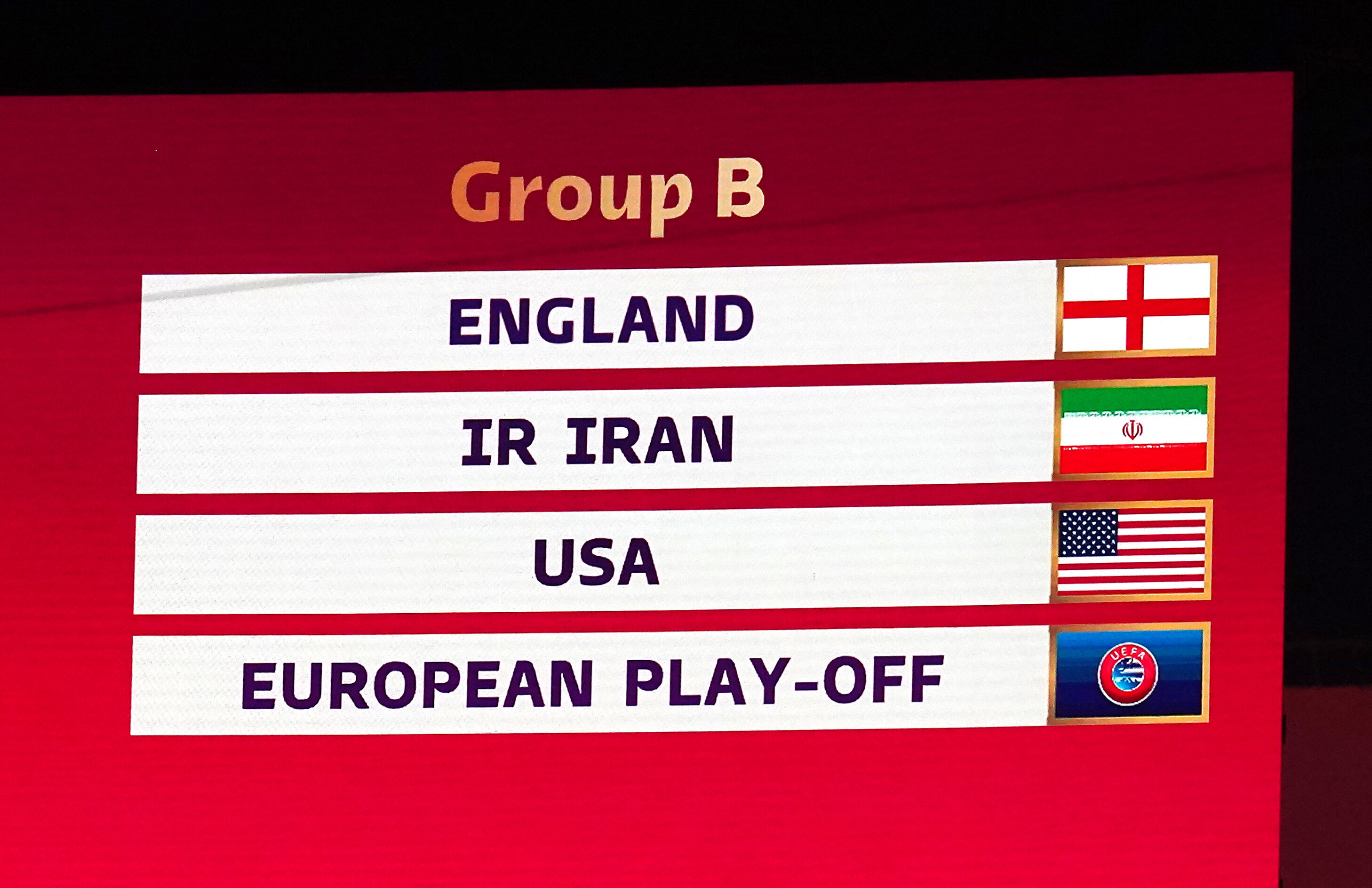
England, USA, Iran and one of Scotland, Wales or Ukraine will make take each other on in the opening stage of the finals, and Twitter quickly seized on the historical and political ramifications.

A battle of Britain?

If looking from a UK perspective, the prospect of a first-ever ‘Battle of Britain’ at a World Cup finals is a dream for the country’s newspaper editors.

England has never faced off against Scotland or Wales at this tournament, but they do have recent European Championship experience against both sides.

Scotland and England played out a goalless draw at Wembley in the group stage of Euro 2020 last June, while Wales and England came together at Euro 2016.

If either Scotland or Wales qualify, expect the contest to spark domestic grievances, references to everything from Braveheart to Offa’s Dyke, and petty one-upmanship driven by London-based tabloids.

.

The Meghan Markle derby

Gareth Southgate’s team will face the US in their second game. The teams have met twice in the World Cup finals – in 1950 and 2010 – and England won neither of them.

Apart from the underlying historical tensions – the revolutionary war, both country’s record of imperialism – the 1950 clash is infamous. The US beat England 1-0 at Belo Horizonte, Brazil, with Joe Gaetjens’ 38th-minute goal marking one of the great football upsets.

The last World Cup clash was also memorable. England’s “golden generation” were over-whelming favourites, as witnessed by The Sun newspaper’s hubristic front page when the group was drawn: “England, Algeria, Slovenia, Yanks’ (EASY)”.

.

In the event, the 1-1 helped both the US and England to advance to the knockout rounds – but with the unfavoured Americans topping the group. The Stateside tabloids appeared to have as much fun as their English counterparts pre-tournament.

Politically-charged US v Iran

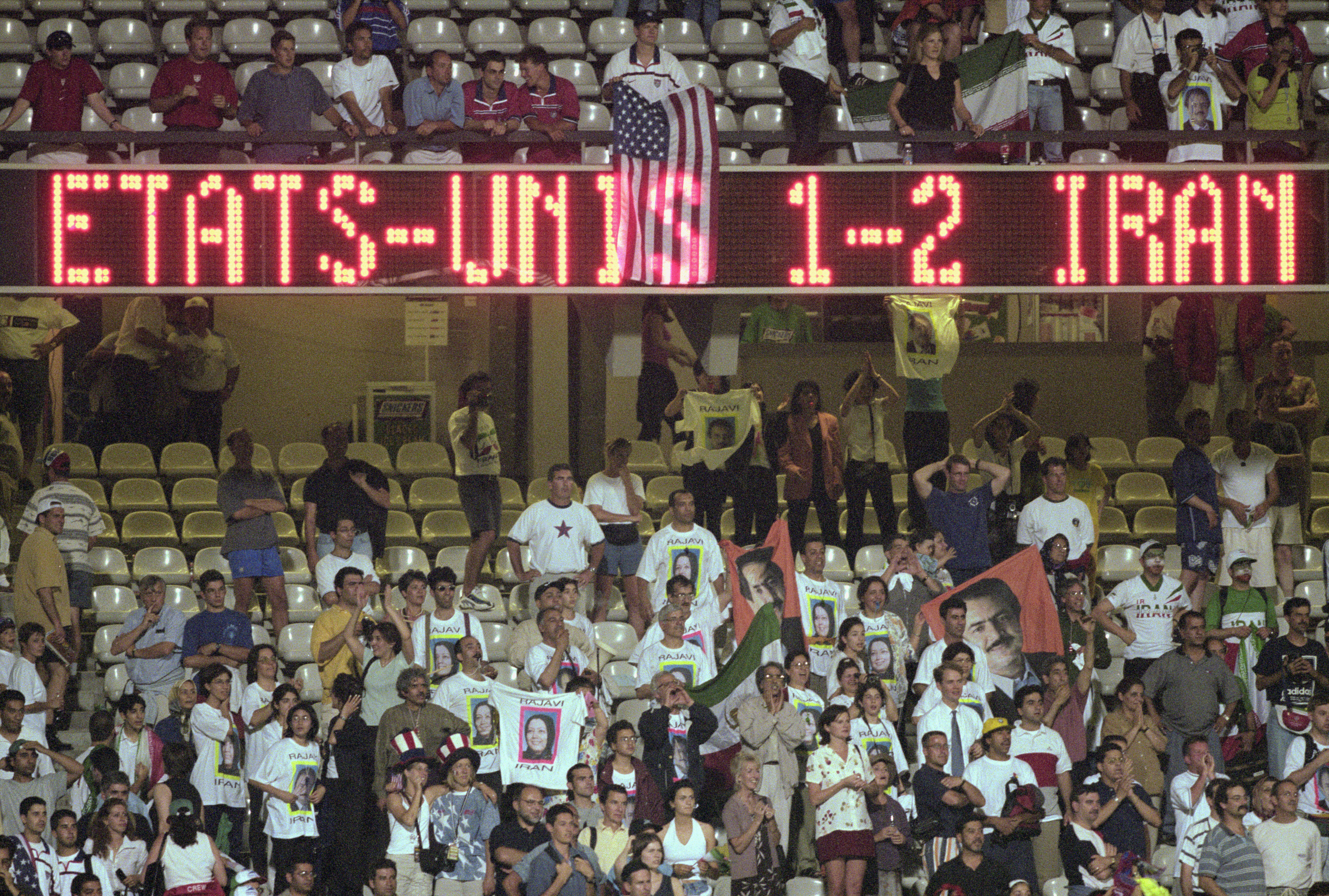
Just like in 1998, the US will play Iran with diplomatic relations yet to be restored between the nations. The Guardian called the game 24 years ago the “most politically charged match in World Cup history”, and the delicate geopolitics were underlined by a pre-game ceremony that saw Iranian players gifting white roses to the Americans as a symbol of peace.

On the pitch, Iran upset the US 2-1, eliminating the Americans after their second game of the tournament. It was Iran’s first-ever victory at a World Cup finals.

Tensions between England and Iran – note the British-Iranians recently released by Tehran after a historical debt was paid – are unlikely to be much better.

<img class="img-sized__img landscape" loading="lazy" alt="Iranian fans in the grandstand celebrate their 2-1 victory over the US in the 1998 World Cup.” width=”720″ height=”485″ src=”https://www.wellnessmaster.com/wp-content/uploads/2022/04/england-wales-and-scotland-world-cup-group-b-has-has-football-fans-talking-6.jpg”>
Iranian fans in the grandstand celebrate their 2-1 victory over the US in the 1998 World Cup.

Ben Radford via Getty Images

Will Ukraine play?

It is unclear whether it is Scotland, Wales or Ukraine who will make up the fourth team in the group.

The continued invasion of Ukraine means FIFA is yet to establish a date in June for their qualifier against Scotland, and the subsequent match against Wales.

Oleksandr Petrakov, the manager of Ukraine’s men’s national football team, said in an interview with Ukrainian TV station Football 1: “As long as people in my country continue to die, I cannot think about playing the game in Scotland.

“We still have April and May to come, and we will see what happens then, but we are supposed to playing Scotland in June as well as Nations League games.

“But we can’t think about them at the moment given the current situation.”

Share Button

New research shows survival rate improvement for extremely pre-term infants

A new study co-authored by a University of Rochester Medical Center (URMC) researcher has found that the survival rates of extremely pre-term babies has increased significantly in the past decade.

The paper, “Mortality, In-Hospital Morbidity, Care Practices, and 2-Year Outcomes for Extremely Preterm Infants in the US, 2013-2018,” examined the survival outcomes of 10,877 infants born at 22-28 weeks’ gestational age between January 1, 2013, and December 31, 2018, at 19 academic medical centers that form the NIH-funded Neonatal Research Network.

Survival among actively treated infants was 30.0% (60/200) at 22 weeks and 55.8% (535/958) at 23 weeks. This is a considerably higher rate of survival than when the study when previously conducted between 2008-2012, in which survival to discharge was 7% (22/334) for live-born infants at 22 weeks and 32% (252/779) for live-born infants at 23 weeks.

This improvement in outcomes for extremely pre-term infants can be attributed to multiple factors, including enhanced treatment protocols across participating medical centers, according to Carl D’Angio, M.D., co-author and Chief of the Division of Neonatology at URMC.

“Academic medical centers have been taking best-practices, applying them, and disseminating them to a wider and wider group nationally,” said D’Angio.

Collective improvement in care in a variety of areas has contributed to the change in outcomes, according to D’Angio. “When we look at survival at almost any group of infants, it’s a bundle of factors. There are similarities and differences in the way they’re treated at various centers, but there are elements where we’ve collectively moved forward, such as ventilation, nutrition and hydration.”

When infants are born at 22 or 23 weeks, nearly every organ is immature, with the lungs and the brain being among the systems most at risk, according to D’Angio.

In addition to studying survival outcomes, the paper assessed the health of severely pre-term infants after two years, including effects such as neurodevelopment, cerebral palsy, vision, hearing, rehospitalizations, and need for assistive devices. Slightly more than 8% had moderate to severe cerebral palsy, 1.5% had vision loss in both eyes, 2.5% needed hearing aids or cochlear implants, and 15% required mobility aids such as orthotics, braces, walkers, or wheelchairs.

Nearly 49% had no or only mild neurodevelopmental impairment, about 29% had moderate neurodevelopmental impairment and roughly 21% had severe neurodevelopmental impairment.

This study — and overall improvement in outcomes — can help clinicians provide clear information in discussions with families when babies are born extremely pre-term.

“We as clinicians support parents in a shared decision-making process when babies are born at the limits of viability,” said D’Angio. “The imminent delivery of an extremely premature infant is a major stressor for families. An important part of helping parents cope is presenting the data we have and letting parents know what to expect in the long-haul. This latest study is positive news for shaping those discussions and providing a more optimistic probability for good outcomes.”

Story Source:

Materials provided by University of Rochester Medical Center. Original written by Scott Hesel. Note: Content may be edited for style and length.

Share Button

New research shows what it takes to make society change for the better

Many people try to make society change for the better. The real challenge is how to get good solutions to scale up for major change. New research suggests that social change may depend on the relationship between beneficial behaviors and policies.

The research, conducted by the University of Maine, University of Maine at Augusta, University of Vermont and Universite Laval in Quebec, Canada, attempted to understand how society can accomplish major, transformative social change, particularly the kind of social change necessary to tackle the growing problem of climate change.

The researchers studied a behavior that benefits groups, but does not spread without policy support, such as a costly measure to mitigate the effects of climate change. They created a mathematical model using an innovative combination of epidemiological and evolutionary techniques, which simulates a society where agents live in groups and adopt the beneficial behavior of peers — behavior that, given the right conditions, can spread virally, but not if the institutional costs are too high.

The model considers factors like the prevalence of adopters and non-adopters in a group; the diffusion of behaviors, both within the group and globally; the strength of institutions supporting the behavior and facilitating its spread; and the cost of those institutions.

“Our model is unique because it combines behavioral change and policy change in a single system, and encourages us to think about social change in a richer way. Large-scale social change is not just policy or behavior, but the emergence of a new self-reinforcing system that combines both. This allows us to ask new questions, such as ‘how would a new pattern of behavior and policy spread?'” says Timothy Waring, associate professor of social-ecological systems modeling at the University of Maine and co-author of the study.

The results showed that both behavioral change and policy change are required to achieve large-scale social change — and that they need to happen together. Though neither can get the job done on its own, policy change is especially critical.

The researchers found that sometimes the beneficial behavior can spread too far. In some cases, the spread of behavior beyond groups with supporting policy can reduce its perceived success and slow the spread of the policy, thereby limiting beneficial social change overall.

The simulation suggests that projects that involve both bottom-up viral spread of behavior and top-down policy change may be the best type of solution for large sustainability issues like climate change because they serve as an example and can spread between groups to influence major change.

“For example, let’s say a state wants to spread participation in a new organic composting law which would benefit towns,” Waring says. “To make the system work, the collected waste must be purely organic material. But contributing pure organic waste takes effort for households, so the behavior does not take off on its own. This is a common problem for policy implementation. But if towns experiment with systems to help support and spread the behavior, the successful town programs can spread between towns along with household contributions, resulting in effective, large-scale change.”

Laurent Hébert-Dufresne, lead author on the study and associate professor at the University of Vermont, says, “Our model can help figure out how to balance bottom-up and top-down effects so that new solutions can scale. For example, it can help determine when we should promote a behavior like composting all over the country to normalize it and when we should instead focus on a local well-funded pilot project to show the potential benefits of composting.”

Waring said that in future research, the team aims to apply these types of models to all sorts of beneficial social change, particularly the challenge of tackling climate change.

The study was published in the Royal Society Open Science on March 23, 2022. The research is part of track 2 of UMaine’s Experimental Program to Stimulate Competitive Research (EPSCoR) project.

Story Source:

Materials provided by University of Maine. Note: Content may be edited for style and length.

Share Button

‘Flash droughts’ coming on faster, global study shows

Just like flash floods, flash droughts come on fast — drying out soil in a matter of days to weeks. These events can wipe out crops and cause huge economic losses. And according to scientists, the speed at which they dry out the landscape has increased.

Researchers at The University of Texas at Austin, The Hong Kong Polytechnic University and Texas Tech University found that although the number of flash droughts has remained stable during the past two decades, more of them are coming on faster. Globally, the flash droughts that come on the fastest — sending areas into drought conditions within just five days — have increased by about 3%-19%. And in places that are especially prone to flash droughts — such as South Asia, Southeast Asia and central North America — that increase is about 22%-59%.

Rising global temperatures are probably behind the faster onset, said co-author and UT Jackson School Professor Zong-Liang Yang, who added that the study’s results underscore the importance of understanding flash droughts and preparing for their effects.

“Every year, we are seeing record-breaking warming episodes, and that is a good precursor to these flash droughts,” he said. “The hope and purpose [of this research] is to minimize the detrimental effects.”

The research was published in Nature Communications. The study was led by doctoral student Yamin Qing and Professor Shuo Wang, both of The Hong Kong Polytechnic University.

Flash droughts are relatively new to science, with the advancement of remote sensing technology during the past couple of decades helping reveal instances of soil rapidly drying out. This serves as the telltale sign of the onset of a flash drought and can make drought conditions appear seemingly out of the blue.

As the name suggests, flash droughts are short lived, usually lasting only a few weeks or months. But when they occur during critical growing periods, they can cause disasters. For example, in the summer of 2012, a flash drought in the central United States caused the corn crop to wither, leading to an estimated $35.7 billion in losses.

In this study, the scientists analyzed global hydroclimate data sets that use satellite soil moisture measurements to capture a global picture of flash drought and how it has changed during the past 21 years. The data showed that about 34%-46% of flash droughts came on in about five days. The rest emerge within a month, with more than 70% developing in half a month or less.

When they examined the droughts over time, they noticed the flash droughts happening more quickly.

The study also revealed the importance of humidity and variable weather patterns, with flash droughts becoming more likely when there’s a shift from humid to arid conditions. That makes regions that undergo seasonal swings in humidity — such as Southeast Asia, the Amazon Basin, and the East Coast and Gulf Coast of the United States — flash drought hot spots.

“We should pay close attention to the vulnerable regions with a high probability of concurrent soil drought and atmospheric aridity,” said Wang.

Mark Svoboda, the director of the National Drought Mitigation Center and originator of the term “flash drought,” said the advancement in drought-detecting technology and modeling tools — such as those used in this study — has led to growing awareness of the influence and impact of flash droughts. He said the next big step is translating this knowledge into on-the-ground planning.

“You can go back and watch that drought evolve in 2012 and then compare it to how that tool did,” said Svoboda, who was not part of the study. “We really have the stage well set to do a better job of tracking these droughts.”

The study was funded by the National Natural Science Foundation of China and the Hong Kong Research Grants Council.

Share Button

The future of 5G+ infrastructure could be built tile by tile

5G+ (5G/Beyond 5G) is the fastest-growing segment and the only significant opportunity for investment growth in the wireless network infrastructure market, according to the latest forecast by Gartner, Inc. But currently 5G+ technologies rely on large antenna arrays that are typically bulky and come only in very limited sizes, making them difficult to transport and expensive to customize.

Researchers from Georgia Tech’s College of Engineering have developed a novel and flexible solution to address the problem. Their additively manufactured tile-based approach can construct on-demand, massively scalable arrays of 5G+ (5G/Beyond 5G)enabled smart skins with the potential to enable intelligence on nearly any surface or object. The study, recently published in Scientific Reports, describes the approach, which is not only much easier to scale and customize than current practices, but features no performance degradation whenever flexed or scaled to a very large number of tiles.

“Typically, there are a lot of smaller wireless network systems working together, but they are not scalable. With the current techniques, you can’t increase, decrease, or direct bandwidth, especially for very large areas,” said Tentzeris. “Being able to utilize and scale this novel tile-based approach makes this possible.”

Tentzeris says his team’s modular application equipped with 5G+ capability has the potential for immediate, large-scale impact as the telecommunications industry continues to rapidly transition to standards for faster, higher capacity, and lower latency communications.

Building the Tiles

In Georgia Tech’s new approach, flexible and additively manufactured tiles are assembled onto a single, flexible underlying layer. This allows tile arrays to be attached to a multitude of surfaces. The architecture also allows for very large 5G+ phased/electronically steerable antenna array networks to be installed on-the-fly. According to Tentzeris, attaching a tile array to an unmanned aerial vehicle (UAV) is even a possibility to surge broadband capacity in low coverage areas.

In the study, the team fabricated a proof-of-concept, flexible 5×5-centimeter tile array and wrapped it around a 3.5-centimeter radius curvature. Each tile includes an antenna subarray and an integrated, beamforming integrated circuit on an underlying tiling layer to create a smart skin that can seamlessly interconnect the tiles into very large antenna arrays and massive multiple-input multiple-outputs (MIMOs) — the practice of housing two or more antennas within a single wireless device. Tile-based array architectures on rigid surfaces with single antenna elements have been researched before, but do not include the modularity, additive manufacturability, or flexible implementation of the Georgia Tech design.

The proposed modular tile approach means tiles of identical sizes can be manufactured in large quantities and are easily replaceable, reducing the cost of customization and repairs. Essentially, this approach combines removable elements, modularity, massive scalability, low cost, and flexibility into one system.

5G+ is Just the Beginning

While the tiling architecture has demonstrated the ability to greatly enhance 5G+ technologies, its combination of flexible and conformal capabilities has the potential to be applied in numerous different environments, the Georgia Tech team says.

“The shape and features of each tile scale can be singular and can accommodate different frequency bands and power levels,” said Tentzeris. “One could have communications capabilities, another sensing capabilities, and another could be an energy harvester tile for solar, thermal, or ambient RF energy. The application of the tile framework is not limited to communications.”

Internet of Things, virtual reality, as well as smart manufacturing/Industry 4.0 — a technology-driven approach that utilizes internet-connected “intelligent” machinery to monitor and fully automate the production process — are additional areas of application the team is excited to explore.

“The tile-architecture’s mass scalability makes its applications particularly diverse and virtually ubiquitous. From structures the size of dams and buildings, to machinery or cars, down to individual health-monitoring wearables,” said Tentzeris. “We’re moving in a direction where everything will be covered in some type of a wireless conformal smart skin encompassing a communication system or antenna that allows for effective monitoring.”

The team now looks forward to testing the approach outside the lab on large, real-world structures. They are currently working on the fabrication of much larger, fully inkjet-printed tile arrays (256+ elements) that will be presented at the upcoming International Microwave Symposium (IEEE IMS 2022) — the flagship IEEE conference in RF and microwave engineering. The IMS presentation will introduce a new tile-based large-area architecture version that will allow assembly of customizable tile arrays in a rapid and low-cost fashion for numerous conformal platforms and 5G+ enabled applications.

Share Button