Even The Official Who Wrote The Covid Rules Didn’t Stick To Them

The number of alleged rule-breaking Whitehall parties has now reached 15 after the official who wrote the Covid rules admitted she failed to comply with them.

Kate Josephs, the former director of the government’s Covid taskforce, has apologised for holding an office drinks party when indoor socialising was banned.

She took to Twitter to say she is “truly sorry” for gathering with colleagues for alcoholic drinks in her office in the Cabinet Office to mark her leaving the civil service on December 17 2020.

Josephs, who describes herself in her Twitter bio as a “proud public servant”, is now the chief executive of Sheffield City Council.

The decision to hold a workplace gathering in Whitehall appeared to go against the official advice at the time.

According to The Telegraph, “dozens” of officials from the Cabinet Office’s Covid-19 taskforce attended the event, while the country was in lockdown.

Including Thursday’s revelations about two events involving drinks and dancing the night before the Duke of Edinburgh’s funeral – and the apparent purchase of enough wine to fill a suitcase – the total number of gatherings being investigated is up to 15.

On that same day, the government’s official Twitter feed replied to a query asking if employers could hold Christmas parties at the end of the working day.

It said: “Hi Mick, although there are exemptions for work purposes, you must not have a work Christmas lunch or party, where that is a primarily social activity and is not otherwise permitted by the rules in your tier.”

On Friday, Josephs tweeted a statement apologising for what happened.

She said: “As people know I previously worked in the Cabinet Office Covid Taskforce where I was director general from July 2020 to December 18, 2020.

“I have been cooperating fully with the Cabinet Office investigations and I do not want to pre-empt the findings of the investigation.

“However as chief executive of Sheffield City Council I am responsible for leading the organisation and working with partners across the city and region to support our covid response and recovery.

“That is why I have decided to make a statement.

“On the evening of 17 December, I gathered with colleagues that were at work that day, with drinks, in our office in the Cabinet Office, to mark my leaving the Civil Service.

“I am truly sorry that I did this and for the anger that people will feel as a result. Sheffield has suffered greatly during this pandemic, and I apologise unreservedly.

“The specific facts of this event will be considered in the context of the Cabinet Office investigation. I did not attend any events at 10 Downing St.

“I am grateful for the ongoing support of colleagues and partners and need now to ask that people allow the Cabinet Office to complete its investigation.

“I will not be able to respond to any further questions until the Cabinet Office investigation is complete.”

Sheffield City Council leader Terry Fox said the chief executive has discussed with him what happened and apologised face-to-face.

He said: “To be honest I need to express my deep disappointment – people will rightly feel angry and let down. I get that completely.

“After everything that Sheffield has been through during the pandemic, this is news that we did not want to receive.

“Over the last year, Kate’s been an asset to our city and she is working tirelessly for Sheffield and it’s people.

“Our residents will understandably have questions and concerns, and we await the findings of the investigation.”

Share Button

‘High confidence’ Omicron is less severe in UK

Health advisors say vaccines give them confidence that most people will not become severely ill with Covid.

Share Button

What’s really going on with Covid deaths data?

A bigger proportion of deaths recorded in the daily data are people who died with Covid, rather than from it.

Share Button

New study overturns popular theory on evolution of termite size

Researchers have completed a comprehensive analysis of the head width of over 1500 species of termites and determined that their size isn’t gradually shrinking at a geological timescale.

Termites belong to the cockroach branch of the evolutionary tree. They split from their sister cockroach group at the end of the Jurassic period, around 150 to 170 million years ago. A popular theory suggests that, after this split, they very gradually got smaller, and continue to do so today. But this new research, published in Proceedings of the Royal Society B, concluded that they rapidly got smaller over a 20-million-year period, then their size stabilized. The researchers, who are from the Evolutionary Genomics Unit at the Okinawa Institute of Science and Technology Graduate University (OIST), claim that the difference in the results from their research compared to the original theory comes from including fossilized species.

Postdoctoral fellow, Dr. Nobuaki Mizumoto, from the OIST Unit originally arrived in Okinawa to study termite behavior. “I wanted to compare the behavior of different kinds of termite species from around the world,” he explained. “I was going to travel to various places and collect them.”

But COVID-19 and the resulting travel restrictions put an end to those plans. So, Dr. Mizumoto turned his focus towards studying something that didn’t require him to leave Okinawa — the evolution of the size of termites.

Termite size, represented by their head width, has been comprehensively measured by taxonomists over the course of the last hundred years. In the past, when researchers catalogued a termite individual, they measured the head width as it is a stable measurement that, unlike body weight, is not affected by sample preservation methods.

Since modern non-termite cockroaches are larger than their modern termite cousins, it’s previously been proposed that termites have been getting smaller since the split. The body size of insects is thought to correlate to the complexity of their society. Smaller insects mean that more individuals can fit in a space. More individuals mean that tasks can be split up and allows for different castes — such as workers and soldiers — to evolve. As termites are social cockroaches, this theory did make sense. However, it had never been robustly tested, until now.

“The theory was somewhat supported when we just looked at modern species,” explained Dr. Mizumoto. “But when we started to include fossil species, it fell through. Some fossil species that lived 100 million years ago were already pretty small, and the smallest species to ever exist that we know of is a fossil species that existed around 50 million years ago.”

“What’s more,” he continued. “The head width of the ancestor of all the living termite species was estimated around 2mm. Yes, that’s larger than nearly 80% of all living species but it’s still very much within the range.”

In total there are just over 3000 species of termites described. So, the study was robust, examining nearly half the described species. Of those, 1562 are still alive today, whereas 76 are fossilized species. The oldest species looked at lived around 130 million years ago. The head width of the smallest termite was around 0.5mm, and the largest, around 5mm.

“Our analysis revealed that there’s a huge variation between species,” concluded Dr. Mizumoto. “And this includes a lot of fluctuation. Some species are seeing a size reduction, whereas others are actually getting larger. It depends on the lineage. This research provides a really good base for starting to make these comparisons and learning about the evolution of sociality in termites.”

The researchers highlighted that, while many studies focus on the evolution of sociality, especially within social insects, they often focus on wasps, ants, and bees. Indeed, studies on termites are lacking in number by comparison.

“A comprehensive perspective of termites is really important,” explained Prof. Tom Bourguignon, principal investigator of OIST’s Evolutionary Genomics Unit and senior author of the paper. “Most termite research only focuses on the few species that are well-known pests. This research diversifies our understanding of termites.”

Share Button

Earth’s interior is cooling faster than expected

The evolution of our Earth is the story of its cooling: 4.5 billion years ago, extreme temperatures prevailed on the surface of the young Earth, and it was covered by a deep ocean of magma. Over millions of years, the planet’s surface cooled to form a brittle crust. However, the enormous thermal energy emanating from the Earth’s interior set dynamic processes in motion, such as mantle convection, plate tectonics and volcanism.

Still unanswered, though, are the questions of how fast the Earth cooled and how long it might take for this ongoing cooling to bring the aforementioned heat-driven processes to a halt.

One possible answer may lie in the thermal conductivity of the minerals that form the boundary between the Earth’s core and mantle.

This boundary layer is relevant because it is here that the viscous rock of the Earth’s mantle is in direct contact with the hot iron-nickel melt of the planet’s outer core. The temperature gradient between the two layers is very steep, so there is potentially a lot of heat flowing here. The boundary layer is formed mainly of the mineral bridgmanite. However, researchers have a hard time estimating how much heat this mineral conducts from the Earth’s core to the mantle because experimental verification is very difficult.

Now, ETH Professor Motohiko Murakami and his colleagues from Carnegie Institution for Science have developed a sophisticated measuring system that enables them to measure the thermal conductivity of bridgmanite in the laboratory, under the pressure and temperature conditions that prevail inside the Earth. For the measurements, they used a recently developed optical absorption measurement system in a diamond unit heated with a pulsed laser.

“This measurement system let us show that the thermal conductivity of bridgmanite is about 1.5 times higher than assumed,” Murakami says. This suggests that the heat flow from the core into the mantle is also higher than previously thought. Greater heat flow, in turn, increases mantle convection and accelerates the cooling of the Earth. This may cause plate tectonics, which is kept going by the convective motions of the mantle, to decelerate faster than researchers were expecting based on previous heat conduction values.

Murakami and his colleagues have also shown that rapid cooling of the mantle will change the stable mineral phases at the core-mantle boundary. When it cools, bridgmanite turns into the mineral post-perovskite. But as soon as post-perovskite appears at the core-mantle boundary and begins to dominate, the cooling of the mantle might indeed accelerate even further, the researchers estimate, since this mineral conducts heat even more efficiently than bridgmanite.

“Our results could give us a new perspective on the evolution of the Earth’s dynamics. They suggest that Earth, like the other rocky planets Mercury and Mars, is cooling and becoming inactive much faster than expected,” Murakami explains.

However, he cannot say how long it will take, for example, for convection currents in the mantle to stop. “We still don’t know enough about these kinds of events to pin down their timing.” To do that calls first for a better understanding of how mantle convection works in spatial and temporal terms. Moreover, scientists need to clarify how the decay of radioactive elements in the Earth’s interior — one of the main sources of heat — affects the dynamics of the mantle.

Story Source:

Materials provided by ETH Zurich. Original written by Peter Rueegg. Note: Content may be edited for style and length.

Share Button

Excuses, Excuses: How The Government Tried To Wriggle Out Of Partygate

Partygate has been a scandal splashed across the front pages since December – and it doesn’t look like it’s going away anytime soon.

Leaked photos, emails and new allegations have been dripped to the media in recent weeks, each focused on a different party said to have taken place in Downing Street when the rest of the country was prohibited was under lockdown.

There are around seven parties which allegedly took place in No.10 between May 2020 and April 2021, and five other parties which happened outside No.10.

Top civil servant Sue Gray is set to release her inquiry findings into these supposed celebrations in the coming weeks, which Downing Street claims it will accept.

In the meantime, the government has been determinedly putting forward a whole range of reasons to explain away various parties.

Here’s a breakdown of the most eyebrow-raising excuses:

Excuses for 16 April, 2021

It was a “farewell speech”

This excuse followed Friday’s reports about two leaving parties taking place in No.10 the night before Prince Philip’s funeral, 16 April, 2021.

Referring to the leaving do for James Slack, the former director of communications for Johnson, No.10 said: “On this individual’s last day he gave a farewell speech, to thank each team for the work they had done, both those who had to be in the office and on a screen for those working from home.”

Business Insider has pointed out that Slack also left the civil service a month before the leaving do even happened.

The Queen sitting alone in St. George's Chapel during the funeral of Prince Philip, onSaturday April 17, 2021.
The Queen sitting alone in St. George’s Chapel during the funeral of Prince Philip, onSaturday April 17, 2021.

via Associated Press

Refusal to acknowledge it was a party

Downing Street have issued an apology to Buckingham Palace following the allegations that staff partied the night before the Duke of Edinburgh’s funeral when the country was in national mourning.

However, No.10 has refused to confirm or deny what was happening behind the Downing Street doors at that time.

Johnson’s deputy spokesman simply said: “It’s deeply regrettable that this took place at a time of national mourning and No10 has apologised to the Palace.”

Asked why it was an apology from Downing Street not Johnson, the spokesperson said: “Again, the prime minister said earlier that misjudgements have been made, and it’s right people apologise as the PM did earlier this week.”

Excuses for May 20, 2020

Truss claimed “he’s apologised” so everyone should “move on”

Foreign secretary Liz Truss told ITV News on Friday that people should look at Brexit and Covid recovery for Johnson’s true legacy.

Addressing partygate in general, she said: “The prime minister apologised on Wednesday. He was very clear that mistakes have been made…I think we now need to move on…”

The rules were “too hard” to follow

Courtesy of Jacob Rees-Mogg, the Commons leader, this one popped up on Thursday, in defence of the party on May 20, 2020.

Rees Mogg claimed: “We must consider as this goes to an inquiry and we look into what happened with Covid, whether all those regulations were proportionate or whether it was too hard on people.”

Johnson didn’t “see” or “receive” the email

Even though the invitation to the drinks party on May 20, 2020, was sent out by Johnson’s principle private secretary Martin Reynolds – and the event itself was held in the prime minister’s back garden – Johnson allegedly did not see the email, which made it plain this was a social event.

On Wednesday, Downing Street claimed Johnson did not receive the email either, and did not instruct Reynolds to send the invitation, which explicitly states: “It would be nice to make the most of the lovely weather and have some socially distanced drinks in the No.10 garden this evening.”

Johnson defending himself in the Commons on Wednesday

House of Commons via PA Wire/PA Images

Johnson “didn’t know it was a party”

The prime minister made a public apology at the start of PMQs on Wednesday.

He said: “When I went into that garden just after six on May 20, 2020, to thank groups of staff before going back into my office 25 minutes later to continue working, I believed implicitly that this was a working event.”

Garden is an “extension of the office”

He also claimed: “No.10 is a big department with a garden as an extension of the office which has been in constant use because of the role of fresh air in stopping the virus.”

Technically “within the rules”

The prime minister also sidestepped any admission that this meeting between 30 and 40 Downing Street staff – and including booze – was outside of the rules.

He said: “I should have recognised that even if it could be said technically to fall within the guidance, there are millions and millions of people who simply would not see it that way, people who have suffered terribly, people who were forbidden from meeting loved ones at all inside or outside, and to them and to this House I offer my heartfelt apologies.”

Time to wait for Sue Gray’s conclusions

The prime minister and his senior ministers have stonewalled a great deal of criticism by deferring to Gray’s investigation.

On Wednesday, Johnson said: “All I ask is that Sue Gray be allowed to complete her inquiry into that day and several others so that the full facts can be established.”

This phrase has been echoed by all of his Tory allies, and adds to the pressure surrounding her inquiry.

Excuses for the Christmas party

There were no parties

News about a potential Christmas party on December 18, 2020, broke last month, and was soon followed by a video of one of the prime minister’s then aides laughing about socialising during lockdown emerged.

Speaking on December 8, 2021, Johnson said he shared the anger of the public and claimed he was “furious” to see that clip.

He said: “I apologise unreservedly for the offence that it has caused up and down the country and I apologise for the impression that it gives.”

The prime minister then maintained he had been “repeatedly assured” that there was “no party”.

No rules were broken

During the same speech, Johnson maintained that “no Covid rules were broken” in No.10 throughout the pandemic.

Johnson also promised that “there will be disciplinary action for all those involved” once an inquiry into the alleged Christmas party had taken place.

Excuses for other 2020 parties

Raab believes suits mean it wasn’t a party

Justifying a photo which emerged showing Downing Street staff “having a drink after the formal business has been done” in No.10 on May 15, 2020, Raab claimed: “staff would have been under gruelling conditions”.

He also said it was clearly a business meeting because everyone attending was in a suit.

Deputy prime minister Dominic Raab stood by No.10 throughout partygate

Anadolu Agency via Getty Images

Share Button

Space travel destroys red blood cells faster than on Earth

Tim Peake’s red blood cells were studied alongside 13 other astronauts during his spell in space.

Share Button

Meet a colorful but colorblind spider

Jumping spiders, the flamboyant dandies of the eight-legged set, have names inspired by peacocks, cardinals and other colorful icons.

But University of Cincinnati associate professor Nathan Morehouse and an international team of researchers led by Cynthia Tedore at the University of Hamburg found that one jumping spider might have little appreciation for its own vivid splendor.

Morehouse examined Saitis barbipes, a common jumping spider found in Europe and North Africa. Males have a furry red crown and legs. Their coloration seems to complement their elaborate courtship dances to woo discerning females.

“We assumed they were using color for communication. But we didn’t know if their visual system even allowed them to see those colors,” said David Outomuro, a UC postdoctoral researcher now at the University of Pittsburgh.

Outomuro was first co-author of the study with Mateusz Glenszczyk, a researcher from the University of Hamburg.

Biologists collected spiders in Slovenia for lab study in Germany and used microspectrophotometry at UC to identify photoreceptors sensitive to various light wavelengths or colors. Unexpectedly, they found no evidence of a red photoreceptor. Likewise, they looked for colored filters within the eye that might shift green sensitivity to red, but found none.

Instead, they identified patches on the spider that strongly absorb ultraviolet wavelengths to appear as bright “spider green” to other jumping spiders. The red colors that are so vivid to us likely appear no different than black markings to jumping spiders.

“It’s a bit of a head-scratcher what’s going on here,” professor Morehouse said. “We haven’t solved the mystery of what the red is doing.”

The study was published in the journal The Science of Nature.

Animals use color in all sorts of ways, including camouflage, warning potential predators of their toxicity, showing off to potential mates or intimidating rivals. But it’s not always apparent what bright colors might signify, Morehouse said.

“We spent a lot of time talking about it as a group. What else could it be? I feel there’s an interesting story behind the mystery,” he said.

The results were surprising, said senior author Tedore, a research associate at the University of Hamburg.

“Males have bold red and black coloration on their forward-facing body surfaces which they display during their courtship dances; whereas, females lack red coloration altogether,” she said. “This initially suggested to us that the red color must play some role in mate attraction.

“Instead, we found that red and black are perceived equivalently, or nearly so, by these spiders and that if red is perceived as different from black, it is perceived as a dark ‘spider green’ rather than red,” Tedore said.

The spider’s red and black colors might improve defensive camouflage, the study suggested.

“For predators with red vision, at natural viewing distances, the spider’s red and black color patches should blur together to become an intermediate orangish-brownish color, which would help the spider blend in with its leaf litter habitat better than all-black coloration would,” Tedore said.

Many colorful jumping spiders see red perfectly well. And paradoxically, some drab-colored spiders also have excellent color vision.

“We thought it would be a tidy project. Colorful spiders can see many colors,” researcher Outomuro said.

But this discovery, Morehouse said, is a reminder of how animals can sometimes perceive the world in ways far different from us. For example, sunscreen absorbs ultraviolet light extremely well, but we never notice because we can’t see that spectrum.

“If aliens were to study us, they might ask, ‘Why did they paint their bodies with strongly UV absorbing colors when they went on the beach?’ We have no perception of ultraviolet light, so we have no idea we’re creating these strong ultraviolet colors when we put sunscreen on,” Morehouse said.

Morehouse is director of UC’s new Institute for Research in Sensing, which examines the way we and other animals perceive the world.

“What does a wind turbine or a car window or a high-rise look like to a bird that might run into it?” he asked.

“We need to consider their perceptual worlds to coexist. But I also think it’s inherently fascinating to imagine our ways into the lives of animals that experience the world in a way that is completely alien to us.”

Share Button

The Inbetweeners Star James Buckley Says ‘There’s Not Enough Money In The World’ For Return

James Buckley has ruled out ever returning to The Inbetweeners as Jay Cartwright, saying: “There’s not enough money in the world.”

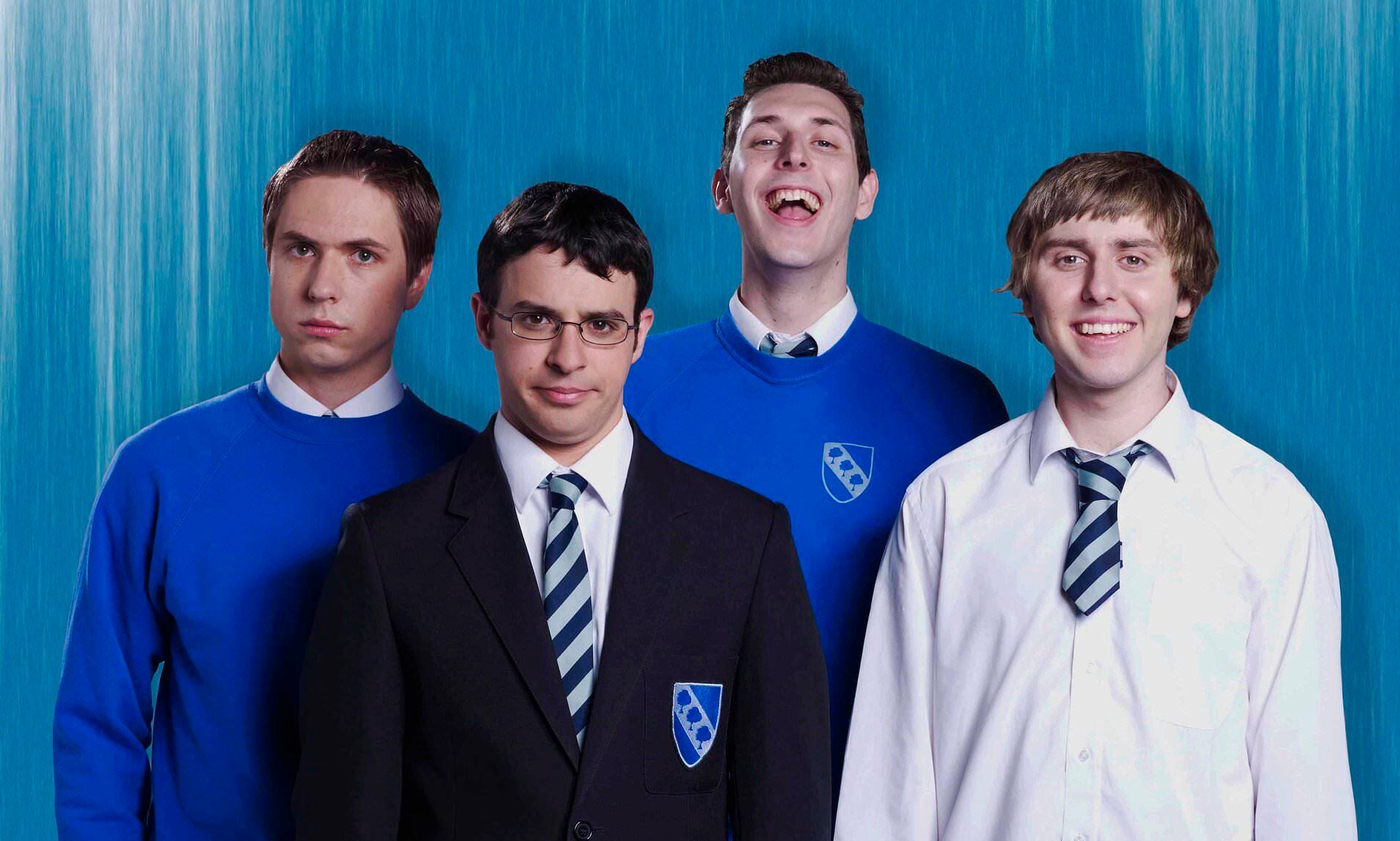
The actor played sex-mad fibber Jay in the beloved E4 sitcom about a group of hapless sixth form students between 2008 and 2010, before reprising the role in two subsequent films.

However, while James described playing Jay as “the best job” in the world, he explained he doesn’t want to spoil a “universally loved” show.

During an interview with Chris Moyles on Radio X, James said: “I don’t want to go near it anymore, not because I don’t think I would have an amazing time doing it, because I know I would.

“I love the boys, I love the writers. Doing The Inbetweeners was the best job in the world.

“All we did was muck around all day long and they filmed us doing it, and, at the end of the day, we might have had an episode … or a film or something.

“But it might – you know, as I’m getting older – it’s looking like it might be the only thing that I do professionally that is universally loved.

“There’s not enough money in the world for me to spoil that.”

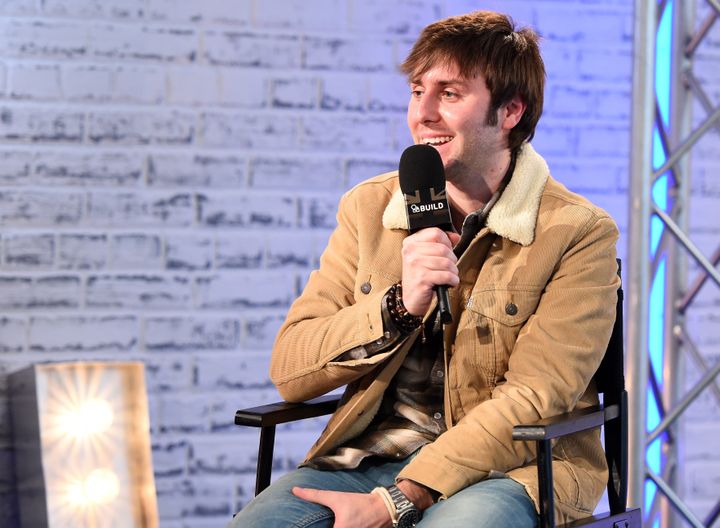
James Buckley
James Buckley

Eamonn M. McCormack via Getty Images

James also admitted he knows he will probably always be known as Jay from The Inbetweeners.

“As an actor, it’s difficult professionally for me to move away from that character,” said James, who has also starred in the likes of Only Fools And Horses spin-off Rock & Chips and Doctor Who and is currently appearing in West End play 2:22 A Ghost Story.

“But you can’t have it all, can you? You can’t be in a big hit sitcom and then moan about it after!”

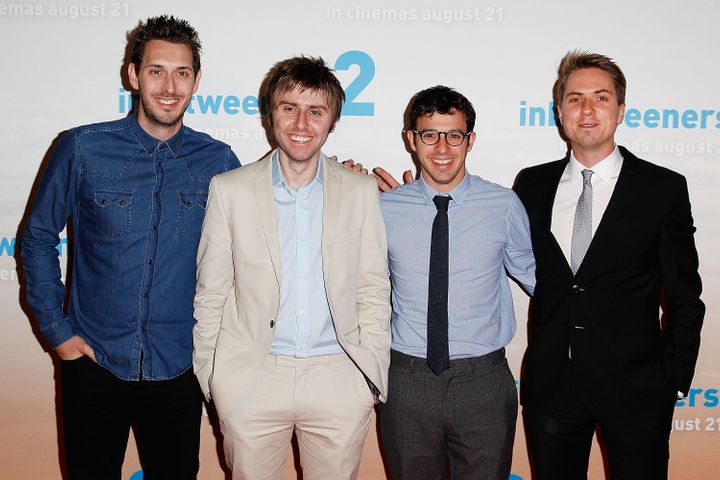
(L-R) Blake Harrison, James Buckley, Simon Bird and Joe Thomas arrive at the premiere of The Inbetweeners 2 in 2014

Brendon Thorne via Getty Images

James and his former co-stars Simon Bird, Joe Thomas and Blake Harrison reunited in 2019 to mark the 10th anniversary of The Inbetweeners with a one-off non-scripted special titled Fwends Reunited.

However, the episode was panned by fans of the show, while James himself issued an apology shortly afterwards to those who felt “let down”.

He also shared the discomfort he experienced during filming it, he explained: “It became a thing that wasn’t a celebration of this good thing I did in my life, it was me being taken the piss out of for hours on end.

“I didn’t have the personality or the intelligence to cope with it, especially when you’re up against someone like Jimmy Carr, who’s super quick and super funny. So I come across as a complete moron through the whole thing.”

The Chris Moyles Show airs weekdays 6.30am to 10am and Saturday 8am to 11am on Radio X.

Share Button

Babies in England hospitals with Omicron as a precaution

The virus is causing some to develop fevers but not serious illness, experts say.

Share Button