
To destroy cancer cells, team ‘travels back in time’

When an individual suffers from cancer, the process of programmed cell death called apoptosis does not occur normally, permitting abnormal cells to thrive.

In a new study, Clay Clark, chair and professor of biology at The University of Texas at Arlington, explores the ancestry of a class of enzymes responsible for killing cells. These enzymes, known as effector caspases, provide insight into the process of cell death and how it can be manipulated in disease states.

“If drug developers want to target a cancer cell, they could activate the caspases to perform their normal function of killing cells,” Clark said. “But we first need to isolate the caspases of cancer cells and not alter their activity in normal cells. The question is, how can we target the activity of the tumor cell without disturbing its healthy neighbors.”

The study, “Evolution of the folding landscape of effector caspases,” appears in the Journal of Biological Chemistry. In it, Clark and co-author Suman Shrestha, UTA alumnus and postdoctoral fellow at Princess Margaret Cancer Center, look to the past for answers.

Cells have had effector caspases since organisms called eukaryotes emerged more than a billion years ago. Over time, the caspases evolved from one to 12 proteins that serve various functions during cell growth and division. To understand their evolution, Clark’s laboratory used a computational method called ancestral state reconstruction to recreate a 650-million-year-old protein sequence of an ascendant of caspases 3, 6 and 7.

Caspases are the central components of apoptosis. In cancerous states, cells turn off caspases and circumvent the cell death process. A goal of Clark’s research is to understand how effector caspases work in healthy conditions. Once the proteins’ normal function is understood, Clark’s team could discover methods to activate them in disease states to destroy abnormal cells while preserving healthy ones.

By examining the ancestor’s characteristics and tracing the protein’s evolution into multiple members, Clark’s team discovered commonalities and differences among caspases 3, 6 and 7 that could allow for the isolated activation of proteins in tumor cells without disrupting the activity of healthy cells.

Morteza Khaledi, dean of the College of Science, said the results of the study will advance humanity’s battle to mitigate the effects of cancer.

“By employing the innovative methods of ancestral state reconstruction, Dr. Clark’s team has discovered vital information about the essential building blocks for healthy human bodies,” Khaledi said. “The knowledge uncovered in this study provides another weapon in our fight against cancer.”

Story Source:

Materials provided by University of Texas at Arlington. Original written by Linsey Retcofsky. Note: Content may be edited for style and length.


Share Button

Chemical commonly found in consumer products may disrupt a hormone needed for healthy pregnancy

Exposure to phthalates — a group of chemicals found in everything from plastics to personal care products to electronics — may disrupt an important hormone needed to sustain a healthy pregnancy, according to a Rutgers study.

The study, which appears in Environment International, was among the first to examine the impact that phthalates, added to plastics to increase flexibility, have on the placental corticotropin releasing hormone (pCRH) that is produced by the placenta and increases throughout the course of pregnancy. The hormone plays an important role in promoting the onset of labor, but when levels are high or rise rapidly earlier in pregnancy, it may contribute to preterm birth and fetal growth problems as well as high blood pressure, diabetes, and postpartum depression.

“We are all exposed to phthalates in our environment through the products we use and the foods we eat,” says Emily S. Barrett, an associate professor at the Rutgers School of Public Health and member of the Environmental and Occupational Health Sciences Institute. “Our findings show that these chemicals may alter the production of essential placental hormones, which has important implications for the course of pregnancy as well as subsequent child health and development.”

The researchers analyzed data from 1,018 low-risk pregnant women carrying single fetuses at two time points, mid- and late pregnancy.

They found that the presence of various phthalates was associated with higher pCRH hormone levels in mid-pregnancy, but lower pCRH later in pregnancy. These levels were strongest in women who developed pregnancy complications like gestational diabetes and high blood pressure, suggesting that women who develop complications may be particularly vulnerable to this hormonal disruption. This is among the first and largest study so far to examine how these chemicals and the connection with pCRH disrupt the function of the endocrine system, which is especially delicate during pregnancy.

“Associations between phthalates and pCRH among women with pregnancy complications grew stronger across the course of pregnancy. We know very little about how women with pregnancy complications are affected by environmental exposures. This study sets the stage for future research in that area,” Barrett said.

pCRH produced by the placenta is identical in structure to corticotropin-releasing hormone (CRH) produced by the brain when responding to stress. While this study did not find that women who had experienced childhood traumas were any more vulnerable to the hormone-disrupting effects of phthalates, earlier research found that pCRH levels were higher in women who have experienced childhood trauma suggesting that traumatic events may impact pregnancy decades later.

Story Source:

Materials provided by Rutgers University. Original written by Michelle Edelstein. Note: Content may be edited for style and length.

Share Button

RSV: Parents should be alert to symptoms of common winter virus

As with Covid, most children have mild symptoms but a small number need hospital treatment.

Share Button

Covid: Quebec to impose health tax on unvaccinated Canadians

The unvaccinated represent 15% of the population, but over half of all hospital admissions.

Share Button

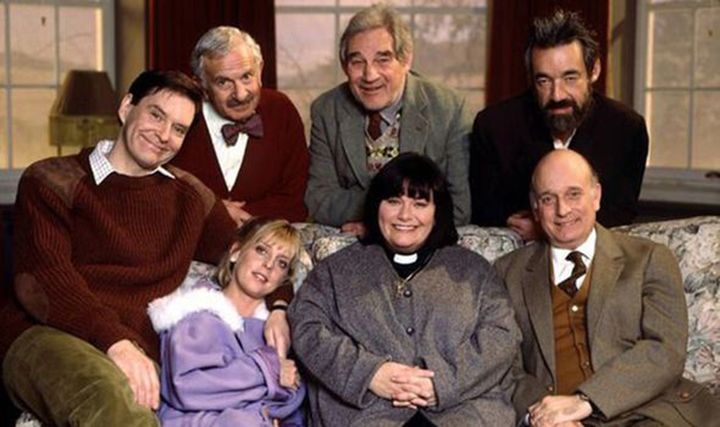
Vicar Of Dibley Star Gary Waldhorn Dies, Aged 78

Gary Waldhorn, one of the stars of sitcom The Vicar Of Dibley, has died at the age of 78.

The actor was best known for his role as councillor David Horton on the BBC show, which stared Dawn French in the title role.

Gary’s son Josh said he “peacefully passed away” on Monday morning.

In a statement, he said (via PA Media): “Classically trained, it was the theatre where he truly flourished and he leaves a legacy of entertainment that saw him frequent the boards of Broadway, the West End and our living rooms on the telly!

“He leaves behind his two grandsons, Cooper and Bayley, and his son Josh. We will all miss him terribly.”

Gary (centre) filming a Comic Relief special of The Vicar Of Dibley in 2007

Comic Relief via Getty Images

Gary appeared on every episode of The Vicar Of Dibley, in all three seasons of the show and its numerous specials between 1994 and 2007.

He made his last appearance as David in a 2013 Comic Relief short.

Gary’s other TV credits included The Sweeney, Brush Strokes and Hotel Babylon, and he even featured in comedy sketch show French And Saunders.

He also provided voiceovers for adverts including for Green Flag, Kwik Fit, Branston and Marmite.

Gary was an accomplished Shakespearean actor and had performed with the Royal Shakespeare Company including in Much Ado About Nothing.

In a statement, BBC Comedy said of his death: “Gary was an incredibly talented actor who is fondly remembered by us for his numerous appearances on some of the nation’s most treasured BBC shows, and of course as councillor David Horton in The Vicar Of Dibley.

“Our thoughts are with his family and friends at this difficult time.”

(Front L-R) James Fleet, Emma Chambers, Dawn French, Gary Waldhorn (Back L-R) John Bluthal, Trevor Peacock and Roger Lloyd-Pack

Many other stars of The Vicar Of Dibley have died in recent years.

Owen Newitt actor Roger Lloyd-Pack died in 2014 and Liz Smith, who played Letitia Cropley, died in 2016.

Emma Chambers, who played Alice Tinker, died in 2018, as did John Bluthal who appeared as Frank Pickle, while Trevor Peacock, who played Jim Trott, died last year.

Share Button

Parody Video Tears Into Boris Johnson’s Feeble Response About No.10 Party

Comic Rosie Holt mimicked Boris Johnson’s evasive answers over the allegedly Downing Street party in a sharp parody sketch.

Holt mocks the way the government has dodged any questions about the supposed drinks party which allegedly took place on May 20, 2020 in No.10′s garden, while the rest of the country was under a strict Covid lockdown.

Using the original questions a Sky News reporter asked the prime minister about the party, Holt posed as an MP who “doesn’t know whether she attended” the drinks event in an online sketch.

Pretending to respond to a question about being at the party on May 20, 2020, Holt said: “Well all that, as you know, is subject to an investigation with Sue Gray so until that report is completed, your guess is as good as mine.

“I don’t know if I attended the party.”

Holt continued: “It’s the age old question: If a tree falls in a forest, but no-one’s there to hear it, does it make a sound?

″If there was a party in lockdown when we told everyone they couldn’t even attend funerals, but no-one knew about it, was there a party?

“And Sue Gray is tasked with answering this philosophical question.

“You know, it’s very hard because hypothetically, I could think, “Oh, back in May 2020, I was there with my Rose that I’d got on the way […] with my sausage roll, looking at 40-50 people thinking, ‘ah is this wrong?’

“Well I’m not going to know that until people find out about it and I’m being made to explain myself about it. Hypothetically.”

She continued: ”Until the investigation with Sue Gray has been completed, I won’t know if I’ve been interviewed by Sue Gray…so….”

The video accumulated more than 4,000 likes on Twitter less than an hour after it was posted.

Holt was mocking Johnson’s bizarre interview with a Sky News reporter on the same topic earlier this week.

When asked if he and his wife Carrie attended a No.10 party organised by Martin Reynolds – the prime minister’s principle private secretary – on May 20, 2020, Johnson smiled.

He said it was all “subject to a proper investigation by Sue Gray”.

When pressed again, he started laughing a little and repeated his response.

It’s not only Holt who has mocked this response – especially as both housing secretary Michael Gove and health minister Ed Argar gave the same reply when asked about the same allegations.

Twitter has lit up in response to the so-called ‘partygate’:

Share Button

Bradley Walsh Reveals Why Lawyers Can Be Forced To Intervene On The Chase

Bradley Walsh has revealed that lawyers can often be forced to step in on the set of The Chase.

The presenter has hosted the hit ITV quiz show since it debuted in 2009, reading out all the questions as a team of players attempt to beat a professional quizzer, otherwise known as The Chaser.

In an interview with Radio Times, Bradley has told of how strict things are during filming if he stumbles on any words while posing the questions, especially during the Final Chase, where both sides are up against the clock to see who can give the most correct answers.

Bradley – who does not get to see the questions prior to asking them – said: “If there is a slight misread, I am stopped immediately – bang – by the lawyers.

“We have the compliance lawyers in the studio all the time. What you have to do is go back to the start of the question, literally on video tape where my mouth opens – or where it’s closed from the previous question – and the question is re-asked. It is stopped to the split second.

“It means no time is lost for either the contestant or the Chaser.”

Bradley with the team of Chasers

Bradley is also required to read the questions at a certain speed in the Final Chase, explaining: “You have to be at such a speed: if you’re a contestant and I go ‘what’s… the capital… of France… ’ they’d be dead and buried in thirty seconds.

“I have to make sure they get up to speed and they’re getting about 18 or 19 questions answered correctly.”

He calls that number of correct answers a “banana skin score” score that will trip the Chasers up and stop them getting into a rhythm when it is their turn in the hot seat.

“They can answer 24, 25 questions in two minutes. We’ve even almost reached thirty,” Bradley added.

Bradley takes 3.6 to 4 seconds to ask a question, and show bosses also use an independent professional monitoring firm called Beyond Dispute, to monitor the questions that are asked and ensure they are selected at random.

The Chase airs weekdays at 5pm on ITV. Read the full interview with Bradley Walsh in this week’s issue of Radio Times, on sale now.

Share Button

New drug combo identified for liver cancer via CRISPR-Cas9 screen

A research team of LKS Faculty of Medicine, The University of Hong Kong (HKUMed) has successfully repurposed an approved drug ifenprodil, a vasodilator, to be used in combination with the FDA-approved first-line drug sorafenib for hepatocellular carcinoma (HCC) treatment. This study leveraged on their CombiGEM-CRISPR v2.0 screening platform1 to expedite the search among the many possible drug combinations to inhibit druggable targets in the genome for treating HCC. The findings are now published in Cancer Research.

Liver cancer is the sixth most common cancer and the third leading cause of cancer related death worldwide. Despite the promising initial response to molecularly targeted therapies, tumours are often susceptible to developing drug resistance. It is no exception for sorafenib, the mainstay of treatment for HCC, and the available treatment options are very limited. Drug combination is a strategy for expanding options for cancer treatment to reduce the risk of drug resistance and tumour relapse that often arises in standalone treatment. The simplicity and precision of CRISPR-Cas9 that uses guide ribonucleic acids (RNAs) to knockout any genes in the genome make it a great tool to identify targets for potential drug discovery and development.

Utilising the screening platform of CombiGEM-CRISPR v2.0 to generate multiplexable gene knockouts, this study rapidly characterised the survival of cancer cells following dual-genetic knockouts in a pool of cells linked with DNA barcodes specifying the types of genetic alterations they carry. Instead of using conventional drug screening array that requires handling of numerous independent multi-wells, this platform only requires a simple experimental setup as the number of DNA barcodes carried by a large population of cells grown in the same culture dish could be counted in high volume via high-throughput sequencing technologies. Through screening genes and their combinations from which hits can be translated directly into drug combinations using existing drugs, non-conventional drugs and drug combinations could be discovered and repurposed for treating cancers.

Through a combinatorial CRISPR-Cas9 screen focusing on a set of druggable targets of which their expressions are upregulated in HCC cancer stem cells, the HKUMed research team identified two combinations harbouring a common target known as NMDAR1 and its paired targets are two kinases (FLT4 and FGFR3) of which both their corresponding drug inhibitor is the first line sorafenib. Specifically, genetically ablation of the identified gene combinations inhibits HCC cells’ growth and self-renewal ability. Based on The Cancer Genome Atlas database, the research team also unveiled the clinical significance of NMDAR1 in HCC, where HCC patients with low level of NMDAR1 expression show better survival outcomes.

The team also revealed the enhanced inhibition effect of the corresponding drug combination and their underlying molecular mechanisms. Co-administration of ifenprodil and sorafenib remarkably reduced the cell growth and stemness in multiple HCC cell lines, patient-derived organoids and tumour xenograft models. Additionally, the team also showed that the upregulation of unfolded protein response, triggering of cell-cycle arrest, and downregulation of genes associated with WNT-signaling and stemness could account for the enhanced effects of the drug combination.

Ifenprodil has been used as a vasodilator in countries including Japan and France with known safety history in humans. Combined with the first line sorafenib, the HKUMed research team has successfully demonstrated this two-drug regimen profoundly suppressed HCC cells’ growth and self-renewal ability.

‘Successful drug repurposing saves the cost and time that otherwise would be needed for developing new therapeutic agents with uncertain efficacy and safety profile. It also increases the chance of clinical translation of the findings from bench to bedside as the identified drug combination could be readily tested in future trials for treating HCC. Our work has identified a potentially useful drug combination to be further tested for the treatment of HCC patients from approved drugs, which could possibly save or prolong patients’ life,’ said Dr Stephanie Ma, Associate Professor of the School of Biomedical Sciences, HKUMed, who co-led the study.

‘The application of the CombiGEM-CRISPR v2.0 platform has broadened our scope in search for effective combinations of actionable targets and approved/repurposed drugs for HCC in a rapid and simple manner, and could be extended to other cancers and diseases,’ added Dr Alan Wong Siu-lun, Assistant Professor of the School of Biomedical Sciences, HKUMed, who co-led the research.

Story Source:

Materials provided by The University of Hong Kong. Note: Content may be edited for style and length.
Share Button

Hidden order in windswept sand

Researchers have analyzed an extensive collection of sand samples from so-called megaripple fields around the world and gained new insights into the composition of these sand waves. These could help settle debates about the mechanistic origin of some recently discovered enigmatic extraterrestrial sand structures and improve our ability to infer information about past weather and climate events from sediment records.

Megaripples are sand waves with wavelengths in the metre range, between ordinary beach ripples (centimetres) and dunes (ten to 100 metres). They are commonly found on earth and Mars. Their sand consists of a unique mixture of coarse and fine grains. “This mixture always looks similar, but is never identical because of the turbulent winds,” explained Professor Klaus-Dieter Kroy of the Institute of Theoretical Physics at Leipzig University, one of the study’s leaders.

Among this diversity, the interdisciplinary team of geomorphologists and physicists from three universities in Germany, Israel and China has now discovered an unexpectedly uniform characteristic of the underlying sand transport process, one that had previously eluded decades of field studies. In their analysis of sand sample data from around the world, the researchers compared the frequencies of all sizes of shifting grains and divided the diameter of the coarsest grains and of the rarest fine grains for each sample. A surprisingly consistent number emerged, as Kroy pointed out. That number can now be used to decide more reliably which category newly discovered sand ripples belong to — as predicted by the team’s theoretical calculations — and by which physical transport process they were formed.

The international team also hopes that its discovery could help in the future to better explain the formation of some mysterious new sand waves recently observed on Mars. Katharina Tholen, a doctoral researcher at Leipzig University and lead author of the study, said: “If we were able to use prevailing atmospheric conditions to explain the origin and migration of terrestrial and extraterrestrial sand waves, this would be an important step. It might then be possible to evaluate the sand structures we are currently observing, for example on Mars or in fossils and remote locations on earth, as complex archives of past climatic conditions.”

Story Source:

Materials provided by Universität Leipzig. Note: Content may be edited for style and length.

Share Button

Within a dinosaur’s head: Ankylosaur was sluggish and deaf

Ankylosaurs could grow up to eight meters in body length and represent a group of herbivorous dinosaurs, also called ‘living fortresses’: Their body was cluttered with bony plates and spikes. Some of their representatives, the ankylosaurids sometimes possessed a club tail, while nodosaurids had elongated spikes on their necks and shoulders. However, some aspects of their lifestyle are still puzzling.

While many dinosaurs likely lived in groups, at least some ankylosaurs seemed to prefer a lonesome life because of an inferior sense of hearing. That’s what the scientists from the universities of Greifswald and Vienna concluded when they examined the braincase of the Austrian dinosaur with a high-resolution computer tomograph to produce a digital three-dimensional cast.

Fossil braincases, which once housed the brain and other neurosensory tissues, are rare but important for science because these structures can provide insights into the lifestyle of a given animal. For example, the inner ears can hint to auditory capacities and skull orientation.

Struthiosaurus austriacus is a comparably small nodosaurid from the Late Cretaceous (80 Ma) of Austria and comes from a locality near Muthmannsdorf, south of Vienna. The fossil remains of this dinosaur already belonged to the collection of the Institute for Paleontology in Vienna in the 19th century. For their study, Marco Schade (University of Greifswald), Cathrin Pfaff (University of Vienna) and their colleagues examined the tiny (50 mm) braincase to reveal new details of the anatomy and lifestyle of Struthiosaurus austriacus. With these data, it was possible to learn more about its sense of equilibrium and audition.

The results of this study show that Struthiosaurus’ brain was very similar to the brains of its close relatives. For example, the flocculus, an evolutionary old part of the brain, was very small. The flocculus is important for the fixation of the eyes during motions of the head, neck and whole body, which can be very useful if such an animal was trying to target potential competitors or aggressors. “In contrast to its Northamerican relative Euoplocephalus, which had a tail club and a clear flocculus on the brain cast, Struthiosaurus austriacus may rather relied on its body armor for protection,” says Marco Schade. Together with the form of the semicircular canals in the inner ear, this hints towards an exceptionally sluggish lifestyle of this Austrian plant eater. Furthermore, the scientists found the — so far — shortest lagena of a dinosaur. The lagena is the part of the inner ear where audition takes place and its size can help to infer auditory capacities. This study delivers new insights into the evolutionary history of dinosaurs and their world, in which Europe was largely submerged in the ocean.

Story Source:

Materials provided by University of Vienna. Note: Content may be edited for style and length.

Share Button