A so-called Super Green Pass will be needed to access theatres, cinemas and restaurants.


A so-called Super Green Pass will be needed to access theatres, cinemas and restaurants.
More funding is needed to prepare for pandemics and prevent gains from being lost, Dame Sarah Gilbert says.
The return of pre-departure Covid tests for travellers to the UK will come into force on Tuesday.
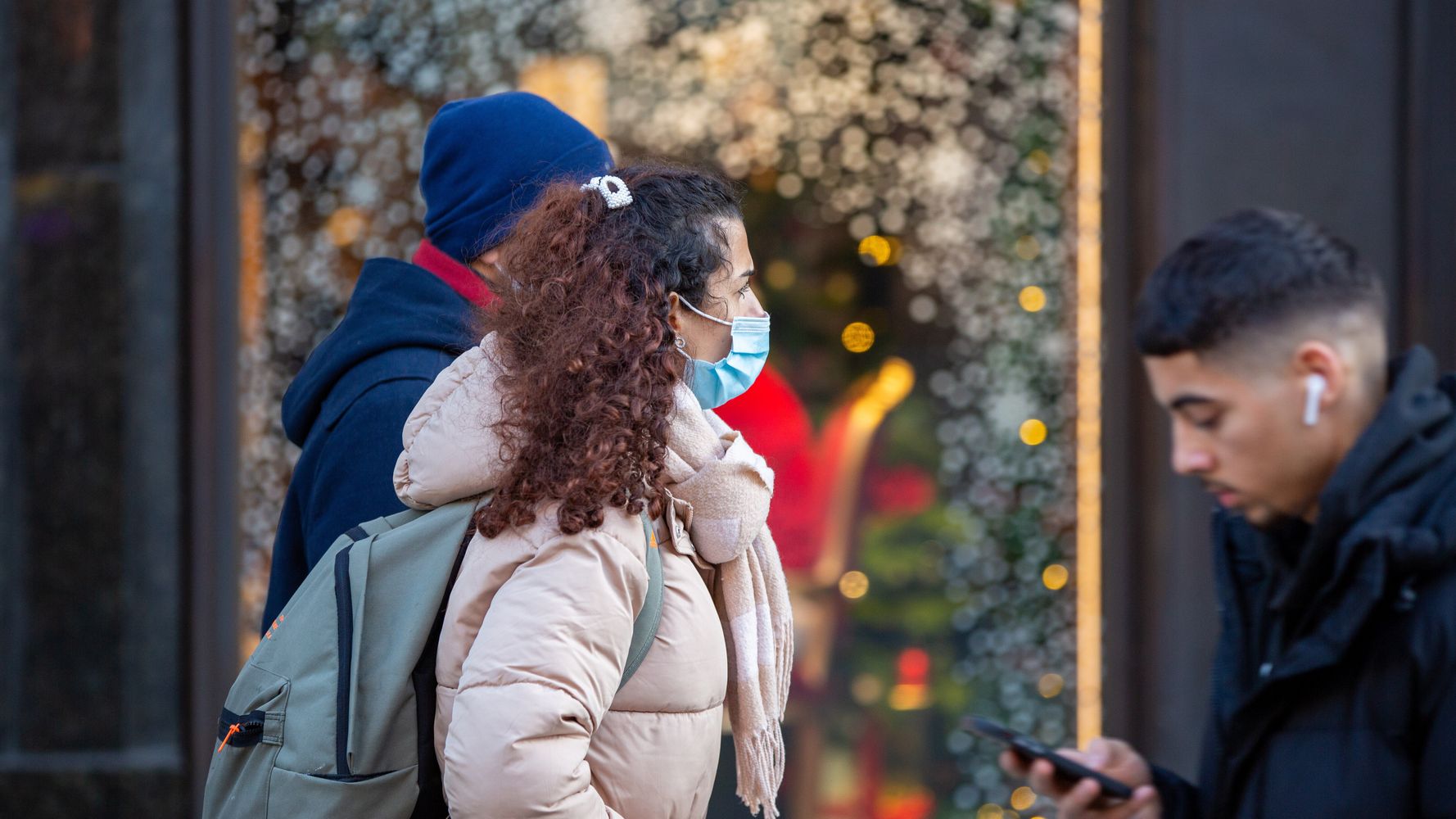
It is “too late” to effectively halt the spread of the Omicron variant in the UK, a government science adviser has warned.
On Saturday, it was announced all travellers arriving in England will be required to take a Covid pre-departure test from Tuesday – while Nigeria is being added to the government’s travel red list.
Advertisement
Ministers said the extra test was intended to be a temporary measure following new data showing an increase in the number of cases of the new strain linked to foreign travel.
But Professor Mark Woolhouse, who is a member of the Scientific Pandemic Influenza Group on Modelling (Spi-M) which advises the government, said the measures would not make a “material difference” as the variant is already “spreading pretty rapidly”.
Advertisement
He told BBC One’s Andrew Marr Show on Sunday: “I think that may be a case of shutting the stable door after the horse has bolted.
“If Omicron is here in the UK, and it certainly is, if there’s community transmission in the UK, and it certainly looks that way, then it’s that community transmission that will drive a next wave.
Advertisement
“The cases that are being imported are important, we want to detect those and isolate any positive cases we find, as we would for any case anywhere.
“But I think it’s too late to make a material difference to the course of the Omicron wave, if we’re going to have one.”
The travel industry reacted with fury after the latest measures were announced, despite ministers insisting they were only “temporary”.
Dominic Raab told Sky News’s Trevor Phillips On Sunday programme: “I know that is a burden for the travel industry but we have made huge, huge strides in this country.
Advertisement
“We have got to take the measures targeted forensically to stop the new variant seeding in this country to create a bigger problem.
“We have taken a balanced approach but we are always alert to extra risk that takes us back not forward.”
Woolhouse said although the numbers of people with the Omicron variant are “still quite small” and likely remain in the hundreds, they are “growing quite fast”.
However, he insisted that vaccinations will still be “very, very good” at protecting against the new variant.
Statistician David Spiegelhalter told Sky News’s Trevor Phillips On Sunday programme: “It’s a very difficult situation because we haven’t got a lot of data yet at all, almost nothing from this country about what the risks are.
“In South Africa there’s data coming out showing pretty strong evidence that the increased risk of transmission and some evidence about people going to hospital, but it may actually be milder but we haven’t got enough data yet to be able to say.
“It doesn’t look as if it’s really severe if you get it, I think that’s about all we can say at the moment.”
Asked if measures to combat the spread of Omicron have gone far enough, Spiegelhalter added: “It’s best to be precautionary, when there’s so much we don’t know… and when we don’t know it’s better to be safe than sorry.”


Tom Holland may have played the superhero in Spider-Man: No Way Home, but it was Zendaya who helped her shorter co-star make a tricky landing.
During an appearance on The Graham Norton Show on Friday, the pair explained how their height difference made one stunt in particular more complicated to execute.
Advertisement
“Spider-Man swings us on top of a bridge and he places me there. … So he’s supposed to gently rest MJ [Zendaya] on the bridge and walk away from her,” Zendaya said.
But according to the Euphoria actor, who is taller than Tom, the two were attached together for the stunt and she would land on the ground before he did.
Advertisement
Tom then joked that although he plays the superhero and is “supposed to look cool,” Zendaya would land on the ground first while his feet would swing from underneath him.
“And then she would catch me,” he continued, as the two stood up to demonstrate how the landing played out during filming.
Advertisement
Zendaya said Tom was “lovely” about the whole thing. (See the clip below.)
Outside of discussing their landing techniques for action films, the two remain relatively private about their personal lives ― especially their long-rumored romance.
Tom did discuss their off-screen relationship in a cover story for GQ’s Men of the Year issue last month, saying that fame has robbed them of their privacy.
The actor addressed paparazzi photos published over the summer that showed the pair kissing at a traffic light in Los Angeles.
Advertisement
“A moment that you think is between two people that love each other very much is now a moment that is shared with the entire world,” he said.
But Tom didn’t divulge much further, explaining that it wasn’t his story to tell.
“It’s our story,” he said.
Spider-Man: No Way Home hits cinemas on 17 December.



Research published in the journal Anatomical Record finds that humans have more in common with endangered crocodiles than we think — namely, a deviated septum.
Gharials are some of the rarest crocodylians on Earth and members of a group of animals that once roamed the planet with the dinosaurs. Native to India, gharials resemble American alligators and crocodiles, but with bulging eyes and an extremely long and thin snout that allows them to cut through water when hunting prey. In males, this snout houses an even longer nose that ends in an enlarged bulb.
At first glance, these unusual animals appear to have little in common with humans. However, a new study led by Jason Bourke, Ph.D., assistant professor of basic sciences at the College of Osteopathic Medicine at Arkansas State University (NYITCOM-Arkansas), reports that — just like humans — gharials suffer from nasal septal deviation.
The Cleveland Clinic estimates that up to 80 percent of people have a deviated septum, a condition in which the nasal cartilage is “off-center.” While the condition is mild in most individuals, larger deviations can restrict nasal breathing and require reconstructive surgery.
Bourke and his colleagues are the first to document deviated nasal septa in crocodylians. Using medical imaging technology, they analyzed the heads of multiple gharial specimens, including that of a large female from the Fort Worth Zoo nicknamed “Louise,” which fueled their curiosity.
“This weird nasal septum was an unexpected discovery,” said study co-author Casey Holliday, Ph.D., associate professor of pathology and anatomical sciences at the University of Missouri, who initially scanned the specimen for a separate project on gharial anatomy. “I saw this roller coaster of a septum and wondered what this might mean for respiration.”
Holliday shared Louise’s extreme anatomy with Bourke, a vertebrate paleontologist whose lab specializes in modeling fluid dynamics in animal noses using sophisticated computer software that simulates air movement.
“We know remarkably little about normal gharial anatomy, much less their pathology. I couldn’t pass up such a unique opportunity,” said Bourke, who has also studied nasal airflow and thermoregulation in dinosaurs.
Intrigued, Bourke and the team began collecting samples from other gharial specimens housed in zoos around the country. While some specimens showed minor septal deviations, Louise had the most extreme case.
Like humans who experience severe nasal septum deviation, Louise had to work harder to achieve the same breathing rate as her peers. This produced high shearing stresses along the nasal walls, which may have made the animal more prone to nosebleeds. Despite the physiological challenges produced from this nasal pathology, Louise successfully made it to adulthood and lived to the ripe old age of 50.
“It’s a testament to crocodylian resiliency,” said Bourke. “A human with this pathology would need surgery to fix it, but these critters just keep on going.”
In contrast to humans, the researchers found that gharial septal deviation comes with a unique twist. “When the septum deviates in humans, a part or all of the septum bows into one of the airways,” said Nicole Fontenot, fourth-year NYITCOM student, and study co-author. “In our gharials, the septum is so long that it wiggles back and forth along the snout, creating a wavy pattern.”
While this pathology is not found in other modern crocodylians, in the distant past, many other animals showed similarly stretched-out noses, including crested, duck-billed dinosaurs like Parasaurolophus and strange crocodile-mimicking reptiles known as champsosaurs. Bourke suspects that at least a few of them would have also suffered from nasal septum deviations. As for why other crocodylians don’t seem to be as prone to these deviated noses, Bourke explains:
“Other crocodylians have wider snouts with much thicker nasal septa. Thinning out the snout places a premium on space inside the nose. Gharials’ long and very thin nasal septa probably don’t need much to make them start wobbling.
Next, the researchers will continue their investigation by examining the sound-producing abilities of gharials’ unique noses.

In a first-of-its-kind study, researchers at the UC Davis School of Medicine found that probiotics significantly improve the symptoms of pregnancy-related nausea, vomiting and constipation. The findings were published in the journal Nutrients.
Nausea and vomiting affect about 85% of pregnancies and can significantly impact quality of life, particularly during early pregnancy.
“The cause of nausea and vomiting during pregnancy is unknown to this date. Various theories have been proposed, but none of them is conclusive,” said Albert T. Liu, lead author for the study and a professor of obstetrics and gynecology.
“Nausea, vomiting and constipation during pregnancy can significantly diminish the quality of patients’ lives. Once nausea and vomiting during pregnancy progress, they can become difficult to control, and sometimes the patient even needs to be hospitalized,” Liu said.
Beneficial microbes
Probiotics are referred to as “beneficial bacteria.” They can be found in foods like yogurt, kimchi, kefir, sauerkraut and tempeh. Probiotics are also available as food supplements. According to the National Center for Complementary and Integrative Health, other than vitamins, probiotics or prebiotics were the third most commonly used dietary supplement for adults.
Probiotics are thought to support the community of different microbes, often referred to as the “gut microbiome,” found in the gastrointestinal tract.
During pregnancy, hormones like estrogen and progesterone increase, bringing about many physical changes. These increases can also change the gut microbiome, which likely affects the digestive system functions and causes unwanted symptoms like nausea, vomiting and constipation.
The researchers set out to determine whether supplementing with a probiotic could be beneficial for gastrointestinal function during pregnancy.
The study lasted for 16 days. A total of 32 participants took a probiotic capsule twice a day for six days and then took two days off. They then repeated the cycle.
The probiotics were available over-the-counter and mainly containedLactobacillus., a type of good bacteria. Each capsule contained approximately 10 billion live cultures at the time of manufacture.
Participants kept 17 daily observations of their symptoms during the duration of the study, for a total of 535 observations for the researchers to statistically assess.
What the researchers found was that taking the probiotic significantly reduced nausea and vomiting. Nausea hours (the number of hours participants felt nauseous) were reduced by 16%, and the number of times they vomited was reduced by 33%. Probiotic intake also significantly improved symptoms related to quality of life, such as fatigue, poor appetite and difficulty maintaining normal social activities, as scored by questionnaires.
Probiotics were also found to reduce constipation significantly.
“Over the years, I’ve observed that probiotics can reduce nausea and vomiting and ease constipation. It’s very encouraging that the study proved this to be true,” said Liu. “Probiotics have also benefited many of my other patients who weren’t in the study,” said Liu.
New clues from gut microbes and byproducts
Participants also contributed fecal specimens before and during the study. The samples were analyzed to identify the type and number of microbes and the different byproducts of digestion.
This allowed the researchers to examine whether biomarkers in the fecal specimens corresponded with more severe nausea and assess how the probiotics affected participants who began the study with different baseline biomarkers.
One finding was that a low amount of bacteria that carry an enzyme named bile salt hydrolase, which generates bile acid to absorb nutrients, was associated with more pregnancy-related vomiting. Probiotics increase bile salt hydrolase-producing bacteria, which may explain why the supplements decreased levels of nausea and vomiting.
Another finding was that high levels of the gut microbes Akkermansia and A. muciniphila at the beginning of the study were associated with more vomiting. The probiotic significantly reduced the amount of those particular microbes and also reduced vomiting. This suggests Akkermansia and A. muciniphila may be reliable biomarkers that can predict vomiting in pregnancy.
Another finding was that vitamin E levels increased after taking probiotics. Higher levels of vitamin E were associated with low vomiting scores.
“This research provides key insights about the impact of gut microbes on gastrointestinal function during pregnancy. Our gut microbiota explains why we are what we eat, and why bacteria-generated metabolites and products have a huge impact on our health,” said Wan. “They affect the gastrointestinal tract as well as skin health and neurological function.”
Although the findings are intriguing, the researchers caution that due to the small sample size, further studies will be needed to confirm the effects of the probiotics.
“Our previous work showed the benefits of probiotics in preventing liver inflammation. The current study might be one of the first to show the benefits of probiotics in pregnancy,” said Wan. “It would be interesting and important to further test whether probiotics can reduce nausea and vomiting caused by chemotherapy in cancer patients.”
Additional authors on this study include Shuai Chen from the Department of Public Health Sciences, and Prasant Kumar Jena, Lili Sheng and Ying Hu from the Department of Pathology and Laboratory Medicine at the University of California, Davis.

Business leaders and management experts often encourage people to speak up in the workplace. Suggesting a creative idea or a more efficient way to work can help companies overcome challenges and meet goals. But new research shows another, more subtle and often overlooked form of speaking up has a big effect on the way work gets done and how teams come together.
“What we say within a group, the ideas we suggest and the way we support others, signals something about who we are to our coworkers. It can attract people to us or repel them,” said Melissa Chamberlin, assistant professor of management and entrepreneurship at Iowa State University, and co-author of a paper recently published in Journal of Management.
In the paper, Chamberlin and her research team demonstrate how two different ways of communicating work-related issues shape reputations and affect the formation of teams to complete short-term projects. They found people who use “supportive voice,” which fuels trust and cooperation, have a higher chance of being recruited to a team compared to those who use a more task-oriented “challenging voice.”
Challenging voice pushes back against the status quo and offers ideas for improvement. While it has some downsides, such as perceived criticism or conflict, challenge voice tends to signal an employee’s competence or expertise. Chamberlin said managers, especially in dynamic and fast-paced industries, often value this communication behavior as something that can help teams complete tasks efficiently and effectively.
“Supportive voice is still about speaking up in the workplace, but it’s looking at what’s going well in the group or team. It might defend the status quo by saying there’s value in what the team is already doing,” said Chamberlin.
Supportive voice signals someone’s approachability and trustworthiness. It fosters strong interpersonal relationships, which Chamberlin said affects a team’s ability to communicate and coordinate efforts in order to reach goals.
To understand the effects of the two communication behaviors on team formation, the researchers collected data from a cohort of full-time, first-year Master of Business Administration students over a four-month period. The students were periodically assigned to different teams to complete projects and then asked to rate fellow team members’ use of challenging and supportive voice, quality of work, reputation and trust. Near the end of the study, students were allowed to assemble into teams without any direction from the MBA office.
The study results revealed students who ranked high on challenging voice built a reputation for conducting high-quality work, but students preferred to work in teams with those who frequently used supportive voice. Chamberlin said the results were surprising.
“Because challenging voice is the predominant form of speaking up we encourage in classrooms and as managers, we thought it was going to be strong driver of people selecting team members later. But as it turns out, this more supportive voice that helps establish relationships and a sense of trust amongst individuals in the group was more important,” Chamberlin said.
The researchers pointed out that having both types of voice would be ideal, but between the two, supportive voice was a stronger driver of team formation.
Chamberlin said the paper’s findings could help employees realize the way they speak up can have a strong effect on informal teaming up at a later point and help them move into leadership roles. As for managers, Chamberlin said the results could encourage them to foster and provide space for more supportive voice by coaching this type of behavior and rewarding employees who speak up supportively.
“There might be times that challenging voice reigns supreme but other situations where supportive voice becomes more critical for a team,” said Chamberlin. “Supportive voicers can keep teams together to make sure the work gets done.”
Story Source:
Materials provided by Iowa State University. Note: Content may be edited for style and length.
A senior GP says the move would support the “national priority” to vaccinate people quickly.

The Vogue singer made headlines last month with a provocative bedroom photoshoot taken in (and under) her bed.
Advertisement
50 Cent had reshared the snaps, including the one of her under the bed, comparing her to the Wicked Witch of the East from The Wizard of Oz, where Madonna’s legs where photoshopped under a house from film.
He added: “Starz ask me to do a remake, I said only if Madonna is gonna play the role because i need star power and sex appeal in this one.”
Advertisement
In another caption, he wrote: “That’s Madonna under the bed trying to do Like A Virgin at 63. She shot out, if she don’t get her old ass up.”
After his comments caught Madonna’s attention, she issued a scathing response on Instagram.
Advertisement
Posting on her Story, she wrote: “Here is 50 Cent pretending to be my friend. Now you have decided to talk smack about me!
“I guess your new career is getting attention by trying to humiliate others on social media, the least elevated choice you could make as an artist and an adult.
“You’re just jealous she won’t look as good as me or have as much fun when you’re my age! Too bad there are no sour grapes emojis.”
Madonna then posted a video of her with a green alien filter, where she added: “Cheer up, things could be worse, you could be me for instance. Personally, I like the way I look, but there are those that find it hard to appreciate people and things that are different.
Advertisement
“And they try to shame me or humiliate me or make me feel less than because I am not like everyone else.
“But in fact, I cherish my uniqueness and I’ve grown stronger because to be unique is to be rare.”
50 Cent has now issued an apology on Twitter, writing: “I must have hurt Madonna feelings, she went and dug up a old MTV photo from 03. Ok I’m sorry I did not intend to hurt your feelings.
“I don’t benefit from this in anyway I said what I thought when I saw the picture because of where I had seen it before I hope you accept my apology.”
50 Cent’s original posts no longer appear on his Instagram page.
Madonna previously called out Instagram for removing one of the photos from her photoshoot due to the fact that one of her nipples was exposed.
She fumed: “It is still astounding to me that we live in a culture that allows every inch of a woman’s body to be shown except a nipple. As if that is the only part of a woman’s anatomy that could be sexualised. The nipple that nourishes the baby!
“Can’t a mans nipple be experienced as erotic??!! And what about a woman’s ass which is never censored anywhere.”

