Fraternal twins Evan and Lizzy are enroled in Pfizer’s vaccine trial for children between ages five and 11.


Fraternal twins Evan and Lizzy are enroled in Pfizer’s vaccine trial for children between ages five and 11.
The findings come from one of the first surveys asking young people, rather than parents, their views.

Living or biological systems cannot be easily understood using the standard laws of physics, such as thermodynamics, as scientists would for gases, liquids or solids. Living systems are active, demonstrating fascinating properties such as adapting to their environment or repairing themselves. Exploring the questions posed by living systems using computer simulations, researchers at the University of Göttingen have now discovered a novel type of ordering effect generated and sustained by a simple mechanical deformation, specifically steady shear. The results were published in PNAS.
Understanding living systems, such as tissues formed by cells, poses a significant challenge because of their unique properties, such as adaptation, self-repair and self-propulsion. Nonetheless, they can be studied using models that treat them as just an unusual, “active” form of physical matter. This can reveal extraordinary dynamical or mechanical properties. One of the puzzles is how active materials behave under shear (the deformation produced by moving the top and bottom layers sideways in opposite directions, like sliding microscope cover plates against each other). Researchers at the Institute for Theoretical Physics, University of Göttingen explored this question and discovered a novel type of ordering effect that is generated and sustained by steady shear deformation. The researchers used a computer model of self-propelling particles where each particle is driven by a propulsion force that changes direction slowly and randomly. They found that while the flow of the particles looks similar to that in ordinary liquids, there is a hidden order revealed by looking at the force directions: these tend to point towards the nearest (top or bottom) plate, while particles with sideways forces aggregate in the middle of the system.
“We were exploring the response of a model active material under steady driving, where the system is sandwiched between two walls, one stationary and the other moving to generate shear deformation. What we saw was that at a sufficiently strong driving force, an interesting ordering effect emerges,” comments Dr Rituparno Mandal, Institute for Theoretical Physics at the University of Göttingen. “We now also understand the ordering effect using a simple analytical theory and the predictions from this theory match surprisingly well with the simulation.”
Senior author Professor Peter Sollich, also from the Institute for Theoretical Physics, Universiy of Göttingen, explains, “Often an external force or driving force destroys ordering. But here the driving by shear flow is key in providing mobility to the particles that make up the active material, and they actually need this mobility to achieve the observed order. The results will open up exciting possibilities for researchers investigating the mechanical responses of living matter.”
Story Source:
Materials provided by University of Göttingen. Note: Content may be edited for style and length.

A handheld screening device that detects subtle misalignment of the eyes accurately identifies children with amblyopia (lazy eye), according to a study published in the Journal of the American Association for Pediatric Ophthalmology and Strabismus.
“The findings suggest that pediatricians and other primary care providers could use the device to catch amblyopia at an early age when it’s easier to treat,” said Michael F. Chiang, M.D., director of the National Eye Institute (NEI), which supported research and development of the device. NEI is part of the National Institutes of Health.
Amblyopia is impaired vision in one eye and it is the leading cause of preventable monocular (single eye) vision loss, affecting three of every 100 children in the U.S.
During early childhood, our developing brains learn how to take images from each eye and fuse them into a single image to produce vision. Amblyopia develops when misalignment of the eyes (strabismus) or decreased acuity in one eye interferes with the brain’s ability to process visual information from both eyes, causing it to favor one eye. Once a child is visually mature, vision lost in the weaker eye cannot be corrected with glasses or contact lenses.
Children with amblyopia can suffer from poor school performance and impairments in depth perception and fine motor skills such as handwriting and other hand-eye coordinated activities.
Treatment of amblyopia generally involves placing a patch over the good eye to improve vision in the weaker eye. Patching is less successful as children get older, making early detection crucial. However, this depends on timely diagnosis by the child’s doctor, and most pediatricians are equipped only for basic eye chart vision screening tests, which are not useful for detecting amblyopia in very young children.
The screening device works by assessing the eyes’ ability to fixate together. Held 14 inches from the eyes, the child fixates on a smiley face while the device simultaneously scans both retinas. The scan involves a polarized laser that probes nerve fibers in an area of the light-sensing retina called the fovea, which is important for central vision. Even a subtle misalignment of the foveas — called small-angle strabismus — can interfere with the brain’s ability to integrate images from both eyes. The device calculates a binocularity score that indicates whether the child requires referral to an eye health physician for further investigation.
For the study, 300 children, ages 2 to 6 years, with no known eye disorders were recruited during previously scheduled visits to two Kaiser Permanente Southern California pediatric clinics.
Two non-ophthalmic research associates who were trained how to use the device screened each child, and the results were compared against those from an eye examination performed by a pediatric ophthalmologist who was unaware of the device’s results. The device detected all six cases (100% sensitivity) of amblyopia and/or strabismus that had been confirmed by the professional eye examination. The device also flagged an additional 45 children as possibly having amblyopia and/or strabismus who were later determined by the eye examination to be normal (85% specificity).
“In the hands of a trained user, it takes 28 seconds to sit the child down, perform the test, and record the results — provided that the child cooperates — which is an important consideration for its adoption in busy pediatric care settings,” said the study’s co-lead investigator, Shaival S. Shah, M.D., a pediatric ophthalmologist at Kaiser Permanente based in Tustin Ranch, California. The test itself requires just 2.5 seconds of a child’s attention.
A key limitation of the study was that the device was not compared with currently available photo-screening devices. Such devices detect differences in light reflexes in each eye and produce images that can help detect risk factors for amblyopia, but not amblyopia itself, which can result in both over and under detection of amblyopia.
By contrast, the pediatric vision scanner detects the presence of amblyopia as opposed to the risk factors of amblyopia, which may lead to fewer unnecessary referrals to pediatric ophthalmologists.
The pediatric vision screener tested in the study is a prototype of blinq. ®, a device that was cleared by the U.S. Food and Drug Administration in 2016.
The clinical trial identifier is NCT02536963. The study was supported by NEI grant R44EY025926 to Rebiscan, Inc. (doing business as Rebion), the Boston-based firm that markets blinq.®. Support was provided under the Small Business Innovation Research (SBIR) program, a funding mechanism that helps independently owned companies with 500 or fewer employees bring biomedical technologies to the market.
Co-founder of Rebion, David Hunter, M.D., Ph.D., ophthalmologist-in-chief at Boston Children’s Hospital, co-invented blinq.® with support from NEI grant R01EY012883.

Anthrax is an infectious bacterial disease endemic in some parts of Africa. It affects people, livestock as well as wildlife. Using GPS telemetry data, a team of scientists from the Cheetah Research Project of the Leibniz Institute for Zoo and Wildlife Research (Leibniz-IZW) reconstructed a special case of anthrax infection in Namibia: Three free-ranging cheetahs in the Namib Desert died within 24 hours after feeding on a mountain zebra that tested positive for the disease. The zebra is the first described case of a wild animal infected with anthrax in this arid region. The case also shows that there might be previously unknown risks to cheetah populations in the desert. It is described in detail in the scientific journal Frontiers in Veterinary Science.
Since 2015, scientists of the Leibniz-IZW Cheetah Research Project (CRP) conduct a National Cheetah Survey together with the Namibian Ministry of Environment, Forestry and Tourism (MEFT). The purpose is to obtain data on cheetah density and distribution across the country. Within this framework, a coalition of three cheetah males was captured in the Namib Desert and one animal equipped with a GPS collar. The recorded location and movement data were regularly downloaded during aerial tracking flights. On one of these flights, on October 5th 2019, the carcass of a collared cheetah — one of the members of the coalition — was located from the aircraft. During the following ground inspection, the other two cheetahs were also found dead. “The GPS data of the collared cheetah revealed that they died within a time window of six hours a few days before we found them,” says Ruben Portas, CRP scientist. “Evaluating their most recent movements, we identified a cluster of GPS locations approximately two kilometres away from the location where they were found dead.” At this spot the cheetahs spent 20 hours on the day before their death. When visiting this cluster, Portas found the carcass of an adult mountain zebra. The GPS and activity data from the collar suggested that the cheetahs fed on it. Bacillus anthracis, the cause of Anthrax infections, was isolated from buccal and nasal swabs collected from the dead zebra, making it the first confirmed anthrax infection in a wildlife species in the Namib Desert.
Carnivores are typically less susceptible to anthrax than herbivores. Cheetahs in particular have a high constitutive innate immunity which provides them with a rapid first line of defence against pathogens such as Bacillus anthracis. “However, when a high load of bacteria is ingested, for example with meat from a contaminated carcass, their potent constitutive innate immunity might be overloaded,” explains CRP project head Bettina Wachter. “Cheetahs scavenge only rarely, which reduces their exposure to anthrax infected prey. As a result, they do not produce high antibody titres, which would be another line of defence. Thus, cheetahs die quickly when infected, as studies in Etosha National Park in northern Namibia have shown.”
The pathogen was not detected in any of the three cheetahs found in the Namib, but the scientists consider it very likely that anthrax was the direct cause of their death. Bacterial cultures from highly susceptible animals that quickly die are often anthrax negative, because the animals might die already at a low presence of bacteria in the blood or from a high load of toxin released by Bacillus anthracis when destroyed by the immune system. Additionally, the vegetative form of the pathogen only develops when exposed to air quickly after the death of the host. The cheetahs were untouched for 11 days after their death and their bodies were not opened by scavengers, which might also explain the negative results of the lab tests for anthrax.
Anthrax is an unstudied disease in arid habitats. When wildlife dies in the Namib Desert, causes are often attributed to drought, hunger and the challenging desert conditions. “The few reported cases in which diseases such as anthrax were tested in the arid environments of Namibia are when livestock or people were directly affected,” says Portas. “We do not know the prevalence of anthrax in the Namib desert and how wildlife populations are affected by the disease. For other habitats, such as the Etosha National Park, there is a large body of research showing that anthrax has a key ecological role in the environment.”
This first confirmed case of anthrax in the Namib Desert in wildlife demonstrates that the disease might by endemic in the desert and other arid environments. Most of the Namib Desert is included in protected areas where cheetahs and other species find an important refuge from conflict with humans. Thus, this new knowledge may be important for assessing risks to the species. “Although few data are available, no other disease has shown such an impact on the cheetah population and certainly requires further research that may lead to appropriate conservation measures,” Wachter concludes. “This study shows that data recorded by GPS collars have the potential to disclose additional important information in addition to spatial movement information.”
Story Source:
Materials provided by Leibniz Institute for Zoo and Wildlife Research (IZW). Note: Content may be edited for style and length.
Testing and isolating low-risk patients before planned operations can be dropped, new advice says.
Strictly Come Dancing star Tom Fletcher is already looking ahead to his ballroom comeback, after being forced to miss this week’s upcoming live show due to Covid-19.
On Sunday evening, the BBC confirmed that Tom and his professional partner Amy Dowden had tested positive for coronavirus and would need to self-isolate.
Because of this, they will not be appearing in the second of this year’s live shows, but will be allowed to return to Strictly the following week.
Following the news, Amy shared a post on her Instagram page, assuring her followers that she was not experiencing Covid symptoms.

Guy Levy/BBC
“Unfortunately Tom and I have tested positive for Covid-19. I’m not suffering any symptoms but am now isolating at home,” she wrote.
“I have no doubt that over the next 10 days my mind will be going crazy with choreography ideas ready to get back on the Strictly dance floor for the live show in week three!
“Thank you for all of the support and good luck to all of the couples this week. I will be cheering you all on!”
Clearly keeping his spirits up, Tom – who had been on tour with his band McFly until he tested positive for Covid – then commented: “Rest up partner. We’ve got to pull something special out of the bag for week 3.”
A BBC spokesperson said: “Tom Fletcher and Amy Dowden have tested positive for Covid-19. The pair are now self-isolating separately following the latest government guidelines.
“While they will both miss Saturday’s live show, Strictly Come Dancing protocols mean that all being well, they will return the following week.”
Tom and Amy were the first of this year’s Strictly couples to perform on Saturday night, earning 21 points from the judges for their Cha Cha Cha routine.
Strictly Come Dancing returns on Saturday night at 6.45pm on BBC One.


House of Commons – PA Images via Getty Images
Matt Hancock was compared to the fictional character Alan Partridge after he uploaded an unusual video to Twitter on Saturday.
The former health secretary, who resigned after it emerged he breached social distancing guidelines by kissing his aide in June, has kept a relatively low profile over the summer as his marriage broke down.
Now the Tory backbencher appears to be re-emerging into the world of politics and posted a 50-second video online where he meets and greets his constituents in Haverhill.
With upbeat music in the background, Hancock looks slightly out of place as he fist-bumps one member of the public while another affectionately touches his face.
Safe to say, it didn’t go down very well online.
Anti-Brexit campaigner and writer Femi Oluwole commented: “150,000 people dead…the worst breach of Covid lockdown rules of the whole pandemic…
“And this guy (along with 100s of other Tories) is just going to stroll back into Parliament at the next election as if nothing happened because they’re in safe seats. #MakeVotesMATTER!”
150,000 people dead…
…the worst breach of Covid lockdown rules of the whole pandemic…
And this guy (along with 100s of other Tories) is just going to stroll back into Parliament at the next election as if nothing happened because they’re in safe seats.#MakeVotesMATTER!
— Femi (@Femi_Sorry) September 26, 2021
Others couldn’t quite believe it was real, with one account tweeting: “This is so cringe. It has to be satire. If he thinks this does him a favour, I’m speechless.”
This is so cringe. It has to be satire. If he thinks this does him a favour; I’m speechless
— Alk100 (@alk100) September 26, 2021
Some accounts didn’t miss a beat and immediately compared it to the political satire show The Thick of It – or Alan Partridge.
The phrase “accidental Partridge” began showing up all over Twitter, meaning Hancock’s awkwardness embodied Steve Coogan’s character Partridge, a broadcaster who lacks significant social skills.
Coogan describes Partridge as a Little Englander with ring-wing values, and he has become a cultural touchstone on what not to be in broadcasting.
Even the Twitter account Accidental Partridge – which catches clips of awkward public appearances – recognised Hancock’s video.
He doesn’t even know how to lean on something.
— Pete Bell (@RealPeteBell) September 26, 2021

HuffPost UK
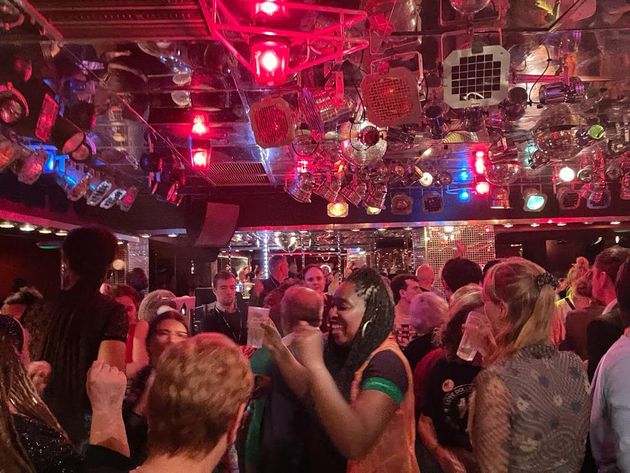
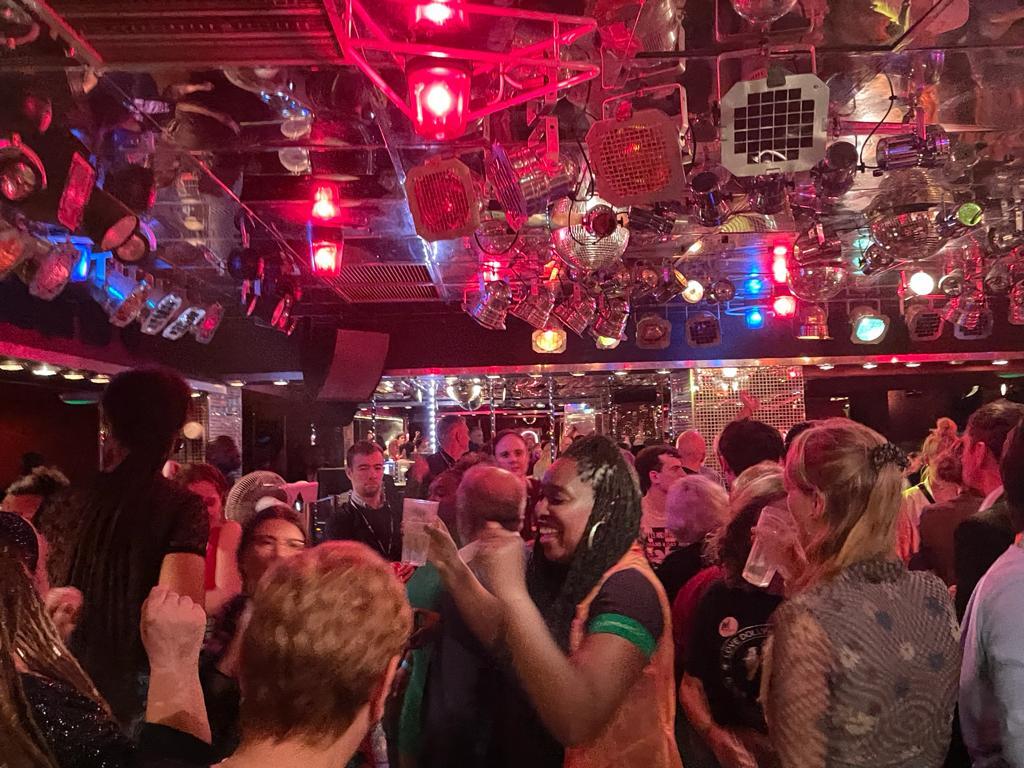
Sadiq Khan made a speech behind the DJ decks and MPs raved on the dancefloor at Dawn Butler’s Jamaica party last night.
The event took place in Pryzm on Brighton seafront and has become one of the biggest parties at Labour’s annual conference.
Among those spotted include MPs Nadia Whittome, Lloyd Russell-Moyle and Barry Gardiner as well as ITV’s political editor Robert Peston.
Mayor of London Sadiq Khan made a guest appearance, telling the crowd from behind the DJ decks: “The best party in this Labour conference week is Dawn Butler’s Jamaican party.
“I’ve got to tell you, I saw Michael Gove coming to Brighton but [he] likes dancing so don’t be surprised if you see Michael Gove here dancing.
“Have a great conference, have a great Dawn Butler Jamaican night.”
Butler, the MP for Brent Central, tweeted at around 7.30am the morning after: “What a night! Just getting to bed. Thank you to everyone who came and raved, enjoyed and just went with the vibes.”
Party conference will run through to Wednesday when Sir Keir Starmer will give his first speech at the event as leader of the Labour Party.
Labour uses the opportunity to vote on major policies from taxes to foreign affairs.
As well as the main speeches, smaller events including panel discussions and drinks receptions are also taking place.
Increasing numbers are raising money to go private rather than wait for NHS operations.
